Transcript
Automated transcript · Written by software from the replay's audio. It can mishear names and figures; the replay is the record.
0:08 Today I have the pleasure of being joined by Contango Ores President and CEO Rick Van Nuenheise for a quick interview on his history in the industry, his current projects, and his viewpoint on the current state of junior mining. So Rick, how are you today?
0:21 I'm great, Romeo. Good to see you again. Yeah, it's great to see you. So I know there's a couple of things we wanna talk about today, but I'd love to start with your history, both in the industry, but also just in rocks generally. So I'd love to know what got you into a geology education and was your career path always clear when you were studying or did you have different plans and life kind of took its own route? Yeah, no, I knew I wanted to be a geologist from a pretty young age. I always liked rocks and maps and that kind of just directed my interest in studies.
0:59 I actually went back to university in Belgium because I knew I wanted to work in Africa, that was one of my life goals was to work in Africa. So I actually did my studies at the French section even though I'm from the Flemish part of Belgium.
1:16 And that served me well because I actually did end up doing a lot of work in West Africa, so where French was a good language to know. So yeah, I've always known I wanted to be a geologist. In fact, I wouldn't know what the heck else I'd do if I wasn't. That's like Clarity of purpose is definitely good. And I know you kind of went from, you know, your geology career went from school to ultimately being VPX at Placer Dome, but then shifting to kind of founder, CEO of NovaGold.
1:46 There's obviously some big skill set differences between those 2 roles. So I'm just eager for you to talk about what changed in your skill set to make that shift and what that kind of culture shock was like. I guess it kind of started back when I actually
2:03 started working on my own as a consultant. I'd worked for a number of companies, Freeport and a few other companies over the years and they were all big companies and I got kind of tired of working for big companies. And so I started my own company and just doing geological consulting. It was a lot of fun, a lot of success. But then I found I was always on kind of on the outside. And so that's when I decided to join Placer dome and get more of a worldwide view of exploration and of the exploration business, of the business of exploration. And in that, I became BPX for Placer Dome and ended up doing a lot of overseas work, and then specifically in Kazakhstan where I was effectively the country manager because we got involved with a big project there.
2:59 So that actually was a significant shift from being a field geologist and worrying about rocks only,
3:08 to worrying about and meeting with government officials on how do we get a license here? Once we have a license, how to negotiate for land to develop a mineral project. So it really sort of broadened my whole view of exploration and the mining business, or the business of mining. And then eventually I got tired of working for a big company again and that's when I formed Novigil. And obviously people are a bit more complicated than rocks or at least candy. They're worse than- I think that's a truism.
3:51 But in switching to founding Novigold, what would you say is the kind of biggest difference from when you were even a country manager in Kazakhstan? What was the skill set change
4:02 that mostly occurred founding your own company? The fundamental difference is raising money.
4:10 When at Placer and Olem, you had a budget so it wasn't like it was infinite but you argued for a budget, you had your reasons why you're asking for your budget, and you either got the budget, generally you either got the budget or you didn't, because
4:30 you have sort of reputational basis of, you know, this is what I can do with this amount of money. And here's my reasons for it. In the exploration, in the junior exploration business, you have to not only have to come up with a budget, you have to come up with the money for the budget. And that is this absolute fundamental difference. And, and obviously, they're, you know, if you're public, then you're at the whim of the public markets. If you're private, obviously, you're at the whim of private investors. So they're both difficult.
5:07 And at times the public markets are more generous and at other times they're less generous. And so one of the things I did learn is doing all the right things at the wrong time doesn't necessarily have a good outcome. Sure. And sometimes in this industry, there's a number of bad times, right? Yeah. We made a major discovery, a good discovery in Montana with a company called Tentina. We did everything to find a nice resource, good quality, high quality Copper asset, but it was just the wrong time in the market and you could never get any real traction. So it's a technical success and wasn't a huge financial success, at least not for me personally.
5:56 But some people, I'm sure some people made money along the way. So timing is another thing to sort of, you know, in addition to raising money, the timing at which you can raise money is also a key part of that. And speaking of timing, despite the price of gold reaching and then flirting with all-time highs, It's kind of commonly accepted, or at least I hear it all the time, that we're in a bear market for mining, particularly junior mining. I know this isn't your first one, presumably. So I'd love to hear just your advice to investors going through it for the first or tenth time. And what does a way out look like for these kind of markets of mining?
6:35 Yeah, I mean just speaking to the gold market right now. I mean, I think this is the fourth or fifth time We've bumped up against 2000 and we had the overseas weirdness that went up to you know, 21 70 or whatever went up and then right back down as it got back to Europe and North American trading. So yeah, I mean, obviously, to invest in the junior exploration space, it's hard to play the, you know, be a trader.
7:11 And so you've gotta be in it for the longer term and the longer term may be 2 or 3 years realistically to achieve the objectives of the company and they've got to have the ability to raise the money. So you have to believe in management to be able to do that because that's fundamentally where it comes from. Obviously, it's easier for any management team in a good market, but even in a poor market, a good management team can raise money for a good project. Advice-wise, Don't pay too much attention to the Gold price today. If you're invested in Gold, you have to believe that Gold is going to be higher. That doesn't mean you invest in projects that aren't economic at today's Gold price, because there's such a thing as inflation and generally, Gold is a good hedge against inflation, but that doesn't mean it's not immune to inflation.
8:17 If you have a lousy project now, if the gold price goes up to $2,500, you probably still have a lousy project. It's just going to cost more to get it there. Invest in good projects, good management team, and then watch your timing in terms of where you are in the overall market cycle. We talked about the Lassonde curve, I think, before. That's an important one just for investors in general. I think it's a very good educational tool to familiarise yourself with the Lausanne curve and what that does mean
8:57 for your investment. If you're there for the big hole in 1 discovery hole where that share price is gonna move and if they can keep offsetting it and make a good solid discovery and come up with a resource estimate, then just be aware that the other side of the Lassonde curve is mostly downhill for a ways. Yeah, it seems like simple advice, but know what stage you're investing in, actually, I think would save a lot of people some headaches. Absolutely.
9:33 Speaking of inflation, there's been a lot of chatter lately, I certainly hear it, and there's news articles, etc. About it, how inflation has uniquely affected miners and gold miners, lots of people are saying even more precisely. I'm Curious if you've felt that squeeze and what you think inflation means for the industry. Well, certainly, you know, mining is you're actually building something, you know, presumably if you're talking about actually going in mining, not just exploration. That's true. It takes exploration, too. But but absolutely. For our own project with Contango, when we started down the 70-30 joint venture with Ken Ross in September 2020, we had an estimate of what we thought it would cost. And these were Ken Ross estimates. So they're, you know, I'd say they're fairly good estimates. So they've done, you know, they've done a lot of business in Alaska over a long period of time. So they're used to what the costs are up here.
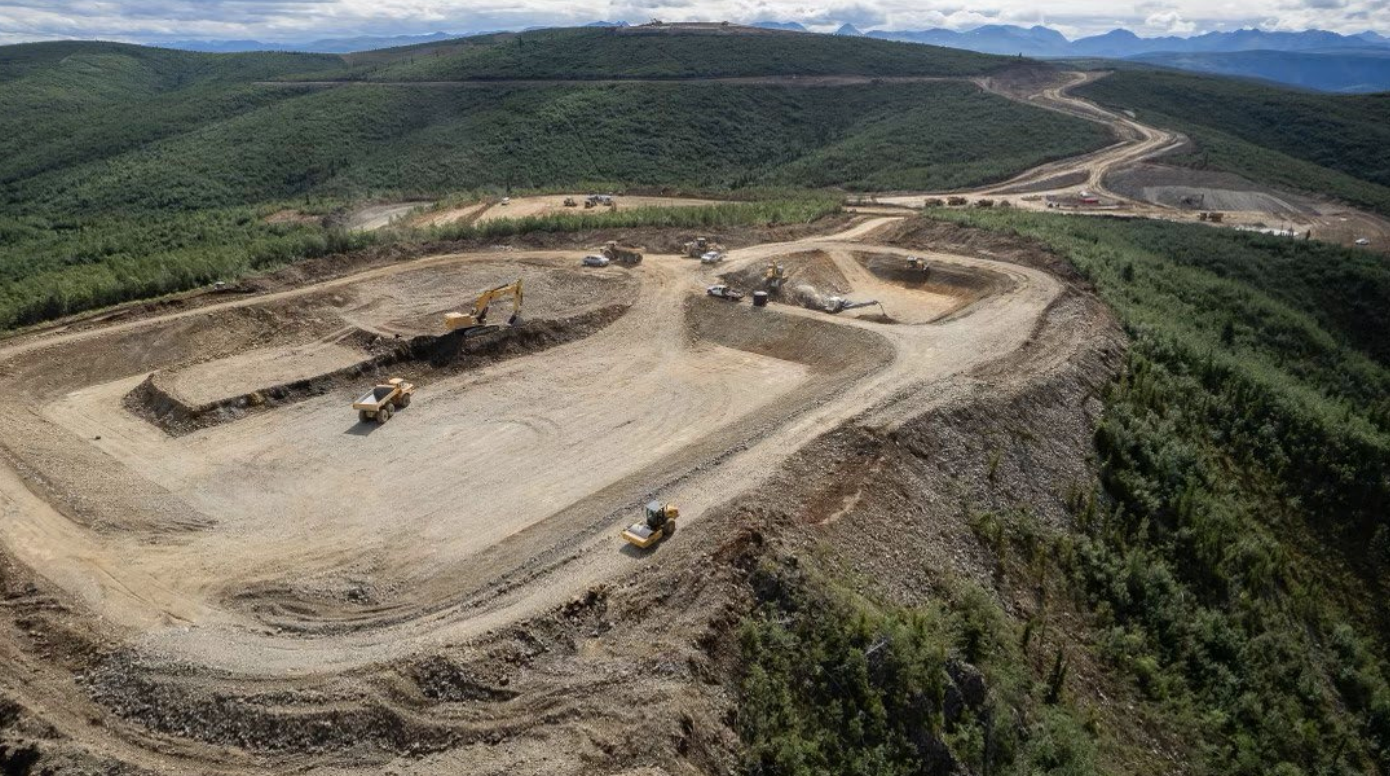
10:28 And keep in mind, we weren't building a mill and a tailings facility and all these things. We were just getting ready to mine the quarry operation effectively. But the costs went up about 25% from what they were expected to be originally. And so that was all just wages and the cost of moving dirt, basically, building roads. So definitely it's very real. It's definitely flattened out.
11:02 I think we're sort of fundamentally affected by inflation, but also when now the oil prices come off as an example. We've assumed an oil price of $100 a barrel
11:20 for our internal purposes and for the bankers, more importantly for the bankers internal purposes, for lending money. And here we are, you know, just above $70. So definitely, you know, that aspect, and it's a significant aspect for any mining project, is the price of oil, price of diesel. Yeah, very real. I'm not sure that it's unique to the Or it affects the gold mining industry or the mining industry any more than any other industry that's actually building something You know if you're a technology stock, then you may be somewhat immune to it But if you're a software technology stock or if you're a hardware technology stock, you're definitely not immune to it. And if you're gonna be building chip plants, not potato chips, but computer chips, you're definitely gonna be affected by inflation.
12:14 And I think we're certainly continuing to see that. I'm not sure I believe the CPI numbers in terms of that they reflect inflation. So. That's my instinct too. I think There's enough other folks to listen to besides the government that tells you that, and everybody knows themselves when they go to the grocery store. Some things that are hard to hide behind statistics when you finish a Costco.
12:45 The same product for the same price, but less of it. Yeah, shrinkflation. There's a lot of that going on. But to tie back to your history, I'm really curious. I mean, I'm quite familiar with the Contango War story at this point, but What drew you to it initially?
13:02 Look, it's a fantastic asset and it was kind of high-centered and kind of lost in space a bit. The joint venture between Contango and Royal Gold. So Contango made the discovery, I'd say, call it an inferred resource type discovery, a million ounces, brought in Royal
13:27 to basically finance completing a pre-feasibility level study. So it was mostly internal drilling. Most of the money was spent on internal drilling and studying metallurgy and hydrology and geotechnical and all that stuff.
13:43 But It wasn't a project that Royal Gold wanted to bring to production because they're a Royalty company. They want Royalty. But they also didn't really want to invest any more money because that's what they sort of agreed that they would do. And I think their hope was that they'd sell it to somebody who was an operator and take a royalty and move on from there. But unfortunately, at a million ounces, it wasn't big enough to attract
14:12 any major company and not even any sort of mid-tier company. And so it got stranded because neither Royal Gold really wanted to spend any more money on it. Contango shareholders, which had largely been friends and family financed didn't want to spend any more money on it because, hey, you've got a million ounce deposit. That seems plenty big, go mine it. That's kind of the attitude.
14:36 But it got high centered. And so I was brought in to write the ship and give it a particular direction. And we did that by forming the 70-30 joint venture with Ken Ross, who had an underutilized mill.
14:53 Just being established here in Alaska, you get to know those sorts of things. Of course, Kurt Freeman, who's been associated with the company long term, he was the one who sort of made the introduction of the Contango management to introduce me to it too. That's how the whole thing kind of came about. Yeah, that's helpful.
15:17 And I know Contango primarily operates in Alaska, but this is something investors are always asking in 6 events, is broadly, what do you think, as somebody who's worked in a number of mining jurisdictions, What makes a winning jurisdiction? What should investors be looking for when they evaluate the jurisdiction a project takes place in? I think it's sort of the recent history. Have there been mines permitted?
15:48 And if there are projects that haven't been permitted, what are the reasons for that? Alaska, I think, scores really high on that. Obviously, you've got the people always bringing up Pebble. And Pebble is pretty much a one-off. There's a number of things that didn't go right for that project, including a lot of it self-imposed. But other projects up here have been permitted. Alaska is a good jurisdiction. It's not the only good jurisdiction. I think a good part of Canada is a great place to work. Other places, I wouldn't go try to permit a mine in California anytime soon. But I'd go to Nevada and Arizona and Utah and Wyoming and Idaho.
16:38 So, yeah, I mean, you know, in the US context, those are all good jurisdictions. There's a few things on the East Coast, depending on what you're mining, and all over Canada. But I've worked all over the world. I had a great time working in Russia and Central Asia, but I wouldn't spend a nickel of my own money there. Sure. Now there's a variety of reasons why that might be, you know, challenging certainly now, but historically as well. It, you know, 10 years ago, it might not, it was not as challenging, but today it would be really, really difficult. I think so Latin America, you know what's going on in Panama is with The base of the government now today. I think telling them they have to shut down.
17:34 This is after a company, and First Quantum is a first-tier copper producer in the world, they invested $10 billion and tell them to shut it down because you know people are unhappy in the streets with the With the outcome of a very long multi-step negotiation that took place to Give them a sanctioned You know something that was approved by Congress And because they don't like the president, now they're saying, well, you got to shut the whole thing down now. It's just, it's unbelievable. And I don't know how anybody would spend another nickel in Panama. Yeah, it's not a great sign.
18:19 And they've outlawed mining. Yeah, that's usually a very bad sign for a jurisdiction. Probably not high on anybody's list right now. Yeah, probably not. But no, that's fair. And I appreciate the context of different American jurisdictions, even different jurisdictions in Canada have pretty different, you know, mine ability or likelihood of actually making a project. In Canada, of course, the other First Nations is always one of the first things that you think about if you're looking at a project, is what's been resolved, what has the federal government settled with the First Nations, has the province settled with the First Nations, what's the relationships, What are the relationships like? And of course, if you're acquiring something, and how good or poor of a job has the company's interactions been with the First Nations?
19:12 Are you walking into a slaughterhouse? Which some folks are. Won't name names, but I've certainly seen that jurisdiction to jurisdiction for sure. But I want one question. I know you're president and CEO of Contango, but also chairman of 2 other companies, which it's a lot of a lot of things to do, obviously. So I'm curious how you manage time between those different companies, different activities among them. I always say to people, my, you know, Gatango is my day job and sort of evenings and weekends spend, you know, talking with with, you know, the presidents and other members of the other companies.
19:58 First of all, it's having good leadership at those other companies. I'm not doing the day-to-day there. It's more guidance and relationships, introducing people to the right people. So introducing our exploration manager and our president and things to the right people so they can make connections and kind of run with it. I almost kind of consider it sort of mentoring. Sure. So we didn't really mean to have 3 companies on the go. That's what happened during COVID. Too much, not enough travel and too much idle time and thinking about other things that we could get started.
20:47 And who needs sleep, right? That's overrated. Overrated. Only going to be here so long. Yeah, and who needs the sleeping time? I have one question. I know you invest personally in some mining companies, And this is really for our investor base. I'm curious what you look for in exploration projects and management teams. You mentioned earlier, obviously jurisdiction, but their ability to raise money, key part. But are there any other things that you look for when you're evaluating exploration projects and management? Yeah, I guess it's quality of, besides quality of the management, it's quality of the project, which I don't know if it starts or ends with jurisdiction, but that's certainly a key piece of it. And also recognizing the Lassonde curve. So what are you investing in this company for?
21:42 Because they have great management, they have the ability to raise money and they have a good tracker of identifying good projects to get to that discovery hole. Because that's the steep part of the curve, that's where you can make the most money the quickest. But that's not the only kind of investment. If they have a good quality project, you might want to invest in the long term buying on the lows because you believe in the project, believe the management team can actually get to a place where a major company will buy it at a nice premium. But you got to be in for the long haul on that one. So you just got to remember to buy low and make it so that you're getting a good return over the 2 or 3 or 4 years that it's going to take to get there.
22:32 I think that's the other thing I would suggest to people or recommend to people is think about your timeline of your investment. Are you gonna be in this stock for 6 months or for 6 years? Both are legitimate investment strategies, but they're definitely different. It goes back to your comment earlier of know what stage you're investing in, right? Are you here for a short, fast, high-risk buck, Or is this something that's in development, you rely on it, it's low, and you know you're gonna make money over 5, 6 years. Yeah. That's interesting, I appreciate that. One question I always like to ask us at the end of interviews is we're getting towards the end of this year, jumping into 2024, What are you most excited for next year? What are you looking forward to the most? Gold production.
23:24 Manchurian Coal, we're on track to meet our objective to have gold production and have cash flow back to us. That's probably the most important thing, not just the Gold production, but the first batch of Gold will basically go to pay to get the company on step, if you will, to pay for the working capital so that we don't have to borrow money for working capital anymore, or spend our own equity for working capital that we're self-generating at that point. So, sometime in the middle of the year, we should be getting a dividend check that we then can use to add value for our shareholders. So that's probably the best way to express that. So it starts with gold production. And then when we're actually getting a check back from the joint venture in the form of the dividend to the company, then that'll be a real success. And then we can start thinking about advancing our other projects like Lucky Shot and looking out at some of our early stage assets and adding value there. So, hey, literally making money is a good thing to be excited about. It's a great answer.
24:39 Thanks, Rick. Really appreciate the answer to all my questions and look forward to talking to you again soon. Happy holidays and good seeing you again. I'm sure we'll see you in the new year here.