Transcript
Automated transcript · Written by software from the replay's audio. It can mishear names and figures; the replay is the record.
0:12 Hi, everyone. Welcome. Welcome to the Dennecali Limited's Investment Summit today, hosted by 6. We're gonna begin today with a pre-recorded presentation, and then I'm gonna invite our speakers back to answer your questions live. At any point during the presentation, if you think of a question, feel free to submit it in the Q&A panel on the right-hand side of your screen. Without further ado, let's begin the presentation. Hello, everyone, and welcome to today's edition of the Danakali webinar. The topic for today is potash as a driver of sustainable agriculture in Africa. My name is Seamus Cornelius. I'm the chairman of Danakali Limited and we are developing the Koolooli potash project in Eritrea in a joint venture with the Eritrea Renewable Mining Corporation.
1:11 So as everyone I'm sure knows, The current demand for potash around the world and in Africa in particular is very high. Potash is a key input for agricultural production. It's the potassium that plants need to grow, so it's a key fertilizer. Of course, with population growth and economic growth as well, the demand for food increases, therefore the demand for agricultural produce increases, and fertilizer, in particular potash, plays a very important role in this. Leaving aside the excellent future growth potential, there is of course the current issue of food security And this is a global issue of course.
2:04 And it's been brought into very sharp focus over the last several months around the world, I think through the COVID-19 pandemic, and the knock-on effects of that. We know that in Africa, the agricultural sector is very large and it employs a very large number of people. Many of those people are involved in subsistence agriculture. Getting the right access to fertilisers and in particular potash is very important for those people. It leads directly to an increase in food production, which leads to an increase in food security, and that leads to better outcomes for everyone in every community.
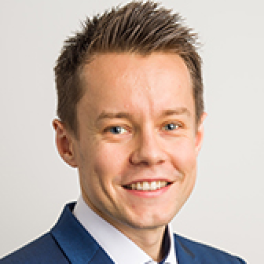
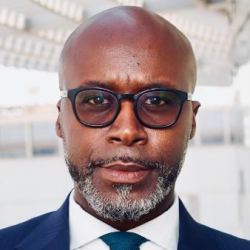
2:54 Today, I'm very lucky to have 2 outstanding guests. First, I have Ibrahim Sagna, who is the Global Head and Director of the Advisory and Capital Markets arm of AfriExim Bank. AfriExim Bank is of course one of the senior lenders to the Kalluli project and I'm very happy that Ibrahim has agreed to join the webinar today. We also have Humphrey Knight. He's the senior analyst
3:25 for PODASH at the CRU Group. Today's topic, and I promise not to go on a little bit more before passing it directly to the speakers, is of course potash as one of the key drivers for sustainable agriculture in Africa. It improves outcomes for people, it improves socio-economic performance across the continent. With Kalooli being based in Africa, in Eritrea, and being an absolutely outstanding deposit, it's ideally placed to support the development of agriculture in Africa and improve the lives of people across the continent. And we as Danakali in our joint venture with the Eritrea National Mining Corporation are very well aware of our responsibility as we take on the task of developing such a significant asset that will positively impact the lives of so many people. And we are of course grateful to have AfriExim Bank as one of our key lenders, our key supporters, alongside Africa Finance Corporation.
4:30 Ibrahim will very shortly begin talking about the investor perspective and talk about AfriExim's investment strategy in Africa, in particular as it relates to the development of the agricultural sector. Shortly after that, Humphrey will talk about current trends in the potash market, on the price, supply and demand outlook, because he's an expert analyst and has great insights into the market. And then finally, after you've heard from those 2 esteemed speakers, I will talk more about Kululi and the asset that it is and the role that it will play in supporting the development of sustainable agriculture in Africa. Thank you very much for taking the time to listen to my introduction. I will now hand over to Humphrey Knight from CIU. Thank you, Humphrey.
5:18 Seamus, thank you very much indeed for the kind introduction. Folks, a very good morning or afternoon to you all. I sincerely hope you're all keeping well. And first of all to Dana Carley, Thank you very much indeed for your kind invitation to speak to your investors at your investor webinar today. It's an absolute pleasure to be with you. And I'm going to be taking you through CIU's overview of the SOP market outlook and with a particular focus on Africa. So I realize some of you may be familiar with CIU, but I'm sure there are many who are not. So just very quickly. So we are a company focused on price assessment analysis. That's the bit I'm in consulting and events across the mining metals and fertilizer industries.
6:05 We are based in London. That's where I'm speaking to you from today. But we have a number of offices across the world and a particular focus on China with our presence in Beijing and Shanghai. If you'd like to know more about what we do, I'd be very happy to answer questions afterwards. So here's what I'm going to be discussing with you today in the next 15 minutes or so, and it's broadly split into 3 sections. So we'll first start by looking at SOP supply, demand and pricing dynamics and particularly in the context of COVID-19. After that we'll look at 2 key issues in the market today which will be affecting it in the years to come And at the end I will focus in a bit more on general potash supply and demand across Africa.
6:52 So I'm going to start with SOP supply but just before I do I want to cover just a few basics to make sure we're all starting on exactly the same page. So since around 2015 the global SOP market has stood at around 7 million tonnes a year in terms of consumption. To put that in the wider context of all potash fertilizer consumption that constitutes around 9% of all demand. So that may not sound like a lot straight off, but it's important to understand the wider context. So 85% of all potash consumption around the world is in the form of potassium chloride or MOP And SOP remains the world's most popular low chloride version of potash.
7:38 What this all adds up to is that the SOP industry has a kind of mixed structure. And what I mean by that is it has characteristics of bulk commodity markets, but also some features of a much more niche and specialised industry. And I'll come on to some of those in a bit. Focusing first on SOP supply, and the main thing to take away here is that China dominates global SOP supply. The country accounts for around 60% of all global capacity and production, but ultimately it is a fairly insulated market from the rest of the world, even with recent changes. The industry in China grew after major investment during the late 2000s until the mid 2010s, but this has now largely slowed to a crawl in recent years.
8:29 Outside China, the main focus is in Western Europe and namely Belgium and Germany, which are the 2 largest SOP exporters. Switching on the right hand side of this slide now, looking at the industry cost structure, again we have another kind of mixed theme going on here and it's important to understand the distinction in SOP industry between primary and secondary producers. Primary SOP producers make SOP from naturally occurring brines or from hard rock ore. However, these sources of SOP are reasonably rare around the world. As a result, quite a big portion of the market is supplied by secondary producers. What they do is they create SOP using chemical synthesis.
9:15 Most commonly, this is the Mannheim route, where SOP is created through the conversion of MOP using sulfuric acid at high temperature. Now, there are a range of advantages and disadvantages, genuinely, to both methods, But the most important thing to understand is that primary producers on the whole have a significant cost advantage over their secondary counterparts. So while they are rarer and they only account for around a third of capacity, generally utilisation rates at primary producers are quite a lot higher, so they account for around half of total production.
9:54 Looking across to demand now, and again, a similar story here. China is the dominant force in global SOP demand. The country accounts for way more than half of all SOP demand around the world. And it's also been pretty much the fastest growing region over the last 10 years. However, as you see on the graph in the bottom left, that has slowed since 2015. And given the market's fairly insular, it has actually gone through periods of pretty prolonged and quite substantial oversupply in the last few years. So things certainly changing in China. If we look elsewhere, demand outside China has generally grown at a much slower rate, but it is much less volatile and more consistent. Once again, we are looking at Western Europe as one of the major consumers, but also the Americas here are of increasing importance as well.
10:47 What is perhaps in most people's minds is how the industry has fared amid the economic turmoil of COVID-19. Very generally across pretty much all fertilizer markets, demand for fertilizers has been remarkably robust in 2020 and that's particularly true when we put it in the context of some of the other things we look at at CIU, some of the metals markets. Many of those have seen major demand destruction this year. That just simply hasn't happened across most fertiliser markets, and that is also true of SOP. Demand across most downstream markets has been at least firm, if not growing this year, and this includes China. That doesn't mean the market has been completely immune from difficulties.
11:34 One example is the US domestic market. Quite a lot of SOP in the US goes on almonds. The almond industry has faced a torrid year due to changing retail habits, and so that is likely to impact SOP demand. But ultimately that is a fairly isolated incident and in general fertilised demand and SOP demand has remained very robust indeed. This is also reflected in SOP's price. So, so far in 2020 SOP prices have broadly remained steady and largely flat. And critically, that premium that SOP enjoys over MOP has endured and has even grown in some instances. Over the last 5 years in the European market, that premium has averaged more than $200 a tonne in absolute terms.
12:26 What's also important to understand about SOP pricing, which is that yellow area on the graph there, is that prices around the world are quite disparate and they're quite different in different parts of the world. And this is one of the sort of more niche and specialized features of the SOP market. This all comes down to a lack of connectivity in the SOP market currently. What I mean by that is that basically of all the SOP made in the world, only around a quarter of it is traded internationally. Compare that to MOP, around 80 percent of it is traded internationally. So the market is just much less connected in SOP. The most clear division in the market is this east and west of Suez split. So markets west of the Suez Canal, that's basically Europe and the Americas, generally speaking, supply is more restricted, demand is more concentrated, and so prices are therefore generally higher.
13:17 East of Suez, generally speaking, supply is more plentiful, markets are demanding, is more fragmented, and of course that presence of that large Chinese market while insulated does have an impact on how producers in the region price their product. So generally speaking, prices are lower east of Suez and that disparity has remained pretty consistent for a number of years now.
13:43 Switching now to a couple of the things affecting the industry today, which will likely influence it in the years to come. The first one is the rise in Chinese SOP exports since last year. So prior to 2019, China had self-imposed export tariffs on all potash fertilisers, and that's because China is resource restricted when it comes to potassium. This had the effect of either completely prohibiting or severely restricting SOP exports. This all changed overnight in January 2019, when after a long period, the Chinese government decided to finally lift these tariffs. The response was pretty immediate. So Chinese SOP exports trebled to more than 300,000 tonnes last year, and the country in a matter of months became the world's third largest exporter.
14:36 So this at the time fuelled fears that the country was going to flood the market, particularly when you consider how large its domestic capacity is. However, that has so far largely not occurred, and it's important to understand the reasons why. And this is all to do with how the SOP from China is exported. So unlike counterparts in Western Europe, so Germany, Belgium, where the producers undertake the export activity themselves, at least to an extent. In China, the producers are not involved in export activity. It is all being done by traders. They are picking up the product in the domestic market. Bear in mind domestic prices in China are pretty discounted compared to international levels. And then those traders are selling it into the international market, taking advantage of that arbitrage.
15:24 Now, in 2020, we've had a kind of perfect conditions, but for much higher exports, we've had very low domestic Chinese SOP prices. And we've also had, until very recently, a very weak RMB, which encourages export activity.
15:39 And so far, Chinese exports have been pretty much flat year to date. So it shows you that ultimately, there is a limit on how much China is likely to export going forward. That said, it's important to understand that with persistently higher exports, which is what we expect to occur, what this might have the impact of is increasing that connectivity of the SOP market I talked about, increasing that traded share of the market. So, what we could see is international prices converging over time. So, it's just something to bear in mind with this. The second big issue going on in the market is the imminent arrival of new primary SOP supply. Now I understand Danakali is a major part of this but I'm only just going to focus on Australia for the time being.
16:26 So this map shows you all of the major SOP projects under development across Australia. I've excluded some of the earlier stage ones and those looking at hard rock resources. If nothing else, you can see there are quite a few. And most importantly, 2 have now received full funding and are due to enter production next year. So, Callion lakes and salt lake potash. This marks a really significant change and we're going to see for the first time Australia becoming a fairly significant SOP exporter. Having said that, the size of the project is not enough necessarily to, again, there's very limited risk of the industry being flooded by new product, that's very unlikely to occur in our view. But once again, it's that same risk I mentioned with the Chinese exports. It's about increasing that traded share of the market, SRP market becoming more connected, and so we could once again see prices internationally converging. So it just has the same impact potentially going forward.
17:23 And then just for the last section, I want to turn our focus to African potash supply and demand. I'm going to also reintroduce MOP or potassium chloride here because it's an important part of the story. Starting with demand, the main thing to take away from this slide is that potash demand in Africa is fairly limited. In the SOP market, Africa accounts for around 6% of global SOP demand and in MOP it's only 2%, so it is still very limited. And also importantly, demand is highly concentrated. So the 3 countries of Morocco, South Africa and Egypt account for the lion's share of all potash demand currently across Africa.
18:11 That's not to say those other countries in the region don't consume potash. They absolutely do. Many of them do in reasonable quantities. But what is still the problem is the application rates in consumption remain very low, particularly compared to many international peers. And this has, and this remains a major challenge across the continent. That said, growth in consumption has been rising fairly quickly, admittedly from a low base, but nevertheless it is growing fast, and we are expecting that to continue over the next 5 years. But ultimately, those longer-term goals of raising fertiliser consumption efforts to kind of more international standards is ultimately in our view something that's not likely to happen in the next 5 years and it will take longer to achieve that.
19:00 And then just looking at potash supply in Africa. And again, the story is around, this is a very limited story, ultimately. It's important to understand straight away that today there is no potash fertiliser production from naturally occurring potassium resources anywhere in Africa. So there is 0 of that occurring currently. The only potash production occurring at the moment in the continent occurs in Egypt, and this is SOP made through chemical methods. So the Mannheim route with a number of producers in Egypt, using imported MOP. And that's it. That is the extent of all potash production currently across the entirety of Africa. So it is very limited.
19:46 That being said, there are a number of projects under development, and there are kind of 2 key areas of focus across the continent. On the western side, particularly around the Republic of Congo, there is a fair amount of exploration for MOP resources, with the most advanced project being Core Potash's Kola project. But really the main focus in Africa has been the Danakil Depression across Eritrea and Ethiopia, with a number of projects, including Danakali, looking at SOP and MOP exploration. Undoubtedly Danakali's project is the most advanced on the continent today. And it has really, what it has done is it's kind of got past a really big challenge on the continent. The major thing which has been inhibiting the kind of move into production Africa has been investor appetite to invest in Africa. It remains a fairly risky jurisdiction to invest in and that has been the major block in getting the continent to becoming a major producer of polished fertilizer.
20:49 It does look as though Danakali has now finally changed that ultimately. And so just finally I'm going to take you through our view of the next 5 years and a quick summary on Africa. So generally speaking over the next 5 years with the SOP market, at CIU we are expecting supply to gradually tighten over that time period. So what that means is we do expect that SOP price premium to endure. That is with a caveat, though, because as I mentioned, we are expecting higher exports and a higher traded market, a larger traded market in the SOP. And so that may have the effects of some of those international prices converging over the next 5 years and beyond. So it's just something to bear in mind. And finally, a quick note on Africa. So, the continent remains a small demand centre and even smaller supplier, but growth is certainly picking up and it's certainly there. And also, now that we finally have some level of investment going into potash supply in the continent, perhaps it is now finally a sign that the continent has begun to turn a corner in becoming a more significant supplier of potash to the international market.
21:57 I will leave it there. I hope you found that interesting and useful and I very much look forward to taking your questions. Thank you very much indeed. Thank you Humphrey for that really useful and interesting presentation. I will now hand over to Ibrahim Sagna from AfriExim Bank. Thank you Ibrahim. Thank you very much German. It's a pleasure to hear your voice again, and obviously working with your esteemed group has been a great pleasure for our institution. I will just provide a bit of background about our bank for a couple of seconds and then dive into the opportunity of Potash and what it means for the continent and investors. So our bank is a Cairo-based, 27 years of age, multilateral financial institution.
22:55 We're an investment-grade rated bank. Moody's and a few rating agencies hold us in a very high ranking position ahead of many sovereign African nations. We have a balance sheet of about $19 billion. We have 51 out of the 54 African countries that are shareholding members. And on the balance, we have financial and corporate institutions. We also listed in Mauritius. And our primary focus is enabling greater trade on the continent. Key words that define our strategy are intra-Africa trade, industrialization, and export development.
23:47 And obviously the theme of today, which is potage and fertilizer, sits at the center of some of those themes. One of the first points I would like to make is with regards to why potash is important for the continent. First, the importance emanates from the global food challenge that is upon the entire globe and to Africa in itself. And the fertilizer industry is a critical element to combat and improve the situation within the challenge.
24:32 My colleague Humphrey will do a much better job than me to provide more context at that level. But 1 set of elements I would like to share is the fact that compared with other developing regions, fertilizer consumption in Africa has only risen marginally between the years 2000 and 2015. So this is a theme where the continent is also lagging. And until that lag gets improved, we will continue to be behind the curve. The other element I'd like to share is that the average fertilizer application rate in sub-Saharan Africa has been growing, but yields at around 6 kg per hectare of nutrient.
25:24 That was as of 2017. But according to the International Fertilizer association, the rate is expected to reach about 19 by 2021, which is still below the Abuja declaration of 50 kilogram. One thing to add is that the consumption of fertilizer in the continent needs to increase to enable more exchange between African countries. Because until that is put in place, we would see a lack of interest from local economies to develop it. I mean, the challenges that emanate really from demand, the local demand needs to ramp up in our view to basically create more volume for that industry.
26:22 And solving some issues around availability of raw material is a critical action that needs to occur to develop the business. And second, more items, more collaboration needs to happen around regional integration of fertilizer and trade. That's something our bank is working on. The other aspect is obviously around enhancing infrastructural investment in this sector and in this asset class. And then I would say that the role of information and communication technology is ever increasing. And obviously additional investment needs to happen at that level.
27:12 And you're seeing some innovation happening in various parts of the continent. And in Ghana, for instance, there's one of the companies we've worked with has a mobile application called M Farmer Shop Agro Dealers, which more farmers create awareness and increase their input. And you're seeing that obviously within our friends at Dan Ankali, the massive work they have taken on in the eastern side of the continent is second to none. Is second to none. 1 item of great importance for investors is really about progressing the risk mitigation and the policies.
28:04 So, on the risk mitigation, obviously, it is important that the parties that are involved in these projects
28:18 first make sure that they use the best available technology, that they subscribe to carbon capture and reuse, and also that they subscribe to advancing and catalytic processes proven to reduce nitrous oxide emissions. Those are elements that really around other ECG requirements are important for most investors to see be in place to create some comfort and enable some sustainable capital to follow. I will just state that what you will get a chance to see on the Danang Kali project in terms of impact is really what banks like ourselves and the investment community want to observe because you have here a case where the impact in terms of economic progress in the country, in terms of environmental impact, In terms of fiscal effects, in terms of export, I mean, in the case of the Nankali, you'll have 50% of Eritrean export by 2030, And the export quantum is estimated to $537
29:50 million. Direct capex is also over $600 million. This will account for 3% of the GDP by 2021. And the local procurement from this project stand to reach $189 million
30:08 by year 2026. And the impact on the agricultural sector is just commensurate. In direct employment, we're discussing over 10,000 people, and The fiscal effects are over $200 million by year 2026. Clearly, potash as an opportunity
30:32 will stand to drastically change the region from the Tsanankale desert in the southeast Eritrea. And considering fertilizer consumption is a fundamental pillar to create productivity in agriculture and agriculture is most important economic activity in Eritrea. In fact, employment represents, around agriculture, represents 60% of the labor force in that country. It is bound to have a deep impact in the country. The final formula of colloquial product distribution will have significant effect on food security in addition security, in addition to the job creation.
31:22 And obviously, what we commend in such a transaction is that the capital, such as ours and other DFI, be complemented by strong governance and global best practice and know-how. That's why we believe that this is a good and great case study for the post-Potash
31:50 industry and the type of model to adopt going forward. Thank you very much, Ibrahim. And also of course, Humphrey before that. Those are 2 excellent presentations and it makes my job of following them even tougher. I have about 15 minutes and I have 16 slides, which I think is very manageable. As you can see, we've got the cover slide there, Potash as a driver of sustainable agriculture in Africa. The next slide after the cover slide, of course, shows some excellent pictures of Ibrahim and Humphrey and a picture of me. The next slide is the forward-looking statements slide. This is standard material and I definitely won't read that out. Anyone who's interested can read that for themselves.
32:38 So the next slide is where we really start talking about Danakali and more importantly, Kululi, which is the asset. Danakali is an Australian listed and a London listed company. As I mentioned at the very beginning, we're developing the Kululi Sulfated Potash Project in Eritrea with the Eritrea National Mining Corporation or ENEMCO. I won't read out the slides. You can see the highlights there. The key thing I think that I'd like you to take away from this is that Kalluli is an outstanding asset. Danakali is the way that you can become involved in Kululi. And as we go through this presentation, I hope you'll see that the challenge of improving agriculture in Africa is substantial, But Kululi as an asset in Africa is ideally placed to do that.
33:36 It's in a wonderful location and it is a tremendous asset. Effectively it's the best SOP asset in the world that isn't already producing SOP and will soon be producing SOP. OK, this slide, the heading says it all, and there's a lovely map there. It talks about the structural threat or the challenge to African agricultural growth. Climate change is clearly a major challenge around the world and more so, I believe, in Africa. As you can see at the top of the map of Africa there, everyone will be familiar with the Sahara and the Sahel, those regions are not great for agriculture.
34:26 As you can also see there, the extent of arable land in Africa is not growing, as people say. No one's making any more land. Most of the agriculture in Africa is rain-fed. It's interesting to note that in Eritrea they have been for many years working on a national program of building dams. And they've built, I don't even know how many, but there are many, many dams in Eritrea from very large to very small. And it's part of their commitment to improving agriculture, which directly improves the lives of the people. Clearly, if agricultural output, both in terms of quantity and quality, doesn't grow, that will have very negative consequences for a continent where the population is growing and growing very rapidly.
35:22 At the same time, because of the challenges that we all face through climate change, we may see an increase in desertification or at least an expansion in the arid and semi-arid land, which is not ideally suited for agriculture. One of the very interesting and positive aspects of SOP as a fertilizer is that it is particularly well suited to use in arid and semi-arid areas. It's one of its great strengths, and primarily that's because it is a low or no chloride fertilizer. OK, this slide together with the last slide is really about the magnitude of the challenge that is being faced in Africa by the people of Africa, but also it is a challenge for everyone in the world. We are all in this together, and Kululi is going to play a very significant role in alleviating many of these challenges.
36:25 Not just as Ibrahim said, because it's a major asset and it's going to provide a lot of jobs and directly improve agriculture in Eritrea and the neighbouring countries. But because of its location, it will of course be easy to export through Africa. And to a large extent, I believe that part of the story of low fertiliser usage in Africa and under-application of potash or potassium fertilisers is really about no available supply or no economically reasonable supply, and that's what Kooloolee can change. Critically, as I mentioned, SOP has a major role to play in climates where there is an arid or a semi-arid environment. And as we know, those types of environments are increasing and are predicted to increase even further as we go into the future because of climate change.
37:23 I mentioned that Kalooli will produce SOP. Importantly, it can also produce other forms of potassium-based fertiliser. Kalooli can produce MOP and it can produce SOPM. Both MOP and SOPM will cost less than SOP and therefore we believe that they can have probably quite a fast adoption rate in some of the economies in Africa where the application of fertiliser is extremely limited, but also importantly the economic strength in those economies may not stretch all the way to the application of SOP. We will be able to provide alternatives to that, and that will lead directly to increased incomes and increased nutrition for the people.
38:18 It will also help deal with, I think Ibrahim mentioned the carbon sequestration strength that increased agriculture will bring. Clearly again, I just keep going on about this point, fertiliser is absolutely essential to boost agricultural growth. Kahluli is a wonderful fertiliser asset. It's in Africa, it's located right on the Red Sea, So it's not just going to serve Africa, it's going to serve directly into Europe, where the current supply is Mannheim production in Belgium and Germany. It'll also help in the Middle East and into India. Ultimately, it'll be exported around the world and it will become the asset, I think, where there is a major change and price consolidation across the major markets for SOP in the world because Kululi will be exporting the overwhelming majority of its production, and that is going to be a major change.
39:21 I've already touched on several of these points. The critical point is Kululi is much larger than any other asset. We talk about a 200-year mine life. That is based on the assumption that it produces 1 million tonnes of SOP per year. It will be doing that after the second module, which is in less than 10 years' time, probably somewhere between 6 to 8 years from now. That will more than supply Africa's current need and its projected future needs over the same time period, 6 to 8 years. It will also give us the opportunity to export into other markets, particularly Europe, high cost manhine production and the Middle East, where there is a growing appreciation that food security is essential. And if anything, the COVID crisis and its impacts around the world have forced many countries to focus more energy on their own food security and their domestic production across the whole spectrum from agriculture into manufacturing. We're obviously interested in agriculture and callulogues ideally suited to deal with those issues.
40:37 Again, this is something that Humphrey touched upon. I won't explain those charts there. The key message is that SOP consumption in Africa is set to grow, Kululi is in Africa, and ideally placed to serve that increased demand. You can see, as Humphrey mentioned, current usage is – of SOP is really focused on a few countries. We think that will change. And we know that the governments, especially of Eritrea and neighbouring Ethiopia, are very keen to have the Kalooli supply available for their farmers. It will fundamentally change the way that they do agriculture, which is good. Okay, quickly about Koolooli. As I mentioned at the outset, Dhanakali is the way that you can become involved with Koolooli.
41:28 It's a very large deposit. We've already obtained significant funding. There is a funding gap, but we are working hard on that. And as soon as it's closed, we will be into construction and then production. The plan is construction next year, which is 2021, and production in 2022. It's a very low cost operation. Humphrey in his presentation mentioned that the primary producers enjoy a significant margin on their SOP because of their low cost of production. That's for the most part, Not every primary producer does that, but Kululi definitely has that advantage. The anticipated cash flow. This is the Danakali cash flow. This is after module 2, so that will be 85 million US dollars per year coming into Danakali.
42:20 I think that's very significant and we're certainly looking forward to getting that cash flow from Kululi. We've obviously got the 10 year offtake with Eurochem, Eurochem being a major Swiss based fertiliser producer and marketer. They produce MOP and they also produce NPK, which is a critical fertilizer and they need to use SOP in their NPK. The returns I don't really want to talk too much about the returns. We've talked about them a lot over the years, but there's an outstanding NPV and a very strong IRR. So that just demonstrates the quality of Kululi as an asset. And that's what I'd like you to get interested in. And I keep coming back to this point. If you are interested in it and you do believe that it's a good opportunity, then the way to take advantage of that opportunity is through Danakali.
43:11 Here's a map, obviously showing Eritrea and Ethiopia. You can see that we are very close to Massawa, which is the existing port, which has capacity for the export of Kooloolies products, and it also has a laydown area there that has been indicated will be available for us. So we're very comfortable with our ability to export out of Massawa. The other port there that we refer to as Anfilla Bay, that's a potential future port. We haven't got that yet. It will, of course, in future be an Eritrean government asset, but I'm sure that we'll be able to use it on favourable terms and our modelling shows that when it's there, it will significantly enhance the already excellent economic returns from Kululi.
44:03 Okay, this is something that's very important to us. As I said earlier, we are very aware of the responsibility that we have being entrusted to work with Enamco to develop Koolooli, such a significant asset. We have from the outset focused on doing things the right way. These statements speak for themselves. I think rather than read them out, I would just refer you to the UNDP, that's the United Nations Development Programme, study that they did on Kululi. They initiated it, they funded it, they engaged the consultants, and they ultimately published that report specifically on Kululi and what it will do to help Eritrea and Africa in the agricultural sphere through the creation of jobs, through the creation of opportunities, but also importantly in terms of meeting the UN Sustainable Development Goals.
45:02 And the development economists who did that report for the UNDP noted that Koolooli has very strong potential to help Eritrea meet 13 of the 17 Sustainable Development Goals. We intend absolutely to do that, and internally we often refer to that UNDP report as our guide, our manual on how we should go about developing Kooloolee the right way. Here's what I was just talking about. This just breaks down the 13 specific sustainable development goals and how Kooloolee can play an important role in helping Eritrea meet those goals. I think those goals speak for themselves, and I think it's well worth anyone who's interested in this area having a look at what the SDGs are.
45:52 I would also point out that Eritrea was one of the few countries that met the Millennium targets, which were the prior to the SDGs, the millennium targets from the UN were what countries were aiming for. And Eritrea, despite having very few resources was one of the very few countries that met those millennium goals. And so I have every confidence that with Kalluli being in production and our commitment to developing Kululi with an AMCO in the right way, we will meet these objectives and we will help Eritrea achieve the SDGs and have a significant impact in these 13 areas. All right, normally I would try to conclude this with some wise words or all inclusive statement that wraps up what I've been saying, but I won't do that today because Kofi and Anne has done it for me. You can read his words. I won't read them out.
46:50 I should point out that he's not getting any benefit from Danakali or Kaluli because he wasn't speaking specifically about it on the project, but he may as well have been because these words are very apt. And on that point, I'll leave it. Thank you very much for your participation. Thank you very much to Humphrey and Ibrahim. And we'll now open to questions. I hope there are a lot of questions and I look forward to answering them. Thank you for your time. All right. And she was said in a pre recording. We're now moving into the Q and a section of the event. I'd like to welcome back our speakers live to answer your questions. Welcome back. Humphrey. Welcome back, Seamus.
47:38 Our first question is from Daniel. Seamus, Daniel would like to know what are the effects of COVID-19 on the project? Oh, that's a good question. I thought the first question, Jane, would be about the funding, but I'm very happy to answer the question about COVID-19. So it's definitely had an impact on us, as it has, I think, on pretty much everyone around the world. Fortunately, to date, the impact has not been substantial because under the plan that we had at the beginning of the year, we weren't actually intending to do a lot of work on site at Koolooli in the first 0.5 to 0.667 of this year. So we've been able to focus our energies on the first 2 phases of the engineering work with DRA, which was done primarily in South Africa.
48:30 That's been done, that's been completed, and that didn't require us to do a lot of work on site. Eritrea, interestingly enough, and not surprisingly at all to those who know the country, has handled the COVID-19 crisis extremely well. I think they have roughly 400 to 500 cases altogether. They have no evidence of any community transmission. And to date, my understanding is they don't have any deaths attributable to COVID-19. So I think that is a very positive outcome. Obviously for us, the critical issue is to secure the balance of the funding and then get into Kooloolee and start the actual on the ground construction work. We know that that is possible, absolutely, Because we're regularly in conversation with our partners in EMCO and other people, government departments in Eritrea. And we know that when the time comes and we want to get into the country, we'll be able to get into the country and our teams will be able to get to Kululi. Mining is a critical strategic industry and we'll get every support.
49:34 So I think the hope that's a good answer to Daniel. I'm happy to expand if he wants more. Thank you, Seamus. Our next question is for Humphrey. Who are the Potash producers in South Africa? Yeah, it's a good question. Again, I refer you back to sort of the end of my presentation. There's very limited Potash production across Africa currently. South Africa in the past, if my models are correct, did previously make SOP using Mannheim methods, but that was closed down for over a decade ago now. So South Africa does not make any potash currently. The country does have domestic fertilizer production for phosphates, which is run by a company called Phoscore.
50:25 So it does do that. And it also has a company called Omnia, which makes complex fertilizers. But at the moment, South Africa is wholly reliant on imports for potash fertilizers. And South Africa is a fairly mature market. And what that means is that it imports quite a range of potash fertilizers. So it's not particularly, you know, MOP is still a dominant one because it is generally the cheapest form of potassium. But it also imports quite a lot of potassium sulfate, potassium nitrate, which is a soluble form of potash as well. So it is a fairly mature market, but it is wholly reliant on imports currently, ultimately. And I'm not aware of any projects looking to change that in South Africa at the moment. Thank you very much. And I'd like to welcome Ibrahim as well to our Q&A session.
51:16 Welcome, Ibrahim. Hello. Our next question is for Seamus. Rashid would like to know how can small and medium scale businesses in Africa partner with Denacali on the Kaluwe project? Oh, okay. Well, first step would be to, well, the simplest and the first step would be to set up a some kind of operating entity in Eritrea, because we will be looking to do as much as we can with local companies in Eritrea. And obviously that includes, you know, subsidiaries of foreign companies. So I'd say, look at Eritrea and get yourself established there ready to work with us. The other obvious way is through providing materials that we can't source or we can't source economically or in the right quantities from Eritrea. And you know, that'll be organised by DRA, which is our EPCM contractor there in South Africa.
52:20 And I believe that they have already done significant work in putting together the packages of the various materials that we need in order to build Kululi. So those are the 2 obvious avenues. Perfect, thank you very much. The next question is perhaps for everyone, is PolyHelite a challenger for SLP? Who'd like to take that? Do you want me to do that one, Seamus? Yeah, well, I think we have the same answer, Humphrey, so please go ahead. Well, I'm in the UK, which is the only place in the world that polyhalide is currently made, and is the only place it's likely to be made in for the possible future. Possibly is the short answer, but our view is that, well, it's important to understand about potash and how fertilizers generally work. Most consumers want as much potassium in their fertilizers they can possibly get, generally speaking. So potassium chloride contains 60% K2O as we refer to it, potassium sulfate is around 50 to 52.
53:32 But that's the highest quantity in a low chloride form available on the market. So that's why SOP is the most popular low chloride form. And it's why MOP is the most popular potash fertiliser overall. And that's kind of just the general rule. When we're talking about poly halides, that is a much lower that contains a lot less potassium only around 14%, which is which is even compared to others on the market actually very much towards lower end of the scale. So it potentially has rather limited substitution opportunity with many of these other potash fertilizers. So I can't say that it won't, but it is not exactly a directly comparable product. It's very, it's got a lot of sulfur in it and things like this, a lot of calcium and so on, so it's not necessarily directly comparable or directly substitutable. So ultimately it's possible, but probably not, I think would be the short answer. Seamus, do you want to add anything on that? Please do.
54:33 Yeah, I will. I'll just add one quick thing, which is to say that Humphrey made the point about the percentage of potassium in polyhalide versus SOP. What that means is that you need to put 3.5 tonnes, in simple terms, of polyhalide on the ground to get the same amount of potassium on the ground as you would from SOP. And there's a myth, and I could use a stronger word but let's just be polite and call it a myth. There's a myth that polyhalide is a low chloride fertilizer. It isn't. And if you put 3.5 tons of it, or 3.5 times that amount on the ground to get the same amount of potassium, you have to multiply whatever chloride is in there by 3.5 times. And it is clearly not low chloride. The only reason that polyhalate was ever discussed as being potentially a competitor for SIP is that the economic models didn't work unless they competed to SIP, which is the premium potash type. If they had have competed to MIP, the economic models would never have seen the light of day.
55:36 There you go. That's my opinion. Perhaps it's a little firm, but that's what I believe. All right. Thank you, Humphrey and Seamus. The Next question is from Natalie for Ibram. Can you comment on the pricing and cost advantage associated with proximity to local markets, if there are any, Ibram? Thank you, Can you hear me? Yes, we can. Great. Thank you for the question. I think the point to highlight is the consumption of fertilizer on the continent is still drastically low compared to other continents and other markets.
56:25 So to the point of Seamus, the fact that this is not only close to the African continent but also to the Middle East and Europe makes it adequate in terms of pricing. What you need to see is an increase of local consumption so that intra-Africa demand for fertilizer grows so that it catches up with Middle East, Asia and Europe consumption. For the time being, A lot of the components of export that emanates from any of these forms of fertilizer, whether it's potash or potassium, tend to, outside of the local market, often leave the continent for demand overseas.
57:20 So the pricing it is to get it right, having a case like Anangkali, where it is at the intersection of Africa, Middle East and Asia, makes it adequate and more profitable. Thank you very much. Next question is back to Seamus. About the funding gap, we're responding to a question from Andrew, asking, why has it taken so long to close the funding gap? Oh, it's a good question, Andrew. And the very simple answer to begin with is that it's difficult to close the funding gap. That's why it's taken so long.
58:06 COVID-19 and the disruption caused by that in financial markets and the impact that it's had on people's investing, you know, investors' risk appetite hasn't helped at all. But I think as Ibrahim mentioned in his presentation, historically, one of the challenges, one of the main challenges for developing assets in Africa has been attracting finance. It may have been Humphrey actually that mentioned this. And obviously with AfriExim there and AFC there as our key senior lenders, that's a huge step forward for us. So that's 200 million US that we have secured. The funding gap is still over $100 million when you look at our feed study, CapEx requirement and you add on some working capital and you add on some fees and associated costs. So it's not an insignificant sum of money, but we've been working hard, obviously, starting with our existing partners, AFRI, Ex-Im and AFC, to close that gap.
59:13 And we've also been talking very often and at length with a number of the usual suspects to secure the funding for the project. It's not as if we haven't been trying and it's not as if we're not making progress, but The thing with funding is, as anyone in the industry will know, it's either done or it's not done. It can't be partly done. And you only really know that you're funded when you've got the firm commitment from, you know, quality institutions like AFRI-XM or IFC, which is what we have, or otherwise, you have the money in the bank. And until we have that, it's not done. So personally, if I was a billionaire, and I had $50 million to spare, I would put it into Danakali. That's what I would do. Unfortunately, I'm not a billionaire and I don't have 50 million dollars to spare So I can't put it in but if there are any billionaires watching that's what you should do if you want to make a real difference in the world because Kululi is the asset that will help millions of people.
1:00:17 And 1 billionaire, whoever he might be, or she might be, can make a huge difference. This is how you do it. All right, thank you for that, Seamus. There you have it. All the billionaires watching, This is what you should do. Next question is for Humphrey. Is there any prospects of harvesting the resource jointly with Ethiopia as it's situated in the same proximity? Yeah, this is a really good question because while Danakali's project is obviously a completely different country to some of the others in Ethiopia, they're literally, they're barely more than a stone's throw away from each other in reality. So there has been this possibility, given that relations recently between the 2 countries have improved substantially, that there could be some sort of joint or some sort of join up in the projects or some sort of a kind of collaboration that wasn't there before. I think ultimately that's probably still some way off. I don't want to get into local politics of course but I think that's probably still quite a way off. Danakali certainly has a better position in the fact that being in Eritrea, the coast is just physically so much closer than it is than anywhere within Ethiopia, which would actually be Djibouti, I suppose, technically.
1:01:31 So that gives it a big advantage. And obviously, the Ethiopian projects, for them, if you look at it in terms of physical distance, going through a tray, it would actually make more sense than sending products through Djibouti to export. So that is possibly one way in which we could see a change longer term and how you might see some sort of joint development. The projects are ultimately independent resources though and I think it could be, it's probably maybe a very long-term aim But I think for at least the sort of scope we're looking at, kind of 5, 10 years, it seems like they'll probably remain fairly independent of each other and operate quite separate to 1 another. Ethiopia also has some other developmental challenges. I was there recently at a conference. Things around infrastructure, getting funding in place has been a real challenge in Ethiopia.
1:02:20 Just working through huge levels of bureaucracy in the country has been a massive problem for these Podash projects, which just hasn't really impacted Danakali in quite the same way it seems. So again, there are also lots of individual issues in each country around just kind of permitting and funding, which are not, it sounds like those are gonna be ironed out anytime soon. So I think that those are also barriers to that occurring. Thanks Humphrey. And I know we're a little bit over time, and maybe we have time for one last question. Following on our theme, driver of sustainable agriculture in Africa, Seamus, I'd like to ask, and some of the people have asked in the Q&A section as well, what are the key 3 things that Africa needs to start doing right now to support sustainable development of its agriculture?
1:03:17 Oh, look, maybe that question really should go to Ibrahim because he is definitely more of a pan-Africa specialist. You know, AfriExim banks reaches across the whole continent and I certainly would not want to sit here and say anything about that topic. I mean, my focus is Kululi and our relationship with the Namco and trying to develop Kululi. I think the broader, bigger picture Africa is really something that Ibrahim is much better placed to talk about than me. I defer to you, Ibrahim. Over to you then, Ibrahim. Seamus, thank you. So that's a fair question. I think in the presentation we touch upon it, but at the highest level of priority, regulation is the first item to improve, because Given that the sector is a high employer in most countries, the countries need to realize that regulation needs to be improved to make the sector more attractive for all parties operating in it.
1:04:34 But the essence of the benefit from growing the local consumption of fertilizer needs to be also conducted by the local regulator and authorities. So the first role and the first priority falls into the hands of government and the sovereigns. Just like Eritrea realized that this is critical for their future and it will drastically change the game, You need to have more geographies, have the same level of awareness and conduct some key critical actions. Obviously, everybody knows about Morocco and how phenomenal they are a player in the space that did not happen by accident.
1:05:21 I think what the regulation need to also do once they solve the issue locally is to collaborate between African sovereigns and enhance the intra-Africa activity as a bank. Intra-Africa trade and activity is viewed as the key pillar to change the future of the continent. So for us, regulation by the government is priority number 1. Priority number 2 is around innovation. And at the innovation, I think between Humphrey and Seamus, a lot was covered.
1:06:09 Some of it was covered in my presentation, but it's by embracing the fast movement of technology and how it is enhancing various traditional industry segments that Africa will become and its role in fertilizer will become more pronounced. So as you all know there's a lot of leapfrogging that has happened thanks to technology. It's because of leapfrogging that telephony got better on the African continent when there was no fixed line. It is for the same reason that solar panels are now competing with old traditional energy. The same is absolutely true with agriculture.
1:06:55 Technology enables the race to no longer be designed as it used to be. So actors in the continent need to enhance their appreciation of that. But I think the most important component is for the continent as a whole to realize that there's a context, there are some challenges, and consequently, there are some opportunities. So a lot has been said today regarding the opportunities, and it is the role of all the parties involved to take that opportunity set as the basis for profitable business. Because at the end of the day, that's what business is there for. So for a bank like ourselves, As you can see, we, alongside AFC, are very on top of this project.
1:07:53 We're championing it as 2 DFIs, and we've invited a few more forces to join us, as we believe that this will not only be critical for that country, it would help develop ECESG priorities, help improve agriculture and ultimately benefit the entire continent. Perfect, thank you very much Ibrahim. I think that's a great end to our time together. First of all, I'd like to thank all of our speakers of course. Thank you Humphrey, Seamus, Ibrahim for taking us through the presentation and of course answering all of our questions.
1:08:38 We did get a lot of healthy engagement and there were a lot of questions. Unfortunately, we didn't have the time to answer. So if you didn't get a chance to get your question answered, or if you just thought of 1 now, please stick around after the webinar. We have a short survey that you can leave your contact details in it for the Dana Calley team to reach out to you. And as always, you can find more information on any of the projects and initiatives from Dana Calley at www.danacalley.com.au. The recording for this webinar will be available online afterwards on six.com. And now I'd like to pass it back to Seamus for the final word. Well, thanks Jane.
1:09:24 And obviously thank you everyone for watching and a special thanks to Ibrahim and Humphrey for participating and for the presentations and the very insightful and helpful answers to the questions. I don't have much to add except to say, everybody stay safe, stay well. And I hope we can all have a chance to travel and meet somewhere soon when this COVID issue has been resolved, one way or the other. Thank you