Transcript
Automated transcript · Written by software from the replay's audio. It can mishear names and figures; the replay is the record.
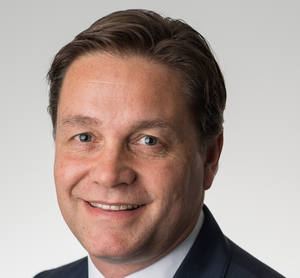
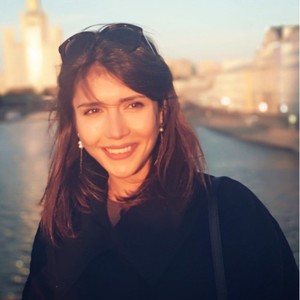
0:09 Hi, my name is Bianca Pesciola. I'm the CEO of 6 and welcome to Danicali Limited's Live Investor Summit. I'd like to start today by introducing our speaker, Niels Wachow, CEO of Danakali Limited. To kick things off, Niels will be telling the company's story and then we will be accepting questions. You can submit your questions in the Q&A panel on the right-hand side of your screen. Without further ado, take it away, Niels. Thank you very much, Bianca. Good morning and good afternoon, everybody. Thank you for joining us on this first webinar for Danakali. Really pleased to come to you this way. Obviously, in the current circumstances, this is a great opportunity to reach out
0:54 to you. And I really appreciate you taking the time. So today, first of all, I'm Niels Wagen. I'm the CEO of Danakali. And I will take you through the Danakali story and we'll talk about the company, we'll talk about the Coluli project that we're developing, we'll talk about the SOP market, the Solvent of Potash market, some of the demand and supply fundamentals, and I'll give you some update on where we are with our project. Before I get into the detail, I want to make you aware that this presentation will have some forward-looking statements. They are based on our estimates.
1:41 There are no guarantees. Things may change. Things may turn out to be different. But obviously to all our efforts to make it as accurate as possible. But as an investor, I think you should be aware of that. So please read this carefully. I won't go through it in detail here, but this is an important notice for you to take. So let's start with the introduction. So who is Danakali? Danakali is a company which is developing a sylvate of potash project in North Africa. We're listed on the Australian Stock Exchange and the London Stock Exchange.
2:29 And our project, the Kululi project, is one of the biggest, most advanced and high quality and very big potential for good rewards, sulphate of potash projects in the world. We'll go through a lot of detail on the project itself, but let me continue with the introduction of the team. Well, myself, I'm the CEO, have been with the mining companies in the past, worked for a significant amount of time for BHP, was involved in the potash industry, developing the Jensen project, may be well known to you.
3:15 Then we have our CFO, Stuart Terent. He's been 7 years with the company, has significant experience going through all the studies and knows the project very well. Also a mining and a finance background. And then Tony Harrington, who is our project director, 35 years of experience going through a range of commodities and a range of jurisdictions of building projects, and we're really pleased to have him on board overseeing the building and the development of the project. We're supported by a very strong board, a diverse board if I may say. We have our chairman who has been involved with the company for many years, a key shareholder as well, Seamus Cornelius.
4:11 There's a lot of history between Iri Traiam and Seamus and his experience is very important in the relationships and the development of this project. We're supported also by the CEO and President of AFC who is on our board, African Finance Corporation, a significant shareholder of Danakali and also a provider of the senior debt. His colleague, Taiwu Andenieti is there as well. We have Bob Carnegie, who's one of the very experienced potash executives joining our board.
5:01 Then we have a range of finance and building and representation of shareholders in Paul, in Sun Jing, and Andre and John. A very diverse board, very supportive and really pleased to have them with us in building this project. So let me now go to actually the project that we're talking about, the Koulouli project. As I mentioned, It's in North Africa. Here you can see the Red Sea. Eritrea and Ethiopia is where the project is. Right on the border, there's this area where there's a dried up sea where 5 million years ago, beautiful layers of salt and minerals are put together.
5:56 And there's a very rich mineralization that has sulfate of potash in solid salts, and that's something that we're developing. We're developing this together with Inamco. Inamco is the Eritrean National Mining Corporation. They own 50% of the joint venture, which is the Kalluli Mining Share Company and Anakali. So we're 50-50% shareholders of this joint venture, and that's the vehicle that's developing the Kalluli project. As You can see right here on the border, very close to the sea, so close to export markets and a great opportunity. Now let's look at the investment case. So what are we actually doing and what have we done over the years?
6:48 So first of all, we have been able to determine this is a very large deposit. We got 1.1 billion tons of ore, which will be 203 million tons of SOP of a high quality, 10.5% K2O, good for about 200 years of mine life. So really a significant deposit that we're developing with great scalability options. We have been working on funding, and we're really well advanced in the funding. We have $250 million of funding. Of 200 of that is in the senior debt. $50 million is in equity, And we'll discuss that a little bit further, but that's already well advanced. There's still some funding to go, but we're really well on the way of getting the funding organized.
7:45 Then we look at where are we on the cost curve. Obviously very important where you are. This is a very shallow deposit, which means that we are able to mine this with an open cut mining, which means the costs are significantly lower than if you would have to sink shafts and do other ways of mining. That will give us a very good position on the cost curve. So our position is low cost, which is obviously also good for the margins of the project. So what's here with Eurochem? Eurochem is, so we de-risked the development of the project even further with a 10 year offtake agreement with Eurochem. We'll talk about that a little bit later, but it's giving us certainty for our cash flows.
8:34 We have started the development. So we actually have started the development with DRA, our EPCM provider. And we are operating in a very interesting market, which is the premium potash market. It is a product, sylvet of potash, which is a premium product if you compare to normal potash. And the fundamentals, the demand and supply fundamentals for this market are very, very healthy. We'll discuss that a little bit later in the presentation as well. And then if you look at the returns that we would expect based on our low cost, based on the revenues that we can, we expect an IIR of low 30s percent and an NPV of $439 million.
9:28 So all in all, a very complete investment case. So let me now take you through some of the aspects that we spoke about. So let's talk about the the offtake agreement. As I mentioned, Eurochem has come on board as a partner, as an offtaker. We agreed a 10 year offtake agreement with them with an option for 3 years. And this is a take or pay agreement, which means every time that we produce, they will market and distribute it and sell it into the global export markets. They may use some of the product themselves. There are significant producer and distributor and marketer of fertilizers.
10:17 And Eurochem has a revenue of about 6 billion dollars and are a good partner in developing this project. Not just for as an off-taker but also in the design and the specifications and the organization of the supply chain. So we're really keen and pleased to have them on board as our partner. We spoke about the funding and let me give you a little bit more detail on that. Advanced funding, we have $200 million of senior debt that was signed up in December last year, 2019. This is from AFC, African Finance Corporation, and the African Ex-Im Bank, 2 strong partners in developing this project.
11:10 And then AFC also have signed up for a subscription agreement for $15 billion in equity investment after they've done their due diligence and really had a good look about the attributes and the country itself, they decided they also wanted to be an equity investor. So really pleased that they're on board and signed a subscription agreement of which the first tranche has been delivered in December. And we're currently working through the second tranche and discussing the final CPs that are currently undergoing and to be satisfied.
11:58 If you look at the uses of the funds, so what we need to actually build this project. We have a CapEx and capital expenditure of $302 million. There will be some working capital as well, of $20 million, and there will be some fees on top of that. But in general, that's about what we would need. And then the sources of what we actually how we think this is going to be funded, or we know we have the $200 million for senior debt, We have the $50 million of AFC on a subscription agreement. And then the balance, we're working through a range of options with with our financial advisors on securing the balance.
12:48 Now, let's talk about the development and the current status of the project. With the first tranche of funding coming in December from AFC, the first equity, we've been able to kick off the project and the development. And we have basically 3 phases, the mobilization, the construction, and then the production. And we expect that where We have completed phase 1 on time on budget. On phase 2, we're in the final stages of getting that finalized. And what is obviously there is then that will give us the next phase going into construction, into production.
13:36 So we expect construction in 2021 and the production is targeted for 2022. Now, obviously in this, we all have been working with DRA. We mobilized the owners team in South Africa and Tony Harrington, who is our project director, who I introduced you earlier, is really working through the different phases. Where as I mentioned, and now finalization of of phase 2 and what we have seen obviously given the pandemic and the COVID-19 and the circumstances there, that there has been, as anyone, we have also been impacted, but not to the extent that we had to stop work. We've been able to continue to work from home. A lot of the phases that were planned for the EPCM work were actually desktop design work.
14:39 And we have been able to keep the momentum and looking at keeping our production target in 2022. But there will be some prioritization of the work in the phases 3 to 6. And that's really because Eritrea is currently still in a lockdown, so we're not able to travel there. So there's, in the phases that we've done so far, we've also identified some opportunities for optimization. That's something that we will be studying and that we will continue to work on. And there will be some other aspects like the procurement packages that have gone out in phase 2.
15:27 We'll proceed with these and some of the long lead items, we expect that we'll be able to make progress on those. Eritrea in itself, in the COVID-19 situation, they have been very responsive. They have very low cases of the coronavirus and a very low number of deaths, which is very pleasing and good to see. But also, it is a challenge
16:06 for any country to now open up. But we're confident, we have our team in Asmara that we talk to on a day-to-day basis, and we're really kept up to speed on the developments and we will proceed as soon as we can
16:27 and hope to continue to work there. The good thing is that The other mining operations in Eritrea have been able to continue with their work. Shipping of the other products which are currently operating in Eritrea has been ongoing.
16:46 It's good to see that the support was there with the right measurements that work has been continuing. So we are on the way and really pleased to continue the progress.
17:03 Now let's talk about the product that we will be producing. So, the potash world, obviously there are different forms of potash. The project that we have, the Coloni Project, is focusing on sulphate of potash. If you look at the more well-known potash form, which is the myriad of potash, which is a much bigger market, 67 million tonnes globally, the sulphate of potash market is a smaller market, about 7 million tons globally. Prices of the SOP, so market is between 450 and 600 dollars a ton, And that's really driven by where it's delivered,
17:51 what grade it is, whether it's standard, granular or a soluble form. But the key difference between SOP and MOP is that the SOP has clearly sulfur in it, but it's chloride-free, which means it can be applied on crops which are chlorosensitive. So if you have fruit, vegetables, nuts, which are typically the high value crops.
18:21 Those crops require a fertilizer which doesn't affect the taste. SOP, Solvative Potash, is such a fertilizer And because of the high value of these crops, they're able
18:36 to pay a premium for that product above the merit of potash products. So, SOP versus MOP, 2 different fertilizers both containing potash. The ones that we're producing is the high value chloate free
18:59 and applied on the intolerant and the chlorate sensitive crops, such as fruit, vegetables, coffee, tea, and nuts. Now let's look at the SOP demand and supply fundamentals. First of all, what's driving fertilizer demand? In general,
19:26 if you look at the population growing from where we are today to 2050, it's about 10 billion people will be on this planet. They all need food and they all need to be produced. Now, if you look at the arable land which is available, that is limited. So therefore you need from the land that you have increased yields. And I think the arable land can grow, but cannot grow to the same amount that it's needed to to get the amount of food that you need to produce. So fertilizer
20:03 is a very important tool to increase yields for farmers and therefore the demand for fertilizer is really going up. And on top of that, you have a more affluent people in the world. I mean, the middle class is growing around the world, so they will be able to have different type of foods. So they go from stable foods, from rice and grain to more richer foods, fruit, vegetables, nuts and coffee and tea. And that's obviously really in the area where the SOP demand is important. So the changing in diets, the increasing global population, the limited arable land is really a couple of very key demand factors and community demand drivers for an increased demand
21:00 for silvative potash. Now, if you look at that demand, and that's going to be 2% to 3% CAGR over a period of time,
21:11 what does that actually mean in terms of supply? How is that currently produced? So supply, if you look at the right hand side, there's 2 graphs there, the top graph there is the pie chart. You can see that half of this supply of all the product which is produced is produced through secondary production and other half is primary production. Now I'll explain what that means. Primary production is really coming from brines or from solid salts.
21:46 And what you see is that in the world, the amount of primary sources that can supply the market is limited. So therefore, there's an invention which is called the Mannheim process, where they use MOP, the myrtle potash, they add sulfuric acid, they add heat, and they produce sulfate of potash. So it's a process where you need MOP as a product,
22:13 as a raw material, and then you create SOP. That's an expensive process, but it's needed to satisfy the demand out there. So if you can look at this pie chart, about more than 50% of the supply which is currently produced is coming from the Mannheim process, which is a lot more expensive, which is energy intensive and also creates an environmental friendly byproduct that needs to be get rid of. So it is not a preferred process, but it's needed to actually deal with the demand out there.
22:55 Now, if you look at the supply curve here, and If you look at the actual cost curve, as I mentioned, this is the existing, so this graph on the bottom of the page. Here you can see the existing producers out there. You can see the Chinese primary production, which is really low cost. And then you see
23:22 the man-night production, which is this area of the cost curve. And then you see some primary production in the US, which is really high cost, but still very profitable, given where they are very close to
23:39 their target markets. If you look at where Coluli would come in, if they will be producing today, Because of the way that we can produce, the open-cut mining and the infrastructure advantages will be very much on the low side
23:59 together with the primary production producers in here. So you can see if this is, I mean, this is probably very small to read, but this is about $150 a ton for our first 2 models, which is a significant low if you compare it to the man-hour production, which is right here. Man-hour production is needed, but it will create healthy margins for the primary productions, and that's why the fundamentals of the demand and supply are quite healthy.
24:36 So let's look at the demand again and the application rates of SOP. Here's a map of the world where you can actually see where the significant amount of SOP is used. You can see Europe, China and US, well advanced and technically advanced
25:01 agriculture, where they've done a lot of research and they know the value and have been able to increase their yields quite significantly. And that's really through the use of fertilizer and through the use of SOP in particular for the crops that we talk about.
25:17 If you look at the amount of SOP used per hectare, you see US, Europe and China are really very high. And then you see the potential in the world. I mean, if you look at Africa and Latin America, the application rates are very low. They have still very big agriculture
25:44 industries and there's significant improvements possible. And even if you look at where the current demand sits,
25:59 there's significant growth potential if you look at these figures. Now, let's have a look at the Kaluli project and some of the key attributes of the project itself.
26:15 The infrastructure of the project is very close to the coastline. You can see here is Ethiopia, landlocked country, and then you have Eritrea here. This is the Red Sea. Kaluni is right there on the border. There's a existing port, it's Port Masawa, which is currently used by other mining companies for an export of ores.
26:42 And that port is able to receive ships for the export of our product. So we will produce and mine our product here, have a 230 kilometers truck drive to the port and there we will be able to use ocean going vessels to export it. And this is where Euracham will pick up our products and then distribute it to different markets in the world. We also have the opportunity,
27:14 obviously, to allocate some of the Toms locally for the local farming. And that's something that we'll look into as well. And then there is, this is existing infrastructure. So Port Massawa is currently there. That's the port that we're currently planning to use for our modules. But then there's a proposed future port, which is much closer to site, only 87 kilometres away from site, and that will give us significant cost advantages. Because the trucking here from Kululi to Port Masawa is still an expensive
27:53 exercise. We can reduce this significantly if we go to Enfile Bay, which has a natural draft and
28:04 a port can be built there quite quickly. And that's something that obviously we're looking and working with the government on the potential there. But in the current setup, we can rely on the infrastructure which is there in Port Masala.
28:24 Now look at the asset itself. As I mentioned, it's a dried up sea with all kind of layers of minerals. And Here you can see in this round circle the different layers of the product that are currently laid out there. The mineralization for our product that we need to for producing SOP
28:52 is at 16 meters depth only. So this is really shallow. And here you can see a picture. There's a little man standing there, hard to see, but you can see how fast and there's just nothing in that area. It's really like a dried up ocean. You're walking there on the bottom of the sea and you have the opportunity to do open-cut mining
29:15 which is safe, which is low cost and relatively straightforward. And that's where our cost can be kept very low. We don't have to sink shafts. We don't have to do solution mining or big evaporation ponds. We can produce relatively quickly from ore, solid salts into a finished product. So if you look at the process, you can see here, we would mine, we would crush it,
29:47 we would float it, mix it and then dry it, put it into a finished product on a truck, shipping to the customer. And if you look at that technology, the processing, it's proven technology, it's something that has been done around the world. We don't have to invent anything new here. So to that respect, the risks of getting the solid salts into a finished product and
30:19 the consistency in actually the quality, where we're confident that we will be able to deliver a very high quality product through very simple and safe and low cost mining.
30:35 Spoke about the scale already. And I mean, you saw the picture on the previous slide. It is a really big asset and it has a high quality. The size is really significant, 1.3 billion mineral resource that comes into 1.1 billion ore reserve at
31:02 10.5% K2O. So this is the potash content, which results in 203 million tons of SOP. So quite significant scale, high quality,
31:17 the purity, we can, what we have done in our test, we think we can get to 80, 98%, which is really ranking in good qualities. And we've gone through EuroCam, they've tested the product, really were pleased with the samples that they received. And then there's scalability. I mean, the beauty about having this scale is that we can, in a very short production time, from solid salt into a finished product, that's only a matter of weeks to get the product out, get it onto a ship, which gives us significant upside potential if the market circumstances give us that opportunity. So it is a large resource with great scalability potential.
32:15 And that brings me back to the investment case. I mean, if really wrap it up, if you look at the deposits, as I mentioned, very large, about 200 years of
32:28 mine life. We were advancing our financing $250 million, which is still a gap to go, but we're well on the way to do that. The low-cost mining gives us a very good position on the cost curve and gives us access to good returns, economic returns. The anticipated cash flow of 85 million per annum over a significant amount of time, de-risked with the off-take agreement with Eurochem, a key, a very important fertilizer producer in the world.
33:13 We're on our way. So we have started the development. We've seen the market fundamentals, the supply and the demand, the demand really driven by the global population, where the changing in diets, the limited and rare land available, and the need for increased yields, and really the chlorine premium products that we can produce puts us in a very good position on the market fundamentals. And last but not least, The investment case, based on our expectations, are an NPV of $439 million and IR of low 30s. And we're really excited to advance this project further.
33:59 And We're really keen to get and welcome new investors on board. Thank you very much. I mean, I think that's what I wanted to give you. There's a lot more detail that we can talk to. There's a lot more questions that I'm sure you will have. I'd like now to give you the opportunity to ask some of the questions, and we can go into that.
34:30 Absolutely. Can you hear me, Niels? I can hear you well. Great. Okay, let's get into some questions here. So thankfully we have a number of questions coming on through. First question is around production. You're asking production in 2022, right? That is correct, yes. So we expect production 2022, 1st module 472,000 tons, the ramp up periods will be about 12 months before we get into full production. But I mean, we expect still that with the current schedule and where we are today, we should be able to meet 2022 production.
35:17 Great. Another question here, Can you please update and recap on the remaining conditions to the funding high level before the part of financing is unconditional and the best case timetable? Yeah, that's a long question. And I'll try to give you a whole range of conditions present that we need to go through. Some of that is really related to, all of those really, to the senior debt and senior debt source linked also to the trench 2 of African Finance Corporation. So some of the TPs are similar. Think about things like finalizing the power contract.
36:03 There's some guarantees setting up on and offshore accounts. There's a whole range of really administrative things that we need to do, and some of the commercial things that we need to do. So that we're working through with the lenders, Afrikaners Exit Bank and Afrikaners Finance Corporation through these conditions precedent. And we're progressing with that well. And it's something that we hope to get through as soon as we as we have some delays because of the COVID-19 just to get some of the documents through the right channels that were just due to a lockdown. We're not able to go through that, but we're working through all the Commission President and we see great cooperation from our stakeholders, so both the lenders, the Ex-Im Bank and also AFC.
37:15 And AFC obviously also with the second trans disbursement, they're great supporters. And having 2 of the AFC members on board as our board members is really a big help in getting through the completion and satisfaction of these conditions presently. Great, another question here is the take-off agreement still valid and can be part of the funding needed for the working capital? So let's take it first, the take-off Agreement, yes, it's still valid, absolutely. Eurochem is a big supporter with us. We're going obviously now with EPCM work through some of the specifications of the products.
38:08 And so there's a close dialogue on how we're gonna organize the supply chain, how they want to get the product delivered, whether it's in bulk or bags. I mean, there's a lot of detail there going on and Eurochem has been very supportive all along and we're pleased to have them on board. What are the conditions left to satisfy tranche 2 of the AFC equity finance? No conditions are mentioned in the original announcement. It appears that AFC simply well shared with the market dropped. No, that's that's that's not correct. I mean, there's actually, there's a couple of CPs that had to be satisfied and they're linked to the senior debt. I mean, some of them are, as I mentioned before, on the documentation that need to be fully done.
39:07 And some of them have been delayed because of the COVID-19. And yeah, we're working with AFC to get them done and we'll update the markets when we issue the new sample. Can you summarize the Australian and any relevant global Kodash development projects which have moved quite quickly towards production and the impact it would have to coal? Yeah, that's a good question. I mean, there's obviously the SOP markets and amendments as I discussed today are quite healthy. So if you are able to produce silver with potash, I think it's the right market to be in.
39:55 I won't comment on each of the different projects. I think that's not my position. But what I can say is I think the Australian projects, obviously they're brine projects, they're obviously also low cost and if you remember the supply chart that I chart on the supply. There is a significant amount of production currently done with the manhine production, secondary production. It's more than 50% of the global supply is coming from manhine. So there will be a place for low cost primary producers. And I think that some of the projects in Australia have done well.
40:44 They have their challenges with the infrastructure far away from coast etc. But without going into more detail. I think we're really well positioned because of our location obviously we're right in the middle of the world if you like in the Red Sea so access to global export markets is fantastic. We're very close to infrastructure that puts us in a very competitive position as well. And our scalability and our ability to actually produce from solid source gives us a lot of consistency in the quality of the product that we can produce. So I think having the scalability, having the long-term view and also the quality of the asset will put us in a very good position.
41:37 And even with a little bit of Australian competition on there, which will probably be much more locally distributed, I don't know their plans, but I think we're quite happy to take that on. And I think there's room for other projects, but I think we are unique in the sense that we have a very consistent quality, we're really well positioned, we're really scalable, and we're really low cost. So I think the Danakali and the Columbia project is in that sense very well positioned. Great. What market price for SOP is assumed in your economic study? The market price for SOP is rather opaque. So how or who dictates the market price?
42:28 Yeah, it's a good question. And as you, As the question says, it's an opaque market. So there's no index out there that you can actually look at. Although there's PRAs, so price reporting agencies, who are talking, who publish weekly prices, and that's probably a mix of deals that they've heard, but it's not based on an index. Now, our, to answer the question, we are $569 for our price, And that's a mix of granular and standard. So you have different prices around the world. As I mentioned, $450 to $600, some even higher for the real high quality soluble products.
43:21 So it depends on where you deliver it, the solubleness of products, the more soluble, the purer it is, the higher the price. And we're in a good position. If we have that mix, we can adjust and go under a standard. And then if you look at our economics, that's based on $569 in our feed study that we're currently updating as part of the EPCM work in phase 2. So we're going through all the different prices that we've put in there. We're going through all the different procurement pricing that was in there and that work is progressing well.
44:14 Great. We're looking at around $250 per ton using the Masawa port. What would be the cost if we were to use the Anchao Bay port? Thanks. Yeah, that's a good question. I mean, if you look at the cost that we currently have in for transportation, it's $73 from going to Kululi to Port Masala. Enfale Bay will be much closer and will also be an opportunity to reduce your trucking costs quite significantly. I mean, it's hard to tell an exact number because obviously you need to build a port, But approximately you would be able to get about $50 off your cost of that trucking leg. So I think that's a great opportunity and that's something that we're definitely pursuing.
45:22 But what we want to do in developing Kululi, we want to make sure that we can control everything and build this modular and use the existing infrastructure. So instead of now starting with building a port now doing all kinds of new things, we want to build modular, show we can actually build this, use the current infrastructure which is Port Masala that we have seen operating. It's currently a very efficient port. Show the world that we can actually produce this. And then in the later module, we can look at the future port in Valdez, which will then also put significant cost savings and a great opportunity. But we want to walk first before we run and that's why we've chosen to do the modular approach using the existing infrastructure and really going from that aspect we can develop.
46:20 But it is a great opportunity to do something with Enfale Bay in the future. It's something that is sitting with the government and we're working closely with them to see what can be done. Are there other listed companies which already produce only SOP? Other listed, well only SOP, well there are other producers of SOP, They also have some other products. And I think that so yes, there are Belgian producers, there's German producers, but they also have other specialty fertilizers. And you've got North American producers who are really focusing on this, but also have some other specialized fertilizers.
47:08 And if you look at our deposit, we have also the opportunity to do other products. We are focusing on SOP today because we think that's where we can really get the highest margin and the best return for our shelves. But there's opportunity to do MOP, rock salt, kieserite, magnesium. So there's other minerals in our deposit that we can use and that we will use. We have 200 years of lifetime. So there's really an opportunity to develop that. We want to focus on this 1 1st. And as I said earlier, show the world we can actually do this premiums in development and show that we get the first cash flow in and build from there.
48:03 Question here, I would be very interested to hear an update on the company's funding strategy in particular, is the debt funding conditional upon completion of the capital base and how much equity needs to be raised? Yeah, that's a good question. And as I showed the pie chart on funding earlier. So the first question was, is the debt funding depending on, can you repeat that question? Absolutely, so the first question was, is a debt funding conditional upon the completion of capital rates? That was question 1. So yes, It is. So the debt funding is depending on fully funded before we can draw down. Right. So there's a whole range of conditions precedent.
48:56 And one of the conditions is the capital funding. So before we can draw down on the $200 million, that is one of the requirements. But that's something that's really in our strategy. So, I think the second question was, what's your strategy? So, what we're currently doing, looking at a whole range of options to close that funding gap. The funding gap, as I mentioned, so we have $250 million committed. We have 302, which is the capital expenditure plus the 220 million working capital and some fees. So there's a balance that will be confirmed into an exact number after we've completed our phase 2 in EPCM work. That's what we're currently doing is confirming the figures from the feed study.
49:53 But as mentioned before, it will be 320 plus some fees and we have 250. So it will be in that range between the $70 and $90 million approximately. But that's something that we will update the market once we have confirmed our feed numbers, which we're currently working through. We've gone out and went to all the procurement packages and long lead items and get updated numbers on that. And we'll update the market as soon as we have these issues resolved. What is the timeframe for the remainder of the funding, the last 70 million? The timeframe is, I mean, it's hard to actually tell exactly time obviously and this is this is our key focus for the management team and the board.
50:48 And with also the help of our current shareholders, with our lenders, we're looking at a whole range of options as I mentioned before. And so, yeah, this is gonna be key focus for the next 20I mean, it's hard to pin it down at the exact time, but it is clearly what is the key focus for getting further underway with this project. For how long will Dan and Kelly be producing SOP before the production switches to MLP? What is the split of reserves between the 2 products? Yeah, that's a very good question and it can be answered in many ways.
51:34 I think SOP is a premium product. And that's really where, as long as the margins are there, we probably want to make sure it has the best returns on the capital. So that's what we've chosen to do now. We think that for a foreseeable future for the SOP market is really looking healthy. Therefore, We don't necessarily see a switch moving to MOP, which it could do. But I think having the opportunity to switch around, as I mentioned, 200 years of lifetime and with 1.1 billion tons of ore for SOP.
52:21 If you look at the other products in the assets, will give us that opportunity to switch around. MOP absolutely could be there. SOPM could be another product that we could which is the solid potash with magnesium which is a product which is also an attractive fertilizer. But we're focusing on SOP now. As I said, let's get that done, let's walk before we can run. And I think we're in a good direction to actually get the SOP production up. Will AFC still deal at 60 cents per share as agreed or are they trying to bring the price of Tronchitude down with delays?
53:15 So the subscription agreement as it was signed in December is valid. That's what we're currently working on. And we updated the market recently with an extension of meeting satisfying the conditions present. So we have that till November later this year to work through the conditions present and discuss that earlier on the call. But I think that's really where we are. The subscription agreement is there. It's still valid and we're working through that. Do you have plans to beneficiate in-country and export the finished product as opposed to the raw product?
54:08 Yeah, so we are, as I mentioned in the processing, so we will have a finished product leaving Kululi site. So we'll have the different ores, the feed streams into the processing, which will be onsite, and then we'll be trucking it into the port, to Masala, and it will be exported from there. So there will be a finished product ready leaving the Kulhuli site, so it will be in country. Is your agreement with Eurochem a type of take or pay agreement for full production at a fixed price? So there are a couple of questions in there.
54:55 So yes, it's a take or pay agreement. So any time that we produce, we can give to them and they will sell it and pay for it. That's 87 to 100 percent. So in our auction, in the Coludis option, we have 87 to 13 percent that we can market ourselves or we can agree to allocate to local farmers or that's something that is in our option, but we talk very closely with Eurochem in developing that. So up to 100% to 472,000 tonnes we can give to Eurochem. And the pricing is a market pricing. So we'll agree, we have a couple of very clear mechanisms on how to determine the price and there will be a marketing fee and distribution fee for Eurochem in that agreement. But we will be able to get that and discuss what's the highest net back for our product and how can we optimize the margins and the economic returns for the product.
56:16 Now that the restrictions against Eritrea have been lifted, are cost savings to be expected in the construction of the mine? I think that's a good question. I mean, yeah, the restrictions, so there were sanctions on Eritrea until the end of 2018. With the peace of Ethiopia and Eritrea, these sanctions have been lifted. And so that means that there's more parties coming to the country to develop the area and to really try to expand their businesses. So in the recent work that we're doing with the PCM and the development, we've been able to get a significant feedback from companies worldwide, but also locally to give us offers on the procurement packages.
57:13 I think That's definitely one of the reasons that we are able to have more competitive advantages, having more people bidding at the work packages. And I mean, it's a little early to tell because we're in the in-depth process of evaluating it, but the fact that there's more parties there, increased competition, I think the assumption is that that's definitely going to be a very good position for us to be in because we have more things to choose from and that's something that we're working through and updating the market once we have our final numbers from the feed study.
58:01 Great, Another question here about, so you mentioned no eval plans are involved, no processing is involved. So processing, I mean, maybe there's actually a little slide here that I can go through. So here's the processing of the SOP. I don't know whether you can see it. It's a very technical drawing, but it is, you have basically you mine the solid ores and you feed that into 2 furnaces or processing plants, we should say, and you crush it and you then float it, you mix it and you dry it and you see that there will be some evaporation of the off-leads which will be processed back in but the majority of the product of the SOP production is coming from solid salts.
59:05 So that's where the time from actually getting it out of the ground, getting it into a finished product is really a short period of time if you compare it to evaporation ponds. So there's no pre-evaporation needed. You can actually use the solid salts which are mined and then crushed, floated, mixed, dried, and then processed into an SLP. Then we can still make it flakes for granular products or standard products. But that's something that will come afterwards. But you can see this is the process with the silver nite and cadmium nite, putting in the 2 processing streams and there's no pre-evaporation.
59:55 We have 3 more questions here and then we're going to go back to you Niels with those thoughts. Are you open to other products than SOP? And also, can the plant produce more than 944,000 tons per year when you put production? Thanks. So, the first question, Are we open to other products? I mean, recurrently, this is what we're building, an S&P project. But as I mentioned before, the resource is really rich. I mean, I have a slide here which can give you the opportunity that we have here. We have rock salt, which is actually right there in the resource that can be stripped and can be sold at one stage, needs to be feasible.
1:00:47 The salt market needs to be supporting it. There's ketarite in there, there's magnesium chloride in there. So there's other byproducts that we can definitely do. But we're focusing on SOP in the current 944,000 tonnes, module 1, module 2. That's what we're focusing on. That's what we're building. That's where the figures are based on. So the feed figures and the economic returns. But that's really what we try to get up and running. And then we look at the massive opportunity in the diversity of our assets to optimize that. And as I mentioned, we have a long life. There's significant, once you get into a cash flow situation, you can diversify and get into further diversification.
1:01:44 The focus is now on the S&P. That's where the premium is. And that's where we think the best return for our shareholders will be. Great. The answer is in 1 final here. How do you gauge the political stability in the foreign and Africa, especially in Eritrea? Don't you think it might have an implication on coal production in the long run? So there is obviously peace and we really see the benefits of having that stability in the region. What we've seen every time we go there, it's increased economic development. We've seen a lot of other people coming in, opening up. I think the piece that came in 2018 has been very good for the region.
1:02:40 And what we've seen from other mining operations who are currently operating there, they've been able to very successfully continue their operations in the past, but also currently. So the jurisdiction of Eritrea as a mining operation, and even with the peace with Ethiopia and the plans to really build up their economic development, I think are very favorable. Spill these there, as you probably know, the Ethiopian Prime Minister got a Nobel Prize for making peace with Ethiopia and Eritrea.
1:03:26 And I think that's reflecting on something that we can build on as an economic development. And we're quite pleased that our project will also be a significant contributor to the development of the country, providing jobs, providing products that will be good for farming, and it will farm, but also the infrastructure that you spoke about was something that will be a benefit to the people of Eritrea. It's a great opportunity and actually the stability is clearly a big support.
1:04:14 Great. That's it for questions. I'd like to express that thank you everyone for attending. If you had a question that we couldn't get to, we will absolutely get to them. Please send all your questions to friends at six.com and we will send them to Niels and the team at Danicali and we will make sure that we get your answer. Now Niels, I'll throw back to you for the final word. All right, well thank you very much. Thank you everybody who has been attending this. It was a first for us and we really hope to have more of those. Thank you very much for your questions, very insightful questions. If you have any other questions, please reach out to us. We can always come back to you and we'll make sure that no question remains unanswered.
1:05:00 I really appreciate the time that you've taken to listen to us and hope to see you soon.