Automated transcript · Written by software from the replay's audio. It can mishear names and figures; the replay is the record.
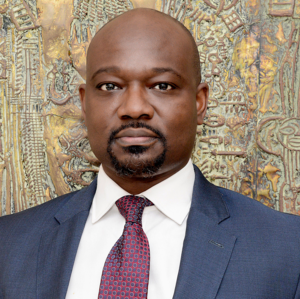
27:00 So we remain committed to the project. Our commitment is demonstrated by the total participation of about $150 million, which consists of $50 million equity subscription, $100 million in senior debt to SMSE. So with all the fundamentals in place, you know, we are deeply committed to getting this project into production. But obviously, The COVID-19 pandemic has severely disrupted supply chains and impacted financial institutions across board, but AFC remains committed to ensuring that impact does not become permanent. So we therefore maintain that we will provide the funding as previously committed while adjusting the timeframes to accommodate for the pandemics.
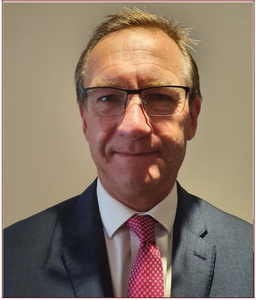
27:50 Thanks, Neil. Thank you very much, Osam. That was very interesting and good to have that background on AFC. So let me now switch on to our other guest, Neil. Neil Gregson, as I mentioned, part of our board, recently appointed as a non-executive director. Neil, can I leave it to you to introduce yourself briefly and then give your views on the project? Yeah, thanks Nils and thanks to everyone for this opportunity to pass on my thoughts about the Kululi project and Danakali. So I recently retired from JP Morgan Asset Management in April of this year after spending over 30 years as a portfolio manager, predominantly investing in mining and energy companies.
28:47 But also, I spent some years at Credit Suisse Asset Management as head of their Emerging Markets Equity Division. Prior to that, I worked in South Africa for nearly 7 years as a mining engineer with Anglo American on the Ilansran gold mine, and also as an investment analyst with gold fields of South Africa. In terms of my investment approach over those 3 decades of investing, I looked for world-class assets, the low end of the cost curve, so that they're able to get through the inevitable downturns in the commodity price cycle with the right people to deliver, but also invested in the next generation of world-class assets. So clearly investment returns had to compensate for the additional risk, but they could be very substantial indeed. So invested in a number of early stage development companies.
29:49 So after April and thinking about, let's call it my semi-retirement, I was thinking, well, what do I want to do? And if I'm going to take on a role or 2 as a non-exec director, very much wanted to get involved with a company that had those attributes, and that brought me to Danacali. So I've been following Danacali for many years now with numerous meetings and conversations with Seamus Cornelius, the chairman, clearly with Niels, but also with the prior CEO Paul Donaldson, who's still heavily involved in the project. And again, you just look at the project and you, yes, we do know there are a few mines around the world that have over 100 years of mine life, but it is very, very rare to come across a project with a 200-year life and such a high-quality resource. As Niels mentioned earlier, nothing complicated about the mining.
30:55 The processing is straightforward. And Danicalia built not only a strong management team to deliver this project, but a good relationship with the JV partner and AMCO. And I think it was very pleasing to see the involvement of AFC as giving further validation to the project. So not only have we got great investment returns here, but Kululi will be able to deliver that positive, long lasting legacy to the people of Aberytria. And the management team have made a really early start on the all-important issues of social, environmental and sustainability.
31:43 So for me, This project ticks all the boxes. Again, we've got some figures there. You can read them yourselves on NPV and IRR. But they don't do justice in terms of the long life and the way I think about it as well. 2 centuries of dividends for a Namco, of dividends for Danakali shareholders. Talk about long-term investment. That's great. It's a great resource. So we've got 98% potassium sulfate compared to typical averages of 94% are low cost. So just over $220 a ton delivered to the port of Masawa 230 kilometers away. But potential for these transportation costs to come down.
32:36 Should a new port be built at Anfield Bay, that's only 87 kilometres away, would clearly bring those trucking costs down substantially. So there's even potential for further improvement on the economics. So I hope I've passed on, while I've joined the board, what excites me about Kululi and Danakali, world-class, low-cost asset with the people to deliver and with that it's back to Niels. Thank you very much Neil and thank you for first of all being a big supporter but also now your contributions to the board, we really appreciate it and as we come to a close of today's webinar and then there's obviously the opportunity for a Q&A, Just some final remarks just to sum it up what basically the 2 guests and I've been able to tell you an update on the Gluted project, a competitive project with good economics and investor returns with a significant size with also looking up where it is good attributes, good opportunity to produce at a very low cost.
34:04 We have started the production. We have de-risked it further with a off-date agreement with Eurochem, first-class fertilizer producer for 10 years, there's another 3 years and we're really committed to build this in a sustainable way and it's not just the impact on the economic growth and the development of Africa and the Horn of Africa as Osam also alluded to but also the food security that the sylphate of potash can bring and the way the sustainable farming, it's good to be part and it's a privilege to build a project with that number of aspects of impact.
34:53 And then obviously we have very strong partnerships with the African DFI's, AfriAxion and AFC but also locally with the communities and with the other partners that we're really excited to build this project and we're pleased to have all these partnerships on board. So with that, really thank you for your time, thank you for your early afternoon or late morning wherever you are in the world. Now there's an opportunity to ask some questions. The 3 of us are available, so welcome to hear any inquiries that you may have.
35:55 All right, that's it for the presentation portion of our segment. I'd like to invite our speakers back now for Q&A. Welcome back everyone. We'll just give Neil a few seconds here. My first question from the audience is actually for Ossam. Ossam, Donald asks, has Tranche 2 of AFC's equity funding been committed, given the recovery of the world financial markets led by the US? Thank you, Jane. Yes, we have a commitment on the trench too. As you know, AFC remains strongly committed to supporting and completing the financing and investment in DNK.
36:50 We're all aware about the global pandemic and the resulting logistic dislocation for global mining operations, including travel restrictions, border controls, curtailment of movements of workers. There's been disruptions to onshore and offshore supply bases. You know, while the ongoing impact of the pandemic on mining sector remains uncertain, We have taken a prudent step of reassessing the implications by delaying the Kulili financing schedule to better understand the potential disruptions and more importantly to realign with the start of the mining operations.
37:40 Luckily, Eritrea currently has one of the lowest COVID-19 infection and death rates and in the Horn of Africa. And so the drastic measures, and we give a lot of credit to the drastic measures taken by the authorities immediately after the first case of COVID-19 infection, which contributed to the success. And this bodes very well for addressing some of the disruption concerns which we had for Kulili and will accelerate the completion of the Danakali investment. So AFC and DNK continue to work very collaboratively to satisfy this outstanding CPs for the second equity tranche. And the long stop date for tranche 2 has also been extended, as you know.
38:30 The main remaining CPs relate mainly to security documents on the debt, but they have been advanced in a very orderly fashion despite the challenges. So yes, we are continuing to be committed. It's an important project for us, and we will see it through. All right. Thank you very much, Osam. Our next question is for Neil Gregson. This is from Bobby Morris. First of all, Bobby says, hello again. He would like to know your reasons for joining Denise and Akali. No doubt, Neil, you've been approached by many other board opportunities in the mining sector. So what was it that really cinched it for you? Hello Bobby, I can't see you but anyway hi.
39:16 Yeah I mean I've sort of been involved in a lot of development projects around the world, and for me, it's really the sort of standout over, you know, the quality of the resource, and the life as well, because, you know, I've looked at lots of projects that maybe have a 10-year life or so, and you think, well, is it that time to give that benefit to the local or national population? Is it time to get a good return back on your money? So I think that sort of intergenerational lifespan of the project was one reason. The other reason, the quality of the resource. And then the people and the management involved. So I've had many years speaking with and following Danakali.
40:10 So yeah, just high caliber management team. So they were the 3 main reasons. Thank you. Thanks, Neil. Our next question is from Fatui. Fatui asks, I think the Eritrean government is starting highway construction. Do you have any additional information? I believe this would be for Niels. If I understand it well, it was the highway construction, right? Yes, highway. Yes, so I mean we observed when we last week visited Kululing that there is indeed a lot of work done on the highway.
40:58 We know that the government has put a program there to upgrade the highway. So yeah, we've seen first eye with our country manager who went there just to check on our camp in Kululi that there's work done. And some of the bridges have been built that weren't there, were just the pilots were there a couple of months ago. So it looks like things are progressing and yeah obviously that will benefit the whole area and will connect the whole coast towns along that coast. And in the future, that will also help us with the disbursement of our products from Kululi to the port.
41:52 That's what we've observed. I mean, obviously, we're not directly involved in the highway work, but we see that there's some good progress made. Thanks, Niels. The next question is also for you. This is from Michael Colligan. He asks, are you comfortable with the political stability of Eritrea? The country is one of the largest non-conflict state producers of refugees? Yeah, I mean, so we are comfortable with the stability. We've seen as a mining jurisdiction that they have been a very reliable government and very reliable in terms of the mining jurisdiction what they've done.
42:42 I think we are, what we're doing is developing this and having a lot of discussions with the communities and what we're really trying to do to make sure we have training programs, we have sufficient people that can work for us and will be a great opportunity for jobs and for revenue for the area. And so we're quite comfortable with the way that we have been able to make the impact assessments with the community teams and the response that we've had and we continue to have. And we have a big ESG program that is supporting that. And obviously, when we're going into the next phase of our development, the training of people and the longevity of the mine of 200 years, so we can actually, as Neil alluded to, this is intergenerational, so we can actually build long-term jobs for people and hopefully get that benefit for the local people.
43:58 That's great and thank you very much. Our next question is from Michelle Ho. This is to both Neil and Osem. Given your strong view on the economics of the project, what in your view is the problem with getting funding and what strategy should the company deploy to get the remaining funding? Maybe we can start with Osamu. I wouldn't say there is necessarily a problem with getting the funding as we know, Eritrea has been, it's a country that there's been difficulties, conflicts in the past, I think still living in the, so investors still look at that history. And, you know, but I think with big projects such as the Kulili project coming on board, you have the Nevzim project which is which has been which was invested in, you're finding more investors finding Eritrea as an attractive investment destination, perhaps not as fast as other jurisdictions, but I think what makes this project, what makes this project important for the country is the catalyzing effect and the new investors that are coming to look at this project as a result of it. So I don't necessarily think that there are some difficulties, but I don't think it's something that cannot be surmounted.
45:23 But I'll allow Neil to expand on that a little bit more. Yeah, I mean, I agree with that. I'm a big believer that no matter what the market conditions are that good projects get funded. So this project will get funded. Clearly we all know what's been going on in the world. In terms of AeroTria, There are obviously some investors where they're undecided from a country risk point of view, but clearly the project itself has outstanding characteristics and investment returns. So good projects get funded. This will get funded. Thank you, Neil and Elsa. The next question is for Niels.
46:10 Steve asks, are any further government approvals needed? The simple answer is no. I mean We have put a notice of commencement to the government, the Ministry of Energy and Mines, and they basically have granted all the permits that we need to build the project. We need to wait. There's certain conditions that we need to filter. We need to spend money to actually make sure that progress is made. But with that acceptance of that notice, that leaves no further permits announced and we're able to continue the development.
46:59 Right. I'm seeing a lot of questions about the presentation. As a reminder to our audience, you can go to the handouts tab, which is to the right of the Q&A tab. And that's where you'll find a copy of the presentation available. So the next question is from Leanne, and this is also for Niels. They say that, I believe the market price for SLP is rather opaque. So my question is, what price of SLP have you used in your economic study for the life of mine? And how have you determined the sell price? Yeah, it's a very good question. I mean, we have in our studies, which is public knowledge, taken a price of $569, which is a combination of granular and a standard price.
47:51 And as the question is rightly pointing out, it's an opaque market. So you have a big variation of pricing and there's no index or future trades where you can actually pick up a price. So a lot of it depends on quality, a lot of it depends on the type of grade. So if you are soluble, they are much more valuable and so they're higher priced. Brandler is higher priced than Standard. What we think with our quality, that our price is confirming what will be used like reporting agencies like CRU and Argus used to be an integer.
48:37 They obviously have done their studies to use those prices as third party validation for our studies. And obviously that will be used in the future as well. In terms of selling our price, the sale price is based on an FAB basis, so delivered in the port, Port Gonzalo, and from there on we will see what the destination and obviously the freight will be added to it. But the price that we use is based on the grades that we're producing and then obviously the future prospects of the demand to supply.
49:26 All right. Our next question is also for you, Niels. This is from Harry Sanders. He's asking, what are the remaining, what are the main remaining conditions precedent for the 250 million funding? Will you need additional funding above this amount? And if so, do you plan to provide? Would this funding be junior or senior to the ATCs? Yeah, there's a couple of very good questions. I mean, so the 200 million of senior debt, have some subpoenas linked to it. Those are finalization of commercial contracts, those are things like, get setting up accounts onshore, offshore, some of the documentation. So we're working towards finalizing those. Then on the AFC subsistence agreement, there's a few which are also linked to the CPs which are under the senior debt.
50:25 So the question, do we need still funding? Yes, we do need a gap to fund. I mean, as we published before, our FX needs is $302 million. We have some additional working capital and fees on top of that. And we have 250 million to give. So that gap, that's what we're currently working through. Talking to a range of investors, institutions, strategics, impact investors, and we're hopeful that we'll be able to close that gap and really get us on the way to really get the full development we want to be fully funded. And that's an important focus of this team to deliver that in the balance of this year.
51:17 So expanding on that a little bit, Lillian is asking another question. On the funding gap required, how do you intend to do this? Equity, debt, or combination? Yeah, so we look for equity. That's what we've always said. I mean, there's obviously there's variations that we can do. Too much detail to go into the exact, But the $200 million of senior debt, that's senior debt. So that's a debt side. We need to add $15 million of equity. That could be a combination. But primarily, we'll probably be looking for the equity to fill that gap.
52:06 Thank you. Now, just looking at the next question. Here's a question from Harry. He asks, can you talk a little bit about Eritrea and taxation? Do you have a long-term ruling? I believe this can be for Niels as well. Yes, So taxation in Eritrea is at 38% and 3.5% royalties. What we see, and it's a question we get quite often, is there any exemptions for a project like this? The authorities and jurisdiction, it's been very straightforward to all the mining operations in Eritrea.
52:54 It's 1 clear 38%, that's for everybody. And there's in that sense, not an exemption, But it's also clear and it's also stable. And what we've seen in the Bisham mine that was owned by Neftan, now operated by Xi Jinping, that it's been consistent since the beginning of the operation, which is now a little more over 10 years. And the jurisdiction has been very straightforward in the sense that this is what it is and this is what it will be. And that gives us the assurance and the stability that we're looking for. I mean, we don't want to have a halfway game that things are changing, the rules are changing.
53:43 And given that they have been, the government and the ministries have been very open and transparent about this is the way that we are going to operate the mining jurisdiction and this is the way that taxation is going to be arranged for. Therefore, We also know and we're confident that for our 200 years mine life, that we can make the projections and we're not having an unstable thing. And it's probably something that Ousmane can also allude to, giving his African experience, that this is a very transparent way that taxation is arrangeable and consistent across the board and across the development.
54:33 I don't know if you wanted to build on that. No, I just support what Neil said. I think that there's been quite a bit of transparency around it. It's something that we've deeded extensively and we're fully in support of the strategy of Danakali accordingly. Excellent. Actually, the next question is for you, Osam. What specific social and developmental opportunities for Eritrea Does the AFCC from its investment include? Well, that's a good question too. Well, there are several opportunities for deepening the infrastructure of the Eritrean state, I believe. So coming out of years of sanction and isolation, the country we believe is now more disposed to FDI.
55:27 And given a strategic location on the Red Sea, It offers immense opportunities in areas such as maritime and port opportunities. Further agriculture investments can be deepened to improve the country's self-reliance on things like local production. Other opportunities are in the area of power and in industrials. And you know, AFC, which is multi-sector, our focus is able to lead, I would believe, the mobilization of capital to enable some of these very important opportunities for the country. But in terms of the Kulili project specifically, when delivered, this is one of the attractions to AFC, It will not only be the only producer of SOP in Africa, which is very attractive, but the market demand for Potash is high, as Nils has mentioned.
56:29 Given that the Kulili project is fundamentally sound and the project is strongly placed to benefit from market demand. It will definitely translate to a lot of developmental benefits for the country. For example, We know that the direct CAPEX and other investments of over $600 million we estimate, expected over the life of the mine, will represent about 10% of the Eritrean GDP. Procurement, for example, would be over $200 million expected to fuel local growth. We also expect positive impact on agriculture and productivity. So these are very important to us. So this is AFS's first investment in Eritrea.
57:17 And obviously the first pure project finance transaction in the country pre and post the UN sanctions. So we expect that given the market fundamentals, given that the project will also have high impact, you know, we expect that it will have a high impact on some of the other investments which AFC has done in the past. So we're quite confident of that. All right. Thank you very much, Osam. I'd also like to thank all the audience members that submitted questions today, and of course thank you to our speakers Niels, Osam, and Neil. I think that's actually all the time we have for questions. We're nearing the end of our time together. If you didn't get a chance to get your question answered, or you simply think of a new question after the summit, feel free to reach out to Dena Kali at info at denakali.com, and they'll be happy to answer your question.
58:15 After the close of this summit, you'll also be redirected to a survey where you'll get the opportunity to submit contact details so that management is able to reach out to you. Now, I'm going to hand it over to Niels for the final word. Thank you, Jane. And I really like to thank the audience for taking the time and listening to us. And definitely want to thank OSAM and Niel for their contributions and your strong support as partners and Director for this important project. We're excited to be involved in this and we're really looking forward to give you further updates on our development and again thank you for your time.