Transcript
Automated transcript · Written by software from the replay's audio. It can mishear names and figures; the replay is the record.
0:08 Hello everyone, thank you so much for joining us today wherever it is you're joining us from around the world. Today we're joined by Rick Van Nuenhuysen, Contango Auras President, CEO and Director. Great to have you on today, Rick. Good to see you, Bianca. Thanks for hosting this. Before we get into the questions, just a few quick housekeeping items. Today's event is being recorded and should be available in just a few short hours. This is also an interactive event. There is a chat button on the bottom right-hand corner of your screen where you can submit questions. And feel free to submit them at any time during the event. Once
0:38 I get through my questions for Rick, we will tackle as many of your questions as we can. Today's event will probably be about a half an hour. So if, for whatever reason, we don't get to your question or if it's outside the scope of today's conversation, someone from the Contango team will get back to you as soon as possible via email. All right, that is enough from me. Before we jump to my questions for you, Rick, happy to give you the floor to share some opening remarks. Thanks, Bianca. And thanks everyone for joining us today. We wanted to have a
1:06 presentation here to our investors and shareholders to basically, you know, describe why we did a financing at this time. And, you know, essentially, it has to do with the stage the project is at and our debt financiers, our lenders, IMG and Macquarie Bank. We are right close to startup. And That's a very delicate time for any junior company because startups are notoriously known for things that potentially can go wrong. It's not an uncommon event for startups to have something come up that says, oh, that doesn't quite work the way it was planned in the feasibility study.
1:53 We were out to the project site here a couple of weeks ago and we're going through
1:59 pretty much everything is built at the Fort Knox site with what we've been referring to as the mill modifications. They're starting to go through commissioning, both wet and dry commissioning. So all of that is on schedule and as planned. But when you put ore through a mill for the first time, you want to make sure that it works well before you start processing all of the ore. And so I think we've announced that Startup is in early Q3. We don't have a, quite haven't settled on a date yet, but it'll be coming up here shortly. When we do settle on a date, we'll get that out to investors, let them know what's going on. We might even try to live stream the event, We're working on that.
2:47 But essentially, the reason why we did a financing now is to have an extra cushion of money in case things don't go as planned. It's not a disastrous sort of situation. I think if you asked Marco Day at pure gold, would it have been better for him to have a few more million dollars in the bank? He would have said, yeah. When you finance a company, a junior company with no revenues, based on just the equity, you can only spend what you have in the bank. Once you go and finance a company with debt, things change. I'd say the reasons we finance with debt were twofold. 1, it obviously gives much better leverage to the existing equity owners.
3:36 But 2, the equity markets haven't been there for junior companies. They're still not there despite the healthy gold prices. In fact, I'd say despite the healthy metal prices. So when we made a decision about a year ago to take on the debt, the line of credit from ING Macquarie, that's a different dynamic than the equity markets. You have certain covenants and restrictions of capital that you have because the debt financiers want to absolutely make sure they get their money back. When you do that, you put the control of your company to some degree in the hands of the debt financiers. And they're wanting us to have sufficient cash to cover when things go wrong.
4:25 It's the penultimate CYA. And that's basically that we've gone through the decision matrix here. We've gone through with Ken Ross the plan. And the plan is basically to start up. If things are going well, we keep going. If things are not going well, we're going to have to slow down, stop, change pumps, or whatever it is that's the issue, address it, and then move on. So it's to basically cover a potential gap when we start putting ore into the mill at Fort Knox. Obviously it's the first time this has happened, so this is just a case of being prudent. And maybe I'll stop there, and Bianca, I know we've got a bit of a, some questions that we've put together ourselves. And then of course, we'll be taking questions from the audience as well.
5:25 Yeah, well, look, I know I might be a bit redundant here, but I can see, and I've been watching as you've been talking, the number of attendees in the room tick up. So my first question is going to be a bit of a recap on some of the items you just mentioned here. But if you wouldn't mind going through it just one more time for folks who just joined us, could you share to investors some of your thinking and reasoning behind doing the financing just in advance of first production?
5:48 Yeah, basically it's to, we did the financing to be able to have sufficient capital on here to address any potential startup issues as we put ore from Moncho into the mill at Fort Knox. They've been throughout the month here, I was up to site a couple of weeks ago, as I said, and they're doing the wet commissioning now. Well, you know, so it was a little slightly different dynamic when you actually put ore into the front end of a system for the first time. You think you've thought of everything, but sometimes something goes missed. It's to have extra capital to make sure that we get a full batch run
6:30 this first time that we put ore through the mill. And if not, then we've got sufficient capital to get us to the next time we put ore through the mill when we've corrected whatever potentially might be wrong. So that's essential reason why we've done the financing at this time.
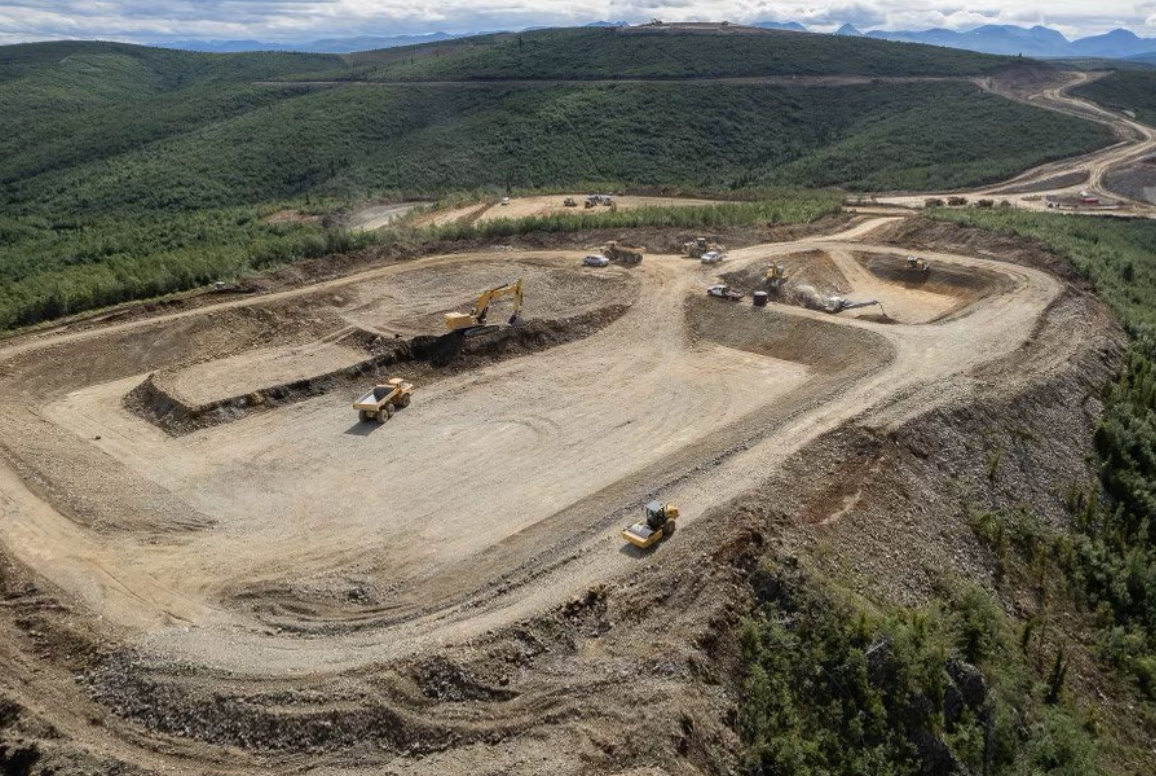
6:50 And then in so far as the use of funds, could you walk through what will the money actually be used for? Yes, I think we outlined in the press release, it's basically to cover working capital. The mine's been operating for almost a year now. We started in late August, so we're closing in on 10 months of operation, and that's going pretty smoothly. We started hauling ore in November of last year, just with a few trucks. And then we built the truck fleet up as the trailers arrived. We actually purchased all the trucks pretty early, but the trailers were special purpose built. So they were kind of arriving 2 or 3 a week and we kept putting it in the service. Today we have 60 trucks operating, which is the full complement, delivering a load of ore pretty much once a day.
7:44 The truck does the round trip and it's about 48 tons of ore, I think, that are going in a truckload. So you can do some math and see how much you know from here forward how much ore is being put on the stockpile and we're that's all gone I think pretty smoothly and pretty much according to plan. A few delays here and there, but then you can get the lace, but then you figure out a way to make
8:08 up some deliveries. I think things have gone really well there. Now the next step is the Fort Knox modifications.
8:16 Get them built, which they're now built, get them commissioned, which they're in the process of doing this month. And then sometime a month or so from now, we'll start putting ore through the mill and it'll be a very exciting day. And Like I said, we'll try to live stream that refund. Great. Could you walk us through the production schedule for Manchurio this year? We don't actually have a specific schedule. We know we're going to have the first batch. And that's, you know, we'll just keep referring to it as early Q3. Again, we'll put out a date when we have one that Ken Ross is ready to tell the world about. So that first batch, you know, there's roughly about 240,000
9:08 tons of material on the pad. So that's what's been delivered to date, Which is pretty much on schedule. So, if we run a full batch, that's what it'll be. But again, we're commissioning and so, if they're running a batch and their things aren't quite right, we'll still either stop or slow down and fix whatever the problem is. If it's something that's a bigger problem, then obviously we'll have to stop because they've got a schedule to deliver for Fort Knox as well.
9:37 We've got a period of time, say a call and a half past that we're going to go through. If everything's going well and we're getting good recoveries, That's the bottom line here. In the process, you know the Gold's on the pad. You've analyzed it at that 0.3 different times.
9:56 Once when we did the exploration drilling, the blast hole drilling, and then There's bulk sampling that goes on as you deliver to the pads. So we know the gold's there, now we gotta get it out. And that's what the job at the mill at Fort Knox is to do. And the critical number there is what's the recovery? We don't wanna put, we don't wanna have something that's not working right and end up with 50% of the Gold going into the tailings pond. That's not going to be a very sustainable business.
10:24 If for some reason the recoveries are low, and I'd say low is probably below 80% would be unacceptable. Anything 85% and above is what we expect. What's on the pad right now is oxide ore, so it should be the best gold recovery ore with the lowest cyanide consumption.
10:50 That's what our expectations will be focused on. And if they're not, then we'll obviously have to make adjustments to make sure that we are extracting all the gold. Switching gears a bit here, I can see we actually have some Highgold shareholders in the chat. Do you think the market has come around to the wisdom of the purchase of Highgold and Johnson Track? No, I actually don't think so.
11:15 It's a great asset. It needs a lot of dollars to be spent on it to get it to sort of what I'll call a feasibility level. It's the perfect third leg of the stool for Contango in that obviously Moncho is a direct shipping or DSO type approach.
11:35 I guess shipping is not appropriate because it's trucking but you know we'll forgo the difference. Lucky Shot is very similar. It's high-grade. We have access to the rail at Lucky Shot, so it's an easy one to get to a mill. I don't know whether it'll be Fort Knox or somewhere else. I think there are other possibilities, but we'll certainly be talking with our joint venture partner at Fort Knox. It's a very simple or lucky shot as we've described. And so the Johnson Track project is a perfect fit, high quality, close to the water, on private land owned by an Alaska native corporation. So all of those characteristics allow it to be developed relatively quickly, specifically when you're not building a power plant and a tailings facility in a mill. So I don't, But I don't think the market's really focused on what that does and how that changes over the next several years.
12:43 I know we'll talk about that in a little bit here, So I'll save that for there. Yeah, look, fair enough. And I guess to perhaps even change sentiment here, what should investors be looking forward to as it relates to Johnson Tract? What are some of the upcoming catalysts that they should be looking out for? We do have a drill program planned for the year. We've just actually had it approved by the board so that we've got to talk to the bankers as usual. We just pass everything by them and I think they're supportive, but I think there's some official documentation that has to take place to have that. So we won't announce it until after that. But it's a substantial program and that's not really the reason why we did the financing. I guess if you wanna mention that, and I'm sure I'll get a question on that.
13:31 It's not a, you acquired JohnsonTrack, therefore the bankers require it more. It's because JohnsonTrack was acquired for equity. So it doesn't, the bankers don't really care how much equity we issue, right? They're about getting their money back. So if we issue, if we require a
13:55 project and for equity, they want to know what we're doing, but they want to make sure we don't have a huge amount of obligations. That's really more what their main focus is.
14:09 We didn't finance because we want to do a program at Johnstown. That really wouldn't change the overall dynamic of the decision to have raised money right now. I know we've been talking about a few different projects here, but could you outline for investors what the plan is for bringing all 3 of your advanced projects, Moncho, Lucky Shot, and Johnson Track to a production decision? Yeah, so let me throw up a slide here. Let me try to throw up a slide here. It would be easier if you scroll maybe for this one. Yeah, I didn't want to move here now.
14:54 Can you put your slide up? You bet. I can do that. Let me go ahead. I'll say, you know, this is live. Let's do this and that. And there we go. I'll just skip ahead here. Here we go.
15:22 Do you see it on your side? Yeah. There we go. Thank you. Thank you, Bianca. I'm not that vigilant. All good. So we're going to start describing what we call our 5 year plan. And it's it really brings into focus this question what it will, where do we go? Where do we go from here?
15:40 Muncho, as we said, starts production here. We hope everything goes smoothly. Right now we don't have any expectation that it won't, but we wanna make sure that's the most important thing. That gives us the cashflow now to do what we wanna do as an execution plan. So we've talked about LuckyShot. I've talked about the Lausanne curve and basically how we want to
16:08 use the curve to get back to where it was originally when Pierre Lausanne came up with it, which was a 2-3 year time frame between discovery and getting your project into a place where you could start mining. We think we can do that with the cashflow we'll be getting from Moncho, and a lucky shot drilling out, 3,400,000 ounce mine in the next 2 to 3 years, and putting a mine plan around that to start production at the 30,000oz to 40,000oz per year level. We don't have all-in sustaining costs and things like that yet, but these will be because they're high grade, they're going to be relatively high quality and therefore, good all in sustaining costs.
16:59 I'd say we're probably focusing on something that's going to yield at today's price, at least $1,000 margin. We can do that with Lucky Shot. Same thing we can do a couple of years later, 2, 3 years later with Johnson Track. They're pretty much the same plan that has to be done. We just have the underground in place at Lucky Shot, whereas at Johnson Track, we actually have to get that underground access. First, we have to get a permit, which we're in the process of doing now. I'm using the Royal we here because we haven't actually acquired
17:33 high Gold yet, but by the end of the month, they should have the shareholders meeting and shortly after that, we should hopefully be closed. They're working on getting the permitting in place. I think by the end of the year, that should be wrapped up. Then next year, we can build the access road and lay down an area over there. Then the following year, so that would be 2026 now, we could be going underground at Johnson Track. Again, that's a couple of years later than Lucky Shot. We've already got the underground in Lucky Shot, so all we need to do at Lucky Shot is the drilling. Then back at Johnson Track, once the underground's in, then
18:13 once that's completed, we can get the drilling done to do the infill drilling and put a mind plan around developing Johnson tracks And now you're talking about, you know, very short spaced holes 20 meter type spacing And and put that put a mind plan together now Johnson tracks a nice
18:34 Size or body. It's a million ounces of this known that's and That's down to the level that we would be putting the underground access in. It's open from there. It just wasn't possible to drill it from the surface because the mountain goes up and the ore body goes down and the geometry just was not ideal for surface drilling. Once you're underground, you can also then do more exploration. We think there's potential for a 2, 3, 5 million ounce deposit there. There's lots of room. That's just a Johnson track. Of course, on the property, there's many
19:08 other areas of anomalism that could also be followed. So when you stack these together, Moncho, Lucky Shot, Johnson track, over the next 5, maybe 6 years, things might slip a year, We're looking at a company that would be producing 200,000oz of Gold a year. Johnson Tract at 1Moz is just what's known.
19:31 We see a mine that could produce 100,000oz of Gold a year. Pretty easily, in fact. It's a nice, big, fat ore body. It averages 40m thick. It's a really high-quality ore body that could be mined relatively quickly. So, and obviously if you've got exploration upside, you just, you keep mining kind of like we've done with, like we're planning to do with Moncho and Lucky Shot as well. All right, one last question from me here. It's an election year, so is there anything going on at either the national or local level election-wise that concerns you relative to the current context?
20:12 I don't think, let's start with the national level. That's certainly the more known and the certainly more controversial. And it's in fact, we've tried to Fed proof our plan in the sense of we try not to work on federal lands. In fact, it's almost, I haven't worked on federal lands in probably 20 years, just because the feds are really a pain to work with in the United States. We work on state lands and we work on private lands. All of our projects fit that.
20:44 Johnson Track is owned by CERI Cooking at Regional Inc., which is an Alaskanita corporation. Lucky Shot is on private patented mining claims, surrounded by state land, so there's no federal land anywhere close to us. And of course, Moncho is on land owned by the Tetlin tribe.
21:03 I won't say we can ignore the federal permitting process, but I'd have to say that the Corps of Engineers has been the least politicized of the federal agencies. So in Alaska, the Corps of Engineers is, I think, pretty reasonable to deal with. And that, of course, is for the wetlands places. So whether it's Trump or Biden in the White House, I don't really see a huge difference there in terms of the effects of permitting. I think the broader question of, are they gonna change the 1872 mining law? Again, we don't work on federal land, so change it if you think that's the right thing to do, but that won't affect how we approach, how our projects are currently and what projects we plan to, you know, take a look at in the future. We work on state land, we work on private land owned by Alaska Native corporations or tribes.
21:59 At the local level, I've been looking at who all is putting their name in for the different states and
22:12 our legislative branches. I don't see any significant changes in Alaska. We're a red-purple state. I think Alaska will continue to be a good place to develop for mining and for resource development in general.
22:32 All right. Well, look, it is that time. We're going to open up the floor to questions. I know a few questions have come in since we started this session, so I'll jump right to the top. Going back into the financing, there's a question about why the big discount and why you have warrants in this particular case? Yeah, so I hate warrants, so it's an appropriate question. Basically because the market is not a good market. You know, equity, when you want to raise money, equity is driven by the people handing out the money and buying stock. If we had a good market, you wouldn't see warrants and you wouldn't see as large a discount. We used to get a lot of criticism because we didn't trade a lot.
23:19 We've been a historically, we're friends and family company and we were OTC and nobody trades on the OTC. But we do trade more now. So I think we're trading 40,000, 50,000 shares a day and sometimes a lot more. So I don't think that's an excuse anymore. But I think it's just literally the equity markets are really poor markets. And if you had the luxury of only taking money when you when you don't need it, maybe, you know, maybe you just wait until markets are better. But when the banks are saying, you know, hey, you need more room here in case things don't go as planned with the startup, because you need to meet these covenants and these cash restrictions and blah, blah, blah.
24:10 I guess the market probably knows that and knows that you have to raise the money and so hence the discount. I don't like it either. I'm a pretty significant shareholder. I pay attention to dilution. It's something that's near and dear to my heart.
24:29 The worst thing that could happen for us as a company right now, for Contango as a company, is to not have the sufficient funds to get through the startup process. And again, I can only point to Puregold and Marco Day, who's a very savvy business person in the mining sector who's done this a time or 2. And that's the problem that Puregold has, is they just ran out of money. And when you borrow money from debt financiers, obviously it's a good thing for the existing equity owners because now you've got good leverage.
25:08 But if things don't go right and you don't have sufficient cash, that's how you burn all the equity shareholders. And that's not what we want to do. This is 6.5% dilution for the
25:24 combined company. I'm looking at a post-high gold transaction here in July. It's not a huge dilution. The warrants have become part of the landscape now in financing junior companies. So it's a tough pill to swallow, but We wanted to make the banks, get the banks comfortable. And so that's the cost that it took.
25:53 I wanna stay on the topic of the financing before jumping over to high gold. Did insiders participate in this race? No, this was led by Cormark and Canaccord and I don't believe no insiders participated. This next question is a bit of a two-parter. I'm trying to combine kind of 2 questions in 1 here. The first question is in relation to, do you have any specific feedback for High Gold shareholders with regards to the upcoming vote?
26:28 And what are the immediate plans for when the acquisition will be done? Yeah, so I guess the answer to those in reverse order, I think the shareholders meeting for iGO has been set for the 27th of June here this month. And then assuming that's a positive outcome, then it's usually about a 2 week process between getting court approval. It's BC under BC law. BC Supreme Court approval, and then it goes to the TSX for approval as well. That usually takes 1 to 2 weeks. So I'd say by the second week of July, it should be closed. And then in terms of, what was the second question? Was it in terms of our plans?
27:15 So definitely in terms of our plans moving forward, but there was another question about any specific feedback to Highgold shareholders with regards to their upcoming vote on this takeover bill, especially in the aftermath of the financing. Yeah, we certainly had a few discussions with a number of individuals. I say, look, we've got more money now, which means we can spend more money on high goal. And obviously if the startup goes well and everything moves forward, then We'll have more money because we'll not have to spend the cushion. It's a positive thing. For a junior company to have more money, more cash is always a positive thing. It can never be a negative thing, except obviously if you're an existing shareholder, you feel like you're being diluted, which is fair criticism.
28:10 But I think you have to go back to, again, we debt financed because the equity markets weren't in a good place and they still aren't in a good place. That gave existing shareholders good leverage, because we're throwing $60 million to instead of raising equity for $60 million. Think about the math and the dilution that that would entail. Forget about the fact that you probably couldn't have raised $60 million back then. It's just not possible. Last year, a year ago, when we raised 30, we really wanted to raise 40 or 50, but the equity markets just weren't there. We tapped what we could.
28:52 As you recall, that was a pretty steep discount on that financing too. It's the nature of the beast right now for equity markets. For gold companies, they're still not in favor despite that plus $2,300 gold price. And that's a puzzle to me, but it's the reality. So I can't change reality. I know we're coming up to the end of time, but we still have some more questions. So we're just gonna push it a few extra minutes here. As it relates to Johnson Tract, do you have any insights on Highgold's other assets beyond Johnson Tract? Any interest in any of those? I don't believe. Johnson Tract is the main and only asset of Highgold. They had assets in Ontario and the Yukon and they spun those out a year or more ago into Onyx.
29:48 There's a shareholding of Onyx that HighGold has. I think those are interesting assets, so we have no plans to sell the Onyx block. We like the idea of having that shareholding. It's pretty interesting where they're working here in the Yukon, particularly in the same neighborhood that some major gold discoveries have been found here recently. But there's no, I mean, there's exploration lands around the Johnson tract in particular And I love those those are Great ideally located. They're all right next to the ocean. And so if we find that, you know, we'll find another Johnson tract on that on that on those exploration lands.
30:39 Yeah. Hallelujah. We're happy campers. I think that's maybe another point to make is that, you know, In addition, I showed the slide there of the stair step of the 3 projects. I think the other thing to note is that all 3 of those projects had district-scale exploration upside. So, not only are you buying into the stair step approach of adding ounces, adding production, adding cash flow. But you're going to continue to explore those and we're spending $4.7M on the Greater Montreux exploration right around the mine site. Both Johnson Track and Lucky Shot are district scale exploration opportunities. Again, they're on private land in the case of Johnson Track and on private land and state land in the case of Lucky Shot.
31:33 You're getting exposure not only to the assets that are known in the ounces and the cash flow that can come from that, but there's always potential to go find a 5, 10, 20 million ounce gold deposit in these areas. I mean, they're very, you know, the old adage is the best place to find a mine is next to the head frame. It's an adage for a reason. Yeah, fair enough. Well, I guess this relates well to this next question then. For the 3 deposits, please describe prospects for expansion of Mineable Ore to expand the life of mine at each one. We'll start with Moncho. We have a $4.7M joint venture program this year. That's 30% that's ours, so $1.5M to us. That actually started, I think, 2 weeks ago now.
32:22 That drilling will be fundamentally right in and around on trend with the normalization. What I refer to as Minex. You understand the ore body where it is and you're following it along the structural trend that's indicated by the gold anomalism that we've shown several times here on our presentations. It's in the corporate deck on the website. That's where Moncho will focus for right now. They're doing a little bit of regional work, stream sediment and soil sample follow-up on anomalies further afield, but the drilling is going to be focused right in around the mine site. As far as Lucky Shot, the first thing is to get the surface drill program and the underground program done there.
33:09 I don't think we're going to get to it this year. We're going to focus this year's drilling on Johnson Track. It's a much bigger potential and it's a little bit further behind Lucky Shot. We can afford to wait a bit on Lucky Shot and get the drilling done at Johnson Track. A bunch of the information we need is related to getting the permit to go underground at Johnson. We need to understand the water quality. There's not been enough work done on that. And we need to understand the geotechnical qualities of the rock as well. And obviously having more, the more metallurgy we can gather, the better off longer term we are going to be to know how to handle this or where to send it for processing. So that's our plan for right now.
34:00 We'll have a program at, a drill program at Johnson Track. And then I think next year, we'll see how the, obviously if the startup goes really well and everything's on track, we'll take a look at getting a program done at Lucky Shot, maybe underground, because I think the surface program will probably have missed the deadline for the summer to get things lined up to do that. We have to commit to drill rigs and helicopters and things like that for the surface program. But underground, if we can get started and we can get access to a rig, that's something we could get started. Again, on the assumption that everything goes well and smooth with the startup at Brunning Manshaw or through the Fort Knox mill, which is shortly here, a month or so away.
34:52 There's a question here specifically about the price offered to high gold shareholders in relation to the price being offered in this financing. Do you have anything specifically to say to high-gold shareholders as it relates to the current price associated and the bid? It's an exchange ratio. So we set the exchange ratio based on the, I think it was the 20-day rewrap at the time that the offer was formally accepted. And so it's a 0.019 ratio. So that doesn't change. It doesn't. So it doesn't change if our share price goes up or down, it's, you know, that ratio stays fixed. Back to the financing.
35:41 There's a question here about, was the raise oversubscribed and will the warrants be publicly traded? The warrants will not be publicly traded. And yes, there was a possibility to take more money, but it was more money from hedge funds that would not do nice things with our warrants. So that actually the question was asked, because we proactively decided to take money just from folks who are interested in gold, not just quick hedge money that's kind of in and out of anything. So this was a pretty focused financing. We wanted to get some new shareholders. If we were going to have to do a finance, we wanted to get long-term shareholders. Franklin's a shareholder of Highgold, and so now they're a larger shareholder of the combined co.
36:32 So there were some good names in there and that's what we wanted to focus on rather than that sort of flip-flip hedge money. I think this is gonna be the last question here. Big thank you to everyone who submitted. And sorry if I didn't get your question. They're coming in really quickly, but if you do think of a question or you didn't get your question asked, feel free to e-mail the e-mail you see on your screen here and they will get back to you shortly. Last question here is, can you walk through the finance a little bit, i.e., how long do you expect funds from operations and this race to last before another financing? Yeah, so on the assumption that we get through startup here, and the or tons to the mill, or we process what's on the pad, we're we're in good shape, because that then we're on track, I think, to, to raise, no, no, We're on track to not have to raise any more money unless we want to go do something new.
37:28 I think specifically to the stair-step slide there with Moncho in production generating $60M of free cash flow. Again, we're making assumptions here that the Gold price that we have right now, we're using about $2,300 as our gold price that we would blend with the hedges because we've got hedges in place. That's the other thing the banks make you do is they want to make sure to protect the downside. So our blended price is between $2,300 and the hedge price of 2025, which in rough numbers is a little over $2,100 or $2,150 is roughly what we're using as a blended realized Gold price. With that in mind, we should be generating about $60M on annual free cash flow.
38:18 That should be sufficient to advance Lucky Shot and Johnson Tract on the timeframes that we've talked about, 2-3 years each sequentially. We've got to get the permits to go underground at Johnson Track. That's the next major thing there. And at Lucky Shot, the next major thing is just getting the drilling done. And we can comfortably do that all next year. If we have the opportunity to get underground this year at lucky shot, we'll take a look at doing that. But that's after we know everything's going smoothly at the Mayan Show project. All right, folks. Well, I think that's our time. A big thank you to everyone who participated, everyone who attended, everyone who asked questions. Like I said, again, if you didn't get your question asked, feel free to email the email you see on your screen here, or if you thought of a question, as soon as we close this room, as I often do, feel free to send that email in as well.
39:13 A big thank you, as usual, to you, Rick. Always a pleasure to have you on. Well, thanks Bianca and thanks everybody for joining us. And like Bianca said, if you didn't get your question asked, please just send it to info at contango org.com and we'll get back to you. And thanks again for everybody for joining today.