Transcript
Automated transcript · Written by software from the replay's audio. It can mishear names and figures; the replay is the record.
0:07 So good morning, good afternoon, good evening, depending on where in the world you're signing in from today. I am joined by Rick Van Nuynhuyzen, CEO and President of Contango Org for a brief update video. Rick, how are you this morning? Good, Romeo. Good to talk to you again. Yeah, awesome to have you. Today, Rick's going to be sharing a really brief update followed by some questions that came in over e-mail.
0:27 We've prepared and then we'll go directly to your live questions from the chat. With that in mind, today's event is interactive. The chat button on the bottom right of your screen. Please feel free to use it at any time during today's event. Ask questions earlier. There's more likelihood that we'll be able to get to them. If for whatever reason we can't get to your question today, I'll make sure that Rick and the team get those questions as soon as possible so that they're able to follow up quickly. I should also say that today's event is being recorded. That replay will be available this afternoon. It's gonna come right into your inbox. Please feel free at that point to share it around. You should get it probably within
0:59 a few hours of today's video ending. All right, With that housekeeping over, we can get into the protein. So I'll throw it to Rick for a quick update and then I'll pop back in to ask some questions. Yeah, perfect. So yeah, we're in our third quarter here. We just wrapped up at Moncho. We just wrapped up our second
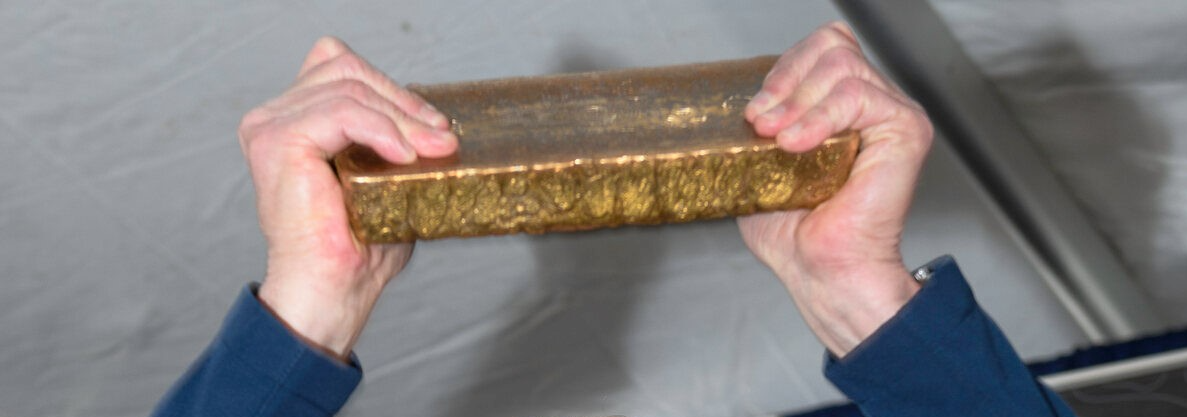
1:19 batch of processing the Gold through the Fort Knox mill. We'll have final statistics on that in a week or so, but this will be the second of 3 batches planned for this year. That's of course the first batch, we sold about $36 million worth of gold. And then we got a dividend view about 3 or 4 weeks later from the peak gold joint venture of 19.5. So we'll have a second batch here finished off and the gold sales in that over the next week or so. And we should then expect a dividend from that batch as well. So Moncho basically going along as planned. Trucking continues and delivering ore to the Fort Knox mill and being processed through the mill.
2:11 We're obviously getting ready for winter. Winter is fast approaching in Alaska, but that doesn't really slow down the process too much unless it gets super cold, but we won't expect that probably until later in the early next year. On our Lucky Shot project, we did a little bit of cleanup work in the underground, basically getting it all prepped and ready for our planned drill program next year, which should see about 15,000 metres drilled underground and then another 3, 4,000 metres drilled on service. And that's to basically get a mine plan, drill out the ore body and get a mine plan put together the following year for Lucky Shot.
2:57 And then we're just wrapping up the drill program at Johnson Track. We had, We started with 1 drill, we added a second drill and we're just wrapping that up. I think we're actually in the last drill hole there,
3:13 drilling kind of on the Northeast end of the deposit. Sorry, the Northwest end of the deposit, no, Northeast end of the deposit, I was right the first time. Yeah, so we'll be finishing the hole and then wrapping up, getting camp closed up for the winter time and assays are starting to come in so we'll be able to report on those in the next over the next month or so here. So that's kind of the quick update Romeo, so back to you maybe for the Q&A. Awesome, So there were some questions that came in over email. So I'm going to run through some of those. I see there's great questions in the chat already. I'll weave those in as they fit with the questions that we've got via email. So the first one, and I know there are some folks on Twitter that make fun of us for talking about the hedges at Manchow quite a bit.
4:02 But I still see a lot of what I describe as misinformation about them online. So in just as clear terms as possible, can you explain the what, the why, and for how long when it comes to Mancho Hedges?
4:13 Yeah, so yeah, I'm actually surprised we keep getting questions on this or like you say misinformation, there's news newsletter writers who are supposed to be experts in our business or bloggers, whatever they're called. They don't really understand hedges. I see things like all the hedges are that will bury this company. That just really doesn't make any sense at all. So we put the hedges in place as part of our debt financing strategy. So we have $60 million of debt from ING and Macquarie. Bankers only loan you money if they know they're going to get it back. I mean, they are totally risk adverse. So the way that they do that is to put hedges on the Gold's price so that you, so long as you deliver the Gold, you're getting a guaranteed price. We put the hedges in place.
5:02 The Gold price was, I think, about $1850, something in that neighbourhood And the hedges were done at 2020, so $2,025. So obviously we've had a tremendous run in gold here. So the spot Gold price is higher than the hedges. That doesn't mean we lose money on the hedges. It just means we don't make as much money on the hedges and the banks guarantee that they are getting their money back. You also have to keep in mind that when the feasibility study was done, when that's when you kind of start this whole process, right? The Gold price used for the pits was $1,450. So because we've had a great run in Gold, that's all great. And So the hedge price is definitely locked in and it's a contract to deliver Gold.
5:51 And obviously, the only way that this would hurt the company is if we actually couldn't deliver the Gold. So if the mine were shut down for some reason, which it is not, We have no expectation that it will be where the trucks are running 24-7 and the mine is running 24-7. So long as we're delivering gold to the hedges, we're fine. We're making money. 60% of Today's Gold is sold at the hedge price of $2,025 and then 40% is exposed to the spot price. Now, in our first campaign, first batch, we sold about $36M worth of Gold And several weeks later, we got a dividend back from Peak Gold Joint Venture of 19.5, which we announced.
6:41 So if you do some quick back of the envelope math, That means our margin was about $1,200,
6:49 which if you do the blended price of the 60, 40, blend between the hedge price and the spot price, that's $2,200. I'm doing back of the envelope math here, but it's pretty close. So if you have a margin of $1,200
7:06 and a Gold price of $2,200, that means you're all in sustaining costs approximately, unaudited, definitely a forward looking statement, or $1,000, which is $100 less than what the feasibility study said at 1116. So we're doing really well. We're delivering Gold. We're delivering more Gold than was in the plan. The plan was to deliver 10,000oz of gold in the first batch. We delivered 16,200.
7:36 I don't have final numbers for the second campaign or batch, but I think we'll be probably in the 14,000,
7:46 15,000 level range. So just based on the dailies that we saw. So yeah, we're making money. And I think by the end of the year, this pace will probably be between 40 and $50 million in the bank. We continue to pay down our debt.
8:07 And just to be clear, the debt and the hedges, they don't really have anything to do with each other except they were imposed by the banks to get the money. And of course, To go back to square 1, the reason we put the hedges in place and took on debt is because the equity markets just frankly weren't there. I don't know what we, it's always possible to raise equity if you want to lower it, keep lowering your share price, but that's diluted to shareholders. So which I know most shareholders and myself included hate.
8:36 We have a very low share count in this company, and I plan to keep it that way as long as I can. Great. There's 1 follow up question on hedges right from the chat. So I'll just throw straight to that. This is something I've also seen people speculating wildly about on the internet in different corners. John asks, when is the soonest that the hedges will be paid off? So the hedges are in place for the rest of this year, all of 2025. So it'll be 60-40 split, roughly. And then the first few months of 2026. So at the end of 2020, middle of 2026, the hedges, there are no more hedges. We've completely delivered into our hedge book, if you will. Great. There's one more question just about the Moncho revenue. So T Solvin asks, will Contango recognize its portion of revenue for Moncho or alternatively have equity income from the check from Kinross?
9:28 Yeah, this is probably a better question for Mike Clark, our CFO. But this will be, we basically get a dividend from the Peak Gold Joint Venture. And so it really just gets listed as other income. So we won't have, you know, costs and, you know, sort of the normal balance sheet that you see with a producing company, since we're not the manager and operator, we're simply getting a dividend from the joint venture. So
9:58 I might write that question down. I'll have Mike write out a more accounting friendly response. Yeah, perfect. We'll get that to you afterwards. One thing I wanted to ask about, so the DSO model, and I do get questions about this from time to time, is a key part of Contango's strategy. I'm curious, in your words, how does this approach differentiate Contango from other juniors and what benefits, in your opinion, does it bring to shareholders?
10:24 Well, the DSO model release on direct shipping is really focusing on quality projects that can take advantage of existing infrastructure and mainly in the form of an existing mill and tailings facility, because these are the things that take an inordinate amount of time to permit in today's world, 5 to 10 years of permitting is sort of the typical timeframe and sometimes never, sometimes the lawsuits just hold you up. So, having been in this business a long time and found a number of great projects, great quality assets, but that are in permitting hell or litigation hell that, you know, I just wanted to avoid all that. We want to make money. That's the bottom line is what this business is about is making money.
11:15 And so we've devised this approach that we took with Moncho, which is to take advantage of an existing mill and tailings facility that was at Fort Knox, had been running for 30 years, so it obviously worked well. We have a highway that connects the 2 deposits and we have a grade that can afford to pay for the truck ride. We have on average 8 grams per ton is the average rate of the Montreux ore and it costs about a little over a gram to pay for the transportation. So I like to say we have about 7 grams of gold to make money with on a ton of ore.
11:53 There's 60 trucks per day that are running back and forth between the site and the mill. The only infrastructure we had to build to accomplish that was an 18 mile, 6% grade road from the top of the hill where the mine is located to the bottom of the hill where the highway is located. And that was the only real piece of infrastructure that required a 404 wetlands permit. It took us 9 months to get that. That's a federal permit issued by the US Army Corps of Engineers that took 9 months. And then because the ore deposit itself is located on top of a hill, there's not a lot of, there's a little bit of wetlands and infrastructure you have to build at the mine site, but that also was very relatively easy to permit. Took about 9 months.
12:47 Then those are all state permits. So that's what I like about the model. We're taking advantage of existing infrastructure. We're focused on quality deposits and quality deposits,
13:02 they're not as sensitive to swings in the Gold price. Moncho would make money at 1,450 Gold. That's what the Feasibility was done at. And here we are, 2,600 plus, and we're just going to make more money. But we got the thing start to finish done in 3 years. And most juniors are pursuing, you know, we're going to go find 2345 million ounces of gold and we're going to build a mine and a mill and a tailings facility and they get lost in permitting and litigation hell.
13:37 That does happen on occasion, I've certainly seen it. 2 questions from the chat just on Manchur production or on topic there. They note that the, this is S. Kesri from chat, mentions that the first batch we were ramping up going at 7,000 to 8,000 a day. Now the second batch is ramped up at 10,000. Does that lower the all-in sustaining costs versus the first batch? Well, you know, we gotta make sure, I'm definitely making lots of forward-looking statements here and doing, you know, simple back of the envelope math. But short answer is yes. When you're in that first batch, we were definitely ramping up. And early in the batch process, you're just making sure all that you've got all everything working. And so, yeah, you're starting at 2,000 to 3,000 tons a day and then 6,000 to 7,000 and then you end up at 10,000. In the second batch, you have most of those things all dialed in. Obviously, the ore does vary.
14:28 It's not uniform.
14:30 There's still always a little bit of tweaking that goes on. And as you go deeper in the mine, you're going to get more and more sulphides, less and less oxides. We get good recoveries in both. Obviously, oxide is even higher than the sulphide. But yes, so bottom line is if we're averaging 10,000 or 9,000, 10,000 tons a day through the mill and we're consistent at that and compared to say averaging 5 or 6, yeah, your costs are going to come down.
15:00 And how many batches are you expecting in 2025? 4. Great, super. Couple more questions in the chat, but we'll weave them in as it fits. I do wanna talk about the hybrid royalty model before we go any further. I know we've discussed it before, but I know there's quite a few new people in the audience. I'm curious if you could explain the concept of the model and how positions can tangle in the market. Yes, I mean, really, it's, you know, what do you compare yourself to? And we're I don't consider compare ourselves to the typical junior gold producer, because typically they have marginal deposits
15:41 that if they have a good deposit, for the most part, the majors buy them or the mid-tiers buy them out. So the junior gold producers tend to have the lower quality projects. And it shows because when you look at their costs per ounce or
16:04 their revenues per share. They had to put out a lot of shares to get to that point. All those things sort of matter. The metric I like is cashflow per share. And if you look at that, those metrics, I can't think of one that's in our peer group that's above a dollar a share, and we're $6 a share. So that matters to me, I'm a shareholder. So having a lot more cash flow per share is a solid metric that I like to point to. The other one that kind of go hand in hand a bit is the amount of revenues generated per employee.
16:51 So if you look at the royalty companies, they get kind of a special status in our industry because they are, they generate a lot of free cash flow. They have a relatively small amount of employees, experts, all experts. They tend to be more on the financial end of things, you know, but you know, sort of due diligence level experts on assessing mineral deposits and companies. Our experts, I think are more on the exploration end of the scale,
17:24 but with a strong filter on looking at high quality projects with existing infrastructure and looking at a relatively simple ore body to permit. And those are the metrics that we look at to filter our projects. So when we look at
17:44 the revenues per employee, the royalty companies are way up there in the $12,000 plus. Whereas the junior companies are way at the bottom end of the scale. I sort of joke sometimes that you could probably get all the employees of some of the junior companies in panhandle more money than they're making because they're really low. And tech companies are interesting because they kind of form a broad spectrum. Netflix, which is included in the tech business, they don't have a lot of employees. They contract out making films, basically. So they're high on this scale, about 4,000 employees, Whereas a company like Amazon is at the other end of the scale. They have over a million employees. So it's an interesting metric to look at.
18:39 And the reason I point this out is because if you ask any manager, what's the hardest part of your job? It's managing people. So if you have fewer people to manage, it's definitely an easier job to execute on. We've got 12 employees, we have 12 million shares, and we're making $6 a share. And I like it that way. I like people but managing a couple of hundred people does not sound like a fun job to me. So we like the model. It's simple. We're going to keep it simple. We're going to keep our share count as low as practical.
19:20 And that means taking on debt rather than doing a financing at $10 or $12 and dilute the hell out of your shareholders. I think we had a high quality project in in in Montreux. So, you know, take advantage of that.
19:40 So I think those are you know, that's what we mean by the royalty, the hybrid royalty model. We're not quite like a royalty company in the sense that they usually financially engineer their royalties. Once in a while they'll buy them from grandma or grandpa or something like that. Most of the time they're financial instruments.
19:58 We maneuver ourselves into what I call a hybrid Royalty position by using our exploration expertise and focusing on things that we can use the DSO model to get us into production relatively quickly. Nothing's easy in the mining business for sure, But we're trying to make it a little simpler. I appreciate that. I hope the juniors take your advice and turn P-DECK into a bake sale. Might be more fun. Actually.
20:24 I did want to just circle back to Mon Chou because there is an interesting question from the chat. Hens asks, how do you view the mine life going forward? He says he knows the cutoff will get raised, but asking if you're confident you can find more 8-gram ore, or is that most likely all accounted for at this point? Having exploration is exploration. So it's a huge tract of land that we have to explore at Moncho that's under lease from
20:53 the Tetlin tribe there. So we're confident we're in a good area. I think the thing you have to keep in mind is cut-off grade and a couple of things there. So yeah, I think I mentioned earlier, the Feasibility Study was done at $1450 and here we are today at $2,600 plus Gold. That'll make a difference in what cut-off grade you use And that'll probably add mine life if you know, without any more drilling, just say, you know, you're going to use a higher cutoff grade. I don't know, the majors haven't sort of shown their hand yet. Usually it's Newmont Barrick that say they're going to use 1800 or whatever it is, 2000.
21:35 It'll probably be in that range from what I'm hearing. And that'll add a little bit to the mine life. Now, you know, that's going to be, our average grade is 8g, so maybe it comes down to 7g or something. I'm just making up numbers here, but it's not a huge adjustment that's going to happen, but it'll definitely add a little bit of mine life. But additional drilling in and around the pit, that's usually where you're going to gain some mine life. And then obviously finding a new deposit elsewhere. Now, it's got to meet the criteria of having a relatively high cut-off grade in the 2-3g range.
22:17 We're not looking for a 1g deposit that, just pays for the truck, right? Nothing else. So, we're very, I guess, selective on what gets drilled and what gets followed up. And that's always, it's an exploration game. You've got to punch a lot of holes. These are Scarn-type deposits, but that's what Moncho is, it's a deposit type. It's very strongly structurally controlled.
22:52 There are small deposits, relatively. We have 4Mt and I think there's close to 500 drill holes in it. That's a lot of holes to find 4Mt of 8g Gold. They need a lot of drilling. We are just finishing up the program this year. I think it is a US$4.7M program. It is what I call Minex. Most of the work is done right in and around the existing resource area. They did a little bit of reconnaissance work on some of the more further South on the, in the land package. And we'll get an update on this year's activities, exploration activities, probably in November when we have our next joint venture meeting. Great, appreciate that.
23:39 Moving over to LuckyShot, as I understand it, it remains your next at bat project. So I'm curious if you could share your vision, timeline for it, and how you feel it fits into the Contango portfolio. Yeah, I was surprised to see some of the online stuff say that we probably gave it a lucky shot to the backseat or something. That's not at all true. It's definitely, it'll be the next project we put into production. Whereas I mentioned earlier, we're just did some cleanup work around the site to get it all ready for underground drilling
24:14 next summer, probably starting in May timeframe. It'll depend on how much snow we get out there this year and when we decide to start pushing it around. But we've got a 15,000 meter program plan for underground and about 3, 4,000 meters plan for surface. Obviously we might expand the surface drilling just if we're having good success.
24:37 And that's following the Coleman zone down towards the Lucky Shot zone so that we can access all of that from the same existing underground infrastructure. That existing, we call the in-search tunnel, that's both an exploration and a development tunnel. So we can use it when we're actually mining to exit the ore out of the mine. So The plan would be to get the drilling program done next year and then the following, it'll probably spill over into 2026 as well because it's a pretty substantial program, and then put a mine plan together. So I think in 2026, we should have all the drilling wrapped up and a mine plan put together that says, okay, we've got X number of tonnes and grade.
25:29 We're shooting for a 400,000oz to 500,000oz resource that we then can call a reserve because it'll be well-defined and we'll have a mine plan around it. And obviously we'll have some discussions with potential mills to process this ore at. So look for that probably in 2026. Great. Well, I know we talked about how quickly Moncho came online compared to other North American projects. I know we've kind of gotten into it. But as it applies to Lucky Shot and Johnson Track, what factors can contribute to them moving as quickly as Moncho did? How are you gonna apply the lessons to those projects to make sure that they follow a similar pattern? Yeah, well, it really comes down to permitting and minimizing the amount of permitting that you need to do.
26:19 And the way you do that is be close to existing infrastructure. So like I said, at Montreau, to connect the top of the mine site at the top of the hill to the existing highway was an 18 mile, 8%, or sorry, 6% road. And that was so that the trucks could easily just make the trip on a daily basis. And these are the ore haul trucks, the highway trucks that are hauling ore. And these are 50 ton capacity trucks. It's a truck and 2 trailers. They're side dump trailers, they're covered. They're specially manufactured to reduce the tire pressure on the highway. They have all the new bells and whistles in terms of GPS technology, cameras all around and fatigue monitoring for the drivers.
27:09 And they're in constant touch with a base of operations. So, dispatch. So, I mean, it's been kind of neat to see, there's obviously been some community concerns about the additional truck traffic on the highway, but the fact is that they've actually saved several people's lives, the truck drivers, so kudos to them for stopping and pulling over and helping somebody had a moose fly through their windshield. So things like that are good to see that this is having an overall positive, not only is it about jobs and employment and the riches that it's making for the Tetlin tribe, the wealth that it's generating for the local community there.
27:57 But, you know, these are good people. They're people who work hard and they're good jobs for the truck drivers because they get to go home every night, which is not usual in the trucking business. So yeah, we're proud of what that's turned into. And So that's an important part of it because it's existing infrastructure. It's things that are jobs that are easily easy to train for. And you've got to, you know, an ample workforce there to to get it all done. And Those are all important parts of making this model work. So those are the things that we look for and that work very well at Montchoux and we think will work at Lucky Shot and at Johnson Track. Each project's a little different.
28:44 They all have slightly different things. Lucky Shot's close to the railroad. So we'll probably take advantage of the railroad depending on which direction the ore is headed. But we can get it, we can go North, we can go South. We can get it down off on a barge and take it down to Southeast. I mean, this is, lucky shot ore is very high grade. It's not a huge ore body. It's never what we know about it today. It's not going to be a 100,000 ounce a year producer. But I think starting this starting lucky shot up at 30 to 40,000 ounces, and then ramping up to 50 to 60 as you get more underground working faces developed. It is a mesothermal vein. So those things tend to go for long distances, strike wise and depth wise. So I think once we develop the ore body, we'll be in good shape there. So Johnson Tract, close to the water, when you're close to the water, barging and shipping are really very inexpensive ways to move bulk products.
29:45 Great. Actually, I'll jump right into Johnson Tract actually, because there were some questions that came in over email. So I did want to make sure we got to them. First is, this is kind of a, it's a broad overarching question, but what's your timing for production from Johnson Tract? Where might that material be processed? And can you give us some forward looking statements regarding potential economics for the project? Yes, I'll start with the economics. Actually, we are working on a PEA right now. I think we'll have it done in a month or so. So I'll say, you know, stay tuned for that. I won't try to make too many forward-looking statements here. But we do think it's important to sort of get our heads around what the potential value of this asset is. We think it's a great asset. And what we're talking about is what we know about today, roughly a million ounces at 9 and a half grams.
30:36 In terms of timing, so we received the permit to build a road to connect the camp and campsite basically to the portal site that we've identified. And this is identified in the foot wall to the deposit. And that road's about 3 miles long. We'll get that built next summer or substantially built next summer. So summer 2025. We'll also do some additional exploration at Johnson Drac where we think there's some excellent targets to go drill test. And then in 2026, we would plan to, starting back up 2025, we then permit the tunnel and that's permitting with the state. It's literally a mine operating permit because you are technically mining.
31:24 We're not processing or at that point, but we're just driving the tunnel in the footwall. The footwall is in a post-mineral day site. It's a very massive rock. And it's a good type of rock to put your development work in. It's non-acid generating, there's no sulfide and it's not, and so therefore won't leach metals. Those are the things that permitting folks care about. You know, they don't want you to build a, put a hole in the mountain and have it leak, leak acid waters that can leach metal. So we purposely, you know, scope everything out and that's the best place to put the tunnel that actually happens to be a good place to then drill the ore body off from underground. So that, you know, give us about a year. So we're in 2026 now to start building the tunnel.
32:13 Getting, we'll get mobilized. And then I'd say by the end of 27, we should have the tunnel built and the underground drilling. And it's actually, it's interesting. It's about the same scale of the Lucky Shot project in terms of the distance of the tunnel is about 1 and a half kilometers. That's roughly the same as what we put in place at Lucky Shot. And the amount of drilling is in the same neighbourhood as 15 to 20,000 metres of drilling from underground. So, rough numbers, it's kind of like just doing Lucky Shot all over again. It's just a couple of years behind because we've got to get the tunnel permitted first and then the tunnel filled. So add those up. So 2027, we should be able to get the drilling done and 2028, we should be in a place to start thinking about where to send the ore.
33:05 We're actually are in the process of putting a couple of MOUs and confidentiality agreements in place. So can't really say where those are, but there's a number, I'd say there's 3 or 4 places that we see as potential that are, again, we're on the water or near the water with Johnson Trac. So from a barge, what we would envision is loading the direct shipping the ore. So run of mine ore loaded on in the boxes that can be transported down to the barge site and then barge to a location that's either close to the water or close to rail. And those are the cheapest ways to move bulk products. So that's what we envision.
33:56 Add it all up, it'll give us 4 or 5 years to get there. And I think, greatest king in our business. So when you've got 9 plus 9 grams to work with, it's, you know, it's a good quality ore body that can be processed at a number of different locations. That makes sense. Alice asks in the chat, over the next 5 years, what are your estimates for excess milling capacity throughout the state of Alaska? Well, you know, I'm speaking off the top of my head. I mean, you know, Kinross Fort Knox always comes to mind because that's a 50,000 ton a day mill. And over the last 10 or so years, they've only been processing at about half capacity.
34:45 So there's lots of capacity in the Kenross Fort Knox mill. So that's 1 to always keep in mind. But there's a couple of mills in Southeast Alaska and then some mills in Northern British Columbia that are underutilized right now. So those are the ones that we keep our eye on and would have a mind if we've got better grades and they're typically processing, then as I've said before, I think there's a business arrangement to be had there. In the same vein, there's 2 questions that came in about Kinross. So I'll throw those at you now. First one just came from the chat today, which is, as a partner with Kinross, what kind of reception did the first batch get? Give an upside surprise? And are they more interested in expanding relationship with Contango? Then one question over email is kind of the inverse is, are you interested in expanding relationship with Kinross? Why or why not?
35:42 Yeah, I have to say, Kinross has been a good, good big brother joint venture partner. We don't always align on everything, but I'd say they've delivered on time, on budget, with no surprises other than to the upside. So I think as a lot of major companies, they in the past, they may have had a tendency to over promise and under deliver. I think that's just the opposite now with most of the major companies. I think there's there they have a tendency to to underestimate and over deliver, which, you know, frankly, for us is a good thing. And for them, obviously too. It's more material for us, obviously, than it is for them.
36:33 But Moncho basically makes Fort Knox look really good. For us, it's the only, it's our only thing. So it's more like a light switch. If it weren't running well, it would be very dim and dark in the room. But with it running, it's, you know, we're doing really well. Like I said, we're, you know, with 3, with an extra batch sort of planned for this year, there's normally in a half a year, you'd get 2 batches. And I think we asked them some questions before about 2025 where our planning had 4 batches. But this year was a start-up year so we had the trucks running all year long, albeit we only started with a smaller number of trucks. Now we've got 60 trucks making the trip every day.
37:21 But because of that, we'll have a small extra batch. It's not gonna be as big as the first 2 batches or first 2 campaigns, But we'll get a little extra icing on the case, so to speak, for Christmas time. It'll be a good Christmas bonus. Everybody loves Christmas bonus, so there you go. I got a couple more questions. 1, John asked right at the top of the hour, and I just wanted to get through everything else first. But he asked, I know it can feel like witchcraft sometimes, but he asked what in your ideation, what do you think might be creating a lag on the stock right now? I don't know. You know, so last week was triple witching, which is when all the various indices and forward sales and options expiration date happens. And so you saw that huge volume on Friday and it was what 6 or 8,000 shares traded. It was just a huge stupefying amount of shares. Well, that's what that had to do with.
38:21 So it's completely out of, you know, out of our control. And, and part of the, you know, you can say it's part of the benefits or part of the downside of being on all these different indices. So I think most of that's driven by the Russell 2000 inclusion that we're on. I mean, what we're gonna do to improve our exposure to investors is just get the story out. So I'm heading to Europe here shortly. And then on the way back through we're coming through New York, doing some marketing there. I think the gold funds are finally starting to see some inflows. That hasn't been the case for the last several years. So we go talk to the typical gold fund and they say, oh, geez, I really like your story, but I got to sell somebody to buy somebody and I don't really want to take a loss, blah, blah, blah.
39:14 So I think we'll just get the story out, do more marketing. It's definitely a little bit frustrating to see, be up in the mid 20s and then see the indices do what they're gonna do. And we're back down at 20 or below 20. It's already get, I really get irritated when we're below $20. I think we should be more mid $20s to $30 stock, just based on our cash flows. And We're doing what we said we were going to do. We're generating cash. We're gonna keep generating cash. We won't have any big dollar spends here until we start up our programs next summer.
39:59 So, we're definitely gonna be building a bit of a war chest here. So and we still see some other interesting opportunities out there. We're not blind to that. We have a low share count. I like it that way. We're going to you know, we're not going to blow out our shares just to have more liquidity. I don't quite understand that. That thesis, I get asked, why don't you roll your stock forward 10 to 1 or so it's like, I don't want to be a typical junior company stock trading at 20 cents. I like to trade at $20. That's a quality stock. Yeah, it's robust. I agree. I know we're taking a little bit longer than I had said at the top, but I did want to know, looking ahead, what key milestones should investors be watching for over the next 3, 6, 12 months that's going to keep the story delivering for investors?
40:50 Yeah, so, you know, let's next 3 months, you know, reporting on the second campaign, and then the third campaign, we probably won't, that probably won't happen until just after the first year, just knowing how the gold sales go. I'm sure the holidays will slow things down a little bit. But just consistency of cashflow and delivering into the hedges and reducing the debt, all those things are counting to make Contango a stronger company with a better and better balance sheet. We have a good balance sheet now, but it's gonna get better. I eventually look forward to, once we get the debt paid off, I'm gonna think about a dividend. Do that, I think if we're still generating a lot of cash and we only need so much to advance our other projects, but I'm certainly gonna be thinking about that for the future.
41:40 In 6 months, when we start back up our exploration programs next summer, it's a bit, I guess a bit little longer than 6 months, but in that timeframe, obviously, you'll know that we've got the cash to advance our projects and we'll have the, on Johnson Track, we'll have the PEA out between now and the end of the year. So I think that'll start to crystallise what the potential value of Johnson Track is. And it's very significant. So I think that'll be a good metric to get out on the market. And then as I said, we started our program out there. There'll be some exploration, but I mean, in terms of solid advancement, building a road to connect to the tunnel and advancing the tunnel permitting will be, I know the market thinks permitting is boring and it frankly kind of is, but you can't substantially advance your project without it.
42:33 So those are gonna be important milestones as we walk through those, get the road built out to the tunnel, get the tunnel permitted, and then start construction on that the following year. So, and then back to Lucky Shot, not to forget Lucky Shot, get that 15,000 meter underground drill program going and the 3, 4,000 meter surface drill program and just demonstrating that there is an ore shoot that we're defining at Lucky Shot that we think will outline 4 to 500,000 ounces of ore in the, I'll call it 10 to 15 gram range. All of that won't, you know, an ore grade of 10 to 15 grams will make a lot of money. So, especially with the rail there, that it's a much easier, simpler form of transport and hauling everything with trucks. So yeah, lots of lots of news flow. And there's, there's, And it's nice to have the cash to be able to deliver on it. So with a low share count, I think you really get torque.
43:38 That's what I like about having a low share count. When the gold price moves and you're generating another $200 of value between batch 1 and batch 2, we'll have about $200 extra on every ounce of gold that's sold at spot, which is 40% of the ounces. So that's real leverage. Awesome. Looks like good news ahead. So as you said earlier, stay tuned. So really appreciate your time today, Rick. And of course, everybody who joined us, especially those who asked questions. I know there's one that we said we'd shoot for a follow up. So make sure that your team gets that one. And I think one question came in right at the tail end too, that I'll also share with your team. But otherwise, hope everybody has a wonderful day. And thanks so much for joining us.
44:23 Thanks, Romeo. Good to always good to talk to you and batten down the hatches there and get home. Hurricane season in Mexico. So I'm going straight from here to the basement. Have a great day, everyone.