
Happy Bruce
at Unknown
Replay available
Join us for a great event!

On 6ix: 6ix.com/event/connecting-african-youth-with-entrepreneurial-opportunities
Automated transcript · Written by software from the replay's audio. It can mishear names and figures; the replay is the record.
0:08 Hello everyone. Good morning, good afternoon and good evening from wherever you're joining us. Here in the beautiful city of Montreal. It's 11 o'clock a.m. I know in many parts of Africa it's afternoon and evening and we're very excited to have everybody with us today in this wonderful session where we have a lot of amazing people going to talk to us today about business opportunities and entrepreneurship across the African and the North American continent. And before we start, I'd like to introduce myself. My name is Ferdinand and I'm currently a student at McGill University and I'll be privileged to be the moderator for today's program. So if you're joining us and to just make sure that we have you with us, you could just send a hi to the text to the chat and we could have that as sure you're with us.
1:04 And in less than a few seconds, I would be introducing somebody to speak with us, but then I'd like to see 1 hi from everybody and then we roll it. I'm gonna be the first to type my own hi. And I've seen hi from Frances. Perfect. Okay. This and many more to come. Perfect.
1:35 One more person. Okay, perfect. The first person who would start today's conversation will be the head of business development and partnership at the Canada Africa Chamber of Business. Mr. Toye, whose incredible leadership has been very influential in ensuring that the partnership between Mastercard Foundation at McGill University and the Canada Africa Chamber of Business continues to thrive. Mr. Toye is like a mentor to all of us at the chamber and at McGill University. And it's a very great privilege for me to introduce him this morning to have the floor. Mr. Toye.
2:13 All right. Yeah, thank you very much, Ferdinand. And good morning, good afternoon, good evening from whatever part of the world you're joining us from, even today. It's such a privilege even to be able to host this event or to be a part of this event being hosted by AfriVate. About a year ago, August 2021, there was a webinar session that was put together as COVID had hit and then we were not able to have in-person events. And then we had a session talking about securing the future of Africa through the African Continental Free Trade Agreement. And this was in partnership with the McGill University and MasterCard Foundation, and also having Nestle, our partners at Nestle International joining in. So a year ago, those thoughts crystallized or they began to form.
3:03 And so here we are a year after, due to the partnerships, the collaborations and things that we have seen, we have a freshly minted business entrepreneurship program that is being run by AfriVate. And I just wanna say thanks even to our partners at Nestle and particularly Nestle Ghana, with whom AfriRaid will be sharing what is being cooked or what is being brewed from that end. But then, why are we having this session today? We're talking about connecting African youth with entrepreneurial opportunities. The United Nations statistics tell us that 70% of Africa's population are under 30, under 30 years of age. That in itself is a significant economic potential, even for any business for the world and for the African youth himself or herself.
3:53 But not much has been done even in terms of connecting in our opinion, in terms of crystallizing what opportunities exist. And we're glad that we have a partnership that is growing with the MasterCard Foundation Transitions Project, the McGill University, and the Canada-Africa Chamber of Business, even to be able to put the nuts and bolts around the ideas that are discussed and how we can build bridges between Canada and Africa. And so here on the panel today, we have panelists who are coming from, who are from different parts of Africa. And many times people think Africa is just 1 country, but then Africa has 54 different countries. So it's my pleasure to welcome everyone to this event. And I want you to
4:36 pay attention, listen to the tips coming out of this session. And I'm sure the opportunities for partnerships and collaboration, connecting African youth one at a time between Canada and the rest of Africa, you will find very useful even as we get to interact with one another. So without much further ado, I'd like to say thank you to all our supporters, our partners, the six.com where ideas come to life. We say thank you for making the support possible even for AfriCreative to be able to share their thoughts and ideas today. And to the team at Canada African Chamber of Business to say thank you incredibly for the support and to the transitions team as well at Michael University and MasterCard Foundation in Canada, We're grateful. And so even as we flag off today's event, I look forward to more insightful conversations and activities that will lead even to another step in actualizing the role of people, especially young people, as per the African Continental Free Trade Agreement.
5:38 So thank you very much. Over to you, Ferdinand, and enjoy the rest of the session. Liz, Dorian, Ferdinand, I want to say thank you very much for making such fantastic work out of this. Thank you so much. Thank you so much, Dertoi, for that wonderful thriller and for also keeping to the time, your 2 minutes, you've given us an additional 2 minutes, which is quite impressive. And thank you so much for also highlighting the fact that young people have a very huge role to play in the African Continental Free Trade Area Agreement, which is one of the biggest economics around the world, having about 1.2 billion people involved in it. And I'd like to say that for this session, we are much more interested about building bridges, connecting the dots, and building partnerships and collaborations between Africa and Canada.
6:34 And AfriVate for this reason also starts to bring young people from both Africa and Canada to talk on opportunities. And there is 1 popular thing we talk about in the Canada-Africa Chamber of Business that young people need to have a role to play in the emerging African economy. And we realize and believe that this meeting today is one of the first things that would help us to think in the positive line of developing businesses, creating opportunities for young people and for the entire African continent at large. And I also want to say that if you have questions why the speakers go on with their presentations, kindly use the question and answer session and drop your questions. I will note them down and we're going to be attending to all questions. If you have comments, if you have anything to say, you can also do the same and we will do that.
7:28 Without much ado, I would like to introduce the first person who is going to take away about 15 minutes of our time, trying to enlighten us on the very purpose of today's gathering. She is Liz Thomas. Liz has been a very influential person in the Canada-Africa Chamber of Business and of course the nation AfriVate Hub which is creating waves such as this today. Liz happens to be one of the strategic partners in the Canada Africa Chamber of Business And she's also a graduate at McGill University. And presently, Liz happens to be the managing director of AfriVate Hub, and she brings to the table a lot of incredible ideas. Liz, the floor is yours.
8:15 Thank you so much. Well, Ferdinand, thank you so much. I do appreciate the glamour unto the work I do. I was smiling when you were introducing me because I started internally asking myself if that is me or somebody else. At some point, at some point, while doing the work, there are questions you ask and somebody introduced me to a concept of imposture syndrome. And that is something that we all battle with. So Ferdinand, maybe you might have pushed me closer to the impostor syndrome spectrum, But I do appreciate the beautiful introduction.
9:05 As you have heard, Liz Thomas, and maybe if I go on a little bit to tie in the conversation that Toya had introduced, We are from Africa, as you can see, the skin speaks about it already. But then to pin down from the 24 countries, maybe I can pin 2 countries down. And I can pin Kenya down. I was born in Kenya but I'm originally South Sudanese. Yeah and now I have associated with so many Ghanaians and so many Nigerians so very soon I will be pinning down the 2 countries as well. This is to tell you that we are excited about what is going on on the African continent and the opportunities that are arising.
9:54 We are taking advantage, and we are gearing up as the African youth, whether we are on the continent or outside the continent, to see what we can do, given the opportunity that is coming up with the signing of the continental free area agreement, the AFTA unit. So without further ado, I would want to take us through what Afuvait is and how it came about and what we are looking to do. From there, we will welcome your questions. We want you to ask us questions regarding anything about Afro-Rate or the partnerships, the different various partnerships that we have and how also we would want you to play a role as an African youth, as a lady on the continent because those are our focus groups as we go forward.
10:57 So Afrobeat, which is a driving social entrepreneurship venture that just came into effect from the partnership as Chloe had mentioned, the partnership between the Canada Architectural Chamber of Business and the MasterCard Foundation Transitions Project in McGill University, which is the school that all of us went to. And all of us in this case, I mean, Ferdinand, myself, and Doreen, who are the driving force, especially behind Afro-Aid. So this initiative is born out of that partnership. And the mission, actually, the mission of the partnership is to ensure that we invigorate social entrepreneurship and job creation for African youth and women through social innovation, strategic entrepreneurship projects and networking especially.
11:58 There was one of the events that took place during the Canada Africa Chamber of Business Conference last year in 2021. And the conversation was around how projects in Africa are chased by capital. And what I mean is that most of the time, the big projects, and I would use 1 industry, such as the mining industry, say for example, the projects to mine in Africa are done in such a way that the projects are in Africa, but then the capital, whatever capital, be it economic, social, human capital, comes from outside with the projects already highlighted and coming to Africa now to implement.
12:49 We looked at that and in the natural scheme of things, that's not how it should be, because Africa is where the whole thing is. Without Africa, the project cannot be implemented. Therefore, we thought about an opportunity where we can build the projects and ensure that the projects are now chasing the capital. And that is the natural way of doing things and doing business. You have the project and you have the implementation of it, the strategy to do it, but then you lack capital. Therefore, you go for the capital to implement that project, not the other way. So, that's why we came up with that vision. And the vision that we actually want to implement and ensure this goes through is to be the preferred window for social entrepreneurship for African youth and women especially to play a role in the global economy And we'll do this by connecting the youth and women to businesses and entrepreneurship opportunities through creating platforms for economic network.
13:56 We are well connected not only through the Canada Africa Chamber of business, but through MasterCard. And one of the driving forces behind ensuring that we have Ira today and happy that we are privileged to be joining us on the team today is from the opportunity that MasterCard Foundation Network brings to us and how we can explore that to ensure that projects on the African continent are being run by the youth and the youth are actually driving something out of it. If I'm to go into a little story about my experience when I was back in Africa, the issues we face many times is that we see the issues, the problems that are facing society, that are facing our youth. But the problem many times, and that was my personal experience, was that the doors to go into the business world or into the government world to ensure that your solution is implemented make it difficult for the youth. But if we have a forum, if we have an opportunity that can help us to make sure that the youth can actually tap into the projects that they
15:17 are interested in and are able to get the kind of training and the help in whatever way to be able to pursue these projects within their communities or even outside the communities, given that we have after and its objectives of connecting the African market as a whole. So if a youth wants to implement a project in Ghana or in Nigeria, they have the support they need to be able to take advantage and run with that project. So going into our objectives, therefore, from that story is that we will actually want to help the young people to connect with entrepreneurship opportunities around Africa and the world. And as I had mentioned, we are looking to explore the after objectives of connecting the African market through coming up with projects from different events that take place. One of the issues again, just to highlight is there are a lot of talk, we call it plenty talk in Nigeria. I told you I'll be pinning countries down as where I come from. So This is 1 instance where I'm going into that. We say plenty talk, and what we want to really minimize at this point is plenty talk and actually plenty implementation.
16:43 And Afrovate will be about plenty implementation because we go into the rooms where the big men are seated, especially through the Canada-Africa Chamber of Business, and whatever they mention, we note it down. Whatever project that they hope to be done, we note it down. And the hope will no longer be hope, it shall be done through Afuwe, because we are going to look down those projects, we are going to draw the execution, the strategies, and we will go out there to present these opportunities, these projects to the African youth, and therefore, in different countries, and therefore, these people are able to take advantage of this opportunities and go for them. So that's one of our aims just to give a bit of meat and details to that point.
17:35 The second objective will be to provide professional and consulting opportunities for social enterprises and businesses that are looking to expand or launch in African countries. One of the experiences when I came to Canada, I'm 5 years in Canada right now, one of the experiences was that majority of businesses within Canada are excited about the growth, especially for the youth, as you had mentioned, as Victoria had mentioned, and we all know that the biggest population of Africans is actually youth under 30. And everyone here, businesses here, excited that's a big market.
18:22 Okay, but they have no issue. They have no idea how they are going to join, how they're going to join and take advantage of that opportunity in Africa, how are they going to launch and expand it? How are they going to ensure that they find the right, the right youth, the right labor? That's what I'm trying to say, to take advantage of these opportunities to make sure that businesses are running and how they're going to open up in different countries. We offer that. And we want to be able, because the African youth, the African people understand Africa. We understand the context of how different countries, Africa is vast, how different African countries are set. So if a business wants to expand into Africa, they can only expand and go there with the knowledge that is given to them by the African youth. So, I think it wants to be able to take, to be the bridge between this business and the African youth that are ready to take advantage of these opportunities and connect them to help these businesses launch and actually navigate for their own expansion and also for the growth of African youth as businesses are expanding.
19:42 So onto the third objective is to carry out purpose-driven projects aimed at developing human capital and solving social problems. We want to ensure that any business that is taken or any project that is taken by AccuVid and implemented by the partners is actually aimed at developing the capital, the social capital, ensuring that the youth are developing, ensuring that this is promoting our communities. It is sad a lot of time when you see the African child or the African youth is being portrayed as someone who might be a danger in the future as a question was posed to me some time back and I chose not to answer because I was like I am the African youth and I am not a danger in the future. So I represent everyone, every other African youth out there and what we need, what I have right now, especially through AfriRate and everyone is going to have, that is going to be working with us, is an opportunity to go forward, especially exploiting the partnerships that we have.
20:57 It's powerful. The last is to empower businesses to launch and to scale up using context-based solutions on the continent through quality research and through solution delivery. This is going to be done by different research associates that we'll be working with afterwards to ensure that they're giving our business partners
21:22 the right kind of information necessary to move forward. So I have given already a bit of explanation behind the objective, but the story, what is our why, the why we came to create Afro-Race from the partnership was that we had insatiable need to lead a global social venture that will offer innovative and cutting edge solutions to individuals, corporate bodies, and enterprises that are, who are solving problems on African societies, we want to be the bridge between these people and we are also motivated by the desire to be a model for contextually based yet globally applicable consulting needs.
22:20 So by this, we want to let everyone know that we will be offering local solutions. And our understanding is that in the 21st century, every business or government has to be largely dependent on collaborations and network. And here we will be in the business of actually ensuring that we are connecting the young people to opportunities, businesses, and to share timely information to people as well as organizations to ensure that these needs are met and that the impact is delivered. A few of our values, just to fasten a move, as I realize that I'm running through time quicker than I would love because there's a lot to talk about, but a few of our values and that are very important to us include innovation and we pride ourselves in unleashing the resource talent among the growing youth of Africa. The other is African citizenship. We value creating opportunities for the African youth to lead innovation and to spearhead projects and solve economic, technical, and environmental, as well as social challenges within their local communities.
23:43 The person that can solve a problem within a house as someone who understands all the corners of the house. That's what we believe in. And finally, we believe in impact. We value connecting the right talent with the right opportunities for thriving youth communities and growing companies. Companies can only grow when there is the right lever behind driving their objectives, mission, and vision. So just a little bit about our team that I had already mentioned, and Ferdinand, you did a lot of justice to this already. Myself, I'm part of the founding team of AccuRate.
24:30 I'm privileged to be taking the leading role in managing their activities and also being a financial lead on running the activities and the finances of AccuVate. Doreen Kiprono, who will be taking the baton for myself, is also a co-founder in the technology and avid innovation lead at AfriVe. Ferdinand, who's moderating today, is also a co-founder in operations strategy lead. So as you can see, we are a beginning team, and we are looking to expand our team to work on different activities. Yeah, so I have already preempted most of our information, but as you can see on this final slide as I prepared to give during the baton, is that Africa's youth and women is the fastest growing as it had already been mentioned in the global population.
25:38 And the same group actually records the lowest when it comes to employment and accessing dignified work and job opportunities, which is a sad scenario. And it doesn't have to be like this. Especially in the world of technology, in the 21st century, a lot of things are going to change. And I can already feel, as I connect with my younger siblings and their relatives back on the continent, the pace at which they are taking everything is already producing change. So Africa also faces a problem where social
26:10 capital, as I had mentioned, chases projects on the African continent, rather than the African projects, rather chasing capital like it is in the global economy. So in the light of AFTA, we as Afro-AIDS will seek to bridge the gap between global opportunities and available pool of entrepreneurship talent
26:31 of the I mean, entrepreneurship talent that is on the continent. So our value propositions are that we are going to bridge the gap between international investors, such as the NGOs, governments and companies, and the growing talent of the African labour by matching African talent with Africa focused opportunities. We will also be leveraging on partnerships to connect different entrepreneurship opportunities with ready entrepreneurs. You have to mark the word is being ready entrepreneurs because we want to ensure that we are ready to take advantage of the opportunities. Opportunities keep coming, but readiness is needed to be able to see the opportunities as they fly through close to our eyes.
27:21 And we also have access to resources, such as women and youth groups that are already structured. So this is going to be some of the value that we bring to the different teams that will be working with us. And they will take advantage to tap into this local expertise and research or project. Finally, as I had mentioned, our solution will be contextually delivered by empowering people to lead change within their communities. At this point, I recognize that I have blown through the time I was given. And Ferdinand, I want to apologize and give it to Doreen to take it from here. Thank you.
28:13 Okay, thank you so much, Liz, for that wonderful, I would say wonderful session and your very comprehensive exposition about AfriRaid Hub and what the mission of this organization is and the vision for which we run and operate. And thank you for all the aspects you talked about, particularly in that of Africa. And I think that the overarching problem here is Africa's development. If we have that opportunity for Africa to develop, Maybe many people would like to stay in Africa rather than traveling around the whole world for just greener pastures. And I think recently I read in the news that some workers died in the in the of Cameroon due to the heavy rainfall and lack of quality place of work. So we have many tragedies coming
29:11 before in Africa all the time simply because we lack the proper leadership and the proper management skills on the side of the political leaders to transform the economy of these countries. I mean, Africa has all the resources that it's obtainable everywhere. Talk about electronic cards, talk about sustainable energy, talk about mineral resources, Africa has it all. Africa also have human capital, which is in high demand in the world. And we need opportunities to connect young people
29:42 to business opportunities, to entrepreneurship. And It is also said that opportunities are not everywhere, but talent is found everywhere. We want to ensure that both women and young people have the right access to opportunities and that their talents can be maximized and not underutilized just like it happens. And the next to speak would have been preferably Dorin, but however, in order to keep the conversation quite open and wide and engaging, Ira, who is presently the program manager and business development of the MasaCard Foundation alumni in Ghana. And Ira has been a very keen advocate of the sustainable development goals in Africa.
30:32 And looking through his profile online, it's quite intimidating. But I'm not intimidated, actually. And I would save the whole introduction for a later time. So Ira, you have about 10 minutes to share with us your experience and take it out of the box, inside the box, whatever it is, bring it on. Thank you so much. And you have the floor now. All right. Thank you, Ferdinand. Hi, everyone. Good afternoon. I'm speaking from Ghana, so it's afternoon. So good afternoon from Ghana and good day from wherever you are listening to us from. So my name is Iros, I go to life, and I already mentioned, and I'm on the MasterCard Foundation Alumni Committee. I serve as the partnership and communications lead.
31:18 I also work with Women's Civil Africa as a business developer and as a hub manager. So I'll be speaking briefly on some experiences from my end, I mean, from Ghana, with how youth should leverage on entrepreneurship to be able to solve some societal issues. Over here in Ghana, we acknowledge that young people in Ghana have brilliant ideas and all these ideas are geared towards solving societal problems. And this is evident through the number of Pitch events that have been organized over here by investors and perhaps. But the challenge is that there is a knowledge gap and skills gap between those people who are presenting these ideas and where we can find them. So I want to also talk briefly about some challenges these young people are facing when it comes to entrepreneurship.
32:04 We can talk about lack of finance, which is a major challenge with all entrepreneurs across Africa, not just Ghana. Inadequate skills and infrastructure. Gender discrimination. There are a number of women who want to venture into some specific industries, but then because they are women, they are limited to a particular industry. So over here in Ghana, you realize that women are largely found in the informal sector, particularly with petty trading, and men are, or guys are usually found in the tech space and that wouldn't be the the ordeal or that should be the ordeal. So we are trying to push more women into tech and through a lot of collaborative works with Mastercard Foundation and other partners on their ground
32:45 And there's also fear of failure. A lot of entrepreneurs do not want to fail. They want to achieve a lot of success and not think of failing. So I want to talk about lack of mentorship. A lot of businesses do not care about mentorship. They think that they have all the insight, they have all the knowledge and the resources, and they think they can sell without somebody giving them some sort of guidance or headway. So that's also a challenge. And we talk about bad economic climate. I'm sure this challenge across Africa, not just in Ghana, and lack of enterprise culture, corruption, which is one of the key things. I mean, let me talk about that. One of the key things found in government, there are a lot of mismanagement of funds, misappropriation of a lot of resources and all that.
33:31 And nobody is going to hold anybody accountable because people are at the hands of office and they are controlling a lot of resources. And lack of entrepreneurship education. So recently there has been a number of programs and starting springing from some of the public institutions. So the entrepreneurship programs in the universities, but that is not enough. I think a lot of people need to know about entrepreneurship because the more we're pushing entrepreneurial ideas into the minds of the young people the more we are solving the problems. Liz and Ferdinand already touched base on the fact that Africa has the youngest rate when it comes to young people and we also have a lot of challenges. So what that means is that we should be the richest because problems, well, better now should turn out into money but that has not been the case for us as Africans.
34:18 So lack of entrepreneurship education is actually costing us a lot of resources and problems with affordable financing. So away from the problems, I want to, or the barriers, I want to talk about some opportunities that entrepreneurs could leverage on, not just in Ghana, but Africa as a continent. So the Mastercard Foundation alumni committee where Happy and I are leading, we have an alumni program titled ANIP. So it was a program we launched late last year, and we have been able to incubate about 5 young women who are within different sectors, agriculture largely, and these people are being incubated by one of the partner hubs or local hubs in Kumasi here in Ghana. So they have gone through a series of incubation and they are doing well, they are making a lot of sales and they are building traction.
35:09 There's MES Africa Express which has over 100K grants available for their businesses And it's an acceleration program focused on providing investment readiness support to early and boosted startups in Ghana. So this is an opportunity we would encourage a lot of entrepreneurs to be able to leverage on. There's MESKILL, which has over 100K per year grant, also available for entrepreneurs here in Ghana. And this one is also looking at scaling ventures through an acceleration program. And
35:40 it is designed by MS Africa in partnership with the Masaka Foundation. And we are looking at, They are looking at supporting SMEs across the country, but you should have a tech idea before you're able to enroll in the program. Then there's the MEST Entrepreneurial In-Training, that's the MEST EIT. And that is a 12-month program. So you come in like a school and it's fully funded. They will host you at their incubator and they will take you through everything that you need to be or you need to start up as an entrepreneur. And this is fully funded program also by Mest Africa. There is the recent program that they are launching, which is the Mest Africa Challenge. They have over $50,000 in equity investment available for pan-African startups, not only in Ghana.
36:29 Pan-African startups. So it goes to a period of competition or a series of phases to be able to compete for this grant. Then there's also the Ghana Tech Lab Startup Incubation Program that seeks to take businesses who are ideating through a period of incubation for 10 weeks. And through the 10 weeks, there are sort of other packages that the incubators are able to leverage on. So that usually with this incubation, we are looking at where the tech features are. So they have to leverage on tech companies because
37:02 as a country, we are now trying to digitalize our economy. So we have started off from the government institutions where we are able to digitalize every aspect of our economy to be able to reduce corruption. One of our major challenges is young people in entrepreneurship. Then there's the National Accelerator Program, which has a load of 3 or 50,000 Ghana cities, also available for youth in entrepreneurship. There's Rich4Change Educational Technology Incubation Program, also available for young people to leverage on. They are looking at edtech. So recently they are looking at young people who are able to create solutions using leveraging on educational technology. There's the SMV Green Program, also with partner institutions here in Ghana, and it is being sponsored by the European Union. They are looking at green businesses. So you should have a business that is protecting people, planet and making money. So people, planet and prosperity.
37:56 So these are areas they are looking at. There's the Young Africa Leadership Initiative, YALI. So on the YALI program, which is a program of the Masaka Foundation, there is an entrepreneurship track. So over there, they're able to help you, nurture you within, nurture every entrepreneurial idea you have so that at the end of the day, you become a well-grounded entrepreneur. After that, you can be connected to any program within the MasterCard Foundation or outside of the MasterCard Foundation. That will make your business idea scalable. Then there's the Ghana Startup Scaling Fund, which is available for every entrepreneur across the country. And all these opportunities young people can leverage on to be able to scale the idea. What we are looking at as a committee is to be able to support every young entrepreneur.
38:43 But The challenge we have is that young people do not have access to some of this information. Usually people within the peri-urban areas and the rural areas do not have access to this information. How can we make all this information accessible to some of these individuals? That's where we would call on AfriRAID and other institutions who have the resources, who have the information, who have the data to be able to help share these ideas and these messages to other people across the continent, not just in Ghana. So I thank you, Fernanda, I think I want to pause here and over to you. Thank you, thank you so much for being just in time and for giving us that wonderful session. And in my opinion, your session was very wonderful, not just because you highlighted the problems Africa faces, which everyone is very familiar with. But you also talked about some critical steps that have been taken
39:36 by the Mastercard Foundation alumni network and by the organisations you partner with to solve the challenges that we've talked about so far. When you talked about corruption in Africa, in Ghana particularly, you also talked about how Ghanaians are using digital tools to solve the problem of corruption. And when you talked about unemployment, you also talked about business opportunities that are emerging. And that to me provides a very clear step for the new ride ahead in terms of Africa's development. We do not talk about the problems, we have to talk about the solutions. And AfriVate is a solution providing organization because we recognize that Africa has a lot of problems, quite frankly, and we also want to make sure that the solutions are made quite equitable to meet this problems. Thank you so much and We have wonderful comments and questions coming in which we will take in the time to come. So, 2nd, the 3rd person who will be speaking again today, expounding more on the AfriVita mission and the reason for existence is the tech woman in our midst. She is very experienced in technology.
40:55 And Doreen is also a graduate of McGill University in Canada and one of the co-founders of Afrivate Hub. Just like everyone else, she has a very thrilling profile, and we don't want to get our audience bored or intimidated with long profiles. I like to keep it very simple. Doreen, thank you so much, and the floor is yours now. Thank you so much, Ferdinand, for the introduction. A lot of flowery words being thrown around today. Really appreciate the introduction. I also want to thank Ira for that caveat and just talking about some of the challenges that African entrepreneurs are currently facing. And truly, truly, these are some of the challenges that AfriBait is trying to tackle and actually will feature in some of the things that I mentioned today.
41:53 So as Freden mentioned, I'm really excited about the tech space in Africa. And Just to note the Africa ecosystem at the moment, just this year we had 5 tech unicorns in Africa and these different startups were able to garner around 4.8 billion in terms of investment. So there's a huge gap that we have right there and we need to seize those opportunities. So today I'm just going to give a brief overview in terms of the structure of Afribate and how we want to position ourselves in terms of how we work with different clients and services.
42:40 And just to go into the different services that we currently offer, first we have project implementation and I'll speak a bit into what we mean by project implementation. So, essentially, we currently think about delivery of our projects as a way to give the different clients that we're working with, international clients, a sense of management. So we are trying to even solve the problem of mismanagement of funds in connecting them with African entrepreneurs. So the 4 aspects that we base our project implementation is collaboration, competence.
43:27 We also feature people and we're very people centered. I think that's the most important part of our business and making sure that these businesses are sustainable, so sustainability. And just to fit into the next service that we offer or maybe I will feature the client that we're actually working with which is Nestle Coffee Corners and I'll speak into that in a few. I'll just go on into business relations. So in terms of business relations we understand that they are great ideas that entrepreneurs in Africa might have. They don't have the resources, they don't have the mentorship as Ira mentioned.
44:12 So that's where we come in. We want to help those ideas grow into realities and then transform those realities into profitable ventures. And throughout this whole process, we will be holding your hands as AfriBate Hub and making sure that there's proper management, there's proper due process in the different sectors that your business would be taking part in. And just to kind of segue into how we've been able to think about business relations, We currently have the Green Economy Project that is being brought to Ghana. And just to note that there are actually 10 million in funds that have been announced by Canada government. So that's a huge opportunity in terms of funding for different SMEs across Ghana and entrepreneurs to take a hold of. So I just want to note and maybe give thanks and appreciate the type of work that Ghana is already doing.
45:16 I was recently learning and even reading about the year of return that was done by the Ghanaian government and I was so impressed that an African country was able to see through the opportunity that could come from international based citizens across the world and take opportunity of the impact that Atlantic slave trade had on those different peoples who have maybe their ancestors from Ghana. So I was just reading about the returns that they had and it was 1.9 billion and I think that's just amazing to be able to come on such an opportunity and maximize it, and at the same time, create interconnections that are invaluable and priceless at the same time.
46:11 I'm gonna keep going into the services. We have research and development. And when I talk about research and development, I want to speak to the fact that most of the international clients that we may have want to tap into Africa, but they don't really understand the business and social cultural environment that is currently in Ghana or any other African country. So that's where we come in. And I just want to maybe borrow what Liz said that, you know, having a house and maybe I'll rephrase what she mentioned that, you know, there are different corners of the house and the one who lives in that house does knows how to, you know, find the things within the house.
46:57 So in that case, we would come in to provide research and development to those different clients so that they better understand the economic landscape. Finally, designs and scaling. In this sense, it ties into a bit with project implementation, and you will see that with the Nestle Coffee Corners project. So instead of going into it, I'd rather just give and highlight the example that we currently have, which is the project that we currently want to work on or we are currently working on that is the Nestle Coffee Corners project and this project was developed from the Nestle Needs Youth Initiative in Ghana in particular.
47:50 I would like to request if I could have control of the slides. Thank you. So as I was saying, This is a project that has been developed from the Nestle Youth Initiative from Africa. And it stems from the Myobu initiative, which in full means my own business initiative that was started by Nestle. And I'll just give a brief summary or introduction so that you might understand where this project stems from. So Mayobu was, or started operations in 2004. And essentially it was brought into ideation to empower the youth in Africa and specifically Ghana so that we can bring out poverty and remove unemployment from Ghana. So the Mao Bill initiative essentially is a street vending solution business.
48:55 And currently they've been able to scale it to 60 vendors and sorry, 60 operators and 520 vendors, which is a huge success considering they started off with maybe 4 operators at most And moving on to the way the business was structured or is structured at the moment, they have what we call operators and vendors. So operators essentially have a standard kitchen and they conduct business in such a way that they provide products to the vendors. So the vendors are the people who sell the Nestle products to different customers and they go around selling this product in either shoulder kits or carts which I think we have a visual, and I'll just show that. So this is how the vendors would go around selling the coffee.
49:58 And one thing that Nestle came about in terms of the challenges that they have faced is that as you can see this is not such a safe or reliable way for for example women to conduct business because it might be heavy or the women might not be able to conduct the business at the peak hours which might be really late at night or early in the morning. So that feeds into what Ira mentioned as a problem that women or youth are facing, such as gender discrimination. And that's why we thought of the Coffee Corners project, which is meant to scale and actually weed out some of these problems that women and youth are facing. So one of the things that Nesli also mentioned is that they currently have 18% of women that are engaged in this project.
51:04 And we want to be able to elevate it. So Coffee Corners would be set up in high traffic zones and the way the structure of the business would ensure that the women are safe, that they are able to conduct business in a timely manner, in a way that they feel comfortable and are able to trust the model of the business. So at the moment, we're really thinking about setting it up in universities and community gathering squares, because we consider those to be high traffic zones, and we want to tap into the talent and the labor force that we consider to be found in these different universities. So essentially these different businesses would be managed by those university students or youth that are able to conduct and manage this Coffee Corners and that is why we're here today because we need to find those partners that are interested in this and form partnerships with the different Ghanaian youth that are present here today and we are looking forward to meeting you.
52:22 We know you are students or people who are hungry for success, who are willing to take up this different opportunities that have been available to you from the ones that Ira has mentioned and Liz and I have also chipped into. So we want to tap into some of the entrepreneurs that understand the business landscape and would provide an edge in providing solutions. We might originally not be from Ghana, because I'm from Kenya, Liz is from South Sudan and Kenya, and Ferdinand is from Nigeria. That's why we need you and that's why you're so important. Because you know what's best happening in your country and you know best what is best needed.
53:08 So I'm going to tie that into the tech element because we want to think about the future And we know that we can scale this into using apps to even conduct such businesses such that you are able to order coffee from the coffee corner and it be delivered to you. So that's good things to come in the future. And with that, I'm gonna close off and hand it over to Ferdinand. Thank you so much. And looking forward to your questions. Thank you so much, Doreen, for that amazing, amazing exposition again. And frankly, it's been thrilling all along. I've been feeling the heat and the impact and what we do at Afrivate Hub and the opportunities you talked about as well. And When you mentioned the millions of dollars involved, my eyebrows were high because Africa needs a lot of money. We need to have this money to develop our continent and our countries respectively.
54:11 Thank you so much. And while we wait For the next speaker, we would like the man who started off this conversation, Mr. Toye, to say a few words, particularly because he is the head of business development at the Canada Africa Chamber of Business. More of what Canada Africa Chamber of Business is to have a high-scale connection and networking opportunity between Africa and Canada. So he is in the best position to tell us about amazing opportunities that are already on the table which we may not have talked about. Mr. Toye, You have your time and give it to us. All right. Thank you, Ferdinand. Thank you, Doreen, Liz, and also Ira as well. Thank you for the fantastic work that is going on. And I'm excited about Africa's future because even as we talk about, as the political leaders have talked about agenda 2063 I say to people if 70% of Africa's population are under 30 and agenda 2063 is being put together by 70 year old men and women. The question you ask yourself is, how old will they be in 2063?
55:23 So that's why as Africans, we've got to, as young Africans, we've got to take ownership and drive this. And the key to this is the collaboration, is the networking. We've got to make things happen. The African Continental Free Trade Area Agreement is creating a platform market of $2.5 trillion. The question we should be asking is how much of that $2.5 trillion is going to be owned by you, by the people around you. And part of the technology and innovation that even we look at today, the last 2, 3 years, technology has shown us what's possible. Here we are now on the platform of 6, being able to leverage and to connect with ourselves across the world in there. This initiative started even a year ago off the webinars as a response even to the challenge of COVID.
56:12 Now, why do I talk about even the innovation? Because I'm mindful that when we talk about even young people or individuals across Africa, there are also persons with disabilities. I mean, the fact that a person has a physical disability doesn't mean that the brain is also disabled, right? It doesn't mean that because a person is blind, the person is not able to conceive of business ideas. So these are the revolutionary thinking processes that I want us to embrace. That even as we work as Africans, even in our communities, and as you see yourself as a stakeholder in this, that what role should I be playing? How do I get in touch with an era? How do I get in touch with Afrivate and say, here I am, I might not be able to run around on the streets to be able to do a business, but then I can also use my skills, I can leverage on technology, I need to reach out to Doreen. How do we build this? And if we don't do this as Africans, I don't think anybody else is going to come around and do that for us.
57:09 Now, when people talk about Africa, I don't know whether many of us are aware of a man called Mansa Musa in Mali. I mean, this man had so much gold, much more than even what the world has produced, right? The first university was from Timbuktu. I mean hieroglyphics started in Africa. So I don't want young Africans even to think that, oh we're just at the receiving end, or until when somebody comes and gives me a scholarship or to do things or get a job. We can create it. The resources, I think as one of the commentaries I've seen on there, it's like the resources are there in Africa and we've talked about this even at the chamber, that what are we going to do about it? We've got to take ownership of it and I want to ask that as young Africans don't see these as well this is a problem that only the Ghanaians are faced with or this is a problem faced by able-bodied persons.
57:58 We all can leverage and we should leverage on building on this. The opportunities that we get from the MasterCard Foundation, the opportunities with Nestle, with the chamber, with SICS, we've got to just maximize and let these things work. So I just want to encourage everyone, even on the platform, that even as much as we might have those, I mean, they're well-researched projects. I mean, we don't want, it's nice to have the well-researched projects, but they're not, they might not be working. But where we have seed capital through the Mastercard Foundation, through the partnerships that we have enunciated, it talked about here now, what are we going to do about it? Don't let's end up just having a talk show. But I think that was what led to, what has given birth to AfriRates today.
58:45 That talk show of August, 2021 was not just meant to be a talk and that's part of the space in which they see the service. How do we knock who they don't and get it to happen? So I just want to say thanks for the presentations, it's been quite exciting but just to encourage ourselves, even look out because even though we talk about even persons with disabilities particularly, that's one of my passion areas in there. To say how are you going to provide the entrepreneurial activities, entrepreneurship opportunities towards such persons. I say to people, if a blind person is spending dollars or giving you money, that money is not blind, right? That money is not disabled. So it's currency, it's money. And that's what we want to be able to make sure that everybody has enough of it, or at least enough to be able to get things going. And let's leverage on technology and innovation as we drive this process. So thanks very much. I hope I haven't stolen your thunder.
59:40 Happy, who's speaking next? I'll just pause at this time. I might just be off for a while, but thanks and carry on. Thanks a lot. Thank you so much, Thuy, for joining us and for playing a key role in making sure that this happens and for the strategic partnerships also you've led us to here at AfriVED Hub, at the Canada-Africa General Business and then at McGill University. You're such an incredible person and we are very, very excited to have you today. Thank you. Even as you know, you're also with us here. And we've got about 30 minutes to wrap up to this conversation. And what we wouldn't do is to get a minute above your time, because time is money, as they say, not just here in Canada, but also around the world. So we will be having the last person who will be talking to us in a few minutes as well. And She also is a partner of the Mastercard Foundation program in Ghana, precisely.
1:00:37 Happy is an Associate Health Communications at the Mastercard Foundation. And she's been an incredible person we have come in contact with all along. And it is now 12 o'clock, so Happy will take us to about 5 to 10 minutes conversation while we take the questions and answers. I think before she starts, if you have questions, You would kindly put them up in the question tab and I would read through them once you're done with the presentation. Thank you so much and welcome, Happy. Thank you. So my internet has been glitchy all day, unfortunately. Ferdinand and team, thank you so much for this opportunity to join in this conversation.
1:01:23 We appreciate all the work you're doing with your HAV and yes, kudos. On this note, I am not speaking on behalf of the foundation, but I'm speaking on behalf of the alumni network. Yes, I'm an associate of health communications at the foundation I joined not long ago. But as part of that, I was a scholar. So I was supported with the Masaka Foundation Scholars Program, which has been 10 years in, I mean, in the works. And I supported over 40,000 young people in, you know, education, you know, supporting them in other ways, not only education, but also entrepreneurship and all.
1:02:10 And for me, joining them as an alumni, I could understand where I came from, the struggles, and the opportunities that I had. And I am leaning onto the fact that young people in Africa are not necessarily deprived of opportunities. I would say that they're actually overwhelmed with them. And the rather unfortunate thing is that they are they haven't had the capacity to be able to take advantage of all these opportunities. I'll give a typical example. There are people who after graduation, they are not too sure what next steps are for them. And the thinking is that the best way to go after graduation is to be, you know, employed by the government. Any other thing doesn't work. So once the government says, unfortunately, we are not able to employ you. They feel like that's the end of their world.
1:03:05 But actually, there are other opportunities they could take advantage of, even collaborating with their peers who have startups and all that. But they are only seeing this one line thread. And most of the times when they are in school, they focus on their majors. So if it's medical, lab science, they're studying, that is the only focus they are having. They are not developing other soft skills alongside. So most of the time when they graduate from school, it's difficult for them to transition into the world of work. But these are conversations we need to keep having. How are we building the capacity of young girls, young women, and young people, displaced people, people with disabilities, or differently abled people to take advantage of all these opportunities that are going around.
1:03:55 Inasmuch as most of African government may not necessarily invest in entrepreneurship, I understand there are several international bodies like the Masaka Foundation, MEST, other programs which Ira mentioned of. They are doing a lot to support young people. But how are we upscaling them? Educational system, How are we building their capacity to be able to take advantage of these opportunities? Most of these graduates cannot even write CVs. They don't know what a cover letter is. They go into the world of work, they are not able to manage themselves around their peers and colleagues at work, because all education has been for them, has been, you know, pass the exam, chew, pour, pass the exam and come out of the system.
1:04:43 But we need to start looking at things differently. Yes, there are funding opportunities, but how are we training them? You can give people funding, and they will mismanage the funding. So how are we training them? How are we incubating them? Incubation hubs, how are we partnering with them to make sure that the people we are giving the funding to have the requisite skills to be able to use the funding well. So these are some of the conversations we need to be having. So for us at the Alumni Network, we are having conversations with partners to absorb some of the unemployed young people to have internships, so graduate internships at their firms and which is paid because as a graduate they have the capacity, all they need to do is get some skills on the job. So we're having conversation with partners for them to you know be absorbed, do some internship, they learn some skills on the job so they can be able to transition into various line of work even not even offered full-time employment.
1:05:49 Apart from that we are interacting with educational institutions, having info sessions for people who are struggling to have, you know, write essays or apply for further studies. We are providing that support for them. Like Aira said, we are partnering with incubation hubs to have entrepreneurship training. We are having boot camps where we invite the alumni who have established businesses in various fields to interact with alumni and share their experiences. We are creating open spaces for people to talk about their failures so that we don't have those repeated in other people's ventures. We are also creating opportunities where we have conversations with financial institutions.
1:06:36 How are we providing spaces for young startups? Because you go into a bank as a young person and they are requesting for certain things that they can't provide. But as financial institutions, we need to prioritize youth-based growth and create an ecosystem that can support these young people's businesses to thrive. So Conscious of time, these are some of the things we are doing, but the thing is, young people are actually overwhelmed with opportunities. We only need to build their capacities to have access to all these opportunities and to encourage them to go into ag. Now the Ukraine and Russian war, as you would see in the news, is causing a lot of, I don't know, I wouldn't say it's a hunger game, but there's been embargoes on importation of some food products. We know Ukraine supplies most of the wheat, the rice, and other things to different parts of the economy. But if this war continues, we might get to a point where we might have countries suffering from hunger.
1:07:52 There will be hunger because they are not having all the food product that they need to have. So this is where countries need to have conversations around when they could start producing themselves locally. Let's encourage the young people to go into ag. How do we make it attractive for them to go into it? And there should be financial institutions ready to support young people in ag. And not only in other sectors as well. Let's push, let's support them, but let's also build their capacity to be able to assess and utilize these opportunities. Thank you so much. And I hope my internet was not messing it up, but I'll end it here. Thank you. Thank you. That was quite straight to the point. And the encouragement, if the questions you've raised in our minds, how connected are we to take up these opportunities?
1:08:45 And then I was very surprised when you said that young people, there is no lack of opportunities, rather it's lack of the capacity of young people to take up those opportunities. So young people are kind of overwhelmed by these opportunities. The question that I have in my mind right now is to ask us kind of a rhetorical question. How connected are you in this present century? How connected are you? What networks do you have? Now, back in my country, Nigeria, people get things done with connection. Why connection is not necessarily a bad thing, but it's very, very essential in this current age because you need to have people in your networks to be able to do things, whether it is sourcing some funding, growing your business, raising capital, getting loans at very reduced prices, all the connections.
1:09:37 We are 20 minutes short of time now and we are going to be using this 20 minutes to answer all the questions that we've gathered so far. And the first question we would ask, anonymously is this, over to everybody, specifically Doreen, Liz and myself, is this. If there's any advocacy element in AfriVED's mission, changing communities' mindsets surrounding women and in particular youth participation in different economies may be indicated. So I think this question is about women engagement and as well youth engagement. So, Liz, I think if you want to jump into this question, you can have the floor.
1:10:25 Yeah, absolutely. Thanks for the question. And that's a question to actually help us imbue a little bit more on what actually does. Definitely any initiative would want to solve a problem, we first of all need to ensure that we are setting the ground to advocate for the group that we are trying to set the solution. So definitely there is an advocacy mission and the way we hope to implement that is, first of all, through the sessions that we are hosting, through our social media and through our website, we put it out there that this is the kind of work that we are going to do and we are advocating for this group to take advantage of the opportunities that are going to be available through different partners.
1:11:21 So advocacy is definitely something that we are headed for. The other way that we are hoping to work on advocacy is ensuring that we work with different people or different women, let's say. Let me use an example of women from different communities that understand the problems that women and the young people face within their community. And how then are we going to ensure that we unravel the whole problem and restart putting the puzzle together in a solution-minded way and approaching it from that method? We ensure that we have solved the problem and we have, in this case, using our strategy, ensure that we have advocated for this very group from the bottom up approach.
1:12:15 Somebody who understands the ins and outs of the women within a particular community and particular country, particular, let's say, people, language group. Africa is huge. There are different language groups within the country I come from. Let me use Kenya, Kenya which has a smaller number of languages. It's 43. I do not understand let's say 42 or even the 43 because if you impose the language I come with from South Sudan, the rest of the 43 I do not understand. So then we pick someone from within the community that understands the language and understands the inside out. Because every community has innate particularities that are put together there either to make the women not move forward or to give, There was some information I was giving at an information session back in 2021, and I was speaking about how there is no written document in the society that African women shouldn't work, but it's all in the daily running of a woman of how she is going to run her house, or how she's the main caregiver without enough resources to seek for help. So how do we ensure that we unburden them,
1:13:47 or ensure that whatever solution they can work with, the business initiative can fit within their schedule. So we definitely look into making sure that we advocate for this group. So thank you. Thank you so much, Liz, for that. And Doreen, would you like to say your comment? I just saw your comments. Would you like to share with us? Yeah, just to add on to everything that Liz has mentioned, I just want to mention the huge backing that we have in terms of how many women are invested in entrepreneurship at the moment. And just a small statistic from World Bank, it's rather huge, The fact that 58% of MSMEs, which is micro and small and medium-sized entities in Africa are women-owned. So that goes to show how much women are engaged.
1:14:49 And in any case, most of them sometimes are deemed as self-owned. So this just goes to show how much we can tap into women and youth in general. Well, thank you so much for that. And the second question we have today is how do you hope to help us, the youth, at this time, not in the future. So there's a question of the moment, how would you help us now, and not necessarily in 5 years to come, and next year, in 10 years to come? Jorin, do you want to take it away first? Yeah, that's a great question.
1:15:35 Just from today's opportunities that we have spoken about and I know Liz will highlight this at the end, is the fact that we hope to engage the people who've been able to join today's session, particularly youth or anyone who might be interested in conducting specifically the Coffee Corners project, that they may be able to start this business. We would be here to help them along the way in terms of providing training, mentorship when it comes to management and that just not only involves how to run the business but also maybe inventory, how to track or scale things such as marketing and branding, which Nestle has also proposed to partner with us and are hoping to continue working with them in that regard, as well as also funding.
1:16:37 So we know that Nestle has also proposed that they are looking to find entrepreneurs who are eligible, and that's where we come in, where we are trying to find this entrepreneurs who are interested, passionate and are willing to take up this ventures by the horns and actually go into them. So that's actually maybe a call to action for all of you to maybe go and deliberate on this, think about it. And if you are interested in it, we are going to set up a system so that we can communicate with you and let you know how you can apply for this program going forward.
1:17:24 Thank you. Okay, and I think Doreen has done justice to that. Liz, would you want to say anything else? Yes, I would like to request our team in the background to maybe share screens, especially the last slide. The last slide has the information session. I mean, the information, the business contact information. And we prefer that if you can reach us through the email here, please, that question and many more will be really encouraged to be sent to us. It is actually a call to action. And this question is timely.
1:18:11 How can you help now? And I was very happy when, when happy, this is not supposed to be a pun, but I was happy when Happy actually mentioned about being overwhelmed by opportunities. And this is actually where we come in as Akuvi. We want to ensure that the opportunities are there. And when Ira was also actually mentioning, there's so many opportunities, I could not keep up. They are there. And then Happy came in and mentioned that we overwhelmed. And I was, it's true, because when Ira was mentioning, I was overwhelmed myself. And overwhelmed is a significant feeling that if you do not know how to navigate around it, then you won't take advantage of the opportunities available.
1:18:59 So this is what Afro-Race is going to do. We have already highlighted the opportunity with Nestle. Please reach out to us through this contact and not only you, any other person, because we are also in the business of ensuring that We connect ourselves and then we direct ourselves in how to navigate this overwhelming opportunities that we have around us. We are working also, as you have seen with the African, the different MCF networks, alumni networks, to ensure that we collate all the opportunities available. And then we actually help you in ensuring that you take advantage of this opportunity. So, it is a help for now. Actually, it is a help for now, not a talk for the future. So please send us an email there and we will get back to you very soon.
1:19:53 Thank you so much, Liz. And to what may become the last question of the day is this, Are there employment statistics for youth and women in Africa? Are the employment statistics for youth and women in Africa through across all the continent? Are there any regions that have experienced more success in this regard. So asking the question of, is there some sort of a regional success happening in Africa, particularly in women and youth employment? Yeah, I'd like to take that. So just maybe a few statistics that I would like to highlight is that currently there are about 484 million people that are employed in Africa and of those about 187 million come from Eastern Africa.
1:20:53 So why, you would ask yourself, why is Eastern Africa leading in terms of the statistics and not Western Africa or Southern Africa. So just to go into that, I'd like to highlight a particular country, which is Rwanda, that is in Eastern Africa. And Rwanda has gone through a lot of challenges. That was the genocide that they had and it's taken a lot of time to move away from that tragedy that they had and they've been consistently moving forward and really showing and being an example of what we want for Africa and I just want to mention that they have 44.78 employment rates in Rwanda and to add to that around 72,000 SMEs have been registered there, and over 25,000 of those are registered.
1:21:56 And I was further impressed to find out that 24% of those 25,000 are maybe the only ones that are paying tax. So you can imagine how many people are encouraged to start businesses and conduct the businesses in Rwanda if they don't have to have such high tax fees, they're able to gain a lot of revenue in that regard. And just the other day, I know that the Commonwealth meet annual or I'm not sure how many times they usually meet, is it 5 years or every year but it was held in Rwanda and a lot of opportunities were able to stem from that.
1:22:45 So A few things that come from or are an example of what Rwanda is setting the pace is engaging in profitable international relations with other international countries. They're able to set policies that benefit the citizens, particularly the women and youth, and encourage them. So being able to reduce levies or taxes kind of benefits the citizens at the same time. And all this feeds into how we can engage with our own government, as well as how we approach legislation. And even as a call to every one of you when it comes to elections and let the right leaders who vouch for you, who vouch for economic change in your countries.
1:23:40 And that's just to highlight and help to answer that question. I hope it helps answer that question. Thank you. DR. MAHIDA OYEGUNA Just to add on and maybe tie in, Ferdinand, if you do not mind, to tie into what Doreen has mentioned. From a nonstatistics point of view, as we mentioned before, Africa is 54 countries. Now, piecing through the different 54 countries to see what is happening in what country and what are the normal statistics, sometimes some countries are smaller in terms of population compared to others, you would find that a huge number is employed in 1 area than the other.
1:24:27 Maybe the question again that would evolve from this nice question would be how much of the benefit is being driven or is being kept or restored by the youth in their life as they grow into older people in their 40s, 50s, how much are they able to retain is the work they're doing, because it's not just about employment. It's the work they're doing. Is it dignified? Is it something that they are happy with? Like what's the happiness rate at this level. I believe I also saw, just to add on what Doreen had talked about, I saw statistics where Nigeria has a huge population that is employed, especially outside the country, but that also can be derived from the fact that Nigeria is one of the biggest student population, Ethiopia too, in East Africa.
1:25:27 Please, that will be in cognizant of time, because we have 2 minutes. So I will give it back to you Ferdinand and we have our contact information here please shoot us information I mean your questions and your comments and whatever step you would want to do we are open to everything comments suggestions questions. Ferdinand please take it so that we can close and we will be ready for any communication from here. Thank you so much Liz and thank you so much everyone for this wonderful time and before I wrap it up, I'd like to point us back to 2 very important projects which AfriVED wants to scale up at the moment. I seem to have a problem with my connection. Can anyone hear me?
1:26:15 Please? We can hear you. We can hear you. Okay, so I think my screen is blank. Oh, thank God. So we have the opportunity of the Nestle, which is very amazing. And then we have the current opportunity in Ghana, Ashisi University. We recognize that many of the people who are joining us today are from Ashesi University. There is an ongoing 10 million Canadian dollars funding for 240 SMEs in Ghana, which the Canadian government has pledged to support people who have these business ideas in Ghana, women, young people. So if you are very much interested, we could find our way in terms of finding the best ways to connect, Ashish University and Canadian government and other partners to make this project.
1:27:08 And for the Nestle as well, you can also get across to us, we could scale these up in a very bigger platform. And I would like to extend our sincere gratitude to a lot of individuals and partners who have met this meeting today, a very huge success. First to the Canada Africa Chamber of Business, where all of us are in 10 at the moment and we are going to be ending our work there soon and all our partners at the chamber particularly Mr. Toye and very much helpful in helping us develop our business idea at AfriVaid Hub. We want to thank the Mastercard Foundation Scholarship at McGill University, particularly where we all studied.
1:27:54 We want to thank, of course, AfriVaid team, Doreen, myself, and Liz. And we want to thank specifically Ira and Happy who, out of their business schedules, took the time to be with us and share their experience and incredible work they're doing in Ghana. And for all our students, our friends and scholars at the Ashesi University Ghana and the Kwame Nkrumah University of Science and Technology. We want to thank you for joining us in this session and we are much available to reach out to you, answer your questions, help you support in your business ideas and help you assess this funding in no small measure. We want to thank our media platform, SIX.com. Okay, we lost Ferdinand there, but we would like to definitely appreciate the SIX.com platform team for making this day a success and for running everything in the background for us to hold this webinar.
1:28:54 So thank you very much. We will go offline from this and please we are wrapping up and send us your questions that you may have. Thank you.
Follow The Canada-Africa Chamber of Business into a list and get an email when it puts out news.
at Unknown
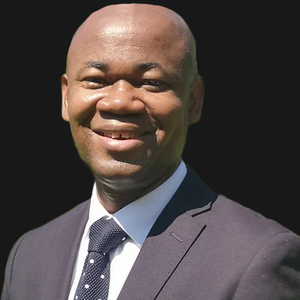
Head of Business Development & Partnerships at The Canada-Africa Chamber of Business
Toye Abioye coordinates the business development activities of the Chamber - bringing in new members and sponsors - as well as leading on the organizations growing number of partnerships. He assists with the development, management and evaluation of cross-sector partnerships amongst Chamber members, including partnership with the McGill MasterCard Foundation (MCF); implementing programs on opportunities to facilitate the transition of MCF Scholars and Alumni into the workforce for impact across Africa.

Co-Founder & Moderator at AfriVate Hub
Ferdinand holds a bachelor’s degree in Economics and is a graduate student at McGill University where he studies Educational Leadership. He has quality experience in project management, business analysis and strategic leadership. He has led many successful social projects and has been keen on driving change in the global social business leadership terrain.