Transcript
Automated transcript · Written by software from the replay's audio. It can mishear names and figures; the replay is the record.
0:07 Hello, everyone, and welcome to Goldshore Resources Live Investment Summit today hosted by 6. We are joined today by Brett Richards, CEO, and Peter Flindell, Vice President, Exploration. Brett and Peter will walk us through a company presentation and then we will be accepting questions live. So, as a reminder, you can submit your questions at any time on the right-hand side of your screen and we'll get to them after the presentation. And as always, the summit is being recorded and will be available to watch afterwards on six.com. So without further ado, I'll hand it
0:38 over to you, Brett, to kick things off. Thanks, Dasha. And thanks everyone for joining the summit today. And I'd like to also introduce Pete Flindell, who's with me, who will be interactively sharing the presentation today. For those of you who have seen our summit presentations in the past, or even some other presentations in the past, you'll know that Goldshore is a kind of an early-stage development company. Although junior by nature, we are looking at ourselves working towards junior, towards kind of, I'll say a larger status of junior mining company. The reason being is we did a transaction back in January to acquire the Moss Lake project, which had a historical resource of 4Moz.
1:33 Our job is to develop this project, not just at Moss Lake but on other select targets within our large land package and take this through the development curve over the next 24, 36 and maybe even longer months. I bring everyone's attention to our forward-looking statements. You can find them on our website at www.goldshoreresources.com. And I ask everyone to make themselves familiar with both the forward-looking statements and the disclaimers and sources of our information. The 5 key bullet points that I like to kind of highlight on, and I continue to do this because they are very important. And that is, We are operating in a very low-risk jurisdiction, probably one of the lowest-risk jurisdictions in the world, in Ontario, Canada.
2:26 There are several major global producers here, there are several major mid-tier producers, and there are also over 1,500 junior mining companies as well. The second takeaway from this is really about the size and scale of the opportunity. We have an untapped exploration land package that I think our job will be to understand it better. Our job will be to explore and exploit by drilling and other exploration to best understand what these deposits look like throughout our larger than 20km mineralized trend, but also from toe to toe of our land package, there is around 30km between the southwest and the northeast.
3:20 We are well positioned. The third point of today is really, we're well positioned to move quickly on a very large drill program. We have established what we think is the first phase of our work program over the next 24-months. That will include about 100,000m of drilling, plus or minus, over the next period of time. That drilling is both to increase the size and scale of Moss Lake and also increase the quality of the existing resource. Our job is to demonstrate that we just don't have a junior mining company here. We have a junior mining development company that will work towards becoming a mine 1 day.
4:06 We're approaching this with that mindset as to all the work we do, all the work that Pete does on the ground as well. The fourth takeaway today is really about the quality of our team. Pete and I have worked together for almost 15 years now. We've probably been together on more than A0A dozen projects. Most recently, we've spent a lot of time together in Africa, both in Zambia, the DRC, but we've also worked together in Southeast Asia. And now I get to come home and Pete, who's Australian, gets to enjoy a little bit of Canada. But deeper than just a he and I, we have a strong board of very seasoned CEOs, both small company junior miners and large junior miners.
4:51 We also have Joanna Pearson as the CFO of Endeavor Mining. And we have 2 very high-quality board appointees from West Dome who we did the transaction with to acquire Moss Lake in Mike Michaud and Heather Laxton. And the last thing I'll talk about a little later on is there was a historic PEA from 2013 that was done on the Moss Lake project. And given its historic 4Moz, of which about 1.5Moz is indicated and about 2.5Moz are inferred. And the PEA at that point in time demonstrates over CAD$500M of NPV at that size of resource, making a number of assumptions as you would expect, but also at a CAD$1,650 Gold price. And if you'll recall, in 2013, the Canadian dollar and the US dollar were at par with each other. So they ended up extrapolating some of the economics to be all in Canadian dollars because their assumptions and operating costs were as well. But it delivered, today's Gold price sensitized up to US$1,800.
6:05 It delivered north of US$500M in NPV. It's a significant start. That's why I say our role as a development company is to take Gold Shore and the Moss Lake project through its stages and through its steps so that we can understand what the optionality will be before us 2-years from now or 3-years from now. Pete is working with his team on the ground to get us to that stage, whether that's going to be a pre-feasibility study, whether that's going to be an update to this economic assessment, whatever that leads us to, it will lead us to one of those 2 things. But I think the results will dictate at the end of the day.
6:51 I have certainly talked about, you know, Pete and myself, we both work for majors and I'll let Pete speak to it about himself when he comes on. But we, and We've also worked for junior mining companies as well. It's important to understand the balance. It's important to understand the strategy of each of those, simply because these types of companies work to a particular standard. In our jurisdiction, it's a national instrument standard, but there are also other standards that we work to. The quality of the information, the quality of the reporting tend to be prescribed. But there are other things that junior mining companies don't do that we are going to do, and Pete will be talking about them a little later on, relative to environmental baseline studies, etc.
7:48 What we're trying to do is compress the process here so that the speed to market decision of taking this to the next step, a feasibility study, a bankable feasibility study, or getting to a construction decision is as short as possible. And that's our role here. I've also spoken about the quality of the board, several individuals here, all CEOs in their own right and the West Dome appointees. And also, every one of these guys on the strategic advisory board, from David Garofalo all the way to Daniel Kuntz, Adrian Rothwell, they need no introduction. These are very seasoned veterans in the space and a great compliment to some of the younger guys on our board who are in this space and making their mark in this industry as well.
8:42 As I've said, we do have a 4Moz historical resource we're going to be validating and I'll let Pete speak to some of the drilling campaign with
8:55 respect to how we're going to take us through the stages of development. This is an important slide and I'm going to leave on this slide and let Pete speak after this. Moss Lake, what we see today, what we see is that this is going to be a very high tonnage, low-grade deposition. This is going to be a project where a quasi-Earth moving exercise, but it is going to be a large tonnage and probably around a gram, between a gram and 2 gram grade style deposit. And what it means is, in this kind of Gold trading environment, and I like to tell people when they ask my view of the Gold price, I say, yes, we have a view and we have to take a view because when Gold was at $1,200, you take a view, you make kind of, I'll say, consensus assumptions on pricing in order to determine whether projects are economic and we're doing the same thing here. I believe Gold is going to trade over the next many years to come between a range of US$1,200 and US$1,500.
10:09 Sorry, between US$1,800 and US$1,200. I'm talking about the range we used to work in in the early 2010s. But today that range has changed. It has changed for a number of reasons, both macroeconomic outlook in the world and the continuous easing and printing of money, but also the size and scale of the impact the pandemic has had globally. And I think all of these things point to a trajectory for Gold to trade up from where it is today at US$1,800. I think it's going to trade between in this range. It will spike up above US$2,200. It will pull back under US$1,800. And we saw it in March, April, May, we saw a pullback in the Gold price with a little bit of resistance down to US$1,750.
10:59 I think we're in this new trading range. Moss Lake works all day long at US$1,800 Gold. And as the Gold price does go up from there, these types of big tonnage, low-grade depositions, They are highly leveraged and highly geared to the Gold price. The NPV of these projects goes up by hundreds of millions of dollars for every $100 in the Gold price going up. And if you believe the Gold price is going to go north of $2,200, this is a project that's going to return very lucrative returns. And I get it, we're talking about a macro view, a very high-level 60,000-foot view, and we're going to scale down into a lower view in a second. But why do I take that view? I take that view because there have been others that have walked down this road before us.
11:49 Detour, that was acquired by Kirkland Lake. It's very similar. It's around a gram, processes 32,000, 30 plus thousand tons a day through its processing plant. It has big production profiles. Rainy River acquired by New Gold and Cote Lake put into the IAM Gold Sumitomo joint venture. These are all exactly the same footprint of what we're looking at today at Moss Lake regionally. We're in the same general location. Geologically, Pete will talk about how different it may well be, but we're generally in the same area from the Red Lake Belt across to the Timmins camp, Abitibi belt and into Northern Quebec. This is the style of deposit we have.
12:36 So where detour was 5-years ago, 6-years ago, 7-years ago is where we are today. And our job is to bring it up through these various levels of development as time goes on. I'm gonna turn it over to Pete Flindell now. Pete is our vice president of exploration and I'm gonna have him chat a little bit more about kind of what's going on in the ground. Pete. Thanks, Brett. Yeah, Brett asked me just to say a few things about myself. I guess the one thing that is germane to the company and the project is that I've spent most of my career in the transition from exploration to mining, the sort of the PEA to feasibility into things. It's an area that I like, it's where the left brain meets the right brain and we start to take the ambiguity out of the geology and we're not just drill intercepts, but we're all sorts of engineering and metallurgical factors as well and also permitting factors and those things are really guiding our program at the moment.
13:43 So I'll go through these slides fairly quickly and leave any sort of specific issues to the questions that people may ask. This slide's really just to show where we are. Our tenement is actually a little bit bigger than the Moss Lake project just here. It's not going to work, is it? I'll learn the drawing tools. It's sort of about there. Thunder Bay is in here and it's a really easy one-hour drive out to site. So proximity is really good. We're right on the Trans-Canada Highway and the railway line so our logistics are very good.
14:34 Project-wise, here's the highway up here. It's actually highway 11 through here. There's a large land package, 143 square kilometres. We're sitting right over the main part of the Shabandawan Archaean greenstone belt. This bends out to go east-east-west off the slide here. But our projects all occur along this 20 kilometer trend. As we're discovering it's not quite as continuous as this. It's quite broken up and I take that as a positive sign because structure is king and the more structure there is, the better off it is for the prospectivity.
15:20 Right now, our focus is on Moss Lake. The main project is actually in here, and that's a large gold project, as Brett says. I'm trying to work more in terms of ounces and grade rather than contained metal because we drill for volume above a cut-off and so far all of the drilling that's been done on this property has been within alteration. And so we're yet to get out of the system. And I'll also add that there are a number of other deposit styles in the area. The historic Cold Stream copper project up here, variously described as a VMS or an IOCG.
16:11 The reality is, however it formed initially, that all the copper has been remobilized into high-grade pipes that show up very nicely as conductors in our B10 survey. Hamelin Lake down here drilled more recently than Coldstream was mined. That has been termed an IOCG by many of the workers. We'll see, we'll see. We certainly have a plan to get here and do some drilling later in the year and maybe early next year as well. So again, just some highlights here. The typical grades that we're seeing at Moss Lake are around a gram, half a gram to a gram over over hundreds of meters.
17:04 There are some high-grade assays and we're starting to develop a model for why we think that is. There's been a lot of sharing here and for the geologists among you, you'll appreciate the development of Bhutanised blocks in here and we think that we're going to get these high grades in the in the next. So I'm expecting to see a lot more localised high-grade intercepts and the test of our model will be in how many of these we intersect, but certainly a lot more large volumes of low-grade. The copper projects which also have gold in them have some potential for sort of 3 to 5% copper and What we're seeing from early indications are that there are more of these out there.
18:06 In fact our generative team has been finding gossens that have never been mapped. So while there's been a lot of prospecting here, it's far from fully explored. This is an oblique view of the project looking sort of from the west and you can see that this shear that we're modeling on and we're picking up some sulfides here indicated by an IP survey. This was quite a focused survey. We're finding that our VTEM is helping us a lot because we're able to model sort of a pseudo IP signature across the whole property and there are a lot of breaks along this but pyrite is certainly a guide to where we're seeing mineralization.
18:53 So this is our, oops, this is our, I apologize what's happened here. Oh, it's time frame. This slide's really here just to point out
19:12 the length of time that people have spent there. This project was known in the 1800s. It was developed mainly as a copper play in the 50s and the 60s and then people started to discover the gold mineralization which led to quite a bit of development in the late 80s and people coming back in the 2000s to explore further. And as Brett pointed out, gold prices weren't really favorable for the development of this large low-grade project, but that has certainly changed in the last couple of years. Our VTAP survey again was completed 6 weeks ago. We did a little bit more infill over our main prospects so that we could understand the controls there.
20:03 The data is currently with GeoTech. They're going through and polishing the raw data which will be sent to TechnoImaging and in the next 6 weeks or so we expect to start to receive information from technoimaging, which will be some highly polished images, an interpreted geology map, particularly with the structure, intrusions and alteration zones and then some discrete 3D targets that we will be able to focus our scout drilling on. So really hanging out for that over the next sort of month or so. In the last couple of months, we've really been just establishing our presence, establishing our team.
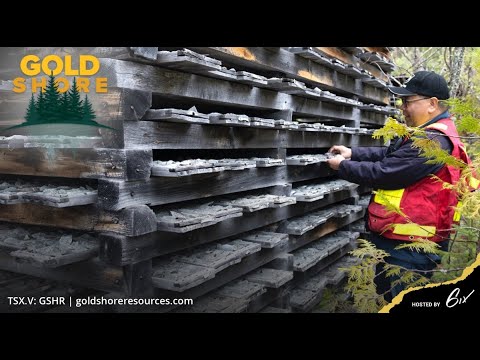
20:57 We've got a great team of young geologists and senior geologists, all taking a very objective view of what we have here. We're not being model driven, we're being data driven. So understanding the multiple phases of alteration and mineralization that we're seeing has really been our main focus. We've done that by recovering historic core, doing some re-logging and building up our systems to enable us to support the 100,000 metre drill program and to move our drill core rapidly through the process of logging, core photography, bulk density measurements so that we can get everything off to the lab.
21:48 And as Brett mentioned, we're looking at this from a pre-feasibility perspective. So our analyses will not just be gold. We're going to look at multiple elements. We need to identify what are the potentially economic minerals that are associated with gold. And we also need to look at the chemical characteristics of waste rock so that we can start to do some planning around the whole of the project and not just the geometallurgy and the process metallurgy for the deposit.
22:27 One of the big things that we've been focusing on here is our relationship with our host nations and with the environment. We put out a drill tender back in April, and we were really pleased to see that 2 of our First Nations companies put in very competitive bids. We're helping them as best we can to gear up for this program and we currently have 1 rig turning away and we should have 2 more rigs in the next month so we'll get to a 3 rig program certainly in September. There are strict controls on what we're doing here. We want to make sure that we minimise water use from the lakes. We want to have silt traps because we have a very strict 0 discharge policy and everything that we're doing here is to leave sort of the minimal footprint or evidence of our activity.
23:35 I think I might skip through this as I've talked to it, just sort of the process that we've been following. And just to say that we're pretty much on track for this expanded drill program and as the news release said we are already drilling. Our focus initially on Moss Lake and you can see here that it's certainly open. The system is it's not just open vertically but it's also open laterally. So our drill program right now is to try to find the edge of the system and so the press release when it comes out with our first results are going to be very, very interesting because I think they'll give us an indication of how big this system is going to be.
24:28 And time frame wise we're absolutely on schedule. Our permitting is done. We're at the start of our program and we're starting to get our program together for what we're doing regionally and start to build a pipeline of projects so that we're not just Moss Lake. We will have several projects on the go and try to build, advance the best and weed out the ones that are not going to make it as quickly as possible. I mentioned community. We have 5 First Nations communities in our area. We work very proactively with them. Our logistics team, who are there to support all aspects of our operation are fully First Nations.
25:21 It's been important to us that the logistics, which is where we have the most impact on the land, is being run by people who have a spiritual relationship with the land. And that's really going well at the moment and we hope to expand that as we expand our drilling. And also permitting is a big issue. Many people will know once you get to feasibility that's when people start to worry about the EA and how we're going to get the whole project permitted. We've been able to operate with a high degree of confidence because we know that we have 4 million ounces there. So we've already initiated our environmental baseline study.
26:09 It's one of those things that the more data you have, the better it is for assessing the environmental impact. We're involving a number of Thunder Bay-based consultancies, many of them with agreements or affiliations with our host First Nations and this work is ongoing. We're really using these guys to be our independent environmental auditor and they've been very constructive and proactive with everything that we're doing. One of the things that we found early on was a lot of rubbish was left around by previous explorers. So as part of developing our site to support the drilling operation, We've cleaned up all of this plastic rubbish and it's given us some very nice cement pads that we can put fuel tanks on and other supplies so that we can control the distribution of those.
27:21 This slide's really here to describe our sort of our philosophy from an environmental perspective. We're working very proactively with Ministry of the Environment, with Ministry of Natural Resources. We want to make sure that everything we do has minimal impact and this has been very important recently as we are in high fire danger. So we've been working, we've been able to commence drilling under a mitigation license or agreement. And so we're working with the ministries on that. Okay, thanks Pete. That's a really good kind of overview.
28:09 I think one of the reasons I put in this slide, and I've talked about some of our predecessors who have kind of walked down the road that we're walking down in Northern Ontario, Northern Quebec, is really kind of starts to work towards our investment thesis and why Goldshore And why do we think we're so attractive to the market? And why do we think that this is a good investment? The first thing, and let's appreciate the fact that we just started trading on June 4th. So We haven't got a lot of trading history, but we are trading somewhere around $17 market cap per attributable ounce today of our resource.
29:00 That is one of the key, I'll say, leading kind of comparative indicators to our peer group that we can compare ourselves if our peer group is accurately reflected as to, in the same stage of development that we are with very similar risk profile. So we put together a peer group of like companies with maiden resources that are at the similar stage we are at development, working towards a PEA or PEA working towards pre-fees and going through a large, expansive drill program. I look at what their trading comparables are and a lot of these companies have been in the market for some time because they have established themselves with a large resource.
29:49 So some of them are trading kind of on a 50 to $60 per ounce basis, market cap per ounce basis. And that tends to be about the mean. Yes, Marathon is a bit of an outlier. Maple, even today is a bit of an outlier. But I see we're not just fourth quartile, we're bottom of the fourth quartile. And I believe the market is going to quickly, let's say calibrate. I'm not gonna say we're, this is not about a re-rating. We haven't done anything to re-rate what we have done as we've established ourselves. And I think the market will calibrate us in towards more of the mean, given the quality of the resource we have, but also the probability of us advancing the size and scale of this project as we go through our program. So I put the trading comparable together simply to illustrate the opportunity.
30:46 Buying Gold Shore either at our IPO or at today, which are very similar prices, we've had a bit of a run up and we've had a bit of a pullback based on the Gold pulling back under $1,800 a couple of weeks ago. And we've settled around 68 cents today, which I see as a tremendous buying opportunity as we move our story forward, but as we progress the data forward. I talked about some of these companies who walk before us, very similar, all around 1g. The 3 I mentioned slightly under 1g and there are others, Canadian Malartic being a very strong comparator to us and who are in production. These are large tonnage, low-grade projects that are highly geared to the Gold price. That's why the market loves them.
31:36 That's where Moss Lake will find itself in 1 day. Those companies were Gold short one time and they were acquired by a mid-tier or a large mid-tier or a major like Iron Gold, Kirkland Lake and New Gold.
32:00 This is the path that we're leading towards. I've been asked the question many times, are you just going to blow this company up and sell it? That's not the right question, let alone trying to answer that. We're going through a staged approach to our development. I see and I use this metaphor a lot and those have been on this call are going to hear this more and more again, but we are not starting alphabetically at A, we're starting at L. We're going to take this from L to O or P or Q or R or wherever we need to because once we get to the point in time when we can demonstrate this is a real project, this is going to be a real mine at Moss Lake, and Pete started to talk about a bit of a different or a parallel story to Moss Lake, and that is there are a number of Copper targets that we're going to test within our land package, not just having a former Copper mine on our property, but this is starting to look like something that's going to be very impressive and substantial to us. But Moss Lake is our focus. So we need to get it to the point in time when we can demonstrate it's a real project. It's got economic value, real economic value at reasonable assumptions.
33:21 And yes, I will look to partner with somebody, bring in a strategic or sell the project outright because Those companies that have multi-billion dollar market caps can go out and raise the level of capital needed for these styles of projects. Let's face it, this project is going to be North of 1.5Bn, close to $2Bn CapEx, probably going to return north of the same type of numbers in NPV using the gold range I described. So we have a long way to go to demonstrate that. But when we get there, there will be bigger companies than us that will be positioned to be able to raise the capital, build the project and take this through its next stages towards construction and ultimately production.
34:10 I'm not here to just wave my arms, look at what we've got, try and blow up the share price and then sell the company. We're going through a very methodical and disciplined approach to add value, real sustainable value. We're starting at a very good position, not just compared to our peers, but we're starting at a very good position with our shareholder structure. We've got 100M shares out of which Westcombe had 30M shares and are very interested in seeing this project through its gamut. We have a lot of retail following. We have a lot of other institutions that are coming with us on this journey. I say I bring up the cap structure because trading today, even though I say it's an opportunity, we only have about 23M shares that are free trading today. The balance of the subscription receipt we did earlier this year in the flow-through market are locked up until October 1st. All of the other 63,800,000 shares you see on here are in escrow and get released every 6-months for the next 4-years.
35:16 We have a very tight cap structure. There will be shares that come into the market on a prescribed basis in October for the flow-through, but after that for the balance of the shares every 6-months. I see this as a very good environment to create share pressure in the right trajectory. As you can see at the bottom, we did raise $25M. $12.5M went to Westdome on the transaction and We're currently sitting with certainly enough cash to get us through our program over the next 12 or 18-months, but I'm looking larger. I'm looking further down the road. Quite frankly, if we were to do all 100,000m, it would probably take us $25M or $30M to do that. But the market will come with us along the way. And yes, we will probably have to enter the market in a year's time or longer, 18-months time to look to recapitalize as well and put some more money in the bank to help with our program.
36:20 So, the takeaway today is as I talked about, it's about size and scale of the opportunity. It is in one of the lowest risk jurisdictions in the world And Pete and I worked in some very difficult jurisdictions in the world. So we're very comfortable working in Ontario. And we have just a dynamic team, not just at the board level and the advisory board level, we have a very dynamic team on the ground and they're approaching this very differently. One of the things Pete said to me very early on when we were talking about this was, this is going to take a different approach. There's been a lot of people tap into this area, do exploration in this area. Nobody has really figured it out. Otherwise, there would be certainly more operations here. I think Pete's view is he's just stepped back and said, how do we approach this differently? How do we look at this from a different set of lenses? How do we look at this differently?
37:21 And probably maybe more macroly, this is not just a microcosm being Moss Lake, this is our entire land package and regionally go beyond that. So That is the size and scale of the opportunity before us. We've got a tight cap structure, as I said, and we're well positioned in the market today for this to be an opportunity for people. I see an exciting story emerging. We're just hitting the ground now with drilling and I'm very excited about what the next 6-months are going to bring us. Dasha, thanks for organizing this. We're happy to take some questions now. Great, thank you. It's a good time to jump right into Q&A because there's a bunch of questions here. But to kick off the Q&A, what do you see as the major milestones for Goldshore over the next 12 to 24 months? I know you covered a bunch, but just to begin.
38:23 We're obviously embarking now. We're going to ramp up from 1 rig, 1 will become 2, 2 will become 4, 4 will become more. I think one of the questions from the last summit was how we are going to drill this. And although our focus is on Moss Lake, we're not going to be able to do the detailed infill drilling at Moss Lake as we would normally have sequenced that to be done, we do have to play with the weather, the topography and the seasons up in Thunder Bay. We're probably going to focus more on some work around Moss Lake. We're probably going to focus on some twinning, verification drilling, as I like to call it, of the historical resource. We're probably going to test some targets outside of Moss Lake because we have the topography and we have the ability to do it. But I think when the winter season hits, we're going to really ramp up to multiple rigs on the ice and on the tundra so that we can take advantage of the hard ground, drill, and then churn through.
39:27 Some of the milestones are going to be assays, which might not come in the sequence in which we would have liked, but at the end of the day, it doesn't really matter if you count to 10 and you go 165543892, 10, as long as you get to 10, and that's how we're gonna get there, we'll have all of the information at our disposal to take it to the next level. The next level is a resource estimation update and then a decision as to where to from there, depending on the quality of the update and the size of the update and where to. This is all results driven. It's all going to be driven by that. And those milestones, I think are going to be drill result related and commentary related to those drill results.
40:13 And you're probably going to see a lot of commentary about copper, about some of the targets we want to test and Pete's excited about. These are some high grade Gossens and some high grade areas that he wants to test. So those are the milestones at the end of the day. We just need to get through our program. Great, thank you so much. Barry has a question. He's asking, was the historical resource at Moss Lake restricted by property boundaries? That's a good question. I don't think it may have been towards the Western perimeter, but I don't think it was. Sorry, Brett, let me answer that. We're well away from our tenement boundary. All resources are well within, we've got a kilometer scale all around.
41:05 Okay, great, thank you. William's question is, if your 100,000 metre drill program consistently delivers results similar to the historical drill holes, How many ounces do you reckon it will be able to demonstrate roughly? Could you make some cost comparisons in terms of initial CapEx and all in sustaining costs with similar aforementioned projects such as Helmo and Detour? Yeah, it's, you know, although I have spoken to some of this in the past. It is getting ahead of ourselves a little bit. I think we want to see what the results look like and the drilling strategy. Yes, it will deliver results. Yes, it will deliver more ounces. Yes, it will validate the existing 4 million ounces in some areas, because keep in mind that East Cold Stream have some of this historical resource as well.
42:03 So yeah, do I think that this is going to be, you know, when we're all said and done, is this going to be, you know, 9, 10 million ounces or more? The answer is, I don't know, but it very well could be. And given what we see with the people who have walked before us with similar size land, similar grade, similar depositions, similar styles of mineralization, it's quite possible, but it's pretty speculative. All I'm saying is that when I talk about those who walk before us, I show that footprint because the deposition styles are similar. The grade, the tonnage that they have put into the resource could be similar.
42:48 And this is the kind of where we're headed towards. And yes, it does come with big CapEx. The CapEx on the previous PEA in 2014 was circa CAD$750M. And so if I just do the simple math at the end of the day, this is going to be, you know, well north of twice that, you know, well north of 1.5 billion dollars. But all of these things are a little preemptive to doing a PEA and understanding it. So this will be results driven and don't worry, we'll keep the market with us. Okay, great. We have a question here, how long and how much money will be needed to convert the inferred into measured and indicated into PNP reserve so that we can gauge the economical extractable ounce?
43:41 Well, again, it's a bit of a hypothetical trap question because I can't answer it without seeing results at the end of the day. But the reality is, it tends to cost $20 to $30 to put ounces in the inferred category and $50 to $70 to put it in the indicated category, you know, 150 and up to put it into kind of proven and probable. If you use those standards, you know, those general market standards of costing, then yeah, you know, is doubling our existing historical resource into a doubled current resource, is that possible? Sure, it's possible. But again, I'm gonna defer to Pete here because Pete can kind of drill down, give some ballpark numbers on what it costs us to drill all in because our G&A is extremely low. There's only a couple of corporate people, Pete and I, who work out of our homes or out of Thunder Bay at site.
44:51 We don't have a lot of other overheads at the end of the day. So, Pete, maybe you can just talk a little bit about drilling costs at a high level. Before I do that, there are a number of things that are a part of this. Going from an inferred resource to a reserve is more than just drilling. It's metallurgy, it's engineering, geotechnical factors. They're all things that we're working on. There was some early metallurgical test work that's favourable but we need to define geometallurgical domains. Some of those maybe sort of have favourable recovery characteristics, some less so. We don't know the answers to that at the moment. All I can say is there's free gold. We've seen free Gold in thin section.
45:48 The system is highly altered and there's been no drilling outside of that into fresh rock. So early on here, given our logistical challenges of where we can drill. We're probably going to add a lot more inferred before we go to reserve. But suffice to say, the work that we're doing at the moment is geared towards supporting a reserve estimate. Cost to drill wise, we've got very competitive rates. We're looking at around about $100 a metre. We do have some downhole work that we're doing that adds a little bit to that. Core orientation, for example.
46:36 Assays are around about $30 a sample. We're going to do multi-element analysis to start with, just to see what we're dealing with here in terms of the system as a whole and what might be economic. Bear in mind that historically, this project was only assayed for gold. No real indication of silver, copper, other things that might be in there. Great. Thank you so much. Mark is asking, how will the board's large depth of expertise be an advantage for future acquisitions? Well, a lot of the guys on our board and our advisory board have run or are running companies in our space, some of them in Canada.
47:24 And I'll use Gold Corp as an example, was heavily focused in Canada. It's not just about what they're doing, it's about what they know, who they know, and the history of some of the projects that come to the front of possible business development opportunities. It's using their network to get our story out there. It's using their network to bring opportunities to us that may not be for them, but may be for Goldshore that fits within our mantra. And so, yeah, I think That's the whole purpose of having this whole quality team at the end of the day, working to a standard that is kind of a mid-tier or a major standard. Pete and I have done that. We work for majors, we work for mid-tiers, and that's our normal behavior. But bringing opportunities to us was key to putting this group together. Pete and I have been in Africa for almost 15, 12, 15 years and prior to that in Southeast Asia. So, I haven't had a lot of, although I'm Canadian, I haven't had a lot of exposure to any opportunities in Northern Ontario, Northern Quebec, other parts of Canada, Maritimes, and even down into the US, which I consider also a tier 1 jurisdiction, that if we see opportunities in that jurisdiction, we'll go for them as well. That's what the
48:55 group brings to the table. Great, thank you. Our next question here is, what method do you use to control the deviation of planned holes to the point of hitting targets? Okay, well there is one big massive target at the moment, 80 million tons and probably going to grow, so we're not too worried about missing the target, But at the moment we're using a gyro for our downhole survey. We want to know exactly where every sample is and you know with the historic holes that's sometimes a challenge But we're using a downhole gyro for our surveys. Okay, great. Thank you. Russell is asking, what is your greatest challenge? Or what do you see as your greatest challenge? Is it various styles of deposits? Is it an environmental?
49:45 Is it complexity of structures? Or is it reaching out to the First Nation groups and having them on board? Yeah, so Russell's one of our neighbours, a good friend of ours. I think that the variety of deposits just speaks to the prospectivity of the region. That's, you know, definitely not a hindrance or a challenge. That's a benefit. Same with the complexity of the structures. Our host First Nations have been great and we're working to ensure that we have a very good, ongoing, transparent, collaborative relationship with them. So that's a benefit to the operation. And the other one was environmental.
50:32 Yeah, that's, I mean, that's, there are so many aspects to environmental, it's sort of, it's not really one thing. I work on the philosophy of, you know, work as if you're not coming back, prepare for being there forever. So, you know, we got an active environmental monitoring and mitigation program. So, again, not really a challenge. We get a lot of great help from the ministries and we have an excellent third party environmental auditor working alongside us. Great. Thank you so much. Last question. What opportunities do you see in the market to grow beyond the Moss Lake project?
51:19 Yeah, you know, we've just started to kind of open up our eyes. You know, Gold hasn't really done anything since we started looking at this project. It was around $1,800. It went up, it went down. It's still around 1800 bucks today. So, I look at this as, I wanna get Pete and his team and Pete wants to get himself and his team kind of focused on the program at hand for Moss Lake, for new targets outside of Moss Lake and get a really good handle on that. And there will be bandwidth, Pete's bandwidth and my bandwidth down the road to be able to look at the next project. We've started to run rulers over certain projects to see if they would be a fit for Goldshore.
52:15 The way we do business development is, I kind of receive all of the offerings. And again, through our network, through our larger board, our advisory group, my contacts and colleagues, we look at a number of things that come across the desk. We discount a lot of them quickly because they don't kind of fit the same mantra of what we're trying to do at the end of the day. But those who need a deeper dive, I've taken a deeper dive and those who need a deeper understanding, we have started a smaller due diligence process. This process takes 6-months from reality, from actually seeing something come across your desk to actually going through an actual transaction to term sheet. And closing can be longer after that. So if I want to be in a position to put in project number 2 into Goldshore, then I need to be looking very soon, and we are.
53:19 There are opportunities out there and they just need to fit. They need to share the same kind of mantra, and that is they need to have size and scale. They need to have potential. They need to have a maiden resource. And if it's exciting for us in the right jurisdiction, we'll take it from there. And again, we'll start at A, we'll start at D or E or F, and we'll take it to somewhere through the development curve. It's all about adding value and we're trying to add value that is sustainable for those who come in and partner with us or acquire the project somewhere down the road. Because We've seen so many junior mining companies that they wave their arms, they blow up their share price, they try and transact, they can't, and it goes back down to close to 0.
54:08 This is about taking small steps, as many as possible in a shorter period of time as possible, but not taking very many steps backwards. We want to move forward. We want to add value. We want that value to stick. We want that value to be defensible and we want that value to be comparable to our peers on a reasonable basis. And you look at all of those boxes, you would say that Goldshore is very good value for money today and a very good investment. So that's kind of where I see the next business opportunity. Great. Thank you so much. That is all the time we have for today. So thank you, Brett and Peter, for taking us to your presentation and the live Q&A. And thank you for everyone who joined us today and asked great questions. If we didn't get a chance to answer your question during the summit, we will be sending out a short survey where you'll be able to, we'll put you in touch with the Goldshore team and they'll be able to reach out to you directly.
55:07 You can also find more information at their website, goldshoreresources.com, and you can email and contact Brett with the contact information on the screen here. And I'll just pass it back to you, the final word. Yeah, Dasha, thanks. And thanks everyone for taking the time today to hear the story, hear the update of the story. You know, We're very excited. We see a lot of Gold projects all the time. Pete and I have been involved in many, many projects, seen lots of these projects, and this one was extremely exciting to us. And it's why we're here. We're here because this is a golden, pardon the pun, a golden opportunity and quite frankly I'm really really excited about it. So Pete, you know, thanks for joining us on the call. Dasha, thanks for organizing it and everyone.