
Jamie Levy
President/CEO at Generation Mining
Replay available
Join us for the EV Copper Shortfall: Fireside Chat with Professor Adam Simon, an enlightening online investment event where we delve into the burgeoning electric vehicle (EV) industry's growing demand for copper and the looming supply challenges. Renowned expert Professor Adam Simon will provide invaluable insights into the copper market dynamics, potential investment opportunities, and strategies to navigate the anticipated shortfall. Engage with industry peers, ask critical questions, and equip yourself with knowledge to capitalize on the shifting landscape of EV manufacturing and resource acquisition. Don't miss this crucial conversation for stakeholders and investors in the EV and copper sectors.

On 6ix: 6ix.com/event/the-looming-ev-copper-shortfall-fireside-chat-with-professor-adam-simon
Automated transcript · Written by software from the replay's audio. It can mishear names and figures; the replay is the record.
0:02 Good afternoon, everyone. Generation is extremely pleased to have a fireside chat today with Professor Adam Simon, who is a co-author of a recently published report by the International Energy Forum, IEF, entitled Copper Mining and Vehicle Electrification. Kerry, Noel and myself, we reported this report last May, or last month, May of 2024, and extremely, and we're extremely impressed to find a report which has supported our thesis that the world will not be able to produce enough copper to transition to 100% electric vehicles by the mandated 2035, the target of many governments around the world. To quote the report, policy makers might consider changing the vehicle electrification goal from 100% electric vehicles to 100% hybrid manufacture by 2035.
0:52 This will allow for future output of existing and new copper mines to be used for developing world to catch up with the developed world in electrification. Just a little background about the IEF. The non-profit IEF is the world's largest international organization of energy ministers from 73 countries and includes both producing and consuming nations. The IEF has a broad mandate to examine all energy issues, including oil and gas, clean and renewable energy, as well as the focus has now become on critical metals, critical issues as well. The report was co-authored by Larry Kappels, a professor at Cornell University, But we are extremely pleased to have the other co-author on the report.
1:38 It's Adam Simon, and he'll be presenting his findings in this report, another valuable insight that I believe will benefit existing shareholders and all shareholders.
1:49 And just very honored to have Professor Simon with us today and opportunity to share his research and thoughts with us. Just before we get going, we did receive some questions prior to the forum, they were sent to us, but if you do have any questions, can you please insert it on the bottom right? There's a little chat box and Karen and I will be reviewing it and then we'll be asking Adam some of these questions. So thank you very much for joining it. And Adam, very honored to have you here and looking forward to your presentation. Thank you very much. Thank you very much for inviting me and that introduction, Jamie. I want to start out by saying that everything I'll present in the report today until the very end is factual. And at the end, I've got a QR code on the last slide that people can use to download the report directly.
2:42 But I want to start out by framing the problem. And I'm going to do it using the United States Inflation Reduction Act, which was signed into law in the US 2 years ago. And the Inflation Reduction Act, among its many climate provisions, one of the goals is to be net 0 by the year 2050, completely net 0 for our entire economy. By 2035, our power sector to be completely net 0 and over the next couple of decades to significantly increase the number of battery electric vehicles gradually phasing out internal combustion engine vehicles and everyone drives a battery electric vehicle.
3:35 And there have been many studies that come up with plausible pathways to achieve net 0, and among the most popular in the U.S. And most of the developed world is to electrify everything. Everything we use is powered by electricity. Everybody drives a battery electric vehicle. All of that electricity comes from a combination of renewable energy resources, such as solar photovoltaic, wind turbines. We have grid scale battery storage. Everybody cooks with electric induction ovens and stoves. Everyone heats and cools with air pumps. All of our hot water comes from electricity. So we literally transition away from any combustion of fossil fuels, coal, oil, and natural gas, and everything is powered by electricity that comes from renewable energy resources.
4:31 Now the U.S. Plays an important role in the energy transition because we are about 4% of the world's population, and the U.S. Consumes about 17% of global primary energy. And just to give you a sense of what a world with 100% renewable energy looks like in the United States, on the screen on the left is a map of the lower 48 states. And you have to squint a little bit, but everything in blue is a utility-scale wind farm, and everything in orange, and you really have to squint, is a utility-scale solar farm. So this is the current wind and solar footprint in the U.S. Today.
5:17 Among the pathways that the U.S. Inflation Reduction Act proposes is to significantly increase the amount of solar and wind so that the coverage now looks in 2050 like the map on the top right of your screen, where we have significantly increased the number of utility-scale wind farms and solar farms, both on land and also if you look at the Pacific Northwest, we've got lots of floating wind farms off of Washington, Oregon, and California. And if we look at the Atlantic coast, we've got lots of floating wind farms off of Maine, Massachusetts, Connecticut, New York, New Jersey, Delaware, Virginia, down into South Carolina, Georgia, and off the coast of Florida, and then in the Gulf of Mexico, lots of floating wind farms off of the southern part of the state of Texas, where it borders Mexico on the Gulf of Mexico.
6:17 So the coverage on the top right is what we would need in the United States in order to provide electricity to replace fossil fuels. And what I got interested in is, how much copper does that require? And I chose copper because copper is the most fundamental metal to the energy transition. We need copper to generate electricity. We need copper for electricity transmission, also coupled with aluminum. We need copper to store electricity. We need copper to move electricity from batteries to motors. And if we look at how much copper we need for renewable energy resources.
7:05 For every megawatt of nameplate capacity of utility-scale solar and utility-scale dry land wind, we need 5 tons of copper. For every megawatt of nameplate capacity that we use for offshore wind electricity production, we need 10 tons of copper. And we hear about copper and other critical minerals in the media every day. And it's often portrayed in terms of, we need X times more copper or X times more palladium. And if you understand supply and demand, then 2 times, 3 times, 4 times makes sense. But about a year ago, Larry Cathals, my co-author and I, we started to realize and we discussed between the 2 of us that for most people, the way that we frame how much metal we need for the energy transition, it doesn't resonate.
8:03 So for example, with copper, we know that the world needs to mine at least double the amount of copper in the next 30 years as we've mined since the Stone age. But what does that actually mean? And how does that relate to the upstream supply of copper? So the question that we asked is, can we mine enough copper and can we mine it fast enough to meet the projected demand for electrification? We know that copper recycling is important and has the potential to continue to be important and its share of the global supply can increase. But we also know that we need to mine the majority of copper that is used in not only renewable energy technologies, but technologies across the board.
8:54 So the first thing we did is we focused on copper demand. And we started by calculating how much copper the world needs over the next 30 years in order to achieve capacity building and development of the entire world to have a lifestyle that is closer to the lifestyle we enjoy in the US, Canada, the European Union, Australia, Japan, Korea, and other more developed countries. And if you look at the map here from NASA of our world at night, it becomes very quickly apparent that for most of 1 billion people in Africa, they do not have access to energy in almost any form.
9:45 And if we think about population growth over the rest of this century, we predict that the population of Africa will go from about 1 billion to 2 billion by the end of the century. So there's a need for copper to provide the energy for everyone in Africa today and for the doubling of their population over the rest of the century. And you can see other parts of the world, particularly in parts of Brazil and northern South America, parts of the Middle East, Afghanistan and Pakistan. We can see other areas in Eastern Europe around the east side of the Caspian Sea and parts of China moving across to Turkmenistan and Kyrgyzstan.
10:33 So we need copper in order to build capacity for the entire world. So this is the first of a sequence of graphs that I'll show you, where the x-axis on the bottom is time in years. And here we're looking at time from 2010 projected out to 2060. And the y-axis is copper demand in millions of tons. The red line, what we identify here as the baseline, this is the amount of copper that the world needs year over year until 2060 to maintain the same growth of copper consumption that we have experienced over the last 100 years.
11:22 So the baseline is the amount we need just to develop the less developed world. We can see that the baseline in the year 2050, we need about 37 million tons of copper in that year alone. The 20.4 times 10 to the 6 tons per year, That is the annual copper production through the year 2020-2021. So you can think of this as copper mining companies are producing about 20 million tons per year, and in order to develop the entire world, we need by the year 2050 for copper mining companies to produce 37 million tons of copper.
12:10 Now we also were interested in what the copper demand is for different renewable energy scenarios, because this has nothing to do with the energy transition. This is just capacity building globally. So how much copper is needed if we imagine a world where all internal combustion engine vehicles are replaced by battery electric vehicles or hybrid vehicles. The blue line here that is just north of the baseline, This blue line labeled hybrid, this is the additional amount of copper that the world needs year over year out to 2050.
12:57 The additional amount of copper if the entire global fleet of automobiles and trucks transitions to hybrid engines. So we need 37 million in order to develop capacity globally, and we need an extra about 1 to 2 million tons of copper per year by 2050 in order to transition all of our vehicles to hybrid. The blue line here, the darker blue, this is how much copper the world needs to transition the entire global automobile fleet to pure battery electric vehicles. And what you can see is that pretty quickly over the next couple of decades, by 2050, the amount of copper that we need in order to build capacity globally and for every vehicle to be an electric vehicle, a battery electric vehicle, we need about 44 million tons of copper in the year 2050.
14:04 Now, we calculated the amount of copper needed for hybrid and electric vehicles, assuming that the current fleet in the US, the EU, and other more developed countries, including Canada, remains flat. And that the fleet, the number of vehicles in China and rest of world, increases by 2.5 to 3% per year over the next several decades. Currently in the US alone, we manufacture and sell 20 million new vehicles every year. Globally, it's about 100 million vehicles per year. And we anticipate that the total vehicle sales will increase over the next several decades for a variety of reasons. Among them, the entire continent of Africa today has about 60 million vehicles.
14:59 60 million vehicles for 1 billion people. And as the population of Africa doubles, the number of vehicles is predicted to go from 60 million to well over 100 million by the end of the century, and possibly exceed 200 million. So we're looking here then at the incremental additional copper required for EVs and this in black is the additional copper required to upgrade and build out the electricity grid to provide the electricity for all of these battery electric vehicles. Lastly, the green line here is the amount of copper needed year over year, over the next several decades, to completely eliminate combustion of fossil fuels.
15:51 So we imagine the world to be net 0 through a combination of wind turbines and solar panels for electricity. The green line includes the amount of copper for the entire world to have 28 days of grid-scale battery backup. And every vehicle on earth is a battery electric vehicle. And I've cut it off up here at the top, but by the year 2050, in order to achieve net 0 by electrification with wind, solar, battery, and battery electric vehicles, by 2050, the world needs to be mining about 90 million tons of copper per year. So how do we contextualize this copper demand?
16:38 We looked at copper supply, and we did that by taking publicly available data for the global mine production of copper from the year 1900 through the year 2018 so now the graph has been expanded so the x-axis is 1900 and we project out to the year 2200. The Y axis is still copper production in millions of tons. And the red here, few squiggles up and down that accord with price, But the red shows that year over year, for the 118-year period of time ending in 2018, copper production has gone from not 0, but closer to 0, to about 20 million tons of mine copper production today.
17:33 So what we did is we took these data and we mathematically developed a model that forecasts or predicts how much copper mining companies can be expected to produce in the future, assuming business-as-usual conditions. So assuming the same annual growth of copper production over the last 118 years, what do we expect in the future? And that's shown here as this red bell-shaped curve, which looks very similar to what you may have seen as peak oil when M. King Hubbard published a paper in the 1950s using only oil production in the lower 48 states, pre-fracking and pre-Alaska North Slope.
18:24 So the red line, the solid red line from 1900, you can see that it fits the data extremely well through 2018.
18:36 And it predicts, moving up here with my cursor, it predicts a peak mine production for copper of just about 50 million tons in the year 2087. So in about 50 years from now, it predicts in the year 2050 a mine copper production of 36.4 million tons. And in terms of total quantities, through the year 2018, this Q sub 2018,
19:12 the world had produced 757 million tons of copper since the Stone Age. And over the next 30 years, we need to achieve a total production of about 1,662 million tons, or more than double the amount of copper we've produced historically. Now, the way the math works is there's a peak in the year 2087, and then under business-as-usual conditions, there's no significant technological breakthrough that allows copper to be produced differently than it's produced today, copper mine production is predicted to decrease. The QT here on the lower right, 6,686 million tons, That is our estimate of the total amount of copper within the upper 2 kilometers of Earth's crust that could be mined.
20:13 It does not include copper in the ocean basins, and it does not include copper at depths greater than about 2 kilometers. So again, this assumes business-as-usual conditions over the next 2 centuries. This is mine output.
20:31 We also modeled recycling, And we did that by taking historical global copper recycling data, and these are shown here as the black line, and We took the sum of the recycled copper and the mine production of copper, which is equal to the refinery output, and we modeled the dashed blue line here. That assumes that the fraction
21:05 of recycled copper that contributes to global copper supply remains at a fixed 2018 value. And the black line here, that assumes that copper recycling globally grows annually at the same rate that it grew here prior to 2018. So using the data from 2000 to 2018. And what the model shows is that the peak refinery output for copper in 2087 is predicted to be 66 million tons. And that's the peak. And then we'll see a decline. Now, at the peak in 2087, the contribution of recycled copper would be about 35% of the total copper supply.
22:01 And that assumes we recycle 70% of the world's copper. So if we recycle 70% of the world's copper, copper recycling is 35% of supply, mine production is 65% of supply. So in order to try and make sense of these amounts, how much we need and how much mining companies are realistically likely to produce,
22:32 We looked at the top 10 copper mines globally. Now, globally, we mine copper from about 700 mines on 6 continents. And the top 10 copper producers are responsible for between 15 and 20% of global supply. So this is the list of the top 10 copper mines in millions of tons per year for the year 2022.
22:58 And the average mine among these top 10 produces about a half million tons per year, which is about the amount that El Teniente in Chile produces, or a bit more than Cerro Verde and Marense in Peru in the U.S., and a bit less than Coyoaci in Chile. So what we did is we looked at how much copper we need, and the red line here that's this baseline, In order to have enough copper produced by mining companies globally, that copper production will increase along this red line, we need about 1.1
23:43 El Teniente's every year to open up for the next 30 years. In order for the entire world to develop and to transition the entire global fleet to hybrid vehicles, we need about 1.2 El Teniente mines every year. For everyone to drive a battery electric vehicle and upgrades to the grid, we need 1.7 El Tenientes per year.
24:12 And if the entire world goes net 0 through a combination of wind turbines, solar panels, 28 days of grid-scale battery storage and everyone drives a battery electric vehicle, we need 6 El Teniente mines to open up every year for the next 30 years. So projecting out,
24:35 excuse me, per decade, we're looking at 60 new world-class minds opening up per decade. Now, on the, back up a second, on the bottom buried in the graph, these 2 dashed lines here labeled possible and probable, these are 2 lines that were published by S&P Market Intelligence
25:02 And the 2 dashed lines, these are based on data from mining companies globally, where the mining companies have reported how much copper they plan to produce at existing mines and mines that are currently being developed. And what these data show us is that over the next 10 to 15 years, currently producing copper mines are going to peak, and we will see a decline in production. The decline in production is driven by 2 factors. 1, if we assume constant prices moving out into the future, 1 decline is caused by declining grades,
25:50 and the second is caused by mine closures. So possible and probable indicate that over the next decade, mining companies will not be able to produce the amount of copper needed just to meet the baseline here in red. Now I've talked about copper, but I want to make it clear that the supply shortage for copper, the same supply shortage exists for every metal in the periodic table. So this is a figure from the IMF where
26:30 we're looking at supply over demand. So a ratio less than 1 means that demand is greater than supply. And we can see for every metal here from manganese across through the platinum group metals, so palladium, platinum, there is a supply shortage that will increase over the next few years and exist out over the next several decades
26:58 unless mining companies can discover and put into production new palladium deposits, new copper deposits, new cobalt deposits, et cetera. So copper is fundamental to all technologies. But When we look in detail, we know that every other metal, we need to increase production.
27:21 So the problem we have in copper is highlighted here, where the yellow lines, the yellow bars, are from 1990 through 2022, the number of new copper deposits discovered globally. The black line is the annual exploration budget, the sum of the exploration budgets for all copper companies globally in millions of US dollars with the scale over here on the right. And your eyes really quickly can probably see that in the 90s and the aughts, copper mining companies were making relatively consistent number of discoveries, and exploration budgets were give or take $500 million a year.
28:09 In the last decade, the number of new Tier 1 world-class copper deposits that have been discovered is about 5,
28:20 despite the fact that copper exploration budgets are now about an average of 5 times greater than what they were through 2004 and 2005. So what we're seeing in the mining industry is more dollars being spent for exploration and fewer deposits being discovered.
28:43 Now one of the things I want to end with on the last couple of slides is to highlight What we emphasize in the report that if we go back and we look at the amount of copper required for hybrid vehicles versus the amount of copper required for battery electric vehicles We need a lot less copper for hybrids. And it turns out we need a lot less of all the metals for hybrids than we do battery electric vehicles. But there's a twist. So this is a list of vehicles ranked by the National Renewable Energy Laboratory and one of their offshoots. For the year 2024, they looked at a thousand vehicles being sold globally, And they looked at the lifecycle emissions, all of the carbon emissions associated with mining, through manufacturing, during production, driving, and end-of-life recycling.
29:46 And what they concluded quantitatively is that for the top 10 vehicles, if you look at the list, you can see that the vehicle that has the lowest life cycle carbon emissions is the Toyota Prius plug-in hybrid.
30:04 If we move down the list, we can see vehicles 2, 3, 4, and 5 are battery electric vehicles. But the RAV4 plug-in hybrid is number 6. Hyundai's Elantra Blue, which is a gas hybrid, is number 7. We've got a battery electric at 8. We've got a Camry gas hybrid at 9. And then we've got an electric vehicle at 10. So half of the vehicles in the top 10 least polluting vehicle category
30:34 are not battery electric vehicles. They're hybrid gas vehicles. And what's important for the mining community, and I think for policymakers in general, is that it is a lot more realistic to expect mining companies to produce the copper and palladium and aluminum that we need for hybrids than it is to expect miners to produce the metals for battery electric vehicles. And when we look at vehicles on a lifecycle environmental impact basis, so taking everything into consideration for the life of the vehicle, including mining and production, we would be in a much better position to achieve net 0 by rapidly increasing production of hybrids.
31:26 And we see this now among some Japanese manufacturers. A problem here, though, is they're going to run into a supply shortage for platinum group metals. So this is a figure from 2010 projected out to 2040, and from 2010 out to 2021, we're looking at real-world data for platinum group metal demand and then if we project out over the next 16 years What we can see here in yellow,
32:03 this is the platinum group metal demand forecasted to grow as the number of plug-in hybrid electric vehicles increases. And what Larry and I try and do in the report is subtly make the suggestion that policymakers in the United States, in Canada, in the European Union would be much better off to advocate for a rapid transition to hybrid and plug-in hybrid vehicles than a rapid transition to battery electric vehicles. Because the total metal resources required for hybrids and plug-in hybrids, It is more realistic to expect mining companies to meet that demand, assuming that mining companies can secure the environmental permits and financing to rapidly increase mine production of copper, PGEs, etc.
33:04 We also have to think about metals through the lens of national security. And in the news, almost by the hour, is an article that focuses on the role China's playing in controlling the world's supply of critical energy minerals, copper, rare earth metals, lithium, cobalt, nickel, etc. But one of the ones that I don't think gets enough discussion is the platinum group metals. So shown here are the platinum group metals where the color inside of each circle, the size of the circle, represents the global contribution to the PGM supply by country. And then the colors, yellow is platinum, orange is palladium.
33:51 The colors are broken out here for platinum, palladium, rhodium, ruthenium, iridium. And one of the concerns about rapidly increasing the manufacture of hybrid and plug-in hybrid vehicles is making sure that we have a sustainable, safe supply of metals. And if we look at the platinum group metals, especially platinum and palladium, both of which are extremely important as catalytic converters in hybrids and plug-in hybrids. Russia and South Africa right now supply almost 80% of the world's PGMs. So what we really need is we need to increase the supply of PGMs from other countries so that we can expect a safe reliable supply of palladium and platinum and not have to worry about war in Russia and challenges with production in South Africa owing to political leadership change and also the declining power sector.
35:00 And I'll finish here just to give everyone a chance. If you want to download our report, you can use this QR code. And I also highlight that we published a book a couple of years ago, and We've got the book available as well. If you want to download it for free, you can download a PDF. And the book is a really comprehensive holistic overview of mining, exploration, environmental impacts, with 1 really big chapter focused on the fossil fuels, and then 6 chapters focused on every metal in the periodic table that we need for technology in the 21st century moving forward.
35:47 And with that, I will stop and be happy to take questions.
36:00 Thank you very much Adam That was a terrific discussion and I learned a lot. We've got a number of questions that have come in and we had a few come in before the presentation, so I'll start with the ones that have come in in the chat room. Can you discuss the natural process of design alternatives and design thrifting? What are markets looking like on that front? Not sure I fully understand the question. I think what it refers to is, for example, electric vehicles. Could they design them to use less of these metals, for example? You know, Engineers at every company are doing everything they can to do just that. There's a lot of discussion around substitution.
36:53 And certainly we know that aluminum can do a relatively good job at substitution for copper. That's why we use aluminum for high voltage transmission lines, but that's usually only when Aluminum is aluminum the price of aluminum is a factor of at least 3 and a half to 4 less than copper in battery electric vehicles all of the news that I'm aware of is that there's a lot of effort to try and ultimately eliminate lithium-ion batteries as we know them today. So replacing lithium-ion batteries with LFP batteries or with salt batteries. There's a Chinese company that now is beginning to mass produce a battery electric vehicle using salt instead of conventional lithium ion batteries, but they still need the same amount of copper.
37:45 So no matter what the battery cathode and anode is, you still need the same amount of copper. And in the case of hybrids and plug-in hybrids, you still need the same amount of PGEs, you know, typically a few grams per vehicle for platinum, palladium, and some of the others. And if we mass produce those, then we need to see significant increases in the mine production of PGEs as well as copper. Okay, that's good. Thank you. And another question is, Can you comment on the expected price increase in these commodities, including copper? And is that not going to really drive inflation? Ooh. Those are 2 questions. I'm never I'm never sure anymore what really drives inflation, other than I know it is real. You know, I think there's a lot of banter among mining company executives and economists around copper. You know, we hear Robert Friedland, CEO of Ivanhoe, certainly knows a lot more about copper than I do.
38:48 You know, he has thrown out there the number of 15,000 a ton. You know, copper needs to go from what it had been 8,000, 8,500 a ton to 15,000 to really motivate companies to do exploration and development. We see copper has gone up a bit over the last few months. One of the things that we thought a lot about was in a world where copper supply is finite, you essentially end up in a competition between the haves and have-nots. Those of us in more developed countries that can afford to buy battery electric vehicles and other forms of technology that use a lot of copper will still be able to afford it if the copper price goes to $10,000, $11,000, $12,000. If platinum and palladium double in price, we'll still be able to afford the hybrid and plug-in hybrid. What that means, though, is that a greater share of those metals will go to those of us that are already blessed with more developed lifestyles.
39:49 And what we'll see is that that that will limit the development in less developed countries. And, you know, that sort of gets gets gets touches on the moral question of, you know, what should we really be doing with our metals? And I think we should be doing all of the above. I think we should be rapidly building out a fleet of hybrids, plug-in hybrids. We can have some battery electric vehicles, but not everybody's gonna be able to have a battery electric vehicle. And we need to make sure that while we're transitioning our fleet from internal combustion to hybrids here, we're transitioning probably 170 countries around the world from having 0 to very little energy to having energy close to what we consider normal.
40:35 You know, I always when I'm traveling I always think about people in less developed countries who don't have vaccines because there's no electricity for refrigeration who don't have access to dialysis when they have kidney problems, who develop cancer and don't know it because there is no healthcare system. So I do think that we really have a moral imperative in more developed countries to think about mining and remember that mining is also for the benefit of the entire world. For inflation, I'm not sure if I can answer that question really well. Fair enough. One of the things that was apparent from your presentation is that the use of PGMs is actually gonna be going up with this hybrid transition. And is that not going to present the same problem as copper's presenting? Because there's, although in terms of degrees, it's not nearly as dire as the copper prediction.
41:31 Yeah, but we need it to go up. You know, we, you know, I don't know if I can quote it off the top of my head, but I think, you know, palladium production last year globally was give or take 200,000 kilograms. Correct me if I'm wrong in the units there. And if we assume, you know, every hybrid and plug-in hybrid needs, you know, 5 grams of PGE, we manufacture a hundred million vehicles today. If we imagine manufacturing 200 million in 30 years, that means for give or take, if we want to manufacture 10 million vehicles, and all of those vehicles are hybrids and plug-in hybrids, and every one of those vehicles has 5 grams of palladium plus platinum, Right away, we need to see global palladium platinum supply increase by 50%.
42:26 Wow. Another question. 1 analyst recently estimated about a million tons a year of copper is going to be needed just for AI data centers and I didn't see that mentioned in your presentation do you is it was that in your calculations is that number sound correct it's in that green line in our calculations and it probably sounds correct you know The stat I learned recently is that every time you do a Google search and then you redo the Google search using AI, chat GPT, or some other form of AI, the amount of electricity needed increases by a factor of 30 to 50. So, I think almost every time I use Google over the last month or now, I see like the top comes up and it's always some AI. And so, yeah, we need a significant amount of copper and other metals to build out more grid just to handle all of the machine learning and artificial intelligence.
43:27 And yes, and I can't agree more. You know, mining companies have been talking about what you're talking about in this presentation for some time and really no one was listening. And now that you guys have come up with this report, perhaps policymakers will wake up and, you know, they needed somebody to actually delve into it in a professional way, in an unbiased way, and do the math, which you've done. You've done for the world. And do you hear any politicians starting to listen to this? Or is that something we can hope to happen in the future? So, yeah, we're getting some hallway chatter that it's circulating in policy circles in Washington and elsewhere. Certainly here in the state of Michigan, our governor has been very vocally and with her checkbook supportive of the mining industry, putting out loans to incentivize copper mining in the upper peninsula.
44:24 I think what we really need is we need policymakers in Ottawa and Washington to get together and convene a summit with mining company executives. And what we really need is policymakers to become aware of the supply gap. It's not something that we just talk about and there's just banter. I mean, it's real. And that's what we tried to do in our report. So I think the report is slowly making its way around policy circles. It's difficult for some people to accept the results, I think, because a lot of people in the US, a lot of people on our political left, leaning liberal, have put all their eggs in the basket of 100% electrification.
45:14 You know, everybody's got a heat pump. Everybody's got a battery electric vehicle. We've got wind turbines and solar panels just everywhere that you can see. And you know that sounded great until policy makers and the general public are now becoming aware of what you guys in the mining industry have already known, that the supply gap is already here. And the only way we're going to address that is by having our policy makers come out and very vocally support the mining industry. And that's something in the US we're still waiting for. And I think I mentioned in an earlier conversation with you, the fact that Canada has actually in its 2035 mandate now included a plug-in hybrid as the same status as an electric car.
46:00 And so there is a model for other governments to look at. And they did that after intense lobbying by the car makers because the car makers said, people are just not gonna buy the EVs. So we need to have this alternative and the government listened. Now we can possibly, because the automakers between Canada and the United States are all, they're all the same, they're the same companies and they're making parts on either side of the border so that there's a starting place for the government of the US to, or even the states themselves to look at. And also the European Union, which has just avoided hybrids altogether. Yeah, I agree. I think that's really smart and really forward thinking of the Canadian government. You know, it's certainly a lot more realistic to imagine everybody in Canada is driving a hybrid than everybody's driving a battery electric vehicle, which is just not realistic.
46:51 So- Adam, another question here, sir, Kerry, just to follow up on that. Does, tell me a bit about the IEF and what influence could it have on worldwide policy? The IEF, I mean, certainly every organization is criticized for 1 or more things. But my observation of the IEF is that they're considered to be a unbiased organization who advocate for energy producers globally and energy producers that now include metals mining companies. They're based in Riyadh, Saudi Arabia. And Saudi Arabia, if you go back to 1950, 1 of their top 3 sources of revenue was a tax that Muslims pay when they make a pilgrimage to Mecca or Medina.
47:39 And here we are. And the literacy rate in 1950 was about 10%. You know, In 2024, the literacy rate in Saudi Arabia is 100%. And oil went from about 0% of their GDP to almost 100%. And now it's back down to about 30%. And we see In Saudi Arabia, we see diversification of their economy. They're really pushing now into metals mining, doing a lot of exploration in the kingdom, as well as countries around the world. We see the same thing, a lot of money from the United Arab Emirates that's going into metals mining. So again, similar to Canada being progressive on the hybrid front, I think the IEF is in a really good position to work with its constituents, especially in the Middle East, where there is a lot of discretionary revenue that can be spent on minerals exploration and mine development.
48:39 Another question that had come in and it was based on someone reading your report before the before the presentation is just a guy having trouble getting his head around the fact that you say that In your in your numbers there that Toyota Hybrid Prius hybrid has a better impact on the environment than a Tesla And yet Tesla's don't burn any any carbon fuel Necessarily, so I will tell you I was really skeptical and and if that person wants to shoot me an email I can send them the spreadsheet that I got from NREL So the spreadsheet behind all of the math, and also by the way, I'm happy to share, we have all of the math that we used to generate the plots in our report. It's all available as an Excel spreadsheet that I'm happy to share with people.
49:30 But I drive a Model Y, and I'll be honest with you, it was my 50th birthday present to myself. It was the first new car I'd ever bought in my entire life. And I was skeptical because I've also got a 10 kilowatt solar array I built in my backyard. So I thought, you know, and I did that, you know, not as a pat on the back, but I wanted to see living in Michigan, which has 5 months of darkness every winter, you know, what's possible here. And I went through the math and it's accurate. The life cycle emissions of a Prius, when you factor in all of the mining and all of the upstream and downstream production required, the Prius is slightly better through an environmental lens than the Model Y.
50:20 Things are going to change, but I think what I look at and what I try and encourage people to do is, you know, for anyone that wants the climate to win, you know, we're concerned about the climate sea levels rising, sunny day flowing in Miami and New York City, storm intensities increasing. If we want the climate to win, then we've got to come up with what is the fastest path to achieve that, to get the climate so that it wins. And it's a combination of some battery electric vehicles, but a lot more hybrids and plug-in hybrids. And I think what Canada probably seized on in the auto manufacturer support is you eliminate the range concern when somebody buys a hybrid, right? I mean, if somebody buys, you know, a Prius hybrid, on average in any town or small city, or even a major city, you're never gonna use gasoline unless you do a road trip.
51:18 Most people, what they will comment when they say, oh, I don't want a battery electric vehicle because I'm concerned about the range. Here we're able to drive from, even in the wintertime, Detroit to Chicago, we can do. We can do Detroit to Pittsburgh, Detroit to Columbus, but Cincinnati, we can't make it in January. We can make it in July. But if you've got a plug-in hybrid where, you know, 95% of your days you're driving on battery and the other 5% is when you're using your petrol engine, that's a win for the climate if we can get more people to transition. So I mean- Another question then from the mining industry perspective, some of the changes I think are obvious from your presentation, but what changes do you think have to happen in policymakers towards mining? Is it somehow to encourage more exploration? Is it to speed up the permitting process for mines?
52:15 What are your comments on that? I think it's got to be all of the above. I think we need to streamline the permitting process. We need policymakers to be more vocal to the general public about mining in 2024 and how radically different and better it is than the mining a lot of people have in their heads. You know, most people think of mining in an antiquated form. You know, it's polluting, it's acid mine drainage. All mining gets lumped together. For those of us that are in the mining industry and we visited mines, we know that's not the case. The safety record for mines today is incredibly good. The problem is that whenever there is an environmental disaster or fatalities, you know, it feeds into the news cycle.
53:07 If it bleeds, it leads. And we know that there will, you know, anytime you build a mind, there's the potential that something is going to go wrong. Anytime you get on an airplane, there's the potential something is going to go wrong or anytime you get in a vehicle There's the potential for a car crash and what we need we need policymakers to come out and really Reassure the public that you know in in countries like Canada the United States, Australia all of the mining that is being done today, it's being done under the watch of the government agencies, whether it's the Environmental Protection Agency, we've got Clean Air Acts, we've got Clean Water Acts, we have Mine Safety Hazard Administrations. So the safety record today is incredibly good, but the general public just doesn't know that. And I think part of that also is that metals mining companies don't advertise.
53:59 You know, I always joke that if you're on LinkedIn, for probably not more than 5 minutes, if you scroll up pops a commercial from one of the big oil and gas companies. And the marketing is really slick. It's always somebody who objectively is younger, attractive, looks smart, and it's got some tagline, you know, emissions-free future or something like that. But you never see the same type of advertisement from BHP or Freeport or Rio Tinto. So, you know, I think what we need is we need policy makers to come out and be more vocal in their support for mining. And we need, I think, mining companies, certainly the big ones, to maybe spend a little bit of money on messaging to the general public?
54:50 We do have a system or a program in Canada called Mining Explained that is taught in the schools that is supported by the mining industry and also it's a nonprofit, so people donate to it as well. I just got an email question, Kerry. Okay. My personal. If the 100 million new cars sales by 2050 are purchased from non-developed world, like Africa, will they have the power for battery electric vehicles? And then it goes on, will they need a hybrid or just a ICE car? I really think that more developed countries and our policy makers and companies, I think we are in, the broader we, we're in a position to help develop countries throughout Africa, parts of Asia, parts of Latin America, and essentially help them jump from very little energy infrastructure today to an energy infrastructure that is closer to fully renewable.
56:03 When we think about countries in Africa, the entire continent has 60 million internal combustion engine vehicles. Why couldn't we help countries across Africa build out a network of 60 million hybrid and plug-in hybrid vehicles. All right, I mean, that's possible and that's more realistic. And so I think, back to sort of the moral question, I really think that's something that we should be doing. And I think we have the capital to do it. I mean, one of the things also that doesn't get appreciated as much as it should is the role for mining metals in economic development. You pick a country like the Democratic Republic of Congo, which is in the news all the time. The DRC has the potential to continue to be a world-leading supplier of copper and cobalt and other metals, rare earth metals, nickel, aluminum, iron.
57:00 And mining those metals has the potential for essentially kick-starting the economy. I mean, in Canada, if we go back to pre-Toronto, pre-Toronto Stock Exchange, think about the European immigrants that set up shop in Cobalt, Ontario, right, in the mid to late 1800s. And ultimately, it was artisanal mining in places like Cobalt that gave birth to the Toronto Stock Exchange. And you go to Toronto today, and you'd never know that, right? It's hard for us to imagine 6, 7 generations ago that the area around Toronto was not a lot different than Kinshasa. And so I think we really have to view mining through that lens as well, that by working with countries around the world that are endowed with the metals we need for hybrids and plug-in hybrids and all forms of technology, by working with those countries and helping them build a responsible mining infrastructure, that benefits everybody because you can't develop without capital.
58:10 And the way to get capital in most of these countries is gonna be resource extraction and export. Well, we're coming up on the hour and I think that's all the questions that I have in. That's been a really phenomenal presentation. And for those of you watching, if you wanna see it again we are gonna be posting it on our website at some point in the near future. I want to really thank Adam for taking the time out to make this presentation. I learned a lot. It was really, really fascinating. Thank you. Well, thank you much, Kerry, for inviting me. I really appreciate the opportunity to talk with people. And I got one last email, go Wolverines. Go blue. It's gonna be a tough year for our football team, but.
Follow Generation Mining Limited into a list and get an email when it puts out news.
President/CEO at Generation Mining
Chair at Generation Mining

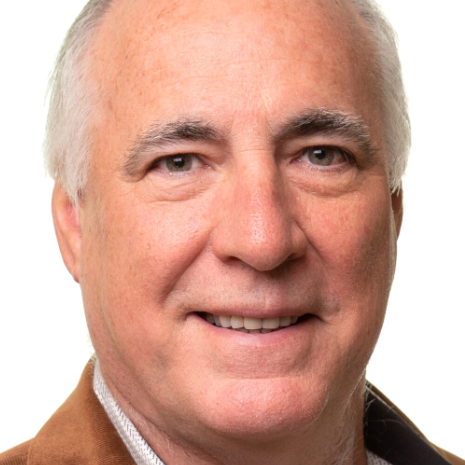
Professor at University of Michigan
Adam Simon is the Arthur F. Thurnau Professor of Earth & Environmental Sciences at the University of Michigan and a Fellow of the Society of Economic Geologists. His research focuses on the geology and geochemistry of mineral deposits that provide society with copper and other critical minerals.