Transcript
Automated transcript · Written by software from the replay's audio. It can mishear names and figures; the replay is the record.
0:08 Hello everyone and welcome to Moon River Mali's live event hosted by 6. I'm pleased to introduce our speakers for today, the Chairman Ian MacDonald and Paul Parasotto, the President and CEO. We'll be going through some updates focusing on the recent 25% strategic acquisition of the Indaco Mine Complex, and afterwards we'll be accepting questions. You can submit your questions in the chat at any point during the presentation.
0:32 As always, this event is being recorded and will be available to watch shortly afterwards. So to kick things off, gentlemen, you were recently on site. So can you please tell us how your site visit went before we get into the in-doc questions? Yeah, we were up there 3 or 4 weeks ago for a week, and we had quite a crew, two-thirds of our board up there, and we got to visit the Davidson Project and talk to a lot of local contractors, the First Nations community, and we also got to see where the operation would be set up, i.e. On the backside of the mountain. We also
1:15 got to go down, it's about a 2 and a half hour drive down the highway to Ndako. And we met with the people on site, we had a good overview of the mill complex, which is really a fantastic operation. It's about 5 acres under 1 roof with a brand new, what today would be a billion dollar replacement cost. And it's been on care and maintenance for almost 10 years. And we also met with the full town Council of Fraser Lake, which is the village where the mine is. And they are very supportive of a mine restart. So all in all, it was a very good trip. And Ian, good morning and good morning, Maxim, and welcome everyone.
2:04 I was just so impressed with the infrastructure. For those of you that don't know me, I was born and raised in Sudbury, a large mining community, and Smithers is 15,000 people, but the Davidson deposit would be a relatively short drive.
2:22 We have to kind of upgrade the road to get to the deposit. And I'm talking maybe half an hour. You know, there's there's power. It's Smithers is a hub for mining, where there's contractors and infrastructure to support mining and a lot of the community members
2:41 work in the mining field. So having that kind of infrastructure was fantastic. Our meetings with 2 First Nation communities that would be impacted went really well. We got off on a wonderful foot. We also met with the local chief administrator for the town of Smithers. And everyone is, the response we received from everyone is they're open to mining, which was endearing and heartwarming and great to hear. So I'm super, super excited. Great, great trip. Awesome. Thanks, sir. Updated us on that. So now moving on to the recent DACA acquisition.
3:29 So to briefly get everyone up to speed, What was the strategic rationale behind acquiring that 25% stake? And how does that align with your overall growth strategy? Well, first of all, it took over a year to negotiate that acquisition, but it's gone smoothly. We're in the malevditum business, so there are very few opportunities, well I can think of none other than this one, where we could acquire an already built
4:06 known entity. I mean, mine's operated for 50 years. It's been on care and maintenance because it was, my love that it was about $11 a pound when they shut it down in 2015. But it's ready to be turned on and we need to do a study to do that. And that's what we intend to do. And if I can add to that,
4:32 from our perspective, Ian mentioned we're in the bulldozer business. There's no doubt about that. Davidson is a world, in my words, a world-class deposit. It's very, very large. In all categories, there's almost 900 million tons. It's one of the highest grade, if not the highest grade undeveloped deposit in the world. And it's going to take a few years for us to complete the updated Feasibility study, do all of the environmental work. And with Davidson, once we do this updated study, it could be ready to be turned on a lot quicker and generate cash flow for the for the company.
5:13 And so those those factors are really important. And you know, and when we say acquisition, it's a bit confusing and let me explain. We've stepped into this 25% ownership interest in Daco, But Moon River was paid $43 million to take on that position. And that position was acquired from Sojitz. And Sojitz is a large public Japanese trading company,
5:45 and they're exiting some of their mining investments. And so they provided us capital to allow us to continue to make care and maintenance, to pay our share of the ongoing care and maintenance costs for the next 5 or 6 years, as well as fund, you know, mine closure obligations.
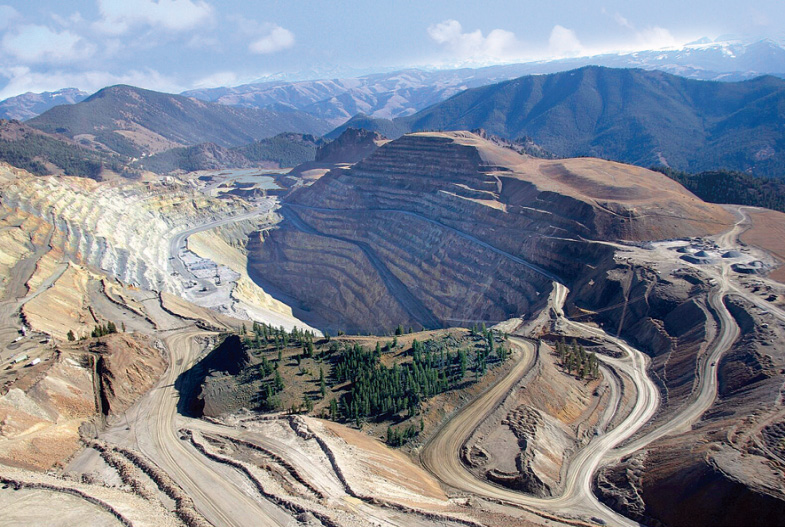
6:06 And so we have a runway here to be able to work with our new partners, Sinterra, and evaluate what it would cost and what the returns would be to turn and DACO back on and generate cash flow while we develop Davidson. The deposits are only 160 kilometers apart, 2 and a half hour drive. So I think it really aligns well for our shareholders and other stakeholders to have 2 assets so close together. And so you're mentioning both assets there. Can you elaborate a little bit more on how having them close together or how they can benefit each other essentially. Of course, having the extra cash to develop Davidson's grid as well.
6:54 Well there will be 2 separate operations of course, one's an open pit and one's an underground mine, but there still could be quite a bit of symbiosis, if you like, in terms of personnel and equipment. I mean, we're gonna need 2 offices, but we'll have 1 main office, and you know, it's probably gonna be in Smithers, But there'll be an office in, well there's an office at the mine in Andacco.
7:21 Yeah, I would say there'd be certainly some savings, but they're not going to be huge. Although, there is a roaster, which you need to take the molybdenum concentrate, and you need to make it moly oxide to sell it. And we could conceivably use the roaster at Endaco to, it's a smelter really, they call it a roaster, but to smelt and roast the ore from Davidson. It's too early to say for sure whether that'll happen, but it's certainly a possibility. And it was in the plan 20 years ago when we looked at, Blue Pearl looked at shipping 2000 tons a day down to Undaco. Okay, and if I can add to that Maxim, something that kind of maybe the you know the market and people that follow Moon River may not be aware of and talking about synergies.
8:19 And Ian addressed it from an operational standpoint, but from a financial standpoint,
8:28 there's 140 million of tax losses that we're acquiring by stepping into our 25% ownership interest in DACO. And we have some structuring work to do with our legal and financial advisors to make sure that we can capitalize and crystallize those tax losses. And those can be quite, quite valuable, you know, depending how this goes, right? And so, and
8:58 in addition, that mill that Ian was talking about, that could do 55,000 tons a day, although we understand it was doing more than that before it was shut down, was just built a year before the mine was shut down at a cost of about $600 million. And so it's in pristine shape. So there's a lot of work for us to do and a lot of upside that we can capture. I think when we get into the nitty gritty and looking at the economic costs and returns in looking at it in DACO. Well, that sounds incredible.
9:38 So in terms of the deposit of about 24 million that you have in trust for future care and maintenance costs, Can you just touch on the long term environmental and asset retirement obligations for Rundako? And how does this impact your financial planning and sustainability goals? Yeah, I don't want to get into every single account that that's going to be necessary for but suffice to say the the the the the bond that's in place now. We have got all the cash for that and there was going to be an increase in the next year or 2 because the bonding requirements, they have to be reviewed every 5 years.
10:23 So we've had a review last year. So we know one's coming up and we've got the money for that too. So We have all the money for the closure and that's in a, we just got it about a week ago. So that's in a interest bearing account.
10:39 But our job is to get the mine turned back on here in the next little while, let's say 2 or 3 years. Yeah. So if I just add to that, so in my view we have approximately a five-year window give or take on how things go to evaluate, you know, turning on in DACO and doing all the necessary work to do that. That our costs, ongoing care and maintenance and existing and potential future reclamation bonding requirements are all financially looked after in separate accounts. We as a company get to keep the interest of those accounts generate to use for general working capital purposes.
11:28 And so we have a good
11:33 sort of roadmap forward and looking after that. We're also confident, I think Ian will talk about this a little bit later, on where MOLLE prices might go, and we'll talk about that in a few minutes. So I think we're well positioned in that regard. And our shareholders are looked after, the money can only be used for care and maintenance and reclamation bonding purposes. Yeah, in a nutshell, just we got 40 million, a little more, 25 is for the long-term reclamation, 15 is for the ongoing Maintenance over the next few years. That's you know 2 big buckets
12:17 Okay. Yeah, perfect And you also have 2 million deposited directly
12:23 into Mood River's account. So can you just tell a little bit about what the plans are for those 2 million as well? Well, that's just for work we're doing this year. Because don't forget, we're not really an exploration company. We're a development company. And we're spending our money on metallurgy. And we have to spend some money on legals to acquire both these projects. But that $2 million will get used this year as we take the bulk sample, prove up the estimate for recoveries at Davidson, and whatever study we need to undertake at Endaco in conjunction with Sinterra. But that is not going to be as expensive as we had first feared, because they've actually done some work on a restart.
13:12 So it just needs to be updated. Max, I just wanna add to what Ian said. For those listeners that aren't aware,
13:23 we came out with a preliminary economic analysis at the end of February that showed very robust returns for the Davidson deposit. Just before that in January though, we went back in and re-assay drill samples that we used to update our 43-101 report to see if there were any other minerals that weren't looked at 30, 40, 50 years ago when this deposit was being drilled off. And to our very pleasant surprise, all those drill holes returned all 17 rivers, some gallium, copper and tungsten. And so The next step for us is to, well, can we economically recover these additional minerals? Because our PEA only addressed, and the numbers only addressed the recovering of olefinum.
14:12 And so we have some upside here and hopefully being able to economically recover byproducts, rare earths, tungsten, copper, and gallium. In order to do that, we have to do a bulk sample that Ian referred to, 2 drill holes to get fresh drill core to allow the metallurgical labs to process it to see if we can economically recover it. And that's the work that we're gonna undertake this summer. And then the lab work following that. We're confident,
14:46 We're cautiously optimistic that that will bear positive returns. We don't know for sure, obviously, but we're going to undertake this work. So that working capital that you just asked about will be used to help fund that program. At Ian's point, not as expensive as we anticipated that it might be. It's always a pleasant surprise in this industry. Yeah, in the mining business there are few and far between. Exactly. But some whack-a-mole always comes up down the road that you weren't aware of that brings you back to reality. Awesome, awesome. OK. So the earn-out-payment structure is contingent on, obviously, the future price of milledunum.
15:36 So how does this arrangement influence your operational and financial planning, especially with the volatility
15:43 in today's commodity markets? Yeah, let me take a stab at that. First of all, I hope we have to pay it because it's 3 years in the future of Molly's like 30 bucks. It starts at, we have to have a full year in 3 years at more than $26 a pound. So if that happens, there's just we're not doing our job properly. If we can't get that and tackle mine back in production in 3 years at $26 Molly and it is only it's maxed out over 4 years at $10 million. And that's if the price is say in 8 years, 7 years rather is over $30.
16:30 So we'll take that. It's not a bet. It's just it was just part of the transaction with Sojitz.
16:38 But we'll take that any day because, well, because just because we will. Yeah.
16:48 And just to remind people, the Davidson deposit without adding any value for these potential by-products I just mentioned, the all-in sustaining costs are under $11, around $11 Canadian a pound, right? So call it $8 for Rough Bath, $8 US. And Mollie is 23.30 right now US per pound. So that adds a lot of value to Davidson and it also of course has to make the DACO deposit much more economically attractive. If Mali prices get up to the levels that we have to make a payment, God bless us all, that's a Hollywood problem that we were happy to take on.
17:39 And given the current market price of Mali is at 23.30 USD a pound, How do you anticipate that price, the trend? And obviously, you're not all seeing, you don't 100% know the future, but how do you expect that to trend in the coming years and what market factors would influence that? Well, we are optimistic on the malevodanum price because, well, the last primary malevodanum mine was built during the disco era, and there's been an underinvestment in that area. But the reality is, some of it will depend on the influence of the Chinese. We have to be cognizant of that.
18:26 But for the life of me, I can't figure out any reason on why they would want a lower molybdenum price because either this year, next year, right around now, they will become—molybdenum will be produced in China. They'll be in surplus. In other words, they'll have some to sell because for the last 50 years, they've been importing it. But they also are building the largest molybdenum mine. It'll be come on stream, the Shapingu, will come on stream by the end of 2027. And I can't imagine they're gonna wanna lose money on it. But we'll see. I think the dynamics for the Molybdenum price going forward for the next 5, 10, 15 years, it really looks good.
19:13 Okay. And what are the immediate next steps, I guess, for integrating your operations within DACO? So what are your next steps here? And are there any challenges or opportunities there that you see? Well, let me just say this, that 9 months ago, we said to people when we were creating the company, it was a year, no, it was 15 months ago when we started negotiating and got the Davidson, but 9 months ago we set out a timeline on what we were going to do, which was raise some money, do a PEA, do the 43-101 and acquire and DACO, and we've done all that. So we are fairly experienced and realistic on what we have to do.
20:04 So I would say that the things coming up this year most importantly are the confirmation of the metallurgy and recoveries of those other 4 elements, an updated PEA, and we would really hope to have a new report on restarting and DACO out. And look, I'm hoping we have a decision before the end of the year on that restart. And just very quickly here, we have an audience question. Mali is a critical metal. Can you comment on which end users are expected to drive the price going forward? Paul can probably take that one. That's a good question. The good thing about MOLLE is, is not one particular end user that's going to drive consumption and demand. It has many uses and it's irreplaceable. Replaceable.
21:01 And in sort of this new economy where we're decarbonizing the worldwide economy, we require it for nuclear reactors. We require it for all kinds of specialty steel applications. For example, you know, electric vehicles, the batteries are very, very, very heavy and the cars need to be lighter, but also stronger. And that steel structural component, MOLLE plays a big, big part in that. In wind turbines and other forms of energy, molybdenum is required as a component in the steel for doing this. So it's irreplaceable. The consumption annually is growing at about 4% since the 50s.
21:51 And so the good news is lots of demand from lots of different sectors and not just relying on 1 sector or one particular segment of the worldwide economy to drive Mali prices. Mali is very much like copper in that it's a proxy on industrial development and growth. And that's why if you look at our PowerPoint on the website, the World Bank only predicts a 2.5% growth over the next, well, to 2050, for example, the real growth has been a vote 4.4 percent so but either way the but we'll have to be it has very many applications and and you can't substitute for and and as I said on the show a few months ago it's totally inelastic because the people that by the malignant they'll they need between your 0.3 and 0.7 percent in the rest is in the steel so they'd rather have a cheaper price, but they don't care. They're going to buy it. And the people that produce molybdenum, since 75% comes as a byproduct from copper mines. They don't care what the price is. They'd rather have a higher price, but they're still going to produce it. So it's inelastic.
23:10 And it's been the underinvestment over the last few decades that really portrayed well for us. Sorry, Max. I just want to remind people that in our PEA, we assume the long term, more than a price of 2150 US per pound. And, and in today's it's a bit higher at, you know, 2330 2330 a pound. But the other in the in the deposit at the Davidson deposit, just to remind people, all of the other metals that we're hoping to economically recover and we're cautiously optimistic on that are also all very important critical minerals. You know, tungsten, rare earths, gallium, they are critical minerals as well.
23:59 And I was just gonna say about the end use of MOLLE, it's now even, steel is now even being used in the space industry with SpaceX kind of premiering their stainless steel rocket, which seems to actually be much cheaper and more effective than traditional carcasses for rockets. So, exciting to see where that goes too. You would not want to be in a capsule reentering the Earth's atmosphere with a lot of molybdenum and tungsten on the nose cone, I can tell you that. Yeah, I mean, it would be great to have heat shields on that too. Yeah, it's not a big deal, but absolutely. I mean, molybdenum is really the fourth highest melting point in nature. It's actually 6, but you can't pronounce 2 of the other elements.
24:54 But tungsten is the, it is got the highest melting point in nature. Matter of fact, It's the only metal you can't send to a smelter because they can't make it hot enough to melt it. You've got to get the roaster instead. They can't send, no, it has to, it's a chemical reaction to take it out. Okay, okay, perfect. All right, just before we get into our last couple of questions here, actually, I guess the audience, if you have any questions to submit, feel free to do it now. But just looking beyond the acquisition, what's your long-term vision for this kind of portfolio of assets and how does this acquisition fit into that vision? Well, We have 2 very large scalable assets. We have 25% of 1,100% of the other.
25:43 Our job as managers of the company is to negotiate and execute on getting the best deal to get these projects, both of them built. At the end of the day, I don't know, we don't know what the exact percentage will be of ownership of both of those, because we're going to be realistic and we've got to get it built. And we're a small company. We won't go down from the 25% at Endaco. I suspect we'd probably go up a little bit. But there's a possibility that to get Davidson built, that we may wanna bring in a partner, a senior operator, but we'll see. Ultimately, we have to generate, we have to be able to have assets that generate free cashflow, full stop.
26:34 And Ian and I and the rest of the board of directors, we have some experience in successfully in being able to do that. Every option is on the table and we're going to examine every option and do what we can as quickly as we can to do that. And so we're devoting all of our time and efforts to creating value for our shareholders. And, but at the same time, working with the local, we have many stakeholders, the local stakeholders, the First Nations, the local community to ensure that what we do is prudent, is reasonable, and profitable and creates benefits for everybody.
27:23 And finally, as a great way to kind of wrap this conversation up, what are some upcoming catalysts that investors should be looking forward to? Well, The ones we know about in advance are the ones I just mentioned, which are an accurate estimate on the recovery of these 4 other elements. I might say that I'm highly confident that we're going to be able to economically recover the tungsten and the copper. We have to do more work, and we don't know, on the gallium and the rare earths, but certainly that's upside. So we got to do that, get the new PEA, and to build Davidson, we'll need to do a full blown feasibility study. There's already been 3 done on the project, so it's not something that we expect any surprises on, but it needs to be done. And I expect that we would, in conjunction with Sentara, make a decision on reopening and DACO, and we hope to do that before the end of the year.
28:31 Perfect. Awesome. So that brings us to the end of our conversation here. So thank you both for taking us through these updates and the questions. And I also want to thank Garrett here who submitted a question. So today's recording will be available to watch on demand in the coming day or so. So feel free to look out for that. And before we wrap up, just passing things back over to you, Ian Paul, for any closing remarks. Well, I would just say this, that if the Davison project was anywhere else, specifically China, it would already be in production. It is a unbelievably robust endowment for the country and the community up in Smithers.
29:23 Perfect. Yeah, Paul, go ahead. I just want to add, if any of the listeners or followers out there have any questions, please reach out to us. Please subscribe to our updates via emails or through 6, or just call us directly and we'll be happy to engage with you. And thank you for participating. Yeah, thanks again to everyone for participating, and I hope you all have a great rest of your day. You.