Automated transcript · Written by software from the replay's audio. It can mishear names and figures; the replay is the record.
26:17 And understanding that window over 2 weeks, a month, 2 months, 6 months is really keen. So I think that's what I would probably advise investors is to really look and take a bit of a patient's approach on coming into a name and exiting a name. So you may have drivers, you may take money off the table when you've had winners, but I think this finding your right entry point, knowing that we're not as smart as we think we are, and then acknowledging there is a complexity of factors that are out of our control and if we can get ourselves in a certain band, that's a really appropriate strategy to mitigate some of the entry point risks that are beyond our controls. I think that's a really great point. I mean, like you say, there's so many, one of the things I like to talk about is how many forces there are that impact, especially junior mining stocks.
27:12 It is not just the news that they put out, right? There's all kinds of capital market pressures related to financing or the need to financing. There's seasonality in the investing space and at their projects. There's all kinds, there's funds and what's happening in the general market and how they might impact whether funds are exiting wholeheartedly. You know, mining stocks, there's a lot of forces that can push junior mining stocks around and then news of course on top of that. So yes, looking for a good entry point I think is a great thing to think about for sure. Okay let's jump into that thing that I said about getting ideas from others. So one of the points that I made was don't try and do this alone. This is a huge space, there's a lot to learn, there's thousands of stocks out there that you can try and choose from and that's a big task. So I suggest trying to find sort of friends or a team or people that you can do this alongside.
28:09 You still have to make your own decisions of course, but who can help you along the way. So I wanted to say where do you think, I want to ask each of you, where do you think is a good place for mining investors to look for insights or friends, just good conversation, ideas, where do you think they should go for that? And I guess, pointing to Nick's comment, what caution do you have to pack around some of those ideas? Brian, I'll just jump back to you, we'll reverse the order. We all talk our own stories and so the need to surround yourself with some independence is really critical. So one of the things I look for in a medium that might be trustworthy or that may be a little more transparent is something that's not afraid to ask the really difficult questions, put management on the spot and you know so if I look at things and doing something like Crux like that's a peer space where you can watch some interviews, you get a feel for management, you get some ideas, but what I really respect about some of these forums online is find ones that are independent, find ones that really engage management and ask them the tough questions.
29:27 You know, don't go ask GFT, what's the best thing you've ever done? Go ask them, G, what's your challenges? Where's your risk? And see how they respond. So I think it's important to try to find a forum. I just listed 1 that gives you an interview, it gives you a question period, it gives you a feel for management, and you're working alongside somebody that is very familiar with the space and knows what questions to ask. You know, I think that's a really critical way to find some independence of opinion. Absolutely. Okay. Nick, what do you have to add? Don't talk to people in elevators. Yeah, I agree with that. I think, you know, finding somebody that understands and has done their homework before.
30:17 I think broker and analyst reports are actually really quite good. Good quality, independent newsletter writers like you, Gwen are also very good at providing an independent analysis of a particular company or situation. But beyond that, there's other ways that you can collaborate. I've seen investment clubs that come together. Those are a good way to come. It brings together both novices and experienced people so there's some way to see some of the experience rub off those who are more, have a longer track record in investing and whatnot. So again, it's being able to pair up with somebody who has done it before, who is a confident, competent in this space. And I think it helps take the novice risk factor out and all the obvious road bumps that might come along the way.
31:19 Absolutely. You brought up some players in the space where I think the roles have changed a lot over the last 15 years. I mean, brokers used to be one of the main conduits of information to investors, right? Because investors all had brokers, that's how we traded stocks. And of course that's changed dramatically, the vast majority of retail investors don't have brokers anymore and so that conduit is severed to a large extent and so a bunch of other information sources have stepped into that gap, like the kinds of web forums that we're talking about, like newsletter writers. As someone who writes a newsletter I would always point out that the first thing you should do with any newsletter is understand the payment model. So if a newsletter is getting paid by the company just keep that in mind when you read the content. And if a newsletter writer is not getting paid by the company and is instead supported by subscribers, I think that that is a different perspective or allows a different degree of discussion on the stock.
32:16 David, what might you add about how people can find friends or ideas or information in the space? Well, I agree with you. The world has changed quite a bit. But, you know, even if you use a discount broker, you know, they usually still have access to research online. It might not be research on the companies you're looking to invest into, but you can at least read them and find out what the flavor of the day is, what other mining companies are seeing, and how the industry is going. There's also all the economic research that banks and whatnot put out. So if you're a- I won't name a bank but if you're a certain banks- client on the discount side you can go on and read their economic research it's usually free actually so you can get a good idea where the macro world is going- and as that's a good way to pick a commodity and pick the cycle and when you're gonna enter the cycle.
33:07 And reading analyst research, if it's available for the stock you're talking about is a good way, because it's usually somewhat independent. But you should read more than 1 and you can go online and see if 5 analysts all love the stock. Well, maybe it's great, but if 3 like it and 2 don't, then it's probably not so great. Right. So you've got to really be wary of that. I think go listen to as many stories as possible. You know, every mining CEO is basically a marketing guy, that's what they are. So you gotta be wary of going to 1 and go falling in love with immediately. So go to as many as possible, let's do as many mining stories as you possibly can, because, you know, if you only go to 1, you likely will fall in love with it and buy the stock and it might not be the one you should be buying. And never be greedy, make sure you get it when you should.
33:54 Many too many people, that exit is the problem and they wait way too long and they want a 5 bagger or a 10 bagger, but that's maybe not doable always, right? So. Absolutely. Brett, what do you have to add about finding information in this space? Well, I can't add too much to all that because the guys are right on point. Yeah, independent research is very important. The analyst reports in the banks, very important. There's a lot of mining tech out there that is available online. Things like this, come look at Six's video podcast that they have all the time. They've lots of people coming and speaking, but you dribble it all down and, you know, does an early stage investor have the time? We spend 12 hours a day at this stuff And an early stage investor might not have 30 minutes a day or 20 minutes a day. So again, you're the Testament earlier on about how much they wanna know.
34:55 You know, maybe the solution is to use an advisor because we're not providing investment advice, but use an advisor who does provide investment advice. And that's the starting point. And then go to the conferences, go to PDAC. You can go to PDAC and look at 450 mining companies there. You go to VRIC in Vancouver, go to some of the conferences that allow for investors to attend and you can get a really, really good feel for the space and good ideas as you're going through your learning curve of investment in this region, this area. Yeah, and I mean, going to those conferences lets you do one of the things that came up very first in this conversation, which is speak directly with management. Most of the time, the president or CEO of the company is at the booth, maybe not the entire day, but they are there.
35:43 And or the vice president of exploration or of operations or you know the key management personnel are there and it's really useful to talk to them because you get to it sounds cliche but you get to look them in the eye and get a sense of whether you believe the words that are coming out of their mouths because that's an important part of investing in a company because those are the people who will determine what happens with the dollars that go into that company that you're giving them. So I think that that's an important part. Okay, since we started with how you have to enter at the right time in the cycle, let's talk a little bit about time in the cycle. We're obviously at a, whatever, fantastic moment in the markets. We had a little chat on this before the conversation officially started here, this webinar officially started and you know markets are not happy right now. We are in the middle of a tightening cycle, tightening of the kind, like I said, that we haven't seen for over a decade and it's not making for happy moments out there.
36:41 Let's talk about, I mean, it's hard to just say base metals because that covers such a cluster. But you could each talk about 1 or them as a whole as an opportunity but I just want to get your perspective on base metals from here if we're going into a recession. Are they going down from here- or has the green transition opportunity. Hypes their prices already to some degree that you think is or is not sustainable? What's your outlook on base metals, if some, you know, from here, whether that's in the short term, in the medium term, in the long term? Brett, you take that behemoth of a question and just run with it. Just run with it, yeah. So, you know, I am a copper bull. I love copper. I really think that copper is gonna outperform over the next 567 years as we get into electrification and we get into some of the next topic I'll just touch on our battery minerals. So we were heading towards a complete electrification of the US and Europe and other countries like Canada and Australia, et cetera, we were headed towards complete electrification.
37:54 And that combined with decarbonization is allowing for these metals to perform very well because they're in demand. And you have infrastructure for electric vehicles that requires copper. You have the battery minerals that are in each of the vehicles. So the base metals, I think, that are linked to decarbonization and electrification have a strong future. Now, me being the macro pessimist I am, I do think that's going to stretch out even longer given the climate we're in today. I think electrification and decarbonization is actually not going to happen to the targets that everybody has put on them, but it's inevitable. It is going to happen. So copper is going to have a nice, strong run. Lead, zinc, all of the other, I'll say, base metals that are linked to infrastructure rebuilding will have a solid future.
38:49 I think other balks, like coal, may not have such a solid future because of decarbonization. So pick your commodity and apply it to the macro, and then apply it to the mining macro and you'll have your answers. Yeah. David, do you think there's a, does it matter to someone who's stepping into the space now what might happen over the next few months versus sort of the picture that Brett was painting over the next few years or whatever. Like we're obviously entering into a recession right now. And I say, obviously, maybe you contend that, but yeah, what do you think about sort of near, medium, long-term on this story? Yeah, I think that the near term is going to be very volatile and you likely won't get the reward you want in the next 6 months.
39:40 In most mining stocks. But I think longer term I would agree with Brett. Copper is going to be a key metal for a long, long time. Give me an oxide copper deposit and I'll go home now. So there's some great copper deposits out there. If you can get a high-grade copper deposit discovery, that's a huge thing for any company. I think the battery of the rest of the base metals, nickel, zinc, lead, probably nickel would be my second choice. If you can get a nickel-copper deposit, which many of the sulfide-nickel deposits are, then you're laughing. But these are cyclical things, and they take a while to actually react and move. Copper will stay somewhat strong on an ongoing basis because it's not just for electric vehicle batteries, it's used in almost everything. So, you know, as we do more electronic gadgets, you know, all our cell phones, etc., they all have a lot of copper in them.
40:40 So, all the cars, you know, because there's computers in every car, not just electric cars, copper is used in almost everything. So it's a huge metal going forward. And the amount of copper we need to run our new electric world is enormous. And nickel is the biggest by weight component in electric vehicle batteries. So, you know, you can talk about lithium and cobalt, but they're a small amount as far as the weight in electric vehicle batteries. So. Nicholas, I have to I'm going to guess that you might dive into the uranium conversation. And if that was if that was your angle, I wanted to ask you sort of similar to what I ask david about this moment versus a little bit further down the road and uranium has its own interesting forces going on right now with the energy crisis in europe seeming to turn political favor for nuclear which is something I haven't seen for a while but yet this is happening as we enter a recession.
41:38 Timing. What do you have to say about that? Sorry if you weren't going to talk about uranium. Of course I was going to bring it up. And I thank you for bringing it up. But yeah, as we're talking about electrification, I mean, of course, a major component is going to be nuclear electricity generated by nuclear power. It's decarbonized, it's carbon free, it's stable, safe, and secure. And there is a global acceptance now of nuclear energy generating this kind of, generating electricity and it's being accepted worldwide. And we're seeing nuclear power plants being built everywhere and this is really what's driving the demand for uranium. But there's another factor that you brought up, it's also the turmoil in the geopolitical scene on a global basis And I think with a lot of commodities, including uranium that seem to come from Central Asia or from Russia, that are seemingly unacceptable places to purchase these metals anymore, There is a move to see where else can we find these metals, whether it be lithium, whether it be rare earths, whether it be, or uranium.
43:00 And this is creating a real drive, I think, for explorers to get out and find these kinds of commodities in safer jurisdictions, jurisdictions like Argentina, jurisdictions like the United States. So There is a sustained demand and as electrification continues, because of the limited supply, availability rather, whether it's uranium or lithium, I think you're going to see these metals continue to sustain high levels and it's going to create, I think, a very long bull market. It's going to last many decades. Brian, what do you have to add? I mean, timing, outlook for metals, you're obviously a gold company. I hadn't actually opened up the conversation to gold, but if you want to dive into that, I can certainly do that, and then I'll let Brett chime in on the gold conversation if you enter it.
43:52 Yeah, no, look, I'll stick with base metals. That was the question. And I think my peers have talked a fair bit on electrification and what's being driven in terms of the demand side. But the 2 other big factors here are obviously the supply side and the US dollar side. And so if we think about here, we're sitting at a USD that's extremely strong, driven by the macro theme and dollars that it should reduce in time, like it's sitting at an all-time high. The other side is the supply coming out of mines. So you think of this and the difficulty in finding a new mine, bringing a new mine to production, the risks associated with the capital escalation people. So the supply side is so challenged in terms of bringing these along the stream to production that I think what it does is it's setting us up to see more elevated prices in the medium to long term for all of these commodities. A, they're all priced in US dollars, and B, supply of these is a longer term gain, whether you're looking at permitting a uranium mine, trying to find and build a copper mine, or if you're lucky, building a gold mine near infrastructure it might take you a shorter time frame, but the time is extremely long to bring new supply along.
45:07 So I think when we look at ourselves, we're like, look, there's a huge challenge of supply time that is getting longer and the demand side is really growing. And you combine that with, you know, ultimately the currency and macro themes here, the US dollar, that that should drive us to a better space moving forward. So I'm pretty bullish on base metals, obviously copper, nickel being green space, all commodities in general, particularly things like the precious metals that act as currency, gold, silver, uranium has a lot of really wins for us. These are all very positive times and commodities that I'm quite in favor of. Absolutely. Okay, in the last 10 or 15 minutes here, I want to touch briefly on the outlook for gold, which is another whole arena that we could dive into for a long time, but I want to try and keep it brief. And then talk a little bit about what, if anything, investors should do right now versus whether they should wait some period of time before investing in this space. So let's touch on gold first. Brett, what are your thoughts on gold right now?
46:13 So I've been talking about a trading range of gold being between $1,800 and $2,200 for the foreseeable future. And that was kind of 2 years ago, a year ago. The macro dynamics changed to the point where I probably have to recalibrate that more to $1,600 to $2,000. I think we're going to trade in that range for the foreseeable future. The US dollar is still a fiat currency of choice. Even though the US monetary system may be somewhat broken, the US government somewhat polarized, It's still better than the euro, the pound, the RMB, the yen, the Swiss franc. Everything else is in a worse state. And it doesn't say much for this world. And it should say a lot for gold, because historically, It has been that insurance policy of global crisis, and we haven't seen it perform, simply because of the strength of the US dollar.
47:09 If gold is going to have its time, it's going to, like I say, stay where it is right now, it will have its time when the Euro, the Pound, the RMB, the Yen, when they start to recover, and that's going to be coming out of this recession. My view is gold should be trading much higher than it is today, but it's held back because of the strength of the U.S. Dollar. And that's going to inverse. That is going to change. So I like where gold price is right now. Gold companies are making a lot of money, but there's a lot more upside to the gold price to come. I like that fairly clean capture of an outlook. I mean, it is. It's a currency question. And we had a few questions come in on exactly this topic about the U.S. Dollar and its role for metals, but that's a very clean capture of its role for gold.
47:57 David, outlooks on gold? Yeah, sure. I'm a gold guy at heart, and gold is a metal that is very difficult to predict. It is a currency more than a commodity. However, a big chunk of its production every year is still used as a commodity. But when you look forward here with the US interest rates continuing to be raised, I think we got a bit of a wait before we see gold really rise, because they have to stop doing that, because people are worried that they're going to kill inflation. And So until that's sort of over, gold's not going to do a lot. Will it go down much further? I don't think so. But never say never. But I think the upside in the next year and 0.5 is quite large.
48:45 I wouldn't be surprised if we hit Brett's forecast there. And I think that will happen. But over the past couple of years, we've had a lot of competition from your digital currencies. They've started to falter in the past year, which is good for gold. So it's starting to be seen as more as your hedge on uncertainty. And as we move forward, I think that hedge on uncertainty with gold will come true as it should. I mean, certainly gold has a pretty reliable history of rising first and best out of recessions, so that certainly is an opportunity that is shaping up ahead of us. Nick, comments on gold? Yes, well, gold is in a sweet spot now. You've got geopolitical wars going on around the world and turmoil, and then you've also got inflation. But one thing that's keeping it down to what is what Brett said is that the US dollar is at a very high elevated level. I think that level of dollar is not sustainable.
49:45 I don't think that the US would be in a very good exporting situation to have a very strong dollar like that. I think that's temporary. But nonetheless, even in that situation, vis-a-vis other investments, gold, I think, has held up very well. And I think as the US dollar begins to decline, I think we're going to see gold begin to supplant and move upwards in a very bullish way. Ryan, anything to add? Yeah, I think my peers have done a really good job of talking about the fundamentals of the driver of gold, and I would concur that that's very positive. And the only thing I would probably add is the sentiment piece. And so when we think about what my view of sentiment is when I go to Beaver Creek or Denver Gold Show and I'm trying to read investors, I'm trying to read how this gold space is sitting. I see this very negative right now, despite the fact where the financials of a company or the general health of the sector is very strong.
50:44 So there's a good detachment to me between the fundamentals of the sector and the sentiment in the sector, and I think that's creating a good opportunity here. So the fact that the sentiment is pretty negative right now makes me bullish on the commodities, on gold in particular. And when you combine that with the fundamentals, whether it's inflation, whether it's interest rates, whether it's US dollars, it really creates a good setup here, I think, for gold overall. So yeah, that would be my only add is the sentiment piece. It has a lot of room to move upwards. It certainly does. We've been feeling that. Okay, I think the last question that I'll – there's been a lot of questions that have – there's been other questions that have come in. A lot of them dive into the weeds of mining operations and inflation and the impacts on costs, or things like sort of debt issues in major fiat currencies and whatnot. And we haven't, this isn't really, we don't have time today to get into all of those very interesting questions.
51:48 So as a last question, I'm going to tag into a few of those that have come in and ask, what would you do with dollars today? So you're all investors and you all clearly spend a lot of time thinking about inflation, the US dollar, you know, how those relate to currency prices or commodity prices, the outlook for commodities, volatility in the junior space, sentiment. What if anything would you do with dollars today? Would you invest today? Are you more keen to wait some number of months? Like what is your playbook in the moment? Because everybody likes some concrete actionable insights, not advice, we are not providing investment advice, but some insights from those who do this on a daily basis or maybe not on a daily basis.
52:34 Brian what what about you? Well since you're giving us all money today Gwen this is a great... Yeah sorry I'm clearly handing out dollars and then you guys get to decide what to do with it. Having liquidity today is great. If you have liquidity today, and I think many smart investors have positioned their portfolio to give them the opportunity to recognize those that come up in the instance as we are today. So, I'd be an incremental investor. There's a timing to all bottoms, and we're never gonna pick that properly but what we can recognize is the macro factors are lining up to show us there's a lot of good times ahead given where we are today. So I think I would take an incremental approach.
53:20 There's lots of good value out there across the space. Even if you look at the free cash flow yield of big producers down to junior producers that have been beat up by 80%, but have still continued to deliver great results, right? So you can take across the spectrum of us and find good value. I would find the right management teams that have continued to deliver results through this negative cycle, and maybe they haven't been recognized. And, or you've got a very strong, healthy financial producer, and they're not performing as they should be. So their multiples look very, very attractive. I would pick a basket of those and incrementally allocate today. Yeah, it's very hard. It's always hard to make an investment if your outlook is that it's like, I'm putting it all in at a particular moment, right? And so, like you say, stepping in in stages, especially when we're not sure how the next few months are gonna play out, that certainly seems astute.
54:17 Nick, what about you? What are you doing with the money that I'm handing out? Well, in the past, the investments that I've made that I've always done best in have been those that I've purchased during recessions, during when they were out of fashion, when they were slightly out of style. So I would look at commodities that you feel have the potential to continue to grow, like the green metals. I believe green metals have a future, a sustainable future, and a lot of growth still built into them. And if they're beaten down now because of the market, that's a good entry time to get in, position oneself. And as the market then recovers, I think after you've done your homework, of course, and looked at the company, you look at the management and the assets that they've got, I think those will perform very well and I think you'll feel like a very smart investor after that.
55:11 The good old buying when everyone else is too scared to buy outlook, I mean it works it like we've said in a couple instances here, it works in many sectors and it certainly works in the very cyclical mining sector. David, what about you? I would agree with my 2 peers there that buying a basket of stocks is the way to go and doing it slowly over the next number of months because we do not know when the bottom is in any of these commodity prices. I would buy metal stocks, your golds and nickels and coppers, but I'd also look at some of the food stocks like your potash kind of stocks because, you know, the world's food supply is in question right now and I think those kind of things are going to do quite well in the coming year. So I would definitely look at those things as well going forward. And they're a good hedge on inflation because food people eat all the time.
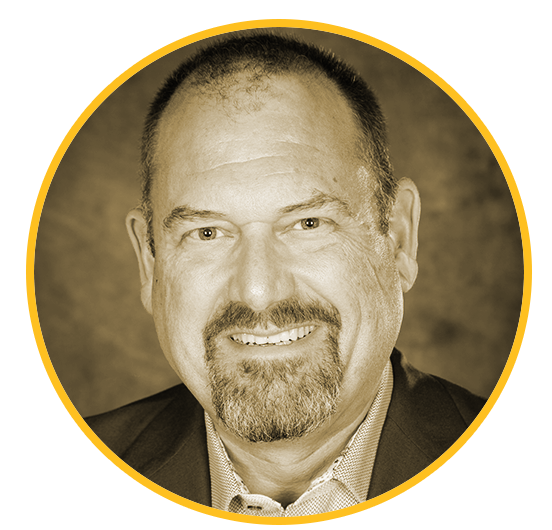
56:06 Yes, I like that addition to the conversation. I certainly added a fertilizer company to the Maven portfolio not too long ago for those kinds of reasons. Brett, for better or worse, I'm gonna give you the last word on what you are doing with your money right now and the kinds of stocks and whether you're holding anything, holding on, what's going on? Thank you for your investment and the cash you're gonna give us because we all need it right now. Yeah, I don't think that we've ever been able and anybody's ever been able to call the bottom. Just like we can't call the top. And So Brian and David's point about incremental investing is very wise. Go back to the fundamentals.
56:51 Yes, people, asset characteristics, jurisdiction, point in the cycle. We are at the point in the cycle now where people should be investing if they've got any money left or any liquidity left. But now is the time. For now, going forward for the next 2 years, you will never get a better entry point. I can see where our sector, I'm not just talking precious metals, I'm talking mining general, is going to outperform every other sector. And it's not going to be this year, and it's certainly not gonna be this year, not probably gonna be next year, but 2024, 2025, we'll see the largest returns in any sector in the market simply because of, I believe that 2 years from now, we're gonna slowly start walking out of this recession. We're gonna bring interest rates, somewhere around that 2 to 3% level and inflation somewhere around that 2 to 3% level.
57:43 That is a good place to be that will weaken the US dollar, it will strengthen and allow for the EU to get stronger during that period and less reliance on energy and gas from Russia. And I think that will be the time that we see this. There was a question that came up about how does the US get out of all of this? There's one answer to that, leadership. And just like mining, how do mining companies, why are mining companies successful? Because of leadership. And the US election is going to be one of the catalysts in our space and in this geopolitical environment. So, I think that yes, slowly disperse the basket over the next 2 years and you will be a winner. I like it. All right, I think that's a great moment to end on. I will, I mean, first of all, thank you to the audience for listening. I think this has been a pretty interesting discussion. I think 6 is planning to host several of these sort of how to invest in mining conversations. Perhaps we'll focus in on particular parts of the conversation in further events, but this has been a great panel.
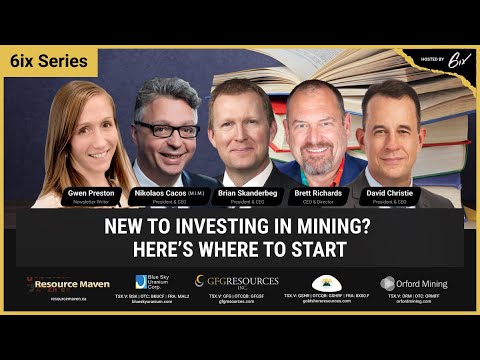
58:48 Nicholas Kakos of Blue Sky Uranium, Brian Skanderbeg of GFG, Brett Richards of Gold Shore Resources, and David Christie of Orford Mining. Thank you so much for spending the time with us today, for your insights, for revealing the mistakes that you've made live and in person. This is a big arena for people to step into and I think whatever guidance those who have experience can offer is greatly appreciated. So thank you so much for your time, Thanks to 6 for hosting and hopefully we will see you all again soon at another conversation. All right everyone, have a great Friday.