Automated transcript · Written by software from the replay's audio. It can mishear names and figures; the replay is the record.
22:48 And we may get less ounces, but it's gonna be a really high value because it's twice the great pan. Well, these are the things that you need that updated resource for. So you can make decisions on where to go with those assets. So I think the first quarter will be filled with I think continuous positive news flow. I think one of the things that I think again, while where the company was and where it is, I think we'd start building Copperstone today, if we could, but we're gonna finish the studies and we're gonna get these positive feasibility studies out to the market so they know that we're not, we're building using proper capital allocation to build these assets out. And so Copperstone's, you know, a $40 million build.
23:34 There's 4 miles of underground development. There's a, we're putting the mill back together and we're putting the mill in. And so, but we're gonna do a study first. We're gonna try and move as quickly as we can, but that study helps the market. I think when you see, we're trying by the end of March to have the banks come in and give us a revolver. That gives the company an air credibility that a major Canadian bank has looked at our production plans and been willing to give us 30 or 40 million US as a revolver, right? Those are all things that we're trying to get along with. You know, the TSX, we expect by the end of the first quarter to be on the TSX piggy board. So again, there's a lot going on in the company. We probably haven't been as reachable as we'd like to be given there's so much going on in a very short period of time. A lot of new people working to get the things that we need to get done, but we have a very ambitious first quarter. And then beyond that, it's obviously going to be, you know, do we get a permit on Cerro Doral? You know, we've been seeing the Mexican stuff happening.
24:40 Do we get because if we get a permit, that's the best, you know, that asset is $30 million for almost 60,000 ounces of production, right? So again, there's many things that could occur, but it's really the build out of Copperstone next year and looking at Pan and Gold Rock through the eyes of a much higher Gold price. And then I think the last thing is drilling the extension of the underground at Copperstone and the open pit, which maybe we'll talk about later. But there is a pit embedded in Copperstone that is not in the resource that we're quite excited about. So maybe, maybe I don't know if you guys can hear me, Romeo, but you're kind of blocking out for me. I want to talk a little bit about Copperstone. And, you know, This is a mine that was operated in 2012 and 2013.
25:43 It was run at very low Gold prices and it had a very difficult… you had to deliver a 20% Copper con in order to get the material processed. Ultimately, you got relatively low Gold recoveries because you were talking about trying to deliver to the concentrate market a 20% Copper con. We're in a very fortunate situation now where The smelters will take a relatively low concentrate grade, even as low as 6% or 8%, and that allows us to effectively increase the recoveries on the gold side of the business that they couldn't do in 2012 and 2013, because there's such a shortage of copper concentrate.
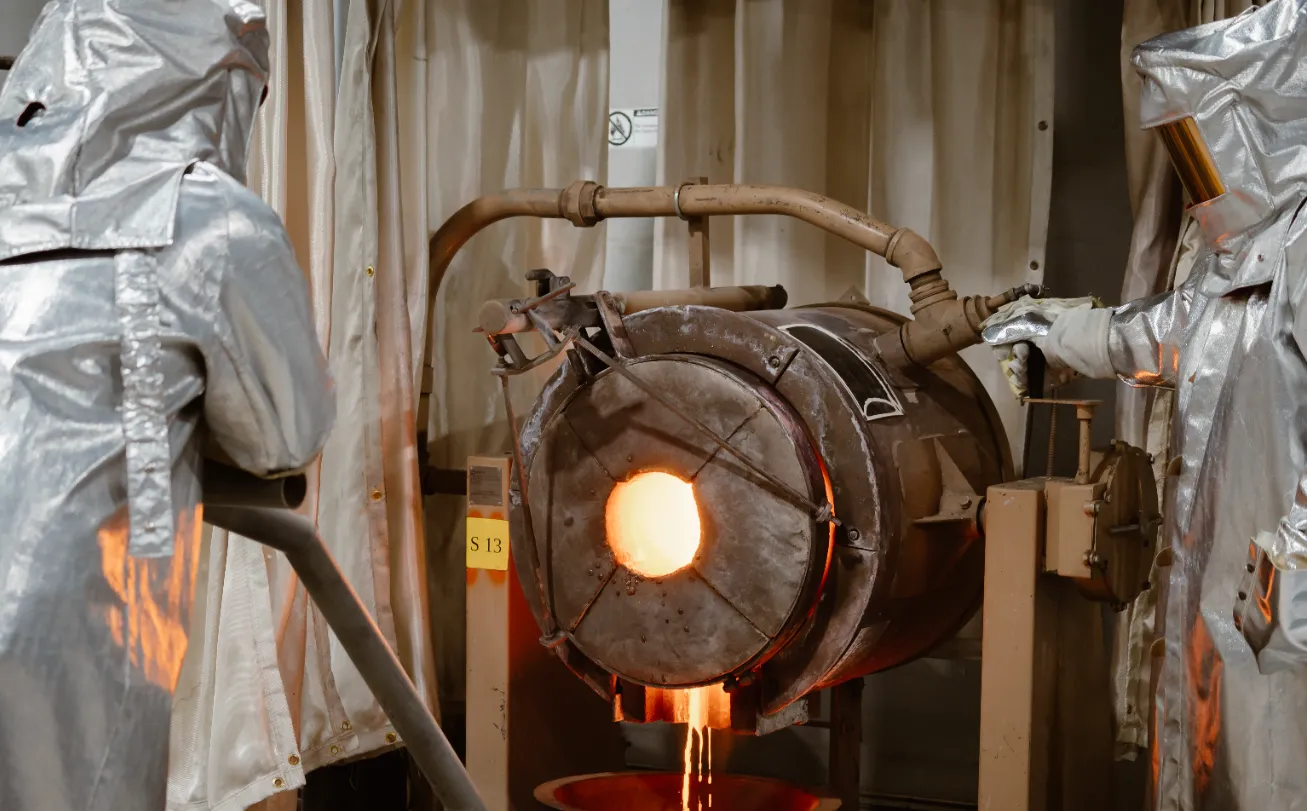
26:41 So we're going to go out and we're going to be able to deliver 90% recovery as a result of being able to be able to sell a lower copper concentrate. As a result of that, we hope that market will last forever, but we'll do some funding on Copperstone, which will be non-dilutive, which will be like an offtake loan for so something like US 15 or $20 million. And we think that will allow the, it'll make it either Trafficker, Ocean Partners, or one of the offtakers, it'll be make their problem to place the con 2 or 3 years from now if that situation changes. But what it allows us to do is basically get 90% recovery on the Copper that's brought into the mill. We also have a leach circuit at the back of that and that will then be taken to Pan.
27:33 So again, another synergy of the transaction is that Pan has a gold, back-ended gold plant, which can take the carbon from not only Copperstone, but also from Cerro Duro. And then I think the last part of the, hold on a second here, just making sure I'm still being, the last part of Copperstone is the underground, the open pit that nobody talks about. So in the late 80s and 90s, a company called Cypress, I can't remember if it was Amex, Peggy Whitty had the company. It produced an incredible amount of gold over the 5 or 6 years, 600,000 ounces, from the open pit at 2.2 grams.
28:27 And so right now we've got, We think that from the historical drilling and the work that was done, we think there's substantial Gold resources, somewhere between 500,000oz and 1Moz of Gold that we're looking to put the work into to create a new open pit. And that pit will be closer to 1 gram, but obviously 1 gram in today's environment is very high grade heap leach ore and it's oxide. It's not transitional or sulfide. So we think we can process that ore through a heap leach, given that Copperstone's on permitted ground, we'll be able to get a heap leach permit to build a new pad, likely on top of the old pad in relatively short order.
29:21 When we talk out there, there's a PEA and Copperstone. It's for the very small part of the resource. It's for a five-year mine and it takes in only the material, the highest grade indicated material. We think we're going to have substantially more than 500,000 ounces in the underground plan. And we think there's going to be considerably more of that in the open pit. So that's our excitement around Copperstone. And so the 2026 objectives are to get it announced and funded and built in 2026, and to spend about $3 million drilling to increase the underground resource and to get the open pit resource into a proper resource calculation, which I think we can, we may be able to get that done in the second quarter next year.
30:11 Sorry, Bianca, we're switching. No, no, so I'm sorry, Darren. Hi folks, My name is Bianca Pusciola. I'm the Chief Revenue Officer and co-founder here at 6. Our good friend, Romeo, had a power outage. And so now you're stuck with me. The good news, bad news is, I apologize, I missed the little bit of the overlap. So I apologize if you brought this up already. But I do know that we wanted to talk about the TSX listing in Q1, 2026. So insofar as the first full quarter of financial results and a producer in late March, you have this TSX listing in Q1. How will these steps enhance visibility and liquidity for shareholders? Well, yeah, we touched a little bit on it in the previous section, but obviously, I had a call with the TSX listing group at 11 this morning, Toronto time. And, you know, when we look at the timing, what they need from us is a property of merit, which we have with PAN.
31:07 They need an 18 month plan, which we definitely have, again, as a result of PAN, that we can keep ourselves to stay in the operation for 18 months. And the hardest part is we need some draft financial statements from 2025. And the reason we need that is the PAN acquisition was done on October 1st and not September 30th. So there's nothing in our September 30th financial statements that talks about PAN. So what we're looking at is kind of end of February to go into what they call their committee with all of the things that we have. The great news is we meet all of the requirements on paper. We just need some financial statements that represent the pan quarter that will occur in the fourth quarter. So we're looking at that. And as we discussed before, 1, There's a lot of European and US people that don't buy venture exchange companies. But the most important reason, as we talked about, was both the margin and being able to margin the stock.
32:12 And again, having a minimum requirement to go from the TSX Big Board to the NYC American, which we're trying to get done by the end of next year. So all of these things require us to do the rollback, which puts us on the exchange and then allows us on the Big Board, I think to show that our governance is in the proper place in the sense of where we've graduated from being a Explorer Co. Venture exchange rules to a producer and a developer. So again, I think all of that drives, I think, but I think, I don't think the TSX necessarily drives more liquidity. I think what drives more liquidity is the number of catalysts and the story, because I think what we try to explain to people is that if you looked at just purely the old Life of mine pan report and the old PEA for Copperstone, we're going to be producing 80 to 90,000 ounces in 2027.
33:07 And that's a material change in the current environment. It's how much revenue and free cash flow we'll have. So I think that's a bigger driver of liquidity. But the TSX Big Board is just a step, a part of that stepping stone. And can you reiterate for folks, especially folks who are just joining in, the positioning of the new Monero Alamos, a junior gold producer with a robust growth pipeline and how that sets you guys apart from your peers? Okay, so again, I think it's been a bit of a shock for the long-term Monero holders, of which I was kind of 1 before this trans, in a very small way before this transaction happened. And it was, you know, as I do, knew Doug and Darren, it was about, you know, it was about low capital assets in low cost capital assets in Mexico.
34:01 And that story just got derailed by the AMLO government, like many stories in Mexico, unfortunately, where a permit was very difficult to get. So I think as you look forward, we're going to have an operating base of over, call it 120,000 to 140,000 ounces, even before the open pit at Copperstone in the United States. It's our focus sequentially, we're building these mines. And I hope we get a permit on Cerro Doro tomorrow, but if we don't, in 2026, we'll be building the Copperstone underground. 2027, we'll be building the Gold Rock project. And hopefully, by the end of 2027, we're building an open pit at Copperstone. So between Nevada and Arizona, there's, as I said, multiple, at least 120,000 ounces coming out of those mines.
34:58 And so that's been the shift again. And if Mexico plays ball, then we got probably the cheapest production asset in Mexico, $30 million to generate 60,000 plus ounces. And again, we talked earlier, Bianca, about all of these PEAs and studies have been done at sub $1,700 gold. We take 3,000 or 4,000, Cerro Doro is going to go from, you know, 800,000 ounces to potentially multiples of millions of ounces, but the grade may go from 0.37 to 0.3. But when you have a strip ratio of 0.2 to 1, so again, we still love the Mexican assets. We have to determine, we can't be building 7 of them. We've determined that Pan is operating, Gold Rock is a necessity, it's 7 miles away. We may start trucking from that asset before we build the leach pad. And in 2026, we're gonna build the Copperstone Underground. So the great news and what differentiates, David does a good job explaining this because he used to be an analyst, is that lots of juniors have these hockey stick type growths stories, but almost none of them have permits.
36:16 And so the advantage is you've got a permit at Gold Rock, you've got a permit in at the underground at Copperstone. We know on in the US right now, it's a lot easier to permit. We've got a brownfield site. So we know as soon as we have a plan of operation for the open pit and we get that resource in place, and we're gonna be able to, we know that it's an 8 month process to get a permit. And so I think the story there is that HockeyStick is funded, is completely funded, we think out of growth, and it's permitted. And so, you know, we're starting to see movement on the Mexico permitting side. I don't want to be overly, you know, optimistic and be waving my arms as a promoter. But we've seen Silver Tiger, we've seen McEwen Mining's El Gallo project.
37:08 We've talked to regulators. You know, the thing that's interesting is most of these projects, including ours, has been approved by Semernat at the Zacatecas level. What we're waiting for is political sign off by the federal government. And one of the things that shifted in Mexico is, it's not so much that they have a ban on open pits anymore. What they're very concerned about looking at is how much water you use and where that water usage is and how that affects agriculture and other things that happen in the region. And so they changed it from really being a ban on open pits to, you know, they've set up a new water ministry, which, you know, they had Conagua, which was the monitoring stuff, but they have a new federal group that basically looks at all these project permits and says yes or no, but it's really based on water now. And if you think about what we have being north of Penosquito and Camino Rojo, which are much bigger assets than us that are already permitted, once you build it, you put it all put in place, you need water to get the cyanide solution to work, but you're capturing almost all of that water back and reusing it. So the amount of water usage is not like a mill where you're constantly using it.
38:24 We're basically recycling a lot of our water, so the water usage is very small. So we're very optimistic about our permit in 2026. But again, if we don't get it, what we didn't have before at Monero Alamos was the ability to go from 40,000 ounces to 80,000 ounces to 120,000 ounces within our own capability. And we've got a great market to do it in and we've got cash flow coming from PAN and so you know we're very excited about it. Fantastic. I know you talked about it a bit just now. We have a number of questions that were submitted about Copperstone. Maybe you just rehash, I know you went through it in the context of your answer on the estimated timeline and also whether or not the permit status was affected in any way by the federal government.
39:15 So there was a little bit, so again, if we wanted to start building Copperstone tomorrow, we could, okay? So we can build everything. The operating plan is, the final permit is an operating permit. Given we're a year away from operating, there's no rush on that permit. That permit was affected by effectively the shutdown of the US government. So we're still expecting within the end of the year or within the first 15 days of January to have that final final operations permit. We have construction permits. So by the time we get out in kind of the first quarter, the mid first quarter on that announcement on Copperstone, we'll have that permit, that final operation permit in place.
40:03 And then it's the build. And the build is really, when the mine was closed down, it was closed down in ore, in development and ore, with 4km of underground workings. So the mine was dewatered, there was, you know, All the electrical was working. Almost all the capital we're talking about, this $36M or $40M roughly, That capital is all about the mill, putting an existing mill back into the mill plant. All the infrastructure still sits there. The underground is there. So this is going to be a relatively quick build. We're talking about 10 or 11 months and so, and maybe faster. And so we expect to be in full production in 2027 on Copperstone.
40:54 And if you looked at the plan from the PEA, it says roughly 42,000 ounces. That 42,000 ounces was only based on the 300,000 ounces of indicated. We think it'll be closer to 50,000 ounces in year 1. And so that's what you're coming out with. Again, only the underground, not the pit. And the underground, instead of having a 5-year life, is going to have a 9 or 10-year life, right? These are the things that occur with the Gold price doubling. And so the good news is, before the Gold price really moved, we were able to buy Pan for a relatively reasonable price. There's 30,000 ounces on that pad that will eventually be leached. And at $4,000 Gold, that's $120M US in revenue. Well, we paid $120M for it. And they paid only $40M Canadian for Copperstone.
41:42 And you can see how much value that is. And so Ultimately, at the end of the day, the timing is we're moving as quickly as we can. We expect the technical studies to be done by the end of January. Early February, we expect to go to the board with a financing plan and come out to the market with a go decision in the first quarter. And then if we do that, we've got production, we've got a route to almost a full year of production in 2027. Amazing. Folks, I know there are so many questions in the chat and there is even more submitted ahead of time. So I'll say, Unfortunately, we won't be able to get to all of them. Do know that every one of your questions, they will be sent on to the Minera team. So don't worry about that. I'll have one more question before I give it back to you, Darren, for the final word.
42:29 The question here was pre-submitted about when are you going to change the name and image of the company to further enhance your Nevada and Arizona obvious successes? Yeah, so again, and I put the success on Darren and Doug and Jason for all the things that they put together. Dave and I were very opportunistic to realize that what a great company this was and we put our money into it. So again, I would say that we have 5 or 6 names that are on a whiteboard? And there's a lot of debates. Do we stay with something? And again, I'll just use examples. Do we keep MAI and say GMI and call it Gold Mining America Zinc? Or do we, you know, National Gold or, you know, whatever. We wanna go full mega, we'll go Freedom Nevada Gold Mines, whatever, whatever, you know, but I think the answer is, it's difficult to, you know, when we're doing the rollback, and you're going on to the TSX, you can make the assumption that somewhere, there's going to be a name change that, you know, again, and I, again, I understand, it was company was much loved, but I think it's a bit time for a change.
43:38 When you say a growing Gold producer in the United States and the company's name is Bonaire Alamos, it's a little bit mismatched. The problem is, you've got to spend money to have a special meeting of the shareholders to change the name. And I was hoping that we could wait till June or July, whenever the AGM is going to happen, but I think we're going to do it faster. So again, I think we're going to do that as part of all of our new governance features. So that's the answer on the branding. We brought in an X6 specialist, Max, to help us with the social media. And so all of that's done. And just so you understand, Monero almost didn't even have like a soft, like a hardware platform. So we're kind of start, we've been starting from scratch. Took me 8 days after I started to get a Monero Alamos email.
44:33 So again, these things are all being fixed very quickly and getting us in the right place, but it's been a bit difficult to communicate with the shareholders. And so we're trying to get out and do these kinds of things with you guys and with Trevor from, you know, buying stock and make sure that we can get there. And again, listen, what I do understand is there's a lot of frustration among long-term shareholders of Bonaire Alamos. There's been a lot of dilution. The company's thought process always was, let's pay for this cost with stock. Let's, you know, why are you giving these executives so many free options or, you know, any of these things that you get, and I can understand why you're frustrated, But if you want these plans executed, we need to bring in people that have experience doing it. And you need to reward the people that have done these deals.
45:23 And going forward, the objective of the company, and we talk about it in every Friday management meeting, is how do we do all of this stuff without dilution to shareholders? Like The dilution stops here has been our way we're thinking about the company. Sometimes that slows you down because maybe we would have drilled Copperstone in the fourth quarter, but we've got to be there to build the underground mine. And so we got to have enough capital. We don't want to try. We're trying not to trying to avoid dilution. And so it's been frustrating because the opportunity cost of owning Monero Alamos for a long period of time by watching all these other gold companies go up has been frustrating for shareholders. And I get it. I was at USA last year and the stock was at 30 cents. We did a trans-emotional deal. We raised money at 30 cents with a big warrant at 40 cents.
46:13 And you know what? It took a while to churn through stuff at Orla. Took many, many, it almost took 6 months at Orla to churn through all of that. And then they had like literally a hockey stick. And so we feel that way too. It's frustrating to be caught in the crosshairs. And that's why I said every time Dave and I see the price start to drop, we kind of roll in, buy another 50,000 shares, it's just like frustrating for us too. And every time, just so you know, we get on with a shareholder or we get on with an institutional investor and they give us the minute to get past the old story, and they see the new story, they're all talking about, oh, this is a great story, I'm gonna buy more. Our frustration as management is we say that, and they say that, and we run 42 cents. And so ultimately, we feel that too and we want it to move. And we're going to do everything in our power, whether it's 10 to 1, whether it's TSX, you know, get the resources and reserves done so people can see how many ounces we have in the ground, millions of ounces we have at these current gold prices and try and be nibble and fast and get these things out to shareholders. And I said, I think there's a solid flow, news flow that's going to occur in the first quarter.
47:28 And I think it's going to be very exciting for shareholders. And so, you know, I'm excited about the prospects of the company. We all are. But it doesn't mean that we're not frustrated. That's management too. Totally understand. Darren, I want to thank you so much for introducing yourself to our platform and also to reintroducing yourself to shareholders. Folks, everyone who attended, thank you again so much for your attendance and participation. Darren, I want to give it to you one more time for your final word before we close things off today. And thank you, by the way, for letting me intrude on the party here and close this off. Okay, great. Well, listen, Bianca, I think for all of us, again, maybe it's not in my voice, but I'm 57 years old and I've been doing this from Barrick as a real junior to reporting to the CEO into USA through 10 or 12 years of really difficult metal prices and then seeing a 10 for 1, a 10 bagger.
48:33 When I was gonna come on the board with Jason, I was really excited about that. And every day that I've been in the company, I keep finding more and more latent value that just as a result of having no money, the company could not pursue. And I used to think, you know, how many wrong decisions you make when you don't have money? Well, now the company has cashflow. It's gonna manage it very efficiently from a capital allocation perspective, but we're gonna start making the right decisions Because we have the ability to do that now. And I think that was never there to the old management team. So of course, we can always, you know, complain about what happened in the last cycle. The only thing that we can do as newer guys in management is, we've been here since Dave came in November and I came in late October.
49:21 All we can do is show you the path forward. We're extremely excited about the path. We're putting our, yes, we got some options and yes, we got some RSUs and yes, you know, we also put millions of dollars into the company because we believe in its future and we're gonna work our butts off to kind of see that through. And, you know, and I would say this, as I said, it's a very changed company. We're in the process of that change from the fact that I think we've alluded to it, new board and that board will continue to evolve. There'll be new board members come on. There'll be more and better corporate governance. We've got the social media and the platforms to get out to that's being put in place. So many things going on now. I don't think we've done a great job communicating yet. And we're going to do more of these as we go forward. And again, we're going to try and be as transparent as we can be on what we're doing.
50:21 And ultimately, we think the view of the transparency and just the late value, we think we trade at less than 0.1 times anything. And so either we're going to get the stock price up or another corporate's going to buy us. Those are the 2 options we have. And I'd like both of those options to occur. I just like to get the stock price 300% higher before I sell the company. So before we sell the company, like That's what we have in front of us because there's so much value. The corporates always figure it out before everybody else because they're looking for, this is the time when everybody in the market's looking for stories. And we wanna surface all of that latent value to shareholders to give them the proper view of the company to value it properly. And that's what really what we're focused on and going to spend our time on. We can't make the gold price go up. We can't make the share price go up other than having great meetings and doing all our work and buying a little bit of the market that we buy every couple of weeks, but ultimately at the end of the day, the story will speak for itself. We just got to get the transparency of the story out there and you'll start to see a real change in Q1.
51:26 Darren, very well put. Yeah, we appreciate everybody's patience. I know it's been difficult. Thank you so much, Darren. I really appreciate it. It's been a pleasure having you on. Thanks and happy holidays, everybody. Happy holidays. Folks, if you guys want to check out the replay, it should be available later today. Thank you, each and every one of you who joined us, and have a wonderful rest of the day.