Automated transcript · Written by software from the replay's audio. It can mishear names and figures; the replay is the record.
10:03 It's not lost on me that our 3 projects in Mexico are in Sonora, Durango and Zacatecas. But notwithstanding public sector support to improve infrastructure, there is going to be a need for mining companies. And mines establish and help support infrastructures, not just jobs, it's the infrastructure in the areas that they're at. And so, you know, there were comments about the need for local training. Mexico has a tremendous mining workforce. There are plenty of ways to further a project's impact on our economy, not just from driving the jobs for your actual mine, but also what you can do in the local economy.
10:55 And I think that's one of the reasons why these northern mining states, you know, mining is in the very, you know, DNA of these states. And it's one of the reasons why we get on to this review of the open pit ban bill, as it was presented, or as it came out of so in, I think it was October, a committee stage bill, which was never brought to the floor at the lower house in Mexico, continued this language with regard to open pit bans. And it would be dead on arrival in the Senate in its current form. It was far, far stricter than what Claudia Scheinbaum's electoral platform had. And, And I think that's, you know, my take when she said there needed to be a government review of that bill was the same as I think it was Newmont that came out saying this is a positive and I think it is a positive because For that bill, which may still get voted on in the lower house to have a chance in hell of getting through the Senate It needs to be severely watered down from its current state and And so I think when you look at mining states in the north, with greater than 20% of their GDP coming from mining,
12:26 it was never gonna be Senate support for the bill as it stood. So We may still see that advance for a vote in the lower house, but I think look for it to, I think look for this government review to kind of handcuff it to a point where it has more of a chance to pass at the Senate level. And I believe, as do many others, that the only way it can pass at the Senate level is for projects to be looked at on a case by case basis rather than some blanket ideological ban. So this de facto, not enshrined in law, but this de facto ban that has over hung the industry for the last 2 years, I think we will see movement in the first half of this year to show that, for the first time, to have something where you can counter the negative headlines. Because honestly, if I was an investor and my only source were headlines that were propagating open pit bans or whatever, of course it would make me nervous. And it's been incredibly hard for me and others in the last couple of years to push back against that. And that comes back to the sentiment shift.
13:42 Sentiment is improving, but Unless we see the paperwork, that's all it is. So where are we seeing the paperwork? There has been permit movement recently. Aveeno, I think it was beginning of last week, received their last permits that they required for the construction of their La Preciosa mine. Now, that's an underground mine. And before people point to it and go, Oh, it's an underground mine, the reality is, all paperwork had come to a grinding halt in the last year. So the low hanging fruit is gonna be permit amendments and underground mines, but all we need is to start seeing paperwork moving forward again.
14:29 And I've been bitten by trying to provide timelines at a time where, because investors crave timelines, at a time where it's very, very hard to, you know, they're all best guesstimates. And the reality is things got tougher and tougher in the last 18 months. And so that made timelines seem worse and worse in terms of their accuracy. So I find it very interesting that we have seen companies publicly in press releases put timelines. Now, that's either really ballsy, because I'm not going to do that again. I've got expectations, I got assumptions, and we'll get to those later. But it's pretty ballsy to put that in a press release unless you've really got clear insight, and you're getting word from Mexican authorities that things are moving and going to move.
15:21 So GoGold on January 8th announced they expect the permits for their Los Ricos underground mine by end of March. Alamos Gold, they kind of missed their year end 2024 timeline, but they were expecting a permit amendment at their Molatus complex for their PDA deposit by the end of 2024. Mexico kind of shuts down for Christmas, kind of second week of December. So that's another one to look out for. But again, I mean, Alamos Gold have been cutting the biggest checks that they have to the government in terms of taxes down there. I'm sure that they have insight that, you know, as the government kind of reorders itself and moves forward, that paperwork is flowing too. And before looking at these as just underground operations, Orla, Not sure if it was in a press release, but certainly to the analyst community, they have had long awaited layback amendments for their giant Camino Rojo open pit mine in Zacatecas that I believe last guidance I saw was first half of 2025.
16:38 And again, my sense would be after the last couple of years, most companies are going to err on the side of under-promising to over-deliver. So that's just 3 examples. And quite honestly, we we just need to see someone get something somewhere to fuel that positive sentiment with paperwork that's following behind it. So we are very encouraged by the outlook for Mexico in 2025. That being said, I think the timely acquisition of Copperstone means we do have a path to self-determination regardless of how fast or slow paperwork in Mexico moves but we are very encouraged by that shift that we're seeing come through and it is what we were we were saying in September and October. And I haven't often been right about Mexico for the last couple of years.
17:36 So I'm not exactly going to have a ticker tape parade because even a broken clock can be right twice a day. But I think it is encouraging to see. And I think we will see more positive headlines in Mexico in the coming months. So where does that leave us? Well, we have 3 advanced projects in Mexico. La Fortuna with permits, we want to make it bigger before building it. Cerro de Oro is in the permitting process. Santana is in production, and we'll get to the improving operating performance at Santana later. And then Copperstone, it actually is a fully permitted plan of operations. We're making some modifications to allow multiple paths for processing there, rather than selecting 1 or other at the current approved paths.
18:33 And so, you know, but when you're a developer, the Holy Grail, the Holy Grail is is permit receipt. And you can look around at companies and other jurisdictions that get their permits and the impact of that. And sometimes it's the impact on your stock of someone else getting their permits, which I think we've seen before with Monero. And I think we'll see again that we're not first in line at Sarah to get permits at Sarah Doro, but we don't have to be. We just need to start seeing a shift in paperwork moving forward and we'll get some of that benefit even before our permits drop. Where do we stand? Not much has changed. We did do a prudent, a modest prudent equity raise in Q4. And I know there was a bit of sticker shock to that because we're a company that has very rarely gone to the market.
19:32 But we thought it was prudent, rather than trying to thread a needle and avoid that. And so we're in a pretty healthy position cash and working capital. Next week with the Sabre deal closing, there'll be a new updated presentation that has the updated pro forma capital structure of the company. And I know people are going to ask, and they are right to ask, at what point do we consider a rollback? We have not since we did the Monero-Corex merger in 2018. We brought 2 companies together that had 150 million shares out each. There was no raise at the time. We did the subsequent kind of financing raise associated with that merger about a year later in 2019.
20:24 And that took us to 350 million shares. In 5 and a half years, we suffered about 30% dilution, which is very good by industry standards. But of course, then you do an equity raise and an acquisition, it seems like numbers have gone up. My sense is at some point there will be a housekeeping rollback, but I don't think it's coming anytime soon. I would like to time it sometime in the summer on the back of Cerro de Oro permits. I think a rollback around a catalyst is the best way of approaching it. And there's no better catalyst for me than the Cerro de Oro permit. So, you know, we will address that, but not right now.
26:52 The project has about, well, it's got over $60 million in tax losses that will be available to us in the US. So when it comes to the PEA, when we're looking at pre-tax and after-tax, there isn't actually a huge difference between the 2 because we are going to be able to make use of those tax losses. And that kind of speaks to the amount of investment that's being put into this project. I think what's relevant investment is over $25 million in underground development and surface infrastructure that we can take advantage of. We also, as I said, the shift in jurisdictional de-risking starts to nicely give us a blend of, you know, 20 to 80% US to Mexico in terms of our asset MPV and our measured and indicated resources close to 40% of those now, or 60% in the US.
28:01 So there is an operating plan of operations permitted for production. We're going to have more updates on Sabre. We've been getting new paperwork and approvals on minor modifications. And what we want to do is this as a draft approvals for 1 for the company to choose 1 or other of a processing path for it. We actually believe that with trade-off studies, the economics are enhanced by having a combination of those 2, rather than having to select one or the other. They've both gone through technical review as processes. So we're going to make some minor modifications just to ensure that we can have the best economics of this. Copperstone will produce a low grade copper con that actually contains the precious metals. And there's a tremendous concentrate market right now in the US.
29:09 And we're looking at ways to capitalize on the value of the copper associated with the gold and silver here as well. Here's some of the plant infrastructure. It's all in very good shape. In the case of a couple of bins, I would argue it could do with a lick of paint. The one thing that they did not have was a mill. That had been scrapped some years back for some cash. And so we actually happened to have a large enough mill in storage in Val d'Or, Quebec. It was originally slated to go down to La Fortuna in time. It was oversized for La Fortuna.
29:59 The La Fortuna PEA called for about 1,100 tons a day. It was a 2000 ton a day mill. So We will be looking at relocating most of that mill down here at the Copperstone site. In time, parts of it can move on to Fortuna. The beauty of this mill is it was 1 missing part of the PEA. The PEA, which had a 36 million dollar pre-production capital, about 40 percent of that number was plant and processing. Now, we don't save 40% of that number with the Fortuna mill. Arguably, maybe there's a $7 or $8 million saving from that CapEx number. I'm not going to say the CapEx is going to reduce, however.
30:45 I think what it does is, in a world where we've seen CapEx go up all over the world in all manner of projects, I think having the mill means that those numbers are the ones that will accommodate now any other inflationary pressures on the build and the mill will Help in that regard. So we still look at this as a 35 million dollar build That's the copperstone PEA released in 2023 one of the requirements on a plan of arrangement like this is re-releasing the PEA in our company's name. Now there are going to be some very minor adjustments to the PEA as a result of, we want to be able to demonstrate the project sensitivity at higher gold prices.
31:43 We can't talk about, I wouldn't be able to tell you a spot gold case now. It'd be pretty easy to work it out, but I couldn't do that formally if you don't have the sensitivity tables in a PEA. So we'll actually take the PEA sensitivity tables, probably up to $3,000 an ounce, not that we need it. It makes good money at $2,000 or even $1,800. The other thing that the updated PEA will show is a reduced royalty burden at Sabre. Copperstone was not built for a number of reasons, not necessarily having the right team, tough market conditions, over encumbered with debt, and certainly the project was over encumbered with royalties and streams.
32:32 Our partners, Star Royalties, had a stream that was too high, really, and credit to them, there's value in that stream so long as the project gets built. But if the project's too incumbent, it will never get built. So amendments were made on that star stream. So it's that star streams now is the equivalent of a 3% NSR. There are thereabouts. There were also 2 historic NSRs on the project. 1 to the family of the guy who actually found the original Copperstone project. And that sits at 1 and a half percent. And then there was another 1 and a half percent royalty which has been extinguished.
33:20 It was extinguished. There was an option for Sabre to do that. They excised that option shortly after our announcement of the acquisition. So we've removed a 1.5% NSR load. And in fact, what it brings the project down to is about a roughly a 4 and a half percent NSR load. I'd love it to be lower, but it's a heck of a lot better than something which is actually approaching greater than 10 percent, greater than 10 percent implied NSR before the star stream, before the reduction of that 1 and a half percent royalty. At that point as a miner, you're basically contract mining for the royalty owners. Makes no sense. So this PEA that will be released will have an updated economic model that just takes into account that the royalty load has been reduced by a further 1.5% NSR.
34:12 It doesn't hugely impact NPV or anything, but it's still a step in the right direction on the baseline economics before we take into account whether we can trim that capex down. Other modifications, including to some of the mining techniques, This PEA, I think, looked at the whole project as being mined with pretty expensive, you know, cut and fill operations, pretty high operating costs. We don't think cut and fill needs to be used for the whole project. There are a number of opportunities to improve the economics here. That's work that will be completed as we look to take advantage of that underground development work that's already in place and have this ready for Q1 2026 is our goal to have this, you know, actually back up and running.
35:10 In that regard, how do we meet the CAPEX spend here? Well, we are under NDA with a number of outside lenders outside of our core lending groups that we've worked with before. The goal is to have them in the data room upon closing of this transaction, look to try to arrange site visits in February and March, so that we're in a position to evaluate indicative term sheets for the big spend that comes more in the second half of the year, to have this in a timely Q1 2026 backup and running. So we'll see that as well.
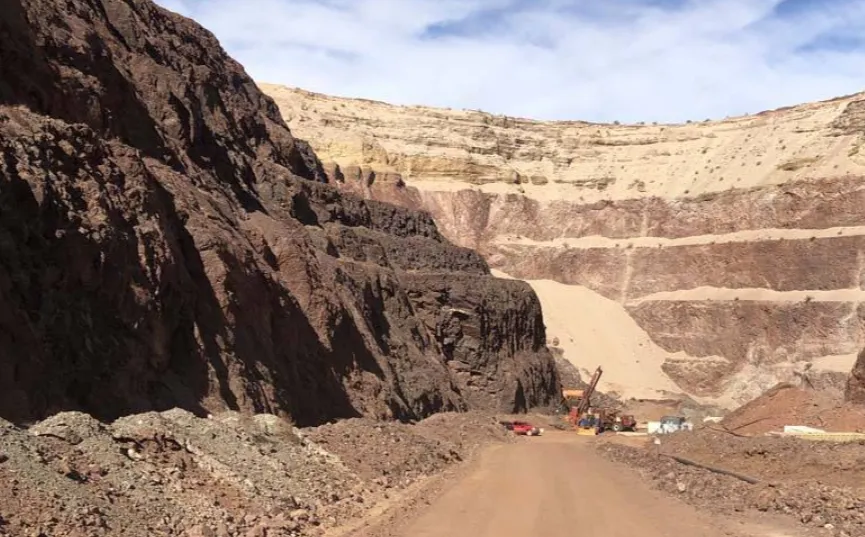
35:58 So it is a brownfield site. There are some very minor modifications we're working on right now. We've received approvals on other things that needed to be addressed. There's tailings facilities already there that have been permitted. Exploration will be a subject of a future press release. But we're, it's the kind of project that allows us to very rapidly get this into production. This is from their PEA and all the surface infrastructure is there minus the mill. And that's one piece of equipment that we had. It was the perfect fit, really, this asset, because we happened to have the one piece of infrastructure they didn't have. I mentioned earlier the underground development.
36:46 There are a lot of projects that have sunk cost. I don't necessarily equate sunk cost to sunk value. In the case of Sabre and Copperstone, that sunk cost in this project is absolutely sunk value that we take advantage of. Not just the surface infrastructure, 2 underground portals giving underground access, over 4,000 meters of underground mine and access development. That's notwithstanding what it would cost to recreate the 160,000 metres of drilling, but that I don't view the same way. This sunk cost that we have here is true sunk value we can take advantage of.
37:34 And, and so we're particularly happy that we've got a project here that I think does not need much in the way of underground rehab. The one thing we will want to ensure that we get ahead of is underground development. I think the PEA called for 6 working phases of which 3 or 4 would be active at any one time. I think we'll look at what year 1 sustaining capital can be pulled forward into pre-production capital to ensure that maybe we've got extra capacity of underground working faces. But this isn't a big initial operation. We'll probably start it up initially about 450 tons a day. So It's not like you're trying to mine 1,500 tons a day from an underground operation.
38:22 Small tons move, they have high value and we're very, very excited about it. This is the heavily diluted grade of the deposit. The mine plan really only focuses on the M&I component right now. There's already a few hundred thousand ounces of additional inferred. There are a subject of another press release will show some of the sections that show drilling results, you know, 4 or 500 meters away that have never been followed up from the existing resource envelope, as well as further down dip, down plunge hits that again, a company never really capitalized to even get the mine built, certainly didn't have the money to follow up on very interesting exploration results outside of the project but the project's got a six-year initial mine life that gives you enough runway to focus future cash flows on some of that exploration follow-up. So yeah, Top of Stone can be considerably bigger than the roughly 500,000 ounces in all resource categories that we acquired.
39:43 So, Santana, 2024, we started up a new mine plan on a brand new pit because we didn't want investors to be waiting for a permit amendment. We didn't want to wait for a permit amendment. We said when we had that mine plan that the benefits would be seen in Q3 and Q4. And Q3 was mainly about mining and stacking and as we opened up the new Nicho main zone pit, which is considerably larger than the original Nietzsche Norte pit. We saw those benefits. I think in Q3, we mined and stacked more gold than the whole of 2023.
40:32 I mean, it's hard to really think of Santana as a mine in 2023. I think if you're going to call something a mine, you expect mining to take place. It really was on a care and maintenance mode. But those benefits in Q3 came through in Q4. And in preliminary internal numbers have indicated that, yes, as we expected in Q3 guidance, the Santana mine operations have returned to delivering quarterly operating profit in Q4 of 2024. And really as the driver of cash generation in the company, the first thing it has to do before we start generating net cash at the corporate level is to start generating it at the mine level. And we had a significant reversal from the first 9 months of the year in Q4.
41:29 That's largely due to gold production being higher in Q4. Still modest because we're still in the ramp-up mode of this new pit. And even net of the depletions from mine production, we've now got a recoverable gold inventory on the pad that's approximately 10,000 ounces. We did receive state approvals towards the end of last year for a phase of pad expansion that doesn't require a permit amendment. It could be done at the state level. That expansion prep is largely completed, trees and scrub have all been removed from the areas where there would be need to put new, where we would be laying down new pad.
42:18 Right now, we're just looking at some economic trade. We're ready to go with that. We're just looking at some economic trade-off studies of continuing to use the existing pad space in the coming months before building the phase 2 pad. But that phase 2 pad is probably something that whether we're doing it now or it will be done before the rainy season and basically is this kind of transition pad capacity that is required while we wait on the full permit amendment that will allow for the complete valley effectively to be lined and really supports the ongoing operations at Santana.
43:04 So those trade-off studies, I think, will take place over the next month. Right now, we're just continuing to mine and add gold to the existing pad capacity, Which is up on the fifth lift. So leach kinetics are a little slower just because You're on a fifth lift Solutions take probably 2 weeks to flow through the pad. That's maybe 25 plus meters high now On a third from 30 meters high I think on a first lift which we will have on the new pad capacity and in solutions take a couple of days to go through the pad and come off. So that coupled with more free gold in the nicho main zone over nicho norte leaching of free gold You know, it just can take a little bit of time as well And so, you know, it's still kind of baby steps moving forward during this ramp up, but I think it's worth pointing out that when we opened up the Nicho Norte pit, our first blast in was late May 2021.
44:15 It was really only 12 months later as the pit opens up and the pad starts working. You saw gold production at meaningful levels that led to real cash generation. It was a 12-month process. Well, the Nicho main pit, which is now kind of fully open, and we've got the full fleet in there because it takes a while for a pit to open up, especially when it's the top of a hill. Our first blasting there was May of 2024, 3 years to the day after Nicho Norte. And we're 7 or 8 months into that process. So I think Q1 will be similar to Q2 in that it's still kind of in ramp up mode before we see the benefits, especially if we switch to that pad expansion, phase 2 pad expansion will allow just full uninterrupted leaching on the current pad. And that's what we've got. We'll kind of want to get as much gold on the existing pad. That's kind of the current thought.
45:18 Get as much gold on the existing pad so that when we shift to the mining contract and building that extra pad capacity, we can just have uninterrupted leaching activities on the pad and that 10,000 ounces plus what we add over the coming months, you know, can start to be drawn down more significantly. But Q4 was a good quarter for Santana. And again, You know, our grades are very similar right now, reconciling, you know, we're in the, you know, on a month to month basis, sometimes it's a little lower, sometimes it's right at, you know, resource grade here. So there've been no great surprises in terms of grade reconciliation at Santana.
46:07 Cerro de Oro, well, we're all waiting for the Holy Grail. And I can't say that without thinking of Monty Python, but Cerro de Oro needs its permits. I think we covered off where we see things going in Mexico on the permitting side and you know we're still our expectation or stroke assumptions for this year is Cerro de Oro permits could come kind of mid-year. You know, and I hope that that's, we have pleasant surprises, but before that, but I would be happy after the last couple of years, I would be happy with some time mid-year for Cerro de Oro. This is a relatively quick and easy build for us. If it comes sooner, so much the better, but again, we're in one of these strategic states highlighted in the National development plan to some of those areas where Ms. Scheinbaum wants to see strong local support for projects. Well, we had support at the local town, municipal level, 100% support from the local communities, there's strong state support for this mine.
47:23 And even well in advance of what kind of came out in terms of local hires and local training, our permit application for Cerro Doro included that over 90, I think 95% of hires had to be locals had to be Mexicans. I think it will be higher than that. We're not a team. You know, that's that's full of expat geos coming down from Canada or the US to work in Mexico. We we use local people. We our team is local. So so we're we're we know the numbers are spectacular but they mean nothing without having that permit in hand. With that permit in hand, or even other companies starting to get permits, I think people will start having increased confidence as to the driver that Cerro de Oro is for the company.
48:19 And again, we don't think CAPEX numbers have changed really that much from the 2022 PEA, which did include 30% contingency. This is a project that if the permits drop, whilst we have a team focused on Copperstone in the States, our team in Mexico, our contractors in Mexico can largely be approaching the construction of Cerro de Oro in tandem with that, in parallel with that. So we hold great hope that Cerro de Oro's year is 2025. And just again, this was a PEA done at $1,600 gold.
49:06 It's interesting now. I don't think you will ever see us really highlighting spot gold cases on our projects because we don't need spot gold cases to make our projects look fantastic. It is interesting to see that some bigger companies, some of the majors, have started to use $2,000 gold in their studies. Ken Ross's PA at Dixie is a good example of that. I like to look at projects that work well wherever the gold price is, and we shouldn't be guessing where it is. We should be building things which can be stress-test if gold was to come off and take advantage if gold was to go up. So, you know, I don't think our projects need to show a spot. I think companies that demonstrate spot case PAs and economics probably need something closer to that spot case to to justify the investment that needs to go into it.
50:07 Again the resource it's a big low grade system super low strip and we know it can get bigger. In fact we we spent a lot longer getting our surface rights prudently, I think, to encompass a permit application that covers off not just this 60,000 oz a year, 8-year PEA mine life, but something which is much closer to a 12 to 13 year life at 80,000 ounces a year. We're hoping to work on some land deals that will highlight that upside case even before Cerro de Oro gets built. But we're prepared for the upside case. We've permitted about 120 or are permitting about 120 million tonnes of heap leach pack capacity.
51:03 That's how sure we are at the upside case at Cerro de Oro. So it just, there won't ever be a need for a permit amendment at Cerro de Oro. This is Darren permitting things his way, as opposed to what he inherited at Santana, which was a process, unfortunately started by another company that, we kind of had to, bolt on our permitting around. So Cerro de Oro will have, when it gets its permits, we'll be permitted not just for this resource but for a much bigger resource and all the processing that will go into it. We do have a funding package with Oromet in November on the basis of improved sentiment in Mexico we extended a 5 million dollar interim loan that we've drawn down on it.
51:54 It looked like that extension was only for about 4 months. That's how long it took for the exchange to approve everything. We are still prepared and been talking with regard to refinancing that should permits not come by end of May, which is when that extension would expire. But, but again, you know, this package is there and available. And one of the reasons why there was even a fee for that extension, it is available. The $400,000 fee is effectively a standby fee. They have to have the $20 million on hand, not deployed into some other project, because if we get permits, we provide a drawdown notice, they have to deliver the capital. And so there is a cost to them keeping that that that money available upon receipt of our permit. So in light of 2025 looking much better, we're happy that while we work on the tailoring of project finance package for Copperstone, we have this one in place for Cerro Duro, because rather like, you know, we have the ability to have this dual track development, well, it will need dual track project finance too.
53:11 All being well, we need to have 2 lenders because we're building 2 mines at the same time, just across the border from each other. La Fortuna sits there with its permits. We still want to make this bigger. And I get the question a lot, when are we gonna pivot to La Fortuna? And Yes, in hindsight, a few years ago, if anyone could have anticipated the slowdown in permitting in Mexico, then maybe a pivot was due back then. But it's certainly not now. And I've always said, and I will say today, we won't, unless we categorically sense that Cerro de Oro is indefinitely held up in its permitting, there is no pivot to La Fortuna. And one of the attractions now of building Sabre with, you know, Cerro de Oro permits at some point coming, we can build 2 things at the same time. If we pivoted to La Fortuna, which is not actually as easy as investors think, if we pivoted to there and then Cerro de Oro permits drop, we're not building 2 things in Mexico at the same time. So I like the fact that we're going to be building in Arizona with a team and financing package available if the Cerro de Oro permits drop in Mexico.
54:34 And again, there is tremendous exploration upside down We really want to make this project bigger and understand just how big the project can be before we tailor a certain size of Operation around it. It's just it needs more work The last work was when Darren and the team owned this in Castlegold in 2008, 2009. They bought it back for a couple of million dollars. I mean, it was a fantastic deal, but it does need attention. So it's not quite as simple as a pivot that unfortunately some people in hindsight wish we did. But you know we are very comfortable with Cerro de Oro getting its permits. We did start talking last year about copper. I don't want copper to be a distraction in any shape or form from either our technical bandwidth, our balance sheet, but there is value there to surface for our shareholders.
55:28 We've already merged our Copper sub with the Mexican company that owns the rights to Swakiveri. So now we and them are kind of 50-50 partners at the sub level. There's 1 further copper asset that we hope in the first, let's call it 3 to 4 months of this year, we can put in place as well. And with that asset, we'd be close to about a billion pounds of low capital intensity, developable copper at a time where Cordia Scheinbaum has really extolled the virtues of Mexican copper deposits to help the EV transition. With that third asset we'll be able to start looking at the path to either spin it out into a separate vehicle or keep all the copper and the future cash flows in a gold copper company.
56:31 We will have the 3 assets to allow us to map out a path of either a go public standard alone, Monera Copper Company, or, or just look to gradually develop these within Monera. And I'm, I'm open minded in that regard. And when I talk to the bankers that have shown interest in what we're doing on the copper side, I say in many ways, it's a lump of clay that needs to be molded. It's a blank whiteboard that we can take all manner of paths with it. But the path that we have to take is about surfacing value for our shareholders, for asset that most people up until last year didn't even realize we had in the company. And yeah, SWAKI is something that will be an SXCW carpet deposit.
57:24 I love SXCW. It's what brought me to Canada in 1997. This was the sister project of 1 that Phelps Dodge and the company I worked with had called Piedras Verdes that turned into a mine. This was just smaller, got less focus, there's tremendous exploration upside there with a big underlying porphyry system. It just needs to be unlocked after being caught up in legal wranglings for about 10 years. So it's kind of one of these open pit oxide, copper projects that has been frozen in time, and we're thawing it out right now. I think because I want to leave time, oh shoot, I'm just gonna say, I didn't realize how long I've been talking, last year we had 6 goals and we can put 3 check marks by those and there are 3 that remain unchecked.
58:28 The 3 that we were able to check off were things that we had control over. The 3 we couldn't, we didn't have control. I think one of the things about Sabre is showing that we got a path to to to self determination that clearly, you know, the the permit slow down in Mexico, slow down our ability to advance certain things. I'm happy we got 3 checkmarks because it meant the stuff that we could have control over. We did. I'm looking forward to, you know, with the resumption of permits flowing, us not having any left checkmarks at the end of this year. And so we have a busy year ahead. These are current expectations and assumptions.
59:18 You know, we have mid-year Cerro Dorado permits, we will have Copperstone, We want to add additional leaching facilities to existing processing at the site. We will begin this quarter to move parts of our mill equipment down to Copperstone and start the process in Q2 of putting it all back together. There will be phase 2 pad construction at Santana. I mentioned the Monero Copper acquisition of a third project and starting to plan either a GoPublic route or whichever route maximizes value for our shareholders. And very much hope that by early Q2, we're looking at the indicative terms for the financing package for Copperstone.
1:00:09 Second half of the year, well, again, to some extent, this is based on us meeting our expectations, assumptions in the first half of the year, but construction decision that Cerro de Oro, you know, in the timeline that with that it could come on stream in Q1 2026, largely the same time as Copperstone coming on in Q1 2026. And that would add 100,000 ounces of low cost, not just low capital costs, but low operating cost production. Expect at some point, you know, these permit amendments, just like other permits, to start moving as well. And that will allow us to further ramp up production from the now opened up Nicho main zone. So I know I should have a clock on my desk because I probably wouldn't have drawn on quite so much but I'm hoping I tackled a large number of questions there. I will, for those bothering to ask, I'm going to quickly look through them if I don't feel like I answered your question in the presentation. I'm not ignoring you. It's more in the interest of time.
1:01:35 Or if they make me laugh, can investors legally bribe via lobbyists in Mexico to expedite the permitting process? I do not believe so. But you are welcome to extol the virtues of what Cerro Duro can bring to local economies and the federal economy as much as you like. We certainly do, but in a very much above the board manner. Yeah, in terms of weather, I haven't been asked about weather for a while. I felt like I was an amateur CNN meteorologist a few years ago. The heavy drought is definitely past its worst. I mean, Mexico is still dry. We have comfortable water right now.
1:02:24 And, and as architect is certainly is not as impact has not been as impacted as as Sonora. So I really hope that I don't have to have that CNN meteorologist hat on my head that much more. So someone asked him, this is interesting, is there a website to see all the permits in the queue so someone can gauge? In the AMLO years, I think there was a SurmaNet website, it just never got updated. And so in many ways, it kind of almost fed into headlines, except our permitting consultants in Zacatecas have been permitting, they permitted an open pit coal mine in late 2022. But you wouldn't see it down there on the site because the site wasn't updating.
1:03:16 So, yeah, I, hang on a sec, I can't scroll down the chat So does ma I have interaction with some now on the Santana pad or CDA permit so are you simply waiting for word? No, there is constant dialogue. We kind of highlighted it. What I realized a lot of the time is like, we were saying things in press releases such as, we're having constructive dialogue with Surma now. And quite honestly, I was, you know, I was almost starting to call BS on it being phrased like that. Because nothing was moving. I mean, even, I think one of the, what we found with the permit amendment in 2023 was it was slower, but everything was back and forth. It was full engagement. This stuff wasn't dropping into some black hole, and then you were just guessing.
1:04:16 So yeah, there has been back and forth with Surmanet. I think most recently on Cerro Duro, the biggest thing they wanted us to update was the environmental baseline work. And I talked about that in the Colorado conferences. We had 2022 environmental, flora and fauna survey work done at Cerro Dorado. Well, there's no country in the world, Canada, the US, anywhere, that is going to permit something based on stale dated environmental data. And as I joked at Beaver Creek, it's not like in the last couple of years, herds of wildebeest have started grazing on so or nothing's changed.
1:05:02 So we updated that. And that was a good example of the kind of interaction we have. So yeah, there is, and it's not just for us, it's other companies. One of the reasons I was buoyed at the Colorado conferences and taught so positively at a time where I felt like I'd shot myself in the foot way too many times, I got no toes left on timelines, was it wasn't just what we were hearing from Surmanat, we were talking to bigger peers down there, they were hearing the same thing. The Surmanat kind of needed to see the old guy gone, which has happened. And now there's new people in charge and a sermon out that said things are gonna start to flow But they just weren't going to flow on day 1 of of the new Scheinbaum administration. It just doesn't work that way. I know it's kind of odd right now because we're seeing Mr. Trump signing all these executive orders day 1 in the office. It's like why can't Claudia Scheinbaum had that system?
1:06:11 This doesn't work like that in most in most countries. Well, I don't think that there's a buyback in our stock with cash flow from Santana. Santana should be supporting the rest of the company's activities. Trust me, I hated that there was such a sticker shock on us during our first equity raise in 2 and a half years. And arguably, if permitting had been faster in Mexico, we don't have to do that race. So if there is 20 million shares I'd like to buy back as soon as we have excess cash flow from getting Sarah to or when Sabre up and running.
1:06:59 It's those 20 million shares I'd like to buy back. But no, I think we buybacks just like dividends can be in our future. But right now, that's not a good, would not be a good use of cash to deploy. Someone asked about the 2018 Fortuna PEA numbers, which had a 440 ASIC and a $26 million CapEx. But those are 2018 numbers. So arguably, we do have large parts of the mill already owned, So there's no real CapEx appreciation on that. I spitballed that probably the CapEx at Fortuna now is closer to Cerro Duro. It's in the $35 to $40 million range, similar to Copstone.
1:07:46 And that ASIC, maybe it's not running at 440, maybe it's running at, heck, you could double it. You could double that and you are talking sub 900 ASIC. It is super low. I mean, it won't be a doubling of that. That's a 3 and a half gram open pit with a 6 to 1 strip. The costs on that kind of operation are stupidly low. We just wanna make it a bigger operation before we build it. There's just too much untapped potential and you wanna ensure that you've planned all your mining or where you're putting it processing facilities all that stuff appropriately for the future development of how how much bigger Fortuna can be. I'm sorry I know can be. I'm sorry, for the 98 that are holding on, I appreciate it.
1:08:44 And maybe this makes up for why I didn't do a Monera-specific town hall last year. I actually do hope that I will be doing these at least twice a year. And in time, maybe we do our quarterly announcements in a town hall setting like this, but you will see a little bit more of me this year in these. What would it cost to extend OroMet beyond May? Well, in terms of extending OroMet, the 5 million beyond May, we've already talked to another lending group that could easily just replace that facility and push out repayment terms and even interest on it. So, you know, but we're working closely with Oromet.
1:09:29 We're working with them on the overall project finance for Cerro de Oro. And in light of this shifting sentiment in Mexico, we felt it was appropriate to extend with them at this at this time. We are also talking, have had early conversations with Oromet about how we can tailor the Cerro d'Oro package in such a way that Copperstone kind of comes under its umbrella. But I think we are better off having the Oramet package clear for Cerro de Oro and having a separate package, whether it be by Oramet or another lender for Copperstone.
1:10:21 Early conversations with some project finance groups have been pretty encouraging in that regard for Copperstone. And my favorite guy, hi Sean. I think that's about it. Apart from some of the people obviously unhappy, I get it. I get why you're unhappy Performance has not been great. I'm not going to make excuses. The reality is aspects of Mexico were outside of our control and we have tried our best to navigate very tough waters for the last 2 years in Mexico. They have been harder than any year in the 15 that our team have operated down in Mexico and they are improving.
1:11:14 And the reality is we are trying to advance things with better control of and self-determination. Copperstone is one of those elements. The improving environment in Mexico should make up in short order for some of the disappointment over the last couple of years. And I share that disappointment. But the team has been trying its best, navigating pretty much uncharted territory in Mexico, where you have a de facto shadow ban on advancing minds that is not enshrined in law, but it's kind of 1 man's edict. That's an almost impossible situation to have to deal with. So anyway, with that, I appreciate you sticking around as long as you have today and thank those that are continuing to support the company and I look forward to speaking with you again where you can hold me to account for the stuff I've said today.