Automated transcript · Written by software from the replay's audio. It can mishear names and figures; the replay is the record.
25:25 and gravitating towards those. I wonder, and this is a question to the group, what is true private equity waiting for? What are they waiting for? The opportunities out there, the value discrepancies are so great, greater despite, you know, hikes in commodity prices, the value discrepancies are greater than they ever have been. Usually that's when you cue exit stage left and you find private equity jumping in massively and saying, here's a big pile of cash, we're going to, as Doug said, pick up 10 teams with 10 great ideas and put them all together and then run with it. Where is that happening? And the answer is it's not. How do you make money with that?
26:12 As a fund manager, show me the money. Yeah, well, look, the tech VCs don't have a problem making money. Now, the VCPE, tomato, tomato. But they understand that they invest in 30 young people with an idea for an app, you know, in these little incubators or whatever. And 1 becomes a WhatsApp or whatever. And I think the challenge there, you could apply that model for sure to mining. And I think that would, as Doug says, allow geologists to focus on geology rather than engaging retail and stuff like that. But you need to give it, you need to write fund managers, et cetera. I don't agree with the other side of that. I mean, you were asking, I've taught private equity, everything else.
27:03 It's rather like the few funds that we have now and you know, in Canada going for it. It's scale, you know, that they're always after. It's like, the reality is a vast amount of the metals that we need would actually come from smaller operations, you know, relative to the big, you know, look on the gold front, you know, it's rare that you get like a big thing that can profile at 500,000 ounces a year, but there are a ton of 100,000 ounce type. And really this conversation, no one cares about gold. When we're talking about Wallpark and everything else, it's like when we're... But in reality, it's the same on copper and other things.
27:54 It's all about scale. And with scale comes, you know, potentially longer permitting more studies that go in before you know what you're permitting. You can maybe speed up, look, request for a sped up permitting process. But the reality is the bigger the project, and that's what everyone seems to want, there's a longer lead up to when you know what you want to permit quicker. And I think part of it, you know, part of a sector, you know, issues is, yeah, a lot of the money that's out there is chasing scale. And I don't think a vast amount of the minerals that we're looking for actually will come from those scalable projects.
28:40 And I think that you chase scale and then this was something we grappled with you know when I was at Fireweed was that if you're not chasing scale, or you have maybe a choice of fast track to production and then get scale later, you know, out of cashflow or chase scale out of the gate and hope for M&A. When permitting timeframes are so long, there's no fast track to production, right? Like it is 8 years to permit a small mine and 10 to permit a big one. Well, you're just gonna, you're not gonna waste your time, right? You're just gonna, you're gonna push for the M&A, right? Everyone wants to be a great bear or philo that they can get bought without a resource statement. Those are edge cases of edge cases. They are such a distant part of the long tail that it's not worth even considering them as a case study, really, you know, because that's not that it's not how it works. That's a once every 5 years sort of deal.
29:38 And I think that's the Canadian markets versus the Aussie markets where they have quicker permitting timeframes in Australia. So they're much more likely just to put their, you know, big kid pants on and get the permit and get it built and sort out the mine life later. That has a risk to it, right? But I don't think in Canada we're going to do that because it would be, you know, the market eats you alive as a public company to go through a permitting process that well. Right. So, yeah. So it's like it's show me the incentive. I'll show you the result. Right. Well, the incentive is people want, they believe it's discovery and growth, right? They don't believe it's permitting and production.
30:24 But it depends what we're trying to solve for, doesn't it? You say, you know, we're saying, well, we're cash starved. So therefore, let's maybe start a funder. And I've been asked by groups to go and get the money out of the Middle East and Europe. And I'm like, you're deluded. You think this is gonna solve for the problem of how do we extract more battery metals out of the ground quicker? It's not gonna happen. So then they end up playing, well, how do I play the public market game where I got to sell either the product, the company or the asset, or my stock, to actually monetize this and no one's waiting, as Brandon said, you're not waiting around, you know, what is it? It's now up to like 20 years from discovery through the production on these large-scale projects. No one's waiting around for that. That's not the game to be played here.
31:10 So maybe it might be worth sort of looking at the different stages that we think we can affect change on, exploration, development, where would you wanna play if you were a fund? To that piece and a bit to what Brandon was talking about, the question I ask, I guess, to all of you, is there not a role whereby a large private equity fund basically gathers the capital and says, there are 5 really good undeveloped copper assets in the Southwestern US that I'm going to cobble together. But I'm only going to do this on behalf of the Department of Defense, Department of Energy in the US, whatever that might look like, with their support and backing, that these projects are going to have permitting timelines of not 10 years but perhaps 2, right? There needs to be that element of cooperation that has to exist between the 2.
32:11 Going down this road in the public market realm with these current permitting timelines, it simply doesn't work to what Brendan said earlier. So I think there's a solution somewhere where it has to be, you know, governments working in parallel with what we do as an industry and private sources of capital who are profiteers, they're gonna make money off of this with the backing and the support of the government. Okay, so what we're seeing out there is like companies having to come up with new ideas about how they access capital, whether they're partnering with seniors, prospect generation, changing their business model up, revenue through processing tailings or bulk sampling, NSRs and streaming, et cetera.
32:59 Whatever you've seen out there, in terms of trends, are there trends in terms of this funding, which as an insider you go, hey, that's never ever gonna solve your problems. Is there anything out there that you've seen that you don't like, Doug? I mean, I think everything has, if you talk to the royalty and streaming companies, It's like, you know, it kind of comes back to the issue that that that capital is really only available if you are within a certain timeline to launch, right? Like, I think, I think everything does come back to this delay between when you're in a position to build and the time beforehand and this shortage of capital during that period of time. So streamers are good in that final year, because they're looking for stuff now that can be online within 18 months. But that hasn't helped you with the hurdle to get to that point where you're 18 months away.
34:09 So, you know, is it and the problem with, you know, kind of joint ventures or asset, you know, joint ventures with, you know, you're seeing joint ventures actually at the early part of the curve, years away from that decision, because it's majors looking and going, okay, you know, here's a big joint venture. If it doesn't work out, we pull off the year 3 or 4. So that's at the very early stage. It feels like there's nothing that kind of handles the middle part of it. You've got a funding source for the last 18 months and for the right projects that have some exploration merit and everything else, there are joint ventures that can be done and use someone else's capital in that regard.
35:01 There's this missing middle that is very hard to work yourself through. That's either going to make you much more vulnerable to having to take much more expensive money on the back end or you ultimately what tends to happen during that missing middle is you fall prey to equity dilution to get you through that. And I don't know of anything and the others probably have better ideas than me, but I don't think that anything right now that's out there that really solves that kind of 3, 4 year period. The question is more Festivus oriented, Doug, which is, is there anything that you're seeing, a trend that you're seeing that companies are kind of going to as this will solve our problems when you, as someone who's been around the block, are looking at that thing going, that is not the answer, that will not work.
36:09 I mean, it's hard for me because where I'm seeing the new kind of funding methods is in things like, you know, the critical middles and everything else. I'm in the gold business And in reality, if every gold mine shut down tomorrow, no one would care. Like outside of mining investors, you know, people would look at like, it's, they wouldn't care. And to be honest, do we need every gold mine? No, we don't. If every copper mine shut down tomorrow, the world would wake up in a real hurry. So it's hard for me because I think that there's not, The alternative financing paths you could look at, I think, are more opening up for the very metals that the world, at least at large, perceives to be at least have some relevance.
37:01 I think gold is still a very relevant metal, but it just doesn't fall into the same. You're not seeing Volkswagen doing a $69 million offtake deal on a gold mine. To some extent, you look at some of this money being thrown around, like for Brandon's former company, DOD money that I know Brandon was very involved in, in all that early work with Department of Defense and their critical minerals plans. And, you know, it's matched with some money out of Canada for a tungsten mine. And it's like, that's great. And when you're on the gold side, you're looking as good for them.
37:49 There's never going to be that kind of money for gold. So I'm kind of, I'm probably, yeah, not the best person to ask because in many ways, there's a bit of a Grinch eye of envy, you know, that looks at these non dilutive grants and the like. Have you ever seen a gold company get a non dilutive grant? Like You sometimes see companies in Ontario, they get $250,000 for award for some exploration type stuff, 250 grand, but gold companies just don't fall into that category. So I think I was gonna say that, this is the envy on the other foot sort of thing is as a base metals company, I would look at how a great bear, Snowline, these are great successes, these are great companies.
38:41 When you hit that inflection point as a precious metals company, when you're legit, There's like 30 funds globally who can touch you, right? Who will invest and buy in your market and stuff like that. Like meaningful precious metals funds, right? It is about 5, you know, base or precious metal or base or critical metal focused fund, right? So it's tough. You know, I wonder seriously whether that's gonna switch in the coming decades, whether you're going to see cost of capital going up quite significantly for, for precious metal projects, because ESG, etc, there's just becomes more and more funds that will not touch them, right? I don't know. Is ESG still a thing?
39:28 I don't know. It's one of the simple things that government can do. You talk about the orphan period, Doug. I co-signed a letter with with FPX Nickel and North Isle and Western Copper to the federal government, really highlighting that, you know, we all know the Lassonde curve. And what we were highlighting was that the point at which projects become flow-through ineligible in Canada is exactly when you reach the bad point of the Lassonde curve. So it's like a double whammy. You've lost access to capital and you've lost access to flow through. So that was something we were trying to champion was like, that's a pretty simple thing. That's a stroke of a pen to extend flow through eligibility.
40:19 That would actually make it a lot easier to get through that that valley period of the Lassonde curve. Do you like flow through money? Have you used it? Sure we flow through. You know, there's free money. We at Integra 2.0, let's call it, sit around at times in after hours in the boardroom with a beer open and we reminisce over the good old days of Integral 1.0, having access to Quebec Flowthrough, which was at the time, maybe arguably still is, rivaled with BC, the best of the best of Flowthrough, right? And how Flowthrough got us to the point of where we were at with integral 1.0, which was underground and test mining and test development cannot be understated. Without it, we couldn't have gotten to where we were.
41:18 There's a point where it stops working. It works against you with the warrants. Yes, correct. Right. Well, it's more. Yeah, I mean, I think the critical or the charity flow through mechanism is wonderful. Like that's for a company, the best of both worlds, right? Because you're getting someone, your ultimate shareholder gets no tax credit. So they're only buying because they want your stock, right? But you get that anywhere from 30 to, I mean, God, if you're in Quebec, in places, I think like 100% premium, maybe, right? Like it's, if it's a critical mineral project in Quebec, it's like a doubles the money you find. That is very, very, very meaningful, right? Actually, on the point of flow through too, we've thrown around the idea, we talk about how limited, let's just say, the Canadian capital markets are, yet we have the flow through regime that works in most provinces.
42:16 Imagine if you applied that same model to exploration in the US with that access to capital. To my knowledge, there are no tax incentives to investing in exploration projects in the US, despite the fact that it is the largest pool of capital on the planet, or certainly up there, what could that look like? If you wanted an America's first approach, President-elect Trump's approach, it's like, well, you know, it kind of starts with investment in your own. It's not just about supply chain, it's about actually finding your future supply chain domestically. So, you know, it's been very successful in Canada.
43:01 You think you should certainly throw that in your, make that point 11 in your white paper, George. It will be, Doug. And, you know, maybe that will be accelerated by the fact that once for the 51st state of the US, you know, that plan could get accelerated. Maybe we have a thing or 2 to show the US as their 51st. I say tongue in cheek. We shall see. We shall see. It's going to be a big no. Yeah. So we spent this conversation talking about some of the things which are wrong with the space and what needs to happen and how things need to speed up, etc. What about some of the things that you, and obviously access to capital, what are some of the things that you're going to need to try to control in terms of if Brandon is right, the cost of this money goes up, which is always the killer for projects and time is money as well. Let's not forget folks. Things like technology, innovation, can they help you be more efficient or does that not touch the side when it comes to this cost of capital? What do you reckon? I'll start with you, Brandon. It was your point originally.
44:10 I think innovation definitely helps. There's little things like efficiencies we gained by having a Starlink at every drill, right? Because you get these heli rigs and you know it just saves you a little bit. The drillers are taking photos of every run of core and the geologists in the core shack, you know, 20 kilometers away are deciding when it can come in and when not, when they shut down the hole. This is a lot of helicopter time saved, right? That's an easy thing. You know, them being able to do core scanning and the live images or live scanning pretty quick, like that night, the next day, geologists in Vancouver or at their home in Squamish or something like that are able to look over what's happening in the field.
44:57 I'm sure Doug and George, you've been in the industry long enough as have I, barely, that not that you guys are much older than me, but like I can remember like radioing in to the relay, who then makes a paintball for you, right? And then everyone can listen in and you're trying to talk to the boss about what's going on and then speaking code, right? You know, so like the head office just has the vaguest notion of what's happening, right? So I think it speeds up decision making a lot. Not a lot of new technologies in terms of direct detection. FireEAD was delighted to get involved with IDEON and the move on surveys, which I think is super intriguing. So I think there's AI, machine learning.
45:43 I think despite claims to the contrary, I don't think we've had a real discovery from that yet, but I think we will. I think it's another tool in the quiver. It's not a silver bullet, but it's another tool that's gonna very much help. I think all these things are adding up to little efficiency gains that make us, allow us to explore slightly faster, slightly leaner, slightly quicker, you know, like, you know, I think it's going to make a big difference. And Brandon, to that point, and, you know, I think all of you know, on this panel, I've been, I've been advocating for technology adoption in our sector for a while. And when I started this crusade years ago, my feeling was that there was going to be a tremendous amount of opposition to change in our industry, which there was at the time.
46:35 The good festivist news to report to you, anyway, from my own perspective is, I think technology adoption in our sector has come a long way, right? Resistance to change has come a long way and has gotten far better than it was even 5 or 10 years ago. Why do you think mining is... I remember a geophysicist I know described going to the American Geophysical Union and he said that the oil and gas guys kind of considered the mining geophysicists like they're their idiot cousins, right because the technology adoption and mining was so much slower oil and gas and you know, I think about Joanna from Equivest Capital, who came over from the oil and gas industry to really deploy the advanced machine learning and technology that they had developed there.
47:30 Why is it that oil and gas seems to get it? Is it just more money to experiment? You know, I don't know. I, yeah, I don't know. I mean, the big companies have huge R&D budgets. I mean, you know, look at what Rio is doing with deploying Newton and the investments into companies with Newton. Really, right now, all those Newton-related placements into companies is kind of a big R&D project for Rio as well in getting the data to then see what works, what doesn't, and the like. So the big companies have it. Big companies can afford big ESG budgets. You know, it's, there's, there's definitely a haves and have nots here.
48:16 I think, and I remember the disrupt mining stuff that George and Steve did, and there was a winner, I think, announced at PDAC, and it does seem like an age ago, but I think you are starting to see more of that come through. The one thing we can't disrupt as an industry plays to clearly why I'm wearing the Grinchy shirt here because I'm trying to now loop it full, the full arc back to permitting. The reality is that you can't really disrupt digging big holes in the ground. You know, we can make the cost of finding where we want to dig a big hole, maybe cheaper, and you know, maybe we can accelerate.
49:01 But one thing, George, I am assuming in World War 2, and the push for, you know, it's amazing how a good old war will bring a country together and things move and everyone works their butt off and the like. There weren't the NGOs around them. And the reality is against all, everything that we could say on this channel and, and as an industry clean up our act where it needs cleaning up and everything else, those NGOs are so resolute And you can't get away from, you know, much as I'd like to say all the future copper production from the world is going to be coming from 3% underground blockades. It's just not, it's not going to be that way. We don't really have a good way to disrupt giant holes in the ground, which, which then comes full story back to that creates the issues with permitting and everything else.
49:59 And, And that's going to be the battle, right? Like that's going to be the real battle that you can, you can, even if you can get some, you know, support from the government and everything else, this stuff can still get tied up in the courts, you know, and it can still delay and it will then delay the deployment of capital. And I keep in my mind, I keep coming back to we can try our damnedest, but these groups that are anti-mining are so resolute in that. And maybe as an industry we don't help because we do shockingly bad things at times as the sector. And I think of what Rio did in Australia destroying that aboriginal, you know, for what, an extra 50 meters of their iron ore mine or whatever it was there.
50:50 And the heads rolled on that, thankfully, and they should have done. Because that kind of stuff, I think, sets back the industry years and just reminds NGO groups why they have to fight the terrible beast. But we also don't do ourselves any favor. I'm guilty of it. On the front page of my, is my kind of new hole in the ground I'm digging. And a friend of mine once said, it'd be really ironic if it was George, because I can't remember who it was, so I can never give credit. But he said the capital industry never showed pictures of abattoirs. And yet the mining industry, we can't help but show pictures of holes that I think we're our own worst enemy in that regard. But, you know, So we can disrupt and I think we are disrupting. Or sorting technology is getting better, electrification of vehicles, reducing carbon footprint and the like.
51:40 The scars on the Earth's surface, however modest in relation to the amount of asphalt that Walmart lay down in car parks, you know, over North America, you know, is a blight that is going to be very hard to disrupt, you know. Anyway, that's my grinchy take on it. Yeah, And Doug, to the litigation points, this is something that I'm working on now in the paper. And yeah, that's another big cause of the permitting delays. In other words, the ability for special interest groups to kind of get in the way of permitting through and using litigation to slow permitting processes down. And I think that's another one of these crisis mindsets that has to invoke limitations on that ability. Not saying get rid of it, but say you, you know, state your case, it has to have absolute merit. If it doesn't, it gets put to one side. In other words, a special interest group needs to be limited in its ability to go shopping for jurisdiction to litigate in to slow a process down. And whether that comes by some form of crisis mindset that drives an executive order or not, I don't know what that looks like, but I do agree that that needs to be dealt with. Because that's a big thing, right? I saw a blurb out of an NGO that was suing to stop a mine in the US.
53:10 And they full on admitted they expected to lose their case. And it was about frustrating the process to discourage other projects from trying. Right? Right. So this is actually came out and said that. That's not, that's not a good faith litigation, right? Like that's a good faith litigation. There are some projects that the permit that they didn't adequately consider something. It's a bad idea. Whatever, you know, it was pushed through. Great. Litigate that if it's, if it's a good faith litigation for the right reasons. Bad faith litigation like that, there has to be some way to stop it. Right. Yeah, look, I think there's hundreds of topics we could spend hours on each in terms of the difficulty of being a junior minor for sure. And you know, sometimes also easy to forget, you guys are humans.
54:02 You are, you're humans and you have feelings, you have feelings. So let's talk about resilience, okay, because you need to be pretty darn resilient in this space. We've laid out a bunch of stuff, we've not even talked about half of it, because the problems that you guys face and the fires you put out on an everyday basis. So, we're down to the last sort of 5 minutes here, folks. So maybe Doug, we'll start with you, Mr. Grinch, in terms of it's been a tough year for all around the block for everyone, but how are you finding on a personal level? I think it's been a good year for gold producers, right? Like this is the first year I think if you're a gold developer, there was a genuine opportunity cost for your shareholders. Prior to that 2023 2022, everything's kind of coming off this year, you know, tested shareholders and and and so it tests you from a management perspective.
54:56 Because I don't know. I my wife being the the ex lawyer now is perhaps a little bit more cold-hearted. Maybe that's just her, but I'm sure it's illegal trading in her. She tells me not to wear on my, my shareholders on my sleeve and not get so stressed about it. She says, they're big boys, they're making the buy decisions, they're making the sell decisions. It's not actually as easy as that, because I'm not doing my job if I'm not trying to influence that. So when things go, you know, when the when shareholders are being tested, that does test me emotionally because I know I've not doing my job right if I haven't tried to influence and have a thumb on the scale, discourage them from sell, encourage people to buy with with good intention at the back of it and everything else. But so in that regard, whilst the last few years have been trying, this one has been particularly trying because I know that those very shareholders that my job is to influence have seen real opportunity cost, right? Of sticking through it and everything else.
56:25 And so, you know, I don't know. It's tough. Festivus, this is a tradition, and I'm pretty much, from an outside world perspective, I'm kind of pens down for 2 and a half weeks, which will probably be a blessing for half the audience at least. They won't get to see me. And I can go a little pence down and regroup and refresh and have some family time. And there's internal work we're still doing. But and I need that. And I'm sure my shareholders need a break from me anyway. And it's it's setting up for what will be a busy 2025 and hopefully, you know, an improvement. But you know, it's tough because that was what 2024 was meant to be like, and it just hasn't, hasn't gone the way I expected.
57:12 And so I kind of need to switch up. Because if I don't, I'm not going to serve my shareholders well if my health starts suffering and you know my you know so Christmas and this this we we shut down in a few minutes time and And I'm kind of shutting my mind down for a couple. I think you speak for lots of CEOs around the block who are trying hard, who are trying to do the right things the right way and we're not here to punish shareholders. It's a tough market out there. Brandon, you've had a change of roles, change of portions. How have you taken this year? Yeah, look, that's an abrupt adjustment, right? Perhaps not entirely unexpected, but nonetheless, I think With a bit of distance, it was nice to have summer off with the family. I've been a little focused on Commander or Chairman and getting that deal with Enduro done and a lot of flack from shareholders there. I just want to comment that There's a lot of trolls, right?
58:19 And who perhaps don't appreciate that we're people, that when criticism is unfair, when they are lying, that it damages people and careers, right? And we collectively, the industry, people who run public companies who open themselves up to this criticism have families to provide for, and when they choose to attack us maliciously for their own self-satisfaction, that does not make you a good person, right? And I think that, you know, put down your type of worry about shareholders, when someone's spreading FUD about a company and lying, because they're, and they're never short, despite what people think. They're not short, they're just perverse minded people. And they're trying to hurt, and it's very easy through Twitter and chat rooms to hurt a small cap company.
59:12 They're not just hurting the people who work there, they're hurting everyone who put their savings into that company. Right. And the people who can't see that and choose to do it anyways for their own smug self-satisfaction are broken people. Amen. Amen. And please note that, folks. And also, you know, not everyone in chat rooms. No, no, no. I'm not. Yes, but your friend is your friend. OK, so there is that. Handsome George, secret spy for the DoD. Your quick thoughts, because we're running out of time. Sure. How have you been? Yeah, good. And, you know, echoing these comments, right? We as executives of junior mining companies, we wear these things on our sleeve, right? We wear the share price performance, all of these comments, we weigh the successes and the failures, We learn from them.
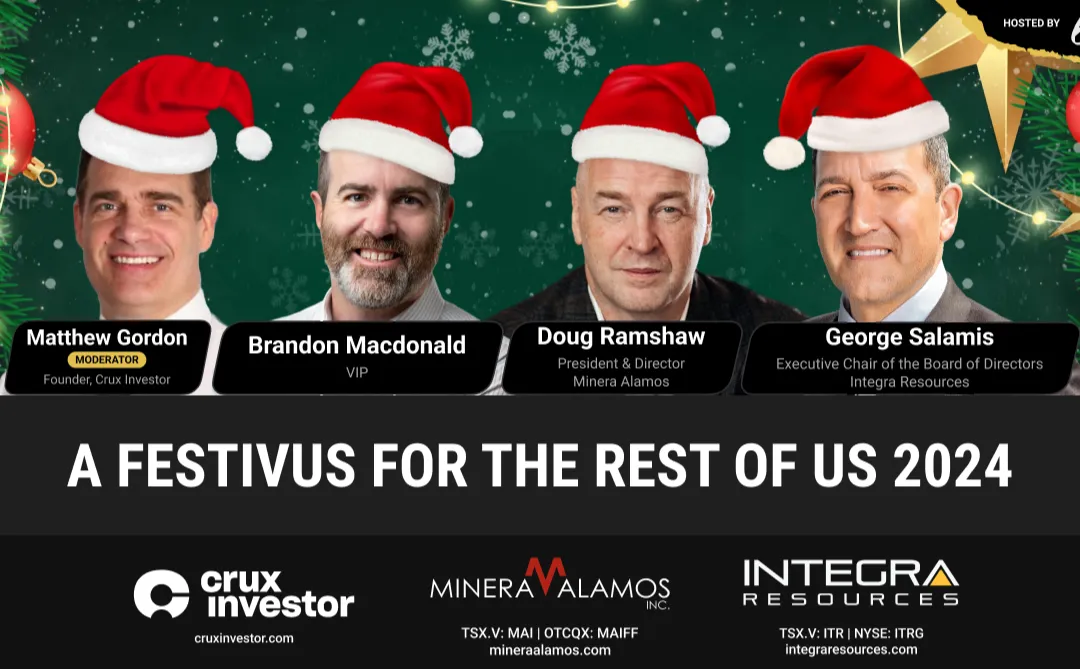
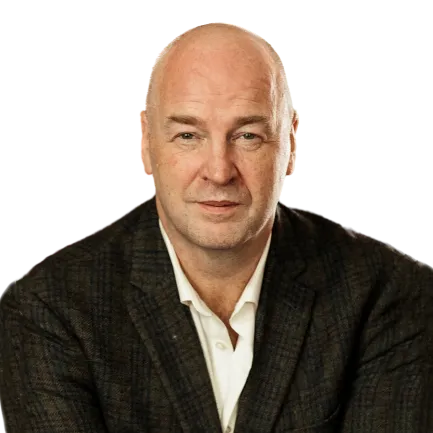
1:00:04 For me, I've kind of learned over the course of time to do something that's kind of akin to Stuart Smalley, SNL deep thoughts with the daily self-affirmations, right? I have to do these things. You know, I'm good enough, I'm smart enough, and doggone it, people like me. The latter might not be true, but I... Yes, yes, yes, steady on. I find myself, I have to do these things on a daily basis just to get myself into that mindset where, okay, damn the torpedoes, full speed ahead. And that seems to work for me. Look, and very few people can do it. Believe me, there's very few people who would want to do it going through what you guys go through on a daily basis. Doug Ramshaw, Brian McDonald and George Slamas, excellent, excellent insight as always.
1:00:51 Real people trying to do real things and create real wealth for people. We'll see You