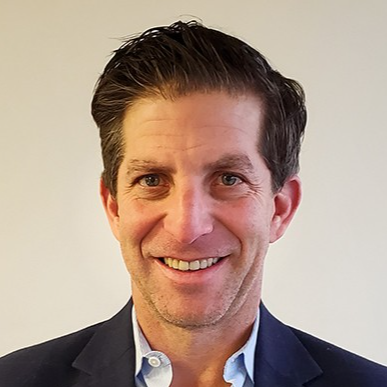
Jamie Levy
President, CEO & Director at Generation Mining
25 years in the financing and management of Canadian mining companies. Was CEO of Pine Point Mining which was acquired by Osisko Metals. Formerly Vice President of Pinetree Capital.
Replay available
Join us for a great event!
Automated transcript · Written by software from the replay's audio. It can mishear names and figures; the replay is the record.
0:09 Hi, my name is Bianca Shola. I'm the CEO of 6 and welcome to the Generation Mining Live Investor Summit. I want to start today by introducing our presenters, Query Nol, Executive Chairman, Jamie Levy, President and CEO, Rod Thomas, Vice President Exploration, John McBride, Senior Exploration Geologist and Phil Walford, lead geological director.
0:32 To kick things off, Kerry and Jamie will be telling the company story, and then Rod, John, and Phil will talk about the geology. At the end, we'll be accepting questions. You can submit your questions in the Q&A panel on the screen. Now, without further ado, take it away, Kerry. Thanks Bianca. And thank you for all attending the event today. It looks like we've got a pretty good turnout. So just to introduce the company to those of you that are new to the story, I think most of you probably know that the Generation Mining acquired a 51% interest in the largest undeveloped Palladium project in North America in July of last year. And we have an option to increase that interest to 80%.
1:21 And that increase is going to probably be completed, if not by the end of this year, early sometime next year. One of the first things we did was an independent resource calculation. We went back to first principles to the original drill intercepts and recalculated everything. And the numbers came up pretty much as they had in the past. So an estimate of 8.6Moz of measured and indicated Palladium equivalent. That puts us in the top tier of precious metal projects in the world. Plus another small inferred of 915,000 Palladium equivalent ounces. And one of the things that makes this project really special is that it's located with excellent infrastructure. We've got highway rail power and there's a town nearby, a mining town.
2:09 We completed a PEA within 6-months of acquiring the project. We announced those results in January and the results are good. This is a mine at any foreseeable Palladium prices. And you can find the results of that PEA on our website if you want to delve further into it. But today we're going to be talking about exploration. And one of the questions we get is, why are we doing exploration when we've already got almost 10 million ounces in all the different categories?
2:39 And here's a good question, because we've only included about 37 or 38% of our resource in the PEA. So we've got a lot of mineralized material that has not yet been put into any kind of a mine plan. So why are we exploring? Well, the reason is, is because we think that there's a really good opportunity to find some very high-grade material on this property. The geology indicates it. The sampling that we've done indicates it. And that's what we're here to talk about today, how we're approaching this project and where we're going from here. So we're going to start off with Phil Walford. Phil is a director of the company, but he was previously president and CEO of a company called Marathon PGM, which owned this. And he's been associated with the project for many, many years. And he's going to talk about kind of the history of discovery on this property. So I'm going to now turn this over to Phil.
3:43 Thank you, Kerry. The project, the main area that we're looking at, was developed from about 1985 to 2010 by various companies, eventually owned by Marathon PGM. It was also worked on by another company called GeoMac Exploration. With GeoMac Exploration, I was the VP of Exploration and with Marathon, I was the CEO, President CEO. So I spent over 10-years on this project and watched it grow. Over 200,000m of drilling have been completed on the project. A lot of that was done by Marathon PGM. And the results of the drilling were significant.
4:30 We expanded what we call the main zone, the main resource, and to the south of it, we also discovered the W horizon, which has got some significantly high grades in it. The other thing that W horizon has had in it, and we could see that on surface and in core, were fragments of massive sulfide deposits, of massive sulfides. And these were quite, looked like they'd been ripped up from a deeper source. And when we assayed them, they were very high in PGMs in particular. So that was something that was significant.
5:05 And that's part of the story that we're going to hear today. The Stillwater took over Marathon in 2010. They paid $118 million for the project. And they sold 25% of it to Mitsubishi for $81 million in 2012. The project was shelved in 2014 due to low palladium prices and a higher capex from the results of the Stillwater work. Savanier Gold acquired Stillwater in 2017 and Generation bought the initial interest from Savanier in 2019. And they can bring the ownership to 80% by spending CAD$10M in 4 years.
5:51 There is a back and right of it. They can, Savannia can reacquire an additional 31% by paying 31% of the CapEx on a production decision. I'm just going to have a quick look at the geology here. Oops. This is the geological map of the Coldwell Complex, which is only really a part of it. The purple zone is where we're finding all the mineralization. One of the, what we found with Marathon PGM was that the Tudak Lake Gabbro, which is the purple, had most of the mineralization in it, although the majority of the lakes are a little different. What's significant here is that there are multiple pulses of mineralization along the border of this complex.
6:47 And you can see there, as Kerry noted before, there's significant resource of platinum, palladium, also equivalent in the Marathon deposit. At Geordie Lake, there's a smaller resource at Sally. And then Boyer is a new zone that John and Rod are going to talk about. And so I'm really proud to be a part of the development of this district really. And I'll leave it now for John and Rod to continue with the geology. Thank you, Phil. So the project is located 10 kilometers north of town of Marathon, which is approximately 300 kilometers east of the city of Thunder Bay, which has an international airport, or 400 kilometers north of Sault Ste.
7:40 Marie. It has excellent infrastructure, As Kerry mentioned, right off the Trans-Canada Highway, there are CP rail lines close by. There's 2 deep water ports on Lake Superior. The East-West tie line from Wawa to Thunder Bay is stabilizing power in Northwestern Ontario with a new 230 kilovolt Transmission Corridor. And we're also 30 kilometers west of the famous Hamel Mines. So we're in a very mining-friendly region with a very skilled workforce. Our land package is over 220 square kilometers. And the geological map we saw earlier were focused on the Eastern half of that, which is the most prospective ground. And we recently acquired a new ground for areas that were undervalued previously.
8:31 And we believe there's a lot of potential, which is the Boyer zone. So there are very limited number of PGM districts in the world. They're mostly limited to Norilsk in Russia, South Africa, the Bushveld, Stillwater in Montana. And there's 1 fundamental piece that you need for any good PGM district. You need a source of magma deep down, carrying little bits of PGMs, rising to the surface for us, and then concentrating for us to exploit. And the Superior region is a new up and coming PGM district. There's a lot of interest in this area. And what happened 1.1 billion years ago, the earth tried to rip itself apart, creating a new ocean. So, and it failed.
9:19 So Lake Superior is actually a failed ocean, and because of that ripping event, it allowed a pathway for magma deep in the earth to come to the surface. And so This is a close-up of Lake Superior region. What we see is a geological map of all the rocks associated with that mid-continental rift. The Marathon project is that big purple blob here on the North East shore of Lake Superior. And the Marathon Platinum Copper deposit is part of that complex. On the South shore, we have the Eagle deposit, which is currently being mined by Lundin. It's a high-grade, small Nickel Copper PGM deposit. Tamarock in the West Coast, the huge Duluth complex with lower-grade material over Northern Minnesota, all the small intrusions around Thunder Bay.
10:10 There's a lot of interest in this area, not bought just by junior companies, but major players such as Rio Tinto, Sabanier, Implatz, Teck, and Fogasto. There's a lot of eyes on this region because it's an up-and-coming district.
10:27 So there's 2 major events for mineralization in the Superior region. There's early events which tend to be PGM dominant, and there's later larger events which tend to be copper dominant, which are the Duluth complex, Beaver Bay complex, whereas the Eagle deposit and Coldwell Complex are the earlier PGM dominant. The difference with the Coldwell Complex, it's huge. The complex itself is 25 kilometers in diameter and recent work with government mapping and geochemistry research with university groups, we've actually been able to increase that fingerprint to 120 kilometer radius. And why that's important is because to create these large PGM deposits, you need a massive amount of magmatic flow to move through these areas.
11:15 And if you have a small little fingerprint, only so much may move through that little fingerprint. When you have something that's 120 square kilometres radius, you know, a lot of materials have been moving through there. A lot of those little bits of PGMs are coming up through our system.
11:32 So this is, again, the geological map that Phil was talking about. We're not going to be able to just talk about 1 project. This isn't 1 deposit that we're working on. Generation Mining has a complex that we're working in. We have 3 mineral resources. We have multiple exploration grounds. The perspective ground, that purple rock that we're looking at on the outside is almost 30km of strike length. We have the Jodi deposit, which is in the centre of the complex. And all that area in between, although it's buried under cyanide cap, is prospective for mineralization as that purple rock dips back towards the centre of the complex. In 2020, we released an updated resource, as Phil said, on the Marathon Platinum Copper deposit, 179Mt at over 7Mt Platinum equivalent ounces. We updated our Jordan deposit, indicated resource at 17.3Mt
12:30 and released our 1st resource on our Sallie deposit, which is 21.8 million tons at 767,000 Pt.oz. And then we have a plethora of exploration targets throughout this package, but we can't talk about them all. So we're going to talk about the Boyer zone. It's a new discovery for high PGM zones, but there's also
12:55 some geophysical signatures there that are really pushing the boundaries and the growth of the complex and where we can actually explore. So this is the detailed mineral research table and you can review this in the report or it's on our website. The key points we want to take away from this are that the tonnage in the Marathon Picket Strain model is dominantly measured and indicated with very little inferred. It is well drilled. It's well understood. And we're moving that to a stability stack. The Jory deposit in the centre of the complex is Palladium dominant. You can see that it's 0.56g Palladium, 0.04g Platinum. So very heavy on Palladium. And then again, our Sally deposit, brand new resource, and it's been put together with about 60 drill holes. We'll get to that later on.
13:51 So we're getting into the geology. We'll focus in on the main marathon deposit. And this is because we have over 900 drill holes in this area. If you visit, it's very well understood from a technical point of view. And it's where we base a lot of our understanding of the overall complex. So on the left-hand side, it's a plan view map. The black outline is the pit shelf from the 2020 PEA. And from top to bottom of the resource is about 3km. The west is about 500m and the plant pit will be about 350m deep. There are 2 portions to our deposit, which Phil alluded to. The Northern 0.5 above that AA line is what we call the main deposit. The South is what we call our W horizon.
14:42 Fundamentally, they're in the same rock type, It's the same timing, but there's different processes that are occurring where in the Southern 0.5, you get really high-grade PGM zones. Everything is dipping back to the West at about 35 degrees, which you can see on the right-hand side in the cross-section.
15:01 And in 2019, our last drill program, we for the first time drilled the down dip extension of the main deposit in holes 537 and 538, in almost 100m thick intervals of mineralization.
15:16 And so it's still open to depth, and now we know the direction to go after it. Raj, do you have anything else to add? Yeah, so if I could just point out on this slide, that purple zone that John alluded to. So that we show here is dipping moderately to the west, but really that's just an interpretation. And as John will show on subsequent slides, there's potential for that dip to flatten out actually into a series of steps like features, which may have provided a structural trap for massive sulfide mineralization to accumulate. And as Phil mentioned, now we do see evidence of bits and pieces of that massive sulfide material in the upper parts of the areas that we drilled. Perfect, Thank you. So moving on to geology, I won't bore you too much with the geology.
16:05 I'll go through the fundamentals where the number 1, the green rock is our basement. It's a Archean intermediate volcanic. And this is important because it is hard, it is distinct, and it is represented in geophysics separately from our intrusions. And the purple rock, which is our two-ducted gabbro, number 5, which hosts the chalcopyrite puritite, PGM copper mineralization, intrudes along that boundary and conduits in tube-shaped in this stepping pattern and depositing the chalcopyrite and mineralization. You can see the resource mineralization is right to surface, whether you're at the Marathon deposit, Sally deposit, Geordie deposit or Boyer, we can see this at surface and they extend down through these conduits.
17:00 And they're intruded as brushes moving upwards from depth. Looking at the mineralization, so again, what we're looking at is a plan map of the Marathon deposit. Again, the red box outlines that Northern portion, the main zone. The purple box outlines the W horizon. They're distinctly different. And what the contour map underneath is that foot wall boundary, because most of the mineralization is controlled as in tubes or 0.5 bowl shapes along these boundaries. The main zone here in the red box is a north-south tube and it's a channelized, whereas the Southern portion occurs in multiple little tubes and trend back to the West.
17:53 And we see that both in Palladium and in Copper. And so our mineralization is bounded along in the Tuk-Tuk Lake Gabor along the footwell boundary, but it's also coincidence, they trend back to our fault structures. So just like in the big system the magma from depth rising through a structure to get to surface, you need it in the local deposit scale as well. You need a weak point for that mangum to move through. Luckily in the Coldwell complex, we have a plethora of fault structures, both radial and concentric faulting that allow this mangum to move through. We can vector in on these structures to help guide us towards mineralization.
18:40 And that is also a benefit, we're trying to go down dip on these mineralized zones, because not only can we use geophysics, which most projects use, we can also have a directionality to it to our fault structures, which most projects don't have. Focusing on the Marathon deposit Again, the red zone is the mineralization in the Marathon deposit. The purples, the mineralization in the W Horizon, they're fundamentally different. We're in the main zone. It's still Calcapyrite, pure-tite, seminated ore, but it's very thick and continuous. So our drill hole last year, 533, we had 96m at 0.45% Copper and 1.22g total PGMs.
19:31 And it's open and it will call the Charnelis zone to the north over here, which we won't have time today to talk about, but the deposit is open in that direction. And there's a keel shape here, which goes along the spout plane, which is also open to depth, which we know because of holes 537 and 538 of last year's drilling. Whereas in the W Horizon, we have these high-grade PGM intercepts, people 306 as to 10m at the same grade, proper grade as the main zone, 0.45%, but has 21g per tonne Palladium, almost 10g per tonne Platinum and a little bit of gold. And again, we see this over 1.2 kilometres straight length of these high grade intercepts. But the mineralization is slightly different. It's dominated in calcopyrite and boron, it's these high copper
20:18 sulfide phases. Rod, do you have anything else to add?
20:23 Yeah, so I'd just like to point out the scientific literature has characterized the W horizon as being a zone of extreme PGE enrichment and has some of the highest grade PGE intercepts in the world. And current ore deposit models suggest that similar to Norilsk, so that huge volumes of magma would have needed to move through the system, perhaps as much as 10,000 times of what we actually see in the Marathon deposit itself. And as John mentioned earlier, the feeder zones through which the magma moved and which were responsible for forming the W horizon and the main zone at Marathon, they appear at surface as fault scarps or cliffs. So Although there are in excess of 1,000 drill holes on the property, only a handful have drilled below 600m. The next few slides show that the deposit is open at depth, but the deposit itself has only drilled off to a few hundreds of metres. So just bear that in mind going forward.
21:21 Thanks, John. Looking at more detail on the mineralization, again, we're looking at purple zone, the W horizon. And what we're seeing here is the distribution of Palladium specifically. So purple is anything over 2 grams, but it goes all the way up to 70 grams per ton over a 2-metre interval. And again, we can point out on the slide where hole 306 and hole 304 from the 07 drilling was. And what we notice is that they are forming in these bowls, but they're also open to depth and trending along the fault structure and have not been defined by drilling. So they're open-ended. And this is what we're going to be focusing on this year.
22:07 Looking at the same thing, Palladium distribution in our Marathon deposit is, this is more of a Copper-dominated portion of the deposit. There are still very good PGM grades throughout it. Mineralization is open in this Charnelis zone at the top and with the recent drilling in 537,538 is open down these conduits here. In 538, vertical depth is less than or just about 600m. We are getting higher-grade intercepts further down within the conduit. So 0.5% copper, but over 7g per tonne total PGMs. PGM, Platinum to Platinum ratio in the marathon deposit is about 3 to 1.
22:56 Why do we think we can go down dip to find more higher-grade material? It's because we have 3 dominant styles of mineralization throughout the complex. Most of the projects have one, maybe 2. They're dominantly disseminated ores. You might get little pieces of early massive sulphides. But because we have this really high-grade W Horizon material that's running 56g per tonne, 70g per tonne material, the way to form that is, as you have all this magma moving through a very narrow conduit, carrying little bits of PG, those PGMs need sulfur to be sucked out of the magma. The magma is picking up sulfur, that sulfur is sucking out the PGMs in 1 pulse, and then it moves up the system and settles out.
23:51 The problem is Sulphur is very heavy and wants to sink back down through the system. It will sink back down and keep recharging and recharging and doing this over and over. In typical deposits, you end up with disseminated ores, very typical to what our marathon main zone is. But with the W Horizon, it has to occur dozens and dozens of times. And that recirculation is upgrading
24:16 your Sulphur source at the base further down. So the red outline is our marathon deposit and the source for this upgrading, this extreme upgrading is further down within this conduit. We also have, we will get to this, but at the Sally deposit have identified these upgraded massive sulfides
24:39 there. So we have the system, we have the direction, and we know the system can create it. So how do we go and find these? So, because we know they exist, we have the model that suggests that they should exist. It's in 2018, we partnered with a European group to develop passive seismic. And in 2018, we did our first survey. And for the first time, we're able to see below the 500 meter depth. And what we came up with was this image of our footwell contact, which is green, and it's in that stepping pattern. And then the red is the representation of our gabbros.
25:25 And the stepping pattern isn't unique to us. It's what you see in most or all conduit intrusion systems, because as it began, you have to move magma from depth to surface, they're using structures and there's a vertical and horizontal component to these. And once it's great that you can move magma through, but you need physical traps, just like a river to deposit these. So you could have a bend, a 90 degree bend where magma slows down at that bend, depositing it out of the sulfur. You could have a narrow conduit going into a wide void, just like a river going into a lake. It's gonna drop everything as it hits that lake. Or because sulfur is so dense, once it's upgraded, it will sink back down and clogging pipes.
26:17 So the image on the top right is an idealized cross-section of an evolved magma conduit. So if you have an open system with massive amounts of magma and sulfur source, you can create deposits like Nearest. If you have a lot of sulphide accumulation and back draining down the system, you can create deposits like the Eagle deposit. The Eagle deposit is just across the lake from us within the same system. The larger, the rift around Superior creates high-grade massive sulphide deposits. There's no reason that their occurrence can't occur in the Coldwell Complex, down dip from what we see at Marathon. On a side note, the passive seismic also identified these high velocity targets that have a similar velocity to our eastern gavros.
27:09 These are at depth and are secondary structures to the main direction to our marathon deposit. And these are additional high velocity exploration targets. We won't get into today, but are there. So what our exploration 2020 program looks like is we're gonna do magnetic telluric surveys at the Marathon and Sally deposit. They're ongoing right now. The Marathon survey started last Friday. We're looking to do a test survey for mobile metal ions and to test the response. This is a great technique to identify which conduits we want to look at and could be mineralised or prospective ground up at Boyer.
27:54 We're going to drill 5,000m to test the MT targets at Marathon and potentially Sally. And We're going to focus a lot of that drilling around the high-grade near-resource mineralization at the Delta Horizon around hole 306. Then we're going to expand exploration through boots on the ground, early prospecting mapping at our undervalued Boyer zone. This is an area where we identify those high-grade PGMs, low-copper zones, other counties previously missed, and work in that area to add to that pipeline of early exploration. So we have a spectrum of early targets, target generation to feasibility within this complex. So this is again, is that Palladium distribution map of the W horizon, whole 306, we have the down to the extent of it. We're going to focus on here and try to add to that near resource and follow up with hopefully more intercepts of high-grade PGMs.
28:57 The magnetic tiller survey we're going to do at our Marathon and Sally project. Another Mekong Rift project owned by Transition Metals and Implots, their Sunday Lake project, conducted an MT survey back in 2018. They drilled those targets in 2019 and 2020 and successfully intercepted mineralization.
29:22 We know the MT survey does work in the Mekong River in this environment. We can see here that there's that 600m depth line across the page. Their targets are all the way down to 1500 meters where we have a lot of room between that 600 and 1500 meter depth to explore for these higher grade materials. And you can also see that the mineralization is occurring on one of these flats. Again, it's the physical trap that's isolating these. Yes. So, this is an excellent example of the exploration potential west of that, of the marathon deposit. So here again on the right-hand side, there's no drilling below that 600-meter level, yet we have that well-developed feeder zone responsible for all that mineralization near surface in the Marathon deposit itself.
30:17 The geological setting in both is very similar. And that step-like feature
30:23 which underlies the Marathon deposit itself may well repeat as we go below that 600 meter level. So that from our perspective, it's an excellent area to explore and hopefully the MT will light that up in terms of massive Sulphide targets.
30:42 Moving on to our Sally deposit, The red outline is the mineralization for the current resource. It is hosted in the Tudak Lake Gap just like Marathon. It's Kaka Pirate, Puritite dominant interstitial material, just like our Marathon deposit. What we see in that drilling is we have a prototype unit, the blue unit here. It's an early intrusion and right on top of it we have high-grade PGM mineralization. 5g, up to 10g per tonne material sitting right on top of it. So in 2014, what we did is we went beyond the coal complex into the footwall, pushing that boundary to look along this contact of that blue unit.
31:32 And what we came up with was grab
31:35 samples of massive sulfide. So hold our grab sample on the top right there, 8054,188 grams per ton material, 9% copper, a little bit of nickel. And then again, 5603,230 grams per ton PGMs, 5.5% Copper, 1.4% Nickel. And in 2017, we successfully drilled our first massive sulphide intercept along the contact of
32:01 this prototype unit, where we get up to 4.3g per ton Palladium, 2.6% Copper and almost 1% Nickel. So it was proof of concept that these high-grade material does exist in the complex. The next question is where is it preserved and where does it accumulate?
32:22 So our targets at Sally is in 2019, we conducted a passive seismic survey again, because it was able to see below that 500 meter depth. And it came up with a velocity target, which is the big red blob here. It ranges almost from 400 meters to 1500 meters depth, and has a lateral extent of 1200 meters. It is the same size, shape, direction,
32:53 and velocity or density as what we see for our prototype, that blue unit. And if you compare it to Eagle, it has the boot shape. It has this vertical component neck and there's a 90-degree bend and it flattens out. And what they found at the Eagle deposit, just to the south of the lake, is it has this vertical component with a flattening and right at the flattening is where the sulfides are getting trapped because you have back draining and that's where they're getting stuck. So this is our main target for drilling
33:26 this anomaly. We're not gonna do this blind. That's why we're doing an NT survey in this area. It's gonna help pick which areas to target first for conductivity for those massive salt flats accumulating there.
33:42 And then our coal law complex boundary where For the last decade, we've been very fixated on the limitations of that geological boundary on the outside. But because of the success we're having at Sallie with intrusions going beyond that boundary, with massive sulphides being beyond that boundary. We have staked a ground north of our Boyer zone and we did that because the Eastern Gabbro, including the 2 Delhite Gabbro which is mineralized, has a very unique magnetic signature.
34:16 And so it's the blue in that image to the right. And what we see is this extends for 5 kilometers past that traditional boundary. And so the MMI, regional prospecting, other geophysics, this is a great opportunity to really push those boundaries for additional exploration targets.
34:37 So the highlights of the project are that this isn't just one little project we're talking about, it's a complex. We have 3 resources, a plethora of exploration targets, a lot I couldn't even fit into today's talk that are all excellent targets. We're in a minely friendly jurisdiction with wonderful infrastructure. We have
35:01 multiple, our mineralization with multiple deposits that's open along strike and down dip. We're moving the Marathon project towards feasibility. The Coldwell complex has 3 styles of mineralization. We're not just looking for 1 deposit style, we're looking for large disseminated deposits near surface. We're looking for reef style, high-grade PGM zones like Boyer or W Horizon. And we're looking for potential massive sulphides at Sally, Marathon and any other conduit because there's so many, but those are the ones we're focusing on right now. And this new large footprint at the Delhi Horizon is really pushing where we can look and opening up real estate for new discoveries.
35:42 Jamie, to you. Yeah, Thanks, John.
35:50 Just to go back on some of the stuff that John was mentioning here, and we just kind of jumped over it. When Marathon was sold to Stillwater in 2010, it was a copper project with a PGM credit. Stillwater, for a couple of years, completed an internal feasibility study and had attempted to put this into production. They had completed very little exploration. All the money, the $30 million, $40 million, was all into permitting and into moving this project into production stage. Again, when Stillwater had it in 2013, it was a copper project with a PGM credit. When we acquired it in 2019, obviously with the pricing of palladium, it was around $1,200. When we optioned the project from Sabani, it started to become a PGM
36:43 deposit with a copper credit. Today, as we can see in the prices, it's a complete disconnect from what it was back in the day. So it is an entirely different project, even though it's the same rock in the ground, but the economics are different. Where copper used to be 40 or 50%, now it's PGMs upwards of 50 and 60% as the revenue going forward. And one other thing that we just jumped over as well, the project had, the majority of the drilling was done around the marathon deposit. Since that time, Stillwater did acquire some land. John stakes some land for us when we originally acquired the project to the north of Sallie or to the northeast of Sallie. So there's been a bunch of ground that hasn't even been prospected yet. So it is a massive complex, like John said, 220 square kilometers, and the majority of this drilling has been completed in the Marathon Deposit, but very little has been completed since 2010.
37:35 So I just wanted to kind of make sure we realize that there's a big exploration potential on the project, not only down dip of the project of the deposit, the Marathon Deposit itself. Just going into the management team, we can jump on. Drew Anwal just came as our chief operating officer, a bunch of years at Detour. Placer, Domen and Barak, Rod Thomas who you've talked about you can see his resume looks pretty good. John has been on the project since 2007. Tabitha has been with the project a little bit longer than John, but they were Stillwater employees and then Tavani employees and they came over when we acquired. Patty and Brian are on the accounting side. Brian is a good CFO. And Kerry, I think you're better talking about yourself. Why don't you get through that if you can? Just for the people that don't know.
38:23 Yeah, so, well, I just like to say that I've founded 6 companies in my career and 4 of them made it into production. So I, in this, I intend to be the fifth, just say that. So Kerry's quite modest. So He's had a great track record here. Our independent board, Phil Walford, who spoke earlier, was the president of this original Marathon PGM when it got taken over by Stillwater for $118 million. Then he went off to Marathon Gold. He put that into a pre-feasibility study. Now he's retired from that and wanted to come back to Marathon, so he's back on our board. Paul Murphy was just on the board of Continental that got taken over by the Chinese. Al Lemos is the chairman of that, and he's ex-head of mining of PwC, so he's had very good track records. Steve Reifert, geophysicist, very good to have on our side, especially now that we're doing some geophysical work. And Cashel Meager is our last addition. So we have the independent board with the 4 of them here. Cashel Meager is Chief Operating Officer of HUD Bay and likes this project as most other people do or should.
39:37 Just going back to the economics of the project, we just jumped over it. That's not really the purpose of the call, but the purpose of the call is obviously the exploration because we want to show everybody that this project isn't limited to this deposit and we hear other companies talking about exploration upsides and massive sulfides and feeder zones or whatever all the terms of the day are, we have all of that. We also have almost 9 million ounces of palladium equivalent in the ground. We have a good safety net or I'd say a fabulous safety net relative what the other exploration companies have out there. I think we jumped over the PEA numbers earlier but we acquired the project in the spring. We put out a PEA or sorry summer of last year, the beginning of this year, we put a PEA numbers out. They almost seem boring right now because palladium prices were at $1275 when we did the PEA and obviously they're closer to $1800 or $1900 now so the numbers will change. But even at $1275 palladium, We had an after-tax IR of 30%, an MPV of $870 million.
40:35 At the end of the year, we just did a quick little snapshot of what it was in $1,920 palladium, which is I think where it is today, and with a MPV of $1.5 billion and an IR of just under 46%. I think the payback was just over a year and a half. So really good economics. The Palladium cash costs, we can talk about this as a gold equivalent because even though we can't, but where you see a gold company with an all-in sustaining cash cost of $586 US, and you can see where Palladium is trading at now, Those are very good numbers to have. Going forward, our share structure here, we have 130 million shares outstanding. We have just, I believe, around 14 million in the bank. Our market cap, I don't know if we're around $0.40, but call it around $50 million.
41:22 Aira came in the last financing at $0.52 along with the Cisco and Zebra. So you get to have a pretty good shareholder base. So Banny is still the largest shareholder and when we bought the project from them or optioned the project from them, we gave them $3 million in cash and $3 million in shares. They asked for shares, not all cash, so that's how they got their 8.5% ownership here. So Kerry, myself and a bunch of board of management make up that 7%. I think we're probably a little bit higher than that, but I think that's a good number we could talk about now. We have a very good registry, I believe, and I think this is, as we mentioned earlier, I mentioned earlier, we have 14 million in the bank. That should be enough to take us through to the end of 2021. So by that time, we don't really have our Gantt chart up here, but timeline would hopefully be that we could have a feasibility study complete the first quarter of 2021 and some exploration news out all through the summer and fall coming up.
42:27 So I think that was it, Kerry. You have anything else to add here other than I think very good presentation Rod and Joan thank you and Phil. Nope. I think we should probably get to the questions here before we get into the question period then. Can you still hear me? Yeah. Great. Okay. My computer's acting up. Jamie, can you? Great. So, here's what we're going to do then. Kerry, I'll read out the questions to the group and then why don't you guys tell me who should answer what. But we have a number of questions here. Let's start from the top here. From Paul, What is the price of palladium forecast to be in the future? Are there any other palladium mines in the world coming online?
43:21 Maybe, Jamie, do you want to answer that one? I think Carrie's better on that one, I think. Go ahead, Carrie. I think Carrie should sign off for a moment here. You need to sign off? Okay, so where do the questions go? The questions, what is the price of palladium forecast? What are we using? We haven't quite decided on what we're going to use for the feasibility study. I'm still up in the air. It'd probably be around a 2, three-year trailing average. The price of Palladium, the biggest guys out there are Johnson and Mathey. They've stopped their forecast just because of COVID right now. From metals focused to Johnson and Mathey, they mentioned that palladium is going to be in a deficit this year. It's how much of it is going to be in a deficit.
44:06 But I guess it just comes down to the demand for cars right now, because that's the main usage of the palladium right now. So I don't want to put a number out there, but I would say somewhere in the $1,500 to $2,500 range. I know it's a it's a big range there I just think it's how how well the demand is going to come for cars and how care how fast we can find a cure for COVID right now so I I know it's a big range but I think that's a comfortable range. Question here from Imrose. I can answer. Hi, will we get a recording later? Yes, you will. You will get a recording very shortly. My hope is that you should have this in the next 24 hours or so. It's going to be on the Generation Mining website across their social media channels. Or if for whatever reason you can't find it, feel free to reach out to Jamie or myself, and we will make sure that you get it.
44:59 In terms of, oh, here's 1 that's interesting, coming from Pete. Can you give us your best guess as to what Sibani will choose to do once you release the definitive feasibility report? Jamie, do you want to try that one? Sure. For those of you that don't know Sabene, Stillwater, they're the largest platinum producer in the world. They're the second palladium producer to Norilsk in Russia. They do almost 4 million ounces of PGM plus gold a year. So they're a major company. Their market cap is hard to find out, but I think it's around the $8-10 million range U.S. This project, depending on the feasibility numbers, would probably be doing somewhere around the 2-300,000 ounces of palladium a year, depending on the numbers. So for them to buy back in or to earn back in and only have 51% of it, and the terms that we believe are expensive for them, I would believe that they'd either walk away or buy us out.
46:05 Those are my top 2. And then the third would be that they would earn back in. Hopefully that answers your question. Kerry, do you have anything to add on that? No, that's good. Perfect. Question here from Brian Fowler. He says, you appear to be mostly interested in the Bamu's deposit and the Sallie Lake deposit. Do you have any plans this year to do more work on the Geordie Lake and or incorporate the Geordie Lake deposit into future mine plans? The Jordy deposit has a more of a copper-dominant mineralization and what we're focusing on right now is PGMs. We have a lot of projects and a lot of targets to go after. We can't do them all in 1 year. And so we're focusing them on your resource marathon deposit and then the potential we see to advance the salary.
46:59 So the majority is there. It's just taking a backseat this year because of other projects. To move forward, we'll look at the economics and see if it's viable to move into our reserves going forward. Robert Rubley wants to know what area will be the main focus for future drilling? The 5,000m we're planning to do this year is around those high-grade down-dip mineralization at the W Horizon and the main feeder conduit, focusing on the MT targets and high-grade. And then depending on the MT survey at Sallie, hopefully drilling something in that area, but that's to be determined.
47:46 Great. Hugo wants to know, is your goal to have the Discovery brought into production by you guys or to be bought out? Sorry, Carrie, I'm going to answer that. Our plan is to build this. That's why we hired Drew. I don't think Drew's on the call because he was on our last webinar. As I mentioned earlier, sorry I didn't get into all of Drew's background, but he has built mines before and a lot more complicated mines than this. So we're ready to build it. He has a full staff to build. The feasibility study hasn't officially started yet, but he's doing a bunch of trade-off studies right now. So Our plan is to build it. And if someone wants to take us out along the way because the economics are fabulous, so be it. But as of right now, we're partners with Sabani and we're putting this into production.
48:41 Great. Gurbani asks, what is the exploration budget for 2020? What is the cost associated to the feasibility study? And are you contemplating raising cash in the next 6 months? Okay, I'll answer that. The expiration budget right now is somewhere in the $1.5-$2 million range. It's a small budget for right now. That's about 5,000 metres of drilling with some of the MMI work that Rod and John were talking about and some magnetotellurics work. The budget is getting devoted, the majority is getting devoted to the feasibility study, and those numbers will be released soon, but we anticipate that being the 3 to 5 million dollar range.
49:30 And I guess the last question is contemplating raising money. We know we have 14 million in the bank, so we're fine for money right now. You know, if we had a couple dollar share price, then we'd probably think about raising some money, but around here, we're not raising money. We don't need the money. And we have more than enough cash to get us through to what we believe is budgeted to the end of 2021. So almost 18 months. Great. Kevin and Elizabeth both asked, can we see the presentation in PDF format? I've gone ahead and uploaded the presentation in the handout section here. So if you want to download it, take a look. You can find it in the handout section on the right hand side of your screen. Next question here from Andrew. He asks, Why is the market cap only 50 million for a deposit so large? Do you all agree that the market is giving Genem no love?
50:25 Kerry, you answer this because you've had sleepless nights about this. Yeah, thanks. Sorry, my internet went down for a few minutes. We lost power of my house. Sorry, I'm looking for that question now. Why are we trading for so cheap when we have such a large resource? Well, I can't answer that 100%. And I think part of it is that we just got to continue marketing and tell the story. But one of the things I have noticed is that the us and the other Palladium companies have not responded like the Gold companies have to the to the rise in price. And that's despite the fact that Palladium has outperformed gold significantly over the last few years. But that said, it is a precious metal and I think it's time will come. And I think that as there's a lot of activity in our sector and as more discoveries are made and there's some M&A activity, I think you're going to see a situation where the sector really starts to shine. And it hasn't happened yet.
51:27 It's had its brief moments. It had a good time in January when the price almost doubled in the 0.25 month, but then it came back down and away. Question here from Corbani. Bloomberg shows that Cisco is still a shareholder. Is that the case? Are they still sellers? They're still a shareholder. I cannot tell that they're selling or not selling. I cannot answer that question. I hope they're not selling, but they're long stock. If they want to sell, they can sell. So we have a relationship with them, but That's all I can say. I'd like to add to that.
52:18 When we were buying this project back in early 2019, trying to get financing for it, they were our first order, a lead order of 2.5 million dollars and an $8 million financing. And that was really good of them to do that, to support us. So, you know, if they're, if they are selling and I'd see that they have sold a bit of stock, if they're selling that, that's their right. They're probably taking some profit, but they were there for us. And I want to acknowledge that. Question here from JP. I think parts of this have already been answered, but in case people are signing in late, we'll circle back. He asked how much cash you have, which is answered. What is the monthly burn and What is the time horizon for future exploration? Jamie, do you want to try that one?
53:07 The cash burn would be different if we're doing exploration and feasibility work. So I can't really answer that question. I mean, There's a burn of head office in sight, but obviously it goes up a lot higher when Drew has his feasibility team worked out. If you want to shoot me an email and I can get your breakdown if you want that, and I'll get someone in our accounting side. I cannot answer that, but as I mentioned to you before when we've budgeted our you know 14 million or so that will take us through to the end of 2021 is kind of the best answer I could give you right now without telling you that we're spending $250,000 this month we're drilling in the next month will be 500 because we got the context bill for the MT survey. So it kind of I'm just averaging it out for the 18 months.
53:54 But if you want you can email it's on the website here you can see it there and I can get you a better answer if you like. And sorry the second part of the question was? Hey it's deleted now so. Oh no it's under published. The second part of the question was, it's deleted now. Oh, no, it's under published. The second part of the question was, did you did you do? Ah, monthly burn and the time horizon for further exploration? As of right now, we have a budget again that we mentioned for the 5,000 meters of drilling and the MMI work and the magnetotelluric work. So that's our budget for now. Things can change as our MT targets will come back from Quantec. And if something looks very, as I like to call technically a very red block that looks like it needs to be drilled we've made allocate different funds to to drill the targets because right now we have certain drill targets that we're aiming at. And again, things can change.
54:53 We could pivot on that very quickly. It's nice to have that nest egg of cash in the bank account. Yeah, the MT could be very compelling. Great. A question here that says, is the PGM economic mineral Braggite? So that's a complicated question because the PGM suites in the deposit are variable depending if you're in the main zone or the W Horizon or Sally. And those are one of the tools we use to understand which upgrading systems we have and these high-grade sulfides we have deeper down. Bronygate does exist in the deposit, but the main zone is undoubtedly sulfide phases and arsenides and bismuthides, whereas the Delnicarizon is undoubtedly sulfides.
55:47 That distinction leads to our understanding of this deposit. So it's a complicated suite of PGM minerals. Great. I believe we have over 70 platinum metals, sorry, minerals in the deposit. That's true. And there's actually, we've discovered unique minerals to the Coldwell complex that don't occur anywhere else. So we've discovered Coldwellite, Marathonite. Do we have McBrideite yet? No, you can't name it after yourself. Who says? Okay, all right, Another question, similar sort of vein, pun very much intended.
56:34 Is Marathon Deposit Genesis similar to Sudbury in Canada or Norilsk in Russia? So go ahead, Rod. No, no, please go ahead. So Sudbury is very unique to the world. It's a 1 in 1 billion year event. That's a greater impact from a meteor. And so it remelted everything. So, no, it is not like Sudbury. It is closer to the Norelsk model. And if you remember the image I showed you of the cross-section of an idealised plumbing system, Norelsk is in there. So is the Eagle. There is a spectrum of deposits and you can go from small high-grade deposits to massive, seminated, upgraded deposits. And so the marathon is in there and there's opportunity to move in both directions as we go down there.
57:25 Are you going to do a downhill EM survey? Victor wants to know. So any drill hole, we drill electromagnetic targets from surface or MT work or whatever. We always do borehole EM on it. Yes. Great. This is 1 for you, Jamie. Comes from Andrew Dellick. He says, given COVID limitations, what are Generations Investor Awareness plans over the next 3 to 6 months on both the retail and institutional levels? Kerry, myself, and I guess everyone here, John, Rod, Phil, we're doing webinars as much as we can wouldn't much as a meeting because we can get out there are we did have some care and I think it was to go to europe and late spring of today I got canceled and that the big beaver creek conference that everyone like to go to colorado was canceled so looks like a or or or stuck to resume calls right now so not good for the air miles but it's we're we're we're going to be stuck to phone calls and Zoom calls for the near term until we hear anything from on the COVID case.
58:40 And public's up at site, John is taking care of that site. On another note, John takes safety very seriously. I don't know, John, if you wanted to get into that or not, but he has a COVID policy for all our visitors and anybody else that comes to site, contractors. Yeah, so we have, like Jamie said, we have a COVID policy in place. We're following it very strictly. We're working with the Town of Marathon. There are no COVID cases in Marathon. There's I think only 4 active cases in Northwestern Ontario. We're in phase 2 already. So hotels are open. Hair dressers aren't yet, obviously. But we are working with them to be able to manage to go to the field. We're starting with the MT survey, we're starting and we're working with companies that take COVID very seriously. They provide their policies and Quantech, who's on site right now doing the MT survey, has a very good safety record on doing a great job to minimize interactions with the town and to respect the COVID issue.
59:46 Hey folks, I recognize that we're entering into overtime here. We have a handful, maybe 5 or 6 more questions. Are you guys game to keep going or should we save these for another time? I'm good. All right. And we go into overtime. So next question here is coming from, let's take this one from Pierre. Could you differentiate what you will achieve from MT that you did not with EM? So We do have airborne EM surveys. They're regional scale. They pick up the Eastern Dabro, give us some targets. They also pick up a lot of our key in mineralization, puritied zones, high rate zones in the foot wall. So they're not great for direct target base.
1:00:33 They help us guide us to mineralize zones, which we've done. Ground-based EM is very difficult to do because of terrain, forest, without cutting lines, which is expensive and timely. The MT survey gives us a 3D model, which we can integrate into a passive seismic, our gravity models, our magnetic models. So we're looking at this not as single lines, but on a regional basis following those conduits. And most importantly, we have great depth penetration beyond 1500 meters, which we don't get with traditional MT or sorry, EM on such a large forecast scale. Great. Park Jansen wants to know what has the response been from the local communities and are there any First Nations involved with the project?
1:01:28 I'll start with that. The town of Marathon is the home to John McBride. The town, the few times I've been up to site, Kerry's been up there, Rod's been up site, and I'm sure John could speak it, and same with Phil if he's still on here, but the town is 100% supportive of a mine getting built here. There was a pulp and paper mill that closed down, I don't know, 4 or 5 years ago. Hemlo was a big employee. They're starting to do contract mining, so they're starting not to wind down but slow down. The town is doing well right now because the home construction site for a new power line that's going through on top of our property, but the town is supportive of this. The relationships with the First Nations, John and Tabitha, myself and our team has been in constant contact with the First Nations.
1:02:20 We believe that there's good relationships with them. So we're in constant contact with them. John, would you have anything else to add? I just I think the relationships we've built over years, before generation, that we've maintained, and with generation coming in, they've done a wonderful job to continue to grow those relationships, especially moving this project back towards production. Question here from Alex Santa Maria. What are your expectations as far as mine financing? I know you've discussed royalty sales, take or pay contracts, etc. What sort of financing's will you be pursuing? And what kind of timeline for these financings once you complete the feasibility study?
1:03:11 Do you want me to answer that, Jamie? I got that one. Yeah, so thanks, Alex. Did that get deleted? I can't- No, it just moves over to published. Okay, sorry, I don't know how. Sorry, Carrie, there? Sorry, Carrie, there. This program works. I'm going to throw it to you, Jamie. I think you have a better internet connection. So just to repeat the question, what are your expectations as far as mine financings?
1:03:59 You've discussed royalty sales, take or pay contracts. What sort of financings will you be pursuing? And what kind of timeline for these financings once you complete the feasibility study? I don't know if it was mentioned earlier. I don't know if Carrie could hear or not, but There is no streams or royalties on the main deposit. We haven't looked at that angle, but we know that's something we can certainly look at. As of right now, we haven't really actively looked at the project financing. We're waiting to get the economics. And I think once we have the feasibility study out, the economics will dictate on probably the best way we should get this financed. And as we know from the PEA, the numbers were quite fabulous. So we don't think financing this project will be an issue. I think it's the best way to do it, which is the least dilutive for our shareholders, is what we want to do. But first we want to look at the sequencing of the mining. There's obviously a lot of variables in here, but it will be something we're going to look at when we have a better idea of where we're at in the feasibility study. So it would be something that we would look at probably around the same time that we have a production decision, which would probably be right after we have the feasibility study. So hopefully all that will be worked on in the next 6 months.
1:05:15 Speaking of, I have 2 questions for you that piggyback well off of what you just said. First one is, what is the timing for the release of the feasibility study? And the second one is, what would you ballpark as the timeline to get into production? Carrie, The feasibility study will be hopefully out at the first quarter of 2021. I don't know if it's going to be January or March, but that's our timeline, first quarter of 2021. An aggressive timeline for us to have for production is if we have all of our ducks in order and if we have government support and First Nations support we would hope that the permitting could be a little bit shorter. The governments are looking for shovel ready projects, they are looking for projects that will bring economics to the area.
1:06:02 This will create a lot of direct jobs, a lot of construction jobs. The Town of Marathon needs the jobs. Northwestern Ontario needs the work. Obviously, we know that the governments need the tax revenue. So it's a win-win-win for everybody. A bunch of work has been done in the past for permitting. We're not looking to take any shortcuts. We're just looking to get this over the line. So to answer the question, we'd be hopeful by the end of 2023, we could have the commercial production. Excellent. Rehashing something that I know was brought up before, but just in case folks missed it, Hugo wants to know who are your institutional investors? Well, I'd bring the page back up, but the Sabani, which is, I don't know if they're an institutional, but they're another corporate.
1:06:54 As mentioned, I think they're an $8 billion market cap company. Eric Sprott isn't an institution, but he should be. So he's a large shareholder. Cisco Mining is an institution, but they're another issuer. But they have a big share base. Lucas Blondin through his family trust, Zebra, again, not an institution, but bigger than a lot of institutions, is a shareholder. And then we have some other people, whether it be RBC or whether it be Dundee, some of those other funds are involved there, but they're not reported because they're not over 10% at any point in time. So Those are what we have. And again, once Carrie answered that other question, that's where we need to get some more institutions into the name is kind of our plan. And that's why all this marketing is what we're trying to do.
1:07:44 Excellent. Question here from John Mason. He says, Sunday Lake, Impala and Transition MT success is a great analogy and very real. Who is your MT contractor at Marathon? I think we mentioned this earlier, but we've contracted Quantech to do the work. Perfect. A question here from Nermina, who's asking how advanced are the environmental and hydrogeology, hydrogeology, there we go, studies. How advanced? John, you want to go with that or I can? Sure. So, Téléloblanc, our environmental manager, is running our environmental program in the EA process.
1:08:35 And they've done extensive work back in the Stillwater days over the years to get up to an EA level understanding. And they've continued to do the monitoring over the years and the transition into generation. There are, we are continuing to do those work, that work, and, but they are well advanced. Excellent. So there are no further investor questions. I have one last question for all of you before I pass it back to you, Jamie and Kerry for the final word. What are each of you most excited about for the next 6-months? I'll throw to John to start. The drill program and then T-targets. Obviously I'm an exploration geologist. We have people in the field and we're going to create some excellent targets and hopefully have some success drilling some massive sulfides.
1:09:27 Yeah, so I'm with John and, you know, despite the fact that it's over or almost 1,100 drill holes in the property, it's 200 square kilometers. Most of those drill holes are in existing resources. So really very little on the exploration side. So there's huge exploration potential here. What say you, Jamie? I agree with him. That would be nice. And maybe to be able to go for dinner up at Marathon or go for dinner anywhere sometime. But let's get a drill. Let's get a drill hole first. You have to come out to Oakville, Jamie. Exactly. Great. Okay, here's Kerry. I think that won't be a mystery for another day. So without further ado, thank you everyone for your questions. Thank you everyone for attending.
1:10:21 For anyone who didn't get a chance to submit a question or another question has just come up, feel free to send along all of your questions to either Jamie, his email and phone number is on the screen right now, or you could send it to us at friends at 6 dot com that's 6 IX dot com and we'll make sure that Jamie and Carrie and the rest of the team get it. Without further ado, Jamie I'll throw it to you for the final word. Thank you, Bianca and the team at 6. You did another fabulous job and thank you for everybody that joining in and stayed that extra 11 minutes. We really appreciate it. We think we have a very good story, a very compelling story and I just hope everyone keeps an eye on the stock and stays safe.
1:11:08 Great. Take care everyone. Okay, thanks everyone. Thank you.
Follow Generation Mining Limited into a list and get an email when it puts out news.
President, CEO & Director at Generation Mining
25 years in the financing and management of Canadian mining companies. Was CEO of Pine Point Mining which was acquired by Osisko Metals. Formerly Vice President of Pinetree Capital.
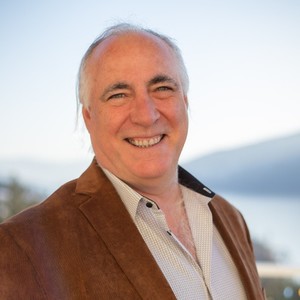
Chairman at Generation Mining
Co-founded several successful mining companies over 35 years including Wheaton River, Thompson Creek and Glencairn Gold. Former editor of The Northern Miner Magazine.
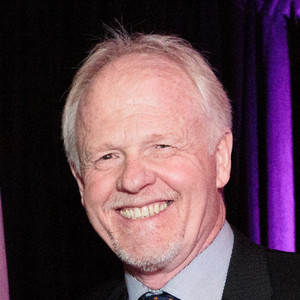
Vice-President, Exploration at Unknown
Exploration Geologist with 40 years experience in Canada and abroad. Former Exploration Manager BHP Minerals Eastern Canada and General Manager of VM Canada. President of PDAC 2014-2016.

Director at Generation Mining
Geologist, President and Chief Executive Officer of Marathon Gold from 2009 - 2019. Was President and Chief Executive Officer and a founder of Marathon PGM Corporation which sold Marathon palladium project to Stillwater in 2010.
Senior Exploration Geologist at Generation Mining
Has been working on the Company’s Marathon Project periodically under several operators since 2007, and continuously as project geologist since 2013. He obtained an MSc. in geology from Lakehead in 2010.