Transcript
Automated transcript · Written by software from the replay's audio. It can mishear names and figures; the replay is the record.
0:03 So good morning, good afternoon, or good evening, depending on where in the world you're logging in from today. I know at least a couple people in the room are signing in at their nighttime, so thank you so much for joining us. I would appreciate folks, as always, from joining across the world. Lucky enough to have on with me today, Blake Highland, CEO of Lithium Ionic. Blake, how are you today?
0:20 Good, thank you. Here's how today is going to work, just for the folks in the room. So we're going to start with a presentation, really introducing the company and getting people in the room up to speed. I know there are a lot of people in the room that are seeing the company for the first time. If you're more familiar with the company, we will be getting to questions afterwards. So as soon as the deck presentation is done, I've got some questions based on the deck, but then we will jump to questions that were submitted by email in advance. But this is also an interactive event. So there's a chat button at the bottom of your screen.
0:51 You can ask questions at any point during today's event. We'll try to get to a couple for sure. We are targeting about 30, 40 minutes today. So if for whatever reason I don't get to your question, likely we just ran out of time, I'll make sure that the Lithium Ionic team gets it afterwards. They'll be able to get back to you either by phone or by email, depending on what you entered on registration. There's one more thing that I'm gonna throw at you and that's there's a meeting request button at the bottom of the screen. You can press that at any point during today's event. As a viewer, You can request a meeting with the team. I'll try to get you connected with them following today's event. This is also being recorded and will be available for replay midday afternoon Eastern time. It'll pop into the exact same URL you're on right now and also go in your email box and be posted on Six's YouTube. That's all the boring stuff for me, Blake. I'm eager to get into the protein, so I'll throw it to you to run through the deck.
1:37 Thanks so much, Romeo. And thank you, everybody, who's making the time to come on. As Romeo mentioned, morning or night, I really appreciate people making the time to hear about the project. And we're excited to talk about it. So Lithium Ionic, for those who don't know, trades on the venture exchange, TSX Venture under LTH. This is a Brazilian hard rock lithium story and quite far advanced at this point. We're looking forward to the next 6 to 12 months ahead of us and continuing to rapidly grow, I think, one of the more important hard rock projects in the world right now. And so without further ado, we'll jump into some of these slides here. There will be forward-looking statements in here, I'll mention that in the cautionary notes, but ultimately let's jump into the good stuff. So I mentioned the next 6 to 12 months, it's extremely important, But a little background on the project first. So Lithium Ionic is Brazil-based, Minas Gerais state, which is one of the most important mining states and mining jurisdictions in the world.
2:44 Well over 100 years of mining experience, over 300 projects operating in multiple commodities. You know, again, representing one of the most important jurisdictions in the world. I think Brazil, often I get asked, is this a good place to work? Is this a place where you can actually move projects forward? And I often respond that Brazil is a very big country with a lot of people, and it really depends where you are, I think, and what type of communication and interaction you're going to have to have with the supporting stakeholders. And Minas Gerais has continued to represent one of the most progressive and well thought out jurisdictions to move projects for in the world. I'm Canadian by background, it's been known forever as a great mining jurisdiction. I would put Minas Gerais right up there with some of the best in the world.
3:34 And that's really what's led us to be at a place where we've been able to advance a project so quickly, be in the permitting phase that we are now, and ultimately looking to move to the construction and production phase into the next 12 to 18 months. Great infrastructure as well in this jurisdiction we have hydroelectric power, ports nearby, paved roads, water access, pretty much everything you would look for. A community that has had and continues to grow lithium mining expertise. And so there are people that we can tap into in the region expertise that we can use. Hugely important in getting these projects together. And obviously them having some familiarity with this type of project is huge. And when I talk about that, I talk about groups like CBL and Sigma that are actually producing around us right now. CBL, over 30 years of operating experience, exactly the same style of mining and processing, very similar to what we're looking at.
4:33 A DMS plant that's been operating quite successfully for over 30 years, and now more recently, Sigma Lithium bringing their production online shows huge scalability to these deposits as well. Great proof of concept around us and also gives communities familiarity with these types of projects. So obviously we're spoiled with having such great neighbors and huge opportunities around us, and they continue to support an excellent jurisdiction in the SRI. And then to our project, I mean this is a near 70 million ton combined project, MNI, which you know I credit our team, unbelievable exploration team that took this from you know Discovery Hole in April, May of 2022, all the way to a place where we're, you know, a significant resource scale, multiple deposits through full engineering, and now ultimately looking at permanent in a four-year timeline is incredible. So the team's done an unbelievable job.
5:37 And I mentioned some of that engineering. I'm going to point to our feasibility study and some of the upside as we go through this, but highlighted on our Bandera project is one of our deposits, the one that we've gone through feasibility first, significant NPV of about 1.5 billion, over 60% post-tax IRR, almost a 19-year mine life, and a very low CapEx to a pretty excellent production rate. So we're very, very excited about those numbers and looking forward to continuing to advance the project in the coming months. So why Brazil? I mean, I've talked about that a bit and well, a lot. Minas Gerais is fantastic. This is a bit of a closeup of where we are. You can see where some of the port access is. We look at Porta Vittoria as potentially one of the best options for us right now to ship our material by truck, the paved roads that go directly to site, a town right beside us that could certainly support that and access material to shipping containers known from there.
6:38 And then we've used sort of our costing shipped to Shanghai from those ports as well. Unrestricted trade on lithium, very, very important. Lithium for a long time in Brazil was almost treated like uranium shipping, and the government has stepped in and reclassified that material to make it more suitable for global trade. And really, you know, the lithium value continuing to be recognized by the state and by the country as one of the most important up and coming commodity jurisdictions in the country. So ultimately continues to be well supported, well supported for shipping and ultimately, Brazil is a pretty unique jurisdiction in that you're a trusted global trading partner with over 100 years of experience sending material worldwide. We're friends with everybody.
7:24 The material could go anywhere. So it's a very unique location to be working in and we're very lucky to have a project in such a great place. To the specifics of that, I mentioned it earlier, hydroelectric power right to site, paved road access, paved right to port, a town of almost 40,000 people, not far from the project, very supportive of the project and continuing to be somewhere where we can draw expertise from. And that's on our Bandera project near Esfahey up to the north. We have an asset near Salinas as well, town of 40,000 people. I mean, these, in a lot of other jurisdictions, again, I mentioned I'm Canadian, these would be big towns, big cities that we would be drawing from.
8:09 So it's hugely helpful to have that kind of infrastructure and capacity. And then on the right, you can kind of see the layout of those projects. On the lower portion of the screen, you can see where Bandera sits in relation to CBL and Sigma. We'll zoom in on that for sure as well. You can see where some of our exploration upside and future potential drilling can be. You can see where the footprint of Bandera represents the high NPV and internal rate of return that I mentioned earlier. And then you can see CernLiber Atlas to the west has been moving their project forward. And then further to the north are Bacia Grande project right next door to the Kalina assets of PLS, one of the largest lithium mining companies in the world that transacted on that project next door to us. So very, very exciting to have so many big projects, big companies continuing to look at this region, understand the value of Lithuania Valley and invest in the region.
9:11 So zooming in again on those main assets, we're going to focus primarily on Bandera and we're talking about the economics of the project and the engineering stage and what's coming next. But we'll look at everything here. So Bandera representing a significant portion of the resource is flanked by both CBL and Sigma in that Itinga region. And ultimately that leads us to a secondary sort of draw from location and neutral auto, which is a smaller resource that we can continue to grow, but ultimately look at it as a potential option to source more material from, did not include it in our economics yet, but certainly an interesting high grade showing that we can grow from. And then our Utrilato,
9:56 sorry, our Beche Grande showing to the north, right next door to Kalina I mentioned, You can see Salinas in the top left portion of the map on your screen. This is where Pilbara made a 400 million US transaction on Kalina next door to us. That was a 70 million ton deposit and we have roughly 20 million tons extending to the northeast. So really the same deposits, the same rocks extending from southwest to northeast and we continue to kind of own and operate the deposit going to the northeast. Very exciting area And we'll continue to grow that. It's not considered in the economics we have now, but we'll push towards engineering in the next phase or look at optionality for that project with such a good partner next door.
10:45 I think go to the next one and maybe we'll go on to the team. So I won't spend too much time on myself. Geologist by background. I started with the company when we went public in 2022. Came off of primarily gold and base metals in my past with good exploration history and development of projects before was one of the co-founders of the Troyless Gold project and some people might be familiar with that. It's 1 billion dollar project in Northern Quebec that's been having its day in the sun as gold continued to move upwards and hold at levels that we all believed could get there for many years and is now sitting sort of near that $4,000 an ounce mark. It's starting to see the life and value that that team has been pushing forward and creating for so long and so very, very proud of having been a part of that and that team that continues to push forward on that project.
11:37 I point to Helio Diniz on here, one of the co-founders of the company, managing director in Brazil, has been a part of Brazilian projects for over 50 years, moving projects forward to Minas Gerais for well over 40. I'm one of the most well-known, respected exploration geologists in Brazil and his times in Miranda, you know, all the way through Strata and beyond for many years leading exploration South America invaluable to finding more and developing the project on this team. Mike Westendorf we brought on for Copper Mountain, I'm gonna go through everybody forever but again you know I think looking at how we've been able to advance the engineering so far forward. We brought on a team of operators led by Mike that have a long history of understanding how to move these projects forward for the right cost efficiently.
12:29 And certainly Mike brings that operational background that we were looking for. Beyond that, I won't spend time on every single person here, but I think what I would point out is a team of executives that are very driven with the experience to move a project like this into production, and a board of directors that certainly has the experience that we have been looking forward to move into a production as well. And more recently bringing on Clovis Torres, who was a Brazilian native, who ultimately is a CEO of Belo Sun right now and understands very well how to get projects permitted and move into the next stage of development. So very excited to have added him on in recent weeks and we'll continue to look to strengthen the company over the coming months.
13:15 And speaking of strengthening the company, a big part of that in the last year, year and 0.5 has been bringing on key technical people with strong lithium experience as we looked at how we were going to engineer this deposit, what costs were going to be. And we were very fortunate to get the opportunity to work with a group called Artec. Artec led by the founders of Brian Talbot, Nick Raleigh, and then obviously Rodrigo Rosso rounding that out. This is a team that was responsible for building the Sigma project next door to ours. They just finished building a project in South Africa before they started on to work with us here in Brazil. We know Brazil very well. Probably some of the best efficient builders in the lithium space in the world.
14:07 And ultimately we were very lucky to be able to bring on a team like that. And their impact on our economic studies was seen right away and continues to be extremely helpful as we push this thing forward. It's having that practical expertise where they've done this so many times before, you know, over 25 years of experience building DMS plants and operating projects is just a huge help to us with massive global expertise. And we're very happy to have them on board. And they also brought with them a lot of experience and expertise in offtake discussions and obviously a Rolodex of names that we've been able to benefit from. So very glad to have them on board and really excited to continue to work with them as we move to sort of nameplate production. Touching again a little bit on some of that and what Artec with Mike and the team were able to piece together from a feasibility study. You know Here's a small footprint project with high returns.
15:04 We're using 177,000 tons of spodumene concentrate production per annum as basically a starting point that we think is conservative and realistic. We've tried to be as conservative and realistic as possible. In fact, when we updated this study, we built a lot of conservatism into it and still managed to lower a lot of the costs. So we're very, very proud of that. Almost a 19-year mine life. Again, we added a lot of resource to this last version of the fees. Very low cost as it remains a DMS only project that produces a concentrate of 5.2, 5.3. So again, one of the lowest cost producers in the world as we continue to look to push forward. And it really is helpful too, to continue to see Sigma and CBL operate at these costs too, so we can benchmark clearly against next door neighbors that are in the exact same rocks, doing the exact same thing, different mining types on both projects. We're able to draw from both of those.
16:03 And we're able to look at, you know, Sigma that was built very recently and compare our CapEx to that and see that we've built in that conservatism compared to what they certainly talk about publicly. So Very excited to have a project that looks, you know, at that 26 month payback. We we use fast markets pricing in this project. And so we you know, we try to be as realistic as conservative as we could be. We weren't using today's price necessarily where we are, but we will value from a much higher spodumene price in the market right now. And yeah, we're excited to bring this project into what we think is the next big cycle.
16:46 I won't spend too long outlining flow sheets and diagrams. You can see that we're advancing engineering, you know, over 65% complete on detail engineering. I think that's even further along since this slide was done. The team is doing a great job of getting real costing and sourcing, geotechnical drilling done, our long lead orders are starting to be placed. If anybody's following the story, you've seen that we've reached out and started to lock in some of the long lead items. As we continue to lock in financing for the development of the project, we'll continue to order some of those long lead items. It's very helpful having a team that knows where to source these things, source low cost items. It's ultimately a really good position to be in.
17:32 As we get into next year, the idea is to hit the ground running.
17:36 So as we tighten up some of the capital costs and get some of that refining done, we ultimately want to be in a place when permit hits that we can jump right into getting all the items we need, start working, doing groundwork or earthworks, and start developing the project as fast as possible. And we still believe on our timelines that end of 27, start 28 is a realistic production timeline. And I think, you know, anytime you can have a project that's, you know, discovery hole from 2022 to, you know, looking at being in production in 2028, a 5 to 6 year cycle around that is incredible. And I think the team's doing an unbelievable job and again, speaks to an unbelievable jurisdiction.
18:15 Just touching there on the last piece, we've done a offtake agreement primarily led by Yawa and then ultimately filled in by Grand Chen as well for roughly 170,000 tons of the material that we are proposing to produce. That leaves a little bit of room for some offtake opportunity. And we do think there are some scalability to the project and upsides. So there's still some room there. But ultimately, what we saw here was an opportunity to work with one of the most important fully integrated refining companies in the world that works with CATL, Tesla, you name it. They provide material
18:54 in Yawa. And in front of us was an opportunity to look at an offtake that had 1000 dollar floor, no discount to market pricing, full exposure to lithium upside, kind of the ideal look at something that we believe our lenders really appreciate, that de-risks the volatility of the lithium market. And I think anybody who follows it knows that that can be quite volatile.
19:21 Starts to give some, a level of confidence and security to those lenders. It was a huge part of the reason we took it, but also, you know, partners are important to us as well. This is a trusted partner that has some of the most important buyers as well behind them. So once we saw that opportunity and then it came along with a $20 million prepay facility towards advancing the project and project financing upon development. This seemed like a no-brainer. So we're very, very proud of it. I think it's one of the better off takes in the world, not just from a junior explorer. And we're very proud to move that forward. And I'd point to our team and our relationships with Artec to be able to get those across the line.
20:06 So touching a little bit on this, I won't spend a lot of time on charts, but ultimately, we continue to be an extremely low cost project. If you look at some of the economics I touched on earlier, you know, $191 million to build a project with a 1.5 billion NPV and our feasibility study is incredible. It's how we represent such high IRRs and high NPVs.
20:31 We look at these costs and we have great confidence in them, again, because we can turn to our neighbours, we can look at CBL, we can look at cost or stigma. We know that these benchmark prices hold true. We're in line with those both from an underground producer to the north and from an open pit producer to the south and north as well. So we're very, very confident in our numbers and again, very helpful bringing on developers and operators and in groups like Artec that have seen so many of these projects come into production, have seen real costs, understand what it means to get these things built. And so we can kind of hand on heart, really appreciate that these numbers are going to hold true as we move into the next phase of development.
21:15 Bit of a breakdown to it, I'm not going to spend too much time on that again. I've talked about it. It comes from the place where there is a group that has that background. We have locally based workforce, owner operated underground fleet for development, production mining, simple process mine design. I mean, again, just a lot of what we've worked on is keeping this as simple as humanly possible, as low cost as possible, small footprint, low impact, surface impact. So ultimately,
21:45 This is continuing to prove to be a project that can produce at a very, very low cost with the offtakes in place and with the low cost of production. We know that if making $1,000 a ton means this company makes money on every ton it produces, and that's extremely important to our lenders and should be for our shareholders too. So very, very exciting.
22:07 Yeah, so if you look at our cost curve, and again, we're using C beyond sigma, it's extremely important. You can see how we're operating in the lower half of our 50th percentile cost base. Again, I think it points to high quality of the rocks,
22:22 very low in deleterious material, DMS only meaning, you know, a gravity circuit. We're not doing chemical flotation. This is something again, that very unique to this region. It's part of what makes the Lithium Valley such a strong opportunity. And again, as a point of the volatility of the lithium market, I think we look at this and say, what projects do well in any commodity? Well, it's high grade, high quality, low cost, that works in any commodity in any jurisdiction.
22:52 And Bandera continues to show its place on that cost curve and ultimately being extremely low cost and high return. So if we look at a little more detail on today's pricing, Spodumene, I think we've seen a correction in the market. I talked about this last time Romy and I were chatting, if anybody heard that. I think to me there has been not necessarily the excitement back in the lithium market we've seen yet to see the equity market jump in and get excited over battery metals yet.
23:22 But what we have seen is a correction to the supply-demand curve a little bit here. I don't think we're done yet, but I think it's more appropriate to be here at the $2,500 per tonne spodumene or SC6 than we were when we were looking at $600 a tonne. And conversely, when it was $8,000 a tonne, that was sort of a bit out of the line with what's probably realistic on the high side too. So I think where we are now as a company is seeing $2,500 a ton as a really realistic and fair price point
23:54 for SC6. I think we are going to see that lift in the near term in the next year, year and 0.5 to what, over $3,000 a ton. But we'll see. I mean, that's speculative. But for us today, at today's prices, and we think they're stable given where demand is going, that shifts the project into even stronger economics. You know, over $2 billion post-tax NPV, over 100% post-tax IRR. You know, it's a payback of about a year. This is an incredible project in any commodity and any opportunity. So, You know, I think we've seen that correction in pricing. I think it's going to hold true there for a while. We don't need extremely high pricing as a low-cost producer, but this is probably a fair and realistic level to look at. So we're very excited about what's to come here.
24:47 Yeah, and I won't touch on this too long. Again, it's just you look at, you know, the cash flow numbers are pretty spectacular on a very low cost project to build. It shows you the sensitivity to pricing in the spodumene market. I think if you look at anywhere you're doing $200 million of annual free cash flow on a project that costs $191 million to build, it's a spectacular opportunity. And how, if you're using today's pricing, you can see
25:18 how in just over a year it can be paid back. And even if we see pricing slip back, that you know, where FastMarkets was predicting that it's still an unbelievable opportunity with a two-year payback. So extremely, extremely exciting time for us to bring this project online. We believe we're gonna be one of the only projects that's able to kind of come online in the next year, year and 0.5, and ultimately will represent extremely important material to demand that continues to grow.
25:48 Yeah, if you look at where we sit on a global scale, there's a huge re-rate opportunity. You know, I look at where we sit on a P&L basis and our CapEx basis. I mean, these numbers speak for themselves where we sit on a global scale. But I would point to these and then look at where we trade in the market and say, OK, well, what's the re-rate potential? If you're somebody listening to this story for the first time, you're hearing about this project for the first time. I think today we're trading at about a 0.1
26:18 P to NAV multiple and our peer group anywhere from 0.8 to 1.0 in a production scenario. So I look at these numbers that set us apart as a globally important, economically viable project. And then I look at the re-rate potential of the project and it's incredible the opportunity that's in front of us. And I think anybody looking to invest in this space should look at this project and be very, very excited about the coming 18 months.
26:48 I'll touch a little bit here on the Icinga properties. We've talked about regional proof of concept. So I'll keep flicking through here a little bit. But it does that last slide gives you a bit of a layout where everything is, how close things are. You get a sense in the light blue of where we sit, CBL in the yellow right beside us. And I'll show in the next slide what you saw, how close we're talking about. And then certainly when we look at where Sigma is operating all around us, I mean, this is truly the newest up and coming growth, hard rock location in the world for lithium. And
27:27 the Lithium Valley continues to be open for exploration and development. It's really growing to be, you know, at Pilkingorah or Greenbush's type jurisdiction. And I think the next 5, 10 years are gonna be extremely important for all of these projects to come online.
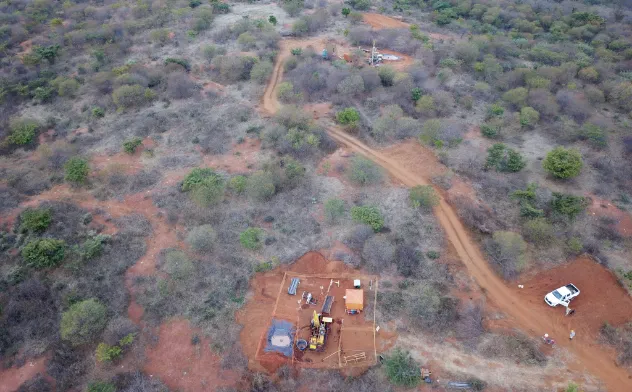
27:45 The next slide, just showing exactly how close we're talking when we say we're operating very close to CBL of mine. You can see some of the waste piles from CBL to the north of where we were drilling at the time. It's also a good opportunity to look at how the layout of where we are is simple. Scrub brush, it's not the Amazon, it's not high relief, There's not a lot of difficult
28:07 lay of land to deal with here. So really again, just a fantastic opportunity to be in an area where a small footprint project is going to have low impact and ultimately be able to get up and running as quickly as possible.
28:23 So catalysts going forward, I mean, we've been hitting these as fast as possible. I think getting through full feasibility study with a significant size resource in a very short period of time, about a four-year timeline. We're now into basic and detailed engineering, which is advancing very well, well past 65% completion as I highlighted earlier. And we're into a permit process. I think the permit process is going very well. The team's done a really good job of communicating well with the communities, both Air Swaii and the Bawi communities around us, the traditional communities around us, making sure that we're doing things the right way, going through the process the right way. We've engaged on a federal and state level. We're waiting for feedback from the federal level.
29:09 Soon, we believe in the next few weeks we'll have that and it appears to be quite positive from the work we've done. And that triggers again, a state process that has been extremely well supported. And we believe we're doing things the right way, and ultimately doing outreach the right way, being a high quality corporate operator in this jurisdiction. So, as we continue to push through the permit process, it's a key point, obviously, that people are looking for from us. We're very excited. We think we're very close. And ultimately, that would allow us to push this project into construction. And then ultimately commissioning by end of 27, start of 28. So again, I highlight that a company that came into existence in 2022 drilled some of its first drill holes and discovery holes in 2022.
30:00 Being in a place where we believe we can be producing by end of 27, start of 28 is unheard of. So credit the team and a phenomenal jurisdiction. Yeah, really strongly supported by the streets. We have about 30% institutional coverage. We've got good long-term sticky shareholders that want to be in the story. They were there at the beginning and they continue to build out our institutional coverage. Management Insiders own about 20% of the company and the rest we take as free flow to the company. So it's important to have long-term, sticky shareholders. It's also important to be a tradable stock and we try to keep volume up as much as possible. Really well covered by the street. You can see Claris, BMO, Canaccord, Desjardins, Cormark all covering the story with target prices much higher than where we are now, sort of plus $4 a ton, so, or $4 a share. So very, very exciting.
31:01 We think the re-rate on this project is humongous, obviously, just by our peer group and where we're going in the next 18 months. And so we're very, very excited to continue to build value for those shareholders. So I'll leave it there and Romy will let you jump into questions, but thank you very much for everybody for listening. Awesome. Appreciate it, Blake. Now, I know there's a lot of questions in the chat. I just got a couple that I'm going to run through first, and then I'll jump into those just so we can catch a couple before we close today. But again, 2 reminders in case I don't get your question, I will send them to the team. And you can also request a meeting by hitting the request meeting button at the bottom of your screen. I want to start with, obviously, bold, fun claim in the deck that you are Brazil's next major lithium producer. Love it. Bandera Project sits, as you said, 800 meters from the CBL mine, which we've been pulling lithium out of the ground since 1991, and just a few kilometers from Sigma's Grotto de Cirilo.
31:56 Could you walk us through what neighborhood proves about the rock, or what it says about the geology you're looking at? I think kind of everything in a lot of ways. I mean, we're very fortunate to have that kind of proof of concept around us. And, you know, they operate in different ways. CBL has been an underground project for 35 years and now Sigma pushing to larger open pit and both showing to be quite successful and work very well. And ultimately we're able to draw from that with our project. We get real-time costs, real-time data. Having a more recent project like Sigma helps us kind of be confident in our CapEx numbers and our operation numbers. And it also builds expertise in the region. It brings all kinds of huge sort of jurisdictional upside.
32:42 And with that, we also get feedback on what a recovery is going to be like. How do these rocks respond to DMS? We're not doing case studies here. We're not trying to prove everything in a lab. You can look at real-time bulk sampling that's going on all around you. It's one of the best pilot plant opportunities you can possibly have because you have 30 plus years of experience to see how these rocks are going to behave, how the geology is going to work. You get to go, you know, we had the opportunity to be underground and see how some of these pegmatite veins even behave. So you're not being, you get a lot less surprises from a geological point of view that way. It's incredibly important. And then I would just point to a lot of what we're going to continue to see in the next coming years is, okay, this rock's come out of the ground and okay, you can ship it and here's your cost. How does it respond when it gets to conversion?
33:39 And CBL is a great opportunity for us in that they've been actually converting this material to a small scale, to hydroxide and carbonate for those 30 years as well. So we get a really good sense of how these rocks are gonna behave. And I think that gives a lot of our potential offtakers and offtakers that we have now confidence in how these rocks are gonna behave when they get to the converter. So, I mean, it really, it gives you a bit of everything. I mean, it's amazing to have those case studies around us. We're very, very fortunate. No, awesome. I know one thing, the September 2025 feasibility study, pretty unique. I've seen the opposite a lot, but it actually, the numbers got better, the DPO looked. CapEx dropped 28%, 291 million, while the IRR jumped from 40 to 61%.
34:26 So what changed, I guess is the big question, between the 2024 study and this one? Yeah, look, we had a study that we thought was strong, but ultimately, I touched on a little bit earlier, when you can bring on expertise in a company, and we did that with our tech, we did that with Mike, we brought on people that just had so much, so many gray hairs that would already been formed from going through this process before and understanding what it takes and how to build these things. And really in the end, our cost savings just came from simplifying the designs, knowing where to source materials, having real-time costs, and just having a lot of those little expertise in tightening up conveyors, using less material. In fact, something that's always hard to sort of to come across when you put a study like that is we actually built more conservatism into this mining process.
35:20 We tightened up pillar spacing and certainly truck sizing and all that kind of stuff. So we actually built in more conservatism and came out still with a lower CapEx and lower or roughly the same operating costs. And that just, I think, speaks to a team that wanted to put something on paper that was really realistic from an operational perspective, but then being able to take real numbers and real experience to build or look at how the build of the project was going to go. It brought, I think, our CapEx back in line with our peer group, and ultimately was why we were able to drop that cost. So it's exciting when you get to work with people that really have the dirt under their fingernails to know how to operate projects like this. I appreciate it. And yeah, for the hundred or so people in the room, that is unusual. Usually those numbers go in the wrong direction.
36:08 Feasibility. One thing I want to talk about is on the cost curve side, Bandera sits like you showed, below the 50th percentile globally at 39.50 per ton LCE. For underground mine, which usually carries a cost penalty against open pits, it's a surprising place to land. Where do you think, in layman's terms, simple, where does that cost advantage actually come from? I mean, a lot of places, and I think that the cost penalty is built into it. I mean, we look at, we have real cost data from Sigma next door, and we have real cost data from underground to the north of us in CDL. And so it's nice, we kind of fall sometimes in the middle or sometimes just over, depending where they land. And that's a great, huge advantage, for your first question, having those kinds of benchmarking ability next door to you.
37:00 But there's so many factors. I mean, having so much infrastructure in place already, being in a place that you can access simply, you can fly in, fly out to, you can drive to, access to ports, all that kind of stuff. And then that local workforce that remains efficient, knows the business well, and it's a low cost jurisdiction in general to be working in. So that helps dramatically. And then of course, not having to go through chemical flotation is just a massive cost savings for us, both from capex and operating costs. So, you know, we look at it and it's really nice to be able to show that we can be low cost and that we are low cost and then have those, you know, companies around us that are proving it in real time. So it's all very easy to defend and what makes, I think, the Lithium Valley one of the most important hard rock or important lithium jurisdictions in the world.
37:55 Yeah, no, I appreciate that. I want to talk about your off-take agreements for a second because I know in March you signed the binding five-year agreements with Yahoo and Grand Chan, basically covering all your planned production, as I understand it, with 1000 dollar floor, no ceiling and no discount to market. That's not something I personally see very often. So I'm curious to the degree to which you can share with me, how did those negotiations play out? Yeah, it's not something I think anybody sees very often. I think it was a reason we move forward. I can tell you we weren't necessarily shopping offtake at the time. We were always listening to opportunities and there have been ebbs and flows to what the offtake market looks like, given the volatility of lithium. And then when a potential partner like this that has the history and the suppliers that want the material from them.
38:50 I mean, they ultimately globally bring lithium to every major lithium consumer in the world. And I think in the end, what happened here was, understanding demand, understanding what they needed to grow their business and where they believe pricing was gonna go. They felt very comfortable selling a floor for us. It was something that once we had in place, you know, It's extremely important to our lenders and to the project. It means we make money. I thought when we were gonna see floors, we were gonna see ceilings. They didn't ask for it. And I thought when we saw floors, we were gonna see big discount ask, and that wasn't the ask either. So this was, I think, an aggressive bid to lock in some of the most, you know, I think high quality material in the world. And we're really excited to be able to work with a partner like that. You know, our team was over there meeting with them a couple months ago and listening to their expansion plans and where the business is going. And it's just it's so exciting to be there and in such a sort of progressive market for lithium and battery supply. So, you know, excited to work with these partners and very, very happy with what we were able to accomplish from an off-date perspective.
40:05 That's great. I got one, this reflects a question in the chat, also 1 that came in over email. Obviously the big gating item on the timeline is the LAC construction and operation permit. And I know Minas Gerais has a reputation for moving faster than most jurisdictions and you said the state processes will advance, but just for folks wondering or in the audience today, people who follow the story, where does permitting stand today, if you could kind of summarize it? Yeah, look, it's always a dangerous game to pick a day and the calendar. It's tough, but we have expectations and we're well through the federal process. It's being reviewed now. We expect the feedback in the next few weeks to be positive and help us finalize that. We're the first group that really went through that federal process. And it's an area, you know, Lithium Valley is, it's young, it's a young jurisdiction. Main is dry is well developed from commodity perspective, But this area is kind of starting to see some of this type of mining for the first time. And I think rightfully asking that companies do the work and communicate well with stakeholders and engage well with communities. And we've been really open and excited about that opportunity. So, you know, an FPIC on a federal level really does that.
41:21 It helps you work with the federal agencies to make sure that you're representing the communities well and that you're communicating well what your plan is, what your impacts are going to be and how you're going to, you know, be a good corporate citizen as you work in these jurisdictions. So the federal process, I think, is going well that way. It's always how we plan to operate. So it's been kind of nice to work with them. And that'll feed right into the state process. And the state has already publicly talked about being supportive of the project and moving it forward through their CO-PAM committees. And so, we wanna be on in August, CO-PAM vote on state level. It could be September if the FPIC takes a little bit longer, but those are our kind of timeline expectations, which ultimately, all of them look at us being in a position to have our permit this year.
42:11 And that is just, I just, again, I can't highlight enough from Discovery Hold in 2022 to having a permit in hand or even being this far along in permitting by 2026 is just an incredible pace. I think anybody who works in this industry or invests in this industry knows that that's somewhat unheard of and I think one of the huge upside opportunities for our project. So team's doing a great job on the ground, communicating really well with our stakeholders, and we look forward to finalizing the permit in the coming months here. Awesome, appreciate it. I hope that answers people's questions about the permit in the chat. I had one question, but I think somebody in the chat framed it better than I did. So I'll go with their version, which is basically what's the next news that's going to impact share price? Obviously, you guys aren't just sitting on your hands waiting for permitting. So what's the next catalyst or piece of news that you think is really going to have an impact for shareholders?
43:00 Yeah, like we've run on, I think, you know, 1 or 2 key people here. We're going to continue to do that round of the team. I think it's always important. We've got, you know, financing ahead of us, the permit ahead of us, obviously finalizing engineering, long lead items. We are extremely busy on the ground. We're in a bit of a slow equity market right now. I don't know if anybody is really loving the market we're in at this point, whether you're not being bold or slow. Not today, no. It's been a bit of a malaise. But yeah, I think Those are going to be things that we continue to hit the market with. We've got a couple other key kind of projects, catalysts that are coming that I can't really speak on now, but we're very, very excited about the coming couple of months here and to continue to build value. And then, you know, we sit here, the market will come when it comes. And ultimately, you know, we look at massive, massive re-rate potential as we move into construction and ultimately production. So, you know, I think it's hard to find projects with these kind of economics with the potential re-rate like ours. So, you know, I think it's a, I look at this market as a buy opportunity for us. So not to be overly promotional, but it's an exciting time, I think, for us.
44:11 I appreciate it. I got 1 about the market and then I'll get into just a couple specifically in the chat. But just generally speaking to the lithium market generally, obviously lithium prices have staged a pretty serious recovery over the past year. Not that the markets are giving the equities really credit for that yet. But given your offtakes leave you exposed to price, how are you thinking about the lithium market that Bandera is going to be selling into once you have production? I think we're, I mean, it's funny. Yeah, I talked about it earlier. And I think you and I have talked about it before. I mean, I just think we had a correction here. We had a two-way correction. We had a place where pricing got out of control on the high side, and that drove, I think, a lot of projects that were great to sort of hit the market, sort of flood the market with these ideas. And then, you know, the whole EV kind of boom and bust, or whatever you want to call it. I mean, the truth is the EV market continues to grow. It grows exponentially every year. And now you tap into an industry like AI and battery storage and into robotics. I mean, these are growth that didn't exist 6, 7 years ago. I mean, these are industries that weren't even around and they're finding their footing.
45:24 Demand is continuing to grow. Like I mentioned earlier, our team had the good fortune of being in China and touring around there a few months ago. And the conversion capacity is exponentially growing there. They're not slowing down, they need material. They are, there's some hesitation around Africa and particularly Zimbabwe, what's gonna happen next. And I think a place like Brazil where projects can come online and produce high quality material will be front and center when it comes to that kind of demand. So my outlook on it remains that While 1, we're in a great price environment now, I think I highlighted that in the presentation that the project is roughly 2 billion NPV project, even today, it pays prices with a 100% IRR. And that's pretty incredible now, but I do think the equity market kicks in as this kind of supply-demand gap continues to grow and people recognize that.
46:20 And I think that the timeline for our project of 27, 28 is the sweet spot of when projects could come online. And there just aren't that many projects that are looking to come online around that time. So I think we're in a really great position and it's really exciting for the next 18 months, for sure. Awesome, I appreciate that. And I know we're getting towards the end of time and there are a lot of questions in the chat. So I'm gonna kind of speed around a couple of them. A lot of them, T, Barry, I think we've covered already. So I'll try and get to just a couple here. One thing, writer Peter Epstein, thanks for joining us, Peter, does want to remind the room, hard rock lithium is simple, low cost, lower risk than anything with DLE involved. I tend to agree. This is lithium on a bit of easy mode. We also had a question about your comparison to Sigma Lithium.
47:06 You know, they're valued at $1.9 billion. Obviously, you guys sitting at, I think, $130 million-ish today. I was curious why you think there's a gap there when you guys can hit production in 2029? I think it's partly where the project is. I mean, Anna and Sigma, they're a fully built and operating project. I think that's the upside. I mean, you look at this and go, OK, Here is an example of the re-rate potential of where we're going. I think Sigma's undervalued, to be honest with you. I think as this equity market picks up, it's not hard to imagine that that's A345 billion dollar project. I mean, it would be, you know, that could be represented in other projects you see in Australia and other parts of the world that, you know, as that market gets a little frothier, a little better, and as that, you know, project continues to prove that it's operating at a high clip and, you know, supplying a lot of material globally and making a lot of money, I think it has a 2, three-time re-rate potential.
48:06 So I look at us and not only do I think that the gap to close is from here to them now, I think it's beyond that as this project steps into production. It's really a case of, I think, where the project is, where the market is. But ultimately, that represents the opportunity, in my view, when you see projects like this. And, you know, I canvass this market a lot and I look to invest in this market a lot. I have a hard time going out there and finding more projects like ours that are at our stage, that can be in production when we are, that can close that gap. I think this is a huge opportunity right now. Awesome. I only have time for a couple more questions. 1 that I think summarizes a couple of the questions that are in the chat. And obviously to the best of your ability, obviously this is one of the odd questions to answer, but is financing the project via lenders at risk with the legal dispute over ownership of flagship? Can the portfolio excluding the disputed properties provide enough collateral to secure funding to build?
49:05 I would say, you read it like I read the cautionary notes. So I'm trying to pick up on everything you said, but we have really strong partners right now and have been working with lending partners for a very long time. And I can tell you that, you know, they go through the details of all of it, have done a lot of work on it, as have our auditors, as have our legal team. And we don't see any issue in financing or lending to the project. We just don't see the risk to the asset. And I think that they also don't see the risk of the assets. You know, it's far be it for me to make comments on anything that's going on with other companies. It's not really for me to speak on. When I look at our project and how we reviewed it and the time we spent making sure that, you know, our shareholders and our stakeholders are safe. You know, I look at it and say, you know, we're very confident with where we're at.
49:55 Our lenders are very confident with where they're at. Our potential lenders are very confident where they're at, you know, And that's kind of where I'll leave it. I don't see the risk. It's noise. It's noise the company has to work through, but no, we're not viewing it as risk. Appreciate the answer. Last one that I'll run from the chat and then we'll close up for today. Justin asks, your plan is you developing through or how much pre-commercial revenue do you think you could make? He imagines it would reduce working capital requirements. Sorry, can you ask the question again? Yeah, He notes that the plan is you developing through ore. He wants to know how much pre-commercial revenue do you think you could make? Yeah, I'm going to have to go back to the numbers and figure out exactly pre-production numbers. But it really depends on how we end up starting and exactly how the development works. And the team is working through a more detailed engineering plan now.
50:49 But there are opportunities to potentially finance along the way and certainly we'll look at that depending where we are in the market and how we want to finance going forward. But it's a low-cost ticket to finance anyway, comparatively to what it's producing. What we wouldn't want to do is risk the ore body in that sense. So we're going to look at it all and where we are in the market and what demand looks like. But I don't have the number off the top of my head, but it's a good question. Okay, appreciate it. I'll give a lot of people in the room last chance to hit the meeting request button at the bottom of your screen to get a meeting with Lithium Ionic team. But Blake, thank you for running through the presentation, but also letting me grill you and opine on the state of the market. Always appreciate your perspective. So thanks for joining me today. And for the many people in the room, if I didn't get to your question, I know there's a couple, just hit time.
51:40 I'm gonna send those over to the team afterwards so they have a chance to get back to you, but you can again, request a meeting with them using that button at the bottom of the screen. But Blake, thank you so much. This is great. Thank you. Appreciate it. Cheers.