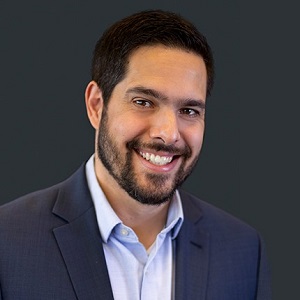
Chris Taylor
at Great Bear Resources
Replay available
Join us for a great event!

On 6ix: 6ix.com/event/kodiak-coppers-mpd-a-new-copper-gold-discovery-in-bc
Automated transcript · Written by software from the replay's audio. It can mishear names and figures; the replay is the record.
0:05 Good afternoon, everyone. I'm Knox Henderson, Investor Relations for Kodiak Copper, here on September 3rd. And with me today is the President and CEO of Kodiak Copper, Claudia Tornquist. Hello, Claudia. How are you today? Good, thank you. Hello. Hello, everybody. Thank you. And also joining us is the chairman and founder of Kodiak Copper, Chris Taylor. Hey, Chris. Hey, Knox, how are you doing today? I imagine probably not very busy though, a little bit of a quiet day for you? No, no, I'm just you know phoning and emailing and you know multitasking, that's what I do best, right? So it's a very exciting day. I think everybody on this call knows what's going on, but I think we want to drill a little deeper, pardon the pun, into what's going on. So to get started here, before we get going, we will be making some forward-looking statements.
0:56 Everybody is advised to exercise caution, seek the advice of an advisor. This is not a solicitation to buy or sell securities. Perform your own due diligence. So that being said, I'm going to pass the baton over to Claudia so she can share the great news.
1:13 Thank you, Nox. Thank you, everybody, for listening in. As Nox said, it's a very exciting day for Kodiak today. The first results from our summer program, and we couldn't have wished for better results. We're thrilled. The results are a real game changer for our MPD project, and they are only the start. Lots more drilling going on, lots more results to come. Before diving deeper into it, I would like to say a couple of thank yous to our technical team. First and foremost, Jeff Ward, our VP Exploration, and Andy Berry, our VP Operations. And then also Ken Barker, Mark, thank you, and Kurt Benson.
1:58 Thank you very much, guys, for the great work. And I'd also like to say a thank you to Chris Taylor, who I know doesn't like praise, but he's the one who spotted this project in the first time and saw its potential and his expertise and knowledge about cofrees are invaluable to us. So thank you, Chris. You're welcome, Claudia.
2:24 I'd like to echo that statement, Claudia, because the guys are up there drilling 24 sevens, you know, 7 days a week, and here we are in our ivory tower and they're doing all the work so thanks to Jeff and Andy it's just a fantastic job that they've been doing. Yeah I couldn't agree more.
2:41 So without much further ado I'll start with just a little recap of what the MPD project is, where it is. You see here on the map where we're located. The little insert at the bottom shows where we are in BC, southern central BC. We're near Princeton, 3 hours drive from Vancouver. Very accessible. It's a producing, very established mining region where MPD is located. A couple of big mines in the neighborhood. Copper Mountain is 30 kilometers to our south and very much of a geological analog to MPD. There's also Highland Valley, another big copper mine, and New Afton, big gold mine to our north. So it's a very established mining region which for us is great. Everything you need for an exploration program is right there at our fingertips and it makes our exploration very easy and cost effective.
3:39 What I'd also like to mention is how accessible the MPD project is. It's literally right off the highway. You turn off the highway, it's less than a kilometer, you're on the project. We have water, we have electricity, we have everything you need, which makes the hurdle for this project to eventually become economic just so much lower than it would be for a remote project. So that's why we like MPD. Here on the next slide, there are a couple of the historic results. The project has been built for almost 50 years on and off by various companies at various points in time. I won't bore you with the details here, but the one important point to take away is all of the historic drilling, almost all of it has been very shallow.
4:33 Most of it less than 200 meters, as you typically would do drilling for porphyries 20, 30, 40 years ago. And that's where we saw the opportunity. I remember when Chris went to the project, when we considered acquiring it, and he came back to the office and his words were, we have to drill deeper here. That's where the opportunity is. And that's what we did in our maiden drill program last year in fall. And you might well remember at the time we drilled a nice discovery hole. You see it here on the slide. It's now called the gate zone. It was a hole 800 meters long, mineralized top to bottom.
5:19 And you see here the overall intercept we got. 763 meters of 0.28% copper equivalent. And very importantly, there were some much higher grade zones in there. You see those on the left, 210 meters of 0.52% copper equivalent or 102 points of 0.68% copper equivalent. So nice higher grade zones, which were of course very encouraging. And it's these higher grade zones that we are now targeting have been targeting, are still targeting in our summer drill program. Just to put our results into perspective, The grades that are mined next door at Copper Mountain, their reserve grade is 0.24% Copper.
6:09 So, that's, compares very favorable, our discovery hole compared very favorable to that and is of course very encouraging because in particular these higher grade zones that we saw.
6:26 This map gives a bit of an overview of our drill program this summer. We started in July. We had initially planned to drill 4,000 meters. We have already decided to extend that and drill more. You can see in pink here, a large copper and soil anomaly that is on top of our gate zone. It's 300 meters wide times 1 kilometer long, approximately, so a very large anomaly. And here in the middle, I'll try and make a dot here, that's where we drilled last year our discovery hole. And this year, we are 190 meters to the east of the original setup, and have drilled 1 fence of 3 holes, all between 700,800 meters around to the west.
7:27 And then we stepped out 75 meters to the south. I'm trying to make a dot here. And are in the process of drilling another 3 holes, another fence of 3 holes.
7:40 Currently working on hole 6 and hole 4 and 5 are finished already. We sent the hole number 1 from our first setup to the lab a couple of weeks ago. And then when we drilled hole 4, we could see that the core was really great and much better than what we saw in the first setup. So we rushed that core through the lab. And so now today's results are hole 1, and then part of hole 4. We essentially took the best core and that section went in a rush order through the lab. So that's the 2 results we have already. More to come, and as I said, we have extended the drill program already, and it would have, the original 4,000 meters would have brought us to mid-September, and we will keep drilling and have plans for more.
8:37 And at this point, I'll hand over to Chris, who will talk a bit more about what we drilled and the results we reported today. Thanks, Claudia. You know, Great job walking through some of the slides. This one was a really interesting day for me. It's been an interesting few weeks as we've watched these drill holes be completed. It's very gratifying in a way. If people don't know me, Chris Taylor, I'm the President and CEO of Great Bear Resources, which is a sister company to Kodiak Copper. We put both of these deals together and brought them over to the Discovery Group here in this office. And this is a project that we got involved with because in many ways it's very similar to the early days on Great Bears Dixie project in the Red Lake area of Ontario. And what was really important, as Claudia was mentioning, is that there was a lot of work on this property. And over the course of more than 50 years, all these little drill holes had scraped the surface. And what we saw though, I remember doing the initial walk around on the project.
9:44 I had a prospector, a couple prospectors and the project vendor walking me around and showing me malachite. It's basically copper oxide, copper oxide here, there, and everywhere. And it was across kilometers. And with all the drilling that had been done, it was really clear though, looking at the rock, that you were in this outer sort of pro-politic envelope of a porphyry system. Why is that important? Well, really they just had not drilled down historically into the heart of the system. And that means they hadn't drilled deep enough, but they also hadn't put the drill holes in the right places. So in this case, what we have is a big copper and soil anomaly. It's over a kilometer long. It had shallow holes into it. All of them had copper, just like at the Great Bear situation, all of the original drill holes had gold. But here We had Copper over a big area and it was clear that it was part of a big porphyry system.
10:35 Going into the results that we have today, as you can see, we've drilled down into this system and even the discovery holes that we did last year at the Gate Zone. I'll actually show you some pictures of this stuff coming up here. You could tell that it was getting into being in the right type of rocks to host a major Copper-Gold porphyry zone, but it wasn't quite in there yet. What we did by stepping out 75m to the South. We were stepping into the direction where the alteration looked like it was going to have the capacity to hold that better Copper mineralization. This is what we saw when we were looking at the core. These numbers are quite phenomenal. In my career, I've been privileged to work at a number of Copper-Gold porphyries. One of those was the Red Crisp project up in northern BC. And this was just purchased recently. I believe the purchase ticket price was somewhere around like $800M or something in that range. And I remember drilling this kilometer deep hole of 1% copper, and that was sitting right beside a very normal, conventional 0.3% BC, alkalic-type porphyry.
11:47 And That was what was known before these deeper drill holes were completed at Red Crisp. What we just drilled here at MPD reminds me of that juxtaposition of that 0.3% Copper, 0.4% Copper sitting right beside, in our case, this now new area of the Gate Zone, which was much higher grade. So as you can see, 282m of 0.7% Copper, about 0.5g per ton Gold, 2.5g of Silver and a Copper equivalency of over 1.16%.
12:21 It's really incredible for this area. And Claudia, I've heard her give other presentations. The neighbouring deposits are sort of in the 0.25% Copper range. Typically, these numbers are 3 times better than that or 4 times better than that. It's amazing that this is only a few holes into the project and this is where it's already gotten. And when we were looking at it, one of the things that really stood out was the Gold endowment off of this. When we got into the high temperature, high-grade Copper-Gold, if you look at the bottom of the table up on the screen in front of you, you can see there was almost 50m of 1.4% copper and in the middle of that almost 1.5 grams per tonne gold. When you see gold values like this, if we had not had any copper in this hole at all and we were just assaying for gold, we already would have been really happy. But what we're seeing here is exceptionally high grade Copper intervals, especially for this region, especially for British Columbia.
13:21 And we're seeing Gold values that are exceptional as well. And also the ratio of these numbers is important because as a Porphyry geologist looking at these things, When you see an approximately equal amount of Gold in grams per ton to Copper in percent, you know that you're close to the center of one of these porphyry systems. What that means is you're getting towards the heart of the main targets that you want to look for during exploration. So exceptional results that we've put out today. And really, as we move into this zone, we don't yet know how big it is, but we know, as we mentioned in the news, we've already put more holes into it and you're looking at some very exceptional mineralization. So what does that look like in drill core? Well, you're looking at 2 pictures of it up on the screen in front of you. I'll show you a little bit more later on, but the pink rock here, strong potassium feldspar alteration. You see semi-massive sulfide. This is a mostly chalcopyrite that you're looking at here. On the other image in front of you on the right, you can see silicification, almost like quartz veining. It's the silica flooding and veining of the porphyry. And you can see the very significant amount of chalcopyrite that came along with that as well. It really does remind me of some of the stuff that we've seen at Red Crest when I was working there with Imperial Metals more than 10 years ago. And then when you're looking at the image of core up on the screen in front of you now, this is from a hole, the fifth hole of the 2020 drill season. And this is still waiting. We're still waiting for assays to come back from this, but as you can see,
14:51 we've drilled some really nice looking stuff. One of the things that we noticed when we were talking about all the results that we've had with Great Bear, and Great Bear is well known in the industry now. It's a major Gold discovery just in the Red Lake District of Ontario. It goes right to surface. It's a big target. We realized when we put out the numbers, sometimes it's good to show people exactly how the metal is distributed. In Great Bear's case, it's Gold. Here with Kodiak, we're looking at the Copper, Gold and Silver distribution in the middle of that zone. This was the interval that was about 40-45m of almost a percent and 0.5 Copper. What was the Copper equivalency? I think it was about 2.7% Copper equivalent, somewhere in that range.
15:37 But you can see here, every interval is strongly mineralized, from the top to the bottom of the table, 1% Copper with just over 0.5g Gold. Reading down through here, The highest value is just
15:49 2.6% Copper and you can see the highest Gold value is just over 3 grams per ton. But this is not a grade that's been smeared over the interval. It's not one piece of core that you're extrapolating over the rest. You can see how the grade is distributed within that interval. And of course, if we extended this beyond, it'd be a huge table, but you could see the grade distribution along that whole wider interval of 280 meters of, I guess, just over 1% copper equivalent or 0.7% copper. I mean, absolutely exceptional continuity and absolutely exceptional size. 0.7% Copper. Absolutely exceptional continuity and size.
16:24 With that, I just wanted to walk through a few additional slides that I put together, which I think you guys would probably get a real kick out of because it's some pictures of CORE and just a few thoughts about what we've hit here. So I'm just going to share. Yeah, while you're doing that, Chris, I'd like to mention to everyone, if you want to ask a question, there should be a question tab on your computer there. So click away and ask the question I'll get to as many as I can I can see a few are coming in and you know we'll we'll take the best ones and move along and you know feel free to ask questions? So just let me know guys when when my screen is fully showing because I won't be able to. So this is one of the On the left here we have Jeff Ward, our VP Exploration.
17:11 His facial expression is probably squinting into the sun. I think it was about 40 degrees between Kelowna and Merritt that day. You can see some of the core that he's holding up. Interestingly enough, the drill contractor that we're using here is Atlas Drilling, who we used at Red Chris and we also used at Mount Pauly when I was working at those projects. I don't have a picture of him, but Andrew Berry, our VP Operations, he's not in this image, but he's also been instrumental in the success. We began to get really excited with the drill core when the core began to come into the core shack in the morning with smiley faces on the lids of the core boxes. And you pretty much know when the drillers are drawing smiley faces on your core boxes that something interesting is going to be coming up.
18:00 And we'll look at those pictures in a second, but this really made me laugh back at the time. So just to give you a real, real basic overview of porphyry systems, they're a little bit like Russian nested dolls, you know, with the big doll, with the medium doll, with the small doll inside of it and they tend to be really consistent. So when I was initially walking around on the MPD project when we were looking at acquiring it, I noticed that there was a lot of rock that looked like this. It was in the propolitic faces of a porphyry system. There was Copper oxides around, there was lots of Pyrite around, little bits of Chalcopyrite here and there. Historically, if the surface was somewhere at this level, you had drill companies that were going and they were doing this and they were drilling into it and they'd get a bit of Copper, but they'd get it over a huge area. The area that we saw that Copper in was about 10km.
18:53 I'm not able to read on my screen very well, but that 10km area was big and it showed me that we had Copper in a big area and possibly a really big Copper system as well. The recommendation there was to drill down deeper so that you could go across some of these zones. The erosion level on the project, I think if you look at it, is probably going to be pretty much like something like this, depending on where you're drilling. So you'll notice like with the drill core that we've got coming in now, some of the drill holes, like it would be the first hole that we put out in our results today, where we had like 600 meters of 0.25% Copper equivalent, probably would have drilled through something a lot like this. Whereas the drill holes, when we stepped down about 75m to the south, they went through the zone like that hole there did. But the important thing is that you see this concentric zonation project after project, property after property. And when you see that you're in 1 part of it, you know, on a project that you're looking at, it gives you a very good idea that you might be just on top of what could be, you know, a major discovery.
19:58 And I bring this up, This is an image of Red Crest and it's from a technical report that was published in 2012. This is a project that I did quite a bit of drill work on back in 2007. You can see the scale here is really interesting. We did drill holes that were over a kilometer to a kilometer and a half long when we were there. So look at that. That's an 1800m level and that's a 0m level. One of the euphemisms or one of the expressions in exploration is that nobody's ever really drilled the bottom of a porphyry system. So once you're onto these things, they tend to have very significant depth extent. But one thing that I want to emphasize here, Redcrisp is really famous in BC as being a high-grade big porphyry. Again, just had like an $800M price tag on point of sale. And that was, I think, for an 80% interest. But the showing blocks here at 0.2% Copper equivalent.
20:52 If you think about that, while you get cores on the system, you probably can't see my pen, but on the East part of the system, it's higher grade. The most of it, I think on average, it averages about 0.33% Copper, but they're looking at modeling the zone with that 0.2% Copper equivalent blocks. And if you look at what we just drilled here, here at the NPD project with Kodiak, you can see that one of these intervals, and I'll just highlight it here, that's 626.8 meters of 0.25% copper equivalent. That's basically very similar to what is being mined locally in this area, and very similar for modeling purposes to probably where you'd put that outer envelope off of the mineralized zone if you were modeling something like a Red Cris as well. And you can see some of these, you know, these are really nice drill results that we came up with recently. I worked at Mount Pauly as well. That's around a 0.3% copper system. So 78.5 meters of 0.39% copper with 0.12 grams Gold. Or here you're looking at 275m of 0.28g Copper and 0.08g Gold. That's a 0.36% copper equivalent. This is what I was saying.
22:04 When you're in that outer zone on the porphyry system, what you need to do is then move in the direction where you're getting closer to where those nested inner sort of Russian dolls in that model. And that's what we just did with these drill holes. And this is what we began to hit. So here you go, that central zone is now, you've got higher temperature alteration, better mineralization, 45 meters of 1.4% copper, and 1.5 grams gold. So 2.75% copper equivalent and the wider interval here. Remember, this is only partial. We don't actually have results for here, and we don't actually have results from here yet. Looking at the core, I think this is going to be the best part of it, but it doesn't mean that the system doesn't go here and doesn't go here, just like it does on the adjacent section, 75 meters away. But within here, 225 meters of 0.8% copper. Again, that's like 4 times or sorry, 3 times the grade of what's being mined at the adjacent deposits. So Absolutely exceptional results. I'm really curious with the size of the Copper anomaly that we have in soil and the fact that we know we have multiple Copper porphyry centers on the MPD project. I'm really curious how big this one is and whether there are any more on the property. That's something that only drilling is really going to tell you.
23:22 Looking at the core in front of you, this is what the core looks like when you're out in that sort of propolitic envelope. This would be the upper part of some of the holes that we've had or out on the margins. You can see that you've got pyrite, you've got a little bit of chalcopyrite, and you can see the rock is sort of a greenish color as you look through it. It's green, it's dark colored. When you see this, and this is what you see when you see bedrock at MPD and you walk around on surface, there's lots of kilometers and kilometers and kilometers of this kind of stuff. When I first was walking around the project, this is what I was looking at. Our Geos like Jeff and Andy, Cam, the guys that are out on the project, when they were walking around miles and miles and miles of this stuff. And then when you begin to drill into it deeper, you get a little bit lower.
24:07 I should also mention that, you know, in the copper zones, if that surface and you're dealing with the zone, say it's 300 meters wide or so and you're drilling across it from here down to here. You might have hit the Copper at say 300m depth to say 500m depth, but that zone will actually go right up to bedrock surface as well. It just happens to be in these drill holes as you're going down across them. We began to see more. Now you can see the chalcopyrite, which is this lighter colored stuff and the pyrite over here. Go down deeper in the core, it starts to look pink. You can see these monzonites, they're a pinkish color, more potassic feldspar, potassic feldspar alteration in them. So the rock is starting to look better. You get more into the zone. This is what you begin to see. You get to see splashy looking sulfides, chalcopyrite stringers, and the pink alteration. This is potassium feldspar alteration.
25:00 This is in the first holes that we put out that you looked at today. And then go deeper. You get into step to the South, go into more where the Porphyry Centre is, and you look at that dark red rock. You're into strong Potassium Feldspar alteration, other accessory minerals And now you're into semi-massive sulfide stock works, most of which is now chalcopyrite. You can see that goldish colored sulfide, that's chalco. This more silvery stuff is pyrite. And you can see it's dominated by chalcopyrite. Now, this is what the core starts looking like when it gets really nice looking and you're drilling through these zones. You get these silica veins. They're filled with chalcopyrite. You get this actinylate alteration. You know and you get this other sort of banded veining and of course the widespread Potassic feldspar. If you look at core from say like a GT gold type discovery, if you look at core from like around Red Cris, you're going to see a lot of stuff like this. Other porphyry deposits in BC you can find stuff like that looks like this let's say like Copper Mountain. You get really excited when you start seeing this rock.
26:06 And then when you go down into the system and you begin to get into that high temperature sort of middle of the porphyry, this is what you start to see. And We showed some pictures of this stuff today from Hole 5 and you can see that's a lot of silica. One of the things I remember best about drilling Red Cris back all those years ago was it was like drilling a giant quartz vein, like 1000 meters of heavily silicified high-grade rock. I mean we drilled 1000 meters of 1% copper. Here, like we said, we've just drilled off 280 meters of about 0.7% copper or just about 1.2% copper equivalent. And you can see adjacent to this stuff, you get that red rock, it gets to be a reddish-brown when it's higher temperature. It's probably biotite in there, the silica veins and the chalcopyrite.
26:55 And of course, box after box of this stuff, you can see it behind the image of it, what it looks like here. And when you're looking at more of that, the silica veining, the sulfides, really nice looking stuff. And then of course there's what's to come. So as we mentioned, we wanted to come clean with everybody and we wanted people to understand that this hole, As good as it is, MPD 2004, this is definitely not 1 and done. Just taking a sip of some water there. You can look at this mineralization that we put out in the news release today that's coming up from the next hole that we drilled. You can see very extensive silicification and you can look at the sulfide content on that. Very impressive. Obviously we're really looking forward to getting the assays back for this and this is a picture of what some of that core looks like when you see more of it other than just a hand sample. Again, very strong amounts of silicification, very strong amounts of sulfides.
27:51 You can see that basically, you know, I was talking to a friend of mine that worked at Red Cris with me, Kevin McKenzie. He's now an analyst over at Canaccord. So we're looking at the pictures that we put in the news release today. And this really does remind me of that, you know, that E zone from Red Chris in terms of the solicification and the high sulfide content. So this is the kind of thing I'm really curious to see more drill results when this stuff comes back for assay. We're waiting for it, really looking forward to that. Obviously, what we need to do is drill a lot more holes into this because this is 1 an exciting discovery. With that, guys, I think
28:29 that just walks me through what I wanted to talk about and I guess we could hand it over to some questions. Yeah, thanks Chris. Here we thought you were a gold guy and looking forward to seeing more of those boxes with the happy faces on them. That's fantastic. We do have a lot of questions coming in. I'll start sort of with a broad one for you, Claudia.
28:52 So the obvious question is, what's next for MPD? How are we going to follow up on this? Well, more drilling is the simple answer to that. As I said, our original program, the 4,000 meter, would have brought us to mid-September. We've already, before we saw the results, today's results, just looking at the core, we knew that we wanted to drill more and have now planned to drill until the end of the year and then yeah, up and on what's from there. And another question came in about our Mojave project in Arizona. Given the success that we've had with MPD and the COVID situation, how are we going to approach Mojave?
29:39 Well, Mojave is a good project and I'm glad we have it in our portfolio. Now, With these results at MPD, we're obviously focused on MPD first and foremost.
29:54 So I don't think we'll be doing any drilling on Mojave this year, but at the same time, It's a great portfolio project to have and it has discovery potential. So yeah, it's there. Yeah, we were certainly very lucky to have this situation with the whole COVID situation that we could work with the local team and local drillers. And we were just all set up and ready to go. And I guess while Jeff and Andy are still up there, we're going to keep going. And so that's exciting. Another question here, maybe for you, Chris,
30:26 any preliminary thoughts on the dip and orientation of the mineralized porphyritic diorite? That's a great question. It looks like it's pretty much upright from what we can see. I think it's striking kind of North South and dipping very steeply to the East, like at 80 degrees or so. So it's basically upright and kind of in place. So it's not like I've been to some weird porphyries like in Yarrington in Nevada, where the whole thing's over 90 degrees on its side, which is actually pretty cool. This does not look like that's going to be the case. It looks like it's upright and in place like, like, you know, We don't know how big it is yet. We haven't done enough drilling. That's all coming down the pipe. But man, it is certainly very exciting to see it begin. How many holes is this, guys, that we have in here so far? Since last year, We did 3 holes in it last year, and this was the fourth hole.
31:19 7 holes to see that kind of thing, that kind of stuff coming out of the ground, an absolutely phenomenal. It reminds me of the early days of Great Bear, with Bob doing the modeling and us really hitting out of the park. I have to say Jeff and Andy have done a great job on the project up to this point and congratulations to them for having such a big success with so few drill holes. This is after 50 years and 129 holes and then this is what we hit. Well, you always hear in the business, they say, well, there can't really be anything there because so many other people have worked on the project. Well, the whole junior mining industry exists because nobody gets it right the first time or the second time or the third time or the fourth time. Sometimes it takes you 50 years, right? So it's the same
32:05 here. So back to a corporate question, who are your institutional holders, Claudia? Maybe that kind of opens up the question of, you know, what's our shareholder base and, you know, our capital structure and all that? Well, for a company our size, I think our shareholder base is quite typical. We have a majority high net worth individuals and some smaller funds and management and close associates, I believe 12% approximately, and the rest retail. Okay, and then, oh, there's a lot of questions here. What is your current fiscal situation?
32:53 What is our current physical situation? Fiscal, financial situation. OK. OK, that makes more sense. We raised 2.7 million in the spring that funded our exploration work over the summer. We still have some reserves left to keep drilling, But our plan was always from the start to then in the autumn with some good results in our pockets
33:27 to raise the next round of finance. And That's what we'll do in due course. Yeah, and there's how many rigs do you currently have running and will you be increasing the number of rigs? Currently we have 1 rig and that's a definite possibility Putting another rig out there at the moment. We are in the midst of planning and we'll announce more plans soon. I'll interject on that, Nox. The MPD project is because the Mann, Prime and Dillard properties were all amalgamated into one. That's why we ended up acquiring effectively. It's the first time in ages that they've been together, so there are other copper targets on the other portions of the MPD project that we haven't touched yet, and it makes you wonder if this is what we had here. What might be lurking just underneath the other guys as well. So to Claudia's question of the question addressing multiple rigs, it's certainly a possibility. Yeah, this is another technical one.
34:26 What do you interpret to be the geometry of the zone in relation to the drill holes? Any chance you were drilling down plunge?
34:34 What is the basis for that interpretation? Rock types, alteration, vein dips? I think you answered a lot of that in that picture. One of the things you can see is that the angles of the mineralization and the veining is not parallel to the core direction. You can tell we drilled across it, just like we showed in the cross sections, and not down dip on something in a pathetic and contemptible effort to inflate the true width. Right. Interesting. Okay. Isn't Copper Mountain open pit And would this require an underground mining?
35:20 What is, I mean, this is obviously way ahead of the game here, this question, but. Yeah. It's early days. Of course, we are in a discovery stage and it's very early to talk about open pit, underground and so on. But what's interesting to note is that the best grades in our drilling is actually not very deep. They were just below the shallow historic drilling. Historic drilling was mostly down to 200 meters, and where we found the really juicy stuff, the really good grades, was 300 to 500 meters. So if you look at the neighboring mines, Copper Mountain, of course, big open pit. And Highland Valley is an open pit which is down to 800 meters, I believe now.
36:11 So where we are currently, where we are finding good grades, the best grades, that looks very much like open pit territory. Yeah. And then with that in mind, one question is, what's the cost of drilling in this area versus other areas in British Columbia? Well, it's a big advantage to us that we are in an established mining and exploration area. There are lots of other exploration projects and all the services, everything you need for an exploration project are right there. That makes it relatively cheap to explore.
36:49 And we are in the somewhere above $200 per meter bracket. And as we drill more, obviously, and bigger programs, our drilling costs will come down even further. But compared to remote projects in the North, that's maybe whatever 0.5 or 0.333 what it would cost to drill there. So it's really very cost-effective and your exploration dollars go a long way. Yeah.
37:15 And people are asking, when are we expecting the next batch of results? Somebody call the lab and tell them to hurry the heck up. Yeah, well, they'll keep coming. We have more core in the lab and every couple of weeks we'll have the next batch of results coming out now over the autumn. So look, come. Okay. Was the sale of Trapper to Brixton influenced by what you are finding here? It wasn't really. TRAPPER, although we always liked TRAPPER, it did not 100% fit our strategy because we really focused on projects in locations that are very accessible.
38:01 And TRAPPER is a great project, but it's further north and it's a lot more expensive to explore. You have to fly in, there's no road access, and for that reason it wasn't 100% of a fit. But for Brixton, our neighbor, it is a really good acquisition. They are a much better place to take the project forward because they have all the surrounding ground, they have an established camp, and We are taking some of their shares, so still have some upside from the project. I think it's a win-win situation. I think those guys will do a really good job exploring it, Claudia. They've got a great camp set up there. It really cuts down their operating costs versus us working on it independently.
38:50 And the sale of Trapper is something that we've been talking about for the last year. So that's been consistent with our strategy from the get-go. So Some of these questions are kind of mundane. I'm trying to find a teethy one. How much money? How many people on this? Hang on. I think we've got a lot of redundancy here. So I think that's going to wrap up our questions. So, and I do see a question, what's our fully diluted share count right now, Claudia? 48 million. We, our issue to outstanding is less than 37 million and fully diluted 48. So very nice and tight share structure that hopefully should set us up for a nice run and some good returns for our shareholders.
39:43 Here's an interesting one. Can you comment on how thick the intervals of silicified slash sulfide mineralization are in the pending core you showed in the slides? I think we'll just have to wait for the results to come out. So far it looks like it'll be pretty similar in terms of the scope of the system to what we've drilled already. I think you're looking at a Copper mineralized envelope above the holes that we put out, like hole 2020-1. That was about 626m wide above 0.2% copper. I'm not sure exactly what it will run because we don't have the assays back yet, but you do have quite a wide envelope of copper mineralization. The central zone, you're just going to have to see. I don't have the answer yet until we get the assays back.
40:38 Okay. Claudia, somebody is asking about warrants and the warrants situation with the company. How many warrants are out there? Oh, Knox, you know that number better than me. It is... The number actually is I'm looking at it's 8.7 million. And the average exercise price is 81 cents. And we have 2.8 million options out with the average exercise price at $59. So, yeah, that's that situation. We're in the money. Okay, I think that's going to wrap up our questions. I'm just going to go back to this slide, the last slide. So, oh, it's not letting me do that. Which slide? Yeah, there you go. Here we go. I got it.
41:29 I just wanted to say if you want to ask any more questions, you could email me at ir at KodiakCopperCorp.com or phone 604-646-8362. Thank you, Claudia, and thank you, Chris. Congratulations, just, you know, and the whole exploration team and Jeff and Andy and this has just been fantastic and lots to look forward to so we'll keep everybody in touch up to date on all the things we're doing so thank you very much and thank you everybody for joining us Thank you. Thanks guys. Thanks.
Follow Kodiak Copper Corp. into a list and get an email when it puts out news.
at Great Bear Resources

President, CEO & Director at Kodiak Copper
Formerly General Manager at Rio Tinto working with Rio Tinto’s copper and diamond operations. Also held the position of Executive Vice Presiden Business Development for the streaming company Sandstorm Gold. Director of Silver One Resources and former director of Kennady Diamonds, leading the $176m sale of the company to Mountain Province as chair of the special committee of the board.

Investor Relations at Strikepoint Gold
Focused on marketing, investor communications and raising capital for TSX Venture exchange-listed resource and technology companies over the past 15 years. Co-led with CEOs financings of more than $100 million on the TSX-V. Former securities trader on Canadian equities markets with Canadian Securities Course designation, and graduate of Journalism from VCC-Langara.