Transcript
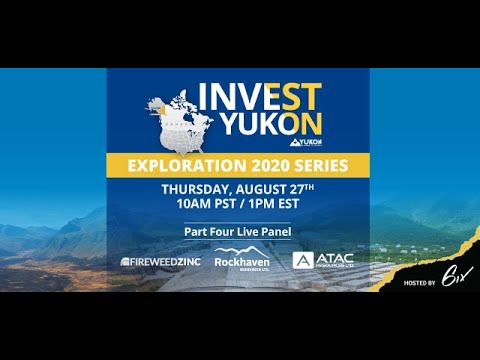
Automated transcript · Written by software from the replay's audio. It can mishear names and figures; the replay is the record.
0:14 Welcome everybody again. This is the fourth installment and the final installment of UConn Mining's 2020 Exploration Summit. My name is Trevor Hall. Once again, I am your host for today. We've got, this is going to be a lively conversation. I'm happy to know all 3 gentlemen and have had socialized events with them all, so it's going to be exciting times. And we will pass along some important information about the projects as well, I promise. It won't just be 4 guys bantering and talking sports or anything like that. We will get to business right away. Quick mention about myself. I am the host of Mining Stock Daily. We are a daily podcast that provides a news briefing of the junior resource market every trading morning prior to market open, and that's usually less than 10 minutes long typically.
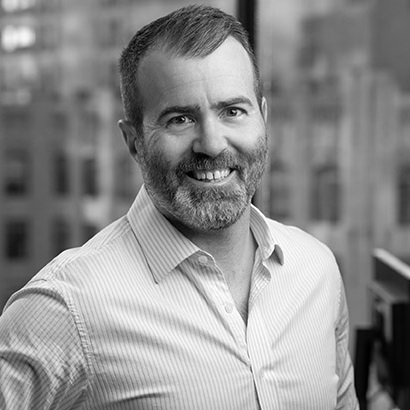
1:08 Then we also do some market commentary, CEO corporate updates with projects that are happening around the world, and also just some casual analysis of what's happening with precious metals. If you have not done so already I would humbly ask that you go to your favorite podcast network, find the Mining Stock Daily podcast, hit that subscribe button, and also leave a review if you like it. And if you don't, leave a review there too. All constructive criticism is welcome. So let's get underway here. We have 3 outstanding chaps that I'm happy to be on the panel with today. We're going to start out with Brandon McDonald from Fireweed Zinc, Fireweed Trades on the TSX Venture with the symbol FWZ, and also on the OTC with FWEDF.
2:03 Brandon, you have 3 minutes to give us a little bit of a brief overview of Fireweed Zinc. Yeah, I think more than an overview, just a bit of an update to what's happening this summer. So, you know, Fireweed's a zinc-lead silver company with a project in Yukon, a pretty big resource, one of the more substantial undeveloped zinc resources in the world. You know, the start of this year was pretty tumultuous with the emergence of COVID and some pretty serious dips in the market, but it's been pretty good for us. You know when things started to come back in July we raised 5 million dollars and actually just yesterday we announced we're raising another 2 million because of some still pent-up demand. So what looked like there was going to be no drill program earlier in the year has actually become a reasonable drill program this year. And it's mostly going to be focused on the west of the property, the so-called boundary zone and some targets around that. For people who have been following the story, You know what Boundary Zone is about for those who haven't been.
3:05 It's a sort of new rediscovery slash discovery in the west of our property. Big, broad,
3:13 low-grade, but zinc intersections but with some very high-grade intermixed. The highlight last year, 230 meters true width of 4% zinc,
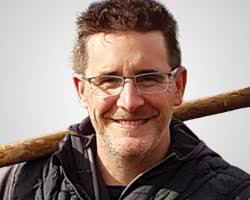
3:25 including 100 meters of 8% zinc from surface. And then within that, 6 meters of 42% zinc. So this is a very intriguing zone. So we're looking to get some serious drilling done this year. In that area, we're going to expand the geophysics around there with gravity, VTEM, MAG, etc. And add some geochem. So potentially some brand new targets to be tested as well. So it's an exciting year for us. Thanks Brandon. Now we will turn to Matt Turner of Rockhaven Resources. They trade on the Venture Exchange with RK and also on the OTC with RKHNF. Great, thanks Trevor. Thanks for moderating today and thanks to everyone for tuning in. I know Brandon's done a few of these. Rocky even has them, so just I guess a kind of a quick intro of our project.
4:14 So we're Rocky Resources, We're an advanced exploration company that's focused on a single asset. It's our Plaza project. It's a high-grade Gold and Silver project. It's about a 3-hour drive from Whitehorse, so road accessible. We own the project 100% and we've been working on it now for about 10 years, completing about 100,000m of drilling and a fair amount of excavated trenching as well, about 24km or so.
4:44 We have a nice resource. It's sitting at about 1.2 million ounces of Gold and another 28 million ounces of Silver. Paramount Lead and Zinc combined at about 320 million pounds or so. And 60% of those total resources are in the indicated category.
5:04 We have pretty high confidence on that resource. When you put everything together in account for metallurgical recovery, you are sitting at about 1.62Moz of Gold equivalent at about 5g. It really puts it at the second highest grade, plus 1Moz Gold deposit ever discovered in the Yukon, next to what Brent will be talking about, the Osiris deposit. With that deposit, with that resource, in July of 2020 of this year, we wrapped an economic study around it. So an updated one, the one we did in 2016. And we're dealing with pretty robust economics at Plaza at a $14.50 Gold price and a $17 Silver price. We're at 378M
5:57 post-tax NPV and 37% IRR. And I think again, 1450 Gold, if you look at the plus 20% on that base case, 17 puts us at about 1740 per ounce Gold. We're at 540M post-tax NPV and 49% IRR. Again, really strong economics. I think the big focus now in 2020 is over the last couple of years we've defined some really neat targets adjacent to the deposit. And so that's really kind of our focus this year is to step out on some of these upward targets and potentially find game changer type
6:46 zones that we can eventually turn into resources and then take the whole kit and caboodle through pre-feasibility starting next year. So we're really excited about these targets. Again, we've identified in some cases there's some anomalies that our group that's been working in the Yukon for over 50 years, they haven't seen these types of anomalies, both geochemically, soil geochemically and geophysically,
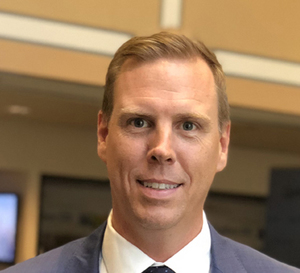
7:16 in the 50 plus years working in the Yukon. So that's what we're testing right now. So it's gonna be, I think it's gonna be a fun next couple of months as we keep the drill training. Yep, thank you, Matt. We then turn to Graham Downs, ATAC Resources, ATAC Trades on TSX Venture with ATC and also on the OTC in the US with ATADF. Graham?
7:41 Great. Thanks, Trevor, and thanks, everyone, for tuning in. We are primarily a Gold exploration company and we are located just northeast of Victoria Gold, producing mine and the soon to be producing Belkino Lexco project. So we're just Northeast of Keno City. We have a very large project. We began exploring that in 2006 and discovered the Tiger Gold deposit, which is about 460,000oz
8:12 at over 3g. And then later on in 2008, 2009 and 2010, we began exploring at the eastern end of our project and eventually discovered about 1.7Moz of Gold on a maiden resource at over 4g, which is one of the highest-grade open pit resources in North America, over 1Moz. So that's just a start.
8:35 The Tiger with the Western End, it's, you know, even at $400 below the current prices has an NPV of about 160 million IRR of 70%. So that's an oxide. So, and then there's numerous targets along that Western end, broad trend.
8:58 We're air access right now, but I'm optimistic that we should get some news about Bermet Fir Road to get to the western end of the project. So excited about that. And then exploration this year, we were focused on the Airstrip anomaly, which is again on the western end. And that's a 12 square kilometre Gold anomaly. And we thought it was intrusion related, but it's really looking like we might have an orogenic system up there, which is a new development. It's early days, but the quartz veining that we're seeing out there and all the indications are that it's an orogenic system.
9:34 We've got previous holes, just rabbit holes though, that have got 13m of ground and 0.5 and up to 21m of just underground. We're pretty pumped about that. We just put 2 diamond drills on top of that right now We've had a couple experts come there and talk to us to make sure that we're on the right track. So Stay tuned. We got lots of lots of fun stuff coming out. So I asked you take a look at our website Check out the airscript anomaly. That's what we're gonna be doing our drilling. We'll have some news out.
10:05 Thanks Trevor. Thanks Graham. For anybody listening, you can, and you are able to ask questions to any of the presenters in the questions chat box there on the right side of your screen. Be sure to just type in your question there and then our hands behind the scenes will move those into a box for us to see. And we will try to get to the questions
10:35 as many of the questions as we can within the time allotted. So again, be sure to type those questions in the chat room. I have some questions for each one of you individually, but I would really like to start out with a timely discussion about the volatility of precious metals. Even Brandon, you can chime in. I know you're a base metal guy. You don't know much about gold and silver, but we'll let you. I have some silver. Oh, you have some silver. Okay, so you just know silver. All right, so we'll let you chime in.
11:07 Today was really interesting. This morning was really interesting. We saw a lot of buying coming into precious metals. Yesterday, we continue this consolidation after those massive moves last month. And, Jerome Powell comes out and speaks, talks about, trying to increase inflation here in the U S to 2%. Gold shoots up and then as soon as he's done, gold falls back down.
11:34 It's been a real volatile day. Do you expect to see continued volatility in the precious metals space as we continue to move forward until we finally, maybe we get some sort of direction here? Whoever wants to take that first.
11:51 I'll talk first here guys. I'll go back a little bit longer term than just the last few days or even a few months. If you go back to, for us when we started looking at the economics at Colaza, I think it was in, it must have been in February, February, March, you know, you look at the price of Silver went all the way down to $11 and we're trying to think, you know, what are we going to use for price of Silver for this study? And then, you know, by the time I think we, well, we picked 17
12:22 from that time and it went all the way down to 11 and then all the way up from not long after when we announced the results up to whatever 30 bucks. So it's been just silver alone has just been mind-boggling and And yeah, I don't know. I I'd have to go back to like probably 2006 to 2009 where I've been refreshing Kitco as much as, you know,
12:50 about 50 times a day or whatever, right, to see what the new price is. So where it's going to go from here and how volatile, I can't really say, but I've never been good at predicting where these things are going and the volatility behind them. But it's been pretty amazing to watch over the last, say, 5, 6 months. That's for sure.
13:12 Graham, how about you? Can you chime in?
13:15 I mean, I'm not an economist, so I get a bit over my head on this stuff. But I mean, I just look at the big picture on all of this. And I still think even if they can even get to this 2% inflation, you're still going to have lower interest rates for a long time. So, and then I was kind of thinking about this morning and just looking at the global picture and the way things are happening. I mean, I think the Fed and even the Canadian government, I mean, these guys have turned on the tap for money and they've essentially just left it on and they have to walk away from
13:46 it. I mean, it's gonna be COVID, it's gonna be a hurricane, it's gonna be, every year, we're gonna have something like this and we're not gonna get away from it. So I think we're gonna be pouring money into the system And it's just, I think it's going to provide a foundation for Gold. I mean, to me, even today, a lot of this was baked in already. And it's just people trying to figure out where they want to be. I mean, all of this right now is noise. I think we're going to be in a solid price in the $1,800, $1,900, maybe $2,000, but I'm happy being in an $1,800, $1,900, $2,000 Gold price. I mean, we've got to remember where we're at. These are good Gold prices. Companies are going to make a lot of money.
14:34 And I prefer stability. The volatility is, you know, you wake up and you're like, oh, the next day, you know, you're getting thrashed around here. But, you know, if we can just hang in here and have 18, 1900 gold for a couple of years, you're going to have a lot of companies making a lot of money. And the investors looking at the space in these companies, companies will make money. And those companies are going to go out looking for new projects because there's not very many. So this is a good thing for, you know, maybe not people of Canada and North America and around the world, but it's good for the price of wood.
15:12 Brandon, can you chime in? Yeah, I know you invest as well. It's not just fireweed.
15:20 I don't see us leaving a regime of high volatility anytime soon. Until we have clear resolution on COVID, some sort of trade relation normalization,
15:35 there's going to be a very high degree of global economic uncertainty which feeds volatility or hyper volatility into the into the precious metals right And, you know, per Matt's point and Graham's point, it's like, what's your base case now?
15:55 You know, is it a 2 or 3 year trailing, which looks really low compared to where we're at now?
16:01 Is it the current spot? Is it the forward curve? You know, this is the challenge for investors and well, even companies who are trying to model and we're trying to be realistic. And, you know, what do we use for our base case prices in any commodity that's seen a significant run-up right I think you'd be a little bit cheeky to use I don't know what gold's at right now 1980 or something like that you'd be a little cheeky to use 1980 for your base price but I don't think you have to use 1250 which was for the longest time you're kind of the go-to base price too, right? And I've seen a few people, you tentatively use 1450,
16:37 you know, like, okay, well, let's inch this up and it's a little spot, right?
16:46 So yeah, it's tough. And this is an opportunity and a crisis for investors is playing in a regime of hyper volatility. That's a really good point, Brandon, because I had a follow-up question for all 3 of you. When you move your company and your projects into a technical report, maybe it's a anything like a resource estimate, maybe even updated resource estimate, or maybe a P EA, maybe not necessarily PFS.
17:15 Maybe we get there. I don't know. But with this big movement and precious metals, when do you go back and decide to either update
17:25 a previously published technical report, or when maybe you're publishing a brand new report? You know, what's it? What is a safe base case if you have a precious metal within that within the economics of your project? I mean, I mean, people used to say not too long ago, if you're running $1,500 gold, when gold was literally at 1350, you were, you know, you're stretching the limits. But right now, I mean, I don't see, my opinion is I don't see a whole lot of technical reports that are using anything less than $1,600 gold in their reports. I guess it depends on how near term you are, right? Because
18:05 if you're refreshing a feasibility study on a project that's operational, you know, you're just refreshing the economics, well, then you can pretty much use Spot because you're literally producing, right? If you're facing a 3 to 6 year engineering and permitting process, and you're trying to put out a PEA now, well, spot may not be such a good metric, right? Then you have to start to look at long term prices, which which long term prices right now are lagging significantly spot, right. You know, and it's, it's, I think all of us kind of nervously look to our peers, and hope someone else breaks and sets resets the price. You know, we put out our PEA a couple years ago and Zinc was at a over a buck 50 a pound and all these studies came out with a dollar 20, dollar 20, dollar 21 which is what we used and it was like as soon as one person said that we're like okay I guess we're gonna use a dollar 20 right And then it crashed down to 85 this year, and it's now back up to $1.12. So what the hell do we know?
19:08 Yeah, Graham, you published a PEA on tiger back in April. I mean,
19:14 what would change? What would have changed if you would have held on 2 months?
19:19 Well I think what we did there is you want to, in this environment, just make sure your sensitivity tables are appropriate. Give yourself some breathing room so that you can kind of see what's going on there. We're kind of conservative and we're realistic. We put a lot of effort into making sure that we're not overreporting and we want to be realistic about things. So, you know, the sensitivities, because, and to Brandon's point, we're further away. So,
19:49 you know, I wish our sensitivity was a lot higher because, you know, then I could actually say what it is right now. Like ours topped out at $1550M, we get $160M MPV. Well at $2000G, I can't say it, but it makes a huge difference.
20:11 Like a real difference, especially on high-grade deposits. Anyway, I think you just got to be realistic. You got to do the appropriate trailing and you need to be able to stand up and defend against Analysts and everybody in the industry what you're using and as long as you can stand up there and feel good about it
20:32 You'll be fine Matt same question you publish your PEA in July If you were looking at it today, how would it be different? Yeah, well, at 1450, we did, I don't know how many presentations to groups after that announcement. And again, I can't remember who it would have been at, 1900 at the time, right after we announced it.
21:00 But yeah, everybody was kind of like, yeah, 1450, that's totally fine. And like Graeme said, if you have the sensitivities, and we were typically, we're given 15% plus or minus, but on this one, we were given 20%, which was great, because it actually got us, you know, semi closer to what spot was at. So yeah, It's a really tough call. Like I said, when we were looking at the Silver portion of the pricing for the PEA, we started off at $16 and then over the course of the mining study it went down to $11 and then you start kind of panicking a bit, right? Even though it's not a huge part of our economic silver, but still you start looking at
21:46 the potential just from the way people will perceive it, right? And then, again, by the time we put it out, silver was $5 higher than what we had chosen. So it's always hard choosing, looking in the crystal ball and seeing what it's, what it's gonna be at in 2 months time, and especially lately, obviously. So, but yeah, like Graham said, you have the sensitivities and at least people can start to, you know, can look at that, right? But he's also right in that you can't be, you know, spouting off, you can't just type in numbers into your model and start spouting off what you're at at that spot just because it can put you offside, right? Sure. Yeah, and I think if I could just make one small point is the reason we only do sensitivities plus or minus 15 or 20 is because really, if you deviate much from your base case commodity prices, you would change the mine plan. Exactly.
22:42 You know, both Matt and Graham, if they were assuming 1900 gold, it would have been a larger, more inclusive, lower cut off mine, right? And it's just like if we had assumed higher zinc or lower zinc, it would have been a bigger mine or a smaller mine, right? And that's the challenge of like people who say, well, Why don't you model this at way higher gold? Or does this stand up? What if your base case gold is 1,000? It's like, well, I'm building a different project with my base case is 1,000, a lot smaller and higher grade. That's the real challenge and sensitivities is that you can't just plug a new commodity price into a spreadsheet and that's what your mind would look like you would completely model it differently.
23:29 Let's move this conversation over to available capital for junior projects. I mean, we have seen just an influx of money coming into exploration in the last couple of months ever since, you know, well, the, this real rocket ship of a bull gold market has taken place. Graham, I think you raised 1 million dollars this summer, Matt, you raised I believe it was $5 million. Brandon, you've raised now. I was gonna keep going. So can you can each of you comment just on your experience with financing your companies and your projects?
24:15 And, have you ever seen that this, is it easy to raise money? And also on the side of that, what are the challenges now?
24:27 I can go ahead. I mean, I haven't been as active as Matt and Brandon, but you know, I did all the financing for the project back in 2009, 10, 11, and it was easy then. And now I don't think it's as easy. There is definitely more interest in the industry or the sector, but They're being a little bit more selective more towards the government still But definitely if you want to raise some money, it's gonna be a little bit easier than 6 8 months ago, so It's good opportunities there right now And we're We were fortunate because we've got about $10 million. We came into this season with quite a lot of money, so we were lucky to be a great race. Matt?
25:14 It's definitely easier than the last 5 or 6 years, but You still have to have a really good plan going forward to show people how you plan to grow or how you plan to advance the project. I feel like it should never be just like, we're an exploration company, we're looking for gold, we want $10M. You've got to have a really concise plan going forward and give investors the best chance to make a good return on their investment. So it's, yeah, I don't know, it's definitely easier compared to say the last 5-6 years. Right now, Rockhaven has I guess about $7.2 million or so in the Treasury and we probably haven't had that much money, you know, probably you'd have to go back to say 2011, right, when we have that much cash.
26:13 And so I think, you know, being able to demonstrate to people, you know, how we're going to, you know, add value, that's obviously the biggest thing. And that's one of the hardest parts in this business, right, is to actually go out and do what we're going to be doing this year, or planning to do, is to make new discoveries. Because For our sector, the goal of what we're looking for is $2,000 for a reason. It's rare, it's hard to find, it's hard to find big deposits. That's what we're going to go and try to do. It's never truly easy, I guess, but it's definitely easier than the last 5-6 years.
27:03 We've done $8.5M over 3 different financings this year, each one taking 2 to 4 weeks to close. 2018, we had 1 financing which was 12 and 500,000 which took 48 hours, right? That was when it was trading really well. And you know, in terms of Matt and Graham, we will certainly remember 2010, in part because of their projects. Yukon had such a shine on it. I had a, it was with a different company. We had a little gold project in Yukon and I wanted to do a broker's office in Vancouver. And he said, you know, I hear your projects in Yukon. I'm like, yeah, he's like, I've got 1 million bucks for you. And that was the extent of the question.
27:51 Right? That was easy. No, that was too easy because you were getting a lot of people who just did not understand your company or project. They just wanted to ride a wave and were looking for anything to get leverage in to try to ride that wave, right? Although we all enjoy a certain amount when it's that easy, there are consequences to that. And then there was a precipitous drop, you know, after that. So I like it now. You know, if you have a good project, you can go out and you can get the money, you can find it. But there's not such a, we're not so awash in capital that anybody who walks into an office is walking out with 1 million bucks. Yeah.
28:37 Again, if you do have questions for any of the panelists, please type those into the chat, and Bianca will push those over to us. And we'll try to get as many of them answered as we can. Before we turn to some of those questions, coming back to financing, because it was an interesting conversation the 4 of us kind of had before we went live. But that is the case of the capital available now. What is the challenge between raising the money and maybe facing a little bit dilution knowing that next year things might be a little bit different. Maybe the capital won't be available. You as a company, are you more inclined to take the cash when it's readily available, such as maybe we're seeing now, knowing that it may be a different story next year?
29:37 I'll just kind of chime in there. I mean, it's a fine balance. We started the company in early 2000, so our company's been around a long time. We've never rolled it back and we have 162 million shares outstanding. You know, we're pretty proud of that because we don't want to dilute our shareholders. So you're always in this kind of balance of raising money, trying not to dilute your shareholders to blue and we have a challenge of having a large project, lots of different targets. So you need to shepherd your financing and your project development in tandem. It can be pretty challenging. So we've always liked to have money going into next year, so you're never backed up against the wall.
30:23 And that's served us very well and our shareholders for a long time. Of course, if you've got a nice share price, and you can just, that's like that million dollar financing we did this year. You didn't have to have it, but we didn't have a lot of flow through. We thought we'd just hop up a little bit and we're going into a good year. We were hoping that the Airstrip will be another discovery on our project. I'm very optimistic. It's exciting. And I would like to, of course, we all want to raise money at a higher price and minimize that dilution to protect and share. It's, it's a tough, it's not, it's just something you always have to be aware of where we are. Yeah, I think there's, there's 2 factors at play. One is dilution, the other is time value of money, right?
31:11 Slowing your project down reduces the value of it because the realization ultimately of those cash flows is pushed out. But speeding it up adds dilution, which reduces the individual share value. You know, I think there's the expression, the market tells you how fast to go. And, you know, we've all seen people in this industry who just through sheer force of will have raised the money to get their project, whether it's engineered or permitted or whatever. And it worked, but there was nothing left for shareholders because they just, you know, diluted the heck out of themselves. So that's the challenge we had. It's like, we didn't want to stop. We don't think grinding to a halt is a great idea, but at the same time, I don't want to blow up my share structure.
32:00 I'm a big shareholder, as is the rest of our management team. So I want those shares to be worth something at the end of the day. It's really tough in down markets to make that call. But generally, if your valuation sucks, there's probably not much capital available for you. Right. Like so sometimes you can't even dilute if you want to do all right let's get to some of the questions coming in through the chat the first question is for you Graham It's a question in regards to going back to the Barrick agreement, which Barrick pulled out of, I believe, it was last year. It seems like a while ago. But how has the company continued to recover some optimism with the project without that big joint venture?
32:53 You know, it's a good point. It's a good question. You know, we had a great partnership with Barrick and they came in for the middle part of the project, not where they are big resources out there. And I think what happened is the baby got thrown out of the bath water a little bit in that, and thinking that we're downgraded the project, but in fact, we actually made it better. We have a lot more information And it's just right now where we, it's a little bit more expensive to work out in that area. So what we're doing is we're coming back to the Western end where we're going to be closer to infrastructure. I think a key milestone for us would be when we get this road permit to show the world that you can get to our project. I think that's been one of the knots on our project for a long time. So we're excited about getting that permit. That should be a big milestone for us and hopefully it will be.
33:45 And I think once we show that with the MPV of the Tiger as it currently sits, and we continue to find more gold at the airstrip anomaly and prove that up, prove up this orogenic system, we'll be able to get back at this and really, I, you know, re-rate and show that we're closer to infrastructure and bring back the excitement and the stand. Thanks Graham. Matt, question in for you regarding strategic metals. Are they still an active shareholder of Rockhaven? Yeah, they're sitting at, I did the math this morning, they're sitting at 33%. I hope I did the math right on that. They're at 33% right now. They took another, what, 300k of this recent financing as well.
34:33 So yeah, they've been phenomenal shareholders, really supportive, especially through the lean times, right? And we were always able to, on kind of the back of their investment, whether it was solely, they were subscribing to 100% of the raise or backstopping a certain amount, we were always, basically every year we were able to go out and do pretty sizable drill programming classes to, again, keep the story going, right even in the tough years. So yeah huge credit to them and you know most of the Yukon people know Doug Eaton right and Doug actually worked on Klaza back in the 80s for Chevron.
35:20 And so he always liked it, right? And that's why our group was able to pick it up again. And yeah, he obviously still likes it because he's not only a true strategic and major shareholder but personally himself too. So, And I'll just on that note, with respect to financing, I didn't chime in on the last comment, but I'd like to quote Lou Lepre, the great Lou Lepre, God rest his soul, but Lou always commented to me, you know, when the cookie jar comes around, take 2. I think that's partly what we did. That rock came in here this year with getting enough money in the bank for at least 2 years worth of drilling. And I guess in Brandon's case, he's taken 3 so far and Graham took 1, but he's already had a bunch there.
36:16 So yeah, I would like to quote Lou on that regard because it was wise words, I think. If I can interject on, is it something about Graham's question? Being- I was gonna say, a lot of investors get concerned about when a major comes in, when they come out, when they sell. There's an old expression, I won't name the major that used to be in this expression, but let's just say there's an old joke about if it's going to be a mine, a major dropped it. And they have projects that the internal champion retires or moves or finds a new toy. And so the project doesn't have a champion internally and it gets dropped despite having incredible merits. Our project, we bought part of it off Hudbay and part of it off Tech.
37:05 I assure you those were very good parts. And people ask like, you know, why did Barrick leave? Why did Tech sell us good ground for so little, right? It's just the machinery inside these things doesn't have time to process and maintain engagement with all these early-stage projects. I'll add to that too, Brandon. Chevron again had a plaza back in the 80s and their internal thresholds for moving a project forward was they needed to see at least 10 million tons of 0.1 ounce gold. And they didn't see that plaza so they moved on and what are we at today? 11 million tons of 0.15 ounce per ton, so there you go.
37:54 Yeah. Sorry to interrupt. So there was a question regarding Yukon's experience so far with maybe Chinese investment or interest projects within the Yukon. I'll direct this to Brandon. Brandon, you spent a lot of your youth in Yukon and very well respected throughout the McMillan Pass area. And I can't remember the name of the town you grew up in. They're right next to it. Yeah, excuse me. Is there opportunity for Chinese investment or maybe Chinese majors to come in and take a stake in projects and maybe potentially move something into development.
38:41 For me, my opinion here in the United States, but given the relations we have with China right now, that would not fly. It wouldn't happen. It would be a different story up in the Yukon. Well, it's getting harder. You know, the Wolverine mine was operated by a Chinese SOE, Jindisheng Mali, and they abandoned it effectively and sold it while it was a liability that did not leave a good taste in the mouths of Yukoners. And I think it's now China Copper, or is it Chinalco, owns the Selwyn project in Yukon, which is a very large zinc project.
39:28 It's a different company, but fundamentally as an SOE, it's the same beneficial owner, which is the Chinese government. People wonder, are they going to behave the same way? Is this a potential disaster site down the way? I don't think that you can disqualify Chinese partnerships, but I think in light of the current political climate and in light of their past missteps in Yukon, I think people are gonna be definitely measuring twice and cutting once there. Graham, there's a question regarding your road permit expectations. Can you comment on any updates on that road?
40:14 Yeah, you bet. So we have all of our application is in, everything that the Yukon government needs. We gave that to them over 2 months ago. They've gone past the 42 day deadline for consultation, but they're working through some consultations right now with the local First Nation. There's some meetings for next 2 meetings next week in Whitehorse and Nail. So once they conclude that and then get back to us we should be able to work through the terms of that And then I would hope to see that permit within the next month, maybe a little bit longer there. COVID's kind of thrown a little bit of a, a wrench in kind of community meetings and consultation meetings. So, we're aware of that, but, it's been a long road, pardon the pun, but we hope to see in about a month or 2 at the latest.
41:08 Brandon, you've had some experience with getting a road paved. Yeah, not paved, but just improved. You know, what is fundamentally a single track road, the Cannell Road in Yukon. The government's committed some funds to improving that and then paving the Robert Campbell, which we would also use the rest of the way from Faro to Ross River. So this is important and this is a key thing about UConn and not just the both the UConn party and the current liberal, UConn liberal party government. They're now in conjunction with the federal government have been quite good about infrastructure investment for projects there. You know, they know how the Yukon is going to succeed. It's going to be on the back of mining projects like these, right?
41:55 So, they're not afraid to make an investment early in the infrastructure to help these projects succeed. Yeah. How integral is it when we talk about infrastructure projects that, you know, projects such as, you know, Fireweed or ATAC or even Rockhaven takes a lead into pushing some of these development projects forward, but also knowing that you can't be the only, you know, the primary benefactor of these types of projects. Like there really needs to be community support and a benefactor for all communities within the projects, not just the gold or zinc or resource project. How important is that to move forward?
42:42 I mean, I can speak from all of the decade of work and consultation and work that we've been putting into this, you know, it's a single lane road to get out to our projects. It's critical. You know, we've spent over $100 million developing and exploring the RAC, the Gold Project. And we spent a lot of money doing the technical environmental studies, fisheries, water, all of these things to get it done right. And it's got to be done right for the communities as well. It's critical. And you need to have 1 route and hear what people are saying, but do something about that. And that's what we've done over the years of trying to work with this, get this road permitted. So, and yeah, the benefits have to come around and there are a lot of opportunities to give back with these projects. So infrastructure is absolutely critical for the Yukon, and it's critical for the Yukon to support these things as well.
43:43 Matt, do you have any comments? We got 5 minutes left. Yeah, yeah. The, you know, there was a mine going out in our neck of the woods up until 1999. And so When you look at specifically at the village of Carmack's where we're located nearby to you know, Most people remember what it was like to have the high-paying jobs, driving around in new trucks and all that. I think that's partly why there is, again Brandon alluded to it, where it's the lifeblood of the Yukon is mining. When something that's still so prevalent in people's memory, how beneficial it can be to have a mine nearby, yeah, That really resonates in all discussions with First Nations, with community consultation visits with the townspeople.
44:42 It's huge. The government knows it, townspeople know it, First Nations know it, but again like Green said, it's all got to be done right. And specifically for say road construction in his case, but like for us there's already a road and it would not just be for us, It's a multi-user route. They're doing reclamation on the old mine. There's 12 active plaster mining operations during the summer months. And then people come out to pick berries and stuff like that. So there's a lot of people using that route. So making it as good of a route as possible is enormous. Because there's the old mine nearby and it wasn't that long ago when it was running, the road itself is quite good.
45:36 So really there's not too, too much that needs to be done for upgrading, but any sort of upgrading is always good. Well, if I may say from experience, the next time I'm up in the Yukon, I'm getting a dirt bike or a razor or something. I'm taking that road to Plaza because not only is it excellent for that type of recreation, but it is just breathtaking. It is beautiful. All these projects are beautiful. For sure, yeah. At Plaza, you're up above treeline, so it's pretty spectacular. And it's, yeah, you're always welcome, Trevor. Thanks. Okay, so we just got a couple more minutes left and then we got to get these get this wrapped up. And then I think I've asked every panel that it's timely conversation.
46:32 Due to COVID, what is the hiring, is there any hiring challenges for either of you based on what's happening with the pandemic? Is it an issue? Is it not an issue? And how are you keeping your people safe? It's easy to talk about that for quite some time. We have a manual on it. You know, the key thing for Yukon companies is that there's only really free movement of people without quarantine between Yukon and BC. So if you had critical contractors and personnel who might have otherwise been coming from Alberta or Ontario, then you gotta find someone new. So, you know, for us, fortunately we didn't, but, You know, we pay a lot of attention to social distancing in camp, cleanliness, hygiene, taking people's temperature every day.
47:23 Anyone with symptoms gets sent out and gets tested. It's a lot, but it's necessary. So I think most companies seem to be doing it right. So hopefully we escape this year without an incident in a camp. Yeah, health and safety is always a primary concern, but this just brings on a whole other element to it. We've got pretty strict protocols at Klaza, including our geo came in from BC about 4 weeks ago and we self-quarantined them just to be on the safe side for 14 days in Whitehorse. So we're trying our best to take no chances, right? Especially for our project, we hire a lot of people from the local town of Carmax.
48:17 And we're just being really, really careful this year. But so far so good. Graham? Yeah, I mean, we've made arrangements for us. We have small crews, most of them are from from the Yukon. And I think for us, we have like, for example, I was up there a week and a half ago, you know, because we came in as a little pod. We ate separately from all of the other team members. We, you know, wherever we could, we tried to keep to our POD, we wore masks, plane, helicopter, you know, so, and we, we wrote around mail. We did not want to have anybody go in through mail the community.
49:03 You know, the First Nation and the communities are paramount to make sure that they're safe. And yeah, strict guidelines and just minimize getting out there. And if you don't have to, then don't do it. Gentlemen, thank you so much for your time. Thank you. Graham, Matt, Grant. Thank you. I'm sure if anybody's out there has any follow-up questions for either of these gentlemen, they can reach out. You can find their contacts on their website or any press release, shoot them an email, give them a call. They will always answer your questions. I know because I call them far too often, but I think it is appropriate that we leave you all with what our good friend Ann Turner just said is the quote of the day, when the cookie jar comes around take 2.
49:57 All right everybody, thank you so much. That concludes this month's 2020 Exploration Summit. Thank you to the Yukon Mining Alliance for helping set this up. Thank you to everybody at 6, Jane, Bianca for helping set up the technical stuff. You all did an excellent job. Thank you for making it easy for me every week and thank you for all of our panelists who've joined us and thank you so much to everybody who joined in as an attendee. It means the world to all of us and great things are happening in the Yukon. I love that jurisdiction. I look forward to going back and seeing my friends and seeing the advancements in some of these projects. So that's it from us.
50:42 Have a wonderful rest of the week. Take care, everybody. Be well.