Transcript
Automated transcript · Written by software from the replay's audio. It can mishear names and figures; the replay is the record.
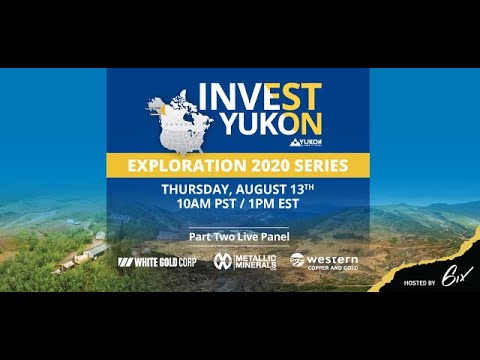
0:15 Welcome again, everybody. My name is Trevor Hall. I am the host of this exploration series. I'm also the host of the mining stock daily podcast. If you are unaware of what the podcast is, we are a multi daily content provider of a news briefing in the morning before the market opens out of the junior exploration and mining sector and then we follow up throughout the day with some intraday market commentary, corporate interviews and company updates for interviews from executives from around the industry. We are distributed on about 12 or 13 different global networks. So wherever you get your podcast, whether it's through Apple iTunes, Spotify, even Amazon Alexa, you should be able to find us. And just, We hope you subscribe to the podcast When you can obviously my Amazon Alexa is confused because I spoke out of term to her one quick note We have shirts pet rock T-shirts to celebrate the new gold bull market. You can go to our Shopify page to pick yourself up and your loved ones, a lovely T-shirt.
1:25 So that's my shameless plug for myself. So we've got 3 great companies out of the Yukon that we are going to highlight today. Not only do we have white gold, we have metallic minerals and also Western copper and gold. Quick rundown of the format. Each company presenter is gonna be giving 3 minutes of time to present the company. Give a quick rundown. We'll get into some Q&A panel discussion. If you, the audience, do have a question, you will see a message on the right side of your screen where you can type in the question. We will try to get to all of them or as many of them as we can throughout the time we have allotted. So let's get started. Our first contestant in
2:14 the white corner, white gold, and their CEO, Mr. David D'Onofrio. David, take it away, my friend. Thanks for having us. Thanks everyone for joining. Hope everyone is doing well. 3 minutes, not a lot of time, so I'll get right into it. White Gold Corp, pretty new company established in 2016. We are focused in the white gold district of the Yukon. This is the heart of the Klondike gold rush in the turn of the century, where from that point to this day, there's been 20 million ounces of Placer gold mined out of the creeks.
2:45 And I would say the last 10 years has been the first sort of occurrence, the modern day exploration to look for some of the sources of this gold and or other mineralization, hard rock mineralization. This area really came to fame 2009, 10, 11, when some of the properties prospected by the infamous prospector Sean Ryan had some major gold discoveries. This was through Underworld Resources on their gold and sial deposit, which was acquired by Kinross and then Kaminak a few years later, which was acquired by Goldcorp, now part of Newmont. Through a long sort of turn of events, you know, the short answer is White Gold Corp basically now owns the rest of that land package, a little over 400,000 hectares, about 1 million acres, And we are very actively and aggressively exploring that with some of these same exploration tools and the same team that led to those first big discoveries. It's a huge area.
3:45 It's highly underexplored. It's a tier 1 jurisdiction. And this is why we are so excited about the opportunity. It's very unique. And this is also the reason why we think we were able to attract Nico Eagle and Kinross as our largest shareholders combined. They own about 35% and recently Eric Sprott as another member of our team as we look to unlock some of the additional riches that this area may have. Where things stand today, we're fortunate that we actually did a deal with Kinross to acquire the Golden Saddle and ARK assets from them. That's about 1 million and a half ounces now. We've grown significantly since that acquisition and we will have another smaller deposit called the VG deposit. So all in all, we're just under 1.8 million ounces of gold.
4:33 And our exploration plan this year is sort of 3 pronged the same way it's been for the last few years. One is we're spending some time to increase the size of those deposits, not through conservative delineation type drilling, but really looking at new targets within a small radius from that. Over the last couple of years, we've been quite successful in finding additional occurrence of mineralization. So those are being followed up this year, particularly and where we just started diamond drilling a couple of weeks ago is on the Golden Saddle West and the Ryan Surprise, which is 2km West of the Golden Saddle. So any ounces we find there will be accretive. We've had some great holes in the last 2 years. So we're pretty excited about what can come from that.
5:19 There's also another number of nice targets along that similar trend. And the other sort of two thirds of our exploration focus will be 1 on our Titan target, which was discovered last year. That's on our Hen property, sort of 25km northeast of the Golden Saddle. We found some very high-grade Gold occurrences near surface last year. So we'll be following up there with some of the first diamond drilling ever. This is also in a very rich Placer district where millions of ounces have been produced. So that surface exploration with some of the supporting geophysical work makes it highly prospective. Another area where we're doing quite a bit of work is on our JP Ross property.
6:06 This had some tremendous success in the last couple of years. We had the Vertigo discovery and since then have found an additional 6 targets with some high-grade surface sampling and preliminary RAV drilling. Very high-grade gold, structurally controlled. So what we're doing there as a first step is going in and performing a very extensive mechanical trenching program along with some deep structural interpretation to really sort of try and get a sense of what's going on. We want all the activity that we're doing to be highly focused and impactful. So we'll be, that's currently underway as well with drills coming onto that later in the season. And with like such a large land package, part of our business plan is we're preparing targets for future work. So there's a number of properties we have where we're performing more of this preparatory work. 2 of the very exciting ones, which we get asked about a lot is the Bonanza property, which is right near Dawson. That was sort of like the heart of the first discovery of the gold rush, the millions and millions of ounces of gold pulled out of the Placer Creeks there.
7:14 So we're pretty excited to get that underway.
7:17 And the other property, I maybe have a little more time to speak about is our Betty property. That ties onto the coffee deposit, which was owned by Kamenak, Gold Corp, and now Newmont, right along the same fault system. We did some drilling there in 2018, had some very successful results, so we are getting that ready for some follow-up drilling as well. So I think that's a quick three-minute overview of what we have going on. Thank you so much, David. Appreciate that. White Gold Trades as WGO in Canada and on the OTC markets in the US with WHGOF. Be sure to put your questions in for David into the chat function and we'll take care of those and get those answered momentarily.
8:05 I hope it's just me, David's screen locked up for me.
8:10 I don't know but I hope everybody's not having that much of a problem. Greg on the other hand is crystal clear for me so in our far right corner our next competitor in the navy blue trunks with the purple trim is Mr. Greg Johnson from Metallic Minerals, Metallic Trades, MMG in Canada, and also MMNGF. And I hope he shares some more information of one of the most exciting silver districts we have in North America right now. Well, thanks for that introduction Trevor. It's great to be here our first time. I think Metallic might be one of the newer names for listeners. We are one of the few silver-focused explorers in the Yukon. My background, I'm an exploration geologist by training, started up my career with Placer Dome, who was acquired by Barrick, went on to co-found NovaGold.
8:59 And many of the people here at Metallic are former Nova Gold alumni. We've worked together for a long time. We've got a great team of highly successful explorationists. We've focused in the Keno Hill Silver District because of its long history of high-grade production, over 200Moz of historic Silver produced. And in the last 6 years, nearly 100Moz of new Discovery modern 43101 resources with our neighbor, Alexco. We are a relatively new company as well starting in 2016, bringing together really the first couple of years were all about acquiring the assets. So we've now built a land position that's the second largest after Alexco here in the Keno Belt, 166 square kilometers.
9:44 The focus early on was how do we prioritize this huge land package? What are the areas we should focus on? So we had kind of a 2 pronged focus. We identified 6 target areas that were right on trend of the known mines and prospects. And in fact, we've got 8 historic producing mines on our ground. So kind of head frame exploration, if you will. And then the second focus has been on the green fields part of this brownfields district. So out in the East, where we have the same Keno Hill port site and greenstone that hosts the major deposits on the West and to the South. We've basically gone out and followed up work from the 1950s and 60s from Alexco's predecessor. We've developed 12 multi-kilometre soil anomalies that we're just starting to sink our teeth into in terms of first drilling.
10:32 So this year's program is going to be the biggest exploration program in Metallic's young history. We're going to be a combination of core drilling on the advanced stage targets to keep building out on mineral inventories towards future 43-101 resources. And then on these early stage targets, we're getting the first reverse circulation drills into those to really understand what they're about. The targets on the advanced stage are clearly classic Keno Hill type systems. We're getting 500 to 1000 gram type silver grades, so quite spectacular grades.
11:05 The stuff on the east, we think it might be more of the same, but the footprints are so large, we're not sure if it's just more of the same classic Keno Hill type systems, or if we might be closer to the source intrusions that everyone's been looking for historically in the district. So it's an exciting time for us to get some holes into kind of understand the third dimension on those big targets and to move towards building out resources here with a target to be able to table 1st resources hopefully by 2021.
11:37 Thank you so much, Greg. All right, now on to our, well, my returning champion, Mr. Paul West-Sells, the long-going joke between him and I. He's made more appearances on the Mining Stock Daily podcast than any other CEO in this industry. So here we are once again in the hot seat, Paul, a returning champion, CEO of Western Copper and Gold, Mr. Paul Westsells, trades on WRN, both on the TSX and NYSC. Take it away, Paul. Well, thank you very much, Trevor. Yeah, and hopefully everyone can hear me. We had a few audio challenges here and I think Windows updated halfway through this all, but yeah, so Let's talk about Western Copper and Gold. It's a bit of a different story. We're doing some exploration, but we start with a fairly large project.
12:25 The casino deposit, we issued an updated resource. We're now sitting at 21Moz of Gold and 11Blb of Copper. It's a very large Copper-Gold porphyry. That updated resource that we issued a little over a month ago was the result of an infill drilling campaign that we did last year. The goal last year was to do an infill drilling campaign, release an updated resource, which we've done. But when we did that infill drilling campaign, we actually hit some really interesting anomalous results, nicely anomalous results, which we're following up this year. And that's really been our exploration targets. And the first anomalous result was high-grade Gold in the south of the deposit.
13:13 We hit 55 grams per ton over 3 meters. That was the third time we'd hit this really high-grade Gold. Historically, we'd hit another 53g per tonne and a 73g per tonne over these short intervals. It was one of these situations where you hit it once, it's normally hit it twice, it's interesting. You hit it 3 times and really you can't ignore this. So one of the key goals this year is to go back into that area and to drill and try to put together that Gold zone in the south of the deposit.
13:48 That's target number 1. Target number 2 is on the north part of our deposit. The casino, the 21Moz of Gold, 11Bn of Copper, that's the main deposit. We were drilling and really thinking that we were closing off the north face of that deposit last year. What we found is actually it started to get thicker and we actually hit a separate porphyry deposit to the north of us. So again, we're in there. That's target number 2 is to focus on that and really just sort of roughly delineate what do we have there. We know it's a younger deposit. You know, we're hopeful that there might be some higher grades there remains to be seen. So those are the 2 primary targets. And then the tertiary target is really this property that we got last year. And last year
14:42 we acquired the Canadian Creek Project, which is directly to the west of us, sits between us and Newmont. And really there's a whole bunch of exploration targets there. But the 2 that we're gonna focus on, one of them is also seems to have some high grade gold. And then The other one is the Anna target, which is another porphyry target for us. All right, Paul, thank you so much. It sounds like a little nice little starter operation, rooms for expansion. Yeah, exactly. All right, let's get into, I'm gonna keep it with you, Paul, and with David, because I know this is an ongoing question, but everybody wants to know, because you never know when things change, what's the status with coffee? What are you hearing from the ground there, since you both share borders with it?
15:32 What can you share? And what would you prefer to happen? You want to start Paul?
15:41 Yeah, I mean I can tell you what's happening on the ground because you know we're both up there so we know what's happening on the ground. Newmont, being a very large Gold company, I think they are being very, very conservative with the COVID situation. I think initially they had some drilling planned, but this year they're not doing any drilling.
16:06 Latest I heard is that they were just going to do some sampling and might be a little bit of geophysics. I mean, they certainly have people up at site doing some work there, But unlike last year, last year I believe they had 5 drills at Coffey operating. This year I don't believe that they have any.
16:26 So that's what's happening on the ground. In terms of what Newmont, I mean we're all sort of a bit of a family up there. I mean, everyone knows each other. Certainly, with White Gold, with this great exploration potential, us with the large porphyry, Newmont with the coffee, which is a great project. You know, there's lots of discussions going on.
16:54 Big companies being big companies, they move at a fairly glacial pace. Hence why I think, you know, we just keep moving forward. And that's sort of the, you know, really what all we can do. David, do you have any other take on this? That's pretty consistent with what we've seen. They were, from one of our last conversations, as Paul mentioned, pretty active last year, really looking at some of these other targets
17:21 further away from sort of the core to pause a lot of you know new targets or you know targets with limited testing that you know get a sense of what else the property has to offer which likely you know a lot more so you know kind of get a sense of the upside potential in that regard. And, you know, in terms of what can happen strategically, obviously, you know, it's an attractive
17:46 target. You know, It was 3 years ago at a very different gold environment. You can only extrapolate that to today. And I think interest follows suit with that as well. So it's a very exciting and great piece of the puzzle in this emerging district. So excited to see that proceed and succeed. So let me follow up with this question. And it's going to be a tough one. You can be as politically correct as you need to be. But I think the market maybe is questioning if coffee is more suited for a major producer such as such as Newmont, or if it'd be better developed and move forward by an exploration company such as either one of you 2. What do you think?
18:33 I'll let you take first stab at that one, David. Yeah, you're absolutely right. Newmont is a behemoth, right? And they have a threshold of what's a proper project for a company like that, that's among a number of companies you can count on probably you know half the fingers on your hand which that's great for them. It's obviously was inherited as part of a bigger acquisition. As Paul mentioned these big companies move very slowly. Would we see maybe more aggressive development with a separate ownership potentially? But I don't think that the decisions may be as binary in Explorer versus Newmont. There's a lot of companies in between, especially in this type of environment where a project like that could be a great number 2 project or 3 projects to bring online for a mid-tier producer or a new company maker for people with access to capital
19:30 and team to look to set their mark in this new environment and build a company off of, with the compliments of everything else in the district to offer additional optionality and strategic possibility. So, yeah, there's a lot of things that could happen. They're all, which I think would be beneficial to the district.
19:50 Yeah, and I mean, I guess what I would, I mean, I would echo what David has said on that. I mean, it's, I mean, the coffee project is a great project. There's absolutely no doubt of it. Is it big enough for Newmont? That's probably the debate. However, you then take your step back and look at that district. And obviously we've got a lot of Gold, there's a lot of coffee, there's a lot at what white Gold is found, and then the exploration potential in that district is, I mean, that's the one thing that everybody says that looks at that district is they're always surprised at how under-explored it is. So then you have to stop and say, is Newmont going to walk away from, you know, 20 to 30 million ounces of gold already identified and huge exploration potential just because, you know, coffee is a little bit too small, they might, but that would be a tough decision for them to make.
20:53 Dave and Paul, you're off the hot seat for a few minutes. Let's turn it over to Greg. Greg, you are in what I think is one of the most exciting silver districts, not only North America, but obviously the world,
21:06 Keno Hill. We've seen a lot of great development in this jurisdiction. Victoria Goldmines coming online. Looks like Alexco, your neighbors are going to be into production into Q4, so very soon. Just talk about being a part of this area and what you are going to provide to increase the more value into the Keno Hill jurisdiction?
21:34 Yeah, no, I totally agree with you. The Keno Hill is kind of, it's not really appreciated for what a caliber of that asset. We've got a district that's produced, it's one of the highest grade in the world. We've got this tremendous history of production, 220Moz, and now Alexco has found 100Moz in the last 6-years. They did get their permit, so I was just out at site last week and the amount of activity out there, It's night and day with where it was last year. So those guys are full swing to get back into production. There's lots of activity. I mean, everyone's doing the COVID stuff, but it's very, very active area. And it's a big deal with that mine restarting. That's the third mine in the last 12 months to come back on stream. So you've got Victoria with their new operation.
22:21 You've got the former capstone operation at Minto that's come on back on and now Alexco. So it's exciting times in the Yukon. When you look at the broader district, It's 35 kilometers across from the westernmost producer to the easternmost producer. The western half of the district was consolidated early by Alexco's predecessor, United Cano Hill Mines. And it's really been a very patchwork land ownership up until really we came into the district and started pulling things together. So we put together about a third of the district through acquisitions from private groups. Another third came in by acquiring property that was held by Independence Gold and strategic metals and these juniors that had blocks that Didn't necessarily make sense for them to focus on but made a lot of sense in our keynote portfolio And then we staked about a third of the district so that that gave us that combined So now when you look at the district today, it's very much kind of inner finger you've got a let's go largely on the West and Center part of the district and we basically control the entire eastern half of the district and then some of the stuff to the south and some places where we are in Alexco's living room across the street.
23:31 So it's a great place to be operating because almost everything is road accessible. So that means the cost to explore are quite inexpensive and the upside for our shareholders is even if we find something relatively modest in size to start with, I mean our target is to find more Birmingham's, more 50 plus million ounce deposits, you know, near service. But let's say we find a 20 million ounce deposit. Well, that's 3 or 4 years of production for Keno Hill. And so the opportunity for us to look at that mill that sits in the center of the district, that's clearly within trucking distance, means we can have a fast track way to bring resources very quickly to production. And that's a win-win for everyone in the district, for the communities, and for the people.
24:19 Okay. Greg, I wanna keep it with you because I have a follow-up question for you because this is really interesting and I would like some clarification from you.
24:28 In a recent presentation, you, in some materials, you included Penasquito as a comparison.
24:36 Yeah, the salt. You gotta bring us down to earth on this one, why? Okay, yeah. So historically, the focus, That early consolidation was in the Western part of the district. And up to this point, everything we've found in the district are these very high grade structurally controlled silver lead zinc deposits. That's what a classic Keno Hill deposit is. 500 to 1000 grams plus silver grade, 25% credits from lead and zinc. On the east, we have actually more Keno Hill quartzite exposed on the east than we do on the west. It's flatter, it's thicker, We've got more greenstones, which are also some of the high-grade hosts. So it's been recognized all the way back to the 1950s and 60s that, hey, there's there's mineralization out there on the east, but there was no road access previously, and yet that patchwork land ownership.
25:30 But some of the United Keelhole Mines guys, they recognize that, you know, had similar kind of signature out there. So they did do some early soil and rock sampling from the 50s and 60s that we were the first to follow up in 2018. And that led to the discovery of these multi-kilometer scale footprint soil anomalies. So we've got 10 anomalies on the eastern half of the district that are between 2 and 5 kilometers in length, up to a couple of kilometers wide that are running 100 grams per ton silver equivalent. And so in soils and soil is weather bedrock. So typically your material in the bedrock should be higher than what the soils are.
26:09 So 1, the footprint, Birmingham, the Birmingham trend, which contains 150 million ounces is a kilometer and a half long and 200 meters wide. These anomalies are 10 times larger than that. So already just by just sheer footprint, these are huge. So that starts to get you thinking. The second piece of the puzzle here is as the new guys on the block, we came in and reinterpreted all of the regional geophysics.
26:36 And as we started to look at it, we said, oh, look, isn't this interesting? We've got a series of intense maglows that are directly adjacent to the biggest deposits in the district. And as they go out to the east, they turn to the south and they occur directly underneath of these large soil anomalies. So that means we've got a soil signature that would be or grade in the Penosquito Pit. We've got
27:01 a signature size in terms of footprint that's multi kilometer in scale, and it's got an intense magnetic low signature to it. Well, the hallmark of a Penosquito or a Cripple Creek, these bulk tonnage deposits, which are vein systems and breccia systems that are closely proximal to the original source porphyries or intrusions. And so that's what has started to take us down this route of these targets out on the east, they may just be bigger collections of classic keno type vein systems. And that's why the footprints are bigger,
27:36 so just more veins. But because of that magnetic signature, because we're seeing porphyry dykes in that area, which is unusual for the keno district, we are starting to say it's possible that we're seeing the source of the Keno district here, and that we could have something more similar to a cripple creek or a panosquito. And so that conceptual model is part of what we're gonna be testing this year with the truth machine, the drill. Get some first holes across this in 3D to see, is it just classic Kino? Or are we seeing something that has breccias and
28:07 other things that could suggest a bulk tonnage target? Thanks, Greg. David, let's turn it over to you. And on the back of some exploration work, can you give people who are listening in today kind of, you know, through this season's exploration work, what a successful outcome might be once everything is wrapped up in the winter and what you look to achieve knowing that you have just a massive land package. Yeah, absolutely. And one of the sort of mixed blessings we've had as a company is with so much going on, you really have to find a systematic way to prioritize your time and your dollars. And within our technical group, everyone has their favorites and their theories, but the approach we've taken as a company is we wanna proceed on different targets only if, as, and when they're ready. And we have a very fulsome protocol of the work that needs to get done to be able to sort of provide a thesis to move to the next level of exploration.
29:10 In this district, with it being unglaciated, this all starts with the soil sampling, which successful then move on to either trenching or probe work. Success from then will lead to you know additional type structural work and or the rab drill. That's that's a very novel concept that we utilize here. It's popular in a lot of areas around the world, not so much in Canada, but why it's a great tool for us is that it allows us to
29:39 get a lot of information, you know, shallow, 1st or 100 meters, very quickly and inexpensively. And in a jurisdiction where unfortunately our you know operating season is limited that's become a very useful tool and it's the same protocol that was used by Sean Ryan and his team that led to the golden saddle discovery and coffee and everything else And so we have a number of
30:04 projects that are in the works and they're sort of in 3 different buckets. There's the earlier stage type projects, which we are preparing to get them to be drill ready. And there's a couple of those that are seeing activity this year, or there's actually a number of them. I think the sort of the highest profile ones will be, I may have touched on them earlier, our Betty project, which is along the Coffee Creek fault and ties on to Newmont's property. You know, we've done some drill work on that in 2018, and we came up with some very interesting results. You know, an example is 50 plus meters of a little over a gram material right from surface, kind of similar DNA to what we've seen at the coffee. So we'd really like to do a little more work and have that property sort of prepped and ready for drill work either right at the end of this year or at the beginning of next year. Similar type activity on our Bonanza property, which is just south of Dawson.
31:01 And obviously was the site of the original Klondike discovery. We've done a lot of work there, structural type work particularly, and are very excited to drill parts of that piece of property, which have actually never been drilled historically, which is quite rare. And that the whole district is underexplored, but this part of the district, maybe a little bit more exploration being sort of right in the heart of the original Gold Rush. But this area actually had never seen any exploration. So getting those targets, moving them up our pipeline. We have a number of other sort of new discoveries, we call them, that have followed on from that type of work in the past couple of years. The couple that are seeing the most work in this season is our Titan Discovery on our hen property that was found last year, which is a piece of property that was worked for the first time ever
31:56 by our company for sure and I don't think much work had been done in the past. Started with a soil sample, went to that protocol, continue to find more and more high-grade Gold and we will be doing some Rab drilling and Diamond drilling this year as well. This has a lot of different characteristics, all of it very prospective. Nobody's kind of really sure of exactly what it might be and that's you know the only one way to find out is you know get the drills turning and then get some more information. So very excited to sort of see how that all pans out. As well as on our JP Ross property This is where we had the Virto discovery. Another 6 targets were found in a, you know, what we call the vertical trend. It's a 15 kilometer by 15 kilometer area, all road accessible from Dawson. So very easy to work. And the next step here is because of the complexity
32:50 of what we saw in the structural host, we're doing a lot of trench work. And this was actually really favoured by our partner Agnico as well. They're very involved technically in our strategy and our approach and to really spend the time to figure out more information in that regard and follow that up with a significant amount of rab drilling this season as well. We're very excited. We've had high-grade results in the last 2-years now on that property and follow up there just to sort of really sort of get a sense of what the geometry is there. We think that could really be a significant mineralization hosted in that area. And then sort of moving up the ladder to our more advanced stage properties.
33:35 We have our Golden Sile Arc Deposit, which is a little over 1 million and a half ounces now and testing some of these satellite targets which have been discovered in the last couple of years. The one that's going to get the most focused this year is our Ryan Surprise. We've had sort of very high grade intercepts in the last 2 years. What's kind of unique is last year, there was a revised interpretation of the direction of the structure. And we went in with only 2 diamond holes last year and we hit both of them, which is really kind of sort of improved our understanding and the prospectivity of that target. So we're actually diamond drilling that one right now. And any type of ounces we find there will be accretive to our current deposit, the Golden Saddle deposit. And in this type of a market, we're fortunate to have a package of land that's, as Paul said, very underexplored and unique to be able to have something like that anywhere in the world, but to be able to have that in a tier 1 jurisdiction with the support from all stakeholders is something that's pretty special. And I think what's attracted the majors to take a real interest in this area.
34:52 And with the type and the size of the deposit that we have, obviously, there's not too many of those in these types of places in the world. And we're very excited to be able to sort of continue to demonstrate the upside opportunity with those assets as well. So sort of 3 buckets we're working moving forward. A lot going on makes the story a little bit complicated. But as a major shareholder, with our group, Powerwan, along with Nikko and Kinross, I think it presents a very unique type of an exploration company that you have a very significant deposit, you know, you sort of can pin a value on that with a lot of additional upside there alone, plus this huge district scale land package which is just seeing some of this modern exploration for the first time.
35:39 We do truly believe that this is like owning 40% of the Timmins Camp 70 years ago or places in Nevada or Quebec and with just sort of untapped potential that, you know, kind of just really literally scratching the surface on, you know, with modern technology now. Paul, this is the last question for you, then we're going to go into Q&A from the audience. But Western's at this, I feel like is at this like crossroads here, right? I mean, the casino deposit for what you have is massive. On the flip side of it, your acquisition of Canadian Creek has a lot of exploration potential. Do you feel like the market is maybe more leveraged to Western Copper and Gold, considering taking the casino project and pushing towards more directional into building the thing and getting a mind going with the addition of the exploration from Canadian Creek or Are you gonna go continue purely exploration?
36:49 Yeah, I mean, you know, the quick answer is is that the the primary focus is to drive forward the project. Take a step back and talk about why are we doing exploration at Western Copper and Gold this year? And as I said, the key reason is target number 1, which is that high-grade gold district in the south of our deposit. And why is that important? It's important because if we can sort of string together that high grade gold area in the deposit, and even if that high grade gold ends up being diluted down into, let's say, you know, gram per ton sort of grades, what that does is it adds to our project, it adds to the heap leach. And so, I mean, our project, large copper gold porphyry, in terms of the way that we have looked at developing it, one of the more attractive ways to develop it is to stage develop it, starting off with the Gold heap leach.
37:54 If we can bring in that higher grade Gold in the South after delineating it, then that becomes a standalone project. We start with the Gold heap leach, and then we move on to the main porphyry. So, but we're, I mean, I always say, you know, we're a company more of engineers than geologists. Whenever we do our drilling, it's really, it's around how do we improve net present value? How do we improve IRR on the project? It's all project driven in terms of this turning into a mine. And that's absolutely our focus. So even though we're doing quote unquote exploration, really it's just further delineation of things that we already know, and it's working towards improving the overall project.
38:42 Okay, there was a follow-up question from the audience for you, Paul, just based on what you've seen, or maybe from what the team's seen out of preliminary drilling this summer, anything you can share out of that? I wish I could. What I would say is that We certainly have been seeing some interesting results. Part of the problem with having 55g per ton intervals is that it's got to be pretty spectacular for me to news release it at this point in time. It's going to be lots of, we're going to have a busy winter sort of pouring through all the results, I think. But there's certainly lots of stuff, lots of chewy stuff that we've seen so far that I think is going to make for a very interesting story. Okay, David, how about you? When could the market expect to see first assays out?
39:39 We're hoping to start getting those in the next several weeks. I think one of the, Well, one of the many problems that sort of COVID has created is a real increase in turnaround time at the labs. And I think probably it's common amongst other companies you speak to with their physical distancing requirements, a lot of them had to really cut down their workforce, which just means less bodies in the lab, less samples getting turned. So it's about a double the time almost from what we've experienced historically. And I like to think we kind of get some preferential treatment being one of the busier juniors out there. So, you know, hopefully, you know, we should have a better sense of that in the next couple of weeks. And then, you know, once we start, you know, then it's, we'll be consistent right through, you know, into the winter, I'm sure.
40:29 But, you know, we're all very eager to start, seeing some of the results here for sure. Okay. Greg, you had, looks like a plethora of fans in Germany, given the questions coming in. But people want to know, given the targets you have for your exploration work, and this is pretty forward thinking, obviously, but what would you expect to see maybe a resource being put together, an early resource being put together, given what you have? Well, we've got 3 target areas that we call our advanced state targets. We have 6 total advanced states, but 3 of those already have enough drilling, trenching or underground sampling that we've got an initial mineral inventory on those. So we're building on them. It's really kind of getting them to critical mass, building the tonnage out. So we're doing step-out drilling on those targets.
41:19 We're already 3D modelling, for instance, at our Formo and Caribou targets. So it's an iterative process. We're building on it. We're going to hit some holes on those targets this year and we'll see if that's enough to really move the dial in terms of what the market would see as significant or whether we need to do a bit more work. But our objective is to advance these to 1st resources and ideally by 2021 is what we're targeting. So, but that's going to be highly contingent on the results that come out of this. We've had some pretty spectacular results. We've already posted results from our Keno West targets, some underground sampling. We add up to 7,500 grams per tonne silver in some of those. So that was pretty exciting stuff.
42:05 We've got news coming from Keno East here shortly in terms of some of the work that we've been doing on the surface and on the geophysics. And then, kind of like David said, we'd expect first real results to start coming out perhaps in early September. And it sounds like you got some money in the bank now. Yeah, we just closed this morning, $8 million bought deal with Canaccord, with Eric Sprott as the largest investor, and I think about 20% of that deal. So the second investment in the company. So we're well funded, we're sitting around $10 million and we've got about another $12 million in the money warrants and options. So we're really in great shape to accelerate our programs and really get out there and start taking to these where we think all these targets where we think they really can go.
42:56 How long, what's the time frame? How long do you think that 8 million will last you, Greg? Greg. Well, as we know, exploration is an expensive business, but the benefits of being like the other 2 companies here, the fact that we've got road access and things that really helps stretch those dollars further, but certainly would take us into 2021. We don't have a lot of carrying costs. We don't have a heavy cost. We share corporate costs with our 2 sister companies, Group 10 metals and Granite Creek Copper, also Yukon focused companies. And so that means we keep our GNA low so we can really stretch that money a long ways and we try to maximize money in the ground to really go as far as we can with that.
43:43 Okay. There was this kind of a blanket question. This is more of a group question, and I think it's timely. Some of us were chatting before we launched about the movement in the gold and silver prices this week. I think people are a little shaken in their boots Monday and Tuesday. You know, we had an excellent run. It was a little gold and silver move pretty high, pretty quickly. Me and myself, if we want to hang out in 1950, I'm perfectly okay with that. But don't you think we need, can you talk about the need to just kind of find some sort of foundation going through this, but yet doesn't the case for gold and silver still remain as staunch as ever?
44:32 Whoever wants to go first. I'll launch in. I think our approach in terms of putting together the company in 2016 was that we were coming out of an 8 year bear market, that it was the right time to be getting prepared for the next multi-year bull market. We expected a period of consolidation, which we saw from 2016 through 2020. And we think the seeds have been planted here for the next major bull market in commodities. It's gonna start with precious metals if it's like past cycles and copper and base metals will kick in probably with a bit of a lag. For us, this feels a lot like 2002 in terms of where we might be on this next cycle. And that was a 10-year cycle, 2001, 2002 to 2011.
45:26 So I think these things are poised. This is a sector where the percentages can be eye-watering both on the upside and on the downside. But, you know, actually, if you look at gold, it's been very constructive. Higher highs, higher lows for more than 18 months. Silver is just barely catching up with gold. The ratio is still at historic highs. And I think this is a really healthy quick correction to get the frothiness out of it. I agree with you. If we stabilize here, this is fantastic. And you know, let's let's hope for, you know, kind of a more modest trajectory. But if we're at the beginnings of a multi-year bull, we're just getting started here. And I would expect silver will ultimately take out its previous highs, like gold has.
46:12 And we'll see the same on copper and some of the other metals. And this is an exciting time to be looking at high-quality exploration development stage companies in our sector. Let's table the Copper for Paul. But before that, David, what are your thoughts on the market? I totally agree with Greg. I'm not a macro economist, but certainly the foundations for, you know, look to be set and constructive for continued price appreciation across the commodities. There's also the effect of the dollar there, which people will have their own perspectives on. The only one thing I would add, you know, from a company perspective, and I think, you know, the other guys probably share similar views, is, you know, you want to be sort of operating towards some sort of a conservative base case scenario, which has always been the case. You know, I'd be hesitant to start, you know, looking at prospectivity of projects, you know, using $2,000 gold as kind of a base case sensitivity in that analysis. And I know for ourselves, for sure, based on kind of internal desktop work we've done over years ago, these projects all looked very prospective at much, much, much lower gold prices. And that's kind of our internal mindset and how we're working.
47:28 And at these prices, and if prices continue to go, that's just sort of all icing on the cake from our perspective. And I definitely welcome that. It certainly brings a lot more interest and helps things get done. But I think the opportunity for that is incredible. And there should be a strong premium for working in a tier 1 jurisdiction like the Yukon. You know, I don't think that can be understated enough. We've seen tremendous efforts both politically and financially from the Yukon and federal governments specifically to support the mineral extraction industry and the benefits. You know, that is so unique globally and I think the benefits of that will be paid back in spades to the government.
48:15 So really commend them on that for all their support and they're always there to help in any way they can. I don't think the market's priced that into any of our companies yet, but it truly is another differentiating factor, not to mention that we're operating in Canadian dollars with these commodities, trading in US dollars, etc. Stuff everyone else knows, of course. Paul, can you add some commentary with copper? Absolutely. And I'd sort of pick up from what Greg was talking about, that it feels like 2001, 2002. And I'd even say a little bit like 2008, 2009, where you had, in that case, obviously, a market crash. In this case, it's a different thing, but the same reaction happens. There's a move into gold initially, and then that's followed up by this massive stimulation spending on a global basis.
49:15 2009-2010, it was mostly focused in China, but here you're gonna have it focused, I think, across the globe. And whenever you see, I mean, so the question comes, why is copper up? Why is copper sort of in the 290 range? Now, part of that is because there's copper mines that are being shut down in South America due to COVID. But more importantly, it's because people are anticipating this sort of, I mean, how do we restart the global economy on the back of a vaccine? You do that by stimulus spending. You do that by building infrastructure. All of that equals copper. That's why copper is up. That's why copper has just begun. You know, 290 is just back into sort of a healthy level. I mean, The last time copper ran, it was over $4.
50:06 I expect it to go well over that $4 again during this cycle. As Greg says, it feels like just the beginning of this. You're also seeing money come into the sector. The investment in cannabis is over, investment in blockchain is somewhat over, so you're seeing the money coming back into the mining sector. And it's an exciting time, and It's just the beginning. Well, gentlemen, if we get a 10 to 12 percent decline in the price of gold, we call it a correction and we get a correction. If we were to get a 10 percent decline in the overall stock market, we'd get a stimulus package. So that's the difference right there. Thank you so much. That's all the time we have. All 3 of these gentlemen are available for questions via email or always a phone call if you can get them scheduled.
50:58 If you have some follow-ups for them, please don't hesitate to try to reach out. That's the wrap from us today. Thank you so much, David, Greg, and Paul. It was a real pleasure. Appreciate it. Thank you