Transcript
Automated transcript · Written by software from the replay's audio. It can mishear names and figures; the replay is the record.
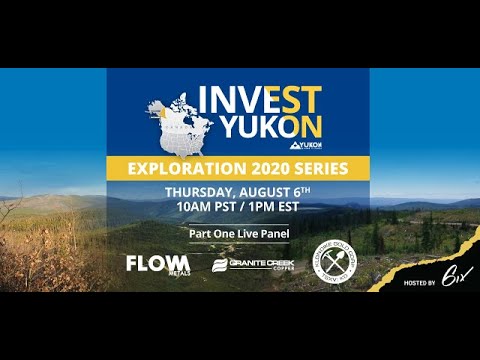
0:14 Thanks again, everybody, for coming into this session. This is the Invest Yukon Exploration Season Series. This is the first part of a three-part series. Obviously today's part 1. Next week we'll have part 2 and then the week following the last third part of the series. My name is Trevor Hall. I'm the host of the Mining Stock Daily Podcast. You can find us on about 12, 13 different networks distributed throughout the world. We deliver a short news briefing every morning, typically about an hour or so before the market opens, highlighting some of the most important news out of the exploration sector each morning that investors and speculators in this space should keep a close eye on that we believe.
1:02 We don't cover all of the news because there are many companies, more than 1,500. So there's only so much we can do in 10 minutes. So we do that in the morning. Then we also do some more market commentary and analysis and precious metals, base metals, miners, and also some of the overall market commentary. So you can find us on Spotify, Anchor, Apple Podcast, basically wherever you get your podcasts. We'd appreciate it if you find us, search for us, hit that subscribe button, and leave us any comments or feedback you would like. So it is my pleasure to welcome 3 gentlemen who are involved with 3 different companies based out of the Yukon. Today we are going to speak with Flow Metals, Granite Creek Copper, and Klondike Gold.
1:50 Each presenter is going to have just a quick couple minutes to give a brief overview of their company. Then we'll go into a couple questions. Once each company is finished, then we will go into more of a panel discussion regarding specifically those companies. And, you know, maybe if the audience has questions, they're able to type that in the chat box. And both myself and the moderator will make sure we try to get as many of those answers as we can. So you can type those, but we won't get to those until after the presentations. So we will get into the first presentation. That is with Mr. Jacob Verbass. He is the vice president of exploration for Flow Metals. Brand new company, very new company, as in last couple of months, brand new company. It's always an exciting time. And so, Jacob, why don't you take it away? Thank you, Trevor.
2:44 So, The Flow Metals was formed when we separated the gold exploration from our copper exploration that was in gold metals. So this was a spin out in 2018. And since 2018, we had the company private for a couple of years, added gold projects, amongst which our flagship in Yukon. We currently have 3 projects, 1 in DC, 1 in Quebec and the 60 mile in Yukon. But we've been working on gold in the Yukon for a while and
3:16 you know we're a company that grew up in the downturn. And earlier, about 7 years ago, we started working on the Wells property in Yukon and turned that into, approved it up, and sold it to K2 of the Discovery Group and this was at the bottom of the market. So that's sort of where we come from essentially. Currently, we're
3:42 preparing to get to the 60-mile area. So it's been, we've only been listed for 2 months, so of course the situation this year has somewhat slowed that down, but we're doing some ground geophysics now, getting ready for a small raft drilling program later in the season. It's a road accessible claim, so it's easy to work. We don't need to rely on helicopters and we can get in fairly late. And the claim has produced over 150,000 ounces of gold in Placer already, which is coarse-grained gold. And there is no source that we know of yet there. And so we have, the project has been drilled.
4:27 Project's been drilled in 2010, 2011, And that was the last serious work that has been done there. And that yielded intercepts of disseminated gold up to 28 grams a ton in fairly narrow veins. And we think that these are zones of disseminated Gold that are around coarser-grained Gold chutes, which we are attempting to find as we speak.
4:59 That's it for my couple of minutes. Thank you. Thank you, Jacob. Now we're going to turn it over to Tim Johnson. He's the CEO of Granite Creek Copper. Tim? Thank you, Trevor.
5:12 Granite Creek Copper is a fairly new company. We launched the company in spring of 2019. The company is a member of the Metallic Group of Companies, which consists of us, Metallic Minerals and Group 10 Metals. All 3 companies got their start in the Yukon.
5:32 We were added as the base metal counterpart to the silver play with Metallic and the platinum group with Group 10. We acquired our stew project from a very well-known Yukon prospector, Mr. Bill Harris, who had over the years since the 80s been aggregating a land position in the central portion of the Minto Copper Belt. As claims became available, he snapped them up and he was able to bring a very significant land position to us for our acquisition. So we're adjacent to the Carmax deposit owned by Copper North, and we also have a 30% interest in Copper North itself. And that to the north of us is a mental mine, which is an operation by Capstone put into operation, back into operation last year.
6:27 So they're currently shipping concentrate. Like I said, we had acquired a significant land position, 115 square kilometers. Shortly after our acquisition, we acquired a historic database that most of it had never been made public. We were able to quickly advance targets on our program, just basically doing compilation work. A small field program last year to confirm the tenure of the mineralization. And then this summer we had crews back in the field going over some historic core that was drilled in the 80s.
7:03 When it was drilled, it wasn't sampled completely. It was about 20% of it sampled. They only seemed to sample a real high grade, which is good, but we were missing a lot of the information in our database about structure alteration control. We were able to go back and resample a bulk of that core. We resampled just over 1,400m and that's at the labs now. We also, in going through our data, discovered that the process being used in the 80s missed a lot of the precious metals. At least that's our hope. So we're going back. We're doing full multi-element ICP analysis and fire assay for gold to see if we can bring their gold numbers into where we think they should be.
7:51 We basically did a 1,400-metre drill program without turning any steel. We're pretty pleased with that. Based on the results of that, we'll look at a possible drill program in the fall if we can find a drill, because they're getting to be as rare as hen's teeth in the Yukon right now. Yeah, there's my couple minutes. Thank you, Trevor, back to you. Thank you so much, Tim. Now we will turn to Klondike Gold's Mr. Peter Tallman. Peter? Oh, you need to unmute yourself, Peter. Thank you very much, Trevor. Those 2 sound good because we have something similar. So Klondike Gold, just as a prelim, we are on a venture exchange under the symbol KG.
8:37 We trade in Frankfurt under the symbol LBDP and the US OTC under KDKGF. Klondike Gold from 2015 onwards is a restart of a company that was originally incorporated in 1978. From 1980 onwards, it's been focused on the Klondike area. The new management, me, starting in 2015, took this project on because in 2015 the property had produced from surface 20Moz
9:10 of Gold in Placer from within the claims that we currently own with no known source. That was at the time the largest unexplained Gold geochemical anomaly on the planet. Since that time, we've done systematic regional or district scale exploration over our, I should mention, 600km2 property that covers the entirety of that area that produced the 20Moz. We have done 35,000m of drilling and have located 2 major sources of Gold in bedrock. We can explain why the Gold is in Bonanza Creek, which is the most famous Placer Creek in Klondike and also where it came from to source the Eldorado Creek Placers, which is the second most.
10:02 So Bonanza Creek has produced 3Moz in itself, historically, it's only like 3km long. Eldorado has produced 4Moz. We are exploring the bedrock sources of those. For the first time though this year, we've transitioned from exploration and discovery into mineral resource delineation. What we see are multi-million ounce targets. We have 2 of them. The Lone Star zone is 3km long in outcrop and drill hole.
10:35 We've been doing this year delineation drilling to establish open pittable resources. 1km away in parallel is a standard zone that's high-grade Nuggety quartz veining, also 3km long in outcrop and drill hole and we did a small test there also for open pittable resources. The results, the Lone Star tests are just out. They were positive. They gave a really nice open pit configuration
11:08 with grades consistent with what we've drilled, disseminated as the 2 previous speakers mentioned. And we're still waiting for results from the standard zone, which should be out in a week or so. And so what we see here is world-class potential. We're aiming now, from now going forward, at establishing a minimum 2 million ounce Gold resource. Drilling is underway. It's gonna take a little while to do the 2Moz. We figure we need another 50,000m of drilling to do that, but hopefully within 2-years or so we get a resource with a PEA. I'll mention that we are directly outside of Dawson on roads, airports, power is 20 kilometers away. All our roads are government maintained.
11:57 And so the infrastructure advantage is enormous from an economic point of view. Back to you Trevor. Okay, thank you so much gentlemen.
12:09 We're going to have a panel discussion and Peter actually I want to hit it back to you because your location really is at the heart of where the historic Klondike gold rush took place in the late 1800s.
12:26 It's not just happening in the Yukon, it's happening in Nevada, it's happening in Idaho and certain parts of the United States and also in other parts, you know, in Canada as well. And that's really going in and exploring some of these historical workings. With your project and with your company, Can you kind of walk us through, how do you go into doing deeper exploration with some of these places that were historically mined for decades and decades and using modern exploration techniques and strategies? Well, when we took it on, actually the evaluation before we took it on was realizing that effectively the exploration that had been conducted from 1896 to into the 2000s was really ineffective.
13:21 And so the premise was modern exploration with modern techniques is required. There isn't much outcrop in the Klondike, in the Yukon in general. And so really we were exploring with a drill, but we do the advanced ICP suite, we do oriented core drilling, we do metallic screen because all our Gold is coarse, 90% gravity Gold recoverable, it's all greater than a millimetre, so you can see it, that's no surprise, 20Moz of Gold on surface has been recovered from gravity.
14:00 We've had structural geologists in, I spent a fortune there a couple of years ago, looking at where the structures are, so we've been able to map structures that were never ever identified and these are deep crustal features that are the plumbing system for an orogenic gold network. All of that is kind of the background science. And then looking at how those relate to where the placers are,
14:24 and they relate directly. What we discovered was no, well, the original before I got there, The prevailing theory was the Gold was eroded from somewhere, but there was no Gold remaining in the bedrock. And that was actually shown that to be nonsense. I figured it was anyway, but from a science point of view, the Gold is directly uphill of where they were finding it.
14:52 Our structure in the Klondike fits the Tintina Gold belt directly. We believe all the ages of mineralisation also fit prior to 2015. They didn't. Now I think they do. And that kind of places Klondike with 20 million ounces in a world-class category in a world-class district. And I think broadly, the Yukon is absolutely unexplored, particularly for orogenic gold deposits. And everybody has a shot and these other 2 companies by description I think they're on the same thing we are.
15:25 I did forget to mention prior to this there will be some forward-looking statements so let's get that out. I might say a few, I kind of do.
15:35 And just like the big rush in 1885, everybody's got a shot, right? If you're going into the Yukon. Yeah, I will pay, because your background is California and this applies here too. California geology is the same as ours. California mother load placer was a white channel gravel. There was 40Moz of placer produced from that and ultimately over 200Moz of bedrock gold. That's all directly uphill and related to the placer. So it's not just here, it's everywhere. Okay, so moving away from some of the historical aspects of exploration in Yukon, Let's turn it over to you, Jacob. Flow's only been on the market for 2 months.
16:24 So this is a brand... This might be the Yukon's newest play. I don't know if there's another one out there in the last couple of weeks, but Flow might be the newest. What are some of the challenges as a new company putting a project out there and hitting the market? Well, the new, I mean, the challenges, of course, for a company
16:45 that is as fresh as we are, are that, and we listed 2 months ago, and of course that's, you know, that's the exploration season in the Yukon. It's the best months are June, July, August, but of course after a listing comes a financing to increase the working capital for exploration. And after that, the big programs can start. So that's essentially one of the challenges of a new company. That being said, though, even with the working capital that we listed with, we had set aside
17:24 a portion for ground geophysics and and route drilling. And So that's going to happen. We will extend that if we can. And again, it kind of depends on how quickly the weather turns in Yukon. You can never quite know after September rolls around. But we will
17:48 likely have some time. That all said, we're not a totally new company in that, of course, we have been working our projects for the past couple of years. And the new Brenda project in BC we've had since 20... Before I was involved with the company we've had that for 4 or 5 years I believe and so
18:13 there's been a lot of work that's gone into the historical databases. The project was last worked in 2010, 2011, and then dropped to look for greener pastures without really working through that historical database of drilling and of soils, geophysics, etc. So we are left with a trove of historical data that we can use. So yes, I guess that's where we're at. We're a new company on the stock exchange, but in other ways, we're a little bit older than that.
18:59 Tim, I'm going to turn it over to you. You mentioned Mr. Bill Harris. If anybody ever wants to talk anything about the Yukon with probably the most knowledgeable guy about the Yukon, Bill Harris is probably it. And once you meet him, you'll never forget him. You know, that's, that's absolutely true. And you know, I mean, the danger is you get them going and, and eventually, you know, you got to wander off and have dinner while he's, he's, he still goes to gold, but yeah, an absolutely trove of information, you know,
19:30 and, and you're getting them on the property and he points out stuff all the way back to the 80s You know that that some of that information is lost. So it's it's it's pretty neat And I can't remember. I think you mentioned it in your intro But you I want to kind of bring up this resampling programming with Granite Creek.
19:51 It sounds like that just finished up or can you, can you kind of. Do walk us through why the resampling and, you know, what kind of benefits is going to provide you? Oh, yeah. So it, the field portion of it just finished. So the crew moved out just last week and samples have been delivered to the lab. We're uncertain what turnarounds are like these days because I know the labs all of a sudden are getting swamped. We'll see what the timeline on that was. But the rationale, when we got a hold of our data and we started to go through it, we started to model it to see if the historic drilling would hold up in a resource. We just found gaps in the information. We didn't have the full multi-element
20:40 analysis. We didn't have indicator minerals. We didn't know much about the alteration. We also suspect that the lab that was being done, done the work in the 80s, which was an in-house lab, had a very high cutoff for Gold. So a lot of the gold that we think is there wouldn't have been detected. So in a news release we put out, you'll see on the table there's a lot of trace, trace, trace, trace as you go down the table. And our hope is that we can turn those traces into real numbers and use those numbers to inform what we
21:18 need to do next to get to a 43-101 compliant resource. That was the rationale, using modern methods to bring our understanding of the controls of the mineralization to a point where we're comfortable going and drilling. We could have just put a drill on the property and just start poking holes, but there's a lot of work that we were able to do for very cost-effective before we get to that stage. What about the synergies between your Stu project and the adjacent Carmack deposit? What do you see in there? Well, yeah, I mean, that was a rationale for us acquiring a 30% interest in Copper North. There has been, that's been a well-known deposit. It goes back all the way back to West, when Western Copper had it.
22:06 There's a, there is a small oxide resource there, but what we recognize is that they had kind of run out of room to grow that oxide resource on the land package that they had. We have a significantly larger land package. And in fact, at one point, some of the ground that we have was held by that same company. And of course, when it was lapsed, Mr. Bill Harris was Johnny on the spot and was able to acquire it
22:34 and help us out. So what we see, potential synergies is a small resource that is at PEA stage to the south of us combined with the blue sky that we can provide. We start to make a pretty compelling story.
22:51 You know, we are talking with the Copper North board. We don't know what that combining of those 2 assets would look like in the future, but we think long-term that's probably going to happen, whether it's us or somebody else comes in and snaps both of us up. I mean, our philosophy when we acquired the project was acquire what we consider to be a brownfield project in a district that had
23:16 an operating mine in it. It gives us 3 possible exit strategies. We find something modest, we can just hand it over the fence to the operating mine. We find something larger and we become a takeover target. We find something larger still and combine with our neighbours to the south, we attract a big player to the belt. And that's our goal, to attract one of the major copper producers and show that the mental copper belt has multi-billion pound potential. And we think we can get there fairly quickly.
23:46 Just a reminder for people in the audience, there is a Q&A chat. If you do have a question for the group or a specific individual, please hit that, type that question in the chat and we will try to get to it as soon as we can. Before we get to some of those questions.
24:05 You know this is this is I feel like I asked this question a lot to anybody who's operating in the Yukon but it's it's it's important question. The Victoria mine has come online is obviously in commercial production, which was really big news for the Yukon.
24:28 It looks like Alexco's Keno Hill is going to be in production here within months, weeks, which is also exciting. So it really seems like things are progressing really well. However, the Yukon is not without its challenges. What would you like to see or what needs to happen to, you know, to really make the Yukon kind of the primo mineral exploration and production jurisdiction in North America? First one who wants to take it, maybe Peter, cause you looked really excited. Well, I'm funny. You should ask that because I met recently with Sandy Silver as a premier of Yukon and 2 days after that, coincidentally, with Kerry Dixon, who's the leader of the opposition. And that's exactly what the topic of conversation was for the hour and A0I talked to both of them about.
25:33 Some of it is government, my perspective is government regulation or and the, it's not the government, the government's policies are some of the best and most, it's the best jurisdiction, one of the best jurisdictions in the world to operate in. It's supported by the government. And I think both parties would pursue the same policies, but On the ground, there's a lot of ways to improve the process, particularly for permits, and particularly in how the government, the First Nations and the companies interact. And that has been, I mean, the Yukon, to give them their due, invented the way that all 3 parties could participate.
26:24 There are definitely challenges with that and I think going forward that there's a lot of room for improvement on it. However, there actually is that regulatory process is already the best roadmap in Canada. So, criticism is something that's working, but I think it can work better and that would make this jurisdiction, it would remove some of the uncertainty. There is no uncertainty on, you can go and develop stuff and turn it into a mine. There's already, Victoria Gold just did that. Alexco is about to, and Operator are historic mines too. But the process and timeline can get better. And I think that's what would help enormously.
27:12 Yeah, I can pitch in on that too. I think from our perspective, what's lacking and what could potentially be a significant bottleneck as we move into what looks like a serious bull market and precious metals is just capacity of the various government agencies to handle the number of exploration and funding that's coming to the Yukon. No, I think that could be problematic. It's minorly problematic now, turn around on permit applications and, you know, and it's really, it's a staffing and capacity issue for the various agencies. I think it's probably what's going to be a problem moving forward.
28:00 Jay, Peter and Tim have been involved in the Yukon for a good amount of time. You're relatively new, I mean you're a younger geo and exploration of the Yukon. Have you become quite jaded at all? Well when I moved to Canada in 2012, I started working in the Yukon myself on my PhD, so I'm pretty familiar with Yukon and its geology. We've also got our claim, our gold medals claim in Yukon, which is the flagship in that company, which we've worked on for several years. And so I love the Yukon. I love it for the potential to host a variety of deposits, not only gold.
28:50 And I think, you know, with us, we do have projects in other provinces. And I do think, as both Peter and Tim mentioned, that the process in Yukon for engaging with the different stakeholders is the better one of those provinces. But at the same time, of course, it's important for us to always realize that they're behind the forms and the online applications and all that. There are people and we need to be able to talk to each other and keep each other posted on what we want to do in our claims, right? Because that's in the end where its communication is key there.
29:37 And even though the government has streamlined the applications with their, for the class 1 to 3 notifications, those are online things that it's important to also discuss these things in person or over the phone. And so we've noticed that when we worked on the wells with the White River First Nation, which we were, we had no, you know, no no problems there It's it does seem like it continues to attract younger up-and-coming geologists who will 1 day potentially become you know CEOs of Companies, you know, I mean Jacob you're doing great work I mean, I keep on thinking about the work Julia was doing with ATAC last year. I mean, but it just keeps attracting really incredible young talent.
30:36 What is it about the Yukon that is so attractive for a young Gio? That's a good question. I think it's, I think it's, you know, it's, it's potential for me as a grad student, it was the potential to find something new where in Yukon, you can turn over a rock and find a new rock unit and, you know, write an article about it. Whereas in southern BC, that's harder. And in Europe, where I'm from, you can't find any rock that 15 geologists haven't yet looked at. So for me, that was the exciting part. There are large parts of Yukon that are under-explored, there are parts where we have, we don't have government maps available at even 1 to 50,000 scale.
31:25 And so there's, there's huge potential there. I think that's the excitement for sure. Trevor, you know, just, just as a case in point, in the Klondike 1896 gold discovery up until 2015 there was never a geology map of the district ever. We did it first and that is I think a matter of shame that Canadian geologists who pride themselves on you know global reach and everything else you've got to be kidding me there's no geology map here anyway so it's done and I agree with what Jacob's saying. Let's turn it we let's go to this Q&A We have some questions from the audience that we need to make sure we try to answer as much as we can.
32:11 The first question is for you, Peter. You mentioned that the gold is coarse, greater than 1 millimeter. Do they occur in thin veinlets, such as stockwork zones or in thick and distinct veins? Both. So our Lone Star zone is our major target. That's a deep crustal thrust that's been mineralised post-thrusting and the Gold occurs as discrete grains, effectively disseminated but technically they're on minor foliation fractures as well as the minority of it occur in stringer veins. The unit is 60 to 100 meters wide and it's pretty much consistently mineralized.
32:57 The next one down, the standard zone is quartz veining. That's the source of the white channel gravel and that's quartz veins in a brittle unit and you get coarse clots of gold up to massive seams of gold, so stupidly high-grade mineralization. So pick it. Tim, you answered this question in the chat, but we might as well just quickly answer it out loud. Ken asks, if you're looking at diamond drilling in the fall, or would you consider a RAP program? Well, a lot of it depends on the information that we get back from our current sampling program. I mean, we've re-logged the core and if we're satisfied that that gives us enough of the structural information, then we would look probably at a reverse circ versus diamond.
33:48 The RAB, yeah, we've considered RAB for sort of more of an exploration focus on some of our outlying targets from our A zone as a very cost-effective way of looking at it. So I think Ken mentioned to me earlier that he'd picked up a rabbit or something, so maybe he can get a hold of me offline and we can discuss that. Another question that came in was about labor and material shortages? If there's a problem and if it's, how is it being resolved? I think there is a labor issue right now in the Yukon And some, I mean, from a geological standpoint, we're bringing geologists out of the territory from BC.
34:38 You're very careful with COVID restrictions on when people can come in and what the isolation plan is. But yeah, I think from sort of, it was odd because about 2, 3 months ago, we were trying to figure out if we were going to do any exploration at all in the Yukon. Markets were looking rough, COVID was in, and then it's like someone turned a switch, and all of a sudden everybody's in the field all at once, and it has been a struggle to find crews, and I think it's only gonna get more interesting as we move through 2020 and into 2021 with, like I said before, if we're in the bull that everybody thinks we're in, anybody that wants to work is going to be able to.
35:27 How about work with the First Nations in any support and maybe training or getting First Nations involved with the companies. Maybe Jacob or Peter if you want to take one of those. Yeah, so what we've always tried to do, we're a lean company and so we don't, we always work with contractors and we always try to look for companies run by First Nations first or part First Nations. So that's where we look initially and I mean there's definitely a potential for us to start working more directly with them down the line. Our exploration program 2020 will likely be too small to do that. But in 2021, certainly I think there's a possibility to directly hire the people from First Nations. Yeah.
36:23 Peter? Well, for us, because we're in Dawson, we've had a program since I started of hiring all the Dawson kids. Basically, everyone else is employed, but we've been hiring the 15 and 16-year-olds every year over the last 4 or 5 years. We've now trained a cadre of what I tell the chief is that we're training your mining department for 5 to 10 years from now. These kids, the first ones have now all gone to university. I'd say three quarters of them are First Nation. They're all coming back in the summer, they get graded. They tend to work, the ones coming back, they work for 2 or 3 weeks and make a pile of money and then go off and get ready for the next semester.
37:10 It's been really successful that way. We're part of the community. I might add that we were the first to drill in the Yukon this year. And this year is anomalous for us is that because of the COVID restrictions, we don't wanna have contact with Dawson. And so we entirely restricted it, put everyone in quarantine, even if they were not even from the territory, but no contact with Dawson because that's a First Nation territory. We spread infection into that, then The elders are at risk and that's the last thing we wanted to do. So there's, there's a bunch of different aspects on dealing with training and being involved with the Yukon First Nations. There's a question from Andrew asking about shortages and limitations with labs, doing some of their, technical work. Can you tell us about that, Peter? I'll just give you the word. We should have had results 3 weeks ago. We were the first to drill, first to finish drilling. We released our drill crews to others.
38:19 We're about to restart, so I don't have any issue with getting drills because they're already in the property and the drillers are coming back, but we're waiting on results. All of our results should have been in 3-weeks ago and I'm still waiting. I think there's another week to go. So it's 30 days beyond their timeline for us. And I'm told that's a national thing. Yeah, that's what we're hearing too, is that about roughly a four-week delay, which, you know, when things are busy, that's just what you expect that's what the industry looks at you're not getting assays on two-week turnaround like like you were last year. Before we go any last words of wisdom you'd like everybody to know before we say adieu?
39:18 Buy Klondike Gold? Okay, it's silent. Buy Klondike Gold. Can I quote Bill Harris on Granite Creek stock? This is a very forward-looking statement. Bill Harris will say, buy often and don't be afraid to chase it. Sometimes you got to listen to Bill, sometimes you shouldn't. Thanks everybody, I really appreciate it. The second series of this will be back next week, I believe at the exact same time next Thursday. So you can register for that. We will have 3 new companies. Feel free to reach out to these 3 gentlemen with any follow-up questions you might have after we after we close up shop here.
40:14 You can go to their websites, you can find their emails, reach out to them. I'm sure they'll be happy to talk to you. Again, thank you so much, Jacob, Peter, Tim. Have yourselves a great rest of the week. Enjoy these markets and this bull market that we're in. I agree with you, it's quite exciting. So we've been waiting a long time for this. Thank you, Trevor. Thank you. Thanks, everybody. Have yourself a great day. You