Transcript
Automated transcript · Written by software from the replay's audio. It can mishear names and figures; the replay is the record.
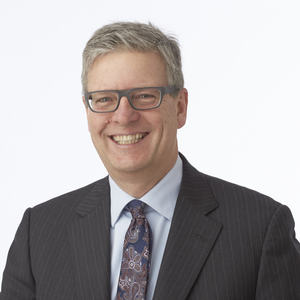
0:08 Hello everyone and welcome to Highland Copper's live investment summit today hosted by Sixx. I'm pleased to introduce our speaker for today, Highland Copper's Director, President and CEO Denis-Myville Deschamps. Denis is going to walk us through our company presentation and after we're going to be taking questions live. I'd Like to remind you that if you'd like to ask any question, you can do so using the Q&A chat found on the right hand side of your screen at any time. And of course, today's presentation is being recorded. It's going to be available online on SIX.com in the coming days. Without further ado, Denis, I'd like to pass things back to you to get us started.
0:39 Thank you very much and nice to be here and have the opportunity to update you on Highland Copper and our 2 very interesting development projects in the great jurisdiction Michigan. As you know we're a copper development company and we really like the fundamentals behind copper right now although all the markets are a bit soft currently but renewable energy is certainly increasing and the demand for it as well. Electric vehicles, we've seen the changes in the last few years. So, all this combined to the fact that for many companies right now, we're sort of taking position on 0 emission targets and pushing towards electrification.
1:35 It makes for a good demand. And we know we've had for the last 2 years a somewhat challenging supply. So the gap is increasing between the 2 and it's more so as you can see on the graph on the right side in the US where there is a strong demand and not quite yet the same sort of supply. As for Ireland, it's been a transformative year. Starting last year, mid 2021, We certainly were focused or decided to focus a lot more on the development of our project for short-term value creation. So, we let go of all of our exploration properties.
2:31 We also completed the acquisition of White Pine North project. Overall, the board added 6 new members with skills more aligned with the development of projects, construction, permitting process and financing, plus skills around Michigan and the US in particular. We also at the same time in the bag end of the year raised 26 million Canadian to support our efforts in engineering and early works for the 2 projects that we have. And when I mentioned the 2 projects, the 2 assets, they're Copperwood and White Pine North, both located on the west side of Michigan in the Upper Peninsula.
3:21 Copperwood, as it stands right now, we've completed a feasibility study back in 2018. We're updating that feasibility study now. It's a project that would produce over the years an average of about 30,000 tonne of copper. Initial mine life to start at 11 years as defined by the feasibility study but there is still on top of that about 50 million tons of inferred material that weren't included in that feasibility study. As for the permits, we're fully permitted for construction, we're missing one small permit for the water station that would allow pumping water to site for operation and we're expecting that permit this year.
4:12 White Pine is a bigger project, past producer, the mine operated for some 50 years plus produced 5 billion pounds of copper. An annual production of 40 to 45,000 ton a year is expected over a mine life of more than 20 years. It is PEA level but I'd say having been a producer for 50 years, it's somewhat very well de-risked on geology, mining and processing and provide good information as we are looking at bringing it back into operation. As a past producer, it's also partially permitted already. Combined, the 2 assets, the 2 projects, have 8.3 billion pounds of copper in the ground and 4.8 billion pounds are in the measured and indicated.
5:09 So that's about 60%. I mentioned the location in Michigan, as you can see very close to Lake Superior on the west side, in a great jurisdiction. It's been a mining jurisdiction for a long time. Does have very good infrastructures, be it road, railroad, access to water, gas line, power line. And interestingly, Michigan is one of the 2 states in the US that do manage the state permitting, the permitting process. So it's been great to work with them on Copperwood and getting the permits. We've achieved all that within a year.
5:57 So we're looking forward to do the same on White Pine as the state already has a committee on permitting interfacing with us. Proximity of projects, it's about 40 miles or 60 kilometers. And the 2 projects for now have been developed on a standalone basis, but we've started looking at all potential synergies if we go for a combined scenario, meaning 1 processing facility at White Pine and combine those 2 projects. And we'll get back to this a bit later in the presentation. And I'll say over the years, we always ended up having very strong community support for the development of the projects.
6:48 As for the vision, it evolved over the years. We initially, as I mentioned, looked at the 2 projects on a standalone basis with a focus on putting copperwood into production first, as it was a smaller project and more accessible. Final product was a concentrate that be shipped to a smelter for final phases of refining. But we also started to look as one of the option that we have producing cathodes at the White Pine site. And the reasoning is really in light of increasing transportation costs and also all of the pressure in ways we're looking at reducing our overall impacts and carbon emission.
7:44 Producing copper cathodes at site would make sense, keeping all the jobs and benefits in Michigan. And Michigan being a state where you have a lot of manufacturing, and just to remember that you have the car industry, but motor industries, wire producing industries, so it would be an opportunity to sell a cat or the final product in somewhat a short distance and we're talking mostly in Michigan and probably all within 500 miles. So on this scenario, we know that we can leach and recover about 97-98% of the copper from the concentrate.
8:35 We're currently doing studies to assess overall capex and operating costs and understand the viability of that scenario, which would bring upside to the overall development of the 2 assets. I mentioned new members joining the board. I won't go through the list. It is on our website, but you'll see that we have skills and interestingly guys that have US experience and Michigan experience at the permitting and operating level. As for our shareholders, there again I'll go quickly on this but we have a strong base with Orion, Condire, Greenstone, and Osisko.
9:24 They've all been there for multiple years. We're interfacing on a regular basis via steering committee, and they're all aligned with the development we're considering in the coming months and years. ESG and what it brings. So certainly as a junior developer, we're right now considering all we're in it, we will end up positioning ourself on the ESG. But I'll say We've always been concerned throughout for years already about ways of minimizing the impact. And it's been part of the discussion at the design level for a long time.
10:13 As for health and safety environment and community, we've been strong performers over the years and that's being shown in the support we're getting from the surrounding communities around the development of the project. If there's an area where we see changes, it's following COP26 and the ask for more transparency and that we've done to various meetings but we appreciate that not all the information was easily accessible for outside investors and we're looking at ways to make it easily accessible on our website and that's one of our commitments for the future to improve on the transparency side.
11:06 Going back to the size of the deposit, I mentioned 8.3 billion pounds. On this one, you have a breakdown by project, measured and indicated versus inferred that you can review and use. That's where the 60% measured and indicated being used for feasibility study level comes from. But I'll also ask you to look on the right side at the value of the company right now. Junior companies in the actual market have been hit hard on the share price side of it and Highland is no different. As you can see at this point and probably until we get into construction, we're likely to remain a bit undervalued and it is certainly an opportunity to come in at a low price and you'd be able to assess for yourself in the coming minutes what's the potential for the company and the future development of the project and therefore additional value creation.
12:19 Quickly on Copperwood, this is the area considered being mined as part of the feasibility study that was published. In the lower left side in red, That represents the 11-year of mine life and if you continue and go up to the north, you see where the 50 million tons of inferred are and it's really just a matter of drilling it and transferring into measured and indicated. It is a sedimentary deposit, it's very continuous. We're mining a seam of about 2 to 3.5 meters and the drilling success has been extremely good in transferring over the years.
13:09 One of the particularities of Copperwood is we're benefiting from higher grade up front and we're ramping down on the West side. And the grade for the first 4 years is between 1.6 to 1.8% copper, making for good cash flow early in the operating phase. As you see on the right side, after a year 5, we're settling down to a grade more around 1.2 and 1.3% copper, and that's what we have for the remaining of mine life. That is also the range of the inferred material that we have for copper wood.
13:56 White Pine is different. It's a much bigger project. I mentioned it's been mine for 50 years, and this is an old picture where you see site installation. They're still there to support the restart. But I'll ask you to look on the right side, on the upper right, you have the tailings impoundment there. And it is an expensive piece of capex. But from the work done in the past, just raising the dam right now would give us the opportunity to store more than 100 million tons.
14:43 So it's beneficial into the project development, certainly. As for the other infrastructures, the focus is not necessarily on all the buildings at this point, but more so on the fact that the water to site is there in sufficient quantity for restart. You have power line and gas line available at site as well as road access and railroad access up to the refinery building. Railroad would have to be upgraded though to be used again there's a good section of that 40 miles between the 2 sites that would need refurbishing.
15:34 Quickly on this you see on the left side the mined out area from the previous mine. It's big as 5 billion pounds of copper were taken out But the section we're attacking or addressing is really the measured and indicated plus inferred that you see in sort of a yellowish and green. The width of that deposit is about 12 kilometers. It is open to the north and open to the east. And also I have about 5 billion pounds of copper to be developed. Status of permitting. Copperwood I mentioned fully permitted for construction. The missing permit is for the pumping station on Lake Superior.
16:24 This one, we've seen a slower process as it had to go to the Corps of Engineers as it is the Great Lakes. So we're currently awaiting this permit for end of year. As for White Pine, water intake it's already there as well as NIPTES and dam safety permit as a past producer. And the state, as I mentioned, is already there to interface with us on the other needed permits as we develop the studies and the engineering on the project. Economics of both, and they're a bit dated. They're linked to the feasibility of Copperwood in 2018 and White Pine North in 2019.
17:13 All I'll say here is you can imagine there were substantial changes in capex and operating costs as you've seen with all of the projects around US and elsewhere. But important is that Copperwood and White Pine are low capital intensity project. Back when we did the studies, they were below $10,000 per ton of copper, which is on the low side. And although most projects have increased on the CAPEX side by 35-40% over the last 3-4 years. Copperwood and white pine wood remain low intensity capital projects.
18:00 Production of the 2 projects combined, I've mentioned it's 70,000 to 75,000 ton of copper. So, once both are in operation, you're really looking at the low range of mid-size copper producers. As for the operating costs, Copperwood was at $153, White Pine more robust at $140. They will likely continue to be good producers on the cost side, very steady, no peak. White Pine year in, year out, doesn't change. It stays around 1 or what was 140. And here is a guideline I'll say, most operation I've seen increases to the tune of 10 to 15-20% over the last 3 years so as we update the studies that is the range you can expect.
19:06 I mentioned the 2 studies having been done on a stand-alone basis, but one of the questions we got a lot of time over the last couple years and we're spending a fair bit of effort to answer that right now is what if you combine the 2. Initially it was a no-no just for one reason, we wanted to move quickly on Copperwood and start with the smaller project and benefit from cash flow to build White Pine. But in doing that, we weren't benefiting from a bunch of synergies. And you see the 2 projects here, The distance between the 2 is about 40 miles, 60 kilometers. And as the 2 projects are somewhat very similar, it would bring in a bunch of synergy.
19:59 And currently we've launched this PEA on this. We will be working with G-Mining and Goldr and a number of smaller contractors on the engineering firm and contractors on the infrastructure side to complete the study where we're looking at a combined scenario. And what I mean by combined, it's instead of having 2 processing facility built and 2 tailings impoundment built, we will be looking at 1 being built at White Pine site. We are currently completing metallurgical tests to design that one sand-quill processing facility that would treat ore from boat mines.
20:54 The overall tonnage will be in line with individually what they were producing, which is roughly 7,000 at Copperwood, 15,000 at White Pine. So you're looking at the processing facility of roughly 22,000 ton a day for a similar combined production of 75,000 ton a year. But in doing so, not only we're saving and processing plant capex and tailings impoundment, savings would be there on the operating costs as you need a similar number of operator to operate a large plant versus a smaller plant and certainly a lot less than 2 smaller plant.
21:45 On the technical side, the 2 deposits are very similar and for both, we're considering room and pillar using continuous miner. So there will be a bunch of synergies on the technical side at the leadership level, also on parts and maintenance and inventory needed to support the project, not to mention all of the GNA side of the business where one department would support both operations. So what I define as in GNA is really from management to accounting, IT, procurement, and all the services to support the 2 projects. So this PEA, We're looking at completing it for Q1 with final report out on CDAR sometime in Q2.
22:42 And it will be very interesting to understand better the impacts of all the synergies in the saving on operating costs and capex for the project. We are incorporating a few opportunities or sorting is one of them, where we see opportunity to, to sorting eliminate a fair bit of the dilution and some of the lower grade portion of the deposit that will be incorporated in this test on applicability have been good up to now. So on the technical aspects and tests done through the PEA will continue to update on a regular basis, but you can certainly be looking for what we see and how we plan to approach following the PEA in Q1, more news around this combined scenario.
23:44 On the ESG side, obviously it does minimize the impact and would help improve carbon emission reduction overall for the 2 assets. So At this point, look, we understand we do have a challenging market. We are well positioned to benefit from that. Our focus has been on the development of the assets as we see a fair bit of value creation in a much shorter timeline than through exploration. We like where we are in Michigan, it's past producer, we're well supported by the communities around us.
24:33 It provides the opportunity to sell locally if we can finalize and incorporate the cathode scenario. The state is focused on ESG and certainly put a strong emphasis on good environmental operation and we're certainly aligned with that. So we like the jurisdiction. And as for copper, although we see a bit of a depressed price right now, the fundamental for higher price in the medium to long term is certainly very strong and we believe we'll be positioned to benefit from that in the short term as we develop these 2 projects.
25:21 So that covers it for me and I'm certainly happy to take any questions that you guys may have. Thank you so much, Denis. As a reminder to everyone in the audience, I'd like to point out that if you have a question you'd like to ask, please do so using the Q&A chat found on the right-hand side of your screen. But to start with, Denis, we have a question. What is the total timeline on the remaining permits at White Pine North? White Pine North, we've discussed the combined scenario a bit and we'd be looking at likely 18 months at the minimum to be able to construct the processing facility and have it ready. And the worst case overall for White Pine processing facility and the mine plan development, it's 24 months. So that window 18 to 24 months is what we consider at this point.
26:21 All right, great. Is the region generally supportive of the projects? Are there any roadblocks that you anticipate? Are there any what? Any roadblocks that you anticipate?
26:33 Look, I'd say the technical challenges on these projects aren't huge. And the fact that White Pine has been in operation for many years, it's a big plus. We understand geology and the mining and the processing well. An important challenge, and it's true not only for us in Michigan, but probably for most mining projects right now, It's around labor and availability of labor and the training programs that we'll need to have in place to support the ramp up. And on this, we'll put a fair bit of effort in starting Copperwood early, so likely 2023 activities at site to spread the overall construction
27:29 ramp up of the underground activities and construction activities at site over likely a three-year period to accommodate good training programs for employees with the, obviously, the objective of having all those employees live close by in the surrounding communities. Absolutely. Shah wants to know, with such a frequent and active calendar of presentations, is the company planning on raising incremental capital? Raising incremental capital?
28:04 We do have right now 12 million US plus to support all of the engineering and early works activity that we need. So we're not in an immediate need for capital, but if there's an opening in the market, we'll certainly be ready to raise. We don't see necessarily a full project capital raise, So we're likely to come in with an interim raise that will support all early works feasibility and additional drilling before going for full financing. So that will be likely considered in the first half of 2023 or when there's an opening in the market.
28:57 Great. Can you go into more detail on the White Pine North drill program?
29:03 Yes, this is White Pine North. You've seen the slide between the measured and indicated and the inferred. We drill, The last drilling program was done back in 2015 and all of the targets were transferred from Inferred to Measured and Indicated. So this drilling program will total a couple million dollars this coming winter and we're looking at transferring more than 50% of Inferred into the M&I category, therefore increasing
29:44 the resource that we can use in a feasibility study, as inferred is not used in your feasibility study. So we're positioning ourself for a future feasibility on White Pine or the combined scenario. Is the initial mine development plan to be owner operated per your training comment or contract operated?
30:08 As much as we'd like to be owner operated from the start, we don't think it's realistic. We've talked to a few contractors about coming and starting the process with trainers to develop the owner team over the first few years. So certainly start with contractor through construction and probably a portion of the early years of operation over time turning into an owner operated mining activity. Great. What's the anticipated labour headcount for these projects, if completed as planned or presented?
30:58 Look, we don't have numbers on the combined scenario, but on a standalone basis, Copperwood was looking at about 400 employees and for White Pine it was 700. So even on a combined basis, you'll be close to 1000 employees. Great. When can we expect news about your upcoming ESG strategy?
31:27 What? Sorry, I'm... What? What on ESG? Yeah, upcoming ESG strategy and news on that. Look, we're still in discussion on where to position ourselves. It hasn't been quite a priority. We've looked at the design phase on opportunities, but where do we want to put the vision or structure the vision and put the bar, it's going to be part of the discussion for the next, I'd say probably 3 to 6 months before we settle. And once we know more which of the scenario we're going to hit, it's been pretty fluid on this side of having the final scenario chosen.
32:15 But we've looked at from electric equipment applicability of that, how to minimize our impacts, minimize water consumption. It's all been incorporated in the design up to now, and we will keep you posted on how we want to position ourselves. But we certainly value good operating procedures and the importance of minimizing our impacts on the environmental side, but also on communities and making sure we maximize benefits. So that's on the table currently. All right Denis, well look I think that's kind of all the time we have for today so I want to pass things back to you for some closing remarks at this point. Thank you for joining us and I want to also thank everyone in attendance who asked questions, but Denis, over to you.
33:09 Look, thank you for the opportunity. Always a pleasure to update you guys on where we're at. Stay posted. We will come up in the coming months with the PEA and what it brings us for additional value and Copper, We like where we are, we like where it's going to go and we'll make sure we can have our shareholders and stakeholders benefit the most from the development of those 2 projects. Wonderful, Denis. Thank you again. I hope you and everyone in attendance has a good rest of the day. Cheers. Thank you. Have a great day.