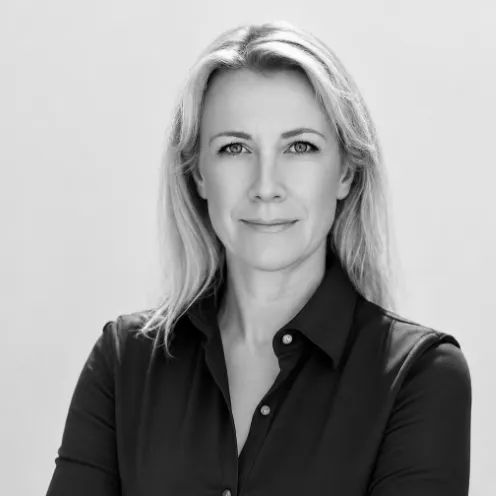
Trace Arlaud
Project Director at Highland Copper
Replay available
Join us to meet the talented individuals driving Highland forward and the growing leadership team working to advance this exciting project through development.
On 6ix: 6ix.com/event/strengthening-highlands-leadership-team-for-a-construction-decision
Automated transcript · Written by software from the replay's audio. It can mishear names and figures; the replay is the record.
0:04 So I'm very excited actually to have with me today 2 new appointments to the Highland Copper leadership team. Trace Arnaud, who's a project director for the Copperwood Project and Peter Hemsed, who's the interim chief financial officer. Really excited. Usually I'm lucky enough to have Barry on. It's great to meet more of the team. Thank you everyone so much for joining today. I'm looking forward to chatting with both Peter and Trace. So I hope you're all having a good morning, good afternoon, or good evening, depending on where in the world you're logging in from today. Now I know there's quite a few of you in the room and I just want to be really clear about what today's event is. Peter and Trace are brand new to the team. I'm just eager for you to meet them and get a sense of their past experience. This is not a market update, but what I have done is put in the chat, Barry O'Shea, CEO of Highland Copper is giving a market update today on Sudoti's platform.
0:51 Please do join that if you have any questions. This is really just going to be me talking to Trace and Peter about their past experience, but I do encourage you to join that event this afternoon with Barry, just in case you have any really specific market questions. You can feel free to use the chat during today's event. It is interactive. We're not going to be directing too many questions to Peter and Trace, unless about their past experience, which we're happy to jump through. But if it's really about the progress of the company, I do encourage you to join Barry's event this afternoon. Peter and Trace, thanks so much for joining me. How are you both doing today?
1:22 Good, thank you. I'm great. Thanks for having me. Awesome. Last piece of housekeeping before I get into the meat and potatoes, the good stuff today, is that this event is being recorded and will be able to replay likely at about 1 p.m. Eastern. It'll pop right in your inbox but will also be available on Six's YouTube page. But if you don't mind, I'm going to get right into the good stuff, the protein of today's event. And Trace, I'll start with you. If you don't mind, I'm going to make you blush and go through your bonafides just a little bit, because I know you've had a very serious run through Rio Tinto, Port McMorrin, South 32, Hatch, plus Borg seats at IGO and Seabridge. I'm just curious, how did the Highland Copper opportunity cross your desk? And what was it about the situation that made you say yes to this opportunity?
2:07 Yeah, thank you. I was involved in a somewhat familiar with the project from doing a little bit of review work, probably setting up the company for this year. And Highland's project director was departing to pursue bringing on the next generation of amazing mining people in South Africa. You know, it's challenging to find project directors And 2 of my colleagues serve on the board of directors of Highland, who are extremely strong technically. So they reached out to see if I could come and help out with the project. And I was extremely impressed by firstly, the board having strong technical people with years of mining experience, and also the executive team.
2:59 So, you know, seemed like a very good, strong culture and very honourable individuals, both on the executive and the board. And obviously my familiarity with being in, having worked on Eagle and getting Eagle passed and through to being eventually built and operated. So, you know, and I have friends in the community who are very keen and supportive of the project. Oh, it's exciting. No, I like that. Appreciate that background as well. Peter, very similar question to you. I know you went from CFO to CEO of BlueStone, ran the sale to Oro Minerals last year, helped get Lunar Royalties listed, and you've been on several mining boards. So it's not your first rodeo by any stretch. But what pulled you into Highland as interim CFO and how did you start talking with the teams?
3:46 Yeah, sure. So being on a few boards, actually that's where I met Barry. I was on the board of a company called Fjord Gold. I was the Audit Committee Chair there.
4:00 And Barry was actually the CFO of Fiord Gold. So we got to know each other there, worked together in those roles for a few years. And eventually Fiord Gold was acquired by Calibre Mining. But we stayed in touch ever since then, and we'd see each other at various conferences and whatnot. And he knew my desire to start getting on more boards. And then, you know, with the unfortunate news with Sybil having to take short-term medical leave. There was a need for me to, or a need for Barry to fill that role while she was off. So, you know, it just happened where I was available and was happy to come in and help.
4:47 And at the end of this interim period, I am looking forward to joining the board. And what really brought me the excitement around this is the project, the current copper environment, the fact that this is located in the US and it's permitted. I think this project has a bright future. So that was the real attraction for me. Also a domestic and permitted are 2 of my favorite adjectives about U.S. Projects. There you go.
5:15 Trace, if you don't mind, I'm going to just connect some of your past experience to Copperwood. I know your work on the Eagle Mine in the UP in Michigan is probably, in my view, the most direct relevant experience that anybody could probably bring to Copperwood. So what did you take away from that project, both on the technical side, but also just what it takes to operate in that part of the country. I think the technical side is probably the first place we start to make sure that we truly understand the geology, the geotechnical, the mineralogy, the, you know, the met and doing it systematically and doing it logically and obviously ensuring that we're meeting all our permit requirements and advancing mining projects in the UP the right way. And I think the team here has that desire and has definitely has that experience and passion.
6:14 And, you know, the UP is unique. I mean, it has a long history of mining and it's bringing back, these projects are bringing back prosperity for the community and opportunity for the community that perhaps isn't as strong as down lower Michigan where there's more job opportunities.
6:33 So I think that and striving for excellence and definitely what I've seen for the team is, you know, they're an amazing bunch of enthusiastic team members and I'm loving my first 2 weeks so far. That's great. Hey, that's good to hear that. And Peter, I know you were on the founding executive team at Capstone when it was making that jump from a development story to an intermediate copper producer. If you could, and if you could think of any, what are the parallels between that chapter you spent at Capstone and where Highland's kind of sitting right now? Yeah, I think there's actually a lot of parallels. So yeah, I spent over 10 years at Capstone. When I first started there, we had no production.
7:22 We were focused on building a mine in the Yukon called the Minto Mine. Bruce McLeod and Stephen Quinn recruited me out of one of the accounting firms. And that was my first jump into the mining industry over 20 years ago. But at that time, what we had was
7:40 a nice little project, similar size to what Copperwood is. And we built that mine, got it cash flowing pretty quickly. And from that base, we were able to go through a lot of M&A, as the market would know, and built Capstone to what it is known to be today. And for me, those are the most exciting years, right? When you're going through that development and growth phases, that's what I really enjoy and that's what I look for. And those are the similarities I saw when I first started talking to Barry about this opportunity. How exciting. I find that parallel interesting. I think it makes you a really good fit for the team. I think that's fun.
8:28 And Trace, at Resolution Copper, you were leading capital and operating cost reviews. That's mining trade-offs, engineering partnership structures, all that jazz. As you walk into a new project,
8:40 instinctively based on all your pretty extensive experience, what are the levers that you find actually move the needle on economics? I think one of the things that projects will have to do, and many don't, is have a financial model from day 1 and understand what their internal financial levers are, whether it's capital, whether it's operating costs. From day 1, you know, in the industry, so many times I've been brought into reviews and, you know, the projects might be negative or maybe not at their hurdle rate. And, you know, people are in a panic and throw things at the wall. But if you have that financial model from day 1, as Highland does have a financial model from day 1, since I, you understand where the levers are and then you can
9:30 ramp those levers up and look at those opportunities in those areas that are going to move the dial. So each project's different, but having that understanding from day 1, also understanding industry benchmarks. You see, you know, throughout the industry, and I'm sure everyone at school has seen it, where, you know, you can have a project where the culture is so conservative, you're killing a project that someone else can do, or you're so optimistic that it's never going to happen. So, making sure you're in the middle, making sure it benchmarks your costs benchmark for your environment too. There's no point taking the costs from Nevada where you've got a lot of mining people to say the UP. You want to make sure that you're realistic for things like the labour market, for the skill level, for all those things. And then once you understand the market, you understand the environment and you understand your levers, you can optimise to make sure you're getting as
10:28 much shareholder return as possible, as well as doing the project safely and environmentally safe. Awesome, I appreciate that. Peter, here's where I'm going to get into a bit of the future. And I know you're 2 weeks under the job, so I don't know yet and we'll see are all perfectly acceptable answers. But I know that Highland already has that $250 million letter of interest from Ex-Im, Nod from the White House on domestic copper supply. You're looking at the broader financial package. And again, I totally understand this is an intro to the job. What does the path look like over the next year? And what do you think pieces need to come together alongside the debt? Yes, and for sure, it's still kind of new in the seat, but the way I see this unfolding is not that different, no matter what project you look at. And given the current stage that Copperwood's at, what I fully expect to see here is, I kind of view it in 2 phases, right?
11:31 And as Trace and her team is moving forward and de-risking the project further in the engineering design, getting it ready for that debt financing package, whatever it looks like. And as you indicated, we are seeing a lot of government support from that from the US. So that is a real option for us. But that work really kicks off kind of later this year and can take up to 12 months, right, to put that debt financing package in place. But so the first phase is really, well, how do you fund the current phase that we're in? And we are seeing a lot of potential opportunities for Federal and State funding there as well.
12:19 There's some opportunities at the State level. And then at the Federal level,
12:25 I see opportunities similar to what we did at Fireweed, where they recently received a grant from the Department of Defense with the DPA funding. Copper is a critical mineral in the US and projects located in the US are going to get that type of interest from the federal government. So we'll be looking at those opportunities in the short term. Great. No, appreciate that. Especially so early into the job, giving us a view into that. Appreciate it. And Trace, of course, in a similar vein, I'm going to put you on the hot spot, but I don't want to get too far into specifics yet, of course. But I know the team is talking about integrated mine plan review, cut off grade work, pillar size ground support, TDF footprint optimization, basic and front end engineering, etc. From a project director's seat, how do you just sequence or think about sequencing that kind of work. So it doesn't become one of those moving targets that you see in mining sometimes.
13:22 So it all starts with the ore body. And so making sure our understanding of the ore body, the geotechnical, the geology, the metallurgy is right. And we're confident in that. And then that obviously flows through to everything else in the project. So the team is moving ahead with that work. We have a great group of partners doing that, helping us with that work, and we're methodically working through that work and then also making sure that the results that we're getting make sense from other projects and these projects. So, making sure we're benchmarking, we're not out on a limb, but we're working through that work methodically and logically, moving towards making sure we've got a good execution plan because it's great to do the technical, but you've got to really understand how you're going to execute it because that affects the costs and the schedules so much.
14:18 And I think we need to, you know, I'm very much aware of making sure we don't forget the learnings from the last super cycle, because, you know, many projects fell into them, went down some pathways that perhaps they shouldn't. And so we're making sure that we've got a good execution plan. And that execution plan is aligned with our studies, our cost estimates, our schedules and our budgets. Great, no, appreciate that. And Peter, I'm going to ask you a question for kind of the deep future here. So keep that in mind, obviously, as I ask it. But concentrate marketing is something you've got real reps in from your capstone days and obviously Copperwood down the line. I'm not talking about any time in the near future is going to need offtake at some point. So my question is, when it comes to engaging with smelters and traders, etc., how early in the process, just for investors trying to track timelines in their head, how early do those conversations typically start?
15:14 Yeah, I guess You're always evaluating what your best alternative for accessing capital is. And the Copper concentrate is always one of those options, whether or not you enter into a longer-term contract or offtake financing or anything like that. And I do feel like that is something that we'll be keeping in our back pocket for a while. I spoke about those 2 phases of the financing earlier, and I think that's in the second stage. Our focus in the short term is really, for personally, our balance sheet is in very good shape right now, given the sale of White Pine. So there's no immediate need for capital, but our focus in the short term will definitely be on looking for potential grants at the state and federal level to get us through this year and increase work on the engineering and design and de-risking the project that Trace and her team will be focused on.
16:15 And then, as we enter into that, more traditional project finance, debt financing, I see that's when you really start approaching the smelters, the traders and whatnot on the concentrate to see if that plays a role in the financing solution. Great. No, thank you. And Trace, I know you've sat on the executive side and on boards like we talked about at the beginning at IGO and Sea Ridge. So you've seen a lot of development projects from both chairs. And just in your experience, just to share with the investors in the room, what separates the ones that actually make it to a construction decision versus the innumerable ones that end up stalling out that I think everybody can see in the market? You know, I think it comes down to, again, that strong technical and making the link between the technical and the financial financials, making sure that, you know, you're going for the best value from the get go. So for example, you know, if you've got a deposit and the value is deep and low, making sure your plan is strategic, that you're going for the high grade early and you're not spending too much time to get to where the value is. So it's about being strategic. It's about being strong technically.
17:36 And it's about having strong people to work on the project and bring it into the fold. I appreciate that. And here's 1, and this really is for both of you. So Peter, I'll start with you, but Trace, I really do encourage you to jump in afterwards. This is big picture Copper stuff. Copper is a commodity, obviously has had plenty of investor attention, especially in recent weeks with the price moves. But the equity market for development stage names still seems to be stopping to crack. You know, it feels like it hasn't caught up with the commodity price yet. If you had to give a message to investors just generally about why you think this is the right window for Highland and the Copperwood story specifically. What words would you give just to the investors that are both in the room and watching this on replay? Peter, I'll start with you, but I may get your opinion as well, Trace. Yeah, that's a pretty broad question.
18:30 But I think, firstly, the geopolitical situation is really supporting US domestic production of Copper. This is huge. And I don't want to go off on too much of a tangent here, but I always think back to the COVID years. And one of the things that really stuck out in my mind was when the US ran out of baby formula to feed their children. And why couldn't they source it? Well, they were sourcing it from China. And it's like a light bulb went off over their heads saying, well, for some of these things that are critical to our way of life and supporting our industry or whatnot, maybe we need more say in where this is coming from.
19:16 And that's what you're seeing in the critical metal space right now. And the US, the Western world, they are more focused on trying to be less reliant on 1 major producer being China. And so I think geopolitically, we're going to continue to see that support for Western world projects. And the U.S. Is going to continue to support potential production from the U.S. And this is where Copperwood fits right in there, being a permitted Copper mine in the U.S. So I think we can't forget about that geopolitical situation, right? And I think that's, again, one of the things that really attracted me to this project. Beyond that, I think, you know, your comments regarding the development stage names not really catching up.
20:07 I think that will eventually shift for me. And again, one of the reasons I was excited to join Highland, I see investors often focused on the bigger names, the bigger projects, the bigger resources, and they're great projects, don't get me wrong, but the timelines on these, they often slide. The CAPEX often enter the multi, multi-billion dollar stages that construction periods are very lengthy. There's enormous amount of risk around these projects. And when you look at Copperwood, low CAPEX, executable, minimizing that capital at risk, getting the project built, getting it Copper production, getting a cash flowing, getting a company started. Like, you know, these are all within our wheelhouse here. And eventually, I think investors will catch up to that and understand that this is a real project at these Copper prices that is going to go forward and be executed on.
21:09 So I think it will eventually happen. It's just going to take a bit of time. I appreciate your crystal ball gazing with me always. But Tris, I'll throw the same question to you if you've got some additional thoughts. I'm aligned with Peter. I was actually looking at a graph someone put up yesterday at Mining Finance Conference, and it showed where the resources are and where they were processed in the world over the last 40 years. And they all move from the US and the Western world across to China. So I think that, you know, that risk is huge. I think Lundin, you know, has demonstrated and some of the team members on this project are from early days of Eagle or mid-days of Eagle.
21:54 So it's people on this team that demonstrated that they can build a study and then build a mine that operates, you know, low cash, low capital costs, low reasonable operating costs. It's being done in the UP. UP has a good history of mining. And with the lower capital costs, the risk is considerably lower. And, you know, people, we have to realise that without mining, we'd all be sort of living in a cave naked. So if we really care about mining and the environment, then we want it done in a first world, you know, in a Western world with standard, good safety procedures, great environmental stewardship.
22:43 And you know, as a mining engineer, That's what we aspire to. That's great. I often tell my friends, you'd be surprised, but people in mining are some of the better environmental stewards that I've met in my life. Now, I know this is the end of my questions, but there's 1 from the chat that should have been part of my questions. The only reason I'm going to ask it. Everybody, I think, basically knows what a CFO does in the investor audience. But somebody very fairly asked, what is the role of a project director for a mining company? So Trace, I'll throw it to you to just outline just if you could describe in a couple of sentences What the role is, just so people in the audience get a sense of it. That'll be the last question I throw to you guys today. Okay, so the role of project director is to basically manage all the streams of work to establish what the project is, both on the technical side and also the cost estimating, schedule, financial side, and making sure that works.
23:33 And then go ahead and execute it and build it, deliver it to the company, you know, in operations, hopefully meeting all our guidances. Awesome. And I will say, Peter and Trace, thank you so much for being such good supports. I know I'm dragging you in front of a camera so quickly into your new role, but really do appreciate to know the many, many investors that are in the room. I'm sure I've enjoyed meeting you and getting to know your background and history. Some people have sent through some additional questions. I'm going to send them to you over email so you'll have a chance to respond to people more fulsomely rather than putting you on the spot here in camera. But really do appreciate both of your time so much. Looking forward to seeing what comes next at Copperwood and working with both of you in the future. Thank you so much for joining me today.
Follow Highland Copper Co., Inc. into a list and get an email when it puts out news.
Project Director at Highland Copper
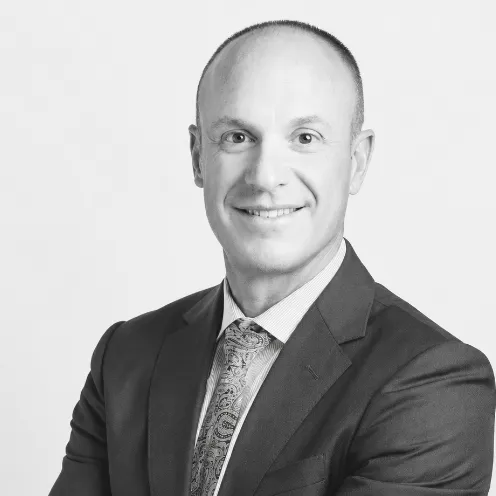
Interim Chief Financial Officer at Highland Copper