Transcript
Automated transcript · Written by software from the replay's audio. It can mishear names and figures; the replay is the record.
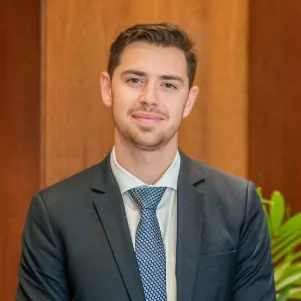
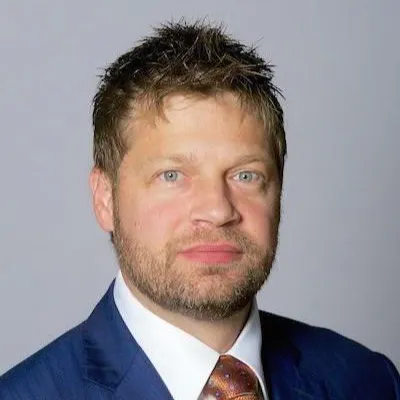
0:03 I'll say good morning or good afternoon, depending on where in the world you're signing in from today. It is quite an international audience. I really appreciate everybody's time today. I'm thrilled to be joined by Oliver Friesen, CEO of Guardian Metal Resources and JT Starzycki, the company's chairman. Gentlemen, how are you this morning? Doing great. Yeah, doing well. Thanks for email. Awesome, so here's how today's gonna work for the folks in the room. I've got some questions to run through which are gonna serve as a bit of a fall update for the company. But then I'm gonna run through the questions that came in advance over email. Many of them are gonna be covered by the initial questions that I go through. But there are some stragglers that I'll be sure to get to. But then I am happy to take a few select questions from the live audience. This is an interactive event today. There's a chat on the bottom right of your screen. So please enter questions at any time and we'll try to get to some. It is a pretty tight event today. We are targeting a half hour. So given that, if there's any questions that we don't get to, I'm still going to send the full transcript through to the Guardian team, along with your email and phone number, depending on what you had at registration. So they'll be able to get back to you for any question that we don't necessarily tackle today. Last piece of housekeeping, this is being recorded. It will be available for replay probably in about an hour and a half after the end of the call. It'll come right into your inbox for those who registered, but it'll also be available on Six's YouTube channel and as well as at this exact same link as soon as that replay is uploaded. But enough out of me, I'm eager to get into the protein of today's event. So JT, if you don't mind, I'm gonna start with you. I know the company announced intentions for a US exchange listing and offering in the first half of 2026.
1:25 So I'd love if you could start off by walking us through the strategic thinking here. Why does accessing US capital markets matter? How does it enable Guardian Metal Resources to do things that the London market hasn't? And what does Tungsten being a critical metal in the US really mean?
1:40 Oh yeah, no, thank you for the question. Happy to answer it. So First and foremost, I think it's really important for us to, at least for me, to communicate to our audience that the London capital markets have been absolutely fantastic for us, right? It helped us create a platform for us to launch this company, you know, 3 and a half, 3 years ago, and has continued to be very, very supportive of everything that we're doing. We've spent a lot of time cascading the message down in the European markets. Now, as we evolve into a business that is really focused on, you know, having 2 US assets that we're looking to bring into production. Their defense material, defense mineral assets.
2:25 It's really becomes the next evolution of our story, right? So to move our company from Europe to expand into the US. And of course, you know, the benefit to that is it does unlock a massive capital market for us. So as we're evolving into a US defense story, you know, clearly, you know, our big, one of our big catalysts this year was the funding received by the now Department of War, the next evolution for us has always been, when do we make the move into the US market? And we just, we felt that at some point throughout this year it made the most sense for us to continue that evolution as a business. So the strategy behind it is simply to continue the evolution of the business, to access larger capital markets and
3:10 really to introduce our story to the US investor audience. And so That was really the thinking behind why we decided to make that announcement and make this move. I appreciate that. Oliver, I don't know if you had any additional thoughts on that before I jump on, but I do have another question for you if you don't. Just to close that off, as J.C. Mentioned, the UK markets have been great to us. We plan to maintain our UK listing, so just to give our UK investors the assurance there. But we think that getting a senior US listing, I think will open up a lot of doors for us, especially given our US focus as a company. Awesome. Now, forgive the bluntness of my next question, but Oliver, investors have been, as far as I can see, inundated with news and activity in the strategic and critical minerals space this fall. Just kind of, you know, news after news, Twitter's full of it. What makes Guardian Metal Resources unique in the field right now?
4:04 Yeah, no, there's a lot going on, I think for good reason. You know, I think what we really realized is that it's not going to be 1 company who solves everything for the US and for the Western world allies. There's a lot of metals that are at stake here. And a lot of companies needed to solve the problem. So I think it's good to see that there's a lot of chatter. We're seeing a lot of communication and word from the administration right now in the US, which I think is it's been very supportive in general. And a lot of companies have been able to kind of rally on the back of a lot of the rhetoric and discussion around critical metals. So it's fantastic to see. I think we've never been in an environment before where critical metals are such at the forefront as they are right now. You know, you go to CNN or Fox News or any of your preferred media outlets in the US and most segments will have some discussion of critical metal. So we're at the right time, which is important.
4:55 But as pointed out, how do we stand out? How do we kind of differ ourselves from the rest of the companies out there. I think number 1, we're focused on a metal that is still somewhat not in the limelight. I think tungsten is 1 where we're only 6, 7 months out of the original export ban out of China. Antimony is multiple years, maybe 2 years past where we think Tungsten is right now. So we think that we're focused on a metal where the best is still yet to come. And there's gonna be a lot more eyes on this metal and the importance of it for defense, for nuclear fusion today. We saw a great roadmap put out by the DOE today on their plan to commercialize nuclear fusion, of which tungsten is a big part of that. So we're in a metal that I think is, like I said, the best is yet to come. But more importantly, as a company, What we've done is we have brought on the assets that we think will stand out in any market. And on top of that, it's also really important to highlight when we started this journey.
5:57 Rightfully so, a lot of companies are capitalizing on the excitement in the critical metal space. But we started this journey 5 years ago, acquiring Pilot Mountain at a time when I can assure you no 1 cared about tungsten and no one would even listen to us. Our initial IPO financing was a struggle to get away. That was 3 years ago. So we positioned ourselves, we took a contrarian view many, many years ago, and the importance of that is now we're not flat-footed, we're not just kind of getting ourselves into the critical metal space and hoping to make the most of it. We saw this movement coming, We saw the over-reliance that the US has from China for Tungsten, and we positioned the business accordingly. So what
6:40 that means for those following the story is number 1, we're focused on a really exciting metal, of which I think the best is yet to come. And number 2, by having started this journey many, many years ago, we're ahead of the curve, right? So a lot of these things, a lot of the companies that are taking advantage of the administration and all the great support that's happening, we are positioning ourselves a lot better to make sure we take advantage of that. And most importantly, I think than anything is we have US focused assets. I think right now, that's ultimately where you want to be. There's great assets elsewhere in the Western world that we're going to need to solve these issues. But right now, there's no other jurisdiction in the world that I'd rather have assets in than the US and more specifically, Nevada. And we have the momentum. So I think those things that, you know, great US based assets, you know, in our view, We have the 2 strongest US based assets and we have the momentum from you know being in this being at this for 5 years So yeah, we'll continue to do our best to stand out, but we encourage competition.
7:41 Like I said, we can't solve the whole problem It's gonna take us and a few other companies to do that. But we believe we can be a big part of the solution with what we've built here so far. Awesome. Oliver, if you don't mind, I'm going to get in the details a little bit here. I know the September assay results from Pilot North showed pretty exceptional copper grades alongside the tungsten. Some samples hitting over 14% copper, which is pretty remarkable. So how does the polymetallic potential change your development thinking?
8:08 And could Pilot North's proximity to Pilot Mountain create any kind of operational synergies in a hub and spoke kind of model? Yeah, so it's exactly the hub and spoke that we sort of have on our vision board, which is, you know, we have something that we believe is very robust at Pilot Mountain and specifically within Desert SheLight, which is the main open pitable resource there. So we're focused on the engineering and development of that particular part of Pilot Mountain, but we are a company that sort of thinks holistically about these things. We don't just kind of zone in and go, we're just gonna focus on the task at hand, which is the development of that resource, even though we have people focused on exactly that, but as a board, you know, we wanna make sure that we're doing things that can excite the market and also give people things to look forward to as we continue down this engineering and exploration journey. So what we've done there, Romeo, is we have a team of people dedicated towards other opportunities within the district that we believe could complement and further support the long-term economic output of Pilot Mountain.
9:12 So Pilot North is an area that we stake, so that's, you know, We own 100%, there's no royalties payable. We can do that for very, very cheap to go and stake properties, just a matter of doing the good technical work to develop these targets. But what we have now is an area that is really exciting on initial kind of investigations. And it also, importantly, is close to Pilot Mountain. So what that means is that if we can continue to have success there, in theory, that's an area that could support the long term success of Pilot, given you could, If the studies prove to be positive, you could in theory mine from Pilot North and have that material process at Pilot Mountain. So we're looking at opportunities that we believe could support the longer term vision and outlook of Pilot Mountain.
9:59 And Pilot North is just one of those. There's multiple historic World War II era copper tungsten mines. It's all part of the same mineralising system as Pilot North. So we think there's a lot of synergies there and obviously looking forward to continuing to do work there and deliver results for the market. Great. I do want to get into the geology actually for a second because I know the 5 zones, the distinct zones of Pilot North, that's Copperhead, Western Metals, Muller Mountain, Tungsten Valley, and Jasper, I think I got them all, showed consistent high-grade results. So I want you to put on your kind of geology hat for a second, but what gives you personally confidence that there's scale here beyond those surface drawings? I would say, because I've been there. I was there about a week ago actually, and walked the ground. So I spent some time there with the geologists walking around, seeing the scale.
10:49 I mean, It's a big property and there's lots of mineralization there. Obviously, we need to take it to the next step and that's what we're planning on doing to really determine what the scale is. In particular, one area has a pretty sizable historical open pit resource from when they mined it during World War II. Anytime the old timers went in there and saw something of size and mined it to that scale, usually that's just really scratching the surface. So I've been there myself, I've seen the scale, it's impressive. And now we need to go and do the next steps, which is the detailed mapping, the geophysics, and really what we're trying to do here is develop drill targets that we could go after at some point in 2026. And if results are positive, then that could start to be built into exactly that kind of hub and spoke longer term vision that we have for Pilot Mountain. Great. JT, I'm going to jump to you for a second, if you don't mind. Zooming out a bit, I know Tonkson has been identified as critical for defense applications, And we've already seen DPA funding flow to other critical minerals projects.
11:50 Curious as a chairman, what's Guardian Metals engagement strategy with federal agencies and what pathways exist for securing government support or offtake agreements?
11:59 Sure. Oh, okay. So 2 questions there, right? So what does our engagement strategy look like and how are we executing on that? You know, it's easy to say as a company, generally speaking, hey, we're engaged with the government, we're having conversations. We take it to another level. I mean, I spend probably half my time now in DC and we have sort of a an active roster of people that are that request updates. Now those can be elected officials from our state of Nevada, from a federal and state perspective. There is a conduit from the state of Nevada in the White House that also asks for updates on a semi-regular basis. Our engagement then continues down, you know, we are actively almost on a weekly basis engaged with the Department of War. I always want to say DoD, but because of the grant funding in the project that we are working on currently with them.
12:51 But we continue, and the only way to have a proper engagement strategy is to consistently be pushing your message forward. And whether that is the flow of conference calls that we have on a weekly basis or the bi-monthly visits that I make where we're briefing everybody and then expanding that network, you know, the, the, the pool or the opportunities
13:13 really sort of have expanded under the new administration clearly, but, you know, you can see things like the Department of Energy kind of repurposing a lot of their funding to focus on critical minerals projects. The DOE specifically has a renewed interest in the concept and the paper that we published in conjunction with Oxford University on the use of tungsten in nuclear fusion. So it is a constant engagement process that we work on a daily, weekly, and monthly basis. And it's more than just having a conference call and then you brief and then you go away. I mean, it takes constant feeding. And I think we're getting really good at that. We've got some great on the ground representation out there that facilitate conversations outside of the briefings that we do.
14:04 And I think so far it's starting to, or it has bared some fruit. And so that's the engagement piece of it. From a funding perspective or additional government support, It can come in a couple of different ways. And so one of the parts of the questions you asked is around offtake. And I'll kind of pivot that to more fall into the category of the national stockpile. So the DLA, the Defense Logistics Agency has put out an RFI, which will turn into an RFP, where they're calling for a certain amount of
14:36 tungsten ore and tungsten concentrate in 2027. That is where theoretically the complete ban that we put in place a year ago, that everything has to have traceability back to the United States. And it's not just tungsten, it's other materials as well. But they have now actively engaged not only on procurement of tungsten, but of other critical metals as well. So as you can imagine, we are very actively engaged in those conversations, talking about the schedule around Pilar Mountain, the opportunities that exist with Temp-Lite Butte and our stockpile that we have there. And so we are continually trying to help them solve that problem. So I would talk about it more in terms of helping the national stockpile versus an offtake agreement with the government.
15:24 There's opportunities there as well. From a funding perspective, we have a little bit more of a straightforward path in the sense that we've got multiple opportunities, right? So one of the opportunities that we have is to look for continued funding underneath sort of our current award. And that is, it's not a guarantee, but it is a path that we have opened up with the initial grant. And so then those conversations based on performance and based on trying to maintain continuity on the Pilot Mountain Project, that is a avenue. There's also other avenues that exist under the DPA Title III program. There are other opportunities that exist within the Office of Strategic Capital. I mentioned the DOE earlier, a billion dollars available. There's about 7 and a half billion dollars designated for Critical Minerals Project under the industrial base as a whole, right? And then you see pockets of 500 million here and another billion dollars there. So
16:25 there are opportunities out there, all of which that we are actively having conversations about and you've got to perform, right? You've got to have your project have merit. It's got to stand on its own. But the opportunities do exist. And we chase every last one of them because that has been our mandate. Our mandate is to bring tungsten back, re-short here in the United States, and we're building support with the US government, and nothing speaks louder than that, than the award slash investment that they made with us back in late July of this year. Sure, And I know we've talked about it before, but all this is in the context, obviously, of China controlling that 80% of global tungsten supplies. That obviously has an impact on everything we talk about. I want to just slightly shift to talking about US defense contractors and manufacturers who are looking to diversify their supply chains, kind of given that Chinese control. Are you seeing any concrete demand signals from those communities?
17:22 So, you know, that's it right now. It's a very timely question. I had a meeting at the embassy in D.C. Just a couple of weeks ago, And it was a combination of, you know, mining, critical mining projects, critical minerals processing capabilities and major defense contractors. And had you asked me that question 6 months or a year ago, I would say, You know, the defense contractors under the industrial base are really sort of focused on trying to guarantee their supply chains through their current providers. That paradigm has shifted completely. And there are major contractors, and This is somewhat of a behind the closed door meeting, so I'm not gonna mention the names, but everybody in the audience would know the names of them. Where now they've actually started to appoint people to go all the way upstream and start to have the
18:11 conversations at the mind gate to say, okay, If the processes are having problems, then that's our problem. And I will also say the paradigm shift that I've seen is the defense contractors very willing to get involved at that upstream level to actually help guarantee supply. So you we have another ally in those defense contractors that are now continuing to echo the same message that us miners have been echoing, right? Which is, we need to ensure that we can get our hands on the raw materials and the raw materials can go to the processors so that we can then absolutely, you know, use them in our applications.
18:48 And that's a very different and a very positive response for a company like us, but it's a very different paradigm than even 12 months ago. Sure. I got one more question on politics and then Oliver, I'll shoot it back to you, but JT, one last one. So obviously we talked about the reshoring agenda of the current administration and the focus on critical minerals. If you're a vantage point working with government stakeholders, which I know you do quite frequently, what policy developments could investors watch for that could materially benefit Guardian's timeline or economics?
19:19 So I think, you know, the 2 sort of major concepts that the junior mining space and even, you know, in production mining, you know, big majors, is 1, the permitting process still has an opportunity to simplify itself and even potentially fast track itself. So there is constant efforts, all of which we sort of aligned together on as a mining industry. So, you know, being able to get through expeditiously the permitting process in the United States. And I think the current administration is making attempts to do that. I mean, the Fast 41 program actually has been around since the Obama administration. So in practice, it has been around for quite some time. The current administration has put some, a little bit more emphasis on it and is trying to do whatever it can to bring down those barriers, right? And so that is something that we all have in common, whether you're a major looking to expand or whether you're a junior looking to get into production.
20:23 And then from the junior space, obviously access to funding. And I will say the current administration has done a pretty fantastic job actually backing up some of this stuff with a checkbook.
20:35 Time is the biggest killer of all junior projects, right? Because you have to continually be funneling or fueling the engine, which is fundraising. And if it takes you 6 months to get through a permitting process versus 2 and a half years, right? You can reward your shareholders that much quicker by producing. And so we continue to see, you know, movement in those particular spaces. But I think the broader shift that I know that I've seen, you know, over the last few years is, is this is now moved to a national agenda. This is not, this is no longer a Democratic or Republican agenda. This is a very bipartisan issue, right? We've seen for too long other countries weaponize supply chains and mineral deposits.
21:23 And I think as a country, we're seeing a monumental shift happening where we've kind of stood up and said, we're going to learn from those mistakes and we're not gonna repeat those mistakes. And that benefits everybody. Awesome. Alder, I'm gonna jump back to you for a second. I know between Tempio and Pilot Mountain, you are advancing co-flagship projects simultaneously. And this will actually reflect a number of the questions in the chat as well. But what are the key technical milestones over the next 6, 12 months? They're going to de-risk the assets and move towards a speedy development decision. Yeah, so Tempoyut first, the next kind of key milestone there is the updated resource. So certainly what we're going to have is some updates to the market on both those assets covering everything going on there.
22:08 I can't say too much, but Tampa Ute has been progressing very well. It's nuanced, but the drilling is actually really quick there. More than twice the speed of pilot just because of the rock. We're getting a lot more data a lot more quickly, which just helps with the overall pace of everything. The next key thing there is the resource, and then we build the engineering and development plan on the back of that. Also kind of key permitting is getting moving as well. So, oh, and then on top of that as well, results of some of the stockpiles and tailings as well. We've been progressing those opportunities as well. So we'll certainly have updates covering all those different aspects. And we can talk more openly once we've put that out there. But yeah, progress is going really well. We had a whole team of people dedicated just to TempIU. So we now have our pilot team and our TempIU team. And as you'd expect with co-flagship assets, that allows us to push them forward at the same time. And then pilot, it's been obviously with the award end of July, we've really picked up operations there. A lot to be done. A PFS is a very involved study on a lot of different things that feed into that. So really just what the more or what listeners can expect is all the kind of various studies that go into that resource, the geotech, mine plan, metallurgy, process engineering, all of that is being progressed.
23:33 And then that culminates obviously in the PFS. And as we've discussed though, Romeo, we're not just focused on the engineering at Pilot, even though that's where most of our focus is currently is towards, but we are working on Pilot North, Garnet, Gun Metal, the broader picture as well. We have people that are focused on that as well. So lots of updates expected over the remainder of the year, then into 2026 and culminating in the resource, the PFS. And then more importantly, the steps beyond that. And that's really about our timeline to delivery. We think that's one of the things that can set us apart. And that sort of dovetails from, you know, we're not starting this journey today. We started this journey, you know, a few years ago, and really have ramped it up recently. So looking to get these projects into a construction ready decision as quickly as possible is really what our goal is here because the US needs tungsten now, not 10 years from now. And we think that we have the assets that can deliver within the tightest timeline. So all of this work is culminating into our speed of delivery effectively, which we're trying to maintain and push up where we can as well. Awesome. I know there's tons of questions in the chat. I know there's a lot in the room. And with the interest of keeping this to a half hour, I'm going to run through a couple of them really quickly. But keep in mind any I don't get to today I'm sending to the Guardian team, they'll be able to get back to as soon as possible. First one in the chat right at the beginning of the half hour was from Tate, the Maxim group he asks, has the US Defense Logistics Agency announced any tungsten forward purchase agreements like it has
25:04 in antinomy? Yeah, I'm happy to take that one. And Tate, thank you for dialing in. I know you've been a supporter of us for quite some time. Yeah, in the sense that the DLA has issued an RFI already that will then turn into an RFP for tungsten ores and tungsten concentrates. So yes, they are following that path. They are trying to get the timing right. With all of these RFPs, there's a lot of detail that go into it. And so, you know, in some instances, they've run really, really fast. In some instances, they haven't run as fast. We have been engaged in these conversations. We expect to see the full RFP, what the timelines are telling us is December and we're into January.
25:52 And we are already have crafted out and actually somewhat shared with them are what our response is going to look like. So yes, they are getting to a point now where it's becoming very, very critical that they start to lock down supply in the coming years. Awesome. Appreciate it. And then jumping to 1 question that just came in at the end. Dave from the chat asks if either of you can comment on the price drop in the stock today? I'll throw it to whoever has an answer. I'll pick on it first. I think consolidation, we're seeing it across the sector right now. It's probably healthy. Things have been moving quite tremendously. And so I think consolidation in that sense is probably a healthy thing. And if you look at our stocks since the IPO, you'll see multiple kind of runs and then consolidations.
26:41 This is probably the fourth or fifth now. So yeah, I think it's all part of healthy trading. And really, what we're doing here is looking longer term. JT and myself, we try not to get too bogged down with the day-to-day trends. We think that if we continue to deliver on our objectives and our ultimate objective of being delivering to mines in the US market, then the valuation will catch up, right? So it's day-to-day fluctuations. We think it's all healthy that we're seeing. And like I said, we've seen it many times before and we're focused on the task at hand and the objective. And if we deliver on that, we think there's a tremendous amount of value that could still be added here. JT, do you wanna add to that? Yeah, I think the only other thing I'd augment and important for the audience to understand is all of our major shareholders and our major supporters all remain intact, right? So that isn't a profit-taking mechanism. You know, Oliver is in daily contact with a lot of our big shareholders and they continue to assure us the support.
27:43 They continue to encourage us to run as fast as we possibly can. You know, they're part of the motivation as to why we're trying to fast track Temp-I-Yut as much as we possibly can. So, you know, the fundamentals and our strong shareholder support remain unwavering. And so to Oliver's point, this consolidation, we've seen it a few times before. I'm sure we'll see it in the future at some point, but the foundation is still absolutely just gung-ho on everything we're doing. And just to quickly add to that, just for the US listeners who aren't familiar with the UK listing rules, a TR1 notifiable shareholder is above 3%. So 59% of our stock is held under those TR1s. So any changes to those holdings of almost 60% would be notified to the market. So I think that gives further credence that we have really strong supportive base.
28:36 And obviously, retail institutions who occupy the other 40% will trade kind of in and out depending on the market. But we got a great opportunity at hand here with these 2 projects and the tailwinds have never been stronger. And we have a window to really add some value here and deliver these projects. And that's what we're really focused on here. Awesome. I think I got time for one more question in the chat. So I will pick a political one because that's more fun. JT, I'll throw it to you. Wesley asks, Can your funding survive a sea change in Congress? The short answer is absolutely, you know, in there's I've actually gotten this question a few times this week during a virtual conference. The lineage of it is, you know, the ultimate the first application or the application actually went in under the previous administration. And when we went through and you track sort of how the project approval process and we have excellent relationships with the people that were originally involved in that decision.
29:33 And so the approval theoretically actually came under the previous administration. And then we went through sort of the new administration going through and revalidating all the projects that fit sort of the critical minerals national agenda. And we were then awarded, you know, the actual funding piece of it. So yes, I mean, it goes back to one of my earlier statements which is, this has now become a national security thing. This is not a political party thing. And both sides see absolute value in it. And it's further adjustment to what the DOE is doing, which is to shift their focus into critical minerals to a degree. So yeah, it's a long-winded answer to absolutely our story passes the muster on both sides of the aisle. Awesome. Appreciate it. Now, I know we are at the end of the half hour, but I do want to throw it to Oliver. I'll just let you wrap us up today with what you're most excited for at the end of the year. Just continued progress across the different projects.
30:34 I think Tempayut is really an asset that is still under the radar, mostly because we haven't put that much news out about it yet. But we're starting to understand that asset now. We've done a ton of work. We've got a team dedicated there. So I'm looking forward to rolling that story out so people can look at not only Pilot, which has been the focal point for the last couple of years, but also Tempoyut at the same time to see those move forward. There's a lot of synergies there. Tempoyut is a very special project. It's funny, JT, on a lot of the calls and meetings that we're in, we talk about Pilot for 30 minutes and then Temp IUD for 10, and everyone goes, wait a second, is that asset not better? And everyone's got their, kind of, picked their poison, but to get that story out. So I think investors can start to see the value that this asset can bring to the overall picture here and, and, and, and what we're doing in Nevada. So I think more news on TempIU, lots of technical news on Pilot and then continuing to push forward exploration as well. Pilot North is a really new opportunity that is quite exciting. So as always, it's technical stuff, but I think TempIU along with Pilot will give a lot of investors a new sort of idea as to what this business can look like as we push these assets forward in parallel.
31:47 Awesome, Appreciate it. JT, Oliver, thank you so much for running through with us today. I know we gave you a bit of a grilling with questions. Everybody in the audience, I know there were lots and lots of you in the room today. We didn't get to every question, but we'll make sure the team gets them and we'll get back to you as soon as possible. I'll send the full transcript and you can look forward to the replay popping in your inbox later. But I hope everybody has a wonderful Friday and a wonderful weekend. And JT and Oliver, thanks again. Thanks so much. Take care.