Transcript
Automated transcript · Written by software from the replay's audio. It can mishear names and figures; the replay is the record.
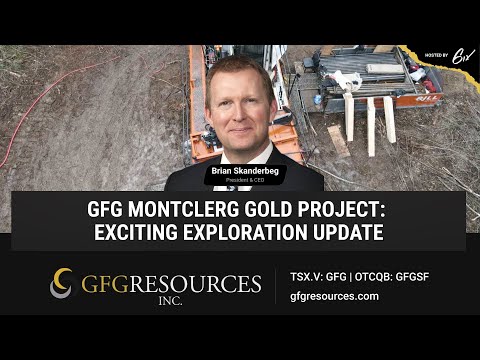
0:07 Hello, everyone, and welcome to GFG Resources Live Investment Summit today, hosted by 6. I'm joined today by Brian Skanderbeg, President, CEO, and Director of GFG Resources. Brian is going to walk us through our company presentation and after we'll be entering into a live Q&A session. I'd like to remind everyone in the audience that you can ask any questions you like using the Q&A tab found on the right hand side of your screen. And as always, this event is being recorded and will be available to watch on Six.com in the coming days. Without further ado, Brian, let's get it started.
0:36 Thanks very much, Cam. And everybody, welcome to today's webinar. I'm going to be talking to you mostly about our Timmins projects, but also give you a brief update on the Rattlesnake Hills project down in Wyoming. This is GFG Resources, a mineral exploration company based in Saskatoon. GFG, for anybody who's wondering, is an acronym for Going for Gold. Just a little cautionary note, I am a geologist. I'm an optimist. Markets are interesting these days. I do think we all have to remain positive, optimistic. I'm an explorationist. I will make forward-looking statements. A little background on GFG. We set this company up about 6-years ago and I think it's an exceptionally compelling investment opportunity. This is a team and board that's found mines, operated mines, built them formerly with cloud resources and now with GFG.
1:30 We put it together to be a district scale exploration vehicle. And what you're going to see in Timmins is a real focus on finding the next relevant ore body in Timmins. This is a huge land package we control. We're looking in world-class belts and we're looking for tier 1 style systems. And ultimately we're trying to do it with methodology, with a mindset to be aggressive, be disruptive, look at things differently. And that's what TFT is doing, aggressively advancing our district scale pool projects and putting the money in the ground to a very high standard to benefit all stakeholders. Before we get into the nuts and bolts, the technical side of our business, been on the share structure, we've got about 160 million shares out. Our market cap would be around 15 to $20 million, depending on the day and our cash as of the end of Q1 was about $3 million.
2:21 When we look at our shareholder base, this is a strong backing that we have from both corporates and very intelligent institutional investors and high net works, the likes of US Global and Delbruck, families like the Lundin's through their 1875 finance vehicle, and even Alamos Gold has and remains a very relevant shareholder of us. For those of you that like skin in the game, management owned 6%, you can go look at our Sedei filings and continue to buy this company and support it. The chart, if you're looking at an opportunity and an entry point, most of the junior gold space has traded off very materially since April and GFG has, I think, done reasonably well versus our peers, although we were trading at 11 to 12 cents today. Lots of room for upside, good base support.
3:09 And I'm quite optimistic that what we're onto at Timmins will continue to build shareholder value. The team, myself, Rick and Mark, formerly of Clone Resources. We operated the CB mine and were successful at finding San Antonio Gap ore body. There's a track record of discovery in this team and a transaction-oriented board with the likes of Patrick Downey, Arnold Bassin, Brian Booth, Lisa Riley, very savvy seasoned veterans of the gold space. Now when we look about and think about gold exploration, I think this chart is very relevant. It's relevant to why we set up GFG. It's relevant to where we're going. Discovery trends and discovery ounces cost are declining over time. Here's a snapshot of 30 years.
3:56 And ultimately what you see is to find an ounce of gold, you have to spend more and more to do it. And there's fewer discoveries that have been found. Ultimately, when we think about GFG strategy and why we do what we do, we're going to productive belts. We're understanding their history. We're consolidating large land packages at the right time in the cycle through unique deal structures. Then we're applying our skills to generate new targets, look at historic intercepts with a different lens. And I think this is a good recipe for finding very relevant systems in a time period where discoveries are declining. And what it also means is relevant discoveries will be acquired and I'm very confident about that. And I'll speak more towards a little bit later. When you think about where we work, This is the Timmins belt of Abitibi. Essentially, this belt is about 200km across.
4:50 In that belt, there's 150Moz of historic production, current reserves and resources. It is one of the most well-endowed belts and pieces of crust in the world. That's ultimately why we went here. But on top of that, there's good history of discovery. Whether you look at things like Lakeshore Gold, Pro Metals, Trelawney, these companies found relevant ore bodies. Moneta, even out to the east of us, They've taken an old ore body and built it up. This is a good place and a great jurisdiction to make new discoveries, and it's why we went here. Lots of cover, lots of preserved prospectivity, and in the end, there's lots of infrastructure here. If you think of the locations and the mills around us, we have 4 mills within about 25 kilometers, and those mills have a need for feed.
5:38 And what that translates to is opportunity for any discoveries down the line to have and find a nice home. And in the end, this is part of our strategy and rationale for exploring and allocating our capital into a belt like Timmins. Now, when we think about what GFG has done, we've put together several large land packages. What I'm going to spend today, most of today, talking on is the Gold Arm property. Gold Arm is east of Timmins. Main Timmins Camp would be at the west end of this map on the left. That's the area of the Dome Mill, Pan American Mill, Main Timmins Camp. As you look across the Porcupine Dester, which is the structure at the south of these 2 areas, you find and move over to an area called Black Fox and Hislop and through the Taylor Mine, we're on the Pipestone deformation zone, immediately north of that.
6:31 To the west of us, we have mines that have been historically produced, things like Clavos, things like Bradshaw deposit up to the northwest of us. To the east of us, we go in and we have systems like the ramp deposit, like Creasis Gold and over onto Fenn Gibb. Ultimately, we're an area that's surrounded by mines. We've put this land position together over the last 9 months and we control about 30 kilometers of prospective belt. Some of its earlier stage like the north, sorry the northern and the eastern part of it, And some of it's a little more advanced, like the Montclair portion, where we've been drilling most recently. But I truly believe that with the likes of the infrastructure around here and the preserved endowment, that this is a great place to make a relevant discovery. When we look at how GFG entered this belt, we started with the Montclair block in October of last year. It's about a 10-kilometer segment to ground. We picked it up from IEP.
7:25 IEP is a private company headed by Lionel Bonhomme and Peter Colbert, great individuals that have identified the opportunity, done some consolidation work and were happy to fold it into a company that had a little more financial wherewithal and a real drive to take it forward and explore it. They are relevant shareholders and hold an interest in the property as well as we advance through our option period with this piece of ground. In the end, there's about 120 holes here. Those holes had outlined a Gold system that was about a kilometre in sprinkling, but most of them were prior to 1965. And what that means is they were really just looking at high-grade vein-hosted components of the system. We're taking an approach to say there's a good Gold system here. It's under-explored. It has bulk tonnage affinities. If you look at our press release today, we put out a very broad mineable zone intercept in the core of the MC central area. It's one of our best holes drilled in the last ever since TFC ultimately. And what we're showing is very good prospectivity. So I'm going to talk to you most about the Montclair trend, touch base on the Canamex trend, that's the MC and the QX. And you see these systems sit within the middle of our land position, as we would have outlined it on the previous map, as Montclair.
8:38 Systems fertile. It's only been tested shallowly and our results are looking very, very solid. Cross-section through the main property shows 2 main ore systems, 1 in the hanging wall, the MC prospect, 1 in the footwall, the Canamex prospect. These are 2 main corridors. And ultimately, what we started with were a number of vertical holes drilled by IEP and a number of inclined historic holes from the 40s and 60s. And they really showed to me and to the team, good bulk tonnage potential in this Valsik Volcanic, good high-grade vein systems. As you look at these football splays, the upper football zone, We've done a fair bit of drilling and had some exceptionally high-grade intercepts on those. And then there's a Canamax prospect, which is a completely different corridor.
9:23 It strikes across our property for about 6km. We just put a couple of holes into there this year. We've got assays pending on that. Geologically though, what we like is this complex framework. We're on a major deformation zone, the Pipestone deformation zone. Most ore bodies sit within, say, a kilometre of a major deformation zone like this Pipestone break. And I see a lot of similarities in this area to major Gold systems throughout the Abitibi. Time frame here, look, we've been very active. In 9-months, we have acquired this property. We've executed 2 drill programs and we've put out 6 press releases here. So We've been very active. I'm very proud of the team in terms of executing a drill program in Q4 of 2021, executing that within weeks of acquiring the property, turning around our assays and publishing 3 or 4 releases in Q1 of this year, which really moved the stock up to this 20-25 cent mark. The market's rolled back over. Yes, the whole sector's declined, but we have continued to put out great results.
10:28 When you look at these results, these show both high-grade and bulk tonnage characteristics. Today we put out one of our best results yet drilled on the property, 1.6g over 70.4m. We have a number pending further. We will be drilling later this year as well. Significant progress in a very limited timeframe on a prospective property. Looking in a little more detail here, what we published back in Q1 were some of the best intercepts drilled on this property. And we broke it into 3 panels, MC West, MC Central, MC East. Ultimately it's 1 gold system and it's segmented by a couple later faults and so we broke it into these sort of domains. 5g over 26m from 75m depth, an exceptionally good intercept. We also showed some bulk tonnage hits tied to those in the main zones. We had very, very good success back in Q4 drill program, which was published in Q1. You see the cross sections here in yellow are the domains, the upper and lower main zone, and then the lower and upper football zones. So we're seeing 3 or 4 zones developing both at a shallow level and a modestly deeper elevation.
11:39 I think this was an exceptionally good start to the program that we launched in Q1 and it encouraged us sufficiently to continue with a much more aggressive program that we completed in Q2. I want to flag in a little detail here and some core photos for any of the geologists here that are intriguing and want to really think about the details of this. This is a very low nugget system. What do I mean by that? There's not a lot of visible Gold. You look at the assays through here, there's lots of 0.5 gram to 3 or 4 gram material. That's good bulk tonnage. In this composite, there were 3 high-grade vein systems that graded between 5 and 30g per tonne and the entirety of it was well mineralized. That's encouraging from a continuity and relevance perspective. If you can put 5g plus or minus over 25m, that is well into economic territory and very impressive continuity of this in terms of the holes we drilled last year.
12:40 When we think about where we go and where we went in Q2, here's a plan map that was published on the release today. And you're looking at about a 1.5km, 2.5km strike length of everything that we've shown you on this map. We focused our drilling over about 1.2km to date in the MC Central panel initially last fall. Then we stepped out Q2 this year. We drilled out MC West with 5 holes. We stepped out into the MC East, we drilled 3 holes, drilled 7 holes in the MC Central of which 4 or 5 had been published, and we drilled 2 on Canamax. We've actually seen very good continuity in the step-out holes and are continuing to build on the scale of this system. Just from the program, I'm going to show you the MC Central panel, what some of the core looks like. Today we published 1.6g over 70m.
13:33 There's a lot of 3, 4, 5 gram material into that. Sheeted vein systems hosted in the Felsic Volcanic. This was a very impressive intercept. You see on the bottom here some of the vein characteristics, eye veining parallel to the fabric. There's also some that's more oblique structurally. So we're building the domains to understand the structures that control this ore body. We also return some higher grade intercepts, 5 grams over 8 meters. That's an economic hit as well. When you think about 5 over 5 and anything greater than 20 gram meter product starts to reach economic threshold. So we're putting together a suite of high-grade economic football style intercepts and bulk tonnage main zone intercepts. Things like 1 to 1.5 grams over 30, 50, 60, 70 meters.
14:21 I'm quite encouraged by what we've seen so far. This was the photos from today that we published, the core that we published, so you see a nice example of characteristics of the main zone style of mineralization. About 3-weeks ago, we published the drilling west of the MC Central panel. We stepped out here in Q2 and drilled 5 holes. We were pretty encouraged by what we saw visually in the core. We got the assays back. These were step out holes, 400m to the West. And we saw some really interesting mineralization. Bulk tonnage stuff, 1g to 1.5g over 30m to 40m right near surface. We saw some higher grade material, 4 grams over 6 meters. Peak assays in that composite were up at 13 to 15 gram per ton range. So also reaching economic thresholds or sort of vein style or underground style intercepts.
15:15 These were step out holes to the west. So very encouraging going west. We also went east in the current program and we stepped out anywhere from 3, 4,550 meters going to the east. And I flagged 1 hole here because it was the broadest step out hole, about 550 meters away. We saw assays in this hole of up to 5 grams. I was encouraged by some of the character of those intercepts that shares affinity to the MC central panel in terms of the degree of sulfidation, the host rocks and the nature of the veining. But we also saw some characteristics out here that we hadn't seen before. We saw
15:52 abundant porphyry diking down on this ultramedic contact. That's a good sign for a gold system. It was mineralized and veined, although anomalous in gold. We also saw this broad pyritic basalt. Now, pyritic basalts aren't always that interesting, but when you stick them next to a vein system, they are. And that's what formed the Croesus ore body 20 kilometers to the east of us in the Croesus mine. So we're seeing the hallmarks of the system working very well going to the east in broad step out holes and we will certainly be back drilling more extensively both to the east and to the west of it. Stepping to the south into our other system, this is the Canamax corridor, This is the Pipestone Deformation Zone and cross-section. So you're sitting between the Porcupine sediments and the Kidman Rope Volcanics. We put 2 holes down here.
16:41 These were holes testing a search space between 200 and 300 meters vertical. And ultimately what we saw here was really fertile Tumiscumene diking. That's a great sign for gulbinization. So the ultramaphex veined and altered. We saw a good fugacitic alteration and sulfidation. And these holes are pending assay yet. But we were certainly impressed with what we saw down here as well. So we liked this other corridor as well, ultimately on the Canamax deformation zone, which is directly on the Pipestone. So when we think big picture here, I've talked to you for the last while about Montclair, which is the most advanced target on our Gold Arm property. But if you stand back and take a bigger picture about why we did what we did, we put 30km of belt together, knowing this area was underexplored. We did 5 transactions to put this together and we staked a broad block of ground in Q4 of last year.
17:35 On the greater Gold Arm property, which is the area off to the east, what we're doing this year, geophysics, geochemistry, reprocessing historic geophysical data, prospecting, and ultimately building a target reservoir to find the next system going off to the east. And it's why we put this big belt together here. We control 200 square kilometers here. Montclair has been our focus to date. We are building the pipeline behind it of targets across here and I'm very encouraged by what we've seen. And we are very active on the regional programs as well this summer. Here's one example. It's the Aljo Mine prospect. We acquired it in Q1 of this year. Multi-ounce hits over meter scale, drilled relatively shallowly. A producer from back in the 40s. These are the types of systems that can still yield mines. They've only explored shallowly. They're showing you there's good grade, multi-ounce potential along the structural corridor.
18:34 We are doing work prospecting building the model around the Aljo mine and I would expect us to build this into our pipeline and drill this into in the future as we advance subsequential programs. I've talked to you about Montclair. Big picture though, we hold 800 square kilometers in the Timmins Belt. Our focus is on Gold Arm. Right now we are advancing secondary programs on Penn area. If you follow the GFD for the last 4 years, we spent a lot of time and efforts and we have a good pipeline on Penn. We've added in something more advanced like Montclair and now we are advancing these both in tandem. Not purely reliant on discovery at Penn to drive this stock forward, but it is something where we still have good irons in the fire. So whether you're talking about Slate Rock or Nib or Sewell, these are targets that have done some drilling. Many of them have returned economic intercepts that remain in our pipeline and we're still doing generative work across the Penn property.
19:32 Doray sits immediately south. It is sandwiched between Newmont, Newcrest, and Iamgold. Not a bad place to be based. This is a property that's quite strategic. We are looking at various options for this, and I hope to be able to talk to the market in the coming months and 0.25 about where we go with Thore. There's embedded value here and we'll find the right deal and path to advance it. Overall, when you think about Timmins and what we're doing, $3M in the ground this year, We're drilling about 10,000m. If we look at the main focus of that dollar in the ground expenditure, it's all Montclair. Drilling in the ground, developing the MC target area into something where we can demonstrate continuity and stepping out on the system, whether it's into the MC West, MC East, or the regional Greenfield targets within the Montclair block.
20:26 There is very limited drilling outside the Montclair block still on our property. And We see good prospectivity moving to the east and west. A number of those targets are moving through the permitting phase and expect us to advance some of those targeting as we move through secondary phase drilling in 2022 H2. Regionally, compilation, Sonic, prospecting, till sampling and geophysics. This is the generative work to drive a target pipeline across the Gold Arm property over a Pan-Sonic drilling refinement of targets and down at Dore looking at strategic alternatives. That's the 2 sides of the Montclair story and the Gold Arm block. And it's really what forms the place where DFG invests the dollars. Now, the other side of our business And I think the leverage for our shareholders is ultimately embedded at Rattlesnake Hills. Our partners, Group 11 Technologies, is trying to bring in-situ mining to Gold.
21:28 This will not be a simple path, But if they're successful, it could very much revolutionize the Gold mining space. GFG owns this asset in entirety. It's under option to Group 11 Technologies. You can see there's about 100,000m of drilling. It is an Alkaline Gold District we control.
21:47 And there's about 40 to 45 million US dollars that has been spent here historically. 2 main deposits have been drilled off. You can see them on the bottom, the North Stock and the Antelope Basin deposits. These are bulk tonnage, oxidized down to about 150m. And they're a great place to develop and test in-situ mining technology. Ultimately, what we granted Group 11 Technologies was an option to earn 70% by taking this to commercial production. At that stage, we would own the 30% and have a carried interest in a mine. We would own 9.9% of Group 11 technologies and we would have been paid gas of about $7.5 million. So there's a good de-risk path to see the development of Rattlesnake Hills and participate in truly revolutionary technology that Group 11 is bringing to the gold mining space.
22:37 We have no investment that we're putting in here. It is all funded by Group 11 Technologies. And ultimately what they bring is really unique technology, cyanide replacement technology that's patented by Enviro Metals, which is the parent company of Group 11. Group 11 is a private Delaware registered company. And when you look at what they're trying to do, they're taking a patented ligand that replaces cyanide, putting it into the ground, and bringing in-situ technology, like you would see in uranium or copper, to the gold mining space. It does dissolve gold, this solution, very well. We recognized this when they approached us as partnerships. You can see the recovery curves here where we saw very strong recoveries compared to cyanide and much quicker kinetics in a benign solution, hence the applicability to in-situ mining setting.
23:29 When we tested this on the rattlesnake eels or themselves, We ran a number of tests and we published these results in earlier this year, and the results were very encouraging. We show you some leach curves here, either 30 or 50 day leach periods. Ultimately, these things are flattening out at 40, 50, 60, 70 and 80 percent recoveries. If we just took the oxide component, which I think is the most applicable to this technology, we averaged 64% recovery on whole core immersion testing. What we did, we didn't crush that rock, we just immersed it in the solution and we got 64% of gold out of it. That is very, very encouraging and it came out relatively quickly. What actually leached, you can see here the pictures, brown rock oxidized, gray rock not oxidized.
24:22 The brown rocks were generally higher, no surprise there. Across a variety of lithologies, we saw very strong whole core immersion leach testing with the proprietary technology and leach license to Group 11 technologies. Next steps, ultimately we need larger diameter core here to do more physical and chemical testing. That's ongoing. We're permitting for that. Very optimistic that that drill program will go on later this year. It'll yield large diameter core to ultimately give us a proxy for in situ recoveries. And as you look to the next step, Group 11 Technologies advancing the permitting towards an in-situ test in 2023.
25:08 Why Rattlesnake Hills? Pretty clear. The jurisdiction gets in-situ recovery from a permitting perspective. Every star around the yellow one is an in-situ mine or a development stage project. So the regulators very much understand the groundwater, the geotechnical, the recoveries, and what in-situ mining can do to the ore bodies in Wyoming. This is a great place to test and develop technology. The ore body is largely drilled off. It sits, it's largely oxidized down to 150 meters. A variety of chemical redox bases to test it on, and under topography that looks to be amenable to Institute technology. So these are all the rationale of why the partnership works between Group 11 Technologies and GFG.
26:00 When you look back at what we've achieved over the last couple of years, I think 2021 will, on history, be a building year for us. We brought G11 into the Rattlesnake Hills. We brought Montclair and Timmins into our portfolio, we raised $3M and we completed an inaugural drill program. All that work, I think, translated to really good market value generation in Q1. We published great results. We had metallurgical results from Rattlesnake that were encouraging. And we continue to layer through now into a phase 2 program. I think the value and the whole space has rolled over, but I really believe in what we're doing at GFG. And I think the results have been astounding. And I look forward to our second half results this year. So as an investor, why would you invest in GFG? What's relevant to us? We have a lot of irons in the fire, distal assets in Timmins, 800 square kilometers of prospectivity with no one's systems on there.
27:04 We have exposure to unique technology in the Rattlesnake Hills that can change how gold mining works. This is a technical team that's found mines before, it's operated mines, and it really gets what it takes to make an economic core body. Strong shareholder backing, good backings of the likes of both corporates and institutional and high net worth individuals that have supported this company over the last 5 years, and we thank those for that. We're very cognizant to put money in the ground. Ultimately, every dollar that goes in the ground increases our chances of making a relevant discovery. And if there's any one metric that you want to see, dollars in the ground is really what you want to see into prospective areas, and we're doing that. So we have a great opportunity to find the next Timmins Gold mine. We have a great opportunity to revolutionize the Gold space with our partners in Wyoming. It's a well-funded vehicle and I think there's a lot of catalysts moving ahead in 2022.
27:58 So with that, I'll turn it back to Cam and open the forum to any questions. Thank you very much. Great, thanks, Brian. I'd like to remind everyone in the audience that you can ask questions using the Q&A tab found on the right hand side of your screen. But Brian, let's get started. First question, can you explain the mills around you and if there's any capacity to add more feed? It was an acronym we came up with, or at least a little bit of lingo, the need for feed. And Timmins has a lot of mills sitting around it. If you think of the Dome Mill, 13,000 tons a day, they're trucking ore, This is Newmont, about 180km. That has a high embedded cost. Can you replace that feed in the largest mill with intractable distance to us? Yes.
28:44 When you look at things like the stock mill, Black Fox complex in McEwen, very underutilized. Holt Holloway mill, 3000t a day, sits within Agnico Eagle. Used to produce under St. Andrews, not producing anything. That is directly adjacent to our land positions. So, Pan American, it's the 4th Mill back in Timmins. Those are all opportunities to bring and displace feed or else completely acquire infrastructure or partner with our neighbours. So, I think there's a good opportunity given the infrastructure and the belt that any relevant discovery becomes very valuable to one of our peers. That's ultimately why we're working where we're working is one of the key components is that infrastructure base.
29:36 All right, thank you for that. Next question. You know, the geology out east looks interesting. How much drilling is out there and do you think the system, How much do you think the system could have?
29:51 When we philosophized and did some arm waving about the belt, ultimately the Eastern continuity from Montclair was really green. It has not seen much work. There's an old mine out there called Eljo. There's a couple other things off the property that look interesting as well. Most of this has not seen primary phase exploration. By that I mean, 1 drill hole per square kilometre even. It is under-explored. It's all undercover. We see the continuity of the systems out there. Things that Cresis and High Gold is finding is very intriguing. Things like Fingib off to the East are very intriguing. These are all along the Pipestone break, going west of us, Clavos, the Bradshaw. So the deposits and the endowment is there on this break, but yet it maintained itself as very immature.
30:39 So at this stage, it's just speculation what's there, but we very much like the prospectivity. We're actively generating a target pipeline through it and we will be drilling on that as we go through this year. Absolutely. Don would like to know if you could elaborate on what's happening at Rattlesnake. He's heard that EnviroMetals are restructuring with the new president of their company and there's not been a few updates from Rattlesnake in some time. Yeah, when we think about Rattlesnake and EnviroMetals, so I didn't go into the details, EnviroMetals owns 40% of Group 11 Technologies. Group 11 Technologies has the option agreement on our property and is the licensed vehicle to apply this solution in an in-situ setting. So that's the relationship between environmental. I won't comment on change of presidents or change of management, environmental, not that close to the group. Suffice to say, we're really focused on Group 11 as the partner of us. Group 11 is active, they're permitting, they're engaged, they're building this permitting process.
31:42 And as we look for the next steps, and I'm happy to bring maybe an update to the market here in the coming month or so. We really do expect large diameter drilling to go on this year yet. We expect more metallurgical testing to be ongoing, both on that core and the planning for what I think is a real definitive test of the technology, which is, can we get our first in-situ well going? What does that look like? And that's really a 2023 initiative. And the groundwork needs to be laid with the regulators to help them understand what's the difference between Uranium in-situ mining and gold in-situ mining. And what does it mean from a permitting perspective? What does it mean from the groundwater? What does it mean from all the components in the boxes that the regulators want to check? So there are some hurdles to go through that. I think it's very feasible. And if any jurisdiction can get through this, I think it's Wyoming.
32:32 Very supportive and constructive towards the extractive industry. So that's a bit of an update on Rattlesnake and Group 11 technologies, and maybe what the next steps will be in 2022. Absolutely. Eric is wondering what kind of drill intercepts you're looking for with Adora and PEM that will get you excited about further exploration in those areas. Yeah, look, I break those properties kind of separately. PEM, 60km of belt, we like it, We explore it. We've got a good pipeline at once. We've seen very high-grade intercepts, things like Nib, which was very encouraging. Ultimately, we couldn't chase that continuity of high-grade intercepts. It's a target that still sits there in our pipeline, but we downgraded it based on lack of continuity.
33:19 If we start seeing 20, 30, 50gm product intercepts, that's what I want to see. I want to see economic intercepts. I want to see a system that shows character and shows the ability to yield an economic deposit. That's a very subjective line to draw, but ultimately that's what I'm most interested in seeing. What is the character of the system we're exploring there? We still have a good pipeline there. PIN will remain something that GFT explores, But that's what we're looking for in that pipeline. It's a really compelling Gold system target that might really get us excited to put some dollars back into the drill bit at Penn and compliment our work out in Montclair. Down at Dory, Dory is about a 200 square kilometer block. Now that sounds like a broad block.
34:06 Realistically, it probably belongs better with one of our neighbors. And when you weigh it versus our portfolio of Penn and Montclair, Dory is the lower of the 3 in terms of our capital allocation strategy. So I think the best thing for us to do is look at a variety of partnerships with Dore. We will continue to do that. We have been doing that for a while and I'm hopeful that we'll find an appropriate path for it in the coming quarter or so. Your step-out holes of the East are looking very interesting. Can you explain further on what you see there and if it relates to the Montclair or any other deposits in the area? Sure. Look, we were very excited to get out and do some step-out drilling outside of the MC Central panel. We went out 300m and we went out 500m.
34:52 The most encouraging thing we saw in that 500m step-out hole was, yes, the Sveen systems are there. Yes, they still grade gold. No, they weren't broad yet. They were only meter scale intercepts, but they were 345 grams. But when we look at the character of those veins, they were the same as NC Central, and they were 500 meters out there. And they were in an area that no historic filling had been completed on. But on top of those things, we saw other characteristics that aren't at Montclair Central. We saw this sulfitic basalt. And anybody that knows Gold Mineralization knows that if you hit a sulfide, you generally start precipitating Gold. If you're in a vein, That's how creases forms. So we saw the Sulphitic basalt, which is a great host rock to gold mines. So that's now a very prospective stratigraphic package that's continuing loss for the next kilometers going to the east.
35:45 And we saw a large suite of porphyry dyking in an area we hadn't noted it before. We will get age dates on this. We will determine if it's a Tumiscomene conglomerate, which would be extremely favorable, versus a Kidman-Roe porphyry, which would be still favorable, but not as favorable as the Tumiscomene Porphyry. The presence of those porphyries is very encouraging. Despite the fact we didn't see a 20, 30, 50gm intercept, when you look at prospectivity, what we've seen is a lot of things that check the box go into the East. And that's why we will go and permit more drilling out there and continue to advance the drill testing moving to the East. We like what we've seen there. All right, Brian. Well, look, that's all the questions we received for today.
36:30 So I want to thank you, of course, for joining us. I also, of course, want to thank everyone who's joined us and especially asked questions. Today's presentation is available as a downloadable handout in the handouts tab on the right hand side of your screen. Of course, you can always get in contact with the team if you have any more questions. But Brian, I'd like to hand things over to you just for the last minute or so for some closing remarks before we wrap up for the day. Thank you very much Cam. And look, to the audience, thank you very much for joining us today. It's an exciting time for GFG. The macro space is, yes, it's a trying period through the summer, but if you're here listening, you have an interest in the cold space. And I think there's great opportunities to be out there to be found. And these are the timing windows where you really get all the card and find the teams and find the names that are active, that build confidence in you as an investor that we're allocating your dollars appropriately.
37:19 So I would urge you to continue to follow up, follow TFT, look at our website, tftresources.com and continue to follow us on Twitter or Instagram, our club page, our VP Biz Dev and IR, extremely engaged, happy to talk to shareholders, give them a call anytime. Myself as a CEO, always very open and happy to talk to shareholders as well. So with that, I will thank 6 again for a great platform. You guys are fabulous and wish everybody a Good day today.