Transcript
Automated transcript · Written by software from the replay's audio. It can mishear names and figures; the replay is the record.
0:08 Hi, everyone. Thank you for joining Element 29 Resources Investment Summit today, hosted by 6. Element 29 recently announced receipt of drill permits for their Elida copper project in Peru. Here to provide more color on Elida and the company's plans here are Element 29's president and CEO, Brian Booth, and the company's vice president of exploration, Paul Johnston. By way of background, Brian brings more than 30 years of senior executive experience in mineral exploration throughout Canada, Europe, and Southeast Asia, and was most recently CEO and Director of Pembroke Copper Corp, where he developed a copper resource at Picoy in Peru. He holds a Bachelor of Science in geology from McGill University and is also a member of the Professional Geoscientists of Ontario. Brian is a director of several public mining companies.
0:54 Paul Johnston has worked in the exploration and mining industry for 30 years, devoting much of his career to exploration and development of porphyry deposits. Most recently, he was chief geologist of Globetrotters Resource Group, Incorporated, focused on generating and advancing copper prospects in Peru. He was part of the exploration group at Tech Resources and accumulated extensive international experience in early to advanced stage exploration through a variety of technical and management roles, including regional chief geoscientist for South America. Paul is a professional geoscientist registered in British Columbia and holds a PhD from Queens University. After Brian and Paul's presentation, there will be a question and answer session. You can submit your questions on the Q&A panel on the right-hand side of your screen at any point during the presentation. We have a copy of today's presentation available in the handouts tab for you as well to download.
1:40 And just so that everyone is aware, this webinar is being recorded and will be available for playback on the company's website. Without further ado, I'll hand it over to you, Brian. Thank you, Cam. And good morning, everyone. And thank you for participating in our E29 webinar today. I'll be taking you through an exciting time for the company. This is a brand new copper company that just went public in December of 2020.
2:06 And we're advancing 2 really exciting copper opportunities in Peru, well located along the coast of Peru. So infrastructure is fantastic. They all come with previous exploration where there's already drilling completed. That gives us a leg up on getting to the next stage of our milestones. We have a very experienced team as Cam mentioned and Paul Johnston, who's leading our exploration effort and a couple of others in Peru and here at Vancouver to move the company forward. As I mentioned, tight share structure after our IPO was completed. And we have all the money in the treasury to meet our catalysts and work programs for 2021.
2:55 Our board is composed of our mainly of the company that we were spun out of, which is Globe Trotter Resources, where these 2 projects were originally located. And they bring a lot of expertise and experience as well as us in Peru, which will help us going forward with the projects. Our exploration team here in Vancouver is composed of Dwayne Lowe, who's our CFO, who has experience through 1st Quantum. He was their controller in Peru in the past, so he has a lot of experience in accounting matters in the country. Manuel Montoya is our general manager. He's going to be helping Paul get everything mobilized to our first drill program at Elida, which we'll be talking about today.
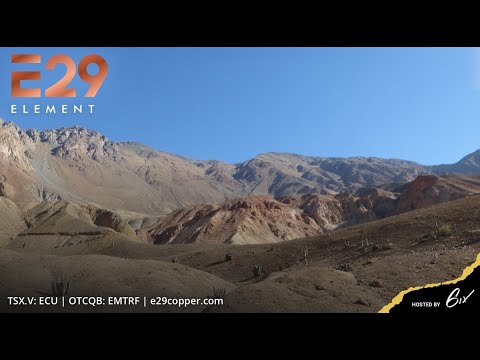
3:43 And then Ricardo Labo is our new country manager. He used to be the deputy minister of mines in Peru, very well connected and worked for several major mining companies as well in Peru. So that rounds out our team in the company. Our share structure, as I mentioned, is quite tight. We have 80 million shares fully diluted after our financing and we raised 6.7 million of which we have 5.6 million left, which is adequate money to meet our milestones for this year on drilling on both properties that will lead to resource estimates on both. We'll start with our Ellada project. You can see it's a huge system here. You can see the rusted area where it's located and has tremendous potential. It's a new discovery.
4:33 It was discovered by Globe Trotter and then drilled initially in 2014 and 15. So we're benefiting from a lot of that drilling where there were plus 500 meter intersections already in the system. And then there's been 4 other areas identified that Paul will expand on in the next few slides. So we own this project 100%. As I mentioned, it's a large system and it has multiple intersections and 4 individual porphyry centers. From our technical report, just target 1 has the potential for up to 500 million tons of material. So it has great growth potential with the other targets nearby that are yet to be explored. So now I'll turn it over to Paul to talk about more details about the geology of the Elida project located on this slide here.
5:30 Go ahead, Paul. Thank you, Brian. Yeah, the El Lodo project, as Brian mentioned, is well positioned for infrastructure. It's located in central Peru, about 85 kilometers inland from the coast, and it's near the port city of Barranca. It's also in the same vicinity as the pipeline that comes down from the large Antimena deposit and also connects to a port just a little bit to the north of Barranca. The project is also connected or close to the National Grid, and there's a 45 megawatt hydroelectric station about 25 kilometers from the project. So The actual deposit itself is a new discovery. It was made in 2011 by Globetrotters exploration efforts.
6:26 They identified it from an alteration signature and then followed it up with groundwork. Subsequently, it was optioned to Lundin Mining, who drilled a single reconnaissance-style drilling program that identified target 1. What's been realized since all that work, or during and since all that work, is the system is actually a cluster of porphyry centres and 5 of those have been identified from their field expression, in addition to Target 1 which received most of the drilling in that program in 2014-2015. This cluster is enclosed by a 2 by 2 kilometer zone of sericite pyrite alteration.
7:16 Only target 1 has been tested. We haven't had any drilling on either of the other 4 targets. Just to give you an impression of what it looks like on the ground, this photograph is looking to the east, with the mineralization shown in that transparent green color. This is target 1 mineralization which is forming a sleeve around a central early mineralized porphyry stock. The early stock is low grade and the mineralization is in the wall rock surrounding that. The objectives of the Phase 1 ELEDA drilling program
7:58 are 3 parts. One is to achieve a drill hole spacing that will allow us to do a resource estimate over a part of target 1 in accordance with 43-101. We also want to investigate the vertical extent of mineralization through a single vertical hole. And finally, we would like to improve the confidence of the mineralized boundaries that you see outlined in green. In order to achieve these objectives, we've put together an exploration team in Peru that is currently preparing for the drilling program. A drilling contractor has been selected with experience on the site, and we've begun metallurgical test work on materials from that previous drilling program. This is what the program looks like in plan, where you can see in green the plan drill holes.
8:53 They amount to about 4,000 meters of drilling. We expect to complete this in 2021 and follow that up with a mineral resource estimate. All these drill holes will just be testing target 1, but we do have contingency to test some of the other targets. The drilling permit allows us to test within all those areas and we have prioritized targets 2 and 3 for work after target 1. So this for me is an exceptional opportunity because we have already defined a system through the drilling that was done previously. We don't have to go out looking for it.
9:40 We can start right away with planning our programs to really develop the resources. It gives us a very much of a head start to rapidly develop those resources. The mineralization itself is favourable because it actually sub-crops beneath fairly shallow colluvial cover. The drill holes that were done in the past intercepted mineralization right at the contact of the gluvial cover. There's also the resource expansion possible in target 1 by looking for extensions at depth and laterally and we also have 4 other targets that have not been tested and have potential for mineralization not only the hypogene mineralization that we see at target 1 but also super gene enriched mineralization
10:34 in particular at target 2. So I'll pass that back to you now, Brian. That's the summary that I can give for Elida exploration that's coming up in the coming months. Okay, thank you, Paul. As Paul mentioned, once we finish our preliminary drilling at Ellida, we'll be moving our crews and all of the drills and so on to this project next after we complete that drilling. This is our Florida Cobre project where we have an enrichment zone with a historic resource that we'll be exploring. And this historic resource is located in the Paleocene belt that comes up from Chile into Peru, and it's one of the most prolific belts in Peru, located very close to Arequipa.
11:23 It's about an hour and 20 minute drive on mostly good paved road. And it's located in between the Cerro Verde mine and the Chapi mine areas of Peru. And again, great infrastructure, good location, etcetera and this in a as well as ALAD. This is one that will be drilling to modernize that historic resource. And our plan there is to drill those holes but also test for the sulfide mineralization below that. We own this property 100% subject to an option to earn 100% on a small portion of it. Again, as I mentioned, great infrastructure and location to all a lot of power opportunities as well as road access and ports nearby.
12:14 One of the Great intersections that was already drilled on the property historically was 1.4% copper over 116 metres. This is mostly secondary enrichment material and we will be drilling in and around that area with our first phase drill program, again, to modernize this historic resource of 57 million tons of 0.67 copper. So our catalyst for this year, we have the money in the treasury to complete this drilling, is to complete a maiden resource on Elida as well as complete some preliminary metallurgical studies that are already ongoing. And then we would move our drill program over to the Florida Cobre property to modernize that historic resource, as well as initiate metallurgical and engineering studies into 2022 with the core that we obtained from this drilling in order to do leach test work, et cetera. So we're well-funded for the rest of this year and early into 2022 with the money that we have and we're looking forward to both those opportunities
13:28 reaching the new resource category in the year and early 2022. So thank you very much and if there are any questions, Paul and I'd be happy to respond to any questions you have. Wonderful, well thank you Paul, thank you Brian for that great presentation. I'd like to take a moment and remind attendees that you can ask any questions that you have using the Q tab on the right-hand side of your screen. Having said that, we have had a few questions come in ahead of time, so I'd like to go over a few of those right now. Geologically speaking, why are you so excited about Elida? Paul, I'll turn that question over to you to answer, please. Okay, thanks, Brian. Well, the scale of the system is what is most attractive to me. The first pass drilling in 2014, 2015 was very successful at intersecting long intervals of pore-free mineralization in Target 1. This indicated a large exploration target, but it still remains open at depth and laterally.
14:26 The other thing I like is mineralization begins immediately beneath unconsolidated colluvium, which has positive implications for mining. There's also an additional 4 targets in the cluster identified from surface work that have yet to be drill tested. The alteration footprints of these targets is equivalent to target 1. The potential for supergene enrichment in target 2 is particularly important and we're looking forward to testing this concept. Thanks Paul. The next question is Peru is in the midst of a presidential election. What are your thoughts about the 2 candidates? Well, thanks, Cam. Well, basically, you know, I've been working in Peru for the last 12 years, been through several elections over that period of time, seen a lot of candidates come in and be president.
15:18 And for the most part, you know, everything was very workable with all of those presidents. We found, you know, cooperation and opportunities to work well with the government. So I anticipate that whichever candidate is the successful president that will be able to work with those parties going forward. Thank you. When do you expect to start drilling at Ellada? I think that we should be in a position to be turning the actual drill in the next few weeks. So that's the good news because we've already been mobilizing, as Paul mentioned, hiring people, working with the community, et cetera, so that we're well positioned to get things going with the drilling contractor leading the way with getting access to the first site.
16:09 Okay, great. Mark Turner has asked, general inquiry on community agreements and CSR status on both projects, good working relationships, et cetera?
16:19 Yes, we've had a community agreement at Elite Elida for 5 years. We renewed that agreement for another 5 years. It was an agreement that was actually created by and signed by Lundin. They did a great job with the community. We've had great communication with them. We keep them involved and we certainly provide employment and other aspects so that we have a great relationship with them and we constantly listen and we have community people that are engaged with them on a regular basis and we make sure that that relationship stays strong. And that's the same for Florida Cobra. Most of the historic resource is on a private company's surface rights. So we have an agreement with them going forward. It's not a community, but on the Atravisato target, which we didn't talk too much about, but that's on the Northeastern part of the property. There is a community there that we're engaged with and in the process of finalizing an agreement with them, but we've had agreements with them in the past to do exploration work and had them engaged in the project. And we make sure that all of our stakeholders are involved right from the beginning and continue through all of our activities so that they're part of the process. Thank you.
17:41 Okay, great. Peter Epstein asks, in some parts of your presentation, you mentioned copper grades and other parts, copper equivalent grades. Could you reiterate the copper equivalent grade potential for both projects? Thanks. Paul, I'll turn that over to you to answer, please. Yeah, for sure. Let's start with Elida. Elida is a little bit unusual in its moly content.
18:02 Typical porphyries are like .013 in around that area, whereas we're usually getting .02 up to .05 through most of the intervals. So that translates into about a .15 addition to the copper grades. So the potential for the equivalent of course is important and attractive to us. At Florida Cobra, a lot of the drilling was done through the super gene enrichment zone and there wasn't a lot of a lot of moly analysis done. We do see molybdenite in the in the hypogene part of the system but we don't have a lot of data to be able to to really disclose what that greater contribution would be.
18:51 Thanks, Paul. Another question that's come in ahead of time. What are the drilling widths planned for Elida? Paul, you can answer that one as well. Yes, for sure. Our drilling program is really designed to constrain the full width of target 1 mineralization and to look at how deep it extends. So we're planning to drill holes between 400 and 1000 meters. And we've got, in terms of depth of investigation, about 400 meters below surfaces where we've traced mineralization down to from the past drilling. So we're expecting similar types of intervals when we drill. That doesn't give us the width of mineralization, it just gives us the drill interval length.
19:39 But the current interpretation has that the width of the sleeve of mineralization between 200 and 300 meters across. Wonderful, thank you. And the next question, and maybe you'll be just repeating yourself briefly, but how deep do you plan to drill?
19:59 Sorry, Brian, I'll just answer that quickly. We have 1 hole drilled plan that will be a vertical hole that we're attempting to drill to 1000 meters below surface. Okay, great. Peter Epstein has asked another question. Can you briefly talk about the elevations of both projects and the importance of elevation in Peru and Chile? Thanks. Yeah, both projects are at low elevation. Elida is around 1600 meter level, so because it's close to the coast, haven't reached to the top of the plateau by, you know, where you're at higher elevations. The same is true for Florida Cobre. It's around 22, 2300 meter level. And a lot of the porphyry projects that we see in Chile are at that 4,000 meter plus.
20:45 So that would be considered of course, high elevation porphyry targets. And we're at a very modest elevation and very workable and easy to move forward. Great, thanks, Brian. Kenny Payne asks, what do stakeholders and investor engagement look like for your company moving forward?
21:07 The stakeholders, you know, we engage with stakeholders all the time and our shareholders, we reach out to them and provide information constantly. And provide information constantly. But our stakeholder engagement is also a constant in Peru. And we work through that with our team down there, and supported by our head office here, and reach out on a constant basis. And we have people dedicated to that purpose. Great, thanks for that. What are your expectations for the metallurgical test work? Paul, would you like to answer that? Yeah, sure. The preliminary work is being done right now on material from the previous drilling. We don't see anything in the mineralogy of the drill hole interceptions at Elida to raise any problems, but we do need to constrain recoveries, particularly what to expect for molybdenum to be able to feed into our eventual resource estimates and subsequent economic studies.
22:11 Thanks, Paul. Peter has asked another question. Target 1 at Elida could be 200 to 500 million tons, your conceptual exploration target. Could targets 2 to 5 also be in the hundreds of millions of tons? Paul, would you, we can both answer, but go ahead. Yeah, for sure. Yeah, We see similar alteration footprints at the other 4 targets. So the expectation is we will get in that range. I can't really say as we can with the same level of confidence of the target size because we don't have any drilling data. But that's our hope is that we can define similar size mineralization at all of the other targets. Great. Thanks, Paul.
22:56 How does this project compare to what you've worked on in the past? Paul, you've worked on a lot more porphyries than I have, so I'll leave you to answer that one. Yeah, for sure. Thanks, Brian. The mineralization at Elita is fairly typical in what you see at other porphyry deposits. There's many features that we see in terms of the sequencing of mineralization and the multiple events of both intrusion and mineralization. Importantly, it's the scale that's similar to many of the other Paleocene examples such as Cajoni and Cerro Verde, which are in southern Peru, the Paleocene belt that Brian mentioned in his presentation. There's also similarities in mineralization to other deposits like Antipakai in its SCARN signature.
23:50 And also the clustering that we see at Elida is also something I've seen at Texra-Lyncho deposit where the overall resource is made up of multiple porphyry centers. Wonderful, thanks Paul. What is the expected size of the resource? Well, we are targeting target 1, as we've said, it's from the technical report, which is in the prospectus that up to 500 million tons is estimated, but that still was based on the past drilling. There certainly is drilling that's going to be done around that to expand on that. And as Paul said, we'll go significantly deeper at depth so that we hope to do better than that if we can from the drilling program that we've established for this first target.
24:49 Thanks for that. Can you tell us more about your in-country team in Peru? You know, as I mentioned earlier on, you know, Manuel Montoya as our general manager, very experienced person, well connected to the geological community there, and has been involved in discoveries of porphyries there as well. He certainly brings a lot of opportunities for us to hire good people, which he's been involved in doing that, and building the team with Paul, and they work well together. So, you know, logistically, everything should go really well, and we have the right people in the right places to execute on the program. In the country manager job, as I mentioned, Ricardo Labo is a great fit for us.
25:36 Again, he went to Colorado School of Mines, a well-educated former deputy minister of mines, so knows the government system very well, understands how we need to behave and act there. So he's very helpful with stakeholders as well. And being Peruvian, of course, we're making sure that we're working well with all of our communities and keeping them fully engaged in the project right through to hopefully we get to the next few years, whether we'll build a minor or not. But we certainly will maintain that relationship with them with the help and guidance of our local team. Wonderful, thank you. Richard Osman asks, do you see any issues with the litorous metals such as arsenic at Elida or Candelera?
26:30 Go ahead, Paul. Yeah, sure, Brian, thanks. Simply no. The arsenic question is always something we look at in porphyry geology. And we have full arsenic data for the previous drilling. There are spikes in arsenic values, but in general it's quite low and we expect that to remain below thresholds that would bother smelters. That's part of the reason why we're undertaking the metallurgical program, to look at where the arsenic will report to in a simulated concentrate and what kind of concentrate factors we can see and what to expect in concentrations in that concentrate. On the Florida Cobra project, there really isn't any evidence of any deleterious elements in the supergene blanket. And as I said, we don't have a lot of data on the hypogene component of it yet. There hasn't been very much exploration beneath that supergene blanket to really say. But we'll certainly be monitoring that very carefully as we go forward.
27:37 Thanks. Peter Epstein asks, water is an increasing concern for many projects across South America. Can you comment on the availability and ease of obtaining water? That's always an issue for every mining company is how you access water and how you treat water. During the exploration phases here, starting with Elida, water is readily available. We certainly have a process as Paul and I have through our careers. We recycle water, we have sumps near the drills. So we're not wasteful with anything so that we're taking as much minimal amount of water as needed and recycle the water and make sure that everything is contained on the site, around the drill and then reused as much as possible.
28:30 So it's readily available. As part of our permit process, we have to have a permit to take water and there has to be a process that the government approves and the community understands on how that water is obtained. In the case of Florida Cobra, there's water nearby, but not particularly on the property. So we'll have to access that water through that permit process that's ongoing. And then that will be used for the drilling process. And the same criteria applies, you know, all the same environmental sensitivities will be looked at. And of course, water recycling and collection and making sure that our pads are totally secure and making sure the community is aware of all of our processes and what we're doing as we go through that drill program.
29:23 Great. Thanks, Brian. Why is the priority to get a resource estimate out on Target 1 and not wait to do more exploration work to get a bigger resource estimate? Well, we feel that it's a good start to the company to get a resource on target 1. And we certainly are going to be focused over the next few years at Elida in terms of resource growth. So We'll start with our initial resource, estimate it, add new drilling to the other targets. We need to define those targets and what type of mineralization it is and how much is there before we can start doing economic studies. We need to understand if we do have enrichment material, which would be treated differently than necessarily the hypogene sulphide.
30:11 We need to quantify that and understand the mineralogy of that and where it's located in terms of position on the property as well so that for scheduling, for economic studies, we know where we would be going within the overall deposit. So at Elida, it's all about resource growth and it's important to start with your initial resource and then grow it from there with additional drilling over the next few years. I could also point out, Brian, that the target 1 is quite large and it will take time to get drilling sufficient to calculate a resource. We want to start to disclose some of those numbers as soon as we can, even though it's only a portion of the target.
30:59 Great. Thank you for that. In closing, could you remind us again, what are the near-term catalysts that we should be watching for with Element 29? Well, again, for this year, as we've flagged from the past, now that we've got our first drill permit, there'll be drill intersections over the next 6 months that will be coming out to the market. We expect our anticipate our second permit for Florida Cobra to come in in the middle of the drilling at Alita. So that will be a seamless move from that team moving from Elida's drilling over to Florida Cobre, and then there would be drill intersections there. We expect that we'll finish Aleda early enough to complete a resource before year end. So that would be a catalyst for this year, and that probably the Florida Cobre would flow into the first quarter of 2022 for an resource estimate in our current plans right now.
31:58 Wonderful, thank you for that. Well, I think that was an amazing presentation and a great Q&A period. Brian, I'd love to hand it back to you for some final words before we fully wrap up. I'd like to thank everyone for participating in this webinar. It's very exciting times for the company. Great milestone to have reached our first drill permit, which allows us to continue to drill from now into the 2022 and beyond. So, look forward to all the milestones that we have this year and the great future that E29 has. And please reach out if your shareholders are interested investors and management will be happy to respond to your queries about E29. So thank you all for participating in this webinar.
32:45 Thank you.