Transcript
Automated transcript · Written by software from the replay's audio. It can mishear names and figures; the replay is the record.
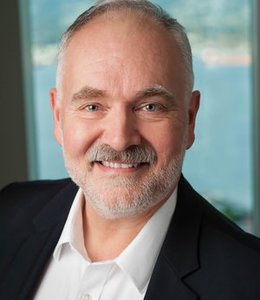
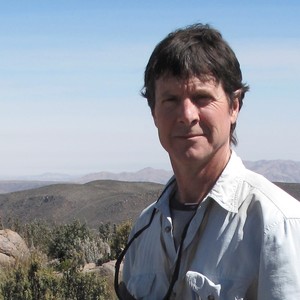
0:08 Hello, welcome to Element29's webinar covering our latest drill results released from our Florida Cobra project. I'm Steve Stackue, President and CEO of Element29 Resources and accompanying me today is Dr. Paul Johnston, our Vice President of Exploration. Element29, we are listed on the TSX Venture Exchange under the symbol ECU, also in the US under the OTCQB under the symbol EMTRF. Additional information is available on our website at e29copper.com. This presentation will include forward-looking statements and I encourage you to read our full disclaimer which is available on our website.
0:55 Just to provide a bit of a high-level background on Element29, we are a relatively new company. We were formed from an asset spin-out from a private entity called Globetrotter Resource Group and as our name intimates we're a copper focused company and we're actively advancing 2 projects in Peru towards the resource definition and engineering study stage. We like Peru as it is a top-tier copper jurisdiction. It is the world's number 2 copper producer of that metal that is globally becoming even more crucial as our green economy strengthens and copper grows and is as an increasingly essential component both in electric vehicles and power grids. Putting it simply, primary copper demand is projected to strongly exceed supply over the forthcoming years.
1:40 We really see this as a great opportunity for value creation by E29 for our stakeholders and investors as we advance both our Florida Cobra project, which has a historic resource of secondary enriched copper mineralization
1:53 and is located in the prolific South-Southern Peru Copper Belt, and also our newly discovered El Edda copper porphyry system in central Peru. Ultimately, our focus is to develop low-cost, low-risk copper production opportunities while we look to significantly build our resource base to more than 4 million tons of contained copper. Today we are going to be looking at our initial drill results from Florida Cobrae. Our Florida Cobrae project encompasses almost 2,000 hectares and covers 2 porphyry centers or targets, Candelaria where these drill results are coming from and our other target is Atra Visato which we anticipate drilling in 2023. We really like the excellent location and infrastructure of these projects, and we'll get into more details of that going forward.
2:39 But specifically at Candelaria, we do have a historical copper resource of over 57 million tons of 0.67% copper that was outlined by a historic program back in the 1990s and that yielded excellent results which this latest drilling has actually confirmed and corroborated. I'll turn it over to Paul to go over a little bit about our location. Thank you Steve. Yeah the Fleur de Covée project is in what's known as the Southern Peru Copper Belt which is a Paleocene Age magmatic arc. It's in a good neighborhood, it has a number of plus billion ton deposits, namely Cerro Verde, Cajonay, Tacopala and the the Cape Echo project which is under development.
3:27 It also benefits a lot from good infrastructure. There's a good power grid. The national grid is very close within 5 kilometers of the project. There's a national road network that's accessible within again, 5 kilometers, 5 to 10 kilometers of the project. There's rail services out of Arequipa. The workforce in Arequipa as well. Arequipa is the second largest city in Peru. It's a mining city built around the Cerro Verde project. And that comes with a lot of contagious mining services. The project is also at a moderate elevation. It's not in the higher Andes or the Alta Plana which is up around 4,000 meters. This project is between 2,600 and 2,800 meters.
4:17 You can see in this diagram here the proximity to Cerro Verde, the mine that's owned by or operated by Freeport-McMoran. It's about 26 kilometers straight line to the southeast. There's also a smaller operation that's now on care and maintenance called Chappie, which is about 5 kilometers from the mine.
4:41 Zooming in a little bit more on the property itself, the 2 targets that Steve mentioned were Candelaria, that's off to the southeast, and actually a larger target we call Atroposato, which is shown here as a geophysical expression with geochemistry. That's a target that we're working towards permitting and hopefully drilling in 2023. It has a lot of attractive features exposed at surface and the geophysics area is also quite compelling. Our focus, though, on drilling right now is down at the Candelaria target where we're undertaking a, really a verification drilling program by twinning 9 holes and doing a little bit more drilling to constrain the geology. To constrain the geology.
5:33 I should add that just the Atropos target, it hasn't been tested yet. All of that, there's a couple of drill holes on the fringes of it but the core of it has not been drill tested So we're quite excited to get in there and look at what that is. Next one please Steve. This just zooms in on the area we're drilling right now. The black outline is our FTA or permitting outline, which we're drilling within. The geology, very simplified here, is an older and a younger porphyry, which is part of the Candelaria Porphyry Complex. Our holes here, shown in the cyan color, are holes that are either completed or currently underway.
6:20 We're just in the process of drilling FDC 11, that's just off to the left of your cursor right there, yeah. And we're releasing information now on holes 1 and 2, which are where Steve's pointing. I'll be showing you some sections that are shown in the white dashed lines, just to illustrate what the holes have encountered. And our objectives really for this were to were to validate the previous historical drilling. There was quite a lot of drilling done in the mid-90s by Phelps Dodge and a small Canadian junior called Rio Amarillo. We don't have materials for those drill holes, so we needed to come in and verify that data by drilling 9 twin holes.
7:14 And we're also using the opportunity to look deeper to see the potential of the sulfide resources underneath the enrichment. So the results that we've got, I won't read through all of these, you can see those in our press release that was put out on Monday. The 1st hole intersects 349 meters at 0.77. So that's a combination of primary and enriched, that's the total intersection. And I've broken that out into 123 meters of 1.4% in enriched and 226 meters of 0.42 in primary for the first hole. The second hole also similar types of lengths 378.6 meters at 0.5 overall with 130.7 meters at 0.9% in enriched and 247.9
8:12 meters at 0.3% copper in the primary. So our objectives to date are being met. We've successfully twinned the holes and the results as you'll see in a minute are coming up quite comparable to the historical drilling and we are demonstrating the primary sulfide mineralization potential at depth.
8:38 Just quickly to show you how the results are, what you're seeing here on the right is, are the 2 holes plotted beside the original hole and our hole that we've recently completed and the lines on each side of those holes track the copper grades down the hole. You can see just the patterns overall are very similar in the enrichment. It's quite easy to see where the enrichment starts. That's the blue interval that you see. So this is FDC1 and its twin was K008. And you can also see the bottom edge of the enrichment. You can also notice the boundaries of the enrichment are very close to the original hole. And the same pattern with the one on the right, which is FDC002,
9:27 twinning CAR188. It's not quite as good because we're actually drilling a core hole next to an RC hole, so you don't get the exact same sample to sample grade comparison, but you can also see that the breaks in the enrichment in particular are very similar. So we're very happy with that, the correlations are so far coming up quite well and just to comment on the primary, I've put a couple of pictures in there just to show you the well mineralized primary from the first hole FDC001,
10:07 that's just a little bit over a percent in this sample interval, a percent of copper, very well mineralized and In this case you're seeing an assemblage of chalcopyrite and pyro. Next slide please. So in suction form this is the first hole, what it looked like.
10:27 The intervals are marked on there, same intervals that were in that table previously. What this hole encountered was a leached capping which is a hematite rock, very red, very easy to distinguish. When you enter the enrichment zone the hematite disappears and you end up in a whiter color drop. So visually it's quite easy to see. That was the enrichment interval there
10:55 that I cited there, 123 meters. And then below that we hit very well mineralized primary that gradually declined in this hole down
11:09 to about 0.1, 0.2% levels but we were able to extend about 75 meters below the original hole in primary mineralization. The next hole, the next section over, similar result really, we hit the exact same sequence of leach capping above the the enrichment zone which sits above the primary mineralization and again you can see the grades on the side of that. Next one please Steve.
11:43 Just looking in long section now between those holes what the enrichment zone looks like. It extends continuously between those holes. The hole on the far right is a hole that we haven't released yet. We don't have all the results compiled for that yet. That's hole 3. But you can see the position of the enrichment zone, it's between 50 and 100 meters below surface. It's very well defined and it's dominated by chalcocite mineralization. Also in this one, you can maybe get a sense for the plunge of the mineralization if you just track the red intervals that are marked on the drill holes from primary.
12:28 We're starting to detect a trend to the northwest and our last drill holes of the program are designed to try to track that mineralization down.
12:41 Next slide please. This is just a short video that we want to show you to give you a sense of the of the terrain. It's a drone video that's looking to the southeast. You can see Candelaria is coming up in the foreground there. If you can make out sort of right of center there's a couple of vehicles on a road, drill road there. And really what you can take away from this is that there's very little
13:09 other land use, there's no agriculture, it's desert conditions. And The last little bit of the video here just gives you a glimpse of the Chappie operation, which I mentioned before about 5 kilometers to the southeast of the project. You can see that red staining that's characteristic of all the leached capping, the hematitic leached capping that sits above the mineralization. So I'll turn it back to you Steve, you can just summarize with what our plans are for Florida Copra and Eleanor. Excellent, thanks very much Paul. So we're really looking forward to a quite strong news flow for 2022 given that we have a lot of holes still forthcoming from the assay lab from our Candelaria project drilling.
14:01 So there will be strong news flow going forward over the upcoming months. Beyond that, we do anticipate also being able to release both our initial resource estimates,
14:12 both for the Candelaria project at Florida Cobre and also from our Ellada project as well, which we completed our drill program earlier this year. So very exciting catalyst for the company moving forward, 2 initial resource estimates. We're also going to be actively advancing these projects through the engineering phase as well. So a very busy year, so very strong news flow, but certainly we're very excited at the potential of these 2 projects going forward. Thank you everyone for taking your time today to hear our presentation on the initial drill results from our Candelaria project at Florida Cobre and if there's any questions we're happy to field those at this time. Thank you very much.
14:58 Great, thank you so much Steve and Paul. We're gonna open the floor up to some attendee questions so if you do have any feel free to submit them. We have some here. So of all the historical holes previously drilled why were these 9 holes selected to be twinned? Thanks Dasha, I'll field that question. As Paul touched on in the presentation, yeah, this program, the holes that we specced, were selected to twin or really to confirm a representative number of the historic holes that were used in constituting that historical resource estimate on the Candelaria zone and that was just over 57 million tons of 0.67% copper. So really it was to help us get some confirmation and comfort on that and ultimately that will feed into an updated resource estimate so the data from this will allow us now to to move forward to have a NNI 43-101 compliant resource on the on the Candelaria zone.
16:01 Thank you. Question here, to what extent was the sulfide potential explored by historical exploration? Historically they really, they focused primarily on the supergene enrichment zone in the mineralized body at Candelaria, that was their focus. Some of their drill holes, they did get into the upper portions of the primary sulfide zone, but that really wasn't what they were looking for. But certainly those intercepts, that was helpful in terms of indicating that there is a primary sulfide zone beneath that supergene enrichment zone that that that's been drilled off here. So really for us that it provided a guide to go forward and you know really that's going to be part of our target in the current drill program and going forward as well.
16:51 Kind of, thank you. Mark's asking, are you seeing delirious elements in your enriched zone? I'll leave that Paul, if you want to feel that one. Yeah, for sure. We're doing multi-element analysis on the materials, on the samples from our current program. We haven't seen anything that's a concern yet. I think in the press release, there is some information on the arsenic which are at a reasonable level. Thank you. So how quickly can you publish an updated resource estimate for Once we have all the results in from this current drill program, which we anticipate we'll start to see those results flowing in over the upcoming couple of months really, I think is a realistic timeline.
17:44 That will feed into our resource estimate process. So we anticipate at some point in the second half of this year kind of into Q3, Q4 is when we you know what we currently anticipate is a realistic timeline. Thank you. Can we expect possible by-product metals being reported at Florida Cabra? Paul, I'll let you fuel that one. Yeah, for sure. Thanks. Yes, as I mentioned before, we are looking at all other elements as part of our 31 element suite. We can expect to see moly, molybdenite, we've seen molybdenite in the primary mineralization. That's probably the main contributor, if there is 1, to the economic constituents in the deposit.
18:38 Still too early to say what concentrations we'll see in the primary, but it should point out, depending on the processing strategy, the enrichment zone, if it's a leach processing strategy, you'd probably only see copper coming out of that and not some of those other elements. Great, thank you. Ken's wondering if you could provide some details to the capital structure and the major shareholders and insiders. Absolutely, I can feel that one. Thanks Ken. So, you know, the major shareholders in the company, we have just under 80 million shares issued and outstanding. The major shareholders in our structure is Globetrotters Resource Group. They own about 14% of the company.
19:28 On an institutional perspective, we have Acasta Partners, which is part of the Polygon Group, owning about 8%. Resource Capital Funds about 5%. And Management and Board is around 7% of the company. So presumptive retail ownership is in the range of about 66%. Thank you. A question from Moses here. Once the exploratory drilling finished, how long could it take to have the final results to determine if element 29 will go to the next space? Paul, 1 for you. Oh yeah. I'd say that, you know, according to our plan that was the last slide in our presentation.
20:17 We expect that, or we're planning to have that resource estimate done towards the end of the year, Q3, Q4 for Florida Cobrake. After that, we'll start doing engineering evaluations on the project. It's a little bit difficult for me to answer, you know, what the timeline will be after 2022. It depends on what the engineering studies show. All right, thank you. And in a perfect world, what other work programs would you like to undertake at Candelaria after this program is complete? Yeah, I can answer that, Steve. I think We'll probably be planning our future work based on what the resource estimate shows. I would expect there might be some need to do some infill drilling to raise some of the probably inferred resources up to indicated.
21:19 And looking at the exploration potential of the sulfide resource, I would like to follow that up, continue to explore to the Northwest to track that mineralization at depth. Those are the 2 obvious places that we'd like to do follow-up work. All right, thank you. And Steve, can you tell us specifically what excites you about Element 29? Oh, good question. I've just recently joined Element 29. Certainly, for me, the excitement is the assets, I think, speak volumes. I'm really excited at the potential for both the Florida Cobra and Elida. We've seen what some of the initial drill results are looking like. These are largely new discoveries and really I see the potential on both these assets to really daylight a lot of value. I think we're in a bullish copper market you know it's it's the right commodity you know certainly the fundamentals for the commodity are look look very very attractive you know with with supply not being able to you know is simply not going to be able to keep up with demand over the forthcoming years but on top of that the team you know we are being able to work with with Paul and the team that's assembled here and with with Richard and the board as well really really a quality team so I see you know for me it's a it's a real privilege to to be able to join Element 29.
22:51 Absolutely. And based on your current interpretation at Estravazado, why are you so excited? Good one for Paul Taffield. For sure, yeah, yeah, that's a really really interesting target for us. Anybody who's looked at for free signatures would see that the geophysical signature there is kind of classical with a central core of moderate resistivity and a surrounding zone of high chargeability, which the mapping shows is correlating with a potassium zone in the interior and and filic alteration on the outside. It's never been tested, it's large, we know it's copper bearing from the exposures at surface, so we're really anxious to get in there and see what's going on.
23:39 As it is now, it remains a large target and it needs some drilling. Great, Thank you. And in closing, remind us again what the deliverables are for the Florida Cobra in 2022. Absolutely. Thanks, Dasha. So for this year, we're going to see continued drill results flowing out over the next couple of months. And ultimately that data is going to, you know, move forward into an initial resource estimate from us. And as we touched on, we're currently planning or anticipating that for later this year. Additionally, we're going to be undertaking metallurgical and engineering studies and really that's going to help us understand Candelaria a bit better.
24:24 And that'll be helpful as we move into that engineering phase, ultimately looking at a potential development pathway going forward for the project. And as Paul touched on as well, additionally, we're advancing our permitting process for our planned drill program at Atravozado that we're anticipating or planning currently for early 2023. Great, thank you so much. Just one quick question snuck in here. How did you acquire these properties? The projects we acquired really as the company was incubated out of Globetrotter Resource Group back in 2018 and 2019, the company, Element 29, was listed in late 2020 when it IPO'd.
25:17 So the assets came through from Globe Trotter Resource Group. And also sorry, how did Globe Trotters get them? Basically, Paul, can you field that one? You actually were involved previously with Globe Trotter Resource Group? Yeah, for sure. It was really a two-stage process. There was a lot of work done with the Globe Charter people on on the smaller concession blocks, the 127 hectares that were owned by a local Peruvian operator. They were operating a small copper mine on the site. There was a lot of communication and work done to get a deal with them to option that project.
26:04 Once that was done, following up on that, the ground that is to the Northwest was, it became available for staking and Globetrotters, Globetrotters was able to acquire that through a competitive bidding process in adding to the whole portfolio in Florida Cobra. Great, well that is all the time we have for today. Thank you so much, Steve and Paul, for taking us through the presentation and the live Q&A. I also want to thank everyone who joined us today and asked questions. If you do have any other questions following this summit, feel free to reach out to the Element 29 team directly. They'll be happy to follow up with you and answer your questions. You can also find more information at their website, www.e29copper.com. Before I close out, I'll pass it back to you Steve if you have any final remarks. No, I really appreciate the opportunity to present the initial results from our Candelaria drill program at Florida Cobra.
27:00 We're excited, we're going to see more drill results forthcoming in the near future here so please if there are any questions or any follow-up, please feel free to reach out to us.