Automated transcript · Written by software from the replay's audio. It can mishear names and figures; the replay is the record.
23:47 And that changed enormously. If Arcadian Mining had a brand new crusher that could process, crush large rocks from, you know, open pit operations, they probably would have got through their ramp up. But because they were using the old facilities, they were trying to put big rocks through crushes and systems that only were designed for underground rock size. And I covered that in one of my videos recently on YouTube. But this is trying to put a big rock basically through a hose, and so you basically just couldn't do it. So we've resolved all that. We've redesigned all that, and we've also improved concentrate handling. There was a lot of re-handling, I think there was like 5 times to put it down, pick it up, put it down, pick it up, before they actually get paid for it. And so we've eliminated all that and we also improved the environmental controls over that. So the IAEA was also incorporated in that. So that's a major improvement to the previous operators.
24:54 And of course, we're improving the current costs and power environmental assumptions. So adding in some green power to the mill, that's all going to change those kind of assumptions. So that's the plan. And I think that's an incredibly superior plan even to the last PFS we did in 2020. And so external crusher rather than relying on this, the small in-mill arrangement they had. We also have improved stockpile management, which was an issue with the freezing conditions in winter with the ore. And so that had a whole heap of operational issues in the middle. So we've changed that as well. And so we have a covered material handling, building, sealed concentrate containers, we have a better power solution now. I put some of those on my YouTube video, but that all changes substantially from the previous PFS improving and de-risking the project.
26:09 I guess also, since you asked what happened structurally, that also the market is different. Zinc is on its way up. It's a critical mineral as well. Western governments and consumers are placing much greater value on secure, responsibly produced mineral supply in stable jurisdictions. So I think as we go forward in production, we're gonna see this zinc being used more in North America or maybe in Europe, depending on the off-taker. So the market's different. We also have a capital advantage now, like much of the physical infrastructure already exists in place.
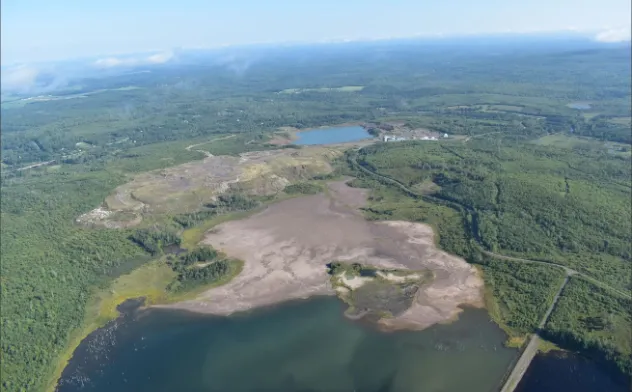
26:55 And we value that replacement at about $400 million. So that materially reduces both the construction challenge and the costs and things like that, and the development time. So it's not a greenfields project, but you've got to, okay, where is everything going to go? And you're at the whim of, you know, like concrete prices and all these changes. So I think we have a really good handle on the capital costs and but that's why we want to update with the PFS. And finally, I guess, EDM, we've taken a staged approach to this. So we're just we haven't, we're focused on permitting, Getting that permitting, we have a low burn rate. While we're doing that, we're validating and improving from a technical point of view.
27:42 We're de-risking the project rather than rushing into an under-capitalized restart. And I think that's basically what Arcadium happened to be in, was they rushed and if they'd taken their time, maybe, you know, got a new crusher circuit, they would have done some more planning, that would have been a different story. So our objective is not just to restart their operation, it's to restart it with sufficient working capital, hence the project financing we're working on, having appropriate operating systems, modern operating systems, and create a plan that's capable of sustaining production through the ramp-up period.
28:33 So that's an important distinction. Thank you. That's why they didn't hold. Sticking on the discussion of the previous operator, there's a question in the chat I'll bring up here. Last call, and this is from Viola Capital. Last call you said, we did further analysis of the previous production reports and we saw that the prior operators actually had some Gold coming out in various stages through the previous operators' mine life. They had some in the middle, some at the end, I think, and some at the start. Can you go into more detail on how much Gold they were processing and how does that compare to the grades you found in the Zinc Lead Concentrate last year? Good gold question. This is part of the exploration program we're working on. So we've had the consultants review all of that and we've seen in the previous concentrate gold coming out in the concentrate which wasn't paid for.
29:37 And so our offtakers are going to pay us for that. So that's been in a range between, you know, obviously very low grade to, I think, about 3 grams a tonne in the concentrate. They weren't looking for it, it just happened to be there. And I think when they were operating, they were trying to work out where that's coming from. So that question really is part of the exploration program we're working on right now. It's like, where is it coming from? How much is it going to be? Is there a gold target? Is there some structural controls? Like, these guys weren't... Remember, they just basically ramped up and they started going, Oh, we're getting gold. What's coming from? And the previous underground operators were only focused on the zinc zinc and lead mineralization, which is, you know, like nothing to do with gold at all. Right. So that that's really what our program is, is like trying to find where this is coming from and then potentially quantify.
30:40 Hopefully out of this, the exploration program we're working on, that's going to result in some targets. And I think it's a bit early for me to say the results of that yet because, I mean, it's encouraging to me because we've got independent people who assess those grades and seen the high grades in the concentrate as well. So our first testing was obviously 157,142 grams a tonne. Great, that's in a concentrate, where is that coming from? And that's really what this program is about, is getting the Mercado exploration to drill down on all of that and try and locate, look at all this information, you know, work it out to see, okay, is, we know historically there's gold in the area and come up with a thesis that basically can drive a discovery.
31:40 And that's what's exciting to me. Having it on site, you know it's coming from somewhere. We don't know where it's coming from. And that's really the opportunity because, you know, although the mine is strong on zinc and lead and gypsum, the gypsum is a real game changer in terms of the robustness of the project. But the gold could be like a crazy sweetener to it. And that's why we're doing it. That's why we're spending the money on the gold program. Crazy sweetener like Goldtree could be a single mine or the first chapter of a district? Well, yeah, like it could be like because we know all along that ridge, there's gold mines near us. And so I think that people in the past have said, oh, it's just a zinc-lead mine. It's a carbonate Mississippi Valley style mineralisation.
32:36 Sure, that's what it's been known as. But is it more than that? If the district, we know that there's isolated gold projects prospects that can't get into production because of whatever reason, why not leverage that at the Scotia mine? And that's an opportunity. Is it on site? Is it basically off site? Is it more mineralisation? Is there a target? And I don't believe that they're like, nobody's looked at that before. And that's really what we're doing now. So it could be, it could be, I'm not an exploration geologist, but if I was an exploration geologist, everybody wants to have their name on a discovery. And this is what I've asked these guys to do, is like, look at it, look at it, take your previous lens off and see.
33:29 Okay, Is it this an Irish kind of deposit where you got elevated this and you've got silver, we've got gold, like look at it and come back and then we'll talk about it. So that's really where I'm working on that. And obviously it's very exciting if we can add in the gold. We've already added in the silver. We know we got at least 7,000 ounces a year out of silver. Why are we getting silver, right? It's there and we're getting gold as well. So I think that's exciting. And maybe, you know, and part of that test is that where I've asked them to look at where Acadian were mining, you know, if they could look at the sequence of their mine development And if there's a match to where we're getting high-grade, come in the middle.
34:21 And so, that's part of the analysis as well. Staying on topic here, I'll go to Jan's question in the chat. Would capturing any gold require any modifications to the gravity or flotation circuits? What would be a reasonable estimate for recovery rates? Too early to say, but I think that having a gold circuit in the mill is possible. Because we've got gold early on, I think that probably liberates, you know, fairly easily. So that could lend itself to a gravity circuit, maybe. Let's just see. But that certainly is an upside. But at the moment, different to Arcadian, when they were operating, when they did their off-take agreement with their metals trader, they didn't know about the gold or the silver. And so they only got paid on the zinc and the lead.
35:24 So what I've done is I've gone to offtakers and I said, like, adding in a range of payable zinc, lead, silver and gold. So we'd be paid on the full. So even if we're getting a lower concentration or like a lower grade, like let's say we're getting 1 to 3 grams a ton in the resource and that gets upgraded in the mill, then we'd get paid of that gold from the smelter. So at these gold prices, getting paid from the smelter as opposed to physical having to deal with physical gold, I think that actually a better advantage because it's like a no cost, right? Basically no cost if it comes out of the smelter and we get value for it.
36:19 So that's really where I've been going from. Even if we get 1 to 3 grams a ton of gold out of the concentrate, which is what historical operating from Acadian showed, then that is like a considerable amount of value at the top. Now, the gold program is designed also to say, Where could it be coming from? Is there a draw target? Is there an area near the pit or even, you know, a long strike from the pit that has a concentration of gold or silver that we could target? And so maybe there's a separate pit. And this is why I'm encouraged is because that's the opportunity is to look at that and and Look at where the fresh eyes and which is what I've done since 2019. I'm to go to the project Look at with fresh eyes. Don't assume the old stuff and see where you can bring it back and at least analyse it and try and work it out. So, yeah, I think I answered that question. Yeah, no, you did well.
37:30 So with those fresh eyes of yours, when do you expect to update the market on the Gold Exploration findings or provide a concrete plan? The Gold Exploration program, we divided it up into 2 phases or 2 stages. And the first one was to look at the old, the concentrate and review that. And in parallel, in the second stage, was to look at a core, look at any other information that was available that could tie it in. And so the timing on that, I expect to have maybe this month or early next month, the results of that gold exploration program with Mercator.
38:18 And from that then we'll obviously communicate that to the market. So they've done the first part and which I spoke a little bit, and the second part they're working on and I think I have a meeting with them on Monday next week to see their progress on that. So yeah, I think that's coming along. But clearly, the market would like to see us communicate that to the market when we have that, and sure, I'll be doing that once that's complete. Yeah, Mark, it definitely seems interesting, the Gold. We got one more question about it, I think, and then we can move on. Jan just replied here, a technical report from 2021 suggests 1.68 grams per ton in lead and 0.5 grams in zinc concentrates as an average already so the gold and its grades have been known for quite a time question mark including specific grades and not just its existence in general.
39:21 So what's the last one in the chat there? You can take the good users. So yeah, I think I think yeah, yeah, I think that's what like a reason why we had that in there is because we were, like obviously we're encouraged that there's something going on there. And that's when I did the first work on looking at some of the core that we had on site, but we didn't go up to the lab. So I would say that Arcadian knew it was there. It was coming out of their production reports, but they went under before they had a chance to demonstrate that.
40:12 Then the new company, Selwyn, took over, but they basically focused on the zinc and lead. It's been known to be there, but nobody's, nobody took, nobody actually started doing anything on the gold and lead, sorry, gold and silver, right? And that was just an opportunity. When I took over the project, I did analysis of opportunities, and that was one of them. And because I look at those concentrate grades, I say, where could this be coming from? So I think That's really where I've been trying to advance this this this mine and certainly, you know Get BDM into the great positions in today is by not taking things for granted and overlooking though No, it's nothing right the gold back then.
41:03 I think the The gold price is like 500 to 600 dollars an ounce Now when you look at much higher price, then that becomes interesting, right? Well, more than interesting, maybe, because now we've got some grade, now we've got value, we put it into our offtake and we get paid for it. And so that's really why I've targeted that now, is because getting these other things lined up and down the path add all to the robustness of the project and of course the opportunity. That's why we kicked it off. I convinced the board last year to allocate some funding towards the goal. Whereas before that it was like just focus on the permitting and great, you know.
41:58 So that's been the change. Great. Question here. So just to round it off, Did the previous operators keep concentrate samples over the production? No. The previous operators, their concentrate sample obviously could have been anywhere and probably unreliable. So most of the concentrate we've had is basically located in our load out facility. And that's what we've been testing. So we know that that actually is from the site. There's other samples around in drums, we don't know where some of those come from. If we tested those, probably we'd have the same result. I do want to address this question as we're going to be wrapping up here soon too.
42:46 When you're talking about a production story, obviously financing is a big focal point. The June, and this is from York McPherson in the chat, the June warrant exercise raised roughly 1.5 million from directors, insiders and major shareholders, which reads as real conviction. But it also tells me the last dollar in came from inside the tent. As you move from permitting toward a production decision, I'd like to understand the outside bench. When EDM funds fund CapEx, who are you calling? Specifically, which institutions have you put capital at risk in EDM before, and would you expect to cornerstone the next round, and which banks or advisors are you working with on the off-taker financing terms you flagged as a Q3 priority?
43:35 Okay, so if I understand it, so the warrants and the warrants still in the money, which we expect them to be exercised, we'll bring in probably another $3 million. So that's essentially, as I say, we're going to be, we have about $80 million, sorry, 80 million shares right now issued outstanding. And we have options and additional warrants, which brings us up to close to, I think, 100 million or just over 100 million shares outstanding. So from the Treasury point of view, I think we're in great shape to get through to the production decision on that. We also have another million dollars or so in silver and so we did not take, sorry, silver royalty with Silver Crown and that, I think we spoke of it last time, but basically we have another 60,000 warrants that are well in the money and that can bring in another million or so net into the company. On top of that, the warrants and the cash balance we have right now. So We're not planning to do any equity financing right now. Now, I can't say that we'd never do any in the future, but basically as it stands right now, we don't need, we've got enough money to execute on our plan.
45:03 So how are we going to raise the money or attract the money for the project finance? So we've been working closely with a number of off takers, including IXM, who have the, essentially, that agreement expired in, I think it was December 2023. And so we've been working with them on adding in the silver and the gold and a number of others as well. And all of those is basically financing 100% the product to in production. So that's roughly $30 million US. And that's at these exchange rates, that's about $40 million Canadian or around about that. That's more than we need. Well, that's about the right amount we need to complete, all the steps to be into production that's including refurbishing the mill and things like that.
46:03 But we are doing an updated pre-feasibility study to make sure that the number is right. And that's why I picked up that. And so with the changes in the crushing circuit, which reduced the capex by about 3 million and then even if you say like a walkable, okay, that's a reduction in the capex but inflation and other things that come up, that still puts around $30 million Canadian. So and we're basically adamant, focused on the $30 million US funding. We get paid, the zinc and lead and the gypsum, all paid in, and even the offspec gypsum, that's all paid in US dollars. So we've got a great conversion on that.
46:50 So the financing should be in US dollars to the tune of about 30 million, as I mentioned. So in terms of that, I think we're working on that. And I'm encouraged that we'll have the financing terms updated and communicated to the market soon, maybe next month. Maybe next month we get the FAA and we get all the financing, so it could be a good month, right, in terms of having all that done. And then, of course, the MRE, working on that, and then an updated PFS is going to be later. But that's all been – I'm lining up all the consultants and contractors to do that work. Now we have the IA amendment. So that's really that part of the puzzle I think is pretty well solved.
47:41 In terms of institutions, without doing another financing, institutions generally would have to buy in the market and or be part of a financing, a strategic placement for, you know, financing the mine. I don't believe we need to do that at this stage. So it's likely being retail insiders. We have 20-25% insiders involved with the company and we have a lot of really good, very supportive investors who came in early like me, averaged down a bit and then now we're basically on the great path now. So we've had a lot of support from the shareholders.
48:27 I don't think there's going to be a need for institutional capital right now, but if the opportunity presents itself, then of course we'll look at that. I've focused on trying to make this company, EDM, as have the smallest share issuances possible. And obviously that's grown since like 2019, but we've also advanced the company and the project considerably. So if we go into production and we've got roughly 100 million shares outstanding. That's kind of unheard of. Yeah, it's not bad. Yeah, not bad. Thank you. But a lot of work. You know, we do a lot of work ourselves in trying to get that all together. And I have a great team on the ground in Nova Scotia and also in Toronto.
49:23 And I think that's starting to really pay off as we get closer to our restart timeline and of course our formal production decision. Great, excellent response to that question Mark. We are running out of time here so I'm just going to give you one that's great for the closing remarks but before people sign up I just want to make note that when I close the tab, there will be a request meeting button. There have been a few questions I wasn't able to address. Unfortunately, we're running out of time here. So if you still want to talk with Mark and book a meeting with him, you can do so when we close the tab. So stay to the end. Mark, for the final question, to close, a lot was talked about today. Give investors the scoreboard for the next 12 to 18 months of the catalyst ahead, updated resource, updated PFS, offtake agreements, the Fisheries Act decision, potential production decision, and really what is the one thing you want everyone to remember about EDM?
50:25 That's, I'll try to wrap, I'll try to put that together in 3 minutes. But basically the next 12 to 18 months, or maybe even 6 to 12 months, is I think we're going to be defined by a series of ongoing measurable de-risking events. The first one, the updated MRE, I think that will give investors the current view of the size, grade and classification of the ScotiaLine's mineral resource. And I'm hoping that that will include additional mineralised material like the anhydrite. And all that wasn't fully reflected in the previous estimate in 2020. The second one is of course the updated PFS, we mentioned that. I'm excited about that because that will establish updated capital, operating costs, the mine plan, which is, I'm very excited about that because that mine plan didn't really develop the gypsum optically.
51:24 And so I think, sorry, optically, optimized, didn't really optimize the gypsum development. So excited about that. And that will go into the production profile and and the project economics. So having 2 really strong sources of revenue for the project, that's what I want to see out of the PFS. And So the third is the continued progress on our offtake and our financing discussion, which we kind of talked about. And so those agreements are important because that is all about the sale of concentrate. And we already have the offtake for the gypsum, but for the zinc and lead, that's going to be, you know, put all that financing structure in place. Of course, the fourth is the FAA, Fisheries Act authorisation.
52:13 That's probably the most important remaining financial regulatory milestone. And of course, everybody's closely watching that, including me. So I guess following those steps, EDM will be in a position to consider the restart timeline and the formal production decisions. So I don't know when that's going to be, but we're getting ready for that. And, you know, the single, I guess, most important catalyst, it is a combination of the FAA. And the Fisheries Act authorization. Right. So the updated PFS tells investors what the project is worth. And we know now that from the 2020-2021 PFS to now, even if you look at the sensitivities on that and the zinc price and the project is worth like around 250.
53:09 That's at 8% a discount rate on the net NPV. So that is where we're a lot more now and our market cap is only 40 million or so. So that's going to help because people understand what it's valued at. The FAA is going to really maturely confirm that the project can proceed through the remaining records regate. And so that, those things are the 2 keys. So I always want investors to remember that we're not trying to discover a mine.
53:57 Maybe the gold, but the mine exists. Its infrastructure exists, the resources exist, the provincial operating approval is also in place. So, our task is to complete the remaining federal permitting, validate the updated economics, assemble the financing required to bring the mine into production, and I guess responsibly into production. So that's a real advanced project. And that's a valuable starting point. And I think that it's much better than a typical junior mining company. Great. That's a great way to wrap it up. Mark, thank you so much for taking the time out of your day and addressing all these questions. There's still a lot, so I'm sure we'll be revisiting a similar format like this again sometime.
54:52 But there is an event we are locked in for right on the 19th of August. It will be alongside Canadian Copper and Atlas Salt, So you guys will be receiving email notifications if you want to join that event. We'll have Mark there as well as my mug and 2 other great companies. So yeah looking forward to that. I think that Getting these coasters together and talk about mining. I think that's that's exciting and I know those guys I think that's a great next next step, but thank you for the questions Kyle and from all the I guess the attendees appreciate your comments as well and Forward to Next event perfect great way to end it. Thank you