Transcript
Automated transcript · Written by software from the replay's audio. It can mishear names and figures; the replay is the record.
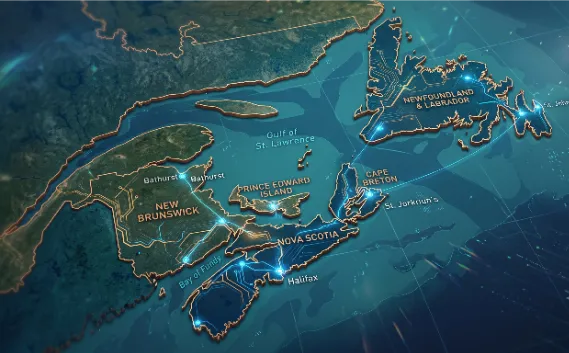
0:06 Hello everyone and thank you for joining us today for this live event. I'm pleased to be joined by Nolan Peterson, CEO of Atlas Salt, Mark Haywood, President and CEO of EDM Resources, and Simon Quick, CEO and Director of Canadian Copper. Today we'll be discussing building the next generation of mines in Atlantic Canada. If you have any questions throughout, please feel free to submit them using the chat featured at the bottom of your screen. We may not get to every question today, but we'll do our best. And once we wrap up, you will receive a pop up meeting request where you could select 1 for all the companies. When you see it, just select which ones you'd like to connect with and our team at SICK will make sure to pass along those meeting requests to the respective company. One last housekeeping item. Today's event is being recorded and will be made available for viewing shortly after we conclude.
0:54 With that, I think the best place to start is a quick overview from each of you. Just a one-minute elevator pitch on your project or company. That way, anyone who joined for a different company and is hearing your story for the first time can get up to speed. Welcome, gentlemen. Simon, why don't we start with you?
1:10 Sure. Thank you for having us. We're a base metal focused near-term critical mineral producer in New Brunswick, Canada. In terms of near term, we'll be in production in the next 36 months, low cap ex 65 million in total. And at spot prices, we'll produce roughly 110 million EBITDA per year for the first 5 years.
1:31 Low complicated, or sorry, simple straightforward execution and just happy to be here. Thank you. Great. Thank you for keeping it concise. Mark, over to you. Tell us about EDM. EDM is based in Nova Scotia. We have a Scotia mine near the airport. It's a almost fully permitted operation. About to go in production, hopefully, in next year or the year after. We're going to produce zinc, lead, gypsum, anhydrite, and maybe a little bit of silver and gold as well. So new term production focused on the last steps of getting us into production.
2:09 Thank you. And Nolan, tell us about Atlas Salt. Yeah, thanks. Thanks for having me, Kyle. Thanks for everyone for attending. Nolan Peterson, at Atlas Salt, we're developing the Great Atlantic Salt Project. It's on the West Coast of Newfoundland. It's salt used for the de-icing of roads, targeting exports into the US as well as satisfying our shortage in Canada as well. We aim to be in production in 2030. We're in a financing mode right now, although we are in active construction. We have an approved environmental assessment and definitive feasibility study, and we are in the market right now for the remaining financing for the project. Great. Sticking with you, Nolan, Atlantic Canada has not historically been top of mind for new mine development. So what has changed in the region over the past few years to make it competitive?
2:59 Yeah, so I joined Atlas Salt about a year ago, and most of my experience had been global and actually Chile before that. Since I've arrived on the scene, I've only heard positive things, certainly about Newfoundland as a hotbed for upcoming development. You have companies like Newfound Gold and Maritime Resources, which was sold in the Equinox as well. Very active in the region. Of course, Labrador has always been a great place to develop new mines as well. So I can't really speak to what's changed over the last 5 years. I just say as long as we keep on the right path, it should be good for everybody. We've never had any issues developing the Great Atlantic Salt Project. Government and region have always been very supportive. It makes sense. A lot of Newfoundlanders are well known for traveling for work into the mines anyway. So they'd love to have them in their backyard.
3:51 And that's the message I hear all the time.
3:54 Thank you. And Simon, do you have any commentary regarding New Brunswick? Yeah, I think specifically commodity prices have really moved upwards, particularly the ones that they produce historically, whether it's zinc, silver, copper, lead. I think that's part of it. Number 2, more and more countries can specifics, wants to create domestic supply given their southern neighbors and what's going on globally. So I think you look at New Brunswick endowed with a deep water port, 5A terminal all year round, excellent roads, power and a really long history of mining. To me, it's only logical that more and more investors, both from the investment side, but also I think companies are looking to stay ground and start to produce metals there. There's an interesting fact that I think you'll start to see New Brunswick close in on, if you look at Newfoundland in 2024, between exploration, CapEx development, it was about 1.5Bn in CapEx.
4:47 Relative to New Brunswick, there was just 24M, So more than a 60 times Delta. And I think Newfoundland has been a great leader and hopefully some of the other maritime provinces will follow through on that investment side.
5:00 Thank you. Mark, do you have any comments on Nova Scotia? No, I think that's really right, Simon, in terms of Atlantic Canada, but I've also seen, I guess, that the governments have recognised that mining and critical minerals are strategic industries again. And we're not simply extractive industries. So we're talking about energy security, defense and infrastructure and then North American secure supply chains. So I think the Atlantic Canada and we're all actively trying to attract mineral investment rather than simply regulate it. I think the second point is Atlantic Canada has some really strong advantages, like Solomon said, we're close to port.
5:50 And that's like us in Nova Scotia, where we've got excellent ports and roads and infrastructure. We've got skilled workforce, we've got a stable government. And of course, where we are in the province and basically where Nova Scotia is, where we've got access to the European and North American markets.
6:11 So I think that all helps and the Scotia mine, We also have another advantage in that we're not trying to build a mine in the middle of nowhere. We're 60 kilometers from Halifax, right downtown Halifax. We're only 33 Ks or so from an international airport. The mine has grid power, highways, ports, and of course the infrastructure and processing plant that's already in place. So I think the investment community is beginning to realize that Atlantic Canada has both the geology and infrastructure to become much more important in mining, in the mining region. Geology and infrastructure. Mark, how would you describe the current permitting environment?
6:58 Well, I guess it's changed a lot. I've been with the company for 7 years now and I've been working very closely with provincial and federal regulators and of course the First Nations is part of this. So I think mining anywhere in Canada is rigorous and it should be and but what I've seen in Nova Scotia is it's been a noticeable change and I think that really matters to us as developers because we need clarity, you know, coordination and a degree of predictability as we go through the permitting process. So, I mean, I can't really comment on the other provinces, but I understand that everybody else is all moving towards, you know, more of a coordinated, single process approval pathway.
7:49 And that's what I'm seeing Nova Scotia. We're all, you know, got to deal with environmental protection and efficient permitting. And I think that's really been the change recently. That's all become better. Simon, do you have any commentary on the permitting environment in New Brunswick?
8:10 I do. I think I would agree with what Mark is saying. And to quote Minister John Heron, who's the new natural resource minister within the province. Their pitch is New Brunswick permitting will be rigorous, but not onerous. And I think we're seeing that, and we're really the first case study to go through that permitting process. It was announced about 5 months ago. So specifically we registered our EIA in July 14th, officially for the development side of the project. And what they promised us is every 30 days, we will get comments back on that permit. An idea being that it's iterative, keep the communication moving. And if there's questions on their end, whether it's environmental compliance, water treatment, mine site design, we can then answer those questions and resubmit. And so we submitted it July 18th, and we had our first set of comments back exactly 30 days later, so we had them last Friday. So I think that's proof in concept that what they're saying they're going to do regulatory wise and following that regulatory roadmap, they certainly are. And just one of the pieces, our project is a bit different because we bought an asset that is on care maintenance, and we combined it with another asset
9:12 that's on care maintenance. And we have more than 25 years of underground water monitoring data between those 2 assets. So what that helps you is you understand the baseline condition now, what it was before, and then what you expect it to be in the future. So part of that is why I think we'll be able to go through this EIA process with a lot less friction than some of these other deposits. We're excited. I think New Brunswick has done a really good job of modernizing the framework. And sticking with you, Simon, critical mineral strategies at both the provincial and federal level are getting a lot of attention right now. How directly has that translated into support for your project?
9:53 I don't have the same sort of duration as some of these other mining individuals, but in the last 10 years, what I've seen is a real sea change. Mining is no longer a bad word in Canada. It's about critical mineral defence. It's about reliance on no other trading partners but ourselves. And I think what you're seeing both federally and provincially is not only grants, but also support on stakeholder engagement and really understanding what it means to get the country behind increasing our critical mineral production. So yeah, I echo that and I think they've done a fantastic job, both federally and provincially. And Nolan, tell us about salt. Is there any direct translation or support for your project?
10:32 Yeah, not yet from being a critical mineral. Unfortunately, we're not classified as a critical mineral. We like to say we're not a critical mineral by some arbitrary distinction, but we're a mineral that's critical. So for us, it's been a lot of educating the political class, government agencies that we can align with all of the messages that they're espousing for critical minerals, like supply chains and building job creation in Canada, creating minerals that people actually use, tapping into our resources without being a critical mineral. So I would say we are working to tap into those same channels right now. It is a very positive process, I would say, thus far, but it hasn't translated into anything direct at the moment, except for a rising tide lifts all boats type situation, which we certainly love to tap into and benefit from when we're able to.
11:31 Great. I want to ask this question to all 3 of you. We'll start with you, Nolan. Financing has been a defining theme for all 3 of you this year. So what are investors and lenders most focused on before they commit to a development stage?
11:45 Yeah, I think financers, lenders, investors, they're all looking for the same thing, right? How can my asset be de-risked? The asset that I'm investing in, how quickly can they get to production? What are the roadblocks along the way? And so for Atlas Salt, it's reducing and eliminating those things, or at least pointing out that they never existed, right? Geological risk is not so big for us. Permitting and jurisdictional risk, you spoke about permits. We have an environmental assessment in Newfoundland and Labrador. It took us 44 days from submission to approval to have that. So those types of risks, we like to point out, they don't exist. We have full Indigenous and community support. And that's really what it comes down to.
12:31 For us, we're in the process right now of getting lenders across the line through the due diligence process, putting together our syndicate that's going to finance this mine. We already talked or we already received a letter of interest from EDC Canada. They usually come in early to show that, hey, you know, at least it's passes the smell test. Everybody else can start taking a look at it in detail. So it's looking good for us. But yeah, what it comes down to is de-risking, understanding
12:59 and making sure, making people as comfortable as possible that this is an investment they're going to be able to get their money out of or multiples of their money out of in the future. Well said. Mark, do you have any comments on that as well for investors and lenders what they're focusing on for a development stage? I agree with Nolan. I think it really does come down to risk. I often get asked, is the resource real? I understand the metallurgy. And, oh, are you permitted, right? And how much is it gonna cost? And is something built?
13:34 Is there a market for the product? And can management actually execute on all that? So those are obviously some of the de-risking and I've tried to, on EDM's point, to de-risk the process over the last 7 years. And from our perspective, mine's obviously been operated before, it's got the infrastructure, the buildings, roads, and so forth, and we've done a PFS, and that's showing a low amount of capital, about 31, and a 40-year point on it. And so, is that a risk or can we improve it? Of course, it's a risk in terms of CapEx, but once you put that all together, like permitting to the infrastructure and the market, all those things we need to address to our shareholders and our offtakers and financing.
14:27 I think that's all about removing those risks progressively and then getting the projects into operation, but definitely what I'm focused on.
14:39 Thank you. Simon, any further commentary on this? Just the mining theme, I think has changed a lot and I'll date it back to 10-years ago, where investment resided was, show me how big your resource can be. Near-term production or cashflow was not really a salient or a focus point. Now it's totally flipped and it's about how do we give you enough capital to de-risk it and bring cash flow forward as quick as possible. And I would say that's a sea change in the last 5-years. And it's for projects like ours, a lot of these finances and the way you structure them is to give you a complete solution or a complete package to demonstrate, yes, we are financed and now the 2 legs of the stool being permitting and execution risk remain. Whereas 10-years ago that wasn't the case. It was more, can we give you more capital to explore and show us that multi-billion tonne Copper porphyry in South America? I think that's no longer where you're seeing the interest.
15:29 It's more, show me you can be in production in this commodity cycle and then you'll get funded. And that's how investors are tracking some of these businesses.
15:38 Thank you. Simon, building a skilled workforce and local supplier base is often the hardest part of a regional build-out. How are you approaching that in more rural areas? So for us, again, we're a bit lucky and unique compared to some of these other developments. So obviously New Brunswick at one point was the second largest underground basement mine historically Brunswick 12. We're based 35 kilometers outside of Bathurst. As the minister says, you can pour yourself a hot coffee from Bathurst and drive to site and it's still warm. So for us, the human capital still resides in Bathurst. However, a lot of them are doing fly in, fly out across the country in the mining space. So for us, we've had a lot of these conversations recently and it's, do you want to come home and be home with the dinner table every night and come back to work? And the answer is yes. Fly-in, fly-out is incredibly taxing and challenging on individual families. So for us, it's less about sort of creating the talent pool. It's incubating that talent pool and bringing them back and showing them that we have a plus 14-year mine life. And this is going to be sort of a marquee place to work. And that's part of the benefit of these near-term restarts that were originally historical operations.
16:45 You're not really forging new territory. It's known the regulatory framework is in place and a lot of the human capital as well. So
16:51 for us, it's a bit bespoke, but we're fortunate in where we're located. Nolan, same question to you, please. Yeah, no, it's very similar for us. Obviously, Newfoundland has a very good reputation for flying in, flying out, traveling for work. We are ourselves about an hour south of Corner Brook. It's about 40, 50,000 people live there. We're within the city limits of a town of 1,000 called St. George's. And about 20 minutes away, we've got Stephenville. It's about 10,000. So we have an adequate workforce. These people already travel away for work through Deer Lake. I like to tell people at the airport, Deer Lake Regional Airport, which serves the west coast of Newfoundland, half the plane if you fly there, Canada is a super elite from there, from flying back and forth. And the message you hear from the communities and from the workers is that, you know, they're losing their culture, right?
17:42 Because young people don't have jobs, don't have opportunities, the communities are drying up, so they have to fly out for work, they sometimes never come back. So it's just as Simon says, it's about getting those people back. They're already there, they're willing, they're trained. Other people have done a lot of the training. And in our case, we are going to be a battery electric site so we do have to work with like the College of the North Atlantic out of Corner Brook to educate the new age, new workforce on new age technology, battery electric technicians more than mechanics, those types of partnerships and also just tapping into the existing base or how we're developing the workforce. And they're fantastic, very hardworking, very smart, very eager to learn new techniques.
18:27 And so it's been a great, great experience for us as we work towards development. Thank you for that. Mark, 5 years out, what does a healthy mining sector in Atlantic Canada actually look like?
18:41 Well, I think it's about the projects getting built and actually mine starting and going into production. So I think like 5 years from now, we should see several new projects like the guys with me today, is getting these projects either across the line and into permitting and starting the development of them and supplying the critical minerals and strategic minerals, I guess, to North America that everybody's been talking about. So, you know, with that, we're going to have, you know, just unemployment, we're going to have more young people choosing mining, and I guess engineering careers. I'm an engineer, of course, we're going to have stronger Indigenous participation and in the communities responsible for mining. And so it's a genuine source of
19:36 economic opportunity. So I think it's going to have like a cluster effect. You know, more mines operating, attracting equipment supplies and technical expertise, I suppose, and processing capabilities and capital. So we could see like all these minings, all these mines developing at LANDi Canada and moving projects forward and creating opportunity for the province, I guess from a tax perspective, the Government of Canada as well, but we're really, I think we're going to have a big impact on the provinces in the next 5 years. So that's exciting for me. Jim, we got through all the big discussion here and now I wanna get into the more granular about your specific company. So people, if you are on the call, feel free to ask some questions, Happy to address them right now. We'll start with you, Simon, for some Canadian Copper questions.
20:36 Your Murray Brook EIA registration was the first
20:38 new mine registration in New Brunswick since 2013. What did it take to get there and what did you learn from that process? I think, as I alluded to before, part of the reason we were able to register this permit as quickly as we did is it's really the leveraging of 2 assets that one is already permitted being the Caribou complex we purchased in July. It's a fully constructed, previously operated in 2022, 3000 ton per day concentrator with tailings admin building truck shop. So there's a really good understanding of the baseline conditions there given the approval to operate exists. And we obviously combined that with Murraybrook, which previously operated in the nineties as an open pit Gold oxide leach pad. That again has a really strong baseline understanding of the conditions between flora and fauna, emissions, underground water, geology, etc. By putting those 2 assets together, we were able to craft this document, I think, in a lot shorter timeline than you see some of these new builds.
21:35 And when you look at New Brunswick as a whole, we are timing this properly in the sense that you have a new government who is pro-investment, pro-critical mineral production, and really being a first mover in this province has been advantageous. And I'll point to 2 examples.
21:48 Kinross, a very large Gold producer, entered the camp a couple of years ago, which 0.1 was an excellent sign. And as recently as about 6-months ago, Agnico's Critical Mineral Subsidiary, Avenir, just entered into agreement for the antimony mine in New Brunswick. These are 2 senior producers that are looking at this camp and saying, is it conducive to permitting? Absolutely. Good infrastructure? Yes. Jurisdiction that's pro-mining, certainly. I think you'll start to see more and more groups come to not only New Brunswick, but also Atlantic Canada. I have another question for you. With up to 96 million committed from OR Royalties and Ocean Partners, how does bringing in a streaming partner and an offtake partner change the way you fund and de-risk the Bathurst complex? Yeah, I think foremost, I appreciate you using the word partner because that is really emblematic of how we view this relationship. Both of these 2 counterparties are strategically sound, incredibly impressive and bring a technical skillset not just in dollars and cents, but also to the advisory side. And this ties back to what Mark had said is bringing this group in the 96 million plus our working capital brings us to about $150 million, which is almost 100% of the PEA CapEx.
23:02 So we're very well financed. And the objective
23:04 is if you're a management team, do you really want to be staring down the barrel of the next broker financing or the next private placement? Because every day you do that, that takes away from what you're executing. That is building and generating 100 jobs near term. So for us, that solution one, to de-risk the project, but 2, it's about refocusing management eyes on the execution play. And that's really why we brought these 2 counterparties in who've been nothing but supportive. And I think we're quite lucky to have this group involved when we did. Great, thank you. Mark, over to you. The amended industrial approval for the Scotia mine was a big regulatory step. So what stands between you today and the 2027 restart you were targeting?
23:45 So I guess the IA amendment was a massive de-risking event for the mine, because it approved the redesigning elements of the project at the provincial level. So we changed the mine layout, processing facilities and some other environmental protections we wanted to put in place. So that enabled us to provide a very clear path. And so the remaining regulatory item is our Fisheries Act Authorisation, the FAA with the Department of Fisheries and Oceans. And that's just for the extension on the main PET. We already have had one which expired on the same area, but due to changes in policy on the federal level, we basically had to do it again. So I'm hopeful that we will get that in the near term. It could be any day, but hopefully in the next couple of months. But in parallel,
24:48 we're also working on a pre-feasibility study, an updated pre-feas, and a mineral resource estimate. So those 2 things, they don't stand in the way of getting a production, but I think they're going to help the business case, showing that, you know, the metal prices have gone up considerably, our costs have maybe gone up a little bit, but all the other things that we're adding in to the operation, including the gypsum and the anhydrite and maybe the silver and gold into the equation are really helping the business case. I just went down and did some XRF sorting, optical sorting with the AI technology which is really cool about removing a lot of the waste from the oil processing.
25:37 And so when you look at it, I think that's all going to help in terms of the development of the project and when it comes to the financing. So really,
25:48 the short term is the federal permitting, and that's our last major permit, updated technical work, the PFS, and then announcing a production decision, which could be this year, but I'm hopeful it'll be early next year once we have the FAA. You brought up gypsum, anhydrite and gold. How central are those to the overall value case for ScotiaMine?
26:17 Well, I think that they're nice to have in terms of the gold. I think we were seeing 1 or 2 grams in the previous concentrate. We don't know where that's coming from. So that's an upside. And we've carved that out of the upcoming offtake in terms of making those payable. But the gypsum and the anhydrite have really been game changers for the project. Previously the gypsum was just thrown on the waste dump, and we now have about 5 million tons of high-grade gypsum in our mine plan. That's about 92% gypsum. So gypsum's used in wallboard and plaster of Paris. So it's a very industrial mineral that's increasing in value as well. And hydrate is, and like lower quality gypsum, we're also putting that into our mine plan.
27:12 And that also has a use, and hydrate is used largely as additive into cement. And so Halifax, which is, we're just, we're basically in HRM Halifax Regional Municipality so there's a lot of cement businesses and things like that so they need they need this as additive. So we're basically selling that. So those 2 things, gypsum and hydrate, have really made a big difference. And on the gold, although it was included in the concentrate before, very low levels, We're not sure where it's coming from, and so we're doing a gold exploration program. We know there's gold all around the project, on our boundary, there's occurrences of gold. And so I think that's really what we're focused on, on that opportunity as well.
28:09 Now, this project, when I took over it 7 years ago, Mothballed overlooked the gypsum, although we're surrounded by gypsum mines as well, there's another one coming on next door to us, they didn't think to add that into the economics or even a resource of the project, let alone an hydrate. So there's a lot of upside, I think, for the project. And I think there's more to go, but just on those additional commodities, that's changed, improved the robustness of the project. So we're really happy about how that's developed and has it become really attractive, I think, not only as a project, but also when we add that into EDM and what EDM plans to do going forward.
28:58 Thank you, Mark. Nolan, over to you. With Early Works now in active construction and a letter of interest from Export Development Canada for up to 150 million, how are you thinking about closing the balance of the senior secure debt needed to fund this build rather? Yeah, so EDC came in early on the process. They've been following the project and we've been in discussions with them for over a year now. So when we went actively to the market after we've completed all of our due diligence, including the updated feasibility study, as well as the lender due diligence earlier this year, they were the first to step up and say, yes, this is, as we expected, a project that we would support. And then that helps to catalyze further investments from other lenders. They take comfort that they're not the first mover, that a bulk financing partner like EDC is there. So we're working with other groups right now and led by Endeavor Financial, as I might have mentioned already.
29:56 We expect to have further news in the coming months and finalize a syndicate package by the end of the year that we can take to the market and say, this is a funded and financed project that can advance with confidence again, talking about de-risking earlier. So yeah, EDC is the first step in that process as people who follow the story know as well, We have basically financing commitments from Sandvik, our equipment provider, because they like that we're using their battery electric vehicles. It's something that they want to support the continued adoption of. So yeah, we're just piling on those, putting together those pillars as we pile on the debt package and assemble it. And for people that don't follow the story, salt is often described as a recession-resilient commodity with steady government demand.
30:45 So how does that stability shape the way you pitch the Great Atlantic Project to investors used to metal cycles? Yeah, it's actually quite a learning, it was a learning experience for me. I spent over 20 years of my career in Gold and Silver and diamonds and other commodities where things fluctuate a lot more. Having a government customer base, many of them legally obligated to buy salt to de-ice the roads. It's a safety concern, infrastructure concern. That's a great customer to have. And that translates directly into that stability that lenders are looking for. They know that the price of salt is not going to collapse overnight because of some random occurrence somewhere around the world. It just goes up steadily, tick-tock every year.
31:36 That's helping us a lot. It also broadens our investor base. We are fundamentally a mining project. We follow 43-101. We get grouped in with mining companies. We go to the same conferences and everything like that, but we can really expand the base into industrial minerals, diversified investors, people who are looking for dividend payments ultimately. A lot of mining companies don't end up paying dividends. They're always looking for resource replenishment. That's not something we have to worry about. So these types of characteristics really help us. And you know, a lot of people again talking about investing in mining, they're targeting windows where it makes sense to do something. The window is always open for us. It maybe isn't such a home run opportunity as other investment plays are, but that does attract a sense of investor who's looking to diversify their portfolio into something that adds a little bit more stability and steadiness to it.
32:33 Thank you for that, Nolan. I see we got a question for each of you in the chat, so that's nice. I'll start with you, Mark. If high grade gold is confirmed at the bottom of the main pit, could mining switch to there or could a second operation be started there instead of going on next to the main pit from the ground, like it's planned right now? I guess as far as we see in the historical concentrate, there is 1 to 3 grams of concentrate, 1 to 3 grams of gold in the concentrate, basically when Arcadian operated. Now I don't think they had the ability to track down where that was coming from during their operation And so we don't really know where they were mining in terms of how that correlates to it because they have stockpiles and things like that.
33:26 So it's a bit early to say but That's what we're doing with the program, the exploration program right now, is to have our independent geos go and look at where this mineralization could be coming from. Is it under the main pit or under the carbonate? So basically the zinc and lead are hosted in carbonate and that's basically what the underground guys did back in the 70s and 80s and then when Arcadian operating they were just laser focused on that and lo and behold they were getting gold out of the concentrate and they didn't know where they were getting it from other than maybe it's coming from something underneath it that and that's really my theory is and others is that well it's probably not coming from the carbonate, it's probably coming from nearby and there's structural information going on there that has enabled us, the mineralization to be come through in the quartz or related to oil.
34:27 I don't know. So specifically to answer the question, we have to wait and see what the geologists come up with. And if there was gold under the main pit, then I think that would be a game changer for the operation. But there's also the possibility of the mineralization being not part of this pit because the pit was focused on the zinc and lead and optimized on that basis. So that's what we're trying to step back and say, where else is gold known to be on the mineral lease nearby. And we've got some interesting historical information that's come to light that no one's ever looked at. And so this is basically the plan is to look at that historical information, try and work out how that could have been related, could be related to the last operation, or is it not related? Is it something new that has been overlooked?
35:32 So like the gypsum, like the anhydrite, previous operators just overlooked that. And what we're trying to do is not that. Step back and say, what can we do? What other opportunities are on this lease that we can utilize the infrastructure to take advantage of that from a mining point of view or revenue producing point of view. So We have to wait and see where that goal is coming from, but definitely an exciting opportunity. Thank you for that, Mark. Simon, there's a question from Richard in the chat, just wondering if Canadian Copper is considering an OTC listing. Yeah, we are. There's a couple of different uplist exchanges we're looking at. Part of the reason we had not done so to date is we wanted to close the Caribou transaction officially and initiate title transfer, because until that was complete, part of that contracting strategy and purchase agreement is ultimately reviewed by the exchanges leading to cost and delay.
36:34 So now that that is behind us, we'll look at upgrading depending on the particular exchange and the cost required. Thank you. And over to Nolan. Does the tariff situation impact the presenting companies, particularly Atlas Salt? Well, obviously it doesn't impact us right now because we don't expect to be making sales of salt into export markets like the US until 2030 when we're in commercial production. It obviously doesn't impact it right now because Trump has deferred the tariffs for 3 days. Expectations are that there's a deal in place. I guess it's hard to give a concrete answer with the way the world is today and with the way certain governments and administrations function and negotiations that are ongoing.
37:22 Certainly if we were in operations and the tariffs were in place, it would have an effect. But minimal, less for us, because we are a low cost, and tariffs are based on delivered cost to American shores, so it still leaves a lot of margin room for us there. And I would say if you look at our closest peer, which would be Compass Minerals, they own of course the Goderich mine in Ontario, and they export a significant amount of that material from Canada into the United States, and they are a U.S.-based company. When the tariffs were first announced, there was no impact on their long-term share price. So kind of the market is expecting this situation to be resolved and certainly as am I, and of course there's an election in 2028, which we don't know the result of yet, but we again are not in production till 2030 based on the current plans.
38:19 George has a question for you Nolan, and I think we will use it to wrap up here. So I'm gonna add to the question. George's question is though, do you think there'll be any work on infrastructure such as support buildings, et cetera, this year? And I'd like to add, just go ahead and talk about your upcoming catalyst as we wrap up here. For Atlas Hall? Yes, for you. Yeah, yeah, we expect to have some buildings in place, probably trailer complexes for construction activities. We're also upgrading our headquarters, which is existing in the town of St. George's is only about a kilometer away from the mine site. So that's going to be a new coat of paint and maybe some expansion there. So there will be some infrastructure in place. And the near-term catalyst for us is the financing by the end of the year, look for additional discussions on strategic partnering, which we're always in, you know, amassing the group, the village that's gonna build this mine in the region, government support as well as industry, private players, all of that is on the agenda to carry out this year.
39:25 Thank you. And over to you, Mark, upcoming catalyst for EDM? Definitely the FAA that's coming, financing, sorry, the financing terms probably. So there are 2 good ones, which hopefully will improve our share price even more. And then of course a production decision. And that's, I want to put it on a billboard in Toronto when we do that. So looking forward to that. Great, thank you. And Simon, for you, upcoming cutouts? A couple of things looking for us in the next, I would say, 3 to 4 months. Principally, we started a 3000m exploration program at Murraybrook designed to extend the mine life and test extensions.
40:11 We'll be publishing an announcement on some of that information here in September with results to follow in October. In October, we'll likely be publishing the updated metallurgical results from our lock cycle tests of the combined strategy. And then all of that culminating in a new feasibility study that we published by year end in December with construction permits and approval to happen in the first half of 2027. So we've got a fair bit in a condensed timeframe, but looking forward to delivering for shareholders. Great, gentlemen, thank you for the great discussion. For anyone on the call, just wait, when I close off here, there will be a meeting request pop up. So stay tuned for that and feel free to select any companies you'd like to meet with if you want to learn more about their story. But thank you, gentlemen, for your time. Thank you very much. Thank you, Kyle. Thanks, everyone.
40:58 That's great.