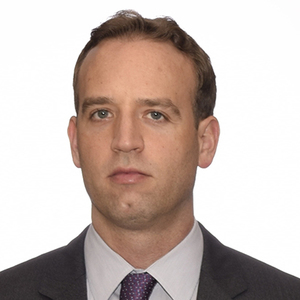
Scott Eldridge
CEO and Director at Canagold Resources
Replay available
Join us for a great event!

On 6ix: 6ix.com/event/drill-program-commencing-at-new-polaris-high-grade-gold-project
Automated transcript · Written by software from the replay's audio. It can mishear names and figures; the replay is the record.
0:08 All right. Well, hello, everyone, and welcome to Cana Gold's live investment summit today hosted by 6. We are joined today by CEO and Director Scott Eldridge. Scott will walk us through a company presentation and then we will be accepting questions live. So you can submit your questions at any time on the Q&A panel on the right-hand side of the screen and we'll get to them after the presentation. And as always, the summit is being recorded and will be available afterwards on SIX.com. So without further ado I'll hand it over to you Scott. Thank you Dasha and thank you everyone for
0:39 for listening in today. My name is Scott Eldridge and I'm the CEO of Cana Gold resources. Today we'll be talking about our new Polaris flagship asset. And many of you would have seen the news release that we put out yesterday, explaining that we're moving forward with 24,000 M DROPRA campaign. And We'll talk about the details of that throughout the presentation. I'll point your attention to our standard cautionary note, and maybe making some forward-looking statements throughout the presentation. So as many of our audience knows, last summer was what we call the rebirth of the company. And we had a series of corporate level changes. Those changes included a name change. We brought on a new director, a new VP of exploration, a 5 for 1 share consolidation, as well as a financing, where we originally went out to raise $3.2 million that was substantially oversubscribed and through a shareholder vote we decided to upsize that financing to $8.4 million where we had pretty strong participation from institutional investors, retail, high net worth individuals, as well as our board and management.
1:52 The use of proceeds for that financing. We're geared towards our new Polaris project. And it's been a bit of a wait to get to spring 2021. But we're officially at the starting line of starting off on a 24,000 meter drill program. And the bulk of the money that we raised was earmarked for that, and thus we still have a pretty flush treasury with about $8 million in cash and cash equivalents. The budget for our drill program is about $6 million, so we're fully financed for that program. New Polaris does have a preliminary economic assessment on it. It is a high-grade project at 10 grams per ton. I'll walk you through the numbers in a few slides. The PEA numbers are very robust at $1,500 gold.
2:38 And our next step forward with the project is the drill program, which will be a combination of infill as well as a couple of deeper exploration holes. And that would lead us further down the road towards a feasibility study on the project. This is a snapshot of our public company information. So we do have 3 listings. Our main listing is TSX here in Canada. We're also listed on the OTCQB in the US as well as Frankfurt over in Europe. We have about 70 million shares outstanding, approximately 11 million warrants that were attached to that $8.4 million financing from last summer. We've got about 3.6 million options. We're currently trading at about 50 cents, so that puts our market cap at about $35 million. And as I said, our cash and cash equivalents right now are about $8 million.
3:26 As mentioned in the financing, we did have strong institutional participation. And I will point out that our largest shareholder is Eric Sprott, who controls about 10% of the company. Our top 6 shareholders do control about 40% of the company. Let me tell you a little bit about my background. I've been in the metals and mining industry for about 14 years. I've typically been on the capital raising side, having held various roles of analyst, merchant banker, and executive roles with issuers. Over my career, I've raised about 500 million dollars for the mining sector from exploration to production financing. And I've been the CEO of CannaGold now for almost 3 years. I was offered the opportunity by our founder and chairman, Brad Cook. That's a name that many people know. He's also the founder of Endeavor Silver. They operate silver mines in Mexico.
4:19 Gary Biles is our president and COO. He will be the technical lead on our new Polaris project. Gary is a mining engineer. He's built and operated 4 gold mines in his career, 3 of which were high grade undergrounds. And The most notable on that list would be Eskay Creek, where he was part of the build, as well as mine manager with home stake before the takeout. Gary's got very strong experience both building and operating high-grade underground gold mines, which is our New Polaris flagship asset. Troy Gill is our new VP Exploration. He comes out of Rio Tinto. Prior to that, he worked at Peak Gold Mines in Australia, which was actually a similar system to what we have at New Polaris. So He's also got a strong background in high-grade underground gold mines. Rounding off the management is Philippy, Chartered Accountant.
5:06 He's our CFO. A very extensive experience on the reporting side for public issuers. Our independent directors are led by Deepak Malhotra as our lead technical. He's a PhD metallurgist, over 40 years in the business of designing flow sheets for gold projects. And Drew Bowring is our newest director, welcome addition to the team. He has an extensive background in taking private mining entities public. And his most notable success story that many people follow is prime mining. Rounding off the board in terms of the independent directors is Martin Burian. He's a chartered accountant, chartered business valuationist, and he's our lead director from a corporate governance perspective. And of course, rounding off the board is Brad and myself.
5:54 So as everyone knows, we do have a portfolio of projects. Given yesterday's news release, it's very obvious that we're committed to our flagship in advancing that project. So I will spend the time today speaking for probably another 15 minutes on New Polaris. New Polaris is a past producing gold mine, so it is a brownfield site that enjoys many benefits of a typical brownfield. The project was in production during the 30s and 40s, where they mined out about 230,000 ounces of gold in the form of a gold concentrate. They were mining at a diluted head grade of 10 grams per tonne, which is also the same grade as the 1 million ounces that we discovered that has been unmined. And what differs from the previous production versus what we would like to do today is that we would not move the project forward as a gold concentrate.
6:47 We have found a solution to produce Dore bars at site. So we've done a PA on the project that is based on that 1 million ounce resource and I'll walk you through the resource. The numbers are spectacular, driven by the grade. The economics were run at $1,500 gold and we achieved an after-tax IRR of 56%, an NPV with a 5% discount of $330M, and a very quick after-tax payback of under 2 years. So as mentioned, differing from the past, we would move this project forward from producing a Dore bar on site that we can fly out. And that's the ultimate way to unlock value on this project versus the past production using a concentrate. Let's look at a map of British Columbia. So the project is located in the northwestern corner of B.
7:34 C. The closest town on the B. C. Side is Atlan. Allen's about 100 kilometers north of us, and then the closest city or town is Juno on the U. S side of the border. Juno is actually named after a mining prospector. So there is some infrastructure from the past. Most advantageous of what's left is the airstrips. So we've just flown in 2 drills that were mobilized out of Smithers as was released yesterday, and we have a fully functional 20 person camp where we run off diesel. We're off grid. This is a remote but a very accessible project given its proximity to Juno as well as, we sit on about 3000 acres, which is 61 crown grants.
8:21 That might sound like a small land package, but this is only a 750 ton per day operation. So in terms of our actual surface footprint, it is very small. In terms of the system type, this is a mesothermal gold vein system, and it's very similar geology to what you would see in the famous mesothermal camps of Red Lake. And You can see these system in other parts of the world, such as Australia as well. And these types of systems do have commonalities in terms of grade, size, mining width, as well as the depth that they can potentially go to. Let's talk about our resource. So I'll direct your attention to the table here. You can see it split between indicated and inferred so about half our tonnage half the ounces are an indicated.
9:10 And the other half sits in inferred. So the drill spacing on the inferred is about 40 M. And in order to move it up category to measured or indicated, we need a minimum of 22 M. So the purpose of the infill program the 24,000 M spread over 47 holes. The bulk of those holes are infill drilling where we're infilling the inferred to tighten up the drill spacings to then move the inferred up to measured or indicated and that would then become the future platform as we do a feasibility study to become proven and probable reserves. So ultimately the drill campaign, as announced yesterday has 2 purposes. One is the infill drilling.
9:57 And then the second purpose is that we would like to test the project at depth. Basically drill a couple of holes beyond the depth that this project has ever been drilled before. So the current resource table you can see here, it only goes to 600 meters. And the 2 deeper holes that we're gonna drill down plunge would sort of test the ore body to an additional 200 to 250m in depth. And if we hit great over width on those holes, We strongly believe that we can demonstrate to the market that this is not a 1 million ounce deposit. It's something larger than that. As I earlier mentioned, the commonalities that we can see in mesothermal gold deposits, This is the old phrase, a picture tells 1000 words.
10:48 So our project is New Polaris right in the middle and the red blob is our ore body. And if you look at the dimensions of the C-West main vein on our New Polaris project compared to the other mesothermal camps in Canada, there's a strong argument here that our deposit is very shallow compared to the others. The only way that we can really unveil that potential is to drill it deeper. As I mentioned, we'll have 2 deeper holes going to depths of approximately 1000 metres to test the downplunge extension and hopefully unveil to the market that this project is deeper and bigger and it can match up to other deposits that we see in Canada. In terms of our grade, as mentioned, it's 10.3g per tonne and that's the diluted grade with a 20% mining dilution rate factored in.
11:41 So I like to compare our grade to other projects around the world, but also the industry average. So the industry average is dropping every decade and gold production, as we all know, is skewed towards the larger open pit, lowish grade type deposits. So the industry average is about 1.35 grams per ton, whereas our grade is literally 7.5 times the average of the industry, which is great. And we've all heard the proverb, great is king. But to me, that's a dual sided coin. So great is one thing. But what about the costing side? There are a number of high-grade gold projects around the world that are also high cost. However, that's not us. Our all-in sustaining cost based on the PEA is actually about half the industry average.
12:30 So the industry average is about $1,000 an ounce, and we're coming in at just over $500. So we definitely have that dual-edged sword of a high-grade, low-cost project, which is therefore high margin. And we also still have that blue sky potential where the project could be open at depth. These are the highlights from the PEA that was published back in May 2020, based on a $1,500 Gold price. Today, we're significantly higher than that at $1,800. Needless to say, these numbers are only better at the current spot prices. Based on the grade, we only need a small mill, 750t per day, and that would allow us to produce about 80,000oz of Gold per year off of an 8.5-year mine life. The upfront CAPEX is relatively modest given the production profile.
13:19 It's about $110 million US to build the project in terms of upfront CapEx.
13:25 And operating cost per ounce is about $400. And as I mentioned, the all-in sustaining cost is just about 500. It's all driven by the grade. And we achieve an aftertax I are 56. I like to talk about the NPV and Canadian dollars. It's about 500 million Canadian. And a very quick payback of less than 2 years, which means the project looking at a production scenario would would be amenable to death. Let me show you a closer cartoon image of the or body. The green represents the surface. The upper left area represents the mining activity. The old stoves from the thirties and forties, and then the much larger yellow area in the middle represents the bulk of the ore body. So the black lines that you can see, those are the drill holes coming down from surface, And it's very close to surface, but it only goes to a depth of about 600 metres.
14:21 So as I mentioned, we're going to start here on a 47 hole program. 2 of those holes. Well we'll test the project at depth down
14:28 plunge to potentially extend it an additional 200 to 250 M. In terms of the infield drilling, we expect to hit high grade results and you can see from the table here. There's a selection of the holes that have come out of the project. So these are the highlights. These are the best holes. 6m of 45g, 8m of 32g, 5m of 25g. I don't need to read the rest, but as you can see, these are world-class drill holes. So as we get into this drill program, which is going to last 6 months, which means 6 months of assay results and news releases. These are the types of results that we'll get out to the market. Stepping towards our valuation, we currently trade at about $22 enterprise value per resource ounce in the ground.
15:17 And our peers as we see them, companies with resources either in Canada or the US, do trade at a much higher valuation as a peer average. So I would anticipate as we get drilling, get the positive drill results out, potentially show the down plunge extension of the ore body, There should be some attention surrounding our company and perhaps an opportunity to correct our valuation towards our peers. And even in addition to that, as we move forward into a feasibility study, we would then transition from resources to a reserve valuation.
15:54 So in conclusion, we do trade at a discount to our peers. We do continue to look at M&A opportunities, not grassroots projects, but more companies that have ounces in the ground, but are also undervalued much like us. We've just announced yesterday an info program that will ultimately lead into a feasibility study. We've got a great team, a collection of geologists, engineers, and financiers backed by strong shareholders. And we do have a very healthy cash position to go out and execute on our plans over the next 6 months. So thank you very much everybody for listening today. And now we'll move over to the Q&A. Thank you very much. Great, thank you so much, Scott. So now we'll jump into the live Q&A. So if anyone has a question, please submit them now.
16:40 To kick off the Q&A, what is the budget and the length of the drill program? Okay, so as announced yesterday, we're going to be drilling 24,000 meters. It is spread over 47 holes. We have mobilized 2 rigs to the site. So the program will last about 6 months. So that's 6 months of drilling, which also means we will have 6 months of news releases.
17:08 There will of course be a delay or a lag between the drilling and when the assay results come out. The labs around the world, particularly in BC, are busy. Everybody knows that. So, I mean, we're thinking that the first drill holes would probably come out in the next 6 to 8 weeks. All right, thank you. Also, as a reminder, a copy of the press release is available for download under the handouts tab on the right hand side. So feel free to download that and go over it in your own time. Are there any drill holes currently below the 600 meter level?
17:48 Good question. Yes, there are. So as everyone saw from the cartoon image of the ore body, the maximum depth of the ore body right now is only 600 meters. And there are a few drill holes that have gone beyond that depth. We just don't have tight enough drill spacing to include those in an inferred or obviously indicated resource. But we have hit what would be economic grade over width, high grade gold intercepts down to about 700 meters. They're just not in the resource. And as I mentioned in the presentation, the deeper holes that we do plan to drill as a part of this program, We'll try to extend that even deeper to sort of the 800 or 850 meter level.
18:36 And as everyone recalls from the comparison to the other mesothermal Gold deposits in Canada, you know, these types of deposits can go
18:44 for 1000 or 2000 meters below the surface. So, you know, we definitely still have that blue sky potential. And we think this drill program is a great opportunity to show the market that this is potentially bigger than 1 million ounces. Great. Thank you. Carl is asking, are any spinouts coming out of the non-core assets? Yeah, so we have a portfolio of gold projects and we're definitely not a project generator, although sometimes it does look like that. So, you know, our strategy is that if we have a project that we're not spending money on it, it's sitting there doing nothing. So why not give somebody else the opportunity to spend money on it and then we come along for the ride and create some value. So We've optioned off several properties over the last year. And our typical strategy is there, is that we would secure annual cash payments, annual share payments in that public issuer, minimum property expenditures, and then we retain a royalty upside.
19:47 So that's our model. And to answer the question specifically, yes, we're always looking at new opportunities to spin out other assets. And we still hold a portfolio of projects,
20:00 some in Nevada and a few in British Columbia as well. So ongoingly, we always look at those opportunities to create value, but ultimately our real focus and the value of the company is with our flagship, New Polaris. Great, thank you. Just about New Polaris, how does the grade at New Polaris compare to other high-grade gold mines in Canada and around the world? Right. So our diluted grade is just over 10 grams, which is obviously very high grade for an underground project. And there's plenty of high-grade Gold mines in Canada. It's one of the best places in the world for high-grade. So if New Polaris were a mine today at our 10g head grade, we would be the 6th highest grade gold mine in Canada.
20:50 And if you wanted to look on a global scale, I believe that was the second part of the question. Comparing our grade globally to other high grade gold mines that are in operation, we would almost hit the top 10. We'd be number 11 on that list. So the 11th highest grade gold mine globally. Great. Thank you. So Grant is saying that he likes the fact that you're not transporting the concentrate out. Will the bars be staying on site or delivered to market as they are made?
21:18 So as with any other operation that produces dore bars around the world, they're flown out. And typical commercial terms are that the mine is paid at mine gate. So as soon as those dore bars are on the plane we get paid which is a much stronger management of cash flow versus a concentrate because you would probably have a significant working capital exposure of say 2 or 3 months where you'd be waiting to get paid by the smelter for your Gold. So we feel very strongly for a number of reasons that Dore production is the way to go and it's the true way to unlock the cash flow potential of this project. Thank you. Carl is asking what are your expectations for Getron's drilling at Fondoway Canyon?
22:07 Right, So they're on the verge of starting a new program. And, you know, Cannon Gold, we've drilled this project in the past and, you know, there's been definitely good results. And we would certainly anticipate that Getchell would replicate those results in exploration drilling as they continue. And we're shareholders in Getchell, so We definitely look forward to their success. Great, yeah. The follow up question about, is the royalty retained from Fond du Lac Canyon a lifetime royalty or is it limited?
22:41 Right, good question. So we hold a 2% NS star, a net smelter royalty on that project. They can buy back 1% by paying us cash for that, but the 2% itself, it is life of mine for the project. And it's an interesting question because we've actually been approached by royalty companies to sell that royalty. So, you know, the royalty space is getting ever more exciting with with more transactions. So it's very, very interesting upside for us to hold that 2% NSR on the project. Great. RJ is asking, has there been consideration in the future to drill from underground?
23:26 Yeah, good question. So basically the drilling we're doing now, it's all from surface. And there's pros and cons to drilling from surface, and there's pros and cons to drilling from underground. So we've obviously looked at both, and we've decided, bang for the buck, our money is best spent right now drilling from surface to achieve what we need to achieve. As the project moved forward and eventually became a mine, whether it was us or somebody took us out from an M&A perspective, If you wanted to do significantly deeper drilling, the best way to do that would be from underground, which most likely means that the mine would be in production. So as it stands right now, there's a pretty healthy eight-year mine life.
24:15 The numbers are very robust as you've seen. But the larger question is, is how big could this project be? So, you know, the way to determine that is deeper drilling. We're gonna do that from surface now. But I think longer term, if you wanted to look at extending the mine life to 12, 15, 20 years, Future drilling in years ahead would definitely be from underground, but as of today, it is from surface. All right, thank you. So there's a question about, is there any First Nation groups that are involved in this project, and are you in touch with them? Oh, absolutely. So about 100 kilometers north of us, as everyone saw from the map, is the town of Atlan. And that is sort of the catchment area where we, even though we're 100 kilometers south, we do fall within the catchment of the Taku River First Nations Tlingit.
25:10 So they're a stakeholder in the project and we welcome them with open arms. There's been an open dialogue for years. The relationship is very positive. And in fact, we recently renewed our exploration permit with the BC government and the TRTFN were in direct dialogue as a part of that permit being granted. And we wouldn't have received our exploration permit without a positive blessing from them. So we welcome them as a partner and as we move the project forward, one of the things they asked for was the opportunity to apply for some of the employment opportunities at our camp. So as of now, you know, we're running 2 drills, the camp is running with 20 people, and there are several employees at our camp that are members of the TRTFN.
26:01 So we absolutely look forward to working with them now and in the future as we progress the project. Well, that's great. Well, thank you so much, Scott, for taking us through your presentation and the Q&A. Oh, I think we've just gotten another question before we close out. Can aircraft get in and out in poor weather conditions, Grant is asking. Right, so it depends what you consider poor weather. We've obviously waited until the spring now to drill. And that's largely due not just to weather but how accessible is the project you know during heavy rain or low cloud or a snowstorm for example. So listen you can access the project year-round. You may have to be patient if there's a weather system coming through where you might not be able to get in and out for 48 hours.
26:54 And even though we're off grid, it is remote, but very accessible. So we're not all that far away from Atlan or Juneau, which are our logistical hubs. So obviously we monitor the weather and safety is our primary concern, but there's always ways around that. The question is, what is the cost? So it does make things a little bit more expensive, but we've fully budgeted that into our program. That's great, well thank you. And so if anyone who is joining us today does have any other questions after the summit, we will be emailing out a short survey and the Canada Gold team, and Scott will be happy to follow up with you directly. You can also find more information on their website at CanadaGoldResources.com. But I'll pass it back to you, Scott, for the final word.
27:42 Yeah, thanks, Dasha. So everyone, Thank you very much for listening in today. I hope it was informative. We're very excited to get this drill program started, running with 2 rigs. Probably another 6 to 8-weeks from now is when you'll start to see assays in the form of news releases released to the public. And then following that, it would be a steady flow of news as we get our results out to the market. And we're very optimistic as a management team that, you know, this is sort of the turning point for the project and the company.
Follow Canagold Resources Ltd into a list and get an email when it puts out news.
CEO and Director at Canagold Resources