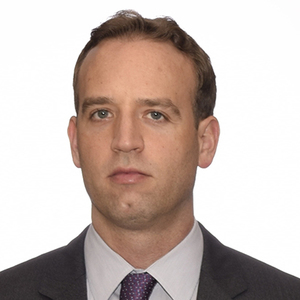
Scott Eldridge
CEO and Director at Canagold Resources
Replay available
Join us for a great event!

Automated transcript · Written by software from the replay's audio. It can mishear names and figures; the replay is the record.
0:07 Hi everyone. Welcome to the Canada Gold Resources webinar, making it bigger and better, advancing a past producing high-grade Gold deposit in BC. Welcome everyone here. We're broadcasting live here from what was a very slushy, rainy Vancouver morning, but it seems to have stopped. My name is Nox Henderson. I'm Vice President, Corporate Development for Cana Gold. And with us is Scott Eldridge, who's the CEO and director. How are you today, Scott?
0:36 Excellent, thanks, Max. Great, so we're gonna give a kind of a summary of 2021 and we're gonna look into 2022, and then we're also gonna cover our theme today, making it bigger and better. And we'll get into all of that as well. So for those attending, if you have any questions, you just click on the Q&A button and enter your question at any time. I'll cover off all of the questions at the very end of the presentation.
1:03 So with that, Scott, if you've got your screen up and maybe kind of remind everybody, you know, what CanaGold is, what our assets are and where we're headed. Excellent. Well, thanks for the introduction, Knox, and thank you to Cam and Bianca and the 6IX team. It's been a great year working with you guys. Just to start off, Cana Gold is obviously a public company and we're under the category of a junior Gold explorer and developer.
1:31 We're 100% focused on our flagship asset, which is right here in our home province of British Columbia. So we'll spend most of our time today chatting about the work that we've conducted at New Polaris during 2021. So throughout the presentation here, we may be making some forward-looking statements, so I'll direct your attention here to our standard cautionary note.
1:58 So, let's start off with the investor highlights. For the audience that probably has followed our story for a while, you would be familiar with a series of events that we announced in August 2020, which we collectively call the rebirth of the company. So those changes included a name change from CanArc to CanaGold and that was to further reflect our corporate level strategy to draw our attention back to Canada, whereas in the past the company had worked in Canada, the US, Mexico and even other parts of the world, but we just wanted to make it a much clearer, simpler story for our shareholders. We brought on a new director, Andrew Bowering. We brought on a new VP of exploration, Troy Gill. We also had a 5 for 1 share consolidation that helped facilitate our financing, which we wound up closing $8.4 million last summer. And use of proceeds were obviously to drill at New Polaris. We'll tell you all about that today.
2:53 New Polaris itself does have 1Moz Ni43-101 resource on it and we have a very robust PA wrapped around that. We'll chat more about that today. And as many people know, British Columbia is one of the best mining jurisdictions in the world. We're seeing increased M&A here, particularly from foreign mining companies. And it's a pleasure for us to work right here in our home province.
3:20 So let's talk about a snapshot of our public company information. So we do have 3 listings. Our main listing is Big Board TSX under the ticker CCM. And then we have secondary listings, OTCQB in the US, as well as Frankfurt over in Germany. We currently have about 82 million shares outstanding. The 11.5 million warrants are associated with the financing that we did in August 2020. We've currently been trading in a range of $0.40 to $0.45, so that puts our market cap in that $35M to $40M Canadian category. We recently closed a flow-through financing done at $0.50 with no warrant. That was for $5M and use of proceeds being flow-through is of course we'll drill further at New Polaris and we'll talk about that as we proceed through the slides here today.
4:11 So starting off with the management and the board, my background, I've been in the metals and mining industry for 12 years. Prior to that, I worked in insurance. I decided to go back to school and re-educate myself, and that helped catapult me into the mining space. I started off as an equity buy-side analyst for a German precious metals equity fund. From there, I went on to run my own merchant banking firm, sourcing European capital for Canadian mining companies. I've now been on the issuer side of the business for the last 5 years, and I've held the position of CEO here with CanaGold for the last 3 years. I was invited into the opportunity by our founder and chairman Brad Cook. That is a name that many people know. Brad is the founder of CanaGold. He's also the founder of Endeavor Silver. They operate silver mines in Mexico.
4:58 I had a pre-existing relationship with Brad, and that's why he invited me in to join the team here and lead some changes. So I'm obviously of a financial background but I am surrounded by a very strong technical team, a team of doers with plenty of achievements behind their names here in the mining space. That's led by our president and COO, Gary Biles. Gary's a mining engineer, mine builder, mine operator. He's done it 4 times. The most notable project on the list is Eskay Creek, where he was part of the build and then mine manager for Homestake before they were taken over. Knox, who gave the introduction there, many people know him, he joined us about 6 months ago. Prior to that, he was working with Kodiak Copper and Great Bear, and I'll just say a really quick congratulations to Knox and the Great Bear team for recently announcing that they're selling that project for almost $2 billion. So hats off to the team there.
5:55 Troy Gill is our new VP of Exploration. Troy hails from Rio Tinto. He's Australian. He spent 15 years with Rio. He twice won their internal award for discovery of the year. And prior to Rio, Troy worked at Peak Gold Mines in Australia, which was an operating underground gold mine. So it is rare to see an exploration geologist that also has production experience. So Troy has been a very welcome addition to the team. And then rounding off the management is Philip Yee, Chartered Accountant. He's our CFO. So moving on over to the board, independent directors include Deepak Malhotra. He's a PhD metallurgist. Martin Burian is a chartered accountant, chartered business valuationist. The newest addition to our board is Andrew Bowering. He's a mining entrepreneur, specializes on the capital market side of things.
6:43 That's a name that probably a lot of people are aware of. His most recent success stories include millennial lithium, prime mining, and American lithium. And then of course, Brad and myself rounding off the board. So let's move over to the project side of things. So We do hold a portfolio of exploration and development projects in BC as well as Nevada. However, we do spend 100% of our time at New Polaris. And given that we do have a portfolio of projects, if we're not spending money on these projects, we do look to option them out to other companies to create value for our shareholders and collectively this portfolio in terms of the money that it brings in from optioning properties out it does pay our corporate level GNA so therefore every dollar that we raise within Canada gold goes directly into the ground to move New Polaris forward.
7:36 So let's talk about a history, the brief history on New Polaris. So this is a brownfield site, so it does enjoy many benefits of being a past producer. The previous production here took place during the 30s and 40s, and they were mining, although underground, fairly close to surface at a diluted grade of 10 grams. And during the history, they recovered about 250,000 ounces of gold in the form of a concentrate, and they would barge the concentrate out to a smelter down South in Washington State. So fast forward to today, what do we have?
8:09 All NI 43-101, 1 million ounces. It's also at 10 grams. That's our diluted grade. There's a 20% mining dilution rate already factored in there. And we've run a PA on it at $1,500 gold, needless to say significantly below the current spot price. And the numbers speak for themselves. This is a very, very robust project. I always like to look at the after-tax numbers. The IRR hits 56%.
8:34 The NPV is over 300 million Canadian and it has a very quick after-tax payback of less than 2 years. So we've made some slight modifications to the project including the size and scale as compared to the past production, but most notably to truly unlock the cash flow value of this project as is the case with any mineral project is we found a way to produce Dory bars on site rather than produce a concentrate. So this allows us to capture the full gold price, get paid in the same day as they're flown out.
9:08 So let's move to a more accurate depiction of where the project is located. So we're in the northwestern corner of British Columbia in proximity to Juneau, the capital of Alaska, which is actually named after a mining prospector. And then the closest town on the BC side is Atlin. So we typically mobilize the project in and out of Atlin. Either way, you can get there in a small fixed-wing aircraft or a helicopter in just under an hour. So yes, it is remote, it's off-grid, there's no road access, there's no power, but it is extremely accessible given our proximity to some of the towns and cities in the area. And
9:47 this is a very mining friendly jurisdiction. It's been this way for decades. There was a gold rush here during the Klondike area. And we're also surrounded by a number of operating mines. The most notable comp or most accurate comp would probably be the Kensington mine, which is run by Core Mining. It's also a mesothermal system, but interestingly their grade is 6 grams, whereas ours is 10. And we always look at their quarterly reports just to make sure everything we're looking at on the costing side is accurate, and it certainly is as we look at Kensington. We own this property 100%. We own the surface rights. We own the mineral rights. We sit on Crown Grants, which is the equivalent of patented mining claims in the U.S. At a very basic discussion on geology, This is a mesothermal gold vein system, as is the case with Kensington.
10:37 These are very common in the Red Lake camp of Ontario. We will talk about some analogous deposits over in Red Lake as we move forward here. Moving on to our resource table, as I said earlier, we have about 1 million ounces in combined categories. Our tonnage and ounces are split about 50-50 between indicated and inferred. And again, I'll point out the grades you can see here, the 10.8 gram per ton indicated and the 10.2 gram per ton inferred. These already have a 20% mining dilution rate factored in. So this does indeed reflect head grade to the mill. So the drilling that we've been doing that we commenced in May, since May we've had 2 rigs on the site.
11:22 We're drilling about 47 holes, which is coming towards a completion of about 24,000 meters. That drilling has been primarily focused on infill drilling the inferred, where we need to tighten the spacings from about 40 down to approximately 22 meters to galvanize the inferred and move it up category. But also with this drilling, there is a secondary purpose where we're essentially looking for more ounces and those can come in the form of parallel veins or on echelon veins in addition to the downplunge extension of the CW main vein which hosts the bulk of the million ounces. Yeah, thanks for that setting the stage there Scott. I guess
12:03 you know we were just wrapping up the 24,000m of drilling this year and Troy's still up there near Atlin where our project is and we're drilling throughout winter. Let's talk a bit about the results of 2021 before we get into 2022.
12:19 And so maybe let's wrap up this year and give everyone a good picture moving forward. Yeah, absolutely, Max. So here you can see a lovely picture of Troy up at site. This was taken in the summer, you can tell. He's generally not an excitable guy but we couldn't wipe the smile off his face here as he's holding a 50 gram per ton sample over almost a meter. So this high-grade intercept is reflective of the results that we've been getting from our infield drilling, which were as expected, but the results have been amazing in the sense that yes, it is confirmatory drilling to move inferred up category, but we've also seen some pleasant surprises along the way with this drilling. More under the category of resource expansion, we've had a hole with no surrounding resources in a parallel vein hit 17 grams over 8.4 meters as a part of this program. So As we're in-field drilling, we're also seeing opportunities for resource expansion.
13:20 There is a chance here that our million ounces could certainly get bigger. Yes, I think that intercept in itself made Canada's top 10 list last month in terms of high-grade Gold in Canada. Yes, I did. Absolutely. There's a monthly tracker of that. And that's the first time we've been on that list. But hopefully we'll be on there again in the very near future, which is a great point, Knox, because even though we've drilled almost 47 holes here, we've actually only published 17 of those in the form of asset results and news releases. And everyone is familiar that the asset labs are extremely backed up this time of year. There was a lot of money raised for the sector back in summer 2020. There's been a lot of drilling in BC around the world, but particularly the Golden Triangle, it's been a very, very busy drilling season in BC and therefore everyone is in the same situation.
14:15 At this point, we probably have 25 drill holes pending assay results. So that means we have this very significant pipeline of results that are still to be published. And with a lot of the drilling, stopping throughout winter in the Golden Triangle, there'll be an opportunity for those labs to get caught up and we'll be able to get a lot more regular news flow, hopefully. Yeah, absolutely. Our project is somewhat unique where we don't need to shut the drills down for the winter. In fact, having closed this $5 million flow through financing, we're just gonna keep the same 2 rigs on site. They don't need to run off for another contract. So we'll probably drill another 8 to 10,000 meters here over the summer. So it won't just be 25 more results, it'll be more like 40. So our news flow is definitely not an issue as we move forward into Q1, Q2 of 2022.
15:12 So I'll just chat about the overhead view site map of our drilling here. And the point I'm trying to make here to the audience is how easy it is to drill this project. And you can see by the scale here, this is well less than a square kilometer. So the red represents completed infill drills as a part of this program.
15:33 The squares with the circle around them represent the planned infill holes, and then the purple circles represent previous drilling. And the beauty of this project is that we can pull the drill around with a bulldozer, Whereas most projects, again, in the Golden Triangle, they're moving a drill with a helicopter. So it means that our drilling is just much more efficient in terms of bang for the buck.
15:56 So let's move along to a cross-section. These are results that are under the category of infill holes. These results were the first results that we put out from the drilling that we started in May. These were released, I believe, on July 6. The black holes being drilled from surface represent previous drilling. Then the red
16:19 represents the new holes. You can see here, a picture tells 1000 words that these are infill holes, but these results are spectacular. 24 grams over 6 meters, almost 16 grams over 13 meters. So what's interesting about these results is they're significantly higher than the average grade of our resource, but secondary to that, but almost just as important as the actual widths. So The average mining width on this deposit, as designed in our mine plan in the PA, is 3m. But here you can see that we're intercepting widths that are significantly longer than that.
16:57 These are pleasant surprises that we're seeing along the way here with this drill program. We're hitting the best grade width in the history of the project and there's already 1000 drill holes in it, so it's quite exciting to be up in the top 10 intercepts here. Yeah, absolutely.
17:14 The next cross-section that I want to chat about here is where we see opportunities for resource expansion. So if you recall from the previous slide, that main yellow vein that we were looking at, that's the C-West main vein, and that's host to the bulk of the million ounces. And sitting slightly above that, there's 2 other parallel veins named the C9 and the C10 vein that yes, we knew they were there. And yes, they had previous high-grade intercepts in them, but there was never enough drilling. There wasn't a density of drilling to have a resource there. But as we're infill drilling on the CUS main vein, we're seeing intercepts now that have pierced through the C9 and the C10 with significant grade over widths, that actually marks a new chapter. It's an adjustment to our narrative. It's not just infill drilling. This is actually under the category of resource expansion, where if you look at one of the results in the C10 vein, the 17 grams over 8.4 meters, and another 1 11 grams over 17 meters, these would probably fall on the top 20 list for the project during its history.
18:29 So needless to say, these results are really getting us excited to hopefully get some more results back in Q1.
18:39 So I'll move along here to a T2D image of the ore body. So you can see the density of the drilling here from surface and The upper left brown area represents the old workings where the old-timers were mining again back in the 30s and 40s, where they recovered their 250,000 ounces. Then the large yellow area, this represents the CUS mean vein host of the million ounces.
19:03 What we've really been focused on with this infill portion of the drilling is infilling sort of from the 4 to 600m level. And basically, the split between the indicated and inferred here is based on depth. So the top half would be indicated and the bottom half would be inferred. And if we look to the bottom right blue area, the light blue area, this is not resource but it's our interpretation
19:29 of the potential down plunge extension of the sea west main vein. So in these mesothermal systems there's often pleasant surprises in the terms of parallel veins but also the down plunge extension of some of the main veins. So as a part of this program we've sunk 2 deeper holes going into the 800m to 900m level into the CUS main to test if it's there. It's a proof of concept type program. The holes are complete, but we just don't have the assay results back yet. I really like this image because it really does show the whole picture. Having said that, let's talk a bit about 2022 and the year ahead of us.
20:09 Let's talk about the big picture of what we plan to do with this asset in resource expansion and obviously in mine development. Absolutely, Nox. As I said earlier, we're planning to keep the same 2 rigs on site. We have a fully staffed 20-person exploration camp. They'll take a bit of a break for the holidays, but everybody will be back at it in early January. And we'll just roll into another drill program which would be about 8 to 10,000 meters that would go through to January, February type time frame and then what we'd be looking at is a resource update for the project and our goal is to move as much of the inferred up category as possible, in addition to some potential new zones, as was illustrated in those parallel veins,
20:55 that would have to be indicated as well, because ultimately our goal for next year, and it wouldn't be till Q3 or Q4, is to move into a feasibility study on the project. So why are we so optimistic that we can make our million ounces perhaps bigger? Well, we look to other analogous deposits and there's plenty of examples around the world, but home here in Canada, if you look to the Red Lake camp of Ontario,
21:24 these are many famous mines that people would recognize, such as Red Lake, Hemlo, Timmins and Kirkland Lake. They're all mesothermal systems and they do share a number of common characteristics, but the most notable that jumps out on this illustration is the potential vertical depth that they can go to. So a new Polaris, the maximum depth of our resource right now is only 600 meters And these systems can often go for 1,000 to 2,000 meters below surface. So they're what you could refer to as generational assets, meaning a mesothermal system would typically go into production with, say, an 8 or 10 year mine life. And as you continue to drill at depth while you're mining underground, you're drilling out more resources and reserves. And after 8 years of mining, you still have another 10 years of reserve.
22:11 That's often the case for these types of deposits, which is why we're so encouraged here that we can make this bigger and better.
22:20 So moving on to a little chat about our grade, given that we're high grade, we obviously like to brag and boast about that. And if we look at the average grade of the industry, and obviously it's skewed to the larger open pits. The average grade for gold is only 1.35 grams per ton. So here we said significantly higher than that, 7.5 times higher with our diluted grade of just over 10 grams per ton.
22:45 And we all know the proverb, great is king, that absolutely resonates true on this project. But I also like to look at the costing side because there are higher grade gold mines that are also high cost, but that's not the case for us where high grade combined with low cost. So the industry average all in sustaining cost is approximately $1,000. And in RPA, our all in sustaining costs came in at about $530 an ounce. To put our grade in perspective, Canada is certainly home to many high-grade gold mines. If New Polaris were in production again, this would be the 6th highest-grade gold mine in Canada and the 11th highest-grade gold mine in the world.
23:30 Moving on to some more details about our PEA. We only require a small mill here, so it's a relatively small environmental footprint. The mill is only 750t per day and we'd be producing 80,000oz of Gold per year over an 8.5-year mine life. And again, these numbers were run at a $1,500 Gold price. One of the things that I like to look at is what's the NPV to CapEx ratio. So our NPV is US$330 million, but our upfront capital cost is relatively low. It's only 111 million US. So we have that very rarely seen 3 to 1 ratio of NPV to CapEx as a generality on a gold project. If you saw 2.5 or better, that would be considered a very robust project.
24:17 So this is a P8. Yes, we need to move it forward into a feasibility study, but as we chatted about the timeline there, we'd be looking to do that in Q3 to Q4.
24:28 And we'll also see what happens with higher gold prices. If things stay the same or get better, I would certainly perhaps anticipate some of these numbers even looking stronger come a feasibility study. So let's move along to peer comps. So if we look at how we stack up against our peers, and by peers, these are companies that have projects either in Canada or the US, and they're at a similar stage of development. Enterprise value per resource ounce would be the most common measurement. So we're currently trading at about $22 an ounce on the ground and our peers are more in that sort of $40 to $50 range. So we all ask ourselves how do we catch up on our peers? Well the only way to do that is to really execute at the project level and that's exactly what we've been doing at New Polaris with some very significant high-grade results, excellent continuity in the ore body and like I said we just have a steady stream of news releases coming for Q1, Q2 so I definitely expect some some good things from us.
25:32 So lastly we'll just move along to a summary here. We just chatted about valuation. Another metric that you could certainly use would be PNAV. We would come at a, we're trading about 8% there, whereas our peers would be more in the sort of 15 to 20 range. We certainly have our hands full at New Polaris, very excited to work there. It's an amazing project, but we always do have our eyes and ears open for new opportunities. And we're certainly led by a very experienced team in our board and management that has done this many times before. And lastly, we do have a very strong cash position, having recently closed that $5 million flow through round, which means we're fully financed to continue drilling here over the winter. So thank everyone very much for listening in today.
26:20 I think, Knox, now we're going to open up the Q&A session. Yeah, absolutely. We're getting a few questions coming in. I'll start with this one because I think it really kicks off an interesting dialogue around what I see as the game changer for this asset. The question is from PR, how do you see the current treatment market for your concentrates? That's interesting because we're not making a concentrate. Maybe explain that. No, that is a good question. So we could move forward with this project as a concentrate, or we could look to produce Dory bars on site. They're both solutions. But if you look at this from a cash flow perspective, to really unlock these higher Gold prices, you would want to produce Dory bars on site.
27:08 And when I joined the company 3-years ago, we looked at several different metallurgical options to overcome that issue. So if we were to produce a con, we'd probably only realize about 75% of the gold price. And yes, there are a number of parties that would take our concentrate. Again, that's how the mine was run back in 51. But We're all shareholders here and we want to maximize our value. We will not be moving forward with a con. The real solution here is to produce Dory bars on site, fly them out and get paid in the same day. What enables that is this bio-oxidization. Do you maybe want to explain that a bit and point to some examples of bio-oxidization and how it all works?
27:54 Yeah, absolutely, Nox. So we've taken the flow sheet one step further than what was done back in the 30s and 40s. And we've been working with a firm called AutoTech. Some people might recognize that name. They're originally from Finland. They were sort of the metallurgical spin out of Aaltokampo, which is a famous base metal mine in Finland. But they're a major international engineering firm with offices in Europe, South Africa, Canada as well. And they own, AutoTech owns a process called bio-oxidation, which is just referred to as biox. And essentially what it does is it uses bacteria to oxidize the sulfides. And we've done all of our test work to a PEA level. We have been given the feasibility study metallurgical program, which we now have more than sufficient samples for from our 24,000m drill program.
28:51 That's how we intend to move the project forward. We have a lot of confidence in the Biox process. There are now 10 of these around the world. They are successful commercial-scale gold mines. The 2 most notable on that list, number 1 would be Kirkland Lake. Their Fosterville mine in Australia uses Biox. It's not really talked about, but that's part of their success story. They recently just merged with Agnico Eagle. And then over in Kazakhstan, which actually has some of the most severe temperature fluctuations of any country in the world, where it can go from minus 40 to plus 40 throughout the year, a mid-tier producer called Nord Gold. Nord Gold owns the Suzdal mine and they're running biox there very successfully. So when you look at those 2 main examples, one of the major things that you would look at with biox is the climate.
29:42 And we're nowhere near the fluctuations in temperatures that you would see both in Australia and Kazakhstan. So we're very confident to move with with BIOX and working with AutoTech as we as we go into our feasibility study. Yeah, we don't have those big fluctuations in temperature because we're closer to seawater. Exactly. So, I mean, yeah, we get snow there. We're Northwestern BC, but we do have that coastal climate. And in addition to that, you know, we're less than 100 meters above sea level. So sure, it's cold and yes, we get snow, but it's not minus 40. A cold winter day would be minus 10 and a hot summer day would be 25. So we're well within that minus 40 to plus 40 range that you'd wanna be to be comfortable to operate a BIOCS. Yeah, and I'm looking at this list that we have for BIOCS and it's all around the world in South Africa, Brazil, Australia, Ghana, Peru, Kazakhstan, China.
30:36 So it's been around, it's been used for over a decade or so, so we're quite confident in it. Yeah, I mean people like to use the word technology, but this is not a technology. It's a proven process. You do have to customize it for each project, but we feel that we're in very good hands with the professionals at AutoTech. Great. So, the next question is about access. How do you, How do you talk a bit about the access to the project, to the property and then the infrastructure around it? Yeah, absolutely. So it is a fly in fly out project. There is no road access, there's no power. But as I showed on the slide where we talked about the map of BC, we're in close proximity or somewhat close proximity to both Atlin and Juneau.
31:23 So under COVID times, we go in and out through Atlin, but previous or in the future, you can use, excuse me, Juneau as well. So there's plenty of high-grade gold mines around the world. Why do they work? They have to have the grade and they have to have the costing. And we have those. We're not 500 kilometers or 1000 or 2000 kilometers away from infrastructure, we're 100 kilometers from infrastructure. So the grade overcomes all of those issues and that's all been accounted for in the PA numbers in terms of CapEx, operating costs per ton, processing costs per ton. And As of today, we're running a fully staffed 20-person exploration camp. Our drilling is not all that expensive. Troy has done a great job managing the camp, keeping our costs down.
32:14 The great news is that this is a small, high-grade project, so our environmental footprint is relatively small. This isn't a giant earthwork open pit project. So we do have a lot of advantages of being off-grid. There's no town that we need to move or anything like that. So it's as good as it gets. Okay, great. And then maybe discuss the community around the project. The community around the project? Well, the closest town would be Atlin, and even though they're about 100 kilometers north of us, they would be the closest neighbor. So we are serviced by Atlan. We source a lot of our labor and inputs from that town as well. So we're happy they're there and I think they're happy that we're there. So it's definitely a mutually beneficial relationship.
33:05 The First Nations group that resides in Atland, and we do fall within their catchment, is called the Taku River First Nations Tlingit. We have a very positive relationship with them. They actually currently have about 4 out of the 20 positions at our camp. And we see it as a mutually beneficial relationship. Ultimately, what we'd love to do is develop a mind here, whether that's us or we get taken out. And they're certainly looking for job opportunities. We do everything to the highest level of ESG. They're one of our most notable important stakeholders in the project and nothing but good things to say there and in regards to the current status and for moving the project forward. There's a question from Randy. When do you anticipate that you'll begin mining?
33:54 Right, so as we move the project forward, we do have a vision of a development timeline that we sort of chatted about briefly. And as we commence a feasibility study Q3, Q4 next year, we're also directly working on the permitting as well, which is probably an opportune time to chat about the environmental permit, which is the real key to move any project forward. And as of December 31st, which is 2 weeks away, we will have completed our full 3 years of environmental baseline information gathering. And that means that in Q1 of next year, we can prepare and submit our environmental permit to the BC government, which is always a back and forth discussion. And given that our project has a small footprint, our permitting is actually all done at the provincial level.
34:44 It's not going through Ottawa on a federal path simply because it's a small project and that's determined not by the ounces or cash flow, that's determined by the size of the mill actually. The determining factor is whether or not the mill is over under 5,000 tons per day. If it's over that, you're federal. If it's under that, you're provincial. So it's pretty simple for us. So in theory, that means some quicker, more smooth, streamlined permitting process. And one of our neighbors in the Golden Triangle, Ascot Resources, they just announced their permitting a few days ago. So that's a great example of a peer company that got through the process. We're very optimistic and positive that we'll get there as well. We're checking all the boxes as we move forward. To directly answer the question, probably 2023 is when we would be making a construction decision.
35:33 And we feel that we have the base team here that's been through many builds before, that we can do it ourselves. And we have that low CapEx hurdle, again, of only $110 million US. But on the other hand, this is a very attractive asset in one of the best mining jurisdictions in the world. It's got very low cash costs. There's also the possibility of an M&A suitor. I think for our shareholders, that means there's potentially different exits here as we move forward and de-risk the project, Ken. Absolutely, well, thank you, Knox. I'm glad to see you back and I'll hand the show back over to you. So actually that was kind of a wrap up questions that we had from our audience, Scott. So I guess at this point we'll wrap up the webinar. If anyone has any further questions, they can call me directly at the number that you see on your screen, 604-416-0337 or email nox at chemicalresources.com and We'll be happy to get right back to you.
36:32 And yeah, we're looking forward to an exciting 2022 and wish everyone the best of the season and a happy new year and all that if we don't talk to You
Follow Canagold Resources Ltd into a list and get an email when it puts out news.
CEO and Director at Canagold Resources

Investor Relations at Strikepoint Gold
Focused on marketing, investor communications and raising capital for TSX Venture exchange-listed resource and technology companies over the past 15 years. Co-led with CEOs financings of more than $100 million on the TSX-V. Former securities trader on Canadian equities markets with Canadian Securities Course designation, and graduate of Journalism from VCC-Langara.