Transcript
Automated transcript · Written by software from the replay's audio. It can mishear names and figures; the replay is the record.
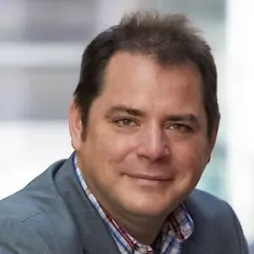
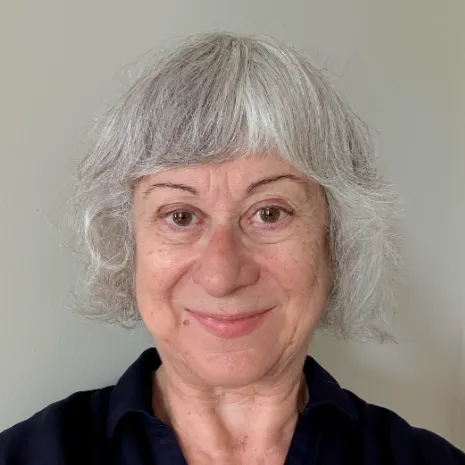
0:04 Good morning, good afternoon, good evening, depending on where in the world you're signing in from today. I did see quite a few time zones, so I really do appreciate everybody joining us. I've got with me today Brian Boss, CEO of Kapani Metals, and Danielle Giovinazzo, the company's newest independent director, for an on-site webinar during Kapani's Summer Field campaign. Brian, Danielle, how are you both today? I'm doing well. Oh, me too. Awesome. So here's how today's going to work just for the folks in the room. We've got a video I'm going to play that's going to give some color to the current Kupany field campaign. Then Brian's going to give a bit of additional context for it. Then I've got some questions for both Daniel and Brian, but then I'm going to open it up to the live audience for any questions you might have today. Please use that chat button on the bottom right of your screen at any point during today's event. I'll try to get to as many questions as we can. If for whatever reason I don't, I'm still going to make sure the team gets your question along with your email address or phone number that is attached to your registration, so they'll be able to get back to you as soon as possible. The only other housekeeping I'll tell you is that this is being recorded and will be available for replay probably 4 p.m. Eastern time, so late this afternoon Eastern time. And it'll come right in your inbox. We'll use the same link, but it'll also be available on Six's YouTube page.
1:10 I'll also be able to catch it there as it pops up. But without further ado, I'm gonna throw it to the video just so you can get a bit of color for the current campaign. Good morning everybody, it's 10 minutes to 6 on Monday July 7.
1:25 I'm going to hop in a car in a second and take a ride to Pearson Airport and from there to Quebec City Airport. Got Coupani meetings in Quebec City and more importantly we're trying to get all of our logistics for a trenching machine, put it on the train that goes from Shefferville to Sept-Diel. So I'll be negotiating a bunch of things today and we're gonna get it to the train for Tuesday slash Wednesday, that's loading day. The train goes north on Thursdays. Hi everybody, it's now 7.30. Flew to Quebec City, drove to St. Pascal, picked up a Kubota tractor that we're gonna use for trenching all over the Anticline zone, maybe, definitely in the Cancun zone, And now I'm trying to get that Kubota to the train that takes cargo from Sept-Dieu to Shefferville.
2:29 It goes up every Thursday, goes north every Thursday. So you need to get your cargo in Tuesday Wednesday the latest so it's still Monday night looks like I'll make it and then I'll get myself into camp the next day by flying in and just for a little view here's the st. Lawrence
3:54 So So over here is one of our new ATVs. We use these to get to exploration sites which are close enough to camp that you can run a team up there. In the long run of course it's far better economics to run an ATV than it is a helicopter. Okay that's a new tent that's gone up on a wooden floor. These are the same sheds, cabins that we've had for years. So I'll just turn the camera and we'll look down Broadway here. So you see we have a total of 6 buildings, 1 just off to the left and then the next 5. And they're all connected by a walkway.
4:40 Each sleeping cabin can take 5 people. One of them is also laundry and washrooms with showers and hot water. The other one is the kitchen building.
4:51 So we have 4 cabins that can take up to 5 people. That's 20 and then we've added these 2, 1 at each end, new sleeping spots. And the new spots are for things like the geophysics people. When the helicopter pilots, they need their own sleeping space with a sleeping schedule that allows them to keep working. Okay, now we're going to go down the staircase here to the lake. For those who are asking, yes, there's plenty of bugs. What we've got here is jet fuel. Okay, so the jet fuel comes in on the float plane. The float plane docks at the end of the dock obviously. And the jet fuel is used for the helicopter. So this is Reti Lake.
5:39 We're looking into the wind right now. We're looking down the length of the lake. So the Blue Lake zone is kind of up that up and over that ridge right there. The Cancun zone is not seeable but it's in that direction probably about 15 miles. The Berry Lake zone is over well Berry Lake is a smaller part of the Blue Lake zone, but that's over in this direction by about 6 miles. And we have people out there today and they went out on this, they got dropped off and they'll come back on that as well.
6:17 If I'm standing on the dock, so Shefferville is 80 kilometers that way. Anticline Lake zone really kind of starts up about this direction, about 10 miles that way, and then fills up a large space. And then the extensions zone really starts on this far shore and now that we've
6:49 prospector claims is a continuous piece that is a continuous piece that runs probably 15 miles away from us in that direction. So there we go. To give folks in the room just a bit more color for that video, especially some of that helicopter footage at the end. Sure, so the helicopter footage is the main focus of our geophysics this summer.
7:40 And so I'm sure we'll get into it in more detail in a minute, but the helicopter is slinging, so it's hanging beneath itself, the helicopter is slinging a I'll call it an electromagnetic array, keep in mind I'm not a geophysicist myself nor even a physicist, but it's slinging an electromagnetic array which is shaped in concentric circles, so on the inside circle, sorry on the outside circle, it's sending transmissions of energy down into the ground. And then the inside circles are measuring the responses that come back. And if you think about that for a moment, for a generalist thinker, maybe think of it more of like a radar, right? Radar goes out from the airport, it bounces off an airplane and comes back with a signal. And where there's no airplane, it doesn't bounce. The radar signal just goes on forever and never really comes back.
8:35 So in this case, almost all the signals come back. But if the signal were to pass through, say, copper nickel, it would spend a millisecond energizing that copper nickel if it's conductive enough and close enough. And that delay in response is measurable. So using that kind of time delay plus the forward motion and all kinds of other math and science, they can make a picture
9:03 of the electromagnetic response in the ground that they fly over. So I'll pause there and say that's probably as far as I can take the conversation without getting out over my skis. And Danielle, if you want to add any math to that or further explanation, go right ahead. You're doing fine.
9:23 That's a great review. Danielle, I actually did want to ask you a couple questions because I know we're introducing you to Kupani's audience and to Six's investor audience as an independent director of the company. And curious, I mean, I looked at your history and experience with over 35 years in the industry with Raglan Belt Deposit specifically. I'm curious what attracted you to to Kupani and its portfolio? Well, you know, I just got to mention that I was introduced to Kupanyi to one of my old colleagues, Kim Hein, which is still on the board. And so I thought, so this to me is a polymetallic copper nickel PG. There's deposits there. And the area is very, very interesting, a lot of copper around. So, and, you know, basically almost no exploration since the 90s, 80s, very, very spare exploration.
10:16 So, you know, I figured it was actually an excellent project to be able to work on and to be part of the QPANI board and team.
10:26 Oh, awesome. And I'm curious, I took a look at your experience, kind of expertise, your industry bonafides. But I'd love if you could just give the folks in the room just a quick rundown. Well, okay. Well, I've been doing nickel copper, PG exploration since a while now. So I started with a PhD on Kentilake, which is in the Reagan belt. And then, you know, I was, you know, just following up the peach just after I finished the peach. Yeah, I was hired as a permanent geologist by Falcon Ridge, where I stayed for 16 years and, you know, working on various projects and project generation.
11:01 And then I stayed a year with Extrata Nickel, you know, following the emerge there. And, and I was on brownfields at Reglan, around Reglan deposits, and by that time, they were in production. So, so I left. And then I worked on a nickel copper, I managed a nickel copper project in Argentina for gazillion. Then I moved on with new Genco, which is which was an Australian company. And we were generating projects for first quantum in Finland, and West Africa. Then you know that and then I came back and I worked in various things, including World Bank project in West Africa. But more recently, I was vice president of exploration for Benz Mining, which owned a gold deposit here in the province of Tibet.
11:48 Okay.
11:50 I was on the board, I was on the board of Soquem for 5 years and I'm on the board of Walled Ridge Mining since 2021. That's quite a pedigree. Now I really appreciate you sharing. Brent, I'm going to get you in here. I know people... I don't even want to hear the question, Romeo. First, I got to say it's a huge get. Thank you again, Danielle, for joining us. And we're going
12:11 to do some amazing things. Sorry about that, Romeo. Go ahead. No, no, no. I think it's great. I did. I know folks log in to see from the horse's mouth during summer exploration at the field. Can you give us a comprehensive update on the summer exploration program? I'm curious what targets you're focusing on, what activities are underway right now? Okay, so first I'll begin by saying this is not our only webinar from the field. I'm leaving camp tomorrow, but I'll be back in August. I'm trying to arrange it that I'll be in camp at the same time that Danielle is, and we might have someone else touring the project with us at the same time, and we'll do a lot more what are the geo-seeing roundtable conversations in that call.
12:57 So for those of you looking for that, absolutely we'll do that again. I think this call is going to be mostly about geophysics.
13:05 Okay, so what are we doing? You want a comprehensive report, Romeo?
13:09 As comprehensive as you can. All right, keep in mind that, you know, if I'm going to be comprehensive, it deserves a press release. So watch for something like that soon. But I do have some notes ready to share. So we'll go with that, but I won't call it comprehensive. The things we're working on are, you know, ATV trail making so that we can get from camp to the different regions. I know that's not sexy, but it's important because every dollar we can save in future years is a share that doesn't need to get issued. Right, and if the whole point of this is to find something and reward shareholders, then getting our cost of exploration down is super important. So that's going on. You know, and having the Kubota show up for trenching will also help with the ATV trails.
13:58 The ATV trails will also help with drilling. And remember, although they're called ATV trails, they're allowed to be up to 5 meters wide. So you can put a lot of equipment through what they're calling trails. Okay, so we're doing that.
14:16 We are doing a lot of work to get ready for a winter drill campaign. And so there's several big steps to that. We'll get into that later, but the geology teams are out every day. They're at the Blueleg Zone. They're at the Cancun Zone. And they're continually taking measurements about width and depth, dip and plunge, so that we can figure out the smartest way to orient the drills. Once we start the drill in the wintertime, get the maximum information
14:47 from each hole that we're going to do. They're also visiting the old holes from the 1980s or some of the twin holes from the 19, sorry, from the 2012 campaign. And what we're looking for there is how many of those holes are still open, open in the sense that you could put something down the hole, because something that's important for us, we think going forward, we'll be able to use electromagnetics, just as we're hanging it from the helicopter right now. If you can put it into a probe and put it down an existing hole and you can see in a radius of
15:22 100 meters around the hole you can learn a lot from going back to old holes that have never been Electromagnetically probed So we're building an inventory of what holes are open still and how deep are they. Obviously the deeper holes have more information. Sorry, I gotta get this bug.
15:44 We're at camp, we have bugs. So we're doing a lot of that. Then, of course, the deeper holes are the better ones for that. And then the geophysics, I think, is super important at this stage of the summer, because we're going to fly
16:04 5,013 line kilometers, which is a heck of a lot of what you saw slung under the helicopter. And we're going to basically build an electrical resistance map of almost the entire property. And the property is now 682 kilometers squared. And what's really good about how we've designed this campaign for the summer is that the data from the geophysics team, they fly it on Monday. We understand it preliminary by Tuesday, and the geology team is out looking at what they found that's interesting for geophysics on Wednesday. And so that's one of the key things that we're doing is we're gonna be spending a lot of time, I think, on doublet zone, extensions zone, anticline zone, blue leg zone, following up new things that are being found by the latest geophysics
17:04 that we're flying. So I've talked a lot. I don't know if I've given you all the answers you want yet, Romeo. But there's one thing I'll tell you that for those watching,
17:15 The Cancun zone was found last year, and it seems to be a different type of, well, a different rock type than what's in the deposits at Blue Lake. It's more of
17:29 a mud rock, and I'll use that term because I know Danielle uses that one and she can correct me if she wants to change it, but one thing we've already found so far this summer is that the Cancun mud rock is in a lot more places than we thought. So what I'm excited about is the Cancun mud rock, even though it's no longer in Cancun, it's now, it looks like it, probably not continuously, but it looks like it extends as a formation all the way into the Blue Lake Zone. So we're excited about what that might turn into, but there's a lot more work to be done to know whether it means anything in terms of economics. So I should probably stop there. No, makes sense. I do have more questions. I want to thank folks who already put in questions in the chat. I do notice about 15, 20 of you came in a bit late. So we'll note there's a chat button on the bottom right of your screen.
18:16 Please do ask questions at any time during today's event. I'll make sure, even if it's right at the very end that the Kupani team gets them. I did want to ask Brian, what, if any, I mean, obviously, as you said, if it's comprehensive, you're gonna do a press release, but what sort of preliminary results or observations can you share from field
18:31 work so far? Are you seeing anything, I mean, beyond what you've said about Cancun zone, which is great, that's particularly encouraging or kind of helping the team refine that targeting?
18:40 I would think so far the fact that there's mud rock in more places than Cancun is- Sure. It's gonna turn out to be really important. And then milestones, I guess the milestones are the interplay between the geophysics and the geology team. When Danielle mentioned several minutes ago that really nothing's been done since the 1980s. You know, that's always been the thesis here that Douglas and Ned before him had that with modern technology and modern techniques, you're very likely to find, if not more, then maybe multiples more Of what was found in the 1980s for a couple of reasons 1 the technology is way better today
19:27 and 2 You know the 5 million tons of the Blue Legs Zone was all that that company back then had. But we now have the entire region. So, you know, back then you couldn't fly 5000 line kilometers because the company that had the claim block for the historical tons, their claim block total was maybe 500 line kilometers. So now we have a chance to take what was learned in the 1980s, what we're learning now about the Blue Lake deposits and apply it everywhere that the geophysics looks the same. So it's not really a secret, it's not a milestone, Romeo, but that's what this summer is about. No, makes sense. And Dave, I appreciate that extra color for it, I think that's helpful. 1, I know investors always ask, they'll ask in various ways, sometimes snarky, sometimes pleasant, about budget during these kinds of campaigns.
20:21 And I'm curious, how's the field team performing against both plan timeline, but also budget? Have there been any operational challenges? I know sometimes there are camps, or On the other side, pleasant surprises that you didn't anticipate. I would say the pleasant surprises are right in front of us over the next 2 weeks. We've had kind of a miserable weather, which has reduced the effectiveness and the time in the field for the geos. But most importantly, it's created delays in the geophysics. As you saw with, when you're slinging that circle, right? You're slinging the pizza underneath the helicopter. There's only so much crosswind that is allowed before you've blown your magnetic response kind of off target. And there's only so much forward speed you can accept and still maintain say 30 meters above the ground or 30 meters above the treetops.
21:13 So the last week It's been rainy and cold and windy and that slowed the geophysics. It's not going to stop the geophysics. So, I guess that's how it's gone in the last week. Yeah, we just, we have a dedicated team of brilliant people. Everyone here is super energetic. Everyone here wants to be here. And I know that it's a wonderful team and they're out in the field right now doing exactly what we've asked them to do. And the geophysics guys, which is 2 people from expert geophysics and a helicopter pilot. They will get everything we need from them and they'll stay until it's done. Well, hopefully they have bug repellents. I would hope and imagine. Yesterday was so windy the bugs couldn't keep up. So. There you go.
22:03 That's helpful. One thing before we get into questions from the audience, I see there's a bunch. Based on what you're seeing in the field, what are the deliverables we should be expecting over the remainder of the exploration season? I know you mentioned you want to do another one of these in August, which is great when you're back up, but what does the rest of the summer look like? Look, I'll contrast the deliverables question to last year. So 2025 versus 2024. 2024, the deliverable was, Let's get out there and make sure we understand that it exists. And we did that. And then we came away with 2 magic silver bullets, which impressed everybody. One was the the gravity survey around Blue Lake that led everyone to believe, including the company, that there's a lot more targets to drill in Blue Lake.
22:50 And then we found this Cancun zone in an area that no one had ever bothered to go to. And we had 9km of continuous mineralized, well, continuous magnetic response from Copper mineralization. And that's going to be huge for us in the future. So those are kind of like 2 magic bullets. I don't know that I would predict yet what the 2025 magic bullet is. I actually think it's more of a structured knowledge build of knowledge compounding on itself across the entire region. Maybe we'll turn out to discover that the, you know, we did have a magic bullet, which is that maybe the Cancun zone extends almost all the way continuously or not continuously yet. We don't know, towards Blue Lake. And so you have a low grade halo around a high grade pit. That's something we won't be able to speak to for a long time. But yeah, I don't think it's a magic bullet summer. And even if it was, I wouldn't tell you yet.
23:44 Yeah, fair enough. That makes sense. I do want to jump into some of the questions from the chat, and then I'll be ending today with Daniela and Brian, what you're most excited about. So prepare for that. But Wesley from the chat asks, what are future infrastructure plans to access Boolake? So I think looking into a production kind of future is what I imagine he's asking. A production of mineralization future. I'll do a little less than full production. We'll talk about the drilling campaign we're going to do in the wintertime. The ice here on the big lake between Shefferville and us and then all the small lakes between Shefferville and us and on Ready Lake out here. It usually is developed by January into 3 meters of hard ice and 1 meter of snow and pack ice, you know, squished ice on top, you know, ice turning into snow on top.
24:39 And so that means a few things. 1, you can take heavy loads across that. So we're going to be doing our drilling campaign and we're designing it to be done by land from Shefferville. So think about that, that'll be caterpillar bulldozers, huge drilling rigs, fuel bowsers, pickup trucks, transport trucks, we'll all be going out over the ice. So infrastructure is kind of provided by Mother Nature, and as a reminder that's how they did all the work in the 1980s. They brought everything out over the ice. Now, if you were to plow a road starting in January, you would clear off that 1 meter of snow, which then frees up the lower 3 meters of ice to freeze even deeper because you've removed almost the warming blanket that prevents it from getting even thicker ice. So the expectation is that that 3 meters of ice would probably turn into 6 meters of ice. And that's a lot of ice. So there's a debate right now about whether we even need to plow.
25:49 But we already have all the GPS tracks from the old roads. We found those last February of 2025 when we came out. So we're pretty confident on the logistics for winter drilling. Will it be cold as hell? Absolutely Will we need to use propane heaters so that we have water to feed the pumps? Sorry to feed the drills? Absolutely, but we think that's a a better trade-off than doing summer drilling with weaker power, lower power drills that are helicopter delivered. Now, if the question is, you know, we're gonna be in a production someday, how would that work? You know, There's a gamut of solutions. One is you could do a rail spur from the existing railway out towards us, which would mean your project would be at rail.
26:43 Another thing is you could design if you were to do a small production amount per year, but a long mine life, you could mine all year and export over the ice in the wintertime, which gives you about 4 months a year of delivering to the railhead in Shefferville. Not great, but it reduces your CapEx in terms of, you know, so there's a trade-off to be had there. Another suggestion would be, anyway, I could talk for hours about that. Well, I should probably stop. That's probably not what the question was about, so. I think it was actually, so no, I absolutely appreciate it, especially all the details about the winter campaign. Whoever it was, send me an email, I'm happy to talk to you about it in detail. Perfect. Next one is one of those questions I should be asking myself actually, because it's a great one. I asked, what would you consider a success from this summer's campaign?
27:37 Success from this summer's campaign is that we complete the geophysics and we follow up all the hotspots we find from it. That would be 1 and 1A. Success criteria number 2 is that we're super ready to drill because we've learned everything we need to know about the targets in Blue Lake and Cancun. And I guess most importantly, So I should put this above everything else. Everyone stays happy, healthy, safe and warm throughout the entire season. That's great. Jilio from the chat asks, you know, he just read about Kupani, but he's curious what basically Was the last financing easy and what's it going towards? So what is the proceeds from the last financing intended to fund? OK, the financing is all going to be spent in the field. Almost all of that 4.5 million bucks, the vast majority of it is money that the company has agreed with the people who bought the shares, that the money will be spent in the field.
28:37 So that's generally it's referred to as flow through funds. So the vast majority of that is flow through funds. So we've agreed to spend it. We know how to spend it. We know what we're going to spend it on, and we know what window of months we're going to be spending it during. So that's what it'll be spent on. Was it hard? Yes, but I guess I did that to myself. You know, we know that this story deserves long-term thinking shareholders. So it has a long-term thinking management that already has long-term thinking shareholders. We know that the story will find an audience amongst resource investors, because it's a great story. We know the story will find an audience amongst resource investors, because it's a great story. We know the story will find an audience amongst Quebec resource investors.
29:27 So although we started the deal in June, you know, from November until June, I was doing presentations all over Ontario and Quebec and I even went to some conferences in New Orleans. I've told this story to groups of 30 people in the back room of the St. Hubert, from Gatineau to Shakutemy to St. Georges de Beauce and back. And that's how we built the audience for this company, the audience for this deal. So was it hard? Yeah, But it was the right thing for the company as compared to doing something like, you know, calling Giant Brokerage Co and paying 7% commission and 7% broker warrants and having the shares bought by someone who's going to sell it at 4 months plus a day.
30:21 That's the wrong thing for us at this stage. And so I hope that answered the question. No, I appreciate it. And Jillian, if you want any updates to that question, let me know in the chat. But I want to get you back in, Danielle, I mentioned I was gonna ask you what you're most excited about for the rest of the year. Just curious your perspective, and we're more than halfway through 2025. What excites you most about Kupanyi for the rest of the year? Should I start? Yeah, if you would. Well, I'm excited that, you know, I'm looking forward to see the results from the airborne EM and MAG survey. I'm looking forward to see if there's any new discoveries, you know, new outcrops, new mineralization that's gonna be found as a result of that survey.
31:08 And I am looking forward to drilling some of those anomalies. So I know drilling will be probably in early 2026, but still, you know, it's exciting to see what's gonna happen. Absolutely. Brian I'll throw it to you what's keeping you up with excitement for the rest of this year? Yeah I have like 6 things. I only sleep 1 night a week and each the other nights is something each night keeping me up. So one is, I gotta know what those gravity targets are in Blue Lake. We're gonna drill them. We're gonna drill them, but gotta see what those are. That's 1. 2, $5.70 copper. That's crazy. That does so much. Obviously that spot price today, it's not the reality for when we would ever make a go, no-go decision.
31:56 We need to know a lot more about us before we really start to worry about the copper price. But what that does, though, is put a spotlight on the fact that the world has underinvested in exploration, certainly for copper, for the last, you know, pick a number, 3 decades, 2 decades. It's a meaningful amount of time. And yes, you can stretch and expand an existing 0.4% copper mine, but eventually the world will look for new deposits and we think we've got a really good chance of being 1 here. So, yeah, go ahead. I've got to get, you know, it contains multi elements of this palladium and palladium prices have gone up quite significantly recently.
32:47 So, one of the, I haven't done it yet, but one of the things I intend to do when camp is over is actually go back through history, Romeo. We're going to pull all the historic pricing for copper, platinum, palladium, nickel, and kind of build a what would our revenue have been indexed, like a customized index on the silly assumption that in 1984, they'd gotten into production. And I would then want to study that revenue line over time to see when it dips and when it dips, how long does it dip and really try and understand what the interplay of those prices all would be. And to the point of Danielle pointing, polymetallic, right, You've always got the sun's always shining on something that you have. That's right.
33:35 Which is the best part of that. You've already heard me talk in the past, Romeo, about how Nickel 3 or 4 years from now will start to rally. So, But yeah, there's my answer. That's a lot to be excited about. I know there's still more to come this summer, so looking forward to seeing you again. Danielle, great to meet you and thanks for sharing your experience with us today. And Brian, thanks for giving us some insight into what's going on at camp. Appreciate it very much. For those in the chat, thanks everybody for joining us. If you have any additional questions that you think of right after it ends, please either send them my way or you can contact Kupani directly at any time. But if you pass questions through me, I'll be sure to get to the team as soon as possible. Replay will be available in a couple hours. Encourage you to share it with anybody you'd like once it's out. But Brian, Danielle, thank you so much. Have a great end of your afternoon.