Transcript
Automated transcript · Written by software from the replay's audio. It can mishear names and figures; the replay is the record.
0:04 As folks are filtering into the room, I'll say good morning, good afternoon, good evening, depending on where in the world you're signing in from today. I did see it was quite international, so I do appreciate everybody joining us today for an event with the Kupany Metals Geological Team, CEO Brian Boss and Sid Rajeev from Fundamental Research Group. How's everyone doing today? I'm good. Thank you. Awesome. So here's how today's going to work for the folks in the room. I've got some introductory questions just for the folks on today's call. Then I'm going to pass it to Sid, who I know has his own questions for the Kapani team. Then we are going to go to questions from the live audience. This is an interactive event. It's a Q&A after all. So that chat button in the bottom right of your screen, that can be used at any point during today's event to ask questions to the folks in the room. And we'll try to get to as many as we can before the end of the hour. One last piece of housekeeping before I get into the protein of today's event. It is being recorded and will be available for replay this afternoon. It'll pop right into your inbox. It'll also be available on both events.six.com and on our YouTube channel. But that is enough out of me. Sid, I'm going to start with you, if you don't mind. I know you've authored many reports, a report on Sante, Douglas Macquarie's previous company and early success stories like Power Metallic, for example. That's the artist formerly known as Power Nickel, for those of you who aren't aware.
1:18 I'm curious, you've set a 70 cent price target on Kupani. What do you
1:23 believe the company needs to do to reach that target? Thank you, Romeo, and thank you to the Kupani team for the opportunity to participate in this webinar. For those who are not familiar with us, I'm the head of research at Fundamental Research Corp. We are based in Vancouver, Canada. What we do is we provide analyst coverage, which includes reports, investment reports from a third party perspective with evaluation. We've been doing this for over 22 years and we have a team of financial analysts and geologists. And so what we basically do is we are like auditors, but on the equity side. And in the case of Doug, I want to take a moment here. I've known Doug for over 15 years. Back in the day, when I used to cover PMI Gold, then after that, I covered Asante Gold.
2:14 Both of those deals were highly successful. And Coupani Metals is actually the third deal of Doug that we started covering 2 months ago. And Doug's contributions to the industry were significant and he'll be greatly missed by all. But back to the Kupani story. So we launched coverage on Kupani in February. If you have not seen our report, please check our platform, researchfrc.com. It has our valuation and you can see our third party perspective on the company. And basically we found 4 key aspects of Kupani that we liked. Number 1, Quebec is one of the best jurisdictions for mining and exploration across the globe. Number 2, Kupani's project is in very early stages.
3:01 What that means is it gives the market an opportunity to participate in the upside potential of a discovery. Now, I guarantee that, you know, Kupani comes with all the risks associated with all the highly speculative exploration plays, but we think that Kupani has a higher probability of success than typical junior. Number 3, after our review of the project and the past work done to date, we found that the project has multiple targets. And that means that the company and management has multiple chances of to make a discovery, which means there are a lot of attempts that they can make in the next 12 to 24 months. So the market and us are eagerly awaiting what the management will be doing in the next 2 years.
3:49 And fourth 1, which is probably one of the biggest, is the CEO, Brian, he's in the call as well. Brian, so I think he owns more than 30% of the stock, which is huge for us from an analyst perspective. It shows management's skin in the game. And Doug's estate, I think, owns over 20% too. So that high ownership shows their conviction in the
4:13 story, which is, you know, kind of speaks volumes in terms of the potential of a project. So, yeah, these are the 4 things that we like. We looked at past work done to date. We looked at potential dimensions of each of the target and came up with the valuation and our target price. So please check our report. And if you have any questions, always you can reach me, you know, email or phone call. Yeah. Appreciate it very much, Sid. Now, before I leave it to you to shoot some questions to the team, I do want to introduce the geos in the room. So if you don't mind, I'm just gonna start with Kim. Kim, for those who don't know, is an internationally recognized consulting geologist with over 35 years of experience in mineral exploration, mining, and geoscience education across Africa and Australia, and has some great stories.
4:59 Kim, I'm gonna throw it to you for just a couple of quick questions. I'm curious, how and when did you meet Douglas Macquarie and why did he invite you to come to camp in 2025 as a structural geo?
5:10 I can't actually remember precisely when I met Douglas, but that doesn't matter. It's kind of a few years ago, but Ware was in West Africa and I do remember it was in Ghana. And I met him through a colleague when we were working on another project associated with another project, Cardinal Resources, which was a gold deposit in the north of Ghana. And I was consulting at that stage on structural geology. And so that relationship, we knew each other. You tend to know each other when you, as an exploration scientist around working in West Africa, but specifically getting to know him very personally to the point that I called him a geo brother
5:56 at the end and I'm very upset that he's passing. So that's when I knew him. That's how I came to know him. That's how I came to be associated with him. So I understand his philosophy because I worked very closely with him. How did we meet up? Well, he's a geophysicist and I'm a structural geologist and explorationist and that synergy of working with each other was
6:24 quite fun actually, a lot of times, standing around the whiteboard arguing points of science out towards discovery and planning borehole strategies and so on. That was a lot of fun, actually. Yeah. That's it. Appreciate that. And I know the project is in early days, but what do you think of it so far? I'm actually very excited about it. The more I'm reading about, I'm coming from the science point of view, the more I'm reading the science side of it, and you're looking at a really well endowed belt, an orogenic belt that stretches right across Quebec, well, across the top of Quebec and down on one side of Quebec,
7:07 you're really seeing a scattering of a family of deposits that all sit within the Copper Platanoid group. And it's not under-explored, but there's new discoveries coming out all the time. For example, Brian sent me something today from Midland, about they've got new boulder discoveries there as well. And then the more I look at what Kupani's got and the length of permits that they've got, you sit there and go, mm-hmm, okay, let's try to understand this. I could go into the very detailed geological reasons for it,
7:45 which If somebody wants to test me on that, I'm happy to speak to it. But it's got a lot of potential and a number of horizons there that I find very interesting, very attractive scientifically, but also from a discovery point of view, I think. Yeah.
8:00 Awesome. I appreciate that very much. I do want to get to Mike. So Mike Moggridge is another accomplished geologist with 35 years of experience in mineral exploration and mining. And I was lucky enough to hang out with you last year at the Kupany AGSM in 2024. And I remember you spoke with, I'll say significant excitement for Blue Lake. And I'm curious, you know, several months later, how do you feel about it today?
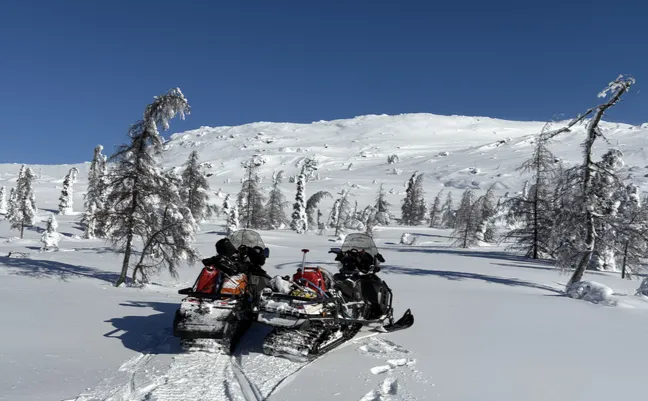
8:22 Oh, excuse me. Thanks for the introduction. Yeah, definitely still just as excited. And I'd say even more excited now, especially with Kim involved, is a great addition to the team and certainly got to know the team better. And yeah, I'm really excited. There's a lot of good, healthy indicators there. And after our Skidoo trip up there in February, I think we had a good team bonding experience there. And yeah, it's exciting times.
8:51 Awesome. No, appreciate it very much. I would all intros now out of the way, Sid, I'll throw it to you. I know you've got a number of questions you wanted to ask the team. Yeah, no. So thank you again, Romeo for that. So when asked for this opportunity, I was thinking about the questions which I have and maybe what the market might be thinking of especially in terms of Kupani what management is up to with ducks passing? What's gonna be the transition? So I put together a couple of list of questions, but maybe we can start with, if you don't mind, Brian. I mentioned earlier that Dock's estate maybe owns over 20%.
9:32 What can you talk about that estate?
9:35 Do you have any color on that? Who is going to own that? And then is it going to be a long-term hold? Maybe more color, please. Sure. Sure. And that's a fair concern. Doug's CETI filings between himself as a person and his hold co, MIA, which are both listed on CETI, I think at the moment it's 18.6%. So he would be our second largest shareholder, which is obviously an important position of stock. I've spoken with the family several times. I attended the funeral and the celebration of life that occurred a couple of days ago in Vancouver. And I can tell you that the family has no immediate need for cash.
10:20 They've got lots of Asante shares at a great price that are now trading at $1.20. That's the prior deal. The family knows what Douglas thought about Kupani.
10:32 The stance he had that this project is going to be better for shareholders than Asante was and it'll happen sooner. So they are happy, the family, to remain a shareholder for many years.
10:47 And keep in mind that that's not only the 18%, but it also includes extended family members and friends of Douglas that have followed him through PMI Gold, this is success, and Asante is a success. And this one, and they've always known when they, when Douglas bought these shares and was telling everyone about the story as a successful explorationist, that these are 2 or 3 year long investments. And that hasn't changed. So Those shares are not coming out for sale and the family is quite happy to hold them and they have every ability to hold them and I'm excited for their support, which is ongoing. Those shares won't be coming out, Sid. That's good to hear. Really good news for the market.
11:36 But maybe, do you mind walking us through the roles Doug was handling and how the team plans to fill those roles? Sure. Well, I'll say, he's a friend and I miss him. So let's begin with that. Second, he had 2 roles. He was a director of the company
11:59 and he provided guidance to the board about exploration and geophysics and structure and that role as a director, thankfully, I refer to her as double professor Kim, and I do that because she's very accomplished and teaches these things in addition to practicing them herself. She has joined the board, so she's taken that board spot.
12:26 And then the day-to-day, the deciding how many holes and where or which geophysics to spend next. Those were things that he was deeply involved in and that Mike Muggeridge has now taken over. So, you know, Mike's providing the daily leadership. He's dedicated to us, as you've already heard, he thinks it's a great story. He understands and believes in what Douglas saw on the land and beyond these 2. So you can think of we've taken Douglas's role and divided it into 2. So board role and the day-to-day role. And in addition to that, we've also kept our relationship with a company we used last year for flexible workforce of geologists, and that's called Kintavar.
13:14 There's 2 geos there we work with closely, Pierre-Luc Lalonde and Jenna Randazzo. But when we need to be in the field with 20 staff members, Kintobar can accordion out from 2 to 20 for us. And so That's how we're doing it. Same as before,
13:33 we're almost as brilliant as we were before. Not quite, because Douglas cannot be replaced. Yeah, very true. So, from Rags, Prax, XSS, PMI, Gold, and Asante, we all know that he had a unique talent to identify solid, good projects. And that's why we got interested in Kupani as well. Doug found something in this, so we should take a look at it as well. What would you say was his winning formula?
14:03 And if he had, I mean, how do you plan to kind of replicate that? Sure. So the formula for Coupani was that, you know, he had been keeping an eye on this
14:16 area of Quebec for probably the last 20 years. And he and I have been accumulating some of these exploration blocks for at least 10 years to get to the point where we have them now. His thesis, his theory is that the 5 million or almost 5 million tons of 2.3% copper equivalent, which I'll break down as if we're dealing in terms of 100 percentages, 45% of the economics is copper, 45% is nickel, and the last 10 is platinum, palladium.
14:49 That the 5 million tons that was found by people who were drilling for platinum, and platinum was in the name of their company back then, is just the tip of the start of something. And he believes that because there's been almost no exploration since the 1980s and we can get into why that is But the methods available today in geophysics and in science and in exploration imply that if it's there to be found, it's much, much easier to find 10, 15, 20, 25, 30, 40 million tons today than it was to find 5 back then. And so we've accumulated this land package.
15:35 Our land package of claim exploration is more than 500 square kilometers. Somebody recently said it's larger than the island of Manhattan and that the 5 million tons that we have historical fits just in the World Trade Center footprint. So that tells you how much is left to explore. So, yeah, his thesis was that this is excellent ground, that the quote, the land is pregnant, Brian, and we're hoping for triplets. That's That's his view. We still have all that land. We still have the team that he built. And we're gonna have the same success
16:09 without him that we would have had with him. It just might take us an extra couple of months to figure something in particular out 2 years down the road. And it's a shame he won't see that himself. But there you go. So I kind of ended on a down note. Sorry about that. But that was the thesis that this is land that deserves exploration, that there's already lots of smoke and that we're going to find fire. So you was basically accumulating shares from the open market in the past year or so
16:38 or how long was the time span?
16:42 So I'll take you all the way back to 20, I think it's 2017, 2018. He was already on the board. I joined the board then. And what is that? That's at least 7 years. And that was not even the beginning of the accumulation. The company has been accumulating those claim blocks strategically and slowly for 7 or 8 years, culminating in
17:09 May of 2024, when Mike Muggeridge, myself, Douglas and Pierre-Luc Lalonde from Kintobar spent a week in a helicopter visiting all the things we had accumulated so far. Around that time we came up with a, we found a copy of a report from the government of the geology department of the government of Quebec. I'm sorry, I got the name wrong. It'll, I'll correct that later. They had done 38,000 lake bed soil samples looking for copper and nickel in the water. And we already knew that there was copper nickel in the region because of the historical tonnage. But when we saw the heat map that the government had made of copper nickel in the watersheds, and we realized that where we are, the water flows in different directions. So it's not 1 source of Copper circulating in the waterbed. It's probably 5 or 6 or 7 different sources.
18:08 We then staked everything that was open. We tripled our land claims package at that moment.
18:15 And so, yes, we've been accumulating for years and the more we find, the more we want, because we want to lock the whole thing up. We want to be the only place that Rio Tinto or BHP can go to, to get a district size exploration.
18:31 Got it. So what's the current capital structure? I know you own more, maybe 30%?
18:40 Yeah. So we have 119 million shares existing. 52% of those are owned by insiders. Even more are owned by friends and cousins and past investors of the insiders.
19:01 And we have no warrants. We have no rights. There's no dilution except for some options to share incentive options for employees, which I think is about 4 or 5 million at the moment. Cash in the bank is just, I call it $550,000. And then last year we spent $2.2 million in the field as a round number. And because we're in northern Quebec, we get reimbursed and we get reimbursed in cash. So say 2 or 3 or 4 months from now when that reimbursement filing gets done and then the cash arrives, that will be another pick at $700,000, $800,000 in cash.
19:48 So call it $550,000 today. It's really
19:53 present value of future dollars, $1.2 million of cash. And yes, I own 30.6% or something of the company. Very tightly held. So obviously, it's always a good sign for the market and for analysts. But 1 kind of some investors might see it as, oh, there's a few floating shares out there. So liquidity might be an issue.
20:21 But my response to all that is, exploration companies have to always do financings. So when new share financings are done, new investors, new shares come out. So that's when more the stock becomes more liquid. Is that a fair representation? Yeah, look we
20:41 hear this comment a lot, you know, there is a collection of comments, well the market cap is small. Yes, but when we discover something if you owned it when it was small, you'll be very happy when it's not small. The second one is, and we heard this more about a year ago, the shares trade very little per day on average.
21:02 And we hired a market maker. The volumes have gone up. You know, I think a couple of days ago there were a quarter million shares traded. We've had 500,000 share days and The average volume now is probably 45,000 or 60,000 shares a day. And it's continually going up and up and up and up. Of course, there's a dichotomy. You can't have high insider ownership and super liquid share float at the same time. So, you know, that will change. And then, yes, we're an exploration company. We need to spend money in the field to move forward. And that means an equity raise.
21:41 And we do our best to choose shareholders who are familiar with not only exploration, but familiar with what each of us has accomplished in the past so that they are most likely to hold. For example, we did a flow-through share raise
21:59 and a common share raise in September of last year. When the stocks came free trading, the flow through shares came free trading in January. Nobody sold. You can look through that record. Right. So we're doing a good job of picking long term shareholders. Anyway, I've been talking too much. Let's get to Mike and Kim. Yeah, so I just wanted to give an example of, you know, we cover a story called Power Nickel. It's now called Power Metallic Mines. Polymetallic story in Quebec. We did a report on them back in January 2024. Market gap was just $30M. They came up with that discovery, 2 discoveries now since then. Market gap now is over 250 million dollars. Well, huge success story. The probability of success is low in the junior resource space, but once it hits big, once the discovery comes in, then, you know, the upside potential is huge. But yeah, so talking about the project,
22:57 let's look at the big picture first, if I may. So mineralization at the Blue Lake project is comparable to, you know, I've heard from Brian that it's comparable to Valais' Oise Base mine in Labrador
23:13 and Glencoe's Raglan mine in Quebec. Can you talk about that? How are these projects comparable? How significant are these projects?
23:23 So I'm gonna give you a couple of sentences as an answer, Sid, and then I'm gonna hand to Kim and then to Mike and Intern or however they wanna do it. But the reason why I talk about Raglan is it's in the same Labrador trough, which is an arc that goes across the top of Quebec and then almost down the east side of Quebec into Labrador. And That is where a collision happened almost 2 billion years ago that has formed what is now North America.
23:52 And so in that sense, it's almost the same kind of rocks and it's the same generation of a copper and nickel deposit. Now, I'm a finance guy. I'm going to stop my description there and I'm going to hand off to Kim and Mike, who will give you a granularity about how they view those comparisons and maybe even some better models to use. Go ahead, Kim.
24:18 Yeah, I'll try not to get too technically detailed about it. Yes, the geology of all of those type of deposits, your Raglan, your Voisi Bay, Huckleberry, which is 75 kilometres up the road, so to speak, Blue Lake and so on. They form a family of deposits that form in very similar ways to, for example, the Cambowden nickel deposits in Australia or so on, in that they are associated with tearing apart of the earth's crust and coming back together and placement of very, very
25:03 mafic magmas and that's reported. The age of them are quite different. So when we're speaking about Ragland and we're speaking about Blue Lake and so on, we're talking about about 2 billion years ago. When we talk about Voisy Bay, we're really talking about almost 700 million years younger. And although it's in similar rock types and similar
25:28 geological setting, they're very different time period and there are nuances, there are differences about it, which makes it really fantastic because although you want to say I'm looking for a Raglan, I'm looking for a Voisy Bay, every deposit is going to have its own character, its own behaviour and its own differences. And I already see that in the exploration projects that are within Kupani
25:52 relative to those around it. And part of that variation is related to the very geology that they're there. So we have primary geology and we have some secondary reworking of the geology. For example, South Raglan is a reworking in some senses of the Raglan deposit. Voicy Bay is a little bit different. Voicy Bay is an intrusion through sedimentary rocks, which has got enhanced. It's enhanced because it's actually stripping the sedimentary rocks and putting lots of sulphide. So it's a bit of a different setting, but that variation just makes it much more interesting because it means more diversity, more potential. Yeah. So at the detailed scale, I'll give it to Mark. I can bore you to death if you want. I can give you a whole lecture on all this, but let's not do that. Maybe not. Thank you so much.
26:45 Maybe you can help me. Can we assign readings if we're not careful? Well, the diversity, the thing I like about it is the diversity in infinite combinations is possible for a type, if you understand that, not just in time, but in various, that diversity is really interesting from an exploration point of view. I think for a non-mining individual listening to the technical aspects, how I try to get them to understand is, how does this, it's easier to visualize these deposits. So do they occur as a big high tonnage, large deposit, or do they occur in pockets of medium size tonnage?
27:27 And do they form as high grade or large tonnage, small, low grade?
27:36 Mark, me, will you? Grade or large to low grade? I can tell my simple view of it really is that it's both, Sid. Honestly, there's the disseminated and the massive, right? So what I worked at Voyages for 6 years, so that's my most intimate experience with nickel copper. In that deposit, there were definitely both. But one of the things that I learned there early in my career was to look for the primary sulfides.
28:05 So those interstitial disseminated sulfide grains that were there at the time that the intrusion crystallized. And part of what makes that, That makes you excited because you see, okay, this is primary stuff from the mantle. And when you get the breches and the migmatites and the massive sulfides, that's where you see the mixing with the sulfur rich sediments that it intrudes, right? So that's what sparks that the sulfide saturation and it crystallizes out. So this says it all. So from what I can see the week we spent on the ground there,
28:42 you know, but it's such a large land package. I mean, we haven't seen, we've barely scratched the surface is what I would say. That's my sort of short simple answer. I know, thank you so much for that. So let's go with that. So the land package is huge. It's like district scale. You know, You have identified many targets. So how do you kind of streamline or how do you go ahead and do a systematic
29:10 exploration program where you can test 1 by one? What are your immediate plans? Or maybe we can talk about what are your plans for the next year and 2. So again, Sid, I'll give you a couple of sentences and then why don't we go Mike first and Kim second, just to reverse the prior one. So we've got 5 different zones within the district.
29:32 The zone that has the most advanced work on it is the one that contains the 5 million historical tons. And then the one with the least amount, nobody's ever walked. No magnetics have been flown. And we staked it all because there's obviously a copper source in the watershed around that zone that's called the extensions zone
29:57 and so what are we going to do?
29:59 We have to keep finding whatever is either beside or underneath the historical tonnage in Blue Lake. But we also have to do the from scratch, boots on the ground, fieldwork, geophysics in all the other zones to bring them up to the same level. And then finally, after we know enough, we're smart enough, then it's time to drill. But that's a call for Mike and Kim. So off to Mike, but now a better answer.
30:26 No, well, that's a good set in the stage there, Brian. Yeah, I mean, basically what we've seen is that the MAG and the EM definitely highlights where there's conductors that are what we're interested in. We do need some more coverage of that on the property.
30:45 Basically, that's going to be a starting point for us along with prospecting on the ground to make sure we cover off what are known conductors now, as well as mapping areas that we need to understand better. Along with that, I know Kim is going to join us in the field this summer to help us figure out the structural geology there, with some help from us, of course. I have great confidence that she'll add a lot of value there. It's not uncommon to see where you have that structural complications in those hinges and fault structures is where you're going to see some pretty sweet stuff. And then following that will be trenching and some drilling.
31:33 Anything else to add there, Kim? The only thing I'd say is probably from the investor's point of view, is understanding why we have to do the field mapping, because it looks quite easy to follow the high magnetic signs. It is because the Labrador Trough was a basin, it was a very long basin and it opened up and you injected all of these very mafic dykes and sills into the geology, but dykes are vertical and sills are horizontal. And then that basin closed at that point, it's squashed and closed and it's intimately folded. And so the continuity of the zones of interest with the metallogenic zones is compromised by the structural geology. And so we have to be on the ground and actually map that out and also use the structural geology to locate at depth and focus drilling and that sort of thing. So, you know, it's not the primary reason to the structural geology is not the primary reason, but because it complicates the geology, we have to understand that very well, which means you have to do fieldwork. You have to have boots on the ground.
32:45 Yeah. Yeah. As I think both Kim and Mike agree, and as Douglas repeated, there's no point in drilling until you know what you're going to get. It's like a lawyer in a courtroom. Don't ask a question until you already are 99% sure what the answer is. Okay. So for the audience here, maybe let's do a quick recap. This is my kind of, this was my initial understanding of the project when we looked at the past work. So huge land package, 5 targets identified, easier to understand ABCDE. And there's a historic resource on B, which is, which has a high grade 0.85% copper, 0.5% nickel. And This is very high considering that mineralization is near surface.
33:40 Most of the near surface grades for people who don't know, it's 0.4, 0.5% Copper. So this is, you're talking about 1.5% Copper equivalent or higher. So that's near surface, high grade, a small resource on B. So your target for the next year would be among ABCDE, which ones would be those? So that it gives the market something to look for and then they can kind of follow which ones which targets you are looking at Yeah, we're working everywhere again working everywhere. So think of it as To 2 mental buckets all the field work in the geophysics that's got to be done everywhere And different layers have to be added to Blue Lake where there's historical tonnage. But more science layers have to be added to places like the extensions where nobody's ever been. And at the same time, the other mental bucket is what's your drilling list?
34:33 Right now, I would say the number 1 drilling target, which is fantastic, is right beside one of the historical deposits called Pogo. We've been putting press releases out about this. Douglas ordered last summer a gravity survey. So it measures all the mass beneath the surface. And Pogo, which is 1 and a half million tons of 2.3% copper equivalent, shows up as a bright white pink block, which is great. And there's 41 drill holes into Pogo. But 2 or 300 meters away is an even larger mass that's never been drilled before. And so that leads you to think that Pogo has a sin, a sister or a corollary.
35:22 So we definitely want to find out what that is, but given the large land package we have, Sid, doesn't make sense to do a drilling campaign of 1 or 2 or 3 things. So we're having this debate now, do we run the drills at the start of the field season or at the end when we're smarter? And I think the end when we're smarter is the best answer for shareholders. We will get more bang for the drill buck. And that also gives us time to make the list from 1, 2, 3, 4 down to maybe we end up with 12 targets. And we drive in over the winter road, less expensive than helicopter drilling, and we drill all winter. Or we start in October. Those are the decisions ahead of us. Got it. So, obviously drilling, you talked about drilling, you've applied for drill permits. What's the status?
36:15 How long does it take? Do you expect any challenges? This is a short conversation, Sid. We got them 3 days ago. Oh, nice. So we have permits. Quebec has a new system came in a couple of years ago called ATI, which is authority for intensive work. And that meant that we explain what we're going to do to the local community in advance. They have a chance to comment. They have a chance to let the government know that they're happy or unhappy. The government looks at where we're planning to drill, where we're planning to trench on a possible basis. We received those permits 3 days ago. We have the drill permits of hand for 2025 and 2026, which is part of the overall work permit. We also have a permit for prepping the drill area.
37:08 If you got to cut a tree, you cut a tree. And we already have a camp that we think we're using, the same one as last year. We've also applied for new camp permits because it's such a large land package if we can have the camps closer to where we're working then we spend less on helicopter but that's a nuance not a major issue so yes the drilling permits are in hand. That's amazing fantastic news and so ideally you know when do you expect to start drilling? Towards the end of the year? I'm not going to prejudice it with an answer. I'm going to say as soon as we're smart enough. And Mike and Kim will be helping us decide when we're smart enough. The current expectation would be we do at least a lot of the fieldwork first on the new things in order to have a longer drill list. The longer the drill list, that means you only mobilize once to learn a lot more versus mobilizing 2 or 3 times because you didn't wait to have a long enough return on investment list.
38:09 When can the market know that you have made a discovery? Does the fieldwork allow them to know or do you have to wait till drilling? I'm trying to think what should the market be waiting for most? Well, I'll say last summer we found Cancun, which is another zone we haven't talked about on this. It's at the moment 9 kilometers long of... That's the sea, ABC, that's the sea. ABC, yeah, yeah, the sea zone, Cancun zone. It's more than 9 kilometers long of magnetic response caused by copper-nickel at the surface. I'm not a geologist, so I get to use the word discovery in a way that the other 2 can't. I'll quote Douglas, there's nothing in nature that makes 9km long of Copper-Nickel, folds it over and then is unlikely to have a big body of something underneath it.
39:03 So, when we press released that, the stock jumped from $0.08 to, I think it went to $0.18, maybe $0.20. So I think you have to read every press release. You have to keep in touch with what we're doing. If you're not doing that when we do have a discovery, you're not going to know until the stock price runs. And to be honest, we put out that press release about Cancun, which is a whole new zone, larger than the Blue Lake footprint. And it took like 3 or 4 days for anyone to notice. So I think you just have to put yourself on our shareholder email update list, which is on the website, couponemails.com, go to the top, and click for the mailing updates, and just watch them as they come in.
39:52 Yeah, and whenever Coupani comes out with press releases, we'll be doing our thoughts, our opinion, through separate notes as well, So you get a different perspective. So both Presslist gives management perspective and our notes gives our perspective obviously. So with that maybe we can talk about, you talked about your cash position, half a million dollars and then something coming in. What's your budget for the next 12 months? How soon do you have to go back to the market? And what would be the race that time? So as you've already heard, there's a long list of things we want to do. I would say last year we spent $2.2M in the field. This year I think it should be significantly more. The project deserves that. The market's ready for that.
40:41 I'll say larger than $2.2M. I will say the raise probably starts this month because we want to get the cash in the bank in order to begin to spend it. And if you're interested, yeah, let me know. Get yourself on the list of emails so that you'll see when the raise gets announced. This is a project in Northern Quebec and it's for critical minerals. There are a lot of good things about that. There are government vehicles in Quebec for investment. There are flow-through and mining supportive funds all over across the country and across the world and this is a project that looks like it's going to have a lot going for it. So we'll have no trouble getting that.
41:26 Got it. I know that Romeo is kind of, you know, waiting questions from the audience But if I may, I would like to ask one more question before I end my Q&A thing. Quebec made an announcement last month on some tax incentives. Is that significant? Or if so, how significant is it to the investors and the companies that they operate in the province? Sure, so Quebec is, Quebec in my opinion is one of the best jurisdictions in the world, not only for exploration, but for building a mine and operating a mine. One of the reasons it's the best is because, as you just heard, you can get permits, so you can go drill. Another one of the reasons is the support that the Quebec government with foresight gives to the exploration industry, because it knows successful exploration creates thousands and thousands of mining jobs and construction jobs and all the foundry and smelting jobs and everything that comes downstream from that.
42:27 So in their Quebec budget a couple of weeks ago, they tinkered, they turned 1 dial down and another dial up. So the thing they turned up was, I told you, we get reimbursed for what we spend in the field. There are some caveats for that, but we'll stick to that for now. Last year, the reimbursement rate in the budget was 37.5%. So for every dollar you spend in the field, the government would give you up to $0.375 cash. And they've raised that to $0.45 cash. OK, so that's what they've raised. The thing that they turned down was if you were a buyer of flow through shares and you were a Quebec resident, which I'm not, so this is my understanding from reading my homework, the purchase of shares in a flow through deal would then be capital gains exempt.
43:26 OK, so they've taken away that capital gains exemption. So in the past, that would have meant that if you used something called the charity flow-through system, where you stack flow-through, charity donation, and then the tax exempt status as a Quebec resident, a dollar raised would have effectively meant a dollar 90 to the Treasury of the company. I think that number has now dropped from $1.90 to $1.65. And so there's a long way to go to say, I think we're now indifferent between a charity flow-through raise and a regular flow-through raise with a 45% backend. They're essentially level now. And Quebec has set its levels equal to every other province in the country or more equal than it was before. So that's the background.
44:12 It's good news for us either way. It remains a great climate for funding. Absolutely. Another point, our attraction of Quebec is it uses hydro. So electricity power is extremely cheap relative to a lot of other attractive mining jurisdictions. But yeah, no, thank you so much for that. Appreciate the opportunity, everyone. Great. Awesome. So there are a bunch of audience questions. A lot of them we have already covered, but I do think it's good form when you can to just remind people of some of these. So I'm going to start with the ones that are new, but then I'll get into stuff that we have covered just so we can make sure we kind of tack it twice. As first, a shareholder reached out over email during the event to ask, has Kupani done an ambient noise tomography program? They say it's a cutting edge seismic technology designed to map a deep mineralization.
44:59 I'll throw it to whoever. It is, I'll give a 1 or 2 sentence answer and then if Mike or Kim wanna join in, they're welcome to, my guess is I know who that is. Hi, Terry. The ambient noise technology is something that Power Metallic has used to great success. And it's essentially microphones that are set into the ground. And then it's on a low frequency to receive. And then the data it receives gets sent up to satellite. And then you can build a cloud AI model of what you hear. And the things you're listening for are trains, trucks rolling by, in some cases wind noise if there's a big storm, lightning is another one.
45:46 If you're near like say you're on Hudson Bay and you can hear the ice cracking, right? That's a low frequency rumble and that allows you to possibly pick up different Densities different mineralization is different parts of the ore body and help you to build a map. Now I'm a finance guy, that's the way I explain it. We don't use that and the reason why we don't use that to date has been we spent a lot of time talking with the AMT, Ambient Noise Technology Company, and we don't think that there are enough naturally occurring noises for it to work. However, that was the stance taken in the past, the technology is always changing and I've never discussed this with Kim And I don't know that I've discussed it with Mike. So what were you guys?
46:35 Yeah, we did discuss a brief last May in Sheffield around Weather Hole that morning, Brian. Yeah. But what I've learned about a sense is that there is an also is a controlled source, amt, is for audio metallurgy metallurgical metal, metallo to lyrics, it's hard to say. But anyway, so there's another type that you can do that's a controlled source so it's still on our list of possibilities yeah for sure I have nothing to add to that nothing okay my preference is for a controlled source yeah you're gonna use that controller control what you're doing And of course the control source works because there's not enough natural background noise so we would have to control it ourselves.
47:27 Yeah, and the downside is it's probably more expensive because of that, right? So that's why we've got a bit of discussion to do about it for sure. Yeah, the cost issues have a role to play here. They're very important. Yeah, absolutely. Yeah, the other thing was the microphone setups that they put down into the ground. The other thing was that if you have bare out crop rock, then the microphone setup doesn't really work because it can't bring in as much microphone pickup as if it was in a soil or a sand. So that was another part we had to figure out. Anyway, Romeo, that's the answer. We've looked at it. We will continue to look at it. When it's right for us, we will use it. Awesome. Appreciate it. James Peter asks from the chat, is Cancun still the zone the team is most excited about? Subjective question, so I'll let you guys take it, whoever would like to.
48:19 I'm going to kick that one to Mike because frankly I can't sleep at night on any nights. I think the extensions are going to be fantastic too. I don't have a favorite child, but maybe Mike does. Well, you know what? It's definitely high up there. I mean, it's how can you not be excited about a 9 kilometer conductor, right? So yeah, I mean, we've got a lot to learn about it and boots on the ground there. Like that was discovered in the last week of the field season last year. So we really have just barely gotten to see some of the rock, right? But I can tell you that the beat map was very successful at delineating the conductors. That was really helpful. And that was Douglas's in, sorry, that was his suggestion to have that and it worked out really well. And we'll probably even do some VLF or Max Min to help us delineate even a little deeper because the BeatMat only sees about, you know, 15, 10 to 15 feet down.
49:19 So cancun for me still ranks right up there in the top 3 I'll put it that way okay good answer we'll definitely take that Kim I don't know if you wanted to jump in with your thoughts I have my own personal favorite just because it's complicated, which is the the anticlinal zone on the northeast, northwest end of it simply because it's complicated and the chance for repetition. Multiple repetitions is kind of interesting for me and also because I can see certain things on the data sets that we're looking at which makes it a bit odd in some cases so yeah that's purely from that point of view. I like Cancun. Sorry, but I really like the other regions as well.
50:07 That's fine. That's that's why we're a team, right? Yeah. Yeah. Appreciate it very much. James from the chat asks, are you do a Quebec refund this year? And Simon is in the chat has already answered yes. But Brian, I'll throw it to you for any more details on that. Sorry, give me the question again. It's are you do a Quebec refund this year? Yeah. So the way it works is you file your taxes and then you use that that tax report on a submission to Revenue Quebec, and you detail what you spent and ask for the rebate. So our audit is coming up month end or something like that. The audit will lead to the tax filing, the tax filing will lead to the submission. So yes, yes, we spent, like I said, probably over $2.2 million last year, and we're looking at $37.5 million, maybe $45 million if we can get the new rate rebate on that. And that is unrestricted cash. We can do anything we want with that money.
51:05 Awesome. And I'll just say on the last question, be Murray in the chat. So I hope you're both right on your favorite zones, Kim and Mike. So there. Rooting for you both to be correct. Here's 1 from writer Peter Epstein. He asks, can you talk about speed to market in Quebec for early stage projects and how it's changed in 2025? Sorry, I didn't hear that, Romeo. Speed to market in Quebec for early stage projects. Oh, I'll begin with the things that everyone hears about right now, which is, you know, it takes 18 years to go from discovery to first pour of whatever you're going to make. And in some cases, I think there's a copper project in Arizona that's been 35 years already.
51:53 Look, I think if you only did that math for projects in Quebec, you'd get a much lower number. And then second, if you did that math for projects which are already 65 kilometers from a railhead and the railhead is already serving open pit iron mines and has for the last 50 years, you get an even lower number. And then If you subset of that again for projects that are on the land of a single First Nation, because sometimes if you get 5 or 6, it's difficult to get an agreement that encompasses everyone. Ring of Fire would be an example of that. In our case, there's 1 and you know, they own half the railway, so they want to see more product go down the railway.
52:40 They're financially sophisticated. They, plus 3 other First Nations, just bought the Delta Hotel in downtown Quebec City. So that tells you, you know, they're very financially sophisticated and this is an eminently buildable project. Awesome, I appreciate that. There's 1, I know we tackled it already almost right near the beginning, but there were a group of people that came in late. So I just wanted to reiterate. Wesley from the chat asked what will happen to Douglas's shares? Brian, I'll throw it to you. They will be held for many years by his family who want to see the project succeed the way he intended it and they're going to hang on until we all get bought out by Rio Tinto or we build it, whichever comes first. There you go, great answer.
53:27 And Graham asked, I think we've tackled it in a couple ways, but Good to reiterate just as we close here today. How much exploration can we expect this season? So what's up next basically for Kampanian this year? How do you measure that? Like how many bodies? It's probably 20 bodies at camp. Dollar amount, well, like I said, last year was 2.2. This is gonna be more than that by far. So maybe I'm looking to peg that, you know, it'll be 345, whatever it turns out to be. A camp will open earlier and last longer. So I think last year we ran 6 weeks. I wouldn't be surprised if we're running close to 3 months this time, Mike. There's a lot to do. There's ice road to open for next, you know, the ice road is open in the sense that we've already driven it in February this 2025, but setting up GPS tracks for avoiding the lakes so you can run it in summertime, that would be great too, because that allows us to drive from camp to camp to camp to program to zone all without helicopter.
54:34 We'll be there early because we need to probably install new camps. We're going to do windmills, wind turbines to power the exploration team in the summer. So we'll be there. It's probably going to take 4 or 5 days to build those up. Yes, it will be more and better. Awesome. Everybody in the chat, thank you so much for joining us today and for shooting over questions. If there are any questions you think of just as soon as the event ends, which is often the case with me, Please do still send them in. I'll make sure they get to the Kupani teams. We'll get back to you as soon as possible. And Sid, thanks so much for co-moderating with me today. Kim, Brian, Mike, as always, thank you so much for joining and giving your perspective. Hope to see you