
Jamie Levy
President, CEO & Director at Generation Mining
25 years in the financing and management of Canadian mining companies. Was CEO of Pine Point Mining which was acquired by Osisko Metals. Formerly Vice President of Pinetree Capital.
Replay available
Join us for a great event!

On 6ix: 6ix.com/event/conversation-with-management-update-on-the-marathon-feasibility-study
Automated transcript · Written by software from the replay's audio. It can mishear names and figures; the replay is the record.
0:11 Good morning. Happy November 30th to you all. I just want to welcome you to Generation Mining's webinar for today. Just quickly hope you guys saw some news that we put out earlier this morning. We've acquired another 29% of our Marathon Palladium Copper project. We're now at 80%. Anyways, first I'd like to thank Jane and 6 for organizing this event. I'm just going to quickly introduce who's on our panel here today. The first I'd like to introduce is Drew Anwell, he's our Chief Operating Officer. He will give us an update on the feasibility study which we hope will be out in the first quarter of 2021. Next will be is Rod Thomas, our VP of exploration. He'll be giving us our exploration update. And our new sort of panel member here as a consultant is Matt Watson.
1:00 He is the founder of Precious Metal Commodity Management and now a consultant to Generation Mining. You'll like to hear what Matt has to say, so please stay tuned. His mantra is that clean energy will have lots of constraints in the future going forward. And he's gonna discuss how PGM metal demand will soar in the face of the biggest dilemma in history. Hopefully I said that right, Matt, but I just paraphrase some stuff from your
1:27 websites. Now I'd like to introduce you to, well, last but not least, Cary Knoll, Generation Mining's Executive Chairman. He'll start with the presentation today. Here you go, Kerry, take it away. Thank you, Jamie. Just a brief introduction. I know some of you on the call are new to the company. So I'm just going to give you a brief introduction before I turn it over to Drew. It says here we own a 51% interest. This is outdated as of this morning. We're now at an 80% interest in the Marathon Palladium Project, which is the largest undeveloped Palladium project in North America and one of the largest in the world. Our PEA, which came out in January of this year, showed a net present value of $1.5 billion Canadian dollars.
2:15 That's about $1.15 billion US at
2:21 a $1,900 Palladium price. You know palladium is around $2,200 right now. So it's a very, very valuable, credible project. We started a feasibility study that, as Jamie mentioned, will be out in the new year. We've got a resource of just in the measured and indicated of 8.6 million ounces of palladium equivalent and of that almost 4 million ounces is pure palladium. There's over 1 million ounces of platinum. There's A0A million ounces of gold and almost 1 billion ounces of copper. We're very fortunate where we are. We're around infrastructure, typically a new mining project certainly in Northern Canada has to spend probably 0.333 to 0.5 of its CapEx on infrastructure.
3:13 We don't, most of our infrastructure is right there. We'll get into more detail on that shortly. And as of the end of September, we had over $11 million in cash. We're down a little bit from that, but we're certainly cashed up to get through the feasibility study and continue the permitting process. So that's a breakdown of the metals. As you can see, we're primarily a palladium project, but having 1 billion pounds of copper and copper going up and copper, you know, becoming the metal going forward for the electrification of
3:51 the automobile industry. It's used heavily in cars, it's used in the charging stations. People are going to be putting charging stations in their garages. I know I put one in and it was, I think I spent about $600 on wire just for that. So it's a big part of all different aspects of it.
4:13 So I'm gonna turn the presentation Now over to Drew. Drew Anwell is our Chief Operating Officer and he is the quarterback of our feasibility study. And I'm gonna turn off my camera now. Thanks, Gary. So just a quick overview of the feasibility study. So we've got some top consultants on board to help us through. G Mining is doing the mine design and the reserves and the infrastructure. Asenco Canada is doing the plant design and we're pretty happy with the team we have going ahead for this project. The work has gone very well so far. We are working on a conventional open pit operation as in a truck and shovel. We've made some changes from the prior PEA that outlined a summary of the past projects, but this is a quick little overview of where we're set up.
5:07 We've got 3 pits conceptualised right now and the Centroid, we have a crusher that attaches to the plant that's further to the south. And of course, a process solids management facility or tailings bond arrangement to the east of the general operation. So, we're pretty content with the layout we have with the 3 pits.
5:32 Some of the changes, if you have gone into detail in the feasibility study, compared or the details of the PEA, excuse me, we haven't got the details of the feasibility yet. So, we've made a couple of changes, and the PEA was an exceptional document to really pull together some of the historical information that existed on this project. There's been a number of feasibility studies that have been done before, and the PEA really tied a lot of those things together. And in that current feasibility study we're working on, we've had the advantage of some top quality work in the past and fundamentally to make improvements on the past work that's been done. The first thing is really on the resource model. With that resource model, we've made it fit for purpose. P&E consultants have done that for us and they've got an exceptionally good knowledge of the deposit from the history and we have made improvements on that. The plant throughput in the PEA was listed at, it started at 5Mt and ramped up to 8Mt and We've really evaluated a project that has a bigger production profile.
6:42 Part of the reason for that is we want to take the opportunity to bring the Palladium as far as we can into the first half of the mine life. We've done that with the sequencing as well. Some of the work we saw on the prior designs on the processing plant, The prior designs were largely based on a Copper circuit, which is a pretty good kick to our project, but with the current Palladium prices, we see there's a bigger driver in designing the plant largely around Palladium and PGM recovery. What we've managed to do is change the circuit design. We've updated that.
7:30 We've issued a few notifications and press releases on the new recoveries we're using with it that improved the circuit design. We also recognize with that design we have improved environmental impacts, meaning improved management of the iron sulfides. We also had the opportunity to look at the past design of the water, the tailings facility and we've really improved the water management. Water management in our areas is something we take as a high priority. And again, we've seen that with the road designs and the locations of the building. So those are the fundamental changes. So with the bigger processing plant, we do recognise that there will be a higher capital and we're just in the process of evaluating that
8:16 for the Feasibility Study of how much bigger that would be. But specifically on the processing plant, we saw the past recoveries for the key metals of Palladium and Copper. Copper was previously recorded at just short of 90%. And with the change in the grind size and some of the reagents, we see that Copper is pretty robust at 93% recovery. And hugely important for us is the Palladium recovery. And we validated this through an initial bench scale testing of it and we've gone into a mini-pilot plant and that will be tidied up into the first part of December. We've managed to realise a Palladium recovery of 87% that we will use in the feasibility.
9:03 Like I said, we've done that with changing the circuit layout, we've changed the initial grind size and we've included the Woodgrove's DFR cells, which we've recognised has been very robust. We also know that with the Woodgrove cells, it has a smaller footprint than conventional float cells. While the DFRs are fairly innovative
9:32 in plant designs and location designs, What we have seen is that it's used at a bunch of big producers and we see it as a very positive gain for us. I put a couple of slides at the bottom there So you can take a read of that, but effectively the Woodgrove cells is like a shaken soda bottle that has 2 outlets with the flotation coming off the top. So it's a good technology and we've seen it's been very robust in our designs. So I think over to Rod. Okay, thank you, Drew, and welcome, everyone. We're going to have a short video, but before we start that, I just need to mention that The resources mentioned in the video are PEA resources and not reserves.
10:20 Jane, could we cue the video?
12:20 Okay, thank you. So welcome again. And I think that Kerry and Drew have certainly shown you that the marathon deposits a robust resource that we're on track for completion of feasibility study in the first quarter of next year. Most of the mineralization consists of grades around 1 to 1.5 grams palladium equivalent over very wide intervals. However, there's some notable exceptions which give us some good reason to explore beyond the limits of the established property. So one example is this sample, which is from an exploration trench taken from the Sallie area, which is about 20 kilometers northwest of the main Marathon deposit. At 240 grams palladium equivalent, extremely high grade, and although it's not typical of the mineralization processes that we see at Marathon and Sally, it does indicate that there's potential for high-grade mineralization, which may occur in different geological settings than those of the properties known deposits.
13:21 So if we look at the Colwell complex itself, and just here on this slide, you can see the 3 areas where we focus our exploration in 2020. We know that mineralization at Marathon is introduced by way of feeder zones or conduits which are provided pathways for magma to escape the Coldwell complex. The surface expression of these feeder zones are lineaments which can express themselves as cliff faces or stream and river courses, which can be seen on various maps and remotely sensed images of the area. Not all the liniments are indicative of feeder zones, but when we encounter a mineralization, there's a strong correlation between liniments and mineralization. And you can see on this plan, we've indicated in red those which we believe are focusing the mineralization in the Marathon area.
14:14 And So here's the conceptual model of the 3 main types of mineralization at Marathon. About 80% of the Marathon resource exists as disseminated mineralization in the main zone, which, as I mentioned before, typically runs between 1 and 1 1⁄2 grams palladium equivalent over a wide interval of several tens of meters. There's a variety of rocks that make up the main zone, but overall, they contain about 1 and 1 1% sulfide minerals, most of which are pyrrhotite, which is an iron sulfide, and chalcopyrite, which is a copper sulfide, which can be seen with the naked eye. It's rare to see any precious metal minerals without the use of a microscope, as they are very fine-grained. There's 2 examples of high-grade mineralization in this slide. The W Horizon, which makes up about 14% of the Marathon deposit resource, contains the highest grades in the Marathon Deposit, the best intersection obtained to date from a hole drilled in 2007, runs 45.2 grams per ton precious metals and around 0.049% copper.
15:20 I should mention that exploring for the extension of the Delta Horizon west of the Marathon deposit was the main focus of the recently completed drill program. The second example of high-grade mineralization is the one I showed you earlier. There's probably a number of geological settings that would favor the accumulation of massive sulfides, and the sulfide pool setting, as shown in this slide, is one of them. Much like plaster gold accumulates in potholes and gravel beds in a stream. Under the right conditions, sulfides will accumulate in the depressions of a feeder zone. So in the next few slides, I'll show you some of the results of the recently completed drill program, where we have examples of potential high-grade settings, as well as some examples of high-grade mineralization from the Sallee area.
16:09 So one of the reasons we decided to explore for the westerly extension of the W horizon this year was in 2019, we'd confirmed the existence of a feeder zone to the southern portion of the marathon deposit with holes 538 and 537 shown in this slide. In particular, hole 538 intersected a 2 meter interval of W Horizon material near the top of a wide zone of main zone mineralization, proof that the W horizon continues to the depth. So here we have a map showing the location of this year's drill holes. We released results from the first 4 holes on October 29th, and we're still waiting on assay results for the rest. Note the location of the MT anomaly, that's that yellow colored ellipse from this year's survey, as well as the 2 sections, those horizontal lines just beneath it.
17:02 So this is a schematic showing the approximate location of that MT anomaly. I should mention a schematic section, which is that red area sitting at the bottom of hole 539. Although we didn't intersect anything of note in that drill hole, we did complete a downhole pulse EM survey of the hole and to search for conductive mineralization within a 200 meter radius of the hole. We did locate a strong anomaly sitting off to the right labeled, which is labeled here, the Krohn plate. We're pretty sure this is the source of the NT anomaly. And we know from earlier drilling that there's a massive barren part, that there is massive barren peritite sitting in the basement rods, just below the Marathon deposit. We don't have any plans to follow up on this in the immediate future, but going forward, we may extend one of the older holes just to make sure.
17:54 This slide shows the results from 2 of the holes we drilled this year. The purple unit is the two-duct Lake Gabbro, which hosts mineralization at Marathon as shown within the PEA pit line, and the perspective zone, which dips moderately to the west. You can see hole 537 that we drilled last year confirming the existence of the feeder zones. Both holes 540 and 541 intersected mineralized intervals. Of note is a 14 meter of W horizon material, rating 1.84 grams per ton palladium equivalent that was intersecting the hole 541. And there's a little inset of a photo there of the core, which is shown here in greater detail. So this is typical W horizon material. It's very weakly mineralized to the naked eye, but this stuff can run tens of grams of grams per ton palladium over substantial intervals.
18:53 Here's a photo of some massive sulfites. Most of the massive sulfites in this photograph are pyrrhotite. It is from hole 543 and runs 1.47 palladium equivalent over 16 meters. The bottom of the foot wall. This is the bottom of the foot wall. This photograph are pure tight. It is from whole 5 43 and runs 1.47. Play in equivalent over 16 M. This section shows where. Shows the where the mineralization sits near the bottom of hole 543, right at the foot wall contact, and just before what might be some sort of pothole structure in the foot wall. It would be an example of the sulfide pool mineralization that I discussed earlier. Although grades would not support underground mining operations, we're encouraged because it validates the feeder zone sulfide pool model and encourages us to keep exploring.
19:39 We have outstanding assays on another 8 holes from this year's drill program and we expect to report on those in the next few weeks. So just moving on to the Sally area, this was one of the areas where we did some exploration work this year, no drilling, but some exploration work. We completed an empty survey over a portion for the Marathon New Pallet, as well as Sally and the 4 Dams area. So there's an existing resource at Sallie with a little under 25 million tons of 0.96 grams per ton palladium equivalent. Marathon Series rocks trend through the Sallie area, that's the purple colored areas for several kilometers, and the trend is open to the southeast and includes an old nickel prospect from the early 1900s.
20:28 It's an area that's seen very little surface exploration, but what work has been done has returned some extremely high-grade values, including that very high-grade sample I showed you earlier. So going forward, salivary will be one of the main areas to focus our exploration efforts. There's numerous examples of high-grade mineralization at surface, and there are indications in Stirlcor such as this photo which suggests there's potential for massive sulfide accumulations within feeder zones. Much of the area outside of the known resource is unexplored, and the mineralized trend is open to the Southeast. So that's a brief update on our exploration activities. Thanks very much. And now over to you, Jamie. Thanks, Rob.
21:18 Just trying to get unmuted there. Just a quick little slide that was helped by one of our brokers here at Haywood. It's just showing where we're trading at price to NAV. I believe we're trading around 50 cents at this time. But as you can see, we're trading at a little less than 0.1 NAV and some of the comps in this table are the average is about half of NAV. So we're trading at a pretty big discount to a lot of these other mining companies in our peer group. A lot of people are asking why we're trading at such a cheaper valuation, and I guess you all hear lots of management and lots of CEOs say that they're cheap, they're cheap. I think one of the reasons why we're cheap is Another slide that was developed by one of our bankers. And as you can see, we're down in this orphan period, or as I like to call it, the penalty box, as we're waiting for the feasibility study to get released.
22:10 And hopefully once it's released, we'll start going on the dop trend and we'll start getting revalued on where we think we should be trading at, like again, at a higher valuation to our net. The timeline that we're in, we just going back a little bit, we did get the TSX listing over the summer, which was very nice. Feasibility study, which I've mentioned before, should be out in the next couple of months. We started the permit process of that late fall, and that should take us through to the end of 2022. When we hope to have our environmental assessment permit and from there, that would be kind of a go move on. On construction, and then we hope to start construction in the middle of 2022 and then we could start production by the end of 2023 and commercial production sometime in 2024.
22:57 So it's an aggressive timeline. All the government officials that we've been talking to are realized how much this project will help the Northern economy and so we're so we're hopeful that this timeline will be left And here's just a picture of most of you Canadians will know Ford on the left and Trudeau on the right. They went up to Cote Lake a couple months ago. Trudeau's mandate out here is, sorry, Ford's mandate here is to get rid of the red tape so we're gonna listen to him and hopefully we can get some of the government officials to help us move this project along so there won't be any red tape going forward. Just our shareholders, Savanee is a large shareholder from when we purchased the asset, they still own every share. Lucas Glendine, or his family trust, Zebra Holdings, is a little less than 9%. Asisco Mining is a little less than 8%. Eric Sprott came in our last financing at $0.52.
23:50 And officers and directors own just under 8% here. So our share count at $0.50. Our market cap is just over $65 million. I think we're trading up a little bit today on the news over 80% ownership. But I don't wanna talk too much more. So I'm gonna let you introduce you to Matt Watson. He is a very interesting individual. I think Matt's got some very good insight for us and for the listeners here. Take it away, Matt. You bet. Thank you very much for having me. Let me proceed here. Okay. All right. Again, my name is Matt Watson. I'm the founder of Precious Metals Commodity Management. I'm based out here in beautiful, sunny California, and the sun is just starting to rise.
24:39 I do a lot of work mostly with industrial clients, although I must admit I'm finding more and more interest from the mining community, including Generation Mining and a few of their competitors. I wanna walk you through just some basics of what's gonna drive this market. And I wanna stress, I put this slide in and it was mentioned earlier. One of my mantras is I've really dug into looking at a number of minerals. You know, this is going to be the century of clean energy and mineral constraints like we've never experienced in our history before. And it's so apparent and the marathon basket is not immune. In fact, the entire basket are all minerals that are going to benefit greatly over time with higher prices. It's quite clear. And I don't want to come across like I'm delivering this message to this community just on behalf of this particular marathon project team.
25:35 This is something I've listed different forums where I've presented recent videos, interviews with Kitco News, where I've stressed this very same point. So really this has been my message for some time. I put in here a simple periodical table and I'm highlighting some of the metals in my business that are clearly really going to be stressed over the next couple of decades. In autocatalyst, rhodium and palladium both are extremely stressed and will continue to be stressed for years to come. Platinum I have stressed not so much from the auto catalyst market, but more from the coming hydrogen economy and specifically with PEM fuel cells and green hydrogen production.
26:21 Platinum will, I think by 2030, be extremely stressed and start behaving much more like palladium as a mineral that is in structural deficit. Lithium battery materials is another hot topic. If you're gonna be looking at auto catalyst, you have to be very aware of the lithium battery market and BEVs and EV vehicles and what those penetration rates are truly gonna look like. Lots of grandiose talk about converting all of our vehicles to battery electric. Woe and alley, I don't think so. We're going to hit some very hard constraints on nickel, cobalt, vanadium, lithium. Tesla is very honest in talking about these constraints that are coming and yet I think a lot of the clean energy community just aren't listening clearly enough.
27:11 Solar PV is going to stress silver over time and I have a couple slides on that. And then I do a lot of work here in the Silicon Valley with the producers of electronics, semiconductor, and there's a number of these precious metals that feed into that space as well, including, and I put copper in this category. Copper will be stressed by the BEV and the electrical vehicle movement as well, but you know in terms of power distribution and other elements of electronics world, they put it under electronics. And again the whole basket you'll notice from the Marathon Project has been highlighted as one of those stressed metals. So let's talk a little bit about the automotive segment to begin with. Ice or internal combustion engine emission control systems and of course you're talking about conventional gasoline or diesel vehicles.
28:02 Nowadays you're talking more and more about plug-in hybrid electric vehicles where you'll have a small battery on board anywhere from 20 to 100 miles range on electric where you can plug in and create that charge And then hybrid electric more in the vein of a Toyota Prius where you don't plug it in it charges on its own throughout your travels and braking you're generating a charge that's stored. And then each of these relative to the engine itself There's a three-way catalyst involved that most of you may know about with palladium, platinum, and rhodium are the 3 main elements. And again, the market in particular for palladium and for rhodium are extremely stressed and will remain so for some time. I've got listed here some of the key fundamentals about that marketplace that are driving this response.
28:51 One is just a tearing of emission standards over time. You know, globally, whether you're talking Europe, whether you're talking China now for the first time, starting in about 2018, having real solid emission standards. The loadings and vehicles built in China, the world's largest car market, are on par with the European Union. You've got, you know, NOx standards that are increasingly tight in the US, people don't realize it, but there's actually 2 sets of emission standards. One is the federal standards and another is the CARB, California Air Resource Board. The California standards are much tighter. Ends up there's now 14 of the 50 states in the US that actually are trying to comply with the California standards But representing about 45% of the US population.
29:39 I would expect with a Biden administration that there'll be some standardization here one of the new advents that's really stressing loadings is a thing called real-world test conditions. When we get our emission testing each year, you go into a shop, they stick a probe up your tailpipe, you rev the engine for a couple of 3 minutes and it collects data. That's no longer found to be realistic enough to represent driving patterns. So now they're having each of the OEMs take their each model and each powertrain configuration and they'll put it on a 3 to 4 hour lap running up and down hills and with dynamic testing throughout the whole pattern of driving. And that more than anything has it led to a pretty big spike in the loadings.
30:28 I put here just in 2021 versus 2017 loadings are up a full 20% meaning the grams the total loadings per vehicle are up some 20% just in a very short interval and are going to go higher. In sub hybrids and these plug-in hybrids the loadings on these are at least equal if not 5 to 10 percent higher. The reason for that is all the cold starts. When you run your engine first thing in the morning cold in the driveway is when it's the most stressful point for the highest amount of emissions. What's even worse is when you're an electric vehicle, it starts off under electric, then runs out of battery, and you have to turn the engine on at full speed on the freeway. That is indeed the most stressful point of emissions. And you'll know that these vehicles, if you drive 1, are turning on and off constantly.
31:17 They'll shut down the engine and so there's more just frequent starting cold again driving higher pgm loadings. There's been a transition away from diesel in Europe in particular under the Paris accord they're putting in more hybrids are becoming more popular. So there's a shift away. The diesel configurations of the catalyst are more platinum rich. The gasoline configurations are more palladium rich. And so there's been more stressing the palladium markets with that shift. There's some issues going on in the recycle segment that are more impacting platinum than palladium. And of course this year, COVID year, there's been some disruption in mining. You know, a lot of the South African mines are the most complex mines on earth, ranging from a mile to a mile and a half deep.
32:05 Try to manage social distancing in a mine that's a mile and a half deep. And so some of the output this year in particular has been dramatically impacted. And I just listed the 3 major catalyst producers just as a reference. So let's move on. When you look at PGM demand, I'm using 2019 numbers as a reference here. Auto catalyst in this greenish tone at the top, obviously dominates palladium and rhodium, and even some over a third of the platinum market goes just into that one product for these ice engines so clearly this dominates two thirds of the PGM demand go into autocatalyst and 77% when you do the price weighting for the different metals. So a huge portion of the metals go into that segment.
32:56 This is a depiction, a forecast of the the vehicle mix globally.
33:03 So here we are sitting in 2020, a bit of a down year with auto sales as you know, but for the most part there's been growth over time. In fact, if you go off scale to the left, It's just been climbing steadily. A little bit of a giddy up in our get along and then we're gonna resume. When you look at vehicle saturation globally, Asia has the most to offer in terms of continued car sales.
33:29 The expectations for China continued growth are quite large. India, Indonesia, Malaysia, and the likes, all with significant growth spurts still to come. The big question is this gasoline transition. You're seeing a decline in diesel. If you go further left off scale, diesel in Europe was as high as 50% of the light-duty mix not too many years ago and that statistic is starting to decline more and more. And in this yellow color both hybrids and the plug-in hybrid categories are becoming more popular and will continue to gain strength. BEVs, you know, full battery operated electric vehicles with the range of 3 to 500 miles, you know, a la Tesla. The question when you get out to 2035-2040 time frame is how big can they go?
34:18 There's many analysts that talk about BEVs just taking over the market. Again, I think lithium battery material constraints are really gonna inhibit the propagation even in the 2040 to 2050 timeframe. There's talk about fuel cell electric vehicles. I have a slide that speaks to this, but simply put today's loadings for platinum compared to the platinum that goes in the catalytic converter, there's some 30X higher, 30X higher than today's auto catalyst loadings. And so on the right-hand scale, I've got the palladium demand driven by these ice configurations, by the yellow, the gray, and the blue. Ends up I only have emission standards published through 2030. They don't publish them any further out than that yet. And so at the zenith of this demand of about 14 million troy ounces a year of palladium,
35:11 it goes no further just because I don't know what those emission standards are going to look like. Now, It's a reasonable assumption to say they're going to get tighter. And so it's reasonable to assume that this will be a much flatter type of trajectory out here in this 2035 to 40 timeframe as those emission standards get developed and published. And you look at the platinum group metals market even in its entire history and here I show a longer term picture of all the three-way catalyst metals the platinum and the blue the palladium and the orange and Then the black is the little bit of rhodium the all-important rhodium And I show a stack bar of the total troy ounces going into AutoCAD. In PowerPoint, this was animated. Sorry for this cluster of annotation here. But effectively what the annotation is saying is you had Euro standards that, you know, in every couple, 3, 4 years would come in, that would be tighter and tighter standards. Japan joined in, the US federal standards, and CARB had much more stringent standards throughout.
36:08 And then I put China 6, I highlighted that again, really severe standards. They really stepped into it hard, committing to the PGM loadings and the emissions from their vehicle sector. And you can see how this total demand has just climbed over time. You know, one of the things we look at when you're doing obviously these fundamental supply demand analyses, you have to look at what else is coming online, what's cooking from our mining sector in terms of greenfield projects that are at least partially funded up, if not fully funded and staged. And here's a listing of all the different projects that are projected to come online between now and 2027. And in total, you know, some 1.6 million ounces of, or 1.1 million ounces of palladium in total over this interval will be coming online. So you've got some incremental add to the mining capacity. What I don't show is what's being shed off.
37:11 There is already a shedding of some of the older mines in South Africa that's occurring. Again, some of these mines, mile, a mile and a half deep, they're approaching their 40 year projected mine life. And so you're seeing some slowdowns that are gonna start to occur in South Africa and really dramatically impacting rhodium, iridium, ruthenium more profoundly than the platinum and palladium. Some of the newer mines these days are like the Marathon Project where the palladium and platinum were a byproduct of either chrome or nickel or copper and like the like the marathon project. And so there's, there's more North American and Russian mines that are impacting the palladium and platinum supply where these other what they call minor PGMs are really still very much dependent on South Africa. And those declines are showing there more profoundly.
38:02 Here I just illustrate the platinum in the top left, palladium in the rhodium. Again, a stack bar of total troy ounce demands for each of these, and I break it down by vehicle sector so you get a sense of where the metal goes. Platinum, again, very much impacts the diesel loadings and heavy-duty diesel and light-duty diesel both. Somewhere between 60 to 70 percent of the platinum goes into the diesel configurations. Palladium is favored for the gasoline configurations and you can see that here with hybrids starting to show up as hybrids are ramping you're gonna see that mix continue to climb and this aggregate demand is going to continue to climb. Rhodium is completely stressed a tiny little minor PGM metal It's passed through $15,000 a troy ounce and climbing and will continue to climb.
38:52 And you get it I put here a listing of what some average loadings typically look like for a gas and for a diesel light-duty vehicle just so you get a sense of grams per vehicle.
39:02 Let me move on here. So I put in some comments like I've tried to articulate already, some BEV and 0 emission vehicle ramps, what does that look like? I just want to stress,
39:16 you know, a Tesla, it's an 1,100 pound battery filled with lithium, nickel, cobalt, very large batteries per vehicle. And when you think about the scale of trying to do that for 90 million vehicles today, That's an awful lot of weight of minerals. Energy densities are really the key. How fast can they improve how much energy and how much range you could store into 1 kilogram worth of material is really the key metric that we're going to have to watch. The day, you know, they could triple their energy densities and they're going to, they're actually going to need to take it times 6 to 10 to really start growing DEVs to be any larger than what I'm portraying.
40:02 They need to do that very rapidly and when you look at the technology roadmaps nobody's projecting that sort of growth and so without vast additional mining of lithium, cobalt and nickel it's just and even copper for that matter it's just not going to happen. Copper is not a component of the battery itself, copper is just a component of the wiring of the vehicle. One of the projects is very interesting that I brought up to the marathon team, I wanted to bring up to this investment community, community is Anglo American and Platinum Group Metals, one of the mining competitors behind the Waterberg project. And of course, Anglo, one of the larger existing PGM miners on the planet today. They've invested in a project called the Lion Battery Project, where they are indeed playing with platinum and palladium as a cathode layer in these lithium batteries, and they are having some success in a development stage.
41:00 There's a link I provide in the package and you'll all get a copy of this package where you go Look at at some of this data more clearly. They're partnered with the FIU 1 of the Florida colleges There's a key technologist that's on staff there There's been a number of bodies of work playing with Palladium in particular even people like Samsung Have patents with palladium and the solid-state lithium battery genre And they they the the platinum group metals team. They show a nice comparative chart here where they show today's model 3 has a certain energy density, the specific number is 260 watt-hours per kilogram, is a measure of the strength, how much you could pack into that battery. The weight they reference here is just the cathode alone and there's there's no precious metals in this just the lithium the nickel and the cobalt as compared to some next generation battery chemistry designs.
41:57 There's 2 primary paths that most technologists will tell you stand the greatest hope of being the next generation battery. One is called a lithium air. That's synonymous with the term lithium oxygen. It's one of the same. And then the other is lithium sulfur. And so they show a couple states. 1 they show a maximum versus a target. And I have a note over here the maximum is a theoretical limit as how far you can push that technology the target is a more realistic what this development team hopes to achieve and so they're working with lithium-ion air putting in palladium and specifically they're putting in you can see here 27 grams of palladium that far exceeds what goes in the catalytic converter and so they're talking about putting just under $2,000 worth of palladium into this battery.
42:42 By the way the Tesla Model 3 batteries are well in excess of $11,000 per battery per vehicle. So these are you know $2,000 adder sounds extreme. In the context of the overall battery cost, just keep that perspective, this can actually help lower the cost of the battery. How? Well it's a much smaller battery size. They're talking about 371 kilogram cathode dropping down to 144 kilogram cathode in this configuration and having 2X the energy density. That's impressive. Lithium sulfur, same sort of a thing that you can get an effective doubling from where we're at today, here by putting in only 12 grams of palladium. Again, still 12 grams far exceeds, it's more than double what's in the catalytic converter today.
43:29 And so I just want to give you guys a view to a project that's continuing to develop in the background. Full disclosure, I am on a consulting basis with this group as well. I was just meeting with them just last week. You know, they've already achieved over 300 cycles. They're trying to get this thing to where you can fully deplete the battery somewhere between 500 to 1,000 cycles. So they've got some first order demonstration on energy densities and the ranges that they are gonna be satisfied with as a starting point. And they're just working on extending that durability further and further. So this could really be a game changer for the palladium market if this thing holds up. This can help accelerate the transition away from ice and into PEVs. The other point I want to make quickly here in the short amount of time I have is platinum. Platinum is key for fuel cell vehicles as I mentioned earlier and specifically they're called proton exchange membrane fuel cells or the type of fuel cells that all the vehicles use.
44:30 Toyota has the Toyota Mirai that's on the market today. Here's their loadings in 2017-18 and then their new model that's just being announced here in December. Here's a Honda Clarity. Here's Hyundai in 2017 they had an SUV called the Tucson and their more current model called Nexo. And their loadings, and I express it in grams per kilowatt. Just to give you a contrast, today's internal combustion engine would be .007 grams per kilowatt. So this is your goal to match what goes into the catalytic converter. The US Department of Energy and the Renewable Energy Office set as a goal for 2030 if you can get to 0.1 gram that would be a great accomplishment and certainly all the OEMs are trying to drive those loadings down.
45:16 For buses and for heavy duty it's even higher still. Toyota's partnered with Kenworth. They've got some lead demonstration trucks that have been running in the ports of LA on a clean energy project there for a couple of years now doing over 200 miles a day just just accumulating a track record if you will and they've done a good job bringing their loadings down on some of the heavy-duty. Haizon, I'm working with the CEO of that group, he told me their loadings. And Ballard, one of the bigger names in the fuel cell segment. They've got over 2,500 heavy-duty trucks and buses in the field today, and their loadings are astonishingly high. They have great durability. These fuel cell stacks will easily last the lifetime of the vehicle, but with the penalty of very high loadings. And so all this brings into question the scalability of fuel cell vehicles, but it bodes extremely well for the platinum market.
46:07 The platinum market under the guise of the hydrogen economy is going to be extremely stressed. What I'm showing you is just the vehicle loadings. Platinum goes into hydrogen generation. Platinum is going to play a role all over the hydrogen space. And there's no doubt in my mind I'm very bullish on platinum starting in the 2028 to 2030 time frame. You know there's only about 100,000 troy ounces a year that go into the hydrogen economy today, but that's going to grow at a cagger that's extremely extremely fast and So I look for good things for platinum Copper very quickly when you look at copper It's one of the 3 most used metals in the world, somewhere around $180 billion total market today with the sort of pricing as of I think this was Tuesday of last week.
46:56 Aluminum, just to give you a contrast, it's 1961, sorry for the formatting there, and then $106 for the iron ore. But this market again very stressed for copper. What's going on there? Well it's second to silver in conductivity only. So it's a great conductive metal. Of course 75% of the copper goes into wiring that's used in industrial settings, power distribution, all sorts of machinery, power plants themselves, automotive as well, residential, you know all your computers and electronics there's copper on board, all your mobile phones, and even solar PV and some of the cabling, there's lots of copper used. And I have a couple simple reference here.
47:41 You know, one of the big movements, again, this is electrification of our vehicle fleets. And to give you some sense, in a typical gasoline vehicle there's 55 pounds of copper wiring that's used throughout the vehicle. 110 pounds goes into a typical hybrid EV. And then you go to a full-range Tesla or a BEV, it's 165 pounds. And so your loadings very much grow as you go through the electrification suite. By the way, electronics in general do the same sort of ratios and shifts and there's gold and there's silver used in just the general semiconductor and electronics that are used to electrify the vehicle. Yeah, you're putting more electronics in. By the way, today's standard vehicle, 45% of the cost of a vehicle today is electronics and growing.
48:29 We're making these things computers on wheels and that's not going to change it's just accelerating. Even on wind there's some 3.6 tons per megawatt of wind power. Most wind turbines are in the range of a megawatt so you know 3 3 over 3 tons of copper per wind turbine that you see out there. And so when you look at the copper demand and look at the Pareto of where all the copper is consumed, this transportation segment is really looking at the fastest CAGR. So as these electrification processes occur, you're gonna see a continued rapid escalation in the demand of copper. Well, that's all good and fine if we can keep up with the mine supply. And in fact, that is the challenge.
49:16 There's a number of analysts that are showing gaps that are starting to occur that we've just now entered into structural deficits on copper and can we keep pace? And this market is stressed just like the platinum group metals are. And this is really the challenge. Can we keep pace? And I don't, I took out the slide on it, but one of the dilemmas is the timeline from funding to mining operations is growing. It's taking more and more time to get that to be a productive mine. That's one of the dilemmas they have in keeping pace. Now this gap here that's shown I think will only be about 6 metric tons a year by the time we get there, but still that's a pretty significant that's over 20% potential deficit by the time you get out to the end of this chart in 2030.
50:03 Silver does very quickly. I've been presenting at a number of silver forums and I work with the Silver Institute. This is a chart showing the industrial demand. So this is minus investment populations including ETFs. This is minus jewelry and minus silverware. But here's all the remaining categories, which are all industrial based. And we're seeing a growth in the amount of industrial use of silver. And this trend will continue off scale. Silver, I think over time as we get to 2040, is going to be less of an investment tool and more of a fundamental electronics, key to electronics, including solar PV. Today, 10% of the global supply chain of silver goes to solar PV.
50:50 Well here's a chart on the solar PV, the projected growth rate. So here we are in 2020. By 2025 that's going to be double And there's some design thrifting that goes on year over year at about the rate of minus 5% in design thrifting. But still, we're going to see some 50% increase. So we'll see silver demand grow from today's 10% of the supply chain to about 14 to 15% by 2025. That's just a few years away. And this will continue. There's talk of growing the solar PV market by a factor of 35x by the time we get to 2040. So that bodes well for silver. So all these are the sorts of initiatives, most of them clean energy driven, that bode well for the marathon basket. Palladium will continue to be stressed as it relates to the loadings and auto catalyst.
51:39 Copper, as I just showed you, particularly strong outlook in China. Platinum, The hydrogen economy is just going to take this into the red and be an eternal structural deficit. I'm very bullish on platinum long term We just don't have enough mining projects on deck to to any to meet the demands gold, you know continued monetary, you know lax policies I think you're going to see gold continue to climb. It's been growing at a cagger just under 10% year over year for the past 20 years. And there's no reason to think that's going to change. Silver, you know, I was sharing with the marathon team. I, you know, I think silver at $200 silver by 2040 is not outlandish. I think that's, that's feasible. Metals focus, today they're talking about silver touching $30 as soon as next year.
52:29 Metals focus today came out with an analysis, the palladium, $3,000. Let's get, these are not the latest, sort of, this was published from their website earlier from some of the earlier surveys but you know I think every one of these metals over the 14-year life of this mine are going to clearly have to go up. There'll be a quiz at the end about my disclaimer as most analysts have to put up. Again my name is Matt Watson. Here's some contact information if you have any questions beyond our Q&A period please feel free to contact me. That's all I have. Thanks Matt, that was great. All right, let's welcome everyone back for our Q&A session.
53:17 Well, we did have a lot of questions coming through the live chat as well as through email so let's dive in. Our first question is coming from Jimmy, specifically about the Marathon Palladium mine. Can you talk a little bit more about the design of the mine? Is it open pit? Has the design changed since 2014? Who would like to take that? Take that one on, Jane. So it is an open pit operation. That's what the ore body calls for. The hope is that at depth there is some underground potential, but with the Feasibility Study, We're not evaluating anything that early yet.
54:03 Did I miss any of the second half of the question, Jane? It was changes since 2014. Oh, the changes. So I did map out a few changes on earlier slides, some of the changes since 2014. Really, we're in a good situation because we had some past quality Feasibility studies that were done. With that past work, we can look at the changes and determine whether they're optimistic or whether they're just the right thing to do. We've really had the advantage of some past quality work. Again, with the metal price forecast that we have with Matt, we are looking to bring the Palladium to the first half of the mine life. Regardless of Matt's optimistic proposals, we see it as de-risking and bringing value as far forward as we can.
54:54 Excellent. Our next question is from Dr. Allen. He asks, can the Marathon harbour and current docking facilities be upgraded to handle the shipping of concentrate from the mining operation? I'm going to take that one. Sure. All right. So, yeah, that is one of the options we're looking at. The challenge, and certainly the town of Marathon has been extremely supportive of giving us some options there. In the feasibility study at this point, we're expecting that it will likely be a rail transport from the area to one of the smelters, either in Germany or in Canada. So we haven't established that for the feasibility study, but rail is the likely method going ahead.
55:46 How about the source of water? There is an awful lot of water on site. We've almost completed the water balance And we do have water on site. The main source of water will be from the tailings area, the PSMF. And the reason why we've changed from past designs is really for better management of that water. So we've got a larger water management pond than a stormwater pond where we expect to draw most of our water from. Excellent, thank you Drew. Our next question is from Deep. He asks, from a previous webinar he remembers that there's comments on rhodium as a byproduct.
56:32 Can anyone speak a little bit more about that? Go ahead, Jamie, let him hear you speak. We're in discussions with the smelters. We have no terms for any potential rhodium credit. We would like to, but we're going to wait for the feasibility study for the next time to talk to the smelters on any sort of reduction in payables or any payables for any of these rhodium and some of the other metals that we have in concentrate. Great, thank you very much, Jamie. Here's a question potentially for Matt. It asks, will the president elect Joe Biden and his administration have any impact on the demand for palladium? Absolutely, there's 2 things that'll impact 2021 demand.
57:21 One is China has a mission tier coming into play called China 6A, which goes into effect in January. And then yes, Joe Biden, I would expect, He's already declared that he's going to re-enter the Paris Climate Accord on day 1 of his administration. It takes a full 30 days for that to come into effect. I think it's February 22, 2021. The US will be recommitted to the Paris Climate Accord. That will have the effect of driving more hybrids, more plug-in hybrids immediately, just like they've seen in Europe. That's the fastest path to hit those standards that are specified in that. And then 2, he's already talking about this kind of bipolar set of emission standards that we have in the U.S., California and what's called CARB versus the federal standards.
58:14 A Joe Biden-led EPA will very quickly pull in the California standards to represent the national standards is the expectation. And so all those actions are all favorable for palladium. Great. Speaking of China, Dave's asking, do you have any thoughts as to why China banks and investments won't let new precious metal investment accounts open? Is that for me? Could be. Do you have any thoughts around it or anybody else on the panel? So China's very interesting with its flow of precious metals. It's an open door to allowing precious metals to come in, but they're very stingy about letting precious metals out. And they're very stingy about allowing investment communities to spike the prices of these essential commodities any higher than they already are.
59:09 One thing they do is even scrap streams of precious metals are extremely difficult to get out of country. They want it all processed there, they want to keep it all there. Now if they sell products with it embedded in the product, that's one thing, that's the way out the door. But in general, the flow of metals, they very much try to keep it captive. And like I described, they're now the primary dominant buyer of these precious metals, including copper. Their appetite is just insatiable for all the industrial applications, including automobiles and electric vehicles both. So I think their intentions are pretty clear. Just keep it to themselves. All right. Speaking of electric vehicles and batteries, Werner is asking whether anybody on the panel is familiar with the Fruenhofer Institute and their new SALD technology.
1:00:04 It's a new type of battery technology called spatial atom layer deposition, SALD. And if you're familiar with this, then what is the impact gonna be when this technology comes out on the demand on some of the metals that you've you know taken us over? So it's effectively it's in the category of a thin film solid state technology. People have been playing with thin film solid state technology More with an eye toward consumer electronics. So groups like Apple and Samsung both have been, had development teams in the background working on this for years. With the eye toward, you know, if you could extend your phone battery life to be, you have to charge it once a week, there's great value in that. So I think there's more interest from the CE space.
1:00:49 Relative to automotive and just the sorts of charges that you hold, I think it's yet to be demonstrated that a thin film technology would be enough for the sorts of charges that are needed to drive a vehicle, you know, some 3, 4,500 miles range. So it's unclear. If there is a breakthrough though, yeah. I mean, the battery market is going to need a huge technology breakthrough to really penetrate the market share that I think a number of the clean energy community want to see. And right now, it's just not apparent where that's going to come from. So if Fraunhaber has something, great. But it's not ready for prime time yet. All right, thank you, Matt. Our next question is from Robert. Great presentation, first of all.
1:01:36 And he would like to hear what are the risks to the project forecast? We talk a lot about demand, but are there other risks as well? On our timeline, I guess the risk would be the permitting. And the permitting is the biggest risk in any mining projects, as we didn't really talk about too much, but we had in previous presentations. We're already somewhat far along on the environmental assessment. We're hopeful that we can submit our addendum by the first quarter of 2021. And we'd hope that we'd have a minister's decision by the middle of 2022 or 1st quarter of 2022. So we think it's possible. There's a mandated timeline, which is 270 days, I believe, Drew. And so that will start when we submit our EIS to addendum. So I mean, that's the biggest risk that we see. But again, that's a permitting risk that's not in our control. So we just have to make sure we've done all the proper work. And I think Drew and his team, Tabitha and Ruben, and as Drew mentioned before, we have some of the best doing our EA work from Stantec to Northern Bioscience to, Drew, who else did I miss?
1:02:45 You missed Ecometrics as well. Ecometrics, Yes, and they've done a fabulous job. They've been on the project since 2012, 2013. So they know this project and they got all the relationships with the government officials. So Drew, can you add on to that, you think? Yeah, It's a good commentary, Jamie. The risk with any project is on schedule and we've acknowledged that. Effectively, we've done a really good job on the designs, balancing what is good for the generation mining shareholders and also what's good for the environment and the local communities. And we're in a great situation that we're mining green metals here and we can take a proper stand and use green technology in our project going ahead.
1:03:33 That's great, thank you Jimmy and Drew. I know you've mentioned this before but we have a question coming. Can you remind us again what the anticipated date for the feasibility study to be released is? Yes, we anticipate the feasibility should be published in Q1 next year. Excellent. If anything, we're coming up to the final stages of it and we don't expect any surprises and it's really just tying up all the detail and putting it into a proper document. Excellent. Our next question is from Adam. What is your threshold ROI to support a positive construction decision? The IRR that we had in the PEA was roughly 30% and that was at a 1,275 metal price for Palladium.
1:04:29 As I recall from the PEA at 1,900, it had an extremely robust IRR. We expect with the Feasibility Study, as I said, we know that the capital cost is going to go up because we are looking at a larger plant. Again, some of the changes we've made are to balance both the environment and the value of the project. So at this point in time, you're going to have to watch this space. We don't have a minimum threshold to speak of, but we see this project as being pretty robust. Great. Our next question is from Fripps. At what copper price would we have to reach in order for that to be the most valuable commodity of the Marathon project? Again, it's a great question. And At this point in time, we know that the PGMs are probably about 65% to 75% of the value at the generally accepted prices going ahead.
1:05:28 We haven't done the math to determine actually what value the Copper would take a higher weighting in it, but it's not hard math to do. I don't have an answer for you right now, but it's a valid question for sure. All right. Our next question is from Alan. What about the current status with First Nations peoples around the project? Can anyone speak a little bit more about that? Take it away, Jamie. Sorry, the relationship with the First Nations. We're talking to the various communities and we're working out negotiations with them on the next steps of doing benefits agreements with the communities. So we're quite positive with the contact or the conversations with the First Nations.
1:06:20 Great. I do think this is our last question. It's from John and he's asking, would liquid metal batteries ever become an option? Maybe for Matt. Again, I think the best stage technologies are the lithium air and the lithium sulfur. There's a transition that's going to occur to solid state here over the next few years. That's simply changing out the liquid electrolyzer for either a gel or a ceramic. But then after that, it's gonna be a lithium air or a lithium sulfur. I think most people who are students in this space see that as being the most likely next step. What's beyond that, then you get into a hodgepodge of about 20 different technologies, more downstream in the 2035 to 40 timeframe.
1:07:10 I think it's just too early to really identify any one of them, including a liquid metal, what the prospects are. But those are, you know, certainly this discussion on energy density, that's gonna be key to this penetration rate, how far they can really go, you know, with the limits, I think, on the mining, on the lithium, the cobalt, the nickel, and so forth. And of course, some of those, the metals that go into these designs will change as the designs change as well, obviously. But nickel being one of the most important. All right, I do believe those are all the questions that we have today. I wanna thank all of our speakers, Matt, Jamie, Carrie, Drew and Rod. Thank you very much for taking us through everything and through the Q&A questions.
1:07:59 And thank you to everyone that submitted questions. If you didn't get a chance to get your question answered or you just thought of 1 right now or after the presentation is over, please stick around. We have a quick survey where you can leave your contact details for the team here to follow up with you directly. And of course, if you need any more information, you can contact Jamie directly. His contact details are on screen here. And also you can go to their website at www.genmining.com. As always, this webinar is being recorded and we will have it available on six.com. Jamie, I'll pass it back over to you for the final word. Thank you again, Jane and 6, and thank you everyone for joining and have a happy Monday and time to shave those mustaches if anybody grew it for November. So time to get rid of it. Have a good day and stay safe.
1:08:50 All right, until next time everyone, bye-bye.
Follow Generation Mining Limited into a list and get an email when it puts out news.
Follow Precious Metals Commodity Management into a list and get an email when it puts out news.
President, CEO & Director at Generation Mining
25 years in the financing and management of Canadian mining companies. Was CEO of Pine Point Mining which was acquired by Osisko Metals. Formerly Vice President of Pinetree Capital.
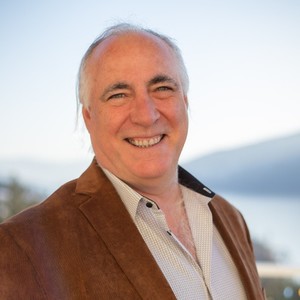
Chairman at Generation Mining
Co-founded several successful mining companies over 35 years including Wheaton River, Thompson Creek and Glencairn Gold. Former editor of The Northern Miner Magazine.
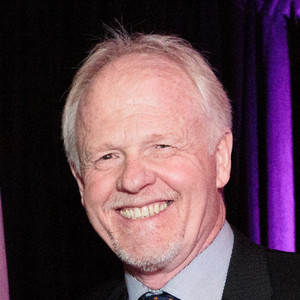
Vice-President, Exploration at Unknown
Exploration Geologist with 40 years experience in Canada and abroad. Former Exploration Manager BHP Minerals Eastern Canada and General Manager of VM Canada. President of PDAC 2014-2016.
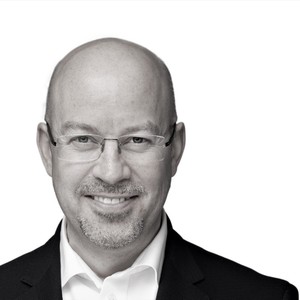
COO at Generation Mining
A Mining Engineer who was a key player in the construction and operation of Detour Lake, which sold for $5 billion last year. Previous to that he held senior positions at Barrick Gold and Placer Dome.