
Jamie Levy
President, CEO & Director at Generation Mining
25 years in the financing and management of Canadian mining companies. Was CEO of Pine Point Mining which was acquired by Osisko Metals. Formerly Vice President of Pinetree Capital.
Replay available
Join us for a great event!

On 6ix: 6ix.com/event/building-the-marathon-palladium-copper-mine-the-path-forward
Automated transcript · Written by software from the replay's audio. It can mishear names and figures; the replay is the record.
0:08 Hello, everyone, and welcome to Generation Mining's live investment summit today hosted by 6. I'm pleased to introduce our speakers for today. We have Executive Chairman Carrie Noll, President, CEO, and Director Jamie Levy, and Chief Operating Officer Drew Anwell. Our speakers will walk us through a company presentation, and then we will be accepting questions live. So as a reminder, you can submit your questions at any time on the right-hand side of your screen. And as always, the summit is being recorded and will be available to watch afterwards on
0:39 SIX.com. So without any further ado, I'll hand it over to you, Kerry, to get things started. All right. Well, thank you, Dasha. And I just want to welcome everybody. I know some of you have seen a number of our presentations before and I know some of you are probably new to the presentation. So we're going to have a little bit of the old stuff in there and a little bit of new stuff and lots of opportunity to ask questions. So I'll just start off with kind of an overview of our project itself, the Marathon Project in Northwestern Ontario. It's mainly a palladium project, but we have significant amounts of copper and platinum as well and a bit of gold and silver. So having 5 metals gives you an immense amount of flexibility when you're financing a mine because there's a lot of different things you can fix, some prices on some of the minor metals, you can stream them, you can sell some royalties.
1:37 And we are examining all of the above in our next steps to finance this mine. Oops. So the long and short of it is it's got a, the feasibility study that we published in March showed a 13 year mine life producing about 245,000 ounces of palladium equivalent a year. And I'll show you a little bit later what the breakdown of that is.
2:06 The 13-year mine life is based on 1 deposit. There are 3 deposits on the property. The other 2 were not advanced enough to include in the feasibility study, but they will likely be mined, assuming metal prices hold over the years, they will likely be mined at the end of the mine life, subject to, of course, permitting, etc. But we're pretty confident that this mine life is going to last a lot longer. And there's also an immense amount of exploration potential on this property and we're doing some exploration right now and we'll show you a little bit of that a little later on in the presentation as well. So our job now is you read the news about Savannia, Savannia is our partner. They elected not to build this mine at this time.
2:52 And therefore we are now in control going forward and we'll be the ones to build the mine. And our next job of course is to get the permits and that's gonna be followed, that'll be after we complete our environmental assessment. And that's ongoing right now. And it's one of the main focuses of the company. The other thing we've got to do of course is to arrange the financing. And we're gonna be making several announcements on those issues over the next coming months. We will be engaging a company to assist us with that financing. And we're in discussions with a lot of different groups over that right now.
3:39 And there'll be news coming out on that. So other things that we wanna do this year are the detailed engineering and a few other things that I'll get into in a moment. So the feasibility study showed a base case internal rate of return of 30% and that was using a very, I think, conservative palladium price and copper price, certainly significantly below what they are today. And that 30% is in the top quartile of mining projects in terms of IRR. There's a lot of mines get built with IRRs in the 25, 20% range, even as low as 15 and 14%. So we've got very good use of capital here on this one. And it's also got a net present value of, on a 100% basis of just over 1 billion dollars. And if you look at the spot prices when we came out with our feasibility study in March, and these are still lower than today's metal prices, the IRR jumps up to 47% and the net present value doubles to $2 billion.
4:45 And one of the really significant things we've got going for us at this mine is the payback period. The base case is just over 2 years and the spot payback price or timeline is a year and a half so 18 months which is in a greenfields project, that's amongst the very lowest you'll ever see. There are a couple of lower ones I've encountered over my 30 years, but not very many. So what's gonna happen to us in the next year? Well, we've got a lot of work cut out for us, mostly Drew will be got most of the work. So the first thing is to begin hiring the technical team.
5:34 We've got to we've been holding off on that. Not that we don't have a good team. We have a good team right now, but we've got to expand that. And we've been holding off on that, waiting for this Banye decision. And then the next thing to do is to, as I mentioned, arrange the construction financing. And we're looking at all the different options. And we've got a number of offers already on the table. We've got banking offers. These are all non non committal, but but they're a good start. We've got streaming offers, royalties.
6:06 There's possible partners who want to come in on this project. And of course, we're hoping to finance about at least two thirds of the CAPEX here in debt. So that's one of our big jobs going forward this summer and fall. And then the next one is to do the detailed engineering on the project and we're close to awarding a contract. We sent out a proposal, we got proposals from 5 of the big engineering companies on that. And we're just fine tuning that and we'll be making an announcement on that. And that's a big number. That's somewhere between 15 and 20 million dollars. And that's, but the reason we wanna do that is we wanna have 75% of the engineering done before we start construction of the mine. Some mines do it a little, you know, less than that, but that increases your risk.
7:02 And then another thing we wanna do later on this fall is start ordering some of the long lead time items, mining fleet, you don't just go into a store and buy these things, you have to order them well ahead of time. So we'll be putting a few dollars down on those. And then the, I think I mentioned, we're gonna be pushing on the environmental assessment and we're also ongoing negotiations with the local First Nations. You may recall that we do have an agreement with the largest and closest First Nation to the mine, Big Tegon, Nishnawbeg. And we are in discussions with some of the other groups as well. And we're pretty confident that we're gonna have agreements in place with all of these in the coming months if
7:49 possible. So yeah, 3 of us are here on the slide, Jamie, myself and Drew. Jamie and I have been working together for about 8 years. We had a company called Pine Point Mining, which was sold to Osisko Metals. And previous to that, I was been involved in the mining business for several decades, started a number of successful mining companies that made it to the New York Stock Exchange from going from a startup into production. And subsequently all of them got taken over at one point or another. Drew Anwell, a mining engineer, joined us just about a year and a half ago. He quarterbacked the feasibility study for us and he used to be the senior guy at Detour Gold. You may recall Detour Gold got sold for about $5 billion
8:39 at the start of last year. And Drew was there for 8 years at various management roles there. And previous to that, he was at Barrick and previous to that Placer Dome before Barrick bought them. And Brian Jennings is a chartered accountant and he has been involved in restructuring of some of the largest restructurings in Canadian history. When he was a vice president at Ernst & Young, he knows how to deal with banks, he knows how to deal with contracts, et cetera. So he's a real
9:12 benefit to this team. And I won't get into all the people, but we do have a lot of solid people on our team. So location is always key for mining. In my career, I've always stayed in safe jurisdictions and Ontario having a conservative government is probably one of the top jurisdictions now in the world. There's several mines being built, the Kote mine up near Kirken Lake, the Magino mine in the bottom right of this slide, the Hard Rock mine to the north of us, those are all ongoing and they're actually gonna provide a big advantage to us because they're all a bit ahead of us and there's gonna be a lot of engineers and various trades and all the different people that you need in order to build a mine will be coming available from these other mines in Ontario as the construction is completed.
10:05 And that's a real big benefit for us because if we were somewhere up in the Arctic or somewhere halfway around the world, it might be hard to assemble a team in a hot commodities market to build a mine, but I think we're gonna be okay here, having 3 mines, and 3 large mines coming in ahead of us. Getting into the local infrastructure, the blue area on this map is our property. As you can see, we've got the Trans-Canada Highway coming through, we've got an airport right on the property, Town of Marathon just south of here, the CPR main rail line. And we've got this power line, which is being upgraded as we speak by the Ontario government. And it's gonna allow us to get all of our power needs off the grid, which is unlike say, for example, Hard Rock to the north of us, Hard Rock is gonna have to be using generators for their electricity, They don't have access to the power. So it's a big advantage we have. And it's also having all this infrastructure here, compared to an isolated project, say, such as is in the Ring of Fire.
11:14 We're able to save hundreds of millions of dollars in infrastructure, highways, power lines, accommodations, all of the stuff is right here and it's already there. Marathon is already a mining town. It's the main supplier for the Hemlo mine just up the road. So the ownership, I think most of you probably read the release last week that Sabanier, our partner has elected not to build this mine. And that's not a surprise to us. We've always thought it was kind of expensive for them. They also don't operate in Canada. They haven't been in the mine construction mode before. They've only grown by acquisition.
11:57 But the main thing is they kind of announced in the last 0.5 a year say that they want to focus more on gold and that's fine. Gold's hot. Gold always has a premium. So I get it. But that was one of the reasons that they gave us for doing this. But that said, they did say that they love the project and they did say that it was a difficult decision for them. Sabanier is now in the process of getting diluted. It's not a carried interest. They're 18.3% is not carried. They are getting diluted and they will continue to get diluted down. We will be initiating discussions with them regarding it. We've had some very preliminary discussion and we wanna see and get that Cleaned up at some point, but we'll we'll see how that plays out if it doesn't get cleaned up Well, they're going to get buried it down And just another point on this project and it's really unusual that a project that has been around this many years and has had several different owners. Doesn't have a royalty on it, but the main zone is essentially royalty free and that gives us a lot of flexibility in terms of the financing of this mine.
13:12 So I'm going to turn this now over to Drew, he's going to talk about the Feasibility Study, then he's going to talk about ESG, and that'll be followed by Jamie talking about some of the numbers around our company. Drew? Alright, thanks, Kerry. So yeah, the Feasibility Study has been out since the beginning of March. We've got some pretty impressive numbers as Kerry has flagged. Let me just walk through some of these things at a fairly high level. For the life of mine, it's a 13-year mine life. We mine 118Mt of ore and at a strip ratio of 2.8, it comes out to be about 110,000t a day from an open pit mining point of view and about 25,000t a day from the plant itself.
14:02 So a fair-sized operation and certainly a digestible size compared to some of the other ones I've done in the past, most recently. From a valuation point of view, most of the value comes from the Palladium at the metal prices we assumed in the Feasibility Study with 1725 per palladium USD per ounce and Copper at $3.20 is a little over 25%. Platinum in the future is close to 10% and Gold and Silver are really targets that we can use for monetizing and some other means, but less than 5%. Sorry, I just need a little bit quicker going here. Yeah, so From an NPV point of view, at the assumed long-term metal prices, a little over US$1B.
14:54 When we did the feasibility study, we checked the spot prices, and you can see down in the fine print there, but the valuation at the spot prices, which are similar to where we are right now, the value was a little over $2 billion, an IRR of a pretty impressive 46% and a payback in terms of just over a year, so 1.5 years, so almost months ahead. So again, pretty impressive and where we are, this is certainly an asset whose time I believe has come. So what we did with the production profile and how we got that good payback was really we targeted some of the palladium production.
15:39 We really wanted to de-risk the production profile by bringing the palladium production as far forward as we can. And I'll show a couple of slides subsequent to this. But in the first 3 years after commercial production, we generate almost 1 billion dollars in free cash flow. So obviously, that's where the value comes in. And when we put in Again, the spot prices we used, which at the feasibility was the end of February, certainly that payback is faster and you can see how robust the cash flow looks on an annual basis. So pretty exceptional. Now, like I said, when we looked at the production profile, what we're looking at here, this is the Palladium
16:24 production and you can see it's certainly front-end loaded. We did that by targeting specific pits. We've got 3 pits that we mine on the property. But really what this does is this brings and really de-risks the long-term valuation based on Palladium. Now, Jamie will talk about that subsequently in the presentation. We think it's going to stay up for a long term. But that being said, it makes sense, obviously, to bring it as far forward as you can. So that's what we've done. And in terms of the Copper production profile, it's really a function of where we're mining. And This is a pretty exceptional polymetallic deposit where, based on metal prices, we can change what's driving the value and we can even change the sequencing to some extent.
17:15 Again, the valuation was done with good mind design and de-risking the production profile. So again, when you look at the other minerals we have, Platinum and Gold and Silver, so certainly note where the values that Kerry had flagged, that may be a target where we can potentially have a non-debt refinancing through a stream or maybe even a royalty. So when we look at this on the, so this is the sensitivity and it flexes on both metal prices. So, when you put it in the context of a gold asset, there's very few gold companies that would put a feasibility study that has a metal price $1,000 less than what the current price is. So it's pretty good here. You can see that current prices today, I haven't checked that today, but certainly above $2,500 for Palladium
18:13 and Copper is bouncing around the high end of this sensitivity. So while in the feasibility study, Copper is a byproduct, in the current prices it's got a lot of torque to Copper, so it's almost a co-product, as Jamie likes to communicate. So Again, plenty of value and the copper and palladium in the long-term future are almost counter-cyclical when
18:41 the greening of the economy progresses. We're certainly going to see copper going up in price. So pretty good leverage here. Any passing commentary on that one, Jamie?
18:53 Just to follow up on the copper, the co-product, As you can see here, copper at $4.50, keeping palladium at $17.50. You can see the movement in IR by 5% from $30 to $35, and you can see the NPV increase by 30% to just over $1.3 billion. So we really like the leverage part of the the copper. You know when we went marketing to a bunch of individuals or institutions they like the ability that we have copper as a co-product versus gold. So there's a lot of interest in copper nowadays. Thanks,
19:32 Ben. So from an ESG point of view, now we have the opportunity that we are producing What Ontario and Canada have both flagged as critical minerals. So that's the PGMs and the Copper.
19:54 Copper is certainly the veins and the arteries of the greening of the economy. That's what drives the electrification of the future. PGMs, we'll talk about those in a second, but we have the opportunity from an ESG and an environmental point of view to do things right, right from the very beginning. You know, We're not a green, we are a green,
20:19 a green fields operation. So, you know, what we've done right now is the historical work that's been done. We've monitored the baselines. We've kept those baselines up to date. In the designs, we've included the impact of water. We understand what that is. We've included state-of-the-art water treatment. We're evaluating an electric fleet, so via the trolley assist, via trade-off study between electric loader shovels versus diesel. So in the big picture we can balance the decarbonization, the ESG benefits against the financial benefits and frankly speaking we can choose to optimize on both of those and we have the flexibility to be able to do that.
21:12 So in, Excuse me, I got cut off there for a second.
21:22 Next slide. When we talk about the power source from the main platinum or PGM producing countries of the world. Ontario is largely on nuclear so we the power is almost
21:40 the bulk of it is is carbon-free so pretty exceptional and certainly comparing that to Russia and South Africa we're certainly sitting in a good area.
21:51 In terms of the First Nations and the social, we're dealing pretty closely with all of the Indigenous groups we have on the property. Biktigaw and Anishinaabe, which are proximal to the property, we're directly on their land. It's a great bunch of folks we're dealing with. They've got an excellent balance of environmental stewardship, environment concern, and also balancing business development. So we've got a pretty good relationship with them. We've got strong support from the town of Marathon. And frankly, it's a it's a great area to be developing a mine that we've got the support from from Thunder Bay to to Wawa. So again, on the social side, we have the ability to do things right. We're communicating, we're going through the EA process. So a lot of things going in the right direction there.
22:44 Again, In terms of, I'll skip over this slide again, there are some funds that are going into the local and provincial and federal areas. When we get into production, construction is close to 1,000 people operating and when the mine gets settled down and we're in steady state it's a little over 400 full-time jobs. So not an inconsequential operation at all.
23:11 Governance, again I've been on the management side, this is a pretty exceptional board as independent there's there's a good balance we've got all of the aspects of governance covered they are in largely independent 5 of 8 of the board members yeah so it's a great board they kicked me in the the rear end when I need to slow down or get in the right direction. So it's from a governance point of view, no issues there.
23:45 Maybe Kerry, do you wanna talk about the board members themselves or? Yeah, sure. Yeah, one of the things that when we put together this board over the last couple of years is we wanted to get a wide variety of skill sets And these people by and large are all very top in their field. So we've got Steve Reifert, who's a geophysicist, a world-class firm. He's the president of, Jen Wagner is a lawyer, senior vice president at Kirkland Lake Gold. Phil Walford is a reserve geologist by trade. He was the awarded the Bill Dennis Award for the discovery of the Valentine Project and not incidentally he was formerly president of Marathon PGM which owned this project prior to selling it to Stillwater in 2010. So he's very familiar with this project. Cashel Meager is an engineer, chief operating officer of HUD Bay.
24:41 And he has the mine experience of building the Constancia mine in South America. Paul Murphy is an accountant and he was a chief financial officer of a mining company that built the mine. So he again has that construction experience. And he was also previous to that head of the mining group for in the Western hemisphere for PricewaterhouseCoopers. So one of the top mining accountants really in the world. So we really got a really great bunch of people here on our board and they are an active board. We have committees that we comment on everything that we're doing. We run things by the board constantly and get subsequently get really, really good advice from. So Jamie.
25:29 And Just to follow up, the ESG sustainability principles has always been at the forefront of Generation Mining's management and directors.
25:39 For more information, I think on the website, there are certain tabs on there about our ESG principles and some of our policies. If you wanted to follow up on that, you could, or you could always reach out to any of the 3 of us so we can go through any of that. Anyways, just going on to the next slide here, I'm going back into the metals. As you can see here, just basically a revenue model of what it would be like between an internal combustion car to an electric car to a hybrid car. So a lot of people are worried about the price of palladium or the price of copper because we have both and we have some platinum as well. We think it's a win in any sort of scenario that we have. Obviously the best scenario would probably be the hybrid car for us, so the plug-in hybrid, but it's a win-win in any scenario for us in the next generation of car vehicles.
26:27 We've probably talked about palladium enough, so I don't need to go into it too much, but I'm sure there'll be some questions on the prices of Palladium in the near future. We don't have a crystal ball, but from all the supply demand that we have seen, the demand, the loadings are increasing in China, in Europe. They haven't even started in South America, which is a big demand for Palladium. There is no supply coming out. Norelsk is supposed to be doing expansion in a couple of years. And other than that, I don't know of any other major developments other than maybe Platte Reefs, Freedlands down in South Africa could be in production in the next couple of years. But again, that's not a lot of that's about 200,000 ounces of platinum a year. So we see no supply coming out. We see generation mining doing 250,000 ounces of platinum equivalent or it's not going to move the market at all. But it is gonna be needed because there's certainly a demand increase coming very soon. And even in the US right now with President Biden increasing the emission standards from the rest of the states to agree with the California emissions, that there's gonna be an increase down in the US as well.
27:37 And just going back to the slide here, we removed a slide on copper, but as you can see here, there's been deficits for palladium for many years. I think you're gonna see that in the copper as well. And when you start seeing the deficits in copper, you'll start seeing the same price move that Palladium has had over the past couple of years. So again, we're just not a Palladium company. We're actually a copper company with a PGM credit. It just happens to be the other way around now because palladium prices are where they're at right now. Just a slide here that we inserted just to show you how large of a deposit this would be. We converted it into gold equivalent and we'd be number 7 here in Canada. For the existing deposits that are out there right now. It's about 245,000 ounces of palladium equivalent a year, or just under 300,000 ounces of gold equivalent. So it's a fairly substantial size mine.
28:27 Just a slide that we like to talk about, and I was hoping we'd get re-rated after Sibania because now we own 80% of it or 82% of it and our ownership will probably go up from that point. But as you can see here, we're trading on the far right here, which is never a good thing, but we're trading at less than, I believe, 0.2 of our NPV. The Comm Group is trading just under 1x NAV. So we have some re-rating we believe after this Vannie decision last week. Just getting to some exploration, we just put out a press release, Hopefully it's hit the wires now. We did halt our drilling temporarily just due to the fire restrictions in Ontario. Hopefully it's only going to be a couple of weeks, but that's up for the government to decide.
29:13 But as you can see here, there's a very nice high-grade boulder that was found back in 17 and a couple others were found later on. Very nice grade as you can see here, almost 200 grams of palladium, just over 9% copper and there's some nickel in there as well. So we're trying to find the source of that. The previous operator, Stillwater, obviously this is their rock, but they did very little exploration. Savanee did very little as well. So over the past 10 years since Stilwater has acquired this project, there's been no drill, or very little drilling. So our exploration team and carry myself and the rest of the team management team is very excited that we have the opportunity to try to find some more higher grade. Resources that is the property. As Kerry was on the slide there. The infrastructure slide. It's over 220 square kilometers and a lot of this area hasn't even been prospecting before. So this summer we're doing some prospecting and John McBride, Rod Thomas and our exploration site is very excited to actually get some boots on the ground to kick over some areas that have never been walked on before.
30:16 Again this is just the model where we're hopeful that we're going to find this higher grade. We're drilling a little bit west of the deposits or we've finished drilling west of the deposit. Now we're drilling north of the deposit. So we're hopeful that we'll find one of these feeder zones with some high grade ore in there. Just again, just another slide. It's a little image here. We're drilling in the central feeder zone and we're drilling now in that channel with zone. I think we're 3 holes complete before we stop drilling. So we still think we have about another 5 to 7 more holes to drill up in the channel with Zone. And that has been drilled back in 2005 and they were getting some pretty nice widths of copper and palladium in there. Can I just add to that, Jamie? The drilling that was done in 2006 returned just over 100 meters of almost a gram of palladium, half a percent copper with some significant platinum and gold as well. That's over in the Chornolith zone and if you go to the next slide there Jamie, This is what the core we just pulled out of the ground last week looks like.
31:22 Pretty nice looking stuff, massive sulfides in there and lots of mineralization. We're pretty excited about this. That hole that was drilled in 2006 was not followed up at the time in any great detail because it was considered a little too deep to be an open pit. But now with the much higher metal prices that could all change here. And when you got a 100 meter intercept of half a percent copper and a gram of palladium, it's something that really was begging to be followed up on and now we're following it up and we haven't got any assays back yet, but it's pretty exciting looking rock. And going back to the exploration, a lot of the focus by Stillwater and Sabani was only for palladium. They had no interest in copper, so it's an interesting angle for us to look at some of the copper potential that was obviously overlooked by the previous operators.
32:19 Our timeline here, going back to, I'm sure there'll be some questions on our EA and our permitting. Hopefully I can answer some of them here. The EA, We submitted our final baseline test in the fall of 2020. We submitted the first chapters to the denim, the I s, which was submitted by Stillwater back in early 2000 and 10 or 12. We submitted the final chapters in March of 2021, which began the clock for EIS. The government had mandated a time of 271 days. The public review period has just finished. I think we're down to about 220 days, give or take. So we're hopeful that we'll get our E in our hand on this timeline here. It's about the 2nd or 3rd quarter of 2022.
33:05 Within that we're going to begin detailed engineering as Kerry had mentioned and I think Drew had followed up. That should begin imminently. We're starting to look for, as we now know that Sabani is going to help us out with the project financing. Mind financing, we're out there actively looking with a few different, numerous different people who's looking to help us. So we think we'll have that done by the time we get the EA in the hand, which is the second quarter, third quarter of 2022. So we're hopeful of construction in the third quarter of 2023, sorry, construction in 2022 and production about 18 months later. So the end of 2023, beginning of 2024. Judy, do you have anything to add on on the EA? The only thing I was gonna add on, while we're working on the EA, we're gonna start to begin some of the provincial permits.
33:54 They can't grant them to us until we get our EA, but we're hopeful as soon as we receive our EA that the provincial government will move ahead with the permits to start the construction. Drew, anything to add on that? Yeah, no, I think you got the timelines at a high level there, so it's an aggressive timeline, but we've got a lot of support all the way through the government, elected officials, and the bureaucrats are working to progress it as best they can. The government, the provincial and federal governments last month indicating the list of critical minerals and we checked a lot of boxes on that side there as well. We're hopeful that the government, or at least the politicians are supportive of this project. Just our probably final slide here, our corporate structure, Eric Sprott's our lead shareholder.
34:44 Lucas Landin has been a shareholder since the beginning. He's second, I guess our third largest shareholder is ourselves, I guess the guys here, Kerry, Drew, myself and our board of management. So we're helpful, we're supportive of this. There was no free stock, we're buying in the market. I think I just filed some today that I bought some more yesterday after a blackout was over. Savanee Stillwater still owns 7% from when we acquired the project from them. That was their conversion of the cash component. And Asisco Mining has been friendly. They've been participating in most of our finances here. Financings. And I think that's it for us. I'm not gonna go into the appendix. We'll go into the question period. Perfect, so we're gonna jump right into the live Q&A. So if you do have a question, please submit them now. But we have lots of questions here.
35:36 Pete is asking, what is the earliest date you might be able to start clearing land and road building? Drew, do you want to answer that? Yeah, yeah. So the timeframe for that, like Jamie flagged, was we expect to have the earliest opportunity to have the EA and permits in hand is end of Q2 2022, probably a little more realistically into Q3 2022. So promptly after that and again as Jamie flagged we are doing the permits in parallel with the EA so when we expect the EA gets approved we should be promptly getting the critical permits in our hand as well. So in terms of clearing the ground, yeah, that's realistically Q3 2022 is what we're shooting for.
36:30 Great, thank you. Stuart is asking, what's the plan on the rest to monetize the rhodium contained within the deposit? So I think most people who follow us closely realize that in our feasibility study, there was no rhodium contained in the reserves and there's no rhodium contained in our financial projections. The rhodium that does exist shows up in the concentrate as about somewhere between 1 and 2 grams depending on the year of mining. And we have gone to the smelters that we're talking to regarding that and saying, can we get paid for some of this? And the initial reaction was no, you can't, but We have heard from 1 firm that is possibly looking at letting us monetize a part of that. So we have proposals from a number of different smelters and we need to evaluate those. So we were waiting for the Savannia decision to get into the detail of that. But we haven't gone back to any of them with a counter proposal yet. We will be doing that. And we will be trying to get some payment for some of the rhodium. Not all of the smelters actually recover the rhodium. So that will make a difference in our final decision.
37:50 And Sergeant Dash, before you go on, and we recently sent out some upgraded samples that we had a concentrate grade that we got from our bench scale test to the smelter. So we might have some news to report if the smelters do Reduce some of the pay abilities or maybe even pay for some of the the rhodium in the near future So those that had gone out drew a couple weeks ago Yeah, they're just receiving them now so all through the mail. So depending on which smelter that we send it to, they should be in their hands properly. Great, thank you. Harry is wondering what Sabanier's further involvement is in the project since they own a significant stake, even though they didn't take up their option?
38:39 I can try to answer that. The communication we had with them is they're happy to maintain this, their ownership that they have right now. If they get diluted down, they get diluted down, but they're not doing anything with the shares. They are not running away from this project. They just were not in this situation to want to build a mine in Canada, as Kerry had mentioned earlier on. So that was their decision. So they're not exiting. They're looking for us to give them some guidance and they're gonna give us some guidance, but we have a very good joint venture relationship and that joint venture relationship is continuing. So they've been very good partners to us. It just wasn't a project, as Kerry mentioned, that was gonna move for them. They were looking for something larger and they're looking more in the gold space.
39:25 And there's a question here I see related to that is how much money has to be just spent to dilute Sabanier out? They were able to, when we did the deal initially, they were able to use their acquisition cost of still water to buy this mine back in 2010 for $118 million. So the dilution denominator, so to speak, is quite high, but we're looking at, I think the number is around $46 million. We'll put them under 10%. And then it goes out. At that point, we're assuming we're going to begin construction, and it would go down very, very quickly after that. Okay, thank you. Our next question is what is your view on mine financing including royalty and stream? So we've said from the beginning we think that we can do close to two thirds of this in debt, the capex for this mine, and that would include leasing some some of the equipment.
40:21 The remainder would be a combination of some sort of possibly a partner. I would put that as a lower likelihood. We're looking at streaming some of the minor metals, the gold, the silver, possibly a little bit of the platinum, possibly a little bit of the copper out of this. We're in discussions, preliminary discussions with 6 of the royalty companies and streaming companies out there, all of the big ones that you people are aware of. So we're going to be running that process and we think that we can get a very, very large portion of our CapEx out of that. If you've looked at some of the deals that have been done recently and look at the amount of gold and silver, for example, that we have, look at the capstone deal that Wheaton Precious did recently, you can see what kind of numbers we would be looking to get from streaming. So it'll be a combination of all of those, not necessarily a partner, but certainly a combination of streaming debt and at the, you know, some amount of equity. We're trying our best to keep that though as low as we possibly can.
41:37 Okay, thank you. Regarding streaming, Adam is asking which metal would you stream in priority from the one you'd be happiest to stream to the least? Carol, I'll answer that. I think we do what's best for the shareholders and we look to get the best value. So whatever's closest to our closest to nav would be the most accretive to our shareholders. So we'll look at all viable options and then decide on what looks like the best for us and the future demand or supply of the actual metals going ahead but- as carried mentioned a lot of these- streaming companies are royalty companies are giving. You know deals you know what 0.8 0.7 or almost. Closer to now. And again we're so trading a lesson 0.2 over now so it would certainly be a creative to our shareholders to not.
42:22 Do an equity financing today if we could get something at that more accretive dilution for shareholders. Thank you. There's a few questions here regarding the ESG aspect of the project. Matt is asking, is the smelting and processing going to be fueled with renewables? And could Worldwide Generation Mining consider selling these green metals at a premium? So we haven't decided yet on who will be our smelting partner on this, and it might be more than one of them. But we've made no secret of the fact that we have had discussions with Glencore, who operates in Quebec, which is almost entirely renewable power. And we have had discussions with the German smelter, again, a lot of renewable energy in Germany, but, and that will be a factor in our final decision because we want to be able to show that we're the greenest of the palladium producers in the world, but we have not chosen the final smelting company yet.
43:26 Jack is asking, what's your outlook on the palladium price during the operating life of the mine? Well, we don't have, as Jamie mentioned earlier, we don't have a crystal ball. However, we think that certainly for the next 10 years or so, it seems to be a lot of countries have decided that electric cars, either in 2030 or 2035, are gonna become a lot more required. And of course, they don't use palladium. However, in the meantime, leading up to that, We expect, first of all, countries are increasing, not decreasing the amount of palladium loadings per car, and that's happening continually in China, in India, and we expect it to happen in some of the other countries as well over the next several years. Another thing that's happening is hybrids becoming more and more popular.
44:17 Hybrids require more palladium than a regular internal combustion engine. As a result, we expect the palladium consumption to go up on that front as well. So we think we've kind of targeted 10 years. So that would be the first 6 years or so of the mine life would be we expect it to be strong palladium and and if I just go back here, Drew was very smart when he started designing with our engineers the the mine plan here and he designed the mine to get two thirds of the palladium out by 2030. So at that point it'll probably we expect if electric cars do indeed take over we expect a very strong copper price and therefore the second half of the mine life is a little more dominant.
45:09 We've tried to design the mine around our anticipated consumption for that reason. Sorry, Dash, before you go to the next question, we had a webinar with this consultant of ours, Matt Watson, before. And I highly recommend the listeners to this webinar to go. It's called Precious Metal Commodity Management. He puts out a very good newsletter. He's been on here. He's quite bullish on the Palladium Outlook for the next, I believe it was the 10 to 15 years on here. We used to have a chart in our presentation, we removed it because it was getting a little bit thicker presentation here, but Matt seemed to be quite bullish on a lot of the battery metals that are out there. Great, thank you. Richard's asking, how much more cash would you like to have in the next 12 months?
46:00 Do you want me to answer that, Jamie? Sure, go ahead. Yeah, so as we mentioned, we have 3 main things going on. We have the permitting, we have the detailed engineering, and we have the procurement of long lead time items, the down payments on that. If you add those all up it's probably going to be around $40 million and we have 12 in the bank currently and so we need to make up that balance at some point over the next year, that's money that we're gonna be spending pre-production. So where's that gonna come? Are we gonna be doing a big equity financing? The answer to that is no, not in the near term. We are definitely looking at different forms of financing. Some of the royalty companies, streaming companies that we're speaking with have offered us an initial down payment to cover our cash needs through to production as part of a stream. So we're gonna be looking really hard at that.
47:06 Fortunately, having $12 million in the bank right now gives us some time to examine all the different proposals. And that's what we hope to do going forward. There may be a small equity financing at some point in the fourth quarter or the first quarter or something next year, but right now we're looking at trying to do a non-dilutive financing right through to the start of construction. Great, yeah, regarding financing, Walter is wondering if you do use selling shares as part of the financing, will you give the shareholders a chance to participate? Depends on what kind of financing we'd be participating in. If it's a private placement they'd have to be accredited investors.
47:51 Again, we haven't even thought about that because that's not what we're looking for to do in equity financing right now. But if there's an equity financing and they're an accredited investor, we would certainly welcome that if there's some available. Okay, great. Thank you. Scott is asking, has any companies been knocking at your door regarding about a possible buyout now that Sabine has backed out? I don't think we can answer that question. So, thank you, next question. But just for those of you that didn't see, BHP bought out Noron today, which is a pretty interesting deal. I think it was the first time in 10 years the largest mining company in the world is coming to Canada or bought something in the public market. So as Kerry was mentioning earlier about the infrastructure in Canada, it is quite phenomenal and it's a good sign that BHP, again the largest mining company in the world, is buying something, I don't want to call it a ring of fire, infrastructurally challenged but it is compared to what we have.
49:00 Great, thank you. Someone is asking if you can repeat the website that you mentioned earlier about the webinar that you recommended watching. That would be on our website, genmining.com, but if not, reach out to Matt Watson and he is at, do you remember the name of it? I had it here somewhere. It's on our website or they can email me after and I'll get them in contact with Matt. Perfect. Well, that is all the questions that we have for today. Thank you so much, Jamie, Drew, and Carrie for taking us through the presentation and the live Q&A. Thank you everyone for joining and submitting great questions. If you do have others after this, feel free to email the contact on this page here. There's also more information on genmining.com.
49:53 I'll make sure that all your questions get answered, but I'll pass it back to you, Jamie and Carrie, for the final word. Just want to thank everyone for coming out today. We had a very good turnout, probably our best yet. So glad to see the interest in it. Glad that we're going to continue to deliver for shareholders in the coming couple of years and get this mine into production. So it's going to be a great ride.
Follow Generation Mining Limited into a list and get an email when it puts out news.
President, CEO & Director at Generation Mining
25 years in the financing and management of Canadian mining companies. Was CEO of Pine Point Mining which was acquired by Osisko Metals. Formerly Vice President of Pinetree Capital.
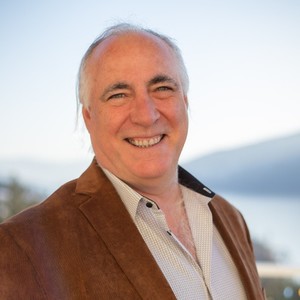
Chairman at Generation Mining
Co-founded several successful mining companies over 35 years including Wheaton River, Thompson Creek and Glencairn Gold. Former editor of The Northern Miner Magazine.
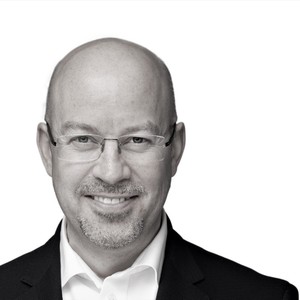
COO at Generation Mining
A Mining Engineer who was a key player in the construction and operation of Detour Lake, which sold for $5 billion last year. Previous to that he held senior positions at Barrick Gold and Placer Dome.