Transcript
Automated transcript · Written by software from the replay's audio. It can mishear names and figures; the replay is the record.
0:03 Good morning, good afternoon, good evening, depending on where in the world you're logging in from. You can see a bit of an international audience today, so I really appreciate everybody's time. I've got with me today David Stein, CEO of Kuya Silver for a presentation and Q&A on recent news. David, how are you today? I'm great, thanks. Romeo, thanks for having me again. Yeah, no, here's how today's going to work just for the folks in the room. So first, I'm going to throw it to David for a presentation on recent news, give a bit of extra context and color. But this is an interactive event, so there's a chat button on the bottom right of your screen. Please do feel free to ask questions at any point during today's event. I'll try to get to all of them, but if we run out of time or there's questions that just aren't quite on topic, I'm still going to give them to the CUIA team so they'll be able to get back to you. Your question will come along with either your email or phone number, whatever you entered on registration, and they'll get back to you as soon as possible.
0:49 The other thing I'll say is this event is being recorded and will be available for replay in the mid-afternoon Eastern time. It'll pop in on the same link, but also on Six's YouTube channel. But that is enough out of me. David, I'll throw it to you to get into the protein of today's event. Okay, thanks again. I'm gonna try and keep the presentation part fairly quick and really focus on the news of the past few weeks, in particular, you know, the acceleration of, you know, our production plans
1:26 and drilling at Bethania. So, Let's get going. This presentation will be updated on our website shortly. So please, and this, you can look at this important notices anytime, even on the last version, it would be the same. So just to remind you, in case there's anyone new on the call, we have 3 projects, but the flagship and what we're gonna be focusing on is Bethania. It's one of the very few producing silver mines in the world, silver being 75 to 80% of the value of the revenue that we get from that mine. And so we're very, very lucky and rare to have a primary silver mine and give investors exposure to the silver price, unlike most other companies, even some who have silver in their name.
2:32 So that's our flagship. We're ramping it up. We've got huge, huge growth potential and plans over the next several years. And we'll talk about that. We do have a commanding land position in the historic Cobalt Ontario mining camp where there was a lot of silver and cobalt, but definitely a lot of silver produced in the 20th century there. I won't talk too much about that today unless we have questions about it, But that is a fantastic second asset for us. And then we've got a JV on a silver project in Saudi Arabia that we are the joint venture partner on. Okay, so look, before I get into the technical stuff, I think it's really important to take a step back and just look at what we now have, especially the story is even better now for Kuya since the last financing that we did, since the additional operational work and investment that we're able to make in Bethania.
3:42 We really have, frankly, everything you would want in a junior silver company, in a small silver company right now. We've got the right commodity with silver. I looked again at how many of our peers actually produce, really produce silver. And there's still only about 10 in the entire world. You know, some have been taken over. I extended, I expanded the list down to guys who produce 40% silver. I'm going to call them silver miners for today anyway. And even if you expand them down to 40 percent of your revenue from silver, there's still only 10 in the world. OK, that includes First Majestic and Fresnillo, like big guys. And then, you know, a bunch of smaller ones. So, you know, very, very scarce when, you know, when the general market, general investors do start to wake up to the, you know, the silver bull market that we're getting into.
4:42 They're going to be rushing into these companies, I would say preferentially over the Explorcos, which are frankly really difficult to value. Growth strategy, the 100-100 plan, we are going to talk about that. And obviously, now we're able to ramp up production faster and easier, I would say, really important. It's as much of a risk off thing as it is on the timing. And then, you know, the ability now to actually explore the veins of depth and add to our resource that as we're starting to mine it. The right risk profile, we're fully permitted, we're already in production. I mean, honestly, the biggest risk you have in our business is time. The time value of money, the decaying value of assets, of costs that are inflating all the time that no one thinks about.
5:42 You know, that's why so many development companies end up being big disappointments. We are past that. We're already in production. So great time to buy us now fully permitted in a mining friendly jurisdiction. And now we can actually say hand to heart, we have a strong balance sheet because of the recent financing. Capital structure. This is really interesting, I think. We have no immediate need for additional financing. We are really under owned by traditional institutions and we're not held by any of the silver ETFs. And I'll tell you, that is actually a good thing for you if you're investing today because those all those investors will need to buy our stock as we continue to get bigger. And that's additional demand that's going to come in. And you're essentially going to front run that if you if you want our stock today. So that is really, really exciting.
6:33 And then the valuation, I'll show you in a bit. But, you know, we are still extremely cheap. And, you know, there's a lot of money getting thrown into these silver companies. So it's just a matter of time before we get some of that. All right. I spent a lot of time on that slide, so let me move on. What are silver companies worth? Well, you know, for the ones who actually can produce profitably, OK, They're trading at a range of about 10 to 35 times EBITDA. That's based on the first half of 2025. So that's pretty recent.
7:12 And this is our peer group in terms of silver companies. Obviously, we are not positive EBITDA yet, but we're getting there in the next few quarters, 2026. We should be there. We should start to earn some serious money for cash flow from this from this asset as we continue to ramp it up. And then we pick some numbers, $20 million, that would be sort of our target for the $350. Maybe we should make more than that because the silver price is higher. But at that range, we should be at least a $200 million. These are US dollar company. We should be at least a $200 million company at that point, if we were on the low end of the range. And then the 100-100 plan, you know, this is more of a 3-5 year plan. But, you know, you can see the range on 100 million of EBITDA is massive in terms of the potential market cap. You're into the billions at that point.
8:12 So we have the assets to get there. Now it's just a matter of time and delivering the operational results. So where we're located, all right, I'll talk about the 100-100 plan. Again, this might be review for some people who know the story really well, but we are currently in the phase 1 ramping up 350t per day. And we feel very good about getting to a kind of 20M a year in cash flow, Even if our costs are a little bit higher, well, the Silver price is actually much higher than we had assumed previously. So we feel really good about that. We're fully funded to get there.
8:58 And that's basically what's happening right now. We're sort of moving through that, looking to get to 100 tons per day by the end of this quarter as a milestone, and then it will be 150,200, and just continue to ramp up over the next year. Phase 1B would be essentially the same mining throughput but building our own plant. You know, that's something we haven't started yet but it would take about 12 months and cost about 20 million of CapEx. And while it's not essential to do right now. It's really important for our 100-100 plan because to really fully get the benefit of this really rich district-scale silver asset that we have, we need to produce a lot more than 350 tons per day. And in order to do that, we need our own plant that we can then expand on. So we're fully permitted to build that phase 1 plant.
9:57 So we would build that first, because we don't want to go back and start permitting all over again, but then we could expand onto it. It's always easier to amend a permit than it is to get it in the first place. And then secondly, you also make money while you're doing the permitting. So That would be the plan. We probably need to get between, depending on the average grade of the district, we probably need between 1,000 tons per day and 1,200 tons per day to get to the $100 million a year free cash flow, $5 million at $20 margin. Those are the rough numbers back of the napkin to get there. We definitely feel like we have that potential with the camp. And right now, our indicated plus inferred is $100 million equivalent, $10 million, a real silver.
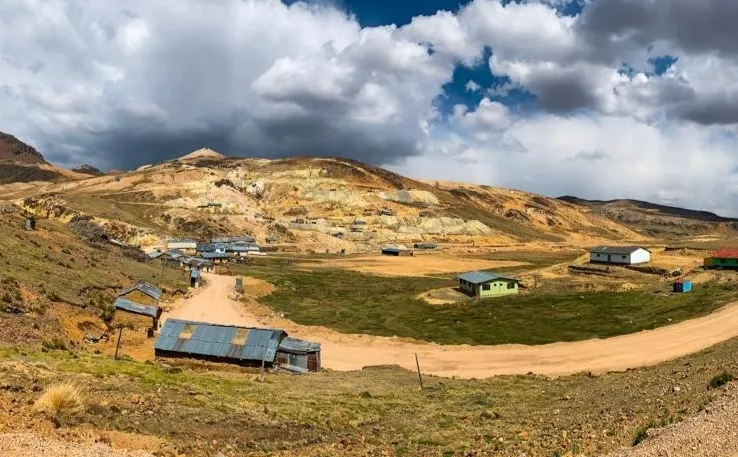
10:52 So we want to 10x that at a discovery cost of 20 cents per ounce. That will cost us about 20 million. We're starting that right now. You know, it'll take a few years, we're obviously not going to spend 20 million, you know, like in the next 12 months, but but, you know, we want to get we want we're gonna want to get started on that right away. And now we can, which is really, really exciting. Okay, so here's the district scale land package that we have. The Fanyu Mine is a little tiny thing by the underneath this star here. Tiny relative to the large package. I mean, we've got a lot of silver there under that star. But, you know, I want to show you the scale of the whole property because we've continued to add on to it as well, which is really exciting. We're kind of really controlling this district.
11:48 I had this in our July presentation, but I kept it there just to remind you that we are doing a really good job with the Stoke development. We have the access in place now to produce 100 tons per day. We just need to basically connect everything together, you know, hire all the right, you know, miners and, you know, basically finish the infrastructure. And that's all happening right now and then in the next few weeks. So we are there. This, by the way, is only one of the veins. So if now below your screen there would be the Dosida Mayo and Victoria veins, the crosscut, the CX 880 there which you can see that's actually heading south towards those veins. So we're developing there and it's going through another one of our minor veins there but that is also ore, so ore mineralized material I should say.
12:39 So that is and then and then you know continue to go south and hit those other veins where there's a lot more silver. Now looking at this from the side and the plan view, one of the things that we're now able to do because of the financing is we're going to invest somewhere between a million and a million and a half on additional mine infrastructure that we had planned to do later. But now we can do it right away. And, you know, maybe it won't materially
13:13 change Our timing in terms of getting to 03:50 times per day it might it might make a few months different but more importantly it's gonna be risking the bottle neck so we're gonna get there easier faster safer with much more mining are modern mining. I'm. Abilities essentially and more importantly it also sets us up to go even bigger so now we can well theoretically or based on our P. We don't don't need this ramp to get to 03:50 tons per day but we. Do we do want we do want it we're gonna use it and it's gonna make it a lot easier cuz we can just move much more material in and out of the mine more quickly.
13:59 But then if we want to go to 500 or 750 or some bigger number down the road, now the infrastructure is already there, the main things, and we just need to get more working places. So that is a really exciting development, again, made possible by the financing.
14:18 Now, the other thing we're going to do is we're going to be looking at the extension of the veins of Bethania and basically doing the first diamond holes that we've done in 4 years at Bethania at the project. So that's extremely exciting. Before I get there, just again, big picture. This is kind of zooming in on the central part where most of our known targets are. And we discovered a few more a couple months ago, which we had a press release on the Miacocha area, the new Carmelitas Estes area, and then extensions to Tito and the other Carmelitas prospects. These are all old historical mines that at various scales are artisanal.
15:09 Some of them have like, you know, several different openings, different veins. Some of them were just open pits at surface mining out of vein that was exposed. But the big theme here is that there's a lot of veins that outcrop.
15:26 We seem to be in an area where the upper part of the hydrothermal system where you get these mineralized veins, silver, plus or minus other metals, seems to be right at surface or right at the top of it where it's exposed.
15:40 And there's lots of other areas to go to. We are right now in October, November, December, going to be focusing in on the Bethania mine though. So looking at the Bethania as a cross section, it's got these 3 main mineralized structures, these vein systems we call them. So it's a centralized vein with some splays and branches off of it in all 3 cases.
16:10 And all 3 of them have, you know, are part of our resource estimate, our current resource estimate, and all 3 of them are open at depth. So that is what we are going to be drilling. This is our current resource. I mentioned the numbers earlier.
16:27 And now we're able to drill this part at depth here, and that's what we are starting right away. So, we figure that when you add the mined-out material in here, because there's quite a bit of mining that happened over the past 40-45 years before Kuya restarted the mine, that it's at least 5, 6 million ounces. So you're looking at a geological endowment in this red triangle of probably more like 20 million ounces at least. And that is open at depth and open along strike. At depth, you know, so if this is roughly average is 200 meters in terms of a slab, if we can do another slab of 200 meters, we should get another 20 million ounces, all else being equal. You know, the veins extend, grade is the same. That's what we would, you know, that's what we would expect. We have to drill it obviously and prove that out. And we're actually now able to start that process
17:27 by drilling offensive holes kind of at the bottom of the resource model shell pit right now, and that it's gonna be the first step.
17:38 So here's actually just showing you where some of the drills are planned. There's too many of these figures to show you them all. So I just picked a few that just demonstrate what our plans are. So you can kind of see a fence here, you know, well below the lowest mining level of 640. You're looking at the 590 level there, where we're going to try and pierce that level of the mine. This is looking at the Espanola vein, which is where we're actually mining right now.
18:08 And so you set up the drill pads on the other side, in this case on Dos de Mayo, and you drill forward, and then you can do the same thing on Espanola set up a drill pad and drill south to hit Dos Inimaios and Victoria which kind of
18:24 which kind of runs in between although we haven't drilled the strike extent of Victoria yet. So that is the plan You can see now in the 3D model, you know, how these holes will go. I think we said in our press release between 30 and 35 holes are planned. And obviously we can, you know, modify that depending on the results. And then, ideally, we'll just keep going. Once that initial program is done, we'll just keep drilling and drill deeper, keep drilling along strike as we develop more access to the east.
19:06 So just to wrap up on the exploration, here's now the property. This is looking outside, looking down on the top of the hill, the Bethania mine area here, where some of our best surface samples have been. We also have this zone on the other side we call the hilltop zone.
19:27 So that is something that we will drill, not in this current phase, but that will come pretty quick, pretty soon after. And we obviously are very excited about this area because it's not only is it similar in size and scale to Bethania, but it's also had no, there's been a little bit of mining, but you're talking about very, very small amounts of artisanal mining on the hilltop zone
19:54 versus the millions of ounces that have been mined out of Bethania, out of the main zone. So basically the whole mountain, if I go back here, the whole thing should be there pretty much above us as well. So that's potentially additional additional material mineralized material over and above what we would find a Bethania where we have to go deeper.
20:18 Miacocha area as well, that was one of our highlighted new zones from 2025. We picked up this property a few years ago, and finally got around to exploring it. And we found a vein system that is running east-west here, very similar to Bethania, kind of a swarm of veins, structurally controlled, with some spectacular high grade at surface here. So other than Bethania, this is probably the best surface samples we've ever seen. But we've also had some great results at Tito. We've had some 2,400 grams here on this kind of splay off of the main Tito vein. Lots of 1,000-grammers as well in these orange ones. And then similar on Carmelides.
21:06 Carmelides main has actually had the most mining done on it of any of our targets. There's I think 4 different adits into the side of this hill, kind of going into access different veins here. So although the surface samples are not as good as some of our other ones, mining wise, it looks pretty interesting. It looks like it was perhaps the most prolific mining area. For some reason, they were finding something there. So we're quite interested to get there and start exploring and drilling at depth.
21:39 So that is really it. Those are the 2 things that we're going to be sort of adding to our budget that were not really possible before the last financing are going to be the underground development. Highlight the star of the show, there's the ramp, although there'll be other jobs being done as well.
21:59 The drill program, drilling the extension of the veins at depth as sort of just a first phase to start the exploration ball rolling finally after 4 years. The ball is rolling and then, you know, in the next few months, we should be getting enough mine cash flow that we can continue to fund these various projects, especially the exploration just for mine cash flow without eating any further into our into our cash position on the balance sheet. So that would be the that would be the plan and continue to have a strong cash position going into 2026 and beyond.
22:35 That really de-risks the company and I think should, you know, after we maybe digest some some selling around the life offering right now, that really should, you know, jettison us into a new kind of valuation range, which is, I think, much higher than where the stock is trading today.
22:53 So I won't go into Silver Kings today, but happy to answer questions on it if anyone has any. Here's our updated capital structure. Some great new investors in here as well from the last financing. And still a relatively small market cap. And that's it. So maybe I'll hand it back to Romeo. Awesome, so David I got a couple questions for him and then there's quite a few questions in the chat and one that came in over email so if you don't mind I'll just grill you for a few minutes before we wrap today. Okay.
23:34 Awesome. First question that I have, how long has Quia funded for given these current plans?
23:38 And what's the total cash position look like heading into that phase 1b plant construction?
23:46 So, you know, I think, you know, the idea would be to keep, you know, 5 million on the balance sheet after we do these various, you know, these special projects that we're initiating right now. Right now
24:04 and then build that back up towards 10, which is roughly where we are right now with mine cash flow. So always have at least 5 to 10 million, I would say. To run the mine status quo, to ramp up to 350, we don't need any further funding.
24:24 What we will look at down the road at some point is the mill construction. We would estimate that at probably 18 to 20 million CapEx. But the cool thing is now that we actually have a significant cash position,
24:47 we can get a lot better terms if we decide to get a project loan. So, so that is something that we will look very closely at in the coming months and see if we can get good terms on a, on a project loan. That way we don't have to wait until, you know, let's say the end of 2026 when we might have enough cash to just fund it through, you know, 100% with our own cash.
25:11 That would be nice, but you know, time is money as well, right? So it would cost us another, at least another year. So we want to get that started sooner if we can, if the terms are right. And so that might be something that we'll look at in, let's say, early 26. It'll take about 12 months to build it, 11, 12 months.
25:33 And we should have a smooth transition from toll milling to using our own mill. Great. I appreciate that. One thing that always strikes me is most of the exploration has kind of been done at surface, only 200 meters of depth explored on a 0.3% total of your land package. So just curious if you could share for the folks in the room, what kind of exploration upside is left here for investors? Well, I think the best map to look at just to think about the whole level of exploration upside is this one. I added a little red oval here. If you put that red oval over Bethania, you would get – and remember I talked about the stuff that's already been mined out as well in the upper levels. You're looking at a geological endowment there, just with these 3-vein systems.
26:29 It's about 200-300m north to south by 500 meters east to west. And that would give you 20 million ounces just to 200 meters of depth, right? So if you go to 400, double it 500, you're like roughly 50 million, right? Assuming everything continues. So now we're going from, you know, we're moving away from resource estimate into geological arm waving. But, you know, whether you believe us or not, it's really important for us because we have to plan where we're going to drill and where the
27:05 right places to drill and get the biggest bang for our buck. With a $0.20 per ounce discovery cost, obviously we've been pretty good at it so far. That's really, really low. We intend to make the best use of our drilling budget going forward. So look, I think we could have 50Moz here, although with 5Moz mined out, and then another 50Moz on the other side, potentially. It's essentially the same size and scale as the current mining area. And then we could have a few more of those. Miacocha is about the same. North to south, you're looking at 500m of vein swarms here. Same with Carmelitis and Carmelitis Norte. If you put them back to back, they would be about 1.1 kilometers of strike length.
27:57 Carmelitis Este would be even more. And then Tito, again, it's kind of like a single big vein on the side of a ridge with some of these minor mineralized structures as well. And that one is now 2 kilometers at least from sort of top to bottom where we've had samples. Obviously, there's a bit in the middle where the vein doesn't outcrop. But yeah, that's looking like a huge zone as well that, again, you could easily fit another Bethania in there, right? So, every sort of quote unquote Bethania, if that's 20 to 50 million ounces, and we could have, you know, 12345 more of them right on the property very easily. So you're looking at well over 100 million ounces at that point, 100,150 plus, right? Oh, yeah, great. Thank you.
28:57 One other thing I wanted to ask is beyond everything we went over in today's presentation. What additional opportunities or strategic initiatives does that recent financing allow Kuya to do? Look, I think the main one is it gives us equity to get that financing for the mill. I think that would be the main thing. I mean, we're not looking at doing anything other, you know, too out of the box right now. We're still very, very focused on Bethania. Great. One question. So the 100-100 plan targets obviously that 100 million ounces, 100 million per cash flow. What does production need to be to achieve that cash flow target? Does the current infrastructure at Bethania, is it scalable to those levels?
29:51 I'm going the wrong way. Yeah, good question. So, all right. So here's kind of how the numbers work out. Like if you have 5 million ounces at $20 margin, you know, you get 100 million a year free cash flow. We would need our plant to be, if we kept the same grade, it would be 1,000 tons. But realistically, as you get bigger, you start mining lower grade, maybe it's 1200t per day. So it's going to be in that range 1000 to 1200t per day. Can we do that with our current scale? The answer is yes. I think that with the investments that we're making in the mine right now, we can get just, if Bethania ends up being the core mining area, which it very well could be, and Keep in mind that we can probably use or not probably we can use the infrastructure We're putting in right now will also help us to mine the hilltop zone All in 1 area, you know if and when we have resources there on the other side of the hill sure. So so, you know Bethania alone could be most of that thousand tons per day or 1200 tons per day, you know, whether it's 500, whether it's 07:50 remains to be seen.
31:14 And then what you would do is you then look at producing, let's say, 100,200,300 from some of the other satellite zones. And so the combination of having your core mine at Bethania with 1 or 2 other mines in production would get you to the 1200 tons per day or the 1000 tons per day. And so, you know, we so we have the resources there. We've got the scalability without significant underground investment. The main thing will be the plant, obviously. So if it costs us $20 million to build the phase 1 plant, it probably costs us, we said $50 million in exploration plus capex here.
32:00 That's obviously a very rough estimate, but that's ballpark what it would be. Now, if we're making $20 million a year while we're doing it, we don't have to finance that, right? So from shares or anything. So that's obviously what we'd like to do in the next few years. But yes, it's all not only possible, but the path is laid out for us, we just now have to deliver. Great. I had a lot of questions in the chat. I'll mostly go in order, but I'll start with 1 that just came in because it's on what you were just talking about. Jake asks, do satellite zones require separate permits? Yes. Yes, they do. So it's something we're actually starting on right now because We want to build a pipeline here of first exploration and then eventually production. So we are starting permitting there.
33:01 I would expect the next at least 6 months, maybe longer, we'll be exclusively focused on Bethania where we don't need any further permitting. Because we've still got a lot of work to do there to really properly explore and see the scope of that, the scale and scope of that mine and the potential under the whole kind of Santa Elena concession from, which is 1 and a half kilometers from east to west. We've only drilled about a third of it. So I could see us spending quite a bit of time there and then adding on the satellite zones as we get the permits in. Right. That makes sense. There's one question on macro that I'll save to the end just so we can keep on the specifics for now. Graham asks, who are potential buyers for Kuya and looking for an update on the Saudi project?
33:54 Well, you know, I think as we get closer to kind of proving that Bethania does have this 100-100 plan potential, I don't think we have to necessarily get all the way there ourselves, but that would put Bethania into the scale of one of the bigger and better silver mines in the entire world. And Obviously, with 75% to 80% of our revenue from silver, it makes it even more valuable because there's a lot of bigger guys out there who obviously like silver, But when you start acquiring mines, typically your silver weighting actually goes down because you're buying a gold mine with some silver byproducts or there's some 50-50 gold silver mines out there.
34:47 You commonly find that in Mexico, for example. So this would be a way that not only do you get just like a great asset, but also you can bump up your silver weighting. And you know, if people are bullish on silver, If a bigger company is bullish on silver, there's not a lot of ways to actually bump up your silver weighting materially than to buy something like this. So I honestly think it should be on everybody's radar screen, frankly. Great. Alex from the chat. Oh, he asked about Saudi. Oh, that's true. Sorry. Yeah, please go for it. So we are drilling a first drill program, which I think I've mentioned on other calls before.
35:34 So we planned a 5,000-meter, we call it a scout program because, you know, we're going after, or we're putting a few holes here, a few holes there on a whole bunch of targets that we generated, some from the historical work that's been done, some of the targets, and also some from the geophysics and satellite work that we did. So we are in the process, I would say on the tail end of that. And, and so, you know, we probably needed another 1 to 2 months before we get the assays back from the lab enough assays that it would make for a make for an announcement, assuming there's something, you know, good there. I think there will be, but we do not at this point have any assays, not 1 assay back.
36:24 So just you'll have to leave that with us, but there should be news on it, certainly before the end of the year. Great, thank you. Alex from the chat asked, how much in terms of by-product credits will CUYA get from Zinc Lead And are those metals sold locally? So as I said, we 75 to 80% is silver, you know, depends on metal prices and exact grades, etc. But it's been in that range. So that other, let's say, 20%, we've been getting a little bit of gold, not much. So it's mostly lead-zinc, okay? And it is not sold locally. Essentially, it's part of the same group of concentrates that we sell.
37:12 And ultimately, we we sell it to Trafigura in Peru. I mean, if they want to have it processed in Peru, that's up to them. They pay us for it there and it's then not our problem where it goes. But I believe it's mostly shipped overseas. Great. I appreciate that. DA from the chat says market value right now doesn't even represent the value of Silver Kings. Do you think a listing on the venture would help get more liquidity and a higher valuation? Honestly no. I don't. I think that's a lateral move. I think, you know, you look at the volume of our stock has been trading very, very well on the CSE.
38:01 We also trade on the OTC, QB in the US and we get lots and lots of, you know, we get some pretty nice trading there now, you know, hundreds of thousands of shares per day. So I don't think where we're listed really matters that much. I mean, there's tons of orphan companies on the venture exchange, tons. So I think what we need to do is just get bigger. When you get bigger, you force people to look at you and then that undervaluation, you essentially force people to recognize it and it goes away. My experience, I start off the first decade to 15 years of my life basically analyzing gold and silver mining stocks all day long. So, that's, you know, there's a lot of kind of price, you know, I guess strange things that can happen to the price and value of assets when you get, when you're sort of below 100 million, like when you're in the microcap range. But as you get bigger, you know, then more funds by you, ETFs by you, you know, that discount starts to go away.
39:12 And and, you know, I think we I think we will trade it a premium ultimately, because, again, we've got a silvery asset where most of our peers are more closer to like 50-50 and you know and we've got great, great growth. It's not just going to happen like over the next 6 months but we've got you know year after year after year of growth potential here between the exploration and the production expansion potential of Bethania plus the other assets you mentioned. So I'm not that worried about it right now. Like obviously, I'm still the biggest shareholder. I would love to see the shares way higher than they are right now. But I also, you know, stepping back and looking at the whole sector, I'm pretty confident that we'll get there. Next 2 questions, I think we've already tackled. I was wanting people in the chat to take a look at. Peter Epstein does some napkin math. It gets to a pro forma share price of $2.40.
40:09 Worth reading. But then he does ask, David, can you comment briefly on the prospects for Cobalt? How modest a contributor is Cobalt to the project? Well, I feel like we don't get any value for it right now. And and and so, you know, that's it 0. But we, we, Kuya Management, we do strongly, strongly believe that there's a, you know, that is a valuable asset. Maybe it's not as valuable as Bethania, but it is valuable. The fact that you can potentially produce silver in Canada with, you know, and also with the byproduct cobalt, which is a very sought after strategic metal as well in Canada, in Ontario, where, you know, the government wants to see mines, where they're very pro-permitting.
41:08 I think it's a very, very interesting asset. So we are internally working on a business plan for it so that we can get value for it. And, you know, I would just say stay tuned. We are, you know, we're not dropping the ball on it. We are very busy behind the scenes working on that project, and we're very excited about it. Still think that there's more upside in terms of the share price right now to deliver growth at Bethania. You know, I think, you know, we can get to, you know, your 240 target or even higher with just Bethania alone, but we are not forgetting about Silver Kings and we do wanna get the value from that as well.
41:54 Great. Jake from the chat asks if you could speak to silver grade versus tons per day. He notes that it seems like low tons per day can be offset by grade? Yeah, I mean, we definitely last few quarters, especially last quarter, got some nice higher grades. And you are right that let's say we make it to, you know, we're banging the drum about 350, but we just, you know, next few quarters, we get to 300 tons per day. But, you know, so we're kind of we're a little bit shy, but if the grades, you know, 10% higher, then we've more than made up for it in terms of the number of silver ounces we're producing.
42:42 And, you know, actually the fixed cost would be slightly lower. So maybe our all ASIC is a little slightly lower. So grade is really important if we can, you know, if we if we are able to get higher grade, then, then it does offset things and it helps lower your costs. With that being said, as you ramp up, you tend to be now taking more of an average of the mine, of whatever's there. And so I would expect that we'll get kind of close, although it will vary from year to year, I think we'll get closer to sort of the expected resource grade or reserve grade. Great. Time for a couple more questions here. Sean asks, is spinning out Silver King an option for the sake of raising flow-through capital?
43:33 Look, I don't think you spin it out just to raise flow through. I think that it might be a way to realize more value for Kuya shareholders. Just to do some rough math on that, if we, you know, if we spun it out and it was worth $30 million Canadian, that would be almost exactly 20 cents per share on your Kuya share price, which is only 40 some cents. So that's obviously a lot. I mean, even 10 cents would be better than what we're getting right now.
44:22 So I mean, it's definitely possible. But it's got to make sense as well for other reasons. We're not going to do it just to create another orphaned vehicle. We want to do it in such a way, if we do it, that it really creates long-term value for Kuya shareholders. And if not, we're happy to just keep the status quo and just start producing silver there. That's obviously the ultimate, that's the best way to get value. Great. I got time for 2 kind of macro questions here. 1 that came in right at the beginning. They're curious if the drive for this current silver bull is all industrial or do you think it's moving as a classic precious metal as well? My feeling is that it's both and maybe even as we get higher prices here more towards the precious metal story.
45:17 You know, I mean, definitely the the industrial argument for for silver is very bullish. But at the end of the day, I think what that does is it raises the floor in terms of what your lower limit of silver is, but it doesn't, it doesn't sort of, it doesn't speak to the upside of the silver price. That really comes from, you know, the realization that silver is a monetary metal. You know, it protects you against currency devaluation and inflation, much like gold. But you know, but it's it's a much smaller market. So it tends to get very undervalued in bear markets and then very overvalued in bull markets relative to gold. So we're still pretty undervalued, I would say, at 90 to 1 or whatever it is ratio.
46:14 But That's why I think as silver goes to 50 and then maybe 80 to 100 in the next few years, depending on what happens to gold, you would be more driven by the precious metals story, Which again, over the last 40 plus years, since gold went kind of free trading from the gold standard, they've really followed each other quite closely. When you look over years and decades. Certainly there can be months where 1 outperforms the other, but broadly speaking, they really move together. Great. I got a last question on the same vein. Jarrod Blume asks, if the price of silver goes up much higher, are there any thoughts at Kuya of speeding up the timeline?
47:07 I think, I think, you know, that is, That is a good question. I think we already have a pretty speedy timeline. I guess what that could do for us is it could maybe get the plant built faster. Because, you know, again, you know, financing just becomes a lot easier. I'm talking about debt, project financing, etc. Becomes easier, the better that commodity is doing. So maybe it gets the plant build faster, the expansion build faster. So, so, you know, it, yeah, it might, it might take our 5 year plan and shave it down to 4 or 3, but it's not going to really make a difference in like the next few months, I guess that's, that would be the best way to look at it. The next few months were flat out anyway. And honestly, the silver price, it's great. We're obviously making way more than we expected at $40, $41 than we than we thought a few months ago.
48:13 But but it's you know, if it goes to 50 or 60, it's not going to really, it's not gonna really affect the timeline. It's just, you know, we're just going to make more money. Great. One last question I'll throw to you just as we close today. What are you most excited about for the rest of this year? I felt really excited to get, you know, to see the drilling of the veins, the Bethania veins. That's what I'm most excited about. I've, you know, we had to make really gut-wrenching decisions in the last 4 years to focus on the mine with very little capital. And so to have the flexibility now to be able to do the exploration and the mining at the same time.
49:06 We've never been in such a strong position. So that's really what I'm most excited about. I think it's very, very strong possibility that these veins go deeper. I mean, we can see it underground. So being able to kind of prove it with the drill bit and then have us get credit for it in the market is an exciting idea. Awesome. Well, David, thank you so much for running through this presentation and for bearing with us for a bunch of questions and everybody in the chat. Thanks so much for joining us today. Replay available in just a couple hours. So if you have any additional questions, please do shoot them in. I'll make sure the Kuya team gets them as soon as possible. But David, thanks so much. Hope you have a great afternoon. Thanks everyone. Thanks for listening.