Transcript
Automated transcript · Written by software from the replay's audio. It can mishear names and figures; the replay is the record.
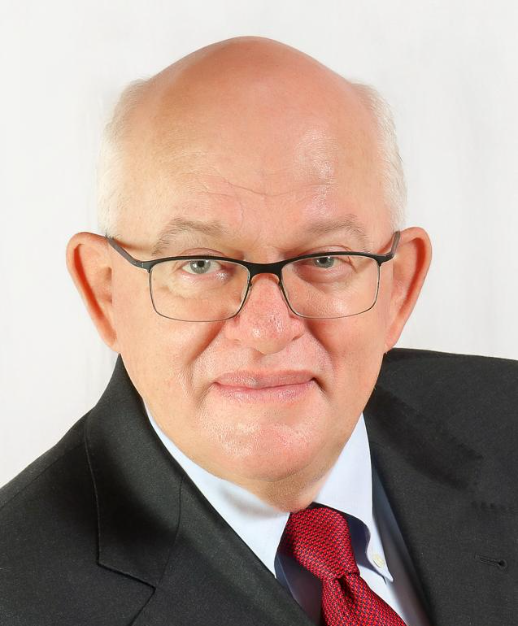
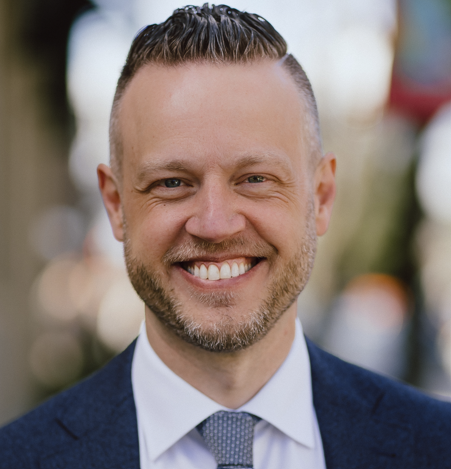
0:07 Hello everyone and thank you for joining us today to learn more about Asante Gold's recent finance and package announcement. We're joined by David Weems, CFO, and Dave Anthony, President and CEO of Asante Gold. You're also joined alongside Robert Dixon, who will be moderating the Q&A later today. He's the Global Head of Institutional Coverage at Jet Capital Advisors. Please note that this event is being recorded and will be available for replay shortly afterwards. If you have any questions, please feel free to submit them in the chat, which can be found in the bottom right corner of your screen. With that said, gentlemen, the floor is yours. Robert, I'll pass it over to you to kick things off. So as mentioned, the purpose of the call today is to add clarity for investors around the $525 million funding package that Asante has put together.
0:53 And there's a lot of components to it. To be honest, it's still a little bit confusing even for people who follow the company as closely as I do and a lot of us do on this call. So the purpose of the call really is to really get clarity on that. And I think if I had to summarize, the biggest takeaway is this is a big moment for the company. It's really the unlocking of Asante, if you look forward the next 3 years or 4 years really, and you think about that in the Gold price environment that we are in right now, this really is a launching pad for them to really capture that upside that we're all seeing for gold producers. Really until this moment, you know, when you think about gold producers that we're all looking at, the ones that have not had some of the issues that Asante's had to work through have really taken off.
1:43 And I think, you know, Asante's been sort of in a holding pattern until this moment, until people can get some clarity around this. So really the purpose of the call is to provide that clarity. And it is worth pointing out as well that this is a significant Ghanaian champion. It's a huge investment from the Ghanaian people, not just the sovereign wealth funds, but individual investors as well.
2:07 And when you think about it in terms of the global footprint for mining complexes, Bibiani Toronto, which I visited in May of this year and others have as well, is a really globally significant mining complex. It's gonna generate a ton of cash flow in the next several years. So without further ado, I will introduce David and Dave. I'm gonna do Q&A, I'll wait till the end. And if you just on the bottom right hand side of your screen there, if you click on the chat function, you can input a question and I'll try to get to as many as I can at the tail end of this conversation. And obviously I'll have a few questions of my own to sprinkle in as well. So without further ado, David Weems, take it away. And Dave Anthony, the floor is yours.
2:56 So thanks, Rob. And for everybody that's taken the time to study the company, taking the time to attend this presentation, thank you for that. I think a lot of people who have followed our story have seen this slide, but it's important to take a look at some of the detail. First and foremost, we have 2 operating mines. The 2 process plants are within 15km of each other. Total processing capacity is between 7.5 and we're moving toward 8Mt per year. The 2 mines control 53km of the Southway Belt, which includes Toronto shear and Bibbiani shear. In the last 100 years, these 2 shear zones have produced over 8 million ounces.
3:45 In the next 10 years, we'll be producing over 5 million ounces. But that's really just the start of the story. This land package, if you take a look at it from a geological standpoint, how the structures were formed, If you take a look at it from a gold production standpoint, in terms of how the gold was deposited, there's 2 other places in the world that look like this. One of them is called the Carlin Trend, and I think we all know that that's Newmont and Barrick, and the other one is Calgorlie-Cambalda in Australia. So we're in pretty heady company relative to what we should become. Okay, we continue to produce, we continue to operate, but more importantly we continue to explore. When we took on Bibiani we had a mine life of about 3 years.
4:34 Okay, it's now out past 10 years and toward 15. When we took on Toronto we had a mine life of about 3 years. Okay, it's now out past 10 years and toward 15. When we took on Chirano, we had a mine life of about 3 years. It's now past 8 years. Actually, it's a little bit over 10 years when we plug in a reserve resource. Okay, so we're going to be making Gold here for a long time. Viviani next year will start going underground and that will be having a production profile of
4:59 70s. Okay, Toronto, we have a small investment to do to get higher grade ore from underground, but again, we'll be out producing at Toronto out past 2035. So, we're very positive about what we've achieved up to this point, but even more positive about what we expect to achieve in the future. Let's go to the next slide, please. So David has been working with his team on putting a financing package together to take this company to the next level. Principally, we've got a lot of work to do at Bibiani so that we can achieve its potential and David will be going through that in some detail. But maybe I'll just hand it over to Dave now and he can talk about how many pieces have been put in place and are ready to pull the trigger?
5:50 Thanks, Dave. And for those who haven't met, David Wein, CFO, joined the company in August of last year. And we've been spending most of this year, starting late last year, working on what you now see on the screen. So $525 million financing package, we announced that in the public domain last week. You see a summary of that on the screen, we'll run through it. You can see it's in 2 stages. First stage closing in December of this year, which is obviously only 4 weeks away. We'll be looking to close that by the end of the year. And then stage 2 will be early 2025. So let's start with stage 1. We announced a couple of months ago, a $100 million equity private placement that's in the process of closing the first tranche of that. And I should say, as those who saw that would be aware, we raised that at a premium to the share price of $1.50 and with no warrant coverage, which I think speaks to the investor demand on the equity side for the company. And we chose this moment to take the opportunity to raise equity alongside these other pieces. So that was announced a couple of months ago that is closing through December in 3 tranches with the second and third tranche to come.
6:58 Moving on from that to the Kinross refinancing. So back in 2022 when the company purchased the Toronto mine, Kinross essentially extended vendor financing to the company. Fast forward to today, and Kinross, who's been an incredibly supportive partner and shareholder, they're a current shareholder of the company and will be increasing their shareholding in Asante through this transaction, has been great to work with over the last year, I should say on a personal level. And you see the results of that in terms of this refinancing here. We owe Kinross approximately $165 million. Under the transaction that we've agreed with them, we will pay them a $65 million cash payment. The remaining $100 million or so will be partially converted into equity such that Kinross converts their equity stake, sorry, converts the portion of the remaining 100 million such that they've moved to 9.9% into equity. And the remaining portion, I will move into a convertible debenture which will pay a 3% interest rate and will have paid in kind of approximately 5, 5 and a half years and a 25% premium to the last equity issuance price.
8:10 Very pleased with that outcome. $75 million Ghanaian bond. We are in the process. And as we launch this presentation, you may be wondering who IC and Temple is at the bottom right. That was a typo. That is left over from a webinar that we just had with the Ghanaian Bond investors, which was hugely attended. There is massive interest in country on this. So those are our in-country advisors for those wondering. $75M Ghanaian bond, this will be a local currency denominated offering, which will be linked to the US dollar. Six-year tenor, amortization in the last year, and we will be going through the process of that over the next 5 to 6 weeks to close alongside the other pieces of the stage 1 financing. $50 million syndicated gold stream.
8:57 This is a stream which will close at the same time as the other pieces for 1.25% payable gold until a certain threshold is reached. We do have buyback options. The stream does step down and we think this is a creative and flexible piece of financing to fit in alongside the rest of the package, which makes for a very acceptable cost of capital overall. So in summation, 325 million, we will be looking to close in December of 2024. Stage 2, moving into early 2025, will be a senior debt facility. That is led by Rand Merchant Bank, RMB, who are anchoring that out of South Africa. RMB is probably the top resource bank in Africa. So we're very pleased that they have come alongside us and really, you know, investors should take comfort that they have really put us through the paces through 2024, which frankly, is probably why we're having this conversation, you know, in November of 2024, rather than August of 2024. There has been a massive amount of diligence done by RMB and other creditors that will be other lending parties that will take place that will contribute to that senior debt facility of $150 million.
10:14 That's envisaged to be bifurcated into a five-year term loan and a three-year $50 million RCF. We do have another standby equity commitment, and to be clear, the company has no intention of drawing on this. This was a requirement by the banks for the credit approval and just strictly to meet a debt to equity ratio as part of the overall cap structure, as part of the transaction. Our models show, including the ones that are being used by the banks, that this equity is not required. However, as additional comfort to both the banks, as well as obviously other creditors, we do have a standby equity commitment that could be drawn on if we don't meet certain thresholds in 2025 under the Senior Debt Facility.
11:07 Just a snapshot of the balance sheet, last public balance sheet on the left-hand column here, July 31st of 2024, and the pro forma impact that this transaction will have both in stage 1 and then incrementally in stage 2. So anybody who's taking a look at our balance sheet notices it is not a conservative balance sheet. It has a large, we have a large working capital deficit. We're the first to admit it. And that's why we're doing this. This transaction, this $525M package, not only recapitalized balance sheet, but achieves all of the growth objectives at both mines. You see the impact on stage 1 there, assets go up by about $100M, short-term liabilities go down by about $200M and shareholders' equity goes up by about $125M, which is roughly the amount of the private placement plus the Kinross conversion. So step change to the balance sheet, just out of stage 1, you will see the incremental positive impact of stage 2 on the right-hand side assets going up further, which is frankly just a cash balance buffer, as well as
12:22 the liabilities also increasing from the senior debt piece coming in and equity increasing as well. That is under the assumption, which again, we do not believe will happen, that the $50 million standby equity is drawn. So a couple of words from me on this slide before handing it over to Dave. So what you're seeing on the screen here is consistent. It's precisely consistent with what we released in May on first of 2024, which was updated technical reports for the Biviani and Toronto mines. This represents reserves only for the next 5-years at Biviani and Toronto. You can see the step change in production as we move from 2024 into 2025.
13:04 And this financing will enable that step change. Equally as important, if not more, is the green line, which is the consolidated all in sustaining cost position, which is just simply a weighted average of the ASIC, which was published in that news release. Encourage any investors who would like more detail behind this to refer back to that news release in which we publish year by year free cash flow, recoveries, production, cost position, etc. You can see the step change in the ASIC position from 2000, the 2000 per ounce level, down to the 1400 and then down. And that's really as we obviously it's partially a product of an increased denominator on the gold produced and sold. But it's also the impact of the upfront investments made in 2024 and 2025 taking, you know, reducing the amount of all sustaining capital in the measure as we move past 25 and 26.
13:56 Dave, anything to add on this slide? Yeah, so maybe, as David has mentioned, there's a lot of capital to be deployed in 2024 and 2025.
14:06 This is for the shipping program at Bibiani, I think it's about a 150 million dollars over the 2 years. It's for the sulfide treatment plant which will be operating next year, commissioning in April, operating in May and that sulfide treatment plant will increase recovery at Bibiani from 65% to 92%. That works out to around 7 or 8 million dollars per month. Okay, so some big improvements there. The stripping program gets us access to higher grade ore, obviously. We get our ore grade at Bibiani up past 1.9 to 2.4 grams per ton. We'll also be starting the underground mine program at Bibiani. We'll also be upgrading the fleet at Toronto so that we can do more underground mining and increasing the grade at Toronto.
14:59 But I think it's important to note, as David has mentioned, the all-in sustaining costs drop like a stone once we get the capital out of the way. And, you know, this year our break-even cost is in around 220,000
15:14 ounces. Next year, as we jump up to 450,000 ounces and toward 500,000 ounces, the break-even cost stays just about the same. So we start having some extreme profit from 2025 forward. And of course, once we get down to around $1,000 per ounce, all in sustaining costs, okay, we're in the bottom quartile of gold producers around the world. David? Yeah, and the final point I'd add on this, Dave, is, you know, this underpins how we would say investors should be thinking about Asante's valuation. Even take a conservative $1,000 an ounce margin between the price of gold sold and the ASIC, you can see at $1,400 let alone $975, the margin is much greater than that. Multiply 1000 by 500,000 ounces produced and you're looking at $500 million of free cash flow. Stick any multiple you want on that and you compare that to our enterprise value today, our market cap today and you can see significant upside potential in the share price.
16:19 And we'll be first to say Asante and those shareholders that are on the line will know this, Asante's recent performance has been below other gold producers. And the consistent reason for that, that we're told, which is true, is the overhang on the company from the financing package and the recapitalization of the balance sheet, which we're now achieving. So this is an opportunity for investors to sharpen their pencil, look at the projections, look at the execution and the lack of execution risk, we would say, from what are relatively straightforward, low technical risk projects and the free cash flow generation on prolific assets going forward and make up your own minds. With that in mind, over to you Dave.
17:05 So again, looking forward to 2027, we get past 500,000oz a year. This puts us in some pretty nice company in West Africa. If you take a look across West Africa, anything above 500,000oz a year is considered to be Tier 1. The only other companies that operate in this part of the world with that kind of a production profile are called Berwick or Newmont or B2 or Anglo. Okay, so it gets us into a pretty exclusive company and it also gets us into a very strong position to continue to grow from a regional standpoint. Our expectation in this company, our goal in this company is not just to stick with these 2 assets, okay? We see ourselves having opportunity to get to over a million ounces per year by 2030.
18:02 Thank you very much, Dave and Dave. Was there more to add there or should we move on to the Q&A section? I think we can move on to Q&A, Rob. Okay, actually, I will, it's sort of a funny question, but it's actually very relevant. You know, a typical first question for a webinar like this, when will the share price increase? Question mark. To which I would say, this is exactly, it's not an irrelevant question at all. It's actually why we're doing and why we're participating in a call like this. The fact of the matter is, Asante is extremely undervalued on all relevant metrics when you look at it versus its peer group. One of the big reasons for that, and I'm answering the question because I can speak from, you know, having spoken to so many in the world, you know, it needs the clarity that we're providing now. It needs this balance sheet overhang to be removed.
18:56 And part of the point of this call is to do that. You're all also, you're doing that in an environment which is a growing gold price environment and obviously increasing margins. So that's the answer to that. I love the answer to that. Our lawyers were kicking us pretty hard into the table there. So Yeah, well, that's just coming from the sell side, so I'll just leave it at that. But actually a relevant one, we just finished a call before this, kindly update us on the progress with the $75 million Ghana bond. That's a question, David. Yep, no, and as mentioned, and this was inadvertent that the logos remained in this version of the presentation, but we just got off a, Dave, I don't know how many, I think we were expecting maybe 35 people and we had 78 attendees to this call. So this has the intention of the entire pension fund universe in Ghana and high net worth individuals, commercial banks, etc. So this is a unique offering.
19:57 There's huge voracious demand. The one thing that was, I would say, missing, or at least was not available in as much detail as it is now for those investors was this overall financing package clarity. Because like any investor, you want to know if you're putting $75 million into a $525 million financing package, you want to know what that looks like. You want to know where's your security ranking?
20:24 What are the terms and conditions of the other pieces of the financing, et cetera? And getting all these pieces together, which we spent 2024 on, has brought us to this point where obviously the audience for the news release we put out last week in this presentation was primarily investors in the market, but it's also for the Ghanaian bond investors. So they now have clarity. So the process, now that that is out, will move very quickly. I won't get into the granular detail of it, but it has to do with approvals from the SEC, applicable pricing supplements, offers that get put into escrow, et cetera, et cetera. This will be part of, and we're sitting here in early November, of course, we're talking about closing this alongside the other pieces in mid-December and we have a solid plan to do that.
21:13 Thanks so much, David. The other one, the other question, are you able to disclose, this is a question, are you able to disclose the recent investor identity of the large $100 million equity piece?
21:32 So we had an approach made by a significant investor probably 2 months ago now and it's for a hundred million. It's obviously in 3 tranches. 1 tranche is recently closed. There's another tranche to close in about 2 or 3 weeks and then the final trench at late December.
21:52 They specifically came and said we don't want to, we want to remain confidential until we cannot be confidential. So at a hundred million dollars they get out past 10% ownership And at the point that 10% ownership gets crossed, which will happen on the last trench, that's when the investor will be identified. But up until that time, they've requested to remain confidential.
22:21 Okay. That makes sense. Another question, any plans to bring on more research coverage? And I'll leave that one to you guys. So David, do you want to touch on that one? Sure, yeah, absolutely. So the short answer is yes. And we've had analysts to cite, as the company matures, and one thing that's not covered actually in this presentation, which is very much on the agenda and it's also not in the news release, is our intention to uplist to the TSX Venture Exchange. We're currently on the CSE.
22:58 Similar to an issue that I had at a previous company, the TSX Venture, and for good reason, has rules around working capital, specifically the need to have positive working capital in order to uplist. So we've checked all the boxes with the TSX-V up until now, except for the working capital. This financing package solves that. So we would expect to be on the TSX-V early 2025.
23:25 That doesn't directly answer the question about research analyst coverage, but it ties in because the company, it's one of the markers of this company maturing and the financing package, the uplisting, and really this company just evolving into the production profile that we looked at on screen earlier is attracting a lot of interest on the institutional coverage side. And I would expect to see at least 1 name, if not 2, add to us in the first half of 2025. Okay. Thank you very much. Moving on, again, this is one of those, I'm not sure. Sorry, if you wanted to provide the name here, we've had a few questions just regarding the streaming facility.
24:11 Are you able to disclose who's providing that for you? We cannot disclose that at this time. However, that will be disclosed in the next few weeks. Okay, fair enough. Just in terms of the on a pro forma basis, I have a question. What do you anticipate the debt equity ratio, sort of ballpark looking at going forward, or do you have an ideal target is the question? Yeah, so that's an interesting question because there's different ways to look at it. I guess probably the answer that will give you a number to work with is 6535. And that was the mandated, and that's really the genesis as we touched on briefly earlier, the genesis of the $50 million standby equity commitment.
24:57 Not because the models show that we need more equity, but in order to meet a certain ratio, that was mandated and negotiated with RMB as the lead bank in the senior debt facility. So 65-35 is in terms of the contribution. Now our view is, you know, that's a pretty conservative way of looking at the cap structure in terms of the debt to equity because certainly at these gold prices with both minds making money and generating positive equity, these are producing assets that the generation of incremental shareholders equity should be factored into that ratio. So if you ask the question differently, well, I wouldn't have an exact number, but I could probably ballpark it. But if you ask me, well, what would the debt to equity on this be in 6 months or 12 months time, it'll be significantly weighted more towards the equity than on day 1.
25:50 But the day 1 cap structure funding structure is 6535. OK, actually, this is related. We've had a few questions just ask, could you just just share the balance sheet slide again, if you wouldn't mind, David, so that it's up there? And then another additional question, could you go over the, just very quickly, go over the Kinross refinancing again? A few people had trouble hearing you, if you just wouldn't mind us covering that. No problem, no problem. So this is as of July 31st, keep that in mind, approximately $160 million owed to Kinross, and that sits within a couple of balance sheet items. Most of it's within the item called deferred consideration sits within current liabilities.
26:36 So the 160 you can think of as about 165 bifurcated into a $65 million cash payment, we will make to Ken Ross, and approximately 100 million, which will turn into equity and debt. So as we move into stage 1, which includes the consummation of that Kinross refinancing, you see that the 160, which today is more like 165, go to 0. The components of that, 65 of it is paid off in cash, and that gets funded out of the other pieces of the stage 1, so namely the equity, the stream, and the bond. And the remaining $100 million goes into equity and the Kinross line in the long-term liabilities.
27:24 So you see the Kinross line of 69 million there. That implies that Approximately 25 to 30 million of the Kinross liability converts into equity, which is why you see the shareholders equity go up from 8 to 133, which is 100 from the private placement and approximately 25 from Kinross. So Kinross converts from all current liabilities to reducing by 65, and the remaining 100 is in this presentation, 25 equity, 75, and the reason it's not 75, the reason it's 69 is because the number was lower as of July 31, but 75 in long-term liabilities.
28:13 Thank you. Thank you very much. Just moving on, trying to get as many questions in as we can. Just on, I guess, the phrase it would be on downside protection, David, are you guys looking at a hedging program at all? What sort of considerations are you looking at potentially to protect the downside? How do I put it? Yeah. Yeah. So the short answer is, we are looking at a hedge program. And before, before the gasps in the audience, I think it's important to clarify that through that hedge program, we are looking to protect the downside on the gold price while not limiting the upside. So well, how do you do that? Well, you do that through purchase puts, essentially. There's an initial outlay. And I think in the bond webinar that we just had, This similar question just came up, Robin. You quite eloquently described it as insurance.
29:05 So when gold is at $27.50,
29:08 is it prudent at the right price, which right now it is very attractive over the short term, at the right price, is it prudent to take out some insurance on the downside
29:18 when you have the opportunity to do so at a very elevated gold price, we believe yes. The details of that are still being worked out. That would be a hedge program somewhere in the 1 to 2 year range. Again, we would not be capping the upside. The cash outlay for the insurance, quote unquote, would be a very modest sum. Thank you for clarifying that's an important one. This is maybe either or, Dave or David, how do you intend dealing with the political risk, if any, especially regarding the Ghana bond, given that we're about a month away from a very important election in Ghana. Maybe Rob, just to go over history, the last time Ghana had a coup was 1988.
30:05 They've turned over their government every 5 years from then until now. It's basically a two-party system. It changes from 1 to the other. The Ghanaian mining landscape does not suffer from substantive changes year over year. It's very mature mining landscape, very mature legislation. The Mines Act is very similar to what we have here in Ontario, Canada. I don't expect to see significant upheaval in the near term or the long term. Okay, what we do find is that on occasion there's maybe a need for change or justification for change on,
30:46 call it tax income or currency management. There was a process that took almost 2 years to evolve and it was through consultation between the Minerals Commission and the Chamber of Mines, which is Newmont and Anglo. Over that period of time, it was agreed that 20% of the gold produced would come back to Ghana, okay, as physical gold for the Ghanaian Treasury and that it would be repaid in CDs at the current price. That's an easy ask. Okay, most mining companies spend 30 to 40% of their cash flow locally. So it was easy for every participant to accept. And that was the only major change that anybody can remember as far as royalties and taxation the the tax regime has been well understood for a long time and has remained stable.
31:45 Okay, just trying to get through more questions. Question, has the first tranche of 100 million being closed and received? And can you just walk through that process? So the first tranche was 25 million. It's been received as of late October. I don't know the exact date. The next tranche is due on or about the middle of November and the final tranche is due on or about the middle of December. Okay. Okay. Next question is, can you elaborate on how Asante anticipates the balance, I guess, between the cash flow generation to service the debt on the one hand and also your plans to, you know, to reinvest in terms of exploration and your other growth plans?
32:38 I would go so far as to even include perhaps M&A in that. Just some thoughts on that over the next say 3 years. So Rob, I think everybody knows the company's been cash strapped or capital strapped basically since we did a pivot in 2021 from being a small exploration company to being an operating company. That being said, we've invested 6 to $7 million per year at Bibiani year over year. We've invested 8 to $10 million year over year at Toronto. So that's got us to where we are today, where we've taken our life of mine for Bibiani out toward 15 years, life of mine for Toronto is out past 10 years.
33:24 Okay, that's not gonna stop. The Sefwee Belt, as I've mentioned, is highly prospective and we expect to see the SEPRI belt deliver a lot more gold than it already has. Okay, by definition that will increase the value of the company going forward and I don't want to speculate but it will increase the value of the company significantly going forward as we add to the reserve resource. Can we add more infrastructure? Well, of course, but the infrastructure we have is capable of being expanded up toward 10 million tons per year, so near term we don't expect to build any additional plant facilities beyond expansion. From an M&A standpoint, we are obviously well situated in Ghana, okay.
34:13 Everybody that works for this company is Ghanaian except for 4 expats. Okay, we do business from Accra and it's a huge advantage for us in that part of the world. We can get to anywhere in West Africa with a 1 or 2 hour flight. Okay, we can get anywhere in Ghana with a one-hour flight. So do we expect to acquire more in Ghana? Well, of course. Do we expect to acquire more in West Africa? Probably, and probably in the near term. Let's not forget that when we bought Bibiani, we bought it with the plan that said we would add significant value. We paid 100 million for it. Its current value is in excess of 1.3 billion.
35:01 When we bought Toronto, we paid 220 million for it. Its current value is in excess of 500 million. Okay, and that's at a price of about $1,950 an ounce. Okay, every time we look at an asset and we've turned down 2 or 3 by this time. Every time we look at an asset, we do our homework, we identify how we can add value, what we think the real value of that asset can become, and we bid accordingly. So I hope that answers your question. Yes, I guess. And Rob, we never overpay. No, I appreciate that And I'm sure that your investments do as well. I think you've basically partially answered this already, but I'll just ask it again. And Maybe you can just clarify with 1 or 2 sentences.
35:48 This is a question. You mentioned making other acquisitions. Will this solely be in Ghana or will you consider other jurisdictions? I think you've partly answered it, but maybe just clarify. There is no question that we look at West Africa. Okay, we see ourselves as being a West African powerhouse. And I don't think I'm being overly optimistic or arrogant to be saying we expect to be one of the top 2 or 3 West African producers full stop. OK. We're keeping going with the questions are coming fast here. Can you please shed some light on the slight dip in expected production in 2026? Question mark. That's the, if you could comment quickly on that. I'm not sure what slide or what they're referring to, but maybe just look at it. Yeah, yeah, I think that's, yeah.
36:42 Well, you're looking at the difference between 449 and 445. Actually, our expansion plans have been held back by availability of capital. So we've had to move some of those graphs over to the right. I think if you take a look at our projections from 18 months ago, whereupon we expected to fix the balance sheet much sooner, we would have been over 500,000 ounces by 2027, so that's moved, but slight dip between 449 and 445, that's well within the level of accuracy of our planning. Normally we do planning relative to our 43-101 reports. It's done as if it's a feasibility study. So it's plus.
37:30 So we're talking here less than 0.1%. Okay. Just on a more, on a social level, in terms of the, any relocations of the community, at the community level you have to do, could you maybe just quickly touch on that? Is everything going to plan? Is it all smooth? So Rob, the Relocation Action Plan was developed in the period late 2022 through mid-2023. It was done in consultation with different community leadership groups. And finally with the EPA. In Ghana, it's a very well-prescribed process of consultation and collaboration, and finally an MOU is signed. So that was signed mid of last year.
38:26 It requires about a 30 months program. We are just into the initial phases. So the land has been purchased and cleared. About 50% of the bricks needed for the first phase are now complete and ready to go. But of course we need capital to kick off this program in a big way. So we're looking at a 30 month program. It's about $65, $70 million overall. Next year the load is in around $30-35 million. Okay. Okay. Maybe to expand on that a little bit, Rob, that community, I'm personally very proud of the design, personally very proud of what it will become.
39:12 So it will include about 800 new homes. It will include mosques, churches, community center. It has 3 parks, 3 soccer pitches. It has the water reticulation. It has power reticulation. So basically it's a planned community. Okay. The sighting is superb. The site was obviously chosen by the community and the community leadership. It's up on a nice high hill. Even on a hot day, there's a nice breeze and beautiful vistas. I'm excited to see how that progresses and gets established. Thank you so much. I know that's vitally important. Moving, you've touched on it, but add a little bit of clarity as well. Can you go over the plans for next year? So 2025 in regards specifically to the sulfide recovery plant and underground mining.
40:07 You mentioned earlier that the sulfide treatment plant will be on deck come April, I believe, but maybe just add some clarity. So Rob, the sulfide treatment plant was designed through test work in 2022. The long lead equipment was ordered in late 2022, early 2023. It is currently being shipped to site. I think actually some of the pieces will be landing this week, but with the last of the pieces landing in early January. The concrete or the civils for that facility are 55%. The project execution plan is done and the construction team is at site.
40:56 And other equipment such as pumps and switchgear and so forth have been ordered. It's a unit operation, so I don't want to oversimplify it, but it basically bolts onto the existing process plan. What it's intended to do, what it will do, is make a bulk sulfide flotation, which is about 8 to 10% of the mass. Okay, so it's not a 3.5 or 4 million ton a year facility, it's a 300,000 ton a year facility. We go through, we take the primary grind from 102 microns down to 25 microns, liberates the gold that occurs at about 35 microns, it's subject to high intensity leach and then the tails goes back into the existing CIL plant.
41:46 But, you know, we've gone through it with our independent engineers. The question that they have asked of us is, why aren't we reporting 93 or 94% recovery? Well, we report 92% because it's a conservative number. But certainly at today's gold price, we're looking at an increase in revenue of 6 to $7 million per month from this facility. So very, very significant. We're getting to the tail end of the call now, so we are going to be wrapping it up shortly. Maybe Dave and David, did you want to kind of leave with a big sort of a parting message? And if there is any final questions, I might be able to squeeze one more in, but I'll defer to you guys to sort of wrap the call up if that makes sense. So Rob, a question you asked earlier is, when is your share price gonna go up?
42:44 Okay, We meet with lots of investors. As you know, we've met with you and lots of investors in different places in the world. And pretty much everybody that we talk to love the vision for the company. They love the assets and what the assets can and will become. Nobody likes the balance sheet. We have some significant pressure. And I think everybody on this call is aware or partly aware of what's happening or how that holds back the company. The initiative that Dave has put together in consultation with our advisor, which is Endeavor, this initiative is developed in detail. The due diligence that's gone with the banks, the due diligence that's gone with the bond, the due diligence that's gone with the stream have been extreme and done by our own independent engineers plus the different facilities that we talked to. So for us to get the green light from our from RMB is huge. To get the green light from our streamer is huge. To get the 100 million equity placement is huge. And all these pieces are now coming together.
44:01 We're excited about our immediate future but I think as these pieces come together, that's when we're going to see a re-rating and we don't expect to be in the current trading range that we're at. Excellent. Well, we're just, we're 1145 a.m. Eastern here. So without further ado, we'll probably wrap the call up now. Thank you so much to everyone who attended the webinar and I will say if you have any further questions, details, etc. That you want answered or anything else, please reach out directly to the company and I'm sure they'll be happy to provide any and all information that you need.
44:49 Thanks so much, Dave and Dave. Thanks, everybody. Thanks, everybody.