Replay available

Arizona State – the Copper Capital of America

Join a select group of mining company executives, alongside Stefan Ioannou, Mining Analyst at Cormark Securities, for an in-depth discussion on Arizona's substantial economic contributions and its pivotal role in the global copper market. This session explores the industry’s current challenges and opportunities, highlighting Arizona's support for the mining sector, and its importance in the United States' critical minerals race.

Tue, May 28, 2024 at 1:00 PMendedReplay
Arizona State – the Copper Capital of America
Company
Barksdale Resources Corp. (TSXV:BRO), Arizona Sonoran Copper Co., Inc., Intrepid Metals Corp. (TSXV:INTR), Cormark Securities, AZ State Mine Inspector's Office
Date
Tue, May 28, 2024, 1:00 PM ET
Replay
Watch the replay on this page · 52 min

On 6ix: 6ix.com/event/arizona-state-the-copper-capital-of-america

Replay

Transcript

Automated transcript · Written by software from the replay's audio. It can mishear names and figures; the replay is the record.

0:08 Hello everyone and welcome to this panel about Arizona, the Copper State, hosted by 6. Shortly, I'll pass things over to Stephan Ioannou of CoreMark Securities, and afterwards, we'll be accepting questions. As a reminder you can submit your questions in the chat at any point during the presentation. As always this event is being recorded and will be available to watch shortly afterwards. Without further ado, taking things over to you Stéphane so we can start. Great thanks very much Maximum, Thanks for having me. I'm a base metals analyst at CoreMark Securities, just by way of introduction. So I'll cover the base metal space all the way from junior Explorer codes up to the sort of the mid-tier producers staple names. And joining me today, we've got George Ogilvie, who's the president and CEO of Arizona Sonoran. Terry-Ann Willikee, who's the VP of Corporate Communications at Barksdale.

0:56 And Ken Brophy, who's the CEO at Intrepid Metals. And last but not least, beyond the corporate side, we also have Paul Marsh joining us. He's with the state. He's a state mine inspector in Arizona. So maybe just to get things kicked off, I just maybe to sort of set the land in terms of, you know, we're here to talk about Arizona today and just maybe for the audience just to sort of, again, set the stage, you know, one thing to keep in mind when I think of Arizona is number 1, the US as a country is the world's fifth largest copper producer at the mine level. And within that, you know, and that accounts for about, it's approaching about 1.5Mt a year of global Copper supply. And when you take the States and you dissect it even further, you realize about 70%, 70% of that Copper is coming from the state of Arizona.

1:46 So again, extrapolate it even further, Arizona in its own right, its own microcosm, is actually a top 10 global producer. So when we talk about Arizona, we're talking about a very significant chunk of the of the copper pie on a global, on a global basis. And maybe just to, you know, with that,

2:03 you know, as a starting point, maybe start with Paul. Just kind of seeing, given you see a lot of the activities going on right now in Arizona, you have a real flavor, I'm sure, for a whole gambit of sort of levels and scales and types of projects. How do you see Arizona sort of evolving its role in the global copper market over the foreseeable future, call it next 5 to 10 years? And is there anything being done at the state level to really maintain that competitive and sort of global standout edge?

2:36 Yeah, thank you, Stephan. So to start, we're producing currently about 74%, but there's 3 major copper projects that are coming online. We have, you know, Arizona-Sonoran, who's joining us here today, Copper World, which is Hyde Bay Materials,

2:55 and then Ivanhoe Electric is actually working on a mine project right next door to Arizona-Sonoran. Those 3 projects alone, plus Resolution Copper, which I'm most everybody's aware of, we can actually supply about 150 percent of the nation's copper demand out of Arizona. That doesn't include the smaller operations. There's probably about 6 or 7 more projects that are in the works right now. A little bit further back, but I do foresee them coming in the near future. It's pretty amazing to see what's out there and available right now in Arizona.

3:29 And I guess when you mentioned that, it's sort of the whole idea of, you know, US copper and copper, you know, just one of many strategic metals and the whole idea of, you know, made in America and stay in America type of production. Do you see that, you know, you mentioned some of the big projects, big potential mines here coming on. Do you see it extending even beyond that? There's no talk of the Hayden smelter, for example, factoring into that equation over time. Yeah, put it in perspective.

3:55 There's only 2 operational copper smelters in the US today, 1 in Arizona, 1 in Utah. With the Hayden smelter coming back online potentially.

4:05 You know, we can double our copper output out of Arizona smelted copper, which would be huge. I mean, it would be absolutely huge currently, not quite, but about half of the copper production is going out of the country to be smelted. So that's a huge number that could stay within Arizona, and we could be a major producer of finished copper. Yeah, fantastic.

4:30 I guess that's sort of the upside to it. Obviously, the other side of the equation is getting these mines off the ground and we get into the whole idea of permitting and environmental considerations. I think we're in a modern world today where everyone on this panel and basically every mining company out there is doing, is taking extra steps to make sure that these projects are now developed in a very sort of responsible manner. But what are some of the biggest challenges, maybe again to Paul to start off with, what are some of the big challenges you're seeing in the space right now to really

5:02 get some of these projects to that next level, from, say, an environmental point of view?

5:06 Sure. So if you're on the federal level, it's taking on average 15 to 20 years to get a mine permitted in the United States. Resolution's been working at this for 18 years now. Hudbay Copper, which, Hudbay Minerals, which used to be Rosemont, they were starting in early 2000s and they abandoned their federal project. I wouldn't say abandoned, but they postponed their federal project to go to a private side. On the state level, you can get permitted in about 5 years on average. So it's a much easier process. It's a much more streamlined process. Still meet the same requirements as the federal side, but it's just a much streamlined process. Okay, yeah, that's helpful. And maybe with that we'll segue into just talking about some of these particular projects and how they sort of fit in that framework. And I guess just as 1 real quick disclaimer, which I have to do here, is just at Cormark, just have to note that we do publish research on Arizona Sonoran and Barksdale.

6:04 And just looking at the Greater Arizona portfolio, we do publish on Hud Bay that has a project there, as well as Capstone that has a mine there. So just for what it's worth. But with that sort of idea about sort of land status, Maybe George, can you mention, I mean, obviously one of the big attributes about the whole Cactus project is the private land status. Can you maybe walk us through that a little bit? Yeah, no, absolutely, Stephan. So the 5,700 acres of land that we have is all private land,

6:34 meaning that there's no federal nexus. We had the US Army Corps of Engineers come maybe 2 or 3 years ago and do a jurisdictional determination survey to conclude that there were no waters of the United States. So obviously we're delighted to only be dealing with the state, the local municipality and the county when it comes to permitting. As Paul sort of alluded to, Once you make an application for a permit, once it is administratively accepted, so to speak, it starts a clock ticking and generally within 6 months you receive a response from the regulator with respect to your permit. For ourselves and the amended aquifer protection permit, which obviously is a very important and crucial permit.

7:24 We had to wait 5 months for that permit before we officially had it in hand, but That's the longest that we've had to wait for any permit on this project over the last 4 years since we've had the asset in our portfolio.

7:41 Correct me if I'm wrong, but the current PA plan as we see it today, is it's a fully permitted project, is that right? For Cactus as it stands? For the Cactus project, which would include the surface historical stockpile, the old Sackerton open pit, which we call Cactus West, and the underground deposit immediately adjacent to that known as Cactus East, the mine is fully permitted today as per a PEA that is about 3-years-old and now is redundant with the PFS that we put out several months ago. But if we were pursuing that plan, we could move forward quite literally in the next couple of months and start breaking ground. And I guess, presumably, like you mentioned, there'd be probably some more permits now coming down the road, but really a lot of the heavy lifting groundwork is already done.

8:31 Yeah, we made a conscious decision with the project that every time we updated the technical report and the production plan, we would go back and apply for an amendment to the permits. So the current PFS incorporates Park Salier, which was never in that original PEA. Essentially, now it's doubled the annual production to 55,000 short tons of cathode production and marginally increased the life of mine from 18 years to 21 years. So we're in the process now of amending those permits. And quite literally, the applications will go in for an amendment to the APP and the industrial air permit here in the next several weeks. And we would anticipate that by the end of this year, we would be in possession of those amended permits.

9:20 Okay, great. Great. And maybe George, I'll come back to you in a minute, because obviously the story does not end there by any means. There's a lot of excitement now with a whole bunch of studies coming this year and Newton, which I don't want to, I don't want to sort of jump ahead of you, but we'll get to it in a sec. But maybe just while we're still talking about permitting and land position, maybe moving over to Terri-Ann. Terri-Ann, I mean, you're kind of, you have been at the opposite end of the spectrum where you've been dealing with US Forest Service land, basically, for lack of a better word, federal or public lands. How has your journey been different because of that? Paul alluded to the fact that we can permit a mine on private ground in 5 years. And For us, being on forest service, it took us 5 years to get our drill permit. That said, we have the luxury of being next to South 32's tailor, which is on private ground, which is advancing quite rapidly.

10:15 And because these deposits are, their deposit is quite deep and our targets are very deep, essentially we would,

10:23 South 32 would be able to mine our side of the fence without having to go through a federal permit because everything would be contained underground. So it's our job to just, you know, effectively use our permit that we've received as of late and see what we can drill out. But it's been, it was a very long arduous process, But that said, you know, it does offer the public, you know,

10:54 disclosure, you know, all the good work that we did put into the ground, or on the ground to receive that permit and give everybody peace of mind that we are doing things, advancing things in a very ethical manner to protect the environment and the place that we work and the people that we work with. So

11:15 I think it's a good thing. And I guess it was positive to see it originally back last fall to get the go ahead to start drilling. And then more recently, quite recently, we saw the Ninth Circuit Court uphold that decision going forward and supporting it. And so drilling stands to continue here. And again, like you said, you've got the down dip extent of a world-class deposit. And

11:38 I know covering you guys, one thing that people point to is, yeah, but it's on US forest lands. But again, in your particular case, it's important to recognize that, yeah, if there was a mine to be developed, there would likely be from underground, from existing infrastructure from South 32 side of the fence. On private ground. Which is on private ground, yeah. Yeah. OK, great. And then maybe, Ken, just moving over to intrepid, again, I know one of the

12:04 sort of original foundations, if you will, of the intrepid metal story was consolidating

12:11 a property package, but again, very cognizant of the type of land you're dealing with. Can you talk us through that a little bit? Yeah, certainly. So, Treb is relatively new company and when we came to the market in May of 2022, we really focused on building out a specific Arizona focus portfolio drill ready project. So we currently have 3. We have 2 in Cochise County, which I'll certainly touch on. But then our Mesa well project is in Graham County. And as we're building on our portfolio, we tried to make sure that we focused on areas that we could drill relatively quickly. Terrianne

12:47 touched on some of the difficulties that Barksdale had. So we tried to make sure that we stayed outside of, you know, national state forestry, tried to stay focused on areas where we knew we could, you know, be able to drill on a relatively quick timeline. So Corral Copper is certainly, I guess in many ways, our flagship project. And we called it Corral Copper because we had to corral a whole bunch of fragmented land ownership in this one area around the Cortland area within Cochise County. And it's, we now have 9,500 acres of mineral rights and 1,800 acres of those are private land. So to George's point, you know, we have, you know a 3 kilometer trend that we've just recently been drilling with some great success from the drill bit.

13:34 And it's all within our private land. So we have

13:38 our holiday zone and our ERP zone, a little play off the town of Tombstone, the movie Tombstone. So we got holiday and ERP that fall within our patented mining claims. And then our Ringo Zone is BLM mineral, but we own the surface rights. So from a permitting standpoint, while we're still earlier stage just at the drilling and we just completed our initial drill program on this project.

14:04 To just drill within our private lands or patented mining claims, we just had to talk to the county primarily. Then within the BLM Mineral, while we had to apply to the BLM, us having the surface rights. So the application is we'd like to do, you know, these 11 holes in this area, we're the surface right owners. We have no objections to us doing so. And the turnaround for a drill permit was just a few weeks. So We've been very pleased with what we've been able to achieve in a very short timeline. As I mentioned,

14:36 I often say we're just scratching the surface. A lot of the mineralization that we're seeing is very shallow, starting right at surface. We think as we start taking these next steps forward from a development curve, we certainly feel like we have the potential to have some of the more open pit style mineralization that George and his team have been able to develop. And all of that would be within our private lands. So we're really excited.

15:04 And you mentioned just scratching the surface, but being able to get in there and drill quickly, I mean, you've already had some good numbers. It's early days, but good numbers right out of the gate. Is that right? Yes. I encourage people to check out our website and register for a news load, but over 100m of over 1% Copper, almost 200m of 0.82% Copper equivalency, because our mineralization is a little bit different where we're seeing a lot of Gold within the system as well. We had to look at it from a Copper equivalency standpoint because of the high value of the Gold content that we have

15:40 within our results. Once again, at surface, we're collaring in the mineralization at 10m, at 20m and we've only drilled to a depth of 300 meters. So there's still tremendous kind of upside that we remain excited about. And then I guess the overall intrepid story, it doesn't end at Coral Copper, you have another project called Tombstone, And I think I was talking to you earlier, and what really strikes me about it is it kind of sets itself up to sort of a similar to Barksdale type of story where you have, in this case, a very compelling geophysical anomaly at depth that really hasn't been, well, hasn't been tested properly. And so it's, you know, it sets itself up for a very interesting sort of Hail Mary, again, Taylor style, mineralization interpretation,

16:22 you know, Hail Mary drill hole, deep holes, but if they hit, look out. Is that right?

16:26 Yes. So, you know, you know, just to, you know, with Corral, that 3 kilometer trend is less than 15% of our entire property. So we got tremendous upside as well, just within Corral, but Tombstone South is only about 35 kilometres from our Corral Copper Project. And as you touched on, you know, the geological analogue there is that kind of South 32 where previous drilling within our Tombstone South project had, you know, good silver grades within these kind of fissures in the upper sediments. And the first thing we wanted to do

16:56 was get an understanding of what might be below, similar to the Taylor success. So we did a large dipole IP survey, identified this large and strong chargeability anomaly and while all geophysics you can generate some type of response, we're really pleased with the location of it in that upper strata of the limestone units. And we have a near pore free on economic called the Roberts Roost. That's off to the Northwest of our property, but that kind of provides the heat source. So we got all the key ingredients.

17:27 And while, you know, I wouldn't necessarily call it a Hail Mary, cause we got a lot of potential outside, but no doubt it will be a game changer for the company when we drill that later this fall and hit what we expect to hit. Between Corral Copper and Tombstone South, and then even our Mesa Well project that's surrounded by giants and all the majors, we think we're well positioned for a lot of growth ahead.

17:53 That's great, that's great. I mean, again, like going through all this, it sounds like all 3 of you have been able to get it done. Obviously in the case of Terrian and Barksdale, it was a heavier or longer term lift in terms of 4 plus years of successfully navigating a permitting process just to get a drill permit, but nevertheless, they were successful in doing that. But maybe back to Paul, do you see with the sort of, again, global sort of focus on critical metals

18:23 and sort of on-shoring type of themes, do you see things changing in Arizona in terms of expediting some of these processes we've been talking about and whether you're on federal or public lands or private lands? So

18:37 I think the state does a pretty good job. 5 years to get fully permitted, I think is actually a pretty respectful time frame. On the federal side, I don't foresee that changing anytime soon. Yeah, South 32 has fast 41. And that goes with the battery grade manganese and zinc.

18:59 Unless you know, until copper really becomes a shortage, I don't think it's going to hit that fast 41 fast track system to streamline the permitting process. Unfortunately, with the legal aspects on the federal side, You know, a lot of these mining companies are often, well, they're, they're quite frankly, they're sued,

19:24 you know, by certain operations, then you have to go through that entire lawsuit before you can continue on. So I think until we change the way the federal side works, I don't foresee it changing any time soon. The state's very efficient.

19:41 Even though we still go through a public comment period and everything, we can still get it done within 5 years. And I guess, I mean, that's in part, you mentioned earlier, Hud Bay with Copper World and the predecessor Rosemont. That sort of argument or discussion is what prompted the pivot from Rosemont, which was again, very much a federal project to Copper World, which is constrained on a much smaller but non-federal ground, which then facilitates timely development.

20:09 They've navigated it by going that route. Absolutely. I guess maybe Terri-Ann, Paul mentioned a little bit there, South32, and they've recently got the FAST41, and I think even more recently some funding. You want to maybe mention that because they are right next door to you, and I think it bodes well for your project as well. Yes. South32 has done some excellent work in the community and advancing their project and did, you know, receive the FAS 41 for their manganese and zinc

20:40 assets. And those are a little bit beyond the, so they have the patent and mining claims, which they're advancing to production rapidly. And then on the other side is the manganese resides on the public land side. So it was really great for them to receive the FAST-41 to really get that, to speed that process up. And just recently, they've got support from the US military and in the tune of, you know, tens of millions of dollars, because their asset is very strategic to the US. You know, the US really wants to see these assets move forward.

21:20 They need security to supply and with that comes, you know, they're recognized that with dollars going to South32. So really exciting time for South32. But it's also because they've done such incredible work. It's a great asset that they're developing. And again, they're doing excellent work moving that forward in a very sustainable and positive way for everyone. Yeah, and I noticed the headline out of them fairly recently as well that they're launching at least, I mean, I think when we go down there to

21:51 see it and they're very much, well, they sanctioned the 2200000000.0 dollar Taylor line now. It's well under construction if you see it with your own eyes. But they recently announced that they're actually initiating the federal permitting as well for, I guess, a footprint that extends beyond that private ground. I guess they're anticipating it's going to take some time, but it's good to see them pushing forward on that. And that probably opens up the area around you a bit more as well. And that's where the FAS 41 is going to come into play. Yeah, exactly. Exactly. I mean, maybe George, going back to you, obviously, talking here about seeing the government

22:25 start to show signs of realizing these metals are critical and really starting to help some of these projects take that next step forward, whether it's FAST41 or grants or whatnot. But what about industry collaboration? We're starting to see a lot more of that. And I know in your particular case, you've got a major now working with you to sort of look at your project. And obviously, the PA we mentioned before was very much just an oxide

22:49 operation, but a major is now involved as well to look at something maybe even bigger and better. Yes. So Rio Tinto through their Newton subdivision of their Copper division invested in the company a couple of years ago at TopCo. Late last year, they put another US$33M of non-equity, non-dilutive financing into the company, essentially to advance the drilling of the primary sulphides, which is where their Newton technology is looking to leach the chalcopyrite.

23:23 The beauty of the technology is it takes advantage of a standard heat leach SXCW process flow sheet. We could see significant increase in economies of scale with only a small incremental increase in the upfront capital. So we're not beholden to Newton and Rio Tinto with our standalone base case. We'd like to ensure obviously that generates significant returns for the shareholders of the company. Certainly, having that optionality and support from a Rio Tinto could be the cherry on the cake if we're able to continue to prove this technology works. Within the global resource at the moment of 7.4Bn of contained Copper in the ground in all categories, there's currently 1.6Bn of that, which is Copper and primary sulphide.

24:15 I would suspect with more exploration and infill drilling this year and heading into 2025, I believe that that number is going to grow substantially over the course of the next 3 to 18 months. So I guess right now, I would say to people, this is very much a year of studies and a bunch of basically, for lack of a better word, trade-off studies coming that will be weighed against each other to see the final path forward in terms of, you know, standalone, like Newton versus non-Newton, Rio Tinto versus no Rio Tinto. Yeah, we've got a PEA that'll come out in the next couple of months towards the end of June, early July. That plan will incorporate mainspring, which was never built into the pre-feasibility study, given we didn't have enough time to really drill it out last year to an indicated resource.

25:04 Today, internal within the company with some 70 holes drilled within the deposit, we're sitting with a draft internal inferred resource and that will feed into this PEA. So when the PEA comes out, we're going to show the standalone plan with mainspring now built in. But then over and above that, we're going to layer in the Newton technology to see what happens as far as the creativeness or the value add that Newton can bring to the table over and above the base case if we were able to get access to this additional primary sulphide. I guess the beauty to all this, just for the listeners, is that Newton or not, all of this ends up in copper cathode production, not copper concentrate.

25:53 Regardless of if the Hayden smelter turns on or whatnot, this is finished copper. Made in America, stays in America. Made in America, stays in America. If you think about ultimately where a lot of this copper is going I mean it's going into the green energy transition as we divorce ourselves from you know fossil fuels and hydrocarbons. So the ability to produce, you know, copper cathode from a leaching process from primary sulphides that typically would go through a normal melt, be concentrated and then, you know, get railed out to a smelter, which is energy intense, the transportation costs, you're creating all those greenhouse gases, which basically defeats the purpose of ultimately what's the end goal of the copper. So nice and clean, low power, low energy consumption, low water usage as well, which obviously is critical in the Southwest of the US.

26:52 No, exactly, exactly. And yeah, and so, I mean, I guess going forward, I mean, one of the, I guess maybe one last thing, George, to touch on, I know with Arizona Sonora in particular, it's obviously you've got a project, it's attracted the eye of Rio Tinto from a technological point of view, but also it's starting to show, it has been showing size with Park Sally and Main Spring and other things being added onto it, but you also have a big neighbor, right? And in terms of social license, maybe, and the greater district, how do you sort of, can you talk maybe a little bit to that of how it may evolve? Or maybe I'm putting the cart ahead of the horse here. Well, I mean, certainly as far as the social license is concerned, we have a lot of employees that live within Casa Grande and we regularly communicate with the mayor and the City Council, we attend social events within the community and we, you know, participate and we help, you know, fund some of those events so we're good corporate citizens.

27:49 I think for the social license to be maintained, it really needs clear, open, honest, transparent communication within the community. Over the last 3 years, we've had to see quite a lot of our land rezone from residential to industrial. And there's been various public consultations on that. We always get the same regular questions with respect to what about noise, what about dust, what about vibration, water usage, et cetera, et cetera. And we've always been able to answer those questions. And as we discussed earlier, some of the permits have had to go through public consultations as well. And we've never seen any opposition from the community. And they've been very, very supportive of this project, which obviously is great news for our shareholders and all the stakeholders.

28:43 I think as our project advances, you know, and obviously Ivanhoe Electric with Santa Cruz Advances, there will be and are certainly significant synergies between both respective companies and the land package down there. I don't feel at this juncture in time, given the diversity or the valuation gap between both companies, that this would be the right time to look at an M&A transaction. But it certainly would make sense at some future juncture that if you could put both these deposits together, you'd be sitting with £20 billion of copper in the ground on private land with access to water. I think that would be a world-class asset that we would tend to or a BHP or a free Port McMorrin would probably want tomorrow.

29:33 And it sounds like in your case and you mentioned it but I'm sure with with Barkstale and Intrepid as well and maybe Paul you can comment on this as well just it's you know the one thing with Arizona is there are rules but they are they are fairly well defined is that fair and in terms of again social license you know making sure all stakeholders are involved in the discussion, at least. Is that fair to say? Absolutely. Yeah. At every level, people are involved and participate, and they're very quite active, but it's very well-defined and outlined and the roadmap is very, very clear. Which I think is key obviously for all parties involved, right? No, exactly, Stephan. I mean, for that amended aquifer protection permit last year that we received, we had to go through a 30-day public consultation period where the public, you know, approached ourselves and the regulator and provided them with some feedback.

30:30 And ultimately, we had to answer those questions and have a public hearing on it. So it was very well-defined. Yeah, and I guess George, I mean, it's probably just worth bringing up and it was particular to your project, but when we think of Arizona, It's a desert. And so water is obviously one of the key sort of infrastructural considerations. And can you just walk us through, I mean, in your case, we're dealing with non-potable industrial grade water. Can you just maybe walk us through that? We've been very blessed in that when we bought the project out of a state environmental trust, it actually came with water rights to the year 2070. So we have water rights for at least another 46 years.

31:15 There are historical wells which Asarco drilled in the 70s and 80s into a natural aquifer, some 2 to 2,500 feet below the surface, which are actually active today. And within that aquifer, there's actually naturally certain elements like selenium, chromium and zinc, meaning that the water from that aquifer is only permitted for industrial use. But we have been in conversation with the city about potentially looking at their class A effluent from their wastewater treatment facility, which is only 5 miles to the southeast of the project. It wouldn't detract from any of the water rights that we have.

32:00 But given the city gets no revenue from that water and it discharges it either into the Gila River or evaporation ponds around the city or injection wells into the ground, there might be a win-win situation where we could take that class A effluent, pay the city for it, not take water from our natural aquifer. And we have a couple of wells which are only 138 acre feet per year, but they're 7 miles to the northeast of the project. But they're right in a expanding residential area. And we would do a kind of quid pro quo with the city and give them access to those water rights from those 2 wells, where the water is actually potable.

32:45 So it would allow the residencies in the community to continue to expand to the north. So I think that speaks volumes about the ESG and the strong social license that we have with the city of Casa Grande and Pinel County. Yeah, and I guess it just goes to show, you know, we hear a lot about when it comes to ESG looking forward, the idea of electric trucks and fancy new technologies, but even something like that, which isn't really, you know, it's just, you know, thinking, I think, practically, right? The best use of the limited resources that we have and a real win-win for everybody. I guess, I mean, for all talking about resources, maybe that's a good segue. Obviously, you're in the state of Arizona. The global pool of just skilled labor. How do you find it in Arizona right now? Is there a lack of it? Is there lots of it still? Is it something you lose sleep about at night? Or do you- Well, it's- Arizona's a good place to be. It's only very competitive. I mean, the labor, the US labor market is very tight.

33:48 The project itself is fortunate in that we're less than an hour south of Phoenix with a population of 4.5 million people. We're a couple of hours drive north of Tucson with a population of a million people. Pinell County in Casa Grande is one of the fastest growing cities and communities within the US today. There's been a lot of business attracted to this area. And I would say that one of the advantages we have in the mining industry is that typically the wages and salaries tend to be at the upper end of the scale. So I think, you know, given the labour pool that we can draw upon, I do think that we'll be able to attract people to the project, although there's gonna have to be a significant investment in training and education.

34:39 Which I'm sure to a certain extent it's a bit of a global problem, but in Arizona, yeah. I mean, it's not a bad place to be living for sure. I mean, Terri, you're further to the South, you know, closer to the border. Would you say the similar holds true at Sunnyside? I can't really speak to that. We're at the drilling phase. So we kind of have to work around what drillers are available, if they're drilling anywhere else in the world or the country. So it's a little bit different, but South 32 seems to have attracted excellent talent. Again, they're moving their asset forward beautifully and they don't seem to have any bottlenecks there. But we're just about an hour south of Tucson. And so access to a lot of talent.

35:27 Yeah, so you still got the Tucson labor pool for yeah, It's still quite close. And then next, Ken, I mean, obviously you're in Cochise. We mentioned Cochise is probably, you know, if you had to break it down county by county, Cochise is not a bad place to be within the realm of Arizona as a whole being good. How do you find it there in terms of access to people and stuff? Yeah, no, listen, I, you know, maybe I'm a little biased. I think Cochise County is the best county to operate in within the state of Arizona. And I think a lot of it kind of comes down to, it's got a rich history of mining. You know, the Copper Queen mined Bisbee, a big mining district. You got the town of Tombstone, a historical mining district, and even a lot of the small-scale mining that happened in around our Corral Copper Project. So, you know, the county itself has a rich history and, you know, there is a higher unemployment rate. So, Paul mentioned that the average for state, I think is about 5 years, like a neighbor of ours, Excelsior Mining, which just so happens my chairman, Mark Morvito, was the chairman of Excelsior Mining for a number of years.

36:32 And they were able to get that mine permitted in 2 and a half years. And a lot of it comes down to, I think, you know, George touched on it as well as, you know, just being proactive, like, you know, a permitting timeline shouldn't be, this is when you start and this is when you finish, certainly from the social standpoint. So building a lot of those important relationships early before you even enter into the regulatory process will often shorten the regulatory timelines because you're building those relationships early and you're building those essentially supporters throughout the entire process. So, you know, Cochise County, once again, you know, we've had, you know, great success, even when we were corralling a lot of that fragmented land ownership, you know, I was fortunate to meet, you know, some stakeholders and some of these patented claims have been in families for over 100 years and they've seen cycles kind of come and go and just building those relationships helped us build new relationships and helped us build additional relationships.

37:35 Whether it just be from utilizing some of the local service providers and whether that be kind of renting some facilities for our core facility, whether it be kind of renting some of the equipment to help us establish or reestablish some of the, you know, old drill roads and sumps, etc. So we've had tremendous success, you know, from our initial drill program and I think that's only going to continue to pay kind of dividends as we go. But I do think a lot of it does come down to being able to build solid relationships early in the process and being in a county, we don't have a lot of national force that as I think I touched on, you know, there's not a large retiree community. So we have a very pro-business type of population that I see within Cochise County, which I think will certainly help pave the way for us as we continue to move our assets forward.

38:33 And then maybe just to, that's great. And then maybe just to bring it full circle to Paul, like the whole idea of, you know, talking about access to skilled labor and keeping Arizona competitive, you know, from a just, you know, again, having competent people that can get these jobs done. Do you feel within the government there's any sort of, is it a bit of a sort of tug of war between, you know, making sure projects are permitted and obviously in a, you know, in a very detailed manner, in a proper manner, but also it's time remembering that, Arizona does need to stay competitive and also be supportive of mining because it also does have huge social implications in terms of jobs and keeping skilled labor in the state. Yeah, so let's put it in perspective. All of mining in the state of Arizona is a $20 billion industry.

39:23 And directly and indirectly, currently employs about 77,000 men and women. So it's one of the larger employment aspects as well. Quite frankly, employment scares me a little bit. It's what keeps me awake at night because when we the old school minors, if you will, they're they're retiring, they're going away. And we're bringing in new, less skilled people that are into an industry that, well, maybe not more dangerous, has a lot more potential for risk. And so put put things in perspective, South 32 in resolution, if they came online right now would hire 3,000 people between the 2 of them. We don't have 3,000 people in the state ready to go to work and also in 2 underground mines.

40:10 So as far as the state goes, I'm actually with a couple of different groups. The Arizona Mining Association actually has a program right now that's going out to schools. Typically mining's in more rural communities and kids in rural communities, all they wanna do is move out and go to the city. And then we're trying to figure out a way to get the kids from the cities to move to rural communities. Pay helps, but it's not the only factor. So, you know, typically mining as a whole has a bad name to it. So we like the term natural resources rather than mining. There's something with the school superintendent and the AEC, the Arizona Economic Education Council, working to create more of an online program, metaverse if you will, to where you're actually looking at what mining's going to be at a younger age, because we have to get these younger generations to be interested in mining now. So when they're ready and the minds are ready for them to come to work, they're actually thinking about that as a career path. So, yeah, yeah, yeah, I guess they're like, like to your point, there's a there's a long runway to get these people trained up and experienced for sure. Yeah, absolutely.

41:29 Just If I can just build off. For sure. One of the things that we've found, from when we first got involved, the importance of a land person, obviously known as a land man as an example, but I'll try to say a land person. But it's funny, I've been introduced to so many people over the last 2 years, and the vast majority of them say, Ken, I'd like to be able to help you, but I'm working harder on retirement, and companies won't let me retire. So that's just one little subset. And to Paul's point, right? There's not a lot of that youth that's kind of moving up throughout the industry. It's great to have kind of geologists and engineers, but those important men and women that are boots on the ground that can actually get in there and do the job. I think that's not just Arizona, unfortunately. I do think it is more all across the US as well. But I can say that I've been very pleased, even Paul himself and just the support that Arizona shows and the steps that they continue to take to try to draw that attention towards it, I think is really, really important.

42:39 Just to chime in on that, Ken, and what we're seeing really great groups, I mentioned it earlier, Better in Our Backyard, they're putting out excellent content that really showcases how mining has evolved, what it brings to the communities, and really kind of explains that permitting is basically the foundation of ESG. Right. Those rules are in place to protect people, the environment and the places that we work in. Just like the world has evolved, technology has evolved and improved, mining has evolved and improved. Things are much more streamlined, they're cleaner, they're better, we take better care at, you know, ensuring that all of the steps that we're taking are really well thought out to protect the environment and whatnot. And so I think through education and through groups like Better in Our Backyard, I think youth will really kind of take that black eye away, right? And where it becomes more of something to be proud of. We should be proud of the natural resources we bring to market.

43:58 They deliver better lives for everybody, which includes decarbonization and electrification. The sentiment should change from that black eye to maybe a little bit of lipstick instead. That's a good way of putting it. Yeah. I mean, maybe that's maybe that's sort of a good place to maybe finish off is just the idea that, you know, it does feel like the industry is evolving. You know, and it's probably been a long time coming, but I think it finally is again, electrification is like you mentioned, Terriann is really driving that narrative and that feeling amongst, not just people like us that are intimately involved in the mining industry, but just for lack of a better word, generalists as well, a better understanding that, we do need to mine things to make our lives better and not just better, but again, to your point, cleaner and greener, right?

44:49 So I don't know if there's any, maybe just last closing remarks from anyone, if anyone has any last thoughts they wanna add before we pass this back over to Maxim. I think you hit, sorry. Go ahead, Terry. Well, I think the companies will chime in after you, Paul, but go ahead. I think to your point about electrification, The mining industry is still looking at a legacy of the 30s, 40s, 50s and 60s. And, you know, there was no clean industry in the 30s, 40s, 50s and 60s. Mining's never been safer. It's never been cleaner than it is today. The companies are investing millions if not billions of dollars. I mean, South 32 put in a $2 million water treatment plant before they ever even thought about going into production. They actually cleaned the water that was in an old abandoned mine for the community before they go to work.

45:50 And so, you know, Arizona Sonoran Copper was actually once in, we'd consider an abandoned mine in the state. It was a risk to the public. Now they're taking that risk and they're going to, you know, when they're done, it'll be cleaned up, it'll be reclaimed. So I think people just need to understand that I call it the hunger games effect. You know, mining's out there in District 12, but everybody in the city and the communities need the products that come from it. You know, a cell phone has up to 60 mine minerals in it. And I, I think that that tide is turning. I think the federal government understands that. I think most people understand it. I think we're a little bit behind a lot of other technologies, but I think we're getting there. So great. No, I agree, Paul. I think you've done a great job of laying it out. You know, often I all use the analogy when we think of how far the natural resources, you know, companies have come, you know, to a lot of those points. And just look at health and safety.

46:50 How far every industry, no matter what industry, health and safety has come so far in just the last 30 years. But so has our natural resource industry. So those huge steps that we've seen throughout no matter what industry you're involved in and whether it be from a regulatory health and safety and environmental side natural resource companies alone. We've only you know in my opinion exceeded many other industries and how we've grown over the last number of years where, you know, mining shouldn't be a bad word. I agree natural resources is a better term. However, you know, what we do and how we do it, because most of the mines, George and his team, they live and work in that community. They want what's best for that community.

47:38 So, you know, the thought that just come in and, you know, take what you want and kind of leave on the back door, that just doesn't happen anymore. And it never really has, but that's just how we've been betrayed, unfortunately. Yeah. I think from my side, Stephan, obviously, we touched on the labor issue and I agree with Paul, it will be challenging, But if we think about automation and artificial intelligence, I think that's ways in which we can certainly further improve our business and productivity, and obviously from a safety perspective. And if the mining industry were to adopt that sort of cutting edge technology, it might actually attract more younger workers actually to come into the industry as well. So it's kind of like a self-fulfilling prophecy in a sense. Yeah, that's a good point. Yeah. Yeah.

48:29 Yeah, I mean, I mean, at the end of the day, to me, when I think of Arizona, I still think of copper and mining. And one of the I think the realities is, you know, we can't tell Mother Nature where to put the metals in the first place. And the fact that Arizona is so well endowed, it's something that, you know, needs to be recognized and nurtured, right? And not overlooked because it is quite a resource at the state level that a lot of other states in the US don't have. And so it's a blessing, not a curse by any means. Yeah, absolutely. Yeah. Well, with that, I'll pass it back to you. And thanks again to all our all our panelists for sharing their thoughts and insights. It's I hope I hope our listeners have gotten a lot of it as much as I have. Thanks again. I know we missed Terri-Ann actually. Oh, I'm sorry Terri-Ann.

49:21 I was just gonna ask Ken and George and maybe myself, any catalysts that your investors can look forward to in the short term? Ken? Sure, thank you. Certainly once again, I use the term just scratching the surface in many ways. So, throughout the year here, we're gonna continue to try to focus on creating shareholder value from the drill bit and continue to build those kind of key stakeholder relationships as we continue to move the project forward. So I think I mentioned just wrapped up the drill program today. We got lots more of drill results to come, very high grade, shallow drill results. So stay tuned. And we look forward to drilling more at our Corral Copper project as well as Tombstone later this year. And based on the success of raising US$6.6M to start the year, we'll still have ample capital to execute on some of those goals moving forward.

50:19 And from Arizona-Sonoran, we have a PEA coming out in the next couple of months. It will incorporate the mainspring deposit and the market will give the first look at Newton and just how accretive that technology could be to the project. And then I think over and above that, we're drilling out the primary sulphides as we speak. I would expect that in the next 3 to 18 months, the resource is going to continue to grow well beyond the £7.4 billion. And I'd expect this time next year we'll probably be north of £10 billion of copper in the ground in Arizona on private land with access to water and a strong social license. So I think our timing on this project is going to be perfect.

51:04 Yeah. Great. And for us at Barksdale, you know, besides having the luxury of being next to South32, we have an incredible list of shareholders that have been extremely supportive, super technically savvy on the mining side. So moving forward, we'll be working with them to get the drill back onto the ground. And when we take the historical results with the modern drilling that we have. We can vector into the heart of the system in the next drill campaign. So it's gonna be very, very exciting in the short term. So stay tuned, reach out to the company, feel free to go to the website and book yourself a meeting with us. Great, well, lots to look forward to then.

51:50 Thanks very much again, everyone. Yeah, perfect. Thanks everyone for taking us through the panel session. Also want to thank everyone who submitted questions or comments, and we'll be sure to send those questions and comments around to the relevant panelists after this event. Today's recording will be available to watch on demand in the coming hours, so look out for that. Thanks again to everyone for participating. Have a good rest of your day. You


Follow Barksdale Resources Corp. into a list and get an email when it puts out news.

Follow Arizona Sonoran Copper Co., Inc. into a list and get an email when it puts out news.

Follow Intrepid Metals Corp. into a list and get an email when it puts out news.

Follow Cormark Securities into a list and get an email when it puts out news.

Follow AZ State Mine Inspector's Office into a list and get an email when it puts out news.

Latest news releases

Companies on this call

Speakers

Speaker profile Stefan Ioannou, Ph.D.

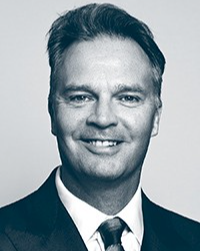
Stefan Ioannou, Ph.D.

Mining Analyst at Cormark Securities

Stefan Ioannou, Ph.D., is an Analyst covering mining for Cormark Securities Inc.’s institutional equity research team. Dr. Ioannou is a mining engineer and holds a Ph.D. in economic geology from the University of Toronto. He joined Cormark in December 2016, working in equity research for 13 years with Haywood Securities as a base metals analyst since 2006. Prior to that, Dr. Ioannou worked as an exploration geologist in Nevada and throughout the Canadian Shield.

Speaker profile Paul Marsh

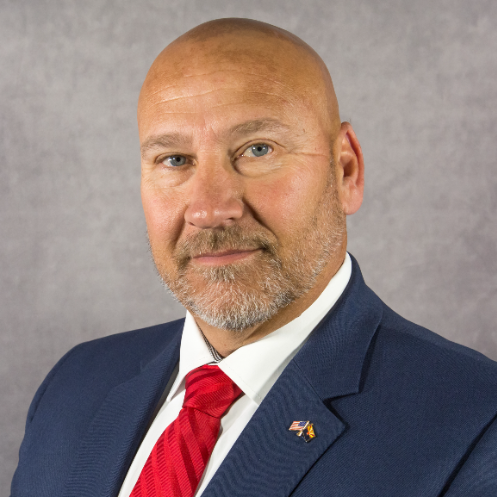
Paul Marsh

State Mine Inspector at Arizona State Mine Inspector's Office

Paul Marsh is an Arizona Native, a United States Marine Corps Veteran, and a Miner with 30 years’ experience in the mining and construction industry. Paul’s career started as a laborer and heavy equipment operator, but through hard work, Paul has held several key positions, such as Safety Manager, Director of Safety, and Operations Manager. He is the current Arizona State Mine Inspector, appointed to the position by Governor Doug Ducey in November 2021 and winning the 2022 election for his first four-year term. Paul has over 15 years working in mining and construction safety, is a Certified MSHA Blue Card Instructor and a Certified Mine Safety Professional. Paul has earned numerous awards from the industry including the Arizona Rock Products Safety Professional of the Year, the Arizona Mining Association Copper Pot Award, and the Arizona State Mine Inspector’s Office Safety Professional of the Year, and as the Arizona State Mine Inspector, he continues to work to improve safety throughout the mining industry in Arizona.

Terri Anne Welyki

VP Corporate Communications at Barksdale Resources

Ms. Welyki has more than 15 years of experience working with public and private mining companies, including Calico Resources and EMC Green Group S.A. She has broad knowledge of the mining industry, including financing, permitting, and stakeholder management and has worked across the United States, Peru and Canada.

Speaker profile George Ogilvie

George Ogilvie

President, CEO & Director at Arizona Sonoran Copper Company

George Ogilvie, has over 30 years of management, operating and technical experience in the mining industry. Mr. Ogilvie was until most recently the President & CEO of Battle North, a position he was appointed to, in 2016 whilst the company was under financial insolvency & restructuring proceedings. During his 5 year tenure at Battle North, Mr. Ogilvie and his team successfully completed a turnaround of the company resulting in an increase in the resource base from 400 k ounces Au to approximately 1.3 million oz Au, completion of a positive bulk mining reconciliation program resulting in de-risking of the project, delivery of a preliminary economic assessment and follow on feasibility study in relation to the project with a post-tax IRR of 50% and completion debt and equity financing of over C$100m associated with project construction. Battle North was acquired by Evolution Mining Limited in May 2021 at a 45% premium to the prevailing spot price. Prior to this, Mr. Ogilvie was the CEO of Kirkland Lake Gold Inc. where he and his team implemented a turnaround strategy which included, amongst other items, improving operations at the Macassa Mine and the acquisition of St. Andrew Goldfields, resulting in significant returns for shareholders. Previously, Mr. Ogilvie was the CEO of Rambler Metals and Mining PLC, where he and his team guided the evolution of the company from grassroots exploration to a profitable junior producer. Mr. Ogilvie began his mining career in 1989 with AngloGold in South Africa and he subsequently held other roles at the Ruttan Mine in Northern Manitoba for HudBay Minerals Inc., the McCreedy West Mine and also as Area Manager for Dynatec Corporation. Currently, Mr. Ogilvie also serves on the board of Rupert Resources. Mr. Ogilvie received his B.Sc. (Hons.) in Mining and Petroleum Engineering from Strathclyde University in Glasgow, Scotland. He is a Professional Engineer and also holds his Mine Managers Certificate (South Africa).

Speaker profile Ken Brophy

Ken Brophy

CEO at Intrepid Metals

Ken Brophy's career comprises over twenty-five years of experience in the natural resources sector, focused primarily on advancing and de-risking development-stage projects. Ken is an experienced executive with a successful track record of project management, building and leading teams, and has many years of experience with Environmental Social Governance (“ESG”) initiatives, such as Corporate Social Responsibility (CSR), Indigenous, government and stakeholder relations. Ken is currently president of Ram River Coal Corp., a private Canadian company with a steel-making coal project located in Alberta, Canada. He also serves as a director for Supernova Metals Corp, a TSX-V listed junior exploration company with assets in Canada and the US.

More from Cormark Securities