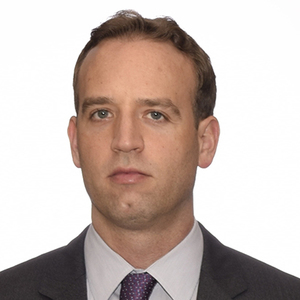
Scott Eldridge
CEO and Director at Canagold Resources
Replay available
Join us for a great event!
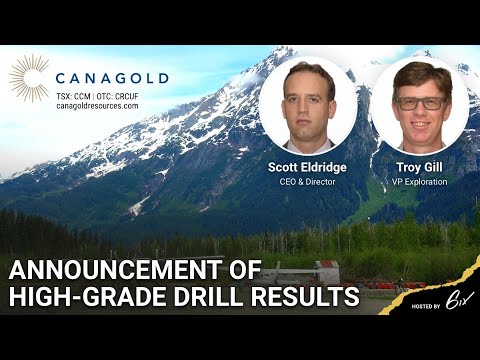
On 6ix: 6ix.com/event/announcement-of-high-grade-drill-results
Automated transcript · Written by software from the replay's audio. It can mishear names and figures; the replay is the record.
0:08 Hello everyone. Thanks for joining today. My name is Scott Eldridge and I'm CEO and Director of CannaGold And joining me today is Troy Gill. He's our Vice President Exploration. I'm sure by now everyone has had an opportunity to have a look at our news release. This morning we announced the first 3 drill holes at a 24,000 meter drill campaign that we recently started in May at our flagship asset New Polaris located right here in British Columbia. And the headline high-grade intercepts are quite spectacular. They've exceeded our expectations from multiple different perspectives. And I'll just mention briefly here in the introduction that these are infill holes.
0:53 They are high grade, 3 intercepts that are significantly higher than the average grade of the ore body. And these are also very mineable widths. So these are not exploration holes. These are infill holes that are designed to convert inferred up to indicated. And these 3 holes have literally hit the bread basket of what will become the mine. They do fall within the mine plan as designed in the PA. So we're pretty excited about these results. And these are only the first 3 holes out of 47. So there's plenty more news flow to come throughout the summer and fall here as we proceed. I will be making some forward-looking statements. So I'll direct your attention to our standard cautionary note. So I know everybody wants to hear more about the results, but in terms of the headline numbers, the 3 intercepts include 12 grams over 3 meters, 24.2 grams over 6.6 meters, and 15.8 grams over 13 meters.
1:57 And within that, there's another 25.6 grams over 6.3 meters. So Troy will go into more detail on the specific intercepts, but we're quite pleased with these results, very encouraged to move forward a project that has already been de-risked to a PA level. And ultimately this would sort of move us forward towards a feasibility study. There is sort of a second component to our drilling besides infill where we are also gonna target some deeper holes to potentially unveil the blue sky potential of this project where we are seeing geological evidence that there's much, there's potentially a larger than 1 million ounce ore body here. So let's go through the corporate information fairly quickly because I know everybody definitely wants to hear from Troy.
2:45 So essentially last summer was what we call the rebirth of the company. We had a series of corporate level changes. We brought on a new director, Andrew Bowering. We changed the name of the company from CanArc to CanaGold to reflect our corporate level strategy that we want to focus 100% on New Polaris and Canada. So we're looking to divest of the properties that we hold in the US, and we've done that over the last 12 months by optioning out a few properties. And we also announced a financing for $3.2 million that was significantly oversubscribed, and we upsized that to 8.4, And that was last summer. So we only really spent money on G&A for the last 12 months and that financing, the proceeds were earmarked for exploration at New Polaris. And that's exactly where we're spending the money today, getting these results. So we are in the middle of a 24,047 whole program and we'll hear more about that.
3:41 So we do have 3 public company listings, Mainboard, TSX, CCM here in Canada and post-share consolidation, We now have 70 million shares out and we're trading at 50 cents. That puts our market cap at about $35 million and our current cash and equivalents is around $8 million. And we are fully financed for this drill program. The budget for the 24,000 meters is about 6 million Canadian. And definitely strong support from our shareholders that came into the previous financing last summer, led by Eric Sprott. He owns about 10% of the company. Other top shareholders include Brad Cook, our chairman and founder, Andy Bowering, our latest new director, the Rougher Gold Fund out of London, England, and several high net worth individuals in the US and Europe.
4:33 My background, briefly, I've been in the industry for about 12 years, mostly on the money raising side. Over my career, I've raised about 500 million dollars for the mining sector, ranging from exploration to production financing. And I've been on the issuer side for about the last 4 years. Brad Cook, our chairman and founder, offered me the opportunity to join Canna Gold as a CEO about 3 years ago now. Gary Biles is our president and COO. He's the lead technical, in addition to Troy, from an engineering perspective to help move New Polaris forward. Gary's a mine builder, a mine operator. He's built and operated 4 gold mines in his career. The most notable on that list is Eskay Creek right here in BC before the takeover. And I'll let Troy do his own introduction later, but he's fairly new to the team as well. He came in when we did this sort of corporate restructuring, but he's been a very welcome addition to the team, having originated from Rio Tinto. And he even has some very strong experience in a very similar geological environment as New Polaris during the time that he worked at Peak Gold Mines down in Australia.
5:39 And rounding off the management is Phillip Yee, a chartered accountant. He's our CFO. Yeah, most of the audience knows our board. Deepak Malhotra is a PhD metallurgist. He's our lead technical on the board. Andrew Bowering is the newest addition to the board here. We welcomed him with open arms when he joined during the restructuring and his most notable success story as a mining entrepreneur is prime mining. Most of the audience is probably following that story. Martin Burian is a CACBV and he's our lead director from a corporate governance perspective. And of course, Brad and myself rounding off the board.
6:18 Let me give you an idea on the location of New Polaris. So as I mentioned, it's located right here in British Columbia, easy access from Vancouver. Yes, the project is off grid. It is remote, but it is very accessible. And we can access the project from a variety of different places, but we usually sort of mobilize out of Whitehorse and even Atlin as well.
6:44 A brief history on New Polaris. This is a brownfield project in all senses of the word, so there was past production here during the 30s and 40s. And the old-timers were mining at a diluted grade of 10 grams per ton, which is also the same grade, diluted grade, of our current NI43-101 resources, which is about 1 million ounces at 10 grams. We do have a PA on the project, which means we do have a mine plan based on the ore body. And the numbers we achieved from an economic perspective were very robust, even at a significantly lower gold price to where we are now. So at $1,500 gold, we hit an after-tax IRR of 56%. The NPV is about 500 million dollars Canadian, and a very quick after-tax payback of under 2 years.
7:32 So the way we're moving the project forward here that differs from the past. In the past, they produced gold in the form of a gold con, but we've designed a flow sheet here, working with AutoTech to produce Dory bars on site. And that's the true way to unlock the cash flow value of this project. And as it stands right now we are conducting an infill program that would ultimately lead into a feasibility study for the project to move it forward.
8:01 Let me give you a more zoomed in approach to the location of the project. So the northwestern corner of BC, Atlan is the closest town on the BC side of the border, about 100 kilometers north of us. And the true closest town is the capital of Alaska, Juneau. Juneau is actually named after a mining prospector. And this is a very mining friendly area of the world. There are other operating mines, a number of placer mines as well. And we definitely do have the support of the local communities to move this project forward. And I won't dive into geology, I'll definitely save that for Troy, but at a very basic level, this is a mesothermal gold vein system, very similar geology to what you would see in the Red Lake Camp of Ontario.
8:52 So this resource was the basis for our PEA. And as you can see, about half the tonnage and ounces are in indicated, and the other half is in inferred. So the grades you can see there, the 10.8 gram per ton indicated and the 10.2 gram per ton inferred, those have a 20% mining dilution rate already factored in. So the 10 gram would be the true head grade to the mill. So combined here we have 1 million ounces. So the primary purpose of the drill program is to number 1 galvanize the resource and infill the inferred from about 40 down to 22 meter spacings but also take a deeper dive into the project and test that down dip potential here. So the resource table you can see here only goes to a maximum depth of 600 meters.
9:42 And number 1, that's very shallow for a gold mine, but number 2, it's very shallow for a mesothermal system. So Troy will walk us through in more detail what we want to attempt to do with the 2 deeper holes where we would try and pierce the ore body if it exists another 200 to 250 meters below that 600 meter level. And if we hit on those holes, people can start to do their own calculations, but then we're taking a 1 million-ounce deposit to another category, perhaps 1.5 or 2 million ounces subject to further infill drilling. But that blue sky potential absolutely exists at this project. It is not capped off at depth. So at this point, I'm going to pass the mic over to Troy Gill, our vice president of exploration. Troy.
10:28 Thanks, Scott. Hi, everyone, and thanks for joining us and glad to have the opportunity to talk with you today. Of course, we're very excited about the news just out, our first 3 intercepts of the Infield Drill Program. So to give us a little more geological context of where we are in BC in relation to other projects, where BC is more well known lately for the Golden Triangle, low-grade, large tonnage deposits. We, interestingly, sit in the same geological terrain of the Stikine, but just up here in the north west of BC. And being a mesothermal vein system, obviously we're looking at higher grade and that's why we're an underground mine concept, and potentially share more affinities with areas like Red Lake District in the Shield over in Ontario, as well as other parts of Ontario and Quebec, and where I bring lots more experience at that sort of gold exploration, as well as work in the Eastern gold fields of Western Australia, as well as some of the underground mining experience in the early days of big gold mines with Rio Tinto.
11:43 So let's take a look at the mine area and especially where these 3 drill holes were drilled, here's a map of the site plan and you can see the 3 drill holes, 2 of which were drilled from the same drill pad, 83 East 1 and 2, and then 1783 a little further to the south. And on here in plan view, you can also see the planned infill drilling, as well as a lot of the previous drill holes are also shown. So if we take a look at the drilling in cross-section to show the results, again, you can see we have a good solid geological model of the SeaWest main vein system that we're targeting to infill here. And these 3 1st holes that we're releasing results on have done a great job to infill parts of that already that we'll be able to use these results to further increase our confidence in the mineralisation and move inferred resources into indicated category if possible.
12:54 Here also you can see it highlights the down dip open potential where we have the deepest drilling to date on the ore body and we hope to improve that with the exploration drilling we're planning to do down deep. Thanks for that further detail, Troy. I think now what we want to do is take an opportunity to walk the audience through some three-dimensional imaging to just capture a better picture in our minds of what this project actually looks like, particularly from an underground mining perspective. And Troy's got a very useful 3D software program that we can do a screen share here. Troy, if you want to activate that, please go ahead.
13:40 Yeah, so here we are. Everyone should be looking at a view of the Tulsa River Valley. And New Polaris Gold Mine is positioned in roughly the centre of the image there. It doesn't look like much from this distance. And a good reason for that is that it is an underground mine so the surface impact is fairly minimal compared to other open pit concept mining. So let's zoom right in and dive in underground because that's where all the action is really happening.
14:16 And what we can see here in yellow is the sea west main ore body as per the geological model, which I'll show some of the drilling on in just a moment. But I thought quickly we can zoom up to some of the old workings and just see where it all began.
14:36 Here you can see the underground development and the old stopes that have been mined out. Lots of gaps in between. So in the early days of late 80s and 90s,
14:51 much of the drilling focused on filling in the areas around the old stoves. And in these times, the old timers were mining what was called the AB veins and also some of the Y veins and another terminology they had for it was calling these veins the junction arcs and as it works out the junction arcs are actually another vein system called the C veins And that's where we started to focus during the late nineties on the C West main with, as you can see, a fair amount of previous drilling from the end of the 90s to 2006. Over here on the eastern side or the right-hand side of your screen, you can see there's a fault that cuts through the sea west main, called the number 1 fault. Let's just remove that so it doesn't block our view too much of the drilling.
15:53 And on the west side, you can see there's a narrow felsic dike runs through the vein. It's not much of an issue when it comes to mining or drilling of the mineralisation. So when we look down depth on the sea west main, you can see there's still lots of gaps in the drilling. So much of the infill program actually focuses on filling in those gaps. And We're talking about below, say, the 350 metre below ground level area. So maybe I should remove
16:44 the planned drilling and we'll put the 3 drill holes on there. Just in amongst the previous drilling first, just to show how it all relates. And then if we zoom in, we'll remove the old drilling and you can see where the intervals relate to each other. This hole here, the first hole being 1783-1, 1783 is 2 drilled from the same drill pad, and 1737 is 1 drilled off to its own, on its own in the south.
17:35 And there's the intervals falling nicely on the geological model as planned. Again, significant results over definitely mining widths, mineable widths, giving us lots of confidence that this level of the ore body, which really, as you can see, falls right in the major part of the model mineralisation. These are the areas where we really need to raise the category from inferred to indicated, and these drill holes go a long way in helping us do that.
18:16 So if we clear those off and just briefly talk about looking down dip and exploring for the extensions, here's the concept of how the sea west main could extend to depth.
18:37 And if I just put the old drilling or the previous drilling back on, one thing that really stands out are these 3 deepest holes are way, way off down dip from the bulk of the previous drilling. And some of these results down here are still quite significant, which tends to make you think that this plane system could dip a lot further at depth, could extend a lot further at depth. So in order to test that, We're planning 2 drill holes, approximately 200 to 250 metres
19:27 down here, to try and pierce the concept right down plunge of those 3 intercepts. You can see this is going to be some of the deepest drilling on the new Polaris project to date. It is quite technically challenging, but we think we can get down there and test for the extent of the mineralisation. 200 to 250 metres down plunge should give us a vertical depth of about 200 metres. And it's worth noting that towards the lower end of the ore body, we're talking ounces per vertical metre of about 1500.
20:16 So, you know, heading down another vertical 200 metres gives us the potential 300,000 ounces to add to the resource. Obviously we need a lot more drilling than just 2 drill holes, But this gives us the blue sky of the potentials there to do that further drilling. So I'll hand back to you, Scott. So we'll pick up again at the slides just looking at that down dip potential on the sea west main. And if you look at other mesothermal gold systems across Canada, mainly over in Ontario and on the shield areas, They're known to extend to much, much deeper depths, well over 2,000 metres, and yet here we are on the sea west main still looking pretty much above the 600 metre level.
21:15 So there's still, we think, a long way to go with testing the extent of the mineralization on that trend. So that's it for me, Scott. I'll let you keep going from here. No, Troy, that's great. The visuals definitely help everybody wrap their heads around what this looks like from a three-dimensional perspective. What I want to do is just take a step back 2 slides And just explain a little bit further the magnitude of the 3 holes that we released. So if everyone can see the selection here of these are the 5 best drill holes that have ever come out of the project. And This has not been updated with the news release.
22:02 It's literally hot off the press. So just to paint the picture here more accurately, the third best drill hole ever to come out of this ore body, the 5 meters of 25 grams, is no longer the third best drill hole. It's actually dropped to number 5 with the results we've got. And again, those include about 24 grams over 6.6 meters and 25.6 grams over over 6.3 meters. So needless to say, we're very excited about these results. And and I'll just remind everyone, these are the first 3 holes out of 47, so there's plenty more to come here. So skipping ahead to slide 16, what we see in various minerals and gold in particular is grades decrease over the years.
22:47 And every decade in gold, we also see the production more skewed towards larger open pits. So the global average right now based on S&P Global Market Intelligence is about 1.35 grams per ton. So our grade is 7.6 times the industry average. And we've all heard the proverb that great is king, which means you do have richer ore, you have to move less rock to produce the same amount of gold as other projects. And that's great. But there's a flip side to that coin and it's the costing side. There's plenty of examples around the world of high-grade mines that are also high cost. However, that is not New Polaris. It's completely the opposite, actually. Our all-in sustaining cost based on the PEA is just over $500 an ounce, where the industry average is about $1,000.
23:39 We have that dual-edged sword of high-grade and high-margin, which is certainly unique in the Gold space. Just to paint that with a little more detail, if this were a mine today, it would be the 6th highest grade Gold mine in Canada and the 11th highest grade Gold mine in the world. So, as a team, we're very excited to move this project forward with this drill program and beyond that.
24:10 So I wanted to walk through the PEA. As Troy mentioned, this is a high-grade underground gold mine, so The surface footprint is relatively small. We only need a 750 ton per day mill to produce 80,000 ounces of gold over about an 8.5 year mine life. With a fairly small surface footprint, that helps us to have a lower CapEx. Our upfront capital cost, the fully baked number is about $110M. We feel as a team here that that is a CapEx number. When we eventually come to a mining decision, we could finance that and build this project ourselves. But we also have the option for M&A of having a high-grade gold project in one of the best mining jurisdictions arguably in the world. We just feel there's very strong optionality there for our shareholders as we move forward, whether we wind up building this ourselves or if we get taken out, that all remains to be seen. We only have a $35 million market cap, so there's plenty of blue sky potential to see an increase in the value of the company here.
25:22 Let's move towards sort of the summary here. So from a valuation perspective, as I said, our market cap is about $35 million. So we trade at about $22 an ounce in the ground, And that's a measurement of enterprise value in US dollars per resource ounce in the ground. So with our current about 1 million ounces, we traded about 22 dollars US. So we certainly feel that as we get these results out, that's a tremendous opportunity to put this project back on the map of the capital markets
25:54 and potentially see a re-rating and start to catch up to our peers who traded an average more in the sort of 40 to 60 range. So in final summary, we do trade at that enterprise value of $22 an ounce, working towards correcting that to our peers. Despite working on new Polaris, we always have our eyes and ears open for new acquisitions. If we were to do anything it would be sort of an ounce in the ground play in Canada. There's nothing imminent. We certainly have our hands full and getting good results at New Polaris, which we are advancing with this info program. The drilling itself will go to the end of October and the news releases will probably go to the end of November. So there's plenty of news flow to come as everything proceeds.
26:42 And as you've heard Troy and I talk here and mentioned the rest of our team, we feel that for a 35 million market cap company, we've got a very strong team here, a collection of geologists, engineers and financiers. And lastly, we're fully financed for this drill program and definitely looking forward to getting results out beyond these first 3 holes. We certainly thank everyone for listening today. It's probably a bit of a longer conversation, but lots to talk about with these drill results and plenty more to come. And at this point, we'd love to open it up. And Troy and myself are available to take any questions. All right, thank you so much for taking us through the presentation. We will open the floor to Q&A. So if you do have a question, feel free to submit them now. And I also wanted to remind you all that you can download the news release under the handouts tab.
27:38 You can have a copy of it and follow along as well.
27:42 So we have a question here. What is the schedule to release future results? And when is the pre-feasibility study likely to be published?
27:53 Okay, so 2 questions there. So number 1, the schedule for the results, obviously repeating myself here, but this is the first 3 holes out of 47. We don't have a carved in stone schedule in terms of when the next news releases will be. It is dependent on how busy the assay labs are. This is drilling season in British Columbia. So what our intent is, is to basically, just like the first release, release holes in batches of 3 or 4, and those would be approximately every 2 to 3 weeks. So our next news release with the second batch of results would probably be about 2 to 3 weeks from now. At the project, we're finishing up hole number 8, even though we only have assays out on the first 3. So there's basically 5 holes that are either at the lab or about to be processed. So it's basically once you feed that pipeline, then it does become steady news flow where we will get results every 2 to 3 weeks.
28:57 And the second part of that question was asking about a PFS, a pre-feasibility study. So we do feel as a team here that this project checks all the boxes that we would not require a pre-feasibility study. And it is our full intent to go straight from a PA into a feasibility study. And that's a function of the resource, the engineering, as well as the permitting. So
29:26 we don't need to go through a PFS project. 1 contributing factor to that is the size of the project. It is relatively small. It's not a $500 million or 1 billion dollar project. It's a relatively modest capex at about $110 million, as I mentioned. So when we're ready, we will go into fees. We will not do a pre-fees. All right, thank you so much. I could just butt in maybe for a second, but say the next technical document we'll put out there is an updated resource. And obviously we have to get the drilling done and the assays all returned, and then do the study, the modeling on that. So you should see an updated resource early next year, say, let's say first 0.25 2022. Okay, thank you. And can you work all year round or is it only in spring and summer?
30:18 Well, this program only commenced in May. So it was a bit of a long wait for us over the winter. And we were chomping at the bit to get started drilling here. So now that activity is underway and Troy spent the time to basically refurbish the camp because it hadn't been drilled for a number of years. So we basically hit the reset button at the camp level of the project. And now that that's been done, it's a lot easier to maintain the project versus hit the restart button in the spring. So depending on how the rest of the results go, we would like to continue drilling through the winter here. And yes, you can absolutely do that. There will be some weather and snow to deal with, but as I said, once the camp is up and running, it's a whole lot easier to maintain versus restart everything. So we've put in that time and effort to get the camp rejuvenated.
31:11 And now that it's running full throttle,
31:14 we'd love to keep that momentum and keep some steady news flow over the winter because things do get a bit quiet. And that will help us move the project forward faster as well. So yes, you can work here year round and we'll be examining that closer as we move into the fall. Great. What type of M&A opportunities exist for Canada Gold at the moment. You know that's a good question. With a very robust P.A. A 10 gram ore body that is potentially growing in a top mining jurisdiction, combined with a $35M market cap, certainly would suggest that people would be knocking at our door. We certainly would not do anything at this valuation. There's just so much value
32:03 to be created from this current drill program. But as we get an updated resource out, as Troy mentioned, and move this project forward, I think we'll start to receive a lot more attention. And very logically, a junior or perhaps a mid-tier producer that is either in Canada or wants to be in Canada would be the type of company that might look to get involved with us from an M&A perspective. But that all remains to be seen and there's so much value creation ahead of us before we get into those sorts of conversations. Right. And how far below surface does the ore body start? So it is fairly shallow for an underground mine. So it starts at about 150 meters below surface.
32:53 And that would have come across in the imaging that Troy shared with us. And everyone knows it only goes to a maximum depth of 600. So the actual vertical portion of the ore body is fairly shallow, but also doesn't really go that deep.
33:09 And again, we just we want to get started on those deeper holes to test the downplunge extension, But it is very shallow, which generally leads to lower cost underground mining, because the closer you are to surface, the less expensive it is to get the ore up to the mill. All right. Thank you. William's asking, if you hit gold on those 600 meter depth, what will your next steps be? Are you going to suspend the FS or do more exploration drilling? Right, well, I wouldn't use the word suspend the FS because we haven't officially stated that we're moving into FS. I mean, It's obviously at the forefront of our minds, but we've got our hands full with this drill program. Depending on what the results are of those deeper holes, it is a very smart question and the real answer is we would probably continue drilling at those deeper depths to try and define a resource at that 800m to 850m level
34:08 before we went into a Feasibility Study. And we can't say what the exact numbers would be, but Troy and I both alluded to maybe 1.3 to 1.5Moz. If we got the resource to that category, then absolutely we would move into the Feasibility Study. But that decision is largely dependent on those deeper drill holes, So time will tell to truly answer that question. All right. William has another question. He's asking about the value of the Fond du Wec Canyon option to GetShell and what is the scope of the benefits likely to accrue to Canada Gold as a result of that deal?
34:46 Right, So we just felt that we were not getting properly valued for this asset. And with the corporate restructuring last summer, with our name change, that reflects our true strategy that we only want to be in Canada. So we're basically divesting of or in the process of divesting of everything we have in the U.S., which includes Fondoy. So Get Your Gold, they have a 4 year option to earn into 100% ownership of that project. And in exchange for that, Canna Gold, we receive cash payments every year, share payments every year. There's minimum annual property expenditures and we also retain a Royalty. So given that we had no intention of developing that project any further.
35:34 We welcome that partnership with GetShell Gold and they've helped due to all their promises and they've got a good team over there. I think the real value for us will be the Royalty. We have a 2% NSR there and believe it or not, we have been approached by several royalty companies to transact on that royalty. So at the end of the day, this will certainly be value creation for Canada Gold shareholders, But our real focus here is is new Polaris. The rest is gravy. Samantha is wondering what is the timeline. What would the timeline be for bringing it into production. Well this really ties into the previous question on whether or not we would move into a feasibility study. So we need to get this drill program done and it's a very exciting drill program.
36:26 The deeper holes will start in July, so probably August, September is when we would get the assay results on those deeper holes. And that will be a real sort of timeline benchmark to determine what the next path forward is for the project. So until we get those results, we really can't answer as to when we would go into a feasibility study. We are doing a lot of work behind the scenes. It's not out there in the public realm in terms of what stakeholders are involved with the project, the permitting side, the environmental side. So we're moving all that forward is if we were going to go into a feasibility study. So we're truly ready. But but again, time will tell. And you know, we can we can definitely give more clarity on on that probably in September.
37:13 All right. Perfect. And last question here. How profitable would the mine be once in production? Well, if you looked at it from the spot gold perspective, let's just say spot gold is 1800 dollars. Our all in sustaining cost is about 05:30. So that gives you a margin of about US$1,300 an ounce. And if of course you do a PEA or a Feasibility Study, you're using a discounted spot price to run the cash flow model. So we did our PEA at $1,500 Gold, very conservative. And with that 530 All-in-Sustaining Cost, you still have about 1000 dollar margin. So this is a project because of the grade and the low cost that can sustain fluctuations in the gold price. The higher the gold price, the better, but even at $1,500 gold, the margins are $1,000 an ounce. The after-tax IRR is 56%.
38:10 So the great greatest king, and that drives all the costing on this project. So we can definitely sustain movement in the gold price. That's great. Well, thank you so much, Scott and Troy, for taking us through your presentation and the Q&A. I also wanna thank everyone who joined us today and submitted questions. The news release is available for download under the handouts tab, so be sure to download it before we close out. And obviously, if you do think of another question after this webinar, we will be sending out a brief survey where you can put your contact details and the Cana Gold team will be happy to follow up with you directly. You can also find more information on their website at www.canagoldresources.com. But I'll pass it back to you, Scott, just for the final word.
38:58 Well, listen, I appreciate everybody taking the time and maybe this summit was a little longer than the previous ones. I know everybody has very busy schedules, but Troy and I really appreciate you listening in and would definitely encourage you to follow us closely. This is only the first 3 holes out of 47, so it's going to be steady news flow over the summer and into the fall. As a team, we're really excited to move this project.
Follow Canagold Resources Ltd into a list and get an email when it puts out news.
CEO and Director at Canagold Resources
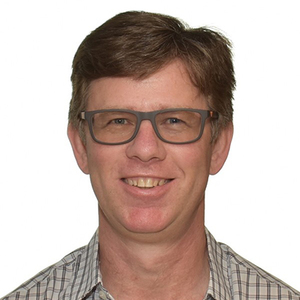
VP Exploration at Unknown
Mr. Gill has 27 years experience as an exploration geologist in a diverse range of commodities and styles of mineralization in Australia, Canada, Mexico and Solomon Islands. He was a Senior Project Geologist and Team Leader in Rio Tinto Exploration for 15 years. Since then Mr. Gill has held roles of Exploration Manager, VP Exploration and Director in junior exploration companies.