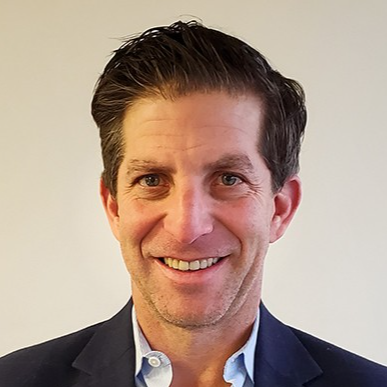
Jamie Levy
President, CEO & Director at Generation Mining
25 years in the financing and management of Canadian mining companies. Was CEO of Pine Point Mining which was acquired by Osisko Metals. Formerly Vice President of Pinetree Capital.
Replay available
Join us for a great event!
Automated transcript · Written by software from the replay's audio. It can mishear names and figures; the replay is the record.
0:07 Well, hello everyone, and thank you for joining Generation Mining's live summit today hosted by 6. It's my pleasure to introduce the speakers for today. We have Jamie Levy, President and CEO, Harry Knoll, Executive Chairman, Rod Thomas, Vice President Exploration, and John McBride, Senior Exploration.
0:28 So in our presentation today, our speakers are going to walk us through a company presentation and then we will be accepting questions live. So as a reminder you can submit your questions at any time on the Q&A panel on the right hand side of your screen and as a reminder a copy of this presentation is available for download under the handouts tab on the right hand side of the screen. You can also make your screen full size just so you can see everything in this the slides as we go through the presentation. And as always this presentation is going to be recorded and available to watch afterwards on six.com. So without any further ado, I'll hand it over to you, Kerry. Thanks, Dasha, and welcome everybody. It looks like we've got a great turnout today. We're gonna talk about the exploration potential at the Marathon property in Northwestern Ontario.
1:19 So the presentation is going to be started off by Rod Thomas. Rod is our VP Exploration, and
1:27 he is a real veteran of the exploration scene in Canada. I've known Rod for 30 years. He was former president of the PDAC and he's been involved in a lot of different companies and projects and discoveries over the years. He'll be followed by the guts of the presentation. He'll be presented by John McBride. John is our exploration manager up at the marathon site, a chief geologist, I don't remember his exact title, but John has been involved in this project through 4 owners, including ourselves since 2007. And most of his years since that time have been on this project. And no one knows it better and no one is more qualified
2:13 to pick these targets and continue the exploration on this project. I'll talk at the end of the presentation, I'll talk a little bit more about the corporate side of the company and there'll be some stuff there. But right now, let's get into the presentation and I'm gonna turn it over to Rod. Okay, thanks very much, Kerry. And as Kerry mentioned, John will be going through most of the slides in this project. John has worked on the project for 13 years with various companies and certainly knows it inside and out. But I just want To point out a good friend of mine who is a member of the Canadian Mining Hall of Fame, and I'll just mention his first name, Ed, he was working on this project in the 60s, must have been a very young man at that time, and he's always had an interest in it. And I think through John's presentation, I'd just like you to bear in mind that this is a 200 over 200 square kilometer project.
3:08 We have mineralization over a strike length of roughly 25 kilometers plus deposits, which are off strike, so to speak. There's 2 satellite deposits, Sally and Jordy. There are numerous showings along the edge of the complex. And it's essentially a district scale project. Most of the effort has been focused on the on the marathon deposit itself and in Ed's opinion and the opinion of myself as well that you know if and when that mine gets developed there's going to be no shortage of opportunities to develop resources in the fullness of time. So just keep in mind the scale, keep in mind that a lot of the effort has been focused essentially by junior companies on developing existing showings, but there's an awful lot of potential which really hasn't been uncovered.
4:05 So on that note, I'll hand it on to John. Thank you very much, Rod. Thank you, Kerry. Thank you, everybody, for coming out to hear about our new discoveries and the work we've been doing in 2021. I'm gonna talk a little bit about the geology so you can understand the scale that Rod was just talking about and how the vast potential we have in the complex. I'll touch on the highlights of our ongoing drilling campaign that we have right now, and the drilling at our central feeder zone and the Charnowlith, which is the Northern extension of the Marathon deposit. And we have a lot of projects, not enough or too many to kind of go over in great detail in a presentation over the hour so we're going to look at some highlights of some of our our best targets or some of my favorite at least.
4:53 So what we're looking at is the geological map of the Coldwell complex. A lot of you will already know that we completed our positive feasibility study just on the Marathon PGM copper deposit. There's over 200 million measured and indicated open pit resource with almost 3.6 million ounces of palladium, 1.2 million ounces of platinum and over 400,000 ounces of gold with over 8 million pounds of copper. But like Rod said, it's a district scale kind of property that Generation holds here. We have 2 other resources, our Sally deposit to the north. We just released initial resource last year with just under 25 million tons of indicated material. Then there's, we updated our Jody deposit resource with 17 million indicated, million tons of resource.
5:47 But really what we're focusing, or up to this point, what we've focused on is that purple outer margin of the Coldwell Complex, the eastern and northern margin. And that purple is representing the eastern garrows, which are hosting the PGM and copper mineralization. And then we have a bunch of prospects throughout this region. They're not all labeled here. There's so many they don't even fit on our map, but what we've highlighted here is some of our most prominent, including the Chonolith, which is the Northern Extension in the Central Feeder Zone. And I'll be going over some of these later. That purple arc that we see on the eastern northern side is roughly about 30 kilometers in strike length and we get a lot of mineralization and interest and prospects all the way through there.
6:35 So jumping into geology regionally, the Coldwell Complex is related to the Mekong Rift. So what we're looking at is Lake Superior in Northwestern Ontario. And about 1.1 billion years ago, North America tried to rip itself apart. And to our advantage today, that's how we source PGM metals deep within the earth and bring them to surface for us to explore for. So the Colville complex is related to other deposits like the Eagle deposit by Lundin, Tamarack deposit that Tallinn has, the Duluth complex and other deposits around the region. We're on the Northeast Shore, we're relatively unique in the system as we're associated with an alkaline complex, the largest in North America.
7:22 And recent work has really been able to put the fingerprint of the whole complex expanding 200 kilometers to the west, 150 kilometers to the south, and really expanding as far as the Quebec border. So this is a very large system, which the larger the system, the more magma moving through, the more metal moving up from earth, a lot more potential to find mineralization here. So moving on to focusing on the Marathon project itself, the top right image is again the geological map, the Coldwell Complex and the Marathon deposits on the eastern margin of it. There's over 169,000 meters of drilling into the marathon project area, of about 200,000 meters on the entire project. So a lot of the focus has been into the marathon deposit.
8:13 So we're gonna start here because That's where we have a lot of information. And so processes that happen at Marathon, we can learn and take that understanding and find deposits elsewhere in the Coldwell Complex. And vice versa, as we start finding massive sulfide at our Sally deposit, we start understanding how and why that's forming there, there's no reason we can take that and bring it back to the Marathon deposit and start finding it here, which is what I'll get to, the central feeder zone and the massive sulfide potential there. The marathon deposit itself, what we're looking at in the lower image is the mineral reserve pit shelves. So it's been broken into 3 pits, the northern pit, which makes up 75% by volume of the mineral resource, and then the central and southern pits.
9:05 The colors are platinum equivalent grade shells, so you can see that the majority of mineralizations over a gram per ton to 2.5 grams strong platinum equivalent, with some nice highlighted hot spots in the central and southern pits. And we'll get to why those are there, but they're PGM enriched zones. The overall strike length of the marathon deposit is over 3 kilometers north to south, and it's open and it's been hosted in our Tupelo de Cabra, which you can see in that shaded purple. So purple rock going on from here on throughout the presentation is a good thing and that's really what we're exploring for. But you can see on the left side of the page or the north end is the charnel zone, which we're drilling currently today. And earlier in the season, we drilled a central feeder zone, which is the feeder conduit and the concentration of where all the magma is coming from to feed the marathon deposit.
9:57 And I'll get to these later in the presentation. So looking at a cross section, you can understand the morphology of the mineralization within the deposit. So, again, looking at the main deposit, what we have is that purple unit, the tubular clay gabbro intruding, stoping its way up from depth to surface along the boundary of the Archaean basement in Green Rock and volcanics of the Coldwell Complex on the north side. And what's happening is you have this intrusion carving out and forming troughs or bowls that are collecting sulfide. And in the main zone you get nice thick consistent sequences of mineralization so 166 meters of 0.9 grams per tonne plane equivalent followed up by 122 meters of over 1 gram per tonne equivalent, 120 meters of 1.2 grams per tonne equivalent. So very consistent, wide intervals of mineralization that extend through that northern pit, which is a little different than the central and southern pits.
11:04 You still have those sequences of mineralization fitting in bowls, which you can see on the top right end with yellows and gold colors, but the unique part about the central and southern pit is this high-grade PGM upgraded zone which we call the W horizon and that is hanging above that standard mineralized zone sitting on the basement and you start getting intervals of 20 meters over with 21 grams from plenum equivalent including 6 meters of 63 grams per tonne plenum equivalent. And I know there's a 2 meter sample in there that's over 90 grams per tonne plenum equivalent, followed up by 14 meters of 4.5 grams per tonne plenum equivalent. So very consistent and nice high-grade PGM zones.
11:49 And there's a reason for that. And we've been working on understanding why that is, to be able to follow these high-grade zones down dip, which they're open at depth, and find them elsewhere in the complex. So why is the Marathon Deposit where it is? And how do we use that to find more in other parts of the complex? So the magma, the two-deck lake gallery, the purple unit, is coming from depth and moving, migrating upwards to surface. And so it needs space and structure to do that. So what the Coldwell Complex is is a large volcanic system. It's a big volcano. And underneath it had a large staging chamber, which would fill with magma and gas and swell, and it would push the crust of the Earth up, expanding it out and creating fractures that would radiate out. And those are what the blue images, those plates on the main image are.
12:43 And the Two-Duck-Legged Galra would use those to migrate up. But then it would evacuate and the main volcano would erupt. And your chamber underneath would evacuate, create space, and the whole system would collapse, creating a caldera. And you can see this occurring today in places like Iceland. And what happens when it collapses, it creates all these blocks, and those blocks spread and create space to fill up. So the initial phase is your main was moving up the red lines and then spreading out and filling these gaps between blocks, which is phase 2, creating deposits like Marathon, Geordie, Sally, and hopefully the other deposits we find throughout the complex. So how does this relate to finding more?
13:30 The bottom image on the left-hand side again is the Coldwell Complex, but I've outlined all the all these blue plates that radiate out from throughout the Coldwell Complex. So we can actually use these to vector towards mineralization throughout the complex underneath their cyanides and towards depth. So this is a great new discovery
13:53 that we've been able to work drilling this year to really define and prove out. So what does our mineralization look like? So the majority of mineralization is the center photo or main zone. So that's what makes up the majority of the marathon deposit. And that's what previous operators have really been exploring for. The high-grade W-prime mineralization that's carrying 90 grand per ton PGMs is on our left-hand side. And it has very low sulfur content, actually, and you can miss it and unsample it, which previous operators have. So now that we know it's hosted in the right rock type, we can find it, and that's what we're discovering up at our Boyer zone. And it has a unique high-grade copper mineral called boronite, which is that beautiful purple. And then what previous operators never explored for, because models suggested it couldn't occur, was we upgraded our geological model and started exploring for those. We immediately started to find massive sulfides within conduit structures that are feeding these.
14:47 So we get a lot of this, we're starting to identify this in the central feeder zone feeding the Marathon deposit, we're seeing a significant amount of it at our Sally deposit and I'll get to those highlights later in the presentation.
14:59 So what's controlling our mineralization? But before we get to that, the image on the right is from drill hole 304 from our deli horizon, the southern zone of the Marathon deposit, and we get that classic bright upgraded boronite mineralization, that purple color with chalcopyrite, and we actually have visible PGMs. The PGM upgrade is so high that we're starting to see them. But we know that our mineralization is hosted specifically in our Tudor clay gabbro, which has unique chemical properties, so we can identify that rock type. We can then find more mineralization. We know that our mineralization is being carved out through these intrusions and occurring in troughs so we can find these bowls. We know that our mineralization is in place along fault structures in this caldera volcanic setting.
15:46 So we can use those as vectors to identify more throughout the complex. We know our mineralization, the upgrading is caused by flow dynamics and recirculating the sulfides. So as we can under, to chemically identify these zones, we can find more of them, which we're doing at our Boyer zone which we're doing at our Sally zone and then we know our massive sulfides are associated with dense accumulated rock types like magnetite, apatite and so what we can identify those we can identify more potential for massive sulfides. So our four-dimes deposit is made up entirely
16:22 of these high-density accumulated rock types, and so those are high priority for massive sulfide discovery. And I'll get to those in more detail later on. So people have been exploring the Cold War complex, as Rod mentioned, since the 60s. So why is Generation positioned to find new discoveries now? Well there's actually quite a few reasons. The terrain around the Cold War complex and Marathon is very rugged and access is very difficult. Even though the project is only 10 kilometers off the Trans-Canada Highway, access to the northern margins has been quite remote. In 2016 we developed ground access so we can get consistent regular low-cost exploration and tools and then for the jobs we need And we immediately discovered the border zone the moment we were able to do that.
17:10 Previous operators that I worked with really focused only on PGM-dominant deposits. Copper deposits, So all deposits aren't created equal, some are copper dominant, some are PGM dominant. The copper dominant deposits are really just shelved. So those include Redstone, Fordhams, Dunlop, many others. We just released a new geological model at the beginning of this month, and this really allows us the tools
17:37 to go after and expand beyond the traditional boundaries of where you can find mineralization, beyond the geological boundary of the Coldwell complex, which I'll get to and elaborate on the next slide, underneath and really exploring in the heart of the complex, which is previously nobody believed you could find mineralization. We're starting to find it, which really opens up a vast amount of ground that's never been explored.
18:01 We're not just looking for 1 style of mineralization, which we've previously done. We're looking for high-grade PGM zones. We're looking for massive sulfides and being successful at that. And we're not just using the same old techniques. We're actually working with university groups developing geophysical methods specifically for the Cold Wall Complex and for us to be successful. We're using deep-rooted geophysics to help us guide and navigate through vectoring towards more mineralization. So focusing on a little bit more about the potential of the Coldwall complex here, what we're looking at is the Coldwall complex, which is the shaded gray area with the generation property boundary outlined. So the property boundaries really focus on the eastern and northern margin, which is the oldest and bottom of the Cold War complex where the mineralization is occurring.
18:54 And underlay that is the main map. But for scale, I have labels pointing to the 3 deposits that we have. Marathon deposit, the Jordy deposit, and the Sally deposit, and those resources are outlined in red. And so they're taking up the vast majority of the energy time drilling money that's been put in over the last 60 years of exploration.
19:18 And so for scale, you can see how little actual work has been done on the rest of the Coldwall complex, which is just open for exploration and under Generations property. The other aspect is generation had the foresight to review magnetic data. And the gabbros that are hosting mineralization have a very unique magnetic property. They're reversely magnetized. And this is an exploration tool we use to identify prospective ground. And so they come up blue on the map and so there's a lot of blue which is indicating potential for the right rock type beyond that traditional boundary of the cold complex. So they acquired this ground and so this is brand new ground nobody's ever explored for PGMs or copper nickel exploration and so we're really excited to tap into that potential that's out there because the geophysics are really suggesting that there's more direction.
20:14 And then the new geological model
20:17 really the old geological model said that there was a capital for the majority of the Coldwell complex, not just on the margin and you couldn't explore through it. We know that's not true anymore. It's recent drilling and geophysics that it's actually interbedded. So we can explore pretty much anywhere within the property boundary and potentially find mineralization along these structures and using geochemistry. So getting into our exploration projects, we have over a dozen exploration projects. We've organized them from feasibility level pre-development of the marathon deposit through other resources, Sally Geordi, all the way down to greenfield geophysical targets or prospecting.
21:01 We do not have time today to go through all of them. I'm going to pick some of the highlights through tier 2 and 3, as well as focus on the work we've done in 2021 on the central feeder zone and the Chahnung.
21:16 The projects that we have, this is, you can see the, this is the property, Generations property outlined in yellow with all the projects that were just on the pyramid outlined here. So you can see that a lot of them are still focused around that outer arc or that outer margin. What we need to work on is all the potential between Geordie and Marathon now, as well as the Coldwell North up to the top. But you can see that they're very well spaced out. This is a good image to talk about infrastructure quickly. So we have Lake Superior to the bottom left of the image, and you can see the town of Marathon in the central portion of the bottom of the image there. That's where I am right now. I'm at the project site. And the marathon deposit is about 10 kilometers to the northeast of Marathon, where the Geordie and Sally deposits are about 15 and 20 kilometers, respectively, to the northwest.
22:14 We have great infrastructure. The Trans-Canada Highway runs along the southern boundary of Generations property. So it is the new east-west tie line that's bringing power through the region. So it is the CP rail line with loadouts in Marathon and All Square along the region. The municipal airport is between Marathon and the main deposit, so it allows access
22:37 to the region and then quick access to the project sites as well. It has deep water ports in Marathon and down in Heron Bay. So great infrastructure, could almost not pick a better place for a project to be. And while also working in the town, the town of Marathon is very mining friendly and great service industries being only 30 kilometers to the west of the Hemel gold mines. So focusing in on our exploration now, so what we've been working on. So we, 2021 we really focused on adjacent exploration to the marathon deposit. So we started the central feeder zone and in 2019, Generation was the first company to successfully drill the down dip extension of the marathon deposit. And this is quite significant because we know
23:35 all the magma and sulfides and mineralization have to be coming from depth. So to be able to identify where it's coming from, we can vector down these tubes and find higher grade and concentrated mineralization looking for those massive sulfides, looking for those high grade palladium W horizon systems.
23:56 So we started intersecting mineralization of 8 meters at 5.79 grams per gram palladium And really what we're focusing on in this exploration is identifying how continuous this mineralization, this high-grade mineralization is, and are they ramp accessible from the central and southern pits at the exhaustion of those pits during the development of the marathon deposit. So adding high-grade PGM values to the central and later portions of the mine life. We've also been using exploration geophysics for seismic work and MTs to really help guide these along with structure. Just a quick note, as I bring up each zone, there'll be a quick chart up in the top right here so you can see the Coldwell complex outlined in the tan with the generation's property and the star indicating the location of where we're exploring. So again the central feeder zone is adjacent to the Marathon Deposit so it's on the eastern margin of the complex. The target indicates if we're looking for open pit or underground targets and the metal value indicates is it a PGM or copper exploration target based on NSR values of intersections that we have and then below that the tier kind of the scale of where we are in exploration.
25:21 So looking at cross-section of the central feeder zone for those who've seen our press releases these images will be familiar we have the plan view the top left there And so we're in the very center of the marathon deposit working west. So the deposit's dipping to the west, to the center of the complex, like all of our deposits are. And what on the cross section what you can see is a dashed outline of the resource hit shell and all the drilling down section. And so you can see the drill stems drilling through the overlying volcanics through the purple intrusions that are took up by gabbro into our footwall material. The color on the drill stem is Palladium equivalent, so you can see how wide and thick the intervals of mineralization are in this area.
26:09 So we've really hit the concentration of where the source of mineralization and magma are coming from to feed this deposit. And what we believe we have is a very consistent upper high grade W-horizon style mineralization. We have that bornate indication at the grades. So we have 3.51 grams per ton over 4 meters, 2.82 over 3 meters, including end, as well as 2.6 over 6 metres, 3.93 over 2 metres, and so on, in a very consistent wide interval. Right now the interval, the intersection is about 200 metres wide, extending from the bottom of the pit shells to about 300 meters commutation down and that zone overlies a very thick main zone mineralization so they're anywhere from 50 to 100 meters thick main zone mineralization.
27:05 So a lot of metal being concentrated in this area. And we're also starting to get massive sulfides along the basement content, exactly where we're expecting to find them. So all this metal is being drained back down into these pipes. And it's all open to the depth so the exploration potential here is continuing to chase the neck of this channel down to indicate massive sulfides. So really what we're looking for is that purple unit's going to inflect and flatten out and the moment it does that it's actually gonna be a physical trap to collect all the sulfides into a massive sulfide pile, which then hopefully we can discover. So looking at a long section of the central feeder zone, the top image is a long section with again great shelves for plating equivalents so you can see where the majority of the mineralization is and then the bottom image is a schematic view looking roughly west of the drilling that we put in so you can see that there's a tube shape being confined by the following and being confined by the 4900 fault on the west side or on the north side or left side of the image, and then being bounded by a wall of footwall on the south or right side of the image as well. So really confining where this is, which is a good thing, because this is where we're going to concentrate metal.
28:24 So we were drilling that. Our goal was also to drill, so we're following these structures And we were successful in being able to do that. And that's really important because we started in the central feeder zone because we had a lot of information in this area to follow down. The same criteria that we used here, we've identified in 4 other places feeding the W horizon, those other high grade zones. So we were ideally going to drill the southern W horizon feeder as well to try to do the same thing, follow this high grade to depth, but we kept having successful hits in the central feeder zone in the Charnolith, and we ran out of meters in our program. So it'll be one of those high priority targets to follow up on in future exploration. But we believe there's at least 4 areas in the southern zone to consume this as well.
29:15 So jumping to the north of the marathon deposit, the Charnolith Zone. So this is really the continuation of the marathon at surface. The right rock types, so geologically the deposit doesn't continue at surface, but what we found is there's an underground tube that extends at depth and runs north for 500 meters. And then there's another surface expression of the marathon series, Trudy Lake-Gabbro, which mineralized about 500 meters north. So ideally, what we're looking to do is define additional resources, confirm that they're continuous, define mineral resources and either expand the marathon pit to the north or have another fourth satellite pit. We're following up on historic mineralized intervals in hole B0620, where they hit 100 meters of 0.93 grams per ton of palladium and 0.58 percent copper.
30:13 We drilled around it. We had 135 meters of 0.43 grams of tompladium and 0.21% copper, as well as near-surface mineralization in hole 45, which is 46 meters of over a gram of tompladium equivalent and 0.46% copper. So, quite significant intervals. Really what we're talking about is to create over 100 meters thick mineralized intervals we're talking about similar equivalents of the Marathon deposit itself so we really believe that we need to have the potential to expand this into a larger body. So what this looks like in section, again those who have seen our most recent news release will be familiar with this image, but on the top right we have the resource pit shell of the Marathon deposit in the north pit.
31:01 We have that shadowy purple that's the Dubuque-L'Etat-Gabreau which is hosting mineralization which really extending to the north. We have the blue drill stems. Those are our proposed drilling. That's what we're drilling right now at the Charnolith. And we have assays back for the first 3 holes, which is in the long section here. So we have holes 43 through 45 back, drilling around that historical hole 0629. And so what we have is confirmed and expanded on the upper near surface mineralization, which we call the power line zone. And we've also confirmed and expanded on the lower charnelite zone. And we believe that lower charnelite zone is actually connected through other historical holes to the south or to the right of that image and all the way to the bottom of the cone of the pit resource. So that's why we believe if we can confirm this with additional drilling, we either expand that pit shell to north or have a nice satellite pit in growth combining the power line zone and the channel width as we can develop them going forward with additional exploration.
32:06 But the powerline zone has very significant mineralization at the top where we have 8 meters of 3.3 grams per tonne platinum equivalent and 3.56 grams per tonne platinum equivalent over 5 meters. So quite significant grades. So in cross-section this is what it looks like. We have an upper power line zone which I mentioned which is open to depth we continue to drill right now. Then the charnolith which is the lower zone and so there's a stacking and mineralization that we believe will come together near surface or 2 distinct intrusions. But most of the mineralization is all above 300 meters below surface, which is similar to what we're seeing at the Marathon deposit. So really what we're focusing in on here is where's the sourcing for this, is it connected to the Marathon deposit and growing this for the future.
32:54 So jumping to our Sally deposit, this is 15 kilometers long strike from the Marathon deposit to the Northwest. We had the initial resource put on 2020 with 24 million tons of indicated open pit resource and 14 million tons of inferred resource. We have wide intervals of mineralization hosted adjacent to specific geologies. So we have a lot of geological control in this area and the really exciting part about this is we get a lot of massive sulfide associated with ultramedics in this area and I'll get to that on the next slide. But we have samples that are 180 grams per tonne pladium and 9% copper. So very significant grades. That's why we're really excited. It's one of my favorite projects we're working on.
33:43 The whole zone is open along strike. We've done recent mapping to expand it to the east, which we're successful on. We're pending assays on that, but we're hitting the right rock types. And we've done a lot of geophysical surveys. The massive salt flats respond very well to electromagnetic signatures. So we've done MT, we've done surface EM, and we've done seismic work and we'll go over some of those targets. But focusing on the massive sulfide first, so this is a plan view map of the Sally area. The majority of the mineralization is hosted still in the Tudela Clay Gap, which is that purple rock, where when it gets interesting is the mass of sulfides.
34:31 So these are outcrop samples, they're not float, so we have a 188 grams per ton in 1 sample with 9% copper, another we have 230 grams per ton total PGMs with over 5% copper and 1% nickel. 50 meters off to the east of those samples we have another 19 grams per ton on total PGMs and over 1% copper. We have channel sampling historical work over 3% copper and we did attempt to drill this in 2017 and hit multiple intersections of massive sulfide up to 37 meters wide which are running 5 grams per ton and over 2% copper. So there's a lot of smoke in this area and so What we're really hoping to do is, we know we have grain, we know we're collecting massive sulfide, the next step is really to find out where it pools in a large enough amount to be economic.
35:27 So what it looks like in cross section here is the massive sulfides are right on surface along the boundary of the dark blue unit in our foot wall, which is that tan. The majority of the resource is sitting directly above that blue unit, which is a peredotite. And the rock type isn't overly important, but it has a very unique geophysical and geochemical signature. So we can use that to identify more. And if we can identify that, we can drill at it and hopefully find more mineralization along that upper surface, because it's using the mineralization is occurring there because it's using it as a trap. We drilled hole 78 down dip to test the down dip extension. So we know the mineralization continues through. So our primary targets are to fill in those gaps.
36:17 And we did borehole EM on hole 78. So we stuck electromagnetic signature or signal down the hole and picked up conductive areas around really into defining hopefully massive sulfides. These are high priority targets going forward. We decided to focus around the marathon deposit in this program. But you can see the grades 57 meters over a gram per ton, 44 meters over 1.6 grams per ton, platinum equivalent, 66 meters over 1.3. So very consistent mineralization. So again, we're jumping back to a plan view of the Sally area, you can still see that purple gabbro. You can see the Sally deposit outlined in the shadowed area. And we have 2 different geophysical methods outlined here.
37:03 The blue are passive seismic or identifying high density targets, which are what we believe to be more of that blue peritotite unit. So again, we drill the top of this, we believe mineralization is going to occur on the top surface, they're acting as traps. We also have the red, which are MT targets. We find that it is working very well and correlating with what we see at surface mineralization. And it's correlating very well with our Boholium technique as well. And it's really expanding the potential of the Sallie deposit to the west. And like I mentioned earlier, we just finished mapping open ground along strike to the east, and are continuing to find additional marathon series, which is pending assays. Jumping to the Fordhams deposit, this is a relatively unique deposit within the Coldwell complex. It's composed entirely of that ultramarific rock. It's the same rock that's hosting the massive sulfides at Sallie, and that's why it's so interesting. It's 4 kilometers north of the Marathon deposit.
38:05 It's open at depth, and you can see that it's dominantly a copper deposit. So these are one of those projects that was shelved, and very little work was done by previous operators. It's a relatively small intrusion. It's 200 meters wide, 80 meters thick and depth, it's still open to depth. Our recent summer work included remapping the geology to the southeast. We believe we can find additional pipes with additional work here. So what it looks like in cross-section, so it's a steeply dipping intrusion, again dipping to the southwest towards the center of the complex. You can see mineralized intervals are over 50 meters at 0.5 grams from plavium, 62 meters at 0.8, 80 meters at 0.4, and so on. You can see that they're also very copper dominant.
38:55 Doesn't mean there's no PGs in them, just over the wide intervals, that's mostly copper. There's a PGM zone on the upper margin of this deposit, but it's still open at depth. So geophysics, again, these respond very well to electromagnetic signatures, So we did an MT survey along with past surface EM work and we've identified multiple targets that need to be drilled off and as well as the schematic diagram, the main pipe is open to depth. So all this needs to be drilled. We've identified a second pipe off to the Southeast, which we believe there's multiple stacked pipes in these areas, and so there's more to be discovered.
39:47 And then Geordie, lastly, is in the center of the Coldwell Complex. It's hosting our Geordie Lake Album, which is slightly different than the Marathon Series. But there's 17 million tons of indicated open-pit resource and just under 13 millitons of inferred resource. The mineralization hangs together very well consistently over intervals such as 57 meters of 0.83 grams from palladium and significant coffee 0.459. Definitely more of a palladium deposit relative to platinum compared to the marathon sequences. It responds very well to geophysical, especially magnetic signatures, and so we really focus on those to push forward additional exploration potential.
40:34 On plan view, this is what it looks like. You can see the Geordie deposit outline there. It's hosting that darker heterogeneous Geordie Lake Gabbro. There's an extension to the north. Pass Arbor Age, we've tried to explore, but there's certainly a significant amount of groundwork that still needs to be done to really define the potential in those areas. And in cross section, we have mineralization being hosted in that darker lower unit, specifically on that lower boundary of the intrusion. And so you see 36 meters of over a gram of ton plenum equivalent, 48 meters of 1.6, 56 of 1.5, so very consistent mineralization. And it's open, it's completely open to depth. This the last drill holes were in 2010 so we haven't worked on this in over a decade and 1 copper was just over 3 dollars so a lot of potential in this.
41:32 So that's the exploration targets and highlights for what we've been working on this year. There's a lot more and I wish we had more time because there's still another 8 projects we can we could discuss. But that's what I'll leave it there for today. Thank you. I was just trying to just go back to this one slide and just talk about the slide for a couple of minutes here. It's very tough to follow John McBride, as mostly you can tell. He's quite the impressive individual. When Rod, Kerry, and myself were doing due diligence on this project, What took us, which is most interesting to us, is obviously the infrastructure. You know, this infrastructure is obviously quite phenomenal. We love the fact that we're able to develop a project that already had a couple of feasibility studies. But what we really liked was the exploration potential as well. As John had mentioned, you know, there's this area has a lot of magma, and there's a lot of under explored areas. So I think the previous operator John could probably correct me if I'm wrong, but they basically just had the main zone, which is marathon PGM to the W Horizon. They didn't even have that channel his own. That whole area to the northwest was staked by Stillwater and by us after.
42:34 So there's been very under explored on that area and as John mentioned a few times when Stillwater had her Sabani, if it was only PGMs that's all they would look at if it was copper they would shut it down. When John, sorry when Rod, I carry myself on a first site visit, John had this Fordham's core out here and we're like, John, why is this out here? And he goes, because it's a copper area. I go, it's very impressive, but you know, we're looking for PGMs. Then all of a sudden it was that aha moment that this project has not been explored for copper so there's massive massive expansion as john said lots of smoke lots of upside. And they didn't look for massive soft ice and thank god john had the intuition to continue to look for an hour starting to find massive soft ice still water had found that are so many at the end of it And now we're finding a lot more of it. So, going back to this slide over here or this slide here with all these other areas, I've invested in juniors with less potential than some of our tier 4 and our tier 5 projects. So like we're so impressed, we got years and years of exploration potential And our future plans on exploration, which is I'm sure a question I'll just lead it right now. It will depend on funding, but as you can see, we have tons of smoke, tons of upside, and we're just gonna wait for these assets to come back from the channel zone and then try to figure out what we're going to do at the beginning of next year. But thank you all for attending and as you can see one of the reasons why we took I got this project as well is because of John McBride because I think he's a phenomenal young geologist and he's a keeper for us. So thank you John and I'm going to pass it over to Kerry now for final remarks then we'll go to Q&A.
44:03 Thanks, Jamie. And thanks everybody for sticking with us. A really great turnout today. So I just wanna sum up on a couple of non-exploration things based on some of the questions we're getting. First of all, I wanna acknowledge that we all know this has been a trying time for the company, for the shareholders and the share price, not just us, a lot of the juniors have been had a bad summer. We had copper have a big drop through the spring and then we had palladium prices dropping including today all through the summer and but I just want to point out a few things. Even with the big drops in copper and palladium right now our net present value is at today's prices today with the drop today, our net present value is 1.6 billion dollars which is 600 million dollars more than the base case in the feasibility study.
44:58 So at these prices this is still a phenomenal phenomenal mine. I just want to make sure that people are aware of that. Yes, palladium is down. The reason probably that I can see most of the reason is that there is still a shortage of chips. Car manufacturing is down worldwide. And until that is fixed, we're not going to see, I don't think, a big uptick in palladium price. But I do think it will happen. So I just wanted to make sure everyone knows that. And then the second thing I want to address is our efforts at funding. Everybody knows we need some money and we've made no secret of that. We are getting the money. The delay, and it hasn't really been a delay because we've never given a timeline for this, but I guess what I want to point out is that when we brought on Endeavor a few weeks ago, that brought a lot of interest out of the woodwork.
46:00 And we're still getting proposals. So what we're trying to do is a two-phase financing, the first one being a non-dilutive financing. So whether that's selling a stream or selling the concentrate, pre-selling concentrate, or one of the, there's a variety of different ways to do this. And we are still getting offers in, and we have given everybody till the end of this week to get their best offers in. And then we're gonna put them all together and figure out whether one of them works or whether a combination of a couple of them work, and then we've got to fine tune it. So it is a few weeks away. I'm not going to pretend it's going to happen tomorrow. However, it is happening. I have never been involved in a project in my lifetime that has had as much interest in getting financed as this one. And we're talking about some of the big names in the industry here. So just be patient, it is going to happen, we are going to get the money to advance the project, we are and that may or may not be directly tied to the eventual production financing, meaning the debt and streams and everything else that goes with it. But we are getting financed. We have a lot of interest and I just ask you to be a little bit patient.
47:13 Okay, let's get into the Q&A. Okay, perfect. Thank you so much. So yeah, we have a bunch of questions here. The first one is from Walter. Can you estimate the dimensions of the main and central feeder zone? John, maybe you can answer that one. Of course. Yeah. So what we've been able to define so far is a width of about 200 meters. It extends from the bottom of the pit for about 400 meters and so the down dip is is is unknown and the thickness of mineralization is over 100 meters but we're focusing on that upper higher grade mineralized zone at W Reisen. Great, thank you. Ben's question is with regards to copper, what is the average grade of the copper portion and is there much work going into expanding the copper resource?
48:03 So the copper grade, most grades are variable between deposits. When we're looking at the marathon deposit, I believe it's about 0.3, 0.28 overall. And so we're really looking at a variety of projects as you saw and we're not just focusing on PGM. So we're really interested in the Fordhams in our Redstone which we didn't cover but that's a very copper dominant composite as well. So yes the more copper we can add to the overall resources, we will do that. All right, thank you. Christopher's asking, has the sulfur and iron increased over previous reports? The sulfur and iron, no, not that I'm aware of. So the host rock is still the same.
48:51 The metal content is or what's hosting the sulfides hasn't changed as often either. So no. Alan's question is have you taken any bulk sample for testing purposes? So, let's see where to go for it, Jamie. Yeah, so, yeah, so we're working with Steve Hagerty, who's the lead metallurgist. We took a core sample, bulk sample to follow with some bench scale testing. We took a small bulk sample from the main zone and the Delta Horizon to infill some gaps in our metallurgy for a pilot plant. There's a lot of historical metallurgical work that Steve reviewed.
49:38 There's high quality of work done. And so the last 2 years, they've really is augmented and infilled any gaps in those. And he's really come up with a strong plan of how to make something operable and maximize recoveries. Thank you. Christopher is wondering when can we expect the next Charnolith results? So all the Charnolith results should be hopefully coming out in the next 4 to 6 weeks. The assay labs are really backed up right now. There's a lot of projects came back online after the shutdown of the forest fires. So the next 4 holes have been shipped and are at the lab currently. So, we're hoping to have those back in short order and hopefully we'll be able to release those to the public in the near future.
50:30 Great, thank you. Robert is asking, is the strategy to find a GB partner or is it a takeover or is it to build a mine? I'll go with that first. Our Ruthers is to build a mine and that's the way we're going with it right now. So we're looking for short-term financing to help through detailed engineering, to help us through permitting, and then we'll look for project financing in the next short time. So we'll have that money available once we receive our EA and our final permits. So we're going ahead like we're going to build it. If there's a partner, JV partner, or someone wants to take us out, we'll entertain it all and we'll send it to our board. But right now, our mandate from our board is to build mine. All right, thank you. Ben is asking how much drilling has been done since the last resource update and how much more drilling until your next resource update and also will the recent drilling from the Sally zone be included in the next resource update?
51:30 So this year we've drilled 10,000 meters in 2021. All of it was outside of these resources. So the marathon Sally and Jordy, so there won't be anything adding into these resources this year. Really what we're doing is focusing on trying to find these down dip and high grade potentials to move forward in subsequent exploration programs. We're really excited to drill at Sally. I really hope that's one of our next projects we tackle, but the last drilling campaign is 2019. So that was all incorporated into the current resource. Michael is asking, do you have any rhodium present? So we do have rhodium. It's focused in the central and southern pits in those W horizons. It is specifically associated with those high grade components, not the majority of our overall deposit, but we are starting to see it in the metallurgy when it's coming out.
52:25 So it's something we are excited to see being processed. Great, thank you. Michael's asking, do you have any indications of any sulfide-free PGM mineralization composed of just fine-grained iron PGM metallic alloys? So When it comes down to the mineralogy of the PGM grains, they are very standard. Predominantly arsenides, but besides, tellurides in the main deposit. When we start getting into the delby horizon, because that upgrading is so pronounced, what it's doing is it's affecting the PGM grain. So there's still predominantly sulfides, plumbides, but you start getting really weird minerals like germanium ides and sulfur tellurides and really great things. So we actually have unique minerals here. We have the Coldwellite, we have Marathonite, and there'll be more coming out. But specifically related to iron, no, not that I'm aware of. Not that it has been identified so far.
53:28 Okay. Christopher's next question is, being that it's 2 months post-SB, what is the company doing to obtain an analyst coverage or a re-rating? I can address that. As far as analyst coverage goes, we are talking to analysts. Of course, there's 1,500 junior mining companies in Canada, and it is tough to get their attention. We have talked to several analysts at some of the big bank firms in the last little while. We do have, of course, 2 analysts covering us currently with an average price of I think just over 2 dollars in terms of a target price but yeah we are trying to get some more it's just it is it is really hard to get their attention. We had meetings with a number of them at the Beaver Creek conference this past week, Jamie and I, and we're hoping something comes out of those. And as far as the re-rating goes, I think the re-rating is going to happen more.
54:26 The previous analysts' reports didn't do much for the share price, and I don't think they usually do. I think the re-rating is going to come when people see the quality of financing that we're going to be arranging. Great, thank you. Another question for you, Kerry. What is the current status on obtaining SB shares? So we are negotiating, that's all we can say. All right, perfect. Alan's question is, are all the drill results reported as true thickness of mineralization? Yes, they are. As best as we know it for some of these earlier drill programs, as best as we know, they're reported as true thickness. Thank you. Can you discuss the development, the timeline from development to production?
55:18 Sure. So we have our tasks ahead and we've talked about these before are there's really 4 things that we need to be doing over the next year. And the main one, the clearest, mostly important one is the permitting. The permitting has been a little slower than we'd hoped, but it is moving ahead. And it is, we are expecting to sometime in the early new year to have the community hearings. And then 90 days after those hearings we expect that the joint review panel will be giving its recommendations to the governments and if those recommendations are what we think they're going to be which is positive we will then be granted our approval and then we can get the permits and we're applying for the permits simultaneously. So that's our job 1.
56:09 Job 2, of course, is getting the financing to do all that. We have the financing for the permitting. We don't have the financing to do detailed engineering. You can't start building a mine until you've done the engineering and the engineering is a 6 to 8 month process. So we want to get that going now. We're confident enough in the permitting that we're going to be able to get the, to do the detailed engineering now. Detailed engineering is by the way about 24 million dollars Canadian. The third big job that we have is to start ordering the long lead time items and identifying the equipment that we need, the exact equipment we want to get it ordered. You don't just walk into a showroom and buy a 200 ton truck, you need to order these well ahead of time. And we've penciled in about 13 million Canadian dollars to put down payments on this stuff, to get in the hopper so that we can have the ball mills, have the mining equipment delivered when we need it, so that we don't slow the program down.
57:13 And then the last one, of course, is the financing itself. So we are running a two-stage process. The first stage is to raise 40 to $50 million to do all of the stuff that I just mentioned. And we're trying to do it in a non-dilutive way. And so far we're getting a lot of interest in it, but it's complicated. And these proposals are extremely complicated. They do take time to work out the details, especially when you've got about 7 of them going on at the same time. So that is going in. Stage 2, of course, is the big financing, which we expect to be, we're hoping to be done early in the new year as we've outlined in our timeline for some time.
58:00 That would be involving the debt, the possibly secondary debt, the streaming that is really sort of a form of debt, and then identify the amount of equity we're gonna need to do in the end, or whether we bring in a partner and we have a proposal from another firm that wants to partner for up to 20% of the project. So that might be, there's all of these different things we have to look at and they don't happen overnight, But they are ongoing and as I've said before, I've never been involved in a project that had so much interest. Let me finish off what Kerry had said here. The detailed engineering and part of the permitting expenditures are coming against our CapEx. We're already start spending money today against the CapEx. So just so people are aware that the CapEx will come down later on. And just to go out why we're taking so long in the detailed engineering, there's a few companies that would maybe just sell a role to your stream today, just to benefit them in the short term. What we want to make sure is what we do now doesn't hurt us in 12 months when we do the project financing. We want to make sure that our partner now will be our partner later on and they won't hurt us with the other partners that we need for for mine financing. So we want to make sure it's fair for us. We're not here for a short term profit. We're here for the longterm and to build it. And we need to make sure we're doing everything properly. And that was a mandate from the board, make sure we do this correct.
59:28 And that's why we brought in Debra, who's one of the best. Great, thank you. I know that we are at the end of the hour, which one more question here. How are the First Nation discussions progressing? I think they're going very, very well. We have a very good relationship with our partners to the south, Bidigan Nishnawbeg, Pace-Plaid, the Métis Nation, PIC-MOBARD, the groups are around there. John is around them all the time. There will be CBAs formalized hopefully in the short term and we look forward to working with the First Nation groups going ahead. So we did have a big agreement in principle with a big partner to the South, again, Bittiga and Nishnawbeg, and we're gonna develop that into a CBA very soon. Great, thank you so much. I wanna thank you all for a great presentation and taking us through the Q&A. And of course, thank you for everyone who attended and submitted all these great questions.
1:00:20 If you do think of a question after the summit, we will be sending out a short survey. And of course, feel free to reach out to the Generation Mining team. You can also find more information on their website at genmining.com. But I'll pass it back for any final remarks. I know I think that that pretty much covers it. Please do reach out to us individually if you've got questions that weren't answered. I see there's still even some coming in now so please please reach out to us and. If you email me or call me I'll answer any questions and just to go back Kerry had 4 our number 5 which is not a distant fifth is the exploration program that as you can see what John has done, is quite phenomenal from the academia side to the economics side of it. And that's our plan is to look at that in the future. But, you
Follow Generation Mining Limited into a list and get an email when it puts out news.
President, CEO & Director at Generation Mining
25 years in the financing and management of Canadian mining companies. Was CEO of Pine Point Mining which was acquired by Osisko Metals. Formerly Vice President of Pinetree Capital.
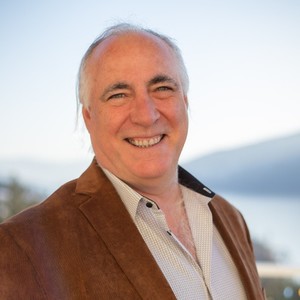
Chairman at Generation Mining
Co-founded several successful mining companies over 35 years including Wheaton River, Thompson Creek and Glencairn Gold. Former editor of The Northern Miner Magazine.
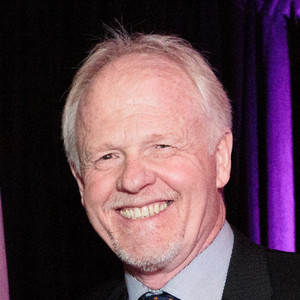
Vice-President, Exploration at Unknown
Exploration Geologist with 40 years experience in Canada and abroad. Former Exploration Manager BHP Minerals Eastern Canada and General Manager of VM Canada. President of PDAC 2014-2016.
Senior Exploration Geologist at Generation Mining
Has been working on the Company’s Marathon Project periodically under several operators since 2007, and continuously as project geologist since 2013. He obtained an MSc. in geology from Lakehead in 2010.