Biorem Inc. · TSXV:BRM
Biorem — Huber Environmental — Odor and Noise Specialty Conference 2002
39 slides from Biorem's conference presentation, Feb 21, 2002
Slide 1: Factors for Achieving Successful and Cost Effective Odor Abatement
FACTORS FOR ACHIEVING SUCCESSFUL AND COST EFFECTIVE ODOR ABATEMENT Odor and Noise Specialty Conference February 21, 2002 Presented by: Carl V. Huber, P.E. 1 Huber Environmental, Inc.
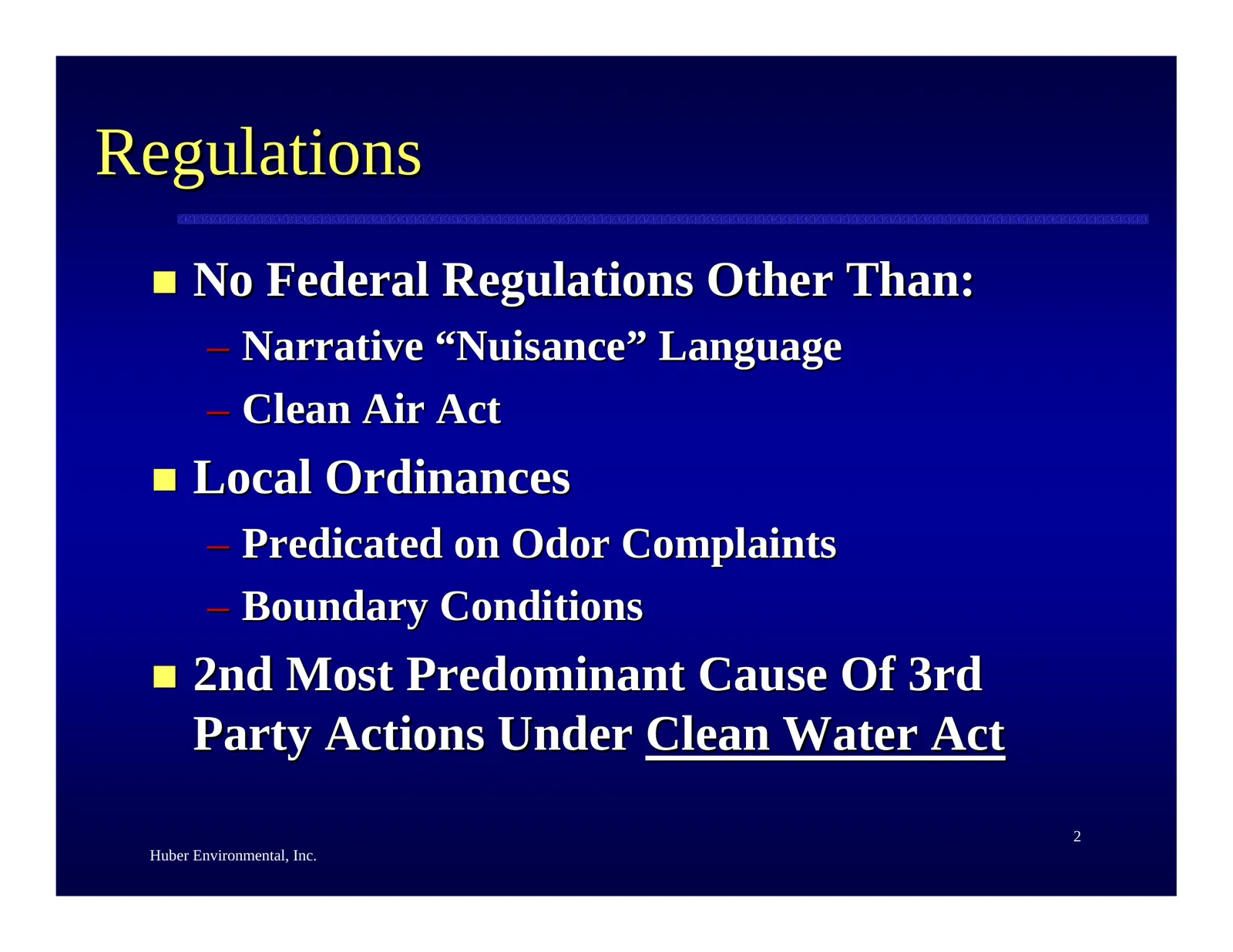
Slide 2: Regulations
Regulations No Federal Regulations Other Than: – Narrative “Nuisance” Language – Clean Air Act Local Ordinances – Predicated on Odor Complaints – Boundary Conditions 2nd Most Predominant Cause Of 3rd Party Actions Under Clean Water Act 2 Huber Environmental, Inc.
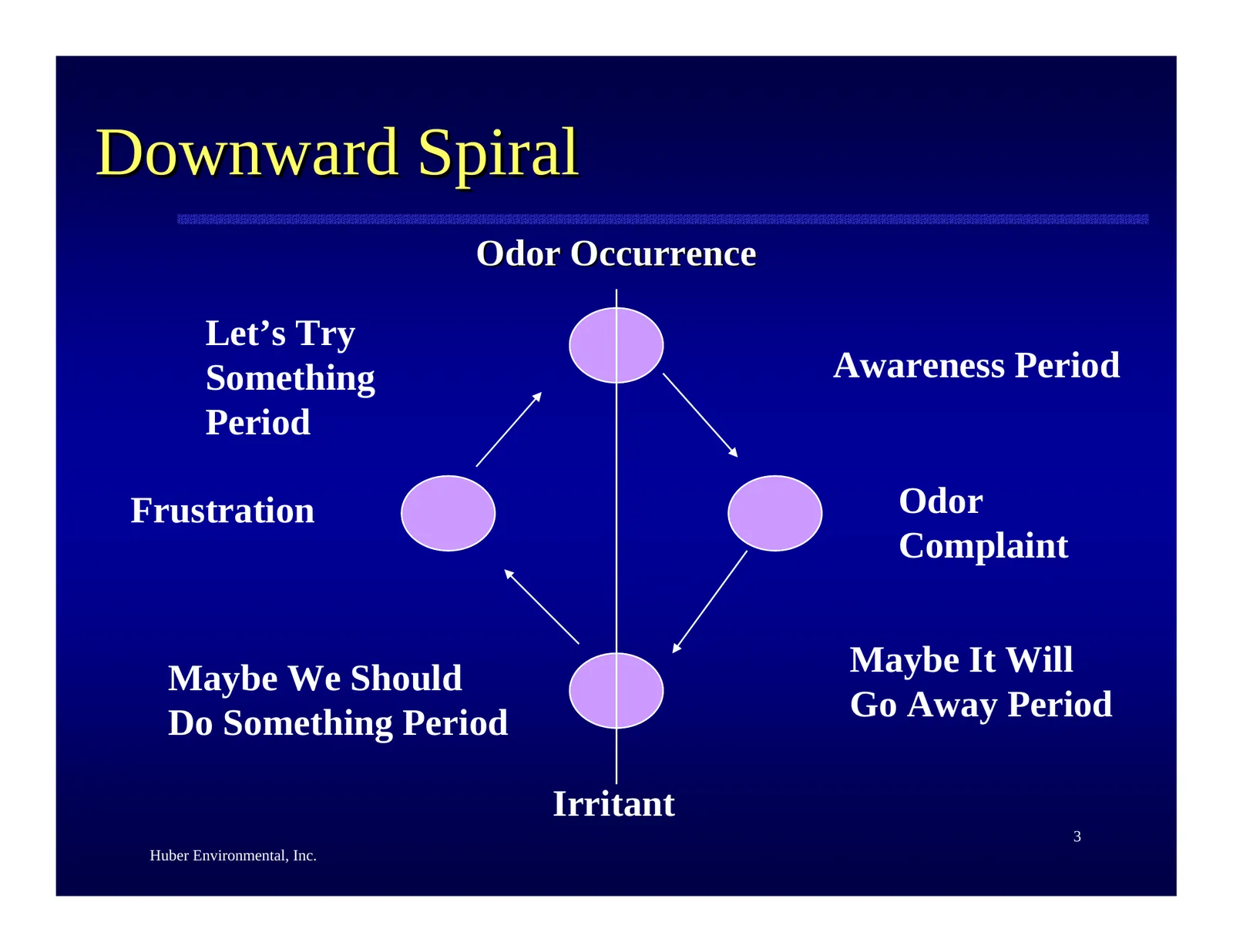
Slide 3: Downward Spiral
Downward Spiral Odor Occurrence Let’s Try Something Awareness Period Period Frustration Odor Complaint Maybe It Will Maybe We Should Go Away Period Do Something Period Irritant 3 Huber Environmental, Inc.
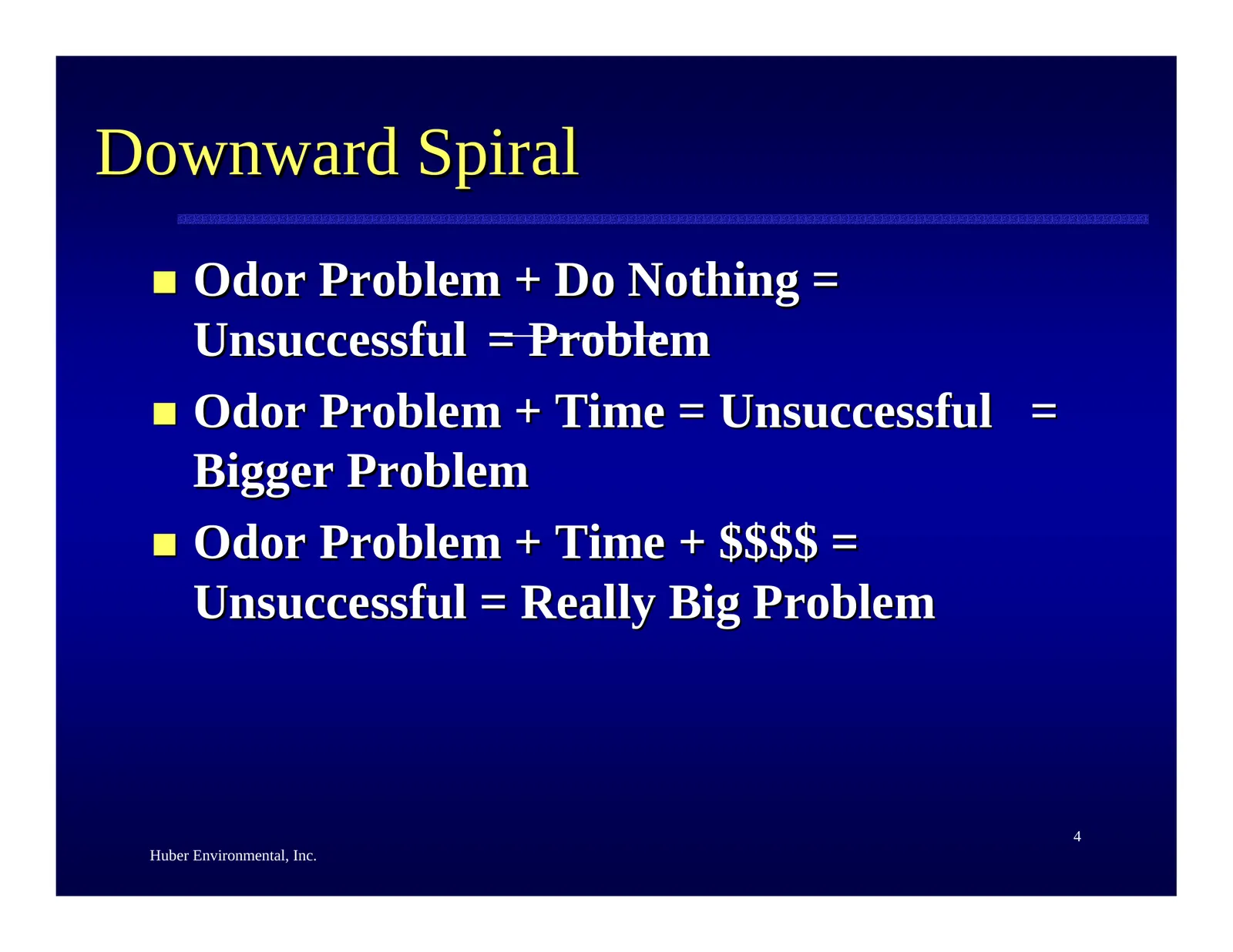
Slide 4: Downward Spiral
Downward Spiral Odor Problem + Do Nothing = Unsuccessful = Problem Odor Problem + Time = Unsuccessful = Bigger Problem Odor Problem + Time + $$$$ = Unsuccessful = Really Big Problem 4 Huber Environmental, Inc.
Slide 5: Historic Approach - Trial & Error
Historic Approach - Trial & Error How Are Sources Selected? – Subjective – Those “Smelling” The Worst – Those Which We Can Do Something About What Solution? – What Has “Worked” In The Past – Vendors – Case Studies Will It “Work”? - “No Idea” 5 Huber Environmental, Inc.
Slide 6: Principles of Odor Science
Principles of Odor Science Unsuccessful Odor Abatement Projects Due to Lack of Understanding of the Principles Of Odor Science – Psychology of Public – Types of Odorants – Concept of Threshold – Odor Persistence – Concept of Mass Vs. Concentration – Odor Addition 6 Huber Environmental, Inc.
Slide 7: Sense of Smell
Sense Of “Smell” Neurological Impacts – Olfactory Epithelium Nerve Connected Directly To Olfactory Bulb Travels Directly To Brain – Trigeminal Nerve Reacts To Painful Smells Stimulates a Reaction – Olfactory System Very Sensitive Can Detect Smells at Very Low Concentrations 7 Huber Envir
Slide 8: Sense of Smell
Sense Of “Smell” Psychological Impacts – Positive Smells - Associated With Previous Good Association Or Perceived Quality Fragrance Aroma – Negative Smells - Associated With Previous Bad Association or Perceived Quality Odor Stench 8 Huber Environmental, Inc.
Slide 9: Positive and Negative Smells
Positive and Negative Smells Positive Smell Can Be Intensity Related – Dependent on the Type of Fragrance or Aroma, Increased Intensity Can Be Both Good and Bad Negative Smell Is Not Intensity Related – Regardless of Intensity, Odor Will Be Judged to Be Negative Wastewater Odors Are Usually Pe
Slide 10: Types of Odorants
Types of Odorants An Odorant is Any Substance That Will Trigger a Smell General Classification of Odorants – Sulfur Based – Nitrogen Based 10 Huber Environmental, Inc.
Slide 11: Types of Odorants
Types of Odorants Sulfur Based – Hydrogen Sulfide – Reduced Sulfur Compounds – Mercaptan Nitrogen Based – Ammonia – Amines – Skatoles – Indoles 11 Huber Environmental, Inc.
Slide 12: Types of Odorants
Types of Odorants Incoming Sewers and Headworks – Hydrogen Sulfide – Mercaptan – Industrial Waste Contributions Primary Clarifiers – Hydrogen Sulfide – Mercaptan – Reduced Sulfur Compounds 12 Huber Environmental, Inc.
Slide 13: Types of Odorants
Types of Odorants Aeration Tanks – Esters – Skatoles – Indoles Solids Processing Units – Hydrogen Sulfide – Ammonia – Amines 13 Huber Environmental, Inc.
Slide 14: Types of Odorants
Types of Odorants An Odor is Comprised of Many Odorants Assuming Only Hydrogen Sulfide Can Lead to Faulty Conclusions Must Consider Odor as Odor and Not Individual Components 14 Huber Environmental, Inc.
Slide 15: Concept of Threshold
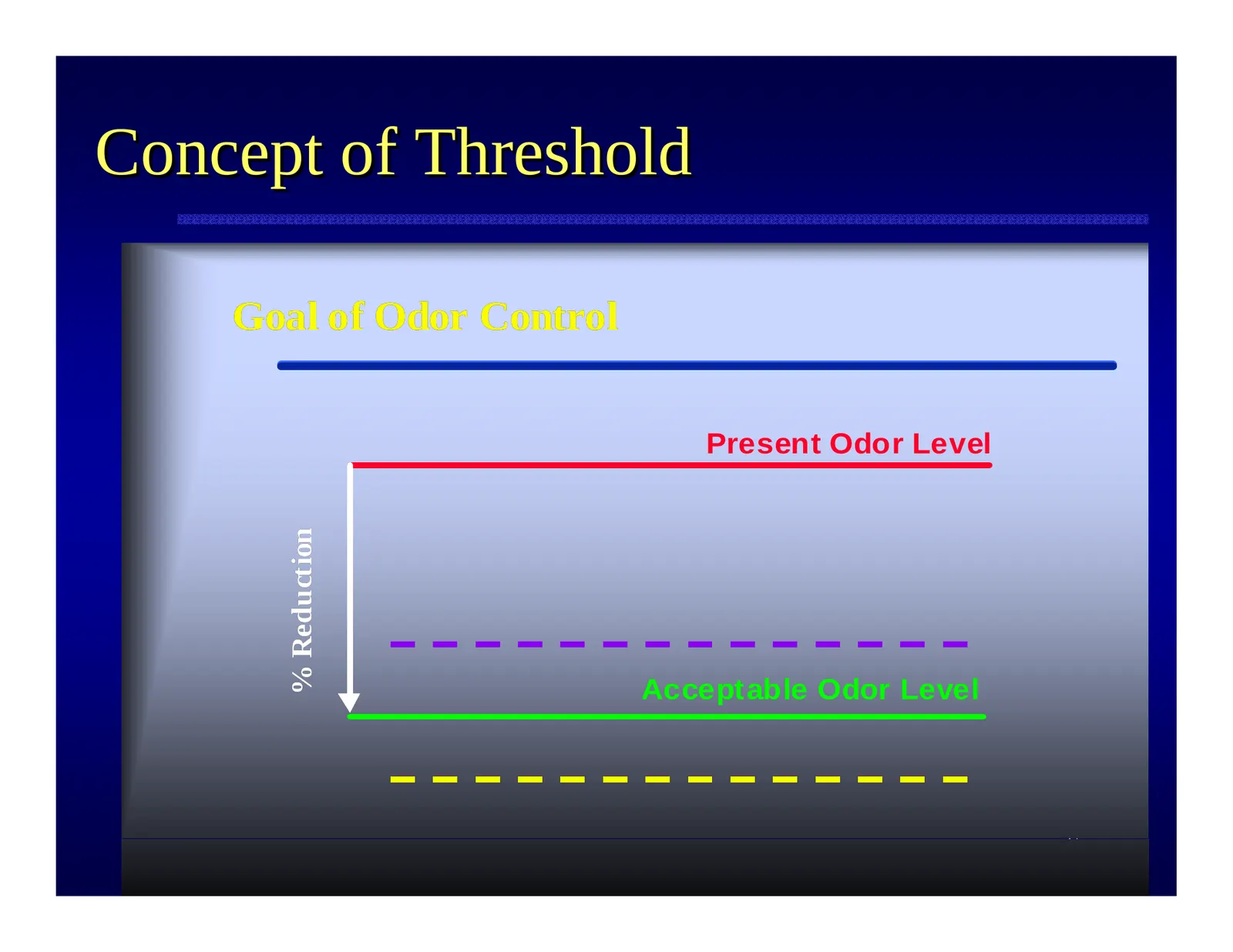
Concept of Threshold Since Intensity is Not a Factor For Negative Odors - Odor Must Be Reduced Below Its Threshold Concentration The Threshold Concentration Will Vary With the Type of Odorant Threshold Can Be Defined as Dilution to Threshold Ratio (D/T) – D/T of 1,000 Requires 1,000 Dilutions
Slide 16: Concept of Threshold
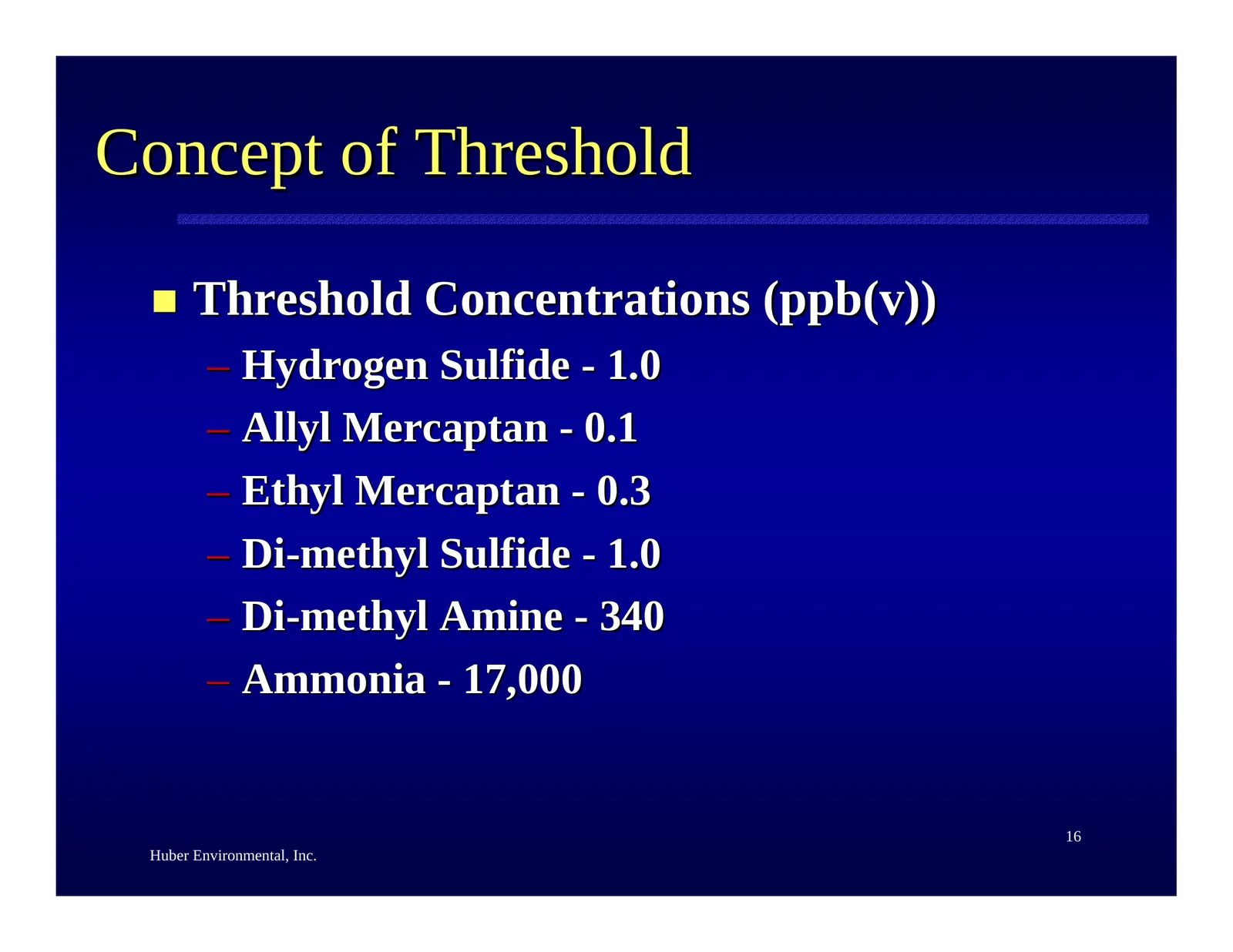
Concept of Threshold Threshold Concentrations (ppb(v)) – Hydrogen Sulfide - 1.0 – Allyl Mercaptan - 0.1 – Ethyl Mercaptan - 0.3 – Di-methyl Sulfide - 1.0 – Di-methyl Amine - 340 – Ammonia - 17,000 16 Huber Environmental, Inc.
Slide 17: Concept of Threshold: % Reduction
Concept of Threshold Goal of Odor Control Present Odor Level % Reduction Acceptable Odor Level 17 Huber Environmental, Inc.
Slide 18: Odor Persistence
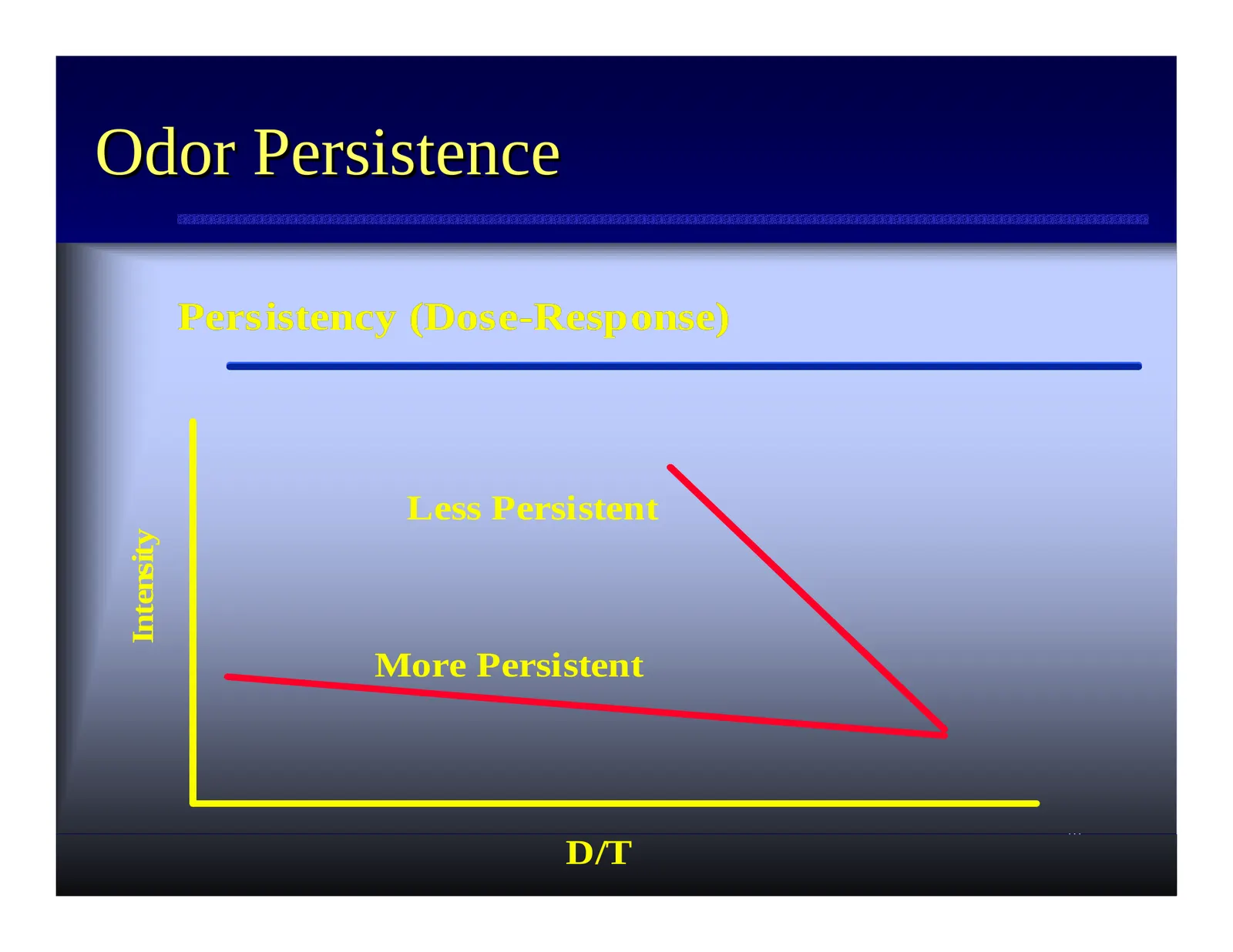
Odor Persistence Only Measuring D/T Assumes that All Odorants Will Persist in the Environment an Equal Amount of Time Some Odors Will “Linger” Longer Than Others This is Considered the Dose - Response of the Odor 18 Huber Environmental, Inc.
Slide 19: Odor Persistence
Odor Persistence Persistency (Dose-Response) Less Persistent Intensity More Persistent 19 Huber Environmental, Inc. D/T
Slide 20: Concept of Mass
Concept of Mass Transport Distance of Odors Dependent on Mass (Odor Emission Rate - OER) Mass = Concentration x Exhaust Rate Source May Have High Concentration and Low Exhaust Rate - May Not Be a Problem Source Source May Have Low Concentration and High Exhaust Rate - May Be a Problem 20 Hub
Slide 21: Odor Addition
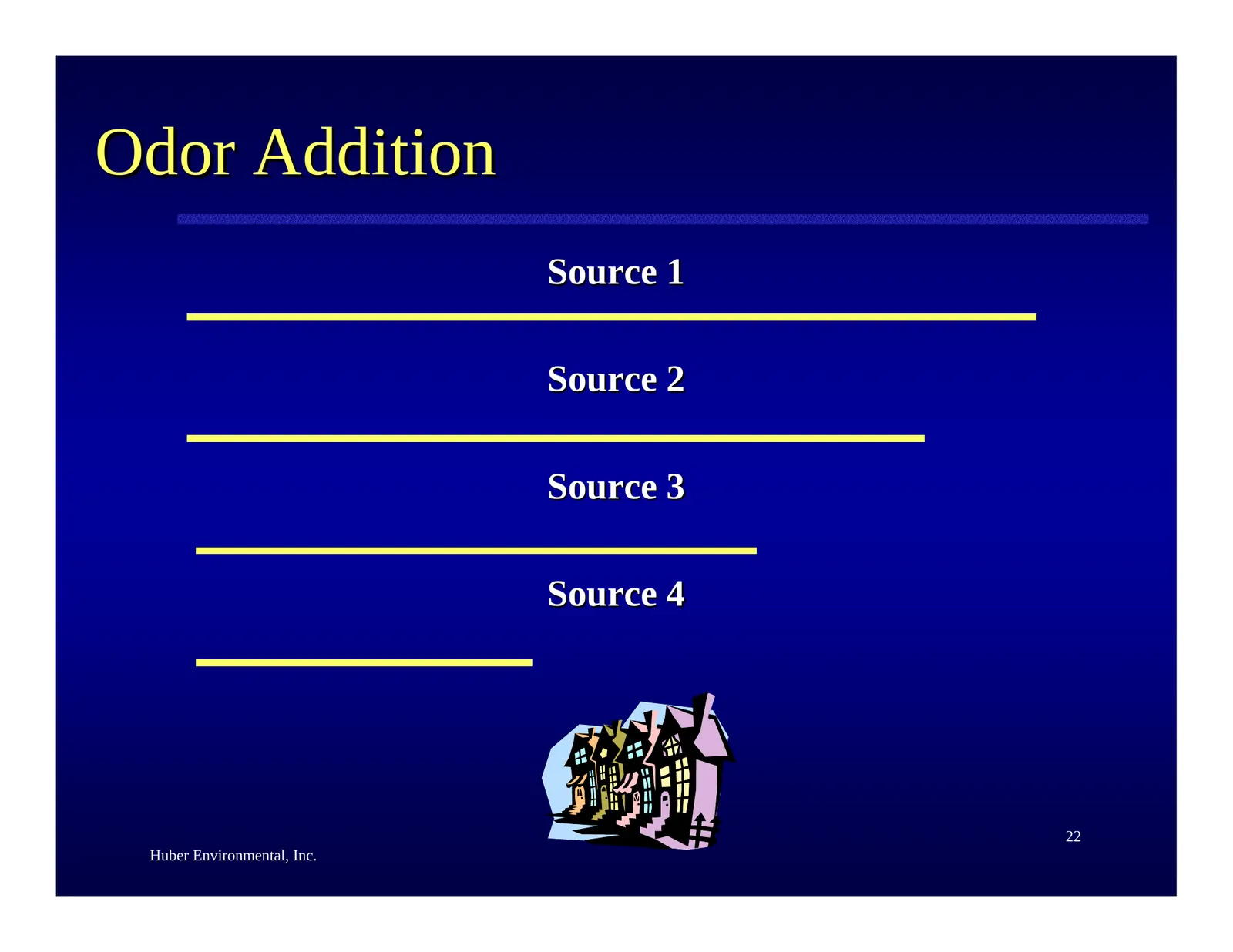
Odor Addition Unless Comprised of the Same Odorants, Odors From Different Sources are Not Necessarily Additive Odors From Different Sources Will Transport Varying Distances An Important Principle is That Those Odors (Sources) That Travel The Farthest Be Eliminated First 21 Huber Environmental,
Slide 22: Odor Addition
Odor Addition Source 1 Source 2 Source 3 Source 4 22 Huber Environmental, Inc.
Slide 23: Systems Approach
Systems Approach Determine Potential Sources – All Sources Should Be Considered Sample All Potential Sources – Point Sources – Area Sources – Volume Sources 23 Huber Environmental, Inc.
Slide 24: Systems Approach
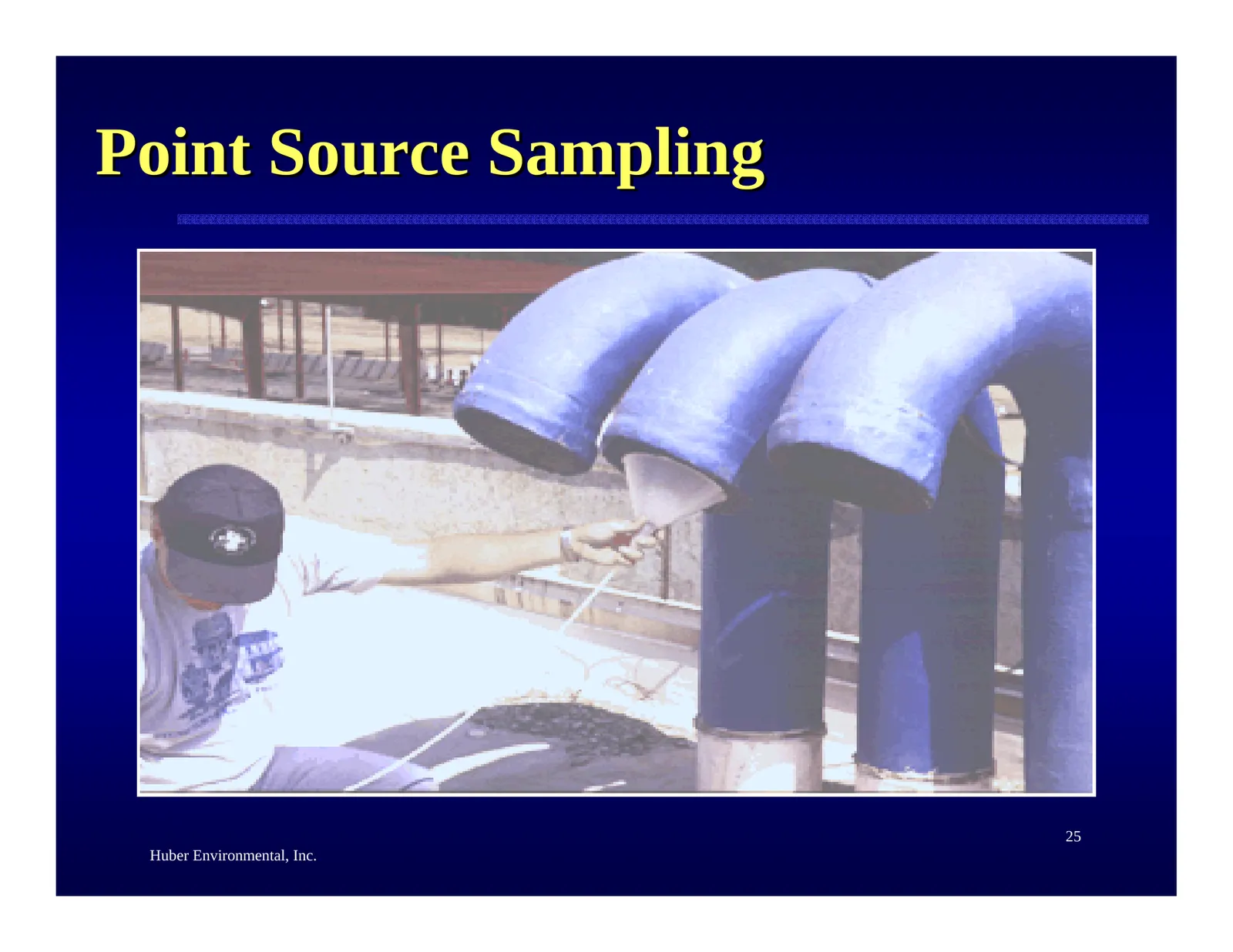
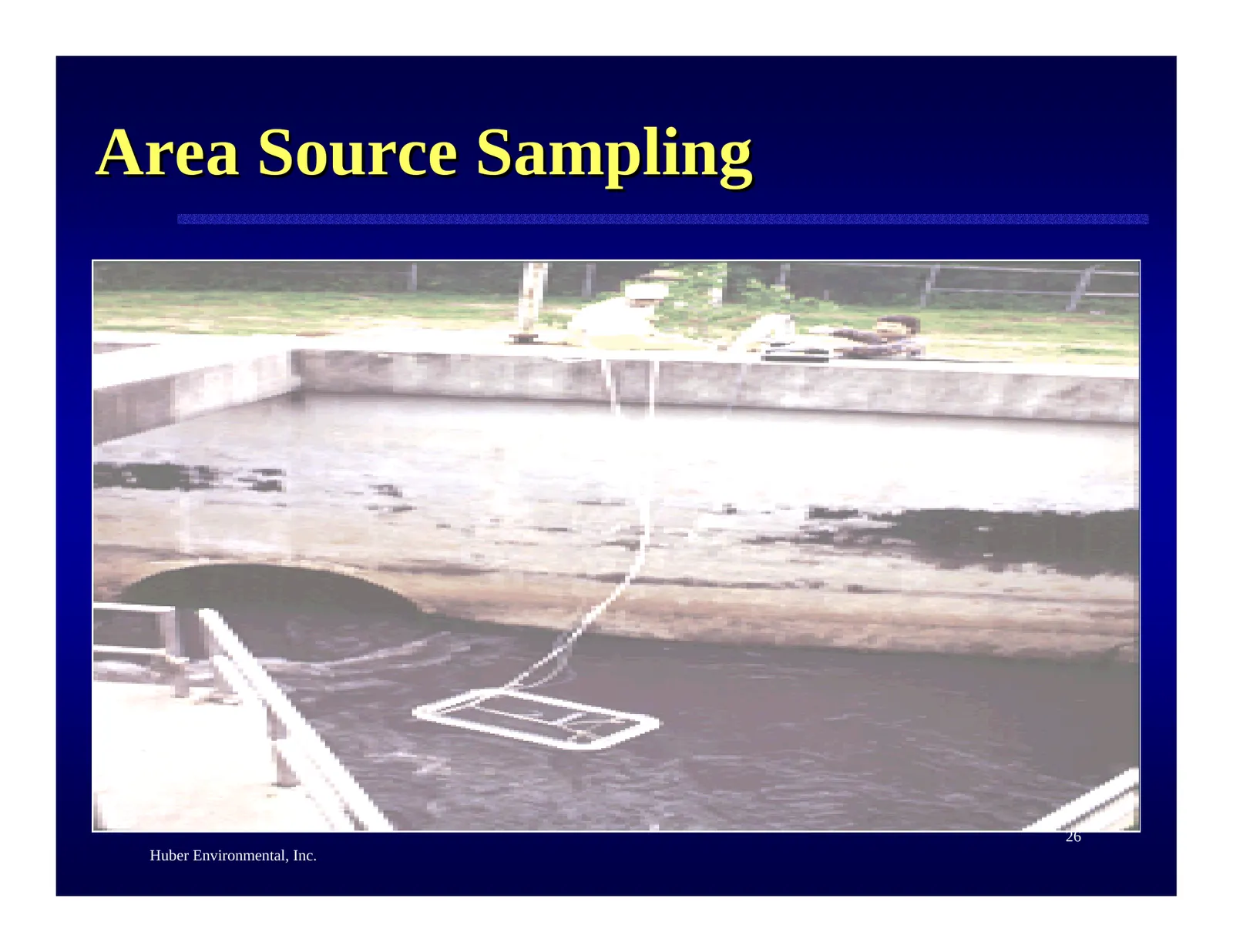
Systems Approach Point Sources – Fans – Vents Area Sources – Tanks – Beds – Channels Volume Sources – Aeration Tanks – Aerated Grit and Channels Huber Environmental, Inc. 24
Slide 25: Point Source Sampling
Point Source Sampling 25 Huber Environmental, Inc.
Slide 26: Area Source Sampling
Area Source Sampling 26 Huber Environmental, Inc.
Slide 27: Analysis
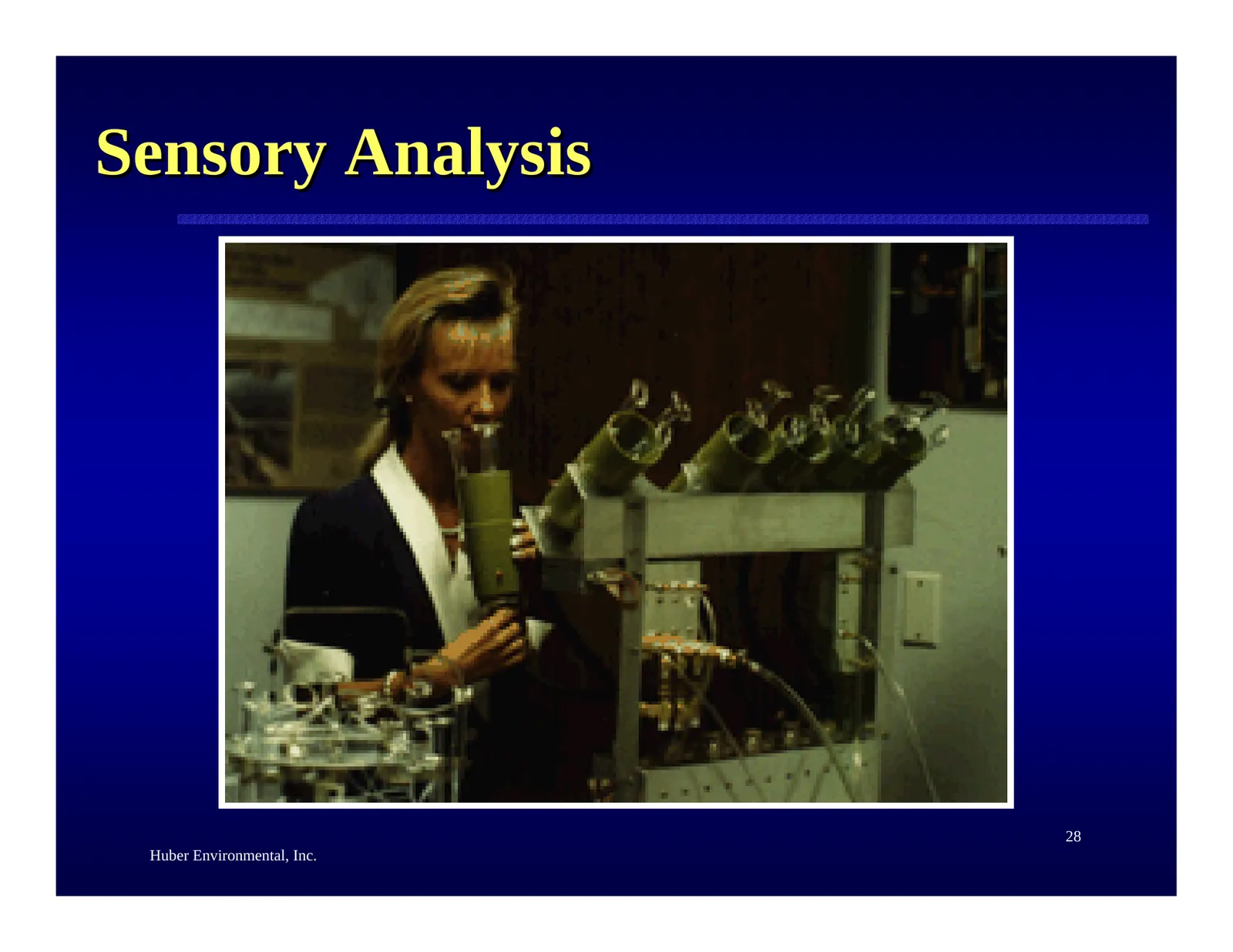
Analysis Perform Sensory Analyses – Dilution to Threshold Ratio (D/T/ – Surrogate Intensity - n-butanol – Dose-Response Perform Pollutant Specific Analyses – H2S – Mercaptan – Ammonia 27 Huber Environmental, Inc.
Slide 28: Sensory Analysis
Sensory Analysis 28 Huber Environmental, Inc.
Slide 29: Systems Approach
Systems Approach Calculate Odor Emission Rate (OER) – OER = D/T x Exhaust Rate Determine Transport Distances – Dispersion Modeling – Radial – Frequency – Average – Peak 29 Huber Environmental, Inc.
Slide 30: Systems Approach
Systems Approach Determine Transport Distance - Consider – Air Stability – Wind Speed – Wind Direction Rank Sources – OER – Transport Distance – D/T 30 Huber Environmental, Inc.
Slide 31: Systems Approach
Systems Approach Establish an Objective – Boundary – Specific Receptor – Frequency – Budget Determine Required Percent Removals Based on Objective 31 Huber Environmental, Inc.
Slide 32: Systems Approach
Systems Approach Percent Removal Dependent On: – Objective – OER – D/T – Site Topography and Geography Select Abatement Alternative – % Removal – Economics 32 Huber Environmental, Inc.
Slide 33: Other Aids
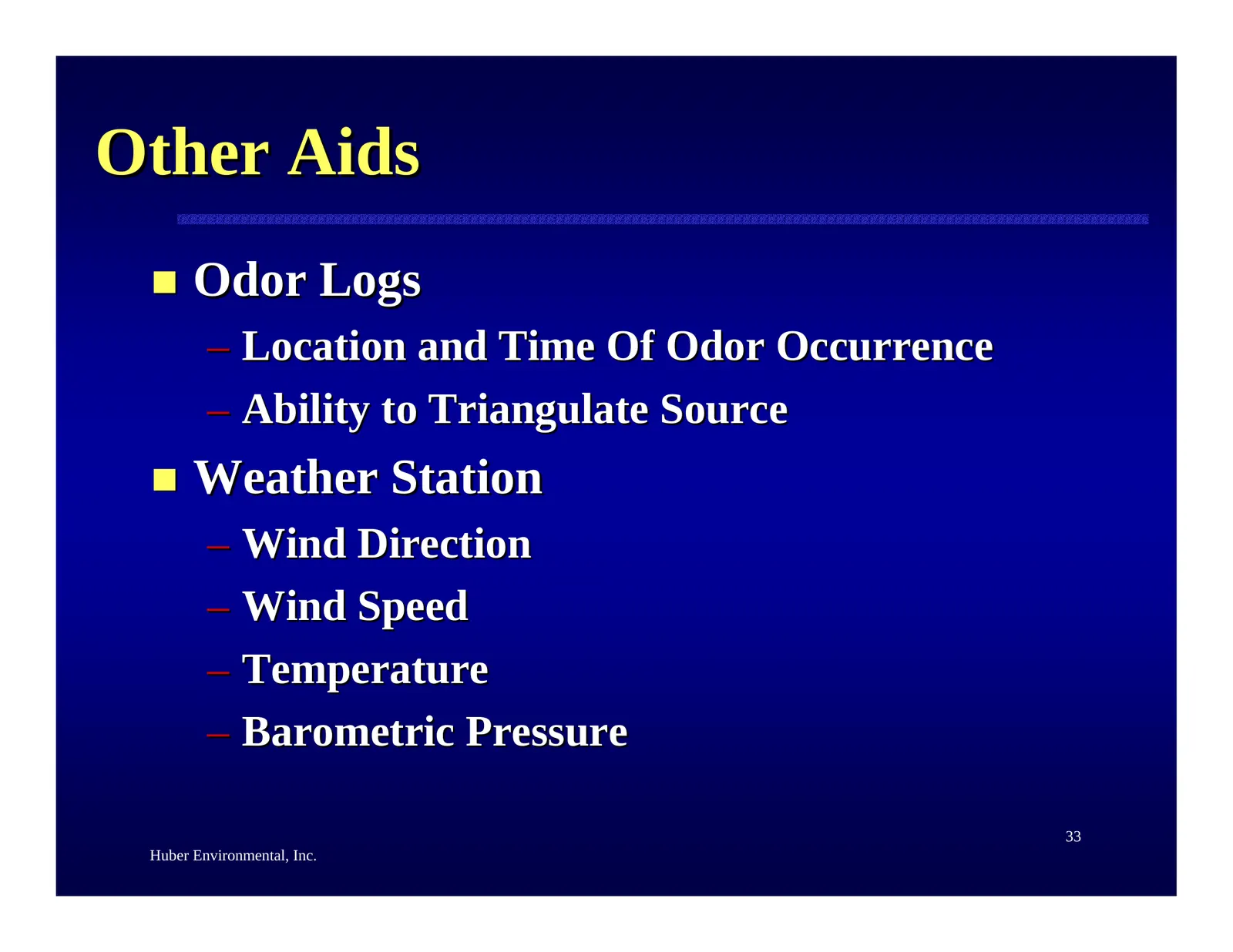
Other Aids Odor Logs – Location and Time Of Odor Occurrence – Ability to Triangulate Source Weather Station – Wind Direction – Wind Speed – Temperature – Barometric Pressure 33 Huber Environmental, Inc.
Slide 34: Problem Unit Processes
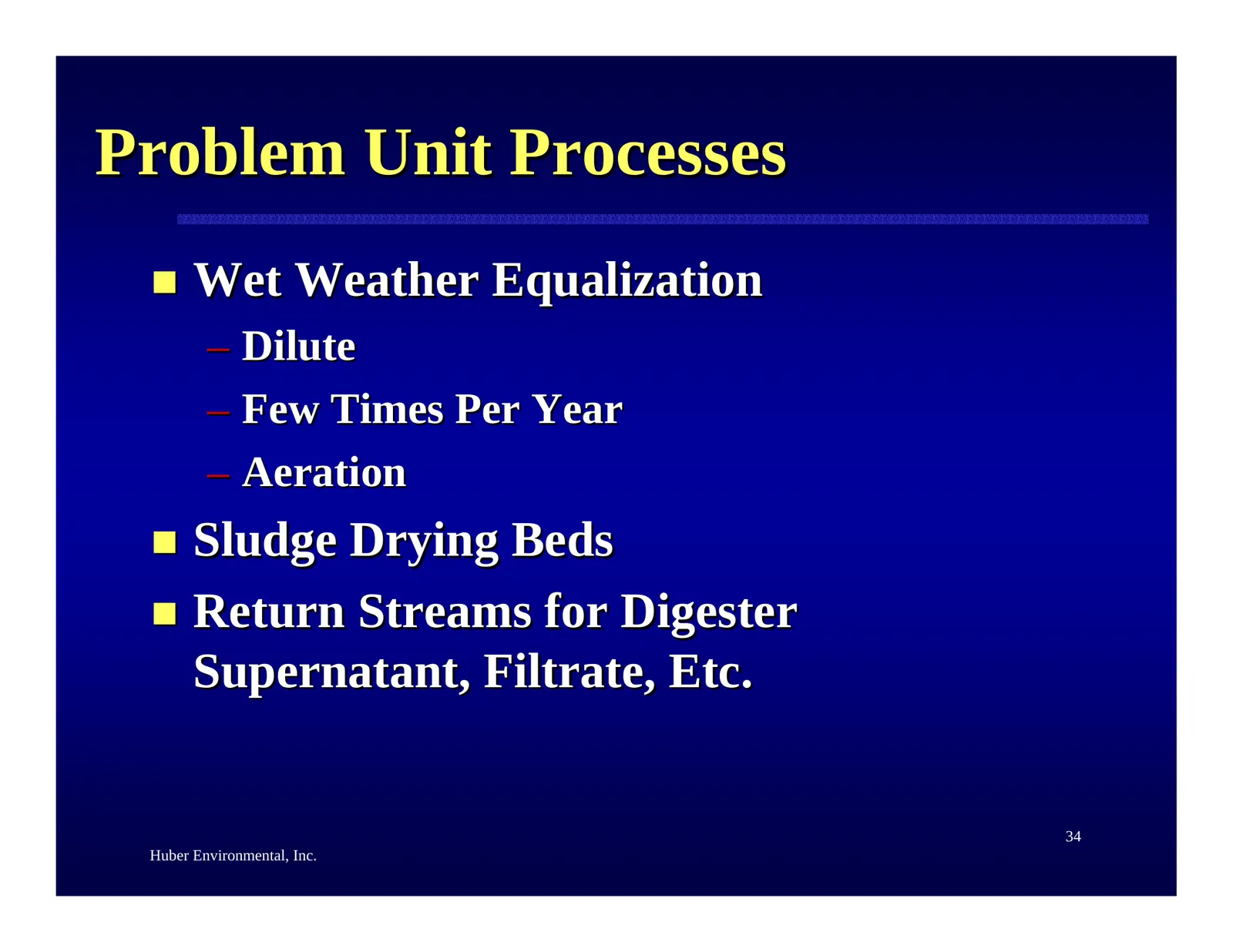
Problem Unit Processes Wet Weather Equalization – Dilute – Few Times Per Year – Aeration Sludge Drying Beds Return Streams for Digester Supernatant, Filtrate, Etc. 34 Huber Environmental, Inc.
Slide 35: Problem Unit Processes
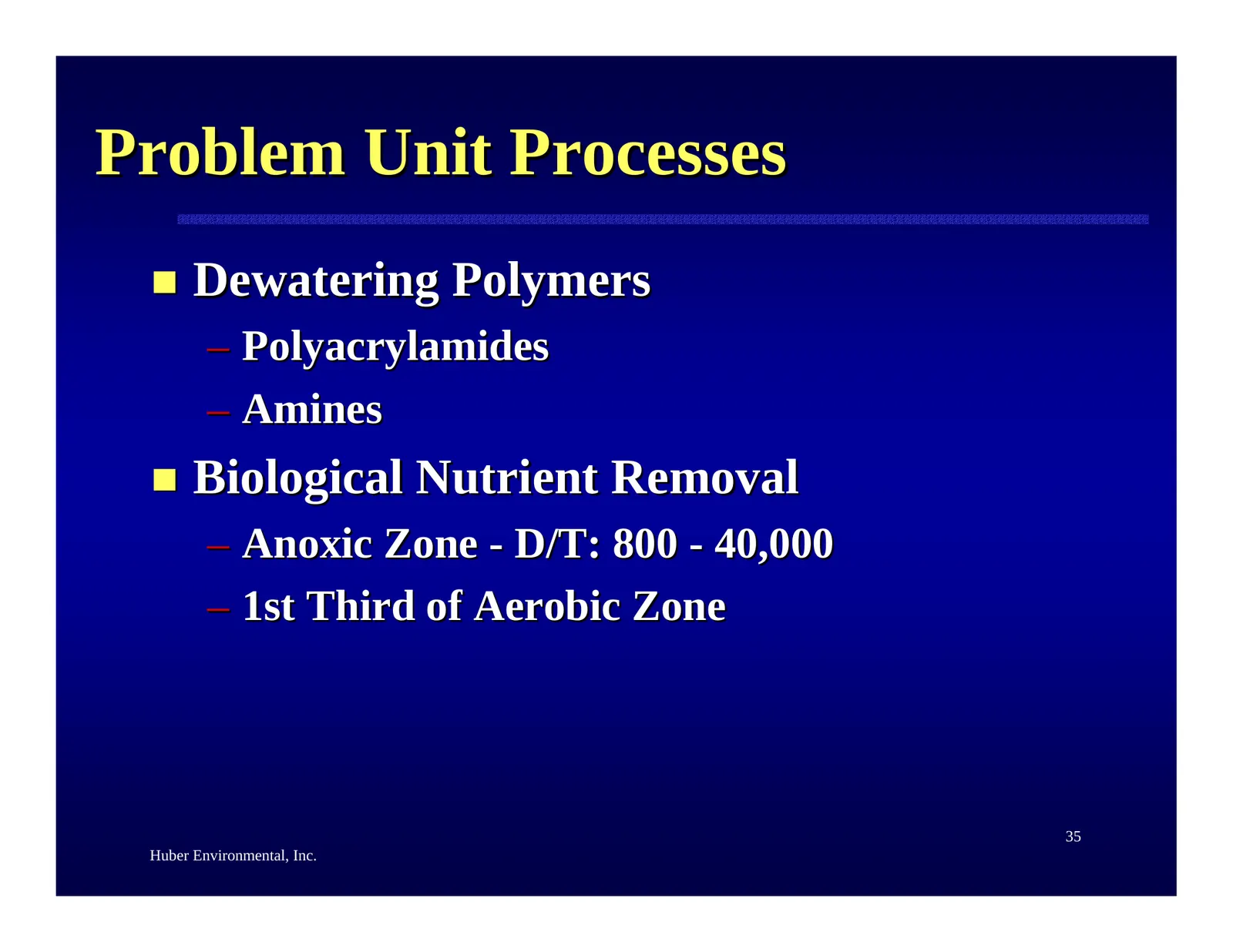
Problem Unit Processes Dewatering Polymers – Polyacrylamides – Amines Biological Nutrient Removal – Anoxic Zone - D/T: 800 - 40,000 – 1st Third of Aerobic Zone 35 Huber Environmental, Inc.
Slide 36: Foul Air Capture
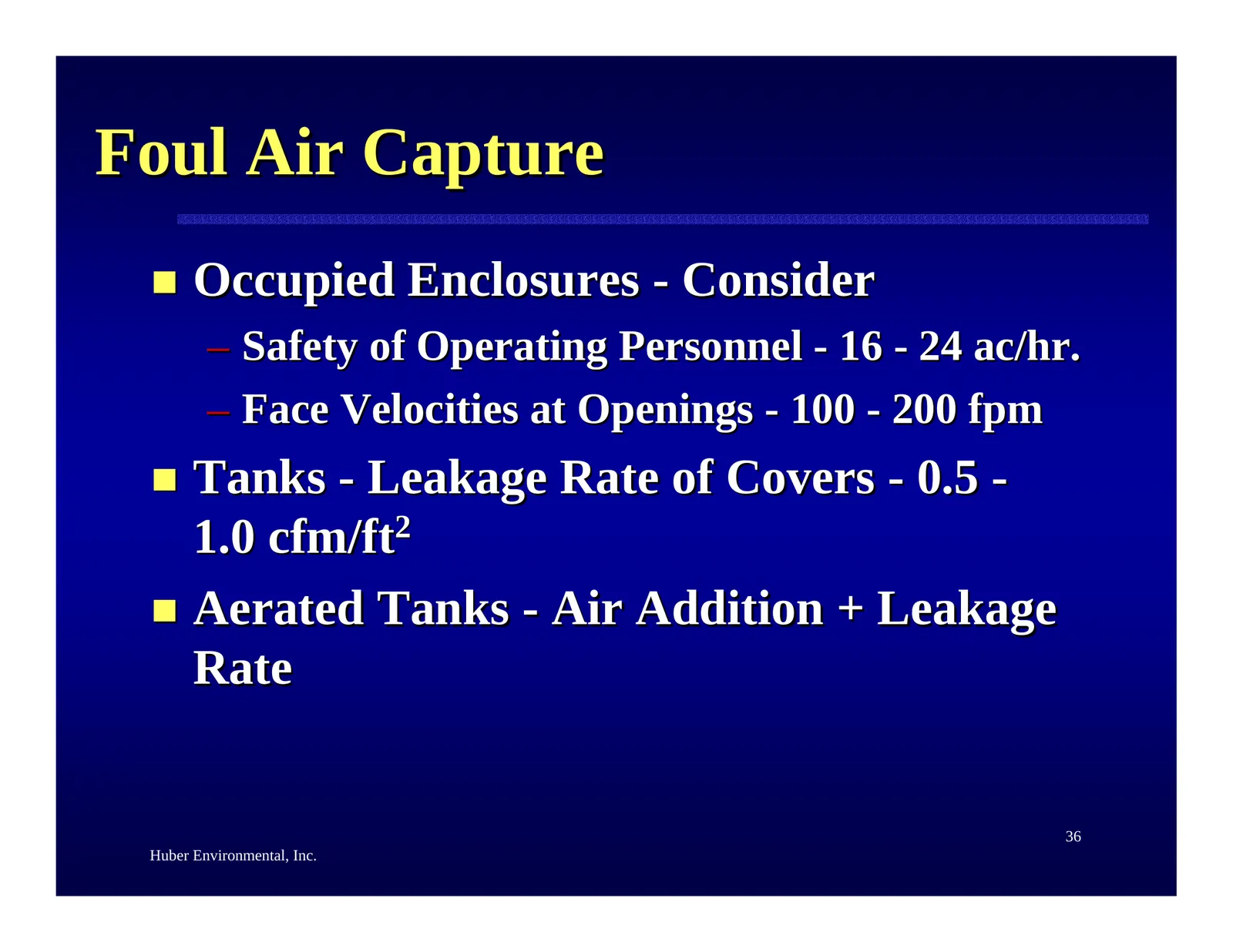
Foul Air Capture Occupied Enclosures - Consider – Safety of Operating Personnel - 16 - 24 ac/hr. – Face Velocities at Openings - 100 - 200 fpm Tanks - Leakage Rate of Covers - 0.5 - 1.0 cfm/ft2 Aerated Tanks - Air Addition + Leakage Rate 36 Huber Environmental, Inc.
Slide 37: Other Issues
Other Issues Dispersion – Ensure Adequate Stack Velocity And Height – Consider No Dispersion From Bed Bio-filter Training 37 Huber Environmental, Inc.
Slide 38: Summary
Summary Historical Trial and Error Approach Leads to Time, Unsatisfied Public and $$$ Do Not Determine Source of Odor Problems Subjectively Follow Systems Approach Using Basic Principles of Odor Science 38 Huber Environmental, Inc.
Slide 39: Questions
Questions 39 Huber Environmental, Inc.
Source: Internet Archive copy of biorem.biz
More decks from Biorem Inc.
 Investor Presentation (February 2022)18 slides · February 2022
 BIOREM Technologies — Investor Presentation (February 2006)34 slides · February 2006
 BIOREM Technologies — Investor Presentation (February 2006)34 slides · February 2006
 BIOREM Technologies — Investor Presentation (January 2006)16 slides · January 2006
 BIOREM Technologies — Missouri WEA 200428 slides · March 2004
 BIOREM Technologies — Investor Presentation (June 2003)19 slides · June 2003