

15 September 2025
Savannah Resources Plc
(AIM: SAV) ('Savannah', or the 'Company')
Barroso Lithium Project - JORC Resource Update
JORC Resources increased by 40% at the Barroso Lithium Project to 39Mt including 27Mt in the Measured and Indicated categories
Savannah Resources Plc, the developer of the Barroso Lithium Project (the 'Project') in Portugal, a 'Strategic Project' under the European Critical Raw Materials Act, is pleased to announce a 40% increase in the Project's overall JORC (2012) compliant Resource to over 39Mt and a corresponding 41% increase in the Project's higher quality Measured and Indicated ('M&I') Resources to nearly 27Mt. With average grade maintained at 1.05% Li2O, the new estimate takes the Project's lithium resources past 1Mt of lithium carbonate equivalent for the first time. Furthermore, at nearly 27Mt, the new M&I Resources from which the Project's first JORC ore reserve will be created, approximately equate to the entire previous resource.
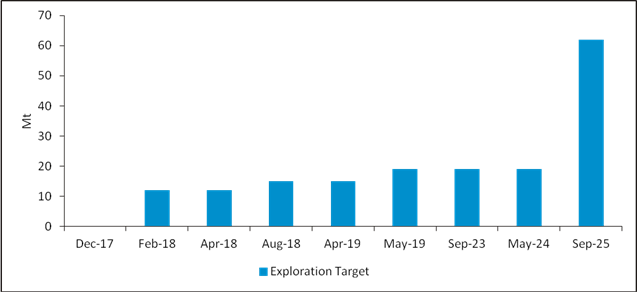
Accompanying the increased and upgraded resource is a new Exploration Target1, which for the first time, includes targets for each of the Project's five orebodies as well as the remainder of the Project's lease areas. At 35-62Mt at 0.9%-1.2% Li2O2 this represents more than a 200% increase on the previous Exploration Target.
This substantial growth in resources, all drawn from within the Project's lease areas, significantly increases its strategic importance to all its stakeholders. This is both as a major contributor of lithium raw material to Europe's battery value chain, but also as a significant, long term, value creator for the local region, the Portuguese economy and Savannah's shareholders.
Highlights:
· JORC (2012) compliant Resources at the Project increased by 40% to 39.1Mt at 1.05% Li2O based on extensions to existing orebodies all located within the Project's existing lease areas.
· A larger resource offers the potential for the Project's producing life to be longer and economic and social benefits to be greater, while constraining development to the lease areas.
· A new Exploration Target3, estimated from drilling and surface exploration data, outlines the potential for an additional 35 to 62Mt at a range from 0.9% to 1.2% Li2O4. This represents more than a 200% increase from the previous Exploration Target estimate.
· Contained Li2O resources increased by 41% to 411,900 tonnes due to a slight increase in average grade. The new JORC Resource takes contained Li2O mineralisation over the 1Mt lithium carbonate equivalent level for the first time (1.019Mt).
· Measured and Indicated resources increased by 42% to 26.6Mt at 1.05% Li2O, representing 68% of the total new resource and equating to 95% of the total May 2024 JORC Resource.
· Virtually all the 2023 Scoping Study mining inventory (20.5Mt) was converted into Measured and Indicated Resources, thus reinforcing the quality of the economic study work done to date.
· All deposits remain open both along strike and down dip, offering further upside potential.
· The new resource estimate will form the basis for the Project's maiden JORC Reserve estimate, which will underpin the Definitive Feasibility Study ('DFS'), paving the way for the Project to advance to production as Europe's largest spodumene lithium deposit.
Savannah's Chief Technical Officer, Dale Ferguson said, "The primary goal of the recent resource-focused drilling, which we completed in July, was to upgrade the existing resources at Pinheiro, Reservatório and Grandão in preparation for the Project's maiden reserve estimate for the DFS. However, the drilling also confirmed several orebody extensions and consistently returned impressive assays. Hence, it became clear that we would be able to report a substantial increase in tonnage as well. It's great to be able to do that today with a 40% overall increase in tonnage, including a 188% and 140% increase at Reservatório and Pinheiro respectively, and a 42% increase in Measured and Indicated resources.
"Importantly the updated resource also confirms the grade consistency of the mineralisation, with the Project retaining its overall 1.05% Li2O average grade. The updated resource also continues to confirm past exploration targets. Hence this gives us confidence in our ability to convert the substantially increased Exploration Target, which we have also announced today, into more resources over time."
Savannah's Chief Executive Officer, Emanuel Proença, added, "My thanks go to the exploration & geology teams for their tireless work to complete the drilling and produce this significant increase in the Project's resources and exploration targets. It's very exciting to witness this next step in the Project's evolution and to get further insight into the potential the Project's leases have to offer in terms of additional lithium prospectivity.
"The expansion of the resource close to 40Mt gives good visibility through to a longer producing life than was envisaged in the 2023 Scoping Study. This has clear benefits for all stakeholders as the potential now exists for the Project to make a greater contribution in terms of lithium production, value and job creation, tax and royalty payments, and numerous other socio-economic benefits over a longer period. Furthermore, when the resources are considered alongside the much increased Exploration Target we have also announced, it is possible to envisage that the Project could pass the milestone of 100Mt of resources at some point in the future - benefiting our growing team, our partners, our region, Portugal and Europe, and leaving countless barrels of oil in the ground."
1,2,3,4Cautionary Statement: The potential quantity and grade of the Exploration Targets is conceptual in nature, there has been insufficient exploration work to estimate a mineral resource and it is uncertain if further exploration will result in defining a mineral resource.
Table 1. Summary of Updated Mineral Resource Estimation Summary
|
Deposit |
Resource |
Tonnes |
Li2O |
Fe2O3 |
Li2O |
|
Mt |
% |
% |
Tonnes |
||
|
All Deposits |
Measured |
8.7 |
1.06 |
0.7 |
93,100 |
|
Indicated |
17.9 |
1.05 |
0.8 |
187,700 |
|
|
Inferred |
12.4 |
1.06 |
0.7 |
131,100 |
|
|
Total |
39.1 |
1.05 |
0.8 |
411,900 |
Rounding discrepancies may occur
Figure 1. Growth of JORC (2012) compliant resource tonnage at the Barroso Lithium Project since 2017
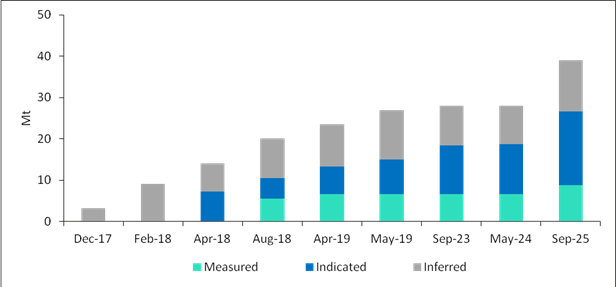
Table 2. Exploration Target5 Summary
|
Deposit |
Tonnage Range (Mt) |
Li2O |
|
|
Lower |
Upper |
||
|
Reservatório |
5.0 |
7.0 |
0.9-1.2% |
|
Grandão |
4.0 |
8.0 |
1.0-1.2% |
|
Pinheiro |
2.0 |
4.0 |
1.0-1.3% |
|
Aldeia Block A |
2.0 |
4.0 |
1.0-1.3% |
|
NOA |
2.0 |
4.0 |
1.0-1.2% |
|
Regional (refer to Table 5) |
20.0 |
35.0 |
0.9-1.2% |
|
Total Exploration Target |
35.0 |
62.0 |
0.9-1.2% |
|
5Cautionary Statement: The potential quantity and grade of the Exploration Targets is conceptual in nature, there has been insufficient exploration work to estimate a mineral resource and it is uncertain if further exploration will result in defining a mineral resource. |
Figure 2. Growth in Upper limit of Exploration Target6 tonnage at the Barroso Lithium Project since 2017
Industry comparison
Following this significant upgrade to its JORC Resource base, the Barroso Lithium Project retains its position as the largest spodumene lithium resource in Europe. Furthermore, it now compares even more favorably to a wide group of spodumene peer projects from around the world, which are at various stages along the development curve, including some in construction and production.
With all its orebodies remaining open, and numerous prospects on the leases still to be drilled to JORC Resource standards, significant opportunities remain to further increase the Project's resource over time. This would then present a great opportunity to extend the life of the operation, amplify the socio-economic benefits the Project can bring to the region, and increase the positive impact it can have in building Portugal's new lithium industry well into the future.
|
6Cautionary Statement: The potential quantity and grade of the Exploration Targets is conceptual in nature, there has been insufficient exploration work to estimate a mineral resource and it is uncertain if further exploration will result in defining a mineral resource. |
Figure 3. Spodumene lithium projects with resources up to 100Mt
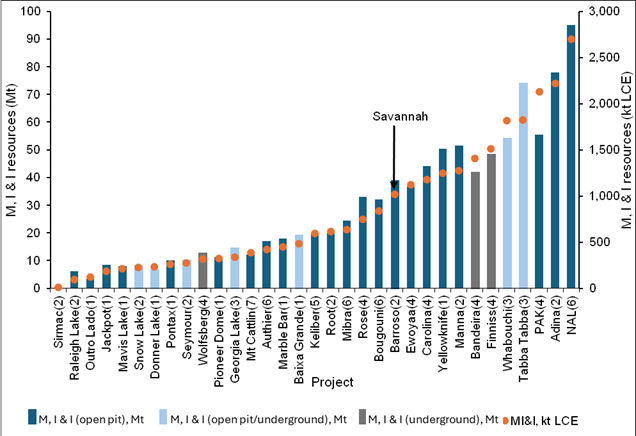
Key: Project status - (1) Resource bearing; (2) Post Scoping Study/Prelim Economic Assessment; (3) Post Pre-Feasibility Study; (4) Post Feasibility Study; (5) In construction; (6) In production; (7) Care & Maintenance
Source: External companies' websites and reports
Further Information
Mineral Resource Estimates for the Grandão, Reservatório, Pinheiro and NOA lithium deposits have been prepared by Ashmore Advisory Pty Ltd, an external and independent mining consultancy. The deposits form part of Savannah's Barroso Lithium Project, located in northern Portugal and are highlighted in Figure 4. The Mineral Resource Estimates for the deposits at the Project have been classified as Measured, Indicated and Inferred Mineral Resource in accordance with the JORC Code, 2012 Edition and are summarised in Tables 3 and 4 and Appendix 1. In addition, an updated exploration target7 for the existing resources and other identified pegmatites within the C-100 licence, adjacent C-100 licence extension application8 area and Aldeia licence9 (Figure 5) was also estimated in accordance with the JORC Code, 2012 Edition and are summarised in Tables 5-9.
|
7Cautionary Statement: The potential quantity and grade of the Exploration Targets is conceptual in nature, there has been insufficient exploration work to estimate a mineral resource and it is uncertain if further exploration will result in defining a mineral resource. 8Part of the Reservatório deposit is situated within a 250m extension zone of the C-100 licence, which is under application. Savannah has received written confirmation from the DGEG that under article 24 of Decree-Law no. 88/90 of March 16 being relevant justification based on the resources allocated exploited and intended, Savannah has been approved an expansion up to 250m of the C-100 mining concession in specific areas where a resource has been defined and the requirement for the expansion can be justified. 9Savannah has the right to purchase the adjacent Aldeia Mining Lease ("Aldeia") and continues to evaluate this potential acquisition. Further details of the proposed transaction can be found in note 19 to the accounts in the 2024 Annual Report. |
Figure 4. Barroso Lithium Project summary map showing deposits and drill hole locations
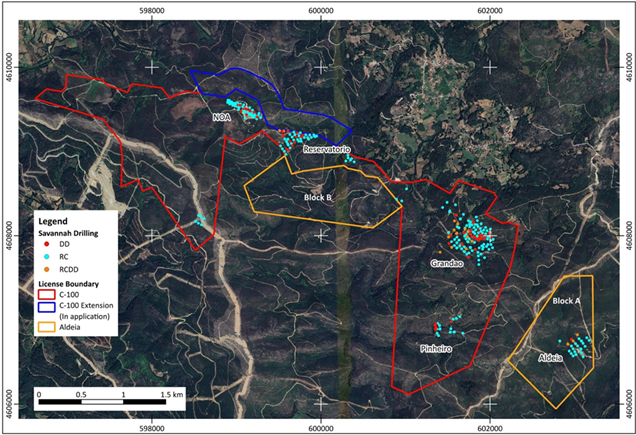
Table 3. Detailed Breakdown of Updated Mineral Resource Estimation Summary
|
Deposit |
Resource |
Tonnes |
Li2O |
Fe2O3 |
Li2O |
|
Mt |
% |
% |
Tonnes |
||
|
Grandão |
Measured |
8.7 |
1.06 |
0.7 |
93,100 |
|
Indicated |
5.0 |
1.03 |
0.8 |
51,100 |
|
|
Inferred |
4.4 |
1.06 |
0.8 |
46,400 |
|
|
Total |
18.1 |
1.05 |
0.7 |
190,600 |
|
|
Reservatório (Within C-100 Licence) |
Measured |
||||
|
Indicated |
5.3 |
0.98 |
0.9 |
52,000 |
|
|
Inferred |
0.8 |
1.10 |
0.9 |
9,200 |
|
|
Total |
6.2 |
0.99 |
0.9 |
61,100 |
|
|
Reservatório (Under Application) |
Measured |
||||
|
Indicated |
2.8 |
1.02 |
0.9 |
28,600 |
|
|
Inferred |
3.2 |
0.89 |
0.8 |
28,100 |
|
|
Total |
6.0 |
0.95 |
0.9 |
56,700 |
|
|
Reservatório (Within C-100 Licence & Under Application) |
Measured |
||||
|
Indicated |
8.1 |
1.00 |
0.9 |
81,200 |
|
|
Inferred |
4.0 |
0.90 |
0.9 |
36,100 |
|
|
Total |
12.1 |
0.97 |
0.9 |
117,300 |
|
|
Pinheiro |
Measured |
||||
|
Indicated |
2.6 |
1.11 |
0.7 |
28,500 |
|
|
Inferred |
2.2 |
1.08 |
0.7 |
23,300 |
|
|
Total |
4.8 |
1.09 |
0.7 |
51,800 |
|
|
NOA |
Measured |
||||
|
Indicated |
0.6 |
1.03 |
0.8 |
6,300 |
|
|
Inferred |
0.1 |
0.95 |
0.5 |
400 |
|
|
Total |
0.7 |
1.03 |
0.8 |
6,700 |
|
|
Aldeia (Under option) |
Measured |
||||
|
Indicated |
1.6 |
1.31 |
0.5 |
21,300 |
|
|
Inferred |
1.8 |
1.29 |
0.4 |
23,700 |
|
|
Total |
3.5 |
1.30 |
0.4 |
45,000 |
|
|
All Deposits (Excluding in Under Application area) |
Measured |
8.7 |
1.06 |
0.7 |
93,100 |
|
Indicated |
15.1 |
1.05 |
0.8 |
159,100 |
|
|
Inferred |
9.2 |
1.11 |
0.7 |
102,900 |
|
|
Total |
33.2 |
1.07 |
0.7 |
355,200 |
|
|
All Deposits (including Under Application) |
Measured |
8.7 |
1.06 |
0.7 |
93,100 |
|
Indicated |
17.9 |
1.05 |
0.8 |
187,700 |
|
|
Inferred |
12.4 |
1.06 |
0.7 |
131,100 |
|
|
Total |
39.1 |
1.05 |
0.8 |
411,900 |
*Rounding discrepancies may occur
The September 2025 Mineral Resource estimate compared to the previous Mineral Resource estimate for the Project is shown in Table 4.
Table 4. September 2025 Mineral Resource Comparison (Grand Total) to Previous Estimate
|
Deposit |
Resource |
Tonnes |
Li2O |
Li2O |
|
Mt |
% |
Tonnes |
||
|
All Deposits |
Measured |
+33% |
-3% |
+30% |
|
Indicated |
+47% |
+4% |
+54% |
|
|
Inferred |
+33% |
-1% |
+32% |
|
|
Total |
+40% |
+1% |
+41% |
Figure 5. Location Map Highlighting Prospect Locations of Exploration Targets
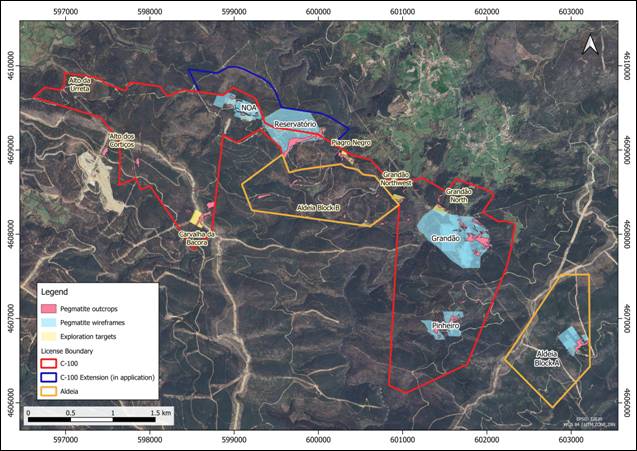
Table 5. Barroso Lithium Project Regional Exploration Target10 by Prospect
|
Prospect |
Tonnage Range (Mt) |
Li2O |
|
|
Lower |
Upper |
||
|
Altos da Urreta |
2.0 |
3.0 |
0.7-1.0% |
|
Altos dos Corticos |
3.0 |
6.0 |
0.9-1.2% |
|
Carvalha da Bacora |
3.0 |
6.0 |
0.9-1.2% |
|
Aldeia Block B |
7.0 |
10.0 |
0.9-1.2% |
|
Piagro Negro |
1.0 |
2.0 |
0.7-1.0% |
|
Grandão Northwest |
1.0 |
2.0 |
0.7-1.1% |
|
Grandão North |
1.0 |
2.0 |
0.8-1.1% |
|
Aldeia Block C |
2.0 |
4.0 |
1.1-1.5% |
|
Total Exploration Target |
20.0 |
35.0 |
0.9-1.2% |
The September 2025 Exploration Target compared to the previous Exploration Target11 for the Project is shown in Table 6.
Table 6. September 2025 Exploration Target12 Comparison to Previous Exploration Target
|
Deposit |
Tonnage Range (Mt) |
|
|
Lower |
Upper |
|
|
Reservatório |
0% |
0% |
|
Grandão |
0% |
0% |
|
Aldeia |
0% |
0% |
|
Pinheiro |
+2Mt |
+4Mt |
|
NOA |
+2Mt |
+4Mt |
|
Regional |
+20Mt |
+35Mt |
|
Total Exploration Target |
218% |
226% |
Orebody Descriptions
Grandão
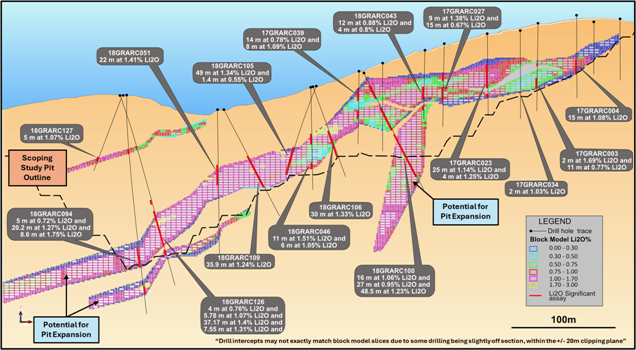
At the Grandão deposit, the largest orebody at the Project, the upper part of the deposit occurs within a broad, flat-lying pegmatite body with a typical thickness of 20 to 40m. A lower zone of the deposit comprises numerous steep dipping dykes which are 10 to 20m in true width (Figures 6-7). Small parallel lenses of spodumene pegmatite have also been interpreted. All orebodies remain open both along strike and down dip.
|
10,11,12Cautionary Statement: The potential quantity and grade of the Exploration Targets is conceptual in nature, there has been insufficient exploration work to estimate a mineral resource and it is uncertain if further exploration will result in defining a mineral resource. |
Figure 6. Grandão Resource Model (Main Domains) Coloured by Li2O Content (looking Northeast)
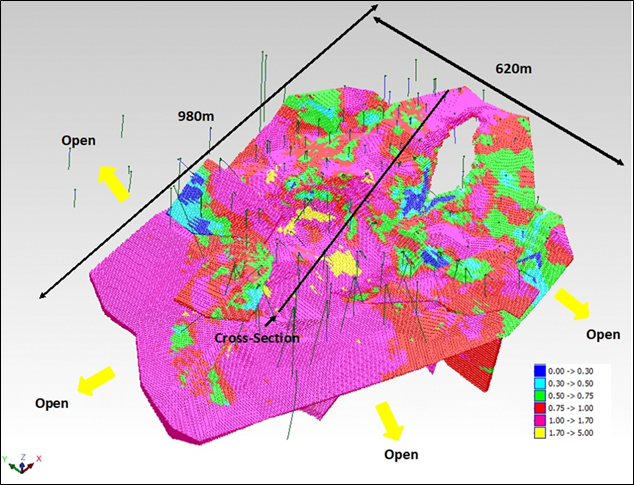 |
Figure 7. Grandão Cross Section (looking North)
Reservatório
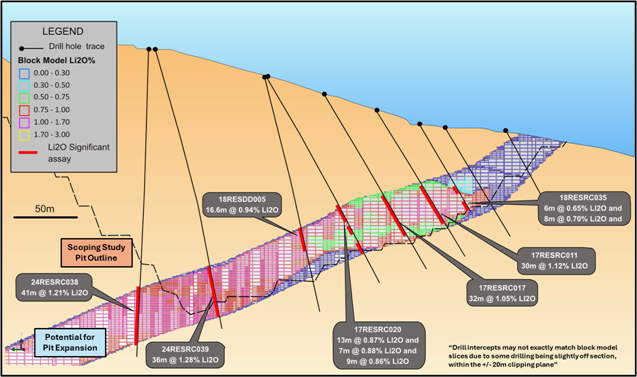
At the Reservatório deposit, mineralisation is largely hosted within a single, tabular pegmatite with several minor parallel lenses. It strikes broadly NE-SW and dips to the NW at 15° to 30° and varies in thickness from 20m to 50m. The deposit outcrops over a strike length of approximately 550m and remains open, particularly at depth (Figures 8-9).
Figure 8. Reservatório Resource Model (Main Domains) Coloured by Li2O Content (looking Southeast)
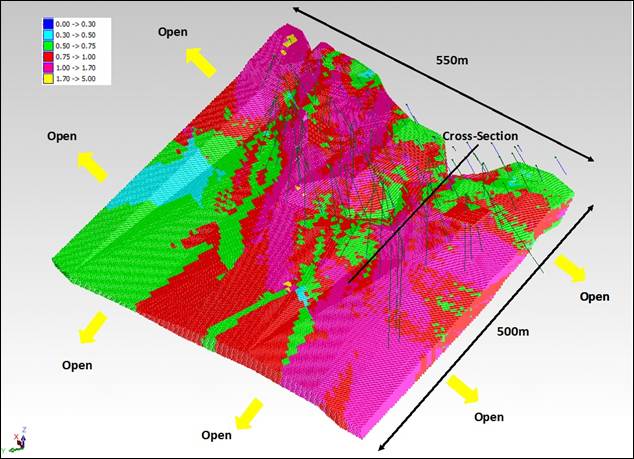
Figure 9. Reservatório Cross Section (looking Northeast)
Pinheiro
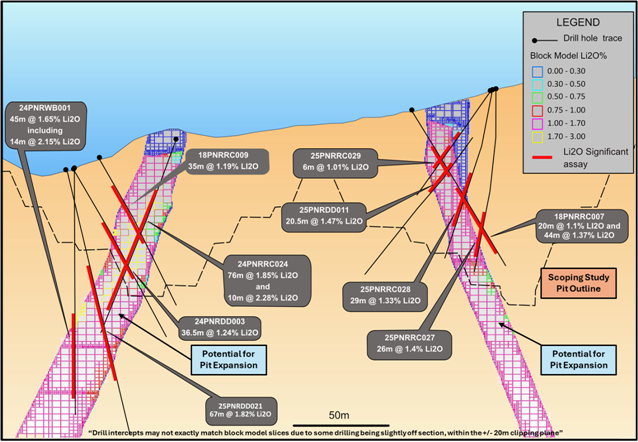
At the Pinheiro deposit, mineralisation is hosted in three steep dipping, north trending tabular pegmatite pods 20 to 30m in true width. The deposit outcrops over a strike length of approximately 240m and remains open along strike and at depth (Figures 10-11).
Figure 10. Pinheiro Resource Model (Main Domain) Coloured by Li2O Content (looking Southeast)
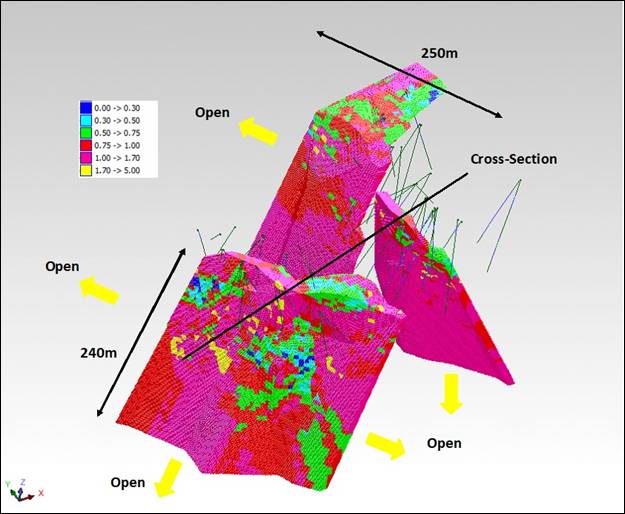
Figure 11. Pinheiro Cross Section (looking Northeast)
NOA
At the NOA deposit, the host pegmatite is a steep dipping, northwest trending body which is 5-10m in true width. It has been mapped in outcrop over much of the interpreted 440m strike length of the Mineral Resource (Figures 12-13).
Figure 12. NOA Resource Model (Main Domains) Coloured by Li2O Content (looking Southwest)
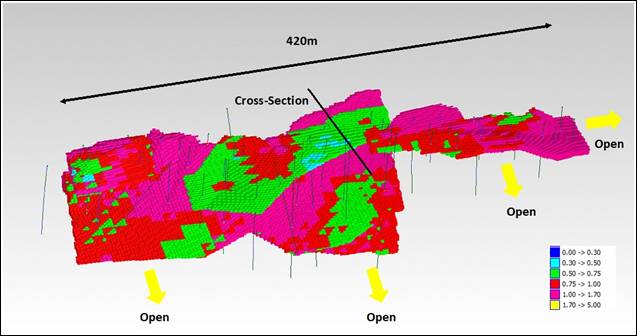
Figure 13. NOA Cross Section (looking West)
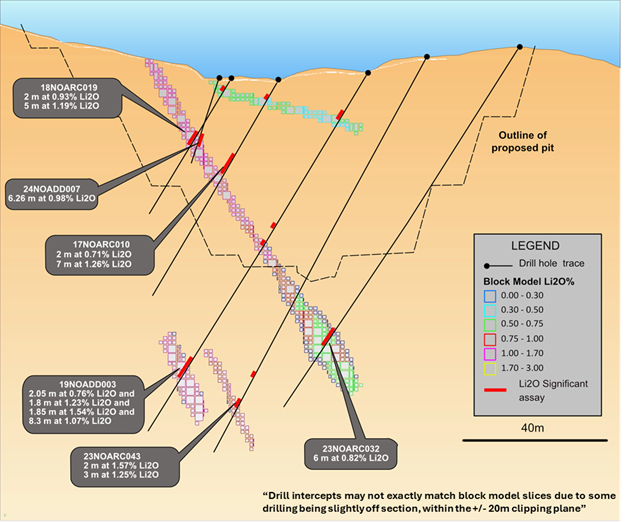
Geology
At the Barroso Lithium Project, lithium mineralisation occurs predominantly in the form of spodumene-bearing pegmatites which are hosted in metapelitic and mica schists and occasionally carbonate schists of upper Ordovician to lower Devonian age. Lithium is present in most pegmatite compositions and laboratory test work confirms that the lithium is almost exclusively within spodumene. Distinct lithium grade zonation occurs within the pegmatites, with weakly mineralised zones often evident at the margins of the intrusions. Minor xenoliths and inliers of schist are observed on occasions.
The weathering profiles comprises a shallow, surficial zone of weak to moderate oxidation, particularly of the schistose country rock. For each deposit, Ashmore generated a top of fresh rock surface to differentiate weathered and fresh material.
Mineral Resources have now been defined in five separate pegmatite zones - Grandão, Reservatório, Pinheiro, NOA and Aldeia.
The Grandão deposit comprises what is interpreted to be one main pegmatite intrusion and a series of minor mineralised intrusions. The upper part of the deposit occurs within a broad, flat-lying pegmatite body with a typical thickness of 20 to 40m. A lower zone of the deposit comprises numerous steep dipping dykes which are 10 to 20m in true width. Small parallel lenses of spodumene pegmatite have also been interpreted.
At the Reservatório deposit, mineralisation is largely hosted within a single, tabular pegmatite with several minor parallel lenses. It strikes broadly NE-SW and dips to the NW at 15° to 30° and varies in thickness from 20m to 50m. The deposit outcrops over a strike length of approximately 550m and remains open, particularly at depth.
At the Pinheiro deposit, mineralisation is hosted in three steep dipping, north trending tabular pegmatite pods 20 to 30m in true width. The deposit outcrops over a strike length of approximately 240m and remains open along strike and at depth.
At the NOA deposit, the host pegmatite is a steep dipping, northwest trending body which is 5-10m in true width. It has been mapped in outcrop over much of the interpreted 440m strike length of the Mineral Resource. The weathering profile comprises a shallow, surficial zone of weak to moderate oxidation, particularly of the schistose country rock.
Drilling
The Grandão deposit is defined by a total of 110 reverse circulation ("RC") holes, 32 reverse circulation holes with diamond tails ("RCD"), 32 diamond ("DD") holes and a percussion hole. The holes were drilled on approximate spacings of 20m to 40m on 40m to 50m spaced cross sections.
The Reservatório deposit is defined by a total of 72 RC holes, 19 RCD and 16 DD holes. The holes were drilled on approximate spacings of 20m to 40m on 40m spaced cross sections.
The Pinheiro deposit is defined by a total of 3 percussion holes, 26 RC holes, 5 RCD and 17 DD holes. Drill hole spacing is as close as 20m by 10m; but is predominantly 20m by 20m to 40m by 40m across the deposit.
The NOA deposit is defined by a total of 58 RC holes and 7 DD holes. The holes were drilled on an approximate hole spacing of 25m by 20m, out to 40m by 40m.
All holes were completed by Savannah since 2017.
Drill collar locations are recorded in Universal Traverse Mercator ("UTM") coordinates using differential GPS. All Savannah drilling has been down-hole surveyed using a gyroscopic tool.
Sampling and Sub-Sampling Techniques
RC drilling by Savannah was carried out using a face sampling hammer (120mm). Savannah reported that drilling conditions were good, samples were generally dry and measured sample recoveries were good other than some recorded sample loss near the hole collar in some holes.
Samples were collected at 1m intervals from pegmatite zones. For the 2017 drilling, composite sampling of typically 4m was conducted in the surrounding schists. For drilling conducted since 2018, schist was only sampled for 5m each side of the pegmatites. The 1m samples were collected through a rig-mounted riffle splitter and were 4-6kg in weight.
Diamond drilling commenced in PQ diameter and reduced to HQ diameter when competent rock was intersected. Core recovery was excellent. For sampling, core was aligned then marked with a centre line. Core was cut with a saw with half-core taken for bulk metallurgical samples. The remaining half core was cut again to produce quarter core samples for analysis. Samples were to geological boundaries then typically at 1m intervals.
Sample Analysis Method
The samples were analysed using ALS Laboratories ME-MS89L Super Trace method which combines a sodium peroxide fusion with ICP-MS instrumentation utilising collision/reaction cell technologies to provide the lowest detection limits available.
A prepared sample (0.2g) is added to sodium peroxide flux, mixed well and then fused in at 670°C. The resulting melt is cooled and then dissolved in 30% hydrochloric acid. This solution is then analysed by ICP-MS and the results are corrected for spectral inter-element interferences. The final solution is then analysed by ICP-MS, with results corrected for spectral inter-element interferences.
QA\QC protocols were in place for the drilling programmes and included the use of blanks, standards and field duplicates. The data has confirmed the quality of the sampling and assaying for use in Mineral Resource estimation.
Estimation Methodology
For the Mineral Resource Estimates, Surpac block models were generated using block sizes approximately a quarter to a half the predominant drill hole spacing, with sub-blocking. The block sizes selected for each deposit were guided by Kriging Neighbourhood Analysis ("KNA").
Interpretation of the pegmatite dykes was completed using detailed geological logging and Fe geochemistry. Wireframes of the pegmatites were prepared and within those the sample data was extracted and analysed. A clear break in the grade distribution occurs at 0.5% Li2O and this grade threshold was used to prepare the internal grade domains for estimation.
Sample data was composited into 1m intervals. The pegmatites at the deposit were estimated using ordinary kriging ("OK") grade interpolation. Up to three passes were used in the grade interpolation with first pass ranges ranging between 40 and 60m. A minimum of 6 to 8 samples and a maximum of 12 to 16 samples were used to estimate each block model. No extreme high grades were present in the Li2O and Fe data, and the CV of less than 1 for all elements suggested that high grade cuts were not required. However, a small number of outliers of tantalum ('Ta') were present across the deposits and high-grade cuts of 60 to 100ppm were applied to Ta values.
Iron contamination via abrasion of RC drilling equipment and/or sample preparation equipment is a recognized problem when evaluating lithium deposits. To test the potential for iron contamination at the Project, Savannah carried out a preliminary programme of check assays and a series of comparisons were undertaken on samples from the Grandão deposit.
It was concluded from the Grandão study that a significant proportion of the iron being reported in the drilling assay data was introduced as contamination during the sample preparation process. It was determined that the amount of contamination was proportional to the lithium content of the samples. A regression formula was calculated using all samples, with the derived regression formula being:
Fe_contamination = (0.1734 * Li2O grade) + 0.2308.
The amount of Fe contamination was determined using the derived regression formula. A new field "Fe_factored" was inserted into the drill hole database, and the original Fe value minus the calculated contamination was stored in that field. This allowed a "Fe_factored" value to be extracted from the database and used for grade estimation in the Mineral Resource.
Bulk density values applied to the estimates were based on a substantial number of drill core samples across the breadth of the Project. Values applied to the estimates varied between 2.2t/m3 to 2.7t/m3 and were assigned based on geology, weathering and mineralisation.
Mineral Resource Classification
The Mineral Resource Estimate was classified in accordance with the Australasian Code for the Reporting of Exploration Results, Mineral Resources and Ore Reserves (JORC, 2012).
Mineral Resource classification was considered on the basis of drill hole spacing, continuity of mineralisation and data quality. Accurate drill hole collar and topographic surveys have been obtained for the deposits, so the spatial location of data and topography has a high level of confidence. The quality of the drilling and assaying has been confirmed through independent verification of procedures and through a satisfactory QAQC protocol.
The Grandão main (upper) pegmatite defined by 20m to 40m spaced drill holes and showing excellent continuity of pegmatite and lithium distribution has been classified as Measured Mineral Resource. The Indicated Mineral Resource was defined within areas of close spaced drilling of less than 50m by 40m, and where the continuity and predictability of the lode positions was good. The lower portion of the deposit remains undrilled. The pegmatite interpretations have been extended up to 300m past drill hole intersections. The portion which has been extrapolated up to 120m past drill holes has been classified as Inferred Mineral Resource. The deeper portion remains unclassified.
For Reservatório, the Indicated Mineral Resource was defined within areas of close spaced drilling of less than 40m by 40m, and where the continuity and predictability of the lode positions was good. The lower portion of the deposit remains undrilled. The pegmatite interpretations have been extended up to 300m past drill hole intersections. The portion which has been extrapolated up to 120m past drill holes has been classified as Inferred Mineral Resource. The deeper portion remains unclassified.
For Pinheiro, the Indicated Mineral Resource was defined within fresh material, in areas of close spaced drilling of less than 40m by 40m, and where the continuity and predictability of the lode positions was good. The lower portion of the deposit remains undrilled. The pegmatite interpretations have been extended up to 200m past drill hole intersections. The portion which has been extrapolated up to 80m past drill holes has been classified as Inferred Mineral Resource. The deeper portion remains unclassified.
The portion of the NOA pegmatite defined by 20m to 40m spaced drill holes and showing good continuity of pegmatite and Li2O distribution has been classified as Indicated Mineral Resource. The Indicated portion was extended for the full length of the pegmatite which had been exposed and mapped in the pit and was extrapolated up to 20m past drill hole intersections. Inferred Mineral Resource was assigned to those areas of the NOA deposit defined by a drill hole spacing of greater than 40m.
Cut-off Grades
The shallow nature of the Project's pegmatites suggests good potential for open pit mining if sufficient resources can be delineated to consider a mining operation. The Statement of Mineral Resources have been constrained by the mineralisation solids, reported above a cut-off grade of 0.5% Li2O. Previous Whittle optimisations demonstrate reasonable prospects for eventual economic extraction utilising open pit mining methods.
Metallurgy
Metallurgical test work has been conducted on the Project's pegmatites, including composite samples derived from the Grandão, Reservatório, Pinheiro, NOA and Aldeia weathered and fresh material types. Sedgman MinSol Pty Ltd ("MinSol") assisted with determining an efficient and environmentally conscious process flowsheet for the production of a high quality spodumene concentrate grading >5.5% Li2O, whilst achieving the following key environmental and social criteria:
· Use of REACH (European Chemical Regulation) registered chemicals;
· Use of chemicals classified with low environmental toxicity;
· No use of strong acids or bases and operating at near neutral pH; and
· Dry stacked tails to minimise ground water disturbance.
The work indicated that the Project's material can contribute to the Project's plant feed to produce a minimum 5.5% Li2O concentrate at approximately 73% recovery.
Modifying Factors
No modifying factors were applied to the reported Mineral Resource Estimate. Parameters reflecting mining dilution, ore loss and metallurgical recoveries will be considered during any future mining evaluation of the Project.
These Mineral Resources will be utilised in the Project's Definitive Feasibility Study to estimate Ore Reserves.
Exploration Targets
In addition to the Mineral Resource estimates, Ashmore completed Exploration Targets for the Project.
The potential quantity and grade of the Project's Lithium Exploration Target is conceptual in nature. There has been insufficient exploration to estimate a Mineral Resource. It is uncertain if further exploration will result in the estimation of a Mineral Resource. The Exploration Target has been prepared and reported in accordance with the 2012 edition of the JORC Code.
The Exploration Target is based on the results of exploration activities undertaken to date and references an extensive dataset of drilling, geological mapping and surface sampling information. The drilling and surface sampling data forms the basis for grade ranges; and tonnage factors were based on wireframes generated from drilling data, as well as mapped pegmatites, surface sampling grade within mapped pegmatites and historically mined areas. Savannah plans on conducting further drilling and sampling at the Project after the completion of the ongoing DFS.
The Exploration Target by Ashmore for the Project is tabulated in Table 7 and the regional portion of the Exploration Target subdivided by prospect is shown in Table 8.
Table 7. Exploration Target13 Summary
|
Deposit |
Tonnage Range (Mt) |
Li2O |
|
|
Lower |
Upper |
||
|
Reservatório |
5.0 |
7.0 |
0.9-1.2% |
|
Grandão |
4.0 |
8.0 |
1.0-1.2% |
|
Pinheiro |
2.0 |
4.0 |
1.0-1.3% |
|
Aldeia Block A |
2.0 |
4.0 |
1.0-1.3% |
|
NOA |
2.0 |
4.0 |
1.0-1.2% |
|
Regional (refer to Table 8) |
20.0 |
35.0 |
0.9-1.2% |
|
Total Exploration Target |
35.0 |
62.0 |
0.9-1.2% |
Table 8. Barroso Lithium Project Regional Exploration Target14 by Prospect
|
Prospect |
Tonnage Range (Mt) |
Li2O |
|
|
Lower |
Upper |
||
|
Altos da Urreta |
2.0 |
3.0 |
0.7-1.0% |
|
Altos dos Corticos |
3.0 |
6.0 |
0.9-1.2% |
|
Carvalha da Bacora |
3.0 |
6.0 |
0.9-1.2% |
|
Aldeia Block B |
7.0 |
10.0 |
0.9-1.2% |
|
Piagro Negro |
1.0 |
2.0 |
0.7-1.0% |
|
Grandão Northwest |
1.0 |
2.0 |
0.7-1.1% |
|
Grandão North |
1.0 |
2.0 |
0.8-1.1% |
|
Aldeia Block C |
2.0 |
4.0 |
1.1-1.5% |
|
Total Exploration Target |
20.0 |
35.0 |
0.9-1.2% |
The September 2025 Exploration Target compared to the previous Exploration Target for the Project is shown in Table 9.
|
13,14Cautionary Statement: The potential quantity and grade of the Exploration Targets is conceptual in nature, there has been insufficient exploration work to estimate a mineral resource and it is uncertain if further exploration will result in defining a mineral resource. |
Table 9. September 2025 Exploration Target15 Comparison to Previous Exploration Target
|
Deposit |
Tonnage Range (Mt) |
|
|
Lower |
Upper |
|
|
Reservatório |
0% |
0% |
|
Grandão |
0% |
0% |
|
Aldeia |
0% |
0% |
|
Pinheiro |
+2Mt |
+4Mt |
|
NOA |
+2Mt |
+4Mt |
|
Regional |
+20Mt |
+35Mt |
|
Total Exploration Target |
218% |
226% |
Next Steps
Following the successful upgrade and expansion of the Project's resource, subsequent relevant work streams are expected to include:
· Additional resource drilling primarily focused on extension of the Pinheiro deposits
· Resource optimisations and pit designs which will form the basis of the DFS
· Further mapping, rock chipping and drilling to further refine exploration targets and potential conversion into resources.
Background on the JORC Code
The Australasian Code for Reporting of Exploration Results, Mineral Resources and Ore Reserves ('the JORC Code') is a professional code of practice that sets minimum standards for Public Reporting of minerals Exploration Results, Mineral Resources and Ore Reserves.
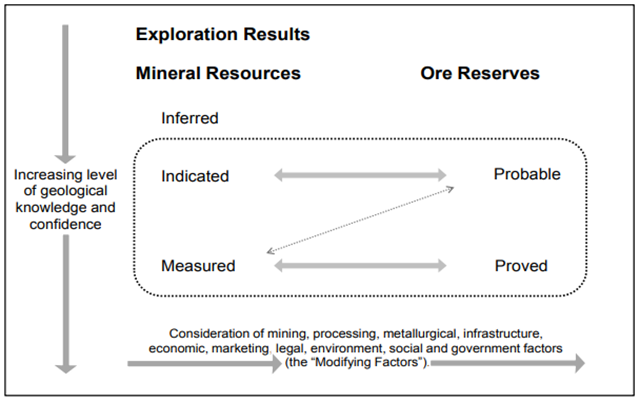
The JORC Code provides a mandatory system for the classification of minerals Exploration Results, Mineral Resources and Ore Reserves according to the levels of confidence in geological knowledge and technical and economic considerations in Public Reports.
Public Reports prepared in accordance with the JORC Code are reports prepared for the purpose of informing investors or potential investors and their advisors.
The JORC Code was first published in 1989, with the most recent revision being published late in 2012.
|
15Cautionary Statement: The potential quantity and grade of the Exploration Targets is conceptual in nature, there has been insufficient exploration work to estimate a mineral resource and it is uncertain if further exploration will result in defining a mineral resource. |
JORC Code Definitions
|
Category |
Definition |
|
Exploration Target |
A statement or estimate of the exploration potential of a mineral deposit in a defined geological setting where the statement or estimate, quoted as a range of tonnes and a range of grade (or quality), relates to mineralisation for which there has been insufficient exploration to estimate a Mineral Resource. |
|
Mineral Resource |
A concentration or occurrence of solid material of economic interest in or on the Earth's crust in such form, grade (or quality), and quantity that there are reasonable prospects for eventual economic extraction. The location, quantity, grade (or quality), continuity and other geological characteristics of a Mineral Resource are known, estimated or interpreted from specific geological evidence and knowledge, including sampling. Mineral Resources are sub-divided, in order of increasing geological confidence, into Inferred, Indicated and Measured categories. |
|
Inferred Mineral Resource |
That part of a Mineral Resource for which quantity and grade (or quality) are estimated on the basis of limited geological evidence and sampling. Geological evidence is sufficient to imply but not verify geological and grade (or quality) continuity. It is based on exploration, sampling and testing information gathered through appropriate techniques from locations such as outcrops, trenches, pits, workings and drill holes. An Inferred Mineral Resource must not be converted to an Ore Reserve. It is reasonably expected that the majority of Inferred Mineral Resources could be upgraded to Indicated Mineral Resources with continued exploration. |
|
Indicated Mineral Resource |
That part of a Mineral Resource for which quantity, grade (or quality), densities, shape and physical characteristics are estimated with sufficient confidence to allow the application of Modifying Factors in sufficient detail to support mine planning and evaluation of the economic viability of the deposit. Geological evidence is derived from adequately detailed and reliable exploration, sampling and testing gathered through appropriate techniques from locations such as outcrops, trenches, pits, workings and drill holes, and is sufficient to assume geological and grade (or quality) continuity between points of observation where data and samples are gathered. An Indicated Mineral Resource has a lower level of confidence than that applying to a Measured. Mineral Resource and may only be converted to a Probable Ore Reserve. |
|
Measured Mineral Resource |
that part of a Mineral Resource for which quantity, grade (or quality), densities, shape, and physical characteristics are estimated with confidence sufficient to allow the application of Modifying Factors to support detailed mine planning and final evaluation of the economic viability of the deposit. Geological evidence is derived from detailed and reliable exploration, sampling and testing gathered through appropriate techniques from locations such as outcrops, trenches, pits, workings and drill holes, and is sufficient to confirm geological and grade (or quality) continuity between points of observation where data and samples are gathered. A Measured Mineral Resource has a higher level of confidence than that applying to either an Indicated Mineral Resource or an Inferred Mineral Resource. It may be converted to a Proved Ore Reserve or under certain circumstances to a Probable Ore Reserve. |
|
Ore Reserve |
Is the economically mineable part of a Measured and/or Indicated Mineral Resource. It includes diluting materials and allowances for losses, which may occur when the material is mined or extracted and is defined by studies at Pre-Feasibility or Feasibility level as appropriate that include application of Modifying Factors. Such studies demonstrate that, at the time of reporting, extraction could reasonably be justified. The reference point at which Reserves are defined, usually the point where the ore is delivered to the processing plant, must be stated. It is important that, in all situations where the reference point is different, such as for a saleable product, a clarifying statement is included to ensure that the reader is fully informed as to what is being reported. |
Figure 8. The JORC Classification Framework
Source: JORC Code
Competent Person and Regulatory Information
The information in this announcement that relates to exploration results is based upon information compiled by Mr Dale Ferguson, Technical Director of Savannah Resources Limited. Mr Ferguson is a Member of the Australasian Institute of Mining and Metallurgy (AusIMM) and has sufficient experience which is relevant to the style of mineralisation and type of deposit under consideration and to the activity which he is undertaking to qualify as a Competent Person as defined in the December 2012 edition of the "Australasian Code for Reporting of Exploration Results, Mineral Resources and Ore Reserves" (JORC Code). Mr Ferguson consents to the inclusion in the report of the matters based upon the information in the form and context in which it appears.
The information in this release that relates to Mineral Resources and Exploration Targets for the Grandão, Reservatório, Pinheiro and NOA deposits, as well as the Barroso Lithium Project Exploration Target is based on information compiled by Mr Shaun Searle who is a Member of the Australasian Institute of Geoscientists. Mr Searle is an employee of Ashmore Advisory Pty Ltd and independent consultant to Savannah Resources Plc. Mr Searle has sufficient experience, which is relevant to the style of mineralisation and type of deposit under consideration and to the activity which he has undertaken to qualify as a Competent Person as defined in the 2012 Edition of the 'Australasian Code for the Reporting of Exploration Results, Mineral Resources and Ore Reserves'. Mr Searle consents to the inclusion in this report of the matters based on this information in the form and context in which it appears.
The Information in this report that relates to Mineral Resources and Exploration Targets for the Aldeia deposit is based on information compiled by Mr Paul Payne, a Competent Person who is a Fellow of the Australasian Institute of Mining and Metallurgy. Mr Payne is a full-time employee of Payne Geological Services. Mr Payne has sufficient experience that is relevant to the style of mineralisation and type of deposit under consideration and to the activity being undertaken to qualify as a Competent Person as defined in the 2012 Edition of the "Australasian Code for Reporting of Exploration Results, Mineral Resources and Ore Reserves". Mr Payne consents to the inclusion in the report of the matters based on his information in the form and context in which it appears.
Regulatory Information
This Announcement contains inside information for the purposes of the UK version of the market abuse regulation (EU No. 596/2014) as it forms part of United Kingdom domestic law by virtue of the European Union (Withdrawal) Act 2018 ("UK MAR").
Savannah - Enabling Europe's energy transition.
**ENDS**

Follow @SavannahRes on X (Formerly known as Twitter)

For further information please visit www.savannahresources.com or contact:
|
Savannah Resources PLC Emanuel Proença, CEO |
Tel: +44 20 7117 2489 |
|
SP Angel Corporate Finance LLP (Nominated Advisor & Broker) David Hignell/ Charlie Bouverat (Corporate Finance) Grant Barker/Abigail Wayne (Sales & Broking) |
Tel: +44 20 3470 0470 |
|
Canaccord Genuity Limited (Joint Broker) James Asensio / Charlie Hammond (Corporate Broking) Ben Knott (Sales) |
Tel: +44 20 7523 8000 |
|
Media Relations Savannah Resources: Antonio Neves Costa, Communications Manager |
Tel: +351 962 678 912 |
About Savannah
Savannah Resources is a mineral resource development company and the sole owner of the Barroso Lithium Project (the 'Project') in northern Portugal. The Project is the largest battery grade spodumene lithium resource outlined to date in Europe and was classified as a 'Strategic Project' by the European Commission under the Critical Raw Materials Act in March 2025.
Through the Project, Savannah will help Portugal to play an important role in providing a long-term, locally sourced, lithium raw material supply for Europe's lithium battery value chain. Once in operation the Project will produce enough lithium (contained in c.190,000tpa of spodumene concentrate) for approximately half a million vehicle battery packs per year and hence make a significant contribution towards the European Commission's Critical Raw Material Act goal of a minimum 10% of European endogenous lithium production from 2030.
Savannah is focused on the responsible development and operation of the Barroso Lithium Project so that its impact on the environment is minimised and the socio-economic benefits that it can bring to all its stakeholders are maximised.
The Company is listed and regulated on the London Stock Exchange's Alternative Investment Market (AIM) and trades under the ticker "SAV".
Appendix 1: Detailed Mineral Resource Tables
|
Reservatório September 2025 - Total Mineral Resource (Within C-100) |
|||||||||||||
|
0.5% Li2O Cut-off |
|||||||||||||
|
Bench |
Indicated Mineral Resource |
Inferred Mineral Resource |
Total Mineral resource |
||||||||||
|
Top |
Tonnes |
Li2O |
Ta2O5 |
Fe2O3 |
Tonnes |
Li2O |
Ta2O5 |
Fe2O3 |
Tonnes |
Li2O |
Ta2O5 |
Fe2O3 |
Li2O |
|
RL |
t |
% |
ppm |
% |
t |
% |
ppm |
% |
t |
% |
ppm |
% |
Tonnes |
|
600 |
29,000 |
0.93 |
23 |
0.9 |
12,000 |
0.81 |
16 |
1.0 |
41,000 |
0.89 |
21 |
0.9 |
400 |
|
590 |
208,000 |
0.92 |
20 |
0.8 |
208,000 |
0.92 |
20 |
0.8 |
1,900 |
||||
|
580 |
372,000 |
1.02 |
19 |
0.9 |
372,000 |
1.02 |
19 |
0.9 |
3,800 |
||||
|
570 |
437,000 |
1.01 |
20 |
0.9 |
437,000 |
1.01 |
20 |
0.9 |
4,400 |
||||
|
560 |
565,000 |
0.93 |
18 |
0.9 |
565,000 |
0.93 |
18 |
0.9 |
5,200 |
||||
|
550 |
598,000 |
0.93 |
17 |
1.0 |
598,000 |
0.93 |
17 |
1.0 |
5,500 |
||||
|
540 |
504,000 |
0.95 |
15 |
1.0 |
504,000 |
0.95 |
15 |
1.0 |
4,800 |
||||
|
530 |
544,000 |
0.98 |
15 |
1.0 |
544,000 |
0.98 |
15 |
1.0 |
5,300 |
||||
|
520 |
537,000 |
0.99 |
16 |
0.9 |
537,000 |
0.99 |
16 |
0.9 |
5,300 |
||||
|
510 |
430,000 |
1.01 |
16 |
0.8 |
200 |
0.81 |
9 |
1.8 |
430,000 |
1.01 |
16 |
0.8 |
4,300 |
|
500 |
396,000 |
1.02 |
15 |
0.8 |
10,000 |
0.86 |
9 |
1.5 |
407,000 |
1.01 |
15 |
0.8 |
4,100 |
|
490 |
320,000 |
0.98 |
16 |
1.0 |
27,000 |
0.95 |
13 |
0.9 |
347,000 |
0.98 |
15 |
1.0 |
3,400 |
|
480 |
217,000 |
0.98 |
16 |
1.0 |
66,000 |
0.97 |
19 |
0.9 |
283,000 |
0.98 |
17 |
1.0 |
2,800 |
|
470 |
122,000 |
1.04 |
18 |
0.9 |
113,000 |
0.97 |
19 |
1.1 |
236,000 |
1.01 |
18 |
1.0 |
2,400 |
|
460 |
37,000 |
1.00 |
22 |
0.8 |
150,000 |
1.04 |
17 |
1.0 |
187,000 |
1.03 |
18 |
1.0 |
1,900 |
|
450 |
9,000 |
0.90 |
27 |
0.8 |
153,000 |
1.12 |
16 |
0.9 |
162,000 |
1.11 |
16 |
0.9 |
1,800 |
|
440 |
1,000 |
0.93 |
26 |
0.7 |
136,000 |
1.20 |
14 |
0.8 |
136,000 |
1.20 |
14 |
0.8 |
1,600 |
|
430 |
100,000 |
1.25 |
13 |
0.8 |
100,000 |
1.25 |
13 |
0.8 |
1,300 |
||||
|
420 |
53,000 |
1.23 |
13 |
0.8 |
53,000 |
1.23 |
13 |
0.8 |
700 |
||||
|
410 |
14,000 |
1.14 |
15 |
0.8 |
14,000 |
1.14 |
15 |
0.8 |
200 |
||||
|
Total |
5,326,000 |
0.98 |
17 |
0.9 |
835,000 |
1.10 |
16 |
0.9 |
6,161,000 |
0.99 |
17 |
0.9 |
61,100 |
|
Reservatório September 2025 - Total Mineral Resource (Within C-100 & Under Application) |
|||||||||||||
|
0.5% Li2O Cut-off |
|||||||||||||
|
Bench |
Indicated Mineral Resource |
Inferred Mineral Resource |
Total Mineral resource |
||||||||||
|
Top |
Tonnes |
Li2O |
Ta2O5 |
Fe2O3 |
Tonnes |
Li2O |
Ta2O5 |
Fe2O3 |
Tonnes |
Li2O |
Ta2O5 |
Fe2O3 |
Li2O |
|
RL |
t |
% |
ppm |
% |
t |
% |
ppm |
% |
t |
% |
ppm |
% |
Tonnes |
|
600 |
29,000 |
0.93 |
23 |
0.9 |
2,000 |
0.83 |
15 |
1.0 |
30,000 |
0.92 |
22 |
0.9 |
300 |
|
590 |
208,000 |
0.92 |
20 |
0.8 |
10,000 |
0.81 |
16 |
1.0 |
219,000 |
0.91 |
20 |
0.9 |
2,000 |
|
580 |
394,000 |
1.03 |
19 |
0.9 |
300 |
1.38 |
15 |
1.2 |
394,000 |
1.03 |
19 |
0.9 |
4,000 |
|
570 |
519,000 |
1.04 |
19 |
0.9 |
13,000 |
1.19 |
13 |
1.6 |
531,000 |
1.05 |
19 |
1.0 |
5,600 |
|
560 |
683,000 |
0.97 |
18 |
0.9 |
14,000 |
1.02 |
11 |
1.5 |
697,000 |
0.97 |
18 |
1.0 |
6,700 |
|
550 |
778,000 |
0.96 |
17 |
1.0 |
15,000 |
1.06 |
12 |
1.2 |
793,000 |
0.96 |
17 |
1.0 |
7,700 |
|
540 |
739,000 |
1.00 |
16 |
1.0 |
14,000 |
1.18 |
12 |
1.0 |
753,000 |
1.00 |
16 |
1.0 |
7,500 |
|
530 |
832,000 |
1.03 |
17 |
1.0 |
24,000 |
0.95 |
13 |
1.1 |
856,000 |
1.02 |
17 |
1.0 |
8,800 |
|
520 |
867,000 |
1.01 |
18 |
0.9 |
57,000 |
0.90 |
11 |
1.1 |
925,000 |
1.00 |
17 |
0.9 |
9,200 |
|
510 |
816,000 |
1.01 |
18 |
0.9 |
92,000 |
0.87 |
9 |
1.1 |
909,000 |
1.00 |
17 |
0.9 |
9,100 |
|
500 |
842,000 |
0.98 |
16 |
0.9 |
148,000 |
0.86 |
10 |
1.0 |
990,000 |
0.96 |
15 |
0.9 |
9,500 |
|
490 |
719,000 |
0.96 |
15 |
0.9 |
294,000 |
0.86 |
13 |
0.8 |
1,012,000 |
0.93 |
14 |
0.9 |
9,400 |
|
480 |
409,000 |
0.96 |
15 |
0.9 |
539,000 |
0.89 |
15 |
0.8 |
948,000 |
0.92 |
15 |
0.8 |
8,700 |
|
470 |
218,000 |
1.01 |
16 |
0.8 |
722,000 |
0.91 |
15 |
0.9 |
941,000 |
0.93 |
15 |
0.8 |
8,800 |
|
460 |
57,000 |
0.96 |
20 |
0.8 |
806,000 |
0.90 |
15 |
0.9 |
863,000 |
0.91 |
16 |
0.9 |
7,800 |
|
450 |
9,000 |
0.90 |
27 |
0.8 |
626,000 |
0.93 |
16 |
0.9 |
635,000 |
0.93 |
16 |
0.9 |
5,900 |
|
440 |
1,000 |
0.93 |
26 |
0.7 |
373,000 |
1.03 |
15 |
0.8 |
374,000 |
1.03 |
15 |
0.8 |
3,800 |
|
430 |
175,000 |
1.15 |
15 |
0.8 |
175,000 |
1.15 |
15 |
0.8 |
2,000 |
||||
|
420 |
68,000 |
1.20 |
14 |
0.8 |
68,000 |
1.20 |
14 |
0.8 |
800 |
||||
|
410 |
16,000 |
1.14 |
15 |
0.8 |
16,000 |
1.14 |
15 |
0.8 |
200 |
||||
|
Total |
8,121,000 |
0.99 |
17 |
0.9 |
4,007,000 |
0.93 |
15 |
0.9 |
12,127,000 |
0.97 |
16 |
0.9 |
117,800 |
Pinheiro September 2025 - Total Mineral Resource 0.5% Li2O Cut-off
NOA September 2025 - Total Mineral Resource |
|||||||||||||||||||||||||||||||||||||||||||||||||||||||||||||||||||||||||||||||||||||||||||||||||||||||||||||||||||||||||||||||||||||||||||||||||||||||||||||||||||||||||||||||||||||||||||||||||||||||||||||||||||||||||||||||||||||||||||||||||||||||||||||||||||||||||||||||||||||||||||||||||||||||||||||||||||||||||||||||||||||||||||||||||||||||||||||||||||||||||||||||||||||||||||||||||||||||||||||||||||||||||||||||||||||||||||||||||||||||||||||||||||||||||||||||||||||||||||||||||||||||||||||||||||||||||||||||||||||||||||||||||||||||||||||||||||||||||||||||||||||||||||||||||||||||||||||||||||||||||||||||||||||||||||||||||||||||||||||||||||||||||||||||||||||||||||||||||||||||||||||||||||||||||||||||||||||||||||||||||||||||||||||||||||||||||||||||||||||||||||||||||||||||||||||||||||||||||||||||||||||||||||||||||||||||||||||||||||||||||||||||||||||||||||||||||||||||||||||||||||||||||||||||||||||||||||||||||||||||||||||||||||||||
|
0.5% Li2O Cut-off |
|||||||||||||||||||||||||||||||||||||||||||||||||||||||||||||||||||||||||||||||||||||||||||||||||||||||||||||||||||||||||||||||||||||||||||||||||||||||||||||||||||||||||||||||||||||||||||||||||||||||||||||||||||||||||||||||||||||||||||||||||||||||||||||||||||||||||||||||||||||||||||||||||||||||||||||||||||||||||||||||||||||||||||||||||||||||||||||||||||||||||||||||||||||||||||||||||||||||||||||||||||||||||||||||||||||||||||||||||||||||||||||||||||||||||||||||||||||||||||||||||||||||||||||||||||||||||||||||||||||||||||||||||||||||||||||||||||||||||||||||||||||||||||||||||||||||||||||||||||||||||||||||||||||||||||||||||||||||||||||||||||||||||||||||||||||||||||||||||||||||||||||||||||||||||||||||||||||||||||||||||||||||||||||||||||||||||||||||||||||||||||||||||||||||||||||||||||||||||||||||||||||||||||||||||||||||||||||||||||||||||||||||||||||||||||||||||||||||||||||||||||||||||||||||||||||||||||||||||||||||||||||||||||||||
|
Bench |
Indicated Mineral Resource |
Inferred Mineral Resource |
Total Mineral Resource |
||||||||||||||||||||||||||||||||||||||||||||||||||||||||||||||||||||||||||||||||||||||||||||||||||||||||||||||||||||||||||||||||||||||||||||||||||||||||||||||||||||||||||||||||||||||||||||||||||||||||||||||||||||||||||||||||||||||||||||||||||||||||||||||||||||||||||||||||||||||||||||||||||||||||||||||||||||||||||||||||||||||||||||||||||||||||||||||||||||||||||||||||||||||||||||||||||||||||||||||||||||||||||||||||||||||||||||||||||||||||||||||||||||||||||||||||||||||||||||||||||||||||||||||||||||||||||||||||||||||||||||||||||||||||||||||||||||||||||||||||||||||||||||||||||||||||||||||||||||||||||||||||||||||||||||||||||||||||||||||||||||||||||||||||||||||||||||||||||||||||||||||||||||||||||||||||||||||||||||||||||||||||||||||||||||||||||||||||||||||||||||||||||||||||||||||||||||||||||||||||||||||||||||||||||||||||||||||||||||||||||||||||||||||||||||||||||||||||||||||||||||||||||||||||||||||||||||||||||||||||||||||||||||
|
Top |
Tonnes |
Li2O |
Fe2O3 |
Tonnes |
Li2O |
Fe2O3 |
Tonnes |
Li2O |
Fe2O3 |
Li2O |
|||||||||||||||||||||||||||||||||||||||||||||||||||||||||||||||||||||||||||||||||||||||||||||||||||||||||||||||||||||||||||||||||||||||||||||||||||||||||||||||||||||||||||||||||||||||||||||||||||||||||||||||||||||||||||||||||||||||||||||||||||||||||||||||||||||||||||||||||||||||||||||||||||||||||||||||||||||||||||||||||||||||||||||||||||||||||||||||||||||||||||||||||||||||||||||||||||||||||||||||||||||||||||||||||||||||||||||||||||||||||||||||||||||||||||||||||||||||||||||||||||||||||||||||||||||||||||||||||||||||||||||||||||||||||||||||||||||||||||||||||||||||||||||||||||||||||||||||||||||||||||||||||||||||||||||||||||||||||||||||||||||||||||||||||||||||||||||||||||||||||||||||||||||||||||||||||||||||||||||||||||||||||||||||||||||||||||||||||||||||||||||||||||||||||||||||||||||||||||||||||||||||||||||||||||||||||||||||||||||||||||||||||||||||||||||||||||||||||||||||||||||||||||||||||||||||||||||||||||||||||||||
|
RL |
t |
% |
% |
t |
% |
% |
t |
% |
% |
Tonnes |
|||||||||||||||||||||||||||||||||||||||||||||||||||||||||||||||||||||||||||||||||||||||||||||||||||||||||||||||||||||||||||||||||||||||||||||||||||||||||||||||||||||||||||||||||||||||||||||||||||||||||||||||||||||||||||||||||||||||||||||||||||||||||||||||||||||||||||||||||||||||||||||||||||||||||||||||||||||||||||||||||||||||||||||||||||||||||||||||||||||||||||||||||||||||||||||||||||||||||||||||||||||||||||||||||||||||||||||||||||||||||||||||||||||||||||||||||||||||||||||||||||||||||||||||||||||||||||||||||||||||||||||||||||||||||||||||||||||||||||||||||||||||||||||||||||||||||||||||||||||||||||||||||||||||||||||||||||||||||||||||||||||||||||||||||||||||||||||||||||||||||||||||||||||||||||||||||||||||||||||||||||||||||||||||||||||||||||||||||||||||||||||||||||||||||||||||||||||||||||||||||||||||||||||||||||||||||||||||||||||||||||||||||||||||||||||||||||||||||||||||||||||||||||||||||||||||||||||||||||||||||||||
|
700 |
4,000 |
1.19 |
0.8 |
4,000 |
1.19 |
0.8 |
50 |
||||||||||||||||||||||||||||||||||||||||||||||||||||||||||||||||||||||||||||||||||||||||||||||||||||||||||||||||||||||||||||||||||||||||||||||||||||||||||||||||||||||||||||||||||||||||||||||||||||||||||||||||||||||||||||||||||||||||||||||||||||||||||||||||||||||||||||||||||||||||||||||||||||||||||||||||||||||||||||||||||||||||||||||||||||||||||||||||||||||||||||||||||||||||||||||||||||||||||||||||||||||||||||||||||||||||||||||||||||||||||||||||||||||||||||||||||||||||||||||||||||||||||||||||||||||||||||||||||||||||||||||||||||||||||||||||||||||||||||||||||||||||||||||||||||||||||||||||||||||||||||||||||||||||||||||||||||||||||||||||||||||||||||||||||||||||||||||||||||||||||||||||||||||||||||||||||||||||||||||||||||||||||||||||||||||||||||||||||||||||||||||||||||||||||||||||||||||||||||||||||||||||||||||||||||||||||||||||||||||||||||||||||||||||||||||||||||||||||||||||||||||||||||||||||||||||||||||||||||||||||||||||
|
690 |
51,000 |
1.04 |
1.0 |
100 |
0.92 |
0.8 |
51,000 |
1.04 |
1.0 |
530 |
|||||||||||||||||||||||||||||||||||||||||||||||||||||||||||||||||||||||||||||||||||||||||||||||||||||||||||||||||||||||||||||||||||||||||||||||||||||||||||||||||||||||||||||||||||||||||||||||||||||||||||||||||||||||||||||||||||||||||||||||||||||||||||||||||||||||||||||||||||||||||||||||||||||||||||||||||||||||||||||||||||||||||||||||||||||||||||||||||||||||||||||||||||||||||||||||||||||||||||||||||||||||||||||||||||||||||||||||||||||||||||||||||||||||||||||||||||||||||||||||||||||||||||||||||||||||||||||||||||||||||||||||||||||||||||||||||||||||||||||||||||||||||||||||||||||||||||||||||||||||||||||||||||||||||||||||||||||||||||||||||||||||||||||||||||||||||||||||||||||||||||||||||||||||||||||||||||||||||||||||||||||||||||||||||||||||||||||||||||||||||||||||||||||||||||||||||||||||||||||||||||||||||||||||||||||||||||||||||||||||||||||||||||||||||||||||||||||||||||||||||||||||||||||||||||||||||||||||||||||||||||||
|
680 |
105,000 |
1.00 |
1.0 |
2,000 |
0.86 |
0.9 |
106,000 |
1.00 |
1.0 |
1,060 |
|||||||||||||||||||||||||||||||||||||||||||||||||||||||||||||||||||||||||||||||||||||||||||||||||||||||||||||||||||||||||||||||||||||||||||||||||||||||||||||||||||||||||||||||||||||||||||||||||||||||||||||||||||||||||||||||||||||||||||||||||||||||||||||||||||||||||||||||||||||||||||||||||||||||||||||||||||||||||||||||||||||||||||||||||||||||||||||||||||||||||||||||||||||||||||||||||||||||||||||||||||||||||||||||||||||||||||||||||||||||||||||||||||||||||||||||||||||||||||||||||||||||||||||||||||||||||||||||||||||||||||||||||||||||||||||||||||||||||||||||||||||||||||||||||||||||||||||||||||||||||||||||||||||||||||||||||||||||||||||||||||||||||||||||||||||||||||||||||||||||||||||||||||||||||||||||||||||||||||||||||||||||||||||||||||||||||||||||||||||||||||||||||||||||||||||||||||||||||||||||||||||||||||||||||||||||||||||||||||||||||||||||||||||||||||||||||||||||||||||||||||||||||||||||||||||||||||||||||||||||||||||
|
670 |
126,000 |
1.13 |
0.8 |
126,000 |
1.13 |
0.8 |
1,420 |
||||||||||||||||||||||||||||||||||||||||||||||||||||||||||||||||||||||||||||||||||||||||||||||||||||||||||||||||||||||||||||||||||||||||||||||||||||||||||||||||||||||||||||||||||||||||||||||||||||||||||||||||||||||||||||||||||||||||||||||||||||||||||||||||||||||||||||||||||||||||||||||||||||||||||||||||||||||||||||||||||||||||||||||||||||||||||||||||||||||||||||||||||||||||||||||||||||||||||||||||||||||||||||||||||||||||||||||||||||||||||||||||||||||||||||||||||||||||||||||||||||||||||||||||||||||||||||||||||||||||||||||||||||||||||||||||||||||||||||||||||||||||||||||||||||||||||||||||||||||||||||||||||||||||||||||||||||||||||||||||||||||||||||||||||||||||||||||||||||||||||||||||||||||||||||||||||||||||||||||||||||||||||||||||||||||||||||||||||||||||||||||||||||||||||||||||||||||||||||||||||||||||||||||||||||||||||||||||||||||||||||||||||||||||||||||||||||||||||||||||||||||||||||||||||||||||||||||||||||||||||||||||
|
660 |
104,000 |
1.10 |
0.8 |
104,000 |
1.10 |
0.8 |
1,150 |
||||||||||||||||||||||||||||||||||||||||||||||||||||||||||||||||||||||||||||||||||||||||||||||||||||||||||||||||||||||||||||||||||||||||||||||||||||||||||||||||||||||||||||||||||||||||||||||||||||||||||||||||||||||||||||||||||||||||||||||||||||||||||||||||||||||||||||||||||||||||||||||||||||||||||||||||||||||||||||||||||||||||||||||||||||||||||||||||||||||||||||||||||||||||||||||||||||||||||||||||||||||||||||||||||||||||||||||||||||||||||||||||||||||||||||||||||||||||||||||||||||||||||||||||||||||||||||||||||||||||||||||||||||||||||||||||||||||||||||||||||||||||||||||||||||||||||||||||||||||||||||||||||||||||||||||||||||||||||||||||||||||||||||||||||||||||||||||||||||||||||||||||||||||||||||||||||||||||||||||||||||||||||||||||||||||||||||||||||||||||||||||||||||||||||||||||||||||||||||||||||||||||||||||||||||||||||||||||||||||||||||||||||||||||||||||||||||||||||||||||||||||||||||||||||||||||||||||||||||||||||||||||
|
650 |
52,000 |
1.02 |
0.8 |
52,000 |
1.02 |
0.8 |
540 |
||||||||||||||||||||||||||||||||||||||||||||||||||||||||||||||||||||||||||||||||||||||||||||||||||||||||||||||||||||||||||||||||||||||||||||||||||||||||||||||||||||||||||||||||||||||||||||||||||||||||||||||||||||||||||||||||||||||||||||||||||||||||||||||||||||||||||||||||||||||||||||||||||||||||||||||||||||||||||||||||||||||||||||||||||||||||||||||||||||||||||||||||||||||||||||||||||||||||||||||||||||||||||||||||||||||||||||||||||||||||||||||||||||||||||||||||||||||||||||||||||||||||||||||||||||||||||||||||||||||||||||||||||||||||||||||||||||||||||||||||||||||||||||||||||||||||||||||||||||||||||||||||||||||||||||||||||||||||||||||||||||||||||||||||||||||||||||||||||||||||||||||||||||||||||||||||||||||||||||||||||||||||||||||||||||||||||||||||||||||||||||||||||||||||||||||||||||||||||||||||||||||||||||||||||||||||||||||||||||||||||||||||||||||||||||||||||||||||||||||||||||||||||||||||||||||||||||||||||||||||||||||||
|
640 |
39,000 |
1.06 |
0.8 |
39,000 |
1.06 |
0.8 |
410 |
||||||||||||||||||||||||||||||||||||||||||||||||||||||||||||||||||||||||||||||||||||||||||||||||||||||||||||||||||||||||||||||||||||||||||||||||||||||||||||||||||||||||||||||||||||||||||||||||||||||||||||||||||||||||||||||||||||||||||||||||||||||||||||||||||||||||||||||||||||||||||||||||||||||||||||||||||||||||||||||||||||||||||||||||||||||||||||||||||||||||||||||||||||||||||||||||||||||||||||||||||||||||||||||||||||||||||||||||||||||||||||||||||||||||||||||||||||||||||||||||||||||||||||||||||||||||||||||||||||||||||||||||||||||||||||||||||||||||||||||||||||||||||||||||||||||||||||||||||||||||||||||||||||||||||||||||||||||||||||||||||||||||||||||||||||||||||||||||||||||||||||||||||||||||||||||||||||||||||||||||||||||||||||||||||||||||||||||||||||||||||||||||||||||||||||||||||||||||||||||||||||||||||||||||||||||||||||||||||||||||||||||||||||||||||||||||||||||||||||||||||||||||||||||||||||||||||||||||||||||||||||||||
|
630 |
38,000 |
0.98 |
0.9 |
38,000 |
0.98 |
0.9 |
380 |
||||||||||||||||||||||||||||||||||||||||||||||||||||||||||||||||||||||||||||||||||||||||||||||||||||||||||||||||||||||||||||||||||||||||||||||||||||||||||||||||||||||||||||||||||||||||||||||||||||||||||||||||||||||||||||||||||||||||||||||||||||||||||||||||||||||||||||||||||||||||||||||||||||||||||||||||||||||||||||||||||||||||||||||||||||||||||||||||||||||||||||||||||||||||||||||||||||||||||||||||||||||||||||||||||||||||||||||||||||||||||||||||||||||||||||||||||||||||||||||||||||||||||||||||||||||||||||||||||||||||||||||||||||||||||||||||||||||||||||||||||||||||||||||||||||||||||||||||||||||||||||||||||||||||||||||||||||||||||||||||||||||||||||||||||||||||||||||||||||||||||||||||||||||||||||||||||||||||||||||||||||||||||||||||||||||||||||||||||||||||||||||||||||||||||||||||||||||||||||||||||||||||||||||||||||||||||||||||||||||||||||||||||||||||||||||||||||||||||||||||||||||||||||||||||||||||||||||||||||||||||||||||
|
620 |
40,000 |
0.92 |
0.8 |
400 |
1.25 |
0.3 |
41,000 |
0.92 |
0.8 |
370 |
|||||||||||||||||||||||||||||||||||||||||||||||||||||||||||||||||||||||||||||||||||||||||||||||||||||||||||||||||||||||||||||||||||||||||||||||||||||||||||||||||||||||||||||||||||||||||||||||||||||||||||||||||||||||||||||||||||||||||||||||||||||||||||||||||||||||||||||||||||||||||||||||||||||||||||||||||||||||||||||||||||||||||||||||||||||||||||||||||||||||||||||||||||||||||||||||||||||||||||||||||||||||||||||||||||||||||||||||||||||||||||||||||||||||||||||||||||||||||||||||||||||||||||||||||||||||||||||||||||||||||||||||||||||||||||||||||||||||||||||||||||||||||||||||||||||||||||||||||||||||||||||||||||||||||||||||||||||||||||||||||||||||||||||||||||||||||||||||||||||||||||||||||||||||||||||||||||||||||||||||||||||||||||||||||||||||||||||||||||||||||||||||||||||||||||||||||||||||||||||||||||||||||||||||||||||||||||||||||||||||||||||||||||||||||||||||||||||||||||||||||||||||||||||||||||||||||||||||||||||||||||||
|
610 |
37,000 |
0.86 |
0.7 |
6,000 |
1.10 |
0.4 |
44,000 |
0.89 |
0.7 |
390 |
|||||||||||||||||||||||||||||||||||||||||||||||||||||||||||||||||||||||||||||||||||||||||||||||||||||||||||||||||||||||||||||||||||||||||||||||||||||||||||||||||||||||||||||||||||||||||||||||||||||||||||||||||||||||||||||||||||||||||||||||||||||||||||||||||||||||||||||||||||||||||||||||||||||||||||||||||||||||||||||||||||||||||||||||||||||||||||||||||||||||||||||||||||||||||||||||||||||||||||||||||||||||||||||||||||||||||||||||||||||||||||||||||||||||||||||||||||||||||||||||||||||||||||||||||||||||||||||||||||||||||||||||||||||||||||||||||||||||||||||||||||||||||||||||||||||||||||||||||||||||||||||||||||||||||||||||||||||||||||||||||||||||||||||||||||||||||||||||||||||||||||||||||||||||||||||||||||||||||||||||||||||||||||||||||||||||||||||||||||||||||||||||||||||||||||||||||||||||||||||||||||||||||||||||||||||||||||||||||||||||||||||||||||||||||||||||||||||||||||||||||||||||||||||||||||||||||||||||||||||||||||||
|
600 |
16,000 |
0.80 |
0.6 |
16,000 |
1.00 |
0.4 |
32,000 |
0.90 |
0.5 |
290 |
|||||||||||||||||||||||||||||||||||||||||||||||||||||||||||||||||||||||||||||||||||||||||||||||||||||||||||||||||||||||||||||||||||||||||||||||||||||||||||||||||||||||||||||||||||||||||||||||||||||||||||||||||||||||||||||||||||||||||||||||||||||||||||||||||||||||||||||||||||||||||||||||||||||||||||||||||||||||||||||||||||||||||||||||||||||||||||||||||||||||||||||||||||||||||||||||||||||||||||||||||||||||||||||||||||||||||||||||||||||||||||||||||||||||||||||||||||||||||||||||||||||||||||||||||||||||||||||||||||||||||||||||||||||||||||||||||||||||||||||||||||||||||||||||||||||||||||||||||||||||||||||||||||||||||||||||||||||||||||||||||||||||||||||||||||||||||||||||||||||||||||||||||||||||||||||||||||||||||||||||||||||||||||||||||||||||||||||||||||||||||||||||||||||||||||||||||||||||||||||||||||||||||||||||||||||||||||||||||||||||||||||||||||||||||||||||||||||||||||||||||||||||||||||||||||||||||||||||||||||||||||||
|
590 |
1,000 |
0.79 |
0.4 |
15,000 |
0.91 |
0.4 |
16,000 |
0.90 |
0.4 |
140 |
|||||||||||||||||||||||||||||||||||||||||||||||||||||||||||||||||||||||||||||||||||||||||||||||||||||||||||||||||||||||||||||||||||||||||||||||||||||||||||||||||||||||||||||||||||||||||||||||||||||||||||||||||||||||||||||||||||||||||||||||||||||||||||||||||||||||||||||||||||||||||||||||||||||||||||||||||||||||||||||||||||||||||||||||||||||||||||||||||||||||||||||||||||||||||||||||||||||||||||||||||||||||||||||||||||||||||||||||||||||||||||||||||||||||||||||||||||||||||||||||||||||||||||||||||||||||||||||||||||||||||||||||||||||||||||||||||||||||||||||||||||||||||||||||||||||||||||||||||||||||||||||||||||||||||||||||||||||||||||||||||||||||||||||||||||||||||||||||||||||||||||||||||||||||||||||||||||||||||||||||||||||||||||||||||||||||||||||||||||||||||||||||||||||||||||||||||||||||||||||||||||||||||||||||||||||||||||||||||||||||||||||||||||||||||||||||||||||||||||||||||||||||||||||||||||||||||||||||||||||||||||||
|
580 |
7,000 |
0.81 |
0.4 |
7,000 |
0.81 |
0.4 |
60 |
||||||||||||||||||||||||||||||||||||||||||||||||||||||||||||||||||||||||||||||||||||||||||||||||||||||||||||||||||||||||||||||||||||||||||||||||||||||||||||||||||||||||||||||||||||||||||||||||||||||||||||||||||||||||||||||||||||||||||||||||||||||||||||||||||||||||||||||||||||||||||||||||||||||||||||||||||||||||||||||||||||||||||||||||||||||||||||||||||||||||||||||||||||||||||||||||||||||||||||||||||||||||||||||||||||||||||||||||||||||||||||||||||||||||||||||||||||||||||||||||||||||||||||||||||||||||||||||||||||||||||||||||||||||||||||||||||||||||||||||||||||||||||||||||||||||||||||||||||||||||||||||||||||||||||||||||||||||||||||||||||||||||||||||||||||||||||||||||||||||||||||||||||||||||||||||||||||||||||||||||||||||||||||||||||||||||||||||||||||||||||||||||||||||||||||||||||||||||||||||||||||||||||||||||||||||||||||||||||||||||||||||||||||||||||||||||||||||||||||||||||||||||||||||||||||||||||||||||||||||||||||||||
|
570 |
1,000 |
0.76 |
0.3 |
1,000 |
0.76 |
0.3 |
10 |
||||||||||||||||||||||||||||||||||||||||||||||||||||||||||||||||||||||||||||||||||||||||||||||||||||||||||||||||||||||||||||||||||||||||||||||||||||||||||||||||||||||||||||||||||||||||||||||||||||||||||||||||||||||||||||||||||||||||||||||||||||||||||||||||||||||||||||||||||||||||||||||||||||||||||||||||||||||||||||||||||||||||||||||||||||||||||||||||||||||||||||||||||||||||||||||||||||||||||||||||||||||||||||||||||||||||||||||||||||||||||||||||||||||||||||||||||||||||||||||||||||||||||||||||||||||||||||||||||||||||||||||||||||||||||||||||||||||||||||||||||||||||||||||||||||||||||||||||||||||||||||||||||||||||||||||||||||||||||||||||||||||||||||||||||||||||||||||||||||||||||||||||||||||||||||||||||||||||||||||||||||||||||||||||||||||||||||||||||||||||||||||||||||||||||||||||||||||||||||||||||||||||||||||||||||||||||||||||||||||||||||||||||||||||||||||||||||||||||||||||||||||||||||||||||||||||||||||||||||||||||||||||
|
Total |
614,000 |
1.03 |
0.8 |
46,000 |
0.95 |
0.5 |
661,000 |
1.03 |
0.8 |
6,700 |
|||||||||||||||||||||||||||||||||||||||||||||||||||||||||||||||||||||||||||||||||||||||||||||||||||||||||||||||||||||||||||||||||||||||||||||||||||||||||||||||||||||||||||||||||||||||||||||||||||||||||||||||||||||||||||||||||||||||||||||||||||||||||||||||||||||||||||||||||||||||||||||||||||||||||||||||||||||||||||||||||||||||||||||||||||||||||||||||||||||||||||||||||||||||||||||||||||||||||||||||||||||||||||||||||||||||||||||||||||||||||||||||||||||||||||||||||||||||||||||||||||||||||||||||||||||||||||||||||||||||||||||||||||||||||||||||||||||||||||||||||||||||||||||||||||||||||||||||||||||||||||||||||||||||||||||||||||||||||||||||||||||||||||||||||||||||||||||||||||||||||||||||||||||||||||||||||||||||||||||||||||||||||||||||||||||||||||||||||||||||||||||||||||||||||||||||||||||||||||||||||||||||||||||||||||||||||||||||||||||||||||||||||||||||||||||||||||||||||||||||||||||||||||||||||||||||||||||||||||||||||||||
APPENDIX 2 - JORC 2012 Table 1
JORC Table 1 Section 1 Sampling Techniques and Data
|
Criteria |
JORC Code Explanation |
Commentary |
|
Sampling techniques |
· Nature and quality of sampling (eg cut channels, random chips, or specific specialised industry standard measurement tools appropriate to the minerals under investigation, such as down hole gamma sondes, or handheld XRF instruments, etc). These examples should not be taken as limiting the broad meaning of sampling. · Include reference to measures taken to ensure sample representivity and the appropriate calibration of any measurement tools or systems used. · Aspects of the determination of mineralisation that are Material to the Public Report. In cases where 'industry standard' work has been done this would be relatively simple (eg 'reverse circulation drilling was used to obtain 1 m samples from which 3 kg was pulverised to produce a 30 g charge for fire assay'). In other cases more explanation may be required, such as where there is coarse gold that has inherent sampling problems. Unusual commodities or mineralisation types (eg submarine nodules) may warrant disclosure of detailed information. |
· The majority of previous holes were reverse circulation, sampled at 1m intervals. RC samples were collected in large plastic bags attached to the cyclone. On completion of the 1m run the large sample was passed through a 3-stage riffle splitter to collect a 2.5-4kg sub sample, to be used for assay. · Diamond holes were completed for metallurgical sampling, geotechnical analysis and resource estimation. Core was PQ/HQ size, sampled at 1m intervals in the pegmatite, with boundaries sampled to geological boundaries. Half core samples were collected for analysis. · Drilling was carried out to infill previous drilling to achieve a nominal 40m by 40m spacing with selected infill to 40m by 20m spacings, or as twins of previous RC drilling to get known samples for metallurgical testing. Geotechnical drilling was designed purely to intersect planned pit walls and pegmatite intersections were incidental but followed all standard logging and sampling in line with all the drilling. · Collar surveys are carried using differential DGPS with an accuracy to within 0.2m. · A down hole survey for each hole was completed using gyro equipment. · The lithium mineralisation is predominantly in the form of Spodumene-bearing pegmatites, the pegmatites are unzoned and vary in thickness from 2m-109m. |
|
Drilling techniques |
· Drill type (eg core, reverse circulation, open-hole hammer, rotary air blast, auger, Bangka, sonic, etc) and details (eg core diameter, triple or standard tube, depth of diamond tails, face-sampling bit or other type, whether core is oriented and if so, by what method, etc). |
· RC drilling used a 120mm diameter face sampling hammer. · Core drilling was carried out using an PQ/HQ single tube core barrels. |
|
Drill sample recovery |
· Method of recording and assessing core and chip sample recoveries and results assessed. · Measures taken to maximise sample recovery and ensure representative nature of the samples. · Whether a relationship exists between sample recovery and grade and whether sample bias may have occurred due to preferential loss/gain of fine/coarse material. |
· RC drilling sample weights were monitored to ensure samples were maximised. Samples were carefully loaded into a splitter and split in the same manner ensuring that the sample split to be sent to the assay laboratories were in the range of 4-6kg. · Core recovery was measured and was found to be generally excellent. · No obvious relationships between sample recovery and grade. |
|
Logging |
· Whether core and chip samples have been geologically and geotechnically logged to a level of detail to support appropriate Mineral Resource estimation, mining studies and metallurgical studies. · Whether logging is qualitative or quantitative in nature. Core (or costean, channel, etc) photography. · The total length and percentage of the relevant intersections logged. |
· All drill sample intervals were geologically logged in the field at the time of sampling. Core was logged in detail for a variety of physical characteristics in a logging yard away from the drilling · Each 1m sample interval was carefully homogenised and assessed for lithology, colour, grainsize, structure and mineralisation. Core was sampled to geological boundaries and at 1m intervals therein. · A representative chip sample produced from RC drilling was washed and taken for each 1m sample and stored in a chip tray which was photographed. · Percussion holes were logged for every metre drilled with the spoil collected for each metre by shovel and placed in a sample bag, a representative sub sample was taken and logged for lithology, colour, grainsize and mineralisation. · Core was photographed. |
|
Sub-sampling techniques and sample preparation |
· If core, whether cut or sawn and whether quarter, half or all core taken. · If non-core, whether riffled, tube sampled, rotary split, etc and whether sampled wet or dry. · For all sample types, the nature, quality and appropriateness of the sample preparation technique. · Quality control procedures adopted for all sub-sampling stages to maximise representivity of samples. · Measures taken to ensure that the sampling is representative of the in situ material collected, including for instance results for field duplicate/second-half sampling. · Whether sample sizes are appropriate to the grain size of the material being sampled. |
· 1m RC samples were split by the riffle splitter at the drill rig and sampled dry. · Core was cut in half using a diamond saw with 1m half core samples submitted for analysis or for metallurgical samples one of the halves was cut again for a quarter core and sent for analysis. · The sampling was conducted using industry standard techniques and were considered appropriate. · Field duplicates were used to test repeatability of the sub-sampling and were found to be satisfactory. · Every effort was made to ensure that the samples were representative and not biased in any way. |
|
Quality of assay data and laboratory tests |
· The nature, quality and appropriateness of the assaying and laboratory procedures used and whether the technique is considered partial or total. · For geophysical tools, spectrometers, handheld XRF instruments, etc, the parameters used in determining the analysis including instrument make and model, reading times, calibrations factors applied and their derivation, etc. · Nature of quality control procedures adopted (eg standards, blanks, duplicates, external laboratory checks) and whether acceptable levels of accuracy (i.e. lack of bias) and precision have been established. |
· Samples were received, sorted, labelled, and dried. · Samples were crushed to 70% less than 2mm, riffle split off 250g, pulverise split to better than 85% passing 75 microns and 5g was split of for assaying. · The samples were analysed using ALS Laboratories ME-MS89L Super Trace method which combines a sodium peroxide fusion with ICP-MS instrumentation utilising collision/reaction cell technologies to provide the lowest detection limits available. · A prepared sample (0.2g) is added to sodium peroxide flux, mixed well and then fused in at 670°C. The resulting melt is cooled and then dissolved in 30% hydrochloric acid. This solution is then analysed by ICP-MS and the results are corrected for spectral inter-element interferences. · The final solution is then analysed by ICP-MS, with results corrected for spectral inter-element interferences. · Standards/blanks and duplicates were inserted on a 1:20 ratio for both to samples taken. · Duplicate sample regime is used to monitor sampling methodology and homogeneity. · Routine QA/QC controls for the method ME-MS89L include blanks, certified reference standards of Lithium and duplicate samples. Samples are assayed within runs or batches up to 150 samples. At the fusion stage that quality control samples are included together with the samples, so all samples follow the same procedure until the end. Fused and diluted samples are prepared for ICP-MS analysis. ICP instrument is calibrated through appropriate certified standards solutions and interference corrections to achieve strict calibration fitting parameters. Each 40-sample run is assayed with two blanks, two certified standards and one duplicate sample and results are evaluated accordingly. · A QA/QC review of all information indicated that all assays were satisfactory. |
|
Verification of sampling and assaying |
· The verification of significant intersections by either independent or alternative company personnel. · The use of twinned holes. · Documentation of primary data, data entry procedures, data verification, data storage (physical and electronic) protocols. · Discuss any adjustment to assay data. |
· All information was internally audited by company personnel. · Savannah's experienced project geologists supervised all processes. · All field data is entered into a custom log sheet and then into excel spreadsheets (supported by look-up tables) at site and subsequently validated as it is imported into the centralised Access database. · Hard copies of logs, survey and sampling data are stored in the local office and electronic data is stored on the main server. · Results were reported as Li (ppm) and were converted to a percentage by dividing by 10,000 and then to Li2O% by multiplying by 2.153. |
|
Location of data points |
· Accuracy and quality of surveys used to locate drill holes (collar and down-hole surveys), trenches, mine workings and other locations used in Mineral Resource estimation. · Specification of the grid system used. · Quality and adequacy of topographic control. |
· The coordinate of each drill hole was taken at the time of collecting using a handheld GPS with an accuracy of 5m. All collars were subsequently surveyed using DGPS with an accuracy of 0.2m. · The grid system used is WSG84 Zone29N. · An accurate, aerial topographic survey was obtained with accuracy of +/- 0.5m. |
|
Data spacing and distribution |
· Data spacing for reporting of Exploration Results. · Whether the data spacing and distribution is sufficient to establish the degree of geological and grade continuity appropriate for the Mineral Resource and Ore Reserve estimation procedure(s) and classifications applied. · Whether sample compositing has been applied. |
· Drilling was predominantly on a nominal 25m by 20m spacing, out to 40m by 40m. · Drill data is at sufficient spacing to define Indicated and Inferred Mineral Resource. · Compositing to 1m has been applied prior to resource estimation. |
|
Orientation of data in relation to geological structure |
· Whether the orientation of sampling achieves unbiased sampling of possible structures and the extent to which this is known, considering the deposit type. · If the relationship between the drilling orientation and the orientation of key mineralised structures is considered to have introduced a sampling bias, this should be assessed and reported if material. |
· Drilling was generally carried out using angled holes, as close to perpendicular to strike as possible. · All Geotech holes were drilled in various orientations to intersect planned pit walls. According to the expert (GGC - Consultants) requirements. · No orientation based sampling bias has been identified in the data. |
|
Sample security |
· The measures taken to ensure sample security. |
· Samples were delivered to a courier and chain of custody is managed by Savannah. |
|
Audits or reviews |
· The results of any audits or reviews of sampling techniques and data. |
· Internal company auditing and a review by Ashmore during the April 2018 site visit found that all data collection and QA/QC procedures were conducted to industry standards. |
JORC Table 1 Section 2 Reporting of Exploration Results
|
Criteria |
JORC Code explanation |
Commentary |
|
Mineral tenement and land tenure status |
· Type, reference name/number, location and ownership including agreements or material issues with third parties such as joint ventures, partnerships, overriding royalties, native title interests, historical sites, wilderness or national park and environmental settings. · The security of the tenure held at the time of reporting along with any known impediments to obtaining a licence to operate in the area. |
· The Grandão, Pinheiro, Reservatório and NOA deposits are situated inside the Mina do Barroso Project C-100 mining concession boundary. · Part of the Reservatório deposit is situated within a 250m extension zone of the C-100 licence, which is under application. Savannah has received written confirmation from the DGEG that under article 24 of Decree-Law no. 88/90 of March 16 being relevant justification based on the resources allocated exploited and intended, Savannah has been approved an expansion up to 250m of C-100 mining concession in specific areas where a resource has been defined and the requirement for the expansion can be justified. · The Aldeia deposit is within a mining licence currently held by Aldeia & Irmão S.A, which Savannah has the right to purchase. |
|
Exploration done by other parties |
· Acknowledgment and appraisal of exploration by other parties. |
· Limited exploration work has been carried out by previous operators. · No historic information has been included in the Mineral Resource estimates. |
|
Geology |
· Deposit type, geological setting and style of mineralisation. |
· The lithium mineralisation is predominantly in the form of spodumene-bearing pegmatites which are hosted in meta-pelitic and mica schists and occasionally carbonate schists of upper Ordovician to lower Devonian age. The pegmatites vary in thickness from 3m-109m.. |
|
Drill hole information |
· A summary of all information material to the under-standing of the exploration results including a tabulation of the following information for all Material drill holes: · easting and northing of the drill hole collar · elevation or RL (Reduced Level - elevation above sea level in metres) of the drill hole collar · dip and azimuth of the hole · down hole length and interception depth · hole length · If the exclusion of this information is justified on the basis that the information is not Material and this exclusion does not detract from the understanding of the report, the Competent Person should clearly explain why this is the case. |
· Grid used UTM WSG84. Zone 29N. · No material data has been excluded from the release. · Drill hole intersections used in the resource have been previously reported. |
|
Data aggregation methods |
· In reporting Exploration Results, weighting averaging techniques, maximum and/or minimum grade truncations (e.g. cutting of high grades) and cut-off grades are usually Material and should be stated. · Where aggregate intercepts incorporate short lengths of high grade results and longer lengths of low grade results, the procedure used for such aggregation should be stated and some typical examples of such aggregations should be shown in detail. · The assumptions used for any reporting of metal equivalent values should be clearly stated. |
· Exploration results are not being reported. · Not applicable as a Mineral Resource is being reported. · Metal equivalent values are not being reported; however, Li is reported as ppm and converted to the oxide Li2O for resource purposes. The conversion factor used is to divide the Li value by 10,000 and multiplying by 2.153 to represent the value as a percentage. |
|
Relationship between mineralisation widths and intercept lengths |
· These relationships are particularly important in the reporting of Exploration Results. · If the geometry of the mineralisation with respect to the drill hole angle is known, its nature should be reported. · If it is not known and only the down hole lengths are reported, there should be a clear statement to this effect (e.g. 'down hole length, true width not known'). |
· The majority of holes have been drilled at angles to intersect the mineralisation approximately perpendicular to the orientation of the mineralised trend. |
|
Diagrams |
· Appropriate maps and sections (with scales) and tabulations of intercepts should be included for any significant discovery being reported. These should include, but not be limited to a plan view of drill hole collar locations and appropriate sectional views. |
· A relevant plan showing the drilling is included within this release. |
|
Balanced Reporting |
· Accuracy and quality of surveys used to locate drill holes (collar and down-hole surveys), trenches, mine workings and other locations used in Mineral Resource estimation. · Where comprehensive reporting of all Exploration Results is not practicable, representative reporting of both low and high grades and/or widths should be practiced to avoid misleading reporting of Exploration Results. |
· All hole collars were surveyed WGS84 Zone 29 North grid using a differential GPS. All RC and DD holes were down-hole surveyed with a north-seeking gyroscopic tool. · All relevant results available have been previously reported. |
|
Other substantive exploration data |
· Other exploration data, if meaningful and material, should be reported including (but not limited to): geological observations; geophysical survey results; geochemical survey results; bulk samples - size and method of treatment; metallurgical test results; bulk density, groundwater, geotechnical and rock characteristics; potential deleterious or contaminating substances. |
· Results were estimated from drill hole assay data, with geological logging used to aid interpretation of mineralised contact positions · Geological mapping and rock chip sampling has been conducted over the Project area. |
|
Further work |
· The nature and scale of planned further work (e.g. tests for lateral extensions or depth extensions or large- scale step-out drilling). · Diagrams clearly highlighting the areas of possible extensions, including the main geological interpretations and future drilling areas, provided this information is not commercially sensitive. |
· Further RC and DD drilling to test for further extensions and to increase confidence. · Economic evaluation of the defined Mineral Resources. |
JORC Table 1 Section 3 Estimation and Reporting of Mineral Resources - Grandão
|
Database integrity |
· Measures taken to ensure that data has not been corrupted by, for example, transcription or keying errors, between its initial collection and its use for Mineral Resource estimation purposes. · Data validation procedures used. |
· The database has been systematically audited by Savannah's geologists. · All drilling data has been verified as part of a continuous validation procedure. Once a drill hole is imported into the database a report of the collar, down-hole survey, geology, and assay data are produced. This is then checked by a Savannah geologist and any corrections are completed by the database manager. |
|
Site visits |
· Comment on any site visits undertaken by the Competent Person and the outcome of those visits. · If no site visits have been undertaken indicate why this is the case. |
· A site visit was conducted by an associate of Ashmore, Paul Payne during April 2018. Paul inspected the deposit area, drill core/chips and outcrop. During this time, notes and photos were taken. Discussions were held with site personnel regarding drilling and sampling procedures. No major issues were encountered. |
|
Geological interpretation |
· Confidence in (or conversely, the uncertainty of) the geological interpretation of the mineral deposit. · Nature of the data used and of any assumptions made. · The effect, if any, of alternative interpretations on Mineral Resource estimation. · The use of geology in guiding and controlling Mineral Resource estimation. · The factors affecting continuity both of grade and geology. |
· The confidence in the geological interpretation is considered to be good and is based on visual confirmation in outcrop and within drill hole intersections. · Geochemistry and geological logging have been used to assist identification of lithology and mineralisation. · The MBLP comprises a series of pegmatite and aplite-pegmatite intrusions of granitic composition. Pegmatite dykes and sills are mainly intruded in the granitic rocks of the region whilst aplite-pegmatite intrusions are hosted by strongly deformed metasedimentary rocks of Silurian age. The thickness of the dykes and sills ranges from less than 1m up to 70m. · Mineral Resources have now been defined in five separate pegmatite zones - Grandão, Reservatório, Pinheiro, NOA and Aldeia. The Grandão deposit comprises what is interpreted to be one main pegmatite intrusion and a series of minor mineralised intrusions. The upper part of the deposit occurs within a broad, flat-lying pegmatite body with a typical thickness of 20 to 40m. A lower zone of the deposit comprises numerous steep dipping dykes which are 10 to 20m in true width. Small parallel lenses of spodumene pegmatite have also been interpreted. Previous small-scale mining activity has occurred at the Project. It was limited to shallow pits to provide feed stock to the local ceramics industry. · Infill drilling has supported and refined the model and the current interpretation is considered robust. · Observations from the outcrop of mineralisation and host rocks; as well as infill drilling, confirm the geometry of the mineralisation. · Infill drilling has confirmed geological and grade continuity. |
|
Dimensions |
· The extent and variability of the Mineral Resource expressed as length (along strike or otherwise), plan width, and depth below surface to the upper and lower limits of the Mineral Resource. |
· The Grandão Mineral Resource area extends over a north-south strike length of 620m and includes the 320m vertical interval from 600mRL to 280mRL. |
|
Estimation and modelling techniques |
· The nature and appropriateness of the estimation technique(s) applied and key assumptions, including treatment of extreme grade values, domaining, interpolation parameters and maximum distance of extrapolation from data points. If a computer assisted estimation method was chosen include a description of computer software and parameters used. · The availability of check estimates, previous estimates and/or mine production records and whether the Mineral Resource estimate takes appropriate account of such data. · The assumptions made regarding recovery of by-products. · Estimation of deleterious elements or other non-grade variables of economic significance (eg sulphur for acid mine drainage characterisation). · In the case of block model interpolation, the block size in relation to the average sample spacing and the search employed. · Any assumptions behind modelling of selective mining units. · Any assumptions about correlation between variables. · Description of how the geological interpretation was used to control the resource estimates. · Discussion of basis for using or not using grade cutting or capping. · The process of validation, the checking process used, the comparison of model data to drill hole data, and use of reconciliation data if available. |
· Using parameters derived from modelled variograms, Ordinary Kriging ("OK") was used to estimate average block grades in three passes using Surpac software. Linear grade estimation was deemed suitable for the Grandão Mineral Resource due to the geological control on mineralisation. · The grade of Fe2O3 was estimated for the deposit, using factored Fe data to eliminate Fe introduced in the sample preparation stage. The mean grade of Fe2O3 was determined to be ~0.7% at Grandão. · Li2O (%), Ta (ppm), Fe (%), Fe Factored (%), Rb (ppm), Ca (%) and K (%) were interpolated into the block model and subsequently converted to their respective oxide values. · A Surpac block model was created to encompass the extents of the known mineralisation, with block dimensions of 20m NS by 10m EW by 5m vertical with sub-cells of 2.5m by 1.25m by 1.25m. The parent block size dimension was selected on the results obtained from Kriging Neighbourhood Analysis. · An orientated 'ellipsoid' search was used to select data and adjusted to account for the variations in lode orientations, however all other parameters were taken from the variography derived from Domains 1 and 2. Up to three passes were used for each domain. First pass had a range of 60m, with a minimum of 8 samples. For the second pass, the range was extended to 120m, with a minimum of 6 samples. For the third pass, the range was extended to 300m to 350m, with a minimum of 4 samples. A maximum of 16 samples was used for each pass with a maximum of 6 samples per hole. · No assumptions were made on selective mining units. · Correlation analysis was conducted on the main domain. It is evident that Li2O has little correlation with any of the other elements presented in the table. · The mineralisation was constrained by pegmatite geology wireframes and internal lithium bearing mineralisation wireframes prepared using a nominal 0.4% Li2O cut-off grade and a minimum down-hole length of 2 to 3m. The wireframes were used as hard boundaries for the interpolation. · Statistical analysis was carried out on data from nine mineralised domains. Following a review of the population histograms and log probability plots and noting the low coefficient of variation statistics, it was determined that the application of high grade cuts was not warranted, apart from cutting Ta (ppm) values to 60 ppm. · Validation of the model included detailed visual validation, comparison of composite grades and block grades by northing and elevation. Validation plots showed good correlation between the composite grades and the block model grades. |
|
Moisture |
· Whether the tonnages are estimated on a dry basis or with natural moisture, and the method of determination of the moisture content. |
· Tonnages and grades were estimated on a dry in situ basis. |
|
Cut-off parameters |
· The basis of the adopted cut-off grade(s) or quality parameters applied. |
· The Statement of Mineral Resources has been constrained by the mineralisation solids, reported above a cut-off grade of 0.5% Li2O. Previous Whittle optimisations demonstrate reasonable prospects for eventual economic extraction utilising open pit mining methods. Metallurgical test work indicated that the material can produce a 5.5% Li2O concentrate at approximately 75% recovery. · This Mineral Resource will be utilised in the MBLP Feasibility Study to estimate an Ore Reserve. |
|
Mining factors or assumptions |
· Assumptions made regarding possible mining methods, minimum mining dimensions and internal (or, if applicable, external) mining dilution. It is always necessary as part of the process of determining reasonable prospects for eventual economic extraction to consider potential mining methods, but the assumptions made regarding mining methods and parameters when estimating Mineral Resources may not always be rigorous. Where this is the case, this should be reported with an explanation of the basis of the mining assumptions made. |
· Ashmore has assumed that the deposit could be mined using open pit mining techniques. · A high level Whittle optimisation of the Mineral Resource supports this view. |
|
Metallurgical factors or assumptions |
· The basis for assumptions or predictions regarding metallurgical amenability. It is always necessary as part of the process of determining reasonable prospects for eventual economic extraction to consider potential metallurgical methods, but the assumptions regarding metallurgical treatment processes and parameters made when reporting Mineral Resources may not always be rigorous. Where this is the case, this should be reported with an explanation of the basis of the metallurgical assumptions made. |
· Metallurgical test work has been conducted on the MBLP, including composite samples derived from the Reservatório weathered and fresh material types Sedgman MinSol Pty Ltd ("MinSol") assisted with determining an efficient and environmentally conscious process flowsheet for the production of a high quality spodumene concentrate grading >5.5% Li2O, whilst achieving the following key environmental and social criteria: a. Use of REACH (European Chemical Regulation) registered chemicals; b. Use of chemicals classified with low environmental toxicity; c. No use of strong acids or bases and operating at near neutral pH; and d. Dry stacked tails to minimise ground water disturbance. · The work indicated that the Grandão material can contribute to the MBLP plant feed to produce a 5.5% Li2O concentrate at approximately 75% recovery. |
|
Environmental factors or assumptions |
· Assumptions made regarding possible waste and process residue disposal options. It is always necessary as part of the process of determining reasonable prospects for eventual economic extraction to consider the potential environmental impacts of the mining and processing operation. While at this stage the determination of potential environmental impacts, particularly for a greenfields project, may not always be well advanced, the status of early consideration of these potential environmental impacts should be reported. Where these aspects have not been considered this should be reported with an explanation of the environmental assumptions made. |
· No assumptions have been made regarding environmental factors. Savannah will work to mitigate environmental impacts as a result of any future mining or mineral processing. |
|
Bulk density |
· Whether assumed or determined. If assumed, the basis for the assumptions. If determined, the method used, whether wet or dry, the frequency of the measurements, the nature, size and representativeness of the samples. · The bulk density for bulk material must have been measured by methods that adequately account for void spaces (vugs, porosity, etc), moisture and differences between rock and alteration zones within the deposit. · Discuss assumptions for bulk density estimates used in the evaluation process of the different materials. |
· Bulk density measurements were completed on selected intervals of diamond core drilled at the deposit. The measurements were conducted at the MBLP core processing facility using the water immersion/Archimedes method. The weathered samples were coated in paraffin wax to account for porosity of the weathered samples. · A total of 3,399 measurements were conducted on the material, with samples obtained from weathered and fresh material. · Bulk densities ranging between 2.50t/m3 and 2.70t/m3 were assigned in the block model dependent on lithology, mineralisation and weathering. |
|
Classification |
· The basis for the classification of the Mineral Resources into varying confidence categories. · Whether appropriate account has been taken of all relevant factors (i.e. relative confidence in tonnage/grade estimations, reliability of input data, confidence in continuity of geology and metal values, quality, quantity and distribution of the data). · Whether the result appropriately reflects the Competent Person's view of the deposit. |
· The Mineral Resource estimate is reported here in compliance with the 2012 Edition of the 'Australasian Code for Reporting of Exploration Results, Mineral Resources and Ore Reserves' by the Joint Ore Reserves Committee (JORC). The Grandão Mineral Resource was classified as Measured, Indicated and Inferred Mineral Resource based on data quality, sample spacing, and lode continuity. The portion of the main (upper) pegmatite defined by 20m to 40m spaced drill holes and showing excellent continuity of pegmatite and lithium distribution has been classified as Measured Mineral Resource. The Indicated Mineral Resource was defined within areas of close spaced drilling of less than 50m by 40m, and where the continuity and predictability of the lode positions was good. The lower portion of the deposit remains undrilled. The pegmatite interpretations have been extended up to 300m past drill hole intersections. The portion which has been extrapolated up to 120m past drill holes has been classified as Inferred Mineral Resource. The deeper portion remains unclassified. · The input data is comprehensive in its coverage of the mineralisation and does not favour or misrepresent in-situ mineralisation. The definition of mineralised zones is based on high level geological understanding producing a robust model of mineralised domains. This model has been confirmed by infill drilling which supported the interpretation. Validation of the block model shows good correlation of the input data to the estimated grades. · The Mineral Resource estimate appropriately reflects the view of the Competent Person. |
|
Audits or reviews |
· The results of any audits or reviews of Mineral Resource estimates. |
· Internal audits have been completed by Ashmore which verified the technical inputs, methodology, parameters and results of the estimate. |
|
Discussion of relative accuracy/ confidence |
· Where appropriate a statement of the relative accuracy and confidence level in the Mineral Resource estimate using an approach or procedure deemed appropriate by the Competent Person. For example, the application of statistical or geostatistical procedures to quantify the relative accuracy of the resource within stated confidence limits, or, if such an approach is not deemed appropriate, a qualitative discussion of the factors that could affect the relative accuracy and confidence of the estimate. · The statement should specify whether it relates to global or local estimates, and, if local, state the relevant tonnages, which should be relevant to technical and economic evaluation. Documentation should include assumptions made and the procedures used. · These statements of relative accuracy and confidence of the estimate should be compared with production data, where available. |
· The geometry and continuity have been adequately interpreted to reflect the applied level of Indicated and Inferred Mineral Resource. The data quality is good, and the drill holes have detailed logs produced by qualified geologists. A recognised laboratory has been used for all analyses. · The Mineral Resource statement relates to global estimates of tonnes and grade. · No historical mining has occurred; therefore, reconciliation could not be conducted. |
JORC Table 1 Section 3 Estimation and Reporting of Mineral Resources - Reservatório
|
Database integrity |
· Measures taken to ensure that data has not been corrupted by, for example, transcription or keying errors, between its initial collection and its use for Mineral Resource estimation purposes. · Data validation procedures used. |
· The database has been systematically audited by Savannah's geologists. · All drilling data has been verified as part of a continuous validation procedure. Once a drill hole is imported into the database a report of the collar, down-hole survey, geology, and assay data are produced. This is then checked by a Savannah geologist and any corrections are completed by the database manager. |
|
Site visits |
· Comment on any site visits undertaken by the Competent Person and the outcome of those visits. · If no site visits have been undertaken indicate why this is the case. |
· A site visit was conducted by an associate of Ashmore, Paul Payne during April 2018. Paul inspected the deposit area, drill core/chips and outcrop. During this time, notes and photos were taken. Discussions were held with site personnel regarding drilling and sampling procedures. No major issues were encountered. |
|
Geological interpretation |
· Confidence in (or conversely, the uncertainty of) the geological interpretation of the mineral deposit. · Nature of the data used and of any assumptions made. · The effect, if any, of alternative interpretations on Mineral Resource estimation. · The use of geology in guiding and controlling Mineral Resource estimation. · The factors affecting continuity both of grade and geology. |
· The confidence in the geological interpretation is considered to be good and is based on visual confirmation in outcrop and within drill hole intersections. · Geochemistry and geological logging have been used to assist identification of lithology and mineralisation. · The MBLP comprises a series of pegmatite and aplite-pegmatite intrusions of granitic composition. Pegmatite dykes and sills are mainly intruded in the granitic rocks of the region whilst aplite-pegmatite intrusions are hosted by strongly deformed metasedimentary rocks of Silurian age. The thickness of the dykes and sills ranges from less than 1m up to 70m. · Mineral Resources have now been defined in five separate pegmatite zones - Grandão, Reservatório, Pinheiro, NOA and Aldeia. At the Reservatório deposit, mineralisation is largely hosted within a single, tabular pegmatite with several minor parallel lenses. It strikes broadly NE-SW and dips to the NW at 15° to 30° and varies in thickness from 20m to 50m. The deposit outcrops over a strike length of approximately 550m and remains open, particularly at depth. Previous small-scale mining activity has occurred at the Project. It was limited to shallow pits to provide feed stock to the local ceramics industry. · Infill drilling has supported and refined the model and the current interpretation is considered robust. · Observations from the outcrop of mineralisation and host rocks; as well as infill drilling, confirm the geometry of the mineralisation. · Infill drilling has confirmed geological and grade continuity. |
|
Dimensions |
· The extent and variability of the Mineral Resource expressed as length (along strike or otherwise), plan width, and depth below surface to the upper and lower limits of the Mineral Resource. |
· The Reservatório Mineral Resource area extends over an east-northeast strike length of 550m and includes the 190m vertical interval from 600mRL to 410mRL. |
|
Estimation and modelling techniques |
· The nature and appropriateness of the estimation technique(s) applied and key assumptions, including treatment of extreme grade values, domaining, interpolation parameters and maximum distance of extrapolation from data points. If a computer assisted estimation method was chosen include a description of computer software and parameters used. · The availability of check estimates, previous estimates and/or mine production records and whether the Mineral Resource estimate takes appropriate account of such data. · The assumptions made regarding recovery of by-products. · Estimation of deleterious elements or other non-grade variables of economic significance (eg sulphur for acid mine drainage characterisation). · In the case of block model interpolation, the block size in relation to the average sample spacing and the search employed. · Any assumptions behind modelling of selective mining units. · Any assumptions about correlation between variables. · Description of how the geological interpretation was used to control the resource estimates. · Discussion of basis for using or not using grade cutting or capping. · The process of validation, the checking process used, the comparison of model data to drill hole data, and use of reconciliation data if available. |
· Using parameters derived from modelled variograms, Ordinary Kriging ("OK") was used to estimate average block grades in three passes using Surpac software. Linear grade estimation was deemed suitable for the Reservatório Mineral Resource due to the geological control on mineralisation. · The grade of Fe2O3 was estimated for the deposit, using factored Fe data to eliminate Fe introduced in the sample preparation stage. The mean grade of Fe2O3 was determined to be ~0.8% at Reservatório. · Li2O (%), Ta (ppm), Fe (%), Fe Factored (%), Rb (ppm), Ca (%) and K (%) were interpolated into the block model and subsequently converted to their respective oxide values. · A Surpac block model was created to encompass the extents of the known mineralisation, with block dimensions of 10m NS by 20m EW by 5m vertical with sub-cells of 1.25m by 2.5m by 0.625m. The parent block size dimension was selected on the results obtained from Kriging Neighbourhood Analysis. · An orientated 'ellipsoid' search was used to select data and adjusted to account for the variations in lode orientations, however all other parameters were taken from the variography derived from Domain 3. Up to three passes were used for each domain. First pass had a range of 60m, with a minimum of 8 samples. For the second pass, the range was extended to 120m, with a minimum of 6 samples. For the third pass, the range was extended to 240m to 350m, with a minimum of 4 samples. A maximum of 16 samples was used for each pass with a maximum of 6 samples per hole. · No assumptions were made on selective mining units. · Correlation analysis was conducted on the main domain. It is evident that Li2O has little correlation with any of the other elements presented in the table. · The mineralisation was constrained by pegmatite geology wireframes and internal lithium bearing mineralisation wireframes prepared using a nominal 0.4% Li2O cut-off grade and a minimum down-hole length of 2 to 3m. The wireframes were used as hard boundaries for the interpolation. · Statistical analysis was carried out on data from four mineralised domains. Following a review of the population histograms and log probability plots and noting the low coefficient of variation statistics, it was determined that the application of high grade cuts was not warranted. · Validation of the model included detailed visual validation, comparison of composite grades and block grades by easting and elevation. Validation plots showed good correlation between the composite grades and the block model grades. |
|
Moisture |
· Whether the tonnages are estimated on a dry basis or with natural moisture, and the method of determination of the moisture content. |
· Tonnages and grades were estimated on a dry in situ basis. |
|
Cut-off parameters |
· The basis of the adopted cut-off grade(s) or quality parameters applied. |
· The Statement of Mineral Resources has been constrained by the mineralisation solids, reported above a cut-off grade of 0.5% Li2O. Previous Whittle optimisations demonstrate reasonable prospects for eventual economic extraction utilising open pit mining methods. Metallurgical test work indicated that the material can produce a 5.5% Li2O concentrate at approximately 75% recovery. · This Mineral Resource will be utilised in the MBLP Feasibility Study to estimate an Ore Reserve. |
|
Mining factors or assumptions |
· Assumptions made regarding possible mining methods, minimum mining dimensions and internal (or, if applicable, external) mining dilution. It is always necessary as part of the process of determining reasonable prospects for eventual economic extraction to consider potential mining methods, but the assumptions made regarding mining methods and parameters when estimating Mineral Resources may not always be rigorous. Where this is the case, this should be reported with an explanation of the basis of the mining assumptions made. |
· Ashmore has assumed that the deposit could be mined using open pit mining techniques. · A high level Whittle optimisation of the Mineral Resource supports this view. |
|
Metallurgical factors or assumptions |
· The basis for assumptions or predictions regarding metallurgical amenability. It is always necessary as part of the process of determining reasonable prospects for eventual economic extraction to consider potential metallurgical methods, but the assumptions regarding metallurgical treatment processes and parameters made when reporting Mineral Resources may not always be rigorous. Where this is the case, this should be reported with an explanation of the basis of the metallurgical assumptions made. |
· Metallurgical test work has been conducted on the MBLP, including composite samples derived from the Reservatório weathered and fresh material types. MinSol Engineering Pty Ltd ("MinSol") assisted with determining an efficient and environmentally conscious process flowsheet for the production of a high quality spodumene concentrate grading >5.5% Li2O, whilst achieving the following key environmental and social criteria: a. Use of REACH (European Chemical Regulation) registered chemicals; b. Use of chemicals classified with low environmental toxicity; c. No use of strong acids or bases and operating at near neutral pH; and d. Dry stacked tails to minimise ground water disturbance. · The work indicated that the Reservatório material can contribute to the MBLP plant feed to produce a 5.5% Li2O concentrate at approximately 75% recovery. |
|
Environmental factors or assumptions |
· Assumptions made regarding possible waste and process residue disposal options. It is always necessary as part of the process of determining reasonable prospects for eventual economic extraction to consider the potential environmental impacts of the mining and processing operation. While at this stage the determination of potential environmental impacts, particularly for a greenfields project, may not always be well advanced, the status of early consideration of these potential environmental impacts should be reported. Where these aspects have not been considered this should be reported with an explanation of the environmental assumptions made. |
· No assumptions have been made regarding environmental factors. Savannah will work to mitigate environmental impacts as a result of any future mining or mineral processing. |
|
Bulk density |
· Whether assumed or determined. If assumed, the basis for the assumptions. If determined, the method used, whether wet or dry, the frequency of the measurements, the nature, size and representativeness of the samples. · The bulk density for bulk material must have been measured by methods that adequately account for void spaces (vugs, porosity, etc), moisture and differences between rock and alteration zones within the deposit. · Discuss assumptions for bulk density estimates used in the evaluation process of the different materials. |
· Bulk density measurements were completed on selected intervals of diamond core drilled at the deposit. The measurements were conducted at the MBLP core processing facility using the water immersion/Archimedes method. The weathered samples were coated in paraffin wax to account for porosity of the weathered samples. · A total of 1,241 measurements were conducted on the material, with samples obtained from weathered and fresh material. · Bulk densities ranging between 2.25t/m3 and 2.70t/m3 were assigned in the block model dependent on lithology, mineralisation and weathering. |
|
Classification |
· The basis for the classification of the Mineral Resources into varying confidence categories. · Whether appropriate account has been taken of all relevant factors (i.e. relative confidence in tonnage/grade estimations, reliability of input data, confidence in continuity of geology and metal values, quality, quantity and distribution of the data). · Whether the result appropriately reflects the Competent Person's view of the deposit. |
· The Mineral Resource estimate is reported here in compliance with the 2012 Edition of the 'Australasian Code for Reporting of Exploration Results, Mineral Resources and Ore Reserves' by the Joint Ore Reserves Committee (JORC). The Reservatório Mineral Resource was classified as Indicated and Inferred Mineral Resource based on data quality, sample spacing, and lode continuity. The Indicated Mineral Resource was defined within areas of close spaced drilling of less than 40m by 40m, and where the continuity and predictability of the lode positions was good. The lower portion of the deposit remains undrilled. The pegmatite interpretations have been extended up to 300m past drill hole intersections. The portion which has been extrapolated up to 120m past drill holes has been classified as Inferred Mineral Resource. The deeper portion remains unclassified. · The input data is comprehensive in its coverage of the mineralisation and does not favour or misrepresent in-situ mineralisation. The definition of mineralised zones is based on high level geological understanding producing a robust model of mineralised domains. This model has been confirmed by infill drilling which supported the interpretation. Validation of the block model shows good correlation of the input data to the estimated grades. · The Mineral Resource estimate appropriately reflects the view of the Competent Person. |
|
Audits or reviews |
· The results of any audits or reviews of Mineral Resource estimates. |
· Internal audits have been completed by Ashmore which verified the technical inputs, methodology, parameters and results of the estimate. |
|
Discussion of relative accuracy/ confidence |
· Where appropriate a statement of the relative accuracy and confidence level in the Mineral Resource estimate using an approach or procedure deemed appropriate by the Competent Person. For example, the application of statistical or geostatistical procedures to quantify the relative accuracy of the resource within stated confidence limits, or, if such an approach is not deemed appropriate, a qualitative discussion of the factors that could affect the relative accuracy and confidence of the estimate. · The statement should specify whether it relates to global or local estimates, and, if local, state the relevant tonnages, which should be relevant to technical and economic evaluation. Documentation should include assumptions made and the procedures used. · These statements of relative accuracy and confidence of the estimate should be compared with production data, where available. |
· The geometry and continuity have been adequately interpreted to reflect the applied level of Indicated and Inferred Mineral Resource. The data quality is good, and the drill holes have detailed logs produced by qualified geologists. A recognised laboratory has been used for all analyses. · The Mineral Resource statement relates to global estimates of tonnes and grade. · No historical mining has occurred; therefore, reconciliation could not be conducted. |
JORC Table 1 Section 3 Estimation and Reporting of Mineral Resources - Pinheiro
|
Criteria |
JORC Code explanation |
Commentary |
|
Database integrity |
· Measures taken to ensure that data has not been corrupted by, for example, transcription or keying errors, between its initial collection and its use for Mineral Resource estimation purposes. · Data validation procedures used. |
· The database has been systematically audited by Savannah's geologists. · All drilling data has been verified as part of a continuous validation procedure. Once a drill hole is imported into the database a report of the collar, down-hole survey, geology, and assay data are produced. This is then checked by a Savannah geologist and any corrections are completed by the database manager. |
|
Site visits |
· Comment on any site visits undertaken by the Competent Person and the outcome of those visits. · If no site visits have been undertaken indicate why this is the case. |
· A site visit was conducted by an associate of Ashmore, Paul Payne during April 2018. Paul inspected the deposit area, drill core/chips and outcrop. During this time, notes and photos were taken. Discussions were held with site personnel regarding drilling and sampling procedures. No major issues were encountered. |
|
Geological interpretation |
· Confidence in (or conversely, the uncertainty of) the geological interpretation of the mineral deposit. · Nature of the data used and of any assumptions made. · The effect, if any, of alternative interpretations on Mineral Resource estimation. · The use of geology in guiding and controlling Mineral Resource estimation. · The factors affecting continuity both of grade and geology. |
· The confidence in the geological interpretation is considered to be good and is based on visual confirmation in outcrop and within drill hole intersections. · Geochemistry and geological logging have been used to assist identification of lithology and mineralisation. · The MBLP comprises a series of pegmatite and aplite-pegmatite intrusions of granitic composition. Pegmatite dykes and sills are mainly intruded in the granitic rocks of the region whilst aplite-pegmatite intrusions are hosted by strongly deformed metasedimentary rocks of Silurian age. The thickness of the dykes and sills ranges from less than 1m up to 70m. · Mineral Resources have now been defined in five separate pegmatite zones - Grandão, Reservatório, Pinheiro, NOA and Aldeia. At the Pinheiro deposit, mineralisation is hosted in three steep dipping, north trending tabular pegmatite pods 20 to 30m in true width. The deposit outcrops over a strike length of approximately 240m and remains open along strike and at depth. · Infill drilling has supported and refined the model and the current interpretation is considered robust. · Observations from the outcrop of mineralisation and host rocks; as well as infill drilling, confirm the geometry of the mineralisation. · Infill drilling has confirmed geological and grade continuity. |
|
Dimensions |
· The extent and variability of the Mineral Resource expressed as length (along strike or otherwise), plan width, and depth below surface to the upper and lower limits of the Mineral Resource. |
· The Pinheiro Mineral Resource area extends over a north-south strike length of 240m and includes the 230m vertical interval from 590mRL to 360mRL. |
|
Estimation and modelling techniques |
· The nature and appropriateness of the estimation technique(s) applied and key assumptions, including treatment of extreme grade values, domaining, interpolation parameters and maximum distance of extrapolation from data points. If a computer assisted estimation method was chosen include a description of computer software and parameters used. · The availability of check estimates, previous estimates and/or mine production records and whether the Mineral Resource estimate takes appropriate account of such data. · The assumptions made regarding recovery of by-products. · Estimation of deleterious elements or other non-grade variables of economic significance (eg sulphur for acid mine drainage characterisation). · In the case of block model interpolation, the block size in relation to the average sample spacing and the search employed. · Any assumptions behind modelling of selective mining units. · Any assumptions about correlation between variables. · Description of how the geological interpretation was used to control the resource estimates. · Discussion of basis for using or not using grade cutting or capping. · The process of validation, the checking process used, the comparison of model data to drill hole data, and use of reconciliation data if available. |
· Using parameters derived from modelled variograms, Ordinary Kriging ("OK") was used to estimate average block grades in three passes using Surpac software. Linear grade estimation was deemed suitable for the Pinheiro Mineral Resource due to the geological control on mineralisation. · The grade of Fe2O3 was estimated for the deposit, using factored Fe data to eliminate Fe introduced in the sample preparation stage. The mean grade of Fe2O3 was determined to be ~0.7% at Pinheiro. · Li2O (%), Ta (ppm), Fe (%), Fe Factored (%), Rb (ppm), Ca (%) and K (%) were interpolated into the block model and subsequently converted to their respective oxide values. · A Surpac block model was created to encompass the extents of the known mineralisation, with block dimensions of 10m NS by 5m EW by 5m vertical with sub-cells of 2.5m by 1.25m by 1.25m. The parent block size dimension was selected on the results obtained from Kriging Neighbourhood Analysis. · An orientated 'ellipsoid' search was used to select data and adjusted to account for the variations in lode orientations, however all other parameters were taken from the variography derived from Domain 2. Up to three passes were used for each domain. First pass had a range of 40m, with a minimum of 8 samples. For the second pass, the range was extended to 80m, with a minimum of 6 samples. For the third pass, the range was extended to 250m, with a minimum of 4 samples. A maximum of 12 samples was used for each pass with a maximum of 8 samples per hole. · No assumptions were made on selective mining units. · Correlation analysis was conducted on the main domain. It is evident that Li2O has little correlation with any of the other elements presented in the table. · The mineralisation was constrained by pegmatite geology wireframes and internal lithium bearing mineralisation wireframes prepared using a nominal 0.4% Li2O cut-off grade and a minimum down-hole length of 2 to 3m. The wireframes were used as hard boundaries for the interpolation. · Statistical analysis was carried out on data from three mineralised domains. Following a review of the population histograms and log probability plots and noting the low coefficient of variation statistics, it was determined that the application of high grade cuts was not warranted. · Validation of the model included detailed visual validation, comparison of composite grades and block grades by northing and elevation. Validation plots showed good correlation between the composite grades and the block model grades. |
|
Moisture |
· Whether the tonnages are estimated on a dry basis or with natural moisture, and the method of determination of the moisture content. |
· Tonnages and grades were estimated on a dry in situ basis. |
|
Cut-off parameters |
· The basis of the adopted cut-off grade(s) or quality parameters applied. |
· The Statement of Mineral Resources has been constrained by the mineralisation solids, reported above a cut-off grade of 0.5% Li2O. Previous Whittle optimisations demonstrate reasonable prospects for eventual economic extraction utilising open pit mining methods. Metallurgical test work indicated that the material can produce a 5.5% Li2O concentrate at approximately 75% recovery. · This Mineral Resource will be utilised in the MBLP Feasibility Study to estimate an Ore Reserve. |
|
Mining factors or assumptions |
· Assumptions made regarding possible mining methods, minimum mining dimensions and internal (or, if applicable, external) mining dilution. It is always necessary as part of the process of determining reasonable prospects for eventual economic extraction to consider potential mining methods, but the assumptions made regarding mining methods and parameters when estimating Mineral Resources may not always be rigorous. Where this is the case, this should be reported with an explanation of the basis of the mining assumptions made. |
· Ashmore has assumed that the deposit could be mined using open pit mining techniques. · A high level Whittle optimisation of the Mineral Resource supports this view. |
|
Metallurgical factors or assumptions |
· The basis for assumptions or predictions regarding metallurgical amenability. It is always necessary as part of the process of determining reasonable prospects for eventual economic extraction to consider potential metallurgical methods, but the assumptions regarding metallurgical treatment processes and parameters made when reporting Mineral Resources may not always be rigorous. Where this is the case, this should be reported with an explanation of the basis of the metallurgical assumptions made. |
· Metallurgical test work has been conducted on the MBLP, including composite samples derived from the Pinheiro weathered and fresh material types. MinSol Engineering Pty Ltd ("MinSol") assisted with determining an efficient and environmentally conscious process flowsheet for the production of a high quality spodumene concentrate grading >5.5% Li2O, whilst achieving the following key environmental and social criteria: a. Use of REACH (European Chemical Regulation) registered chemicals; b. Use of chemicals classified with low environmental toxicity; c. No use of strong acids or bases and operating at near neutral pH; and d. Dry stacked tails to minimise ground water disturbance. · The work indicated that the Pinheiro material can contribute to the MBLP plant feed to produce a 5.5% Li2O concentrate at approximately 75% recovery. |
|
Environmental factors or assumptions |
· Assumptions made regarding possible waste and process residue disposal options. It is always necessary as part of the process of determining reasonable prospects for eventual economic extraction to consider the potential environmental impacts of the mining and processing operation. While at this stage the determination of potential environmental impacts, particularly for a greenfields project, may not always be well advanced, the status of early consideration of these potential environmental impacts should be reported. Where these aspects have not been considered this should be reported with an explanation of the environmental assumptions made. |
· No assumptions have been made regarding environmental factors. Savannah will work to mitigate environmental impacts as a result of any future mining or mineral processing. |
|
Bulk density |
· Whether assumed or determined. If assumed, the basis for the assumptions. If determined, the method used, whether wet or dry, the frequency of the measurements, the nature, size and representativeness of the samples. · The bulk density for bulk material must have been measured by methods that adequately account for void spaces (vugs, porosity, etc), moisture and differences between rock and alteration zones within the deposit. · Discuss assumptions for bulk density estimates used in the evaluation process of the different materials. |
· Bulk density measurements were completed on selected intervals of diamond core drilled at the deposit. The measurements were conducted at the MBLP core processing facility using the water immersion/Archimedes method. The weathered samples were coated in paraffin wax to account for porosity of the weathered samples. · A total of 839 measurements were conducted on the material, with samples obtained from weathered and fresh material. · Bulk densities ranging between 2.40t/m3 and 2.70t/m3 were assigned in the block model dependent on lithology, mineralisation and weathering. |
|
Classification |
· The basis for the classification of the Mineral Resources into varying confidence categories. · Whether appropriate account has been taken of all relevant factors (i.e. relative confidence in tonnage/grade estimations, reliability of input data, confidence in continuity of geology and metal values, quality, quantity and distribution of the data). · Whether the result appropriately reflects the Competent Person's view of the deposit. |
· The Mineral Resource estimate is reported here in compliance with the 2012 Edition of the 'Australasian Code for Reporting of Exploration Results, Mineral Resources and Ore Reserves' by the Joint Ore Reserves Committee (JORC). The Pinheiro Mineral Resource was classified as Indicated and Inferred Mineral Resource based on data quality, sample spacing, and lode continuity. The Indicated Mineral Resource was defined within fresh material, in areas of close spaced drilling of less than 40m by 40m, and where the continuity and predictability of the lode positions was good. The lower portion of the deposit remains undrilled. The pegmatite interpretations have been extended up to 200m past drill hole intersections. The portion which has been extrapolated up to 80m past drill holes has been classified as Inferred Mineral Resource. The deeper portion remains unclassified. · The input data is comprehensive in its coverage of the mineralisation and does not favour or misrepresent in-situ mineralisation. The definition of mineralised zones is based on high level geological understanding producing a robust model of mineralised domains. This model has been confirmed by infill drilling which supported the interpretation. Validation of the block model shows good correlation of the input data to the estimated grades. · The Mineral Resource estimate appropriately reflects the view of the Competent Person. |
|
Audits or reviews |
· The results of any audits or reviews of Mineral Resource estimates. |
· Internal audits have been completed by Ashmore which verified the technical inputs, methodology, parameters and results of the estimate. |
|
Discussion of relative accuracy/ confidence |
· Where appropriate a statement of the relative accuracy and confidence level in the Mineral Resource estimate using an approach or procedure deemed appropriate by the Competent Person. For example, the application of statistical or geostatistical procedures to quantify the relative accuracy of the resource within stated confidence limits, or, if such an approach is not deemed appropriate, a qualitative discussion of the factors that could affect the relative accuracy and confidence of the estimate. · The statement should specify whether it relates to global or local estimates, and, if local, state the relevant tonnages, which should be relevant to technical and economic evaluation. Documentation should include assumptions made and the procedures used. · These statements of relative accuracy and confidence of the estimate should be compared with production data, where available. |
· The geometry and continuity have been adequately interpreted to reflect the applied level of Indicated and Inferred Mineral Resource. The data quality is good, and the drill holes have detailed logs produced by qualified geologists. A recognised laboratory has been used for all analyses. · The Mineral Resource statement relates to global estimates of tonnes and grade. · No historical mining has occurred; therefore, reconciliation could not be conducted. |
JORC Table 1 Section 3 Estimation and Reporting of Mineral Resources - NOA
|
Criteria |
JORC Code explanation |
Commentary |
|
Database integrity |
· Measures taken to ensure that data has not been corrupted by, for example, transcription or keying errors, between its initial collection and its use for Mineral Resource estimation purposes. · Data validation procedures used. |
· The database has been systematically audited by Savannah's geologists. · All drilling data has been verified as part of a continuous validation procedure. Once a drill hole is imported into the database a report of the collar, down-hole survey, geology, and assay data are produced. This is then checked by a Savannah geologist and any corrections are completed by the database manager. |
|
Site visits |
· Comment on any site visits undertaken by the Competent Person and the outcome of those visits. · If no site visits have been undertaken indicate why this is the case. |
· A site visit was conducted by an associate of Ashmore, Paul Payne during April 2018. Paul inspected the deposit area, drill core/chips and outcrop. During this time, notes and photos were taken. Discussions were held with site personnel regarding drilling and sampling procedures. No major issues were encountered. |
|
Geological interpretation |
· Confidence in (or conversely, the uncertainty of) the geological interpretation of the mineral deposit. · Nature of the data used and of any assumptions made. · The effect, if any, of alternative interpretations on Mineral Resource estimation. · The use of geology in guiding and controlling Mineral Resource estimation. · The factors affecting continuity both of grade and geology. |
· The confidence in the geological interpretation is considered to be good and is based on visual confirmation in outcrop and within drill hole intersections. · Geochemistry and geological logging have been used to assist identification of lithology and mineralisation. · The MBLP comprises a series of pegmatite and aplite-pegmatite intrusions of granitic composition. Pegmatite dykes and sills are mainly intruded in the granitic rocks of the region whilst aplite-pegmatite intrusions are hosted by strongly deformed metasedimentary rocks of Silurian age. The thickness of the dykes and sills ranges from less than 1m up to 70m. · Mineral Resources have now been defined in five separate pegmatite zones - Grandão, Reservatório, Pinheiro, NOA and Aldeia. At the NOA deposit, mineralisation is hosted in a steep dipping NW trending tabular pegmatite 5 to 10m in true width. The deposit outcrops over a strike length of approximately 420m and remains open along strike and at depth. Previous small-scale mining activity has occurred at the Project. It was limited to shallow pits to provide feed stock to the local ceramics industry. · Infill drilling has supported and refined the model and the current interpretation is considered robust. · Observations from the outcrop of mineralisation and host rocks; as well as infill drilling, confirm the geometry of the mineralisation. · Infill drilling has confirmed geological and grade continuity. |
|
Dimensions |
· The extent and variability of the Mineral Resource expressed as length (along strike or otherwise), plan width, and depth below surface to the upper and lower limits of the Mineral Resource. |
· The NOA Mineral Resource area extends over a west-northwest strike length of 420m and includes the 130m vertical interval from 700mRL to 570mRL. |
|
Estimation and modelling techniques |
· The nature and appropriateness of the estimation technique(s) applied and key assumptions, including treatment of extreme grade values, domaining, interpolation parameters and maximum distance of extrapolation from data points. If a computer assisted estimation method was chosen include a description of computer software and parameters used. · The availability of check estimates, previous estimates and/or mine production records and whether the Mineral Resource estimate takes appropriate account of such data. · The assumptions made regarding recovery of by-products. · Estimation of deleterious elements or other non-grade variables of economic significance (eg sulphur for acid mine drainage characterisation). · In the case of block model interpolation, the block size in relation to the average sample spacing and the search employed. · Any assumptions behind modelling of selective mining units. · Any assumptions about correlation between variables. · Description of how the geological interpretation was used to control the resource estimates. · Discussion of basis for using or not using grade cutting or capping. · The process of validation, the checking process used, the comparison of model data to drill hole data, and use of reconciliation data if available. |
· Using parameters derived from modelled variograms, Ordinary Kriging ("OK") was used to estimate average block grades in three passes using Surpac software. Linear grade estimation was deemed suitable for the NOA Mineral Resource due to the geological control on mineralisation. · The grade of Fe2O3 was estimated for the deposit, using factored Fe data to eliminate Fe introduced in the sample preparation stage. The mean grade of Fe2O3 was determined to be ~0.8% at NOA. · Li2O (%), Ta (ppm), Fe (%), Fe Factored (%), Rb (ppm), Ca (%) and K (%) were interpolated into the block model and subsequently converted to their respective oxide values. · A Surpac block model was created to encompass the extents of the known mineralisation, with block dimensions of 5m NS by 10m EW by 5m vertical with sub-cells of 1.25m by 2.5m by 1.25m. The parent block size dimension was selected on the results obtained from Kriging Neighbourhood Analysis. · An orientated 'ellipsoid' search was used to select data and adjusted to account for the variations in lode orientations, however all other parameters were taken from the variography derived from Domain 1. Up to three passes were used for each domain. First pass had a range of 40m, with a minimum of 6 samples. For the second pass, the range was extended to 80m, with a minimum of 4 samples. For the third pass, the range was extended to 150m, with a minimum of 2 samples. A maximum of 16 samples was used for each pass with a maximum of 6 samples per hole. · No assumptions were made on selective mining units. · Correlation analysis was conducted on the main domain. It is evident that Li2O has little correlation with any of the other elements presented in the table. · The mineralisation was constrained by pegmatite geology wireframes and internal lithium bearing mineralisation wireframes prepared using a nominal 0.4% Li2O cut-off grade and a minimum down-hole length of 2m. The wireframes were used as hard boundaries for the interpolation. · Statistical analysis was carried out on data from seven mineralised domains. Following a review of the population histograms and log probability plots and noting the low coefficient of variation statistics, it was determined that the application of high grade cuts was not warranted, apart from cutting one Ta assay to 100ppm. · Validation of the model included detailed visual validation, comparison of composite grades and block grades by easting and elevation. Validation plots showed good correlation between the composite grades and the block model grades. |
|
Moisture |
· Whether the tonnages are estimated on a dry basis or with natural moisture, and the method of determination of the moisture content. |
· Tonnages and grades were estimated on a dry in situ basis. |
|
Cut-off parameters |
· The basis of the adopted cut-off grade(s) or quality parameters applied. |
· The Statement of Mineral Resources has been constrained by the mineralisation solids, reported above a cut-off grade of 0.5% Li2O. Previous Whittle optimisations demonstrate reasonable prospects for eventual economic extraction utilising open pit mining methods. Metallurgical test work indicated that the material can produce a 5.5% Li2O concentrate at approximately 75% recovery. · This Mineral Resource will be utilised in the MBLP Feasibility Study to estimate an Ore Reserve. |
|
Mining factors or assumptions |
· Assumptions made regarding possible mining methods, minimum mining dimensions and internal (or, if applicable, external) mining dilution. It is always necessary as part of the process of determining reasonable prospects for eventual economic extraction to consider potential mining methods, but the assumptions made regarding mining methods and parameters when estimating Mineral Resources may not always be rigorous. Where this is the case, this should be reported with an explanation of the basis of the mining assumptions made. |
· Ashmore has assumed that the deposit could be mined using open pit mining techniques. · A high level Whittle optimisation of the Mineral Resource supports this view. |
|
Metallurgical factors or assumptions |
· The basis for assumptions or predictions regarding metallurgical amenability. It is always necessary as part of the process of determining reasonable prospects for eventual economic extraction to consider potential metallurgical methods, but the assumptions regarding metallurgical treatment processes and parameters made when reporting Mineral Resources may not always be rigorous. Where this is the case, this should be reported with an explanation of the basis of the metallurgical assumptions made. |
· Metallurgical test work has been conducted on the MBLP, including composite samples derived from the NOA weathered and fresh material types. MinSol Engineering Pty Ltd ("MinSol") assisted with determining an efficient and environmentally conscious process flowsheet for the production of a high quality spodumene concentrate grading >5.5% Li2O, whilst achieving the following key environmental and social criteria: a. Use of REACH (European Chemical Regulation) registered chemicals; b. Use of chemicals classified with low environmental toxicity; c. No use of strong acids or bases and operating at near neutral pH; and d. Dry stacked tails to minimise ground water disturbance. · The work indicated that the NOA material can contribute to the MBLP plant feed to produce a 5.5% Li2O concentrate at approximately 75% recovery. |
|
Environmental factors or assumptions |
· Assumptions made regarding possible waste and process residue disposal options. It is always necessary as part of the process of determining reasonable prospects for eventual economic extraction to consider the potential environmental impacts of the mining and processing operation. While at this stage the determination of potential environmental impacts, particularly for a greenfields project, may not always be well advanced, the status of early consideration of these potential environmental impacts should be reported. Where these aspects have not been considered this should be reported with an explanation of the environmental assumptions made. |
· No assumptions have been made regarding environmental factors. Savannah will work to mitigate environmental impacts as a result of any future mining or mineral processing. |
|
Bulk density |
· Whether assumed or determined. If assumed, the basis for the assumptions. If determined, the method used, whether wet or dry, the frequency of the measurements, the nature, size and representativeness of the samples. · The bulk density for bulk material must have been measured by methods that adequately account for void spaces (vugs, porosity, etc), moisture and differences between rock and alteration zones within the deposit. · Discuss assumptions for bulk density estimates used in the evaluation process of the different materials. |
· Bulk density measurements were completed on selected intervals of diamond core drilled at the deposit. The measurements were conducted at the MBLP core processing facility using the water immersion/Archimedes method. The weathered samples were coated in paraffin wax to account for porosity of the weathered samples. · A total of 306 measurements were conducted on the material, with samples obtained from weathered and fresh material. · Bulk densities ranging between 2.50t/m3 and 2.70t/m3 were assigned in the block model dependent on lithology, mineralisation and weathering. |
|
Classification |
· The basis for the classification of the Mineral Resources into varying confidence categories. · Whether appropriate account has been taken of all relevant factors (i.e. relative confidence in tonnage/grade estimations, reliability of input data, confidence in continuity of geology and metal values, quality, quantity and distribution of the data). · Whether the result appropriately reflects the Competent Person's view of the deposit. |
· The Mineral Resource estimate is reported here in compliance with the 2012 Edition of the 'Australasian Code for Reporting of Exploration Results, Mineral Resources and Ore Reserves' by the Joint Ore Reserves Committee (JORC). The NOA Mineral Resource was classified as Indicated and Inferred Mineral Resource based on data quality, sample spacing, and lode continuity. The Indicated Mineral Resource was defined within areas of close spaced drilling of less than 40m by 40m, and where the continuity and predictability of the lode positions was good. Inferred Mineral Resource was assigned to areas where drilling was wider than 40m, or domains that were intercepted by few drill holes. · The input data is comprehensive in its coverage of the mineralisation and does not favour or misrepresent in-situ mineralisation. The definition of mineralised zones is based on high level geological understanding producing a robust model of mineralised domains. This model has been confirmed by infill drilling which supported the interpretation. Validation of the block model shows good correlation of the input data to the estimated grades. · The Mineral Resource estimate appropriately reflects the view of the Competent Person. |
|
Audits or reviews |
· The results of any audits or reviews of Mineral Resource estimates. |
· Internal audits have been completed by Ashmore which verified the technical inputs, methodology, parameters and results of the estimate. |
|
Discussion of relative accuracy/ confidence |
· Where appropriate a statement of the relative accuracy and confidence level in the Mineral Resource estimate using an approach or procedure deemed appropriate by the Competent Person. For example, the application of statistical or geostatistical procedures to quantify the relative accuracy of the resource within stated confidence limits, or, if such an approach is not deemed appropriate, a qualitative discussion of the factors that could affect the relative accuracy and confidence of the estimate. · The statement should specify whether it relates to global or local estimates, and, if local, state the relevant tonnages, which should be relevant to technical and economic evaluation. Documentation should include assumptions made and the procedures used. · These statements of relative accuracy and confidence of the estimate should be compared with production data, where available. |
· The geometry and continuity have been adequately interpreted to reflect the applied level of Indicated and Inferred Mineral Resource. The data quality is good, and the drill holes have detailed logs produced by qualified geologists. A recognised laboratory has been used for all analyses. · The Mineral Resource statement relates to global estimates of tonnes and grade. · A total of 22,000t at 1.2% Li2O have been mined from NOA, however historical production figures were not available for comparison. |