Tamara Brown
Partner at Oberon Capital
Replay available
Join us for a great event!
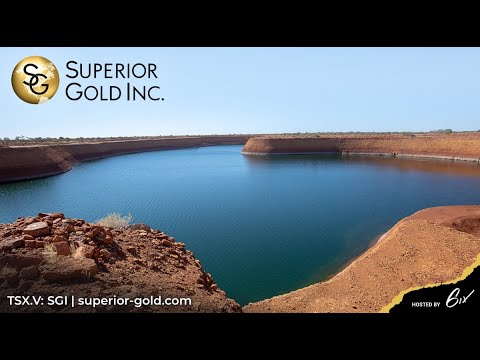
On 6ix: 6ix.com/event/world-class-gold-mine-operating-in-a-tier-one-mining-jurisdiction
Automated transcript · Written by software from the replay's audio. It can mishear names and figures; the replay is the record.
0:08 Hello, everyone, and welcome to Superior Gold's live investment summit today, hosted by 6. We'll be joined today by Tamara Brown, Superior Gold's interim CEO. Tamara is going to walk us through a company presentation, and after we'll move on to the live Q&A session where we'll be accepting questions. I'd like to remind everyone in attendance that you can submit your questions using the Q&A panel found on the right hand side of your screen. As always, this summit is being recorded. It'll be available to watch afterwards on six.com. So without further ado, Tamara, I'll hand it over to you and you can get things really kicked off.
0:38 Terrific. Thanks, Cam. Thank you very much for hosting us today. And thanks to everyone for taking the time to get an update on Superior Gold. We think this is an exciting story. It's regarding a world-class Gold mine in a Tier 1 jurisdiction. Please do note our forward-looking information on slide 2 and that all dollar amounts are in US dollars, unless otherwise indicated. So Superior Gold, we own 100% of the platonic Gold operations, which are located in Western Australia. We are listed on the Toronto Stock Exchange Venture, Exchange, sorry, and we've been in production now. This mine has been in production, sorry, for around 30 years. It's produced around 6Moz of Gold. It's a very big mineralised system.
1:27 Our investment highlights are quite simply that we are operating in the world's top mining jurisdiction. We own and are an operating world-class Gold mine with established infrastructure. We have a clear optimisation and expansion plan, very large mineral resource base of around 5Moz in total MINI resources with exploration upside, plus a very compelling re-rate opportunity, which I'm going to be presenting to you today. Taking a little bit of a closer look at where we're located, We are located along the platonic Miramaya Greenstone Belt, which is up in the northern part of the Yilgarn of Western Australia. More than 123Moz of historic production have come out of this region, so this is a significant Gold camp, so to speak.
2:15 Back in the 90s, there were a number of large Gold mines discovered. Platonic is one of the big 5 still in production today. Many of you may well be familiar with the Kalgoorlie Kulgadi Gold District, which is just here in the southern part of the Yilgarn. So taking a closer look at Platonic, we own the Platonic underground gold mine, 100%, which is outlined in red. We also own 100% of the Hermes open pit project, which is just about 60 kilometres to the south-west of the platonic operation, and also 80% of the Hermes South open pit project. So altogether a large 640 odd square kilometre property located in the heart of Western Australia.
3:01 So taking a look at an aerial view of Platonic, this shows you the significant infrastructure that we have here. So we have the past producing Platonic open pit, some smaller past producing open pits close by. These are our tailing storage facilities. We have 3 paddocks and another 2 already permitted. We have our mill and cab. This is a fly in, fly out operation. We have gas-fired power here at Platonic, so very low cost power. We have 2 mills, which is a 1.8 million tonne per annum mill and a 1.2 million tonne per annum mill. So there's a lot of infrastructure at Platonic and that's what Shareholders already own. So it's our job as management to leverage that infrastructure going forward. So taking a look, those assets replacement value of about 2.5 billion dollars.
3:51 In the grey on the previous slide, there was about 450km of underground development that already exists here, and we inherited a database with around 7,000km of exploration drilling. Taking a look at our growth strategy, it's very simple. There are 4 pillars here. We're very focused on the platonic underground right now. This is already in production, as I said, operating in and around 70,000oz to 80,000oz of Gold a year. It's our job to optimise this. We're doing a lot of work focusing on grade, focusing on our productivities in order to increase the production rate. Then the second part or the second pillar is the introduction of open pit material here.
4:36 Historically, Platonic was designed as an open pit operation and it later went into the underground. Now we're bringing back the open pits to the story. The reason that that's important is that we have all that infrastructure, we have those 2 mills, and with this introduction of open pits, we do see a step up in our production level to around about 100,000 ounces a year. The third pillar of growth is bringing back online that second mill, the 1.2 million tonne per annum mill that sits there on care and maintenance today, but which is available to us for either processing additional resources on our existing properties or through the consolidation of the Platonic Merrimire Belt. There are quite a number of Gold deposits in close proximity to Platonic that don't have access to mills and we see business opportunities there. And the fourth leg of the pillar is obviously a new discovery.
5:29 There's a lot of exploration upside here at Platonic and I'm gonna be showing you that later on today. Taking a look at 2020 very briefly, we made a number of changes here at Pertonic. I came in with a CEO change at the end of July. We did a financing towards the end of the year, which allowed us to do a number of important things. We revitalized our underground mining fleet. We bought back a royalty at 2% NSR, which has improved our go forward free cashflow from the operation. We repaid $8 million of a gold loan, of a total $12 million loaned. And we completed a PEA on the main pit pushback, which is a big project here in the open pit.
6:17 So taking a look, safety always comes first for us at Platonic. It's their number 1 priority. We have been successfully operating through COVID now for the last year. We've had no incidences of COVID at our operations or our corporate offices. And I guess it's one of the big advantages of working in Western Australia where this pandemic has not hit as much as some of the areas up here in North America and Europe.
6:45 Our 2021 guidance, we look to produce around 70,000oz of Gold this year. In Q1 we just reiterated that guidance. We look well positioned to deliver on it. The first pillar that I talked about with respect to our strategy is that underground optimisation. We're looking at unlocking the value of production through production growth, margin optimisation and systematic exploration. We added 2 new trucks and 2 new loaders last year. This has improved with our liabilities, our productivities and lowered our maintenance costs. We've been very focused on this stoke grade from which we mine underground and we've had some great success in this area. The reason is this is a KPI to watch for Pertonic to understand the profitability of the operation.
7:34 Importantly, we added a third drill rig in December 2020, and this has allowed us to come out with a good, steady flow of exploration results, which is very exciting. So taking a look at some of those operational improvements, this slide shows you from Q2 last year when we introduced some of the changes at Plutonic. We've had a significant increase. We've increased our mine stoke grade by 47%, which has resulted in a significant increase in production. So this is really quarter over quarter improvement that we're focused on, And we look forward to continuing to deliver profitable waters as we go forward.
8:21 Taking a look at the second pillar of our growth strategy, which is the open pits, we look to bring online open pit production in mid this year, so very shortly from Platonic East. So on this slide, if you can see my cursor, this is the main pit, the mill, and very close by is Platonic East. So this is simply a pushback of the Platonic East open pit. We'll be bringing that online mid-year, followed by perch, salmon, and then the Hermes South and Hermes projects to the southwest of Plutonic. These smaller open pits have low capital and are able to be brought into production relatively quickly. And Then we have the main pit project, which we announced in December last year.
9:06 This main pit PEA has an NPV of AUD$120M and an IRR of 35%, all at US$1,500 Gold. This is a great little project for us. It steps up our production by 60,000oz a year for a good, long life of 6-years. We pull out of that open pit around 350,000oz of Gold. When I walked into this company, we didn't have this project and people were speculating about the life of mine that we have ahead of us. I think this is an important trigger for the investment community to understand that there's a steady supply, base supply of ore for our mill for a long time to come. This is a low capital project simply because we don't have to add any mill or infrastructure here. We're simply pushing back an open pit.
9:58 Very technically simple as well because we understand the recoveries and the mining costs as we've already been mining this operation for a long time. Taking a look at the surface potential in and around the main pit is very exciting. This slide shows you that here is the main pit with the black outline. Our PEA shows you the pushback in blue, purple and green. Again, this is simply pushing back an open pit so that we access the ounces underneath. Across the property, the geological feature that we mine from here is called a mine mafic, which is in a cross section here shown in green. The mine mafic outcrops at Platonic. So that's why we've mined there historically. And it also outcrops over here at Plutonic East.
10:47 So it's very simple to see why geologists have identified the mineralisation very easily where it outcrops at surface. But what's exciting is that this mine mafic actually extends all the way across the property, just 50 metres below surface. And so all the way across here, this mineralised mafic exists. This slide shows you some significant intercepts. There's only a few across the property, but here's 1 here, 5 grammes over a metre. Up here in the northern part, 16 grammes over 2 metres. This kind of mineralisation in an open pit would be very, very profitable. And there has not been any drilling here at surface since we've owned Plutonic. So we're very excited to get a drill rig on surface starting in mid-year this year in order to 1, infill drill that main pit project, but also to do step-out drilling, because we do believe that there are surface opportunities beyond the main pit here at Plutonic.
11:39 This light yellow area is simply a 0.5g downhole composite, showing you that there's a lot of economic mineralisation across the property. So this slide really just highlights the fact that we already have the infrastructure to be operating at an extremely increased production level. So Back when Barrick owned Plutonic, they were operating at 330,000oz of Gold a year. This is simply highlighting that at a better head grade and operating 2 mills, we already own the infrastructure to deliver at multiples of our current production rate. People often ask me about what are going to be the sources for that second mill when you bring it back online. It's pretty simple to say. Obviously, we're focused on discoveries on our own property, but beyond that, as I said earlier, there are quite a number of Gold deposits in and around Platonic, in truckable distance. Truckable distance is probably in and around 150km because this is very flat and very straight roads.
12:42 We are talking to a dozen different groups that have Gold resources and no access to a mill. So, it's very obviously a business opportunity here for us and our shareholders to leverage that. So, structures such as joint ventures, farm-ins, earn-ins, even outright acquisitions in some cases, maybe mine gate agreements, We want to be able to fully utilise the infrastructure that shareholders already own.
13:08 Now for the final pillar, the fourth pillar of our strategy, which is discovery and exploration. There's a significant upside. This is a big mineralised system. It's produced 6Moz of Gold. We do see that there's a long mine life ahead of it. As you can see, it's relatively flat lying, the ore body at Platonic, which gives us the opportunity of not having the high expense of trucking and developing deep into the ground. And so from this slide, this is a cross section, you can see there's any number of significant intercepts. These intercepts are all outside of our existing resources. These are targets from which we are going to further follow up with the underground drill rig. So when I came in, it was very clear to me that if I look, this is our existing resource base and the mine Mayfick unit that I talked about.
13:58 All the way along this Western mining front, there are significant intercepts that sit outside of our existing resources, outside of our infrastructure, but are relatively close. That's where we put our drill rig when we got it on site in December. This drill rig is sitting here on the Western mining front. This is a cross-section. We have already come out with 3 exciting results on the Western Mining Front and in the Baltic Gap. This is about a 1.2km extension all the way along this ore body And we're very excited to say that we can see this deposit is opening up into new mining fronts here. So in the Baltic West down here, we announced 13.7 grammes over 8.8 metres and 52.7 grammes over a metre. This kind of mineralisation makes me very comfortable that this deposit is not pinching out or getting lower grade. You can see that this is outside of resources, outside of infrastructure, but it is close enough within 50m that we can put a drill rig, infill this material into our reserve and resources and into our mine plan in short order with low capital.
15:04 So a little 350m up dip on the deposit in the Indian zone, 56g over 15m. Very exciting intercepts that we are going to be bringing into our resources this year. And then finally here we have the Baltic Gap. The Baltic Gap has a number of advantages for us, obviously exciting intercepts, 40 grams over 6.5 metres and more recently 21.8 grams over 8.3 metres. This is opening up a new mining front, as I said, but it also has the added benefit that it is joining together the existing operation, which is our infrastructure up here, to our new mining region, which is called Baltic Deeps. This is actually not that deep, so it's a bit of an unusual name, but this mineralisation has not been developed into. It will be one of the future mining fronts for Petronic.
15:56 And as we infill the material here, we are simply increasing our cash flow and reducing the time to a positive return for shareholders on developing into this new area. These gaps simply exist because of the lack of drilling. That's why we're excited to now have this drill rig on site, completely dedicated to exploration drilling. A recent update that we provided just this week to the market is with respect to how we are modelling the platonic ore body. Historically, at Platonic, geologists would use drill hole intercepts and they would interpret where an intercept occurred and where another intercept occurred and they would join together that mineralisation.
16:43 So, these red stringy images here on the left of this slide, are what the geologists interpreted historically. It's called a constrained wireframe. They put a wireframe around this mineralisation and that's how we would plan and schedule our mining. But now, with the advancement of technology and computing power, we have been able to incorporate all historic datasets, including structural lithology alterations from all historic drill hole intercepts plus space samples in order to improve our understanding of the platonic ore body. So here on the right with the new 3D model, you can see that the model interpreted and identified where the mineralization existed far better than the historical method. So we're very excited about what this means for us in 2 areas, both with respect to our mine planning but also with respect to our targeting of mineralisation extension, So really that exploration piece. So I would say that that has been a contributing factor as to why we have had such a high hit rate on our recent drill campaigns.
17:56 In Q1, we had 1 campaign where we drilled 7 holes and all 7 holes, 100% of the holes drilled to depth hit significant mineralisation. That kind of a hit rate is unique in the mining world, but very exciting here for Petonic. This is a plan view and this is a cross-section showing the comparison between the old method and the new method. Now, it will take time for us to incorporate all of this into our systems going forward, but I can tell you that it's already having an impact on our mine planning. And you saw that with the improvement in Q1 with our operating results. So next slide takes you through our history of increasing reserves and resources. We've got a strong history of doing so here at Platonic, and I expect that we would be able to continue that moving forward.
18:44 The critical piece is ensuring that we drill at a sufficient rate. That's why we're excited to have that exploration drill rig here on the property. Looking at our upcoming catalysts, we do have a steady pipeline of projects and catalysts moving forward. In the underground, we'll have exploration results coming out on a regular basis from that exploration drill rig sitting on the Western mining front in the Baltic Gap. In June this year, we'll be paying in full that Gold loan. As a reminder, over the last 18 months, the company has been paying back a loan with gold from its free cash flow. This has been a burden on the company and it has been a reason that we have not had as many drill rigs, for example, as we would like. We're very excited to be fully paying that off, and we think this will be a catalyst for our stock as the investment community recognises that increase, that $2 million at least increase every quarter in free cashflow coming out of this operation.
19:45 In addition to that, we will be advancing our projects. So with respect to the main pit pushback and the Hermes South project, we'll be conducting heritage surveys with our local indigenous communities in order to advance our permitting process. And also we'll be putting a surface drill rig on the property mid-year in order to start to drill
20:09 the surface targets that I showed you earlier today. So, all together, this has got a great pipeline of catalysts for the company moving forward. Taking a look at our capital structure, we have very tight shares outstanding of 122M shares. We have our largest shareholder remains Northern Star, who sold us the asset back in the end of 2016. They remain a supportive shareholder and are obviously very competent in the area and we have a director on our board, a representative of Northern Star. We have a good, solid analyst following in the investment community and any of these guys you can contact in order to get a better understanding of Superior Gold and the Platonic asset. But in closing, probably the most compelling investment opportunity here is the fact that there is a revaluation opportunity for Superior Gold. We currently sit with a market capitalisation of under $100M.
21:08 If we were to re-rate just to the average multiple of our peers or our consensus NAV estimates from our analysts, There's a significant doubling of our market capitalisation that exists, that opportunity. Also, we have the opportunity to bring into our valuation the main pit pushback, which although we announced it in December this year, it is slowly starting to come into analysts' estimates and investment communities' estimates. So in summary, that's a review of Superior Gold and the opportunities we see here. I think Cam, I will leave it there and let you open up the floor for questions. Wonderful, thank you. That was great to hear. We do have some live Q&A questions that have come in, so we'll get to those first, but I'd like to remind everyone in attendance that you can submit your own questions in the Q&A chat on the right-hand side of your screen.
22:01 To get started, Brian William-Bus has asked a few questions and we'll get right into those. His first question is, what is the current daily or annual production rate through the mill in tonnes? Thanks Brian. So our first mill, we put through it last year in and around 1.6, 1.7Mt and it has a 1.8Mt per annum capacity. You can see there we do have an opportunity to get more out of that mill. The number of things happening for us right now, where this year we're actually, until we start mining from the open pits, we are supplementing underground feed with oxide material such that we are operating at a slightly slower rate. But I do expect moving forward with the introduction of that open pit material with the underground ore that we will be able to push that mill closer to its full capacity.
22:54 Thank you. His second question is, are the mills independent and autonomous? Will you target a separation of high-grade and low-grade feeds to each mill?
23:03 Great question, Brian. The answer is hard to give you right now. Currently, we are just using the first mill, the 1.8Mt Brenner mill. It is fully autonomous from the second 1.2Mt Brenner mill. That is an opportunity for us to leverage for shareholders. We can either use that second mill for another ore source, whether it's a neighbouring Gold deposit or as we bring online that main pit, if we had in addition to that a high-grade discovery underground, there would be the opportunity to separate high-grade and low-grade ore, but currently we don't have enough information to make that conclusion. Thank you. His third question is, what is the current max depth from the surface of the underground workings?
23:50 So we're only down at about 800 metres. So as you can appreciate here, Brian, this isn't an operation that needs a shaft or anything like that. It's still very shallow. And We do look at different mining methods when we take a look at that Baltic deep material. And it's pretty exciting to say that technology has come a long way and there are opportunities to take advantage of more bulk mining in some of the areas of this mine. Awesome. Tim Trombley asks, is the Surface Drill Rig company owned?
24:23 So we are an owner-miner, so all of our mining is done by our own operators, but our drilling we use Barminco, So that's third party, simply because they get such good productivity rates and they're very, very familiar with the Plutonic asset. And Stephen Schwab asks, what grade do you expect from the open pit plutonic east?
24:48 Great question. So last year we were supplementing underground material with 0.3 gram stockpile material. That first plutonic east deposit ranges from around 0.6 grams at the beginning up a little higher. So our grade profile is projected to increase. Platonic East is the lowest grade of our open pit projects. It increases to around 1 gram for the Hermes South project, and then up to 2 grams per tonne for the main pit project. So as you can see, a pretty exciting future as we increase that grade profile from 0.6 grammes or 0.3 grammes last year to 0.6 this year, up to 1 and then 2 moving forward. Wonderful, thank you for that. We've also had a few questions come in ahead of the summit. So I'll move to some of those now.
25:37 Live Q&A is still open to any attendee that wishes to participate in that. So please ask your questions now. The first question that we received ahead of time is how many drill rigs could you operate underground at Plutonic?
25:50 Yes, look, I would like to say nearly infinite. When you take a look at the infrastructure there, Cam, I get very excited about the opportunity with this Gold loan coming off and us having extra free cash flow. But realistically, I would say I would like to see an additional underground drill rig as well as an additional surface drill rig. So in total, that would be 3 exploration rigs, because we currently only have the single rig underground. Everyone could see from those images that there is opportunity to put drill rigs pretty well all over that infrastructure at Plutonic. So all along that Western mining front, we could conceivably have up to 3 drill rigs and then you could have a drill rig on the other side of the ore body. But I think that we're going to walk before we run. And so I would like to see an additional underground drill rig as well as the surface drill rig that's coming online in mid-year this year.
26:41 Awesome. Thank you. Eric Kennedy asks, will you be able to lease a BISREX truck from Hermes or Hermes South, as mentioned in the study? Yeah, look, this is a, people much smarter than me can get to answer these things. The BIS trucks, I think, are an exciting new technology. I'm a cautious person. I would like to see them operating in a number of other projects before we make a board decision on this, but we continue to monitor these trucks and we're excited about what it could mean for the Hermes project. With Hermes South at this point in time, no conclusion has been made, but they are in consideration. Thank you. Tim Trambley asks again, what is the total cost per metre drilled?
27:27 So drilling, we look at our productivity rates, I would use anywhere between 100 and 150 depending on the area that we're drilling and the productivity rates that we're getting. We've got very strong, competent ground here at Plutonic, which is definitely an advantage. We have the ability to drill at very high rates. Thank you. Brian Bus asks another question. What will the resource update later in the year focus on? Will it include a vision for production potential, PEA? Good question, Brian. So a lot of the work that we've been doing since I came in has been around our block model and improving our planning tools. And obviously, the block model is a big part of that. And I talked about in the presentation today about incorporating 3D models, and that will be the first time we've ever done that here at Plutonic.
28:19 So there's a number of things that I do see that we would like to incorporate into our next reserve and resource update. So that would be the inclusion of 3D modelling, which incorporates more data, allows us to be more accurate with where the gold exists in space. And then also including some of these additional open pit projects that has historically never been drilled. So Between those both new pieces of information, we do expect that it will take some time, but that the next update will be an exciting one for the company. Thank you. Moving back to a question that's come in ahead of the summit. Given there's a long history of mining at Plutonic, is there a chance of reprocessing the tailings there?
29:05 Yeah, absolutely. Someone's read my mind here. So the first project that we put out when I came on board was that main pit PEA, the pushback. And one of the projects in the list, and I won't say necessarily where it sits, but it's the reprocessing of those tailings that we have sitting there. For investors to understand, we have 30-years of mining history with about 0.7g.
29:25 As we all know, technology has improved, the recoveries have improved significantly here at Platonic over the last year. And so with 0.7 grand materials sitting there in those tailing storage facilities, we also have a second unused mill. And so there's an opportunity to put a float circuit on that. And so this is a project that the engineers are now looking at, and we look forward to updating the investment community on. Wonderful. A nice general question now, but what do you think are the advantages of operating in Western Australia? Well, I've operated in my career in Africa, in South America, Mexico, and places. And really, I don't think that you can undervalue the benefits of working in such a strong mining jurisdiction. We have a government that's very supportive of mining with a very long history of being supportive, very safe, high education and technical skills of the Australian mining community.
30:24 Really pretty well on every metric that you would look at, WA, and it's why it registers with the Fraser Institute as being in the top 1 or top 2, depending on which year. But it's never out of the top few. So I don't think you can underestimate that when we take a look around the globe at geopolitical risk and the opportunity for governments to just decide to nationalise assets, etc. We understand categorically Australia's history in mining and we're very comfortable we'll own our assets there. Thank you for that. The next question that's come in is, has the COVID pandemic, How has the COVID pandemic impacted your operations? As I briefly said, we haven't been interrupted with respect to our operations per se. When COVID originated, we were very quick to act.
31:14 We introduced infectious disease management plans, things like temperature checks, social distancing on aircraft, masks, et cetera. But what it did do is we went onto a two-on-two off roster in order to reduce the amount of movement of our people, to reduce the risk. And it also impacted us with respect to our indigenous communities, where we have a 0 tolerance policy. Absolutely, there is nobody that wants this pandemic to reach these very remote Indigenous communities that don't have access to hospitals, et cetera. So that put a little bit of a delay on completing heritage surveys, et cetera, but everybody understands and I think congratulates us on that 0 tolerance policy. With respect to the operation, I would say the only other thing I'd comment on is that the labour market in Western Australia is very tight right now. Because WA has locked down its borders, they have these snap lockdowns when outbreaks occur in other parts of Australia, meaning that people cannot enter Western Australia without going through a two-week quarantine.
32:17 It has limited our flow of workforce from the East Coast. And so I look forward to that opening up again as we all get our vaccines and get back to normal. So of course, as everyone does. The next question that's come in is what is your M&A strategy and are there opportunities for belt consolidation in Western Australia? Yeah look it's a great question. Everyone gets excited about that consolidation of the belt and they should because we own the infrastructure, we hold the keys to all of that steel, so to speak. But I think that for me, I'm very internally focused right now in turning around our operation, showing the investment community what the existing reserves and resources can look like in a mine plan, showing that we're profitable and putting together a sustainable long-term mine plan here that incorporates both underground and open pit. I think when the market recognises the value and starts to give us that with our share price, there is an opportunity to look at M&A. But I would say before that, I would use tools such as joint ventures, earnings and farm ends where we're not using our stock, we're not diluting shareholders while we're still trading at this lower level, but we still get the benefit of getting all through our mail. So I would say it's something to watch in future, but today we're very internally focused.
33:39 Great. Well, I think that's all the questions we have for today. So with that, I'd like to thank everyone that's come into attendance. But Tamara, I'd also love to thank you for coming on. This has been a wonderful presentation. To the attendees, if you didn't get a chance to have your questions asked, or if you think of 1 after the summit, we'll be sending out a short survey where you can leave your contact information and the Superior Gold team will reach out to you directly. You can also find more information, of course, at their website, superiorgold.com. Tamara, I'll hand it back to you for the final word now. Thanks, Cam, appreciate it. And thank you, everyone, for taking the time. Please don't hesitate to get in touch with us. We think this is an exciting story. We do understand it's a bit of a turnaround story, but we own the asset, we own the Gold deposit. We now need to run it and prove to the world that this is a very profitable Gold mine in an excellent mining jurisdiction and that we have a long life ahead of us. So thank you very much for your time today.
34:33 Great, wonderful. And with that, we'll be closing things off. Tamara, thank you again. And everyone, I hope you all have a wonderful day.
Follow Superior Gold into a list and get an email when it puts out news.
Partner at Oberon Capital