Transcript
Automated transcript · Written by software from the replay's audio. It can mishear names and figures; the replay is the record.
0:03 Say good morning, good afternoon, or good evening, depending on where in the world you're signing in from today. I know there's at least I think 8 time zones represented in the audience today. So really appreciate you joining us. I've got with me today Shane Williams, CEO, President and Director of WestRed Lake Goldmines, to discuss yesterday's press release on 2026 guidance. Shane, how are you today? Great. Good to be on, Romeo. Awesome. So I've got some boring housekeeping I'm going to run through, but then we'll get into the meat and potatoes. So I appreciate everybody's patience. Here's how today's going to work for those folks in the room. I've got some questions based on the release that I'll pose. Then we're going to open it up to shareholders and prospective shareholders using that chat button at the bottom of your screen. We'll say a couple things just because we're trying to keep it to about 45 minutes a day. If you ask a question I've already asked, I do encourage you to be patient if you can. I don't want to make Shane repeat himself, but I will make sure the transcript gets to the West Red Lake team so they can get back to you as soon as possible. So please do feel free to ask any question. I just might not get to all of them today.
0:56 But if it's on topic and something we haven't covered, I will try to make sure we get to it in the time that we've got together today. That includes all the great questions that came in over email. We've compiled those and combined some of them just to keep today's event as efficient as possible. Other quick pieces of housekeeping, today's event is being recorded and will be available for replay in the early afternoon Eastern Time. It will pop right in your inbox, but will also be available on SIX's YouTube channel. A final thing I'll say before we get into the meat and potatoes, there is a request meeting button at the bottom of the screen. You can click that at any time to request a meeting with the West Red Lake Gold Mines team. I'll make sure to pass those along to them and they'll be able to reach out to you at their leisure. But enough out of me, Shane, I want to give it to you for an introduction before I get into my questions just before we get started today. Good morning, everyone. So we were just discussing it here this morning. It's great to be actually on an earnings quarterly call as we started this company 3-years ago. It's a great milestone for us to actually be on a quarterly call. It just shows the progress the team have made and the company have made in less than 3-years from a foundation of a company to an actual operating mine.
2:03 I just wanted to step back a little bit. When we bought this project back less than 3-years ago, we said we would basically do the work that was required. We would take our time. We would de-risk the project. We've done over 200,000m of drilling. We've done underground development. We've set the company up for an operational stability as we move forward. And so that is the foundation of where we are. And as we move forward, that's going to be the focus of the company. And that came culminated in our commercial production release earlier this year, which we talked about our guidance. We talked about a ramp up and we talked about our focus on the rest of the year. So I just wanted to give that little bit of context, Romeo, to everybody. We're excited to be in production
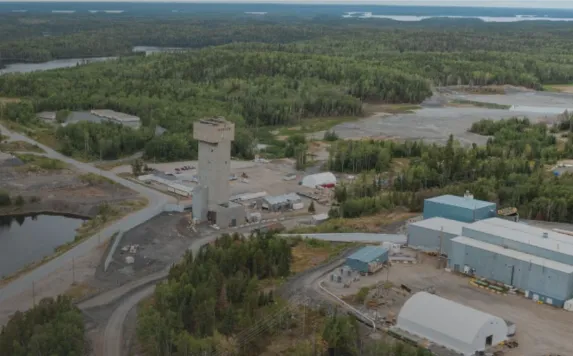
2:49 at last. And as we move forward on de-risking further, a ramp up and into full production in 2026. Thank you, I appreciate that. It's good to remember how few mining companies actually get to be able to do earnings calls. So that is exciting. Before we get into the 2026 numbers, which I know I and a lot of people have questions about, I'd love if you could walk us through what West Red Lake has accomplished in 2025. So kind of a retrospective of last year. I know Madsen produced 20,000oz, generated $103M in gold revenues and reached commercial production in January of this year. But from your seat, what does that foundation actually enable for the business in 2026 and beyond? Yeah, we've always talked, Tomi, about our slow and steady approach to Matson. Obviously, there's been a lot of history with Matson, and so one of the things we saw very early is Matson needs time, it needs focus, it needs the work done, it needs to be a nice de-risking, and we've done that most of up to now, 2025 in particular, was about de-risking. We did a lot of underground development.
3:51 We did a lot of drilling. We bought the camp dry, the facilities that we needed. We bought a lot of new equipment. It was really about setting up to this moment, actually, Romeo. There's a lot of work that goes into these restarts. I've done quite a few of these restarts and you've got to get the foundation right. So 2025 is about building that foundation for a successful operation. And that really culminated in our commercial production announcement in January of this year. And again, that slow, steady approach we've talked about, we did talk about a ramp up, we did talk about a slow ramp up after that commercial production into where we are today. So that's really been the foundation of what we set the company up for, for long-term success in Madsen.
4:38 Nope, appreciate that. Now, when I get into the release specifically, because it notes that approximately 60% of the 2026 production is planned for the second half of the year. So investors hearing that for the first time, it can sound like a back-end loaded year. I'd love if you could share just your perspective about why that profile is a deliberate feature of the plan rather than a potential concern for investors and what is happening in H1 that's going to set up that H2?
5:06 Yeah, I really bring people back to our commercial production announcement. So, you know, just because you get into commercial production, There is always a stage between commercial production and that final ramp up. Commercial production really focuses about you're at 60% to 70% of run rate. And so the first half of this year is about getting that final stage of that 60% to 70% to that full run rate. And so that's what we've laid out. And Q1 and Q2 are really focused on that ramp up. There's a, you know, in underground mining, there's a lot of work to do on development, get your consistency right, get your ramp up in place. And so that's why you use that sort of a back end loaded. The first 2 quarters are about getting that there, slowly ramping up, and then you're in full production at the back half of the year. And so that 40-60 split is pretty typical for a lot of companies as they develop the project. And that's how it's going basically so far.
6:08 Great, no, I appreciate that. Now, one thing is after achieving commercial production, your team made the conscious decision to re-sequence mining and push access to the 447 complex in South Austin for mid Q1 to early Q2. I'd love if you could talk us through your thinking there. What were you prioritising and what does that decision buy you operationally over the next, let's say, 12, 24 months? Yes. So just a little bit back, we've been drilling 447 for most of last year. It's really a high-grade zone that's very special in Mattson. It's the first sort of area, non-remnant area we're getting into. And so, as we've looked at that and we've gone into it, remember, as we made that decision, we weren't actually finished drilling that area as we made that decision and subsequent to when we, early last year, we were talking about mining that, we've actually found more areas, another couple
7:03 of lower areas of that within 447. So it's actually grown even bigger. So we really wanted to make sure that when we hit 447, we have the infrastructure to mine it all in one go. It's about level mining bottom up into that zone. So we wanted to get down another level so we get the extra tonnes and the grade into the project so that when we get into Q2, we're really set up for a full Q2, Q3 and even some of Q4 of 447. So that really was, it's not really a delay. It was actually, it was a restructuring of the mining sequence to get more of triple 4 7. So that when we get into the back half of the year, we're really focused on that. No, I think that that's helpful context. One thing I got is Q1 Gold sales came in at that 6,165oz, which does fit the sequencing plan that you described.
7:56 The April data you're disclosing does tell a different story though with 24m per day of development, 714t per day of order surface, 685t per day through the mill. So how should investors be reading those April numbers as a leading indicator?
8:11 And separately, what are the next operational milestones we should be watching for in Q2 and Q3 for the folks in the room. Yeah, last year we've been talking about a lot of numbers for sure, Rumi. So to run a mine like Madsen, so Madsen is a high-grade underground ore body. So to run a mine like Madsen underground, you need to be doing underground development. About that 24m a day is like that sweet spot for developing underground. And then we have a mill that runs at 800t a day. So, you know, they're the key milestones we need to get to. And so as part of this ramp up I was talking about in this Q1, we focus on these are the leading indicators to me that we've hit the sweet spot.
8:57 I mean, production is one thing, but unless you have those developments at a sustained rate and the production on the ground at a sustained rate, you can't go hand-on-heart and say, I'm in that position to deliver on Q2 and Q3. So, I watch them very closely. The team are focused on them. And the work we've done in Q1 really sets us up into April. So in April, we're seeing those numbers beginning to be a sweet spot. I remember we've still a whole rest of the quarter to work on, but getting to that 24m a day is something that's really key for this. That gets us to the big stops, the high-grade stops on time. And so we've hit that number now in April. The team are moving over 700t a day of ore to surface and the mill is going at 600t per day. So these are key milestones that the final bit of ramp up needed in the rest of the quarter that I can be assured that as we get into Q2 and Q3, we're hitting our key numbers which drive production and ounce production. You know, it's great to talk about ounce production, but those are the key leading indicators that we look at on the mine site to show that we're there to deliver going forward.
10:07 Great. No, no, I appreciate that very much. So my next question is a big one and it's covered in a lot of what's being discussed in the chat and what came in at an advance over email. So I'm hoping this question can cover basically everybody's curiosity about it. And that's the ASIC guidance of US 2800 to 3600 brands. How do you see that number trending as you layer in the 904 complex, fork, and that shaft refurbishment in H2? Yeah, so this is when we've also got a lot of chat from us and a lot of questions on ASIC. So just to bring people back, when we did the pre-feasibility study, you know, we put out an ASIC guidance and that's basically on life of mine. So, remember, that was over a life of mine and in the life of mine, our production rate was higher. Obviously, we're in a different sort of environment and so we're in different parts of the ore body. This guidance is basically on 2026.
11:02 And so AISC is really a function of production, of ounce production. Most of these mines and most of the mines, particularly in Canada, are very fixed costs. Labour makes up a large percentage of the overall costs. And so really, as your production ramps up, of course, your AISC will be affected. So that's where people can think about it. As in Q1, as we get to Q2, our production ounce ramps up, ASIC will come down. There's a couple of other areas that we really focus on. One is the shafts. I know
11:35 we're going to talk a little bit about that, but getting that into production will also bring down the ASIC. Trucking material to surface is a lot more expensive than using the shafts. So that's our focus on the shafts. So that's how I think people should look at it. As our production ramps up, then the ASIC is expected to come down. And as we grow the ore body and get into these higher-grade zones and ounce production goes up, ASIC will come down. ASIC is really a function of ounce production in a sense in these mines in Canada, because they're very fixed costs. And that's just not our mine. Most people can go in and look at most of the ASIC. Newmont came out yesterday as an example, 50% of their costs are labour. So that's kind of how people can think about ASIC. Production ramps up, ASIC will come down.
12:21 Great. No, I think that's helpful. 1 item for me that stood out in the release is how your team described the 904 complex in Lower Austin. The phrase was, I think, high-grade and non-remnant. For anyone who's followed the operational history at Madsen, that phrasing, I think, carries some real weight. Can you explain for the folks in the room what 904 is, why non-remnant matters from a mining perspective, and why you believe it has potential to transform that production profile at Madsen.
12:52 Yes, so this is one of the most exciting things and one of the real opportunities we saw when we acquired the Madsen mine. So, you know, Madsen mine has a fabled history in Red Lake. It produced over 2Moz at 10g over 25-years. It has been mined before. However, there are a lot of areas within the Madsen mine that have not been mined, that were mined in a different Gold environment. 904 is one of those areas that we're beginning to tap into. And this is a large panel of mining that the team have started to get into and started to drill and is non-remanent. Non-remanent for people means that it hasn't been mined before. It's like going into Madsen, mining it from the old timers back in the 30s. And so that is really exciting.
13:47 It's a new area of mining. We can go higher production rate. We can do a better mining method and we can also get into that higher grade material. So that's how people should think about Q2, Q3 as we're getting into that area next year. And that's a real focus for us. Okay. No, I think that that extra context is helpful. Now, I know you and the team have spent a meaningful portion of 2025 and obviously most of this year on underground development, including
14:15 advancing the 13-level East Drive towards the Durlach complex. For investors who don't live in the world of mine development and follow every day to day, why is this lateral work so important right now? And what does it unlock in terms of, say, flexibility, drill platforms, access to less remnant areas of deposit. What is that doing for the company right now? Yes, so I'm not sure everybody realises this, but Maxon is narrower at the top and then it blows out as we go down underground. So getting access to more, most of these high-grade mines are, you know, they're steeply dipping, they're narrow at the top and then they blow out on the ground. So getting access to different mining areas, bringing, you know, our concept has always been this hub and spoke model, but that also applies within the mine itself. We need a number of those areas.
15:08 Our mill is 800 tonnes a day. And so, having 4 or 5 different mining complexes on the go in parallel really de-risks the project and the operation. So, you know, underground development is key to get to these areas. So as an example, you'll have Madsen, you'll have the 904 complex, you'll have 4447, all these areas working in parallel to risk the opportunity to bring more material to the mine as we go.
15:39 Great, thank you. I know the release lays out a path toward approximately 120,000 ounces per annum from Red Lake platform, which represents roughly 300% growth over the 2026 production levels. I'd love if you could, just for everybody in the room, if you could walk through the building blocks that get you there. So Madsen, 904, Fork, Durlac, grow and 8 zone. And more importantly, what the realistic timeline looks like for each of those pieces to enter the minefield. Yes. So when we set up the company, the focus was always to build a mid-tier Canadian mining company in a tier 1 jurisdiction. And Red Lake was an area we picked where we saw lots of opportunity. You know, lots of the big majors have got into Red Lake. They've seen the potential of Red Lake. And we saw the potential for this operation to really grow really as a platform for growth of a new company. And so, within Red Lake, obviously we have the Madsen mine, which as we go deeper is getting more high-grade, but we also have a project called Rowan, and that we're advancing Rowan, we're drilling at the moment, which is another high-grade story. So, bringing those 2 together as we move forward and as we integrate those 2 systems together, allow us to grow that rate.
17:00 So, getting Madsen going, getting Madsen up and running efficiently as we're doing in 26, as we move into 27 and 28, Rowan will be advanced and then Rowan will
17:11 be a project that will begin to feed into the Madsen mill or focus as we go forward. So that's over a four-year period, I would say, as the stepping stones of Madsen and Rowan. Also, as we go deeper, we do expect to get higher grade, like the 904. So that also ramps up the ounce profile to get to that number we're talking about. And we haven't even talked about that aid zone, which is very high grade in the mine, which over the next number of years we will be able to access. Great. No, I think That's helpful. I appreciate everybody's comments in the chat. Don't worry, I'm almost through my questions. We'll be getting to the chat relatively soon, but I appreciate everybody's patience. There's quite a few people in the room. Now, Shane, you flagged a combined Madsen and Rowan PFS as a 2026 deliverable alongside ongoing drilling at Rowan, Starritt Olsen and North Shore. For investors taking a look forward at the back half of this year and into 2027, which of these catalysts do you think has the most potential to change how the market values West Red Lake?
18:15 So I think, you know, this year or last year was heads down on de-risking Madsen. We haven't really shown the exploration potential of the region, even on our land package, what's there. There are a number of old brownfield mines, Starrett Olsen is an example. This produced, this is the second biggest producer on our property. It produced very well and we're planning on drilling that there. So again, back to this hub and spoke model. We're looking at Fork, we're looking at Starrett Olsen. We have put out a few press releases on Fork now as a satellite ore body which we're accessing. It will give us another mining front. And this year we're going to drill another area called Starrett Olsen. Again, a high-grade ore body that was mined back in the 60s and 70s, and that's another form of feed potential for Manson Mill.
19:13 We're also next year going to work on a pre-feasibility study and also to show a pathway as we grow the company together, feeding in a number of these satellite deposits into the project. So I think they're exciting catalysts people can look forward to this year, which I think will really set up what the vision was always as we started the company, that study will lay out that vision and that pathway. Great, thank you. I know in your quote in the release you mentioned that as production increases, cash flow generated will be directed towards accelerated development, supporting infrastructure and debt repayment. Can you give investors a sense of how you're prioritizing capital allocation over the next couple of years? And at what point does WestRedLake transition from a company that's building towards greater production to 1 that's generating just consistent free cashflow from Madsen?
20:04 Yeah, I think 2026, as we said, is about ramping up Madsen, getting Madsen to a steady stage. You know, I think as we do that, so Madsen doesn't need really any more capital. The capital that's been put into Madsen has already been put into capital. Sustaining capital, obviously, but as opposed to growth or development capital, that is pretty much, most of it has been spent as we get to last year. So, as we start to generate meaning cash flow, we do look at some of these projects and we do, as an example, we are advancing into the fork deposit. So that is some catalyst as we're spending our capital and some of these other areas we want to get into. That's some capital that we will be putting into to develop those areas as we bring forward. So I think just setting up the complex, as we talked about, is a key priority to establish the long term cash generation of MADS.
20:59 Great, thank you. I'm now looking into questions that came in over email. So for folks that submitted those, I'm just gonna start with those and then I'll jump into stuff from the live chat where possible. Again, it's something I already asked. I encourage you to watch the replay, but I will pass the question through to the West Midlake team. First one, and this is a question that's been reflected in the chat, but also it's a combination of a number of questions I got over email. What's the delay in getting the shaft and hoist running? Is it labour or mechanical?
21:24 And as a proxy to that, is the shaft currently operating? So yeah, that's also a question that's been raised a lot to myself also. So again, the shaft was also set up for 447 mining. You know, the shaft, we need to be down, it's down deep. We need to bring material from a deep part of the mine. And obviously, 447 was a key focus of bringing that material. So obviously with the re-sequencing of that, we're working on the shaft. One of the things that we found as we went into the shaft and started to investigate its potential is we saw the real potential to utilise the shaft into a much bigger tonnage. So in our pre-feasibility study, if everybody did, we were actually building a new shaft. So as we did our investigations, we saw that we could eliminate that next other shaft by focusing a bit more on the current shaft.
22:17 So we've put a lot of focus into
22:19 that, potentially getting that shaft to actually 2,000 tons a day of material. So we've kind of doubled down on the work to detail out that work on the shaft, where that would become the primary source of movement for mats. And obviously that's a huge opportunity. I look at the cost of trucking versus the cost of using the shaft. And that's a real asset on the project that we've discovered more about as we've gone into the renovations. So that's really where we've put the focus on to do a stage 1 and then do a stage 2, where I think people will really see that value of that shaft as we go, which means no trucking of material to surface, everything through the shaft. So that again, goes back to the AISC question where it shows the real potential to lower that AISC.
23:06 So, it is worth doing the extra work on that shaft for the long-term benefit of MADSEN. Great, thank you. One question that came in over email, they say Madsen was largely equity financed through the restart, which they note made sense pre-production. They want to know, now that you're in commercial production moving towards full run rate, how are you thinking about the guided capital structure going forward?
23:29 Yeah, Madsen was also, yeah, was a lot of equity financing as we went forward. And so obviously people, we have a number of, we have a debt on our balance sheet. So obviously that is a debt facility. It is quite high interest rates, obviously in the current environment. That is something we are looking at to potentially refinance as we move forward with that. And that's something that is focused on the team. The team are very focused on that as we look into this year. Obviously, that would be a big benefit. Obviously, also it has security on the project. That's another one we want to try and eliminate. So really that debt facility is really a focus this year on how we refinance it. We are looking at opportunities as we go forward. Great, thank you. One question I think I've slightly already covered, but I think it's worth reiterating because somebody did ask over email. They say the information they've seen covered the year ending December 31st, 2025. They want to know unless they missed something, they didn't see anything about first quarter of 2026 ending March 31st.
24:28 They want to know if there's any information on that as well at this time. Yeah, so our first quarter financial results will probably come out towards the back end of May. That's where we're doing it, what the team are working on at the moment. Obviously, we've just finished our year end. So the team are working on it and by the back end of May, we should be releasing those numbers. Great. No, appreciate that very much. Okay, folks, I'm going into the live chat now. I'm going to do my best. Keep in mind, any questions I think we've already covered, I'm probably going to pass on, but I will
25:02 pass through the full transcript to the team. So one question from the chat, actually, I'll combine a few of them that I'm seeing here. And it's really people asking about share price for the year. And the way I'll ask it to you is, what do you think? And we've already kind of touched on it, but I'd love if you could reiterate, what do you think is going to move the share price meaningfully up this year for investors at West Red Lake? Yeah, so this is a question we talk about internally ourselves a lot. So I think that one of the challenges we have with this project is it has a checkered history. Let's just say that. People have always doubted our ability to turn this project around and that has lingered on the share price. I think as we move forward this year and deliver on our guidance and deliver on quarter by quarter production numbers, I think people will begin to see a sort of catalyst and believe in that ramp up. I mean, to date we have delivered on everything we said we would do. We have talked about the staged approach to development.
26:03 We talked about doing the work to get us back into production. We reached commercial production as we said we would. We've given guidance. We will meet that guidance, I believe, as we ramp up over time. And I think all those catalysts will start to, and our studies we're doing and our pathway to that 120,000oz a year, I think those will unlock the building blocks of how we move up the share price.
26:26 We are undervalued compared to our peers and particularly compared to the ore bodies we have, the potential. Red Lake has the potential to really transform into very, very high-grade ore bodies. That is something that has really not been built in and as we advance the 904, I think people will see we have growth potential and we have exploration potential, which not a lot of companies have as we go forward. So I think those catalysts will really move the opportunity for West Red Lake this year. I appreciate that. One question, I'm scrolling through the chat, so I've been bouncing around, I apologize for folks. Just keep in mind, we'll try to get to as many as we can today. There's one question that came up just 5 minutes ago, and they said, we are hearing about the future a lot in this webcast, but they'd love if you could address, that's really the Q1 26 production. Because they know it's first quarter of commercial production and they, the claim from the chat is that it's a miss. And they want to know if there is a logical reason if you can share it with the folks in the room.
27:32 Yes, So again, when we put out the commercial production announcement, we did talk about our guidance and we did talk about the first half of this year being a ramp-up year. And I think, Just to go back to that, a lot of companies when they come out and they hit commercial production, there is always a ramp-up period for that full year. That is really what the focus is on, the ramp-up this year and ramping up in stages as we develop the project. People can look back at our pre-feasibility study and the numbers we put out. So 60,000 was a number, 60 to 70,000 ounce number. So this is a ramp up year. So I think when you reference that back to a first half of a ramp up, 60-40, sort of the number, I think this is about sequencing the project and setting the project up for
28:26 the longer term of the project. Great. Appreciate that. 1 specific question from the chat. They'd like to know what Gold price or prices are you using for the 26 CapEx growth, CapEx budget, if you have on hand. The CapEx budget, I mean, CapEx is more a cost associated with the project. I think on a Gold price look forward in our budgeting sort of number, look we've been very conservative on our Gold price as we obviously given where Gold prices are today, in our budgeting number we've used a number of US$3,800 Gold. So we've been conservative in our Gold price in our budget because we want to make sure that as we ramp up and get that focus, we've used a very conservative number in our Gold price projections.
29:16 Obviously, there's a long gap between where 3,800 is today and where the current Gold price is, but we have used that in our current budget going forward for 2026.
29:27 Great. Thank you. Appreciate it. One person just notes, they guess that any acquisition is off the table as long as the mine is not hitting the desired ounces. Is that the case or is there an alternate view in the company? Yes, so at the moment all opportunities are being looked at as we speak. At the moment, there's a lot of M&A going on. There's potentially companies looking at us. There's potentially lots of that area, but our real focus potentially, if that was happening, is we see consolidation potential in the region. There's quite a lot of projects around Red Lake now that are high grade, that are being run by a number of potential junior companies that would be perfect. And they have reached out to us. It would be perfect to be fed that material fed into the mats and mill. So that is something that we are looking at and also companies have reached out to us about. So I would say that consolidation building our red leg strategy is something that we are looking at.
30:31 Great. I appreciate that. Philip from the chat asks, generally, what kind of communications cadence can investors expect moving forward on production updates?
30:42 So as we move forward, Look, last year was really about getting the project, getting the work we're doing, getting out there. We were very, very communicative on an ongoing basis. And as we move into this production phase and operations phase, we will move back to a quarterly sort of, which is typical for operating companies. So we will be giving quarterly updates. We will be focused on focusing on those areas. So I think just for investors to get that shift, you know, when you're a junior developer company, you're giving lots of positive news, etc. But as you transition to that operating company, you go to quarterlies. Now, we will be putting out any sort of key catalysts that we get on press releases.
31:30 I think people are interested in Madsen on our focus on these high-grade areas we do. So we will be doing nice showing those press releases and any operational issues we hit. And some of the key catalysts I talked about, some of the studies we're
31:44 doing on the growth potential, which will give a focus for people as well as sort of the ramp up sort of focus as well. So that's what people can expect but fundamentally we're going back to an operating company and quarterly updates which we will be doing regularly. Great I appreciate that. Sorry I'm just running through as many questions as I can. I know we're not going to be able to get through all of them today, which I do apologize for. One question I've got is, when can we expect to see production at 60,000 to 70,000oz?
32:18 What's going to be done to increase tonnage process per day, mill expansion timing, etc.? Yes, so we don't need mill expansion for the 60, 70,000oz. I think people, I mean, At the moment, like I said, actually in April, we're actually running 1,000t of material a day through the mill. It can ramp up to that level. There was a lot of concern. We have a permit for 800t a day, but actually physically the mill can go to 1,000t a day. We are running material at that level certain days to test the mill. I don't think there's an opportunity there to do that. The mill can go to 120,000t to 1,200t a day. That is a focus for us. I think that the key one is the ramp up, getting the mine ramped up to full production.
33:10 And then as we grow the project going forward into next year, And at the end of this year, I expect us, again, like our key milestones we looked at, our run rate, our underground development, our mill throughput, I expect those to be towards the back end of this year, into that rate so that we hit 2027, we're at that full production rate. Great. There's one question that I think combines a few, So hopefully it'll tackle a couple of them at the same time. They want to know what the current cash position is for the company. Is the company generating sufficient cash to satisfy all relevant financial needs. Yes. So at the end of the end of Q1 our cash position was 35 million dollars. Basically at the end of Q1.
33:53 Perfect. No, appreciate that. One person just wants to know, and I think we've covered this, but I think it's useful to just reiterate as we get towards the end of this. SF Davies from the chat asks, what was production in Q1? Just so we can clarify what was in the PR. The ounces sold was included in the Q1 number, basically 6.1. Are we talking about ounces produced or ounces sold? So in the press release we put out, we used Q1 sales. 6,165oz
34:36 were sold in Q1. Perfect. I think that's clear. Just looking through, sorry again, there are a lot of questions, So if I don't get to yours, I apologize. It will certainly be run through to the team. I got time for maybe 1 or 2 more just before we throw it over to Shane for a wrap up. Scott asks, what is the maximum run rate potential of the Madsen mill? Yeah, the Madsen mill is permanent for 800 tons a day. So what that means is that, you know, over the average of the year, we have to consistently be within that 800t a day. That means that over some days we can go much higher throughput, on other days for maintenance shutdowns, etc, we can catch back up. So 800t a day is the permanent one. We've been clear about that. But the Matson Mill itself can actually go to, as I said, it has been running at over 1,000t a day and it can actually go to 1,200t a day.
35:32 So from a design capacity throughput rate. So, there is work ongoing to move that sort of permit. It's a small amendment that needs to be done to that 1,200 tonnes a day. So, that's work that's ongoing today that should be in a position to move that throughput rate forward. As I said, as part of that ramp up, the tonnage, getting to the stopes, getting that production rate up. And so that would work in parallel with into 2027 and beyond. Perfect. Thank you. As part of the studies we're doing, actually, there is the capability to move that mill to 1,500t a day with very limited capital additions. So that's really the potential of one of the opportunities we saw on the Madison mill. It's scalable. It's very, very scalable for very low capex.
36:20 So that allows you to bring in a lot more material and build that hub and spoke model we talked about. Other projects have to do major expansions to their mills, doubling of circuits, etc. We just have some
36:32 really on the front end of some crushing capabilities. That's really all we have to do to ramp up the mill. Great thank you. David from the chat asks, are there any royalties on the project right now? Yeah, there is a 1% royalty and it's now held by a company called Summit Royalties. When we did the original deal and we bought the original deal, as part of that consideration, there was a 1% royalty and that now is currently held by a company called Summit Royalties. Actually a new royalty company that's very, very growing very quickly. It's a 1% royalty held by a company called Summit Royalties. Actually a new royalty company that's very, very growing very quickly. It's a 1% royalty held by a company called Summit Royalties. And we have a good relationship with Summit and they're a very good part of the company and our focus. Great, appreciate that. I think I have time for maybe one last question before I call it for a wrap up. This is a question from Tom in the chat. He says, given Evolution Mining's Red Lake operation has reached full production, could you compare the geology at Madsen with Evolution's Red Lake deposit and discuss how those similarities or differences might inform West Red Lake's steady state ASIC once fully ramped.
37:38 He thinks this would be valuable context for retail investors building a long-term view. Yeah, I would just like to point out a little bit on Evolution. So Evolution bought the Evolution mine a long time ago, and only this year are they actually generating a lot of cash flow and free cash flow. So, it's taking them a long time to ramp up and get into full production. So, you know, we've done it in less than 3 years from foundation to where? So we're in a much better position. They're mining, just for people to be aware, they're mining down. That mine has run for a long, long period of time. It had a very successful run when they discovered a high-grade zone. So these areas in Red Lake have these high-grade zone potentials. And so they're mining down at 3,000m now. So they're a long way down. Our Matson mine is defined down to only 1,200m.
38:29 The ore body system is very, very similar. So again, we see a lot of potential. In the top 1,200m of Maxon, there's been over 2Moz to find. So we know that the system goes a lot deeper. We know the system, we've done the structural seismic surveys, We know it goes a lot deeper. So as we go down there, we do expect us to get a lot deeper. And there are drill results showing that the ore body continues down at depth. So that's really what we're excited about. So I would say a good evolution would be a good analogy, the mine there would be a good analogy for Matson as we go forward. And we're in a position that we're ramping up. We're actually making cash flow and that has taken a long time for them to get into that area.
39:17 I appreciate it. And Shane, thank you so much for letting us grill you a bit today. I know everybody in the chat with, you know, more than 500 people in the room. There's gonna be some questions I wasn't able to get to in a 45 minute session. Totally understand. I will make sure that full transcript gets to the West Red Lake team. But Shane, at this point, I'll give it to you to wrap up today's call with just some concluding remarks before we call it. Yeah, I would just like to just point out, wrap up and restarts are not really unique to West Red Lake. A lot of big companies today, which we see as peers and potentials to ourselves as we grow, are all about starting and ramping up over time. There's been a lot of successful mines out there. Silvercrest is 1 company on the Las Chipas mine. Bruce Jack, I don't know if people remember, they went through a ramp-up and went there. But the key focus for us is we've built a team that I believe has all done these ramp-ups, all worked in operations. We have a very, very successful team, both at the site. We have a key team at site and a key corporate team. And really the focus is that this is stage 1 of a long growth story as we build a mid-tier company.
40:29 So I would focus that the ramp-up is going as we expect. Everything is good. We have the team in place to deliver on what we said we would. We have done that over the last 12 to 18 months and I expect that to continue as we go forward. And I would see that as this is the first stage to building a mid-tier company in Canada, and I believe we have the team. And there are not a lot of teams out there today that can actually start a mine and build a company over stages. And I think that's important today. A lot of the existing companies that are there that have built big companies over many years. You know, those CEOs are at the end of their career and we see ourselves as the next stage of growth company in Canada, focused in tier 1 jurisdictions as we build the company going forward.
41:16 So I do, you know, it's a typical roadmap that's been followed by other companies and some of them now are very successful and some of those mines are very successful and I see no difference why Mattson will be like that and why West Red Lake will be step forward into a mid-tier company over the next number of years. And I would like to thank our team. I would also like to thank our team. We have a very, very dedicated team at CITE and at corporate that is putting in a lot of effort to make sure that Matt's in the success. And I have no doubt that that will be the case on Maxine Mine. Shane, thank you so much. I really appreciate it. And for all the shareholders and prospective shareholders in the room, thank you so much for joining us live. Please do feel free to share the replay, watch it again, ask additional questions afterwards. You can always reach the West Red Lake Gold team using the contact page on their website. But Shane, thank you so much. I really appreciate you