Transcript
Automated transcript · Written by software from the replay's audio. It can mishear names and figures; the replay is the record.
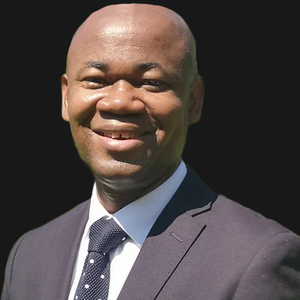
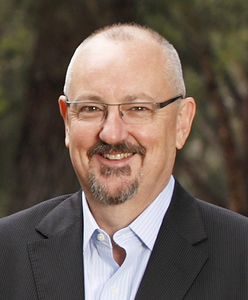
0:08 Hello everyone and thank you for joining us on this session today. This panel session talking about exploration in sub-Saharan Africa. My name is Toye Abueye, and I'm pleased even to be joined by a panel of experts who will be sharing their experiences working on the continent. Joining us even for the session today is, I have 2 guests, Andrew Dining, who is the MD and the CEO at Sarama Resources, an Australian-based company, but listed also on the Toronto Stock Exchange. We'll come to Andrew in a bit, even to talk more about him. And also I have the pleasure of the presence of Mr. Pierre Leverier, who is the President, the CEO, and Director at Deep South resources based in Canada. And so gentlemen, you're welcome even to today's session.
1:06 Thanks. Thank you. Right. Good. Thank you. Right. So to our guests from all over the world, thank you for joining in. As we have said that this is the Sub-Saharan African Exploration and what we intend to do through this session or with this session is to have an informed and intimate panel discussion among 2 of the leading companies involved in exploration on the continent. Of course they have different jurisdictions and we would like to talk about even the work that they do and the kinds of environments in which they operate and what are best practices even to share with all that interested companies that might be looking at the African continent. Of course, the African continent has become the largest free trade zone in the world at this point in time, with the coming on board of the African continental free trade agreement.
2:00 And we see this as an opportunity even for more Canadian or international businesses to engage with the African continent even to be able to make for mutual growth and development. So without much ado I'd like to start off with you Andrew. Andrew I see that even from your experience, you've got years of experience.
2:23 When you founded the Sarama Resources, you've been committed to the development of Africa and you have more than 30 years experience in international mining arena. So looking at it globally, let's narrow it down even to the continent of Africa. What's the span of your work on the continent of Africa, Andrew? Yeah, I guess As far as Serama goes, we're a late stage exploration company. We've been operating in West Africa for the last 10 to 12 years. We've operated in a number of jurisdictions there. So we've operated in Mali and Burkina Faso and Liberia. Only every jurisdiction is different, but every jurisdiction also has its own common set of challenges, I guess you could say. So, I think some of the things, the consistencies that you get, some are very positive and obviously some that kind of fairly unique challenges, but our business is really exploration, the projects, our main project is light side exploration. So we'll be looking to go into feasibility on that in the latter part of next year.
3:34 So for us, we've got very much a dynamic business environment where we work.
3:40 We follow very closely what other companies are doing well in our part of the world and maybe other companies that have had missteps and try to, I guess, repeat the good and dodge the bad. But yeah, our business is very focused on being well integrated into the Burkina economy and making sure we've got political capital so we can operate and navigate the various machinations that we see in our part of the world. Okay, thank you very much, Andrew. And from your experience,
4:15 let me follow on what you just shared now. When you consider the work that you've done in the last 10, 12 years, and the impact of COVID-19 over the last 2.5 years now, and with your expertise in mining on the continent, What are the trends that are exciting that you think that people should be mindful of on the continent generally, when you look at the scope of work on the continent? Well, I think, I mean, obviously COVID's brought no shortage of challenges with it globally. Where we operate in Burkina Faso, it's probably features far less in the narrative than it does in other countries, even other countries on the continent.
5:00 But probably the biggest impact for us as a business was, and probably still is, legacy issues is, you know, logistics, access to people, the ability to be able to service relationships in country, because it's important that, you know, senior executives are present in country, you know, fairly regularly to meet with the various powers that be and local community leaders. So, for us, particularly being Australian based, that's had a significant impact on how we manage our business. But I think the flip side to that is it did grow, I guess, an increased dependence on our in-country nationals to step up to the plate on their dealings with different governments and different levels of government and probably much higher levels than what they were used to dealing with. So for us, we've seen a development in capacity within our business and with the people that work for us and they've stepped up to that. And I think when it comes to Africa,
6:00 It's very much, I think if you give people the opportunity and you can create an environment which they can grow into, that they typically grab it with both hands. So, you know, one of the things we try to do is create that environment for people to grow into and I guess set the boundaries and the framework for them so that reduce the risk for them maybe kind of deviating off the path they need to be on. So, we invest a lot in our people and we think that's critical. And we do that at all levels. So, you know, from our local site level where we operate, you know, we've been building capacity in the local workforce there, which are typical subsistence farming. So you're coming from a very low base.
6:48 At community programs, we have their focus on, you know, the 3 main things is obviously infrastructure, health and education. So, you know, we build a school there, we run food programs, you know, We've increased the gender ratios to get more females through. There's more people graduating from school. So we kind of look at all layers. You develop at all levels. You don't just develop at 1. If you develop at the top, you become top heavy and fall over. You need that to work from the base right through the business. So I think, you know, COVID has thrown up challenges, but I think the flip side is us, and I think many other countries that operate, companies that operate in our part of the world, you know, it's probably brought forward what they're doing with respect to building capacity within the business and pushing their local workforce up quicker than what maybe you would have historically done.
7:45 Okay, so thanks, man. So we get a sense that the dynamics have also changed with the COVID situations in Africa and investing there. Let me switch over to Pierre briefly now. So Pierre Leveilleur, so I think I'll just go with Pierre because that sounds easier even to work with. Right, Pierre, your background is in the international finance sector for more than 20 years. You've had experience in the mining exploration as well. So as an investor or as an investment person, what are the things that you would consider, would you say 1 should consider when looking at investing in Africa from your own experience? The first thing you're looking for is the potential of the depositional area. So you're looking for high potential of discovery and further to that of development. Then the second point you will look at is certainly the country risk depending on in which country you are.
8:54 But in Africa, there's quite a lot of countries where the risks are not so high. It's like people have a... Many investors have a broad view of Africa as being very risky, but it's not the way we should look at it. We should look at it country by country. And there are some that are probably not more risky than North America or South America. So that's the 2 things you should look at. But the first thing we're looking for is the prospectivity of the geology or the sites that we're looking at. Right, no thanks. Andrew had touched on working with host communities and governments working in Africa.
9:43 You have been involved in several exploration activities on the continent and you have managed well and finance projects since 1996. What best practices would you like to share working with host communities considering you've done over 100 million dollars worth of transactions and financing in countries like Namibia, Ghana, Chile and other places. So let's focus on the African environment.
10:13 What lessons would you want to share from your activities there? One of the things we like to do, it's
10:23 our philosophy, that's the way we like to work, is to be in partnership with local people. And We've done that in Namibia and all the projects we have worked with. We're doing now in Zambia, we're doing the same. We have done that in Chile in the past also. It gives us, we think, a better foothold in the country. And we have partners that are quite motivated in general to make sure that we further our development in the right way and that it gives us also time to adjust to the local culture, which is sometimes, you know, way different than where we come from.
11:09 So that's something we like quite a lot. Of course, on top of that,
11:16 We like to be involved in social activities, we are mainly involved always in education,
11:27 from elementary school to university. We have programs with the University of Namibia that were including quite a lot of stuff, research program on site, on our site, research program at university, funding some equipment for laboratories, sponsoring special courses for the university. So we try to be highly involved in education, like Andrew said. In general, it's probably the preferred way to... It's easier than other sectors to be well established on the education side. Right and and and when you talk about even the education now I I know that Andrew talked about even across board generally.
12:18 And feel free gentlemen, and either of you can jump in on this now. How significant has that grown through your involvement doing business in Africa? When you, are they measuring statistics that we can walk by? In our case, we don't have clear statistics that we keep because it's, I would say, it's evolving through the needs. So our program is not fixed in time. Sometime we will do something this year and next year we will do something else. It depends on the needs and we adjust. So we don't keep real statistics on that. We realize now that it should have been a pretty good idea to
13:09 keep our statistics on that, because we have litigation with the government in Namibia at the moment and that would have probably been helpful, but that was not the case. All right. Now I'll come back to you. Okay, go ahead, Andrew, go ahead. And so, Toyus, if you're kind of looking at, would you question, I guess, what are the kind of outputs on the impacts of some of the work we're doing with respect to local programs? Correct. Yeah, so if you look, you know, at Norkarma where we work, that's our primary camps there. There's 1 school there, we've got a bunch of classrooms, we have a food program where all the kids get lunch.
13:54 The enrolments have gone from about 80 pre that work through to close to 250. If you look on our website, there's a lot more information. But I guess importantly, female participation rates have probably gone from 20% to 50%. The schools graduated the first kids in HSC in the area ever. So there's a whole raft of stats there just within the local community of the impact of what we're having just on the education side. So
14:31 It's very material, the input that we've done. Then obviously the jobs and whatever we provide along the way. We probably have 100 plus, 150 people when we're working down there. We do look at that. We've just had a big program now where we've delivered a shipping container full of books and materials and that that have gone to local schools. So we've done that twice now. The first time, 5,000 students basically got school, got school packs, school goods. Probably be a similar number this time, but we've also pushed it into, you know, local medical centers or healthcare centers and clinics, and a number of government, local government agencies that, you know, they lack just basic things, you know, pens, writing paper, and things like that. So there's probably been I guess A0A dozen local government agencies that have received that assistance as well.
15:36 Okay you can hear me now. Okay, great. No, thanks, Andrew. I know, Andrew, you spoke about ESG earlier on. So when you look at even issues around the environment, the social issues on good governance generally. How would you describe
15:52 that environment and operating space in Africa and for investors looking to come into the market there? I think the narrative in that particular area has changed quite a lot in the capital markets in recent times. It's like someone's grown a voice, but Western mining companies, and I'll phrase this around Western mining companies because companies coming out of, I guess, non-Western jurisdictions have their own way of operating, which we don't necessarily
16:27 concur with. But for us, it's all about social licence. So, and it's been like that for decades. So pre-West Africa, I was in the Congo. So we had 5 years there. We found the Kivala gold deposits. That's doing 800,000 ounces a year now. We used to invest a lot there, you know, in the local community clinics, HIV education, malaria vector studies, all kinds of things. So for us, you know, ESG is nothing new for Western companies operating, you know, in Africa. It's a way of doing business. Personally, from my point of view, I don't feel the need to generate a big glossy report to show what we do. We put on a website and stuff like that, but ESG as part of your business should just be built into it. It shouldn't be anything special. So, that ranges from sitting down with the local chiefs and communities before you start work to explain what you're gonna do, taking the view that we may have mineral rights, but we're still a guest in the local community and behave accordingly.
17:36 Understanding all your touch points from someone driving through a vehicle and putting dust everywhere through to how you deal with the president and senior government officials. So you have that and then looking at how you actually manage your ESG programs, how you manage expectations, what you focus on, which for us is typically education, health and infrastructure. Those are the 3
17:59 key things. And where you invest the effort into that is typically driven a fair amount with community consultation and making sure you do kind of high impact stuff that benefits many people. So one of the things I do is I actually sit on the board of AMIG, which is an Australian industry group representing mining and energy companies in Africa. And really that focuses on ESG, corporate governments and corporate governance, dealing with African governments to try and improve kind of both sides of the equation. And really it's about lifting the operating standards of Australian companies working in Africa.
18:38 So I think if you come out of Australia, and I think you can say the same about Canada, you know, it's integrated into your business on how you do it. And if you don't do it and you lose your social license, then you know you do so at your peril. But really at the end of the day it all comes back to respect, you know, and working with the country and the communities where you operate. One of the things I can add to that is that a lot of companies like us have been very involved socially for many, many years, but we were not documenting so well what we were doing because it was just business as usual, you know, it's like and now what the ESG trend is bringing to us is that now we will have to document better what we're doing and Which is a good thing because it's just give us an opportunity to analyze properly what we're doing and make sure that we can improve what we're doing.
19:40 Yeah. I agree with you on that. Because the point of documenting
19:47 activities and results also play significant part even in encouraging even the local partnerships to be a part of what you're doing from what we see on the continent. So Pierre, you do work in the copper industry, right? Am I correct? Yeah. And talking about even copper, and then Andrew alluded to a vehicle, I thought, okay, well, I might as well just jump in and ask about what is the future of vehicles looking like with the kind of exploration work that you do. And I speak particularly about electric vehicles, EVs now, and your role there. Copper is not including only EVs. EVs is a part of what copper touches.
20:39 You need to look at it as a metal that is widely used in different areas that are changing now and that are moving, that are increasing quite a lot. And you have EVs, of course, you have the energy transformation,
20:58 because we switch slowly to green energy. You have the cloud storage, you have also all other transportation. When we say EV, we need to take into consideration buses, short and medium haul trucks for delivery. Even now, there's air taxis that are being tested.
21:24 And American Airlines and United Airlines have already passed some intention to buy fleets of these electric air taxi in 2025. So you can see that something is moving there. So it's pretty wide. And copper is probably the main commodity you will find for the next 30 to 50 years, because without copper, you don't have transportation and you don't have communications. And these are really key of the future. You will see the same about with nickel, lithium, All these metals are involved in all these changes we see at the moment. But copper, because it's used in every part of that transformation of the economy and the industries, is certainly number 1 at the moment. So it can bring, you know, expiration for copper is important because over the past 20 years, there was very low investment
22:26 in copper expiration. And what it does now, there's not enough deposit to, that will come in to become mines in the next 5 to 10 years to outbalance the or to balance out the shortage of supply. There's a shortage now. And you see that in other metals also. I think I can pick up on that theme as well, if we're cutting you off there, Pierre, sorry. No, it's fine. You're fine. The, because it's something pretty close to my heart, is energy in Africa, right? It's, It does not have the infrastructure that you have in developed economies, if you look at Europe, North America or wherever. So I think hydrocarbons are gonna play a role in Africa for some time, whether people like it or not.
23:19 But I think one of the opportunities though, is renewables.
23:26 We kind of threading it back in, I guess, to the sustainability and long-term view of when we're actually mining, given the fact that mines do require a significant amount of energy, we provide quite a lot of head space into thinking how we will manage that. And, you know, where we operate, we should be able to access grid, which is hydro energy. And then we'll have to kind of do a hybrid set up with solar and then there'll be hydro and there'll be some hydrocarbon in there as well. But for us, part of the legacy of what we're doing there is when we do build that infrastructure, whether it's power line substations,
24:12 large photovoltaic arrays, if we can develop some other kind of renewable through the life of the project as well, that infrastructure stays. That then feeds into the local community that will then hopefully, I believe over the next 10-15 years, there'll be step changes in EVs. And if you can get to a point where, one of our legacies is significant sustainable energy sources in the rural areas, away from your developed areas, your capital cities and that. We think it can provide a big long-term benefit for the people that live within the region, not only to develop their own industries and businesses off that, but also, I guess, just help further the use of EVs and that into the area, which can only benefit everyone, particularly in a landlocked country like Burkina Faso.
25:11 Thanks, gentlemen. I'm still talking about even the widespread use of copper and all the other minerals or metals that you talk about, I read somewhere that the demand for copper is often viewed as a reliable indicator of economic health of a country, of people. But then, Andrew, you touched on the dearth of infrastructure even on the African continent. How do you see the correlation between a lack of infrastructure and then measuring the economic health of a community or society from your own work in there? Yeah, I think if I should go back to my time in the Congo, I remember my first meeting with the local head of government and I said, what are the things you need us to help you with? I expected him to say hospitals, schools, whatever.
26:14 The first thing he said was fix our roads, which we did. We built a 180km road from where we were working to Uganda. The impact of that infrastructure is it brought everyone's cost of living down. It actually allowed them to take goods to market. So before that, goods were captive, whether it's, whether they're growing coffee or avocado or whatever, maybe it goes to the local market and that's it. So it actually opened up the whole economy. So that was very apparent because it was very, very degraded where we operate in the DRC in the North East there. But if you translate that to where we work now,
26:55 it's 40 kilometres from the paved road to our exploration camp. That's a 2 hour drive. And in the rainy season, it's often impassable. So establishing infrastructure like that, putting infrastructure into areas like that, whether it's power infrastructure or just basic road infrastructure, has a huge long-term impact on these communities, particularly if you can do it in a sustainable way where once you start operating, it still can be maintained. So where we are, people grow cashew, cotton, there's various cash crops. And so cotton's the second biggest income earner in Burkina Faso. So putting in infrastructure allows people to get that to market more efficiently, lower the cost base and everything else. So I think, looking at longer term, if you look at the infrastructure network, if you can build that bolster that and build it to extent that, will last for an extended period of time. I think from an economic point of view, it helps people to help themselves because Africans are very entrepreneurial.
28:02 So if you give them that opportunity
28:06 and structure things that, if you got a co-op or which we, there is cotton growing co-ops around us. If you can provide consistent power to that, to a gin, if you can provide decent roads so they can actually get their product out and get their cost of inputs down. So I think it cuts right across, difficult to say you're getting infrastructure like you've got in Western Europe or North America, but really basic sound infrastructure is super important. And if that's a legacy of what we do, then it's very positive. And I think it's about lifting the subsistence economy up to a more commercial level economy. So that, Pierre, I think I'll ask you to just follow up on this now. I mean, we know that copper has widespread applications in its uses across different sectors.
29:05 And you mentioned some time ago that
29:10 there's a shortage of that commodity in the market there. What's the gap? What do we know about the demand for it? It is said that demand will increase by over 50% over the next 20 years. Will that be correct? And what is that gap that we see in the market there and how can Africa play a part in that in meeting that gap?
29:38 I don't have the statistics handy at the moment but the shortage this year will probably be about you know pretty small 25 000 tons of copper, but we're looking at 2025, 2026, probably 200,000 tons. And it will just increase because every year, there are some mines that are reducing their production because they are pretty old, they're arriving near the end of their resource and reserves and they cannot replace these reserves and resource. So what happens is that you have a decrease in production and there's, as I said, there's not enough new mines coming in production, at least for the next 5-10 years, that will really balance out that shortage.
30:28 Now where Africa could bring something new to it, it's because it's still very under explored. And there's still a huge potential to make major discoveries. When you look at the Copper Belt in the Central Africa, Central African Copper Belt, which covers the north of Zambia and the south of DRC mainly. There's something like 14 major copper mines in that area that are fairly recent compared to the mines we find in the in the Andes, you know, in Chile, Peru, and even more north in the United States and in Canada.
31:15 So they're younger, they have a, let's say they have a better or a longer life of mine and there's still a lot of discoveries that can be made there. So it's important to have exploration in that area specifically for copper. If you're looking for copper specifically in that area, there's also some countries in West Africa where you have a pretty important potential for copper. So it's important to try to motivate companies to come and explore
31:49 for copper in those areas. You see the same potential shortage in nickel, so it's important to do the same with other metals also. There's a huge potential, it's really under-explored.
32:05 Thanks for that, And talking about even exploration projects, Andrew, I read about your Sanatura project. Is that correct? Is that how it's pronounced? Yeah, the Sanatura project. And that's quite huge and significant. Do you want to touch on that a bit for us? Just give us an overview of what that is, why you're involved in that, and how can people see what the prospects are in what you're doing. Yeah, we've, the Sanitura project has got 2 main deposits on it. So one's a discovery made by Cerama. So that's around 2.5 million ounces. And then there's a second deposit, which we acquired from Auzone Gold several years ago.
32:53 That's around 500,000 ounces. So it's just shy of about 3 million ounces now, and it's on about 1400 square kilometres. So it's a fair bit of land. We've had a hiatus in drilling and we've just completed a drill listing in Australia in May and topped up the Treasury so we've been going pretty hard since then. So we've drilled 20,000 metres since May. We'll start having the first drill results on that coming out, should start coming out next week. But the project is a pretty solid size. We think there's still quite a lot of exploration runway left with that project and our main focus is really the shallow near surface oxides to get them into a position that will support a fairly cost-effective project development with very rapid paybacks.
33:43 It's a material within 50 metres, 50-60 metres of surface So that's kind of the core of the project. We have Endeavour Mining which is a Canadian and London listed company. They have a number of projects in in West Africa, significant ones. They have ground to the west of us. They've got 1.5 million ounces in that project. So there's actually about 4 or 5 million ounces within probably a 5 or 6 kilometre radius for us. So there will be a mine built there. I guess the question for us is what size it will be and how will it be configured and who the ultimate owners will be. But yeah, we're pretty excited about it. We had, like I said, a couple of years where we delayed on payments, which it sounds like Pierre might have a bit of that, but you do need patience and you do need a balance sheet to operate in a lot of these jurisdictions.
34:32 So now we've kind of got that in the rear view mirror, we're going as hard and fast as we can. The local community are pretty keen for us to get on with it because they see the opportunity, so they're very supportive in what we're doing. So we very much like the project, you know, We haven't drilled it to the centre of the earth. We just focus on what's gonna get in the schedule quick, early and get the money back and start rewarding the people that have been along us through the journey. And that includes the local communities where we live, that the one opportunities for their kids right through to our very patient shareholders that we've had along the journey. So yeah, it's pretty, I can't tell you how much I'm happy to be back drilling and getting on with it. It's great.
35:19 So the next kind of 12 to 18 months, I think for us it can be very exciting as what we do this drilling and we get, I guess, a lot more definition into the project, work out what size it's gonna be and then kind of move to the development phase. And yeah, that'd be very rewarding, I think, for the journey that we've been on. Oh yeah, definitely. I mean, that's, I read about it and I was quite impressed with the magnitude of what's going on in that space. And similarly, I also saw some work that you're doing Pierre, in Zambia, about the exploration licenses that you're working on. You want to talk to our audience about that? You're working hard in getting some licenses to get to do some copper exploration in Zambia and yeah.
36:10 Yeah we're not at the same stage of development than Andrew just explained it's it's a fairly green field We have acquired recently an option to acquire 80% of 3 licenses that are right in the art of the Copper Belt area. It's surrounded by 14 major mines. So it's extremely well situated. One is 7 kilometers from the Concola mine, which is one of the largest mine in that area. We're talking of a production of 90,000 tons of copper per year. So it's a pretty big resource also. And it's 7 kilometers on the same geological trend and with the exact same geology so we're pretty excited to start working there.
37:01 First we will do some sampling and soil sampling and one of the 3 license we acquired has seen some work in the past, quite a lot of soil sampling and geophysical surveys. What's interesting about the soil sampling they have done there, out of 850 samples, 95% of the samples were containing copper. So it shows the presence of copper in the area without any doubt. We have identified already 4 large anomalies on that specific license. We're looking to redo some sampling just to confirm better our drilling targets. And 2023, we plan to start drilling on that in 2023.
37:52 The last one is a huge, huge license. It's 735 square kilometers. It's very grassroot. You know, it's like not a lot of work has been done there in the past. In Zambia, you find all the copper mines at the contact of what we call the lower grown group of rock and the granite, the basement granite, and we have an outcrop of that lower owned group of rock for 17 kilometers crossed by 4 faults. So when you look at that, it's highly prospective for a potential discovery, you know. So we're really at this point in time looking for discovery, apart one of the licensed, the one that is more advanced.
38:44 We know we have already some good drilling targets. So we're pretty excited about it because it's in the right territory, it's extremely well situated on the right geology and we think we're capable of having interesting discoveries on at least one of these licenses. Good stuff, thank you very much to our viewers and audience. Please feel free to send in your questions if you have questions for Pierre and for Andrew. Andrew, let me take this, you've spent most of your career in the gold sector and you probably have an indication or have a sense of what that market looks like going into the future.
39:30 From your experience, how would you say that investors should be brought in, even to be part of this journey, for instance? Look, I think if you look at the role gold's played in society over the millennia, it's not a recent thing. It's always played an economic role in a, I guess, preservation of wealth. Myself, I'm not someone who's a $10,000 a gold ounce type person. But gold's, I think, a fairly critical commodity for a number of reasons, whether it's financial, whether it's electronics, or whether it's other things. But I think for us, if you look at the way gold, even over the last 20 years, the way the gold prices perform relative to the stock market, the underlying inflation and whatever, If you're an investor, then you should probably have a small part in your portfolio from a risk management strategy, whether gold at 1800 bucks, 2000 or 2200 bucks, it's still a good, I guess, risk hedge.
40:48 From an operator's point of view, obviously the higher the price, the better. We haven't seen the cost base come up, but I think we've also seen a secular shift, I think, in the gold price in the last kind of 3 to 4 years and hopefully that sticks. But I also think globally grades are coming down, newer discoveries are getting fewer and smaller and lower quality. I don't think any mines really get built in a $1,300 to $1,400 gold price environment. So I think the supply demand squeeze would happen if gold did kind of soften off too much. So I think from an investor, you know, you can go to the risky end of the market, which is where we operate in exploration, but that's where your multiple rewards are, or you can go to the larger scale, like, you know, I kind of guess that the majors I prefer Newmont, which is, you know, far more sound diversified business. So I think when you look at gold, if you look at the mining of it, there's kind of a floor where nothing gets built. If you look on the financial side of the business, it's always gonna fluctuate up and down, but over the longer term, you know, it's trended up in line with or better than the market. So I think, you know, you can kind of look at it from a number of different angles, from the demand side and from the supply side.
42:17 Obviously I work on the supply side and for us, particularly operating in jurisdictions that are more challenged by infrastructure, producing gold, it's equivalent to mining US dollars at the end of the day, or whatever currency you want to operate in. So it's something where you don't have to do marketing downstream like you do with base metals, lithium or whatever, where a lot of it's tied up in your offtake agreements. For us, you produce an ounce of gold, it's instantly defined what the price is. Very high value, small. So I think there's a lot of reasons why people should own gold and probably be invested in all, all parts of the, I guess, the development chain from explorers like Cerama through to your new months at the top end. I think if you have it spread, then you can benefit from companies like us that make big discoveries and bring things into production.
43:12 You know, you'll have a few dusters for a few good ones and then you kind of backstop for what you live on when you retire is it gonna be any new months of the world. So that's kind of my take on gold, but yeah, I've seen it, I've been in gold industry, you know, since 90s on the mining side. So we've had to weather back when I was running gold mines, a $260 gold price, which was pretty tough. And just, you know, follow the machinations right through there. So yeah, I have a pretty good understanding on the supply side of things. On the demand side, if I understood that, then I'd probably have my own island, but I don't. So yeah, that's kind of my take on gold anyway. Right, excellent.
43:58 Good stuff. Right, and Pierre, your thoughts around that. I know you're not in the gold space but even as an investment person as well, someone who spent most of your career in the investment space, what are the prospects for investors when you look at such ventures on the African continent? And whilst you respond to that, I'll add your voice to that, I'd like you to touch a bit on the CSI initiatives, for instance, why that feels, because that's also part of investing in the local communities on the environments in which you're operating. Pierre, go ahead. What do you mean by the CSI? I mean the corporate social investments, for instance.
44:45 So I'm linking the investment side even to the social part of it, and why is it that people, companies fail for instance in those communities, is it just a lack of following best practices or not being aware of how important CSI, Corporate Social Investment Initiative, should be like? In your opinion. On that front, there could be a lot of things to be told. But you deal generally with exploration companies which are not extremely highly funded. We're not all Rio Tinto or Glencore, where you have operations all around the world and an army of people working for you where you can have a department taking care of that on itself.
45:42 Sometimes exploration companies are a president, a CFO, and a VP of exploration and that's it. You do everything you can to cover a lot of aspects. So some companies have probably failed on that side because, not because it's, let's say bad faith or they don't want to take that in consideration, it's just because they don't have the capacity to do it properly because they're not well funded to do it. So you always try to put most of your money at work in the exploration program to give an added value to your shareholders to be able to come back to the market and raise money again. Companies that are better funded will put more efforts to make sure that they have a, let's say, a dedicated effort to these social programs and link that to the investment they're doing.
46:46 As I said, just an example, we were doing quite a lot of things on the educational side, but we never really kept statistics of that, and we never had a very clearly defined program. We were adapting to the needs of the beneficiary of our programs. The university was in need of that. They were talking to us and we're saying, okay, yeah, we will help you on that. And then the school in the area was in need of something, we were doing it. But it's not in a well-defined program like you will find in companies that are better funded and can pay services to keep that. So it's very important to clarify that point. But it's very, very important to be involved socially, because if you're not, and if you're going against that, you will fail. You will not go anywhere.
47:45 At some point in time, it will get back to you. So you need to be involved. So, Andrew, I see you're probably itching to jump into that. What are your thoughts around that? Why do CSI initiatives not work as well for some companies? Maybe if you can share from your own experience. Yeah, I think I've got a picture on something Pierre said earlier, was smaller companies don't have the capacity of bigger well-funded companies. But I think one of the key areas where people sleep up is expectations management. I think it's very important, particularly as an exploration company, to manage people's expectations, whether it's governments or whether it's local communities, I think that's absolutely paramount.
48:39 We've done that from day dot at our Norkarma, where our main site is on Stanitoura. The local community understand very clearly the capacity restraints, both financially and physically. We've been on that since day dot. They're very aware that the ability of what we can do for them within the communities is linked to exploration success and moving the project forward. So I think expectation management is absolutely key. And I think that's, if people take the easy way out and promise stuff and don't deliver, then you've got a big problem. So I think one of the things that companies do do, particularly when they're a little bit further along the development curve, is they maintain a commitments register, right?
49:32 And they make sure, you know, if people are right at the front line and they get a lot of pressure put on them, whether it's a geologist or someone like that, yeah, they can maybe promise stuff they can't deliver. And that can really sow the seeds of dissent. You know, a really good example of that has been in Tanzania back in the 90s with I think it was Bully and Hulu. There was some commitments made that were never delivered on. It was done by a Canadian company then. That's changed hands a few times and it's always had social problems since then. So I think that's kind of absolutely paramount is nailing that up front and then being consistent with it and making sure everybody within the business understands it. And So I think there's that. I think the other thing is making sure that people that work for you have the empathy with the people, areas where you work, understand the local political dynamic at all levels.
50:33 And also understand the culture. I think Pierre mentioned this earlier on, the importance of understanding the local culture, whether it's religious or other, because it's a big trap to try and impose western values on a society that where it directly conflicts you know maybe a patriarchal society or matriarchal society and you come along and try and shift that into some paradigm that's a bridge too far, right? And all you do is cause local dissent. So even if you take where we operate and you ask for a simple example, we do all our own sample prep on sites. So basically all the samples we dry, split, prep for the lab before it goes to the lab.
51:18 So we use locals to do that work. Now we had, and we have a number of teams doing that because we do a lot of drilling when we're flat out. We had women from the local village working in teams and that started to cause social problems within the local community because the women were being empowered, they were getting paid and had money. So you think you're doing the right thing and stuff like that, and then you've kind of got to take a step back As much as you kind of want to do those kind of things, you do have to be mindful and shifting those paradigms, you know, trying to shift it or force it is kind of arrogant, I think. You can do it over time, which for us education is important, right? So the more girls we can get through school, the better we actually like the way they operate a lot of times better than the fellows, But you still do need to be mindful of local cultures. There's many, many different layers to this.
52:23 In the Congo, we did a massive stakeholder analysis there as part of the bank or feasibility study. There's probably 100 stakeholders in that group. So doing the stakeholder analysis there was massive. And that was key to developing the resell and action plan, which Rangold then picked up and then Bristol ran around everywhere and said, we do wraps on everything. It was the first time they'd ever done 1, but that was the work that we actually did. So there's many, many, many different things. There's like, don't be arrogant, manage expectations, understand local cultures and how you fit within that and facilitate change, don't force change, if that's what you want to do. But I don't see my job as the role to change society, right?
53:12 My job is to give opportunity and try and help the best people into those roles. I think Andrew is right on 1 very important point when he said manage the expectation. So it means that you should put it clearly when you arrive, what you can do and what you cannot do. And then you evolve from that point on. It's managing expectation is a key. It's very, very important. Great. Yeah. I've seen a lot of companies failing because they were not managing expectation. And they were, I remember 1 company in Ghana, it's like, it was crazy, a small village right in the middle of nowhere on tracks. And suddenly they have 1 kilometer of paved road.
53:58 Because they asked that to the company and the company did it. Then after that, they asked for a pool in the village, they asked for a community centre, and then at some point in time, the company just ran out of cash, packed their stuff and goodbye. They were putting more money in the social investments than what they were having to do. So that they were not having the capacity to do that. I just kind of add one more thing to that. I can see you moving the chair there, Toyo. But the, yeah, it's what you do has to be commensurate for where your business is at. So even if you've got all the money in the world, don't do, it's got to match where you're at as a business. But what I did find in Liberia, we were actually being driven to take on the role of what the government was doing and deliver government services. And that's tough, right?
54:47 Cause you don't want to do that, but the government wasn't delivering them. And the expectation from the local community and also from the government was that we would be delivering what the government was supposed to do. That was expensive and a massive, massive trap to fall into. It's sometimes very difficult to manage. Yeah, yeah, yeah, I think you touch on a very, very, very significant part of even the business and those host communities because many times you're expected as an investor to do the work of the government. So even as we round up now as a countdown, so you both are leaders and CEOs of your businesses, successful businesses operating in Africa. What global lessons or what lessons on leadership that transcend jurisdiction would you share, especially when you talk about even the multi-layered dynamics that you find in the host communities, because It's not just about the expertise or the funds or the investment that comes into the place, but then you need to deal with the local expectations, the political dynamics in those countries.
55:56 So from your experience so far, what kind of leadership lessons would you like to share with us, with the audience even today? So I'll ask Pierre to go ahead first and then I'll come to Andrew. I think the most important point, in our view, the most important point is to be in strong partnership with local entrepreneurs. You don't want to be in partnership with anyone on the street. You need to have people that will understand the way to develop business and that will have the same vision than you on development of the business. So I think that's the key. And these people will then, as your partners, be able to help you adjust to the culture, help you to navigate through the expectation of the government, and you will have a voice also to the local people that talks the same language.
56:57 And when I say same language, they have the same way of thinking that can explain what the company can deliver or not. If it's only you that has to come to explain to the communities and the local governments what you can do and what you cannot do, sometimes it will not go well. So you need to have that voice that will come with you and explain what you can do and what you cannot do in a way that can be accepted. So that's, I think that's the most important, that's the key for us anyway, that's the key. Have local partnership. You can have these partnerships in different ways. It's not necessarily specifically as a stakeholder, as a shareholder in the project. But I think it's very, very important to be linked with business people in the country that can, that will work, let's say work hand in hand with you to cover all the aspects that you have to cover.
57:57 All right. I'll probably limit mine to a few words there, Thuy. I'll probably come at it a bit differently from a leadership point of view. And for me, probably the fundamentals is respect. And I think that transcends jurisdictions, right? It doesn't matter whether you're operating in Australia or Burkina or Zambia or elsewhere. I mean, Russia, I worked in Russia as well for a fair while. So I think respect, I think firmness and being consistent, right? So you can be firm as long as you're consistent. It doesn't necessarily mean hard, but you also can't be a pushover, right? So I think you need to have understanding and empathy. And that also extends through your employees, through the community, through the government and your shareholders.
58:48 And they sometimes don't have a whole lot of empathy when they're losing money. Avoid coming across as arrogant at all costs, right? Like particularly when you don't wanna be, it's very easy to fall into the trap of being viewed, even if you're trying to do the right thing, as being arrogant, talking down and preaching to. If there's one thing Africans hate, it's that. Anyone hates it. But given the differential physical differentials in people it's it's a key thing and I think the you know the other thing is you know employing and promoting on merit regardless of you know what you come from don't fall into the trap of you know nepotism or hiring politicians, relatives or whatever. And that's within your business, but it's also, I guess, going back to Pierre's point about who you're working with in country, right? So like, make sure it's transparent, everything's defendable and done on merit so that you're not open for accusation of favouritism or things like that. And I guess the other key thing for me is I hate internal politics.
1:00:00 It's a cancer within an organisation as far as I'm concerned. If you don't stuff like that faster, you can destroy an organisation from within. So there's always gonna be a bit of politics, but just make sure it's not debilitating and governs what you do. So, when it comes down to that, I think all those things transcend jurisdictions and I think they're applicable, you know, at any level and in any jurisdiction and it doesn't matter where you are on the planet, to be honest. Yeah, thanks. And that's quite a handful. That's at least we need to be able to compile that even as a guide even for doing business in Africa. And I like the point that you make, Pierre, when you talked about finding the right local partners who understand what you want to do and also act as your communication agents with the host communities because that also helps even in in addressing some of the points that Andrew made right now, coming across as being arrogant because if you find someone who's one of your own speaking your own language and communicating what the expectations are, I dare say that it must be tough even managing people's expectations in environments where the infrastructure have not been provided amenities provided by government. So I'll give you both just about 50 seconds each even as we round off to say to the audience from your experience and I've learned a
1:01:30 lot even from this interaction and I'm sure our audience have also done the same as well. So when you look at doing business in Africa, what would you say are some of the misunderstood or outright false perceptions about investment opportunities in Africa? Who would you like to go first? Okay, go for you. Go ahead. Yeah, I think the, probably for me, the one of the biggest misperceptions is I guess the misunderstanding of the ability to actually get things done in Africa. I think if you look in Burkina Faso where we work I mean I think it's common knowledge there's certain geopolitical challenges there, but it has a modern mining code. It's well-structured.
1:02:25 The fiscal regime's very clear. It's very transparent. There's processes set out that you follow. I think you can get mines permitted and develop quicker there than many, many places. I think the key for us and I think for anywhere is understanding the granularity of the geopolitical situation. I think the other misconception is that people maybe misunderstand the capacity of these countries and their ability to get things done. Once again, just going on to mining, if you look at West African, which is an Australian company, they discovered their primary deposit in 2016, they poured 1st gold in 2020. They built that mine on schedule, on budget. I believe Orzone's in the same position now that you to pour 1st gold next month.
1:03:19 You know, Endeavor did it with the last mine there. So I think, and I know it's something the CEO of Warzone does discuss quite openly is when you talk about risk, is actually understanding what the risks are within the business. So it's contextualising them. So I think you have governments that want to see development, it's very important to their economies. You have very well set out fiscal regimes, and there is a lot more capacity in country than what people really appreciate. You speak to a lot of people they think you have to bring in big teams of expats you don't and that they think that things are a lot more corrupt than what they are and and they're not you know they think you you're paper-bagging everyone but we don't do that and I don't know many companies or any companies for that matter that do, Western ones. So I think they're just some of the misconceptions, and I'll be surprised if Piers doesn't build on that. Okay, thanks Andrew.
1:04:11 Thanks a lot so much. Pierre? I fully agree. It's a serious misconception about Africa. And the problem is that when you have foyers of problems in 1 country, it's like if it's overall Africa. And it's not the case. It's like You have problems in the United States, in 1 state, and we don't think that it's all United States, that it's upside down. Well, we can think so, but... So you know, it's just an image. It's a huge misconception, and there's a lot of countries in Africa where you can do very serious business development, well supported by local governments. And the risk is not higher than it is in Chile and Peru, even in British Columbia and Canada, where it can take 20 years before you get a permit to go there. Right.
1:05:06 And the last thing I can say is personally, I love Africa and I love the people in Africa. So I really like working in Africa. For me, Even with the challenges I had in the past couple of years, it will not change my view of what is Africa, because these type of problems you will have can find them anywhere in the world. It's not limited to Africa. Right. Thank you very much, gentlemen. It has been a very exciting session with you 2. And we could go on and on talking about those experiences. But thanks for making your experiences available even for a larger audience out there. We've come to the end of the session today, we've run over time by a little while.
1:05:51 We want to say thank you to everyone who's participated, thank you very much Pierre, Leveille, and to Andrew Dainin also, thank you to Surama Resources, Thank you Deep South Resources for the work that you're doing in Africa and across the world. Thank you to our partners at 6, SIX.com, where capital and ideas meet. And so definitely you would agree that capital has come in even here and ideas shared here. So on that note I'd like to thank you very much and just like to say that if you're not aware of what the Canada-Africa Chamber of Business is involved with, we facilitate world-class business events and networking sessions, facilitating trade and promoting investments into the African continent from Canada and vice versa as well. Thank you very much everyone and enjoy the rest of your day. Thank you very much.