James Collins
Director of Investor Relations at SAINSBURY (J) PLC
Replay available
Full Year Results hosted by J Sainsbury (LSE:SBRY) on Investor Meet Company, held 2026-04-30.
On 6ix: 6ix.com/event/sainsbury-j-plc-sbry-full-year-results
Automated transcript · Written by software from the replay's audio. It can mishear names and figures; the replay is the record.
0:01 Good afternoon, ladies and gentlemen. Welcome to the SAINSBURY PLC investor presentation. Questions are encouraged. They can be submitted at any time via the Q and A tab that's just situated on the right hand corner of your screen. Please just simply type in your questions and press send. The company may not be in a position to answer every question it receives during the meeting itself. However, the company can review all questions submitted today and will publish those responses where it's appropriate to do so on the Investor Meet company platform. Before we begin, we would just like to submit the following poll. I would now like to hand you over to James Collins, director of investor relations. James, good afternoon, sir. Thank you very much for joining us this afternoon, and thanks for the introduction. As we said, I'm James Collins, director of investor relations. I have my colleague, Amy Morgan, head of investor relations, alongside me.
0:46 What we're going to do today is in, hopefully, relatively short measure, we're just gonna do a little bit of an introduction in terms of just where SAINSBURY is strategically. Hopefully, as a business, we're quite well known to to most of the audience. But just a few kind of topics in terms of of, you know, where we sit strategically and, you know, what our priorities are. We'll also run through the results, the full year results that we covered that we published last week, which covered the the year to March 2026. And we'll talk a little bit about how we're feeling about the the current environment as well because, obviously, we covered that in our outlook for the year ahead. So moving swiftly on. So first off, just this is the strategy that that we laid out in February 2024.
1:35 It was a period so in February 2024, that was just at the end of the first three year strategy under our current management, which was our food first plan. And, you know, we're now two years into the second plan, which we call next level Sainsbury's. There there was a lot of consistency with the prior plan in terms of what we talked about here. So across the top here, that's the business' purpose, so making good food joyful, accessible, affordable for everyone every day. Looking then at the kind of priorities that we had as a business, the key things from that strategy. Number one, we aim to be the first choice for food for customers in The UK. So our objective 20 was to attract many more people to to come to as the as the first place that they choose for food, but also to to make sure that we're doing things the right way. So also play a really leading role in creating a sustainable food system in The UK.
2:37 That's not just an objective in terms of, you know, making sure that we're doing things in a way that customers would expect us to. There's also a real commercial imperative here because food security is more and more of a challenge in The UK and making sure that we have a really resilient and thriving food system supporting our supply chains is really important. So that was priority number one. Number two is building a world leading loyalty platform. So Nectar is our loyalty scheme, and that has a really important role, firstly, in terms of how we engage consumers and how we reward loyalty and recognize and deliver personalized value to customers, but also as a an additional revenue stream where we take the power of our first party data, the knowledge that we that we have of customers, and we help our big FMCG clients address those customers in a very targeted way.
3:40 More Argos more often. Hopefully, again, you'll know the Argos business. It's the second biggest general merchandise retailer in The UK, big retailer of of consumer electronics, homewares, and and domestic appliances, toys, and seasonal items. And that business, it has been quite challenged in terms of the kind of sales and profit trend, but particularly the profit trend. And we're really focused on making it more relevant for more customers more often. So it's a very well known brand. Lots of customers use it, but not frequently enough. And so we're working very hard on the digital proposition and the range in order to make it more relevant to more customers. We've had some real 20 success with that in terms of customer numbers and volumes in this last year.
4:28 And then last priority, do compete in very tough and very competitive industry. It is important that we try and keep our cost base as tight as possible. And therefore, in this current three year strategy, we are targeting a billion of cost savings, operating cost savings that is. And we call it save and invest to win because it's not just about taking cost out. It's about investing in infrastructure and technology in order to make sure that we're doing that in a structural way that that permanently reduces cost. And as I say, technology and the right digital platforms are a really important part of that. So that's the intro. In terms of what what that what that delivers in terms of the financial framework, this again is something that we set out in 2024.
5:19 So and this leans into some of the some of the objectives that we'll talk to you later and some of our commitments. So our objective is that we turn food volume growth. So we aim to grow food volumes versus we aim to grow food volumes versus the rest of the market. If you link that to a reduction in our cost base making sure that we are remaining competitive both in terms of value, terms of quality, in terms of customer service, you know, we think we can get that balance to deliver profit average from sales growth. So, ultimately, over time, to grow profit higher than sales. The next kind of key priority from that is we take that robust profitability, that sort of good kind of steady growth in profit over the medium term and put that alongside very disciplined capital investment to deliver good, sustainable, strong cash flows, and also aim to improve our return on capital.
6:18 We then take those strong cash flows, and we have a very focused capital allocation policy to deliver, inherent shareholder returns. So we're not gonna give a great deal of detail in this presentation, but broadly, you know, we we aim to deliver at least £500,000,000 of free cash flow every year. Roughly £300,000,000, a bit more than that, goes on dividends, where we have a progressive dividend commitment. So the commitment of the dividend will at least be flat year on year and ideally rise year on year over year. And then to return additional free cash flow to shareholders, which we've done over the last two years in terms of of share buybacks and where we've promised another 300,000,000 share buyback this year. So over the last two years alone, you know, we've returned £1,300,000,000 of cash to shareholders, And and we're talking, you know, with dividends and this year's buyback another £600,000,000.
7:19 So it's a really important part of our of our investment case. And and I'm quickly going to to to cover the the results that we that we published last week. So, obviously, grocery is our is our biggest business by by a very substantial amount, both in terms of sales, but particularly in terms of profit. And last year, our sales in grocery grew by 5.2%, slightly lower in general merchandise and clothing. That reflects the fact that we are deemphasizing general merchandise in a lot of our stores and, you know, putting more space into food and making our food proposition better. Clothing continues to grow very strongly. But overall, that balance, I mean, you can see the relative scales of the businesses delivered growth of 5% for Saint George's. Within that, around about 3% volume growth sorry, 2% volume growth through the year and around about 3% inflation.
8:18 Argos, you saw lower growth. So we had a strong first half, helped by good weather against poor weather in the prior year. But in the second half, you know, with quite subdued consumer spending, it really impacted sales of big ticket items. And so we grew volumes throughout the year. However, that average selling price was reflected in the relatively low level of total sales growth. Alongside that, lower fuel sales, primarily, fuel sales growth or or decline year on year reflects the movement in in fuel prices, rather than than much in volume, and it's not really meaningful for profit. So, as a profit driver, the ex fuel sales growth of 4%, is the more important, consideration in terms of of driving profit.
9:11 So then looking at at operating profit this year. So, actually, it was slightly down year on year, so down 1%. And you can see the split of operating profit there showing that some Argos operating profit was actually flat year on year, but clear to clearly at a very, very low level, a very low margin compared to Sainsbury's. And then so Sainsbury's, in terms of why the profit was down year on year, two two things really. Number number one, we had a very high level of operating cost inflation courtesy of two two big things. Number one was the high national insurance contributions that the government put through in the budget of of last year. So that cost us a £140,000,000, just basically a cost of of employing people.
9:57 And we, you know, we are a big business with about a 141,000 colleagues. So that was a big a big cost for us. And, additionally, there was a new packaging tax called EPR, which, which, again, was another cost, that we and the whole of the industry needed to pass through. Now that was largely passed through, because together, those those were more than 200,000,000 of costs, but not fully passed through a year where you also saw quite an elevated level of competition with Argyle sorry, with ASDA trying to reestablish pricing gap in the industry. So it did sharpen the amount of value investment that went in. So so, you know, so a small decline in operating profit for the year. Just worth touching on the guidance in the box on the right hand side. So we have guided for the year ahead.
10:46 We've guided quite a wide range of outcomes this year, and we've guided with, I think, quite a bit of protection on on or cover on the downside. And this is because, you know, there are a lot of unknowns ahead of us. And, you know, from the the conflict in The Middle East and the impact that that will have on consumers and The UK economy. Therefore, you know, our central case, our central belief is that we will grow operating profit this year from that 10/25 base. And, actually, we expect to grow it from a slightly higher base, including financial services. So we we our kind of central case is is towards the top end of that range, but we acknowledge that, you know, there's a lot that we don't know in terms of what happens with the conflict in The Middle East and the impact that might have on consumers and The UK economy. So that that's reflected in that in that number.
11:42 So just kind of standing back, and this is is a is a chart that we use a lot just kind of describing our priorities and and the way that we think about the environment in which we're trading. And the the first three blocks on, if you like, on the left hand side of the chart are really the the the focus, the nuts and bolts of what it takes, you know, to be really good and compete, as I said earlier, in a very competitive industry. So so strengthening our competitive position is obviously not only about value, where we've really repositioned our price position over the last three years and and and two years before that. But but also making sure that we are delivering the best range and the best availability to customers, where we are making investment in our stores to bring more fresh food range in and deliver the best of of the Sainsbury's range to more customers in more locations.
12:40 Alongside that, alongside value, you know, the Sainsbury's brand is associated with quality. It's associated with interesting and innovative products in private label. And so premium private label through taste the difference is really, really important. And we've had some fantastic growth, you know, good double digit growth now for the last three years in that. And that basically is enhancing both to sales but also to margin versus standard private label products. But then on the right hand side, this is is the the balance where, you know, we we do make choices to invest both capital and also revenue expenditure in in making sure that we are basically building a really strong business for the future. So investing in loyalty and and the capacity of our retail media business where we monetize some of that customer data that we have in terms of of helping FMCGs access, you know, those customers through retail media.
13:43 And that's that's an investment for us where we make really good returns. So that's really important. And then the last two blocks are where we are I talked earlier about investing in in technology and in infrastructure in order to make sure that we, you know, we we save money, but we save it in a way that is that doesn't impact the customer experience. So in a business which is very heavily heavily on labor costs, in replenishment, in checkout, etcetera, more and more of that is being done through technology. And likewise, where we have very significant logistics and infrastructure costs in depots, We're introducing more automation. We're introducing a lot of machine learning and AI in terms of the way that our supply chains work. And all of those are improving our cost base, reducing stock, and working towards delivering that billion pounds of cost savings that we've targeted over the three years.
14:48 Just covering a few of those pieces that I talked about on the left hand side of this of that chart. So value, super important. This shows our price position versus our key competitors. One of the key questions that the market had for us over the last year was, you know, as there is or was very public around about a year ago about its intention to to kind of really make some headway in terms of reasserting a strong price position versus the rest of the industry. As you can see on the right hand side, actually, we we maintained our pricing position versus ASDA and versus Tesco, our two biggest competitors, over the course of the year. And in doing that, we actually sharpened our pricing position versus Lidl and Aldi and Morrisons.
15:33 And that partly reflects the fact that when we do make price investment, we're very, very focused. So we're focused on what we call center of the plate items, so meat, fish, produce. And and what that does is that, you know, we clearly invest some money there, but what it's delivering, as you can see in this chart here, on the left hand side, is that we, in the last five years, have won significantly more primary customers in the market than anybody else. Now our primary customer is a big basket customer who does the the majority of their shopping with us or more shopping with us than they do with anybody else. And so our objective, you know, in this, in sharpening our value position, was through making sure that we're super sharp on the items that matter most to customers, they have the confidence to shop a full trolley shop with us.
16:28 So that was value. But alongside this, I talked about Taste the Difference. So Taste the Difference has been the fastest growing premium in label in the market this year and I think the year before, and that's from a position where it's already disproportionately high as a percentage of our sales. So it does reflect, you know, where the Sainsbury's brand sits in terms of sitting more in the South and Southeast, having a high slightly higher average affluence of our customers. And right now, this is important because, you know, when consumers are worried about the cost of living, we are seeing quite a bit of benefit where people are trading out of eating out in restaurants and pubs and looking for premium food that they would eat at home instead because it's a, you know, a cheaper option versus eating out where inflation has has been much, much higher than is the case in retail.
17:16 And you can see that that's been, you know, really successful for us over the last five years where we've broadly doubled the size of of Taste the Difference. And as well as we we talked earlier on about about taking cost out of the business, but we are super focused on making sure that we continue to deliver really good service. And so this metric shows that Sainsbury's customers consistently rank us above, the customers of of other, big businesses, and this is is in all aspects of service. And so that's really important to us, and we've had really strong improvement on a lot of those key metrics over the last year, you know, including value for money, which in a year where inflation was quite high is is a is a good metric. And I think reflects some of the longer term progress we've making on value because it takes quite a while to feed through to customer perceptions.
18:16 So that's super important. I talked about the primary customers' stat earlier on, I talked also about the fact that, you know, we we we are aiming to bring the Saint Peters proposition and the best of the food offer to more people in more locations. So we're investing in releasing more space for food in our existing stores. And, you know, we've done significant work in 70 stores over the last two years. We're doing another 30 in the year ahead. And where we do that, where we add more food products and become a better food store, we are outperforming the rest of the estate, improving our trading intensity. And so so this is a really core part of what we're doing. And in a very targeted way, we're also adding new stores.
19:03 So so in the last year, we've added 10 supermarkets, tended to be quite small supermarkets, and they're primarily where we're buying competitor sites where we bought some from the co op, but also converted some former home based stores. And we we'll be doing a similar level of of new store growth in in the year ahead. You know, we are a big business, but we are set you know, second biggest supermarket in The UK, and there are significant numbers of locations where the Sainsbury's brand doesn't exist. So we do have quite a few opportunities on a very selective basis. And the consequence of of all of this, if you look at our market share, so really since we had a management change and the food first strategy in 2020, we've made some good headway on market share. Bit of interruption through through the kind of COVID years where we had a big ramp up in one year and then flattening out.
19:55 But you can see the progress that we've made in the last, in the last three years in particular, where, where we are consistently growing volume ahead of our competitors, and that is reflecting broad gains from across the market. And as I said earlier, you know, impacting or or benefiting from from from getting a lot of those big basket customers, and that that's really vital to to the progress. I think Amy is gonna cover a couple of the other bits of the business shortly. But just looking at this last year, an important bit of context here. So industry volumes in the industry, as you can see, is the purple line there in the market. They have slowed in the second half of last year. So they were they benefited at an industry level from better weather in the first half of last year with very good weather across pretty much all of the spring and summer.
20:51 And then in the second half of the year, I think what you're seeing is a bit of that weather benefit starting to drop out, but also some impact from consistently high inflation. So typically, you'd expect industry growth volume growth to be around about zero to 1% and inflation to be one to 2%. Inflation has been at elevated levels, and I think you're seeing customers slightly trade down and adjust their spending habits to try and dial some of that inflation out of their baskets. As you can see, we've actually consistently performed very well in terms of our volume and extended our outperformance through the through the second half of the year. I think that partially reflects the nature of our customers, plus also, I think, some of the organic self help where we are continuing to win share from competitors as more people trust us on the total value proposition over time.
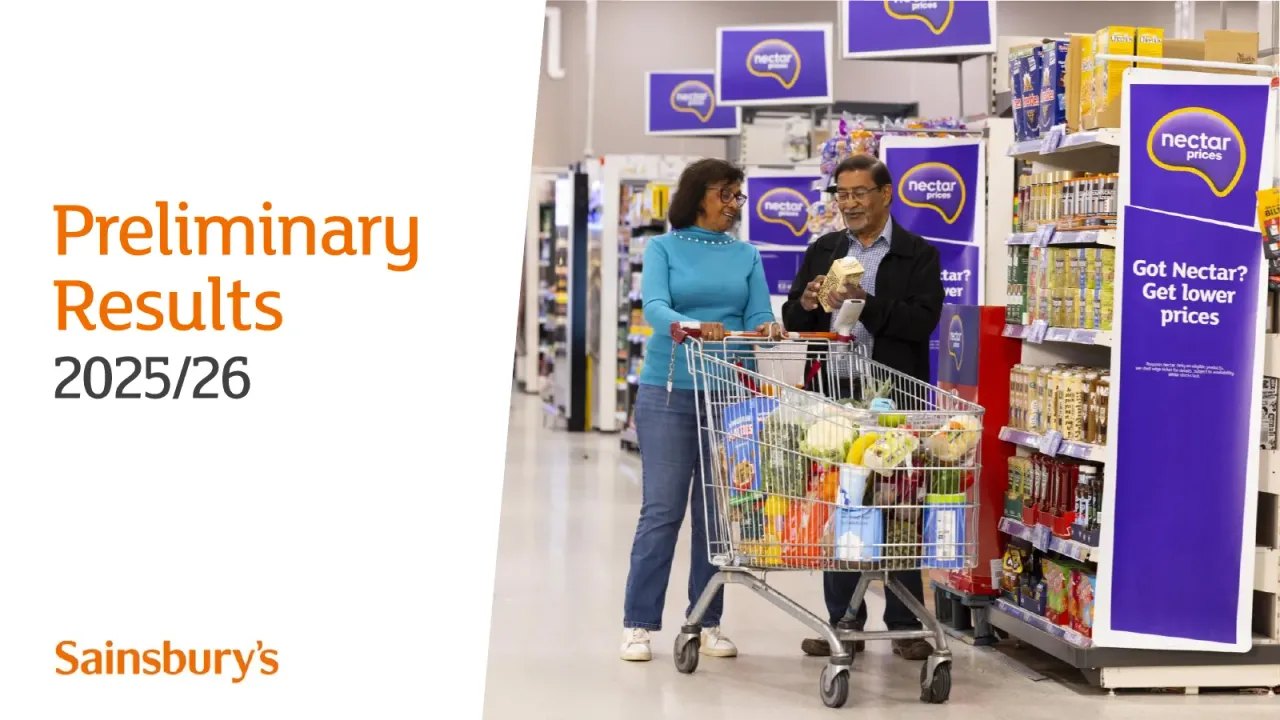
21:42 So that's a kind of cool run through SAINSBURY over the last year. I think Amy is now just gonna give you a bit more detail on on Nectar. Yes. Thank you, James. So our Nectar business has two elements. It has our customer facing loyalty scheme and our Nectar three sixty retail media business. Our customers really love Nectar. They're engaging more and more, and they're getting more value than ever. And so through Nectar prices, which is on more than 10,000 products, they're saving almost 20% on a typical big weekly trolley shop. And then they're increasingly benefiting from your Nektar prices, which is our personalized value offer, which is selected for them on a weekly basis. And the strength of this great value that customers can access through Nektar has driven a further step up participation now at more than 85%, and digital engagement with the Nectar app has reached record highs in the year. So this is great for customers, but it's also key to our ability to power Nectar three sixty.
22:38 And we believe we're really setting the standard, not only in The UK, but globally when it comes to retail media. We're already a key strategic partner for more than 900 brands and client agencies, and we're increasingly becoming a first choice partner as brands want to work with fewer, higher quality networks. Really key to this has been the launch of Nectar three sixty Pollen, which we launched in the autumn of last year, and it's The UK's most advanced unified retail media platform. We designed it in house, and it's delivering great returns for clients already. The key kind of differential with this is that it really gives the clients that we're working with great visibility of the returns on their marketing investment. So it makes it much easier for brands to run sophisticated campaigns with real time feedback on how those campaigns are performing.
23:29 Alongside this, our connected digital screen network now consists of almost 3,000 screens across our supermarkets and convenience stores, and we have plans to install a further 3,000 screens during the next year. And we continue to bring more value to Nectar customers with more opportunities to for customers to earn and spend points across a bigger network of great brands in our coalition. Turning next to Argos. We remain focused on strengthening the Argos business. We're very much investing in the product offer and the digital proposition to make it a business that customers visit more frequently and when they are visiting us, buying more. As James has kind of already mentioned, it was another tough year for general merchandise retailers, and we've subdued spend and intense competition, but we've made some good progress with higher customer numbers and higher items per basket.
24:22 And as a result, we grew volume in the year, but this was offset by a lower average selling price, which just reflects weak markets in bigger ticket items and intense competition putting pressure on prices. Looking ahead, you can see some examples here on the slides of some of the different areas of focus. So expanding our range through supply direct fulfillment and and the launch of the marketplace later in the year, further strengthening of digital and and a greater usage of the Argos app, which encourages further frequency of visits, and added value services such as Argos Pay, our flexible credit solution, and then also driving driving further cost reduction through the business. And we've actually established a dedicated Argos management team to help accelerate the pace of change. So moving forward these actions and driving further cost reduction, which will support the investments that we're making in Argos specific infrastructure and technology platforms.
25:24 And then finally, just to touch briefly on our cost savings program, which, again, James has mentioned to you briefly, but we really see this as a key a key competitive advantage. You know, we set out our target to save a billion pound in costs two years ago, building on the significant savings that we'd made in the prior three years and very much supporting our investments in technology and infrastructure to improve productivity and make meaningful structural reductions to our cost base. In a year when we were faced with significant cost pressures, we relied on well developed programs to deliver savings rather than just find new ways to cut costs. And this really showed through in the consistency of our execution and the customer experience over the year. And if you think back to the the slide that we showed on customer satisfaction, you can see that there. So we've delivered another 330,000,000 of savings last year, and we're well on track to deliver our £1,000,000,000 target.
26:18 I'll just hand to James for some conclusion remarks. Thank you, Amy. So the the outcomes, again, that that we talked about when we stood up in in February 2024, we we were kinda super keen. We you know, I've highlighted already, you know, the kind of main areas of the strategy. I've highlighted this financial formula. But, ultimately, you know, a business like ours, we we talk a lot about making balanced decisions. And this, if you like, is the sort of balanced scorecard where this is something that we focus on, you know, every single time that we report, we focus on it internally, And we measure ourselves all the time consistently to say, wait. You know, where are we on this journey? So so these are the things that, you know, we've consistently said that this is how we're measuring ourselves. So number one, growing food ahead of the market. We've been doing that really consistently. We're very happy with where we are. Customer satisfaction, actually, you saw the charts earlier on. They look very good, but we know there are areas we could do better. When we get down to some of the granular detail, we know that there are things we could do better. Colleague engagement, very, very high scores. We obviously measure this a lot. There is a huge amount of change we put through our business, but we do really, really work hard to invest in our colleagues. I mean, we have led the market in terms of pay, excuse me, and and and we additionally really make sure that that that we engage colleagues in the change that we make try and deliver higher kind of higher added
27:50 value in in in roles in the business. So that's reflected in good colleague engagement. Plan for better. So this is some of our commitments around around carbon reduction, around plastic reduction. Again, you know, we've made really good progress, but there are areas where we know we could do better. And a lot of of what we achieve here depends on achieving things at an industry level, but it's something that we work hard on from from a campaigning point of view and working with the industry and our suppliers. Delivering profit leverage from sales growth. So obviously, earlier on, I talked about the fact that our profit operating profit this year has stepped down a bit. So our sales growth was higher than profit growth, so not a good year for that in in in that year. In the prior year, we delivered very significant profit growth. So, you you know, that that's one where we're not quite where we would have intended, but the industry circumstances have been quite unusual over the last twelve months.
28:54 And then billion cost savings, we're well on track to deliver those on the three years, and we are well on track to deliver more than £1,600,000,000 of retail free cash flow. That's super important in terms of delivering that good consistent dividend and being able to buy back shares. And then lastly, high return on capital employed. Again, you know, took a to broadly, it's gone sideways this last year, having made a big step forward in in the prior year. But but, you know, we are confident that still the the other prospects improving our returns are very good. So thank you for listening to that. I will now take some questions. Yeah. So thank you everyone for the questions that have been submitted.
29:41 First question, James, that I think we should discuss. So how long will we continue benchmarking Audi price match? Does there not come a time when you feel confident in a pricing proposition which doesn't reference a competitor? That's a really good question. And and I think it it plays to something really important, which is that there is a always a very significant lag between the change that you might make in your price reality versus competitors versus how quickly that flows through to price perception. And so with ALDI price match, you know, we we stood up in 2020, we admitted that, you know, we were not where we needed to be on price, that we were too expensive, and we saw it reflected in the way that customers shop. So, basically, customers, you know, too too frequently were just coming into the shop, just buying a few things that they really want to get at Sainsbury's or just buying a few things because we were convenient on the way home from, you know, their office or school or whichever.
30:41 And but what they weren't doing was having the confidence to shop the whole basket. And so Audi price match was really important for us to be able to say to customers who who frankly, you know, had observed over a long period that we were not in the right place price wise. Once we'd invested in those kind of really core items to say, listen. You can trust us now on, you know, the things you buy day in, day out. So so across, you know, milk, bananas, breads, you know, chicken breast, minced beef, whichever it is, those kind of core items that make up, you know, the the the kind of the the large part of basket over time. And in doing that, you know, giving that assurance, people over time, I think, have have trusted us more across the whole basket. And so I think it was really important at a time.
31:26 But even then, you know, we we introduced that, and we kind of re we kind of really made significant headway in our price position from twenty twenty, twenty twenty one onwards. It wasn't really until 2324 that we started to see perceptions on value start to improve or really significantly improve. And so, you know, we are still seeing that benefit coming through. So so, you know, it takes a long time to change people's perceptions. I think it's a it's a great ambition that over time, people will trust us without needing to benchmark and and talk about Aldi in our stores. But I think it won't be happening in the very short term because, as I say, there's still that lag. We still know that perception hasn't caught up with with the reality of us being significantly more competitive these days.
32:14 Okay. Thank you, James. And I think sticking with pricing and margin, to what extent can we expect to recapture margin in FY twenty seven, or is the current margin structurally lower due to competitive intensity? It's also a good question. So so so so I I I think probably what the question reflects is the fact that our operating margins in the kind of core retail business stepped back last year. And, ultimately, our intention is to deliver operating leverage so for margins to be at least flat every year and and possibly rise a small amount. And, you know, within our current range of the guidance we've provided for the year ahead, you know, our our belief is that we will grow retail operating profit.
33:05 That's our central case. You know, clearly, as I said earlier, there are a lot of unknowns that, you know, we don't know how, you know, the the the the the world is is going to shape up and what that means for The UK consumer in particular. So that that's where we are slightly nervous of of being more confident in terms of of a kind of tighter range of outcomes this year. But as far as we're concerned, you know, the industry, I think, has shown a very good the grocery industry has shown a good few years now of behaving very rationally. We've had a lot of operating cost and a lot of cost of goods sold pressure through those that the industry has passed on very consistently. So if the industry continues to behave that way, that should mean we get back to an environment where we should be able to grow operating margins.
33:53 So so I think as long as we're not in a very, very tough situation with The UK consumer and a and a much, much tougher economy, then you should get back to that to that situation where as long as we're delivering on all of the elements that we talked about, so growing food volumes versus the rest of the industry, saving cost at a higher rate than the rest of the industry, that should give us capacity to to get back to to margin improvement. Great. Thank you, James. And another kind of question on the topic of value, but this time asking around whether we are seeing customers mixing value and premium within the same shop and how that is influencing our product strategy. Yeah. We we are seeing that, and and I think it's a it's a great proof point of the fact that, you know, we are we are helping customers across the whole basket. And so so I think it's very important, you know, we don't just have customers who are interested in the premium products. We don't just have customers who are interested in those products where, you know, we are delivering the kind of the strongest assurance on on kind of everyday staples.
34:59 The reality is that most customers do both, trade up for special occasions, and, you know, people are really super focused on not spending too much on on everyday items. So so I think we put a stat in in this presentation that or in the presentation we did last week that said more than 70% of customers during the year actually had an Aldi price match and a taste of difference products in the same basket. So we're really succeeding with that, and that's really important for us. Because, you know, even even on on the kind of premium taste of difference products, we think they're great value. They're great value versus some of our high street competitors, and they're certainly great value versus people eating out for the kind of same restaurant quality food. Great. Thank you.
35:46 And a question here about the long term farming agreements that we have talked about. What does the kind of pricing and cost flexibility in those agreements look like? Well, so so so so the really important well, there there are lots lots of important aspects of these of these agreements. And we talked last year about the sorry, last week about the fact that we are putting in multiyear agreements with a lot of our supply chain across kind of key products and and food types, you know, across dairy, across poultry, across beef, and and some some key fruit and veg supply chains as well. So so firstly, you know, in putting in those long term agreements, we are giving the capacity for those producers to become as efficient as possible because it means that they can basically use that that confidence that they know that they will have our contracts over longer terms to go out and invest in better technology, you know, in better infrastructure, you know, in better, you know, milking capacity, you know, whichever it is, you know, basically becoming more efficient. And at the same time, we know that that actually people are since a lot of producers are also investing in, you know, better welfare standards because, you know, we can give them assurance that we will pay for that and that that, you know, that they they can know that they will have us buying that product over the longer term.
37:17 So so that's why it's really important. In terms of in terms of flexibility within cost, a lot of the time, we're actually taking out the flexibility on cost, and we're saying to these producers, listen. We we think it's only fair that if you are going to invest and deliver and commit to us long term that we commit to a a kind of cost of production model. And this works really well for both of us because, you know, rather than a conflictual arrangement where a supplier comes and says, well, listen, cost of fertilizer, the cost of feed, the cost of energy is going up. I need a higher price, and we are stuck on, you know, the idea that we have very kind of limited cost price. We we we basically say, well, listen. We'll have complete transparency where those higher costs exist.
38:03 We will pay, you know, we will pay a cost price that reflects that. And it gives a resilience and a confidence and a quality through our food supply chains that we think is really important. So inevitably, you know, there will always be, you know, a degree of flexibility in most contracts, but those cost of production models are really core part of a lot of those long term agreements. Right. Thank you, James. And the question here just around our financial policies and if you could just outline a few of the different pieces. So in particular, our leverage targets, investment hurdle rates, our policies on dividends and buybacks, and then any short term refinancing needs that we have. I didn't write down that list. There you go. That's okay. That's great. Okay. So so in terms of leverage targets, we are super clear that that our capital allocation framework starts with a a leverage target of 2.4 to three times net debt to EBITDA.
39:00 And why why is why you know, how do we define that range? We define that range because that gives us the greatest flexibility in terms of financing. So that gives us an investment grade credit rating. So so so that that's really vital, that 2.4 to three times. And, you know, that that that dictates you know, right now, we're at 2.6 times, and, you know, that that will dictate the amount of cash that we're able to return to shareholders. So that's leverage targets. In terms of investment hurdle rates, so you will have seen our our return on capital is relatively low. So I think it's 8.9% this year.
39:45 Our intention is that that will get up into double digits over time. And so when we're looking at hurdle rates for for projects, now clearly, will differ depending on the type of of projects that we're investing in. Yeah. But, typically, we would expect double digit returns and, you know, particularly when we're looking at some of those longer term projects, you know, like building new stores, for example, we'll typically be expecting returns in the teens. So that's hurdle rates. Dividends and buybacks. So I think I said earlier, so we've got a progressive dividend policy. So we have a payout ratio at the moment, which is quite high of around about 60% of earnings, but we intend to grow our dividends, you know, our dividend per share every year.
40:32 And then from a buyback point of view, broadly, unless there is an an an additional use over and above our capital, our kind of normal capital envelope, unless there is is kind of an extraordinary opportunity with very high returns, we will return our additional free cash flow to shareholders in the form of a buyback. As I said, the core level of buyback in the last two years has been 200,000,000. We've enhanced that last year with additional returns from the sale of the bank, and we're enhancing it this year with another 100,000,000 of bank proceeds. But that core 200,000,000 has been supported now for the last three years. So 200,000,000,250, and then it'll be 300,000,000 this year. Amy's computer has died. So so I think I'll be asking myself the the questions. I think you'll still be able to hear me, hopefully, but no longer be able to see me. Apologies. So the next question we had, James, was around taste the difference and if there is a new sales target now we've exceeded our 2,000,000,000 target.
41:37 Yep. So so yeah. So so so in short, we're, you know, we're already talking within the business about a 3,000,000,000 target. So, again, we won't stretch the brand, you know, fur further than is than is right for the business and for the mix within our stores. But but I think we we've proved to ourselves, particularly over the last two, three years, that when we do innovate, and we have the most fantastic innovation team here internally. So when we introduce new and interesting products, we do have customers who are inclined to trade up and trade into those products. So we we've already introduced a tier slightly above taste the difference called taste the difference discovery, where we're leaning into some of the products, which, again, you typically wouldn't have found outside of a restaurant or wouldn't have found outside a specialty butcher.
42:28 You know? And and we're delivering those at much, much better value than you would find in a specialty shop. So so I think we'll keep pushing ourselves in terms of innovation, in in terms of, you know, what we're prepared to offer customers, and, you know, we we are pretty confident that we can keep on growing that brand. And then a question about Smartcharge, James. So we talked to growth of a 136% in Smartcharge this year. Can we give any more context on the drivers of that growth? Yeah. It's it's it's pretty extraordinary growth because we didn't add much by way of new smart charge facilities this year. So that was only a very small part of the growth. So we got more than a 100% of the sales growth was actually like for like sales growth. So I more people charging through our current facilities, and that's just a maturity aspect. So so it's it's not just more people having electric cars and and, you know, that will clearly be part of the growth.
43:25 It's also, you know, people getting used to to Sainsbury's, getting used to the fact that, you know, we only have hyper fast charging. So so it's a very high quality charge, very good value charge, and clearly very convenient for lots of customers who aren't necessarily able to charge at home that they can do a really super fast charge whilst they're doing their shopping, you know, or, you know, take advantage of of, you know, the location that we're in also, you know, take advantage of nectar. So so we're really making some headway. The other thing we've done, which I think has really helped the, you know, build the the sales and also the profit of Smart Charge is that we're now more linked into some of the networks. So, clearly, depending on what type of of charging model you have, what kind of car you have, and perhaps, you know, for big for for for for big company car users and company van users, you know, we're linking into a lot of those networks, and that's driving a lot of repeat spend. And remember, you know, we we the vast majority of our big superstores are in very, very good locations quite often near busy road networks.
44:34 So they are great locations not only for people doing their grocery shopping, but also taking advantage of that of that passing traffic. Great. Thank you, James. And a question now on Argos. So do we still see Argos as a core long term growth driver for the group, or is the focus now more on stabilizing performance and extracting cash flow? Yes. We've been pretty clear in the last couple of years that that our our our intention right now is to is basically to to to strengthen the Argos business. So rather than immediately improving profitability or or or, you know, immediately improving the sales trajectory, it's really about strengthening the business. So strengthening the digital proposition in the way that we show up on websites, the way that we show up on the app, where we've made a significant amount of development in the app.
45:25 So I think so so so so number one, you know, in that kind of the way that we show up to customers, but also range. You know, we have a curated range. You know, we're not Amazon with millions of of of products potentially, but we are, you know, bay basically a more targeted focused, easier shop with fantastic fulfillment where, you know, we can deliver a lot of products same day. We have a huge free click and collect network, But but, you know, making sure that we have the right range behind that is a big development. So so short term, you know, we're not overinvesting because we don't want it to be a business that detract from the very strong cash flow of the business. And we are, you know, clearly at least looking to to kind of deliver stable profits while we're doing that.
46:12 But but I think, you know, we've delivered stable profits last year. We've talked about our central case this year being stable profits. I think, you know, we would start hope to start to see some progress, you know, beyond perhaps this year. Great. Thank you, James. Question here around shrink. So I've seen in the headlines that shrink is increasing at a significant rate. Is that is that something that we would recognize? Yep. So just to be clear, so so when we talk about shrink as a of a retail term, we're talking about about stock loss, and the vast majority of that comes some of it comes through wastage, you know, where products fresh products go off over time, but the vast majority is through theft. It is a huge challenge for the industry. You would have seen a colossal amount of coverage in in the press in weeks, months, in the in the last couple of years, both in terms of organized crime, but also customers or, frankly, not customers.
47:13 You know? But peep people either come through violence or through through through, you know, wanting the ignoring self stand checkouts, etcetera, choosing not to to pay for their items. So so, yes, it is a challenge. It is something which we are addressing in as in as strong way as we can, and and a lot of how we're making significant progress is through technology. So on our self scan checkouts, we've improved number one, we've improved the recognition of camera technology where cameras can recognize what customers are doing in terms of what they're scanning and what they're putting in their basket and perhaps assist those customers if that doesn't quite match what's actually going through the till. So that's produced some some very, very good results, and we're using AI technology to to kind of marry what's happening at the till versus what the camera sees.
48:13 And at the same time, we're the first UK supermarket to introduce facial recognition. And this is where we are, you know, just extending trials of a system where we have a register, which is managed by a third party of of individuals who have a history of violence or theft in our retail stores, and we recognize them or the cameras recognize them as they walk into the store, we encourage them or we ask them not to enter the store. And, you know, I think one of the kind of key challenges with shrink is, you know, avoiding moments of conflict. This is a potential moment of conflict, but the simple fact that we are addressing those customers, telling them that they do have a record, and and we obviously have all of the legal aspects in terms of of kind of giving that that assurance, it's been very successful in terms of those cost those those individuals turning around, not entering our store, and more importantly, not trying again to enter our stores.
49:14 So it's having a huge impact, and and this is as much about colleague safety as it is about shrinkage because, unfortunately, crime and retail violence is a is a huge impact for for us and for the whole of the retail industry. And in doing this, you know, we are effectively introducing a system where if part of the challenge at the moment is that individuals don't see much risk of prosecution or or kind of adverse outcomes from from shoplifting, then I think that that is slightly different where we're starting to show them evidence that they are being recognized. They're encouraged not to come to our stores, and we think probably over time, it will extend to more retailers.
50:01 Great. Thank you, James. Question here around any plans that we have to grow our vegetarian and vegan range of food, especially in taste the difference. Is this an opportunity that we've not fully taken up? Yeah. So so so well, so so so so number one, in terms of the the parts of the food market that are growing right now, it's really interesting. And and I think partially reflective of an increasing focus on health, increasing visibility and knowledge of what types of products are good for you and you should be eating. And to a very small degree, possibly as a consequence of GLP ones, all of these things are are feeding into the fact that fresh foods are growing much, much faster than packaged goods.
50:49 So packaged goods, you know, clearly, you know, a large part of those aren't necessarily the healthiest products, people are avoiding processed foods to a greater degree these days. So fresh foods are performing better. Protein is a real focus. So that's feeding through to dairy, to meat, fish, and poultry. And, additionally, fiber is becoming a real focus. Vegetarian food, I think, you know, I would put this in the same bracket as as I would, you know, attempts to help customers with more options on fiber, more options on protein. Clearly, all of the constituent parts that that anybody with a vegetarian diet or a high protein diet or or somebody looking to to enhance lots of fiber, all of those things are available in stores where I think we have a real role is making that easy for customers.
51:48 Now I think vegetarian has been a focus, you know, for for a number of years, and so so I think probably our range there is good. I'm interested in the comments about taste the difference in vegetarian. We'll feed that back to to the development team. But but but I think you will see, you know, a lot more development around those areas where, as I said, we are helping customers with those protein choices, with health choices, and with fiber choices and making that more visible in terms of what we're doing with with our products. Yeah. And I think one thing to to build on that actually is that where previously there may have been a trend of vegetarians wanting to eat kind of non meat alternatives, so sort of faux meat products. Actually, people are really looking to scratch cook, and they want to be inspired about recipes they can make from scratch where they swap in, you know, various pulses or or vegetable options instead of meats. And so we've been encouraging that through at Healthy Choices Challenge that we run through our Nectar app, which is really driving greater purchases of fruit and vegetables as well.
52:57 Yeah. And and it's worth saying, actually, so some of those again, where the industry, particularly with with vegetarian and vegan food, try to to to help customers with easier choices and, for example, some of those faux meat products, they weren't necessarily the healthiest. So so so I think that that that's we're in a bit of a hinterland right now where we're trying to solve both solutions, so making it easy for customers, but, you know, avoiding some of those kind of high you know, quite often, there's a lot of those drugs for high salt or had a high degree of processing in them. And so, again, it's it's trying to help products without some of those adverse consequences. Definitely. I think, James, we've got time for one final question quickly.
53:43 So just very quickly, the portion of grocery sales that are going through online, and what does the trend look like in that in that space? Yeah. Good question. So it's around about 14% of our grocery sales are online, that is it's got post COVID, that number has been gradually increasing. So pre COVID, that number was about six or seven percent. During COVID, when clearly a lot of customers couldn't or didn't want to shop in stores, that rose to twenty one percent. It's then trailed back to twelve percent post COVID, and now we're seeing it growing fast. So last year versus our grocery growth of 5%, online sales grew about 13%. Now about half of that growth is not what we'd call core conventional groceries online. So so the kind of big basket shops that you see delivered in Sainsbury's vans.
54:36 Instead, it reflects what is the fastest growing part of the market, which is what we call food on demand. So this is rapid delivery through somebody like Uber Eats or Deliveroo. So we fulfill a lot of those sales through our convenience stores and our supermarkets. It's premium price. The delivery is is taken care of through one of those third parties through Uber Eats or or Deliveroo or or Just Eat. And it's it's a it's a kind of fast growing part of the business for us. And and, you know, ultimately, what we aim to do is is match customers' requirements however they want to shop with us. And right now, that food on demand business, we think that we have the biggest food on demand business in The UK.
55:22 So it's a bit more than £700,000,000 of our sales over the last year. Great. I think that's all of our questions for today. Perfect. James, Amy, if I may just jump back in there. Thank you very much indeed for addressing all of those questions that came in from investors this afternoon. And, of course, if there are any further questions that do come through, we'll make these available to you immediately after the presentation has ended. But, James, perhaps before really now, just looking to redirect those on the call to provide you with their feedback, which I know is particularly important to yourself and to the company. If I could please just ask you for a few closing comments just to wrap up with, that'd be great. That's great. And thanks again very much for your time. So so I just close very quickly to say that that, you know, really our investment case, the investment proposition that that we offer to investors is about good consistent delivery of those strong cash flows and the way that those can flow through to cash returns to shareholders.
56:15 I think over the course of this year, you know, right now, we're in a position where there are, as I said earlier, a lot of unknowns ahead of us. Over the course of this year, we will be updating the market, hopefully being able to give a little bit more certainty as the situation in The Middle East and and what that means for the economy. And, hopefully, we'll be able to give a little bit more progression in terms of the messaging that we're giving over time. So so happy to update at any time. And, again, thank you for your for your for your attention today. Perfect, James. That's great. Thank you once again for updating investors this afternoon. Could I please ask investors not to close this session as you will now be automatically redirected for the opportunity to provide your feedback in order the management team can really better understand your views and expectations.
57:01 This will only take a few moments to complete, but I'm sure it'll be greatly valued by the company. On behalf of management team of SAINSBURY's PLC, we would like to thank you for attending today's presentation. That now concludes today's session. So good afternoon to you all.
Follow J Sainsbury PLC into a list and get an email when it puts out news.
Director of Investor Relations at SAINSBURY (J) PLC
Head of Investor Relations at SAINSBURY (J) PLC