Transcript
Automated transcript · Written by software from the replay's audio. It can mishear names and figures; the replay is the record.
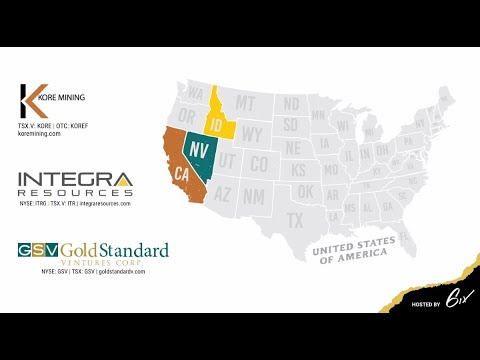
0:11 Well, welcome everyone to the Safe Haven oxide gold development projects and the panel discussion that follows up. I'm really pleased and excited to host this thematic panel discussion on the oxide gold developers in the US Great Basin in particular. It features 3 companies in 3 different states that have at least PEA stage economics with 1 being closely feasibility study. And they all have meaningful 100,000 to 150,000 ounce per year production profiles in the studies. Just before introducing the panel, I'm going to introduce myself. My name is Michael Gray. I'm with Agendas Capital. I'm a mining analyst, geology by background. And I take a best of breed approach when I look at assets and companies in terms of the explorers, developers I cover.
1:01 The reason I like the Great Basin Oxide Gold deposits in the US, number 1, the safe haven, the title of our presentation today, really important in today's market, safe haven, you know the rules of engagement. Number 2, the low capital intensity. 3, the ability to rapidly establish reserves vis-a-vis open pit resources. Number 4, they're the ideal deposit for a junior to build based on this low capital intensity or cell. And number 5, in that light, very easy to execute in general, although there's some leach kinetics to navigate, there's no mill to build. So fairly simple.
1:47 And finally, they can be very torquey with the drill bit. You can move the needle, expanding these deposits vis-a-vis exploration and develop higher margins with higher grade oxide portions of the pits and extend mine life.
2:04 So I'm going to go to 1 slide just to set this up and set the stage. If you could queue up the slide. And what we have is there's only 14 public companies with resources in the US Great Basin from our research at least. At the very top, the key thing to focus on here is the 3 red bars. Those are the only 3 companies with reserves and it happens to be a gold standard ventures, which is on the panel has the largest reserves. That's at the top left. The next group, the next chart is the measured and indicated resources. And on this chart, gold standard at the far right with the reserves, and Then Integra comes in at number 4 and Core comes in at number 6.
2:51 And then finally, all the categories together at the bottom, both kind of ventures on the far left. And then Core comes in at number 5 and Integra at number 7. So it's really a special group, especially the ones that have the ability to document reserves and actually become economic projects. So I finally, before introducing the panel, just wanna say, as far as my disclosure goes, I do cover full coverage on GSB and I do own all 3 companies personally. So welcome to our panel,
3:34 Scott Treblecock, George Salamis and Jason Attu. Scott's with CEO of Core Mining, George CEO of Integra and Jason the CEO of Gold Standard. I'm going to ask Scott to give a snapshot of CORE in about 2 minutes. Take it away, Scott.
3:51 Thanks, Michael. So why CORE? Well, first, as Michael points out, we have 3.9 million ounces of Gold in the ground. Now that is spread across 2 projects. In 2020, we did preliminary economic assessments of both projects that showed a combined about CAD$1Bn NPV at a US$1,600 gold price. So we've got a really good value price to unlock, whereas Core currently is about a $100M market cap company. Key to building social license, so how do
4:26 we take these projects through to production? Social license is very important, particularly in California where there's a lot of sensitivities
4:35 to a whole bunch of the rising environmental and ESG type issues. Key to our mine plans are backfilling. So as part of our reclamation plans for these projects on federal land, we've got to completely backfill these projects and return them effectively to a greenfield state. And I think that combined with the very high labor and operating environmental standards should give us a good leg up in building social license to operate at both projects. We've worked hard to build good exploration stories. To Michael's point, we've got the ability to grow both of our assets with the drill bit, both stepping out and growing the current resources, but more importantly, making new discoveries because we've got large district scale claim blocks around both projects.
5:22 Core is a very young company, you can see it in the cap structure. Management still owns 38% of the stock and until very recently, we've only financed with Mr. Eric Sprott, who owns 26%. We just last week announced an $8M bought deal, so that should top us up to something around $10M in cash when the dust settles to deliver a bunch of drilling in 2021. I think we're at a good valuation point for investors and we've got a lot of work to do to unlock that value. And Scott, just before we hand it over to, I think we're going to go to Jason next. Can you just highlight your background as an engineer and your previous role with Nevson as chief development officer? Yes, yeah, absolutely. So I'm a process engineer by training. I am 50 years old, so I've been in the sector for just over 25 years.
6:10 And I spent the last 9 years of my career at Nevsun building a mine in North Africa, acquiring and starting to build one in Serbia and was taken over by the Chinese for about 1.8 billion. So it was a great career run, learned a ton and really happy to be here at driving value at CORE. Thanks very much. Let's move over to Jason and Gold Standard Ventures. Thanks, Michael. Thanks, Scott. Gold Standard Ventures is a Nevada based advanced developer moving what we call the South Railroad Project or SRP into production with the goal of becoming the low cost producer of choice in Nevada. Our proposed mine is in the Carlin trend, which is one of the most prolific and profitable Gold mining districts in the world.
6:58 Our mineral endowment right now is in all categories, about 3Moz. And so investors have direct exposure, 100% exposure to this mining district. Again, one of the most profitable for which the big boys, the seniors, the Newmonts, the Kinrosses and the Barracks, and Nevada Gold Mines, the joint venture between Newmont and Barrack. We sit just south of the property. We do have a very large prospective land possession. In fact, we have the second largest land position on the Carlin trend. So lots of prospects. There's numerous oxide deposits that are certainly under-explored. In terms of our project, it's a technically straightforward open-pit heat bleach project. To Michael's point, very low capital intensity.
7:46 Our pre-Feasibility Study talked about US$133M. Our market cap right now is approximately US$275M. And what's happened with the company over the course of the last 6-months is we've completely reconstituted the leadership team. I'm the former CFO of Goldcorp and Rand Corporate Development, so I do have some context of exposure to Gold Standard Ventures as we were one of the strategic investors going back 6-years being Goldcorp, which is now a Newmont position. And effectively what's happened is we've reconstituted, when I joined in December, we've completely changed the management team to a number of mine builders that I've worked with in the past. And we just have really good chemistry and just a ton of experience building projects such as the South Railroad project.
8:38 In terms of our valuation, again, we recognize there's a bunch of de-risking aspects that we have to, we are in Nevada though, so it's a very straightforward permitting process in our mind. What's happened is there has been a pivot in strategy again with the mine building team coming on. We're no longer exploration focused, but development focused and we're quickly going to become a cash flow story. In terms of that valuation, we're trading at about 40% of our net asset value, a significant discount to our developer peer group. And as I said, as we hit certain milestones, we absolutely see that being our company being re-rated as we de-risk the project. And if you think about it, from an enterprise to total mineral resources, we're extremely cheap at $65 an ounce.
9:31 In terms of our balance sheet, we did raise money in February of this year. So our last stated balance sheet in our March financials is $43M. We have the expectation of finishing our Feasibility Study within several months here. And that again is a really great catalyst for the company as again, our vision is to become the low-cost producer of choice in Nevada. With that said, I'm going to now hand it over to George, who is going to talk about and introduce Integra. Thanks, Jason. Appreciate it. Essentially, Integra Resources is a company that was born from Integra Gold, which had a high-grade asset, which was sold to Eldorado about 4 years ago. We kept the team together and decided that that approach of going after Brownfield's assets that were owned by majors was
10:32 a key focus of the management group and of our shareholders as it turns out. So we acquired this asset Delamar in southwestern Idaho from Kinross coming up on 4 years ago. At the time, there was no declared resource in the ground, but this was an asset that was in production up until the year 2000 under the Kinross banner. And we had the belief that there was a lot that was left behind. It was one of those key assets that was shut down during a low gold and silver price environment of the late 1990s, early 2000s. So we had this belief that there was a lot left over. We looked at it from a different angle, which is what would this asset look like as a large bulk tonnage open pit heap leach, as opposed to a milling scenarios, which is what Kinross was producing on. So for over the last 3.5 years, we built up a resource base essentially from nothing to now 3.9 million ounces of gold equivalent with a further 500,000 ounces
11:30 of inferred resource in the ground and develop this this development scenario around it starting off with the PA which showed the really great economics, a really great production profile going forward about 125 thousand ounces a year but something that had optionality which was key to us. This is a project that you could build in a myriad of ways. You could start off small as a small scale heap leach and scale it up. You could start off large as a large scale heap leach. You could do a combination of heap leaching and milling. And in fact, we believe that there's also underground high-grade potential to add to this. So it was that optionality of
12:09 production that we really liked in my past career running mining operations. That optionality was always sort of key when you run into a roadblock, always having different avenues to pursue was key in terms of keeping mining operations successful and up and running. There is a scarcity of these types of assets, as Michael alluded to early on in the Western US tier 1 jurisdiction. Idaho has this great history of production going back to the late 1800s. And right now we're in the throes of PFS. And so that pre-feasibility study will be delivered in the fourth quarter of this year and while we're doing that, we're we're also doing a lot of exploration. We're a group that are big believers in de-risking assets with these key studies and keeping our foot on the gas of exploration at the same time. So, while we're doing all these de-risking studies, we've got 4 drill rigs in operation, really proving the point that this district is gonna get a lot larger from a resource perspective.
13:11 We are moving in quickly into kind of the development mode here as well, starting the first iterations of permitting in Southwestern Idaho. We don't believe that permitting is going to have a lot of hurdles to it over the next couple of years because this is a disturbed site. It's a brownfield site that was in production up until the year 2000,
13:32 High dry, semi-arid desert. We believe that there are a lot of sort of development and operational advantages to be had here. And that's Integra. Thanks George. And I think that point about optionality is gonna be a thread that runs through this discussion, all 3 companies. Jason gave a little bit of color on his background. George is a geologist. Maybe you can touch on your Placer Dome background a little bit on Integra 1.0, just to set the stage. Yeah, so if I could categorize my history with Plaster, I mean it was the best school on the planet to learn from. You know, worked on deposits all over the world in some great places and some not so great places. I did learn over the course of my career sometimes the hard way of the benefits of being in a tier 1 jurisdiction with a strong rule of law where one can build and operate in and that's why we're in Idaho essentially and that's what the Western US is all about. There's a rule of law. There's a history of a mining law that one can depend on and depending on the jurisdiction and openness to to mine development and that's something I learned, you know, again, from from my past history with Placer, there are certain areas that are easier to develop in than others.
14:51 Okay, well let's start the discussion. First of all, 3 different jurisdictions, Scott. I just want to ask you about California advantages and challenges, you mentioned the backfilling and while you get into that discussion, if there's anything on the federal scene that's changed or you want to highlight or you see coming down the track, please mention that. But I think you've highlighted, certainly on Imperial, you're right next to the Mesquite mine.
15:24 Take it away from here. Yeah, thanks, Michael. I mean, California has a robust mining sector. You've got the 3 industrial scale cyanide, heap leach gold mines in, you know, got Equinox's Castle Mountain. You've got the Mesquite mine and you've got the Golden Queen mine all operating in California. So in the right locations, you know, surprising to some, yes, you can open pit gold mine in California. It's very
15:54 subject to the location and very specifically to the county you're in, particularly if you're on federal land. So it's all about like anywhere else in the world, it is about building social license to operate, getting community support behind bringing something like a mining operation into a community is not a small thing. So in California, we got to lean a lot on having a good differentiated environmental story. And we're provided that by backfilling, we're not gonna leave a big hole in the ground. We got to take down all our waste dumps and regrade the site. And we're also working on a solution to get rid of some of the excess material when you dig a hole in the ground, all the dirt doesn't get back in the hole, to actually help with an environmental remediation in California around the Salton Sea. So, we're really trying to bring good, strong, environmental messaging to help build our social license.
16:48 And we believe that will allow us to become the fourth operating open pit heap leach mine in California. Just a quick comment on your federal, Trump, try as he might, had very little impact on the BLM as it operates in California, because everything had to go through Sacramento, which is the largest BLM office in the United States. I believe California is the largest amount of federal land in the United States and really didn't change much. So, you know, the moving on to the Biden administration,
17:19 you know, in the end for a project that doesn't get, you know, lightning rod federal level, like a pipeline kind of visibility, not much has changed. So it has not changed our view of development risk or development path. Yeah, I'm impressed with your slide deck. Does a really good job to illuminate California and the impact the mining industry has there. Let's move to George next. One of the first things you see when you go to the Integra website is the former Governor Butch Otter welcoming people to Integra. I had the pleasure of interviewing him on a panel when there was an Idaho day in Toronto, New York, and that's
18:06 a very strong political connection you guys have developed. Maybe just chat a bit about Idaho and mining and how it's emerged to become a jurisdiction that might not have been categorized as Tier 1 a decade ago? Yeah, I mean, first off, having Butch on board as a director has been great because we're now dealing with all of those sort of state agencies from a permitting perspective that that Butch sort of spearheaded and put key people into. So all of those introductions are being made by Butch and they're great. What you have in Idaho is a state with a really long history of mining that goes way back to the late 1800s and second only to the California Gold Rush was the Idaho Gold Rush really in the end of the day. So it's got a history there and there are a lot of active mining operations, not necessarily large precious metal projects that are on the go now, but some very large industrial mineral projects, open pit mining operations for phosphates, for example, that would dwarf, that would, are much larger rather than any precious metal project out there in the Western US. So projects like that are being permitted and that's, you know, largely speaking because of the state.
19:30 As you know, some of the audience might know, land holdings in the US tend to be complex. You either own the land outright
19:40 or you're dealing with state lands or with federally owned lands. I think probably all of our cases here, you're dealing with a bit of a combination of all 3. We certainly are. So that adds certain complexity to permitting going forward. One of the advantages we have is 100% of our resource is on land that we own outright both the surface rights and the subsurface rights. So, permitting on that on those lands relatively speaking easy when people think about just Michael to your question earlier, you know, the perception of Idaho might not be a tier 1 jurisdiction. We tend to categorize where we are as sort of jurisdictionally led in terms of sentiment. In other words, we're in high dry semi arid desert. There are no major water courses anywhere close to us. This is semi-arid desert from a climatic designation.
20:37 Permitting a mine is fairly straightforward, especially in an area that's been disturbed previously. To add to that, obviously a very proactive state government pushing us. So, yeah, so far so good. Thanks. And Jason, you know, you're on the Carlin trend. There's a plethora of minds.
20:56 It's, you know, Nevada has been well understood in terms of permitting and the way to navigate things. But what are maybe just highlight some of the advantages and also some of the challenges there may be in terms of getting your permit for South Railroad. Thank you, Michael. As you're absolutely on point, again, Carl and Trent, Nevada, tied, tried, tested, true. There's a very transparent process that you have to go through. You know, in terms of the advantages that we see, obviously, there's been a change in the administration and the Secretary of Interior, but what we're seeing again dealing with the BLM in Nevada, it's the same individuals, the same bureaucrats that have been around permitting mines for some time. So it gets a lot of continuity and consistency just in terms of how they frame things and very good engagement.
21:54 So again, it's something that we're just privileged to be in that jurisdiction. One of the reasons, you know, when I was made redundant after the Goldcorp-Newmont transaction, didn't really jump back into an opportunity until I saw, again, an opportunity in Nevada to come along, because it is all about, in this geopolitical environment, it is all about, and the theme of today's
22:20 panel is about safe jurisdictions and really good Gold assets. The one thing that I would say, though, that we're monitoring, and again, I keep telling our team, we need to focus on the things that we can control and monitor the things that we can't, is obviously Biden has an agenda around renewables, has an agenda around a green program. There is certainly some, let's say, conversations out in the media around some policy shifts. But again, if you think about Nevada and how important gold and precious mining is to that economy, especially in the Carlin trend, where, as I said, we have Nevada Gold mines and you have a bunch of other parties operating. We feel that we're insulated, but we're certainly monitoring again, policy movements. We're certainly monitoring things that are going that could potentially kind of change the wave of thinking and or the way we think about developing the mine. The fact is that we had our plan of our operations team complete by the BLM in Nevada. So we're right in the permitting process. We're right getting through what's called the NEPA process.
23:32 We're working through the environmental impact statement. And again, that's a matter of months to complete, not years in some other jurisdictions. So we feel we're, again, we're in the right address. We're dealing with the right agencies. We're doing everything right in terms of baseline and stakeholder engagement. And so we're quite confident that it's going to follow a similar path to what other mines have been permitted in the past. And as I said, this is now quickly turning from an exploration story
24:07 to a cashflow story. And one of the things you talked about, I'd certainly like to talk about in this panel is the optionality that we have. And I certainly know that Scott and George have with their properties being in a very, very good jurisdiction once you actually have the cash flow to become the enabler of all your options organically.
24:29 Let's get onto optionality in a moment and some of the torquey stuff, including the drill bit and expiration growth. But first, I think just to finish off on jurisdiction, I think we need to talk ESG for a moment, environmental, social governance. I, for the first time, wrote a research note talking about an appointment made, someone that was going to take on the ESG portfolio for a certain company I covered, and that was the headline. It was a really key person to the team, And so it is front of mind and really important in de-risking. I guess a brief answer from each of you is what's the philosophy on, in particular, community engagement? And do you have the right team in place right now? Or are you building that team?
25:18 Let's start with Scott. We're still building the team. So CORE, we've really only had money to work our projects now for probably just over 18 months. We started building our team in Imperial County, California, with good, strong local professionals, managed to get a really good environment person, a really good government relations person, 1 being related to previous activities at the Mesquite Mine, which again is one of the benefits to I think where we are in California, we're next to a large operating mine. So you have actually skilled people in the end, which is a very low populated, remote desert location. And it is about finding the right people on the ground to enact the companies. I think from an ESG perspective, Core is still building out its ability to project what we're doing on the ground up, you know, into the corporate level messaging as far as moving into ESG reports. And we actually look to companies like Integra and Gold Standard who are setting the standards we need to eventually get to on our reporting of our activities that we're building out on the ground.
26:27 Okay, thanks. And George? I think one thing that goes grossly underestimated in our industry is the importance of first mover. The first people on the ground set the tone for ESG going forward. We're used to hearing about large mining companies developing big mines and the ESG work that they do, but really the tone with respect to social license is set by all of us here in the very beginning. And if that goes afoul,
27:02 reeling it back in becomes very difficult. So we've got a great team on that end. Mark Stockton, who's the head of our ESG, for example, Mark was instrumental in the old days back in Integra Gold and Val d'Or at bringing the community together to support the mining operation. And in fact, we've been doing a lot of hiring on that. And we've we've got more people to hire. And we're just starting the stakeholder engagement for us. For example, we're you know, the key stakeholders in our area are the ranchers and the First Nations communities. And the latter, the First Nations communities, for example, if you can believe it, years ago when an EIS was done as per the closure of the project, they weren't even involved, which is something, certainly from a Canadian perspective, which is almost unfathomable.
27:49 And so we're engaging with all of these stakeholders now and it's going well. We're in the early stages though. This is something that we've got 2 to 3 years of work to do here in front of us. No, thanks. Thanks George. And Jason? Yeah, look, I think some common themes from Scott and George. Look, the way that we're thinking through things and the big advantage that we have is all the executives on that gold standard team have come from big companies and understand again what goes into ESG. I'm very proud to report that, for an advanced developer, we've actually finished our second annual now ESG report, which we've published shortly. But it's not just about the
28:37 reporting around all the efforts and essentially adhering to the various frameworks. Because again, in our mind, that's just a lot of lip service. You can adhere to various frameworks, is what you're actually doing from a corporate and a societal responsibility perspective. I mean, from the governance perspective, just the reconstitution and how we've changed the company.
29:05 The governance is just vastly improved. In terms of the environment, we were very fortunate. We hired a very experienced environmental manager specifically to liaise with stakeholders and the agencies such as the BLM that came from Newmont, sole career at Newmont in the last few months. So it's having, echo what George says, it's having the right people, but you also have to right size it for companies like ourselves, all the initiatives. One of the initiatives, you know, around the social engagement, we started a gold standard foundation for which is the benefactors are gonna be the direct communities that we're working out of, and Elko in Nevada in particular, and really assisting individuals through a foundation that
29:59 we think could have a significantly better chance through career and education. So again, it's right-sizing ESG, something that we obviously take very seriously. We've got a lot of the adoption that we saw from the experience we had from big companies and are just right sizing it to a company like Gold Standard that's on the cusp of production.
30:24 Great, thanks. Let's get into the Torquay part of the assets, the expiration growth. It was really the central theme of a number of conferences in late February, early March.
30:39 BMO, PDAC, the Denver Conference of Europe. That's really what companies were focused on and investors were focused on was that growth piece. So let's get into that and maybe weave in the optionality you may see with your project, whether it be a Gold price related, underground opportunities, sulphide opportunities, to the extent that's part of what you're thinking. But start with Scott and the timelines here on your exploration program and the potential impact. Yeah, so of course, our primary asset, the flagship so to speak, is the Imperial Project. And, you know, we've over the last 18 months, staked and acquired 31,000 acres of 100% owned, no royalty claims that we think captures an entire oxide gold belt that runs from Mesquite, about 9 miles to the west through our intact unmined imperial deposit over to the old Picacho mine, which was run by Glamis, another heap leach Gold mine in the 1990s.
31:48 All 3 of those deposits outcrop. And as we know, as heap leaching actually became a technology in the 1980s, really driven to that metallurgy being cracked, You saw the rise of these oxide Gold deposits and you know, these deposits outcrop. So people were following placer Gold miners, chasing the deposits at depth saying, I can find something from 0.5 to 1g. And, you know, seeing those things basically get, you know, mined out and, you know, very few remaining in places like Nevada, these deposits were left behind, but no 1 ever spent the time because California, due to these strict environmental laws, kind of became uneconomic for Gold mining from 2000 to really 2015 for all intents and purposes, and no 1 explored undercover.
32:34 So We've got the opportunity to go in and go to a place that's never been explored for shallow oxide deposits other than what outcrops. We're very excited. We are currently permitting a drill program to start testing some of our highest priority targets here in the second half of 2021. What's the scope of that program, Scott? We're permitting, I think, 168 drill pads, so a lot more than we can actually afford to drill right now. We're going to test some of the targets out nearest Mesquite and some of the targets nearest Imperial, looking for broken off, sheared pods of these oxide Gold deposits, coming off the 2 known ones. But I think some of the strongest Gold and soil anomalies and geophysical anomalies are actually showing up more periodically in between the deposits.
33:23 And it's going to be next season's drilling
33:25 before we get to those. So we've got a lot of work to do with the drill, but over the next couple of years. And for anybody technical in the crowd, it is that mesquite, periluminous geology is really fantastic. We won't go into any more detail. George,
33:44 kind of highlight, especially on the optionality side, because you did mention at the outset, some underground opportunities to that. And also what does that tail into the gold price meant to the project? You seem to have acquired it at the perfect time. Yeah, so just basically a commentary, maybe it relates to the question, which is high grade versus low grade. The market is enamored with grade and always has been.
34:11 There's a hallmark of this type of deposit that we have in Idaho at Delamar, low sulfidation epithermal deposit. These deposits typically have 2 components to them. One is a bulk tonnage low grade disseminated factor and then there's typically a high grade component to it whether it's underneath peripheral to or whatever it's it's usually there. So you see this sort of combination. We see it through the history of this deposit. It was mined both high grade and low grade. Just taking a step back to high grade versus low grade, I get just as excited by a low grade bulk tonnage intercept as I do by a high grade intercept and the reason being, yeah, the high grade intercept might carry a higher unit value to that block of or or mineralization. I'm not allowed to call it or that's a no no but mineralization for the purposes of this discussion. To bring that ounce of high grade into a resource and and then into a mind plan requires a lot more work.
35:12 Whereas bulk tonnage intercept as I think you mentioned Michael in the beginning, if you if you if you get something like that, that's peripheral to a deposit or maybe a brownfield, brand new discovery somewhere, bringing that ounce of bulk tonnage low grade into a mine plan, far cheaper, far less time to do. And then ultimately, you know, if you look at it from a production perspective, we talked about the optionality and operational flexibility. You know, if stuff hits the fan underground, it's difficult to pivot. Whereas in an open pit bulk tonnage environment, far easier to go mine somewhere else within the context of your pit. So I like bulk tonnage, low grade deposits for that for that very reason.
35:59 Yeah, no, great points. Jason, you've, you know, the Carlin trend evolves, it seems to evolve at least from shallow oxide deposits to bigger sulfide deposits. And maybe just touch on, you've got a about an 8,000 meter program, 46 holes. And in particular, I want you to address the pinion SB zone because to me, I think I wrote a headline, fabulous new discovery. It's high grade.
36:29 It's not Part of my plan at the moment, I guess it will be in the pre-feasibility study, but south of Gould Quarry have not seen these high grade plus 1 gram long intersteps, you know, 60 to 100 meters. So just maybe highlight the program You've just launched. Yeah, no, thank you, Michael. We're tremendously excited and share your enthusiasm because we do see this as a new discovery. Interesting, maybe I can just go back and talk about our feasibility study because our feasibility study will not include what you just mentioned in terms of what we found in the SB zone. The sequence of events for our mine is we started a Dark Star deposit and then 4-years after we actually had an opinion deposit for which, as you know, there's an extension that we're calling the SB zone. So the feasibility will just cut off to the opinion deposit that we know right now.
37:24 The drill program for 2021, why we're very excited about it is clearly, again, it's right adjacent and right up against our pit shell, our reserve shell that will be coming out on the Feasibility with Pinion. It's called an SP zone. It's open completely to the southeast and we're getting intercepts, as you said, well above our reserve grade and very thick intercepts too, 1g a ton, some 60 odd metres. So that the program is focused for the most part entirely on understanding again the constraints within the SESP zone, because we do believe that this is the easiest path or lowest risk path for a mine life extension.
38:12 We expect that the mine life of our 2 deposits to be anywhere between 10 to 12 years. And again, if we can prove out SB zone, which is again, directly adjacent to the Southeast of our reserve pit, or what will be a reserve pit opinion, that's really just going to extend our mine life. And to talk about, again, the optionality that we have at Gold Standard, you know, the 2 deposits that I talked about are just a very small subset of our land position in the first instance. But in addition, we have a number of oxide resources outside of these 2 pits that when we do get up and generating some cash flow, and significant cash flow in the first few years, first 5-years, very significant cash flow, that's the enabler of all the optionality because we'll be very systematic, very judicious, but very systematic about going out and drilling and firming up all these other oxide deposits to really become feeder sources to again, extend the mine life beyond, you know, with SB zone, you know, could be 15, 18 years. And, you know, We expect to be there for multiple decades based on the inventory that we have right now. And that's all in the oxide inventory.
39:26 What I think everybody is aware is underneath these oxide caps are deposits or significant sulphide opportunities And we've just stayed away from them right now, mainly because, as you stated, Michael, I mean, when you get into the sulphide mineralization, you're going to acquire mills and roasters. And that's something from a capital perspective we're not prepared to do yet. We've got a very low capital intensive project at $133 million as I mentioned before. Over time, potentially we could get there but unlocking the cash flow for our company is the enabler of the optionality for which we can go really, really explore and understand what we have. Great. And got just under 20 minutes left.
40:15 We are going to have some audience Q&A towards the end. Being an analyst, I have to ask on valuation and some of you have opened up with some of the valuation metrics, but on Price to Nav, Based on analyst consensus, I've got Core at 0.2 times, Gold Standard Ventures at 0.36 and Integra at 0.45. I would highlight, and we highlight this in our research, that the fully financed companies tend to trade at almost point, or sorry, 1 times, it's over 0.9, and that the entire group is about 0.75. So, you know, I'll leave it maybe there for a moment, but does anybody want to comment on valuation and maybe where you're not getting value from the analysts that cover you?
41:13 Maybe start out with Scott. For us, it's on the exploration side. I think the analysts are looking to us to take steps to de-risk and show we can work on the ground on these projects in California. And I think when we start taking a few steps down that path, suddenly people are going to look back to that exploration story and you can see the kind of value that's created in a company like Liberty, where they've painted a very strong story on growth of the ounces and attracted the marginal shareholder. So, you know, I like the way George put it at the beginning that, you know, you've got this parallel path of, you know, doing it right on the development side, and then yet you need to create this exploration path as well, and that we plan to do the same thing at Imperial.
42:00 Okay, George. I think in terms of if there's 1 disconnect that I believe exists amongst our shareholders relative to what we see, I think it revolves around permitting complexity. In the US, there's a recipe approach. There are steps that you have to go through to attain your permits. And there are a few shortcuts around them. In fact, there are no shortcuts around them. You have to go through this process. But I believe that there's a perception with respect to Idaho specifically that Idaho is a difficult jurisdiction to permit in because it is an environment that, teeming with wilderness, teeming with national parks, trout and salmon jumping out of bodies of water, that sort of thing.
42:49 And I would say to anybody who says that, well, if you could only see what we see when we're down on the project, again, high dry semi-arid desert, no major water courses, no national forests anywhere near us, disturbed land that was properly remediated but still disturbed. And that I believe is the disconnect with respect to how some view Idaho from a permitting perspective. They just, You have to go down there to see it. So you think that the analysts are actually giving you a bit of a discount on your multiple based on Idaho? I believe so. OK. OK. Jason, you're a former investment banker. You used to do valuation. What are your comments? What are the analysts missing on gold standard? You're trading at 0.36.
43:39 Yeah, look, from a sell side analyst perspective, in terms of what they've imputed to their target prices, 2 to 3 times what we're trading at right now. So I don't think they're missing too much. Maybe some of the optionality that I talked about earlier. I think why we're trading at 36% of our NAV is really the fact I came on roughly 6 months ago. There's been a complete pivot in strategy. This is no longer, Gold Standard was always known as an exploration story. That is not the story anymore. There's a pivot in strategy for which we've got a company maker and an asset called South Railroad Pinion. We put a mind-building team and naturally when that happens, there's a big rotation of shareholders. And so the exploration group of shareholders, obviously have been rotating out.
44:28 But if you look through our register, we've got some of the most sophisticated resource investors, long-term sticky groups, and they continue to buy through this period. So we're getting a lot of support for the long-term shareholders that really understand resources, really understand, again, the deep value that we feel we're in, and insiders, including myself, have been buying at these levels as well, including our whole management team from an insider buying process, because we also do see deep value. And at some point, people are gonna recognize that we're taking all the steps to de-risk this company and the re-rate will happen. And so I think it's just a matter of time and patience and letting that rotation of shareholders kind of go out from the speculative exploration to something that we're gonna be moving in construction very quickly.
45:22 So I think that's what I would say, Michael. Again, I think the analysts kind of understand the value proposition, but it's just, you know, given our liquidity, our trading liquidity, I mean, that it's just gonna take a little bit of time to essentially rotate out of some of those more speculative investors into the long-term sticky resource groups. Okay, well, let's get into some audience Q&A. Samantha has a question for Jason. What's the timeline for production at gold standard? So as I mentioned, we're right in our permitting phase with the BLM. We expect, and we put this out there, anywhere from 12 to 18 months, we're gonna get a record of decision for which is the biggest catalyst for the company, for which we expect the board to sanction and the construction, we have to raise some construction capital financing, but it's an 8 to 12 month build after that. So we're looking anywhere from, you know, to get the 1st gold cash flow anywhere in the short end from 24 months from now to maybe kind of 30 to 36 months.
46:32 Okay, great. And Scott from Vladimir, can you please elaborate more on the ways and processes you are planning for mitigating environmental concerns, particularly waste and water? Yeah, I could talk about that one for a long time, but I'll try to get the absolute shortest key answer. Water as a run of mine heap leach operation, it is a 0 discharge operation. So there's no water going out of the site. The water that we're using for process water is gonna come from an already installed well into a robust aquifer that Mesquite has also drawn its operating water from for decades. And that Aquifer does not compete with any other users because farmers in Imperial Valley use surface water irrigation from the Colorado River.
47:25 Dust is highly regulated, particularly in Imperial County, which has some of the worst air quality in the United States and in California. So Mesquite is capped by the amount of material they can move every year by its dust permit. So we will be required by the board that monitors dust and gives permits the air quality board in Imperial County to operate to very high standards about dust suppression on roads and making sure that we do not contribute additionally to that to air quality issue in Imperial County. You know and you know those are the big things as far as waste it's a run of mine so there's no tailings there's no finely ground material and we will be cleaning and backfilling and returning the site to original topography. So, you know, I think we get some pretty big check marks on the environmental management.
48:14 Great, that's fabulous to have that run of mine component. For George, we've got a question from Ken. Understand that Integra's grade is sub half a gram per tonne, is that right? And what is the real grade and is there a chance to get better grade finalization by further exploration? So partly you've answered that, but yeah. So in terms of the average grade of the 2 deposits, I believe it comes in at 0.65 on a gold equivalent basis. So some of that obviously is made up with gold. I believe in round numbers, it's around 0.5 and the balance is gold equivalent silver in the end of the day. So that's the average grade. I believe, you know, one of the question, the last question that was answered was, you know, is there potential for high grade and yes, there is.
49:06 In fact, if you look at the drill results that we put out over the last 2.5 years, probably about 50% of our drilling is really focused on plumbing the high grade feeders or chutes that have fed the low-grade system at the tops of these hills, essentially. And we've been doing a lot of drilling on that end. So look for a change in the narrative from an exploration perspective over the course of the summer on a what if basis? What could this project look like with a base load of low grade and a high grade input component potentially from underground in the future? And that's something we're working on at the moment. Could be a real game changer. Okay, great, thanks. Another question actually for you, George.
49:54 Please discuss what effect efforts to preserve gross habitat might have on Integra's permitting obstacles. So right now the footprint of everything that we are going to basically mine, both at Delamar and Florida is on patented ground. And with respect to that patented ground, there are because it's been disturbed because it's been previously mined. There's no grouse habitat on that areas where grouse habitat comes into play and it's seasonal and and just to just to take a bit of a tangent here with respect to grouse. You know, people hear the word grouse habitat and you know these breeding grounds, the leks, and they think it's the death knell of a mining operation and that is definitely not the case. There are mining operations all over the western U.S.
50:47 Who mitigate and work around these breeding grounds for the sage-grouse. There are certain times in the year where you just don't go near them, but there's a workaround around them, So it's not the kiss of death that everybody thinks that there is. Right now, I believe this question is addressed to, there is a group that is challenging the sage grouse habitat as dictated by the BLM per law that was adopted or brought in years ago, that challenge is still underway. Whether it comes to pass or not, it's not gonna affect us where we're planning to operate full stop. Okay, Jason, do you wanna chime in a bit here Because sage-grouse habitat and mitigation is something certainly in Nevada is a bit of an issue.
51:40 Yeah, look, it's very similar to what George stated in terms of our Nevada operation. In Nevada, there's a formulation in terms of disturbance, your mind what will happen in terms of this, you can actually go to the Nevada and buy what's called sage-grouse credits. Or what you can do is essentially take some land and essentially secure it for habitat for sage-grouse breeding. So yeah, it's something that obviously we have to be mindful of. We certainly have a lot of, we need to have a lot of respect for the sage-grouse breeding. But as George said, there's just a lot of industrial operation, precious mining in particular in Nevada that happens in these areas. And as long as you're responsible and, again, securing habitat or, again, getting the credits from Nevada, we don't see it as a big, big issue. I mean, the interesting thing about sage-grouse, at least in Nevada, even though they're in a protected species, there's actually a hunting season for them as well.
52:43 So, I mean, it's something that you obviously have to be cognizant of and are protecting, you know, a protected species in terms of their habitat. But again, it's not going to change the way we're thinking of things and doing things. And again, there's a clear formulation within Nevada for which we can protect the species. Okay, well, thanks. And we've got 6 or 7 minutes left. I do wanna leave time for each CEO to wrap up. Probably top 3 catalysts, and maybe emphasize the strategy and maybe a comment philosophy on M&A. I think the audience would appreciate.
53:28 So why don't we dive into that starting with Scott to close off this panel. Okay thanks Michael. I think I'll leave people with, we're just in the process of closing a bought deal financing for 8 million Canadian. We plan to use that money to start testing targets at both projects on the exploration side at Long Valley testing step outs for oxides and some deeper sulfides. And then at Imperial starting to test some of those regional exploration targets we talked about. We expect both of those to happen in 2021 subject to permitting and then in the back half of the year on the development side we're in the final stages of completing the engineering for our mine plan of operations, which we plan to submit to the Bureau of Land Management to start our NEPA process in the back half of 2021.
54:24 So I think those are the real catalysts heading for core. As far as M&A, I believe that if M&A is going to eventually be an exit for shareholders, ultimately it's about doing it right on the ground and pushing the assets forward in the right way towards production. If you end up in production, you end up as a gold mining company. If you end up with an M&A transaction, well, you know, that's good for shareholders at that time. So you got to do it right either way. So I don't think it changes strategy from my perspective. Fair enough. George, next. Yeah, maybe addressing the M&A question first. I think if you look back in history, when the M&A bite or appetite really takes hold, it's typically the tier 1 jurisdictions that see the love first. And so obviously, the assets that we have in this group are going to be, you know, the focus of the producers with respect to that M&A appetite.
55:24 Despite that, and this is something I say often, and it's just based on personal experience, We can't afford to sit there on our assets and wait to be taken over. That's a losing game. Many try that and chickens come home to roost ultimately on that. We do have to de-risk these assets ourselves and be prepared to develop them ourselves. And the beauty about these assets that we're talking about is they are of a level of capital required to build that wouldn't blow any of us up. So that's the beauty. So that's the M&A, my M&A commentary, if you will. And then with respect to catalysts, 4 drill rigs in operation. So a steady stream of results, catalyst number 1. Obviously the pre-feasibility study coming out in the fourth quarter of this year, that's gonna be a big catalyst.
56:14 And again, we're guiding on production levels that will surpass those of our PA, which is good news. And I think last but not least, and a really important one, is this again, as I mentioned earlier, the change of the narrative here a little bit. Baseload of low-grade production from open pits, and then what could an additional high-grade component mine from underground look like to the overall production portrait and economics of the project. We believe it will do some pretty spectacular things, but more to come on that as the year progresses. Very good, Thanks George. And Jason, strategy M&A and Kalos. Yeah, thanks Michael. Look, I'll start with M&A. I think everyone has to appreciate where we are in the continuum of this pandemic. The fact of the matter is, it's been very constraining for the mid-tiers and the seniors to do any significant diligence on any of the companies over the past 18 months.
57:10 I do sit on a matriarch's board and again our board wouldn't bless any sort of transaction unless the management team has actually gone and kicked the rocks and really kind of unearthed things on the ground. And that's just been incredibly challenging. Obviously, with the past coming to the tail end of what we're seeing around travel restraints, I think that's going to clear a lot of things up. There's going to be a lot of activity as it relates to high value opportunities, such as the 3 of our companies that we're talking to the audience today. Beyond that, again, the vision that little DSB has, if we can get through without being taken out, we'd like to actually be the consolidator. We'd like to create a company and create a mid-tier based on an open pit heat, heat bleach, low capital intensity, because we think there's plenty of consolidation opportunity in Nevada in the first instance, but in the Americas in the second. You can create a really good company. I think of natural pathfinders that have done this historically, like Clamis and how El Dorado started out.
58:17 Those are my comments on M&A. In terms of catalysts for GSV, we actually just started our drill program yesterday. It's a couple of months and a few months for assays to get back, but that's specifically dealing with what we talked about before, the SB zone that really could enhance our mine life extension. Again, the biggest news flow that we will have in the next few months is the feasibility. And we're working through obviously all our trade-off studies, we're working through our metallurgical test work, and what we expect to see is really taking our reserve base from a pre-fees of 1.3 million ounces and adding 3 to 400,000 ounces, specifically at the pinyon deposit. So we're going to have a reserve base of about 1.6 to 1.5 reserve ounces. And again, as I say, that's a company maker. And so people will see the details and the feasibility as it relates to, again, the mine plan, the mine schedule, and really the company maker in this project.
59:21 Well, thanks. Thanks, Jason. We're gonna wrap it up now. I hope the audience has enjoyed this panel. Safe Haven, Oxide Gold Developers in the USA, 3 very high caliber individuals and companies. So I've been very pleased to moderate. I wanna first thank the panelists, Scott, George and Jason. I believe they would all be happy to take follow up questions if the audience contacts the right IR departments.