Transcript
Automated transcript · Written by software from the replay's audio. It can mishear names and figures; the replay is the record.
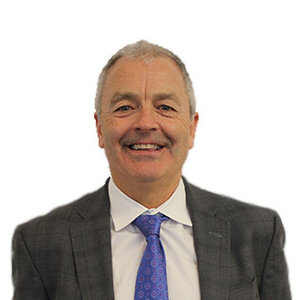
0:08 Hello, everyone, and welcome to Orzone Gold's live investment summit today, hosted by 6. Today, I'm joined by Patrick Downey, Orzone's president and CEO. Patrick's going to walk us through his company presentation and a video, and after we'll move on to the live Q&A session, where we'll be accepting and answering some questions. You can submit your questions using the Q&A panel found on the right-hand side of your screen at any time. And as always, this summit is being recorded and will be available to watch afterwards on SIX.com. Without further ado, Patrick, I'm going to hand it over to you. Thanks very much, Cam. Welcome everybody to the OreZone webinar update. Great time to give an update
0:39 on where we're at, what's happening, lots going on. We're happy to present and very excited to present our first construction video as part of this. So this will give everybody a pretty good update as to where the project is, what next steps are, what to expect over the coming year, etc. As we move towards first cold pour in Q3 of 2022.
1:02 You all know the forward-looking statements, so I won't have to read those. I'll flip right through them. So I thought, you know, first, we just give a little bit of background again. Maybe some people on here who don't really know the Orizon story, but who we are, what we're doing, what to expect from us. We are fully financed to develop the Bombore project. We have a proven track record of project construction operation. That really reflects in where we're at today with the capital costs. I think in a very high inflationary environment, cost pressure environment, we have been able to keep things right on track. And that's a testament to the team that we've hired, the people that we brought on board, the engineers that we brought, the contractors we brought on board, etc. And we are trending very favorably in that direction.
1:53 Also on our board are people who have built projects before, who have worked in Burkina before, who have worked in the ESG side of things, because communities and community relations are hugely important in this. So it's important that we have the right type of people on board. We've got a great country manager who's at Burkina Faso, looks after things in country, makes sure things are smooth with government, etc. And that's gone very well as well. So the project is moving fast and it's moving fast in all the right directions. We are the largest undeveloped Gold deposit in Burkina Faso. Again, I think that's going to get bigger. We are surrounded by another large project in WAF, so we do control a big area here, but I think our project will continue to grow.
2:41 It's a large oxide deposit, somewhat unique in terms of size of oxides. It's a large shear zone, so we do have over 50 million tons of oxides underlain by a large sulphide one, which continues to grow, as you've seen from the recent drill results. We completed a feasibility study on Bombori in 2019. And really, I'm happy to say that all our costs, quantities, unit rates, etc. Are trending very favorably to that study. And again, I like to emphasize that because it speaks volumes to the quality of that study and how much work we put into it, that we are not seeing cost blowouts, even in a high inflationary, high cost pressure environment. We focused on a stage development, and what I say by that is the oxides will be first. They're lesser capital, lesser operating costs, very good margins up front.
3:34 We use that cash flow from the first couple of years of oxides to build our sulphide expansion. Likely, if we were a bigger company, we could build something bigger right up front. But we're looking at this from what we can borrow at what rates we can borrow at so that we can keep our share structure reasonable going forward. And we commenced construction in 2020. We really commenced construction in 2019 when we did the built the villages for the local communities. We finished that and moved everybody during December, January, February of this year. And we got into the detailed construction and engineering in January of this year and it's going extremely well.
4:22 We have some core principles here. We are aligned with shareholders. We are some of the biggest individual shareholders in the company. Management own a lot of shares. The board owns a lot of shares. We bought and continue to buy in the market. We're aligned with our other shareholders. We're not in here for our change of control or wages or options. We're in here because we are owners of this project. We are committed to local stewardship. It's very important to us. We have a local bank providing the majority of our debt. We've hired a local mining contractor, which is the first in country in terms of mining. Lots of local guys do ore haulage. We're actually doing mining and it is a true partnership with this group. It's going very well. A lot of our local infrastructure, and I'll show you some of that, bridges, roads, camp, etc., are done by local contractors, with us managing and helping to manage it.
5:19 And again, a lot of the social governance projects that we were going, the livelihood restoration projects, have really been focused around the local communities and what they can do. So that continues and continues extremely well. And we got a lot of government support in that regard. We are focused on NAV per share, as I talked about, by doing it as a stage development. We have reduced our dilution. We have raised money at the right time. Our shareholders, major shareholders have all continued to support us in that regard. So it has gone extremely well in making sure that we look after our NAV per share and our share price accretion. We've minimised our G&A, even though during COVID and while we were waiting for project financing we kept G&A extremely low. We all took major pay cuts during COVID to ensure that that happened.
6:16 So, the capital that we raised went into the development of the project. And the last point, which I think is extremely important, the studies that we did and the peer reviews, etc, that we did on the project, we really wanted to ensure that our CAPEX and our OPEX were properly reflected as a true and proper study of what was going to happen on this project. And that has come out in what we're doing in terms of our capital costs, in terms of our operating costs on the mine. So we're seeing that reflected in our current schedule, in our current capital costs and our current mining costs. We expect to be extremely competitive in terms of all-in sustaining costs as we come out of the bat to production in 2022.
7:03 We are in a mining-friendly jurisdiction. West Africa has had its issues, as we all know, both in Burkina, Mali, Cote d'Ivoire, but it continues to throw out great mining projects, highly successful mining projects. The biggest mining companies in the world are there, including Barrick, Newmont, Kinross, etc. You're seeing a lot of M&A in the jurisdiction because it is a great place to do business. We've picked a team of management engineers and contractors with a proven record of success in the region. We started our mining already. We've got a mining team who have worked in the area, who knew what to do, who knew how to prepare for wet season mining. We've got off to a great start in that regard. We're funded to production.
7:49 Great exploration success. You've seen that and I think you will continue to see that as we move forward. We raised some money to do that, so that's very exciting for us. We have a scalable project which I'll walk you through. We expect that this project will continue to go in terms of production tons per annum and very supportive shareholders, which is very important.
8:12 Burkina, 15 mines the size of Colorado, great mining jurisdiction, very successful mining companies, Endeavor, IAM Gold, Rox Gold, ourselves obviously, so you know West African right beside us. Majority of the mines have been built ahead of schedule and under budget. It's very hard to say that in North America or South America, but in West Africa, it happens. Great support from the local communities and our government officials. You know, we've been able to get a Life of Mine LNG power contract, the first in the country because of the government support. And we are in jurisdiction, we've got Sombrato right beside us, run by West African, highly successful. They've done a fantastic job. I think their last quarter was over 60,000 ounces of gold.
9:04 And the 2 of us own all of the land in the jurisdiction. And you've got 10 million ounces of M&I owned by both companies, and they're growing. If this was in Nevada, there'd be a staking rush going on right now. And we continue to find high-grid discoveries. And there's lots more exploration for both companies within this land package. Great location. We're on a paved highway. We don't have these 3, 4 hours of dirt road to get to the project. Again, that's helped the project capital remain within the 2019 DFS. Very, very simple to get the site. Our contractors are mobilizing the site very, very simply. Very little cost, very little on costs ongoing with that.
9:50 So great security, ease logistics. And one thing that you see in Burkina, with 15 mines built, you have a highly skilled construction force there now. A lot of the superintendents are all Birkenaby, the civil superintendents, the tank erection superintendents. And on operations, like our key operating head of departments are all either Birkenaby or from the local region, Mali, Cote d'Ivoire. So we do not have high fly in, fly out, expat costs here. Of course, we will have expats, but not to the level that you would normally have. And with 15 mines and our mine in such a great location, we do have a great workforce here in terms of operations and construction.
10:43 We like to show this graph. People talk about risk on projects and I did say many years ago at a conference, when people talked about the risk of building a mine, I said, well, name me 5 projects in Canada that have been built on time, on budget and based on the permit. People couldn't name any. Well, Atlantic Gold was 1, I would say maybe Pradium was another, but there are very few. But look at Burkina and West Africa. You know, they're either ahead of schedule or on schedule and under budget or on budget. And we are trending exactly the same way, even in a high cost inflation environment. And that is in terms of your NAV per share, your your cash flow, your ability to pay back debt is huge.
11:34 And we expect we've allowed 90 days to ramp up to full production. We fully expect to be up to full production within 30 days. And again, that's highly accretive to your share price. And why that is? Great workforce, great logistics, contractors in country who know how to build things. It's a flat country, wide open, earthworks are simple. So it all lends itself to fast construction and rapid onset to full throughput. An example right behind us was Yare, which is in Cote d'Ivoire, owned by Perseus, built during really the high risk of Covid. It was on schedule, on budget, on a 2018 feasibility study. Our next door neighbor, Sanbrado, built in 12 months.
12:29 Ours is a very simple project, flat topography, little earthworks. Our earthworks are now ready. We're ready to start pouring concrete. We've finished our earthworks ahead of schedule. Very simple. Great logistics for us, even with the shipping that occurs currently worldwide, shipping into West Africa is extremely well set up and there are 3 main ports and rail and road into site. Rapid construction time, we will be up and running in Q3 of next year, so within 13-months we will be pouring Gold. Simple truck and shovel, we are mining right now. We're doing about 40,000t a day already. So, again, tracking extremely well. We're in the rainy season and it's going very well, But again, proper planning, easy mining. We found that the free digging is exactly the way we expected it to be.
13:24 We're not finding any problems or issues. Very low pit maintenance. We've already got our pit sumps in for the rainy season, low wear and tear on the trucks. Our excavator operators, our availability is very, very high, way higher than we expected. Processing plant, conventional CIL, nothing complicated about it, and the oxides work index of about 3, low power costs. Even though we've got a great power contract, we do not use a high power cost until we get into the sulphides and very fast leach kinetics. We've got a 24-hour leach circuit. We get most of our leaching done in 12. Currently, 13-years of mine life. I expect that to be close to 20 in the near future.
14:11 Average production, 133. Again, I expect that to grow. Life of mine production of 1.6 million ounces. Again, I expect it to grow. We're planning for 5.2 million tons of oxides. We drop it back to 3 in the oxides and ramp it up to 2.2 in the sulfides. We've got lots of expansion potential and a very, very large resource base. So to date in 2021, it's been a very, very fast year for us. We announced our financing package of 189 million in January. We expect to close the debt here in August. We're already using our equity. Everything is moving forward very fast. We announced a Silver Stream with Euro resources.
15:00 They're controlled by Amgold and know our project. Very neat Silver Stream for both parties. It gives us money to fund exploration, which we are using and expect to continue to use. Lycopodium, who have built pretty much all the mines, or most of the mines in West Africa, and Burkina, are a REAP PCM contractor, the same team exactly that built Yare as I talked about and Sanbrato next to us. And they got off to a rapid start. We did do optimisation studies in 2020 when we were waiting for the financing. That put us in great standing to get equipment ordered. The majority of equipment is now ordered and it's either on or below budget because we got out of the gate quickly. We did not have to resize equipment from the feasibility study. It was all as we had stated.
15:48 So, we've got most of our equipment ordered now. We announced a life of mine LNG solar power contract, first mine of Burkina Faso to use LNG, highly competitive life of mine costs. I would state without going into contract details, it would be about 30% lower than HFO and about 50% lower than diesel. We do not have any indices on that, So it is a hard life of mine cost, which is extremely competitive in terms of the overall life of mine and nav of the project. And during 2021, we did some Early stage exploration on P17 extension.
16:35 It turned out to be better than we expected. We are continuing to drill into the gap and I'm gonna walk you through that. But great exploration success and we are on schedule to pour in Q3 2022.
16:51 So I'm going to show you a construction video. This was the end of May. So we have done a lot since then, but this will give you a pretty good idea as to where we're at, where the project's at. And we will be doing one of these once a month. So we'll be looking forward to updating everybody, our stakeholders, our shareholders, as we advance the project through construction.
17:24 You're gonna have to listen to my dulcet tones as I walk you through this video. This is the mine staging area. This has advanced considerably since this. We're now putting up our equipment maintenance area. This is the plant site clearing and grubbing. This is the mine itself. We're well advanced in here, many metres below that. It is free dig. Our grade control is working extremely well. Tracking very, very positively in terms of grade and ore reserves. I would say we're probably 50% above the feasibility study. Local contractor out to the main dumps of the ore stockpiles and the waste stockpiles. So we're doing about 40,000 tonnes a day. Putting in our main site access road, which will take it down to the process plant, where we will be staging the area. This is the Nobson Bridge. I'll show you a photograph. This is the main river crossing, which is the main transport route to site, both for mining and for construction.
18:27 That is now complete since then. We used a local contractor for this, went very well. So again, successful in that regard, designed locally, built locally, with a local contractor, we managed it all, we did the overall construction management of all of that bridge. So that came in at around $1,000 a m3 port. So, again, very competitive. This is our camp. We're expanding it now, adding 3 more blocks, but highly secure, very nice camp. Like Apodium said, it's one of the best camps they've come to in West Africa. We're managing all of this construction, so it's under our construction management. All of that has been done by the Orzone team.
19:14 That's where we're at. We'll be showing you now the plant construction in the next videos where we'll be pouring concrete, hopefully in August, and tank erection and steel erection after
19:29 that. So since then, we've put the fuel storage area in place. We've got 2 of these now, 1 for the mine, 1 for the plant. So that's up. There's the knobs and bridge completed. It's actually the water is now flowing under that. We've re-diverted the river, so we've got the water flowing. So that's all in place. So now we can haul material down to the plant from the northern part of the mine and also the construction materials, ball mill, et cetera, all go over that bridge. Again, done by a local contractor. OCR mining, I can tell you, has gone very well. We have a fleet of CAD equipment. This is very much a partnership of the mining contractor. He's bringing in Caterpillar equipment. Caterpillar will be maintaining and looking after that equipment as part of that contract rate.
20:23 We do all of the mine planning. We're there looking after all of the grade control, trending very well in that regard. Camp extension, as I showed you, This is actually a kitchen extension for dining. So we'll be able to hold over 200 people. The wrap phase 1 complete went very well, done by us. Process plant area now ready for concrete pouring and the ball mill and several other pieces of equipment will be, I think some of it is actually ready for shipping here very very soon. So we expect to start delivery of HDP piping for the tailings, the ball mill, other equipment. So we're rapidly advancing towards the Q3 2022 construction. As you can see, this is a sort of a summary of where we're at.
21:15 Cailing storage facility has started. We're looking after that and managing all of that. Direct hiring of local fleet process plant, you know, already now for concrete pouring. The concrete contract has been awarded. Of the tank erection and overland piping, including the tailings piping, water supply piping, has been awarded all within budget of the 2019 DFS. We expect to award what's called the SMP, or Structural Mechanical Piping, which is the major contract of the process plant. We expect to award that in the coming weeks. I would expect that to be within budget as well. The last one to be awarded is the E&I electrical instrumentation, which is a minor one. The OCR, which is the critical item, which is the water supply for the project, that is the mining contract that's ongoing now. We will start filling that in Q2 and ready for processing in Q3 for 1st Gold Pour in August or September of 2022.
22:23 So exciting exploration. We had some great results. It definitely caused a little bit of a stir in the market. We just finished drilling into the gap. We expanded the drilling without those results into that gap area and we expect those results in the coming weeks. We're quite excited about that. We have several targets on the project. The large orange oval is the P17 target. It is a big target. We only really started to understand it in 2018-2019. It's a large folded Granite Diorite unit, very much like Tuwega directly south of us, which is now owned by West Africa and was owned by B2 Gold, obviously. We're seeing the same type of sort of plunging folded Granite Diorite units.
23:11 We're heading up towards P17 North. We're filling in that gap right now. We've got some other great exploration targets that are highlighted in those blue sort of ovals within the plant, sorry, within the exploitation area. They're within the current mining permit. And I would think, you know, some, based on the models, we would expect to have some very positive results. We did some drilling in the oxides there in 2018-2019 and I would think, based on those results, it will reflect significantly better grades in the earlier years of mining compared to the DFS study. So, you know, we see that already in the OCR and we expect to see it in MAGA, P8, P9, SIGA. So that's quite exciting in that regard as well.
24:06 So, P17 and P17. You can see the reserve pit that's within the current mine plan, that yellow oval here at the bottom. We've been drilling in this area to the north of that. You can see the drill results that we've got. What is significant about this is that the limbs of the folding, we have these limbs that fold and come back and fold into a W shape in the reserve pit. Very good grade. They're somewhat, not narrow, I would say, but they're significantly wider outside of that. So this granodiorite unit has blown out. You can see the grades and widths that we're getting. And so, you know, now we see much more tons per vertical meter. We have extended that zone out quite a bit and we're now in this large gap in between.
25:00 And then you can see P17 to the north, that's right on surface. That was drilled early on before they truly understood what this was all about, that it was a folded granodiorite unit that was plunging and folding and coming back on itself. We fully expect to join all of this, which would be probably a 4 times multiple of the size of the current reserve pits. So gain very significant from the point of view of both grade and tons to the to the sulfide plant. And you can see a section this P17 reserve pit, it sort of ends where that A is. Now you can see this very, very continuous extension. And there's many limbs of that. So you're just seeing 1 limb, there's other limbs beneath that. So, you've got lots of limbs as you're dropping down through the pit.
25:54 The gap zone is to the right of this, so we're drilling even further to the north. So, Again, we expect to see, if we hit it, that we will have a significant extension on this up to 1km outside of our current reserve pit. That is huge. 1km outside the pit and having multiple limbs of high-grade, we expect to add significant tonnes and grade to this deposit as we move forward. We haven't gone to the south yet, so that's wide open. Now, what we did do is when we designed the oxide and sulfide plant, we allowed for expansion. And that continues to be how it was designed. The oxide, the front end is completely independent from the sulfide, so we can run the oxides independently from the sulfides. We don't co-mingle the oxides and sulfides at the front end. We could have saved ourselves a little bit of capital there, but it's way more simpler operation to do what we did.
26:57 But when we designed the sulfide circuit, we were pretty confident that we were going to add more sulphides. So, we left quite a big gap in here between the thickener and the 4 leach tanks. We can add 4 more leach tanks there and a ball mill and we can increase that throughput from 2.2 million tonnes to 4 million tonnes per annum. So, we could go up to 7 million tonnes per annum at total throughput here. I think as we move forward and continue to drill P17, continue to drill Siga and MAGA, that the potential to go to 7Mt is absolutely there. The EDR circuit, which is really the carbon recovery circuit for Gold, we upsized that in the detail engineering so that if we did go bigger, we paid a little bit more capital for it, but it allows us to expand it both from a Gold recovery circuit as well. And it really doesn't matter if you've once the Oxides and the Sulfides co-mingle right at the CIL plant, which are these large tanks here where you get the carbon to get the gold out. It doesn't matter if it's 50-50, oxide, sulphide, 20-80, 80-20, 90-10, we get the same recovery. There's no difference in the ore and we get the same recovery. It's a very flexible circuit in terms of processing.
28:20 Communities, well, you can't do anything without good community support. But we really have focused on Burkina Faso as being a place to do business. Our financing comes from a local bank, so all that capital remains in country. Normally when you would see debt lending, it would be from a French or a South African or a London bank, and all that capital would leave the country and go to those areas, our stays in country, which is very significant for both the country and the mining community. We've offered entrepreneurial opportunities to our local communities. We've been developing projects with them, weaving, land reclamation, cheap fattening, spice growing,
29:08 agricultural opportunities. And we continue to grow these. We are the first company to have LNG. And that's a reflection of our relationship with the government, a highly competitive cost to power and a life of mine cost to power. We have prioritized, you can only do so much with local contractors, obviously, but we have prioritized that with the mining as one, building those bridges, building the camps, building all the local ancillary buildings, building the phase 1 wrap, all with local contractors. And that's, again, been very well recognized in country. And again, local community employment opportunities, truck drivers, our samplers, our grade control guys, we've trained them locally and we continue to hope to do that. I would love to see that the mine manager eventually 1 day would come from one of the local communities and why not? There's every opportunity to do that, provided we help and guide that through the process.
30:07 These are some of our market gardens. These are planting this year for next year's harvest. So, you know, we had a very successful harvest the last year and the year before. One of the things we did, we hired an agronomist to help get the show these people how to market and sell their products, not just grow them, but actually sell them locally. We had to look at ensuring that we did not interfere with local markets and other local communities, making sure that the stuff that we brought, such as sesame seed, spices, the weaving, did not interfere with other local businesses. We've restored a lot of barren land. We've used a technique developed in West Africa. I'm very proud of this. This is land that was denuded for fuel, for cooking, for heating, and then it became barren with the winds and the dust, etc. We've restored that. This is our third crop this year and we continue to restore barren lands that
31:09 were, you know, basically not being used for anything until we helped redevelop them. Again, proud of our local community construction. These are the villages we built. You can see the spaces we've allowed for people to grow. We haven't put them teak by jowl on top of each other. We continue to develop fruit growing in the area, tree growing in the areas. We're developing land in the area. All these people are living close by the mine, so it's gone very well. We did that. We literally did that in a couple of months, moving over 3,000 people. And there wasn't a single issue in doing any of that.
31:56 This is the president of the country. I had a visit with him. He's very much in favor of what we're doing with the LNG and helped us get it through the process of getting it to permitted for us. The local minister of Mines Energy visited us during the early stages of construction. We had a craft fair there as part of that. He went and visited the local mining contractor, how he's doing. Again, all part of this, our banks came as part of that visit. So again, our community support is tremendous in the area. And I'm extremely happy with I just got back a couple of weeks ago, just had my 2 weeks of quarantine. So again, very successful visit, things going well. So $1,300 goal was we did our feasibility study, 44% IRR, $360 million MPV at $1,750, it's $730, 88%.
32:49 I think with the better grades that we expect to see at the front end and continue to expect to see during the sulphides, that will improve significantly. We're on track to build it as part of the capital cost that we showed in that study. So that's very significant. So we're not trending off CapEx or off budget in that regard. This is a typical Lassonde curve. We are in that outer end of it where We are really a great time to invest. Our curve is wrapping up rapidly. We're on time, on budget. So, again, tracking extremely well. We're poised for a material re-rate here as we move forward.
33:33 And we've taken 4 single asset companies and compared ourselves to them, 2 in Burkina, 2 in Canada that were successful. That's not that projects aren't successful, but I'm talking about being on time, on budget. So you see at least a double in all of these and generally 125% share price accretion. We expect to see the same. We expect to be built on budget. We expect to be built on time, sorry, on schedule. So we expect to continue to see that re-rate as we start pouring concrete, as we start erecting
34:09 buildings and installing equipment, etc. And we expect a very smooth start up into operations. Currently trading at 0.64. You look at Pure Gold Victoria, WAF, which is our neighbour Orla, which is again a little bit ahead of us in terms of its schedule. But you can see the value that we still have in our stock going forward here. Great shareholders, you know, the RCAF obviously continue to be a big share, you know, a supporter. The other big shareholders have all been to the site, all continue to be big supporters. Management own 4.64%
34:53 of the issued shares. Cash on hand of 61 million. We're not burning cash as we thought we would, so we're very much on track here as we move forward to construction. Very good analyst coverage, we'll continue to have that, so I expect and I would hope to see further analyst coverage as we ramp into operations. Many catalysts coming up, We have commenced pre-production mining at our earthworks. We signed our power contract. We will have further drilling results. We stopped for the wet season, but we will have results coming out in the coming weeks. A resource update, which I'm very excited about, and I think that will continue to grow. Optimization and expansion, as we see that growth with 1st gold pour in Q3 of 2022.
35:47 So A great entry point into us as a value proposition. Very much a scarcity of gold projects in construction. And I think the fact that we will be building it on budget, on schedule, I think it'll be extremely difficult going forward for other companies to keep things you know on budget because there are lots of inflationary pressures out there. Raw materials such as steel, plastics, HDP liners, piping, copper, cabling, you know logistics, transportation have all come under pressure. And we've been able to avoid all of that and continue to be on budget, on schedule. So that will underpin our success. As I said, $1,300 goal at 361 million NPV, 1,500 at 520, at 1,750 at 730.
36:37 But I think that will continue to improve and grow as we show the grades coming out of here at the front end and as we show the growth expansion into bigger sulphide and hopefully larger oxide throughput.
36:52 So that's the end of the webinar presentation. I can now open it up I think for a wrap up and then questions. Absolutely, thank you for that Patrick. Just before we begin the Q&A, I'd like to remind everyone in attendance that you can ask questions using the Q&A panel found on the right-hand side of your screen. We have had a few questions come in ahead of time, actually. John Walter Jewett, who I believe is actually in attendance right now as well, asked this. Burkino Faso is landlocked. Which port of entry do you use when bringing in large pieces of equipment? Are there restrictions or fees involved? No, there's obviously, well, first of all, you've got what's called a duty exemption list, which we've submitted and that's been approved by the government. So they know everything that's coming in as part of the capital project. We will generally use Abidjan, you know, you know, port, but we've got 2 other ports, 1 in Togo, 1 in Ghana.
37:44 There's both excellent rail and excellent road. We've got an independent third party transportation logistics group looking after that, that are very experienced in West Africa. We get weekly reports. It is one area that we're keeping a very, very close eye on. We expect our first delivery, which is the HTP liner for the tailings here in, I think, this week or next week. So things are going well. Because 15 mines have been built, We don't see any issues with transportation and logistics, but we are actively monitoring it on a weekly
38:23 basis. Thank you for that. Philip asks, when will the assays of the last drilling be released? I'm hoping next week to get the final assays. It could be a little later than that. It is into that gap area which has completely got no drilling in it. So If that is the case and we head in there, that's a huge step out for us. So we're very excited to, you know, and sort of waiting with bated breath for those results. But we expect them sometime next week. Okay, Thank you for that. Stuart says this, you mentioned if in Nevada there would be a staking rush going on, why the discount for West African mines? Well, I think there's part of it is to do with West Africa itself. Some people have an aversion to it, you know, in terms of location.
39:16 There's obviously been some bad press in some of the areas, but in terms of permitting, building, etc, it's a great place to do business. And I think you see now, I mean, look, B2's best mine is in West Africa. Barrick's best mine, West Africa. Kinross's best mines, West Africa. Newmont's 2 best mines, West Africa. So, you know, great place. Lots of M&A happening right now. So, you know, I think you'll see a lot of activity here in the coming months and years. Thanks, Pat. Oz asks, will the LNG contract reduce the Feasibility Studies AISC? If so, how much? Yeah, Well, I can't tell you exactly what it'll be, but it'll keep it very, very competitive.
40:05 For the oxides, not so much because the oxide is very soft, low work index, low power cost. So it's not a huge power user, but for the sulfides, yes, absolutely it will. Okay, As we continue to work through these live questions, John did ask another one. In the Lycopodium Minerals 43-101 feasibility study, amended and effective 6th of January, 2020, table 1.16, financial summary reports very robust returns with an NPV of 513 million pre-tax and 361 million after tax. What will be the return to your shareholders after Burkina Faso 10% carried interest and the royalties on gold produced? How much are those royalties? Well, the royalties are, you know, between 4 and 5% depending on the price of Gold, but the current price of Gold will be the higher one, which includes a Community Royalty of 1%.
40:57 But obviously, with the higher price of Gold, we get a better return. So, that was down to $1,300 Gold. So we have a significant intercompany loans already in place and we will have continued to build those up as we build the project. So, the 10% that carried, it's not a direct true 10%. We have to pay off back all our shareholder loans before that really becomes an effective 10% return. So it doesn't really affect the NPV to us or the IRR to us that significantly, to be honest with you, over the life of mine. It'll become more effective in years 678, and 9 maybe. So a slight amount but you could take it as is shown in the study. Not a huge difference because it was intercompany loans.
41:47 Right. Howard asks, what will be the total costs of construction, exploration and acquisition of the property over its life so far? Woo. Yeah. There was a lot before I came aboard, there was a lot of money spent on this project. I don't know. I'd hate to say that, but a fair amount. There are probably 70M to 80M maybe more spent on the project to date and then there'll be another 150M, 160M spent on the capital to build and then likely another 60, 70 to build the sulfides. So a fair amount, you know, so, you know, I think that a lot of obviously sunk now, but the, to date, I couldn't tell you what the exact number is, to be frank.
42:38 No, fair enough, absolutely. Brett asks, how many expats are on site today? Well, there's 4 from LICO. We've got about 3, 4, and the rest would be local people or a Cote d'Ivoire or Malian. So not a lot. Okay. Michael wants to know, what would it take to bring the exploration permit to a mining permit for P17 and P17N? Well, just as an example, P17 South, which you see was not in the permit in 2019. We only really discovered that late on. We permitted that, including a wrap. There is a wrap or relocation down there. We submitted that permit and we had it in our hand within 4-months.
43:32 There's no wrap for the P17 North. So we expect it'll be quicker. So call it, if you want to really say 6 months, but I would be the outside of it. But yeah, so It's pretty rapid. We've got a very good relationship with the local environmental permitting group. Because of our location, only an hour from the capital, they do come out on a regular basis. They know our team, so they know what we're doing and things seem to move fairly, fairly rapidly. We had a great country manager who was part of the original, you know, exploration team. So again, he knows all the people and he's sort of a vice chairman of the chamber of mine. So It goes fairly rapidly and smoothly and we're pretty happy with it.
44:19 Stuart wants to know, when do you anticipate releasing updated economic production guidance based on the much larger scale of the project you're highlighting? We've just hired our own reserves and resources manager. We were so busy with it, we really felt we needed someone. Lots of West African experience, big mining experience. He's on board now. We expect by the end of the year we will update that. We will hopefully incorporate P17 and P17 extension because it looks extremely attractive and we hope to include Sega and MAGA. I personally really think that this is going to be a game changer for the company.
45:08 I think that the sulphides will be much larger in terms of tons and grade. It's something we just now need to focus on. This extension of P17 is very exciting and it really adds huge leverage to the project. I'm sure. The last question that John submitted ahead of the summit is this. I understand that one must have a current vaccination for yellow fever upon entering Burkina Faso and presumably COVID vaccinations. Are there any further restrictions? No, we've got our own restrictions. Again, a great question because COVID is something that is very prevalent. Yes, yellow fever is mandatory. You have to have it. PCR, a negative PCR to get into Burkina is mandatory. One thing that West Africa did, not just Burkina, but the whole of IKOWAS region in 2020, when COVID really came to the forefront, They shut down the whole West African region for several months. They also quarantined the major cities. So COVID is not a huge issue there. Having said that, we have initiated very strict protocols.
46:14 Like myself, when I went down there, I've had 6 negative PCR tests in, I don't know, 3 weeks, I guess. But so you have to have a negative PCR test when you land. We then give you another one before you go to site. We give you rapid tests when you are at site. You know, we've got very strict mask wearing protocols. We clean all rooms after meetings. So we keep things very much under control. So it's something that we do not want to, again, not just from the project schedule point of view, but, you know, introducing something like that into the communities is a no-no. So we have kept it very tight. Nothing else, you know, mosquitoes is a big area. We are initiating a fogging you know, test procedures in the local communities.
47:05 You know, we give them nets, we give them, you know, for the rooms, et cetera, but we are bringing in fogging. So we want to try and keep, you know, malaria down and control it. And it's sort of working. You know, This is our first year to do it. We've very low rates right now in June and July, which normally would be a bit higher. So that seems to be working, but there are no standard malaria procedures coming into country. Okay, fair enough. Colin asks this, how many exploration drill rigs are being used? RCB and NDD? How many meters planned? When will you be updating the resource estimate update? Okay, so we had 1 diamond drill rig, really. We were really only testing a theory on P17 South, P17 extension. It was something that we recognised from our drilling in 2019, 2020.
47:55 It turned out to be better than we expected. We will not be rapidly expanding that. We'll put that rig back on again. We're not doing huge metres simply because the model's working out well, we can drill it. We don't want to be spending a lot of money in exploration during construction. Obviously, we continue to be successful and we think that it's adding value. We will expand that drilling, but not huge meters, a couple of thousands in that regard. So, and it's gain is shallow drilling. So it is reasonable. We've got all of our own assay prep facilities on site. So our cost of drilling is reasonably low. Okay. And Oz William also asks, when is the resource update expected? Oh, sorry. Yes. So we're looking at, that's why we brought on our own guy. We expect to have that by year end. We were hoping to have it earlier, but P17 is obviously making things a little bit more difficult in a good way for us.
48:53 We want to get it into the resource and be part of the expansion because it really does add to the project economics. P17 South, for example, the reserve grades there are 2g per tonne. We're seeing better and thicker grades of P17 extension, so there's a huge leverage here. We want to get that into the resource over the coming months and then update the resource reserves and project economics after that. Great. Thank you. John wants to know who buys our gold and where is it delivered? I don't know if we've got you know, it's got a final contract in place. Briggs take it from site, but there's probably a number of Swiss or European Gold refineries that we will ship it to. There's about 3 or 4 that do business in Burkina.
49:41 Also asks, other than Gold, what other metals? Well, obviously Silver, which There's no assays for Silver, which is sort of unique. We've got a Silver stream with no assays, but we did notice it when we were doing our metallurgical test work on the Sulfides and some updated metallurgical work on the Oxides. That's how we were able to negotiate it. It's sort of a one-to-one ratio. So, If you get a gram of gold, you get a gram of silver, more or less, not exactly. And silver is about 50% recovery, no other metals. Okay. And maybe I'm missing some context here, but Oswilliam wants to know, does Burkina Faso have Guinness? Ha! Yes, it does. So Guinness is brewed in Nigeria and I get Guinness in Burkina, so I'm a happy guy. That's great to hear. Another question that came in ahead of time is, how did Orzone manage to get the 1st Life of mine LNG power contract in Burkina?
50:33 Great question. We got a lot of political focus when we announced that we were number 1 awarding the mining contract to a local contractor since it would be the very first one to do that. So the Minister of Mines and Energy really turned up, why are you doing this? Are you guys comfortable with this? Because they've got a 10% stake here, so they need to know. We walked them through our business plan and how we were doing this. Then we did the financing, debt financing with the local bank. So that's huge for the government because that 100 plus million stays in country. So all of a sudden the government really went, whoa, you know, we want to know who these guys are. And that's how I got an audience with the president. And we brought up the issue of LNG and what we wanted to do. And they said, hey, we'll work with you. Just tell us what you need to do here.
51:25 Bring us together with the LNG company. We'll help facilitate this. So because of the fact that we had done a great job with the local communities, we'd hired a local mining contractor, we had done our debt locally, that gave us great political clout. And the government were side by each with us in getting that LNG contract in place. We went down to Ghana together, we met with the power supply group, they're a very well-known, internationally known group. That's how it went. We lucked out. We just happened to be in the right place at the right time, so it's great for us. Fair enough. At risk of you repeating yourself, we do have some more questions that have come in, but maybe it'll serve as a good tool to highlight some good points about your presentation. But will the new drill results support further expansions?
52:14 I hope so. We're waiting for the next set, which is the gap. There is absolutely no drilling in the gap. It is virgin territory for us. Obviously, we get P17 to the North. It's got great results. It was done before my time and it never really held together at that time because they didn't understand the model. Now we do. So if we hit the gap, absolutely. I mean, if we hit in that gap, we will be drilling again and there will be lots of activity on the drill rig. And how long will it take to permit these further expansions, potentially? Not much. As I said, because there's no wrap, because of the level of detail we've done in our previous ESIAs, our relationship with the permitting people, etc. Our proximity to the capital, it's pretty straightforward.
53:04 Fair enough. Another question is, what is the 2021 drill budget? We'll sort of announce that after the gap results come out. If they're positive, we let people know. I'm hoping they will be, but we let people know after that. Fair enough. Another question, are you entertaining M&A discussions? There's lots of M&A activity in the region, but Really and truly, we see ourselves as we've got to build this project. We've got to continue to find out what P17 looks like. You know, we're very excited about what the first number of years and beyond production is. So we're not really focusing on M&A. Will we? Absolutely we will. A single asset company is not a success in the mining business or a recipe for success in the mining business.
53:51 So we expect to be part of M&A either being an acquirer or being acquired. As long as the deal is good, we don't really care. But we're not focusing on it now. But because we're big shareholders, if it's a good deal for us as as as management, because we're sure it'll be a good deal for our shareholders. Fair enough. Well, listen, Patrick, we're we're almost out of time here. And I want to make sure that we end things off with you providing some final words. I'd like to thank everyone that asked questions and has come and attended the event. If your question wasn't asked just because of the time constraints, don't worry, we'll be sending out a short survey afterwards which you can get in contact with the Aurazone Gold team. And of course you can also find out more information at orazone.com. I believe that there was a question about finding a version of this presentation.
54:37 It will be posted to their website after this presentation concludes at some point. Really with that, Patrick, I'd like to hand it over to you for some final words before we wrap things up for the day. Thanks very much, Cameron. Thanks very much for the questions, all great questions. Look, it's very exciting year for us. We've got off to a flying start, in terms of our construction, our exploration. We're really keeping costs right on budget. We're keeping our schedule right on time. I expect more and good drill results going forward. Getting into operation in Q3 2022, there'll be lots of news flow. We'll have monthly videos showing the construction updates as we go forward here. So, great time to be a shareholder, I think, in our zone. It's been a lot of hard work, thanks to the team that I have here with me and in Burkina, they've done a great job during trying times of COVID and everything else, but it's turned out to be well worth it for everybody going forward. And I look forward to updating our shareholders and our communities and our stakeholders going forward here as we go forward into construction and operation.
55:53 Great, well thank you Patrick and with that I think we're going to close things off for the day so I wish everyone a good day as well as you Patrick. Thank you, bye-bye. Cheers. Bye. Cheers. Cheers. Bye. Cheers.