Transcript
Automated transcript · Written by software from the replay's audio. It can mishear names and figures; the replay is the record.
0:10 Hi, my name is Bianca Pesciola. I'm the CEO of 6 and welcome to the Orzone Gold Corporation Investor Summit. Today, Orzone's President and CEO, Patrick Downey, will be discussing the company's plan to develop Burkino Faso's next gold mine and its Bombore Gold Project. Modern gold mining began in Burkino Faso a decade ago, and since that time, there have been 14 gold mines that have breached production in a country the size of Colorado. With the strength in the gold price, recent M&A in Brief Kinofaso in West Africa, along with a track record of mines being built on time and on budget, it's an opportune time for investors to take a deeper look at Orezone. As a note about today's presentation, you can submit questions during the presentation in the Q&A column on the right-hand side of your screen and they will be answered at the end.
0:55 Now without further ado, take it away Patrick.
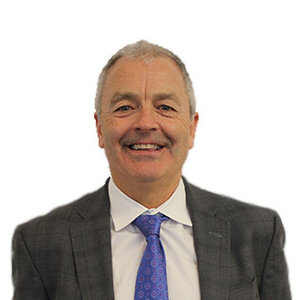
0:59 Yeah thanks Bianca, Thanks everybody for attending our first webinar. It's obviously a great way to communicate with shareholders during this COVID era. If you do hear construction noises in the middle of this, it's not us building the mine. I am sitting in the middle of downtown Vancouver and there is construction right outside the office. So don't get us confused with actually building the mine. We're not quite there yet. First picture you can see is some of the villages that we have been building. We have a large resettlement action plan here on the project, sort of medium size for a mine in Burkina and we're almost complete phase 1 and I'll walk you through that during the summit. Obviously forward-looking statements, I hope you've all read them. You've got one more second. Okay, good.
1:45 So we are a refocused story. I took over as CEO in 2007. I brought on a new management team, essentially a number of the key guys to remain. We changed the development strategy for the project to a staged approach, which is really something that we can as Arizona Junior can finance and build. I thought that was very important. It is a very large deposit but we felt building in the States was a much better way of doing it. We delivered a very robust oxide only feasibility study in 2018. And then resource capital funds, one of the preeminent private equity mining groups in the world joined us as a very large and supportive shareholder. We then subsequently delivered an updated feasibility study with sulfides expansion which we pay out of cash flow from the oxides.
2:37 Those are focusing on the higher grade sulfides but we believe there's another step to expansion beyond that particularly with current gold prices and the way we're developing this project. We did raise about 45 million when RCAF joined and with a further 20 million as a next stage of development equity at the beginning of this year and we have one last piece to go. We have harmonized term sheets now ready to go. And our debt package is just there for the start of construction. Obviously COVID-19 interrupted that, but that's just really a time basis right now. I think it's important as well to say what our core principles are. You know, we like to say we align ourselves with shareholders, with other shareholders. A lot of people do say that, but I think we do speak with our pockets.
3:29 We own 5.4 percent of this and we have been actively buying shares in the market right up to recently. And when I say we, I mean the Fulbright Board and management team. And we look after our capital structure. We're focused on NAV per share, net asset value per share. We look at it that way. We looked at the stage development to reduce that dilution to the shareholders so that we can build a project that we feel will ensure a return and a rapid return to our shareholders. Our emphasis is on capital efficiency. We have a very low G&A. I think we compare incredibly well with any other developing company out there. And we put the money really into where the project's going.
4:15 And we've got a long history of track record of building and operating mines. And we really look at what is the technical accuracy of the project, you know, bringing RCEF who are a very technically minded fund. They spent 10 weeks on the project doing due diligence. We're going with traditional debt, which involves a lot of technical due diligence, you know, probably months of it. So we look at the accuracy of the project and how it's going to be built. And we we hire the the consultants who have designed, built and operated these mines throughout West Africa. So we are permitted, fully permitted now, shovel ready. And it is shovel ready because there's no pre-strip. We had 7 villages to build as part of a phase 1 wrap for about 3,000 people to move 1,100 houses, including mosques, churches, clinics, schools, other infrastructure.
5:10 We were 95% complete on that when we stopped in March, which was in conjunction with discussions with the local communities. They were at that time quite concerned about COVID, as was everybody else. That concern has died down a bit. We are doing a little bit of work right now. We can complete those villages in about 2 months. I think we're in an excellent location. I tell people about this. There are 10 million ounces of M&I resources within 15 kilometres, including ourselves of Bombordet. Our neighbouring mine in San Brado, It started construction in March of 2019. It poured its 1st gold in March of 2020. That's 1 year from starting to clear and grub a site to pouring gold, quite unprecedented.
5:58 They're 15 kilometers from us. They've just purchased B2's Tuega. That's another 2 million ounces. So this is a district, if this was Nevada, we would be surrounded by staking a staking rush and it is a large, still, I think, relatively underexplored district. Great shareholder base, We have a lot of the who's who of mining funds in the company. Obviously led by RCF is 19.97 percent and they took their pro rata right in the last 20 million dollar financing and everybody says they're leveraged to gold. We are highly leveraged to gold. Our resources were done at 1400, but our reserves were done at under 1200. And at the current gold price, we would be mining a lot more than we're seeing today on the reserves.
6:46 So it is large. It is scalable. And that's something that we have focused on. And I think we're at a very attractive entry point when you look where other companies are where they're in the states of development. We are a really attractive entry point in terms of value for for shareholders. And one thing is we're not married to the project, although we love the project and we're actively developing it. If M&A was the right thing to do, we have a group of people who have done and completed several successful M&As, very successful M&As. So that's also something that we actively look at as we go towards the development of the project. And this sort of shows you the team. We've got a full team now to build the project and to operate it. We kept that team together through COVID. We are still quite busy actually, looking at optimizations on updating the schedule, restarting the wrap.
7:44 Our directors again have been involved in the financing of projects, the building of projects, the M&A. You can see the projects we've been involved in. And when I say involved in, I don't mean spending 5 minutes on. I mean actively involved in these projects. And they've all been very successful mining projects over the past 10, 15 years. Burkina Faso, for those of you who don't know it, it's about the size of Colorado, and there's 14 operating mines built there, 2 which have been done right beside us. And the latest one, San Brado, about 15 kilometers away. Wanyan, built by Taranga. Again, that put Taranga in a whole new footing in terms of its share price.
8:31 It was very successful, built in about 14 months, Sanbrato built in 12 months. All of this happened during this, the noise around Burkina in terms of terrorist activity, etc. And we are ideally located, We're right in the center of the country, and nowhere near any of the issues that occur. Easy logistics, paved highway right to the project. We're on the main highway in from Togo and Cote d'Ivoire for delivery of supplies and construction equipment. So it's a pretty simple task to build and operate the project.
9:08 As I say, you know, this gives you a better idea. Ouagadougou is the capital. We're on either of 2 paved highways, excellent condition out to the project. You can actually leave the project in Wagga at 6 in the morning and be having breakfast at the camp at 7.15. And that's going through 2 official checkpoints as you go there. So it's a very, very secure area, great logistics, we've got water supply right by the project, not all companies do have that, but we do, which is a very important aspect of developing and operating a project in an African country. Major mining equipment, you've got Volvo, you've got CAT, you've got Komatsu, you've got a Greco Power Supply Company, all on that main highway. If we want to get something quickly, it takes about half an hour to mobilize and get to our site with these supply companies.
10:04 Again, you could be in Timmins. And Mctato in nearby town will provide most of our labor force. You know, we expect that the fly-in, fly-out expats will be 1 to 2 percent of the total workforce. Fantastic economics. We did it all at $1,300 gold. At $1,300 it's at 361 million NPV, 2.5 year payback, 44% IRR after tax. At 1700, sorry 1750, we go to 732 million, 88% IRR after tax and less than a year payback, which will include building the sulfide expansion.
10:50 We've got 13 years of mine life and I think I'll show you later on in this presentation, we've got a lot more to go. We've got a very, very large, well-defined resource. Current production would be 1.6 million ounces and all in sustaining costs around about 670,700 for the first 10 years. Upfront capital is 153 million, which is for the oxides, but builds a lot of the sulfide infrastructure and processing part And the sulfides would be another 60 million in year 2. And we benchmark ourselves against West Africa in terms of our costs. We're not an outlier. That's pretty much what you get in West Africa. It's a very, very good place to develop and operate a mine.
11:37 And we sit, I think, at a great value proposition as we progress towards production. I think you'll see that changing. You know, our enterprise value and reserves and resources are very very at the low end and I think we'll ramp up through that upper end. I take the example of WAF at the far end which are our neighbors in Burkina. About a year and 4 months ago they were sitting around 22 cents, today they're over 90 and they just started production in March and they're just ramping up. So that's what you see and Pure Gold, you see where they're at. So you can see the value proposition for us in terms of moving to the right hand side of that bar chart.
12:19 Our market cap per NAV is about 0.24. Again, you look at WAF 0.97, Bluestone 0.55, Puregold 0.52. So again, I think there's a lot of value here as we develop this project and we're fully permanent ready to go in a great location. So I think that will move over to the right-hand side of those bar charts again. And we sit in that so-called Lausanne curve in that orphan period where we're in the development stage once we finalize the debt package and start into the construction. I think that's where you see the re-rating occurring. It's pretty obvious when you see that with other companies. You know, and we're prepared for that rapid restart once COVID restrictions are lifted, which we expect to occur in mid-July in terms of access to the project and flights in and out of the country.
13:19 So this is a typical of what we've seen. You see Atlantic gold, West African, rocks gold, both in Burkina. You take this where they are when they declared the start of construction to what happened when they started construction. So you can see the value proposition, but on average, 125% share price appreciation, in some cases more than that. So again, we hope and expect to see that with our zone here as we go into the construction and commissioning phase of the project. And why are we confident of the project? You know, people ask me about risk and I was actually on a panel about that a number of about a year ago actually and we're talking about risk of development and development projects and there was development companies in Canada, the US, Australia, and my question to them was, well really if you look at risk, could you name me 5 projects in Canada that have been permanent on time, built on budget, started up on time, didn't go back to the shareholders looking for more money, and actually developed and started cash flowing in terms of the actual feasibility study.
14:35 And on that panel nobody could name 1. I said Atlantic Gold but if you look at West Africa here's the list. Hyundai, Itty, Yaramoko, Wanyan, Tsitsingui, Bisse, Akem, Fekola, Mako, Sanbrado, all being very, very successful projects, built either on schedule or ahead of schedule, and either under budget or just on budget. So the risk in terms of what we're doing here, in terms of giving value back to our shareholders, is fantastic in West Africa. It's a great place to do business. I'm not quite sure why it all happens. A lot of it's to do with the simplicity of earthworks, the simplicity of construction, the logistics that are in place, but it really and truly works in West Africa.
15:23 So where are we at with our development? Well, we are pretty simple open pit carbon leach. The oxides are very simple. It's no crushing. We grind 20% of the feed to the CIL circuit. So we're using very, very low power, very fast leach kinetics, so low reagent consumption, flat topography. You'll see that in some of the photographs, very simple earthworks, great logistics. So it's a rapid construction. As I said, take Winyon and Sanbrato, 12 to 14 months of construction. Sanbrato right beside us, probably pours about twice as much concrete as we have so you can tell that sort of schedule is what we're looking at. Simple truck and shovel, we've got no pre strip where the ore body's right there, we're right into it at the start. Very shallow pits in the oxide average depth of 45 meters, very low pit maintenance so it's no wear and tear on the trucks and the shovels so you get low cost of mining.
16:29 No drill and blast again so pretty simple. Conventional CIL, very low work index. Our work index for the oxides is about 3. Most in North America would be 14 to 20. So that's a power and wear cost and very fast leach kinetics. The project is a very large shear zone. We operate about 3 main pits and a number of other smaller pits in the hanging wall. The tailing storage facility and the plant are centrally located, so not long hauls. We'll start the project with the pits right beside the plant, so very very quick and rapid feed to the plant. And we have a stockpile strategy to ensure that we get the right grade to the project, pretty typical of West African oxide projects. So pretty simple, Water are supplied by 2, there's 2 main rivers right beside the project. We take the feed from 1 and that's where our water supply is. Some guys in West Africa, including our neighbors, have to pump from other sources.
17:29 We don't.
17:33 And as I said, we've developed this with expansion in mind. The oxides 5.2 million tons per annum, very simple feed. It's totally distinct and separate from the sulfides. We designed it so it can operate totally independently from the sulfide circuit straight into a ball mill, straight into a 24-hour CIL up into the tailings. Couldn't be simpler. On the sulfide, we built it in year 2 from cash flows from the oxide. We did that at basically $1,300 gold. Currently, obviously, we'd have a lot of cash to do that at the current gold price But what it does is we can expand that sulfide.
18:18 We're building 2.2 million tons, which is really what the cash flow with the banks allowed us to do. We have reserves to build a bigger deposit, but we really looked at what we could build from the cash flows without having to upset any of the debt that we would be looking at to build the oxides. But we laid it out so that we could expand it. You can see the tanks there, lots of space between those and the grinding circuit. That's so we can fit 4 more tanks in the grinding circuits, we can add another ball mill, so we can bring this up to 4 million tons per annum extremely quickly for about 30 million dollars more. So again we can go from 5 million tons per annum to 7 million tons per annum and you're looking at a 200,000 ounce a year producer here. So that's sort of what we see for Bombori going forward.
19:05 So we're doing it in stages so that we can manage it, we can do it without blowing up the share structure, and we can rapidly advance it if we've got the right gold price.
19:18 And are we leveraged to gold price? Well, these are the pits. They can see the big hanging wall structure. That's about 13 kilometers long. That structure varies between 20 to 60 meters wide and it's very cohesive grade right through it. So very simple mining in the wall. That pit is done at $1,185, so under $1,200 an ounce. And you can see at $1,400 we almost double that pit without significantly increasing the strip ratio. So we see that expansion there. And these are M&I resources. They're not inferred, they're M&I. So the deposit also remains open at depth. Most of the big pits in Burkina are down about 300 to 350 meters. So that gives you a pretty good idea about what this project can be expanded to and what we've got ahead of us in terms of project development.
20:14 And we've been Identifying high-grade zones. I'd love to say we discovered them ourselves, but the artisans did it for us. When we moved them off the project, they're now fully gone, by the way, but when we moved them off the project, they started mining a little project to the south. You can see it there called P17. They were drilling and blasting it so we knew it was high grade. We thought it was a similar shear zone dipping at 55 as the main deposit. Turns out it was plunging at 22. It's a granite diorite, very, very nice grade, great metallurgy. So we started going back and looking at what else did we know about the main deposit. We had high grade hits, we couldn't really put them together to hold them together. So we started drilling in 2017, 18 and 19.
21:03 We've now got some great heads that we've held together. They're folded the same as P17. They're generally associated with the hanging wall. So our model's coming together really well. And we think it's exciting in regards to where is the exploration potential? You know, we have 5 million ounces here of M&I drilled only to 160 meters average depth. That's very shallow. And that's a lot of ounces per vertical meter. And when you've got these folded zones that are higher grade, that are within that, it tells you that there's some geological model that's going on down there that we think is going to give us great and very exciting exploration later on in the life of the project. And you can see from this, again the artisans were telling us that these were folded zones.
21:50 They exclusively worked in the hanging wall, not the foot wall. You can see these are their workings that they were following a W-shaped fold. So they were telling us that these high grades were folded and you can see the grades that we've drilled since then. This is a 1 gram deposit and we've hit like 175 grams, 180. These are all at minimum a meter, some of them bigger so you can see this sort of hits and it's all following that W-shaped fold. So it's quite exciting from the point of view of exploration potential and also adding more grade in the oxide feed to the to the process plant in the early days of processing and operations.
22:36 And do we have additional oxides or are they currently drilled out? No, they are not drilled out. KT to the north, we've got a significant amount of drilling there. We had to cut this off to get it permitted at some point. We own all of this exploration, we can permit it quite readily so that's quite another extension to the main zone that we bring in at some point. And P13 is a totally separate structure, again found by the artisans. We've done some scout drilling there. We've had some very successful hits. That's quite a large area that we have got to drill at some point later on. So you can see that the oxide resources are significant potential to add beyond the 13 years of mine life.
23:25 Corporate social responsibility, you know, a critical aspect of any mine anywhere in the world, in particularly Africa. You know, there's been lots of talk recently around the world of what's happening and the Black Lives Matter issue and we take that very seriously. I think it's something we should mention as mining companies more often because we are all over the world and we are mining in different parts of the world and it's very important to bring the right message when you go there and develop projects with the community in mind. And I think that our company, I'd put them up against any company in the world as to what we've done here and how we've done it. And we started extremely early. You know, I have to take my hat off to the exploration team. Early on, they hired and trained local guys to do sampling, working on the rigs.
24:14 We were training people to build houses early on so that when we did the wrap, they could build their own houses. Testament to that is we had a wrap opening ceremony. Nobody has a wrap opening ceremony in Burkina or anywhere else that I know of. But because of the community support, and even though it was during tough times in Burkina, when we started RAP construction, we had 3000 people there at the opening ceremony. We had the prime minister, minister of mines, minister of environment, minister of finance, minister of infrastructure. So, you know, it's been a testament to what we've done and how we've done it. We built sample houses for the locals so that they could see exactly what they were getting, not just a drawing and then having to go, oh, I didn't know I was getting this. They made some changes, some of them were quite good, So we incorporated those into the overall village construction.
25:05 So we used local contractors, we didn't go out to international contractors, we've managed it ourselves and it's gone extremely well. We've built 7 villages, You can see the current houses that they're in and the houses that we've been building. And, you know, 1 critical factor here is if they had 3 houses and some of these guys, you know, they've got more than 1 wife, wouldn't be my choice, but that's their choice. But they have an extra house, so they'll be renting that out to a lot of the guys who work on the project. They'll get income from this. During the construction of all of these houses, the local women set up a cooperative and they cooked all the meals for the workers. We had a kitchen set up to do it ourselves, but they asked that could they do it? And they did it and they got income from it. So it was fantastic. We put in all the roads and that's gone extremely well.
26:01 And our CSR and our livelihood restoration, I like to tell the story about Burkina or Bambure, sorry. Bambure originally was not occupied. It was because of the 2 rivers, lots of tsetse flies, you know, also malaria, very, very high. So very sparsely populated. The UN came in in the 70s, they sprayed it with DDT as you could do in the day, and they relocated people in and started growing cotton and left. And so the locals, of course, they couldn't eat the cotton and they didn't know how to sell it. So that got abandoned and they started growing subsist or crops for subsistence farming. We have come in, we've worked with them, developed market gardens, we're looking at developing cash crops that don't interfere with the local markets in the nearby villages so that we're making sure that we're not actually interfering with other people's livelihoods.
27:01 We've selected products that we believe can grow. We've hired an agronomist to help them get to market. One of the proudest things I think we've done here is we have done a lot of land reclamation in West Africa, particularly sub-Sahara. You know, they cut down trees for heating and for cooking. That obviously causes soil erosion. That soil erosion obviously means crops can't grow there. But with techniques developed in West Africa, we have been reclaiming that land. The picture that you see on the right hand side with the corn or the maize, that is reclaimed land that we worked with these local people that they'd never seen before. It was land that they had put no value to. And now we have brought that back into crops that can provide support and livelihood for the communities.
27:53 We're growing sesame. Spices are a great source of income there. We've been training people to do weeding of cotton. We hope that they will be able to provide all of the uniforms for the mining. One key thing is, and this is before I came along, our team set up, you have to have skin in the game with us, so you have to put something in to be part of it, and to ensure that you're bought into it with the communities. And so the weaving, we provide a low interest loan for these local ladies and they get the weaving machines. We help them get it in. And then now they're supplying. These are mats that they're selling in the markets. But we hope later on that they'll be making uniforms. Shea butter, we buy it for the camp.
28:39 I mean if this was a whole food you'd be paying a fortune for it but we have shea butter in the camp for our camp occupants. So it's again another cash crop that we've developed with the locals. So that's sort of it. Where are we at? I think great shareholder base. We're well financed to go through this COVID era where we're doing a lot of work now to get restarted. We finished the wrap or the resettlement action plan where we finalized those village constructions. We've got very good coverage with the equity research including most recently CIBC and Canaccord coming in. We expect another one coming to launch here pretty soon. We've got RCAF, Sun Valley, Mason Hill, VanEck.
29:26 Corus Capital are actually a local Burkina fund. So they visited the project on their due diligence and invested in it. We thought that was fantastic that a local fund invested in the company. I'm not sure who else they've invested in, but they certainly invested in us. Our market cap today, 206 million. We expect that the debt will be about 140 at the end of the day. We'd have about 30 to raise. We'll only raise that once the debt's in place so we get the bump on the value, I hope. So we're well positioned to restart and get this project built over the next 18 months or so. And there is a scarcity of permitted shovel-ready gold projects, and we're one of them. We're fully permitted, as I say, very simple construction in a great location, logistics-wise, in a very good country that understands mining.
30:19 Projects that are built ahead of time or under budget. You know a $1,300 goal, you can see the value proposition where it goes to $1,750. And you know as I said earlier, on an average of 125% share price accretion during that 18-month construction period. So you can see why management have been big purchasers of these shares during this time. It's a great attractive entry point into the company as we move forward.
30:50 So we've 95% complete on the resettlement plan. We need all of that done before we start. We're permitted, we're financeable, we know that because we've got harmonized term sheets with the with the banks ready to go. We've got a team that can build the project, we know how to run operations and we know what M&A is all about if it should come to that. And M&A is very active in West Africa right now. We're committed to a very strong relationship with our communities. I visited the project about 8 times in the last year or so. We always meet with the local leaders. We always get a very, very warm welcome. I think when the banks did their due diligence and sent in their technical consultants. I think they were very, very pleasantly surprised with the welcome and the support that we have for this project.
31:40 And again, I think it's a very attractive entry point for the company in the current life cycle. So that's our story. I hope you get a better understanding of where we're at. We're just sitting, waiting now, ready to go. And I think it'll be a very exciting 12 to 18 months here as we move forward. Okay.
32:04 Hello. Now it's time for questions and answers. So I'll jump to the first question here. And just checking in, Patrick, you can still hear me? Yes, I can. Brilliant. All right. How confident are you of the capital cost to build Vambore? Oh, that's a great question. Well, obviously we selected the companies that have been involved with development and construction of projects in Burkina and West Africa. During our feasibility studies, 2 projects were being built, 1 right beside us. So we were getting a pretty good understanding of all the rates and construction times, etc. For those projects. We didn't use those rates, we used rates higher than that. So we're pretty confident that we've got enough fat built into the system. You know, so I think we're very confident of that. Then we did, RCAF obviously did their due diligence and then the banks did their due diligence on it with independent engineers. So I think it's been well scrutinized in terms of capital cost. We're very confident of it.
33:07 Great. Question here from Chris Thompson. He wants to know what are you looking at for debt? The debt package that we've got harmonized term sheets for is 140 million US. So the upfront number is 155 more or less for the project. Then you've got corporate G&A, local G&A, working capital, cost overrun facility, which I think will be set aside elsewhere, and then financing costs. You know, of that $155 million, the first phase wrap is part of that, so we'll obviously have that complete before we go into the debt. So that takes about 10 million away from that. We've got about another 16 million in the kitty that's going directly towards the construction. So we expect that we'd be raising about another $30 million worth of equity and 140 in debt as we move forward here.
34:03 All right, Adrian Gómez wants to know, do you know when the date when movement restrictions will be listed in Burkina? I think you mentioned that, but people missed it. There's no hard date. Obviously, we keep in very good contact with the authorities. We expect now that the flight restriction, the international boundaries will open again in mid July. That's the timing that we've heard. Right now, charter flights can get in. The operating companies are flying in and flying out under charter flights, but they do have a 14-day quarantine. We expect international flights to start then. And then we will start again in August, really, to start finalizing the last bit of the wrap and getting ready for the main construction.
34:53 Great. Another question here, what is the expected cost of capital for that debt? Close to NPV 5% discount rate? Yes, it is close to the NPV 5. I'm not a great fan of NPV 5 to be frank with you, but all gold companies use it, so we don't want to be an outlier. We use NPV 5. It's still a great project, NPV 8. But the debt would be around 8. It's very plain vanilla debt. We've gone with the traditional banks. It takes more time and more due diligence but we're ready for that. It requires that you be IMF compliant in terms of your social governance and your community relations and your construction. So we are in that regard. So, you know, it'll be around 8% debt.
35:43 Awesome. Next one comes from Mark Turner. I marked morning all my scant knowledge of Burkina Faso terrorist risk is that it depends greatly on the department slash region slash north, south, east, west of the country. Can you give a little extra on this and also the state of play in the Bombori region of direct influence? Yes, well he's having saying that he has no knowledge, he's he's right. It is that northeast corridor, northern northern Burkina, eastern Burkina. A lot of it is a smuggling route to be quite frank with you. You know, they get access to the ports in the south and they can smuggle stuff in through the Sahara. It's been a long standing system, you know, you know, and after Libya broke down, a lot of that, you know, became a terrorist controlled activity.
36:31 So we've seen nothing, honestly, you know, I was born and raised in in the pretty bad area of Ireland where I saw a lot of terrorist activity and I've seen nothing in Burkina, you know, and I wouldn't even think I would see anything. So it is very much regionally related. And Will it end? I don't think that it will end very soon in terms of activity. I think it will continue for a while like noise around that area. But I don't see anything like government collapse or anything. That's not going to happen. So Yes, we're very secure. We have great security systems. We ensure that our expat team are well protected. Our expat team are very comfortable in the area in our camp moving to and from the project. So we're pretty comfortable with it and We're in a very safe location.
37:20 Great. Next question here. Can you discuss some of the similarities and differences between the Robex resources deposit and Orisons? Oh, that's a great question. And I actually visited Robex before we started this. When we come up with the idea of the development, somebody said, oh, there's a project just like that. So we went along to it. It's very similar. It's free dig, all oxide. They use a scrubber and a mill. We're going to use a mill. You could use either or. A scrubber and a mill is less capital intensive. We just think that it's a little cleaner operation with a mill, but equally as good. It was a well-run operation. I've kept my eye on it obviously in terms of costs etc. So they mine about half our tons.
38:09 Their strip ratio is about the same as ours 1.6 to 1.7 to 1. All free dig no drill and blast. The all in sustaining costs there consistently are 700 US per ounce with a small operation in Mali in a decent location and infrastructure wise not as good as us but a decent location. So it's a pretty good benchmark for where we're at. They use contract mining, same as us, and the process plant would be similar to what we're going to design. So yes, very good, very good benchmark for what Bambori will look like. Another question here. It seems like there has been a bit of a cost overrun on the WRAP, hence the higher than expected equity raisings in the past 12 months. Please can you confirm if this is the case and where the cost overruns were?
39:03 Yeah so we decided to put in extra roads for the communities. So we did that and we put them in early on. So we add a little bit of cost there. We built a number of different houses and also we made a decision to work with very local contractors for things like mosques and churches, etc. So we wanted the locals to build their own facilities that way, which took a bit longer. It's not a major overrun, to be quite frank with you in that regard. I wouldn't have, you know, in terms of contingency, it would still be under a contingency. So if you took a project with a 10% contingent, we'd still be under budget. And that wasn't the equity raise, by the way. That was not the equity raise. The equity raise was really, and I'm glad we did it, to be quite frank, with COVID.
39:54 I couldn't predict COVID, but hey, it happened. But the equity raise was done to show the debt providers that if they're providing debt, that there was still equity available to develop a project in Burkina post the Semaphore incident. And that was one of the reasons we did it. Chris Thompson asks, did you say that you can expand the sulfide circuit to 4 MTPA for 30 million? That's correct. So we had a ball mill and 4 additional tanks and that expands the sulfide circuit. And that's why we laid it out. Most people, engineers who look at that layout go, oh my God, can't you make that smaller? Can't you shrink it in? It's very, very, you know, widely laid out.
40:41 Well, the reason we did it was because we want to expand it and we believe we will expand it. So yes, adding a ball mill and 4 tanks expands it. The jaw crush to the thickener are all sized for a bigger throughput. Is there an updated Bombore resource coming later this year? Yes, we're working on it right now. We wanna make sure that we don't trigger any issues. We wanna make sure everything's coherent with the banks. But once all that's done, we will then issue everything and issue new economics at that time. So we're still finalizing that with our team. We have our chief mining engineer head of technical services on board and he's taken all that data and working with it right now. Great. Denise says thanks for the great presentation.
41:28 Who is doing the EPCM for you and when is the first pour planned for? We haven't awarded the EPCM and we're not sure it will be EPCM. It likely will be EPC or guaranteed maximum price, that type of project. We're down to the short stroke in that regard in terms of who we select and it'll be down to their team and their experience in Burkina. But you know, so that's where we're at. So we don't want to do that until we know the bank debt's in place and we can push the button and everything ramps straight ahead. What is your estimated period for construction in months? Well, we're saying 18 from starting of the mining of the off-channel reservoir which stores the water.
42:23 You know, if you look at Wai Ngon, which is to the south of us, and San Brado, which is 20 kilometers, less than 20 kilometers to the east of us, you know, they took 14, 12 to 14 months. So we could be less than that, but we're saying 18. But I'll drive the team hard. They know that. Awesome. What are your plans for a technical study for sulphide circuit expansion? Well, there's not much technical study required to be honest with you. The metallurgy is complete, the metallurgy doesn't change. It's really just leach time and grinding. That's all it is. There's no real more work required.
43:11 It would be sizing the mills and putting in. We size the tanks so that exactly the same times will go in. Every tank on this project is the same size, same agitator size, everything. So it's all consistent. What is the maturity on the listed warrants and the exercise price? It's 80 cents and it's 3 years. And why we did that, we thought there'd be a lot of catalysts in that time, such as the bank debt, the start of construction, the completion of construction, the startup, All of that was in there. So we felt there were a lot of catalysts in there for those warrants. Any taxation potential issues? What equity slash incentive does Burkina government?
44:00 Burkina is a very mature country in regards to mining code and tax laws, etc. It's pretty simple how it's done and how to get money out of the country is well established. Now, there's there's 14, 14 mines. There are some very, very mature mining companies like Endeavor, IAM Gold, you've got Roxgold in there. So it's a pretty simple structure. You have a holding company that owns, we own 90%, the government owns 10. And then once we've paid off all our debt, we start paying dividends after that, but in the meantime we take off our money offshore, you know, during the... There's a royalty structure, so it's price of gold related. Right now it would be 4% with a 1% community royalty, which is an excellent royalty for the communities.
44:53 So it would be total of 5% government royalties right now at the current price of gold. If gold went below 1300, it would be 4%. Excellent. Jeffrey Court wants to know, what provision has been allowed for artisanal gold losses that can be significant, especially in early years from the resource model? Yeah, well, obviously we've done all of that. We've got a very, very tight survey on all of the artisanals. This is an interesting project because it's not quartz related. Generally, where you get the artisanals, they'll be mining a quartz load or a quartz vein and taking the higher grid out of it and following that quartz vein. You know, this is all free dig. There are high-grid structures obviously with the artisanals we're showing us, but we've mapped all those out.
45:45 So whatever's been taken has been taken, but it's not a huge amount to be honest with you. We had about 1100 artisans on the project. We dealt with them very fairly. They're all off now. It was very simple, you know, relocation for them at the end of the day and all done to their satisfaction as well. Another question here from Jeffrey. What's the transportation plan from Uga to site? The transportation, I'm assuming me talking about people. So, you know, hey, you know, everybody wants to work at Bombore because it's so close to the capital and other projects are 5 to 7 hours of transport. Some guys now are flying in, flying out, which I think is safer.
46:33 But for us, you know, we go in on a Monday morning with the team and then they'll come out on a Friday evening. So it'll be a 5 and 2, you know, except for guys who are on shift, which would be generally 2 weeks in, 2 weeks out, and the expats will be 7 and 2 type thing. So transport aside is very simple. That road is extremely safe. It's got 2 checkpoints on it. By the way, I didn't mention that we have the main artillery range for the Burkina and French forces right beside us. So there's a constant army presence there so nobody comes near us. So it's very safe transport. You couldn't pick out our vehicles with all the traffic on the road. We do have armed escorts but they're totally inconspicuous around it. So it's a pretty safe transportation.
47:21 I use it every time I go there. Cam wants to know, at 1750 gold, given phase 2 production of 200,000, what would be your NPV? Oh boy. 1 billion, I guess, something like that right now. Yeah, but what was the, I can't remember what the 1750 at the first phase was, it was something around 800, but yeah, it'd be way up above that. So yeah, absolutely highly leveraged, great project. You know, so yeah, absolutely we would, we would be something around 1 billion. Hugo wants to know, is there any problems with the bordering countries?
48:10 Any problems with the bordering countries? Not between Burkina and the bordering countries, no, there's very much a cooperation. I think, you know, the French government had a meeting in January in a place called Pau in the south of France and they had the 5 nations, the West African nations that are around Burkina. One of the key things that come out of that was one single cooperation looking after security so everybody gets the same information. I think there's been very, very good cooperation. The movement is pretty free. Right now the borders are shut so people don't move in and out because of COVID, except for transportation, all the goods, all that's being kept open. So no, it's very, it's actually, they're all on the same currency.
48:57 There's a name, a term for it, I can't remember what the term for it is, but they're all sort of an, like a European community of West Africa. Great final question here from Jeffrey. Is there scope for gravity separation of free gold in your processing circles. No great question. We don't have free gold. That's what makes it so simple. Our gold is sub-micron. I think we've sampled and leach weld every meter of drilling of this ore body. It's quite incredible the amount of time and effort we spent on it. And there is maybe 3 or 4 samples that come out with free gold. So we don't have it. So number 1, you know, free gold does lead to theft and it does lead to a more complex project.
49:44 Our gold is submicron. It leaches extremely fast in the oxides. It's also free milling in the sulfides so we don't need a gravity circuit. This next one comes from John Kimball. It's a good question here. Isn't Burkino Faso the stomping grounds where Mark Bristow had success? Is he talking to you about it? It is. It's where he, I was actually there in 1994, 95 when he was there. And we're all looking at the same projects and we weren't sure if it was a place to do business. Mali was more, you know, seemed to be a more fertile ground at the time. So, you know, yeah, that's absolutely where he started and he recognized the potential of that whole belt in terms of developing a project.
50:34 Follow up to that question, is he talking to you at all now as the leader of Barrick? Well, I know Mark, so I talked to him, but no, I mean, Barrick, I'm not sure, you know what, I think he'd like to talk to Clyde Johnson and buy Focola quicker than he'd buy me, but obviously I keep in touch. I really like how Mark approaches running a company and his forthrightness in terms of mining and dealing with communities etc. And I always like to ask him questions about different things that he sees, you know, and get his viewpoint on things. But in terms of talking to us, no, you know, and it wouldn't be him anyway. It would be his M&A team or his Corp Dev team. Has the delay in construction due to COVID affected the construction window to build the odd channel res?
51:22 No, the off-channel reservoir, we would start it in December. It would take about 5 to 6 months and we'd be ready to harvest water at the beginning of July. You know, so it's not a major issue for us, you know, so that's tied into a great question, though, you know, so we, you know, we will fill it in 2021. It'll be ready for 2022. Dixon Hall asks, is Burkina Faso government 10% free carry or do they contribute to CapEx? No, it's free carried, but they only get a dividend once we paid all our capex. Great. Raziel Zisman says, Patty, great presentation.
52:07 Nice to see the progress. What is the estimated capital payback period in the current plan? What will it be at 1700 Gold? Current plan is down to 1300. It's 2.5 years, including the sulfide expansion. At 1750, it's 0.8 of a year. So less than a year. So it's, you know, I mean, I Personally, I think we'd be building the sulfide expansion. We'd sit down with the banks if we were getting in the current gold price and go, okay, we've put this much aside. We want to build a 4 million tonne per annum plant. There's another one here from Mark Turner. He asks, can you give me 50 words on host rock hardness? Viable, question mark? Yeah, so look, free dig, you know, I've heard free dig. When I first went here, people saw it was free dig. Well, you know, that means a lot of things. So this is truly free dig. It's a big shear zone. So you can actually, we've actually gone in and dug test pits in all parts of the project just to see really is it free dig. And we've used machines that are, what I would call low tech 70 tons sort of units. We'd be using 140 ton.
53:18 When I say that, that means the type of capacity and breakout capacity that machine would have. And so it breaks up extremely well. What I love about it is dipping at 55. So you peel back the waste and your ore body is just sitting nicely ready for you to mine right off the top on a 3 meter fledge. But when you see it in the shear, it is very, very sheared and friable. So it digs. Sometimes in a free dig environment, it will be, it will have a quartz vein, which is not free dig because it doesn't weather so you have to potentially drill and blast that or it's a intrusive hosted so it'll be a bit more cooked and competent around the edges of the intrusive so you'll have to drill and blast that to loosen it up to free dig it. We don't have that issue. It is truly a free dig environment.
54:09 Another question here, how many people are expected to work for the operation when construction will be completed? Oh boy, well over 1000 with local people etc so and in contractors with mining contractors so it'll be a fairly decent operation no different than most operations I mean if you took a look at Karma or whatever they would be similar besides this West African Sanbrato a little bit different because it's got an underground part of the operation, but over 1000, probably 1300, that type of site. And obviously a lot of other people supplying services, you know, Your typical ratio would be 3.5 to 1 of other people indirectly employed by the mine. As companies are merging, is there a possibility of Orazon merging with another company?
55:01 Yes, absolutely that possibility exists. I do believe being a single asset company in West Africa is not a long-term viable business plan. I've never been a fan of a single asset company. Most recently I was highly and actively involved with Clode Resources. We were a single asset company and we sort of turned it around, got it going again and then we sold it or merged it with Silver Standard. It's become a huge success with them. But having said that, we still think that we need to advance the value of the company so that we get up the right type of merger you know and make sure that it works for the shareholders not just ours but theirs. If you're taking shares back from another company, and we're big shareholders as in us as in management and board, we want to ensure that any type of merger is done that actually adds value, further value to the company, not just a merger for the sake of a merger.
56:00 You know, we're not motivated by change of control clauses to the management. That's not what gets me up in the morning. I was retired and came back into this job. I'm motivated by seeing the shareholders get value for their shares. Great. And with that, we're officially at the end of the Q&A period. I want to thank everyone for attending. Like Vanessa says in the chat, if you have any unanswered questions please email Vanessa at vpickering at aurazone.com or if you can't see that the info at Aurazone email is right in front of you. I will be sure to make sure those get answered. Now without further ado, I want to send it back to you Patrick for the final word. Well thank you everybody. I hope that went reasonably smoothly.
56:47 You know If you have never seen me before, I hope I didn't shock you when I came on screen. So it's great to give the presentation. Maybe this is the new way of giving presentations as we go forward here, even if COVID ends. But It's great to catch up, let you know where we're at, let you know what the next steps are. I think it's a great time to look at our zone in terms of value proposition. We are fully permitted. We're ready to go in a great location with, I think, a team that matches up against anybody in terms of developing a project. So I look forward to keeping you abreast of what we're doing over the next 6 to 18 months. Thank you. Take care everyone.