Transcript
Automated transcript · Written by software from the replay's audio. It can mishear names and figures; the replay is the record.
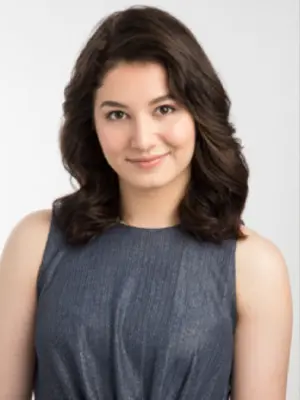
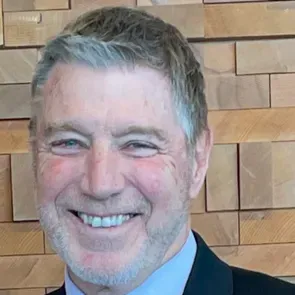
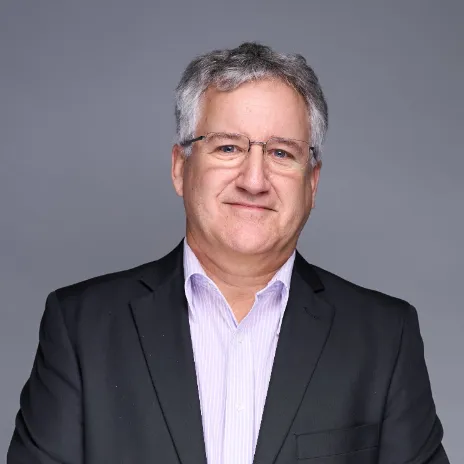
0:04 Good morning, good afternoon or good evening, depending on where in the world you're signing in from today. Thank you so much for taking the time out of your day to join us. I've got with me Rick Mark, CEO of Harvest Gold, and Louis Martin, who's joining us with over 40 years of geology experience in Quebec to discuss the recently announced results coming out of Harvest Gold. Rick, Louis, how are you both doing today? Very well. Very well, thank you, Rebecca. Awesome. So here's how today is going to work for the folks in the room. I've got some questions for Rick and Louis based on the latest release, but then I'd love to answer a couple questions from the live audience It's gonna be a short event today. We're likely gonna go only for about 20 minutes or so So if we don't get to your question, I'll make sure that the team still gets a hold of it But without further ado, let's jump right in. Rick, I see we have a lot of folks signed up today who are not familiar with the story. So to kick things off, can you start with an introduction of Harvest
0:56 Gold? Thanks, Bianca. Yeah, I will. And thank you for those joining us for the first time. That's exciting for us. We really came in with an expectation of updating the story. So I'll give you the, I'll do my best to do it in 60 seconds. Basically, we have 3 large properties in the Northern Quebec area. We're in what's called the Abitibi Belt, which Louis can tell you is one of the richest mining geological areas in the world. It encompasses Quebec and Ontario. We're in Quebec, which we think is the best mining and exploration jurisdiction in Canada. We're in something called the Urban Barrie Belt. Now it's become quite well known in the last couple of years because Goldfields just paid a Cisco Mining $4 billion for the windfall deposit, which is along the same structure, the Urbanberry structure, and one of the splays off Urbanberry were on the other one. So we're in the neighborhood. And as I mentioned, we have large properties covering 50 kilometers of what's referenced as the through-going structure of the urban barrier built and display that our primary property, Miseaux, rests on. So we feel like from the point of view of a neighborhood, we couldn't be in a better neighborhood.
2:15 And then Louis Martin came along through one of our directors.
2:19 And Louis, of course, has this incredible experience in Quebec to really help us understand not only the geology of Quebec, but the culture, the government, the way Quebec works. And it's just been a really nice relationship over the last 18-24 months. So that's where we are. For those of you who haven't met us before, our website is www.harvestgoldcorp.com
2:44 and take a look, there's a corporate presentation. We have not brought that along today. We're not going to walk through that. We're going to talk a little bit about what we've learned in our first 2 drill releases this year. Fabulous. To that end, let's talk about that release. At a high level, what is the real takeaway from this new release. Why should investors pay attention to these gold silver and copper halos at Maseau right now. Well start and I and I'm I'm the translator I translate geology Bianca into English. And I attempt to do that for I'm sure many of the investors on the call today are not geologists. So the Miseaux property itself was drilled in the 1980s, the northern section particularly. It resulted in what we would call a small non-43-101 gold deposit, somewhere between 50 and 70 ounces, say, near surface, nice mineable grade, but too small.
3:42 And people tried and tried again, and for the most part,
3:47 walked away. We also took the central area on, which is kind of new, virgin territory, but this massive Kiask River fault structure going through it. We're waiting and we'll start seeing results from that drilling in the next week or so. So what we're talking about, what we have achieved up north. And the interesting thing is we were looking for gold, and what we've announced to the market is what we think we have, and the results prove it. We now have a
4:17 gold, silver, copper halo surrounding that deposit and an earlier part of the drilling, what we call trench 2. So we have 2 halos with a third one now that looks like a new target. So this is what we in the exploration game call it discovery. This was a eureka moment for the team going, my goodness, we're looking for more than high-grade gold. And you might know silver and copper are doing very well as commodities right now. So I'll leave it at that and we'll push on from there I think Bianca. Fantastic and then over to you Louis for people who aren't geologists like myself can you explain what a halo is and why finding broad gold silver and copper halos matters more than just isolated drill hits? Sure, yeah, I'll start off I guess. For a halo for the geology point of view, it's just a larger envelope that's got maybe low, moderate grade material and it could be acid grades, it could be alteration, I think, that usually envelopes more higher-grade material.
5:21 If I just pull an example like that, how to compare it for the non-geology people, just imagine you're walking towards your bakery, you can start smelling the bread cooking a block away. When you open the door, that's the high-grade material for you. We're on that cusp, we're just walking up to the door at this point.
5:39 How do these halos form? It's the fluid going through the rocks. It goes through all sorts of little cracks and makes a wider envelope. So that's hot fluids. What's really nice for our envelopes, it's not just gold, but it is, like Rick was mentioning, gold, silver, and copper. So these polymetallic ones are nicer, I find, for following. It gives us a couple of extra pathfinders to follow also. And What's important about these Halo zones is you can get high-grade assays. They look really impressive in press releases, but a lot of times those are small, narrow veins. It could be a one-of structure and Sometimes that's all there is and it's going to pinch out in no time. What we're looking for is the broad, larger envelope. What's that important? It shows us their scale to this project. If we get mineralization, it could be a larger structure.
6:30 It actually increases their discovery odds. I mean, with multiple halos like this kind of thing, we can trace a long strike, and it shows great continuity at that point.
6:43 For you both, this work ultimately came from reanalyzing historical drilling. Why was now the right time to go back and look at older data with a fresh perspective? Louie, let me tell the Osisko story. One of the great things about working with Vior, we've optioned a property from a company called Vior. Interestingly, when Goldfields came over and took out Osisko Mining, Osisko Mining has been in this belt, Bianca, and developing the windfall deposit for the last 20 years. They, and now Goldfields, own, I'm gonna say, 80% of the belt, Louis, something like that. It's a massive position they have. We fortunately have the 3 largest properties that they do not own. But the people at Asisco who had all this experience just at the beginning of this past year moved over to Vior.
7:37 So when we talked to Pascal, their VP Exploration, about the area, he's one of the most informed guys there is. And he told us a story that their CEO at the time
7:49 came back to them as they were trying to figure out where is this deposit and said to them, let's reorient our set of glasses, if you will. Let's look at everything that had 0.3 gold, which was lower than the cutoff, if you like, they had been using. And they went back and they reviewed all of their historical data with that in mind, and the picture changed. So, I'll turn it over to Louis, because this is kind of what happened with us. So Louis, maybe tell our story here. Just in the last month, I might add. Yeah, that's right. And some of it goes right to our drilling. I mean, when we looked at this project originally, I mean, there were over 60 different showings on the project that had like over a gram. So We described it as there's a lot of smoke happening out here, so it's interesting.
8:35 Well, we came in with our drilling program and what's a little different, I think we're bringing modern technology, better precision. We drilled our first couple of holes and we did hit a little bit of spiky stuff, But we took a step back and saying, wow, it's not just an odd little spike, but we've getting these 10s, 20-metre wide sections of anomalous gold. Then we started looking at the other pathfinder elements, the copper, the silver, well, multiple elements kind of thing. And we're noticing, yeah, it is something interesting here. So It is starting to be a large envelope at this point.
9:06 That brought us to the point, if we're getting this in our drill holes, let's look at all the old historical holes in the northern part. Again, they were focusing on high grade, but we changed that cut-off and yes, I'm seeing these wide envelopes. Then we start looking at the secondary ones, which he probably didn't look at in the past. And we're seeing these pathfinders,
9:26 Copper, Silver going with it also. So that made us look at, Okay, let's change this. It's not narrow high grade. We're looking at wide halo zones. That's gonna bring us to the ore deposit section. One of the amazing things I learned in that, this high grade Morono deposit we've referenced. And when people look at the figures on our website and our corporate presentation, you'll see it's very distinct. Those particular drill intersections did not even test for copper and silver. And that's the pair of glasses they were wearing 40 years ago, Bianca. Now fortunately, the work in the north, to the west and the north of that, had been done by the Quebec
10:08 firm, government group, as I understand, Louis Soquem. And so they were testing for a broader range of metals and minerals. And so we were fortunate that they had tested for copper and silver. And like taking the Cisco analogy all the way how it affected us, Louis is now looking at a new
10:28 concept of what our next drill program is going to be. And that's very exciting, and we announced that. So we now have more drill targets in a more concise area for the next drill program. And I guess, again, for you early investors or investors that have been in the game for a while. When we take a big property and we can reduce it to discrete zones, that is magnificent for all of us because we've taken what we've learned from an early drill program and we can now focus our work with a new target as we've described in a discrete area. And if you look at that last press release on our geology from 2 weeks ago, you'll kind of get a better feel for what we're talking about when we describe it that way.
11:14 Certainly, And just out of curiosity, Louis, it looked like earlier drilling wasn't consistently analyzed for silver and copper. So once those elements were included, what changed in how you ultimately understood the system? Yeah, I guess you have to go back a little bit in time too. As Rick was mentioning, in the 80s and things like that,
11:35 smaller companies were focused on Gold and Gold only, so they'd analyse for Gold. Some of them weren't going in and doing those multi-element analysis, as you're talking about the Silver and the Copper and all that, but Again, the question is, they assayed it, but were they using that data properly or not as pathfinders? Our first holes, yes, we've got it. Let's use it. We're
11:54 definitely targeting, and we've been able to narrow, as Rick was mentioning, from over 60 high-grade showings out there, well, high-grade over-a-gram showings. We had over 16 identified mineral showings individually. And now with the halos, we can say we've got 3 areas we want to focus our future drilling programs in.
12:15 Beautiful. I'm looking forward to that. Rick, over to you. Does this discovery change how you think about the potential scale of a sow, whether that's the size, the sieral mineralization, or the overall economic potential? Well, We took this on, frankly, because we thought the scale was sitting there right in front of us, 17 kilometers of through-going structure. Louis references it as a strike. I mean, as I said, in this belt, again, if you go to the corporate presentation and see some of these maps and images, and we're sitting in the middle of Goldfield's positions. It's quite remarkable. So the question was, how do we begin to discern what's here? So, you know, you've got a 17 kilometer long property, Bianca, and
13:00 you're going to poke 20 holes in it. So think about the odds. So what this has done, and I remember back one of our guys who is the VPX for a HUD Bay in Canada, a guy I worked with 20 years ago, sticks around with us, which is awesome. He's got a $50 million drill budget every year. So he, as a geologist, looks for things differently to help him get closer to what to drill next. And that's the constant. And he said, no, no, there's gonna be
13:33 more than 1 1 million ounce deposit on this land. So I hold that in my memory, Bianca. There's a guy who has this kind of exploration experience, worked with us 20 years ago when we made a discovery in Manitoba, very optimistic about what MISO brings. So what we're doing is narrowing this big package, as we say, to more discrete zones. When you get following these fluids and you get deeper, who the heck knows what's going to come next? But we like it. We like the 17 kilometers and we're only just literally, and it sounds kind of silly, but we are literally scratching the surface going down for the first time 350 meters onto Morono. That's as deep as anybody's drilled here. It's remarkable. This is scratching the surface.
14:24 Well, speaking of, you've mentioned a follow-up program of up to 40 drill holes. What are you specifically trying to answer with that next phase of work? Well, I'll turn that over to Louis because I'll just say this. When we left looking at gold targets in the first area, which we call Trench 2, Louis thought we would only have 2 or 3 follow-up holes. And The fact that we have more than that now, looking at halo targets, I think says everything. Maybe, Louis, you can talk about the targeting you imagined for the North in the next drill program. Yes. When we start talking about these wide halos,
15:00 when they have a wide halo, we know it's going to have good continuity to it. So we have some, as Rick was mentioning, in the Trench 2 area, some good mineralization out there. Now the question is, we have a lot of strike length, so we're going to need quite a bit of drilling just trying to find the length, the extent of that, And then we'll start to focus in on the higher grade sections. But it's going to take a lot of drilling in the known northern area to do that. And we plan to do the same thing again in the southern port and in the middle part, I think, where we just finished off the drilling program too. Fair enough. And Rick, stepping back, how does MISO fit into Harvest Gold's broader strategy in the Urban Berry Belt, especially with the growing interest in that region? Yeah, it's quite remarkable. We get notes from our land manager saying, these claims are coming up for renewal and they're available and there's 6 people lined up to stake it. So we took all this on 2 and a half years ago. We were kind of the forerunners because it was available through our so-called Urbanberry property, another 15 kilometers of strike right on the urban barrier structure itself.
16:07 We were alone, which allowed us to do this deal with Miseaux and to Louis' great credit, he noticed that this structure continued south of Miseaux and said, why don't we stake this next 9 kilometers, which we did, just about everything between those 2 properties is now staked up, Bianca. So a little, we had a headstart and it's a hell of a land position in a, if you like a hot area, largely because when false sold, did I mention for $4 billion. So we're in the right spot. Now it's really how do we follow up effectively? And I think what we've been able to do is focus on Masew
16:44 because That's where the most previous exploration was done. We've done some work on Urbanberry and LaBelle. We haven't really looked at that yet. And we will do more as we do our work on LaBelle. We will slowly bring those properties along.
17:01 And what we intend to do, and I'll speak to this at the closing as well, is get towards owning 100% of Maceo. I'll leave that till the end. So that's the number 1 objective that I'll share that with the audience now. It's a big teaser. Don't leave. Well, you keyed me up perfectly because my question here is, let's say an investor does check back in a year, what would you want them to clearly see has moved the Maseo story forward? Bianca, it's almost like we discussed this. That's perfect timing. Did we plan? Did we talk? Well, it's an incredibly difficult questions for juniors. I must say again, we are an early stage explorer. What I've tried to say to you investors, no matter how experienced you are, we are an early stage investor. You have to find those comparables because what we're proposing now is a new value proposition for the company.
17:58 We've discussed
18:00 the geological end of that value proposition. We're saying to you, what we've been able to do is find more discrete areas to chain, to chart, chase multi-element deposits. And there are lots of those in the Abitibi and we'll talk about that more as time goes on. Today, it doesn't matter. The point is gold, silver, copper are available to us in discrete areas. So that's our drilling success. Corporate success is this. With another 1.5, we announced Monday that we have met our 2025 obligations with Veeor. With only 1.5 million in expenditures in the next 2 years, we will own 80% of Maceau. We will own that in a joint venture with Veeor. With only another $1.5 million, Bianca, and this is really quite important in my view, for 1000001 half dollars, we can then can buy the last 20%.
18:54 So with 3 million dollars, 3 million only, which is not a lot of money in this market, we raised about 2.5 last year, we will own 100% of Misseau, 100% of Urbanberry, and 100% of LaBelle. That's what I see at the end of the year. So what will we do in the next year in this next drill program? We'll drill these discrete areas in the North and the Central. We'll take what we know about the halos. And I think what we'll do is produce evidence that the value proposition is now showing there's an opportunity for multi-deposits on MISO, and it's going to demand that we raised 10 to 20 million dollars at much higher prices and That's kind of the goal of everyone.
19:40 I couldn't have said that with the same certainty a year ago Bianca This year has been remarkable for us to have learned this much about Masew and have this much clarity in where we're going in 2026. Beautiful. Well, I want to start by saying, Rick, Louis, so great having you on the platform, and thank you to everyone who joined and attended. I would love to pass it over to you, Rick, for the final word and also maybe give folks an opportunity to know where they can get in touch with you, where they can stay up to date with what's coming next. Pass it over to you. Yeah. I think if you want to dig deeper in this, the website is www.harvestgoldcorp.com. We couldn't get Harvest Gold 20 years ago, Bianca, because Neil Young already had it. So harvestgoldcorp.com.
20:32 And there is a website, a business, sorry, an email, a business email to get in touch with me directly, info at harvestgoldcorp.com and I encourage anybody to email me. I'll give you a call, we can talk about this And I'll finally say this, with the sort of barrage of Friday and continuation of Monday, we have dropped down to a level at 5 cents that we have not been at for months and months. Investors can buy, sell, and hold. I think if you haven't heard about Harvest Gold, 5 cents is a great entry point. If you're holding the stock, I think we've given you rationale to consider holding the stock. And really, that's what we wanted to do today, Bianca.
21:18 So if there's questions, it's easy to reach me. And I just thank Bianca for the excellent work. Louis, thanks for joining us. I appreciate it. Nice to appreciate it. Thank you both. Wishing you all a great rest of your day. And as Rick mentioned, feel free to get in touch with him or if we get any questions send our way I'll make sure they wind up in these 2 capable hands and yeah hope you guys have a great rest your Wednesday. Bye.