Automated transcript · Written by software from the replay's audio. It can mishear names and figures; the replay is the record.
8:34 Our net cash position has remained strong. In the first quarter at $20 million, we're presenting a 15% improvement from the end of the quarter, the first quarter in 2021, reflecting improved operating performance and the repayment in full of our gold loan at the end of the second quarter in 2021. I will now hand over to Paul, our CFO, to talk through some of the financial results for Q1 FY22. Over to you, Paul. Thanks, Chris. During the first quarter, we generated revenue of $30.2 million from the sale of 15,823 ounces of gold at a realized gold price of $1,910 US per ounce. Cash from operating activities before working capital changes was 3.5 million, a 0.8 million increase from Q1 2021.
9:25 The increase was a result of the gold loan repayments impacting cash from operations in 2021. And that was offset in part by the cashflow impact of the meal maintenance shutdown that was completed in 2021, or sorry, the first quarter of 2022. As Chris mentioned at the end of the quarter, March, 2022, the company had 20 million in cash and cash equivalents, relatively strong position from a balance sheet perspective. Total cash costs were 1,558 per ounce sold and all in sustaining costs were 1,729 per ounce, up 12% and 15% respectively in the first quarter of 2022. And that was in line with management expectations as we completed successful 15 day mill shut down.
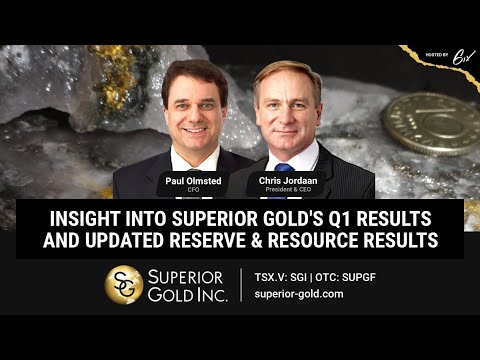
10:16 With the SAG mill. All in sustaining costs also included higher sustaining expiration and capital expenditures for the quarter, all in line with expectations. I'll now turn that back to Chris for an update on our mineral resource statement. Yeah, thank you very much Paul and this is something I've been waiting for some time. A lot of effort and work has gone into finalizing the resource and reserve update for this year. Now we recently released this and it was with the effective date of the December 31st 2021. We're extremely pleased to provide these updated mineral resource and reserve estimates, which continue to deliver on our stated goal of further improving the quality of our resource and reserves, extending the mine life and maximizing the potential of this gold deposit. Now, some of the key highlights.
11:05 Firstly, our proven and probable mineral reserves increased by 66%. That's relative to the 2019 prior to depletion, to 630,000 ounces of gold contained at 3.5 grams per ton, demonstrating a significant increase in life of mine. Measured and indicated mineral resources inclusive of mineral reserves increased by 2% to 1.92 million ounces of contained gold at 3.5 grams per ton. Inferred mineral resources increased by 29% to 3.97 million ounces of contained gold at 3.8 grams per ton, pointing to a significant inventory of gold to fuel long-term production here at Plutonic.
11:52 Further refined geological modelling utilising three-dimensional modelling that now incorporates all the historical geological data emanating from Barrick all the way through to Northern Star now with our recent results. The mineral resource and reserve estimate for plutonic gold operations incorporates all available data from an expanded two-year exploration program in conjunction with historical geological data, as I said earlier. We believe that the objective approach to the mineral resource estimation is an improved indicator of the future opportunities of platonic. The new interpolation methodology described herein is believed to better predict the spatial positioning or distribution of mineralization and grade estimation.
12:45 As a result, the mineral resource and reserves have been identified in areas previously disregarded. Since converting to the new models, which continue to be refined, mining from reserve has increased from typically only 8 to 12% in the previous 5 years to 55% in the first 4 months of 2022 and 100% from resource grade shells. Our underground drilling continues to add mineral reserves and inferred mineral resources and outlines new areas of mineralization in the Western Mining Front, Baltic Gap and Indian Axis as reported in 2021. I strongly encourage you to see the associated news release for all details and further explanation of the updated reserves and resources, which is on our website and dated May 25, 2022, as well as a video which we prepared to show the journey to develop this latest mineral resource and reserve on YouTube. The link will be provided.
13:50 Moving on to some of the achieved and upcoming catalysts. Now there's a number I think here worth noting. Firstly going forward we expect to continue to provide regular underground exploration updates. I would like to draw your attention to the latest exploration update scheduled for, in fact, tomorrow on the 31st of May on Indian access. Now, we've reported on Indian access once before. In addition, these results from the surface exploration that commenced in FY22 is expected to be published in the second half of this year. We announced the positive results of the updated resource and reserve, And as I said, our reserve has increased 66% on the December 2019 reserve. We expect more opportunities for improvement as we continue the full potential assessment to unlock the latent capacity in the operations, with specific focus on the life of mine optimization, now with the completion of the latest mineral resource and reserve.
14:52 This may point to further expansions for the underground mine. In addition, we continue to consider commercial options for ore feed to utilise the latent capacity in our milling circuits. We also expect to be commencing and announcing the results of heritage surveys, which will hopefully have some positive impacts on the main pushback project and make clearer the timing of the Hermes South project. And over the next 12 months, we have a healthy pipeline of development and exploration catalysts to look forward to. I'm going to hand over to Paul to present on the capital structure and the market of the business. Thanks, Chris. Slide 19 just gives a quick summary of the analysts currently covering the stock, our key shareholders and capital structure.
15:44 We're very encouraged by the support of some significant long-term gold funds and note that the analysts see a significant upside in our current share price, particularly given the recent update on the reserve and resource update that we provided on the 25th. Trading has increased significantly over the last few months, from an average of below 100,000 shares per day to over 200,000 shares per day on average. In addition, target price for the stock has improved over the last 0.25 to $1.54 a share. We currently maintain a very tight share structure with just 123 million shares outstanding. There's no warrants and a number of the options will be coming near the end over the next couple of weeks.
16:31 I'll return that back now to Chris to conclude the presentation. Yeah, thank you very much, Paul. So in closing, I'd just like to highlight the significant re-rate opportunity that exists with Superior Gold as presented on this slide. Now by continuing to deliver on our goals, we believe the company will revalue. Now as a quick reminder, goal 1 is there to set safe, stable and predictable operation between that 70 and 85,000 ounces. That box has been ticked. In fact, this year, we're heading towards 80,000 and 90,000 ounces as we now target our second goal. And that is to create an operation of scale with reduced cost, initially hitting that 100,000 ounce per annum operating rate, and then unlocking the value in our second mill and moving up to 150,000 ounces.
17:19 Now all of this work cannot happen and the growth cannot be fueled without focusing on goal 3 and that is to invest smartly on our exploration of known high potential targets as I have alluded to before. And the latest mineral resource and reserve is also testimony to the benefits of moving forward on achieving that goal. We focused on repositioning Plutonic for long-term success and unlocking shareholder value. And we encourage you to take another look at this opportunity. Now with that I'd like to conclude the presentation and open the call for questions. Cam over to you. Great, well Chris, Paul, thank you for the great presentation. I'd like to remind everyone in the audience that at this time we'll be entering the Q&A session. As Chris said, If you have any questions, please use the Q&A panel found on the right hand side of your screen.
18:06 Putting your questions, we'll get to it. We've already received a number of questions. First one from Mark in the audience. I understand you've had some workforce logistics problems due to the ongoing COVID outbreak in Western Australia. Can you give an idea of how much this has affected Q2? Any of you expect things to improve in Q3? Yeah, well what we've certainly seen if we unpack the latest trends, I think probably the biggest impact that we've seen on availability of people or impact on people and their health was when the requirement for masks was taken away in Perth and we saw quite a significant increase in people contracting COVID. I think the benefit in WA is that leading up to taking away these restrictions was requirements for full vaccination and therefore the recovery time for people being diagnosed with COVID is really quick.
19:04 So the impact is limited, but we do see impact in so far as availability, more specific around the underground mining operations. What we are seeing, however, is that through some really smart thinking and redistribution of resources, as well as strategies that are related to over recruitment of people to enable us to pull those gaps as they open up, has proven to be positive. I think what we recently seen in the last few weeks is that the number of people being impacted, in fact, is slowly but surely dropping off from its ultimate high that it's achieved. Comparing it to other organizations, I think our onsite and in transit requirements that we put on our people has certainly paid us in leaps and bounds in so far as reducing the impact of people on site. So we do see that people that are contracting COVID are in fact people that are in person and not on site. And that's going to be key for us going forward as well to ensure that we minimize the impact of people on site whilst they on shift.
20:23 Right. Thanks for that, Chris. Another question from Mark. The recent legal resolution on the disputed tenements close to Plutonic was very favorable to superior gold. Could you outline how this resolution affects the longer term expansion plans? Yeah, that's very interesting. I think it's an option and it provides optionality. The extent of that optionality, I think, will only be fully grasped once we get finalization on the appeal case, based on the 2016 ROFR. As you know, we were successful in contesting the 2017 ROFR, and by doing that, having access to 50% interest in K2. Interest in K2. There's of course a lot more tenements available that Vanco own and we hope to see a positive outcome on our appeal and we'll take it from there.
21:20 I need to, however, say that our growth strategy in no way is hanging the balance depending on what happens with Van Gogh. Anything that will happen in Van Gogh or related to the litigation would be purely augmentative to our growth strategy. So we haven't discounted any benefits whatsoever of that into our cash flow or into our plans going forward. Thanks Chris. Question from Paul in the audience. What's your typical conversion ratio of inferred to MNI in the past few years? That's a good question. What we have seen, And I remember the numbers as we converged from MNI to reserve was about 28 percent, if I remember correctly.
22:11 Can I just take a quick rain check? I'm going to ask Mike, maybe you can just check our records. Conversion from inferred to measured indicator, I just don't have that number available straight away. But what we have seen is that we spent a lot of time and effort drilling in the Western Mining Front over the last 18 months. That's also where we saw the most significant uptick of about 661,000 ounces additional on measured Indicat and inferred, which is related to the Western mining front. So, you know, very positive outcome from that. But that's a good question. I'll get back to you straight away. Chris, it's Mike. I just have the chart if I can tell you that right away. So the average is 26% for the last 2 years. In 2021, it was 32%. So we are seeing an improvement over the average. Okay, so this is from inferred to measured and indicated?
23:04 Correct. Okay, thank you. All right, thanks a lot Mike. Another question, what can we expect in the direction of AISC costs for H2? Right, so our guidance, can we just quickly jump to that slide that shows the guidance? Because there's a clear indication there. So once again, there we go. All-increasing standing costs $1450 to $1600. The key there would be the way that we navigate through the COVID situation. To a large extent, the cost range that we've given for guidance was in due consideration of potential impact COVID might have in both availability of people and the impact it might have on operations, but also the impact that more specifically on the supply chain, that availability or the impact that COVID would have on the supply chain.
24:00 At this stage, as I said, our costs are in line with our expectation in the first quarter. We have a significant uptick on production leading into Q3 and Q4 as we unlock the potential in our main open pit and ramp up the underground mine. And now that we've also finished the maintenance work on the mill, we'll be able to run that at full tilt as the ore becomes available. So we would expect that cost relative to where we now to, to drop quite significantly over the rest of the year. Thanks for that. Sorry, more specifically on the second half, more specifically on the second half. Okay, question from John, how long will MainPit Deeps last and what material will replace it while waiting for MainPit pushback?
24:46 All right, so that's a great question. And it's one that we work on literally on a day-to-day basis. So the first thing is main pit deeps is expected to be running for the remainder of this year. It may potentially, with the latest analysis we've seen, have a little bit more in there than we initially anticipated. And we might see some of that all flowing into the first quarter of next year. We are working on Hermes South, ensuring that up as a feed into the next financial year, as we close the gap between now and when main pushback comes in. In addition, you would have read in our notes that we've also started a surface drilling at Pelora, Seaborg and Central Bor, which is specific targets, surface targets towards the east of Hermes South. And the whole intent is to pull those 4 targets, which is Hermes South, Gloris, Seabook and Central Ball, into a combined operating entity into the future.
25:57 And that we believe, from our initial analysis now, of course it needs to be affirmed, we know we're busy with the tool work, etc. But we believe we'll close to a large extent the gap between now and when Mainpet pushback project starts in operation. All right, thank you for that. Question from John, what are the next likely steps in the formation of the Vango joint venture? So in fact, those steps have already been taken and that relates to K2. So the initial meeting was held, I think last year, it was last week, Friday. So that process is already underway. Depending on what happens on the appeal, there might be some additional work insofar as a joint venture is concerned.
26:43 OK. I'm going to kill 2 birds with 1 stone here. Questions from Howard and John in the audience looking for maybe a bit of a summary on the ROFR lawsuit, you know, what is that, what's going on and what settlement can be expected for the repayment of legal expenses in regards to that. Sorry, just give me that first question, the second one I got, the first one. Just a general summary, just a reminder for anyone in the audience who isn't. Oh yeah, okay, so this once again refers to the litigation with Vango. So in 2016 and in 2017 on 2 occasions we contest that our right of first refusal was not honoured. We took that case to court and we were successful in being awarded the 2017 ROFA and from there the K2 interest has culminated.
27:32 In addition to that, we did not get positive results on the 2016 ROFA or the transgression on the 2016 ROFA that has been appealed. We're hoping to hear sooner when that appeal case will be heard. In addition, along the award on the K2 or the 2017 ROFA, we have been awarded 80% of our costs. And once again, this is allowable costs. And I'm not a legal person, So there's a whole process that the legal team is currently working through and we'll be submitting those costs to the court for their consideration. And then of course, an 80% share of that will be put towards us. So that number has not been finalized at this stage.
28:22 So we hope to finalize that, if I remember correctly, my meeting with our lawyers in the next 2 weeks. And then, you know, we'll be in a better position based on what the quarter ultimately decides what that payment would be. Great. Thanks a lot, Chris. Another question, what are your projected electricity costs for 2022? So firstly, we generate our own electricity. On site, we run on gas. The gas supply is locked in for the next 2.5 to 3 years. Paul, I don't have those numbers off by heart. Maybe you could allude to that, what we're currently paying per kilowatt hour? Yeah, it's about 14 to 15 cents a kilowatt hour, and that's Australian dollars.
29:13 Thank you very much. All right, then. A question from Kevin in the audience. Do you expect to mine underground at restated reserve grade of 3.7 grams per ton in 2022? And then, sorry, answer that. He has a follow-up question. OK, good. So currently, Our target stove grade is 3 grams per tonne and we seem to be there and thereabout on average. There are opportunities for high grade areas underground which we still need to take through the necessary modelling and so forth. Indian access is one of them And we still need to determine how that's going to potentially play out. Currently, given our modeling, and you would see also that our reserve grade for the underground has dropped slightly from 4 grams a ton in 2019 to 3.7 grams a ton.
30:03 There's certainly areas that does provide that level of grade. I think the key challenge that we have in our operation is twofold. The one is becoming smarter in the way that we mine remnant mining, more specifically opportunities in reducing underbreak could certainly help towards improving grade. Secondly, the specific activities and initiatives currently underway in the underground to try and improve on a number of other metrics insofar as quality mining is concerned, the underground mine. So it's Certainly our goal to try and optimize the extent to which we have internal dilution and of course, as I said, our underbrake on the underground mine to see whether we can get that grade up.
30:59 Great. And then Kevin's follow-up is just what's the blended mill feed grade target for 2022? For 2022, it varies quite significantly over the year. If I remember correctly, Paul and I can just ask you if you can just check that. That comes to about 1.7, 1.8 grams per ton. Yeah, it'd be, and then a little bit higher in the second half. A bit deep, so we'd be pushing 2 grams roughly. That's right. For the year. So as a range, about 1.7 to about 2 grams a ton would probably put you in good state with the higher grade blend towards the latter part of this year, the second half.
31:45 And it's very simple. It's not because of the underground, it's because of the outlet. Right. OK. A question from Tim. How much is it going to cost to get the second meal online and how long do you expect that to take? Yeah, I think Let's just quickly talk how long it will take off. Firstly, once we've locked in the ore supply, and for that we need about 100,000 tons of ore per month, we would need about between, Apologies, between 9 and 12 months to get the mill up and going. And that's currently the indications are it'll be between 20 and 25 million Australian dollars to get that mill up and running in a position that it is now.
32:32 All right, question from David. Would it be possible to ramp up underground production to 1.8 million ounces, tons per annum if the company has enough reserves? Well, I think that is, that's a very pertinent question. And the reason why I say that is that now that the mineral resource and reserve has in fact been published, if you look at the amount of tons that we have in our reserve, and I just want to quickly quote that number. In reserve we've got underground 5 million tonnes, if I have it correctly here, certainly allows for increased production from the underground and that's always been our strategy since I joined. And as I said, we've moved up from 835, we're going to 900,000 tonnes now, this year delivered with an exit rate of 1 million tonnes per annum in the fourth quarter.
33:32 The intent is certainly to take it up further. I think we probably, you know, could be safe to say we would see, would have line of sight to 1.25 million tonnes however, per annum, However, the life of mine now that it's all, sorry, the resource and reserve now that's done, we're now starting with a process of finalising or optimising and finalising our life of mine. And that we hope will give us further insight as to what potentially could be achieved with the underground mine. There is no doubt that the underground mine, given the grade that it has, given the mineral endowment, will be the baseline feed to the current mill, the 1.8 million tons per annum mill.
34:22 So certainly if we can take it up to 1.8 million tons at 2.7 grams per ton, you can run the numbers. It'll be an extremely lucrative milling circuit. So what I can say to you is we still need to do the work. Is it our intent to ramp it up? Yes, absolutely. To what level? That's what the life of mine work will have to tell us over the next few months And we'll have a much better indication towards the fourth quarter of this year exactly what would be what we would be able to achieve with the underground mine and how long it will take to get there. Absolutely. Thank you for that. Another question from John. What part of the underground are you opening new mining fronts on? Indian Access? The Western Mining Front, that's a very good question. We'll be going into the Western Mining Front towards the latter part of this year.
35:12 The mine planning engineers have taken into consideration the drill work that we did over the last 18 months and have now scheduled it in for us to go in there towards the latter part of the year. Indian access certainly provides an interesting option And once again, I draw your attention to the exploration report that will be going out tomorrow. At the end of the day, it's once again to have a balanced view of the underground mine and understanding where we're going first and how we sequence it. What's important is to understand that, you know, there's a lot of development work that we still need to do in the underground mine. And certainly we would hope that if the modeling turns out positive, which is currently underway for Indian Access, we'd be able to utilize that as a unique lever in unlocking the further potential in the underground mine.
36:14 So I would be wrong if I say we will only be going into Indian access because of grade, because at the end of the day, we need to unlock the full value of the whole mine. But certainly, I would expect it, given the results that we've had up to now, that it might potentially play quite a significant role going forward. All right, thanks for that, Chris. Now that the planned mail shutdown is complete, where do you see costs going in the subsequent three quarters of the year? Yeah, That's a very good question as well. So our costs were higher, but once again, in line with expectation. In fact, it was very well in line with expectation what we had for the first quarter. Now, as we see with production going up in the second quarter and more specifically, the 3rd and 4th quarter, we would expect that cost to drop quite significantly.
37:10 And we still stay with our forecasts insofar as our costs are concerned, that range in the guidance. And the reason for that is we continue to be mindful of the impact of COVID and not only COVID on our operation, but that COVID might have on the supply chain to our operations. Right. So, the 66% increase in the mineral reserves was quite good. However, it seems like it was only a 2% increase in the mineral resources. Could you speak to this lower increase? Yeah, well, in fact, what happened there was in our consideration of our mineral resourcing so far as measured and indicated is concerned, we in fact don't have the numbers readily available. So I'm going to be ballpark.
38:03 I think quite close to about 380,000 ounces of mineral resource was stripped out of measured and indicated because of the consideration of the pillars. And if you look at the 43-101 and the way that it describes consideration of specific ore sections in the underground mine and what you can include, what you cannot include, Our decision that we took was that at this stage, we do not see those pillars being mined, and we stripped that out. And as I said, that was about 380,000 ounces. But then we've added that back up, and in fact took the measured and indicated back upwards.
38:48 So if you take that into consideration, measured and indicated in fact did go up quite significantly. But it was to a large extent as it pertains to the interpretation of the guidance given by NI 43-101 in our consideration. Right. Do you think you'll be able to eventually feed the second mill with some feed from your current areas you own, or will it all have to come from acquired ounces? I would hope. I would hope that we do get that, we find enough gold and ore to be able to feed our mill from our own ore sources. It makes a lot of sense from a logistics perspective. It's safer, it's faster, it's on our own property, it's fully in our own control, so it certainly makes sense.
39:35 But that does not perturb us from looking at other properties. But more importantly, we are, and I think in one of our previous presentations we did say that, there's a number of resources which we are aware of now, and it's work that was done after we closed off what we took into consideration into the current mineral resource and reserve, and that's Plutonic East as 1. And then there's a surface area to the further east from Plutonic East that we're currently running models. And we're doing it in the same way that we did our underground mine currently. So we're looking forward to seeing what those results might be into the future.
40:21 If that pans out, that will certainly potentially give us optionality to feed our second mill, especially if you take into consideration going back to the previous question we had around how do you fill the gap between now into main pit pushback. We're filling that pipeline very well at the moment with projects then going into main pit pushback. And then anything over and above main pit pushback, in fact, would be all that's available for the second mill. So it's work that's currently underway. In fact, our technical team said to me we'll get our first heads up towards the end of July as to what that potential might be. Now needless to say, there's a lot of work that needs to go into bringing it up to a point by which we believe we have a project. But we would be definitely informing the market as and when that comes to bear in our consideration of putting it together. In fact, that also forms part of our life of mine.
41:25 Okay, thanks, Chris. How much money is being spent on surface exploration? Paul, you need to give me the exact breakdown, but if I remember correctly, it's probably about 60% underground, 40% surface. That's about right. So if you go for $10 million, So it's about $6 million underground, $4 million surface drilling. And surface drilling is primarily focused around the areas towards the east of Hermes South, which is Pallora, Centralbourne, and Seabourg. OK. Well, listen, gentlemen, this has been a great Q&A and a great presentation. That's all the questions we received. I'd like to thank you for coming on. I'd also like to thank everyone in attendance, especially those who have asked questions. If you didn't get a chance to ask a question or if you think of 1 just after, you can always contact Superior Gold. Their information is in this presentation.
42:20 You can also of course find more information on their website superiorgold.com. But Chris, I'm going to hand things back to you. Yeah, thank you very much. Yeah, it was great. And you know, I really appreciate the quality of the questions. It certainly sharpens our soul on this end. So thank you very much for that. I wanna thank my team for supporting me as well. There's a few questions I wasn't exactly on top of the numbers, but thank you very much for that. It just shows that we are working very tightly as a team as we take this business forward. I do, however, if there's 1 call out that I wanna make is a call out for people on the call to go to that link, that YouTube link. It's extremely insightful to understand a little bit better the complexity of the underground ore body that we're dealing with, how our geologists considered it, and the modeling they did to be able to come up with a number that makes sense for us.
43:19 And at the end of the day, for me, the proof in the pudding is, are we mining what we said in reserve and in resource? And we've had a significant uptick from typically 8% to 12% in reserve. Now, over the last 5 years, now mining 55% into that reserve, which gives me a lot of confidence that insofar as spatial positioning is concerned, which was a major challenge we had, we're getting it a lot better, a lot more right than we did previously. And at 100% within resource, there's a lot more substance, I believe, in our resource and reserve statement at this stage. All right, well, Chris, I think with that, we'll wrap things up for the day. Thank you again for coming on and thank everyone for joining us. I hope you have a good rest of your week. Cheers. Thank you very much.